

Fully Integrated Artificial Pancreas in Type 1 Diabetes
Open accessThe DOI matches its Crossref record; 34 of the 34 references it cites were found in a registry or an index.
Abstract
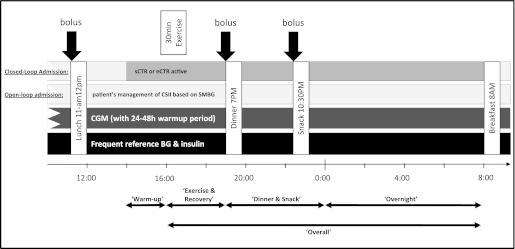
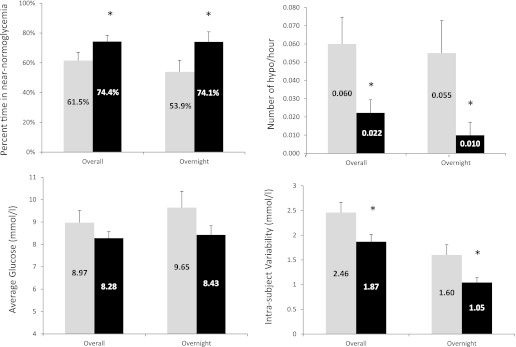
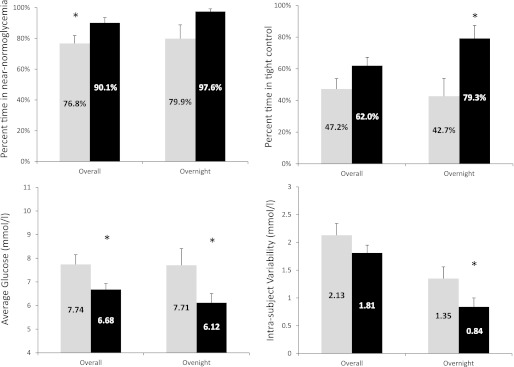
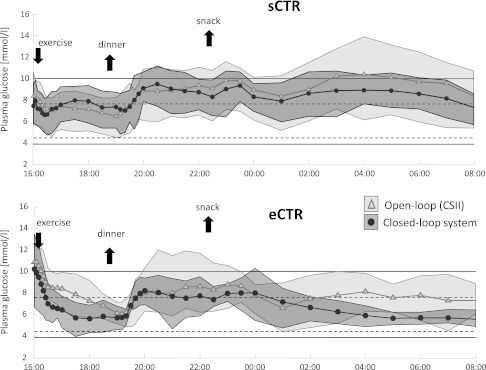
Integrated closed-loop control (CLC), combining continuous glucose monitoring (CGM) with insulin pump (continuous subcutaneous insulin infusion [CSII]), known as artificial pancreas, can help optimize glycemic control in diabetes. We present a fundamental modular concept for CLC design, illustrated by clinical studies involving 11 adolescents and 27 adults at the Universities of Virginia, Padova, and Montpellier. We tested two modular CLC constructs: standard control to range (sCTR), designed to augment pump plus CGM by preventing extreme glucose excursions; and enhanced control to range (eCTR), designed to truly optimize control within near normoglycemia of 3.9-10 mmol/L. The CLC system was fully integrated using automated data transfer CGM→algorithm→CSII. All studies used randomized crossover design comparing CSII versus CLC during identical 22-h hospitalizations including meals, overnight rest, and 30-min exercise. sCTR increased significantly the time in near normoglycemia from 61 to 74%, simultaneously reducing hypoglycemia 2.7-fold. eCTR improved mean blood glucose from 7.73 to 6.68 mmol/L without increasing hypoglycemia, achieved 97% in near normoglycemia and 77% in tight glycemic control, and reduced variability overnight. In conclusion, sCTR and eCTR represent sequential steps toward automated CLC, preventing extremes (sCTR) and further optimizing control (eCTR). This approach inspires compelling new concepts: modular assembly, sequential deployment, testing, and clinical acceptance of custom-built CLC systems tailored to individual patient needs.
Overview
The claims and statistics of this paper haven’t been checked yet.
Free: it reads the open-access text and checks the first 5 claims that cite a source we can check. Create a free account to check every claim.
Integrity signals
Registry
Cites
Statistics
Figures
Verification
Claims the paper makes
The claims and statistics of this paper haven’t been checked yet.
Free: it reads the open-access text and checks the first 5 claims that cite a source we can check. Create a free account to check every claim.
Claims other papers make about this one
Each is checked against this paper’s own text: does it say what the citing paper says it does?
The cited source says what the claim attributes to it.
In the citing paper
“The integrated closed-loop systems tested so far have reported favourable results;97”
From Type 1 diabetes (2014) · cites this paper as [97]
Self-check
Percentages, sums and reported differences re-computed from the paper’s own numbers.
The self-check needs the paper’s full text.
Citations
Cites
(1993) · New England Journal of Medicine · doi:10.1056/nejm199309303291401 · Cited by 24,667
Turner, R. C., Fox, C., Matthews, McElroy, H. H., Cull, C. A., Holman, R. R., Neil, P., Hadden, D. R., Wright, D., Manley, E., et al. (1998) · The Lancet · Cited by 8,419
In Silico Preclinical Trials: A Proof of Concept in Closed-Loop Control of Type 1 Diabetes
Kovatchev, B. P., Breton, M., Dalla Man, C., & Cobelli, C. (2009) · Journal of Diabetes Science and Technology · doi:10.1177/193229680900300106 · Cited by 760 · cited 1×
“The control algorithms used by studies 1 and 2—sCTR and eCTR, respectively—were designed and tested in silico using computer simulation (26), and each algorithm had a different focus: in study 1, the”
MethodSelf-citationArtificial Pancreas: Past, Present, Future
Cobelli, C., Renard, E., & Kovatchev, B. (2011) · Diabetes · doi:10.2337/db11-0654 · Cited by 600 · cited 3×
“The rationale behind MPC was presented in detail in a recent review (7).”
BackgroundMethodSelf-citationAbnormal patterns of insulin secretion in non-insulin-dependent diabetes mellitus.
Polonsky, K. S., Given, B. D., Hirsch, L. J., Tillil, H., Shapiro, E. T., Beebe, C., Frank, B. H., Galloway, J. A., & Van Cauter, E. (1988) · New England Journal of Medicine · doi:10.1056/nejm198805123181903 · Cited by 567 · cited 1×
“Diabetes 61:2230–2237, 2012 The maintenance of close-to-normal blood glucose (BG) levels slows the onset and progression of long-term microvascular complications in patients with type 1 diabetes (1); therefore, the ultimate therapeutic goal of type 1 diabetes is to restore near normoglycemia (2).”
BackgroundWeinzimer, S. A., Steil, G. M., Swan, K. L., Dziura, J., Kurtz, N., & Tamborlane, W. V. (2008) · Diabetes Care · doi:10.2337/dc07-1967 · Cited by 567
Diabetes: Models, Signals, and Control
Cobelli, C., Dalla Man, C., Sparacino, G., Magni, L., De Nicolao, G., & Kovatchev, B. P. (2009) · IEEE Reviews in Biomedical Engineering · doi:10.1109/rbme.2009.2036073 · Cited by 511
Self-citationFeasibility of Automating Insulin Delivery for the Treatment of Type 1 Diabetes
Steil, G. M., Rebrin, K., Darwin, C., Hariri, F., & Saad, M. F. (2006) · Diabetes · doi:10.2337/db06-0419 · Cited by 473 · cited 1×
“The development of both CGM and portable devices for continuous subcutaneous insulin infusion (CSII) incited the implementation of subcutaneous CLC systems (13).”
BackgroundHovorka, R., Allen, J. M., Elleri, D., Chassin, L. J., Harris, J., Xing, D., Kollman, C., Hovorka, T., Larsen, A. M. F., Nodale, M., et al. (2010) · The Lancet · doi:10.1016/s0140-6736(09)61998-x · Cited by 450 · cited 2×
“Previous studies report significant increase in time within target overnight (15) and reduction in glucose variability as shown by a recent across-trial meta-analysis (35).”
BackgroundContinuous glucose monitoring and closed‐loop systems
Hovorka, R. (2006) · Diabetic Medicine · doi:10.1111/j.1464-5491.2005.01672.x · Cited by 443 · cited 1×
“In the past decade, the advent of both continuous glucose monitoring (CGM) (3–5) and automated CGM-assisted insulin delivery, known as artificial pancreas or closed-loop control (CLC) (6,7), have accelerated the achievement of this goal.”
BackgroundA Bihormonal Closed-Loop Artificial Pancreas for Type 1 Diabetes
El-Khatib, F. H., Russell, S. J., Nathan, D. M., Sutherlin, R. G., & Damiano, E. R. (2010) · Science Translational Medicine · doi:10.1126/scitranslmed.3000619 · Cited by 403 · cited 2×
“Despite differences in control architecture and experimental protocol, it is also worthwhile to compare our results with those reported in a 24-h study of CLC using insulin and glucagon without premeal boluses (16).”
BackgroundResultThe MiniMed Continuous Glucose Monitoring System
Mastrototaro, J. J. (2000) · Diabetes Technology & Therapeutics · doi:10.1089/15209150050214078 · Cited by 393
An Artificial Endocrine Pancreas
Albisser, A. M., Leibel, B. S., Ewart, T. G., Davidovac, Z., Botz, C. K., & Zingg, W. (1974) · Diabetes · doi:10.2337/diab.23.5.389 · Cited by 379
Hypoglycemia: The Limiting Factor in the Management of IDDM
Cryer, P. E. (1994) · Diabetes · doi:10.2337/diab.43.11.1378 · Cited by 307 · cited 1×
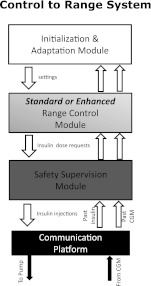
“charge of prevention of hypoglycemia—the major barrier to tight glycemic control (27); 2) the middle layer (range control module), which is responsible for real-time correction of insulin dosing and is different in sCTR and eCTR; and 3) the top layer, which tunes the real-time control layer using clinical parameters a…”
BackgroundMD-Logic Artificial Pancreas System
Atlas, E., Nimri, R., Miller, S., Grunberg, E. A., & Phillip, M. (2010) · Diabetes Care · doi:10.2337/dc09-1830 · Cited by 266
Statistical Tools to Analyze Continuous Glucose Monitor Data
Clarke, W., & Kovatchev, B. (2009) · Diabetes Technology & Therapeutics · doi:10.1089/dia.2008.0138 · Cited by 249
Self-citationHovorka, R., Kumareswaran, K., Harris, J., Allen, J. M., Elleri, D., Xing, D., Kollman, C., Nodale, M., Murphy, H. R., Dunger, D. B., et al. (2011) · BMJ · doi:10.1136/bmj.d1855 · Cited by 244 · cited 1×
“Only one previously reported study has a state-of-the-art randomized crossover design (18), but it lacks automated data transfer (15).”
BackgroundKovatchev, B., Cobelli, C., Renard, E., Anderson, S., Breton, M., Patek, S., Clarke, W., Bruttomesso, D., Maran, A., Costa, S., et al. (2010) · Journal of Diabetes Science and Technology · doi:10.1177/193229681000400611 · Cited by 200
Self-citationThe development of Biostator, a Glucose Controlled Insulin Infusion System (GCIIS).
Clemens, A. H., Chang, P. H., & Myers, R. W. (1977) · PubMed · Cited by 191
Feldman, B., Brazg, R., Schwartz, S., & Weinstein, R. (2003) · Diabetes Technology & Therapeutics · doi:10.1089/152091503322526978 · Cited by 184
Modular Closed-Loop Control of Diabetes
Patek, S. D., Magni, L., Dassau, E., Hughes-Karvetski, C., Toffanin, C., De Nicolao, G., Del Favero, S., Breton, M., Man, C. D., Renard, E., et al. (2012) · IEEE Transactions on Biomedical Engineering · doi:10.1109/tbme.2012.2192930 · Cited by 180 · cited 2×
“Technical details for the sCTR and eCTR algorithms can be found in a previous publication (30) where they are tested and compared in silico.”
BackgroundSelf-citationEllingsen, C., Dassau, E., Zisser, H., Grosman, B., Percival, M. W., Jovanovič, L., & Doyle, F. J. (2009) · Journal of Diabetes Science and Technology · doi:10.1177/193229680900300319 · Cited by 153 · cited 2×
“eCTR includes the same safety module as sCTR but augmented by insulinon-board constraints (29) and a range control module, based on MPC.”
BackgroundMethodSelf-citationA run-to-run control strategy to adjust basal insulin infusion rates in type 1 diabetes
Palerm, C. C., Zisser, H., Jovanovic, L. G., & Doyle, F. J. (2007) · Journal of Process Control · doi:10.1016/j.jprocont.2007.07.010 · Cited by 113
Self-citationRun-to-Run Tuning of Model Predictive Control for Type 1 Diabetes Subjects: In Silico Trial
Magni, L., Forgione, M., Toffanin, C., Dalla Man, C., Kovatchev, B., De Nicolao, G., & Cobelli, C. (2009) · Journal of Diabetes Science and Technology · doi:10.1177/193229680900300512 · Cited by 106 · cited 1×
“Possible methods to cope with changing daily conditions include individual controller calibration strategies and run-to-run control algorithms (31,32), as well as behavioral analysis and profiling of patient lifestyle (33,34).”
MethodSelf-citationHughes, C. S., Patek, S. D., Breton, M. D., & Kovatchev, B. P. (2010) · Journal of Diabetes Science and Technology · doi:10.1177/193229681000400513 · Cited by 89 · cited 2×
“, body weight, insulin-to-carbohydrate ratio, and basal insulin delivery) (24).”
BackgroundMethodSelf-citationComparison of Borg- and OMNI-RPE as Markers of the Blood Lactate Response to Exercise
Irving, B. A., RUTKOWSKI, J. J., Brock, D. W., Davis, C. K., Barrett, E. J., Gaesser, G. A., & WELTMAN, A. L. (2006) · Medicine & Science in Sports & Exercise · doi:10.1249/01.mss.0000227322.61964.d2 · Cited by 84 · cited 1×
“1, including 30 min of moderate exercise (adults: 50% VO2max; adolescents: OMNI rate of perceived exertion ,3) (25), a patient-selected meal”
BackgroundControl to Range for Diabetes: Functionality and Modular Architecture
Kovatchev, B., Patek, S., Dassau, E., Doyle, F. J., Magni, L., De Nicolao, G., Cobelli, C., & Juvenile Diabetes Research Foundation Artificial Pancreas Consortium (2009) · Journal of Diabetes Science and Technology · doi:10.1177/193229680900300509 · Cited by 83 · cited 2×
“Nevertheless, as outlined above, both control algorithms relied on the same modular architecture and belonged to the same CTR class (23).”
BackgroundMethodSelf-citationModular Artificial β-Cell System: A Prototype for Clinical Research
Dassau, E., Zisser, H., Palerm, C. C., Buckingham, B. A., Jovanovič, L., & Doyle, F. J. (2008) · Journal of Diabetes Science and Technology · doi:10.1177/193229680800200518 · Cited by 80 · cited 1×
“The communications between the CGM sensor, the CTR system, and the insulin pump were handled by the artificial pancreas system (APS) software (28).”
MethodSelf-citationA Biopsychobehavioral Model of Risk of Severe Hypoglycemia
Gonder-Frederick, L., Cox, D., Kovatchev, B., Schlundt, D., & Clarke, W. (1997) · Diabetes Care · doi:10.2337/diacare.20.4.661 · Cited by 70 · cited 1×
“Possible methods to cope with changing daily conditions include individual controller calibration strategies and run-to-run control algorithms (31,32), as well as behavioral analysis and profiling of patient lifestyle (33,34).”
MethodSelf-citationClinical Utility of the Continuous Glucose Monitoring System
Bode, B. W. (2000) · Diabetes Technology & Therapeutics · doi:10.1089/15209150050214104 · Cited by 64
Kumareswaran, K., Elleri, D., Allen, J. M., Harris, J., Xing, D., Kollman, C., Nodale, M., Murphy, H. R., Amiel, S. A., Heller, S. R., et al. (2011) · Journal of Diabetes Science and Technology · doi:10.1177/193229681100500606 · Cited by 31 · cited 1×
“Previous studies report significant increase in time within target overnight (15) and reduction in glucose variability as shown by a recent across-trial meta-analysis (35).”
BackgroundJuvenile Diabetes Research Foundation Artificial Pancreas Consortium Update
Kowalski, A. J., & Lum, J. W. (2009) · Journal of Diabetes Science and Technology · doi:10.1177/193229680900300531 · Cited by 31
Kovatchev, B., Cox, D., Goder-Frederick, L., Schlundt, D., & Clarke, W. (1998) · Health Psychology · doi:10.1037//0278-6133.17.3.277 · Cited by 26
Self-citation
Research works printed but not linked: 1
- Renard EM Farret A Place J Cobelli C Kovatchev BP Breton MD Closed-loop insulin delivery using subcutaneous infusion and glucose sensing, and equipped with a dedicated safety supervision algorithm, improves safety of glucose control in type 1 diabetes. Diabetologia 2010; 53(Suppl. 1): S25
Cited by
Atkinson, M. A., Eisenbarth, G. S., & Michels, A. W. (2014) · The Lancet · doi:10.1016/s0140-6736(13)60591-7 · Cited by 2,931
Andreu-Perez, J., Poon, C. C. Y., Merrifield, R. D., Wong, S. T. C., & Yang, G.-Z. (2015) · IEEE Journal of Biomedical and Health Informatics · doi:10.1109/jbhi.2015.2450362 · Cited by 670
Garg, S. K., Weinzimer, S. A., Tamborlane, W. V., Buckingham, B. A., Bode, B. W., Bailey, T. S., Brazg, R. L., Ilany, J., Slover, R. H., Anderson, S. M., et al. (2017) · Diabetes Technology & Therapeutics · doi:10.1089/dia.2016.0421 · Cited by 585
Self-citationWeisman, A., Bai, J.-W., Cardinez, M., Kramer, C. K., & Perkins, B. A. (2017) · The Lancet Diabetes & Endocrinology · doi:10.1016/s2213-8587(17)30167-5 · Cited by 463
Home Use of an Artificial Beta Cell in Type 1 Diabetes
Thabit, H., Tauschmann, M., Allen, J. M., Leelarathna, L., Hartnell, S., Wilinska, M. E., Acerini, C. L., Dellweg, S., Benesch, C., Heinemann, L., et al. (2015) · New England Journal of Medicine · doi:10.1056/nejmoa1509351 · Cited by 450
Metadata
- Authors
- Breton, M., Farret, A., Bruttomesso, D., Anderson, S., Magni, L., Patek, S., Dalla Man, C., Place, J., Demartini, S., Del Favero, S., Toffanin, C., Hughes-Karvetski, C., Dassau, E., Zisser, H., Doyle, F. J., De Nicolao, G., Avogaro, A., Cobelli, C., Renard, E., Kovatchev, B., & on behalf of The International Artificial Pancreas (iAP) Study Group
- Affiliations
- University of Virginia (US)
- Centre National de la Recherche Scientifique (FR)
- University of Padua (IT)
- University of Pavia (IT)
- Department of Information Engineering, University of Padova, Padova, Italy
- University Hospital of Montpellier, Department of Endocrinology, Diabetes, and Nutrition, INSERM Clinical Investigation Center 1001, Institute of Functional Genomics, CNRS UMR5203, INSERM U661, University of Montpellier, Montpellier, France
- University of Virginia, Center for Diabetes Technology, Charlottesville, Virginia
- University of California, Santa Barbara (US)
- Department of Computer Engineering and System Sciences, University of Pavia, Pavia, Italy
- Corresponding author
- Breton, Marc
- ORCID
- Venue
- Diabetes
- Publisher
- American Diabetes Association
- Published
- 2012-08-17
- Volume
- 61
- Issue
- 9
- Pages
- 2230-2237
- ISSN
- 0012-1797 (ISSN-L)
- 1939-327X
- PMC
- PMC3425406
- OpenAlex
- W2145097544
- Cited by
- 315
- References
- 34
- Citations by year
- 2026: 8 · 2025: 13 · 2024: 4 · 2023: 9 · 2022: 6 · 2021: 15 · 2020: 7 · 2019: 23 · 2018: 28 · 2017: 33 · 2016: 27 · 2015: 36 · 2014: 52 · 2013: 45 · 2012: 7
- FWCI
- 35.94
- Type
- journal article
- Language
- en
- Open access
- hybrid
- doi.org
- Licence
- Locations
- Diabetes (publishedVersion, cc-by-nc-nd)
- Europe PMC (PubMed Central) (publishedVersion, cc-by-nc-nd)
- PubMed Central (publishedVersion, cc-by-nc-nd)
- PubMed (publishedVersion)
- Padua Research Archive (University of Padova) (submittedVersion)
- Funders
- National Institute of Diabetes and Digestive and Kidney Diseases (R21DK085641, 5-R21-DK-85641)
- Topics
- Health Sciences › Medicine › Endocrinology, Diabetes and Metabolism › Diabetes Management and Research
- Health Sciences › Medicine › Endocrinology, Diabetes and Metabolism › Diabetes Management and Education
- Health Sciences › Medicine › Endocrinology, Diabetes and Metabolism › Pancreatic function and diabetes
- Keywords
- artificial pancreas, feedback control, type 1 diabetes, continuous glucose monitoring, insulin pump therapy, glycemic control, hypoglycemia prevention, time in range, automated data transfer, adolescents and adults
- MeSH terms
- Adolescent, Adult, Algorithms, Automation, Blood Glucose, Computer Simulation, Diabetes Mellitus, Type 1, Humans, Hypoglycemic Agents, Insulin Infusion Systems, Middle Aged, Cross-Over Studies, Pancreas, Artificial
About these checks
Registry, retraction, Cites and statistics results are computed, not judged, with one exception: a printed reference that no index lists is read once by a model before it counts as a citation error. Claims are extracted by a model and kept only when their quote appears verbatim in the text; each cited source is then checked, with a model’s help, for whether it says what the claim relies on. Those verdicts can be wrong — read the claim’s quote and the cited source before relying on one.
Statistics and arithmetic are recomputed, not judged.
Confidence bands are shown only for fields calibrated on our annotated test set. None is calibrated yet, so no band is shown.
What counts as a claim ›How we measure confidence ›How we check this ›
Are you an author, or do you see a problem with this page? Request a review
Data sources
Bibliographic data: Semantic Scholar, OpenAlex, Crossref.
Contains information from the Semantic Scholar Academic Graph Datasets, made available under the ODC Attribution License (ODC-BY 1.0).
Semantic Scholar’s data is described in: Kinney, R., et al. (2023). The Semantic Scholar Open Data Platform. arXiv:2301.10140.
