

Fully Integrated Artificial Pancreas in Type 1 Diabetes
Open accessThe DOI matches its Crossref record; 34 of the 34 references it cites were found in a registry or an index.
Abstract
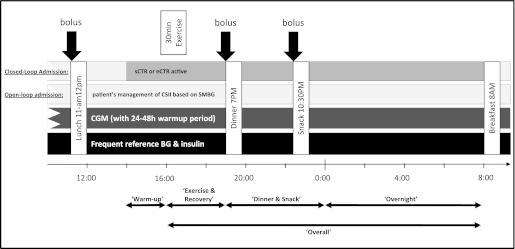
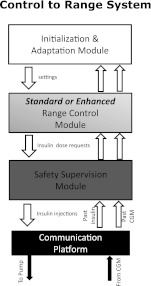
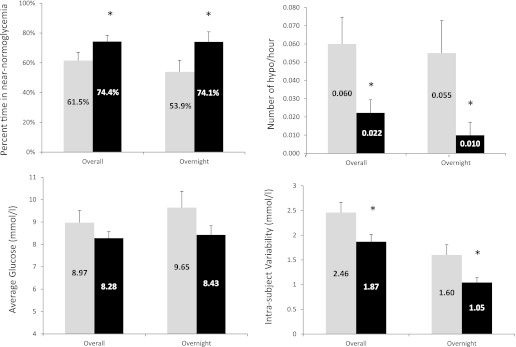
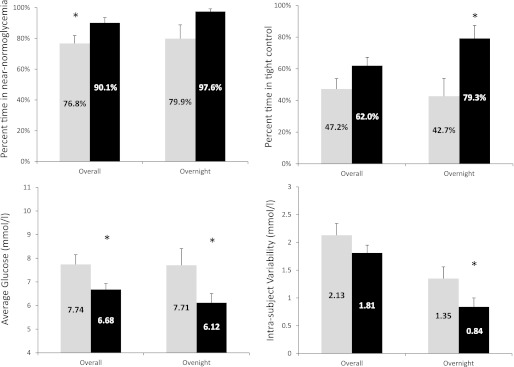
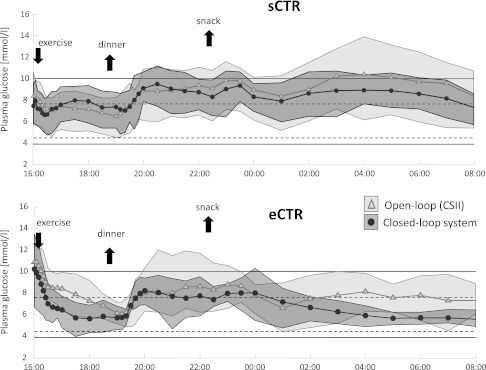
Integrated closed-loop control (CLC), combining continuous glucose monitoring (CGM) with insulin pump (continuous subcutaneous insulin infusion [CSII]), known as artificial pancreas, can help optimize glycemic control in diabetes. We present a fundamental modular concept for CLC design, illustrated by clinical studies involving 11 adolescents and 27 adults at the Universities of Virginia, Padova, and Montpellier. We tested two modular CLC constructs: standard control to range (sCTR), designed to augment pump plus CGM by preventing extreme glucose excursions; and enhanced control to range (eCTR), designed to truly optimize control within near normoglycemia of 3.9-10 mmol/L. The CLC system was fully integrated using automated data transfer CGM→algorithm→CSII. All studies used randomized crossover design comparing CSII versus CLC during identical 22-h hospitalizations including meals, overnight rest, and 30-min exercise. sCTR increased significantly the time in near normoglycemia from 61 to 74%, simultaneously reducing hypoglycemia 2.7-fold. eCTR improved mean blood glucose from 7.73 to 6.68 mmol/L without increasing hypoglycemia, achieved 97% in near normoglycemia and 77% in tight glycemic control, and reduced variability overnight. In conclusion, sCTR and eCTR represent sequential steps toward automated CLC, preventing extremes (sCTR) and further optimizing control (eCTR). This approach inspires compelling new concepts: modular assembly, sequential deployment, testing, and clinical acceptance of custom-built CLC systems tailored to individual patient needs.
Overview
The claims and statistics of this paper haven’t been checked yet.
Free: it reads the open-access text and checks the first 5 claims that cite a source we can check. Create a free account to check every claim.
Integrity signals
Registry
Cites
Statistics
Figures
Verification
Claims the paper makes
The claims and statistics of this paper haven’t been checked yet.
Free: it reads the open-access text and checks the first 5 claims that cite a source we can check. Create a free account to check every claim.
Claims other papers make about this one
Each is checked against this paper’s own text: does it say what the citing paper says it does?
The cited source says what the claim attributes to it.
In the citing paper
“The integrated closed-loop systems tested so far have reported favourable results;97”
From Type 1 diabetes (2014) · cites this paper as [97]
Self-check
Percentages, sums and reported differences re-computed from the paper’s own numbers.
The self-check needs the paper’s full text.
Citations
Cites
(1993) · New England Journal of Medicine · doi:10.1056/nejm199309303291401 · Cited by 24,667
Turner, R. C., Fox, C., Matthews, McElroy, H. H., Cull, C. A., Holman, R. R., Neil, P., Hadden, D. R., Wright, D., Manley, E., et al. (1998) · The Lancet · Cited by 8,419
In Silico Preclinical Trials: A Proof of Concept in Closed-Loop Control of Type 1 Diabetes
Kovatchev, B. P., Breton, M., Dalla Man, C., & Cobelli, C. (2009) · Journal of Diabetes Science and Technology · doi:10.1177/193229680900300106 · Cited by 760 · cited 1×
“The control algorithms used by studies 1 and 2—sCTR and eCTR, respectively—were designed and tested in silico using computer simulation (26), and each algorithm had a different focus: in study 1, the”
MethodSelf-citationArtificial Pancreas: Past, Present, Future
Cobelli, C., Renard, E., & Kovatchev, B. (2011) · Diabetes · doi:10.2337/db11-0654 · Cited by 600 · cited 3×
“The rationale behind MPC was presented in detail in a recent review (7).”
BackgroundMethodSelf-citationAbnormal patterns of insulin secretion in non-insulin-dependent diabetes mellitus.
Polonsky, K. S., Given, B. D., Hirsch, L. J., Tillil, H., Shapiro, E. T., Beebe, C., Frank, B. H., Galloway, J. A., & Van Cauter, E. (1988) · New England Journal of Medicine · doi:10.1056/nejm198805123181903 · Cited by 567 · cited 1×
“Diabetes 61:2230–2237, 2012 The maintenance of close-to-normal blood glucose (BG) levels slows the onset and progression of long-term microvascular complications in patients with type 1 diabetes (1); therefore, the ultimate therapeutic goal of type 1 diabetes is to restore near normoglycemia (2).”
BackgroundWeinzimer, S. A., Steil, G. M., Swan, K. L., Dziura, J., Kurtz, N., & Tamborlane, W. V. (2008) · Diabetes Care · doi:10.2337/dc07-1967 · Cited by 567
Diabetes: Models, Signals, and Control
Cobelli, C., Dalla Man, C., Sparacino, G., Magni, L., De Nicolao, G., & Kovatchev, B. P. (2009) · IEEE Reviews in Biomedical Engineering · doi:10.1109/rbme.2009.2036073 · Cited by 511
Self-citationFeasibility of Automating Insulin Delivery for the Treatment of Type 1 Diabetes
Steil, G. M., Rebrin, K., Darwin, C., Hariri, F., & Saad, M. F. (2006) · Diabetes · doi:10.2337/db06-0419 · Cited by 473 · cited 1×
“The development of both CGM and portable devices for continuous subcutaneous insulin infusion (CSII) incited the implementation of subcutaneous CLC systems (13).”
BackgroundHovorka, R., Allen, J. M., Elleri, D., Chassin, L. J., Harris, J., Xing, D., Kollman, C., Hovorka, T., Larsen, A. M. F., Nodale, M., et al. (2010) · The Lancet · doi:10.1016/s0140-6736(09)61998-x · Cited by 450 · cited 2×
“Previous studies report significant increase in time within target overnight (15) and reduction in glucose variability as shown by a recent across-trial meta-analysis (35).”
Background
Research works printed but not linked: 1
- Renard EM Farret A Place J Cobelli C Kovatchev BP Breton MD Closed-loop insulin delivery using subcutaneous infusion and glucose sensing, and equipped with a dedicated safety supervision algorithm, improves safety of glucose control in type 1 diabetes. Diabetologia 2010; 53(Suppl. 1): S25
Cited by
Atkinson, M. A., Eisenbarth, G. S., & Michels, A. W. (2014) · The Lancet · doi:10.1016/s0140-6736(13)60591-7 · Cited by 2,931
Andreu-Perez, J., Poon, C. C. Y., Merrifield, R. D., Wong, S. T. C., & Yang, G.-Z. (2015) · IEEE Journal of Biomedical and Health Informatics · doi:10.1109/jbhi.2015.2450362 · Cited by 670
Garg, S. K., Weinzimer, S. A., Tamborlane, W. V., Buckingham, B. A., Bode, B. W., Bailey, T. S., Brazg, R. L., Ilany, J., Slover, R. H., Anderson, S. M., et al. (2017) · Diabetes Technology & Therapeutics · doi:10.1089/dia.2016.0421 · Cited by 585
Self-citationWeisman, A., Bai, J.-W., Cardinez, M., Kramer, C. K., & Perkins, B. A. (2017) · The Lancet Diabetes & Endocrinology · doi:10.1016/s2213-8587(17)30167-5 · Cited by 463
Home Use of an Artificial Beta Cell in Type 1 Diabetes
Thabit, H., Tauschmann, M., Allen, J. M., Leelarathna, L., Hartnell, S., Wilinska, M. E., Acerini, C. L., Dellweg, S., Benesch, C., Heinemann, L., et al. (2015) · New England Journal of Medicine · doi:10.1056/nejmoa1509351 · Cited by 450
Closed-Loop Artificial Pancreas Systems: Engineering the Algorithms
Doyle, F. J., Huyett, L. M., Lee, J. B., Zisser, H. C., & Dassau, E. (2014) · Diabetes Care · doi:10.2337/dc13-2108 · Cited by 394
Self-citationMimicking the Cell: Bio-Inspired Functions of Supramolecular Assemblies
Tu, Y., Peng, F., Adawy, A., Men, Y., Abdelmohsen, L. K. E. A., & Wilson, D. A. (2016) · Chemical Reviews · doi:10.1021/acs.chemrev.5b00344 · Cited by 316
In silico clinical trials: how computer simulation will transform the biomedical industry
Viceconti, M., Henney, A., & Morley-Fletcher, E. (2016) · International Journal of Clinical Trials · doi:10.18203/2349-3259.ijct20161408 · Cited by 289
Closed-Loop Insulin Delivery during Pregnancy in Women with Type 1 Diabetes
Stewart, Z. A., Wilinska, M. E., Hartnell, S., Temple, R. C., Rayman, G., Stanley, K. P., Simmons, D., Law, G. R., Scott, E. M., Hovorka, R., et al. (2016) · New England Journal of Medicine · doi:10.1056/nejmoa1602494 · Cited by 279
Hovorka, R., Elleri, D., Thabit, H., Allen, J. M., Leelarathna, L., El-Khairi, R., Kumareswaran, K., Caldwell, K., Calhoun, P., Kollman, C., et al. (2014) · Diabetes Care · doi:10.2337/dc13-2644 · Cited by 214
Kropff, J., Del Favero, S., Place, J., Toffanin, C., Visentin, R., Monaro, M., Messori, M., Di Palma, F., Lanzola, G., Farret, A., et al. (2015) · The Lancet Diabetes & Endocrinology · doi:10.1016/s2213-8587(15)00335-6 · Cited by 201
Self-citationStem, M., & Gardner, T. (2013) · Current Medicinal Chemistry · doi:10.2174/09298673113209990027 · Cited by 192
Challenges and recent progress in the development of a closed-loop artificial pancreas
Bequette, B. W. (2012) · Annual Reviews in Control · doi:10.1016/j.arcontrol.2012.09.007 · Cited by 183
“Breton et al. (2012), using the platform developed by Patek et al. (2012), present clinical results for 38 subjects using two different control-to-range approaches: (i) standard and (ii) enhanced.”
MethodKovatchev, B. P., Renard, E., Cobelli, C., Zisser, H. C., Keith-Hynes, P., Anderson, S. M., Brown, S. A., Chernavvsky, D. R., Breton, M. D., Mize, L. B., et al. (2014) · Diabetes Care · doi:10.2337/dc13-2076 · Cited by 178
Self-citationFeasibility of Outpatient Fully Integrated Closed-Loop Control
Kovatchev, B. P., Renard, E., Cobelli, C., Zisser, H. C., Keith-Hynes, P., Anderson, S. M., Brown, S. A., Chernavvsky, D. R., Breton, M. D., Farret, A., et al. (2013) · Diabetes Care · doi:10.2337/dc12-1965 · Cited by 177
Self-citationThe artificial pancreas: current status and future prospects in the management of diabetes
Peyser, T., Dassau, E., Breton, M., & Skyler, J. S. (2014) · Annals of the New York Academy of Sciences · doi:10.1111/nyas.12431 · Cited by 169
Self-citationHaidar, A., Legault, L., Dallaire, M., Alkhateeb, A., Coriati, A., Messier, V., Cheng, P., Millette, M., Boulet, B., & Rabasa-Lhoret, R. (2013) · Canadian Medical Association Journal · doi:10.1503/cmaj.121265 · Cited by 167
Multivariable Adaptive Identification and Control for Artificial Pancreas Systems
Turksoy, K., Quinn, L., Littlejohn, E., & Cinar, A. (2014) · IEEE Transactions on Biomedical Engineering · doi:10.1109/tbme.2013.2291777 · Cited by 162
Turksoy, K., Bayrak, E. S., Quinn, L., Littlejohn, E., & Cinar, A. (2013) · Diabetes Technology & Therapeutics · doi:10.1089/dia.2012.0283 · Cited by 161
Pozzilli, P., Battelino, T., Danne, T., Hovorka, R., Jarosz‐Chobot, P., & Renard, E. (2016) · Diabetes/Metabolism Research and Reviews · doi:10.1002/dmrr.2653 · Cited by 160
Prendin, F., Pavan, J., Cappon, G., Del Favero, S., Sparacino, G., & Facchinetti, A. (2023) · Scientific Reports · doi:10.1038/s41598-023-44155-x · Cited by 159
Gondhalekar, R., Dassau, E., & Doyle, F. J. (2016) · Automatica · doi:10.1016/j.automatica.2016.04.015 · Cited by 159
Self-citationTurksoy, K., Samadi, S., Feng, J., Littlejohn, E., Quinn, L., & Çınar, A. (2015) · IEEE Journal of Biomedical and Health Informatics · doi:10.1109/jbhi.2015.2446413 · Cited by 156
The use of reinforcement learning algorithms to meet the challenges of an artificial pancreas
Bothe, M. K., Dickens, L., Reichel, K., Tellmann, A., Ellger, B., Westphal, M., & Faisal, A. A. (2013) · Expert Review of Medical Devices · doi:10.1586/17434440.2013.827515 · Cited by 124
Brogi, E., Cyr, S., Kazan, R., Giunta, F., & Hemmerling, T. M. (2016) · Anesthesia & Analgesia · doi:10.1213/ane.0000000000001372 · Cited by 149
A review of optical methods for continuous glucose monitoring
Jernelv, I. L., Mileńko, K., Fuglerud, S. S., Hjelme, D. R., Ellingsen, R., & Aksnes, A. (2018) · Applied Spectroscopy Reviews · doi:10.1080/05704928.2018.1486324 · Cited by 145
“(BGL) in the desired range, and glucose can easily depart outside of the normal physiological range, typically defined as 72–180mg/dl (4–10mM) (19,20).”
BackgroundSteil, G. M. (2013) · Journal of Diabetes Science and Technology · doi:10.1177/193229681300700623 · Cited by 127
Kovatchev, B., Cheng, P., Anderson, S. M., Pinsker, J. E., Boscari, F., Buckingham, B. A., Doyle, F. J., Hood, K. K., Brown, S. A., Breton, M. D., et al. (2017) · Diabetes Technology & Therapeutics · doi:10.1089/dia.2016.0333 · Cited by 141
Self-citationTauschmann, M., Allen, J. M., Wilinska, M. E., Thabit, H., Stewart, Z., Cheng, P., Kollman, C., Acerini, C. L., Dunger, D. B., & Hovorka, R. (2016) · Diabetes Care · doi:10.2337/dc15-2078 · Cited by 127
Leelarathna, L., Dellweg, S., Mader, J. K., Allen, J. M., Benesch, C., Doll, W., Ellmerer, M., Hartnell, S., Heinemann, L., Kojzar, H., et al. (2014) · Diabetes Care · doi:10.2337/dc13-2911 · Cited by 130
Ly, T. T., Breton, M. D., Keith-Hynes, P., De Salvo, D., Clinton, P., Benassi, K., Mize, B., Chernavvsky, D., Place, J., Wilson, D. M., et al. (2014) · Diabetes Care · doi:10.2337/dc14-0147 · Cited by 121
Self-citationModeling the glucose sensor error
Facchinetti, A., Del Favero, S., Sparacino, G., Castle, J. R., Ward, W. K., & Cobelli, C. (2014) · IEEE Transactions on Biomedical Engineering · doi:10.1109/tbme.2013.2284023 · Cited by 130
Self-citationEl-Khatib, F. H., Russell, S. J., Magyar, K. L., Sinha, M., McKeon, K., Nathan, D. M., & Damiano, E. R. (2014) · The Journal of Clinical Endocrinology & Metabolism · doi:10.1210/jc.2013-4151 · Cited by 122
Breton, M. D., Brown, S. A., Karvetski, C. H., Kollar, L., Topchyan, K. A., Anderson, S. M., & Kovatchev, B. P. (2014) · Diabetes Technology & Therapeutics · doi:10.1089/dia.2013.0333 · Cited by 128
Self-citationPathway to Artificial Pancreas Systems Revisited: Moving Downstream
Kowalski, A. (2015) · Diabetes Care · doi:10.2337/dc15-0364 · Cited by 113
Messori, M., Incremona, G. P., Cobelli, C., & Magni, L. (2018) · IEEE Control Systems · doi:10.1109/mcs.2017.2766314 · Cited by 126
“[10] M.”
Self-citationToward a Run-to-Run Adaptive Artificial Pancreas: In Silico Results
Toffanin, C., Visentin, R., Messori, M., Palma, F. D., Magni, L., & Cobelli, C. (2018) · IEEE Transactions on Biomedical Engineering · doi:10.1109/tbme.2017.2652062 · Cited by 107
“Several studies were conducted in adults in gradually less structured and less monitored settings: inpatient first [9], [10], two day in hotel settings [11], [12], and, recently, two month evening and night at home [13].”
BackgroundSelf-citationPilot Studies of Wearable Outpatient Artificial Pancreas in Type 1 Diabetes
Cobelli, C., Renard, E., Kovatchev, B. P., Keith-Hynes, P., Ben Brahim, N., Place, J., Del Favero, S., Breton, M., Farret, A., Bruttomesso, D., et al. (2012) · Diabetes Care · doi:10.2337/dc12-0660 · Cited by 120
Self-citationVelocity-weighting & velocity-penalty MPC of an artificial pancreas: Improved safety & performance
Gondhalekar, R., Dassau, E., & Doyle, F. J. (2018) · Automatica · doi:10.1016/j.automatica.2018.01.025 · Cited by 120
“…Control (MPC) (Maciejowski 2002, Rawlings & Mayne 2009), considered in an AP context by others in (Hovorka et al. 2004, Magni et al. 2009, Breton et al. 2012, Bequette 2013, Turksoy et al. 2014, Zavitsanou et al. 2015), and by the authors in (Parker et al. 1999, Grosman et al. 2010,…”
BackgroundSelf-citationWearable Glucose Monitoring and Implantable Drug Delivery Systems for Diabetes Management
Zhang, J., Xu, J., Lim, J., Nolan, J. K., Lee, H., & Lee, C. H. (2021) · Advanced Healthcare Materials · doi:10.1002/adhm.202100194 · Cited by 119
Realizing a Closed-Loop (Artificial Pancreas) System for the Treatment of Type 1 Diabetes
Lal, R. A., Ekhlaspour, L., Hood, K., & Buckingham, B. (2019) · Endocrine Reviews · doi:10.1210/er.2018-00174 · Cited by 95
Circadian Variability of Insulin Sensitivity: Physiological Input for In Silico Artificial Pancreas
Visentin, R., Dalla Man, C., Kudva, Y. C., Basu, A., & Cobelli, C. (2015) · Diabetes Technology & Therapeutics · doi:10.1089/dia.2014.0192 · Cited by 113
Self-citationGingras, V., Taleb, N., Roy‐Fleming, A., Legault, L., & Rabasa‐Lhoret, R. (2018) · Diabetes, Obesity and Metabolism · doi:10.1111/dom.13052 · Cited by 113
Artificial Pancreas: Model Predictive Control Design from Clinical Experience
Toffanin, C., Messori, M., Di Palma, F., De Nicolao, G., Cobelli, C., & Magni, L. (2013) · Journal of Diabetes Science and Technology · doi:10.1177/193229681300700607 · Cited by 106
Self-citationInsulin Detection Using a Corona Phase Molecular Recognition Site on Single-Walled Carbon Nanotubes
Bisker, G., Bakh, N. A., Lee, M. A., Ahn, J., Park, M., O'Connell, E. B., Iverson, N. M., & Strano, M. S. (2018) · ACS Sensors · doi:10.1021/acssensors.7b00788 · Cited by 115
Stimuli‐responsive delivery of therapeutics for diabetes treatment
Yu, J., Zhang, Y., Bomba, H., & Gu, Z. (2016) · Bioengineering & Translational Medicine · doi:10.1002/btm2.10036 · Cited by 109
“The insulin infusion rate can be adjusted in response to the BGL signal from the glucose sensor in these wireless, portable, and wearable systems.(49,50) Conversely, synthetic smart insulin delivery systems have been heavily explored to achieve closed-loop delivery from the use of material design and formulation engin…”
Method‘Smart’ insulin-delivery technologies and intrinsic glucose-responsive insulin analogues
Jarosinski, M. A., Dhayalan, B., Rege, N. K., Chatterjee, D., & Weiss, M. A. (2021) · Diabetologia · doi:10.1007/s00125-021-05422-6 · Cited by 110
“The robustness of current predictive algorithms is likely to be enhanced by development of ‘ultra-fast’ pump insulin analogue formulations [40], such as Fiasp (Novo Nordisk) [41, 42], ultra-rapid lispro (URLi; known as Lyumjev in Europe; Eli Lilly) [43, 44], and respective reformulations of prandial analogues insulin,…”
BackgroundEvent-Triggered Model Predictive Control for Embedded Artificial Pancreas Systems
Chakrabarty, A., Zavitsanou, S., Doyle, F. J., & Dassau, E. (2017) · IEEE Transactions on Biomedical Engineering · doi:10.1109/tbme.2017.2707344 · Cited by 107
Self-citationRenard, E., Farret, A., Kropff, J., Bruttomesso, D., Messori, M., Place, J., Visentin, R., Calore, R., Toffanin, C., Di Palma, F., et al. (2016) · Diabetes Care · doi:10.2337/dc16-0008 · Cited by 104
Self-citationFirst use of model predictive control in outpatient wearable artificial pancreas
Del Favero, S., Bruttomesso, D., Di Palma, F., Lanzola, G., Visentin, R., Filippi, A., Scotton, R., Toffanin, C., Messori, M., Scarpellini, S., et al. (2014) · Diabetes Care · doi:10.2337/dc13-1631 · Cited by 103
Self-citationDay and Night Closed-Loop Control in Adults With Type 1 Diabetes
Luijf, Y. M., DeVries, J. H., Zwinderman, K., Leelarathna, L., Nodale, M., Caldwell, K., Kumareswaran, K., Elleri, D., Allen, J. M., Wilinska, M. E., et al. (2013) · Diabetes Care · doi:10.2337/dc12-1956 · Cited by 95
Self-citationSharifi, A., De Bock, M. I., Jayawardene, D., Loh, M. M., Horsburgh, J. C., Berthold, C. L., Paramalingam, N., Bach, L. A., Colman, P. G., Davis, E. A., et al. (2016) · Diabetes Technology & Therapeutics · doi:10.1089/dia.2016.0288 · Cited by 91
Automatic Detection and Estimation of Unannounced Meals for Multivariable Artificial Pancreas System
Samadi, S., Rashid, M., Turksoy, K., Feng, J., Hajizadeh, I., Hobbs, N., Lazaro, C., Sevil, M., Littlejohn, E., & Cinar, A. (2018) · Diabetes Technology & Therapeutics · doi:10.1089/dia.2017.0364 · Cited by 90
The Artificial Pancreas in 2016: A Digital Treatment Ecosystem for Diabetes
Kovatchev, B., Tamborlane, W. V., Cefalu, W. T., & Cobelli, C. (2016) · Diabetes Care · doi:10.2337/dc16-0824 · Cited by 95
Self-citationDel Favero, S., Place, J., Kropff, J., Messori, M., Keith‐Hynes, P., Visentin, R., Monaro, M., Galasso, S., Boscari, F., Toffanin, C., et al. (2015) · Diabetes, Obesity and Metabolism · doi:10.1111/dom.12440 · Cited by 90
Self-citationKarageorgiou, V., Papaioannou, T. G., Bellos, I., Alexandraki, K., Tentolouris, N., Stefanadis, C., Chrousos, G. P., & Tousoulis, D. (2019) · Metabolism · doi:10.1016/j.metabol.2018.10.002 · Cited by 89
Del Favero, S., Boscari, F., Messori, M., Rabbone, I., Bonfanti, R., Sabbion, A., Iafusco, D., Schiaffini, R., Visentin, R., Calore, R., et al. (2016) · Diabetes Care · doi:10.2337/dc15-2815 · Cited by 94
Self-citationDanne, T., Tsioli, C., Kordonouri, O., Blaesig, S., Remus, K., Roy, A., Keenan, B., Lee, S. W., & Kaufman, F. R. (2014) · Diabetes Technology & Therapeutics · doi:10.1089/dia.2013.0327 · Cited by 91
Closed-Loop Artificial Pancreas Systems: Physiological Input to Enhance Next-Generation Devices
Kudva, Y. C., Carter, R. E., Cobelli, C., Basu, R., & Basu, A. (2014) · Diabetes Care · doi:10.2337/dc13-2066 · Cited by 83
Self-citationAutomated closed-loop control of diabetes: the artificial pancreas
Kovatchev, B. (2018) · Bioelectronic Medicine · doi:10.1186/s42234-018-0015-6 · Cited by 80
Self-citationJacobs, P. G., El Youssef, J., Castle, J., Bakhtiani, P., Branigan, D., Breen, M., Bauer, D., Preiser, N., Leonard, G., Stonex, T., et al. (2014) · IEEE Transactions on Biomedical Engineering · doi:10.1109/tbme.2014.2323248 · Cited by 82
DiAs User Interface: A Patient-Centric Interface for Mobile Artificial Pancreas Systems
Keith-Hynes, P., Guerlain, S., Mize, B., Hughes-Karvetski, C., Khan, M., McElwee-Malloy, M., & Kovatchev, B. P. (2013) · Journal of Diabetes Science and Technology · doi:10.1177/193229681300700602 · Cited by 85
Self-citationSafety Auxiliary Feedback Element for the Artificial Pancreas in Type 1 Diabetes
Revert, A., Garelli, F., Picó, J., Battista, H. D., Rossetti, P., Vehí, J., & Bondía, J. (2013) · IEEE Transactions on Biomedical Engineering · doi:10.1109/tbme.2013.2247602 · Cited by 88
“Additionally, several safety strategies such as modular control to range [27]–[29],”
BackgroundSevil, M., Rashid, M. M., Hajizadeh, I., Park, M., Quinn, L., & Çınar, A. (2021) · IEEE Transactions on Biomedical Engineering · doi:10.1109/tbme.2020.3049109 · Cited by 87
Psychology, technology, and diabetes management.
Gonder-Frederick, L. A., Shepard, J. A., Grabman, J. H., & Ritterband, L. M. (2016) · American Psychologist · doi:10.1037/a0040383 · Cited by 74
“Numerous studies have compared glucose control achieved with AP systems to CSII alone, with generally positive results in adults (Breton et al., 2012; Hovorka et al., 2011; Kovatchev et al., 2013) and children (Hovorka et al., 2010; Nimri et al., 2013), including those as young as 3–6 years old…”
ResultSwitched LPV Glucose Control in Type 1 Diabetes
Colmegna, P. H., Sánchez‐Peña, R., Gondhalekar, R., Dassau, E., & Doyle, F. (2015) · IEEE Transactions on Biomedical Engineering · doi:10.1109/tbme.2015.2487043 · Cited by 84
Self-citationThe Diabetes Assistant: A Smartphone-Based System for Real-Time Control of Blood Glucose
Keith-Hynes, P., Mize, B., Robert, A., & Place, J. (2014) · Electronics · doi:10.3390/electronics3040609 · Cited by 77
Self-citationvan Bon, A. C., Luijf, Y. M., Koebrugge, R., Koops, R., Hoekstra, J. B. L., & DeVries, J. H. (2014) · Diabetes Technology & Therapeutics · doi:10.1089/dia.2013.0166 · Cited by 76
Development of glucose-responsive ‘smart’ insulin systems
Rege, N. K., Phillips, N. F. B., & Weiss, M. A. (2017) · Current Opinion in Endocrinology, Diabetes & Obesity · doi:10.1097/med.0000000000000345 · Cited by 72
“cell signaling, once the insulin receptor is engaged [20].”
BackgroundMathematical Modelling of Endocrine Systems
Zavala, E., Wedgwood, K. C. A., Voliotis, M., Tabak, J., Spiga, F., Lightman, S. L., & Tsaneva-Atanasova, K. (2019) · Trends in Endocrinology & Metabolism · doi:10.1016/j.tem.2019.01.008 · Cited by 81
Adaptive control in an artificial pancreas for people with type 1 diabetes
Boiroux, D., Duun‐Henriksen, A. K., Schmidt, S., Nørgaard, K., Poulsen, N. K., Madsen, H., & Jørgensen, J. B. (2016) · Control Engineering Practice · doi:10.1016/j.conengprac.2016.01.003 · Cited by 81
A Century of Diabetes Technology: Signals, Models, and Artificial Pancreas Control
Kovatchev, B. (2019) · Trends in Endocrinology & Metabolism · doi:10.1016/j.tem.2019.04.008 · Cited by 80
Self-citationReport from IPITA-TTS Opinion Leaders Meeting on the Future of β-Cell Replacement
Bartlett, S. T., Markmann, J. F., Johnson, P., Korsgren, O., Hering, B. J., Scharp, D., Kay, T. W. H., Bromberg, J., Odorico, J. S., Weir, G. C., et al. (2016) · Transplantation · doi:10.1097/tp.0000000000001055 · Cited by 75
Self-citationPeriodic-Zone Model Predictive Control for Diurnal Closed-Loop Operation of an Artificial Pancreas
Gondhalekar, R., Dassau, E., Zisser, H., & Doyle, F. J. (2013) · Journal of Diabetes Science and Technology · doi:10.1177/193229681300700605 · Cited by 80
Self-citationTreating type 1 diabetes: from strategies for insulin delivery to dual hormonal control.
McCall, A. L., & Farhy, L. S. (2013) · PubMed · Cited by 82
An Integrated Multivariable Artificial Pancreas Control System
Turksoy, K., Quinn, L. T., Littlejohn, E., & Cinar, A. (2014) · Journal of Diabetes Science and Technology · doi:10.1177/1932296814524862 · Cited by 77
Cherñavvsky, D. R., DeBoer, M. D., Keith-Hynes, P., Mize, B., McElwee, M., Demartini, S., Dunsmore, S. F., Wakeman, C., Kovatchev, B. P., & Breton, M. D. (2016) · Pediatric Diabetes · doi:10.1111/pedi.12230 · Cited by 68
Self-citationPersonal Health Oracle: Explorations of Personalized Predictions in Diabetes Self-Management
Desai, P. M., Mitchell, E. G., Hwang, M. L., Levine, M. E., Albers, D. J., & Mamykina, L. (2019) · Proceedings of the 2019 CHI Conference on Human Factors in Computing Systems · doi:10.1145/3290605.3300600 · Cited by 67
“, artificial pancreas projects [5] and the NightScout project [24]).”
BackgroundModel predictive control with integral action for artificial pancreas
Incremona, G. P., Messori, M., Toffanin, C., Cobelli, C., & Magni, L. (2018) · Control Engineering Practice · doi:10.1016/j.conengprac.2018.05.006 · Cited by 75
Self-citationMultivariable Artificial Pancreas for Various Exercise Types and Intensities
Turksoy, K., Hajizadeh, I., Hobbs, N., Kilkus, J. M., Littlejohn, E., Samadi, S., Feng, J., Sevil, M., Lazaro, C., Ritthaler, J., et al. (2018) · Diabetes Technology & Therapeutics · doi:10.1089/dia.2018.0072 · Cited by 77
Model individualization for artificial pancreas
Messori, M., Toffanin, C., Favero, S. D., Nicolao, G. D., Cobelli, C., & Magni, L. (2016) · Computer Methods and Programs in Biomedicine · doi:10.1016/j.cmpb.2016.06.006 · Cited by 74
Self-citationExercise, Hypoglycemia, and Type 1 Diabetes
Basu, R., Johnson, M. L., Kudva, Y. C., & Basu, A. (2014) · Diabetes Technology & Therapeutics · doi:10.1089/dia.2014.0097 · Cited by 75
Multinight “Bedside” Closed-Loop Control for Patients with Type 1 Diabetes
Brown, S. A., Kovatchev, B. P., Breton, M. D., Anderson, S. M., Keith-Hynes, P., Patek, S. D., Jiang, B., Ben Brahim, N., Vereshchetin, P., Bruttomesso, D., et al. (2015) · Diabetes Technology & Therapeutics · doi:10.1089/dia.2014.0259 · Cited by 64
Self-citationAdaptive Control of Artificial Pancreas Systems ‐ A Review
Turksoy, K., & Çınar, A. (2014) · Journal of Healthcare Engineering · doi:10.1260/2040-2295.5.1.1 · Cited by 70
Forlenza, G. P., Buckingham, B., & Maahs, D. M. (2016) · The Journal of Pediatrics · doi:10.1016/j.jpeds.2015.10.015 · Cited by 58
Forlenza, G. P., Ekhlaspour, L., DiMeglio, L. A., Fox, L. A., Rodriguez, H., Shulman, D. I., Kaiserman, K. B., Liljenquist, D. R., Shin, J., Lee, S. W., et al. (2022) · Pediatric Diabetes · doi:10.1111/pedi.13312 · Cited by 67
DeBoer, M. D., Cherñavvsky, D. R., Topchyan, K., Kovatchev, B. P., Francis, G. L., & Breton, M. D. (2017) · Pediatric Diabetes · doi:10.1111/pedi.12454 · Cited by 62
Self-citationHarvey, R. A., Dassau, E., Zisser, H., Seborg, D. E., & Doyle, F. J. (2014) · Journal of Diabetes Science and Technology · doi:10.1177/1932296814523881 · Cited by 68
“5 (9-22) Hypoglycemia treatments, g CHO 56 (16-112) 24 (0-112) 0 (0-80)”
Self-citationClassification of Physical Activity: Information to Artificial Pancreas Control Systems in Real Time
Turksoy, K., Paulino, T. M. L., Zaharieva, D. P., Yavelberg, L., Jamnik, V., Riddell, M. C., & Cinar, A. (2015) · Journal of Diabetes Science and Technology · doi:10.1177/1932296815609369 · Cited by 55
Eckstein, M. L., Weilguni, B., Tauschmann, M., Zimmer, R. T., Aziz, F., Sourij, H., & Moser, O. (2021) · Journal of Clinical Medicine · doi:10.3390/jcm10112445 · Cited by 67
“Those systems have already proven to be safe and efficient in several randomized controlled trials in adults [8], children and adolescents [9], during day- and nighttime [10,11], and in inpatient [12] and outpatient settings [13].”
BackgroundHarvey, R. A., Dassau, E., Bevier, W. C., Seborg, D. E., Jovanovič, L., Doyle, F. J., & Zisser, H. C. (2014) · Diabetes Technology & Therapeutics · doi:10.1089/dia.2013.0231 · Cited by 62
Self-citationReducing Risks in Type 1 Diabetes Using ${\cal H}_\infty$ Control
Colmegna, P. H., Sánchez‐Peña, R., Gondhalekar, R., Dassau, E., & Doyle, F. J. (2014) · IEEE Transactions on Biomedical Engineering · doi:10.1109/tbme.2014.2336772 · Cited by 64
Self-citationCameron, F., Niemeyer, G., Wilson, D. M., Bequette, B. W., Benassi, K. S., Clinton, P., & Buckingham, B. A. (2014) · Diabetes Technology & Therapeutics · doi:10.1089/dia.2014.0093 · Cited by 57
Ly, T. T., Keenan, D. B., Roy, A., Han, J., Grosman, B., Cantwell, M., Kurtz, N., von Eyben, R., Clinton, P., Wilson, D. M., et al. (2016) · Diabetes Technology & Therapeutics · doi:10.1089/dia.2015.0431 · Cited by 51
Hovorka, R., Nodale, M., Haidar, A., & Wilinska, M. E. (2012) · Diabetes Technology & Therapeutics · doi:10.1089/dia.2012.0185 · Cited by 61
Plasma-insulin-cognizant adaptive model predictive control for artificial pancreas systems
Hajizadeh, I., Rashid, M. M., & Çınar, A. (2019) · Journal of Process Control · doi:10.1016/j.jprocont.2019.03.009 · Cited by 59
Hajizadeh, I., Rashid, M. M., Turksoy, K., Samadi, S., Feng, J., Sevil, M., Hobbs, N., Lazaro, C., Maloney, Z., Littlejohn, E., et al. (2018) · Journal of Diabetes Science and Technology · doi:10.1177/1932296818789951 · Cited by 58
Automated insulin delivery systems: from early research to routine care of type 1 diabetes
Renard, É. (2022) · Acta Diabetologica · doi:10.1007/s00592-022-01929-5 · Cited by 58
Real-time insulin bolusing for unannounced meals with artificial pancreas
Turksoy, K., Hajizadeh, I., Samadi, S., Feng, J., Sevil, M., Park, M., Quinn, L., Littlejohn, E., & Çınar, A. (2016) · Control Engineering Practice · doi:10.1016/j.conengprac.2016.08.001 · Cited by 57
Tagougui, S., Taleb, N., Molvau, J., Nguyen, É., Raffray, M., & RABASA-LHORET, R. P. R. (2019) · Journal of Diabetes Science and Technology · doi:10.1177/1932296819869310 · Cited by 58
Metadata
- Authors
- Breton, M., Farret, A., Bruttomesso, D., Anderson, S., Magni, L., Patek, S., Dalla Man, C., Place, J., Demartini, S., Del Favero, S., Toffanin, C., Hughes-Karvetski, C., Dassau, E., Zisser, H., Doyle, F. J., De Nicolao, G., Avogaro, A., Cobelli, C., Renard, E., Kovatchev, B., & on behalf of The International Artificial Pancreas (iAP) Study Group
- Affiliations
- University of Virginia (US)
- Centre National de la Recherche Scientifique (FR)
- University of Padua (IT)
- University of Pavia (IT)
- Department of Information Engineering, University of Padova, Padova, Italy
- University Hospital of Montpellier, Department of Endocrinology, Diabetes, and Nutrition, INSERM Clinical Investigation Center 1001, Institute of Functional Genomics, CNRS UMR5203, INSERM U661, University of Montpellier, Montpellier, France
- University of Virginia, Center for Diabetes Technology, Charlottesville, Virginia
- University of California, Santa Barbara (US)
- Department of Computer Engineering and System Sciences, University of Pavia, Pavia, Italy
- Corresponding author
- Breton, Marc
- ORCID
- Venue
- Diabetes
- Publisher
- American Diabetes Association
- Published
- 2012-08-17
- Volume
- 61
- Issue
- 9
- Pages
- 2230-2237
- ISSN
- 0012-1797 (ISSN-L)
- 1939-327X
- PMC
- PMC3425406
- OpenAlex
- W2145097544
- Cited by
- 315
- References
- 34
- Citations by year
- 2026: 8 · 2025: 13 · 2024: 4 · 2023: 9 · 2022: 6 · 2021: 15 · 2020: 7 · 2019: 23 · 2018: 28 · 2017: 33 · 2016: 27 · 2015: 36 · 2014: 52 · 2013: 45 · 2012: 7
- FWCI
- 35.94
- Type
- journal article
- Language
- en
- Open access
- hybrid
- doi.org
- Licence
- Locations
- Diabetes (publishedVersion, cc-by-nc-nd)
- Europe PMC (PubMed Central) (publishedVersion, cc-by-nc-nd)
- PubMed Central (publishedVersion, cc-by-nc-nd)
- PubMed (publishedVersion)
- Padua Research Archive (University of Padova) (submittedVersion)
- Funders
- National Institute of Diabetes and Digestive and Kidney Diseases (R21DK085641, 5-R21-DK-85641)
- Topics
- Health Sciences › Medicine › Endocrinology, Diabetes and Metabolism › Diabetes Management and Research
- Health Sciences › Medicine › Endocrinology, Diabetes and Metabolism › Diabetes Management and Education
- Health Sciences › Medicine › Endocrinology, Diabetes and Metabolism › Pancreatic function and diabetes
- Keywords
- artificial pancreas, feedback control, type 1 diabetes, continuous glucose monitoring, insulin pump therapy, glycemic control, hypoglycemia prevention, time in range, automated data transfer, adolescents and adults
- MeSH terms
- Adolescent, Adult, Algorithms, Automation, Blood Glucose, Computer Simulation, Diabetes Mellitus, Type 1, Humans, Hypoglycemic Agents, Insulin Infusion Systems, Middle Aged, Cross-Over Studies, Pancreas, Artificial
About these checks
Registry, retraction, Cites and statistics results are computed, not judged, with one exception: a printed reference that no index lists is read once by a model before it counts as a citation error. Claims are extracted by a model and kept only when their quote appears verbatim in the text; each cited source is then checked, with a model’s help, for whether it says what the claim relies on. Those verdicts can be wrong — read the claim’s quote and the cited source before relying on one.
Statistics and arithmetic are recomputed, not judged.
Confidence bands are shown only for fields calibrated on our annotated test set. None is calibrated yet, so no band is shown.
What counts as a claim ›How we measure confidence ›How we check this ›
Are you an author, or do you see a problem with this page? Request a review
Data sources
Bibliographic data: Semantic Scholar, OpenAlex, Crossref.
Contains information from the Semantic Scholar Academic Graph Datasets, made available under the ODC Attribution License (ODC-BY 1.0).
Semantic Scholar’s data is described in: Kinney, R., et al. (2023). The Semantic Scholar Open Data Platform. arXiv:2301.10140.
