

The DOI matches its Crossref record; 50 of the 54 references it cites were found in a registry or an index; none of the 62 sources its claims cite is checked for support yet.
Sustained Inflammasome Activity in Macrophages Impairs Wound Healing in Type 2 Diabetic Humans and Mice
Open accessAbstract
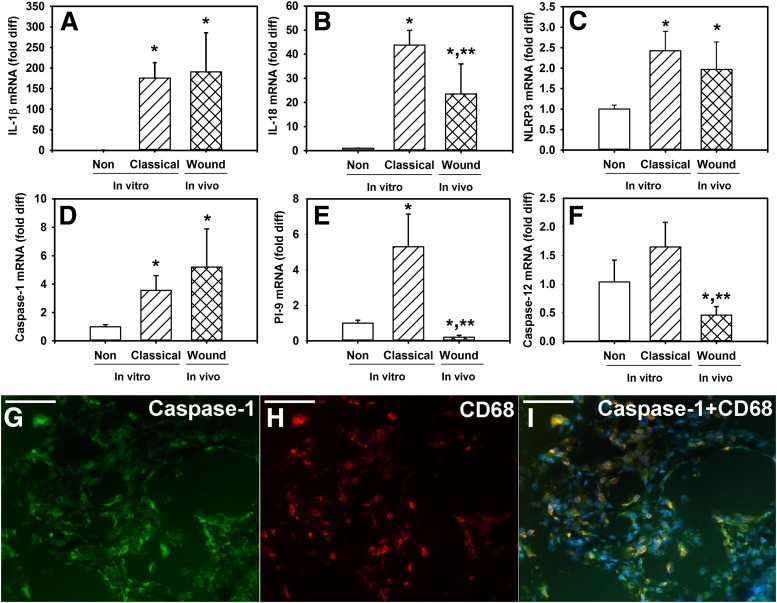
The hypothesis of this study was that sustained activity of the Nod-like receptor protein (NLRP)-3 inflammasome in wounds of diabetic humans and mice contributes to the persistent inflammatory response and impaired healing characteristic of these wounds. Macrophages (Mp) isolated from wounds on diabetic humans and db/db mice exhibited sustained inflammasome activity associated with low level of expression of endogenous inflammasome inhibitors. Soluble factors in the biochemical milieu of these wounds are sufficient to activate the inflammasome, as wound-conditioned medium activates caspase-1 and induces release of interleukin (IL)-1β and IL-18 in cultured Mp via a reactive oxygen species–mediated pathway. Importantly, inhibiting inflammasome activity in wounds of db/db mice using topical application of pharmacological inhibitors improved healing of these wounds, induced a switch from proinflammatory to healing-associated Mp phenotypes, and increased levels of prohealing growth factors. Furthermore, data generated from bone marrow–transfer experiments from NLRP-3 or caspase-1 knockout to db/db mice indicated that blocking inflammasome activity in bone marrow cells is sufficient to improve healing. Our findings indicate that sustained inflammasome activity in wound Mp contributes to impaired early healing responses of diabetic wounds and that the inflammasome may represent a new therapeutic target for improving healing in diabetic individuals.
Overview
AI snapshot
Written from the paper’s full text.
TL;DR
Sustained NLRP-3 inflammasome activity in wound macrophages from type 2 diabetic humans and db/db mice contributes to persistent inflammation and impaired healing. Blocking inflammasome activity pharmacologically or via NLRP-3/caspase-1–null bone marrow transfer improved early wound healing and shifted macrophages toward a prohealing phenotype.
Key findings
- Macrophages from chronic wounds of diabetic humans and db/db mice showed sustained inflammasome activity, with high NLRP-3, caspase-1, IL-1β, and IL-18, but low expression of endogenous inhibitors PI-9 and caspase-12. Active caspase-1 was detected in 9.9 ± 1.4% of db/db wound macrophages versus 4.8 ± 1.1% of db/+ wound macrophages.
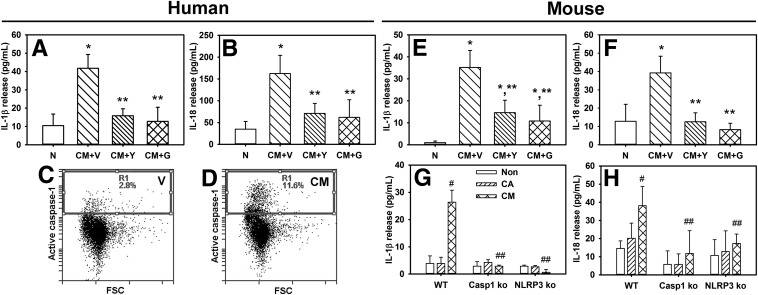
- Wound-conditioned medium activated caspase-1 and induced IL-1β/IL-18 release in cultured human and mouse macrophages via an ROS-mediated pathway; active caspase-1 was detected in 10.5 ± 1.3% of conditioned-medium–stimulated cells versus 2.9 ± 0.7% of nonstimulated controls.
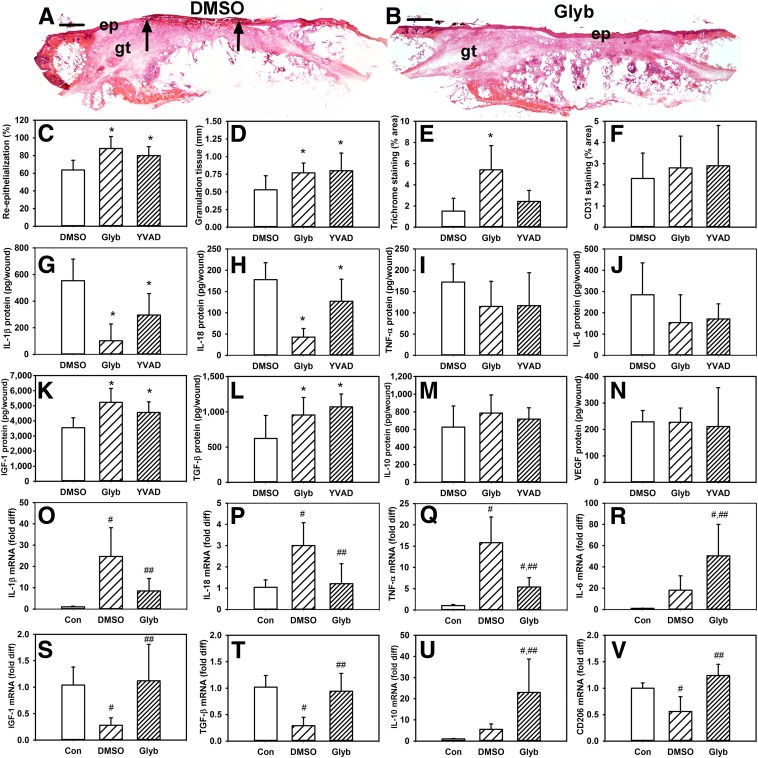
- Topical glyburide (200 μmol/L) or YVAD (20 μmol/L) in db/db wounds accelerated re-epithelialization, increased granulation tissue, reduced wound IL-1β/IL-18, increased IGF-1 and TGF-β, and shifted wound macrophage expression away from proinflammatory cytokines toward IGF-1, TGF-β, IL-10, and CD206.
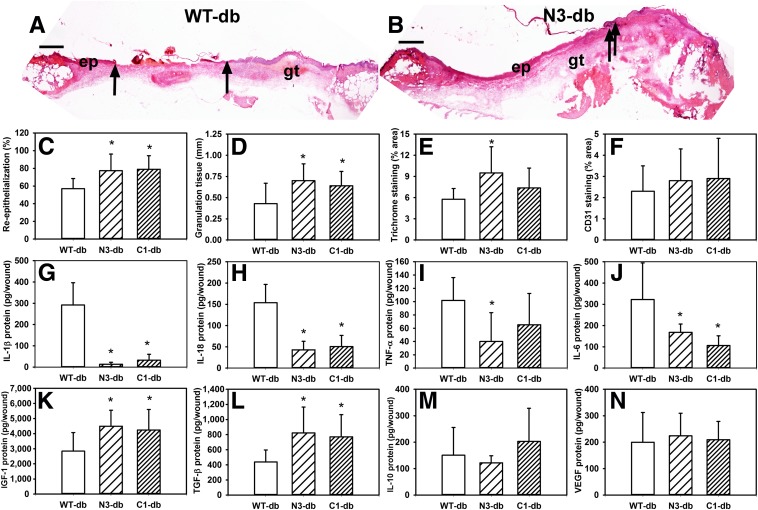
- Bone marrow transfer from NLRP-3– or caspase-1–null mice to db/db mice improved re-epithelialization and granulation tissue formation and reduced wound IL-1β and IL-18, indicating bone marrow–derived inflammasome activity is sufficient to impair healing.
Methods
- Human chronic wound biopsies were collected from five type 2 diabetic patients (2 male, 3 female) with nonhealing sacral or lower-limb wounds lasting at least 3 months; mouse experiments used db/db, db/+, C57Bl/6 wild-type, NLRP-3 knockout, caspase-1 knockout, and IL-1R1 knockout mice.
- Excisional wounds were made with an 8-mm biopsy punch; treatments were applied topically every other day starting 3 days postinjury in F-127 pluronic gel, and healing was assessed on day 10 by re-epithelialization, granulation tissue, collagen, CD31, and α-smooth-muscle actin staining.
- Macrophages were isolated by magnetic depletion and CD11b selection; inflammasome activity was assessed by real-time PCR, ELISA, flow cytometry for active caspase-1, immunofluorescence, and in vitro stimulation with wound-conditioned medium plus inhibitors; data were analyzed by ANOVA or ANOVA on ranks with Student-Newman-Keuls post hoc tests, P ≤ 0.05.
Limitations
- Stated: caspase-1–null mice were also deficient in caspase-11, so bone marrow–transfer experiments could not distinguish the roles of these caspases in impaired healing.
- Stated: topical glyburide and YVAD could block inflammasome activity in keratinocytes as well as macrophages, although the authors note macrophages were the dominant IL-1β producers and bone marrow transfer was sufficient to reduce wound IL-1β/IL-18.
- Evident: the human component is limited to five wound biopsies with no human therapeutic intervention, and macrophage phenotype changes after YVAD treatment were not measured.
Model-written summary. Check it against the paper before relying on it.
Integrity signals
Registry
Cites
Statistics
Figures
Verification
Claims the paper makes
65 Own result · 29 Own interpretation · 24 Not checked yet · 3 Own method
A result the paper reports from its own data — it cites no other source for it, so there is none to check. The quote shows it is in the paper.
In the paper
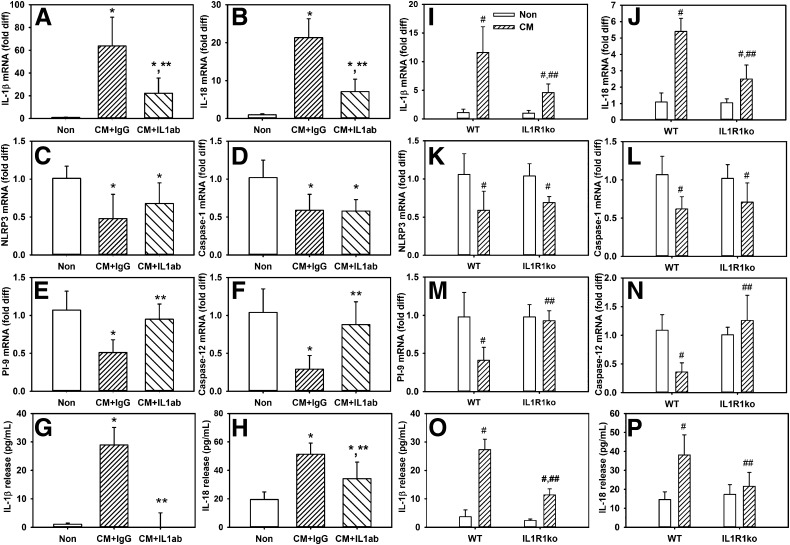
“Wound-conditioned medium increased release of IL-1β and IL-18 into the medium surrounding cultured Mp (Fig. 3A and B).”
§ Sustained Inflammasome Activity in Macrophages Impairs Wound Healing in Type 2 Diabetic Humans and Mice > Results > Diabetic Wound Environment Is Sufficient to Upregulate Inflammasome Activity
plaindirect- Asserted: passes — The authors put it forward as true.
- Checkable: passes — It can be checked against evidence.
- Load-bearing: passes — The paper’s conclusions depend on it.
- Based: passes — The paper gives a reason why it holds.
A result the paper reports from its own data — it cites no other source for it, so there is none to check. The quote shows it is in the paper.
In the paper
“active caspase-1 was detected in 2.9 ± 0.7% of nonstimulated control cells and in 10.5 ± 1.3% of conditioned medium–stimulated cells.”
§ Sustained Inflammasome Activity in Macrophages Impairs Wound Healing in Type 2 Diabetic Humans and Mice > Results > Diabetic Wound Environment Is Sufficient to Upregulate Inflammasome Activity
plain- Asserted: passes — The authors put it forward as true.
- Checkable: passes — It can be checked against evidence.
- Load-bearing: passes — The paper’s conclusions depend on it.
- Based: passes — The paper gives a reason why it holds.
A result the paper reports from its own data — it cites no other source for it, so there is none to check. The quote shows it is in the paper.
In the paper
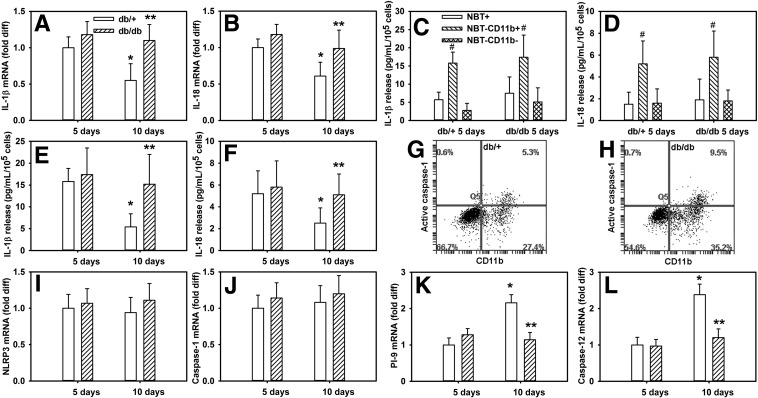
“When different wound cell populations were compared, Mp were the dominant producers of IL-1β and IL-18 after wounding in both db/+ and db/db mice (Fig. 2C and D).”
§ Sustained Inflammasome Activity in Macrophages Impairs Wound Healing in Type 2 Diabetic Humans and Mice > Results > Sustained Inflammasome Activity in Mp From Diabetic Mouse Wounds
plaincorrelational- Asserted: passes — The authors put it forward as true.
- Checkable: passes — It can be checked against evidence.
- Load-bearing: passes — The paper’s conclusions depend on it.
- Based: passes — The paper gives a reason why it holds.
A result the paper reports from its own data — it cites no other source for it, so there is none to check. The quote shows it is in the paper.
In the paper
“although no difference was observed in Mp expression of NLRP-3 or caspase-1 on days 5 and 10 postinjury in either db/+ or db/db mice (Fig. 2I and J)”
§ Sustained Inflammasome Activity in Macrophages Impairs Wound Healing in Type 2 Diabetic Humans and Mice > Results > Sustained Inflammasome Activity in Mp From Diabetic Mouse Wounds
plain- Asserted: passes — The authors put it forward as true.
- Checkable: passes — It can be checked against evidence.
- Load-bearing: passes — The paper’s conclusions depend on it.
- Based: passes — The paper gives a reason why it holds.
A result the paper reports from its own data — it cites no other source for it, so there is none to check. The quote shows it is in the paper.
In the paper
“Mp isolated from chronic wounds expressed high levels of inflammasome components NLRP-3 and caspase-1, and inflammasome targets IL-1β and IL-18, but only low levels of proteinase inhibitor-9 (PI-9) and caspase-12, which are negative regulators of inflammasome activity (Fig. 1A–F).”
§ Sustained Inflammasome Activity in Macrophages Impairs Wound Healing in Type 2 Diabetic Humans and Mice > Results > Inflammasome Components in Mp From Chronic Diabetic Human Wounds
plain- Asserted: passes — The authors put it forward as true.
- Checkable: passes — It can be checked against evidence.
- Load-bearing: passes — The paper’s conclusions depend on it.
- Based: passes — The paper gives a reason why it holds.
A result the paper reports from its own data — it cites no other source for it, so there is none to check. The quote shows it is in the paper.
In the paper
“both the caspase-1 inhibitor YVAD and the inflammasome inhibitor glyburide reduced the conditioned medium–induced release of IL-1β and IL-18.”
§ Sustained Inflammasome Activity in Macrophages Impairs Wound Healing in Type 2 Diabetic Humans and Mice > Results > Diabetic Wound Environment Is Sufficient to Upregulate Inflammasome Activity
plaindirect- Asserted: passes — The authors put it forward as true.
- Checkable: passes — It can be checked against evidence.
- Load-bearing: passes — The paper’s conclusions depend on it.
- Based: passes — The paper gives a reason why it holds.
A result the paper reports from its own data — it cites no other source for it, so there is none to check. The quote shows it is in the paper.
In the paper
“Mp isolated from chronic wounds expressed high levels of inflammasome components NLRP-3 and caspase-1, and inflammasome targets IL-1β and IL-18, but only low levels of proteinase inhibitor-9 (PI-9) and caspase-12, which are negative regulators of inflammasome activity (Fig. 1A–F).”
§ Sustained Inflammasome Activity in Macrophages Impairs Wound Healing in Type 2 Diabetic Humans and Mice > Results > Inflammasome Components in Mp From Chronic Diabetic Human Wounds
plain- Asserted: passes — The authors put it forward as true.
- Checkable: passes — It can be checked against evidence.
- Load-bearing: passes — The paper’s conclusions depend on it.
- Based: passes — The paper gives a reason why it holds.
A result the paper reports from its own data — it cites no other source for it, so there is none to check. The quote shows it is in the paper.
In the paper
“Wound-conditioned medium from db/db mice induced IL-1β and IL-18 release”
§ Sustained Inflammasome Activity in Macrophages Impairs Wound Healing in Type 2 Diabetic Humans and Mice > Results > Diabetic Wound Environment Is Sufficient to Upregulate Inflammasome Activity
plaindirect- Asserted: passes — The authors put it forward as true.
- Checkable: passes — It can be checked against evidence.
- Load-bearing: passes — The paper’s conclusions depend on it.
- Based: passes — The paper gives a reason why it holds.
A result the paper reports from its own data — it cites no other source for it, so there is none to check. The quote shows it is in the paper.
In the paper
“active caspase-1 was detected in 4.8 ± 1.1% of db/+ wound Mp and in 9.9 ± 1.4% of db/db wound Mp (mean ± SD).”
§ Sustained Inflammasome Activity in Macrophages Impairs Wound Healing in Type 2 Diabetic Humans and Mice > Results > Sustained Inflammasome Activity in Mp From Diabetic Mouse Wounds
plaincorrelational- Asserted: passes — The authors put it forward as true.
- Checkable: passes — It can be checked against evidence.
- Load-bearing: passes — The paper’s conclusions depend on it.
- Based: passes — The paper gives a reason why it holds.
A result the paper reports from its own data — it cites no other source for it, so there is none to check. The quote shows it is in the paper.
In the paper
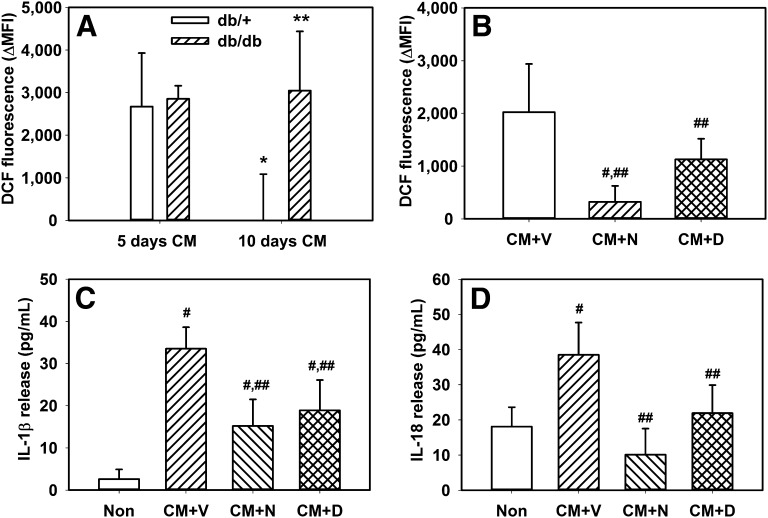
“Interestingly, wound-conditioned medium downregulated expression of NLRP-3, caspase-1, PI-9, and caspase-12”
§ Sustained Inflammasome Activity in Macrophages Impairs Wound Healing in Type 2 Diabetic Humans and Mice > Results > Blocking IL-1β Activity Reduces Inflammasome Activity in Cultured Mp
plaindirect- Asserted: passes — The authors put it forward as true.
- Checkable: passes — It can be checked against evidence.
- Load-bearing: unclear — It is unclear whether the paper’s conclusions depend on it.
- Based: passes — The paper gives a reason why it holds.
- It may state two separate claims as one. 17
- Probably not a substantial claim. 17
A result the paper reports from its own data — it cites no other source for it, so there is none to check. The quote shows it is in the paper.
In the paper
“expression of the inflammasome inhibitors PI-9 and caspase-12 was upregulated from day 5 to day 10 postinjury in db/+ mice (Fig. 2K and L), associated with the downregulation of inflammasome activity.”
§ Sustained Inflammasome Activity in Macrophages Impairs Wound Healing in Type 2 Diabetic Humans and Mice > Results > Sustained Inflammasome Activity in Mp From Diabetic Mouse Wounds
plaincorrelational- Asserted: passes — The authors put it forward as true.
- Checkable: passes — It can be checked against evidence.
- Load-bearing: passes — The paper’s conclusions depend on it.
- Based: passes — The paper gives a reason why it holds.
It may state two separate claims as one.
A result the paper reports from its own data — it cites no other source for it, so there is none to check. The quote shows it is in the paper.
In the paper
“Mp expression and release of IL-1β and IL-18 was high on day 5 postinjury and then downregulated on day 10 postinjury in db/+ mice. In contrast, expression and release of these inflammasome targets were maintained at high levels on day 10 in db/db mice (Fig. 2A, B, E, and F).”
§ Sustained Inflammasome Activity in Macrophages Impairs Wound Healing in Type 2 Diabetic Humans and Mice > Results > Sustained Inflammasome Activity in Mp From Diabetic Mouse Wounds
plain- Asserted: passes — The authors put it forward as true.
- Checkable: passes — It can be checked against evidence.
- Load-bearing: passes — The paper’s conclusions depend on it.
- Based: passes — The paper gives a reason why it holds.
It may state two separate claims as one.
A result the paper reports from its own data — it cites no other source for it, so there is none to check. The quote shows it is in the paper.
In the paper
“In contrast, expression of these inflammasome inhibitors was maintained at low levels in db/db mice, associated with sustained high levels of inflammasome activity.”
§ Sustained Inflammasome Activity in Macrophages Impairs Wound Healing in Type 2 Diabetic Humans and Mice > Results > Sustained Inflammasome Activity in Mp From Diabetic Mouse Wounds
plaincorrelational- Asserted: passes — The authors put it forward as true.
- Checkable: passes — It can be checked against evidence.
- Load-bearing: passes — The paper’s conclusions depend on it.
- Based: passes — The paper gives a reason why it holds.
It may state two separate claims as one.
A result the paper reports from its own data — it cites no other source for it, so there is none to check. The quote shows it is in the paper.
In the paper
“glyburide but not YVAD treatment increased collagen deposition on day 10 postinjury (Fig. 6E).”
§ Sustained Inflammasome Activity in Macrophages Impairs Wound Healing in Type 2 Diabetic Humans and Mice > Results > Blocking Inflammasome Activity Improves Healing in db/db Mice
plaindirect- Asserted: passes — The authors put it forward as true.
- Checkable: passes — It can be checked against evidence.
- Load-bearing: passes — The paper’s conclusions depend on it.
- Based: passes — The paper gives a reason why it holds.
It may state two separate claims as one.
A result the paper reports from its own data — it cites no other source for it, so there is none to check. The quote shows it is in the paper.
In the paper
“there were nonsignificant trends of decreased TNF-α and IL-6 in glyburide- and YVAD-treated wounds (Fig. 6I and J).”
§ Sustained Inflammasome Activity in Macrophages Impairs Wound Healing in Type 2 Diabetic Humans and Mice > Results > Blocking Inflammasome Activity Improves Healing in db/db Mice
hedged- Asserted: passes — The authors put it forward as true.
- Checkable: passes — It can be checked against evidence.
- Load-bearing: fails — The paper’s conclusions may not depend on it.
- Based: passes — The paper gives a reason why it holds.
Probably not a substantial claim. The paper’s conclusions may not depend on it.
A result the paper reports from its own data — it cites no other source for it, so there is none to check. The quote shows it is in the paper.
In the paper
“Conditioned medium from day 10 wounds of db/+ mice did not increase DCF fluorescence, but conditioned medium from db/db mice increased DCF fluorescence to a level similar to that of day 5 conditioned medium.”
§ Sustained Inflammasome Activity in Macrophages Impairs Wound Healing in Type 2 Diabetic Humans and Mice > Results > Blocking ROS Reduces Inflammasome Activity in Cultured Mp
plaindirect- Asserted: passes — The authors put it forward as true.
- Checkable: passes — It can be checked against evidence.
- Load-bearing: passes — The paper’s conclusions depend on it.
- Based: passes — The paper gives a reason why it holds.
It may state two separate claims as one.
A result the paper reports from its own data — it cites no other source for it, so there is none to check. The quote shows it is in the paper.
In the paper
“but the blocking antibody only inhibited the downregulation of PI-9 and caspase-12 (Fig. 5C–F).”
§ Sustained Inflammasome Activity in Macrophages Impairs Wound Healing in Type 2 Diabetic Humans and Mice > Results > Blocking IL-1β Activity Reduces Inflammasome Activity in Cultured Mp
plaindirect- Asserted: passes — The authors put it forward as true.
- Checkable: passes — It can be checked against evidence.
- Load-bearing: unclear — It is unclear whether the paper’s conclusions depend on it.
- Based: passes — The paper gives a reason why it holds.
It may state two separate claims as one.
A result the paper reports from its own data — it cites no other source for it, so there is none to check. The quote shows it is in the paper.
In the paper
“both treatments led to increased α-smooth-muscle actin staining”
§ Sustained Inflammasome Activity in Macrophages Impairs Wound Healing in Type 2 Diabetic Humans and Mice > Results > Blocking Inflammasome Activity Improves Healing in db/db Mice
plaindirect- Asserted: passes — The authors put it forward as true.
- Checkable: passes — It can be checked against evidence.
- Load-bearing: unclear — It is unclear whether the paper’s conclusions depend on it.
- Based: passes — The paper gives a reason why it holds.
It may state two separate claims as one.
A conclusion the paper draws from its own results — it cites no other source for it, so there is none to check. The quote shows it is in the paper.
In the paper
“Taken together, these data indicate that IL-1β in the diabetic wound environment may induce expression of IL-1β and IL-18 and contribute to sustained inflammasome activity in wound Mp.”
§ Sustained Inflammasome Activity in Macrophages Impairs Wound Healing in Type 2 Diabetic Humans and Mice > Results > Blocking IL-1β Activity Reduces Inflammasome Activity in Cultured Mp
hedgedconditional- Asserted: passes — The authors put it forward as true.
- Checkable: passes — It can be checked against evidence.
- Load-bearing: passes — The paper’s conclusions depend on it.
- Based: passes — The paper gives a reason why it holds.
It may state two separate claims as one.
What the paper did — it cites no source for this, so there is none to check. The quote shows it is in the paper.
In the paper
“Negative controls included nonstained slides and isotype-specific control antibodies (IgG1 and IgG2b; Biolegend) along with secondary antibodies.”
§ Sustained Inflammasome Activity in Macrophages Impairs Wound Healing in Type 2 Diabetic Humans and Mice > Research Design and Methods > Immunofluorescence
plain- Asserted: passes — The authors put it forward as true.
- Checkable: passes — It can be checked against evidence.
- Load-bearing: fails — The paper’s conclusions may not depend on it.
- Based: passes — The paper gives a reason why it holds.
Probably not a substantial claim. The paper’s conclusions may not depend on it.
What the paper did — it cites no source for this, so there is none to check. The quote shows it is in the paper.
In the paper
“Engraftment was verified in preliminary experiments using congenic mice and was found to be >85% by flow cytometry.”
§ Sustained Inflammasome Activity in Macrophages Impairs Wound Healing in Type 2 Diabetic Humans and Mice > Research Design and Methods > Bone Marrow Transfer
plain- Asserted: passes — The authors put it forward as true.
- Checkable: passes — It can be checked against evidence.
- Load-bearing: passes — The paper’s conclusions depend on it.
- Based: passes — The paper gives a reason why it holds.
Probably not a substantial claim.
None of the sources cited for this claim have been checked yet.
In the paper
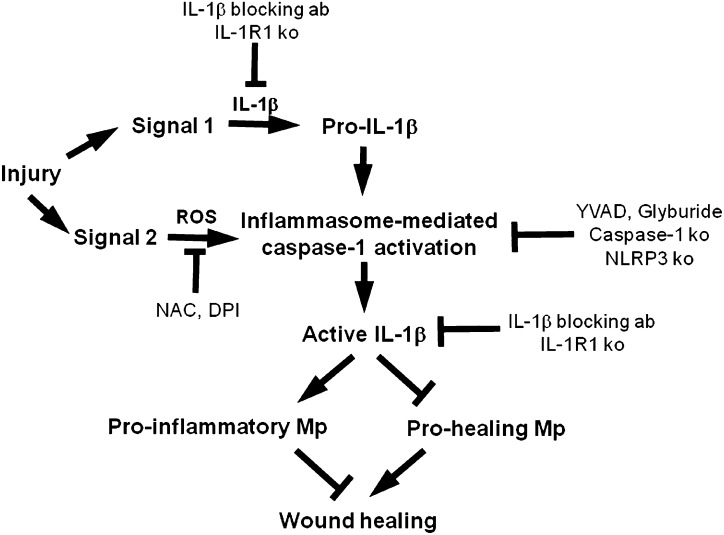
“During inflammasome activation, the proform of caspase-1 is recruited to the NLRP-3 complex and cleaved to produce active caspase-1, which then cleaves and activates the potent proinflammatory cytokines IL-1β and IL-18.”
§ Sustained Inflammasome Activity in Macrophages Impairs Wound Healing in Type 2 Diabetic Humans and Mice > Introduction
What the sources say
- Not checked yetcites [16] Martinon, 2009, The inflammasomes: guardians of the body, Annu Rev Immunol source
- Not checked yetcites [17] Strowig, 2012, Inflammasomes in health and disease, Nature source
- Not checked yetcites [18] Pedra, 2009, Sensing pathogens and danger signals by the inflammasome, Curr Opin Immunol source
plaindirect- Asserted: passes — The authors put it forward as true.
- Checkable: passes — It can be checked against evidence.
- Load-bearing: passes — The paper’s conclusions depend on it.
- Based: passes — The paper gives a reason why it holds.
It may state two separate claims as one.
None of the sources cited for this claim have been checked yet.
In the paper
“During impaired healing associated with diabetes, wounds exhibit prolonged accumulation of Mp associated with elevated levels of proinflammatory cytokines and proteases and reduced levels of various growth factors (2,12,13).”
§ Sustained Inflammasome Activity in Macrophages Impairs Wound Healing in Type 2 Diabetic Humans and Mice > Introduction
What the sources say
- Not checked yetcites [2] Blakytny, 2006, The molecular biology of chronic wounds and delayed healing in diabetes, Diabet Med source
- Not checked yetcites [12] Goren, 2003, Leptin and wound inflammation in diabetic ob/ob mice: differential regulation of neutrophil and macrophage influx and a potential role for the scab as a sink for inflammatory cells and mediators, Diabetes source
- Not checked yetcites [13] Greenhalgh, 1990, PDGF and FGF stimulate wound healing in the genetically diabetic mouse, Am J Pathol
plaincorrelational- Asserted: passes — The authors put it forward as true.
- Checkable: passes — It can be checked against evidence.
- Load-bearing: passes — The paper’s conclusions depend on it.
- Based: passes — The paper gives a reason why it holds.
It may state two separate claims as one.
None of the sources cited for this claim have been checked yet.
In the paper
“Although previous studies have demonstrated that platelet-derived growth factor, fibroblast growth factor, vascular endothelial growth factor (VEGF), or erythropoietin can improve healing in diabetic mice (13,36,37)”
§ Sustained Inflammasome Activity in Macrophages Impairs Wound Healing in Type 2 Diabetic Humans and Mice > Discussion
What the sources say
- Not checked yetcites [13] Greenhalgh, 1990, PDGF and FGF stimulate wound healing in the genetically diabetic mouse, Am J Pathol
- Not checked yetcites [36] Brem, 2009, Mechanism of sustained release of vascular endothelial growth factor in accelerating experimental diabetic healing, J Invest Dermatol source
- Not checked yetcites [37] Hamed, 2010, Topical erythropoietin promotes wound repair in diabetic rats, J Invest Dermatol source
boosteddirect- Asserted: passes — The authors put it forward as true.
- Checkable: passes — It can be checked against evidence.
- Load-bearing: fails — The paper’s conclusions may not depend on it.
- Based: passes — The paper gives a reason why it holds.
Probably not a substantial claim. The paper’s conclusions may not depend on it.
A conclusion the paper draws from its own results — it cites no other source for it, so there is none to check. The quote shows it is in the paper.
In the paper
“Importantly, inhibiting the inflammasome in vivo, either using topical application of pharmacological inhibitors or via bone marrow transfer from NLRP-3– or caspase-1–null mice to db/db mice, promotes the early healing response in part by downregulating the proinflammatory phenotype characteristic of Mp in diabetic wounds and increasing production of prohealing factors.”
§ Sustained Inflammasome Activity in Macrophages Impairs Wound Healing in Type 2 Diabetic Humans and Mice > Discussion
plaindirect- Asserted: passes — The authors put it forward as true.
- Checkable: passes — It can be checked against evidence.
- Load-bearing: passes — The paper’s conclusions depend on it.
- Based: passes — The paper gives a reason why it holds.
It may state two separate claims as one.
- Rests on an assumption: Bone marrow transfer from donor mice to db/db mice specifically targets the inflammasome in macrophages.
A conclusion the paper draws from its own results — it cites no other source for it, so there is none to check. The quote shows it is in the paper.
In the paper
“which, in turn, was associated with a more prohealing wound environment and improved healing in db/db mice.”
§ Sustained Inflammasome Activity in Macrophages Impairs Wound Healing in Type 2 Diabetic Humans and Mice > Results > Blocking Inflammasome Activity Improves Healing in db/db Mice
plaincorrelational- Asserted: passes — The authors put it forward as true.
- Checkable: passes — It can be checked against evidence.
- Load-bearing: passes — The paper’s conclusions depend on it.
- Based: passes — The paper gives a reason why it holds.
It may state two separate claims as one.
None of the sources cited for this claim have been checked yet.
In the paper
“The NLRP-3 inflammasome plays a role in the pathophysiology of many inflammatory diseases, including obesity, insulin resistance, and diabetes (21,31–35).”
§ Sustained Inflammasome Activity in Macrophages Impairs Wound Healing in Type 2 Diabetic Humans and Mice > Discussion
What the sources say
- Not checked yetcites [21] Dinarello, 2009, Immunological and inflammatory functions of the interleukin-1 family, Annu Rev Immunol source
- Not checked yetcites [31] Dinarello, 2004, Therapeutic strategies to reduce IL-1 activity in treating local and systemic inflammation, Curr Opin Pharmacol source
- Not checked yetcites [32] Larsen, 2007, Interleukin-1-receptor antagonist in type 2 diabetes mellitus, N Engl J Med source
- Not checked yetcites [33] Osborn, 2008, Treatment with an Interleukin 1 beta antibody improves glycemic control in diet-induced obesity, Cytokine source
- Not checked yetcites [34] Stienstra, 2011, Inflammasome is a central player in the induction of obesity and insulin resistance, Proc Natl Acad Sci USA source
- Not checked yetcites [35] Vandanmagsar, 2011, The NLRP3 inflammasome instigates obesity-induced inflammation and insulin resistance, Nat Med source
plaindirect- Asserted: passes — The authors put it forward as true.
- Checkable: passes — It can be checked against evidence.
- Load-bearing: passes — The paper’s conclusions depend on it.
- Based: passes — The paper gives a reason why it holds.
Probably not a substantial claim.
A conclusion the paper draws from its own results — it cites no other source for it, so there is none to check. The quote shows it is in the paper.
In the paper
“These data indicate that blocking inflammasome activity downregulated Mp expression of proinflammatory cytokines measured and upregulated expression of prohealing factors”
§ Sustained Inflammasome Activity in Macrophages Impairs Wound Healing in Type 2 Diabetic Humans and Mice > Results > Blocking Inflammasome Activity Improves Healing in db/db Mice
hedgeddirect- Asserted: passes — The authors put it forward as true.
- Checkable: passes — It can be checked against evidence.
- Load-bearing: passes — The paper’s conclusions depend on it.
- Based: passes — The paper gives a reason why it holds.
It may state two separate claims as one.
None of the sources cited for this claim have been checked yet.
In the paper
“Chronic wounds are typically associated with a persistent inflammatory response that involves accumulation of Mp (19,26–28)”
§ Sustained Inflammasome Activity in Macrophages Impairs Wound Healing in Type 2 Diabetic Humans and Mice > Discussion
What the sources say
- Not checked yetcites [19] Mast, 1996, Interactions of cytokines, growth factors, and proteases in acute and chronic wounds, Wound Repair Regen source
- Not checked yetcites [26] Loots, 1998, Differences in cellular infiltrate and extracellular matrix of chronic diabetic and venous ulcers versus acute wounds, J Invest Dermatol source
- Not checked yetcites [27] Rosner, 1995, Immunohistochemical characterization of the cutaneous cellular infiltrate in different areas of chronic leg ulcers, APMIS source
- Not checked yetcites [28] Trengove, 2000, Mitogenic activity and cytokine levels in non-healing and healing chronic leg ulcers, Wound Repair Regen source
plaincorrelational- Asserted: passes — The authors put it forward as true.
- Checkable: passes — It can be checked against evidence.
- Load-bearing: fails — The paper’s conclusions may not depend on it.
- Based: passes — The paper gives a reason why it holds.
Probably not a substantial claim. The paper’s conclusions may not depend on it.
In the paper
“Glyburide is a commonly used sulfonylurea drug for the treatment of type 2 diabetes and was recently shown to inhibit the NLRP-3 inflammasome through a mechanism that appears to be different from that involved in its ability to promote insulin secretion from pancreatic β-cells (38).”
§ Sustained Inflammasome Activity in Macrophages Impairs Wound Healing in Type 2 Diabetic Humans and Mice > Discussion
What the sources say
- Not checked yetcites [38] Lamkanfi, 2009, Glyburide inhibits the Cryopyrin/Nalp3 inflammasome, J Cell Biol source
hedgeddirect- Asserted: passes — The authors put it forward as true.
- Checkable: passes — It can be checked against evidence.
- Load-bearing: passes — The paper’s conclusions depend on it.
- Based: passes — The paper gives a reason why it holds.
It may state two separate claims as one.
None of the sources cited for this claim have been checked yet.
In the paper
“In fact, either premature changes in phenotype or delayed/impaired changes in phenotype have been associated with impaired healing (14,29,49).”
§ Sustained Inflammasome Activity in Macrophages Impairs Wound Healing in Type 2 Diabetic Humans and Mice > Discussion
What the sources say
- Not checked yetcites [14] Mirza, 2011, Dysregulation of monocyte/macrophage phenotype in wounds of diabetic mice, Cytokine source
- Not checked yetcites [29] Rodero, 2013, Reduced Il17a expression distinguishes a Ly6c(lo)MHCII(hi) macrophage population promoting wound healing, J Invest Dermatol source
- Not checked yetcites [49] Perdiguero, 2011, p38/MKP-1-regulated AKT coordinates macrophage transitions and resolution of inflammation during tissue repair, J Cell Biol source
plaincorrelational- Asserted: passes — The authors put it forward as true.
- Checkable: passes — It can be checked against evidence.
- Load-bearing: passes — The paper’s conclusions depend on it.
- Based: passes — The paper gives a reason why it holds.
It may state two separate claims as one.
None of the sources cited for this claim have been checked yet.
In the paper
“For example, both murine and human keratinocytes express inflammasome components NLRP-3, ASC, caspase-1, IL-1β, and IL-18 (43,44).”
§ Sustained Inflammasome Activity in Macrophages Impairs Wound Healing in Type 2 Diabetic Humans and Mice > Discussion
What the sources say
- Not checked yetcites [43] Feldmeyer, 2007, The inflammasome mediates UVB-induced activation and secretion of interleukin-1beta by keratinocytes, Curr Biol source
- Not checked yetcites [44] Watanabe, 2007, Activation of the IL-1beta-processing inflammasome is involved in contact hypersensitivity, J Invest Dermatol source
plain- Asserted: passes — The authors put it forward as true.
- Checkable: passes — It can be checked against evidence.
- Load-bearing: fails — The paper’s conclusions may not depend on it.
- Based: passes — The paper gives a reason why it holds.
Probably not a substantial claim. The paper’s conclusions may not depend on it.
None of the sources cited for this claim have been checked yet.
In the paper
“Caspase recruitment domain–only proteins (COPs), such as Iceberg, Pseudo-ICE, and caspase-12, and pyrin domain–only proteins (POPs), such as pyrin, POP1, and POP2, are thought to inhibit inflammasome activity by blocking inflammasome assembly and subsequent caspase-1 cleavage (16,39).”
§ Sustained Inflammasome Activity in Macrophages Impairs Wound Healing in Type 2 Diabetic Humans and Mice > Discussion
What the sources say
hedgedconditional- Asserted: passes — The authors put it forward as true.
- Checkable: passes — It can be checked against evidence.
- Load-bearing: fails — The paper’s conclusions may not depend on it.
- Based: passes — The paper gives a reason why it holds.
Probably not a substantial claim. The paper’s conclusions may not depend on it.
In the paper
“Components of the inflammasome can be expressed in cell types other than Mp that are involved in wound healing (42).”
§ Sustained Inflammasome Activity in Macrophages Impairs Wound Healing in Type 2 Diabetic Humans and Mice > Discussion
What the sources say
- Not checked yetcites [42] Yazdi, 2010, The role of the inflammasome in nonmyeloid cells, J Clin Immunol source
plain- Asserted: passes — The authors put it forward as true.
- Checkable: passes — It can be checked against evidence.
- Load-bearing: fails — The paper’s conclusions may not depend on it.
- Based: passes — The paper gives a reason why it holds.
Probably not a substantial claim. The paper’s conclusions may not depend on it.
None of the sources cited for this claim have been checked yet.
In the paper
“Recent studies have shown that Mp phenotypes change over the different phases of tissue repair and that the sequential appearance of these phenotypes may be required for efficient repair (11,14,29,49,50).”
§ Sustained Inflammasome Activity in Macrophages Impairs Wound Healing in Type 2 Diabetic Humans and Mice > Discussion
What the sources say
- Not checked yetcites [11] Willenborg, 2012, CCR2 recruits an inflammatory macrophage subpopulation critical for angiogenesis in tissue repair, Blood source
- Not checked yetcites [14] Mirza, 2011, Dysregulation of monocyte/macrophage phenotype in wounds of diabetic mice, Cytokine source
- Not checked yetcites [29] Rodero, 2013, Reduced Il17a expression distinguishes a Ly6c(lo)MHCII(hi) macrophage population promoting wound healing, J Invest Dermatol source
- Not checked yetcites [49] Perdiguero, 2011, p38/MKP-1-regulated AKT coordinates macrophage transitions and resolution of inflammation during tissue repair, J Cell Biol source
- Not checked yetcites [50] Novak, 2013, Macrophage phenotypes during tissue repair, J Leukoc Biol source
hedgedconditional- Asserted: passes — The authors put it forward as true.
- Checkable: passes — It can be checked against evidence.
- Load-bearing: passes — The paper’s conclusions depend on it.
- Based: passes — The paper gives a reason why it holds.
Probably not a substantial claim. It may state two separate claims as one.
None of the sources cited for this claim have been checked yet.
In the paper
“Accumulating evidence indicates that Mp are critical orchestrators in healing of many tissues, including skin (3,4,7,48).”
§ Sustained Inflammasome Activity in Macrophages Impairs Wound Healing in Type 2 Diabetic Humans and Mice > Discussion
What the sources say
- Not checked yetcites [3] Arnold, 2007, Inflammatory monocytes recruited after skeletal muscle injury switch into antiinflammatory macrophages to support myogenesis, J Exp Med source
- Not checked yetcites [4] Mirza, 2009, Selective and specific macrophage ablation is detrimental to wound healing in mice, Am J Pathol source
- Not checked yetcites [7] Duffield, 2005, Selective depletion of macrophages reveals distinct, opposing roles during liver injury and repair, J Clin Invest source
- Not checked yetcites [48] van Amerongen, 2007, Macrophage depletion impairs wound healing and increases left ventricular remodeling after myocardial injury in mice, Am J Pathol source
hedgeddirect- Asserted: passes — The authors put it forward as true.
- Checkable: passes — It can be checked against evidence.
- Load-bearing: fails — The paper’s conclusions may not depend on it.
- Based: passes — The paper gives a reason why it holds.
Probably not a substantial claim. The paper’s conclusions may not depend on it.
A conclusion the paper draws from its own results — it cites no other source for it, so there is none to check. The quote shows it is in the paper.
In the paper
“Thus, topical application of glyburide and YVAD in our studies could block inflammasome activity in keratinocytes as well as Mp.”
§ Sustained Inflammasome Activity in Macrophages Impairs Wound Healing in Type 2 Diabetic Humans and Mice > Discussion
hedgedconditional- Asserted: passes — The authors put it forward as true.
- Checkable: passes — It can be checked against evidence.
- Load-bearing: fails — The paper’s conclusions may not depend on it.
- Based: passes — The paper gives a reason why it holds.
Probably not a substantial claim. The paper’s conclusions may not depend on it.
None of the sources cited for this claim have been checked yet.
In the paper
“Interestingly, humans express a broad array of COPs and POPs, whereas rodents only express a limited subset (16,39).”
§ Sustained Inflammasome Activity in Macrophages Impairs Wound Healing in Type 2 Diabetic Humans and Mice > Discussion
What the sources say
plain- Asserted: passes — The authors put it forward as true.
- Checkable: passes — It can be checked against evidence.
- Load-bearing: fails — The paper’s conclusions may not depend on it.
- Based: passes — The paper gives a reason why it holds.
Probably not a substantial claim. The paper’s conclusions may not depend on it. It may state two separate claims as one.
None of the sources cited for this claim have been checked yet.
In the paper
“In addition, other inhibitors such as PI-9 act by directly binding and inhibiting caspase-1 (40,41).”
§ Sustained Inflammasome Activity in Macrophages Impairs Wound Healing in Type 2 Diabetic Humans and Mice > Discussion
What the sources say
- Not checked yetcites [40] Young, 2000, The serpin proteinase inhibitor 9 is an endogenous inhibitor of interleukin 1beta-converting enzyme (caspase-1) activity in human vascular smooth muscle cells, J Exp Med source
- Not checked yetcites [41] Annand, 1999, Caspase-1 (interleukin-1beta-converting enzyme) is inhibited by the human serpin analogue proteinase inhibitor 9, Biochem J source
plaindirect- Asserted: passes — The authors put it forward as true.
- Checkable: passes — It can be checked against evidence.
- Load-bearing: fails — The paper’s conclusions may not depend on it.
- Based: passes — The paper gives a reason why it holds.
Probably not a substantial claim. The paper’s conclusions may not depend on it.
None of the sources cited for this claim have been checked yet.
In the paper
“and contact hypersensitivity appears to be mediated by the inflammasome/IL-1β pathway (44,45).”
§ Sustained Inflammasome Activity in Macrophages Impairs Wound Healing in Type 2 Diabetic Humans and Mice > Discussion
What the sources say
- Not checked yetcites [44] Watanabe, 2007, Activation of the IL-1beta-processing inflammasome is involved in contact hypersensitivity, J Invest Dermatol source
- Not checked yetcites [45] Sutterwala, 2006, Critical role for NALP3/CIAS1/Cryopyrin in innate and adaptive immunity through its regulation of caspase-1, Immunity source
hedgedconditional- Asserted: passes — The authors put it forward as true.
- Checkable: passes — It can be checked against evidence.
- Load-bearing: fails — The paper’s conclusions may not depend on it.
- Based: passes — The paper gives a reason why it holds.
Probably not a substantial claim. The paper’s conclusions may not depend on it.
In the paper
“In addition, ultraviolet irradiation–induced IL-1β secretion from human keratinocytes in vitro appears to be mediated by the NLRP-3 inflammasome (43)”
§ Sustained Inflammasome Activity in Macrophages Impairs Wound Healing in Type 2 Diabetic Humans and Mice > Discussion
What the sources say
- Not checked yetcites [43] Feldmeyer, 2007, The inflammasome mediates UVB-induced activation and secretion of interleukin-1beta by keratinocytes, Curr Biol source
hedgedconditional- Asserted: passes — The authors put it forward as true.
- Checkable: passes — It can be checked against evidence.
- Load-bearing: fails — The paper’s conclusions may not depend on it.
- Based: passes — The paper gives a reason why it holds.
Probably not a substantial claim. The paper’s conclusions may not depend on it.
The paper relies on this without support.
The db/db mouse model of type 2 diabetes is representative of human diabetic wound healing for testing inflammasome-targeted therapies.
“Diabetic db/db mice, nondiabetic db/+ controls, and C57Bl/6 wild-type controls were obtained from The Jackson Laboratory.”
“Our findings indicate that sustained inflammasome activity in wound Mp contributes to impaired early healing responses of diabetic wounds and that the inflammasome may represent a new therapeutic target for improving healing in diabetic individuals.”
The paper relies on this without support.
Bone marrow transfer from donor mice to db/db mice specifically targets the inflammasome in macrophages.
“To more specifically target the inflammasome in Mp, we used bone marrow transfer to determine the role of bone marrow cell–derived inflammasome activity in impaired healing of wounds in diabetic mice.”
Claims other papers make about this one
Each is checked against this paper’s own text: does it say what the citing paper says it does?
In the citing paper
“Separate reports using two different mouse models of nonhealing wounds108,109 have demonstrated that iron overloading and sustained inflammasome activation of macrophages results in defective transition from an inflammatory M1 to a prohealing M2 phenotype.”
From The Innate Immune System in Acute and Chronic Wounds (2016) · cites this paper as [108]
Self-check
Percentages, sums and reported differences re-computed from the paper’s own numbers.
Each contradiction between two passages listed here was confirmed by an independent check.
Rated minor: it would not touch a result — a value no result rests on, a p-value that stays on the same side of the significance level, or a conflict that is clerical, resolved elsewhere in the paper, or outside its own findings.
In the paper
§ Sustained Inflammasome Activity in Macrophages Impairs Wound Healing in Type 2 Diabetic Humans and Mice > Results > Blocking Inflammasome Activity Improves Healing in db/db Mice
“These data indicate that blocking inflammasome activity downregulated Mp expression of proinflammatory cytokines measured and upregulated expression of prohealing factors”
§ Sustained Inflammasome Activity in Macrophages Impairs Wound Healing in Type 2 Diabetic Humans and Mice > Results > Blocking Inflammasome Activity Improves Healing in db/db Mice
“although expression of IL-6 was increased (Fig. 6R)”
Citations
Cites
Singer, A. J., & Clark, R. A. F. (1999) · New England Journal of Medicine · doi:10.1056/nejm199909023411006 · Cited by 6,106
Immunological and inflammatory functions of the interleukin-1 family
Dinarello, C. A. (2009) · Annual Review of Immunology · doi:10.1146/annurev.immunol.021908.132612 · Cited by 3,466 · cited 1×
“Since IL-1b, in turn, is known to induce a proinflammatory Mp phenotype (15,21), the NLRP-3 inflammasome may be part of a positive feedback loop that sustains inflammation in chronic wounds and contributes to impaired healing.”
BackgroundThe NLRP3 inflammasome instigates obesity-induced inflammation and insulin resistance
Vandanmagsar, B., Youm, Y.-H., Ravussin, A., Galgani, J. E., Stadler, K., Mynatt, R. L., Ravussin, E., Stephens, J. M., & Dixit, V. D. (2011) · Nature Medicine · doi:10.1038/nm.2279 · Cited by 2,655
Non-canonical inflammasome activation targets caspase-11
Kayagaki, N., Warming, S., Lamkanfi, M., Walle, L. V., Louie, S., Dong, J., Newton, K., Qu, Y., Liu, J., Heldens, S., et al. (2011) · Nature · doi:10.1038/nature10558 · Cited by 2,530 · cited 1×
“A limitation of our study is that the caspase1–null mice were also found to be deficient in caspase-11 (46,47), and so our bone marrow–transfer experiments do not distinguish the role of these caspases in the impaired healing of wounds in db/db mice.”
BackgroundThe Inflammasomes: Guardians of the Body
Martinon, F., Mayor, A., & Tschopp, J. (2009) · Annual Review of Immunology · doi:10.1146/annurev.immunol.021908.132715 · Cited by 2,436 · cited 4×
“Whereas a number of different danger signals, including ATP, uric acid crystals, cholesterol crystals, and glucose, can activate the inflammasome (16,17,25), a common downstream mediator may be increased production of ROS (25).”
BackgroundInfluentialNahrendorf, M., Swirski, F. K., Aikawa, E., Stangenberg, L., Wurdinger, T., Figueiredo, J.-L., Libby, P., Weissleder, R., & Pittet, M. J. (2007) · The Journal of Experimental Medicine · doi:10.1084/jem.20070885 · Cited by 2,300
Inflammasomes in health and disease
Strowig, T., Henao-Mejia, J., Elinav, E., & Flavell, R. (2012) · Nature · doi:10.1038/nature10759 · Cited by 2,230 · cited 2×
“Whereas a number of different danger signals, including ATP, uric acid crystals, cholesterol crystals, and glucose, can activate the inflammasome (16,17,25), a common downstream mediator may be increased production of ROS (25).”
BackgroundArnold, L., Henry, A., Poron, F., Baba-Amer, Y., van Rooijen, N., Plonquet, A., Gherardi, R. K., & Chazaud, B. (2007) · The Journal of Experimental Medicine · doi:10.1084/jem.20070075 · Cited by 2,002 · cited 1×
“Accumulating evidence indicates that Mp are critical orchestrators in healing of many tissues, including skin (3,4,7,48).”
BackgroundNLRP3 inflammasome activation: the convergence of multiple signalling pathways on ROS production?
Tschopp, J., & Schroder, K. (2010) · Nature reviews. Immunology · doi:10.1038/nri2725 · Cited by 1,859 · cited 2×
“Whereas a number of different danger signals, including ATP, uric acid crystals, cholesterol crystals, and glucose, can activate the inflammasome (16,17,25), a common downstream mediator may be increased production of ROS (25).”
BackgroundInterleukin-1-receptor antagonist in type 2 diabetes mellitus
Larsen, C. M., Faulenbach, M., Vaag, A., Vølund, A., Ehses, J. A., Seifert, B., Mandrup-Poulsen, T., & Donath, M. Y. (2007) · New England Journal of Medicine · doi:10.1056/nejmoa065213 · Cited by 1,798
Selective depletion of macrophages reveals distinct, opposing roles during liver injury and repair
Duffield, J. S., Forbes, S. J., Constandinou, C. M., Clay, S., Partolina, M., Vuthoori, S., Wu, S., Lang, R., & Iredale, J. P. (2005) · Journal of Clinical Investigation · doi:10.1172/jci200522675 · Cited by 1,649 · cited 1×
“Accumulating evidence indicates that Mp are critical orchestrators in healing of many tissues, including skin (3,4,7,48).”
BackgroundThe role of the macrophage in wound repair. A study with hydrocortisone and antimacrophage serum.
(1975) · PubMed Central · Cited by 1,437
Differential Roles of Macrophages in Diverse Phases of Skin Repair
Lucas, T., Waisman, A., Ranjan, R., Roes, J., Krieg, T., Müller, W., Roers, A., & Eming, S. A. (2010) · The Journal of Immunology · doi:10.4049/jimmunol.0903356 · Cited by 1,205 · cited 1×
“Mp promote tissue repair by killing pathogens, clearing damaged tissue and producing growth factors that induce angiogenesis, collagen deposition and wound closure (4; 8-11).”
BackgroundSindrilaru, A., Peters, T., Wieschalka, S., Baican, C., Baican, A., Peter, H., Hainzl, A., Schatz, S., Qi, Y., Schlecht, A., et al. (2011) · Journal of Clinical Investigation · doi:10.1172/jci44490 · Cited by 1,100 · cited 1×
“We and others have observed a persistent proinflammatory wound Mp phenotype in diabetic humans and mice (14,29) and in chronic venous ulcers (30).”
BackgroundSutterwala, F. S., Ogura, Y., Szczepanik, M., Lara-Tejero, M., Lichtenberger, G. S., Grant, E. P., Bertin, J., Coyle, A. J., Galán, J. E., Askenase, P. W., et al. (2006) · Immunity · doi:10.1016/j.immuni.2006.02.004 · Cited by 980
Analysis of the acute and chronic wound environments: the role of proteases and their inhibitors
Trengove, N. J., Stacey, M. C., Macauley, S., Bennett, N., Gibson, J., Burslem, F., Murphy, G., & Schultz, G. (1999) · Wound Repair and Regeneration · doi:10.1046/j.1524-475x.1999.00442.x · Cited by 908 · cited 1×
“Elevated levels of IL-1b have been found in wounds of diabetic humans and mice (12,15,19,20), consistent with increased inflammasome activity.”
BackgroundGlyburide inhibits the Cryopyrin/Nalp3 inflammasome
Lamkanfi, M., Mueller, J. L., Vitari, A. C., Misaghi, S., Fedorova, A., Deshayes, K., Lee, W. P., Hoffman, H. M., & Dixit, V. M. (2009) · Journal of Cell Biology · doi:10.1083/jcb.200903124 · Cited by 820 · cited 1×
“Glyburide is a commonly used sulfonylurea drug for the treatment of type 2 diabetes and was recently shown to inhibit the NLRP-3 inflammasome through a mechanism that appears to be different from that involved in its ability to promote insulin secretion from pancreatic b-cells (38).”
BackgroundMacrophage diversity in renal injury and repair
Ricardo, S. D., van Goor, H., & Eddy, A. A. (2008) · Journal of Clinical Investigation · doi:10.1172/jci36150 · Cited by 735 · cited 1×
“For measurement of reactive oxygen species (ROS), cells were incubated in 5 mmol/L 5(6)-carboxy-29,79dichlorofluorescein diacetate (DCF-DA; Invitrogen) for 10 min at 37°C and stimulated with wound-conditioned medium with 25 mmol/L NAC, 25 mmol/L DPI, or vehicle for 1 h at 37°C.”
MethodInflammasome is a central player in the induction of obesity and insulin resistance
Stienstra, R., van Diepen, J. A., Tack, C. J., Zaki, M. H., van de Veerdonk, F. L., Perera, D., Neale, G. A., Hooiveld, G. J., Hijmans, A., Vroegrijk, I., et al. (2011) · Proceedings of the National Academy of Sciences · doi:10.1073/pnas.1100255108 · Cited by 727
PDGF and FGF stimulate wound healing in the genetically diabetic mouse.
Greenhalgh, D. G., Sprugel, K. H., Murray, M. J., & Ross, R. (1990) · Europe PMC (PubMed Central) · Cited by 681
Macrophage phenotypes during tissue repair
Novak, M. L., & Koh, T. J. (2013) · Journal of Leukocyte Biology · doi:10.1189/jlb.1012512 · Cited by 658 · cited 1×
“Recent studies have shown that Mp phenotypes change over the different phases of tissue repair and that the sequential appearance of these phenotypes may be required for efficient repair (11,14,29,49,50).”
BackgroundSelf-citationThe molecular biology of chronic wounds and delayed healing in diabetes
Blakytny, R., & Jude, E. (2006) · Diabetic Medicine · doi:10.1111/j.1464-5491.2006.01773.x · Cited by 632 · cited 2×
“During impaired healing associated with diabetes, wounds exhibit prolonged accumulation of Mp associated with elevated levels of proinflammatory cytokines and proteases and reduced levels of various growth factors (2,12,13).”
BackgroundLoots, M. A. M., Lamme, E. N., Zeegelaar, J., Mekkes, J. R., Bos, J. D., & Middelkoop, E. (1998) · Journal of Investigative Dermatology · doi:10.1046/j.1523-1747.1998.00381.x · Cited by 620 · cited 1×
“15 DISCUSSION Chronic wounds are typically associated with a persistent inflammatory response that involves accumulation of Mp (19; 26-28); however little is known about the regulation and function of Mp in non-healing wounds.”
BackgroundSelective and Specific Macrophage Ablation Is Detrimental to Wound Healing in Mice
Mirza, R., DiPietro, L. A., & Koh, T. J. (2009) · The American Journal of Pathology · doi:10.2353/ajpath.2009.090248 · Cited by 616 · cited 3×
“Accumulating evidence indicates that Mp are critical orchestrators in healing of many tissues, including skin (3,4,7,48).”
BackgroundMethodSelf-citationInteractions of cytokines, growth factors, and proteases in acute and chronic wounds
Mast, B. A., & Schultz, G. S. (1996) · Wound Repair and Regeneration · doi:10.1046/j.1524-475x.1996.40404.x · Cited by 598 · cited 1×
“Elevated levels of IL-1b have been found in wounds of diabetic humans and mice (12,15,19,20), consistent with increased inflammasome activity.”
BackgroundThe Inflammasome Mediates UVB-Induced Activation and Secretion of Interleukin-1β by Keratinocytes
Feldmeyer, L., Keller, M., Niklaus, G., Hohl, D., Werner, S., & Beer, H.-D. (2007) · Current Biology · doi:10.1016/j.cub.2007.05.074 · Cited by 544
van Amerongen, M. J., Harmsen, M. C., van Rooijen, N., Petersen, A. H., & van Luyn, M. J. A. (2007) · The American Journal of Pathology · doi:10.2353/ajpath.2007.060547 · Cited by 544
Caspase-11 increases susceptibility to Salmonella infection in the absence of caspase-1
Broz, P., Ruby, T., Belhocine, K., Bouley, D. M., Kayagaki, N., Dixit, V. M., & Monack, D. M. (2012) · Nature · doi:10.1038/nature11419 · Cited by 535 · cited 1×
“A limitation of our study is that the caspase1–null mice were also found to be deficient in caspase-11 (46,47), and so our bone marrow–transfer experiments do not distinguish the role of these caspases in the impaired healing of wounds in db/db mice.”
BackgroundCCR2 recruits an inflammatory macrophage subpopulation critical for angiogenesis in tissue repair
Willenborg, S., Lucas, T., van Loo, G., Knipper, J. A., Krieg, T., Haase, I., Brachvogel, B., Hammerschmidt, M., Nagy, A., Ferrara, N., et al. (2012) · Blood · doi:10.1182/blood-2012-01-403386 · Cited by 534
Mirza, R. E., Fang, M. M., Ennis, W. J., & Koh, T. J. (2013) · Diabetes · doi:10.2337/db12-1450 · Cited by 467
Self-citationMitogenic activity and cytokine levels in non-healing and healing chronic leg ulcers
Trengove, N. J., Bielefeldt‐Ohmann, H., & Stacey, M. C. (2000) · Wound Repair and Regeneration · doi:10.1046/j.1524-475x.2000.00013.x · Cited by 432 · cited 1×
“15 DISCUSSION Chronic wounds are typically associated with a persistent inflammatory response that involves accumulation of Mp (19; 26-28); however little is known about the regulation and function of Mp in non-healing wounds.”
BackgroundActivation of the IL-1β-Processing Inflammasome Is Involved in Contact Hypersensitivity
Watanabe, H., Gaide, O., Pétrilli, V., Martinon, F., Contassot, E., Roques, S., Kummer, J. A., Tschopp, J., & French, L. E. (2007) · Journal of Investigative Dermatology · doi:10.1038/sj.jid.5700819 · Cited by 416
A Transgenic Mouse Model of Inducible Macrophage Depletion
Goren, I., Allmann, N., Yogev, N., Schürmann, C., Linke, A., Holdener, M., Waisman, A., Pfeilschifter, J. M., & Frank, S. (2009) · American Journal Of Pathology · doi:10.2353/ajpath.2009.081002 · Cited by 368 · cited 1×
“Mp promote tissue repair by killing pathogens, clearing damaged tissue and producing growth factors that induce angiogenesis, collagen deposition and wound closure (4; 8-11).”
BackgroundDysregulation of monocyte/macrophage phenotype in wounds of diabetic mice
Mirza, R., & Koh, T. J. (2011) · Cytokine · doi:10.1016/j.cyto.2011.06.016 · Cited by 342 · cited 8×
“For mouse wounds, healing was assessed on day 10 postinjury using our previously published assays of granulation tissue formation and re-epithelialization using hematoxylin-eosin–stained cryosections (4,14).”
BackgroundMethodInfluentialSelf-citationPerdiguero, E., Sousa-Victor, P., Ruiz-Bonilla, V., Jardí, M., Caelles, C., Serrano, A. L., & Muñoz-Cánoves, P. (2011) · Journal of Cell Biology · doi:10.1083/jcb.201104053 · Cited by 236
Absorption of insulin from Pluronic F-127 gels following subcutaneous administration in rats
Barichello, J. M., Morishita, M., Takayama, K., et al. (1999) · International Journal of Pharmaceutics · doi:10.1016/s0378-5173(99)00119-2 · Cited by 235 · cited 1×
“Ac-YVAD-cmk (20 mmol/L; Cayman Chemical) and glyburide (200 mmol/L; InvivoGen) were applied topically to wounds every other day in F-127 pluronic gel (50 mL of a 25% gel in saline) (22,23).”
MethodSensing pathogens and danger signals by the inflammasome
Pedra, J. H., Cassel, S. L., & Sutterwala, F. S. (2009) · Current Opinion in Immunology · doi:10.1016/j.coi.2009.01.006 · Cited by 233 · cited 1×
“Pro-inflammatory danger signals induce activity of a multi-protein complex called the Nod-like receptor protein (NLRP)-3 inflammasome (16-18).”
BackgroundTherapeutic strategies to reduce IL-1 activity in treating local and systemic inflammation
DINARELLO, C. (2004) · Current Opinion in Pharmacology · doi:10.1016/j.coph.2004.03.010 · Cited by 195 · cited 1×
“The NLRP-3 inflammasome plays a role in the pathophysiology of many inflammatory diseases, including obesity, insulin resistance and diabetes (21; 31-35).”
BackgroundBrem, H., Kodra, A., Golinko, M. S., Entero, H., Stojadinovic, O., Wang, V. M., Sheahan, C. M., Weinberg, A. D., Woo, S. L. C., Paul Ehrlich, H., et al. (2009) · Journal of Investigative Dermatology · doi:10.1038/jid.2009.26 · Cited by 182
Treatment with an Interleukin 1 beta antibody improves glycemic control in diet-induced obesity
Osborn, O., Brownell, S. E., Sanchez-Alavez, M., Salomon, D., Gram, H., & Bartfai, T. (2008) · Cytokine · doi:10.1016/j.cyto.2008.07.004 · Cited by 160 · cited 1×
“The NLRP-3 inflammasome plays a role in the pathophysiology of many inflammatory diseases, including obesity, insulin resistance and diabetes (21; 31-35).”
BackgroundYoung, J. L., Sukhova, G. K., Foster, D., Kisiel, W., Libby, P., & Schönbeck, U. (2000) · The Journal of Experimental Medicine · doi:10.1084/jem.191.9.1535 · Cited by 133
COPs and POPs: modulators of inflammasome activity
Stehlik, C., & Dorfleutner, A. (2007) · The Journal of Immunology · doi:10.4049/jimmunol.179.12.7993 · Cited by 130
ANNAND, R. R., DAHLEN, J. R., SPRECHER, C. A., DREU, P. D., FOSTER, D. C., MANKOVICH, J. A., TALANIAN, R. V., KISIEL, W., & GIEGEL, D. A. (1999) · Biochemical Journal · doi:10.1042/bj3420655 · Cited by 106
Reduced Il17a Expression Distinguishes a Ly6cloMHCIIhi Macrophage Population Promoting Wound Healing
Rodero, M. P., Hodgson, S. S., Hollier, B., Combadiere, C., & Khosrotehrani, K. (2013) · Journal of Investigative Dermatology · doi:10.1038/jid.2012.368 · Cited by 104
Topical erythropoietin promotes wound repair in diabetic rats
Hamed, S., Ullmann, Y., Masoud, M., Hellou, E., Khamaysi, Z., & Teot, L. (2010) · Journal of Investigative Dermatology · doi:10.1038/jid.2009.219 · Cited by 102 · cited 1×
“Although previous studies have demonstrated that plateletderived growth factor, fibroblast growth factor, vascular endothelial growth factor (VEGF), or erythropoietin can improve healing in diabetic mice (13,36,37), our data indicate that targeting the inflammasome may provide a novel target for improving healing in d…”
ResultLeptin and Wound Inflammation in Diabetic ob/ob Mice
Goren, I., Kämpfer, H., Podda, M., Pfeilschifter, J., & Frank, S. (2003) · Diabetes · doi:10.2337/diabetes.52.11.2821 · Cited by 95 · cited 2×
“Elevated levels of IL-1b have been found in wounds of diabetic humans and mice (12,15,19,20), consistent with increased inflammasome activity.”
BackgroundBryer, S. C., Fantuzzi, G., van Rooijen, N., & Koh, T. J. (2008) · The Journal of Immunology · doi:10.4049/jimmunol.180.2.1179 · Cited by 85
Self-citationThe role of the inflammasome in nonmyeloid cells
Yazdi, A. S., Drexler, S. K., & Tschopp, J. (2010) · Journal of Clinical Immunology · doi:10.1007/s10875-010-9437-y · Cited by 76 · cited 1×
“Components of the inflammasome can be expressed in cell types other than Mp that are involved in wound healing (42).”
BackgroundRosner, K., Ross, C., Karlsmark, T., Petersen, A. A., Gottrup, F., & Vejlsgaard, G. L. (1995) · APMIS · doi:10.1111/j.1699-0463.1995.tb01109.x · Cited by 63 · cited 1×
“15 DISCUSSION Chronic wounds are typically associated with a persistent inflammatory response that involves accumulation of Mp (19; 26-28); however little is known about the regulation and function of Mp in non-healing wounds.”
BackgroundSprouty2 downregulates angiogenesis during mouse skin wound healing
Wietecha, M. S., Chen, L., Ranzer, M. J., Anderson, K. M., Ying, C., Patel, T. B., & DiPietro, L. A. (2010) · American Journal of Physiology-Heart and Circulatory Physiology · doi:10.1152/ajpheart.00244.2010 · Cited by 61 · cited 1×
“Ac-YVAD-cmk (20 mmol/L; Cayman Chemical) and glyburide (200 mmol/L; InvivoGen) were applied topically to wounds every other day in F-127 pluronic gel (50 mL of a 25% gel in saline) (22,23).”
Method
Cited by
Sorted by citations
The Effects of Type 2 Diabetes Mellitus on Organ Metabolism and the Immune System
Daryabor, G., Atashzar, M. R., Kabelitz, D., Meri, S., & Kalantar, K. (2020) · Frontiers in Immunology · doi:10.3389/fimmu.2020.01582 · Cited by 617
“have shown that an impaired wound healing process in animals with T2DM is due to high levels of NLRP3 inflammasome activity, which promotes the generation of IL-1β and IL-18 in macrophages (149, 150).”
BackgroundNunan, R., Harding, K. G., & Martin, P. (2014) · Disease Models & Mechanisms · doi:10.1242/dmm.016782 · Cited by 542
“However, in general, a large influx of innate immune cells into chronic wounds, and their retention there, is likely to inhibit many repair processes (Mirza et al., 2014).”
BackgroundHan, Y., Xu, X., Tang, C., Gao, P., Chen, X., Xiong, X., Yang, M., Yang, S., Zhu, X., Yuan, S., et al. (2018) · Redox Biology · doi:10.1016/j.redox.2018.02.013 · Cited by 470
“Activated NLRP3-mediated inflammation cleaves the precursors of IL-1β and IL-18, which leads to an immunoinflammatory response [48,49].”
BackgroundNlrp3-inflammasome activation in non-myeloid-derived cells aggravates diabetic nephropathy
Shahzad, K., Bock, F. M., Dong, W., Wang, H., Kopf, S., Kohli, S., Al‐Dabet, M. M., Ranjan, S., Wolter, J., Wacker, C., et al. (2014) · Kidney International · doi:10.1038/ki.2014.271 · Cited by 423
The Healing Power of Neutrophils
Phillipson, M., & Kubes, P. (2019) · Trends in Immunology · doi:10.1016/j.it.2019.05.001 · Cited by 398
Metadata
- Authors
- Mirza, R. E., Fang, M. M., Weinheimer-Haus, E. M., Ennis, W. J., & Koh, T. J.
- Affiliations
- University of Illinois Chicago (US)
- Corresponding author
- Koh, Timothy J.
- Venue
- Diabetes
- Publisher
- American Diabetes Association
- Published
- 2014-02-13
- Volume
- 63
- Issue
- 3
- Pages
- 1103-1114
- ISSN
- 0012-1797 (ISSN-L)
- 1939-327X
- PMC
- PMC3931398
- OpenAlex
- W2110231257
- Semantic Scholar
- 4144b2040892a9bd2eef3db0cd10a705cb457147
- Cited by
- 319
- References
- 54
- Citations by year
- 2026: 20 · 2025: 17 · 2024: 48 · 2023: 34 · 2022: 31 · 2021: 34 · 2020: 29 · 2019: 22 · 2018: 20 · 2017: 23 · 2016: 16 · 2015: 13 · 2014: 9
- FWCI
- 13.87
- Type
- journal article
- Language
- en
- Open access
- hybrid
- doi.org
- Licence
- Locations
- Diabetes (publishedVersion, cc-by-nc-nd)
- Europe PMC (PubMed Central) (publishedVersion, cc-by-nc-nd)
- PubMed Central (publishedVersion, cc-by-nc-nd)
- PubMed (publishedVersion)
- Funders
- National Institutes of Health
- University of Illinois at Urbana-Champaign
- National Institute of General Medical Sciences (R01GM092850)
- National Institute of Dental and Craniofacial Research (T32DE018381)
- Topics
- Health Sciences › Medicine › Surgery › Wound Healing and Treatments
- Life Sciences › Biochemistry, Genetics and Molecular Biology › Molecular Biology › Inflammasome and immune disorders
- Health Sciences › Medicine › Endocrinology, Diabetes and Metabolism › Diabetic Foot Ulcer Assessment and Management
- Keywords
- NLRP3 inflammasome, diabetic wound healing, macrophages, type 2 diabetes, caspase-1, IL-1β, IL-18, reactive oxygen species, db/db mice, inflammasome inhibitors, bone marrow transfer, chronic inflammation
- MeSH terms
- NLR Family, Pyrin Domain-Containing 3 Protein, Animals, Carrier Proteins, Diabetes Mellitus, Type 2, Female, Humans, Macrophages, Male, Mice, Inbred C57BL, Wound Healing, Reactive Oxygen Species, Caspase 1, Mice, Interleukin-1beta
About these checks
Registry, retraction, Cites and statistics results are computed, not judged, with one exception: a printed reference that no index lists is read once by a model before it counts as a citation error. Claims are extracted by a model and kept only when their quote appears verbatim in the text; each cited source is then checked, with a model’s help, for whether it says what the claim relies on. Those verdicts can be wrong — read the claim’s quote and the cited source before relying on one.
A language model drew the claims from the paper on 2026-10-10, under version 3 of the claim definition (model deepseek-v4.1-flash, prompt extract-v3).
A second model labelled each claim on 2026-10-10 (model jev-1.13-20260917, definition revision gold-guideline-v0.2).
Statistics and arithmetic are recomputed, not judged.
Confidence bands are shown only for fields calibrated on our annotated test set. None is calibrated yet, so no band is shown.
What counts as a claim ›How we measure confidence ›How we check this ›
Are you an author, or do you see a problem with this page? Request a review
