

The DOI matches its Crossref record; 108 of the 108 references it cites were found in a registry or an index; none of the 113 sources its claims cite is checked for support yet.
Medical Management of Hyperglycemia in Type 2 Diabetes: A Consensus Algorithm for the Initiation and Adjustment of Therapy
Open accessAbstract
The consensus algorithm for the medical management of type 2 diabetes was published in August 2006 with the expectation that it would be updated, based on the availability of new interventions and new evidence to establish their clinical role. The authors continue to endorse the principles used to develop the algorithm and its major features. We are sensitive to the risks of changing the algorithm cavalierly or too frequently, without compelling new information. An update to the consensus algorithm published in January 2008 specifically addressed safety issues surrounding the thiazolidinediones. In this revision, we focus on the new classes of medications that now have more clinical data and experience.
Overview
AI snapshot
Written from the paper’s full text.
TL;DR
This 2009 consensus update reaffirms an A1C goal of <7% and recommends lifestyle intervention plus metformin at diagnosis, with rapid addition of a second medication—usually insulin or a sulfonylurea—and further insulin intensification if targets are not met. It reviews glucose-lowering drug classes and advises against rosiglitazone while placing exenatide or pioglitazone in a second tier for selected patients.
Key findings
- The consensus recommends achieving and maintaining A1C <7.0%, initiating lifestyle intervention and metformin at diagnosis, and adding a second medication within 2–3 months if glycemic goals are not achieved or sustained.
- Metformin and sulfonylureas each typically lower A1C by ∼1.5 percentage points; TZDs by 0.5–1.4; DPP-4 inhibitors by 0.6–0.9; exenatide by 0.5–1; pramlintide by 0.5–0.7; and α-glucosidase inhibitors by 0.5–0.8.
- The ACCORD study found excess CVD mortality in the intensive group targeting A1C <6.0% versus <7.9%, while ADVANCE and the Veterans Affairs Diabetes Trial did not show excess mortality with intensive regimens; none demonstrated benefit on primary CVD outcomes.
- The consensus group unanimously advised against using rosiglitazone; exenatide or pioglitazone may be considered in selected settings, such as when hypoglycemia is particularly undesirable or weight loss is a major consideration.
Methods
- Consensus guideline/algorithm derived from two sources: clinical trials addressing effectiveness and safety of diabetes therapies, and the writing group’s clinical judgement weighing benefits, risks, and costs.
- The writing group reviewed studies of drugs used as monotherapy or in combination to lower glycemia, but did not conduct a systematic review or meta-analysis and collected no new primary data.
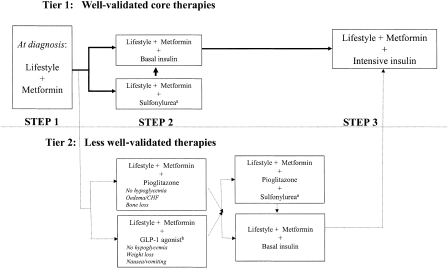
- Recommendations are organized into a tiered algorithm: Tier 1 well-validated core therapies (lifestyle plus metformin, then add insulin or sulfonylurea, then intensify insulin) and Tier 2 less well-validated therapies (e.g., exenatide or pioglitazone in selected patients).
Limitations
- Stated: the paucity of high-quality, well-controlled clinical trials directly comparing different diabetes treatment regimens remains a major impediment to recommending one class or combination over another.
- Stated: the most appropriate day-to-day blood glucose and A1C targets have not been systematically studied, and evidence-based review was supplemented by subjective value judgements about benefits, risks, and costs.
- Evident: as a consensus statement rather than a systematic review or original trial, the recommendations reflect panel opinion and may not be reproducible by other groups with different judgements.
Model-written summary. Check it against the paper before relying on it.
Integrity signals
Registry
Cites
Statistics
Figures
Verification
Claims the paper makes
66 Not checked yet · 11 No basis given · 5 Own interpretation · 1 Own result
None of the sources cited for this claim have been checked yet.
In the paper
“Intensive glycemic management resulting in lower A1C levels has also been shown to have a beneficial effect on cardiovascular disease (CVD) complications in type 1 diabetes (9,10)”
§ Medical Management of Hyperglycemia in Type 2 Diabetes: A Consensus Algorithm for the Initiation and Adjustment of Therapy > Abstract
What the sources say
- Not checked yetcites [9] Diabetes Control and Complications Trial/Epidemiology of Diabetes Interventions and Complications Research Group: Intensive diabetes therapy and carotid intima–media thickness in type 1 diabetes. N Engl J Med 348:2294–2303, 2003 source
- Not checked yetcites [10] Diabetes Control and Complications Trial/Epidemiology of Diabetes Interventions and Complications Research Group: Intensive diabetes treatment and cardiovascular disease in patients with type 1 diabetes. N Engl J Med 353:2643–2653, 2005 source
plaindirect- Asserted: passes — The authors put it forward as true.
- Checkable: passes — It can be checked against evidence.
- Load-bearing: unclear — It is unclear whether the paper’s conclusions depend on it.
- Based: passes — The paper gives a reason why it holds.
In the paper
“the increased number of choices available to practitioners and patients has heightened uncertainty regarding the most appropriate means of treating this widespread disease (14)”
§ Medical Management of Hyperglycemia in Type 2 Diabetes: A Consensus Algorithm for the Initiation and Adjustment of Therapy > Abstract
What the sources say
- Not checked yetcites [14] Nathan DM: Finding new treatments for diabetes—how many, how fast . . . how good? N Engl J Med 356:437–440, 2007 source
plaindirect- Asserted: passes — The authors put it forward as true.
- Checkable: passes — It can be checked against evidence.
- Load-bearing: passes — The paper’s conclusions depend on it.
- Based: passes — The paper gives a reason why it holds.
None of the sources cited for this claim have been checked yet.
In the paper
“Maintaining glycemic levels as close to the nondiabetic range as possible has been demonstrated to have a powerful beneficial effect on diabetes-specific microvascular complications, including retinopathy, nephropathy, and neuropathy, in the setting of type 1 diabetes (4,5)”
§ Medical Management of Hyperglycemia in Type 2 Diabetes: A Consensus Algorithm for the Initiation and Adjustment of Therapy > Abstract
What the sources say
- Not checked yetcites [4] Diabetes Control and Complications Trial Research Group: The effect of intensive diabetes treatment on the development and progression of long-term complications in insulin-dependent diabetes mellitus: the Diabetes Control and Complications Trial. N Engl J Med 329:978–986, 1993 source
- Not checked yetcites [5] Reichard P, Nilsson B-Y, Rosenqvist U: The effect of long-term intensified insulin treatment on the development of microvascular complications of diabetes mellitus. N Engl J Med 329:304–309, 1993 source
boosteddirect- Asserted: passes — The authors put it forward as true.
- Checkable: passes — It can be checked against evidence.
- Load-bearing: unclear — It is unclear whether the paper’s conclusions depend on it.
- Based: passes — The paper gives a reason why it holds.
None of the sources cited for this claim have been checked yet.
In the paper
“in type 2 diabetes, more intensive treatment strategies have likewise been demonstrated to reduce microvascular complications (6–8)”
§ Medical Management of Hyperglycemia in Type 2 Diabetes: A Consensus Algorithm for the Initiation and Adjustment of Therapy > Abstract
What the sources say
- Not checked yetcites [6] UK Prospective Diabetes Study (UKPDS) Group: Intensive blood glucose control with sulphonylureas or insulin compared with conventional treatment and risk of complication in patients with type 2 diabetes (UKPDS 33). Lancet 352:837–853, 1998 source
- Not checked yetcites [7] UK Prospective Diabetes Study (UKPDS) Group: Effect of intensive blood glucose control with metformin on complication in overweight patients with type 2 diabetes (UKPDS 34). Lancet 352:854–865, 1998 source
- Not checked yetcites [8] Ohkubo Y, Kishikawa H, Araki E, et al.: Intensive insulin therapy prevents the progression of diabetic microvascular complications in Japanese patients with NIDDM: a randomized prospective 6-year study. Diabetes Res Clin Pract 28:103–117, 1995 source
boosteddirect- Asserted: passes — The authors put it forward as true.
- Checkable: passes — It can be checked against evidence.
- Load-bearing: passes — The paper’s conclusions depend on it.
- Based: passes — The paper gives a reason why it holds.
None of the sources cited for this claim have been checked yet.
In the paper
“Controlled clinical trials, such as the Diabetes Control and Complications Trial (DCCT) (4) and the Stockholm Diabetes Study in type 1 diabetes (5) and the UK Prospective Diabetes Study (UKPDS) (6,7) and Kumamoto study (8) in type 2 diabetes, have helped to establish the glycemic goals of therapy that result in improved long-term outcomes.”
§ Medical Management of Hyperglycemia in Type 2 Diabetes: A Consensus Algorithm for the Initiation and Adjustment of Therapy > Glycemic goals of therapy
What the sources say
- Not checked yetcites [4] Diabetes Control and Complications Trial Research Group: The effect of intensive diabetes treatment on the development and progression of long-term complications in insulin-dependent diabetes mellitus: the Diabetes Control and Complications Trial. N Engl J Med 329:978–986, 1993 source
- Not checked yetcites [5] Reichard P, Nilsson B-Y, Rosenqvist U: The effect of long-term intensified insulin treatment on the development of microvascular complications of diabetes mellitus. N Engl J Med 329:304–309, 1993 source
- Not checked yetcites [6] UK Prospective Diabetes Study (UKPDS) Group: Intensive blood glucose control with sulphonylureas or insulin compared with conventional treatment and risk of complication in patients with type 2 diabetes (UKPDS 33). Lancet 352:837–853, 1998 source
- Not checked yetcites [7] UK Prospective Diabetes Study (UKPDS) Group: Effect of intensive blood glucose control with metformin on complication in overweight patients with type 2 diabetes (UKPDS 34). Lancet 352:854–865, 1998 source
plaindirect- Asserted: passes — The authors put it forward as true.
- Checkable: passes — It can be checked against evidence.
- Load-bearing: passes — The paper’s conclusions depend on it.
- Based: passes — The paper gives a reason why it holds.
None of the sources cited for this claim have been checked yet.
In the paper
“current studies have failed to demonstrate a beneficial effect of intensive diabetes therapy on CVD in type 2 diabetes (11–13)”
§ Medical Management of Hyperglycemia in Type 2 Diabetes: A Consensus Algorithm for the Initiation and Adjustment of Therapy > Abstract
What the sources say
- Not checked yetcites [11] The Action to Control Cardiovascular Risk in Diabetes Study Group: Effects of intensive glucose lowering in type 2 diabetes. N Engl J Med 358:2545–2559, 2008 source
- Not checked yetcites [12] The ADVANCE Collaborative Group: Intensive blood glucose control and vascular outcomes in patients with type 2 diabetes. N Engl J Med 358:2560–2572, 2008 source
- Not checked yetcites [13] Abraira C, Duckworth WC, Moritz T: Glycaemic separation and risk factor control in the Veterans Affairs Diabetes Trial: an interim report. Diabetes Obes Metab. 29 July 2008 [Epub ahead of print] source
plain- Asserted: passes — The authors put it forward as true.
- Checkable: passes — It can be checked against evidence.
- Load-bearing: passes — The paper’s conclusions depend on it.
- Based: passes — The paper gives a reason why it holds.
None of the sources cited for this claim have been checked yet.
In the paper
“In terms of efficacy, they appear to be similar to metformin, lowering A1C levels by ∼1.5 percentage points (26,49).”
§ Medical Management of Hyperglycemia in Type 2 Diabetes: A Consensus Algorithm for the Initiation and Adjustment of Therapy > Medications > Sulfonylureas.
What the sources say
- Not checked yetcites [26] Groop L: Sulfonylureas in NIDDM. Diabetes Care 15:737–747, 1992 source
- Not checked yetcites [49] DeFronzo R, Goodman A, the Multicenter Metformin Study Group: Efficacy of metformin in patients with non-insulin-dependent diabetes mellitus. N Engl J Med 333:541–549, 1995 source
hedgeddirect- Asserted: passes — The authors put it forward as true.
- Checkable: passes — It can be checked against evidence.
- Load-bearing: unclear — It is unclear whether the paper’s conclusions depend on it.
- Based: passes — The paper gives a reason why it holds.
The paper states this without a source or data behind it here, so there is nothing to check it against. The quote shows it is in the paper.
In the paper
“The most appropriate target levels for blood glucose, on a day-to-day basis, and A1C, as an index of chronic glycemia, have not been systematically studied.”
§ Medical Management of Hyperglycemia in Type 2 Diabetes: A Consensus Algorithm for the Initiation and Adjustment of Therapy > Glycemic goals of therapy
plain- Asserted: passes — The authors put it forward as true.
- Checkable: passes — It can be checked against evidence.
- Load-bearing: passes — The paper’s conclusions depend on it.
- Based: unclear — It is unclear why the paper says it holds.
The paper states this without a source or data behind it here, so there is nothing to check it against. The quote shows it is in the paper.
In the paper
“The glucose-lowering effectiveness of individual therapies and combinations demonstrated in clinical trials is predicated not only on the intrinsic characteristics of the intervention but also on the duration of diabetes, baseline glycemia, previous therapy, and other factors.”
§ Medical Management of Hyperglycemia in Type 2 Diabetes: A Consensus Algorithm for the Initiation and Adjustment of Therapy > Medications
plaindirect- Asserted: passes — The authors put it forward as true.
- Checkable: passes — It can be checked against evidence.
- Load-bearing: passes — The paper’s conclusions depend on it.
- Based: passes — The paper gives a reason why it holds.
In the paper
“The results of the Action to Control Cardiovascular Risk in Diabetes (ACCORD) study, which had the primary objective of decreasing CVD with interventions aimed at achieving an A1C level of <6.0% vs. interventions aimed at achieving an A1C level of <7.9%, showed excess CVD mortality in the intensive treatment group (11).”
§ Medical Management of Hyperglycemia in Type 2 Diabetes: A Consensus Algorithm for the Initiation and Adjustment of Therapy > Glycemic goals of therapy
What the sources say
- Not checked yetcites [11] The Action to Control Cardiovascular Risk in Diabetes Study Group: Effects of intensive glucose lowering in type 2 diabetes. N Engl J Med 358:2545–2559, 2008 source
plaindirect- Asserted: passes — The authors put it forward as true.
- Checkable: passes — It can be checked against evidence.
- Load-bearing: passes — The paper’s conclusions depend on it.
- Based: passes — The paper gives a reason why it holds.
- Probably not a substantial claim. 8
- It may state two separate claims as one. 23
The paper states this without a source or data behind it here, so there is nothing to check it against. The quote shows it is in the paper.
In the paper
“Unfortunately, the paucity of high-quality evidence in the form of well-controlled clinical trials that directly compare different diabetes treatment regimens remains a major impediment to recommending one class of drugs, or a particular combination of therapies, over another.”
§ Medical Management of Hyperglycemia in Type 2 Diabetes: A Consensus Algorithm for the Initiation and Adjustment of Therapy > Process
plaindirect- Asserted: passes — The authors put it forward as true.
- Checkable: passes — It can be checked against evidence.
- Load-bearing: passes — The paper’s conclusions depend on it.
- Based: passes — The paper gives a reason why it holds.
Probably not a substantial claim.
None of the sources cited for this claim have been checked yet.
In the paper
“Neither study was able to maintain A1C levels in the nondiabetic range in their intensive treatment groups, achieving mean levels over time of ∼7%, which is 4 SDs above the nondiabetic mean.”
§ Medical Management of Hyperglycemia in Type 2 Diabetes: A Consensus Algorithm for the Initiation and Adjustment of Therapy > Glycemic goals of therapy
What the sources say
- Not checked yetcites [4] Diabetes Control and Complications Trial Research Group: The effect of intensive diabetes treatment on the development and progression of long-term complications in insulin-dependent diabetes mellitus: the Diabetes Control and Complications Trial. N Engl J Med 329:978–986, 1993 source
- Not checked yetcites [6] UK Prospective Diabetes Study (UKPDS) Group: Intensive blood glucose control with sulphonylureas or insulin compared with conventional treatment and risk of complication in patients with type 2 diabetes (UKPDS 33). Lancet 352:837–853, 1998 source
- Not checked yetcites [7] UK Prospective Diabetes Study (UKPDS) Group: Effect of intensive blood glucose control with metformin on complication in overweight patients with type 2 diabetes (UKPDS 34). Lancet 352:854–865, 1998 source
plain- Asserted: passes — The authors put it forward as true.
- Checkable: passes — It can be checked against evidence.
- Load-bearing: unclear — It is unclear whether the paper’s conclusions depend on it.
- Based: passes — The paper gives a reason why it holds.
It may state two separate claims as one.
In the paper
“Metformin monotherapy is not usually accompanied by hypoglycemia and has been used safely, without causing hypoglycemia, in patients with prediabetic hyperglycemia (50).”
§ Medical Management of Hyperglycemia in Type 2 Diabetes: A Consensus Algorithm for the Initiation and Adjustment of Therapy > Medications > Metformin.
What the sources say
- Not checked yetcites [50] Diabetes Prevention Program Research Group: Reduction in incidence of type 2 diabetes with lifestyle intervention or metformin. N Engl J Med 346:393–403, 2002 source
plain- Asserted: passes — The authors put it forward as true.
- Checkable: passes — It can be checked against evidence.
- Load-bearing: unclear — It is unclear whether the paper’s conclusions depend on it.
- Based: passes — The paper gives a reason why it holds.
It may state two separate claims as one.
In the paper
“Metformin interferes with vitamin B12 absorption but is very rarely associated with anemia (27).”
§ Medical Management of Hyperglycemia in Type 2 Diabetes: A Consensus Algorithm for the Initiation and Adjustment of Therapy > Medications > Metformin.
What the sources say
- Not checked yetcites [27] Bailey CJ, Turner RC: Metformin. N Engl J Med 334:574–583, 1996 source
plaincorrelational- Asserted: passes — The authors put it forward as true.
- Checkable: passes — It can be checked against evidence.
- Load-bearing: fails — The paper’s conclusions may not depend on it.
- Based: passes — The paper gives a reason why it holds.
Probably not a substantial claim. The paper’s conclusions may not depend on it. It may state two separate claims as one.
In the paper
“The UKPDS demonstrated a beneficial effect of metformin therapy on CVD outcomes (7), which needs to be confirmed.”
§ Medical Management of Hyperglycemia in Type 2 Diabetes: A Consensus Algorithm for the Initiation and Adjustment of Therapy > Medications > Metformin.
What the sources say
- Not checked yetcites [7] UK Prospective Diabetes Study (UKPDS) Group: Effect of intensive blood glucose control with metformin on complication in overweight patients with type 2 diabetes (UKPDS 34). Lancet 352:854–865, 1998 source
boosteddirect- Asserted: passes — The authors put it forward as true.
- Checkable: passes — It can be checked against evidence.
- Load-bearing: unclear — It is unclear whether the paper’s conclusions depend on it.
- Based: passes — The paper gives a reason why it holds.
It may state two separate claims as one.
None of the sources cited for this claim have been checked yet.
In the paper
“Chlorpropamide and glibenclamide (known as glyburide in the U.S. and Canada), are associated with a substantially greater risk of hypoglycemia than other second-generation sulfonylureas (gliclazide, glimepiride, glipizide, and their extended formulations), which are preferable (Table 1) (53,54).”
§ Medical Management of Hyperglycemia in Type 2 Diabetes: A Consensus Algorithm for the Initiation and Adjustment of Therapy > Medications > Sulfonylureas.
What the sources say
- Not checked yetcites [53] Holstein A, Plaschke A, Egberts E-H: Lower incidence of severe hypoglycemia in patients with type 2 diabetes treated with glimepiride versus glibenclamide. Diabetes Metab Res Rev 17:467–473, 2001 source
- Not checked yetcites [54] Gangji AS, Cukierman T, Gerstein HC, et al.: A systematic review and meta-analysis of hypoglycemia and cardiovascular events: a comparison of glyburide with other secretagogues and with insulin. Diabetes Care 30:389–394, 2007 source
plaincorrelational- Asserted: passes — The authors put it forward as true.
- Checkable: passes — It can be checked against evidence.
- Load-bearing: passes — The paper’s conclusions depend on it.
- Based: passes — The paper gives a reason why it holds.
It may state two separate claims as one.
In the paper
“The upper limit of the nondiabetic range is 6.1% (mean ± SD. A1C level of 5 ± 2%) with the DCCT/UKPDS-standardized assay, which has been promulgated through the National Glycohemoglobin Standardization Program (NGSP) and adopted by the vast majority of commercially available assays (20).”
§ Medical Management of Hyperglycemia in Type 2 Diabetes: A Consensus Algorithm for the Initiation and Adjustment of Therapy > Glycemic goals of therapy
What the sources say
- Not checked yetcites [20] Little RR, Rohlfing CL, Wiedmeyer H-M, et al.: The National Glycohemoglobin Standardization Program (NGSP): a five year progress report. Clin Chem 47:1985–1992, 2001
plain- Asserted: passes — The authors put it forward as true.
- Checkable: passes — It can be checked against evidence.
- Load-bearing: fails — The paper’s conclusions may not depend on it.
- Based: passes — The paper gives a reason why it holds.
Probably not a substantial claim. The paper’s conclusions may not depend on it.
In the paper
“Lower levels of glycemia at the time of initial therapy are associated with lower A1C levels over time and decreased long-term complications (38).”
§ Medical Management of Hyperglycemia in Type 2 Diabetes: A Consensus Algorithm for the Initiation and Adjustment of Therapy > Choosing specific diabetes interventions and their roles in treating type 2 diabetes
What the sources say
- Not checked yetcites [38] Colagiuri S, Cull CA, Holman RR, et al.: Are lower fasting plasma glucose levels at diagnosis of type 2 diabetes associated with improved outcomes? U.K. Prospective Diabetes Study 61. Diabetes Care 25:1410–1417, 2002 source
plaincorrelational- Asserted: passes — The authors put it forward as true.
- Checkable: passes — It can be checked against evidence.
- Load-bearing: passes — The paper’s conclusions depend on it.
- Based: passes — The paper gives a reason why it holds.
It may state two separate claims as one.
In the paper
“The most recent glycemic goal recommended by the American Diabetes Association, selected on the basis of practicality and the projected reduction in complications over time, is, in general, an A1C level of <7% (1).”
§ Medical Management of Hyperglycemia in Type 2 Diabetes: A Consensus Algorithm for the Initiation and Adjustment of Therapy > Glycemic goals of therapy
What the sources say
- Not checked yetcites [1] American Diabetes Association: Standards of medical care in diabetes—2008 (Position Statement). Diabetes Care 31(Suppl. 1): S12–S54, 2008 source
plain- Asserted: passes — The authors put it forward as true.
- Checkable: passes — It can be checked against evidence.
- Load-bearing: passes — The paper’s conclusions depend on it.
- Based: passes — The paper gives a reason why it holds.
Probably not a substantial claim.
In the paper
“Renal dysfunction is considered a contraindication to metformin use because it may increase the risk of lactic acidosis, an extremely rare (less than 1 case per 100,000 treated patients) but potentially fatal complication (51).”
§ Medical Management of Hyperglycemia in Type 2 Diabetes: A Consensus Algorithm for the Initiation and Adjustment of Therapy > Medications > Metformin.
What the sources say
- Not checked yetcites [51] Salpeter S, Greyber E, Pasternak G, et al.: Risk of fatal and nonfatal lactic acidosis with metformin use in type 2 diabetes mellitus. Cochrane Database Syst Rev 1:CD002967, 2006 source
hedgedconditionalSingle case- Asserted: passes — The authors put it forward as true.
- Checkable: passes — It can be checked against evidence.
- Load-bearing: passes — The paper’s conclusions depend on it.
- Based: passes — The paper gives a reason why it holds.
It may state two separate claims as one.
None of the sources cited for this claim have been checked yet.
In the paper
“In addition to the beneficial effects of weight loss on glycemia, weight loss and exercise improve coincident CVD risk factors, such as blood pressure and atherogenic lipid profiles, and ameliorate other consequences of obesity (41,46,47).”
§ Medical Management of Hyperglycemia in Type 2 Diabetes: A Consensus Algorithm for the Initiation and Adjustment of Therapy > Lifestyle interventions
What the sources say
- Not checked yetcites [41] Look AHEAD Research Group: Reduction in weight and cardiovascular disease risk factors in individuals with type 2 diabetes: one-year results of the Look AHEAD trial. Diabetes Care 30:1374–83, 2007 source
- Not checked yetcites [46] Diabetes Prevention Program Research Group: Impact of intensive lifestyle and metformin therapy on cardiovascular disease risk factors in the Diabetes Prevention Program. Diabetes Care 28:888–894, 2005 source
- Not checked yetcites [47] Hadden DR, Montgomery DAD, Skelly RJ, et al.: Maturity onset diabetes mellitus: response to intensive dietary management. BMJ 3:276–278, 1975 source
plaindirect- Asserted: passes — The authors put it forward as true.
- Checkable: passes — It can be checked against evidence.
- Load-bearing: unclear — It is unclear whether the paper’s conclusions depend on it.
- Based: passes — The paper gives a reason why it holds.
It may state two separate claims as one.
A conclusion the paper draws from its own results — it cites no other source for it, so there is none to check. The quote shows it is in the paper.
In the paper
“Type 2 diabetes is a progressive disease characterized by worsening glycemia; higher doses and additional medications are required over time if treatment goals are to be met.”
§ Medical Management of Hyperglycemia in Type 2 Diabetes: A Consensus Algorithm for the Initiation and Adjustment of Therapy > Medications
plaindirect- Asserted: passes — The authors put it forward as true.
- Checkable: passes — It can be checked against evidence.
- Load-bearing: passes — The paper’s conclusions depend on it.
- Based: fails — The paper may give no reason why it holds.
Probably not a substantial claim. The paper may give no reason why it holds. It may state two separate claims as one.
None of the sources cited for this claim have been checked yet.
In the paper
“The risk of weight gain is similar to that for the sulfonylureas, but hypoglycemia may be less frequent, at least with nateglinide, than with some sulfonylureas (58,59).”
§ Medical Management of Hyperglycemia in Type 2 Diabetes: A Consensus Algorithm for the Initiation and Adjustment of Therapy > Medications > Glinides.
What the sources say
- Not checked yetcites [58] Gerich J, Raskin P, Jean-Louis L, et al.: PRESERVE-beta: two year efficacy and safety of initial combination therapy with nateglinide or glyburide plus metformin. Diabetes Care 28:2093–2099, 2005 source
- Not checked yetcites [59] Damsbo P, Clauson P, Marbury TC, et al.: A double-blind randomized comparison of meal-related glycemic control by repaglinide and glyburide in well-controlled type 2 diabetic patients. Diabetes Care 22:789–794, 1999 source
hedgedconditional- Asserted: passes — The authors put it forward as true.
- Checkable: passes — It can be checked against evidence.
- Load-bearing: unclear — It is unclear whether the paper’s conclusions depend on it.
- Based: passes — The paper gives a reason why it holds.
It may state two separate claims as one.
A conclusion the paper draws from its own results — it cites no other source for it, so there is none to check. The quote shows it is in the paper.
In the paper
“Many patients may be managed effectively with monotherapy; however, the progressive nature of the disease will require the use of combination therapy in many, if not most, patients over time, to achieve and maintain glycemia in the target range.”
§ Medical Management of Hyperglycemia in Type 2 Diabetes: A Consensus Algorithm for the Initiation and Adjustment of Therapy > How to initiate diabetes therapy and advance interventions
hedgeddirect- Asserted: passes — The authors put it forward as true.
- Checkable: passes — It can be checked against evidence.
- Load-bearing: passes — The paper’s conclusions depend on it.
- Based: passes — The paper gives a reason why it holds.
Probably not a substantial claim. It may state two separate claims as one.
None of the sources cited for this claim have been checked yet.
In the paper
“In published trials, exenatide is associated with weight loss of ∼2–3 kg over 6 months, some of which may be a result of its gastrointestinal side effects.”
§ Medical Management of Hyperglycemia in Type 2 Diabetes: A Consensus Algorithm for the Initiation and Adjustment of Therapy > Medications > Glucagon-like peptide-1 agonists (exenatide).
hedgedcorrelational- Asserted: passes — The authors put it forward as true.
- Checkable: passes — It can be checked against evidence.
- Load-bearing: unclear — It is unclear whether the paper’s conclusions depend on it.
- Based: passes — The paper gives a reason why it holds.
It may state two separate claims as one.
None of the sources cited for this claim have been checked yet.
In the paper
“exendin-4 appears to lower A1C levels by 0.5–1 percentage points, mainly by lowering postprandial blood glucose levels (78–81).”
§ Medical Management of Hyperglycemia in Type 2 Diabetes: A Consensus Algorithm for the Initiation and Adjustment of Therapy > Medications > Glucagon-like peptide-1 agonists (exenatide).
What the sources say
- Not checked yetcites [78] Kendall DM, Riddle MC, Rosenstock J, et al.: Effects of exenatide (exendin-4) on glycemic control and weight over 30 weeks in patients with type 2 diabetes treated with metformin and a sulfonylurea. Diabetes Care 28:1083–1091, 2005 source
- Not checked yetcites [79] DeFronzo RA, Ratner RE, Han J, et al.: Effects of exenatide (exendin-4) on glycemic control and weight over 30 weeks in metformin-treated patients with type 2 diabetes. Diabetes Care 28:1092–1100, 2005 source
- Not checked yetcites [80] Buse JB, Henry RR, Han J, et al.: Effects of exenatide on glycemic control over 30 weeks in sulfonylurea-treated patients with type 2 diabetes. Diabetes Care 27:2628–2635, 2005 source
- Not checked yetcites [81] Heine RJ, Van Gaal LF, Johns D, et al.: Exenatide versus insulin glargine in patients with suboptimally controlled type 2 diabetes. Ann Int Med 143:559–569, 2005 source
hedgedconditional- Asserted: passes — The authors put it forward as true.
- Checkable: passes — It can be checked against evidence.
- Load-bearing: unclear — It is unclear whether the paper’s conclusions depend on it.
- Based: passes — The paper gives a reason why it holds.
It may state two separate claims as one.
The paper states this without a source or data behind it here, so there is nothing to check it against. The quote shows it is in the paper.
In the paper
“Recent reports have suggested a risk for pancreatitis associated with use of GLP agonists; however, the number of cases is very small and whether the relationship is causal or coincidental is not clear at this time.”
§ Medical Management of Hyperglycemia in Type 2 Diabetes: A Consensus Algorithm for the Initiation and Adjustment of Therapy > Medications > Glucagon-like peptide-1 agonists (exenatide).
hedgedcorrelational- Asserted: passes — The authors put it forward as true.
- Checkable: passes — It can be checked against evidence.
- Load-bearing: fails — The paper’s conclusions may not depend on it.
- Based: fails — The paper may give no reason why it holds.
Probably not a substantial claim. The paper’s conclusions may not depend on it. The paper may give no reason why it holds. It may state two separate claims as one.
None of the sources cited for this claim have been checked yet.
In the paper
“In clinical trials performed to date, DPP-4 inhibitors lower A1Clevels by 0.6–0.9 percentage points and are weight neutral and relatively well tolerated (83,84).”
§ Medical Management of Hyperglycemia in Type 2 Diabetes: A Consensus Algorithm for the Initiation and Adjustment of Therapy > Medications > Dipeptidyl peptidase four inhibitors.
What the sources say
- Not checked yetcites [83] Raz I, Hanefeld M, Xu L, et al.: Efficacy and safety of the dipeptidyl peptidase-4 inhibitor sitagliptin as monotherapy in patients with type 2 diabetes mellitus. Diabetologia 49:2564–2571, 2006 source
- Not checked yetcites [84] Goldstein B, Feinglos M, Lunceford J, et al.: Effect of initial combination therapy with sitagliptin, a dipeptidyl peptidase-4 inhibitor, and metformin on glycemic control in patients with type 2 diabetes. Diabetes Care 30:1979–1987, 2007 source
plaindirect- Asserted: passes — The authors put it forward as true.
- Checkable: passes — It can be checked against evidence.
- Load-bearing: unclear — It is unclear whether the paper’s conclusions depend on it.
- Based: passes — The paper gives a reason why it holds.
It may state two separate claims as one.
None of the sources cited for this claim have been checked yet.
In the paper
“Insulin analogues with longer, nonpeaking profiles decrease the risk of hypoglycemia modestly compared with NPH, and analogues with very short durations of action reduce the risk of hypoglycemia compared with regular insulin (76,77).”
§ Medical Management of Hyperglycemia in Type 2 Diabetes: A Consensus Algorithm for the Initiation and Adjustment of Therapy > Medications > Insulin.
What the sources say
plaindirect- Asserted: passes — The authors put it forward as true.
- Checkable: passes — It can be checked against evidence.
- Load-bearing: unclear — It is unclear whether the paper’s conclusions depend on it.
- Based: passes — The paper gives a reason why it holds.
It may state two separate claims as one.
In the paper
“The need for and number of required SMBG measurements are not clear (85) and are dependent on the medications used.”
§ Medical Management of Hyperglycemia in Type 2 Diabetes: A Consensus Algorithm for the Initiation and Adjustment of Therapy > How to initiate diabetes therapy and advance interventions
What the sources say
- Not checked yetcites [85] Welschen LMC, Bloemendal E, Nijpels G, et al.: Self-monitoring of blood glucose in patients with type 2 diabetes who are not using insulin: a systematic review. Diabetes Care 28:1510–1517, 2005 source
plaincorrelational- Asserted: passes — The authors put it forward as true.
- Checkable: passes — It can be checked against evidence.
- Load-bearing: unclear — It is unclear whether the paper’s conclusions depend on it.
- Based: passes — The paper gives a reason why it holds.
It may state two separate claims as one.
None of the sources cited for this claim have been checked yet.
In the paper
“It is not associated with hypoglycemia but causes a relatively high frequency of gastrointestinal disturbances, with 30–45% of treated patients experiencing one or more episodes of nausea, vomiting, or diarrhea (78–81).”
§ Medical Management of Hyperglycemia in Type 2 Diabetes: A Consensus Algorithm for the Initiation and Adjustment of Therapy > Medications > Glucagon-like peptide-1 agonists (exenatide).
What the sources say
- Not checked yetcites [78] Kendall DM, Riddle MC, Rosenstock J, et al.: Effects of exenatide (exendin-4) on glycemic control and weight over 30 weeks in patients with type 2 diabetes treated with metformin and a sulfonylurea. Diabetes Care 28:1083–1091, 2005 source
- Not checked yetcites [79] DeFronzo RA, Ratner RE, Han J, et al.: Effects of exenatide (exendin-4) on glycemic control and weight over 30 weeks in metformin-treated patients with type 2 diabetes. Diabetes Care 28:1092–1100, 2005 source
- Not checked yetcites [80] Buse JB, Henry RR, Han J, et al.: Effects of exenatide on glycemic control over 30 weeks in sulfonylurea-treated patients with type 2 diabetes. Diabetes Care 27:2628–2635, 2005 source
- Not checked yetcites [81] Heine RJ, Van Gaal LF, Johns D, et al.: Exenatide versus insulin glargine in patients with suboptimally controlled type 2 diabetes. Ann Int Med 143:559–569, 2005 source
plaincorrelational- Asserted: passes — The authors put it forward as true.
- Checkable: passes — It can be checked against evidence.
- Load-bearing: unclear — It is unclear whether the paper’s conclusions depend on it.
- Based: passes — The paper gives a reason why it holds.
It may state two separate claims as one.
In the paper
“The amylin agonists, α-glucosidase inhibitors, glinides, and DPP-4 inhibitors are not included in the two tiers of preferred agents in this algorithm, owing to their lower or equivalent overall glucose-lowering effectiveness compared with the first- and second-tier agents and/or to their limited clinical data or relative expense (Table 1).”
§ Medical Management of Hyperglycemia in Type 2 Diabetes: A Consensus Algorithm for the Initiation and Adjustment of Therapy > Algorithm
What the sources say
- Not checked yetcites Table 1
plain- Asserted: passes — The authors put it forward as true.
- Checkable: passes — It can be checked against evidence.
- Load-bearing: passes — The paper’s conclusions depend on it.
- Based: passes — The paper gives a reason why it holds.
It may state two separate claims as one.
The paper states this without a source or data behind it here, so there is nothing to check it against. The quote shows it is in the paper.
In the paper
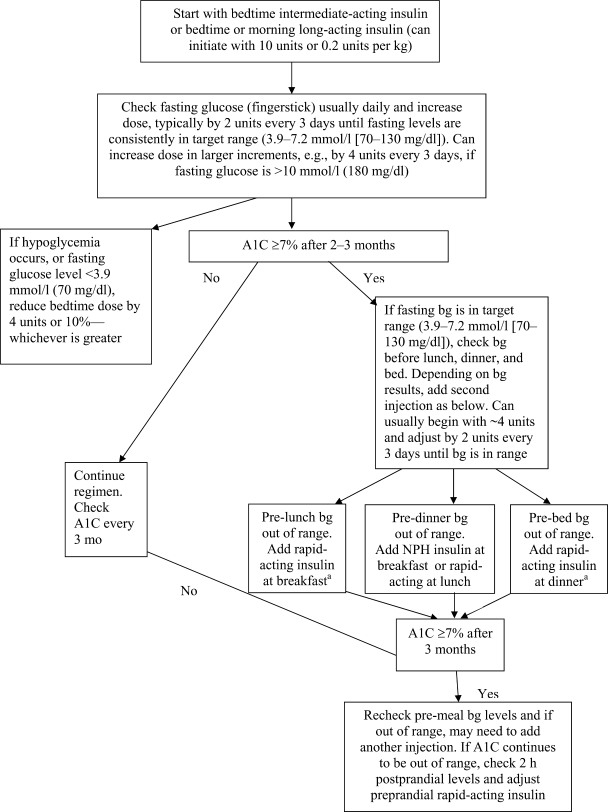
“Unlike the other blood glucose–lowering medications, there is no maximum dose of insulin beyond which a therapeutic effect will not occur.”
§ Medical Management of Hyperglycemia in Type 2 Diabetes: A Consensus Algorithm for the Initiation and Adjustment of Therapy > Medications > Insulin.
plain- Asserted: passes — The authors put it forward as true.
- Checkable: passes — It can be checked against evidence.
- Load-bearing: fails — The paper’s conclusions may not depend on it.
- Based: fails — The paper may give no reason why it holds.
Probably not a substantial claim. The paper’s conclusions may not depend on it. The paper may give no reason why it holds.
In the paper
“They are less effective in lowering glycemia than metformin or the sulfonylureas, reducing A1C levels by 0.5–0.8 percentage points (29).”
§ Medical Management of Hyperglycemia in Type 2 Diabetes: A Consensus Algorithm for the Initiation and Adjustment of Therapy > Medications > α-Glucosidase inhibitors.
What the sources say
- Not checked yetcites [29] Van de Laar FA, Lucassen PL, Akkermans RP, et al.: Alpha-glucosidase inhibitors for type 2 diabetes mellitus. Cochrane Database Syst Rev 2:CD003639, 2005 source
plaindirect- Asserted: passes — The authors put it forward as true.
- Checkable: passes — It can be checked against evidence.
- Load-bearing: unclear — It is unclear whether the paper’s conclusions depend on it.
- Based: passes — The paper gives a reason why it holds.
It may state two separate claims as one.
None of the sources cited for this claim have been checked yet.
In the paper
“The most common adverse effects with TZDs are weight gain and fluid retention, with peripheral edema and a twofold increased risk for congestive heart failure (61,62).”
§ Medical Management of Hyperglycemia in Type 2 Diabetes: A Consensus Algorithm for the Initiation and Adjustment of Therapy > Medications > Thiazolidinediones.
What the sources say
- Not checked yetcites [61] Home PD, Pocock SJ, Beck-Nielsen H, et al.: Rosiglitazone evaluated for cardiovascular outcomes--an interim analysis. N Engl J Med 357:28–38, source
- Not checked yetcites [62] Singh S, Loke YK, Furberg CD: Thiazolidinediones and heart failure: a teleoanalysis. Diabetes Care 30:2248–2254, 2007 source
plaindirect- Asserted: passes — The authors put it forward as true.
- Checkable: passes — It can be checked against evidence.
- Load-bearing: unclear — It is unclear whether the paper’s conclusions depend on it.
- Based: passes — The paper gives a reason why it holds.
It may state two separate claims as one.
In the paper
“The potential for this class of compounds to interfere with immune function is of concern; an increase in upper respiratory infections has been reported (34).”
§ Medical Management of Hyperglycemia in Type 2 Diabetes: A Consensus Algorithm for the Initiation and Adjustment of Therapy > Medications > Dipeptidyl peptidase four inhibitors.
What the sources say
- Not checked yetcites [34] Richter B, Bandeira-Echtler E, Bergerhoff K, et al.: Dipeptidyl peptidase-4 (DPP-4) inhibitors for type 2 diabetes mellitus. Cochrane Database Syst Rev 2:CD006739, 2008 source
hedgedconditional- Asserted: passes — The authors put it forward as true.
- Checkable: passes — It can be checked against evidence.
- Load-bearing: unclear — It is unclear whether the paper’s conclusions depend on it.
- Based: passes — The paper gives a reason why it holds.
It may state two separate claims as one.
In the paper
“Although addition of a third oral agent can be considered, especially if the A1C level is close to target (A1C <8.0%), this approach is usually not preferred, as it is no more effective in lowering glycemia, and is more costly, than initiating or intensifying insulin (91).”
§ Medical Management of Hyperglycemia in Type 2 Diabetes: A Consensus Algorithm for the Initiation and Adjustment of Therapy > Tier 1: well-validated core therapies > Step 3: further adjustments.
What the sources say
- Not checked yetcites [91] Schwartz S, Sievers R, Strange P, et al.: Insulin 70/30 mix plus metformin versus triple oral therapy in the treatment of type 2 diabetes after failure of two oral drugs. Diabetes Care 26:2238–2243, 2003 source
plain- Asserted: passes — The authors put it forward as true.
- Checkable: passes — It can be checked against evidence.
- Load-bearing: passes — The paper’s conclusions depend on it.
- Based: passes — The paper gives a reason why it holds.
It may state two separate claims as one.
The authors state this as an assumption.
The writing group's collective clinical judgement is an appropriate source for the recommendations.
“The second source of material that informed our recommendations was clinical judgement, that is, our collective knowledge and clinical experience, which takes into account benefits, risks, and costs in the treatment of diabetes.”
The authors state this as an assumption.
Value judgements are necessary to weigh the benefits of treatment against risks and costs in a subjective fashion.
“As in all clinical decision making, an evidence-based review of the literature must also be supplemented by value judgements, where the benefits of treatment are weighed against risks and costs in a subjective fashion.”
The authors state this as an assumption.
The recommendations made in this new iteration of the treatment algorithm will guide therapy and result in improved glycemic control and health status over time.
“While we realize that others may have different judgements, we believe that the recommendations made in this new iteration of our treatment algorithm will guide therapy and result in improved glycemic control and health status over time.”
The authors state this as an assumption.
There are enough data regarding the characteristics of the individual interventions to provide the guidelines despite the absence of rigorous, comprehensive studies that directly compare the efficacy of all available glucose-lowering treatments and their combinations.
“However, even in the absence of rigorous, comprehensive studies that directly compare the efficacy of all available glucose-lowering treatments and their combinations, we feel that there are enough data regarding the characteristics of the individual interventions to provide the guidelines below.”
The paper relies on this without support.
For most individuals with type 2 diabetes, lifestyle interventions fail to achieve or maintain metabolic goals because of failure to lose weight, weight regain, progressive disease, or a combination.
“The authors recognize that for most individuals with type 2 diabetes, lifestyle interventions fail to achieve or maintain the metabolic goals either because of failure to lose weight, weight regain, progressive disease, or a combination of factors.”
The paper relies on this without support.
Antihyperglycemic drugs with different mechanisms of action have the greatest synergy.
“In general, antihyperglycemic drugs with different mechanisms of action will have the greatest synergy.”
The paper relies on this without support.
Some patients with severely uncontrolled diabetes have unrecognized type 1 diabetes; others have type 2 diabetes with severe insulin deficiency.
“Some patients with these characteristics will have unrecognized type 1 diabetes; others will have type 2 diabetes with severe insulin deficiency.”
The paper relies on this without support.
Insulin can be titrated rapidly and is associated with the greatest likelihood of returning glucose levels rapidly to target levels.
“Insulin can be titrated rapidly and is associated with the greatest likelihood of returning glucose levels rapidly to target levels.”
The paper relies on this without support.
After symptoms are relieved and glucose levels decreased, oral agents can often be added and insulin may be withdrawn.
“After symptoms are relieved and glucose levels decreased, oral agents can often be added and it may be possible to withdraw insulin, if preferred.”
The paper relies on this without support.
Current-day management has failed to achieve and maintain the glycemic levels most likely to provide optimal healthcare status for people with diabetes.
“Although new classes of medications and numerous combinations have been demonstrated to lower glycemia, current-day management has failed to achieve and maintain the glycemic levels most likely to provide optimal healthcare status for people with diabetes.”
The paper relies on this without support.
10–20% of patients with type 2 diabetes are not obese or overweight.
“For the 10–20% of patients with type 2 diabetes who are not obese or overweight, modification of dietary composition and activity levels may play a supporting role, but medications are still generally required early in the course of diabetes (see special considerations/patients below).”
The paper relies on this without support.
Metformin has a favorable profile: effect on glycemia, absence of weight gain or hypoglycemia, generally low side effects, high acceptance, and relatively low cost.
“Metformin is recommended as the initial pharmacological therapy, in the absence of specific contraindications, for its effect on glycemia, absence of weight gain or hypoglycemia, generally low level of side effects, high level of acceptance, and relatively low cost.”
The paper relies on this without support.
Insulin secretagogues (sulfonylurea or glinides) are not synergistic with insulin.
“When insulin injections are started, insulin secretagogues (sulfonylurea or glinides) should be discontinued, or tapered and then discontinued, since they are not considered to be synergistic.”
Claims other papers make about this one
Each is checked against this paper’s own text: does it say what the citing paper says it does?
The source backs part of the claim, not all of it — or backs it for a different population, condition or comparison.
In the citing paper
“While a reduction of ≥ 0.5% is typically considered clinically meaningful and associated with a lower risk of diabetes-related complications [193, 194]”
From Effects of Skeletal Muscle Hypertrophy on Fat Mass and Glucose Homeostasis in Humans and Animals: A Narrative Review with Systematic Literature Search (2025) · cites this paper as [194]
Experimental — accuracy not yet measuredIn the citing paper
“The biguanide metformin is the most commonly used therapy in patients with type 2 diabetes, often prescribed as initial or combination therapy (79).”
From Diabetes and Cancer (2010) · cites this paper as [79]
Citations
Cites
Chobanian, A. V. (2003) · JAMA · doi:10.1001/jama.289.19.2560 · Cited by 25,386
(1993) · New England Journal of Medicine · doi:10.1056/nejm199309303291401 · Cited by 24,667
(1998) · The Lancet · doi:10.1016/s0140-6736(98)07019-6 · Cited by 20,023
Self-citationReduction in the incidence of type 2 diabetes with lifestyle intervention or metformin
(2002) · New England Journal of Medicine · doi:10.1056/nejmoa012512 · Cited by 19,011
(1998) · PsycEXTRA Dataset · doi:10.1037/e565682010-001 · Cited by 9,453
Stratton, I. M. (2000) · BMJ · doi:10.1136/bmj.321.7258.405 · Cited by 9,059
Turner, R. C., Fox, C., Matthews, McElroy, H. H., Cull, C. A., Holman, R. R., Neil, P., Hadden, D. R., Wright, D., Manley, E., et al. (1998) · The Lancet · Cited by 8,419
Self-citationEffects of Intensive Glucose Lowering in Type 2 Diabetes
(2008) · New England Journal of Medicine · doi:10.1056/nejmoa0802743 · Cited by 7,888
Intensive blood glucose control and vascular outcomes in patients with type 2 diabetes
(2008) · New England Journal of Medicine · doi:10.1056/nejmoa0802987 · Cited by 7,397
Cited by
Sorted by citations
Items 901–1,000 of 1,023
Anti-diabetic effect mediated by Ramulus mori polysaccharides
Xu, L., Yang, F., Wang, J., Huang, H., & Huang, Y.-Q. (2014) · Carbohydrate Polymers · doi:10.1016/j.carbpol.2014.09.052 · Cited by 48
Scheen, A. J. (2007) · Diabetes & Metabolism · doi:10.1016/j.diabet.2006.11.005 · Cited by 48
Preadmission metformin use and mortality among intensive care patients with diabetes: a cohort study
Christiansen, C. F., Johansen, M. B., Christensen, S., O’Brien, J. M., Tønnesen, E., & Sørensen, H. T. (2013) · Critical Care · doi:10.1186/cc12886 · Cited by 48
Pontiroli, A. E., Miele, L., & Morabito, A. (2011) · Diabetes Obesity and Metabolism · doi:10.1111/j.1463-1326.2011.01543.x · Cited by 47
Yu, W., Hu, C., Zhang, R., Wang, C., Qin, W., Lu, J., Jiang, F., Tang, S., Bao, Y., Xiang, K., et al. (2011) · Clinical Pharmacology & Therapeutics · doi:10.1038/clpt.2010.351 · Cited by 47
Shantha, G. P. S., Kumar, A. A., Kahan, S. I., & Cheskin, L. J. (2012) · The Science of Diabetes Self-Management and Care · doi:10.1177/0145721712443293 · Cited by 47
Esposito, K., Mosca, C., Brancario, C., Chiodini, P., Ceriello, A., & Giugliano, D. (2011) · Current Medical Research and Opinion · doi:10.1185/03007995.2011.590127 · Cited by 47
Value-Based Insurance Plus Disease Management Increased Medication Use And Produced Savings
Gibson, T. B., Mahoney, J., Ranghell, K., Cherney, B., & McElwee, N. E. (2011) · Health Affairs · doi:10.1377/hlthaff.2010.0896 · Cited by 47
Recomendaciones para el tratamiento farmacológico de la hiperglucemia en la diabetes tipo 2
Torre, E. L. M., Tejedor, J. L., Menéndez, S. A., NúñezfiCortés, J. M., Garcia, A. A., Puig‐Domingo, M., Soláns, J. R. G., Guisasola, F. Á., Alegría, J. G., Bravo, J. J. M., et al. (2010) · Avances en Diabetología · doi:10.1016/s1134-3230(10)65006-5 · Cited by 47
Zhou, Y., Ye, W., Wang, Y., Jiang, Z., Meng, X., Xiao, Q., Zhao, Q., & Yan, J. (2015) · PubMed Central · Cited by 47
Alexopoulos, A., Yancy, W. S., Edelman, D. E., Coffman, C. J., Jeffreys, A. S., Maciejewski, M. L., Voils, C. I., Sagalla, N., Bradley, A. B., Dar, M. S., et al. (2019) · Chronic Illness · doi:10.1177/1742395319884096 · Cited by 47
Buchner, D. A., Yazbek, S. N., Solinas, P., Burrage, L. C., Morgan, M. G., Hoppel, C. L., & Nadeau, J. H. (2010) · Obesity · doi:10.1038/oby.2010.214 · Cited by 47
Thayer, S., Arondekar, B. V., Harley, C., & Darkow, T. (2010) · Annals of Pharmacotherapy · doi:10.1345/aph.1m426 · Cited by 47
de Leeuw, A. E., & de Boer, R. A. (2016) · European Heart Journal - Cardiovascular Pharmacotherapy · doi:10.1093/ehjcvp/pvw009 · Cited by 46
Sinha, V. P., Choi, S. L., Soon, D., Mace, K. F., Yeo, K. P., Lim, S., & Howey, D. C. (2014) · The Journal of Clinical Pharmacology · doi:10.1002/jcph.276 · Cited by 46
Evans, M., Wolden, M. L., Gundgaard, J., Chubb, B., & Christensen, T. (2013) · Diabetes Obesity and Metabolism · doi:10.1111/dom.12250 · Cited by 46
Gumprecht, J., Benroubi, M., Borzı̀, V., Kawamori, R., Shában, J., Shah, S., Shestakova, M. V., Wenying, Y., Ligthelm, R. J., Valensi, P. E., et al. (2009) · International Journal of Clinical Practice · doi:10.1111/j.1742-1241.2009.02064.x · Cited by 46
Miser, W. F., Arakaki, R. F., Jiang, H. H., Scism-Bacon, J. L., Anderson, P. W., & Fahrbach, J. L. (2010) · Clinical Therapeutics · doi:10.1016/j.clinthera.2010.05.001 · Cited by 46
Nutritional challenges in the elderly with diabetes
Rizvi, A. A. (2009) · International Journal of Diabetes Mellitus · doi:10.1016/j.ijdm.2009.05.002 · Cited by 46
Owens, D. R. (2012) · Diabetic Medicine · doi:10.1111/dme.12019 · Cited by 46
Lee, S., Kim, Y. C., Oh, S., Koo, H., Na, K. Y., Chae, D., Kim, S., & Chin, H. J. (2011) · Nephrology Dialysis Transplantation · doi:10.1093/ndt/gfr154 · Cited by 46
Next-Generation Phenotypic Screening
Warchal, S. J., Unciti‐Broceta, A., & Carragher, N. O. (2016) · Future Medicinal Chemistry · doi:10.4155/fmc-2016-0025 · Cited by 46
Direct Medical Costs of Type 2 Diabetes in France: An Insurance Claims Database Analysis
Charbonnel, B. H., Simon, D., Dallongeville, J., Bureau, I., Dejager, S., Lévy-Bachelot, L., Gourmelen, J., & Detournay, B. (2017) · PharmacoEconomics - Open · doi:10.1007/s41669-017-0050-3 · Cited by 46
Dehdari, L., & Dehdari, T. (2019) · Archives of Public Health · doi:10.1186/s13690-019-0347-z · Cited by 46
Asare‐Bediako, B., Noothi, S. K., Calzi, S. L., Athmanathan, B., Vieira, C. P., Adu-Agyeiwaah, Y., Dupont, M., Jones, B. A., Wang, X. X., Chakraborty, D., et al. (2020) · Cells · doi:10.3390/cells9020464 · Cited by 46
Durrani, I. A., Bhatti, A., & John, P. C. L. (2021) · Cancer Cell International · doi:10.1186/s12935-021-02040-5 · Cited by 46
In vitro inhibition of AKR1Cs by sulphonylureas and the structural basis
Zhao, Y., Zheng, X., Zhang, H., Zhai, J. H., Zhang, L., Li, C., Zeng, K., Chen, Y., Li, Q., & Hu, X. (2015) · Chemico-Biological Interactions · doi:10.1016/j.cbi.2015.09.006 · Cited by 46
Mohankumar, S. K., & McFarlane, J. R. (2010) · Phytotherapy Research · doi:10.1002/ptr.3275 · Cited by 46
Wokoun, U., Hellriegel, M., Emons, G., & Gründker, C. (2017) · Oncology Reports · doi:10.3892/or.2017.5491 · Cited by 45
Weight-centric treatment of type 2 diabetes mellitus
Ghusn, W., Hurtado, M. D., & Acosta, A. J. (2022) · Obesity Pillars · doi:10.1016/j.obpill.2022.100045 · Cited by 45
Ching, C. K., Lam, Y. H., Chan, A. Y. W., & Mak, T. W. L. (2011) · British Journal of Clinical Pharmacology · doi:10.1111/j.1365-2125.2011.04135.x · Cited by 45
Harashima, S.-I., Ogura, M., Tanaka, D., Fukushima, T., Wang, Y., Koizumi, T., Aono, M., Murata, Y., Seike, M., & Inagaki, N. (2012) · International Journal of Clinical Practice · doi:10.1111/j.1742-1241.2012.02903.x · Cited by 45
The Future of Basal Insulin Supplementation
Simon, A. C. R., & DeVries, J. H. (2011) · Diabetes Technology & Therapeutics · doi:10.1089/dia.2010.0251 · Cited by 45
Buysman, E. K., Conner, C., Aagren, M., Bouchard, J. R., & Liu, F. (2011) · Current Medical Research and Opinion · doi:10.1185/03007995.2011.598500 · Cited by 45
A review of treatment response in type 2 diabetes: assessing the role of patient heterogeneity
Cantrell, R. A., Alatorre, C., Davis, E. J. M., Zarotsky, V., Nestour, E. L., Carter, G. C., GOETZ, I. A., Paczkowski, R., & Sierra‐Johnson, J. (2010) · Diabetes Obesity and Metabolism · doi:10.1111/j.1463-1326.2010.01248.x · Cited by 45
Diabetes and Insulin Resistance in Pediatric Obesity
Kim, G. J., & Caprio, S. (2011) · Pediatric Clinics of North America · doi:10.1016/j.pcl.2011.09.002 · Cited by 45
The Present State of Diabetes Mellitus in Korea
Kim, S. G., & Choi, D. S. (2008) · Journal of Korean Medical Association · doi:10.5124/jkma.2008.51.9.791 · Cited by 45
Lu, W. R., Defilippi, J. L., & Braun, A. (2013) · Annals of Pharmacotherapy · doi:10.1177/1060028013505428 · Cited by 45
Samya, V., Shriraam, V., Jasmine, A., Venguidesvarane, A. G., Rani, M. A., Durai, V., Gayathri, T., & Mahadevan, S. (2019) · Journal of Primary Care & Community Health · doi:10.1177/2150132719880638 · Cited by 45
Chen, C., Huang, W., Chen, H.-C., Chang, C., Lee, L., Chen, H., Kang, Y.-D., Chie, W., Jan, C.-F. J., Wang, W.-D., et al. (2020) · PLoS ONE · doi:10.1371/journal.pone.0240158 · Cited by 45
Ninagawa, S., Tada, S., Okumura, M., Inoguchi, K., Kinoshita, M., Kanemura, S., Imami, K., Umezawa, H., Ishikawa, T., Mackin, R. B., et al. (2020) · eLife · doi:10.7554/elife.60970 · Cited by 45
Mechanisms of action of metformin and its regulatory effect on microRNAs related to angiogenesis
Wang, G., Lin, F., Wan, Q., Wu, J., & Luo, M. (2020) · Pharmacological Research · doi:10.1016/j.phrs.2020.105390 · Cited by 45
Kim, J., Kim, J., Yi, S., Shin, K.-H., Shin, H.-S., Yoon, S. H., Cho, J., Kim, D.-H., Shin, S., Jang, I., et al. (2011) · Clinical Therapeutics · doi:10.1016/j.clinthera.2011.09.023 · Cited by 45
Nathan, D. M. (2007) · Diabetes Care · doi:10.2337/dc06-2600 · Cited by 45
Self-citationSGLT2 inhibitors: glucuretic treatment for type 2 diabetes
Bailey, C. J., & Day, C. (2010) · The British Journal of Diabetes · doi:10.1177/1474651410377832 · Cited by 45
Dapagliflozin: A new sodium–glucose cotransporter 2 inhibitor for treatment of type 2 diabetes
Vivian, E. (2015) · American Journal of Health-System Pharmacy · doi:10.2146/ajhp140168 · Cited by 45
Mottalib, A., Sakr, M., Shehabeldin, M., & Hamdy, O. (2015) · Journal of Diabetes Research · doi:10.1155/2015/468704 · Cited by 44
Levy, J., Cobas, R. A., & Gomes, M. B. (2010) · Diabetology & Metabolic Syndrome · doi:10.1186/1758-5996-2-16 · Cited by 44
Nakajima, H., Takewaki, F., Hashimoto, Y., Kajiyama, S., Majima, S., Okada, H., Senmaru, T., Ushigome, E., Nakanishi, N., Hamaguchi, M., et al. (2020) · Life · doi:10.3390/life10090195 · Cited by 44
Kambale, E. K., Quetin‐Leclercq, J., Memvanga, P. B., & Beloqui, A. (2022) · Pharmaceutics · doi:10.3390/pharmaceutics14102135 · Cited by 44
Kang, D. H., Yun, J., Ko, S.-H., 임태석, 안유배, Park, Y.-M., & Ko, S.-H. (2014) · PLoS ONE · doi:10.1371/journal.pone.0109878 · Cited by 44
A1c Control in a Primary Care Setting: Self-titrating an Insulin Analog Pre-mix (INITIATEplus Trial)
Oyer, D. S., Shepherd, M. D., Coulter, F. C., Bhargava, A., Brett, J., Chu, P.-L., & Trippe, B. S. (2009) · The American Journal of Medicine · doi:10.1016/j.amjmed.2008.12.026 · Cited by 44
IWAMOTO, K., Nasu, R., Yamamura, A., Kothare, P. A., Mace, K. F., Wolka, A. M., & Linnebjerg, H. (2009) · Endocrine Journal · doi:10.1507/endocrj.k09e-147 · Cited by 44
Widyahening, I. S., van der Graaf, Y., Soewondo, P., Glasziou, P., & van der Heijden, G. J. M. G. (2014) · BMC Family Practice · doi:10.1186/1471-2296-15-72 · Cited by 44
Davidson, J. A. (2010) · Mayo Clinic Proceedings · doi:10.4065/mcp.2010.0469 · Cited by 44
Mousavi, A., Vafa, M., Neyestani, T. R., Khamseh, M., & Hoseini, F. S. (2013) · Europe PMC (PubMed Central) · Cited by 44
Gitt, A. K., Bramlage, P., Binz, C., Krekler, M., Deeg, E., & Tschöpe, D. (2013) · International Journal of Clinical Practice · doi:10.1111/ijcp.12179 · Cited by 44
Ratner, R. E., Nauck, M. A., Kapitza, C., Asnaghi, V., Boldrin, M. N., & Balena, R. (2010) · Diabetic Medicine · doi:10.1111/j.1464-5491.2010.02990.x · Cited by 44
Kim, S. G., Kim, N. H., Ku, B. J., Shon, H. S., Kim, D. M., Park, T. S., Kim, Y., Kim, I. J., & Cho, Y. (2016) · Journal of Diabetes Investigation · doi:10.1111/jdi.12581 · Cited by 44
Amendezo, E., Timothy, D. W., Karamuka, V., Robinson, B., Kavabushi, P., Ntirenganya, C., Uwiragiye, J., Mukantagwabira, D., Bisimwa, J., Marie, H. U., et al. (2017) · Diabetes Research and Clinical Practice · doi:10.1016/j.diabres.2017.02.001 · Cited by 44
Effect of green tea extract on bone mass and body composition in individuals with diabetes
de Amorim, L. M. N., Vaz, S. R., Silva, G. C., Coelho, A. S. G., & Botelho, P. B. (2017) · Journal of Functional Foods · doi:10.1016/j.jff.2017.11.039 · Cited by 44
Wexler, D. J., Krause-Steinrauf, H. J., Crandall, J. P., Florez, H. J., Hox, S. H., Kühn, A., Sood, A., Underkofler, C., Aroda, V. R., Crandall, J. P., et al. (2019) · Diabetes Care · doi:10.2337/dc19-0901 · Cited by 44
Ai, H., Fang, W., Hanyi, H., Xupang, H., & Lu, W. (2020) · Aging and Disease · doi:10.14336/ad.2019.0403 · Cited by 44
Functional loss of pancreatic islets in type 2 diabetes: How can we halt it?
Marrano, N., Biondi, G., Cignarelli, A., Perrini, S., Laviola, L., Giorgino, F., & Natalicchio, A. (2020) · Metabolism · doi:10.1016/j.metabol.2020.154304 · Cited by 44
RSSDI-ESI Clinical Practice Recommendations for the Management of Type 2 Diabetes Mellitus 2020
Chawla, R., Madhu, S. V., Makkar, B. M., Ghosh, S. K., Saboo, B., Kalra, S., & On behalf of RSSDI-ESI Consensus Group (2020) · International Journal of Diabetes in Developing Countries · doi:10.1007/s13410-020-00819-2 · Cited by 44
Monami, M., Candido, R., Pintaudi, B., Targher, G., & Mannucci, E. (2021) · Nutrition Metabolism and Cardiovascular Diseases · doi:10.1016/j.numecd.2021.05.010 · Cited by 44
Review of Linagliptin for the Treatment of Type 2 Diabetes Mellitus
Neumiller, J. J., & Setter, S. M. (2012) · Clinical Therapeutics · doi:10.1016/j.clinthera.2012.02.029 · Cited by 44
Effectiveness of Diabetes Self-Management Education on Quality of Life in Diabetic Elderly Females
Jahromi, M. K., Ramezanli, S., & Taheri, L. (2014) · Global Journal of Health Science · doi:10.5539/gjhs.v7n1p10 · Cited by 44
Bardin, C., Nobécourt, E., Larger, É., Chast, F., Tréluyer, J., & Urien, S. (2012) · European Journal of Clinical Pharmacology · doi:10.1007/s00228-011-1207-0 · Cited by 44
Kalliora, C., & Drosatos, K. (2020) · Journal of Cardiovascular Pharmacology · doi:10.1097/fjc.0000000000000891 · Cited by 43
Recent trends and advances in type 1 diabetes therapeutics: A comprehensive review
Singh, A. K., Afshan, N., Singh, A., Singh, S. K., Yadav, S., Kumar, M., Sarma, D. K., & Verma, V. (2023) · European Journal of Cell Biology · doi:10.1016/j.ejcb.2023.151329 · Cited by 43
Leal, I., Romio, S., Schuemie, M. J., Oteri, A., Sturkenboom, M., & Trifirò, G. (2012) · British Journal of Clinical Pharmacology · doi:10.1111/j.1365-2125.2012.04401.x · Cited by 43
Neugebauer, R. S., Schmittdiel, J. A., Zhu, Z., Rassen, J. A., Seeger, J. D., & Schneeweiß, S. (2014) · Statistics in Medicine · doi:10.1002/sim.6377 · Cited by 43
Cost-effectiveness of saxagliptin (Onglyza®) in type 2 diabetes in Sweden
Granström, O., Bergenheim, K., McEwan, P. C., Sennfält, K., & Henriksson, M. (2011) · Primary care diabetes · doi:10.1016/j.pcd.2011.09.003 · Cited by 43
Effects of sitagliptin beyond glycemic control: focus on quality of life
Sakamoto, Y., Oyama, J., Ikeda, H., Kuroki, S., Gondo, S., Iwamoto, T., Uchida, Y., Kodama, K., Atsushi, H., Shimomura, M., et al. (2013) · Cardiovascular Diabetology · doi:10.1186/1475-2840-12-35 · Cited by 43
Sarayani, A., Rashidian, A., & Gholami, K. (2014) · BMJ Open · doi:10.1136/bmjopen-2014-005859 · Cited by 43
Barnett, A. H. (2013) · Postgraduate Medicine · doi:10.3810/pgm.2013.09.2698 · Cited by 43
Management of Hyperglycemia and Diabetes in the Emergency Department
Echouffo-Tcheugui, J. B., & Garg, R. (2017) · Current Diabetes Reports · doi:10.1007/s11892-017-0883-2 · Cited by 43
Meta-Assessment of Metformin Absorption and Disposition Pharmacokinetics in Nine Species
Jeong, Y., & Jusko, W. J. (2021) · Pharmaceuticals · doi:10.3390/ph14060545 · Cited by 43
Won, D. H., Park, H., Ha, E., Kim, H.-H., Jang, S. W., & Kim, M. (2021) · International Journal of Pharmaceutics · doi:10.1016/j.ijpharm.2021.120838 · Cited by 43
Cho, Y. N., Lee, K. O., Jeong, J., Park, H. J., Kim, S. M., Shin, H. Y., Hong, J., Ahn, C. W., & Choi, Y. (2014) · Yonsei Medical Journal · doi:10.3349/ymj.2014.55.3.700 · Cited by 43
Molecular and immunohistochemical effects of metformin in a rat model of type 2 diabetes mellitus
Ismail, T. A., Soliman, M. M., & NASSAN, M. A. (2015) · Experimental and Therapeutic Medicine · doi:10.3892/etm.2015.2354 · Cited by 43
The evolving place of incretin-based therapies in type 2 diabetes
Gallwitz, B. (2010) · Pediatric Nephrology · doi:10.1007/s00467-009-1435-z · Cited by 42
Obesity and diabetes: the links and common approaches
Haslam, D. (2010) · Primary Care Diabetes · doi:10.1016/j.pcd.2010.04.002 · Cited by 42
Canagliflozin, a new sodium–glucose cotransporter 2 inhibitor, in the treatment of diabetes
Nisly, S. A., Kolanczyk, D. M., & Walton, A. M. (2013) · American Journal of Health-System Pharmacy · doi:10.2146/ajhp110514 · Cited by 42
Mohamed, A. F., Zhang, J., Johnson, F. R., Duprat-Lomon, I., Malvolti, E., Townsend, R., Östgren, C. J., & Parhofer, K. G. (2013) · Diabetes & Metabolism · doi:10.1016/j.diabet.2013.06.001 · Cited by 43
Medical management for the prevention and treatment of diabetic macular edema
Kiire, C. A., Porta, M., & Chong, V. N. (2013) · Survey of Ophthalmology · doi:10.1016/j.survophthal.2012.10.002 · Cited by 42
Special considerations for treatment of type 2 diabetes mellitus in the elderly
Fravel, M. A., McDanel, D. L., Ross, M. B., Moores, K. G., & Starry, M. J. (2011) · American Journal of Health-System Pharmacy · doi:10.2146/ajhp080085 · Cited by 42
Perry, C. M. (2011) · Drugs · doi:10.2165/11208110-000000000-00000 · Cited by 42
The pharmacotherapy of male hypogonadism besides androgens
Corona, G., Ratrelli, G., & Maggi, M. (2014) · Expert Opinion on Pharmacotherapy · doi:10.1517/14656566.2015.993607 · Cited by 42
Metformin and the risk of endometrial cancer: A population-based cohort study
Ko, E. M., Stürmer, T., Hong, J., Castillo, W. C., Bae-Jump, V. L., & Funk, M. J. (2014) · Gynecologic Oncology · doi:10.1016/j.ygyno.2014.12.001 · Cited by 42
Jingi, A. M., Nansseu, J. R., & Noubiap, J. J. (2015) · BMC Endocrine Disorders · doi:10.1186/s12902-015-0016-3 · Cited by 42
A Standardized Vascular Disease Health Check in Europe: A Cost-Effectiveness Analysis
Schuetz, C. A., Alperin, P., Guda, S., van Herick, A., Cariou, B., Eddy, D. M., Gumprecht, J., Nicolucci, A., Schwarz, P. E. H., Wareham, N. J., et al. (2013) · PLoS ONE · doi:10.1371/journal.pone.0066454 · Cited by 42
Goto, A., Takaichi, M., Kishimoto, M., Takahashi, Y., Kajio, H., Shimbo, T., & Noda, M. (2010) · Endocrine Journal · doi:10.1507/endocrj.k09e-279 · Cited by 42
Update on Insulin Therapy for Type 2 Diabetes
Donner, T. W., & Muñoz, M. (2012) · The Journal of Clinical Endocrinology & Metabolism · doi:10.1210/jc.2011-2202 · Cited by 42
Implementation of a pharmacist-supervised outpatient diabetes treatment clinic
Collier, I. A., & Baker, D. M. (2013) · American Journal of Health-System Pharmacy · doi:10.2146/ajhp130200 · Cited by 42
Flexible insulin dosing improves health-related quality-of-life (HRQoL): a time trade-off survey
Evans, M., Jensen, H. H., Bøgelund, M., Gundgaard, J., Chubb, B., & Khunti, K. (2013) · Journal of Medical Economics · doi:10.3111/13696998.2013.846262 · Cited by 42
Insulin resistance, role of metformin and other non-insulin therapies in pediatric type 1 diabetes
Bacha, F. F., & Bartz, S. K. (2015) · Pediatric Diabetes · doi:10.1111/pedi.12337 · Cited by 42
Schommers, P., Thurau, A., Bultmann-Mellin, I., Guschlbauer, M., Klatt, A. R., Rozman, J., Klingenspor, M., de Angelis, M. H., Alber, J., Gründemann, D., et al. (2017) · Molecular Metabolism · doi:10.1016/j.molmet.2017.05.002 · Cited by 42
Fink, J. E., Matsumoto, M., & Tamura, Y. (2018) · Steroids · doi:10.1016/j.steroids.2018.08.002 · Cited by 42
Metadata
- Authors
- Nathan, D. M., Buse, J. B., Davidson, M. B., Ferrannini, E., Holman, R. R., Sherwin, R., & Zinman, B.
- Affiliations
- Harvard University (US)
- University of North Carolina at Chapel Hill (US)
- Charles R. Drew University of Medicine and Science (US)
- University of Pisa (IT)
- University of Oxford (GB)
- Yale University (US)
- Mount Sinai Hospital (CA)
- Venue
- Diabetes Care
- Publisher
- American Diabetes Association
- Published
- 2009-01-01
- Volume
- 32
- Issue
- 1
- Pages
- 193-203
- ISSN
- 0149-5992 (ISSN-L)
- 1935-5548
- PMC
- PMC2606813
- OpenAlex
- W2146901298
- Semantic Scholar
- 1cf454a7ca554873302c894d16550f4a80a5f19a
- Cited by
- 3,834
- References
- 107
- Citations by year
- 2026: 35 · 2025: 66 · 2024: 67 · 2023: 62 · 2022: 88 · 2021: 95 · 2020: 101 · 2019: 121 · 2018: 109 · 2017: 144 · 2016: 203 · 2015: 221 · 2014: 299 · 2013: 349 · 2012: 458
- FWCI
- 316.41
- Type
- journal article
- Language
- en
- Open access
- bronze
- doi.org
- Locations
- Diabetes Care (publishedVersion)
- PubMed Central (publishedVersion, cc-by-nc-nd)
- PubMed (publishedVersion)
- CINECA IRIS Institutial research information system (University of Pisa) (submittedVersion)
- Funders
- Bristol-Myers Squibb
- Eli Lilly and Company
- Pfizer
- AstraZeneca
- GlaxoSmithKline
- Sanofi
- Insulet Corporation
- Novo Nordisk
- Servier
- Topics
- Health Sciences › Medicine › Endocrinology, Diabetes and Metabolism › Diabetes Treatment and Management
- Health Sciences › Medicine › Endocrinology, Diabetes and Metabolism › Diabetes Management and Research
- Health Sciences › Medicine › Endocrinology, Diabetes and Metabolism › Diabetes, Cardiovascular Risks, and Lipoproteins
- Keywords
- type 2 diabetes, hyperglycemia, medical management, consensus algorithms, thiazolidinediones, drug safety
- MeSH terms
- Algorithms, Blood Glucose, Diabetes Mellitus, Diabetes Mellitus, Type 2, Humans, Hyperglycemia, Hypoglycemic Agents, Controlled Clinical Trials as Topic
About these checks
Registry, retraction, Cites and statistics results are computed, not judged, with one exception: a printed reference that no index lists is read once by a model before it counts as a citation error. Claims are extracted by a model and kept only when their quote appears verbatim in the text; each cited source is then checked, with a model’s help, for whether it says what the claim relies on. Those verdicts can be wrong — read the claim’s quote and the cited source before relying on one.
A language model drew the claims from the paper on 2026-10-09, under version 3 of the claim definition (model deepseek-v4.1-flash, prompt extract-v3).
A second model labelled each claim on 2026-10-09 (model jev-1.13-20260917, definition revision gold-guideline-v0.2).
Statistics and arithmetic are recomputed, not judged.
Confidence bands are shown only for fields calibrated on our annotated test set. None is calibrated yet, so no band is shown.
What counts as a claim ›How we measure confidence ›How we check this ›
Are you an author, or do you see a problem with this page? Request a review
