

Toxicity, mechanism and health effects of some heavy metals
Open accessThe DOI matches its Crossref record; 91 of the 95 references it cites were found in a registry or an index.
Abstract
Heavy metal toxicity has proven to be a major threat and there are several health risks associated with it. The toxic effects of these metals, even though they do not have any biological role, remain present in some or the other form harmful for the human body and its proper functioning. They sometimes act as a pseudo element of the body while at certain times they may even interfere with metabolic processes. Few metals, such as aluminium, can be removed through elimination activities, while some metals get accumulated in the body and food chain, exhibiting a chronic nature. Various public health measures have been undertaken to control, prevent and treat metal toxicity occurring at various levels, such as occupational exposure, accidents and environmental factors. Metal toxicity depends upon the absorbed dose, the route of exposure and duration of exposure, i.e. acute or chronic. This can lead to various disorders and can also result in excessive damage due to oxidative stress induced by free radical formation. This review gives details about some heavy metals and their toxicity mechanisms, along with their health effects
Overview
The claims and statistics of this paper haven’t been checked yet.
Free: it reads the open-access text and checks the first 5 claims that cite a source we can check. Create a free account to check every claim.
Integrity signals
Registry
Cites
Statistics
Figures
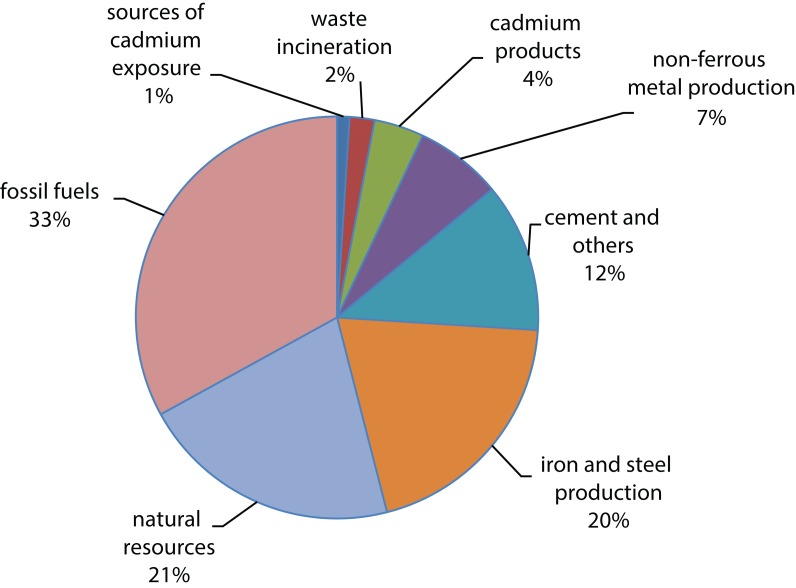
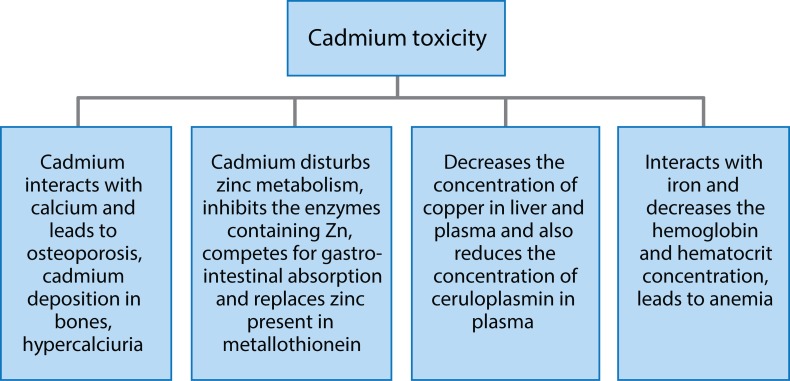
Verification
Claims the paper makes
The claims and statistics of this paper haven’t been checked yet.
Free: it reads the open-access text and checks the first 5 claims that cite a source we can check. Create a free account to check every claim.
Self-check
Percentages, sums and reported differences re-computed from the paper’s own numbers.
The self-check needs the paper’s full text.
Citations
Cites
Standard methods: For the examination of water and waste water
(1990) · Analytical Biochemistry · doi:10.1016/0003-2697(90)90598-4 · Cited by 72,091
A review of the source, behaviour and distribution of arsenic in natural waters
Smedley, P. L., & Kinniburgh, D. G. (2002) · Applied Geochemistry · doi:10.1016/s0883-2927(02)00018-5 · Cited by 7,691 · cited 1×
“Chromium (III), on the other hand, is an essential nutritional supplement for animals and humans and has an important role in glucose metabolism.”
BackgroundHazards of heavy metal contamination
Järup, L. (2003) · British Medical Bulletin · doi:10.1093/bmb/ldg032 · Cited by 6,508
Metals, Toxicity and Oxidative Stress
Valko, M., Morris, H., & Cronin, M. (2005) · Current Medicinal Chemistry · doi:10.2174/0929867053764635 · Cited by 5,018
Oxidative mechanisms in the toxicity of metal ions
Stohs, S. J., & Bagchi, D. (1995) · Free Radical Biology and Medicine · doi:10.1016/0891-5849(94)00159-h · Cited by 4,219 · cited 1×
“…between Cr(VI) and biological reductants like thiols and ascorbate result in the production of reactive oxygen species such as superoxide ion, hydrogen peroxide, and hydroxyl radical, ultimately leading to oxidative stress in the cell causing damage to DNA and proteins (Stohs & Bagchi, 1995).”
BackgroundHeavy metals, occurrence and toxicity for plants: a review
Nagajyoti, P. C., Lee, K. D., & Sreekanth, T. V. M. (2010) · Environmental Chemistry Letters · doi:10.1007/s10311-010-0297-8 · Cited by 3,962 · cited 1×
“Heavy metals are significant environmental pollutants and their toxicity is a problem of increasing significance for ecological, evolutionary, nutritional and environmental reasons (Jaishankar et al., 2013; Nagajyoti et al., 2010).”
BackgroundContamination of drinking-water by arsenic in Bangladesh: a public health emergency.
Smith, A. H., Lingas, E. O., & Rahman, M. (2000) · Europe PMC (PubMed Central) · Cited by 2,406
Sharma, P., & Dubey, R. S. (2005) · Brazilian Journal of Plant Physiology · doi:10.1590/s1677-04202005000100004 · Cited by 1,600
Interactions of chromium with microorganisms and plants
Cervantes, C., Campos‐García, J., Devars, S., Gutiérrez‐Corona, F., Loza‐Tavera, H., Guzmán, J. C. T., & Moreno‐Sánchez, R. (2001) · FEMS Microbiology Reviews · doi:10.1016/s0168-6445(01)00057-2 · Cited by 1,266 · cited 2×
“Due to the presence of excess oxygen in the environment, Cr (III) is oxidized to Cr (VI), which is extremely toxic and highly soluble in water (Cervantes et al., 2001).”
BackgroundAgency for toxic substances and disease registry
(1988) · doi:10.2172/5400458 · Cited by 1,258
Research works printed but not linked: 3
- Hillman RS Hardman JG Limbird LE Gilman AG Chapter 54. Hematopoietic agents: growth factors, minerals, and vitamins Goodman & Gilman's The Pharmacological Basis of Therapeutics 2001 10th Edition New York McGraw-Hill 1487 1518
- Mathew BB Tiwari A Jatawa SK Free radicals and antioxidants: A review Journal of Pharmacy Research 2011 4 12 4340 4343
- Mosby CV Glanze WD Anderson KN Mosby Medical Encyclopedia, The Signet: Revised Edition 1996 St. Louis
Cited by
Items 1,001–1,015 of 1,015
Heavy Metals and Neurological Disorders: From Exposure to Preventive Interventions
Rehman, Q., Rehman, K., & Akash, M. S. H. (2021) · Emerging Contaminants and Associated Treatment Technologies · doi:10.1007/978-3-030-66376-6_4 · Cited by 39
Werner, J. (2020) · Journal of Separation Science · doi:10.1002/jssc.201901184 · Cited by 38
Kaushal, J., Mahajan, P., & Kaur, N. (2021) · Environmental Science and Pollution Research · doi:10.1007/s11356-021-16672-7 · Cited by 38
Wang, J., Gao, J., Zheng, L., Fu, Y., Ji, L., Wang, C., Yuan, S., Yang, J., Liu, J., Li, G., et al. (2023) · Journal of Hazardous Materials · doi:10.1016/j.jhazmat.2023.130947 · Cited by 37
Abedinzadeh, M., Etesami, H., Alikhani, H. A., & Shafiei, S. (2020) · Heliyon · doi:10.1016/j.heliyon.2020.e04688 · Cited by 33
“Given the merits of intimate quadruple interactions among biochars, plants, microorganisms, and heavy metals, the aim of the research was the feasibility of the joined and single application of MSW biochar, as a soil immobilizing agent (a promising adsorbent) for diminishing the availability of heavymetals and uptake…”
BackgroundCactus Material-Based Adsorbents for the Removal of Heavy Metals and Dyes: A Review
Amari, A., Alalwan, B., Eldirderi, M. M., Mnif, W., & Ben Rebah, F. (2020) · Materials Research Express · doi:10.1088/2053-1591/ab5f32 · Cited by 26
“Exposition to heavymetals attacks the function of the central nervous and damages the blood content andmany other organs such as lungs, liver, etcMoreover, exposuremay cause other health problems such asmuscular and neurological degeneration (Jaishankar et al 2014, Tchounwou et al 2012).”
BackgroundHealth Problems Among Workers Who Recycle Electronic Waste in Southern Thailand
Decharat, S., & Kiddee, P. (2020) · Osong Public Health and Research Perspectives · doi:10.24171/j.phrp.2020.11.1.06 · Cited by 26
“Thus, the heavy metals can accumulate and penetrate the body [40].”
BackgroundVenieri, D., Tournas, F., Gounaki, I., Binas, V., Zachopoulos, A., Kiriakidis, G., & Mantzavinos, D. (2017) · Journal of Chemical Technology & Biotechnology · doi:10.1002/jctb.5085 · Cited by 21
Wai, K. M., Swe, T., Su Hninn, T. S., Paing, A. M., Naing, Y. L., Htay, Z. W., & Ihara, K. (2024) · Environmental Pollution · doi:10.1016/j.envpol.2023.123192 · Cited by 14
Telomere dynamics and oxidative stress in Arabidopsis grown in lunar regolith simulant
Barcenilla, B. B., Kundel, I., Hall, E., Hilty, N., Ulianich, P., Cook, J., Turley, J., Yerram, M., Min, J.-H., Castillo-González, C., et al. (2024) · Frontiers in Plant Science · doi:10.3389/fpls.2024.1351613 · Cited by 14
“Since heavy metal exposure elevates ROS (Flora, 2002; Cuypers et al., 2010; Jaishankar et al., 2014), one intriguing possibility is the heavy metal content of the lunar regolith simulant (Long-Fox et al., 2023) causes increased genome oxidation, which in turn leads to telomere shortening.”
BackgroundPhilips, C. A., Rajesh, S., George, T., Ahamed, R., Kumbar, S., & Augustine, P. (2019) · Journal of Clinical and Translational Hepatology · doi:10.14218/jcth.2019.00043 · Cited by 13
“Previous studies have also shown that heavy metal contamination and exposure could potentiate a multitude of liver disease, both acute and chronic.(30,31)”
BackgroundAntoniadou, F., Papamitsou, T., Kavvadas, D., Kapoukranidou, D., Sioga, A., & Papaliagkas, V. (2020) · Materia Socio Medica · doi:10.5455/msm.2020.32.299-306 · Cited by 8
“TOXIC ENVIRONMENTAL FACTORS Exposure of individuals to heavy metals such as aluminum, copper, mercury and lead has been shown to have serious effects on brain function (9).”
Background(2025) · doi:10.1016/j.jhazmat.2025.139625 · Cited by 7
(2025) · doi:10.1016/j.jbc.2025.110801 · Cited by 2
“A tight control of transition metal concentration is critical to pathogens, as too little metal disrupts general metabolic function, while too much metal can be toxic to the cell (9, 59, 60).”
Paredes, A., Iheacho, C., Chacón, K. N., & Smith, A. T. (2025) · doi:10.1101/2025.04.06.647434 · Cited by 2
Metadata
- Authors
- Jaishankar, M., Tseten, T., Anbalagan, N., Mathew, B. B., & Beeregowda, K. N.
- Affiliations
- Department of Biotechnology, Sapthagiri College of Engineering, Bangalore-57, Karnataka, India
- Corresponding author
- Mathew, Blessy B.
- Venue
- Interdisciplinary Toxicology
- Publisher
- Walter de Gruyter GmbH
- Published
- 2014-06-01
- Volume
- 7
- Issue
- 2
- Pages
- 60-72
- ISSN
- 1337-6853 (ISSN-L)
- 1337-9569
- PMC
- PMC4427717
- OpenAlex
- W2159727241
- Semantic Scholar
- e1dd844e81d7344a1f2f0a7b9b63d431f3aa3e25
- Cited by
- 6,402
- References
- 95
- Citations by year
- 2026: 497 · 2025: 721 · 2024: 856 · 2023: 875 · 2022: 843 · 2021: 824 · 2020: 683 · 2019: 534 · 2018: 341 · 2017: 150 · 2016: 54 · 2015: 10
- FWCI
- 7.34
- Type
- journal article
- Language
- en
- Open access
- diamond
- doi.org
- Licence
- Locations
- Interdisciplinary Toxicology (publishedVersion, cc-by-nc-nd)
- PubMed Central (publishedVersion, cc-by)
- PubMed (publishedVersion)
- DOAJ (DOAJ: Directory of Open Access Journals) (submittedVersion)
- Topics
- Physical Sciences › Environmental Science › Health, Toxicology and Mutagenesis › Heavy Metal Exposure and Toxicity
- Health Sciences › Nursing › Nutrition and Dietetics › Trace Elements in Health
- Physical Sciences › Environmental Science › Pollution › Heavy metals in environment
- Keywords
- heavy metal toxicity, toxicity mechanisms, health effects, aluminum, occupational exposure, environmental exposure, acute and chronic exposure, oxidative stress, free radicals
About these checks
Registry, retraction, Cites and statistics results are computed, not judged, with one exception: a printed reference that no index lists is read once by a model before it counts as a citation error. Claims are extracted by a model and kept only when their quote appears verbatim in the text; each cited source is then checked, with a model’s help, for whether it says what the claim relies on. Those verdicts can be wrong — read the claim’s quote and the cited source before relying on one.
Statistics and arithmetic are recomputed, not judged.
Confidence bands are shown only for fields calibrated on our annotated test set. None is calibrated yet, so no band is shown.
What counts as a claim ›How we measure confidence ›How we check this ›
Are you an author, or do you see a problem with this page? Request a review
Data sources
Bibliographic data: Semantic Scholar, OpenAlex, Crossref.
Contains information from the Semantic Scholar Academic Graph Datasets, made available under the ODC Attribution License (ODC-BY 1.0).
Semantic Scholar’s data is described in: Kinney, R., et al. (2023). The Semantic Scholar Open Data Platform. arXiv:2301.10140.
