

Toxicity, mechanism and health effects of some heavy metals
Open accessThe DOI matches its Crossref record; 91 of the 95 references it cites were found in a registry or an index.
Abstract
Heavy metal toxicity has proven to be a major threat and there are several health risks associated with it. The toxic effects of these metals, even though they do not have any biological role, remain present in some or the other form harmful for the human body and its proper functioning. They sometimes act as a pseudo element of the body while at certain times they may even interfere with metabolic processes. Few metals, such as aluminium, can be removed through elimination activities, while some metals get accumulated in the body and food chain, exhibiting a chronic nature. Various public health measures have been undertaken to control, prevent and treat metal toxicity occurring at various levels, such as occupational exposure, accidents and environmental factors. Metal toxicity depends upon the absorbed dose, the route of exposure and duration of exposure, i.e. acute or chronic. This can lead to various disorders and can also result in excessive damage due to oxidative stress induced by free radical formation. This review gives details about some heavy metals and their toxicity mechanisms, along with their health effects
Overview
The claims and statistics of this paper haven’t been checked yet.
Free: it reads the open-access text and checks the first 5 claims that cite a source we can check. Create a free account to check every claim.
Integrity signals
Registry
Cites
Statistics
Figures
Verification
Claims the paper makes
The claims and statistics of this paper haven’t been checked yet.
Free: it reads the open-access text and checks the first 5 claims that cite a source we can check. Create a free account to check every claim.
Self-check
Percentages, sums and reported differences re-computed from the paper’s own numbers.
The self-check needs the paper’s full text.
Citations
Cites
Standard methods: For the examination of water and waste water
(1990) · Analytical Biochemistry · doi:10.1016/0003-2697(90)90598-4 · Cited by 72,091
A review of the source, behaviour and distribution of arsenic in natural waters
Smedley, P. L., & Kinniburgh, D. G. (2002) · Applied Geochemistry · doi:10.1016/s0883-2927(02)00018-5 · Cited by 7,691 · cited 1×
“Chromium (III), on the other hand, is an essential nutritional supplement for animals and humans and has an important role in glucose metabolism.”
BackgroundHazards of heavy metal contamination
Järup, L. (2003) · British Medical Bulletin · doi:10.1093/bmb/ldg032 · Cited by 6,508
Metals, Toxicity and Oxidative Stress
Valko, M., Morris, H., & Cronin, M. (2005) · Current Medicinal Chemistry · doi:10.2174/0929867053764635 · Cited by 5,018
Oxidative mechanisms in the toxicity of metal ions
Stohs, S. J., & Bagchi, D. (1995) · Free Radical Biology and Medicine · doi:10.1016/0891-5849(94)00159-h · Cited by 4,219 · cited 1×
“…between Cr(VI) and biological reductants like thiols and ascorbate result in the production of reactive oxygen species such as superoxide ion, hydrogen peroxide, and hydroxyl radical, ultimately leading to oxidative stress in the cell causing damage to DNA and proteins (Stohs & Bagchi, 1995).”
BackgroundHeavy metals, occurrence and toxicity for plants: a review
Nagajyoti, P. C., Lee, K. D., & Sreekanth, T. V. M. (2010) · Environmental Chemistry Letters · doi:10.1007/s10311-010-0297-8 · Cited by 3,962 · cited 1×
“Heavy metals are significant environmental pollutants and their toxicity is a problem of increasing significance for ecological, evolutionary, nutritional and environmental reasons (Jaishankar et al., 2013; Nagajyoti et al., 2010).”
BackgroundContamination of drinking-water by arsenic in Bangladesh: a public health emergency.
Smith, A. H., Lingas, E. O., & Rahman, M. (2000) · Europe PMC (PubMed Central) · Cited by 2,406
Sharma, P., & Dubey, R. S. (2005) · Brazilian Journal of Plant Physiology · doi:10.1590/s1677-04202005000100004 · Cited by 1,600
Interactions of chromium with microorganisms and plants
Cervantes, C., Campos‐García, J., Devars, S., Gutiérrez‐Corona, F., Loza‐Tavera, H., Guzmán, J. C. T., & Moreno‐Sánchez, R. (2001) · FEMS Microbiology Reviews · doi:10.1016/s0168-6445(01)00057-2 · Cited by 1,266 · cited 2×
“Due to the presence of excess oxygen in the environment, Cr (III) is oxidized to Cr (VI), which is extremely toxic and highly soluble in water (Cervantes et al., 2001).”
BackgroundAgency for toxic substances and disease registry
(1988) · doi:10.2172/5400458 · Cited by 1,258
Research works printed but not linked: 3
- Hillman RS Hardman JG Limbird LE Gilman AG Chapter 54. Hematopoietic agents: growth factors, minerals, and vitamins Goodman & Gilman's The Pharmacological Basis of Therapeutics 2001 10th Edition New York McGraw-Hill 1487 1518
- Mathew BB Tiwari A Jatawa SK Free radicals and antioxidants: A review Journal of Pharmacy Research 2011 4 12 4340 4343
- Mosby CV Glanze WD Anderson KN Mosby Medical Encyclopedia, The Signet: Revised Edition 1996 St. Louis
Cited by
Items 401–500 of 1,015
Shaw, P., Mondal, P., Bandyopadhyay, A., & Chattopadhyay, A. (2019) · The Science of The Total Environment · doi:10.1016/j.scitotenv.2019.135622 · Cited by 99
Shikha, D., & Singh, P. K. (2020) · Environmental Science and Pollution Research · doi:10.1007/s11356-020-11600-7 · Cited by 99
A meta-analysis of metal biosorption by suspended bacteria from three phyla
Fathollahi, A., Khasteganan, N., Coupe, S. J., & Newman, A. (2020) · Chemosphere · doi:10.1016/j.chemosphere.2020.129290 · Cited by 101
Abolhasan, R., Mehdizadeh, A., Rashidi, M., Maleki, L. A., & Yousefi, M. (2019) · Biosensors and Bioelectronics · doi:10.1016/j.bios.2019.01.008 · Cited by 99
Yu, Y., Naik, S. S., Oh, Y., Theerthagiri, J., Lee, S. J., & Choi, M. Y. (2021) · Journal of Hazardous Materials · doi:10.1016/j.jhazmat.2021.126585 · Cited by 98
Jarsjö, J., Andersson‐Sköld, Y., Fröberg, M., Pietroń, J., Borgström, R., Löv, Å., & Kleja, D. B. (2019) · The Science of The Total Environment · doi:10.1016/j.scitotenv.2019.135560 · Cited by 98
Human health risk assessment of heavy metals in water from the subtropical river, Gomti, Bangladesh
Ahmed, A. S. S., Hossain, M. B., Babu, S. M. O. F., Rahman, M. M., & Sarker, M. S. I. (2020) · Environmental Nanotechnology Monitoring & Management · doi:10.1016/j.enmm.2020.100416 · Cited by 98
Comprehensive review on the adsorption of pharmaceutical products from wastewater by clay materials
Fraiha, O., Hadoudi, N., Zaki, N., Salhi, A., Amhamdi, H., Akichouh, E. H., Mourabit, F., & Ahari, M. (2024) · Desalination and Water Treatment · doi:10.1016/j.dwt.2024.100114 · Cited by 100
Abera, B. D., & Adimas, M. A. (2024) · Heliyon · doi:10.1016/j.heliyon.2024.e33905 · Cited by 100
Roshni, V., Misra, S., Santra, M. K., & Ottoor, D. P. (2018) · Journal of Photochemistry and Photobiology A Chemistry · doi:10.1016/j.jphotochem.2018.12.028 · Cited by 98
Surface-modified magnetic biochar: Highly efficient adsorbents for removal of Pb (ΙΙ) and Cd (ΙΙ)
Zahedifar, M., Seyedi, N., Shafiei, S., & Basij, M. (2021) · Materials Chemistry and Physics · doi:10.1016/j.matchemphys.2021.124860 · Cited by 97
Jiang, L., Liu, X., Yin, H., Liang, Y., Liu, H., Miao, B., Peng, Q., Meng, D., Wang, S., Yang, J., et al. (2019) · Ecotoxicology and Environmental Safety · doi:10.1016/j.ecoenv.2019.110009 · Cited by 97
Sharma, S., Kaur, I., & Nagpal, A. K. (2021) · Environmental Science and Pollution Research · doi:10.1007/s11356-020-11696-x · Cited by 97
Zhao, G. H., Wang, X., Liu, G., & Thuy, N. T. D. (2021) · Sensors and Actuators B Chemical · doi:10.1016/j.snb.2021.130834 · Cited by 97
Sah, D., Verma, P. K., Kandikonda, M. K., & Lakhani, A. (2018) · Urban Climate · doi:10.1016/j.uclim.2018.11.010 · Cited by 97
Jiang, M., Liu, S., Li, Y., Li, X., Luo, Z., Song, H., & Chen, Q. (2019) · Ecotoxicology and Environmental Safety · doi:10.1016/j.ecoenv.2018.12.020 · Cited by 96
Gaur, N., Kukreja, A., Yadav, M., & Tiwari, A. (2018) · Applied Water Science · doi:10.1007/s13201-018-0743-5 · Cited by 96
Kumar, M., Gupta, N., Ratn, A., Awasthi, Y., Prasad, R., Trivedi, A., & Trivedi, S. P. (2019) · Biological Trace Element Research · doi:10.1007/s12011-019-01736-0 · Cited by 96
Algal biomass waste residues of Spirulina platensis for chromium adsorption and modeling studies
Nithya, K., Sathish, A., Pradeep, K., & Baalaji, S. K. (2019) · Journal of environmental chemical engineering · doi:10.1016/j.jece.2019.103273 · Cited by 96
Çağlayan, C., Taslımı, P., Türk, C., Gülçın, İ., Kandemır, F. M., Demir, Y., & Beydemir, Ş. (2020) · Environmental Science and Pollution Research · doi:10.1007/s11356-020-07611-z · Cited by 96
“However, the much concentration of it causes cellular damage, mutation, and malignant transformations which in turn cause an array of diseases (Jaishankar et al. 2014).”
BackgroundRashid, A., Ayub, M., Ullah, Z., Ali, A., Sardar, T., Iqbal, J., Gao, X., Bundschuh, J., Li, C., Khattak, S. A., et al. (2023) · International Journal of Environmental Research and Public Health · doi:10.3390/ijerph20032113 · Cited by 96
“Mostly, human beings need a specified amount of Cr for normal body growth [46,47].”
BackgroundJin, Y., Zhang, M., Jin, Z., Wang, G., Li, R., Zhang, X., Liu, X., Qu, J., & Wang, H. (2020) · Environmental Research · doi:10.1016/j.envres.2020.110323 · Cited by 95
Rhizofiltration for Removal of Inorganic and Organic Pollutants in Groundwater: a Review
(2021) · Biointerface Research in Applied Chemistry · doi:10.33263/briac114.1232612347 · Cited by 81
“With their oxidation-reduction and chemical coordination characteristics, original metals from binding sites are displaced by heavy metals, thus cause cell malfunction and toxicity [76].”
BackgroundShi, Y., Zheng, L., Huang, H., Tian, Y., Gong, Z., Liu, P., Wu, X., Li, W., & Gao, S. (2023) · Environmental Science & Technology · doi:10.1021/acs.est.2c05063 · Cited by 95
Gunarathne, V., Phillips, A. J., Zanoletti, A., Rajapaksha, A. U., Vithanage, M. S., Maria, F. D., Pivato, A., Korzeniewska, E., & Bontempi, E. (2023) · The Science of The Total Environment · doi:10.1016/j.scitotenv.2023.169026 · Cited by 100
Mixed Contaminants: Occurrence, Interactions, Toxicity, Detection, and Remediation
Goutam Mukherjee, A., Ramesh Wanjari, U., Eladl, M. A., El-Sherbiny, M., Elsherbini, D. M. A., Sukumar, A., Kannampuzha, S., Ravichandran, M., Renu, K., Vellingiri, B., et al. (2022) · Molecules · doi:10.3390/molecules27082577 · Cited by 94
“Asbestos can remain in the lung for many years and cause parenchymal asbestosis, asbestos-related pleural abnormalities, lung carcinoma, and pleural mesothelioma [34,35].”
BackgroundKeratin and Chitosan Biosorbents for Wastewater Treatment: A Review
Saha, S., Zubair, M., Khosa, M. A., Song, S., & Ullah, A. (2019) · Journal of Polymers and the Environment · doi:10.1007/s10924-019-01439-6 · Cited by 94
Lead-induced oxidative stress and role of antioxidant defense in wheat (Triticum aestivum L.)
Navabpour, S., Yamchi, A., Bagherikia, S., & Kafi, H. (2020) · Physiology and Molecular Biology of Plants · doi:10.1007/s12298-020-00777-3 · Cited by 94
Hayat, K., Khan, J., Khan, A., Ullah, S., Ali, S., Salahuddin, S., & Fu, Y. (2021) · Plants · doi:10.3390/plants10040796 · Cited by 95
“This contamination inflicts detrimental effects on ecosystems, affecting their biotic components, including animals and plants [3,4].”
BackgroundBiosorption of heavy metal ions from contaminated wastewater: an eco-friendly approach
Xie, S. (2024) · Green Chemistry Letters and Reviews · doi:10.1080/17518253.2024.2357213 · Cited by 94
“As (III & V) are highly toxic and can cause skin lesions, respiratory issues, and cancer ( 11 ).”
Ali, S., Awan, Z., Mumtaz, S., Shakir, H. A., Ahmad, F., Ulhaq, M., Tahir, H. M., Awan, M. S., Sharif, S., Irfan, M. I., et al. (2020) · Environmental Science and Pollution Research · doi:10.1007/s11356-020-09011-9 · Cited by 93
Silwamba, M., Ito, M., Hiroyoshi, N., Tabelin, C. B., Fukushima, T., Park, I., Jeon, S., Igarashi, T., Sato, T., Nyambe, I., et al. (2020) · Journal of Environmental Chemical Engineering · doi:10.1016/j.jece.2020.104197 · Cited by 83
Kar, I., & Patra, A. K. (2021) · Biological Trace Element Research · doi:10.1007/s12011-020-02503-2 · Cited by 93
Rezaei, H., Shafaei, S. Z., Abdollahi, H., Shahidi, A., & Ghassa, S. (2021) · Fuel · doi:10.1016/j.fuel.2021.122844 · Cited by 93
Availability, Toxicology and Medical Significance of Antimony
Periferakis, A., Căruntu, A., Periferakis, A.-T., Scheau, A.-E., Bădărău, I. A., Căruntu, C., & Scheau, C. (2022) · International Journal of Environmental Research and Public Health · doi:10.3390/ijerph19084669 · Cited by 93
Calmuc, V. A., Călmuc, M., Arseni, M., Topa, C., Timofti, M., Burada, A., Iticescu, C., & Georgescu, L. (2021) · Water · doi:10.3390/w13131801 · Cited by 92
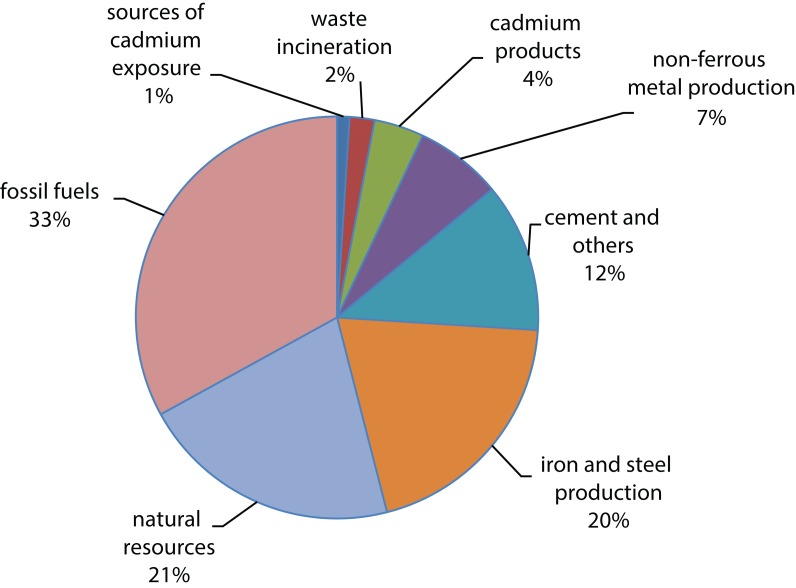
“Usually, industry, and the combustion of fossil fuels and agriculture (phosphoric fertilizers) represent the main sources of environmental pollution with cadmium [4,55–57].”
BackgroundZawawi, N., Zhang, J., Hungerford, N. L., Yates, H. S. A., Webber, D. C., Farrell, M., Tinggi, U., Bhandari, B., & Fletcher, M. T. (2021) · Food Chemistry · doi:10.1016/j.foodchem.2021.131566 · Cited by 92
Arsenic and Heavy Metal (Cadmium, Lead, Mercury and Nickel) Contamination in Plant-Based Foods
Hussain, S., Rengel, Z., Qaswar, M., Amir, M., & Zafar-ul-Hye, M. (2019) · Springer eBooks · doi:10.1007/978-3-030-03344-6_20 · Cited by 94
Xie, L., Hao, P., Cheng, Y., Ahmed, I. M., & Cao, F. (2018) · Ecotoxicology and Environmental Safety · doi:10.1016/j.ecoenv.2018.06.072 · Cited by 91
Reddy, S., & Osborne, W. J. (2020) · Biocatalysis and Agricultural Biotechnology · doi:10.1016/j.bcab.2020.101574 · Cited by 91
Surface engineering of nano-sorbents for the removal of heavy metals: Interfacial aspects
Pandey, L. M. (2021) · Journal of Environmental Chemical Engineering · doi:10.1016/j.jece.2020.104586 · Cited by 84
Sheikh, Z., Amin, M., Khan, N., Khan, M. N., Sami, S. K., Khan, S. B., Hafeez, I., Khan, S. A., Bakhsh, E. M., & Cheng, C. K. (2021) · Chemosphere · doi:10.1016/j.chemosphere.2021.130545 · Cited by 91
Balaram, V., Rahaman, W., & Roy, P. (2021) · Geosystems and Geoenvironment · doi:10.1016/j.geogeo.2021.100019 · Cited by 91
Kalıpcı, E., Cüce, H., Ustaoğlu, F., Dereli, M. A., & Türkmen, M. (2022) · Environmental Toxicology and Pharmacology · doi:10.1016/j.etap.2022.104028 · Cited by 91
Ecological and human health risk assessment of metals leached from end-of-life solar photovoltaics
Nain, P., & Kumar, A. (2020) · Environmental Pollution · doi:10.1016/j.envpol.2020.115393 · Cited by 90
Kim, H. J., Lim, J. W., Jeong, H., Lee, S.-J., Lee, D., Kim, T., & Lee, S. J. (2015) · Biosensors and Bioelectronics · doi:10.1016/j.bios.2015.12.101 · Cited by 90
“health (Jaishankar et al., 2014).”
Taka, A. L., Fosso‐Kankeu, E., Pillay, K., & Mbianda, X. Y. (2018) · Environmental Science and Pollution Research · doi:10.1007/s11356-018-2055-6 · Cited by 91
Rubin, H. N., & Reynolds, M. M. (2019) · Inorganic Chemistry · doi:10.1021/acs.inorgchem.9b00481 · Cited by 90
Soil quality indices for metal(loid) contamination: An enzymatic perspective
Aponte, H., Medina, J., Butler, B. M., Meier, S., Cornejo, P., & Kuzyakov, Y. V. (2020) · Land Degradation and Development · doi:10.1002/ldr.3630 · Cited by 90
Microbial Bioremediation of Heavy Metals
Tayang, A., & Songachan, L. S. (2021) · Current Science · doi:10.18520/cs/v120/i6/1013-1025 · Cited by 90
Wastewater Treatment in Mineral Processing of Non-Ferrous Metal Resources: A Review
Meng, S., Wen, S., Han, G. Z., Wang, X., & Feng, Q. (2022) · Water · doi:10.3390/w14050726 · Cited by 91
Association Between Non-alcoholic Fatty Liver Disease and Heavy Metal Exposure: a Systematic Review
Sadighara, P., Abedini, A. H., Irshad, N., Ghazi‐Khansari, M., Esrafili, A., & Yousefi, M. (2023) · Biological Trace Element Research · doi:10.1007/s12011-023-03629-9 · Cited by 90
Noor, N., Zong, G., Seely, E. W., Weisskopf, M. G., & James-Todd, T. M. (2018) · Environment International · doi:10.1016/j.envint.2018.08.029 · Cited by 90
“Cadmium is a ubiquitously occurring toxic metal[12, 13], which has several major sources of exposure, including cigarette smoking, diet (e.”
BackgroundProtective effect of tea against lead and cadmium-induced oxidative stress—a review
Winiarska‐Mieczan, A. (2018) · BioMetals · doi:10.1007/s10534-018-0153-z · Cited by 91
Cadmium, lead, and mercury mixtures interact with non-alcoholic fatty liver diseases
Nguyen, H. D., & Kim, M.-S. (2022) · Environmental Pollution · doi:10.1016/j.envpol.2022.119780 · Cited by 89
Kumar, P., Gacem, A., Ahmad, M. T., Yadav, V. K., Singh, S., Yadav, K. K., Alam, M. M., Dawane, V., Piplode, S., Maurya, P., et al. (2022) · Frontiers in Environmental Science · doi:10.3389/fenvs.2022.949581 · Cited by 91
Filipoiu, D. C., BUNGAU, S. G., Endres, L. M., Negru, P. A., Bungău, A. F., Pașca, B., Radu, A.-F., Tarce, A. G., Bogdan, M. A., Behl, T., et al. (2022) · Toxics · doi:10.3390/toxics10120716 · Cited by 91
Recent advances in cellulose supported photocatalysis for pollutant mitigation: A review
Sudhaik, A., Raizada, P., Ahamad, T., Alshehri, S. M., Nguyen, V., Le, Q. V., Thakur, S., Thakur, V. K., Selvasembian, R., & Singh, P. (2022) · International Journal of Biological Macromolecules · doi:10.1016/j.ijbiomac.2022.11.241 · Cited by 90
Paul, J., Qamar, A., Ahankari, S. S., Thomas, S., & Dufresne, A. (2024) · Carbohydrate Polymers · doi:10.1016/j.carbpol.2024.122198 · Cited by 91
DNA damage and epigenetic alteration in soybean farmers exposed to complex mixture of pesticides
Benedetti, D., Alderete, B. L., de Souza, C. T., Dias, J. F., Niekraszewicz, L. A. B., Cappetta, M., Martínez‐López, W., & da Silva, J. (2017) · Mutagenesis · doi:10.1093/mutage/gex035 · Cited by 89
Developing conductive concrete containing wire rope and steel powder wastes for route deicing
Shishegaran, A., Daneshpajoh, F., Taghavizade, H., & Mirvalad, S. (2019) · Construction and Building Materials · doi:10.1016/j.conbuildmat.2019.117184 · Cited by 90
Bessa, L. W., Pieterse, E., Marais, J., Dhanani, K., & Hoffman, L. C. (2021) · Foods · doi:10.3390/foods10081934 · Cited by 88
“Tin (Sn) has low toxicity, due to limited absorption in the gut, however, over consumption can lead to nausea and muscular weakness [61].”
BackgroundAshrap, P., Watkins, D. J., Mukherjee, B., Boss, J., Richards, M. J., Rosario, Z., Vélez-Vega, C. M., Alshawabkeh, A. N., Cordero, J. F., & Meeker, J. D. (2020) · Environmental Research · doi:10.1016/j.envres.2020.109178 · Cited by 88
“Other metal(loid)s do not play an essential physiologic role and can be toxic if present even at low concentrations (Jaishankar et al. 2014; Jan et al. 2015; Singh et al. 2011); some, including lead (Pb) and mercury (Hg), are reproductive toxicants and neurotoxicants, while others, such as cadmium (Cd) and arsenic (As…”
BackgroundKamnoet, P., Aeungmaitrepirom, W., Menger, R. F., & Henry, C. S. (2021) · The Analyst · doi:10.1039/d0an02200d · Cited by 88
Kothapalli, C. R. (2021) · Current Opinion in Toxicology · doi:10.1016/j.cotox.2021.04.003 · Cited by 90
A review on the determination heavy metals ions using calixarene-based electrochemical sensors
Mei, C. J., & Ahmad, S. A. A. (2021) · Arabian Journal of Chemistry · doi:10.1016/j.arabjc.2021.103303 · Cited by 88
Faruque, M. O., Uddin, S., Hossain, M. M., Hossain, S. M. Z., Shafiquzzaman, M., & Razzak, S. A. (2024) · Journal of Hazardous Materials Advances · doi:10.1016/j.hazadv.2024.100492 · Cited by 93
Heavy metal contamination in two commercial fish species of a trans-Himalayan freshwater ecosystem
Mehmood, M. A., Qadri, H., Bhat, R. A., Rashid, A., Ganie, S. A., Dar, G. H., & Shafiq‐ur‐Rehman (2019) · Environmental Monitoring and Assessment · doi:10.1007/s10661-019-7245-2 · Cited by 87
Ali, J., Tuzen, M., Citak, D., Uluozlu, O. D., Mendil, D., Kazi, T. G., & Afridi, H. I. (2019) · Journal of Molecular Liquids · doi:10.1016/j.molliq.2019.111299 · Cited by 85
Bioremediation Methods for the Recovery of Lead-Contaminated Soils: A Review
Rigoletto, M., Calza, P., Gaggero, E., Malandrino, M., & Fabbri, D. (2020) · Applied Sciences · doi:10.3390/app10103528 · Cited by 89
“Inside plants, lead causes an increased production of reactive oxygen species (ROS), with the consequent damage to cellular lipid membranes with a resultant alteration of the photosynthetic processes [18].”
BackgroundA review on the public health implications of heavy metals
Lawal, K. K., Ekeleme, I. K., Onuigbo, C. M., Ikpeazu, V. O., & Obiekezie, S. O. (2021) · World Journal of Advanced Research and Reviews · doi:10.30574/wjarr.2021.10.3.0249 · Cited by 87
“The central nervous function can be affected leading to mental disorder, damage the blood constituents and may damage the lungs, liver, kidneys and other vital organs promoting several disease conditions [7].”
BackgroundObiri-Yeboah, A. A., Nyantakyi, E. K., Mohammed, A. R., Yeboah, S. I. I. K., Domfeh, M. K., & Abokyi, E. (2021) · Scientific African · doi:10.1016/j.sciaf.2021.e00876 · Cited by 87
Karahan, F. (2022) · Biological Trace Element Research · doi:10.1007/s12011-022-03299-z · Cited by 87
“When the damages of heavy metal toxicity on human health are evaluated, higher levels of Al in the human body can cause Alzheimer, dialysis dementia, neurotoxicity, dermatitis, lung and bone disease, kidney disease, microcytic anemia, and lung and bladder cancer [126, 127].”
BackgroundLiu, Y., Lv, H., Liu, Y., Gao, Y., Kim, H. Y., Ouyang, Y., & Yu, D. (2022) · Materials Today Chemistry · doi:10.1016/j.mtchem.2022.100974 · Cited by 88
Plants’ molecular behavior to heavy metals: from criticality to toxicity
El‐Sappah, A. H., Zhu, Y., Huang, Q., Chen, B., Soaud, S. A., Elhamid, M. A. A., Yan, K., Li, J., & El-Tarabily, K. A. (2024) · Frontiers in Plant Science · doi:10.3389/fpls.2024.1423625 · Cited by 88
Giglio, A., Ammendola, A., Battistella, S., Naccarato, A., Pallavicini, A., Simeon, E., Tagarelli, A., & Giulianini, P. G. (2016) · Environmental Science and Pollution Research · doi:10.1007/s11356-016-7862-z · Cited by 87
“The bioaccumulation in the human body, via acute and chronic exposition, affects a number of different systems and organs resulting in irritation and respiratory infections, lung cancer, heart disease and oxidative stress (Duruibe et al. 2007; Kampa and Castanas 2008; Jaishankar et al. 2014).”
BackgroundNutritional evaluation of Kedrostis africana (L.) Cogn: An edible wild plant of South Africa
Unuofin, J. O., Otunola, G. A., & Afolayan, A. J. (2017) · Asian Pacific Journal of Tropical Biomedicine · doi:10.1016/j.apjtb.2017.01.016 · Cited by 88
Ramírez, O., de la Campa, A. M. S., Sánchez-Rodas, D., & de la Rosa, J. D. (2019) · The Science of The Total Environment · doi:10.1016/j.scitotenv.2019.136344 · Cited by 87
Li, P., Hong, Y., Feng, H., & Li, S. F. Y. (2017) · Journal of Materials Chemistry B · doi:10.1039/c7tb00017k · Cited by 86
Subramaniam, M. N., Goh, P. S., Lau, W. J., & Ismail, A. F. (2019) · Nanomaterials · doi:10.3390/nano9040625 · Cited by 87
“The WHO postulated that aluminium exposure is probably a risk factor in the onset of Alzheimer disease in humans, whist reports have also suggested that humans can also be afflic with contact dermatiti and irritant dermatitis [30,34].”
BackgroundInfluentialAlhusaini, A. M., Fadda, L. M., Hasan, I. H., Zakaria, E. A., Alenazi, A. M., & Mahmoud, A. M. (2019) · Biomolecules · doi:10.3390/biom9110703 · Cited by 86
“Increased ROS generation and declined antioxidant defenses represent a main culprit behind Pb toxicity [11,13].”
BackgroundKaushik, A., & Singh, A. (2020) · Journal of Environmental Management · doi:10.1016/j.jenvman.2020.110826 · Cited by 86
Fang, J. S., Yin, H., Yang, Z., Tan, M., Wang, F., Chen, K., Zuo, Z., Shu, G., Cui, H., Ouyang, P., et al. (2020) · Ecotoxicology and Environmental Safety · doi:10.1016/j.ecoenv.2020.111610 · Cited by 86
Tauqeer, H. M., Turan, V., & Iqbal, M. M. (2022) · Springer eBooks · doi:10.1007/978-3-030-89984-4_19 · Cited by 87
Health risk assessment for exposure to heavy metals in soils in and around E-waste dumping site
Dutta, D., Goel, S., & Kumar, S. (2022) · Journal of environmental chemical engineering · doi:10.1016/j.jece.2022.107269 · Cited by 87
Natongchai, W., Posada‐Pérez, S., Phungpanya, C., Luque‐Urrutia, J. A., Solà, M., D’Elia, V., & Poater, A. (2022) · The Journal of Organic Chemistry · doi:10.1021/acs.joc.1c02770 · Cited by 86
Muhammad, M., Khan, S., Shehzadi, S. A., Gul, Z., Al‐Saidi, H. M., Kamran, A. W., & Alhumaydhi, F. A. (2022) · Dyes and Pigments · doi:10.1016/j.dyepig.2022.110477 · Cited by 88
Sarvestani, R. A., & Aghasi, M. (2019) · Environmental Earth Sciences · doi:10.1007/s12665-019-8723-0 · Cited by 85
Associations between metabolic syndrome and four heavy metals: A systematic review and meta-analysis
Xu, P., Liu, A., Li, F., Tinkov, A. A., Liu, L., & Zhou, J.-C. (2021) · Environmental Pollution · doi:10.1016/j.envpol.2021.116480 · Cited by 76
Njoga, E. O., Ezenduka, E. V., Ogbodo, C. G., Ogbonna, C. U., Jaja, I. F., Ofomatah, A. C., & Okpala, C. O. R. (2021) · Foods · doi:10.3390/foods10040798 · Cited by 85
“Heavy metals/metalloids (HMs) entail chemical elements with a density greater than 5 g/cm3 or specific gravity of at least five times greater than that of water [1].”
BackgroundAlshahrani, A., Alharbi, A., Alnasser, S., Almihdar, M., Alsuhybani, M. S., & AlOtaibi, B. (2021) · Separation and Purification Technology · doi:10.1016/j.seppur.2021.119300 · Cited by 86
Gupta, P., & Kumar, V. (2016) · World Journal of Microbiology and Biotechnology · doi:10.1007/s11274-016-2176-3 · Cited by 86
Abdel-Rahman, G. N., Ahmed, M. B. M., Sabry, B. A., & Ali, S. S. M. (2019) · Toxicology Reports · doi:10.1016/j.toxrep.2019.02.010 · Cited by 85
Advanced human developmental toxicity and teratogenicity assessment using human organoid models
Li, M., Gong, J., Gao, L., Zou, T., Kang, J., & Xu, H. (2022) · Ecotoxicology and Environmental Safety · doi:10.1016/j.ecoenv.2022.113429 · Cited by 84
AL-Megrin, W. A., Soliman, D., Kassab, R. B., Metwally, D. M., Moneim, A. E. A., & El-Khadragy, M. F. (2020) · Frontiers in Physiology · doi:10.3389/fphys.2020.00064 · Cited by 84
“Lead Concentration in the Kidney Tissue Pb content in the kidney tissue was estimated by flame atomic absorption spectrophotometer according to the method of Szkoda and Zmudzki (2005). The amount of Pb in the kidney was expressed as μg/g wet kidney tissue.”
MethodOlayinka-Olagunju, J. O., Dosumu, A. A., & Olatunji-Ojo, A. M. (2021) · Water Air & Soil Pollution · doi:10.1007/s11270-021-04987-7 · Cited by 84
Health risk assessment of total chromium in the qanat as historical drinking water supplying system
Kazemi, A., Esmaeilbeigi, M., Sahebi, Z., & Ansari, A. (2021) · The Science of The Total Environment · doi:10.1016/j.scitotenv.2021.150795 · Cited by 84
Azeem, M., Shaheen, S. M., Ali, A., Jeyasundar, P. G. S. A., Latif, A., Abdelrahman, H. M., Li, R., Almazroui, M., Niazi, N. K., Sarmah, A. K., et al. (2021) · Journal of Hazardous Materials · doi:10.1016/j.jhazmat.2021.128131 · Cited by 84
Silva, S., Dias, M. C., & Silva, A. M. S. (2022) · Toxics · doi:10.3390/toxics10040172 · Cited by 85
Gu, Y., Gao, Y., Chen, F., Huang, H., Yu, S.-H., Jordan, R. W., & Jiang, S. (2022) · Water Research · doi:10.1016/j.watres.2022.119108 · Cited by 84
Metadata
- Authors
- Jaishankar, M., Tseten, T., Anbalagan, N., Mathew, B. B., & Beeregowda, K. N.
- Affiliations
- Department of Biotechnology, Sapthagiri College of Engineering, Bangalore-57, Karnataka, India
- Corresponding author
- Mathew, Blessy B.
- Venue
- Interdisciplinary Toxicology
- Publisher
- Walter de Gruyter GmbH
- Published
- 2014-06-01
- Volume
- 7
- Issue
- 2
- Pages
- 60-72
- ISSN
- 1337-6853 (ISSN-L)
- 1337-9569
- PMC
- PMC4427717
- OpenAlex
- W2159727241
- Semantic Scholar
- e1dd844e81d7344a1f2f0a7b9b63d431f3aa3e25
- Cited by
- 6,402
- References
- 95
- Citations by year
- 2026: 497 · 2025: 721 · 2024: 856 · 2023: 875 · 2022: 843 · 2021: 824 · 2020: 683 · 2019: 534 · 2018: 341 · 2017: 150 · 2016: 54 · 2015: 10
- FWCI
- 7.34
- Type
- journal article
- Language
- en
- Open access
- diamond
- doi.org
- Licence
- Locations
- Interdisciplinary Toxicology (publishedVersion, cc-by-nc-nd)
- PubMed Central (publishedVersion, cc-by)
- PubMed (publishedVersion)
- DOAJ (DOAJ: Directory of Open Access Journals) (submittedVersion)
- Topics
- Physical Sciences › Environmental Science › Health, Toxicology and Mutagenesis › Heavy Metal Exposure and Toxicity
- Health Sciences › Nursing › Nutrition and Dietetics › Trace Elements in Health
- Physical Sciences › Environmental Science › Pollution › Heavy metals in environment
- Keywords
- heavy metal toxicity, toxicity mechanisms, health effects, aluminum, occupational exposure, environmental exposure, acute and chronic exposure, oxidative stress, free radicals
About these checks
Registry, retraction, Cites and statistics results are computed, not judged, with one exception: a printed reference that no index lists is read once by a model before it counts as a citation error. Claims are extracted by a model and kept only when their quote appears verbatim in the text; each cited source is then checked, with a model’s help, for whether it says what the claim relies on. Those verdicts can be wrong — read the claim’s quote and the cited source before relying on one.
Statistics and arithmetic are recomputed, not judged.
Confidence bands are shown only for fields calibrated on our annotated test set. None is calibrated yet, so no band is shown.
What counts as a claim ›How we measure confidence ›How we check this ›
Are you an author, or do you see a problem with this page? Request a review
Data sources
Bibliographic data: Semantic Scholar, OpenAlex, Crossref.
Contains information from the Semantic Scholar Academic Graph Datasets, made available under the ODC Attribution License (ODC-BY 1.0).
Semantic Scholar’s data is described in: Kinney, R., et al. (2023). The Semantic Scholar Open Data Platform. arXiv:2301.10140.
