

The DOI matches its Crossref record; 145 of the 146 references it cites were found in a registry or an index.
Digital Games, Design, and Learning: A Systematic Review and Meta-Analysis
Open accessAbstract
In this meta-analysis, we systematically reviewed research on digital games and learning for K–16 students. We synthesized comparisons of game versus nongame conditions (i.e., media comparisons) and comparisons of augmented games versus standard game designs (i.e., value-added comparisons). We used random-effects meta-regression models with robust variance estimates to summarize overall effects and explore potential moderator effects. Results from media comparisons indicated that digital games significantly enhanced student learning relative to nongame conditions ([Formula: see text] = 0.33, 95% confidence interval [0.19, 0.48], k = 57, n = 209). Results from value-added comparisons indicated significant learning benefits associated with augmented game designs ([Formula: see text] = 0.34, 95% confidence interval [0.17, 0.51], k = 20, n = 40). Moderator analyses demonstrated that effects varied across various game mechanics characteristics, visual and narrative characteristics, and research quality characteristics. Taken together, the results highlight the affordances of games for learning as well as the key role of design beyond medium.
Overview
The claims and statistics of this paper haven’t been checked yet.
Run the check — free, no account needed. It reads the open-access text and checks the sources it cites.
Integrity signals
Registry
Cites
Statistics
Figures
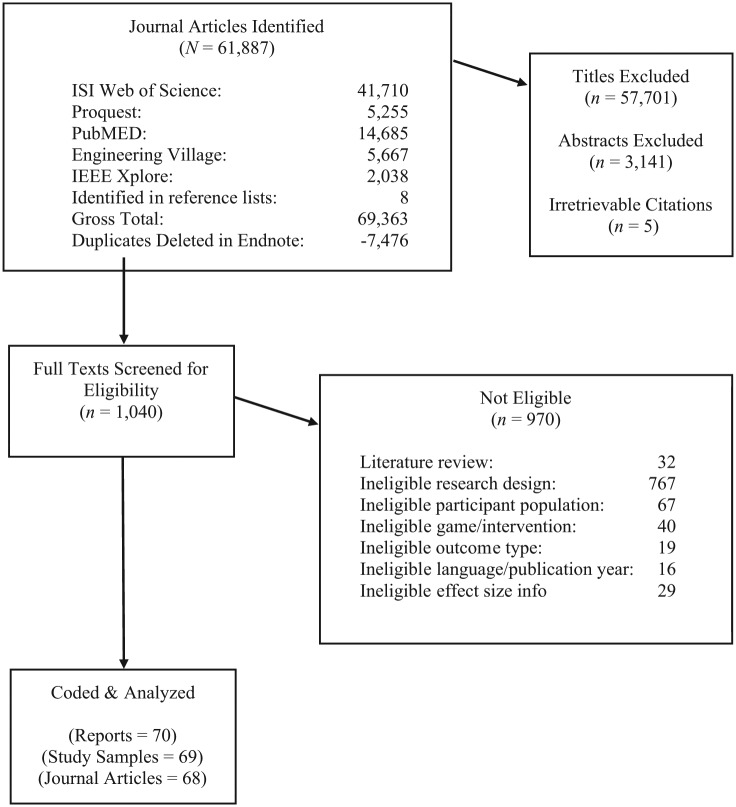
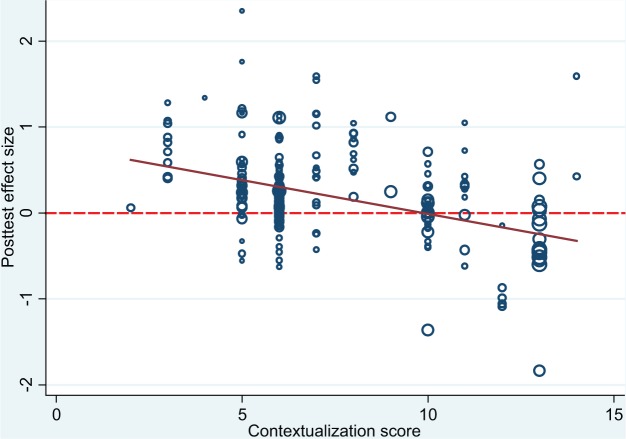
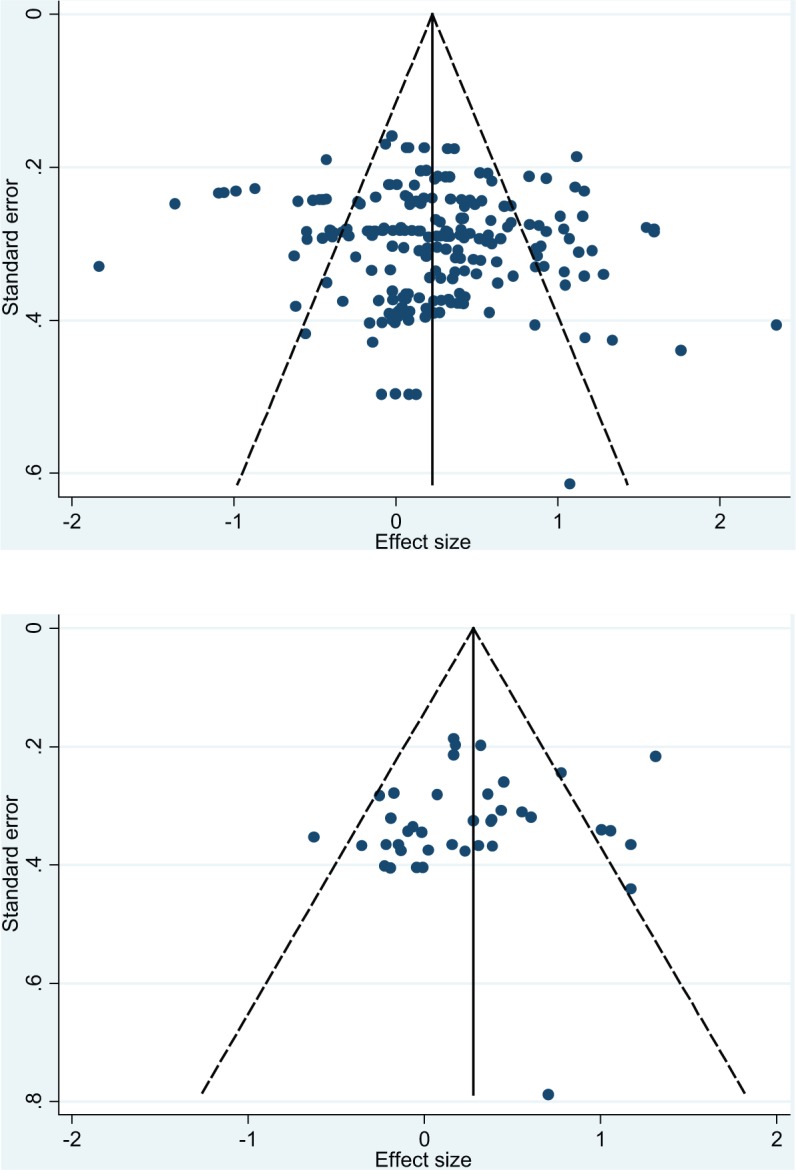
Verification
Claims the paper makes
The claims and statistics of this paper haven’t been checked yet.
Run the check — free, no account needed. It reads the open-access text and checks the sources it cites.
Claims other papers make about this one
Each is checked against this paper’s own text: does it say what the citing paper says it does?
The source backs part of the claim, not all of it — or backs it for a different population, condition or comparison.
In the citing paper
“Inclusion of game fiction is closely related to the use of narrative anchors and has been shown to be effective for learning as it situates and anchors learning in a context (Clark et al. 2016) and can further serve as a cognitive framework for problem solving (Dickey 2006).”
From The gamification of learning: a meta-analysis (2020) · cites this paper as Clark et al. 2016
Experimental — accuracy not yet measuredThe source backs part of the claim, not all of it — or backs it for a different population, condition or comparison.
In the citing paper
“In addition, the results of the summary effect analyses were similar to results from meta-analyses conducted in the context of games (see Clark et al. 2016;Wouters et al. 2013), indicating that the power of games can be transferred to non-game contexts by using game design elements.”
From The gamification of learning: a meta-analysis (2020) · cites this paper as Clark et al. 2016
Experimental — accuracy not yet measuredThe source backs part of the claim, not all of it — or backs it for a different population, condition or comparison.
In the citing paper
“This result for behavioral learning outcomes is in line with evidence from the context of games, showing that combinations of competition and collaboration in games are promising for learning (Clark et al. 2016).”
From The gamification of learning: a meta-analysis (2020) · cites this paper as Clark et al. 2016
Experimental — accuracy not yet measuredThe cited source says what the claim attributes to it.
In the citing paper
“Clark et al. (2016) included competition in their meta-analysis on digital games and found that combinations of competition and collaboration as well as single-player games without competitive elements can outperform games with mere competition.”
From The gamification of learning: a meta-analysis (2020) · cites this paper as Clark et al. 2016
In the citing paper
“The reviews have also documented the effects on students' learning outcomes and the key role of gamified designs (Alsawaier, 2018;Clark, Tanner-Smith & Killingsworth 2016).”
From Towards a motivational design? Connecting gamification user types and online learning activities (2020) · cites this paper as Clark, Tanner-Smith & Killingsworth 2016
Self-check
Percentages, sums and reported differences re-computed from the paper’s own numbers.
The self-check needs the paper’s full text.
Citations
Cites
Bias in meta-analysis detected by a simple, graphical test
Egger, M., Smith, G. D., Schneider, M., & Minder, C. (1997) · BMJ · doi:10.1136/bmj.315.7109.629 · Cited by 56,722
Self-efficacy: The exercise of control
Bandura, A., Freeman, W. H., & Lightsey, R. (1999) · Journal of Cognitive Psychotherapy · doi:10.1891/0889-8391.13.2.158 · Cited by 46,835
Situated Cognition and the Culture of Learning
Brown, J. S., Collins, A., & Duguid, P. (1989) · Educational Researcher · doi:10.3102/0013189x018001032 · Cited by 13,645
David, F. N., & Tukey, J. W. (1977) · Biometrics · doi:10.2307/2529486 · Cited by 12,707
Borenstein, M., Hedges, L. V., Higgins, J. P. T., & Rothstein, H. R. (2021) · doi:10.1002/9781119558378 · Cited by 9,799
What Video Games Have to Teach Us about Learning and Literacy
(2004) · Education + Training · doi:10.1108/et.2004.00446dae.002 · Cited by 6,674
Distribution Theory for Glass's Estimator of Effect Size and Related Estimators
Hedges, L. V. (1981) · Journal of Educational Statistics · doi:10.2307/1164588 · Cited by 5,695
The Handbook of Research Synthesis and Meta-Analysis
(2019) · doi:10.7758/9781610448864 · Cited by 4,553
Self-Efficacy and Academic Motivation
Schunk, D. H. (1991) · Educational Psychologist · doi:10.1080/00461520.1991.9653133 · Cited by 4,292
Pintrich, P. R. (2003) · Journal of Educational Psychology · doi:10.1037/0022-0663.95.4.667 · Cited by 3,459
Research works printed but not linked: 6
- Gleser L. J., 2009, The handbook of research synthesis and meta-analysis, 357
- 10.3102/10769986006002107 · DOI · Paper page
- Hedges L. V., 2007, Journal of Research in Rural Education, 22, 1
- López-López J. A., 2015, Assessing meta-regression models for examining moderator relationships with dependent effect sizes: A Monte Carlo simulation
- López-López J. A., 2010, Paper presented at the 5th annual meeting of the Society for Research Synthesis Methodology
- Raudenbush S. W., 2009, The handbook of research synthesis and meta-analysis, 295
Cited by
Sorted by citations
Items 101–200 of 1,000
The Co-Creative approach to digital simulation games in social science education
Sanina, A. G., Kutergina, E., & Balashov, A. (2020) · Computers & Education · doi:10.1016/j.compedu.2020.103813 · Cited by 73
Oh, S., So, H., & Gaydos, M. J. (2017) · IEEE Transactions on Learning Technologies · doi:10.1109/tlt.2017.2750673 · Cited by 67
Holographic learning: A mixed reality trial of Microsoft HoloLens in an Australian secondary school
Leonard, S. N., & Fitzgerald, R. (2018) · Research in Learning Technology · doi:10.25304/rlt.v26.2160 · Cited by 67
Nash, B. L., & Brady, R. B. (2021) · Reading Research Quarterly · doi:10.1002/rrq.454 · Cited by 73
Rojas, M., Nussbaum, M., Guerrero, O., Chiuminatto, P., Greiff, S., Rio, R. D., & Alvares, D. (2022) · International Journal of Computer-Supported Collaborative Learning · doi:10.1007/s11412-022-09362-0 · Cited by 68
Room2Educ8: A Framework for Creating Educational Escape Rooms Based on Design Thinking Principles
Fotaris, P., & Μάστορας, Θ. (2022) · Education Sciences · doi:10.3390/educsci12110768 · Cited by 92
Adquisición de competencias a través de juegos serios en el área contable: un análisis empírico
Calabor, M., Enguídanos, A. M., & Gutiérrez, S. M. (2017) · Revista de Contabilidad · doi:10.1016/j.rcsar.2016.11.001 · Cited by 66
“…la situación no parece haber mejorado significativamente en la segunda década del siglo XXI, ni en implantación de los juegos (Tobias y Fletcher, 2012, Young et al., 2012, Clark et al., 2016), ni en la investigación académica sobre docencia, al menos en nuestra disciplina (Rebele y StPierre, 2015).”
BackgroundTurner, P., Johnston, E., Kebritchi, M., Evans, S., & Heflich, D. A. (2018) · Cogent Education · doi:10.1080/2331186x.2018.1437671 · Cited by 64
Liu, Z., Moon, J., Kim, B., & Dai, C. (2020) · Educational Technology Research and Development · doi:10.1007/s11423-020-09791-4 · Cited by 69
“This study confirms that the key design of adaptive educational games is benchmarked by both intelligent tutoring systems (Conati and Manske 2009; Kuk et al. 2017; Long and Aleven 2014) and in-game assessment (Clark et al. 2016b; Sandberg et al. 2014).”
BackgroundMethodInfluentialDeveloping students’ digital competences through collaborative game design
Laakso, N., Korhonen, T., & Hakkarainen, K. (2021) · Computers & Education · doi:10.1016/j.compedu.2021.104308 · Cited by 63
Jones, O. A. H., Spichkova, M., & Spencer, M. J. S. (2018) · Journal of Chemical Education · doi:10.1021/acs.jchemed.7b00856 · Cited by 63
Verbruggen, S., Depaepe, F., & Torbeyns, J. (2020) · International Journal of Child-Computer Interaction · doi:10.1016/j.ijcci.2020.100220 · Cited by 74
McLaren, B. M., Richey, J. E., Nguyen, H. A., & Hou, X. (2021) · Computers & Education · doi:10.1016/j.compedu.2021.104366 · Cited by 77
Motivation is a game: Massively multiplayer online games as agents of motivation in higher education
Bawa, P., Watson, S. L., & Watson, W. R. (2018) · Computers & Education · doi:10.1016/j.compedu.2018.05.004 · Cited by 70
Imlig-Iten, N., & Petko, D. (2018) · Simulation & Gaming · doi:10.1177/1046878118779088 · Cited by 61
“Previous research has repeatedly shown that learning with serious games leads to higher levels of enjoyment and deep thinking, ultimately resulting in higher overall motivational gains and learning gains (Clark et al., 2015; Connolly et al., 2012; Ke, 2008b; Landers, 2014).”
BackgroundResultDrawing the big picture of games in education: A topic modeling-based review of past 55 years
Ekin, C. Ç., Polat, E., & Hopcan, S. (2022) · Computers & Education · doi:10.1016/j.compedu.2022.104700 · Cited by 69
Effects of geometric toy design on parent–child interactions and spatial language
Verdine, B. N., Zimmermann, L., Foster, L., Marzouk, M. A., Golinkoff, R. M., Hirsh‐Pasek, K., & Newcombe, N. S. (2018) · Early Childhood Research Quarterly · doi:10.1016/j.ecresq.2018.03.015 · Cited by 60
Do games reduce maths anxiety? A meta-analysis
Dondio, P., Gusev, V., & Rocha, M. (2022) · Computers & Education · doi:10.1016/j.compedu.2022.104650 · Cited by 60
Chen, Y.-C., Lu, Y.-L., & Lien, C.-J. (2019) · Interactive Learning Environments · doi:10.1080/10494820.2019.1628781 · Cited by 59
“The e ff ects of these technologies on many aspects of learning, such as knowledge acquisition, thinking skills, creativity, and attitudes, were also intensively investigated (e.g. Chang et al., 2016; Clark et al., 2016; Lin, Tsai, Chien, & Chang, 2013; Mohsen, 2016; Wouters et al., 2013).”
BackgroundThe effect of pedagogical GAME model on students' PISA scientific competencies
Tsai, C., Lin, H., & Liu, S. (2019) · Journal of Computer Assisted Learning · doi:10.1111/jcal.12406 · Cited by 64
Taub, M., Sawyer, R., Lester, J. C., & Azevedo, R. (2019) · International Journal of Artificial Intelligence in Education · doi:10.1007/s40593-019-00191-1 · Cited by 83
Schwarz, A. F., Huertas‐Delgado, F. J., Cardon, G., & DeSmet, A. (2020) · Games for Health Journal · doi:10.1089/g4h.2019.0058 · Cited by 61
Experiencing Cybersecurity One Game at a Time: A Systematic Review of Cybersecurity Digital Games
Coenraad, M., Pellicone, A., Ketelhut, D. J., Cukier, M., Plane, J. D., & Weintrop, D. (2020) · Simulation & Gaming · doi:10.1177/1046878120933312 · Cited by 61
Hulse, T., Daigle, M., Manzo, D., Braith, L., Harrison, A., & Ottmar, E. (2019) · Educational Technology Research and Development · doi:10.1007/s11423-019-09653-8 · Cited by 58
Choi-Lundberg, D. L., Butler-Henderson, K. A., Harman, K., & Crawford, J. (2023) · Australasian Journal of Educational Technology · doi:10.14742/ajet.7615 · Cited by 134
A Systematic Review of Digital Games in Second Language Learning Studies
Poole, F. J., & Clarke‐Midura, J. (2020) · International Journal of Game-Based Learning · doi:10.4018/ijgbl.2020070101 · Cited by 71
Nebel, S., Beege, M., Schneider, S., & Rey, G. D. (2020) · Frontiers in Education · doi:10.3389/feduc.2020.00144 · Cited by 70
“However, researchers state that a more detailed investigation with variations of individual facets is needed to validate different design approaches (Clark et al., 2016; Ke, 2016; Nebel, 2017).”
BackgroundExploranation: A New Science Communication Paradigm
Ynnerman, A., Löwgren, J., & Tibell, L. A. E. (2018) · IEEE Computer Graphics and Applications · doi:10.1109/mcg.2018.032421649 · Cited by 57
Enhancing Student Models in Game-based Learning with Facial Expression Recognition
Sawyer, R., Smith, A., Rowe, J. P., Azevedo, R., & Lester, J. C. (2017) · User Modeling, Adaptation, and Personalization · doi:10.1145/3079628.3079686 · Cited by 60
Lu, Y.-L., & Lien, C.-J. (2019) · Journal of Educational Computing Research · doi:10.1177/0735633118820684 · Cited by 73
“In another recent meta-analysis research, Clark, Tanner-Smith, and Killingsworth (2016) maintained that game-based learning offers powerful affor-dances and has demonstrated its effectiveness in students’ learning in many aspects including concept learning, processing skill acquisition, attitude…”
BackgroundPre-Service Teacher Training on Game-Enhanced Mathematics Teaching and Learning
Meletiou-Mavrotheris, Μ., & Prodromou, T. (2016) · Technology Knowledge and Learning · doi:10.1007/s10758-016-9275-y · Cited by 63
Rüth, M., Birke, A., & Kaspar, K. (2022) · British Journal of Educational Technology · doi:10.1111/bjet.13201 · Cited by 55
Nguyen, N. M., Hoai, T. T., Van, H. V., & Nguyen, N. P. (2023) · Sustainable Development · doi:10.1002/sd.2586 · Cited by 62
Outcomes for design and learning when teenagers with autism codesign a serious game: A pilot study
Bossavit, B., & Parsons, S. (2018) · Journal of Computer Assisted Learning · doi:10.1111/jcal.12242 · Cited by 62
Ho, J. C., Hung, Y.-S., & Kwan, L. Y. ‐. (2021) · Education and Information Technologies · doi:10.1007/s10639-021-10770-2 · Cited by 67
A Meta-Analysis of the Last Two Decades of Realistic Mathematics Education Approaches
Assoc. Prof., U. P. I., Juandi, D., Kusumah, Y. S., Prof., U. P. I., Tamur, M., & Asst. Prof., U. K. I. S. P. R. (2021) · International Journal of Instruction · doi:10.29333/iji.2022.15122a · Cited by 54
Cognitive overload in immersive virtual reality in education: More presence but less learnt?
Sari, R., Pranesti, A., Solikhatun, I., Nurbaiti, N., & Yuniarti, N. (2023) · Education and Information Technologies · doi:10.1007/s10639-023-12379-z · Cited by 70
“…that simulated immersion has a greater positive effect on cognitive outcomes than more traditional teaching methods do (Bonde et al., 2014; Clark et al., 2016; Merchant et al., 2014), and it increases the non-cognitive aspects such as motivation (Makransky et al., 2016; Makransky,…”
Game-Based Assessment: The Past Ten Years and Moving Forward
Kim, Y. J., & Ifenthaler, D. (2019) · Advances in game-based learning · doi:10.1007/978-3-030-15569-8_1 · Cited by 57
Jemmali, C., Bunian, S., Mambretti, A., & El‐Nasr, M. S. (2018) · International Conference on the Foundations of Digital Games (FDG) · doi:10.1145/3235765.3235783 · Cited by 53
“While there are many theoretical work discussing the effects of narrative in educational games [16, 18, 44, 50], there are few empirical studies investigating the effect of narrative on engagement and learning [11, 16].”
BackgroundLong Term Effects on Technology Enhanced Learning: The Use of Weekly Digital Lessons in Mathematics
Kurvinen, E., Kaila, E., Laakso, M., & Salakoski, T. (2020) · Informatics in Education · doi:10.15388/infedu.2020.04 · Cited by 53
Kyrlitsias, C., Christofi, M., Michael‐Grigoriou, D., Banakou, D., & Ioannou, A. (2020) · Frontiers in Computer Science · doi:10.3389/fcomp.2020.00023 · Cited by 56
Vanbecelaere, S., Frederik Cornillie, B., Sasanguie, D., Reynvoet, B., & Depaepe, F. (2020) · British Journal of Educational Technology · doi:10.1111/bjet.12957 · Cited by 54
Alho, K., Moisala, M., & Salmela‐Aro, K. (2022) · European Psychologist · doi:10.1027/1016-9040/a000477 · Cited by 64
Mathematical problem solving and learning in an architecture-themed epistemic game
Ke, F.-F. (2019) · Educational technology research and development · doi:10.1007/s11423-018-09643-2 · Cited by 42
Platz, L. (2022) · International Journal of Educational Research · doi:10.1016/j.ijer.2022.102031 · Cited by 62
Mapping the knowledge of green consumption: a meta-analysis
Zhao, G., Geng, Y., Sun, H., Tian, X., Chen, W., & Wu, D. F. (2020) · Environmental Science and Pollution Research · doi:10.1007/s11356-020-11029-y · Cited by 52
Madondo, F., & Tsikira, J. (2021) · Journal of Research in Childhood Education · doi:10.1080/02568543.2021.1982084 · Cited by 73
“Research abounds about how to foster and support fruitful teaching and learning through games (Clark et al., 2016).”
BackgroundIs More Agency Better? The Impact of Student Agency on Game-Based Learning
Sawyer, R., Smith, A., Rowe, J., Azevedo, R., & Lester, J. C. (2017) · Lecture notes in computer science · doi:10.1007/978-3-319-61425-0_28 · Cited by 50
“There is growing evidence to suggest that game-based learning environments can benefit learning, but the relationship between learning and game design is complex [3, 7, 8].”
BackgroundGenerating Educational Game Levels with Multistep Deep Convolutional Generative Adversarial Networks
Park, K., Mott, B., Min, W., Boyer, K. E., Wiebe, E., & Lester, J. C. (2019) · IEEE Conference on Games (CoG) · doi:10.1109/cig.2019.8848085 · Cited by 49
“Digital games for learning have been recognized as a promising tool for education and training [1].”
MethodManshoven, S., & Gillabel, J. (2021) · Sustainability · doi:10.3390/su132313277 · Cited by 60
“Secondly, Risk&RACE is a fully fledged, non-digital board game, in contrast to most serious games in education that are digital games and videogames [39–42].”
BackgroundGame elements from literature review of gamification in healthcare context
Muangsrinoon, S., & Boonbrahm, P. (2019) · Journal of Technology and Science Education · doi:10.3926/jotse.556 · Cited by 48
Gomaa, Y., Moussa, S. M., & Khalifa, M. E. (2020) · IEEE Access · doi:10.1109/access.2020.3034284 · Cited by 48
Aboobaker, N., & Zakkariya, K. A. (2021) · International Journal of Educational Management · doi:10.1108/ijem-09-2019-0345 · Cited by 48
Wang, J., Stebbins, A., & Ferdig, R. E. (2021) · Computers & Education · doi:10.1016/j.compedu.2021.104405 · Cited by 51
Designing feedback in an immersive videogame: supporting student mathematical engagement
Gresalfi, M. S., & Barnes, J. (2015) · Educational Technology Research and Development · doi:10.1007/s11423-015-9411-8 · Cited by 51
Virtual reality in the HE classroom: feasibility, and the potential to embed in the curriculum
Detyna, M., & Kadiri, M. (2019) · Journal of Geography in Higher Education · doi:10.1080/03098265.2019.1700486 · Cited by 50
Analyzing gameplay data to inform feedback loops in The Radix Endeavor
Cheng, M., Rosenheck, L., Lin, C., & Klopfer, E. D. (2017) · Computers & Education · doi:10.1016/j.compedu.2017.03.015 · Cited by 50
The impact of a forfeit-or-prize gamified teaching on e-learners’ learning performance
Ge, Z.-G. (2018) · Computers & Education · doi:10.1016/j.compedu.2018.07.009 · Cited by 46
No Pain, no Gain? Investigating motivational mechanisms of game elements in cognitive tasks
Bernecker, K., & Ninaus, M. (2020) · Computers in Human Behavior · doi:10.1016/j.chb.2020.106542 · Cited by 60
Game-based learning environments affect frontal brain activity
Kober, S. E., Wood, G. M. D. O., Kiili, K. J. M., Moeller, K., & Ninaus, M. (2020) · PLoS ONE · doi:10.1371/journal.pone.0242573 · Cited by 60
“However, there is also consensus that more studies in terms of large randomized control trials are necessary to better understand underlying working mechanisms in game-based learning tasks and to draw a meaningful conclusion [2, 3].”
BackgroundGómez, R. L., & Suárez, A. M. (2020) · International Journal of Educational Research Open · doi:10.1016/j.ijedro.2020.100021 · Cited by 48
Dudek, E. M., & Dodell‐Feder, D. (2020) · Neuroscience & Biobehavioral Reviews · doi:10.1016/j.neubiorev.2020.12.020 · Cited by 45
The productive role of cognitive reappraisal in regulating affect during game-based learning
Spann, C. A., Shute, V. J., Rahimi, S., & D’Mello, S. K. (2019) · Computers in Human Behavior · doi:10.1016/j.chb.2019.03.002 · Cited by 52
Learning Analytics: Game-based Learning for Programming Course in Higher Education
Priyaadharshini, M., Natha Mayil, N., Dakshina, R., Sandhya, S., & Bettina Shirley, R. (2020) · Procedia Computer Science · doi:10.1016/j.procs.2020.05.143 · Cited by 45
EmoTIC: Impact of a game-based social-emotional programme on adolescents
de la Barrera, U., Mónaco, E., Postigo‐Zegarra, S., Gil‐Gómez, J., & Montoya‐Castilla, I. (2021) · PLoS ONE · doi:10.1371/journal.pone.0250384 · Cited by 49
“The existing literature has shown the effectiveness of digital game-based learning [30, 31].”
BackgroundLearning to Deflect: Conceptual Change in Physics During Digital Game Play
Sengupta, P., Krinks, K. D., & Clark, D. B. (2015) · Journal of the Learning Sciences · doi:10.1080/10508406.2015.1082912 · Cited by 44
Self-citationEffects of spaced versus massed training in function learning.
McDaniel, M. A., Fadler, C. L., & Pashler, H. (2013) · Journal of Experimental Psychology Learning Memory and Cognition · doi:10.1037/a0032184 · Cited by 43
How Mobile Augmented Reality Is Applied in Education? A Systematic Literature Review
Herpich, F., Nunes, F. B., Petri, G., & Tarouco, L. M. R. (2019) · Creative Education · doi:10.4236/ce.2019.107115 · Cited by 44
“…educational resources and an introduction of pedagogical objects in platforms widely used by users, such as educational games (Hainey et al., 2016; Clark et al., 2016; Caballero-Hernández et al., 2017), virtual reality and virtual laboratories (Jong et al., 2013; Heradio et al., 2016; Potkonjak…”
BackgroundZheng, L. R., Oberle, C., Hawkes-Robinson, W. A., & Daniau, S. (2021) · Simulation & Gaming · doi:10.1177/10468781211031283 · Cited by 62
“Serious games have been found to contribute to changes in brain plasticity and cognitive development, with long-lasting behavioral changes that extend to outside of the game environment (Anderson & Kirkorian, 2015; Anguera et al., 2013; Clark et al., 2016; Kühn et al., 2014; Li & Tsai, 2013).”
BackgroundMethod“A review of research on the application of digital games in foreign language education,”
Peterson, M., White, J., Mirzaei, M. S., & Wang, Q. (2020) · Advances in Educational Technologies and Instructional Design · doi:10.4018/978-1-7998-2591-3.ch004 · Cited by 44
Adaptive scaffolding and engagement in digital game-based learning
Chen, C.-H., Law, V., & Huang, K. (2023) · Educational technology research and development · doi:10.1007/s11423-023-10244-x · Cited by 43
Difficulty and self-efficacy: An exploratory study
Power, J., Lynch, R., & McGarr, O. (2020) · British Journal of Educational Technology · doi:10.1111/bjet.12755 · Cited by 42
Debeer, D., Vanbecelaere, S., Noortgate, W. V. D., Reynvoet, B., & Depaepe, F. (2021) · British Journal of Educational Technology · doi:10.1111/bjet.13103 · Cited by 42
Gamifying language education: the impact of digital game-based learning on Chinese EFL learners
Zhou, S. (2024) · Humanities and Social Sciences Communications · doi:10.1057/s41599-024-04073-3 · Cited by 86
“…shows a positive correlation between enjoyment and various desirable learning outcomes in DGBL contexts, including increased engagement, willingness to communicate, and improved academic performance (Alexiou and Schippers 2018; Chen 2023; Clark et al. 2016; Fathi et al. 2024; Yeh et al. 2017).”
Gamifying a Simulation: Do a Game Goal, Choice, Points, and Praise Enhance Learning?
Brom, C., Stárková, T., Bromová, E., & Děchtěrenko, F. (2018) · Journal of Educational Computing Research · doi:10.1177/0735633118797330 · Cited by 42
Hsu, C.-Y., Liang, J., Chuang, T., Chai, C. S., & Tsai, C. (2020) · Educational Studies · doi:10.1080/03055698.2020.1729099 · Cited by 42
“Recent meta-analysis studies (Boyle et al. 2014; Clark, Tanner-Smith, and Killingsworth 2016; Wouters et al. 2013) have identi fi ed positive impacts of well-designed educational games on students ’ academic learning outcomes.”
BackgroundResultFlow Experience and Situational Interest in Game-Based Learning: Cousins or Identical Twins
Kiili, K. J. M., Lindstedt, A., Koskinen, A., Halme, H., Ninaus, M., & McMullen, J. A. (2021) · International Journal of Serious Games · doi:10.17083/ijsg.v8i3.462 · Cited by 42
Koskinen, A., McMullen, J. A., Ninaus, M., & Kiili, K. J. M. (2022) · Journal of Computer Assisted Learning · doi:10.1111/jcal.12728 · Cited by 51
Yılmaz, E., Yel, S., & Griffiths, M. D. (2022) · Computers & Education · doi:10.1016/j.compedu.2022.104548 · Cited by 49
Seriously Considering Design in Educational Games
Gaydos, M. J. (2015) · Educational Researcher · doi:10.3102/0013189x15621307 · Cited by 45
From virtual to participatory learning with technology during COVID-19
Squire, K. D. (2021) · E-Learning and Digital Media · doi:10.1177/20427530211022926 · Cited by 40
“In Surge , players manipulate variables to develop intuitive understandings of physics which then become formalized through game play (Clark et al., 2016a).”
BackgroundAssessment for Learning in Immersive Environments
Shute, V. J., Rahimi, S., & Emihovich, B. (2017) · Smart computing and intelligence · doi:10.1007/978-981-10-5490-7_5 · Cited by 44
“According to 210 Csikszentmihalyi (1990), such personalized support permits learners to maintain the 211 state of flow (note: adaptivity is further discussed in the next section).”
BackgroundDigital games as sources for science analogies: Learning about energy through play
Martin, W. B., Silander, M., & Rutter, S. (2018) · Computers & Education · doi:10.1016/j.compedu.2018.11.002 · Cited by 45
Kuba, R., Rahimi, S., Smith, G. L., Shute, V. J., & Dai, C. (2021) · Educational Technology Research and Development · doi:10.1007/s11423-021-09994-3 · Cited by 48
Minecraft in Education Benefits Learning and Social Engagement
Alawajee, O., & Delafield‐Butt, J. T. (2021) · International Journal of Game-Based Learning · doi:10.4018/ijgbl.2021100102 · Cited by 47
Ventouris, A., Panourgia, C., & Hodge, S. (2021) · International Journal of Educational Research Open · doi:10.1016/j.ijedro.2021.100081 · Cited by 76
Kacmaz, G., & Dubé, A. K. (2021) · Educational Research Review · doi:10.1016/j.edurev.2021.100428 · Cited by 55
Timing of learning supports in educational games can impact students’ outcomes
Rahimi, S., Shute, V. J., Fulwider, G. C., Bainbridge, K., Kuba, R., Yang, X., Smith, G. L., Baker, R. S., & D’Mello, S. K. (2022) · Computers & Education · doi:10.1016/j.compedu.2022.104600 · Cited by 43
“There is ample evidence that well-designed digital games can improve learning (e.g., Byun & Joung, 2018; Clark et al., 2016; Lei et al., 2022; Shute et al., 2020a; Tsai & Tsai, 2018, 2020).”
BackgroundEffects of a tablet game intervention on simple addition and subtraction fluency in first graders
van der Ven, F., Segers, E., Takashima, A., & Verhoeven, L. T. W. (2017) · Computers in Human Behavior · doi:10.1016/j.chb.2017.02.031 · Cited by 42
Particle in a Box: An Experiential Environment for Learning Introductory Quantum Mechanics
Anupam, A., Gupta, R., Naeemi, A., & JafariNaimi, N. (2017) · IEEE Transactions on Education · doi:10.1109/te.2017.2727442 · Cited by 38
Effects of scripting on dialogues, motivation and learning outcomes in serious games
van der Meij, H., Veldkamp, S., & Leemkuil, H. (2019) · British Journal of Educational Technology · doi:10.1111/bjet.12851 · Cited by 38
“Gameplay should not be overscripted, because that would diminish motivation and gives players too little room for grounding and otherwise having a normal interaction (see Clark et al. , 2016; Dillenbourg & Jermann, 2007).”
BackgroundThe Design, Development, and Testing of Learning Supports for the Physics Playground Game
Shute, V. J., Smith, G. L., Kuba, R., Dai, C., Rahimi, S., Liu, Z., & Almond, R. G. (2020) · International Journal of Artificial Intelligence in Education · doi:10.1007/s40593-020-00196-1 · Cited by 43
“Several principles of multimedia design (Mayer 2009; Mayer 2017), game design (Clark et al. 2016), and usability design (Norman 2013) guided our decisions about our learning supports.”
BackgroundHu, H., & Sperling, R. A. (2022) · Teaching and Teacher Education · doi:10.1016/j.tate.2022.103876 · Cited by 42
Game-Based Learning experiences in primary mathematics education
Debrenti, E. (2024) · Frontiers in Education · doi:10.3389/feduc.2024.1331312 · Cited by 40
Self-explanation and digital games: Adaptively increasing abstraction
Clark, D. B., Virk, S., Barnes, J., & Adams, D. M. (2016) · Computers & Education · doi:10.1016/j.compedu.2016.09.010 · Cited by 37
Self-citationGamification in management education - A literature mapping
Silva, R., Rodrigues, R. G., & Leal, C. T. P. (2019) · Education and Information Technologies · doi:10.1007/s10639-019-10055-9 · Cited by 37
León, A. M., Aguilar-Parra, J. M., Rodríguez-Ferrer, J. M., Trigueros, R., Collado-Soler, R., Méndez-Aguado, C., García-Hernández, M. J., & ALONSO, L. M. (2021) · Education Sciences · doi:10.3390/educsci11080426 · Cited by 38
Game-based collaborative vocabulary learning in blended and distance L2 learning
Bahari, A. (2022) · Open Learning: The Journal of Open, Distance and e-Learning · doi:10.1080/02680513.2020.1814229 · Cited by 36
“This finding reconfirms the reported relationship between gender and motivation (Clark et al., 2016; De Freitas, 2018; Ivey, 1999; Noroozi et al., 2013; Shapiro & Whitney, 1997; Sung & Hwang, 2013; Tsou et al., 2006).”
ResultDenham, A. R. (2017) · British Journal of Educational Technology · doi:10.1111/bjet.12582 · Cited by 36
Yallihep, M., & Kutlu, B. (2019) · Education and Information Technologies · doi:10.1007/s10639-019-10008-2 · Cited by 37
“2005) & Psychology (Clark et al. 2016; Fleming et al. 2017) & History (Huizenga et al.”
Metadata
- Authors
- Clark, D. B., Tanner-Smith, E. E., & Killingsworth, S. S.
- Affiliations
- Vanderbilt University (US)
- Vanderbilt University
- Venue
- Review of Educational Research
- Published
- 2016-03
- Volume
- 86
- Issue
- 1
- Pages
- 79-122
- ISSN
- 0034-6543 (ISSN-L)
- 1935-1046
- PMC
- PMC4748544
- OpenAlex
- W2099460238
- Cited by
- 1,274
- References
- 146
- Citations by year
- 2026: 159 · 2025: 129 · 2024: 126 · 2023: 120 · 2022: 125 · 2021: 163 · 2020: 125 · 2019: 122 · 2018: 103 · 2017: 59 · 2016: 28
- FWCI
- 169.76
- Type
- journal article
- Language
- en
- Open access
- hybrid
- doi.org
- Locations
- Review of Educational Research (publishedVersion, cc-by-nc)
- PubMed Central (publishedVersion, cc-by-nc)
- PubMed (publishedVersion)
- Topics
- Social Sciences › Psychology › Developmental and Educational Psychology › Educational Games and Gamification
- Social Sciences › Sociology and Political Science › Digital Games and Media
- Social Sciences › Psychology › Experimental and Cognitive Psychology › Visual and Cognitive Learning Processes
- Keywords
- video games, game-based learning, educational game design, game mechanics, game affordances, learning outcomes, K-16 education
About these checks
Registry, retraction, Cites and statistics results are computed, not judged, with one exception: a printed reference that no index lists is read once by a model before it counts as a citation error. Claims are extracted by a model and kept only when their quote appears verbatim in the text; each cited source is then checked, with a model’s help, for whether it says what the claim relies on. Those verdicts can be wrong — read the claim’s quote and the cited source before relying on one.
Statistics and arithmetic are recomputed, not judged.
Confidence bands are shown only for fields calibrated on our annotated test set. None is calibrated yet, so no band is shown.
What counts as a claim ›How we measure confidence ›How we check this ›
Are you an author, or do you see a problem with this page? Request a review
