

The DOI matches its Crossref record; 145 of the 146 references it cites were found in a registry or an index.
Digital Games, Design, and Learning: A Systematic Review and Meta-Analysis
Open accessAbstract
In this meta-analysis, we systematically reviewed research on digital games and learning for K–16 students. We synthesized comparisons of game versus nongame conditions (i.e., media comparisons) and comparisons of augmented games versus standard game designs (i.e., value-added comparisons). We used random-effects meta-regression models with robust variance estimates to summarize overall effects and explore potential moderator effects. Results from media comparisons indicated that digital games significantly enhanced student learning relative to nongame conditions ([Formula: see text] = 0.33, 95% confidence interval [0.19, 0.48], k = 57, n = 209). Results from value-added comparisons indicated significant learning benefits associated with augmented game designs ([Formula: see text] = 0.34, 95% confidence interval [0.17, 0.51], k = 20, n = 40). Moderator analyses demonstrated that effects varied across various game mechanics characteristics, visual and narrative characteristics, and research quality characteristics. Taken together, the results highlight the affordances of games for learning as well as the key role of design beyond medium.
Overview
The claims and statistics of this paper haven’t been checked yet.
Run the check — free, no account needed. It reads the open-access text and checks the sources it cites.
Integrity signals
Registry
Cites
Statistics
Figures
Verification
Claims the paper makes
The claims and statistics of this paper haven’t been checked yet.
Run the check — free, no account needed. It reads the open-access text and checks the sources it cites.
Claims other papers make about this one
Each is checked against this paper’s own text: does it say what the citing paper says it does?
The source backs part of the claim, not all of it — or backs it for a different population, condition or comparison.
In the citing paper
“Inclusion of game fiction is closely related to the use of narrative anchors and has been shown to be effective for learning as it situates and anchors learning in a context (Clark et al. 2016) and can further serve as a cognitive framework for problem solving (Dickey 2006).”
From The gamification of learning: a meta-analysis (2020) · cites this paper as Clark et al. 2016
Experimental — accuracy not yet measuredThe source backs part of the claim, not all of it — or backs it for a different population, condition or comparison.
In the citing paper
“In addition, the results of the summary effect analyses were similar to results from meta-analyses conducted in the context of games (see Clark et al. 2016;Wouters et al. 2013), indicating that the power of games can be transferred to non-game contexts by using game design elements.”
From The gamification of learning: a meta-analysis (2020) · cites this paper as Clark et al. 2016
Experimental — accuracy not yet measuredThe source backs part of the claim, not all of it — or backs it for a different population, condition or comparison.
In the citing paper
“This result for behavioral learning outcomes is in line with evidence from the context of games, showing that combinations of competition and collaboration in games are promising for learning (Clark et al. 2016).”
From The gamification of learning: a meta-analysis (2020) · cites this paper as Clark et al. 2016
Experimental — accuracy not yet measuredThe cited source says what the claim attributes to it.
In the citing paper
“Clark et al. (2016) included competition in their meta-analysis on digital games and found that combinations of competition and collaboration as well as single-player games without competitive elements can outperform games with mere competition.”
From The gamification of learning: a meta-analysis (2020) · cites this paper as Clark et al. 2016
In the citing paper
“The reviews have also documented the effects on students' learning outcomes and the key role of gamified designs (Alsawaier, 2018;Clark, Tanner-Smith & Killingsworth 2016).”
From Towards a motivational design? Connecting gamification user types and online learning activities (2020) · cites this paper as Clark, Tanner-Smith & Killingsworth 2016
Self-check
Percentages, sums and reported differences re-computed from the paper’s own numbers.
The self-check needs the paper’s full text.
Citations
Cites
Bias in meta-analysis detected by a simple, graphical test
Egger, M., Smith, G. D., Schneider, M., & Minder, C. (1997) · BMJ · doi:10.1136/bmj.315.7109.629 · Cited by 56,722
Self-efficacy: The exercise of control
Bandura, A., Freeman, W. H., & Lightsey, R. (1999) · Journal of Cognitive Psychotherapy · doi:10.1891/0889-8391.13.2.158 · Cited by 46,835
Situated Cognition and the Culture of Learning
Brown, J. S., Collins, A., & Duguid, P. (1989) · Educational Researcher · doi:10.3102/0013189x018001032 · Cited by 13,645
David, F. N., & Tukey, J. W. (1977) · Biometrics · doi:10.2307/2529486 · Cited by 12,707
Borenstein, M., Hedges, L. V., Higgins, J. P. T., & Rothstein, H. R. (2021) · doi:10.1002/9781119558378 · Cited by 9,799
What Video Games Have to Teach Us about Learning and Literacy
(2004) · Education + Training · doi:10.1108/et.2004.00446dae.002 · Cited by 6,674
Distribution Theory for Glass's Estimator of Effect Size and Related Estimators
Hedges, L. V. (1981) · Journal of Educational Statistics · doi:10.2307/1164588 · Cited by 5,695
The Handbook of Research Synthesis and Meta-Analysis
(2019) · doi:10.7758/9781610448864 · Cited by 4,553
Self-Efficacy and Academic Motivation
Schunk, D. H. (1991) · Educational Psychologist · doi:10.1080/00461520.1991.9653133 · Cited by 4,292
Pintrich, P. R. (2003) · Journal of Educational Psychology · doi:10.1037/0022-0663.95.4.667 · Cited by 3,459
Research works printed but not linked: 6
- Gleser L. J., 2009, The handbook of research synthesis and meta-analysis, 357
- 10.3102/10769986006002107 · DOI · Paper page
- Hedges L. V., 2007, Journal of Research in Rural Education, 22, 1
- López-López J. A., 2015, Assessing meta-regression models for examining moderator relationships with dependent effect sizes: A Monte Carlo simulation
- López-López J. A., 2010, Paper presented at the 5th annual meeting of the Society for Research Synthesis Methodology
- Raudenbush S. W., 2009, The handbook of research synthesis and meta-analysis, 295
Cited by
Sorted by citations
Items 301–400 of 1,000
Shi, J. L., Shah, A., Hedman, G., & O'Rourke, E. (2019) · CHI Conference on Human Factors in Computing Systems · doi:10.1145/3290605.3300886 · Cited by 24
“Video games are known for their ability to motivate players to develop complex problem-solving skills, and previous analyses of games have shown their potential to achieve educational goals [14, 25, 42, 52].”
BackgroundSupporting Learning in Educational Games: Promises and Challenges
Shute, V. J., Rahimi, S., & Lu, X. (2019) · Smart computing and intelligence · doi:10.1007/978-981-13-8265-9_4 · Cited by 30
Silverman, R. D., Keane, K., Darling-Hammond, E., & Khanna, S. (2024) · Review of Educational Research · doi:10.3102/00346543241261073 · Cited by 35
“…instruction in elementary through higher education contexts, found positive effects associated with interactive versus didactic pedagogy; and D. B. Clark et al. (2016), reviewing studies on digital games in K–16 settings, found positive effects of gamification across domains (e.g., literacy,…”
Slattery, E. J., Lehane, P., Butler, D., O'Leary, M. R., & Marshall, K. (2025) · Review of Education · doi:10.1002/rev3.70035 · Cited by 34
Nasiri, M., Amirmohseni, L., Mofidi, A., Paim, C. P. P., Shamloo, M. B. B., & Asadi, M. (2019) · Nurse Education in Practice · doi:10.1016/j.nepr.2019.05.002 · Cited by 23
Connected civic gaming: rethinking the role of video games in civic education
Dishon, G., & Kafai, Y. B. (2019) · Interactive Learning Environments · doi:10.1080/10494820.2019.1704791 · Cited by 34
Competitive Agents and Adaptive Difficulty Within Educational Video Games
Nebel, S., Beege, M., Schneider, S., & Rey, G. D. (2020) · Frontiers in Education · doi:10.3389/feduc.2020.00129 · Cited by 23
“Despite this importance, the empirical evidence regarding the educational context is not yet conclusive (Clark et al., 2016).”
BackgroundHawthorne effect and mathematical software based learning: a meta-analysis study
Tamur, M., Kusumah, Y. S., Juandi, D., Wijaya, T. T., Nurjaman, A., & Samura, A. O. (2021) · Journal of Physics Conference Series · doi:10.1088/1742-6596/1806/1/012072 · Cited by 23
Rutherford, T. A., Duck, K. D., Rosenberg, J. M., & Patt, R. (2021) · Journal of Research on Technology in Education · doi:10.1080/15391523.2021.1920520 · Cited by 24
“…of the impacts of mathematics educational technology reveal small positive effects from such programs—effects range depending on the nature of the program, assessment, study design, and age of students (Cheung & Slavin, 2013; Clark et al., 2016; Higgins et al., 2019; Pellegrini et al., 2020).”
BackgroundMcNaughton, S., Zhu, T., Rosedale, N. A., Jesson, R., Oldehaver, J., & Williamson, R. (2021) · British Journal of Educational Psychology · doi:10.1111/bjep.12447 · Cited by 29
Yeo, J.-H., Cho, I.-H., Hwang, G., & Yang, H.-H. (2022) · Educational Technology Research and Development · doi:10.1007/s11423-022-10099-8 · Cited by 23
“It should be noted that some studies have found that the duration of game-based learning intervention does not have significant explanatory power (Clark et al., 2016; Merchant et al., 2014).”
BackgroundA Computer-Based Game That Promotes Mathematics Learning More Than a Conventional Approach
McLaren, B. M., Adams, D. M., Mayer, R. E., & Forlizzi, J. (2017) · IGI Global eBooks · doi:10.4018/978-1-5225-5198-0.ch022 · Cited by 23
Hsu, T., & Chen, M.-S. (2022) · Research and Practice in Technology Enhanced Learning · doi:10.1186/s41039-022-00202-1 · Cited by 23
“Students’ learning motivation and engagement can be enhanced and maintained via game-based learning (Clark et al., 2016), which also stimulates their deeper thinking (Drake & Sung, 2011).”
BackgroundLee, J., Chan, J. Y., Botelho, A. F., & Ottmar, E. (2022) · Educational Technology Research and Development · doi:10.1007/s11423-022-10138-4 · Cited by 27
“…characteristics (e.g., intervention duration, learning context), and (3) learner related factors such as their personal traits (e.g., gender), cognitive states (e.g., prior knowledge), or affective states (e.g., engagement) (Clark et al., 2016; Shute et al., 2015; Vanbecelaere et al., 2021).”
BackgroundCabellos, B., Echeverría, M. D. P. P., & Pozo, J. I. (2023) · Education Sciences · doi:10.3390/educsci13010058 · Cited by 28
“The educational use of video games produces moderate but consistent effects on learning in different curriculum areas [13,14], including some commercial video games originally designed for entertainment [15].”
BackgroundEffects of game-based learning supports on students’ math performance and perceived game flow
Pan, Y., & Ke, F. (2023) · Educational Technology Research and Development · doi:10.1007/s11423-022-10183-z · Cited by 40
“On the one hand, some researchers reported that extra learning support did not produce learning improvement (Clark et al., 2016).”
BackgroundGame-based learning approach in computer science in primary education: A systematic review
Videnovik, M., Bogdanova, A. M., & Trajkovik, V. (2023) · Entertainment Computing · doi:10.1016/j.entcom.2023.100616 · Cited by 29
Mizuta, R., Maeda, N., Tashiro, T., Suzuki, Y., Kuroda, S., Ishida, A., Oda, S., Watanabe, T., Tamura, Y., Komiya, M., et al. (2024) · JMIR mhealth and uhealth · doi:10.2196/46397 · Cited by 25
O'Rourke, J., Main, S., & Hill, S. (2017) · doi:10.14221/ajte.2017v42n10.4 · Cited by 5
An analysis of the Australasian Journal of Educational Technology 2013-2017
Bond, M., & Buntins, K. (2018) · Australasian Journal of Educational Technology · doi:10.14742/ajet.4359 · Cited by 23
Hodges, G., Flanagan, K., Lee, J.-Y., Cohen, A., Krishnan, S., & Ward, C. (2020) · Journal of Research in Science Teaching · doi:10.1002/tea.21661 · Cited by 26
Tanner, C., Schmocker, D., Katsarov, J. W., & Christen, M. (2021) · Computers & Education · doi:10.1016/j.compedu.2021.104381 · Cited by 27
Do Future Teachers Believe that Video Games Help Learning?
Cabellos, B., Sánchez, D. L., & Pozo, J. I. (2021) · Technology Knowledge and Learning · doi:10.1007/s10758-021-09586-3 · Cited by 22
“One of the notable aspects is the identification of VG conceptions regarding pragmatic or epistemic uses, that until now, had only been contemplated in VG practice to identify the learning obtained (de Aldama & Pozo, 2020; Clark et al., 2016; Mayer, 2019).”
BackgroundInfluentialSerious Games and Game-Based Learning
Schrader, C. (2022) · Handbook of Open, Distance and Digital Education · doi:10.1007/978-981-19-0351-9_74-1 · Cited by 26
Castro, S. S., & Sevillano, M. Á. P. (2022) · Investigaciones Sobre Lectura · doi:10.24310/isl.vi17.14325 · Cited by 23
Cultivating critical game makers in digital game-based learning: learning from the arts
Denham, A. R., & Guyotte, K. W. (2017) · Learning Media and Technology · doi:10.1080/17439884.2017.1342655 · Cited by 22
Filtered Time Series Analyses of Student Problem-Solving Behaviors in Game-Based Learning.
Sawyer, R. G., Rowe, J., Azevedo, R., & Lester, J. C. (2018) · Educational Data Mining · Cited by 22
Simulations, Games, and Modeling Tools for Learning
de Jong, T., Lazonder, A. W., Pedaste, M., & Zacharia, Z. C. (2018) · Routledge eBooks · doi:10.4324/9781315617572-25 · Cited by 26
Huang, S.-K., & Chen, C. (2025) · Journal of Computer Assisted Learning · doi:10.1111/jcal.70094 · Cited by 32
The Role of Learning Styles in Game-Based Learning
Wouters, P., & van der Meulen, E. S. (2019) · International Journal of Game-Based Learning · doi:10.4018/ijgbl.2020010104 · Cited by 21
The added value of game elements: better training performance but comparable learning gains
Ninaus, M., Cortez, R. L. A., Hazin, I., Kiili, K. J. M., Wortha, S. M., Klein, E., Weiss, E. M., & Moeller, K. (2023) · Educational Technology Research and Development · doi:10.1007/s11423-023-10263-8 · Cited by 21
“…(i.e., using game elements in learning materials) seems to encourage learners to invest more effort in an instructional task (e.g., Plass et al., 2015; for meta-analyses see Clark et al., 2016; Sailer & Homner, 2020), often referred to as engagement (Fredricks et al., 2004; Schwartz & Plass, 2020).”
BackgroundHummel, H. G. K., Boyle, E. A., Einarsdóttir, S., Pétursdóttir, A., & Graur, A. (2017) · Interactive Learning Environments · doi:10.1080/10494820.2017.1402062 · Cited by 33
Hodges, G. W., Oliver, J. S., Jang, Y., Cohen, A. S., Ducrest, D., & Robertson, T. P. (2021) · Journal of Science Education and Technology · doi:10.1007/s10956-020-09868-y · Cited by 29
Sawyer, R., Rowe, J., & Lester, J. C. (2017) · Lecture notes in computer science · doi:10.1007/978-3-319-61425-0_27 · Cited by 21
Using Digital Technology to Improve Learning: Evidence Review
Lewin, C., Smith, A. J. M., Morris, S., & Craig, E. (2019) · e-space (Manchester Metropolitan University) · Cited by 21
Luo, J. (2024) · Frontiers in Education · doi:10.3389/feduc.2024.1429452 · Cited by 36
Zhao, J., Zhou, K., & Ding, Y. (2021) · The Asia-Pacific Education Researcher · doi:10.1007/s40299-021-00587-5 · Cited by 20
“…previous systematic reviews have suggested that DG significantly enhance learning, relative to traditional learning conditions for K–16 students (Clark et al., 2016), and students using interactive DG reported higher cognitive gains as well as better attitudes towards learning (Vogel et al.,…”
BackgroundGyaurov, D., Fabricatore, C., & Bottino, A. (2022) · International Journal of Qualitative Methods · doi:10.1177/16094069221128491 · Cited by 33
“…is also growing interest in entertainment games (i.e., commercial digital entertainment products designed for recreational purposes) and how they can be used to promote meaningful learning (Clark et al., 2016; Jayakanthan, 2002; Martinez et al., 2022; McClarty et al., 2012; Paraskeva et al., 2010).”
BackgroundNaz, Z., Azam, A., Khan, M. U. G., Saba, T., Al-Otaibi, S. T., & Rehman, A. U. (2024) · Physica Scripta · doi:10.1088/1402-4896/ad3024 · Cited by 25
Özdener, N., & Demirci, F. (2018) · Technology Knowledge and Learning · doi:10.1007/s10758-018-9368-x · Cited by 20
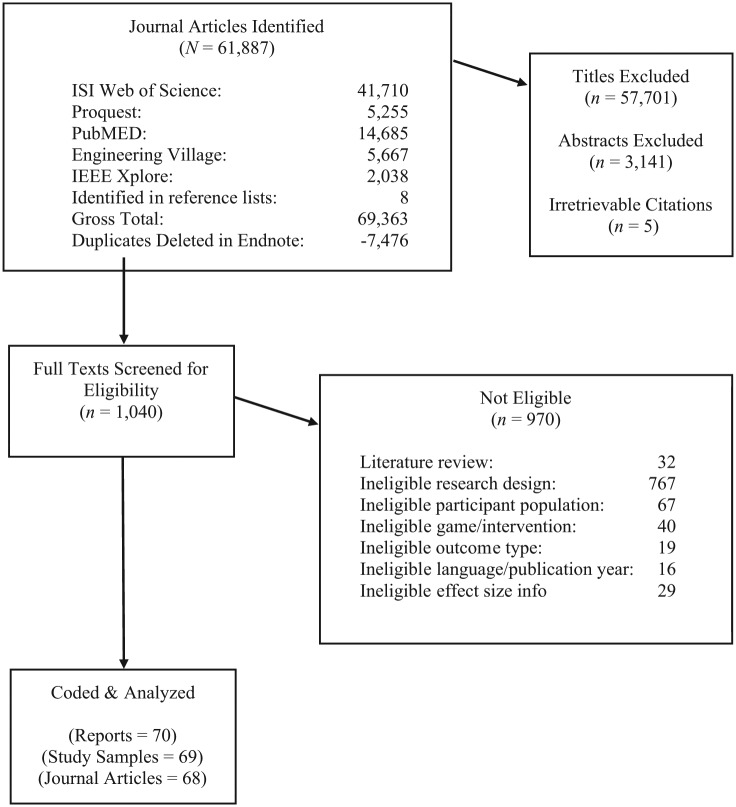
“In another meta-analytic study, Clark et al. (2016) examined 69 studies between the years 2000–2012.”
BackgroundModding Tabletop Games for Education
Abbott, D. (2019) · Lecture notes in computer science · doi:10.1007/978-3-030-11548-7_30 · Cited by 20
Students’ Perceptions of a Gamified Reading Assessment
Reed, D. K., Martin, E., Hazeltine, E., & McMurray, B. (2019) · Journal of Special Education Technology · doi:10.1177/0162643419856272 · Cited by 22
“…not designed to be socially motivating because students needed to be assessed on their individual reading abilities, and based on previous findings (Clark et al., 2016; Ferrell et al., 2015; Kocadere & Caglar, 2015), we did not want to make the test competitive such that it might reduce the…”
BackgroundMethodCloude, E. B., Dever, D. A., Wiedbusch, M. D., & Azevedo, R. (2020) · Frontiers in Education · doi:10.3389/feduc.2020.572546 · Cited by 23
Gauthier, A., Porayska‐Pomsta, K., Dumontheil, I., Mayer, S., & Mareschal, D. (2022) · ACM Transactions on Computer-Human Interaction · doi:10.1145/3485168 · Cited by 22
Escape Room as Game-Based Learning Process: Causation - Effectuation Perspective
Järveläinen, J., & Paavilainen‐Mäntymäki, E. (2019) · Hawaii International Conference on System Sciences (HICSS) · doi:10.24251/hicss.2019.178 · Cited by 21
“This study addresses the call for understanding how learning happens in games [7] by examining qualitative video data from a physical escape room, In other words”
BackgroundDigital Game-Based Inquiry Learning to Improve Eighth Graders’ Inquiry Skills in Biology
Bónus, L., Antal, E., & Korom, E. (2024) · Journal of Science Education and Technology · doi:10.1007/s10956-024-10096-x · Cited by 19
“Recent research has also drawn attention to the fact that different game mechanisms have different effects, which is why the design of games is crucial (Clark et al., 2016).”
Lernunterstützung mit digitalen Medien in der Grundschule
Böhme, R., Munser-Kiefer, M., & Prestridge, S. (2020) · Zeitschrift für Grundschulforschung · doi:10.1007/s42278-019-00066-3 · Cited by 20
Chen, C.-Y., Huang, H.-J., Lien, C.-J., & Lu, Y.-L. (2020) · IEEE Access · doi:10.1109/access.2020.3000659 · Cited by 24
Detecting patterns of engagement in a digital cognitive skills training game
Ober, T. M., Brenner, C. J., Olsen, A. F., Homer, B. D., & Plass, J. L. (2021) · Computers & Education · doi:10.1016/j.compedu.2021.104144 · Cited by 24
Penn, M., & Mavuru, L. (2020) · Journal of Baltic Science Education · doi:10.33225/jbse/20.19.1092 · Cited by 24
“Virtual laboratories also provide a platform to experiment and manipulate different variables which is a step-up from traditional lectures and direct instructions (Clark et al., 2016; Merchant et al., 2014).”
BackgroundEsports Research and Its Integration in Education
Harvey, M. M., & Marlatt, R. (2021) · Advances in game-based learning book series · doi:10.4018/978-1-7998-7069-2 · Cited by 27
Graesser, A. C. (2016) · Springer eBooks · doi:10.1007/978-3-319-39298-1_11 · Cited by 19
Li, Q. (2018) · Educational Technology Research and Development · doi:10.1007/s11423-018-9584-z · Cited by 19
Safiena, S., & Goh, Y. M. (2022) · Journal of Engineering Education · doi:10.1002/jee.20459 · Cited by 21
“Additionally, Clark et al. (2016) found from their meta-analysis that game design, rather than the game medium, predicted the learning outcomes and impacts.”
BackgroundVirk, S., Clark, D. B., & Sengupta, P. (2015) · Educational Psychologist · doi:10.1080/00461520.2015.1128331 · Cited by 20
Self-citationĐan, N. N., Trung, L. T. B. T., Ngà, N. T., & Tăng, M. D. (2024) · Eurasia Journal of Mathematics Science and Technology Education · doi:10.29333/ejmste/14377 · Cited by 71
“Although the definition of DGBL may differ among scholars, most researchers agree that it provides a motivational learning environment (Clark et al., 2016; Hussein et al., 2022) to enhance student learning via using advantage of digital games (Byun & Joung, 2018; Qian & Clark, 2016; Tang et al.,…”
BackgroundClark, D. B., Virk, S., Sengupta, P., Brady, C. E., Martinez-Garza, M. M., Krinks, K. D., Killingsworth, S. S., Kinnebrew, J. S., Biswas, G., Barnes, J., et al. (2016) · International Journal of Designs for Learning · doi:10.14434/ijdl.v7i1.19359 · Cited by 18
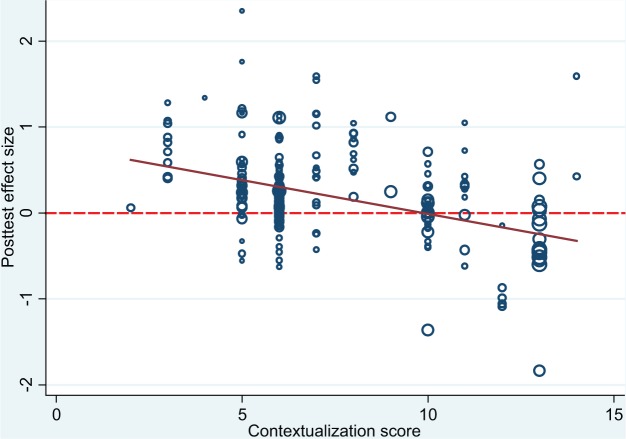
“In some ways, this pattern aligns with a finding of the meta-analysis by Clark, Tanner-Smith, and Killingsworth (2015) that demonstrates a slight but significant negative relationship between contextual richness in games and the learning outcomes.”
ResultSelf-citationGAMIFICATION IN ACCOUNTING AND STUDENTS’ SKILLSET
Durso, S. D. O., Reginato, L., & Cornacchione, E. B. (2020) · Advances in Scientific and Applied Accounting · doi:10.14392/asaa.2019120305 · Cited by 29
Utilising Online Gamification to Promote Student Success and Retention in Tertiary Settings
Harrington, I., & Mellors, M. J. (2021) · International Journal of Higher Education · doi:10.5430/ijhe.v10n7p45 · Cited by 23
Schuler, B. R., & Raknes, S. (2022) · International Journal of Migration Health and Social Care · doi:10.1108/ijmhsc-07-2021-0060 · Cited by 20
Wang, Y. (2022) · Journal of Educational Computing Research · doi:10.1177/07356331221098148 · Cited by 21
Scott, F. L., Marsh, J., Murris, K., Ng’ambi, D., Thomsen, B. S., Bannister, C., Bishop, J., Dixon, K., Giorza, T. M., Hetherington, A., et al. (2023) · International Journal of Play · doi:10.1080/21594937.2023.2235466 · Cited by 21
Erdoğmuş, Y. K., & Kurt, A. A. (2023) · Education and Information Technologies · doi:10.1007/s10639-023-12368-2 · Cited by 23
“The results confirmed previous studies in that the DGBL made positive contributions to achievement (Bakan & Bakan, 2018; Boyle et al., 2016; Clark et al., 2016; Erhel & Jamet, 2013; Yıldırım & Baran, 2021).”
Gjicali, K., Finn, B., & Hebert, D. (2020) · Computers & Education · doi:10.1016/j.compedu.2020.103959 · Cited by 22
Chittaro, L., & Buttussi, F. (2020) · IEEE Transactions on Visualization and Computer Graphics · doi:10.1109/tvcg.2020.3022340 · Cited by 19
Itzhak, N. B., Franki, I., Jansen, B., Kostková, K., Wagemans, J. P., & Ortibus, E. (2021) · International Journal of Child-Computer Interaction · doi:10.1016/j.ijcci.2021.100437 · Cited by 18
Gauthier, A., & Jenkinson, J. (2017) · International Journal of Game-Based Learning · doi:10.4018/ijgbl.2017040102 · Cited by 18
“Recent meta-analyses reveal that serious games can increase learning, self-efficacy, and motivation in comparison to traditional learning or other non-gaming stimuli (Wouters et al. 2013; Sitzmann 2011; Clark et al. 2016) but fail to highlight the value-added effect of game design (Clark et al.”
BackgroundGamification when studying logical operators on the Minecraft EDU platform
Федоренко, О., Кайдан, Н. В., Velychko, V. Y., & Soloviev, V. (2021) · doi:10.31812/123456789/4624 · Cited by 18
A 3D Multiuser Virtual Learning Environment for Online Training of Agriculture Surveyors
Rosmansyah, Y., Achiruzaman, M., & Hardi, A. B. (2019) · Journal of Information Technology Education Research · doi:10.28945/4455 · Cited by 17
Investigating a visual interface for elementary students to formulate AI planning tasks
Park, K., Mott, B. W., Lee, S. J., Gupta, A., Jantaraweragul, K., Glazewski, K., Scribner, J., Ottenbreit-Leftwich, A. T., Hmelo-Silver, C., & Lester, J. C. (2022) · Journal of Computer Languages · doi:10.1016/j.cola.2022.101157 · Cited by 17
“Leveraging the benefits of game-based learning [29], PrimaryAI aims to create effective and engaging AI learning experiences.”
BackgroundPositive effects of online games on the growth of college students: A qualitative study from China
Li, F., Zhang, D., Wu, S., Zhou, R., Dong, C., & Zhang, J. (2023) · Frontiers in Psychology · doi:10.3389/fpsyg.2023.1008211 · Cited by 17
“, 2013), online gameplay has the potential to motivate individuals to participate in educational settings to improve students’ interest in learning (Clark et al., 2016).”
BackgroundDemystifying the Relations of Motivation and Emotions in Game-Based Learning
Kiili, K. J. M., Siuko, J., Cloude, E. B., & Dindar, M. (2023) · International Journal of Serious Games · doi:10.17083/ijsg.v10i4.629 · Cited by 17
Kinnebrew, J. S., Killingsworth, S. S., Clark, D. B., Biswas, G., Sengupta, P., Minstrell, J., Martinez-Garza, M. M., & Krinks, K. D. (2016) · IEEE Transactions on Learning Technologies · doi:10.1109/tlt.2016.2521372 · Cited by 17
“[6] underscores the central role of design in the efficacy of digital games for learning.”
BackgroundSelf-citationMobile Digital Games as an Educational Tool in K-12 Schools
Crompton, H., Lin, Y.-C., Burke, D., & Block, A. (2017) · Perspectives on rethinking and reforming education · doi:10.1007/978-981-10-6144-8_1 · Cited by 17
Impact of narrative and badging on learning and engagement in a psychology learning game
Fanfarelli, J. R. (2020) · British Journal of Educational Technology · doi:10.1111/bjet.12838 · Cited by 15
Designing a Visual Interface for Elementary Students to Formulate AI Planning Tasks
Park, K., Mott, B. W., Lee, S. Y., Glazewski, K., Scribner, J., Ottenbreit-Leftwich, A. T., Hmelo-Silver, C., & Lester, J. C. (2021) · IEEE Symposium on Visual Languages / Human-Centric Computing Languages and Environments · doi:10.1109/vl/hcc51201.2021.9576163 · Cited by 13
Uncovering Gender and Problem Difficulty Effects in Learning with an Educational Game
McLaren, B., Farzan, R., Adams, D., Mayer, R., & Forlizzi, J. (2017) · Lecture Notes in Computer Science · doi:10.1007/978-3-319-61425-0_59 · Cited by 17
“A meta-review of over 1000 educational game studies advises that more value-added studies of educational games be conducted, that is, research that carefully identifies the features and conditions that lead to the successes and failures of educational games [2].”
BackgroundProsocial games for inclusion: Interaction patterns and game outcomes for elementary-aged children
Parsons, S., Karakosta, E., Boniface, M., & Crowle, S. (2019) · International Journal of Child-Computer Interaction · doi:10.1016/j.ijcci.2019.100142 · Cited by 18
“The role of digital games in this context has also been widely investigated with research demonstrating positive benefits for learning in general for digital games when compared to non-game-based teaching [12].”
BackgroundA Review of Mixed Reality in Health Care
John, B. M., & Wickramasinghe, N. S. (2019) · Healthcare delivery in the information age · doi:10.1007/978-3-030-17347-0_18 · Cited by 17
Baker, R. S., Richey, J. E., Zhang, J., Karumbaiah, S., Andres-Bray, J. M. L., Nguyen, H. A., Andres, J. M. A. L., & McLaren, B. M. (2024) · Instructional Science · doi:10.1007/s11251-024-09679-3 · Cited by 16
“Recently, meta-analyses have offered insight into which features of games are beneficial for learning and engagement (Clark et al., 2016; Ke, 2016; Mayer, 2019; Wouters & van Oostendorp, 2017).”
InfluentialLearning Neuroscience with Technology: a Scaffolded, Active Learning Approach
Schleisman, K. B., Guzey, S. S., Lie, R., Michlin, M. L., Desjardins, C. D., Shackleton, H., Schwerdfeger, A. C., Michalowski, M., & Dubinsky, J. M. (2018) · Journal of Science Education and Technology · doi:10.1007/s10956-018-9748-y · Cited by 16
Escape the Evil Professor! Escape Room Review Activity
LaPaglia, J. A. (2020) · Teaching of Psychology · doi:10.1177/0098628320901383 · Cited by 16
El uso de aplicaciones móviles en el aprendizaje de las matemáticas: una revisión sistemática
Cubillo, M. D. R. R., Fernández, H. D. C., & Martínez, B. A. (2021) · Ensayos: Revista de la Facultad de Educación de Albacete · doi:10.18239/ensayos.v36i1.2631 · Cited by 16
Natucci, G. C., & Borges, M. A. F. (2021) · IEEE Conference on Games (CoG) · doi:10.1109/cog52621.2021.9619144 · Cited by 16
Do Pro-Social Vg Promote Moral Activity?: An Analysis of User Reviews of Papers, Please
Cabellos, B., Pozo, J. I., Marín-Rubio, K., & Sánchez, D. L. (2022) · Education and Information Technologies · doi:10.1007/s10639-022-11072-x · Cited by 23
“This mechanism could make up for the limited results obtained in research about learning with VG, which tend to point to factual learning (Boyle et al., 2016; Clark et al., 2016; Mayer, 2019) or immediate spontaneous behaviors (Passmore & Holder, 2014).”
BackgroundLiu, Z., & Jeong, A. C. (2022) · Educational Technology Research and Development · doi:10.1007/s11423-022-10145-5 · Cited by 20
“Although the research reveals mean effect sizes that show game-based learning (GBL) can be effective (e.g., Clark et al., 2016), the findings in game-based learning research have been mixed (Prensky, 2012), and this can be partly attributed to the high variance in game designs (e.g., with versus…”
BackgroundInfluentialThe Learner and the Learning Process: Research and Practice in Technology-Enhanced Learning
Lai, K. (2018) · Springer international handbooks of education · doi:10.1007/978-3-319-71054-9_8 · Cited by 14
Gauthier, A., Porayska‐Pomsta, K., Mayer, S., Dumontheil, I., Farran, E. K., Bell, D., & Denis Mareschal, B. (2022) · International Journal of Child-Computer Interaction · doi:10.1016/j.ijcci.2022.100503 · Cited by 16
“Historically, the game-based learning literature has failed to measure causal links between the designs of learning games and the significant learning outcomes that their use generates (Boyle et al., 2016; Clark et al., 2016).”
Interactive Science Multimedia and Visuospatial Processing
Castro-Alonso, J. C., & Fiorella, L. (2019) · Springer eBooks · doi:10.1007/978-3-030-20969-8_6 · Cited by 16
A critical review of digital game literacies in the English classroom
Bacalja, A. (2022) · L1 Educational Studies in Language and Literature · doi:10.21248/l1esll.2022.22.2.370 · Cited by 18
Seraji, F., & Musavi, H. O. (2023) · Entertainment Computing · doi:10.1016/j.entcom.2023.100585 · Cited by 15
Demedts, F., Kiili, K. J. M., Ninaus, M., Lindstedt, A., Reynvoet, B., Sasanguie, D., & Depaepe, F. (2024) · Learning and Instruction · doi:10.1016/j.learninstruc.2024.101976 · Cited by 15
Game-Based Learning Analytics in Physics Playground
Shute, V. J., Rahimi, S., & Smith, G. L. (2019) · Smart computing and intelligence · doi:10.1007/978-981-32-9335-9_4 · Cited by 15
Kapp, K. M., Valtchanov, D., & Pastore, R. (2020) · Educational Technology Research and Development · doi:10.1007/s11423-020-09769-2 · Cited by 16
Serious Games and Mathematical Fluency: A Study from the Gender Perspective in Primary Education
Varela, F. F., Couñago, E. V., & Groba, A. R. (2021) · Sustainability · doi:10.3390/su13126586 · Cited by 18
“This strong link with software may help to understand the advantages in learning processes [15,16] and school curriculum [17].”
BackgroundBullock, E. P., Roxburgh, A. L., Moyer‐Packenham, P. S., Bektaş, E., Webster, J. S., & Bullock, K. A. (2020) · Journal of Computer Assisted Learning · doi:10.1111/jcal.12508 · Cited by 22
The role of help-seeking from ChatGPT in digital game-based learning
Chen, C.-H., & Law, V. (2025) · Educational technology research and development · doi:10.1007/s11423-025-10464-3 · Cited by 14
Dangol, A., Zhao, R., Wolfe, R., Ramanan, T., Kientz, J. A., & Yip, J. C. (2025) · ACM International Conference on Interaction Design and Children (IDC) · doi:10.1145/3713043.3728836 · Cited by 21
Factors promoting the use of virtual worlds in educational settings
Shonfeld, M., & Greenstein, Y. (2020) · British Journal of Educational Technology · doi:10.1111/bjet.13008 · Cited by 14
Game-Based Teaching and Learning in Higher Education
Shohel, M. M. C., Ashrafuzzaman, M., Naomee, I., Tanni, S. A., & Azim, F. (2021) · Advances in game-based learning book series · doi:10.4018/978-1-7998-7271-9.ch005 · Cited by 14
Metadata
- Authors
- Clark, D. B., Tanner-Smith, E. E., & Killingsworth, S. S.
- Affiliations
- Vanderbilt University (US)
- Vanderbilt University
- Venue
- Review of Educational Research
- Published
- 2016-03
- Volume
- 86
- Issue
- 1
- Pages
- 79-122
- ISSN
- 0034-6543 (ISSN-L)
- 1935-1046
- PMC
- PMC4748544
- OpenAlex
- W2099460238
- Cited by
- 1,274
- References
- 146
- Citations by year
- 2026: 159 · 2025: 129 · 2024: 126 · 2023: 120 · 2022: 125 · 2021: 163 · 2020: 125 · 2019: 122 · 2018: 103 · 2017: 59 · 2016: 28
- FWCI
- 169.76
- Type
- journal article
- Language
- en
- Open access
- hybrid
- doi.org
- Locations
- Review of Educational Research (publishedVersion, cc-by-nc)
- PubMed Central (publishedVersion, cc-by-nc)
- PubMed (publishedVersion)
- Topics
- Social Sciences › Psychology › Developmental and Educational Psychology › Educational Games and Gamification
- Social Sciences › Sociology and Political Science › Digital Games and Media
- Social Sciences › Psychology › Experimental and Cognitive Psychology › Visual and Cognitive Learning Processes
- Keywords
- video games, game-based learning, educational game design, game mechanics, game affordances, learning outcomes, K-16 education
About these checks
Registry, retraction, Cites and statistics results are computed, not judged, with one exception: a printed reference that no index lists is read once by a model before it counts as a citation error. Claims are extracted by a model and kept only when their quote appears verbatim in the text; each cited source is then checked, with a model’s help, for whether it says what the claim relies on. Those verdicts can be wrong — read the claim’s quote and the cited source before relying on one.
Statistics and arithmetic are recomputed, not judged.
Confidence bands are shown only for fields calibrated on our annotated test set. None is calibrated yet, so no band is shown.
What counts as a claim ›How we measure confidence ›How we check this ›
Are you an author, or do you see a problem with this page? Request a review
