

The DOI matches its Crossref record; 145 of the 146 references it cites were found in a registry or an index.
Digital Games, Design, and Learning: A Systematic Review and Meta-Analysis
Open accessAbstract
In this meta-analysis, we systematically reviewed research on digital games and learning for K–16 students. We synthesized comparisons of game versus nongame conditions (i.e., media comparisons) and comparisons of augmented games versus standard game designs (i.e., value-added comparisons). We used random-effects meta-regression models with robust variance estimates to summarize overall effects and explore potential moderator effects. Results from media comparisons indicated that digital games significantly enhanced student learning relative to nongame conditions ([Formula: see text] = 0.33, 95% confidence interval [0.19, 0.48], k = 57, n = 209). Results from value-added comparisons indicated significant learning benefits associated with augmented game designs ([Formula: see text] = 0.34, 95% confidence interval [0.17, 0.51], k = 20, n = 40). Moderator analyses demonstrated that effects varied across various game mechanics characteristics, visual and narrative characteristics, and research quality characteristics. Taken together, the results highlight the affordances of games for learning as well as the key role of design beyond medium.
Overview
The claims and statistics of this paper haven’t been checked yet.
Run the check — free, no account needed. It reads the open-access text and checks the sources it cites.
Integrity signals
Registry
Cites
Statistics
Figures
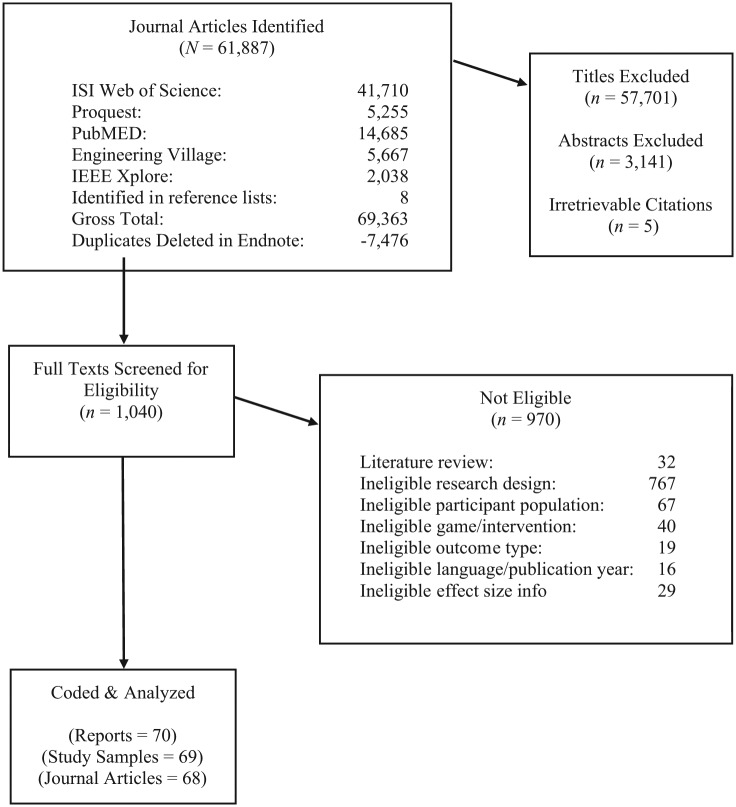
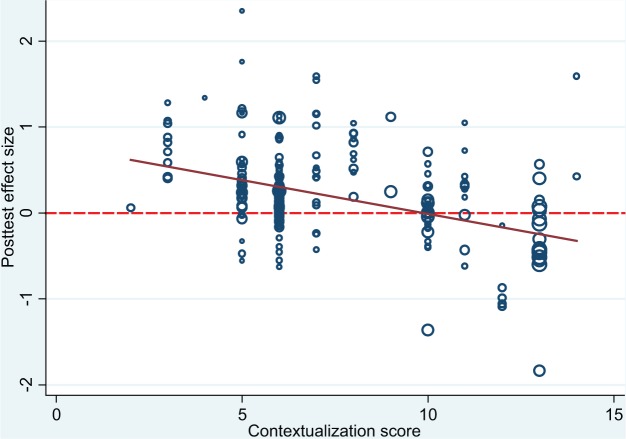
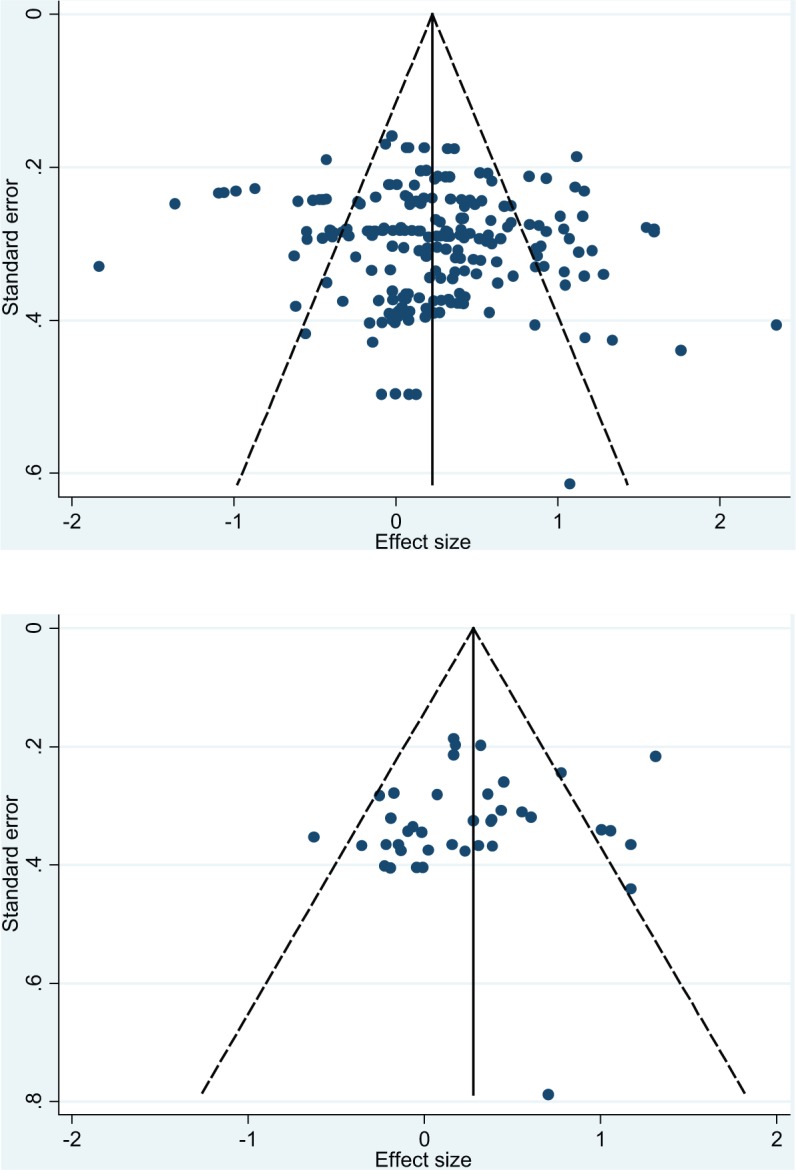
Verification
Claims the paper makes
The claims and statistics of this paper haven’t been checked yet.
Run the check — free, no account needed. It reads the open-access text and checks the sources it cites.
Claims other papers make about this one
Each is checked against this paper’s own text: does it say what the citing paper says it does?
The source backs part of the claim, not all of it — or backs it for a different population, condition or comparison.
In the citing paper
“Inclusion of game fiction is closely related to the use of narrative anchors and has been shown to be effective for learning as it situates and anchors learning in a context (Clark et al. 2016) and can further serve as a cognitive framework for problem solving (Dickey 2006).”
From The gamification of learning: a meta-analysis (2020) · cites this paper as Clark et al. 2016
Experimental — accuracy not yet measuredThe source backs part of the claim, not all of it — or backs it for a different population, condition or comparison.
In the citing paper
“In addition, the results of the summary effect analyses were similar to results from meta-analyses conducted in the context of games (see Clark et al. 2016;Wouters et al. 2013), indicating that the power of games can be transferred to non-game contexts by using game design elements.”
From The gamification of learning: a meta-analysis (2020) · cites this paper as Clark et al. 2016
Experimental — accuracy not yet measuredThe source backs part of the claim, not all of it — or backs it for a different population, condition or comparison.
In the citing paper
“This result for behavioral learning outcomes is in line with evidence from the context of games, showing that combinations of competition and collaboration in games are promising for learning (Clark et al. 2016).”
From The gamification of learning: a meta-analysis (2020) · cites this paper as Clark et al. 2016
Experimental — accuracy not yet measuredThe cited source says what the claim attributes to it.
In the citing paper
“Clark et al. (2016) included competition in their meta-analysis on digital games and found that combinations of competition and collaboration as well as single-player games without competitive elements can outperform games with mere competition.”
From The gamification of learning: a meta-analysis (2020) · cites this paper as Clark et al. 2016
In the citing paper
“The reviews have also documented the effects on students' learning outcomes and the key role of gamified designs (Alsawaier, 2018;Clark, Tanner-Smith & Killingsworth 2016).”
From Towards a motivational design? Connecting gamification user types and online learning activities (2020) · cites this paper as Clark, Tanner-Smith & Killingsworth 2016
Self-check
Percentages, sums and reported differences re-computed from the paper’s own numbers.
The self-check needs the paper’s full text.
Citations
Cites
Bias in meta-analysis detected by a simple, graphical test
Egger, M., Smith, G. D., Schneider, M., & Minder, C. (1997) · BMJ · doi:10.1136/bmj.315.7109.629 · Cited by 56,722
Self-efficacy: The exercise of control
Bandura, A., Freeman, W. H., & Lightsey, R. (1999) · Journal of Cognitive Psychotherapy · doi:10.1891/0889-8391.13.2.158 · Cited by 46,835
Situated Cognition and the Culture of Learning
Brown, J. S., Collins, A., & Duguid, P. (1989) · Educational Researcher · doi:10.3102/0013189x018001032 · Cited by 13,645
David, F. N., & Tukey, J. W. (1977) · Biometrics · doi:10.2307/2529486 · Cited by 12,707
Borenstein, M., Hedges, L. V., Higgins, J. P. T., & Rothstein, H. R. (2021) · doi:10.1002/9781119558378 · Cited by 9,799
What Video Games Have to Teach Us about Learning and Literacy
(2004) · Education + Training · doi:10.1108/et.2004.00446dae.002 · Cited by 6,674
Distribution Theory for Glass's Estimator of Effect Size and Related Estimators
Hedges, L. V. (1981) · Journal of Educational Statistics · doi:10.2307/1164588 · Cited by 5,695
The Handbook of Research Synthesis and Meta-Analysis
(2019) · doi:10.7758/9781610448864 · Cited by 4,553
Self-Efficacy and Academic Motivation
Schunk, D. H. (1991) · Educational Psychologist · doi:10.1080/00461520.1991.9653133 · Cited by 4,292
Pintrich, P. R. (2003) · Journal of Educational Psychology · doi:10.1037/0022-0663.95.4.667 · Cited by 3,459
Research works printed but not linked: 6
- Gleser L. J., 2009, The handbook of research synthesis and meta-analysis, 357
- 10.3102/10769986006002107 · DOI · Paper page
- Hedges L. V., 2007, Journal of Research in Rural Education, 22, 1
- López-López J. A., 2015, Assessing meta-regression models for examining moderator relationships with dependent effect sizes: A Monte Carlo simulation
- López-López J. A., 2010, Paper presented at the 5th annual meeting of the Society for Research Synthesis Methodology
- Raudenbush S. W., 2009, The handbook of research synthesis and meta-analysis, 295
Cited by
Sorted by citations
Items 401–500 of 1,000
An exploration of instructional behaviors of a teacher in a mobile learning context
Liu, C.-L., & Lai, C. (2022) · Teaching and Teacher Education · doi:10.1016/j.tate.2022.103954 · Cited by 15
Liu, Y.-C., Wang, W., & Huang, W.-H. (2023) · Education and Information Technologies · doi:10.1007/s10639-023-11856-9 · Cited by 14
“Previous studies have shown that MGBL applications can enhance learning motivation, and focus on diagnosing the effectiveness of education combined with gaming (Clark et al. 2016; Sung et al. 2016).”
BackgroundPacheco, M. A. D. L. P., Torres, J., Murillo, H. J. G., Carrascal, J. X. M., & Rico, H. F. (2025) · Research in Science & Technological Education · doi:10.1080/02635143.2025.2491079 · Cited by 14
“Research demonstrates sustained benefits of educational technology integration (Clark, Tanner-Smith, and Killingsworth 2016; Lee and Hao 2015).”
Graesser, A. C., Lippert, A. M., & Hampton, A. J. (2017) · Springer eBooks · doi:10.1007/978-3-319-64274-1_12 · Cited by 14
How Can Advanced Technologies Support the Contemporary Learning Approach?
Pedaste, M., & Leijen, Ä. (2018) · IEEE International Conference on Advanced Learning Technologies (ICALT) · doi:10.1109/icalt.2018.00011 · Cited by 14
“Several educational technologies have been developed to enable networked learning in web-based learning environments through different learning scenarios [4, 5], using virtual laboratories, simulations and modelling [5, 6, 7, 8], digital gaming [9], creating and exchanging learning objects [10], or building and progra…”
BackgroundDiving into the particle model: Examining the affordances of a single user participatory simulation
Langbeheim, E., & Levy, S. (2019) · Comput. Educ. · doi:10.1016/j.compedu.2019.05.006 · Cited by 14
Brom, C., Dobrovolný, V., Děchtěrenko, F., Stárková, T., & Bromová, E. (2019) · Frontline Learning Research · doi:10.14786/flr.v7i3.459 · Cited by 17
The Monster in the Classroom: Assessing Language to Inform Instruction
Goodwin, A. P., Petscher, Y., Jones, S. J., McFadden, S. E., Reynolds, D., & Lantos, T. (2019) · The Reading Teacher · doi:10.1002/trtr.1870 · Cited by 14
Game-based structural debriefing
Kim, Y. J., & Pavlov, O. V. (2019) · Information and Learning Sciences · doi:10.1108/ils-05-2019-0039 · Cited by 14
Taylor, L. C., Ranaldi, H., Amirova, A., Zhang, L., Ahmed, A., & Dibb, B. (2022) · Cogent Psychology · doi:10.1080/23311908.2022.2069906 · Cited by 16
“Previous reviews have focussed on studies in virtual reality settings or evaluating the influence of the appearance of computer game play avatars (Clark et al., 2016; Horne et al., 2020; Rheu et al., 2020).”
BackgroundInfluentialViewpoint, embodiment, and roles in STEM learning technologies
Lindgren, R., & DeLiema, D. (2022) · Educational Technology Research and Development · doi:10.1007/s11423-022-10101-3 · Cited by 16
“Interactive learning technologies, particularly computer simulations and digital games, can have a significant impact on students’ understanding of STEM concepts (Clark et al., 2016; D’Angelo et al., 2014; Garzon & Acevedo, 2019; Li & Tsai, 2013; National Research Council, 2011).”
BackgroundThe Affordances of Multivariate Elo-Based Learner Modeling in Game-Based Assessment
Ruipérez‐Valiente, J. A., Kim, Y. J., Baker, R. S., Martínez, P. A., & Lin, G. C. (2022) · IEEE Transactions on Learning Technologies · doi:10.1109/tlt.2022.3203912 · Cited by 15
Barrocas, R., Bahnmueller, J., Roesch, S., Lachmair, M., & Moeller, K. (2023) · International Journal of Human-Computer Studies · doi:10.1016/j.ijhcs.2023.103030 · Cited by 21
Chittaro, L. (2023) · IEEE Transactions on Visualization and Computer Graphics · doi:10.1109/tvcg.2023.3292473 · Cited by 13
Game-Based Learning and Systems Thinking: an Innovative Instructional Approach for the 21st Century
Emihovich, B. (2023) · TechTrends · doi:10.1007/s11528-023-00915-0 · Cited by 19
“…literature reviews and studies exploring the effects of learning gains on students’ performance through gameplay (e.g., Boyle et al., 2016; Byun & Joung, 2018; Clark et al., 2016; Connolly et al., 2012; Gatti Junior et al., 2020; Hainey et al., 2016; Hu et al., 2022; Ke, 2016; Pan et al., 2022).”
Enhancing Chemistry Education for Students through a Novel Card Game: Compound Chain
Tursyngozhayev, K., Kavak, N., & Akhmetov, N. K. (2024) · Journal of Chemical Education · doi:10.1021/acs.jchemed.3c00983 · Cited by 15
Baßeng, G., & Budke, A. (2024) · Education Sciences · doi:10.3390/educsci14030316 · Cited by 13
“According to a systematic review and meta-analysis by Clark and Tanner-Smith [9], digital games offer the possibility of using simulations and virtual experiments to facilitate the understanding of complex phenomena in the natural sciences, for example.”
InfluentialAlbano, G., Arzarello, F., & Iacono, U. D. (2020) · Technology Knowledge and Learning · doi:10.1007/s10758-020-09459-1 · Cited by 13
Exploring the Affordances of Sequence Mining in Educational Games
Gomez, M. J., Ruipérez‐Valiente, J. A., Martinez, P. A., & Kim, Y. J. (2020) · Ninth International Conference on Technological Ecosystems for Enhancing Multiculturality (TEEM'21) · doi:10.1145/3434780.3436562 · Cited by 13
Grasse, K. M., Melcer, E. F., Kreminski, M., Junius, N., & Wardrip–Fruin, N. (2021) · CHI Conference Extended Abstracts on Human Factors in Computing Systems (CHI EA) · doi:10.1145/3411763.3451722 · Cited by 13
Students’ and Teachers’ Perceptions of Using Video Games in Science Classroom: A Literature Review
Yang, X. (2021) · SN Computer Science · doi:10.1007/s42979-021-00803-5 · Cited by 13
“Half-reliable”: A qualitative analysis of epistemic thinking in and about a digital game
Barzilai, S. (2017) · Contemporary Educational Psychology · doi:10.1016/j.cedpsych.2017.06.004 · Cited by 13
Kretschmer, V., & Terharen, A. (2018) · Advances in intelligent systems and computing · doi:10.1007/978-3-319-94619-1_26 · Cited by 14
Maximizing the Affordances of Contemporary Technologies in Education: Promises and Possibilities
Adesope, O., & Rud, A. G. (2018) · Springer eBooks · doi:10.1007/978-3-319-89680-9_1 · Cited by 14
A Field Study of Teachers Using a Curriculum-integrated Digital Game
Liu, Z., Cateté, V., Vandenberg, J. L., Barnes, T. M., Lynch, C. F., & Rutherford, T. A. (2019) · CHI Conference on Human Factors in Computing Systems · doi:10.1145/3290605.3300658 · Cited by 13
Designing and Developing Interactive Narratives for Collaborative Problem-Based Learning
Mott, B., Taylor, R. G., Lee, S., Rowe, J., Saleh, A., Glazewski, K. D., Hmelo‐Silver, C. E., & Lester, J. C. (2019) · Lecture notes in computer science · doi:10.1007/978-3-030-33894-7_10 · Cited by 14
“In narrative-centered learning environments, learning occurs in the context of interactive narratives [9-11].”
O'BRIEN, B. A., Habib, M., & Onnis, L. (2019) · Frontiers in Psychology · doi:10.3389/fpsyg.2019.02625 · Cited by 13
“…in that they are engaging, reduce social pressure to perform, are adaptable to individual performance with features like embedded scaffolding and feedback, as well as the crucial ingredient for struggling learners – extensive practice (Clark et al., 2016; Laurillard, 2016; de Souza et al., 2018).”
Backgroundvan der Beek, S., Bellhäuser, H., Karlen, Y., & Hertel, S. (2019) · Zeitschrift für Pädagogische Psychologie · doi:10.1024/1010-0652/a000254 · Cited by 15
Souchet, A. D., Philippe, S., Aurelien, L., Ober, F., & Leroy, L. (2021) · Virtual Reality · doi:10.1007/s10055-021-00548-9 · Cited by 13
Assessing Problem-Solving Skills in Game-Based Immersive Environments
Shute, V. J., & Emihovich, B. (2018) · Springer international handbooks of education · doi:10.1007/978-3-319-71054-9_40 · Cited by 13
Future-looking conversations in CSCL
Ludvigsen, S., Creß, U., Law, N. W. Y., Rosé, C. P., & Stahl, G. (2016) · International Journal of Computer-Supported Collaborative Learning · doi:10.1007/s11412-016-9242-6 · Cited by 13
Designing an Intrinsically Integrated Educational Game on Newtonian Mechanics
van der Linden, A., van Joolingen, W., & Meulenbroeks, R. R. (2019) · Lecture notes in computer science · doi:10.1007/978-3-030-11548-7_12 · Cited by 12
A card game for designing activities for technology-enhanced learning in higher education
Mavroudi, A., Almeida, T., Frennert, S., Laaksolahti, J., & Viberg, O. (2021) · Education and Information Technologies · doi:10.1007/s10639-021-10668-z · Cited by 12
Kapp, K., Sivén, M., Laurén, P., Virtanen, S., Katajavuori, N., & Södervik, I. (2022) · Education Sciences · doi:10.3390/educsci12120854 · Cited by 18
Hunt, J. H., Taub, M., Marino, M. T., Duarte, A., Bentley, B., Holman, K., & Kuhlman, A. (2023) · Education Sciences · doi:10.3390/educsci13070646 · Cited by 14
Eyal, L., Rabin, E., & Meirovitz, T. (2023) · Education Sciences · doi:10.3390/educsci13121165 · Cited by 12
Okunlola, J. O. (2023) · Studies in Learning and Teaching · doi:10.46627/silet.v4i2.241 · Cited by 15
“Other theories and pedagogical models on transfer of learning include: the theory of low and high road transfer (Perkins and Salomon, 1988), the theory of analogy and abstraction (Skemp, 2012), problem-based learning (PBL) (Hung, 2013), communities of practice (CoP) (Wenger & Snyder, 2000), cognitive apprenticeship (C…”
BackgroundEmpowering Teachers With Generative AI Tools and Support
Sipahioğlu, M. (2024) · Advances in educational technologies and instructional design book series · doi:10.4018/979-8-3693-1351-0.ch011 · Cited by 13
Fante, C., Ravicchio, F., & Manganello, F. (2024) · Education Sciences · doi:10.3390/educsci14060662 · Cited by 12
AI in Teaching and Learning and Intelligent Tutoring Systems
Khine, M. S. (2024) · Springer eBooks · doi:10.1007/978-981-97-9350-1_4 · Cited by 20
Effects of Game-Based Learning on Students’ Motivation in Chemistry: A Meta-analysis
Xu, J. J., Sun, X. F., Liu, Y. N., Zhang, S. Y., & Zhou, Q. W. (2025) · Journal of Chemical Education · doi:10.1021/acs.jchemed.4c01304 · Cited by 12
Liu, J., Shadiev, R., & Cao, M. (2025) · Education and Information Technologies · doi:10.1007/s10639-025-13399-7 · Cited by 19
Educational Games and the Potential of AI to Transform Writing Across the Curriculum
Evmenova, A. S., Regan, K. S., Mergen, R. L., & Nawash, R. H. (2025) · Education Sciences · doi:10.3390/educsci15050567 · Cited by 28
“For example, one of the findings by Clark et al. (2016) included that single-player games without completion and collaborative team games outperformed single-player games with competition.”
Henderson, N., Kumaran, V., Min, W., Mott, B., Wu, Z., Boulden, D. C., Lord, T., Reichsman, F., Dorsey, C., Wiebe, E., et al. (2020) · Educational Data Mining · Cited by 12
Increasing saving intentions through leaderboards: A gamification approach
Zhang, Y., van Horen, F., & Zeelenberg, M. (2021) · PLoS ONE · doi:10.1371/journal.pone.0249283 · Cited by 13
“Due to the natural attraction of children to games, gamification is considered to be an effective tool to educate children [60].”
BackgroundBildung und Resilienz. Gutachten
Anders, Y., Hannover, B., Jungbauer-Gans, M., Köller, O., Lenzen, D., McElvany, N., Seidel, T., Tippelt, R., Wilbers, K., & Woessmann, L. (2022) · Waxmann Verlag GmbH eBooks · doi:10.31244/9783830995500 · Cited by 13
Ahn, J., Beck, A., Rice, J. W., & Foster, M. (2016) · AERA Open · doi:10.1177/2332858416667726 · Cited by 14
Fostering Peer Dialogic Engagement in Science Classrooms with an Educational Videogame
Zuiker, S. J., & Anderson, K. T. (2019) · Research in Science Education · doi:10.1007/s11165-019-9842-z · Cited by 12
Game Developers' Approaches to Communicating Climate Change
Foltz, A., Williams, C., Gerson, S. A., Reynolds, D. J., Pogoda, S., Begum, T., & Walton, S. P. (2019) · Frontiers in Communication · doi:10.3389/fcomm.2019.00028 · Cited by 13
Design Challenges for Science Games:
Anupam, A., Gupta, R., Gupta, S., Li, Z., Hong, N., Naeemi, A., & Parvin, N. (2019) · International Journal of Designs for Learning · doi:10.14434/ijdl.v11i1.24264 · Cited by 12
Grežo, M., & Sarmány-Schuller, I. (2021) · Technology Knowledge and Learning · doi:10.1007/s10758-021-09498-2 · Cited by 12
Learning About Viruses: Representing Covid-19
Manches, A., & Ainsworth, S. E. (2022) · Frontiers in Education · doi:10.3389/feduc.2021.736744 · Cited by 12
A Review of Research on the Application of Digital Games in Foreign Language Education
Peterson, M., White, J. S., Mirzaei, M. S., & Wang, Q. (2021) · IGI Global eBooks · doi:10.4018/978-1-6684-3710-0.ch094 · Cited by 13
Grasse, K. M., Melcer, E. F., Kreminski, M., Junius, N., Ryan, J., & Wardrip-Fruin, N. (2022) · International Series on Computer Entertainment and Media Technology · doi:10.1007/978-3-030-81538-7_12 · Cited by 11
“Game-based learning research has demonstrated that engagement can influence a student’s motivation to learn [Clark et al., 2016, Noe, 1986], particularly for socioaffective outcomes like attitudes [Sabourin and Lester, 2013, Lustria, 2007].”
BackgroundWhen Failure Is an Option: a Scoping Review of Failure States in Game-Based Learning
Powers, F. E., & Moore, R. L. (2021) · TechTrends · doi:10.1007/s11528-021-00606-8 · Cited by 11
“GBL experiences are designed to balance subject matter with gameplay and often involve problem solving, level progression, and challenges (Qian & Clark, 2016).”
BackgroundAnalytics for Game-Based Learning
Kim, Y. J., Ruipérez‐Valiente, J. A., Ifenthaler, D., Harpstead, E., & Rowe, E. A. (2022) · Journal of Learning Analytics · doi:10.18608/jla.2022.7929 · Cited by 11
Open pilot trial of an interactive digital application for campus sexual violence prevention
Orchowski, L. M., Zinzow, H. M., Thompson, M. P., & Wood, S. (2023) · Journal of Community Psychology · doi:10.1002/jcop.22985 · Cited by 13
Participatory Minecraft mapping: Fostering students participation in disaster awareness
Gampell, A. V., Gaillard, J., Parsons, M., Dé, L. L., & Hinchliffe, G. (2023) · Entertainment Computing · doi:10.1016/j.entcom.2023.100605 · Cited by 11
A Mobile Device Application for Visualizing Molecular Symmetry and Orbitals in Augmented Reality
Zambri, M. A., & Backere, J. R. D. (2023) · Journal of Chemical Education · doi:10.1021/acs.jchemed.3c00652 · Cited by 12
Zheng, X., Tu, Y.-F., Hwang, G., Yu, J., & Huang, Y.-B. (2024) · Educational Technology Research and Development · doi:10.1007/s11423-024-10393-7 · Cited by 15
“To date, previous literature reviews on game-based learning adopted the meta-analysis method (Clark et al., 2016; Qin & Clark, 2016; Vogel et al., 2006) which focused on the practical significance (i.e., effect size) of empirical studies, and other previous literature reviews utilized the…”
Compassion, value creation and digital learning orientation in social entrepreneurs
Satar, M. S. (2024) · Management Decision · doi:10.1108/md-12-2023-2356 · Cited by 11
Video Games and Literacy Learning: Exploring the Research on Serious and Entertainment Games
von Gillern, S., & Nash, B. L. (2024) · Technology Knowledge and Learning · doi:10.1007/s10758-024-09787-6 · Cited by 14
“Given that research reviews and meta-analyses demonstrate that video games can support learning in a variety of disciplines (Clark et al., 2016; Karakoç et al., 2022; Wouters et al., 2013), it is important to understand if and how video games can support literacy learning and reviewing articles in…”
Value-added digital game-based learning in K-12 science education: a systematic literature review
Hussein, M. H., Sulaiman, N. L., Noroozi, O., Elaish, M. M., & Alhasan, A. (2025) · Interactive Learning Environments · doi:10.1080/10494820.2025.2450652 · Cited by 11
Platz, L., & Zauner, M. (2025) · Education Sciences · doi:10.3390/educsci15020227 · Cited by 18
Polydoros, G., & Antoniou, A. (2025) · Behavioral Sciences · doi:10.3390/bs15030282 · Cited by 11
“Experiential learning: SEGs offer an experiential platform where players can immerse themselves in mathematical concepts and apply their knowledge in real-life scenarios, facilitating a deeper level of understanding (Clark et al., 2016).”
Chen, J., Yang, S., & Mei, B. (2021) · Sustainability · doi:10.3390/su13147919 · Cited by 15
Javora, O., Děchtěrenko, F., Tetourová, T., Volná, K., & Brom, C. (2021) · Journal of Computer Assisted Learning · doi:10.1111/jcal.12576 · Cited by 14
Open Game Data: A Technical Infrastructure for Open Science with Educational Games
Gagnon, D., & Swanson, L. (2023) · Lecture notes in computer science · doi:10.1007/978-3-031-44751-8_1 · Cited by 11
Designing to support critical engagement with statistics
Gresalfi, M. S. (2015) · ZDM · doi:10.1007/s11858-015-0690-7 · Cited by 14
Game-Based Learning: How to Make Math More Attractive by Using of Serious Game
Hosťovecký, M., & Novák, M. (2017) · Advances in intelligent systems and computing · doi:10.1007/978-3-319-57264-2_35 · Cited by 11
Dynamic Difficulty Adjustment for Serious Game Using Modified Evolutionary Algorithm
Lach, E. (2017) · Lecture notes in computer science · doi:10.1007/978-3-319-59063-9_33 · Cited by 11
How Gamification Impacts on Vocational Training Students
Iruela, M. G., & Hijón‐Neira, R. (2018) · Lecture notes in computer science · doi:10.1007/978-3-319-93846-2_19 · Cited by 12
Willmott, T. J., Russell‐Bennett, R., Drennan, J. C., & Rundle-Thiele, S. R. (2018) · Health Education & Behavior · doi:10.1177/1090198118780493 · Cited by 13
Gender Differences in Motivation to Learn Math Using Role Play Game in Smartphone
Fahuzan, K., & Santosa, R. H. (2018) · Journal of Physics Conference Series · doi:10.1088/1742-6596/1097/1/012130 · Cited by 11
Specification of a Managing Agent of Emergent Serious Games for a Smart Classroom
Aguilar, J., Altamiranda, J., & Díaz, F. (2020) · IEEE Latin America Transactions · doi:10.1109/tla.2020.9049461 · Cited by 11
Facilitating and Interpreting High School Students’ Identity Exploration Trajectories in STEM
Shah, M., Foster, A. N., Talafian, H., Barany, A., & Petrovich, M. (2020) · The Journal of Experimental Education · doi:10.1080/00220973.2020.1808941 · Cited by 11
“Research is emerging around (a) the theoretical and methodological processes by which VLEs affect educational outcomes (Foster, 2012; Clark et al., 2016), and (b) the methods that can complement with emerging theories to enable new ways of understanding how learners evolve in data-rich and dynamic…”
BackgroundAtmaja, P. W., & Sugiarto, S. (2021) · Kinetik Game Technology Information System Computer Network Computing Electronics and Control · doi:10.22219/kinetik.v6i1.1158 · Cited by 11
Megagianni, P., & Kakana, D. M. (2021) · Springer eBooks · doi:10.1007/978-3-030-64363-8_8 · Cited by 11
The Case of a Multiplication Skills Game: Teachers’ Viewpoint on MG’s Dashboard and OSLM Features
Leonardou, A., Rigou, M., Panagiotarou, A., & Garofalakis, J. D. (2021) · Computers · doi:10.3390/computers10050065 · Cited by 13
Sanchez, D. R., Nelson, T., Kraiger, K., Weiner, E., Lu, Y.-C., & Schnall, J. (2021) · International Journal of Training and Development · doi:10.1111/ijtd.12233 · Cited by 14
Valverde, G. J. (2025) · Encyclopedia · doi:10.3390/encyclopedia5030116 · Cited by 26
Sánchez, J. G. S., López, R. Q., & Airado‐Rodríguez, D. (2026) · Education Sciences · doi:10.3390/educsci16010122 · Cited by 10
Vocabulary interventions for second language (L2) learners up to six years of age
Hjetland, H. N., Hofslundsengen, H. C., Klem, M., Karlsen, J., Hagen, Å. M. M., Engevik, L. I., Geva, E., Norbury, C., Monsrud, M.-B., & Næss, K.-A. B. (2023) · Cochrane Database of Systematic Reviews · doi:10.1002/14651858.cd014890.pub2 · Cited by 16
Learning Newtonian mechanics with an intrinsically integrated educational game
van der Linden, A., Meulenbroeks, R. R., & van Joolingen, W. (2024) · Journal of Computer Assisted Learning · doi:10.1111/jcal.12966 · Cited by 10
“Research on the design process and different design elements of educational games has led to some interesting directions, but some design aspects remain unclear (Clark et al., 2016; Denham, 2016; Ke, 2016; Lameras, Arnab, Dunwell, Stewart, Clarke & Petridis, 2017).”
BackgroundLearning to Evaluate (Mis)information in an Online Game: Strategies Matter!
Barzilai, S., & Stadtler, M. (2024) · Computers & Education · doi:10.1016/j.compedu.2024.105210 · Cited by 15
Increasing Student Engagement, Fraction Knowledge, and STEM Interest Through Game-Based Intervention
Hunt, J. H., Taub, M., Marino, M. T., Holman, K., & Womack-Adams, K. (2025) · Journal of Special Education Technology · doi:10.1177/01626434251314014 · Cited by 14
“Just like fraction interventions, game-based mathematics interventions have also gained growing attention over the past decade (e.g. Clark et al., 2016).”
Introduction to Game-Based Learning
Rye, S., Sousa, M., & Sousa, C. (2025) · Springer eBooks · doi:10.1007/978-3-031-78523-8_2 · Cited by 20
Grinschgl, S., Ninaus, M., Wood, G. M. D. O., & Neubauer, A. C. (2025) · Physics of Life Reviews · doi:10.1016/j.plrev.2025.05.002 · Cited by 12
Lu, J., Si, H., Xu, J., & Xu, T.-G. (2025) · Educational Research Review · doi:10.1016/j.edurev.2025.100712 · Cited by 10
Pange, J., Λέκκα, Ά., & Κατσιγιάννη, Σ. (2018) · Advances in intelligent systems and computing · doi:10.1007/978-3-319-75175-7_25 · Cited by 10
Virtual Reality in Professional Training: An Example from the Field of Bank Counselling
Kickmeier-Rust, M., Leitner, M., & Hann, P. (2020) · International Conference of the Immersive Learning Research Network (iLRN) · doi:10.23919/ilrn47897.2020.9155083 · Cited by 10
Keese, J., Ford, D. J., Luke, S. E., & Vaughn, S. M. (2023) · Education and Information Technologies · doi:10.1007/s10639-023-11792-8 · Cited by 12
“More interactive tools, such as games and simulations, can be especially engaging for college students (Clark et al., 2016 ; Vlachopoulos & Makri, 2017 ).”
End-to-End Procedural Level Generation in Educational Games with Natural Language Instruction
Kumaran, V., Carpenter, D., Rowe, J., Mott, B., & Lester, J. C. (2023) · IEEE Conference on Games (CoG) · doi:10.1109/cog57401.2023.10333195 · Cited by 10
de Souza, G. N., Brito, Y. P. D. S., Tsutsumi, M. M. A., Marques, L. B., Goulart, P. R. K., Monteiro, D. C., & de Santana, Á. L. (2018) · Frontiers in Psychology · doi:10.3389/fpsyg.2018.02531 · Cited by 10
“In the literature that investigates the use of games as a teaching tool, reviews show not only an increase in academic performance, but also improved motivation of the participants (Clark et al., 2016; Ke, 2016).”
BackgroundGames and Learning: Potential and Limitations from the Players’ Point of View
Persico, D., Passarelli, M., Dagnino, F. M., Manganello, F., Earp, J., & Pozzi, F. (2019) · Lecture notes in computer science · doi:10.1007/978-3-030-11548-7_13 · Cited by 11
Chang, C., & Tsai, Y.-T. (2018) · IIAI International Congress on Advanced Applied Informatics (IIAI-AAI) · doi:10.1109/iiai-aai.2018.00061 · Cited by 10
“Many findings of relevant studies are very positive [2][7][9][10].”
BackgroundAgudelo-Londoño, S., Gorbanev, I., Delgadillo-Sánchez, V. P., Múñoz, Ó., Cortés, A. E., González, R. A., & Pomares, A. (2019) · Games for Health Journal · doi:10.1089/g4h.2018.0101 · Cited by 11
Exploring video games and learning in South Africa: An integrative review
Bayeck, R. Y. (2020) · Educational Technology Research and Development · doi:10.1007/s11423-020-09764-7 · Cited by 12
“Although these reviews argued that video games increased players’ knowledge acquisition (Young et al. 2012), facilitated learning (Clark et al. 2016), and even learned from failure (Darabi et al. 2018), these results were limited to western-based settings.”
BackgroundResultCan narrative cutscenes improve home learning from a math game? An experimental study with children
Sýkora, T., Stárková, T., & Brom, C. (2020) · British Journal of Educational Technology · doi:10.1111/bjet.12939 · Cited by 12
Coordinating vector field equations and diagrams with a serious game in introductory physics
Klein, P., Burkard, N., Hahn, L., Dahlkemper, M. N., Eberle, K., Jaeger, T., & Herrlich, M. (2021) · European Journal of Physics · doi:10.1088/1361-6404/abef5c · Cited by 12
“The research on the learning outcome of serious games in general is summarised by meta-analyses such as the one by Clark et al (2016) which found positive effects of game-based learning [27], which was in accordance with several other meta-analyses carried out before [28–30].”
Metadata
- Authors
- Clark, D. B., Tanner-Smith, E. E., & Killingsworth, S. S.
- Affiliations
- Vanderbilt University (US)
- Vanderbilt University
- Venue
- Review of Educational Research
- Published
- 2016-03
- Volume
- 86
- Issue
- 1
- Pages
- 79-122
- ISSN
- 0034-6543 (ISSN-L)
- 1935-1046
- PMC
- PMC4748544
- OpenAlex
- W2099460238
- Cited by
- 1,274
- References
- 146
- Citations by year
- 2026: 159 · 2025: 129 · 2024: 126 · 2023: 120 · 2022: 125 · 2021: 163 · 2020: 125 · 2019: 122 · 2018: 103 · 2017: 59 · 2016: 28
- FWCI
- 169.76
- Type
- journal article
- Language
- en
- Open access
- hybrid
- doi.org
- Locations
- Review of Educational Research (publishedVersion, cc-by-nc)
- PubMed Central (publishedVersion, cc-by-nc)
- PubMed (publishedVersion)
- Topics
- Social Sciences › Psychology › Developmental and Educational Psychology › Educational Games and Gamification
- Social Sciences › Sociology and Political Science › Digital Games and Media
- Social Sciences › Psychology › Experimental and Cognitive Psychology › Visual and Cognitive Learning Processes
- Keywords
- video games, game-based learning, educational game design, game mechanics, game affordances, learning outcomes, K-16 education
About these checks
Registry, retraction, Cites and statistics results are computed, not judged, with one exception: a printed reference that no index lists is read once by a model before it counts as a citation error. Claims are extracted by a model and kept only when their quote appears verbatim in the text; each cited source is then checked, with a model’s help, for whether it says what the claim relies on. Those verdicts can be wrong — read the claim’s quote and the cited source before relying on one.
Statistics and arithmetic are recomputed, not judged.
Confidence bands are shown only for fields calibrated on our annotated test set. None is calibrated yet, so no band is shown.
What counts as a claim ›How we measure confidence ›How we check this ›
Are you an author, or do you see a problem with this page? Request a review
