

The DOI matches its Crossref record; 145 of the 146 references it cites were found in a registry or an index.
Digital Games, Design, and Learning: A Systematic Review and Meta-Analysis
Open accessAbstract
In this meta-analysis, we systematically reviewed research on digital games and learning for K–16 students. We synthesized comparisons of game versus nongame conditions (i.e., media comparisons) and comparisons of augmented games versus standard game designs (i.e., value-added comparisons). We used random-effects meta-regression models with robust variance estimates to summarize overall effects and explore potential moderator effects. Results from media comparisons indicated that digital games significantly enhanced student learning relative to nongame conditions ([Formula: see text] = 0.33, 95% confidence interval [0.19, 0.48], k = 57, n = 209). Results from value-added comparisons indicated significant learning benefits associated with augmented game designs ([Formula: see text] = 0.34, 95% confidence interval [0.17, 0.51], k = 20, n = 40). Moderator analyses demonstrated that effects varied across various game mechanics characteristics, visual and narrative characteristics, and research quality characteristics. Taken together, the results highlight the affordances of games for learning as well as the key role of design beyond medium.
Overview
The claims and statistics of this paper haven’t been checked yet.
Run the check — free, no account needed. It reads the open-access text and checks the sources it cites.
Integrity signals
Registry
Cites
Statistics
Figures
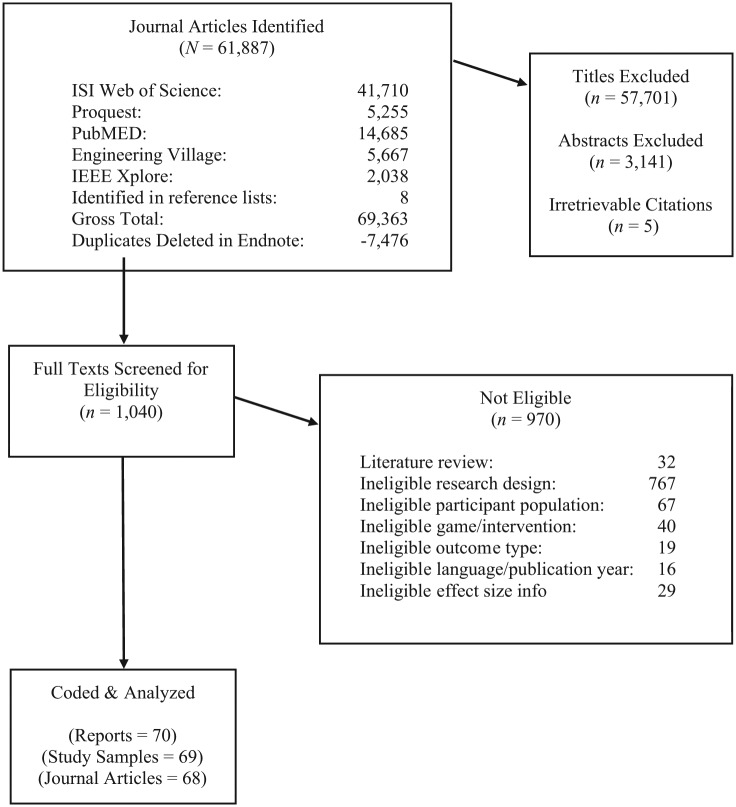
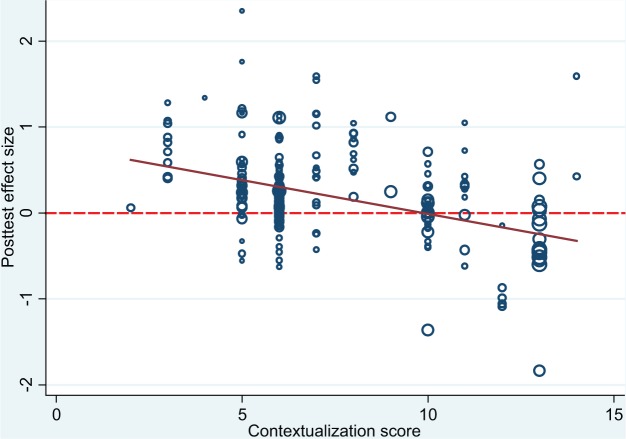
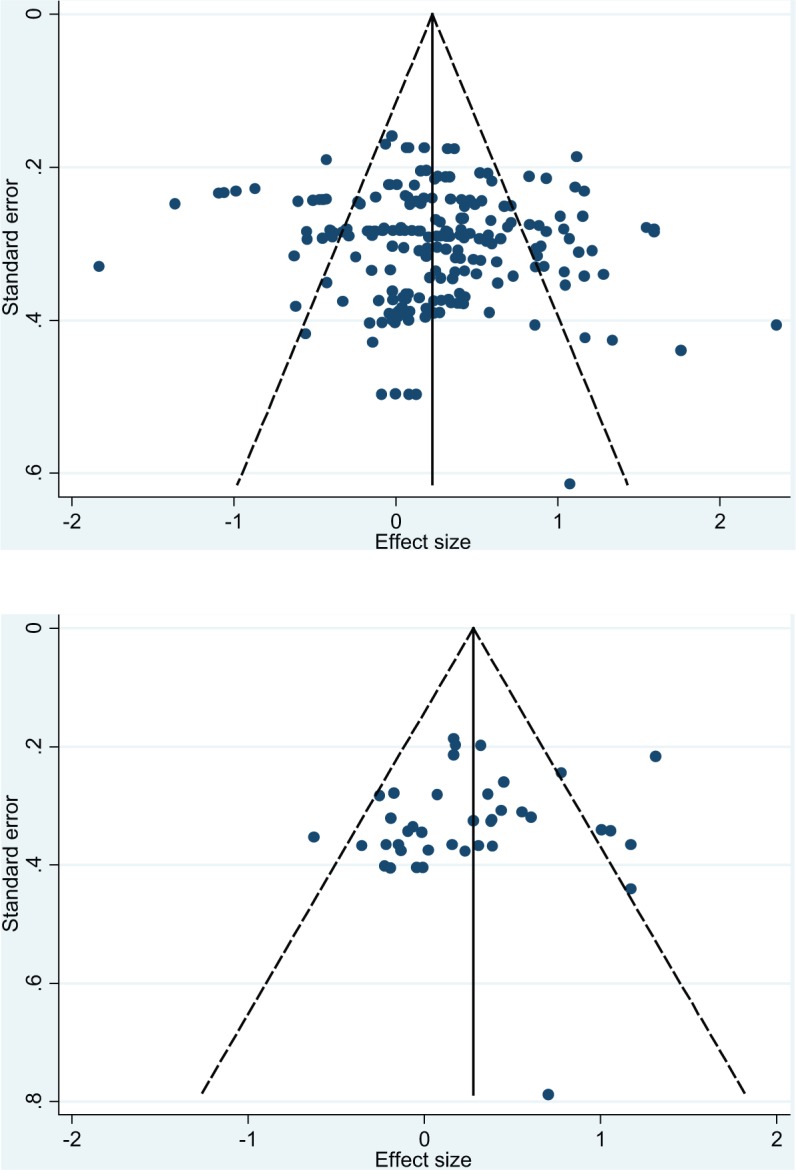
Verification
Claims the paper makes
The claims and statistics of this paper haven’t been checked yet.
Run the check — free, no account needed. It reads the open-access text and checks the sources it cites.
Claims other papers make about this one
Each is checked against this paper’s own text: does it say what the citing paper says it does?
The source backs part of the claim, not all of it — or backs it for a different population, condition or comparison.
In the citing paper
“Inclusion of game fiction is closely related to the use of narrative anchors and has been shown to be effective for learning as it situates and anchors learning in a context (Clark et al. 2016) and can further serve as a cognitive framework for problem solving (Dickey 2006).”
From The gamification of learning: a meta-analysis (2020) · cites this paper as Clark et al. 2016
Experimental — accuracy not yet measuredThe source backs part of the claim, not all of it — or backs it for a different population, condition or comparison.
In the citing paper
“In addition, the results of the summary effect analyses were similar to results from meta-analyses conducted in the context of games (see Clark et al. 2016;Wouters et al. 2013), indicating that the power of games can be transferred to non-game contexts by using game design elements.”
From The gamification of learning: a meta-analysis (2020) · cites this paper as Clark et al. 2016
Experimental — accuracy not yet measuredThe source backs part of the claim, not all of it — or backs it for a different population, condition or comparison.
In the citing paper
“This result for behavioral learning outcomes is in line with evidence from the context of games, showing that combinations of competition and collaboration in games are promising for learning (Clark et al. 2016).”
From The gamification of learning: a meta-analysis (2020) · cites this paper as Clark et al. 2016
Experimental — accuracy not yet measuredThe cited source says what the claim attributes to it.
In the citing paper
“Clark et al. (2016) included competition in their meta-analysis on digital games and found that combinations of competition and collaboration as well as single-player games without competitive elements can outperform games with mere competition.”
From The gamification of learning: a meta-analysis (2020) · cites this paper as Clark et al. 2016
In the citing paper
“The reviews have also documented the effects on students' learning outcomes and the key role of gamified designs (Alsawaier, 2018;Clark, Tanner-Smith & Killingsworth 2016).”
From Towards a motivational design? Connecting gamification user types and online learning activities (2020) · cites this paper as Clark, Tanner-Smith & Killingsworth 2016
Self-check
Percentages, sums and reported differences re-computed from the paper’s own numbers.
The self-check needs the paper’s full text.
Citations
Cites
Bias in meta-analysis detected by a simple, graphical test
Egger, M., Smith, G. D., Schneider, M., & Minder, C. (1997) · BMJ · doi:10.1136/bmj.315.7109.629 · Cited by 56,722
Self-efficacy: The exercise of control
Bandura, A., Freeman, W. H., & Lightsey, R. (1999) · Journal of Cognitive Psychotherapy · doi:10.1891/0889-8391.13.2.158 · Cited by 46,835
Situated Cognition and the Culture of Learning
Brown, J. S., Collins, A., & Duguid, P. (1989) · Educational Researcher · doi:10.3102/0013189x018001032 · Cited by 13,645
David, F. N., & Tukey, J. W. (1977) · Biometrics · doi:10.2307/2529486 · Cited by 12,707
Borenstein, M., Hedges, L. V., Higgins, J. P. T., & Rothstein, H. R. (2021) · doi:10.1002/9781119558378 · Cited by 9,799
What Video Games Have to Teach Us about Learning and Literacy
(2004) · Education + Training · doi:10.1108/et.2004.00446dae.002 · Cited by 6,674
Distribution Theory for Glass's Estimator of Effect Size and Related Estimators
Hedges, L. V. (1981) · Journal of Educational Statistics · doi:10.2307/1164588 · Cited by 5,695
The Handbook of Research Synthesis and Meta-Analysis
(2019) · doi:10.7758/9781610448864 · Cited by 4,553
Self-Efficacy and Academic Motivation
Schunk, D. H. (1991) · Educational Psychologist · doi:10.1080/00461520.1991.9653133 · Cited by 4,292
Pintrich, P. R. (2003) · Journal of Educational Psychology · doi:10.1037/0022-0663.95.4.667 · Cited by 3,459
Research works printed but not linked: 6
- Gleser L. J., 2009, The handbook of research synthesis and meta-analysis, 357
- 10.3102/10769986006002107 · DOI · Paper page
- Hedges L. V., 2007, Journal of Research in Rural Education, 22, 1
- López-López J. A., 2015, Assessing meta-regression models for examining moderator relationships with dependent effect sizes: A Monte Carlo simulation
- López-López J. A., 2010, Paper presented at the 5th annual meeting of the Society for Research Synthesis Methodology
- Raudenbush S. W., 2009, The handbook of research synthesis and meta-analysis, 295
Cited by
Sorted by citations
Adding immersive virtual reality to a science lab simulation causes more presence but less learning
Makransky, G., Terkildsen, T. S., & Mayer, R. E. (2017) · Learning and Instruction · doi:10.1016/j.learninstruc.2017.12.007 · Cited by 1,727
The gamification of learning: a meta-analysis
Sailer, M., & Homner, L. (2020) · Educational Psychology Review · doi:10.1007/s10648-019-09498-w · Cited by 2,594
Meta-analysis of action video game impact on perceptual, attentional, and cognitive skills.
Bediou, B., Adams, D. M., Mayer, R. E., Tipton, E., Green, C. S., & Bavelier, D. (2018) · Psychological Bulletin · doi:10.1037/bul0000130 · Cited by 807
The effect of games and simulations on higher education: a systematic literature review
Vlachopoulos, D., & Makri, A. (2017) · International Journal of Educational Technology in Higher Education · doi:10.1186/s41239-017-0062-1 · Cited by 776
Serious gaming and gamification education in health professions: systematic review
Gentry, S. V., Gauthier, A., L’Estrade Ehrstrom, B., Wortley, D., Lilienthal, A., Tudor Car, L., Dauwels-Okutsu, S., Nikolaou, C. K., Zary, N., Campbell, J., et al. (2019) · Journal of Medical Internet Research · doi:10.2196/12994 · Cited by 648
Atmatzidou, S., & Demetriadis, S. (2016) · Robotics and Autonomous Systems · doi:10.1016/j.robot.2015.10.008 · Cited by 630
Chen, J., Wang, M., Kirschner, P. A., & Tsai, C. (2018) · Review of Educational Research · doi:10.3102/0034654318791584 · Cited by 490
Effects of game‐based learning on students' mathematics achievement: A meta‐analysis
Tokac, U., Novak, E., & Thompson, C. G. (2019) · Journal of Computer Assisted Learning · doi:10.1111/jcal.12347 · Cited by 366
Assessing the effectiveness of digital game-based learning: Best practices
All, A., Castellar, E. P. N., & LOOY, J. V. (2015) · Computers & Education · doi:10.1016/j.compedu.2015.10.007 · Cited by 363
Yu, Z., Gao, M., & Wang, L. (2020) · Journal of Educational Computing Research · doi:10.1177/0735633120969214 · Cited by 446
“Game mechanics characteristics, visual and narrative characteristics, and research quality characteristics could greatly influence learning outcomes, which indicated that the design of games played a key role in learning (Clark et al., 2016).”
BackgroundInfluentialDesigning and integrating purposeful learning in game play: a systematic review
Ke, F. (2015) · Educational Technology Research and Development · doi:10.1007/s11423-015-9418-1 · Cited by 358
How is the use of technology in education evaluated? A systematic review
Lai, J. W. M., & Bower, M. (2019) · Computers & Education · doi:10.1016/j.compedu.2019.01.010 · Cited by 334
Multimodal teaching, learning and training in virtual reality: a review and case study
Philippe, S., Souchet, A. D., Lameras, P., Petridis, P., Caporal, J., Coldeboeuf, G., & Duzan, H. (2020) · Virtual Reality & Intelligent Hardware · doi:10.1016/j.vrih.2020.07.008 · Cited by 279
Sailer, M., Schultz-Pernice, F., & Fischer, F. (2021) · Computers in Human Behavior · doi:10.1016/j.chb.2021.106794 · Cited by 299
Digital learning in schools: What does it take beyond digital technology?
Sailer, M., Murböck, J., & Fischer, F. (2021) · Teaching and Teacher Education · doi:10.1016/j.tate.2021.103346 · Cited by 332
Teacher perceptions of the value of game-based learning in secondary education
Huizenga, J. C., Dam, G. T. M. T., Voogt, J. M., & Admiraal, W. (2017) · Computers & Education · doi:10.1016/j.compedu.2017.03.008 · Cited by 223
Taub, M., Sawyer, R., Smith, A., Rowe, J., Azevedo, R., & Lester, J. C. (2019) · Computers & Education · doi:10.1016/j.compedu.2019.103781 · Cited by 239
“Over the past decade, there has been growing evidence that GBLEs can serve as an effective medium for learning, but the relationship between game design and student learning is complex (Clark et al., 2016; Mayer, 2014; Wouters et al., 2013).”
BackgroundResultExamining Board Gameplay and Learning: A Multidisciplinary Review of Recent Research
Bayeck, R. Y. (2020) · Simulation & Gaming · doi:10.1177/1046878119901286 · Cited by 219
Ninaus, M., Greipl, S., Kiili, K. J. M., Lindstedt, A., Huber, S., Klein, E., Karnath, H., & Moeller, K. (2019) · Computers & Education · doi:10.1016/j.compedu.2019.103641 · Cited by 223
Artificial Intelligence Applications in K-12 Education: A Systematic Literature Review
Zafari, M., Bazargani, J. S., Sadeghi-Niaraki, A., & Choi, S.-M. (2022) · IEEE Access · doi:10.1109/access.2022.3179356 · Cited by 185
Theelen, H., van den Beemt, A., & Brok, P. D. (2019) · Computers & Education · doi:10.1016/j.compedu.2018.10.015 · Cited by 180
To learn scientifically, effectively, and enjoyably: A review of educational games
Zeng, J., Parks, S., & Shang, J. (2020) · Human Behavior and Emerging Technologies · doi:10.1002/hbe2.188 · Cited by 236
A Computer-Based Game that Promotes Mathematics Learning More than a Conventional Approach
McLaren, B. M., Adams, D. M., Mayer, R. E., & Forlizzi, J. (2016) · International Journal of Game-Based Learning · doi:10.4018/ijgbl.2017010103 · Cited by 173
“For instance, Clark et al. (2015), in a review of 69 sound, empirical studies (filtered from over 1000 studies reported in published papers), found that computer-based educational games were associated with a 0.33 standard deviation improvement over non-game comparison conditions.”
BackgroundMethodInfluentialEffects of Digital Game-Based Learning on Elementary Science Learning: A Systematic Review
Hussein, M. H., Ow, S. H., Cheong, L. S., Thong, M., & Ebrahim, N. A. (2019) · IEEE Access · doi:10.1109/access.2019.2916324 · Cited by 190
The Science of Using Science: Researching the Use of Research Evidence in Decision-Making
Langer, L., Tripney, J., & Gough, D. (2016) · UCL Discovery (University College London) · Cited by 164
Game on: The gamification of the pharmacy classroom
Sera, L., & Wheeler, E. (2016) · Currents in Pharmacy Teaching and Learning · doi:10.1016/j.cptl.2016.08.046 · Cited by 164
Brom, C., Stárková, T., & D'Mello, S. K. (2018) · Educational Research Review · doi:10.1016/j.edurev.2018.09.004 · Cited by 163
Strengthening the research base that informs STEM instructional improvement efforts: A meta-analysis
Lynch, K., Hill, H. C., Gonzalez, K. E., & Pollard, C. (2019) · Educational Evaluation and Policy Analysis · doi:10.3102/0162373719849044 · Cited by 160
Brezovszky, B., McMullen, J. A., Veermans, K., Hannula‐Sormunen, M. M., Rodríguez-Aflecht, G., Pongsakdi, N., Laakkonen, E., & Lehtinen, E. (2018) · Computers & Education · doi:10.1016/j.compedu.2018.09.011 · Cited by 180
Towards a motivational design? Connecting gamification user types and online learning activities
Bovermann, K., & Bastiaens, T. J. (2020) · Research and Practice in Technology Enhanced Learning · doi:10.1186/s41039-019-0121-4 · Cited by 156
Kaimara, P., Fokides, E., Οικονόμου, Α., & Deliyannis, I. (2021) · Technology Knowledge and Learning · doi:10.1007/s10758-021-09512-7 · Cited by 225
Effects of Game-Based Learning on Students’ Critical Thinking: A Meta-Analysis
Mao, W., Cui, Y., Chiu, M. M., & Lei, H. (2021) · Journal of Educational Computing Research · doi:10.1177/07356331211007098 · Cited by 239
“Scholars disagree over whether GBL includes learning from game construction (yes: Prensky, 2008; Van Eck, 2006; no: Clark et al., 2016), so we include such studies and test whether their results differ from those of other GBL.”
MethodResultImpact of Gamification on Motivation and Academic Performance: A Systematic Review
Jaramillo-Mediavilla, L., Basantes-Andrade, A., Cabezas-González, M., & Casillas-Martín, S. (2024) · Education Sciences · doi:10.3390/educsci14060639 · Cited by 160
“Clark et al. [40] found that digital games can enhance learning, but the effects vary.”
BackgroundHajian, S. (2019) · IAFOR Journal of Education · doi:10.22492/ije.7.1.06 · Cited by 178
The effects of competition in digital game-based learning (DGBL): a meta-analysis
Chen, C., Shih, C.-C., & Law, V. (2020) · Educational Technology Research and Development · doi:10.1007/s11423-020-09794-1 · Cited by 179
“Some meta-analyses have focused on different types of games (e.g., Clark et al. 2016; Merchant et al. 2014), or a specific domain such as math (e.g., Byun and Joung 2018; Tokac et al. 2019), but we have not found a meta-analysis that focused on a specific game element.”
BackgroundResultInfluentialTeaching and Learning in Times of COVID-19: Uses of Digital Technologies During School Lockdowns
Pozo, J. I., Echeverría, M. D. P. P., Cabellos, B., & Sánchez, D. L. (2021) · Frontiers in Psychology · doi:10.3389/fpsyg.2021.656776 · Cited by 190
“…with the results of some international mass studies (Biagi and Loi, 2013; OECD, 2015) than with the experimental works that analyze how teachers who are previously chosen use ICT (Tamim et al., 2011; Alrasheedi et al., 2015; Sung et al., 2015; Clark et al., 2016; Xie et al., 2018; Mayer, 2019).”
BackgroundResultThe cyclical ethical effects of using artificial intelligence in education
Dieterle, E., Dede, C., & Walker, M. (2024) · AI & SOCIETY · doi:10.1007/s00146-022-01497-w · Cited by 142
“…skills, teamwork, and cultural sensitivity; and (d) intrapersonal skills, such as self-management, time management, self-regulation, adaptability, and executive functioning (Clark et al. 2016; D’Angelo et al. 2014; Díaz et al. 2019; Fishman and Dede 2016; National Academies of Sciences 2000, 2020).”
BackgroundChen, C., & Chang, C.-L. (2024) · Education and Information Technologies · doi:10.1007/s10639-024-12553-x · Cited by 196
“Digital game-based learning (DGBL) has been gaining popularity in educational settings due to its ability to enhance student engagement, motivation, and learning performance (Clark et al., 2016; Connolly et al., 2012).”
The Effect of Game-Based Learning on Student Achievement: A Meta-Analysis Study
Karakoç, B., Kara, K., Özpolat, E. T., & Yıldırım, İ. (2020) · Technology Knowledge and Learning · doi:10.1007/s10758-020-09471-5 · Cited by 198
“This finding is consistent with the other meta-analyses in the relevant literature (Clark et al. 2016; Girard et al. 2012; Tokaç et al. 2018; Toraman et al. 2018; Yıldırım and Şen 2019).”
ResultDigital game elements, user experience and learning: A conceptual framework
Alexiou, A., & Schippers, M. C. (2018) · Education and Information Technologies · doi:10.1007/s10639-018-9730-6 · Cited by 181
A systematic review on the impacts of game-based learning on argumentation skills
Noroozi, O., Dehghanzadeh, H., & Talaee, E. (2020) · Entertainment Computing · doi:10.1016/j.entcom.2020.100369 · Cited by 171
BioBits™ Explorer: A modular synthetic biology education kit
Huang, A., Nguyen, P. Q., Stark, J. C., Takahashi, M. K., Donghia, N. M., Ferrante, T., Dy, A. J., Hsu, K. J., Dubner, R. S., Pardee, K., et al. (2018) · Science Advances · doi:10.1126/sciadv.aat5105 · Cited by 136
The Teaching and Learning Toolkit
Higgins, S. (2018) · Cambridge University Press eBooks · doi:10.1017/9781139519618.004 · Cited by 136
Barz, N., Benick, M., Dörrenbächer‐Ulrich, L., & Perels, F. (2023) · Review of Educational Research · doi:10.3102/00346543231167795 · Cited by 227
“Clark et al. (2016) found further evidence of the superiority of multiple game sessions over single sessions.”
BackgroundMethodResultInfluentialBoard Games for Health: A Systematic Literature Review and Meta-Analysis
Gauthier, A., Kato, P. M., Bul, K., Dunwell, I., Walker-Clarke, A., & Lameras, P. (2018) · Games for Health Journal · doi:10.1089/g4h.2018.0017 · Cited by 140
Game-based learning in computer science education: a scoping literature review
Videnovik, M., Vold, T., Kiønig, L. V., Bogdanova, A. M., & Trajkovik, V. (2023) · International Journal of STEM Education · doi:10.1186/s40594-023-00447-2 · Cited by 182
“Moreover, game-based learning has the potential to improve students’ competencies and academic performance (Clark et al., 2016; López-Fernández et al., 2021a, 2021b; Mezentseva et al., 2021; Noroozi et al., 2020; Sanchez Mena & Martí-Parreño, 2017; Vu & Feinstein, 2017).”
BackgroundRiopel, M., Nenciovici, L., Potvin, P., Chastenay, P., Charland, P., Sarrasin, J. B., & Masson, S. (2019) · Studies in Science Education · doi:10.1080/03057267.2019.1722420 · Cited by 127
Digital game-based learning in K-12 mathematics education: a systematic literature review
Hussein, M. H., Ow, S. H., Elaish, M. M., & Jensen, E. O. (2021) · Education and Information Technologies · doi:10.1007/s10639-021-10721-x · Cited by 186
“…approach where educational objectives and material are embedded in gaming activities in an attempt to motivate students to learn and improve their skills and knowledge by providing them with an enjoyable and interactive learning environment (Prensky, 2001; Qian & Clark, 2016; Sung & Hwang, 2013).”
BackgroundEffectiveness of digital educational game and game design in STEM learning: a meta-analytic review
Gui, Y., Cai, Z., Yang, Y., Kong, L., Fan, X., & Tai, R. H. (2023) · International Journal of STEM Education · doi:10.1186/s40594-023-00424-9 · Cited by 245
“One common-sense view was that, multiple sessions in digital educational games would provide students with more opportunities to learn for achieving higher level learning than a single intervention (Clark et al., 2016).”
BackgroundShute, V. J., D’Mello, S. K., Baker, R. S., Cho, K., Bosch, N., Ocumpaugh, J. L., Ventura, M., & Almeda, M. V. (2015) · Computers & Education · doi:10.1016/j.compedu.2015.08.001 · Cited by 129
The effects of gamification on students’ academic achievement: a meta-analysis study
Yıldırım, İ., & Şen, S. (2019) · Interactive Learning Environments · doi:10.1080/10494820.2019.1636089 · Cited by 136
“Clark, Tanner-Smith, and Killingsworth (2016) found the Hedges ’ g value as 0.33 about digital games ’ e ff ect on student achievement and this value can be interpreted as low-level e ff ect (Cohen, 1988).”
BackgroundInfluentialCurrent practices in meta‐regression in psychology, education, and medicine
Tipton, E., Pustejovsky, J. E., & Ahmadi, H. (2019) · Research Synthesis Methods · doi:10.1002/jrsm.1339 · Cited by 133
Cai, Z., Mao, P., Wang, D., He, J., Chen, X., & Fan, X. (2022) · Educational Psychology Review · doi:10.1007/s10648-021-09655-0 · Cited by 158
“Clark et al. (2016) categorized learning into three domains: cognitive, intrapersonal, and interpersonal, and they noted that there was no significant difference in effect of educational games on these three learning outcomes.”
BackgroundMethodResultInfluentialSchöbel, S., Saqr, M., & Janson, A. (2021) · Computers & Education · doi:10.1016/j.compedu.2021.104296 · Cited by 136
Hawlitschek, A., & Joeckel, S. (2017) · Computers in Human Behavior · doi:10.1016/j.chb.2017.01.040 · Cited by 119
Antonopoulou, H., Halkiopoulos, C., Gkintoni, E., & Katsimpelis, A. (2022) · International Journal of Learning Teaching and Educational Research · doi:10.26803/ijlter.21.5.19 · Cited by 132
Vanbecelaere, S., den Berghe, K. V., Frederik Cornillie, B., Sasanguie, D., Reynvoet, B., & Depaepe, F. (2019) · Computers & Education · doi:10.1016/j.compedu.2019.103680 · Cited by 137
“However, Clark et al. (2016) suggested that one should also assess to which extent the trained skills have been transferred to other, more general skills, such as math and reading competence in the current context (i.e., ‘far transfer’).”
BackgroundMcTigue, E. M., Solheim, O. J., Zimmer, W. K., & Uppstad, P. H. (2020) · Reading Research Quarterly · doi:10.1002/rrq.256 · Cited by 113
Animating student engagement: The impacts of cartoon instructional videos on learning experience
Liu, C., & Elms, P. (2019) · Research in Learning Technology · doi:10.25304/rlt.v27.2124 · Cited by 132
Overview of Instructional Techniques to Facilitate Learning and Motivation of Serious Games
Wouters, P., & van Oostendorp, H. (2016) · Springer eBooks · doi:10.1007/978-3-319-39298-1_1 · Cited by 116
A literature review on the influence of Kahoot! On learning outcomes, interaction, and collaboration
Zhang, Q., & Yu, Z. (2021) · Education and Information Technologies · doi:10.1007/s10639-021-10459-6 · Cited by 151
Pan, Y., Ke, F., & Xu, X. (2022) · Educational Research Review · doi:10.1016/j.edurev.2022.100448 · Cited by 107
A synthesis of systematic review research on emerging learning environments and technologies
Martin, F., Dennen, V. P., & Bonk, C. J. (2020) · Educational Technology Research and Development · doi:10.1007/s11423-020-09812-2 · Cited by 107
Effects of digital games on student motivation in mathematics: A meta‐analysis in K‐12
Fadda, D., Pellegrini, M., Vivanet, G., & Zandonella Callegher, C. (2022) · Journal of Computer Assisted Learning · doi:10.1111/jcal.12618 · Cited by 135
Huizenga, J. C., Admiraal, W., Dam, G. T. M. T., & Voogt, J. M. (2019) · Computers in Human Behavior · doi:10.1016/j.chb.2019.05.020 · Cited by 103
Digital Game-Based Learning effectiveness assessment: Reflections on study design
All, A., Castellar, E. N., & LOOY, J. V. (2021) · Computers & Education · doi:10.1016/j.compedu.2021.104160 · Cited by 130
Kim, J., Gilbert, J., Yu, Q., & Gale, C. (2021) · AERA Open · doi:10.1177/23328584211004183 · Cited by 102
Learning in immersed collaborative virtual environments: design and implementation
de Back, T. T., Tinga, A. M., & Louwerse, M. M. (2021) · Interactive Learning Environments · doi:10.1080/10494820.2021.2006238 · Cited by 128
“Reviews of empirical studies on gami fi cation for education have generally indicated a positive e ff ect on learning outcomes (Clark et al., 2016; Hamari et al., 2014; Wouters et al., 2013; but see Koivisto & Hamari, 2019 for mixed results).”
BackgroundNarrative categorization in digital game‐based learning: Engagement, motivation & learning
Breien, F., & Wasson, B. (2020) · British Journal of Educational Technology · doi:10.1111/bjet.13004 · Cited by 110
“Several literature reviews (eg, Clark et al ., 2016; Connolly et al ., 2012; Novak, 2015) have explored narrative effects on engagement, motivation, and learning in DGBL.”
BackgroundA meta‐analysis of research on digital game‐based science learning
Tsai, Y., & Tsai, C. (2020) · Journal of Computer Assisted Learning · doi:10.1111/jcal.12430 · Cited by 112
Blumberg, F. C., Deater-Deckard, K., Calvert, S. L., Flynn, R. M., Green, C. S., Arnold, D., & Brooks, P. J. (2019) · Child Policy Nexus · doi:10.1002/sop2.3 · Cited by 96
A systematic review of augmented reality game-based Learning in STEM education
Yu, J., Denham, A. R., & Searight, E. (2022) · Educational Technology Research and Development · doi:10.1007/s11423-022-10122-y · Cited by 109
“The consensus is that well-designed educational games promote learning gains and improve learners’ interests, motivations, and engagements (Clark et al., 2016; Kim et al., 2018; Prensky, 2010 ; Shaffer et al., 2005; Vogel et al., 2006).”
BackgroundThe effectiveness of adaptive versus non‐adaptive learning with digital educational games
Vanbecelaere, S., den Berghe, K. V., Frederik Cornillie, B., Sasanguie, D., Reynvoet, B., & Depaepe, F. (2019) · Journal of Computer Assisted Learning · doi:10.1111/jcal.12416 · Cited by 93
Akdere, M., Acheson, K., & Jiang, Y. (2021) · International Journal of Intercultural Relations · doi:10.1016/j.ijintrel.2021.03.009 · Cited by 91
RetractedDesigning Games for Moral Learning and Knowledge Building
Schrier, K. “. (2017) · Games and Culture · doi:10.1177/1555412017711514 · Cited by 103
How design features in digital math games support learning and mathematics connections
Moyer‐Packenham, P. S., Lommatsch, C. W., Litster, K., Ashby, J., Bullock, E. P., Roxburgh, A. L., Shumway, J. F., Speed, E. A., Covington, B. P., Hartmann, C., et al. (2018) · Computers in Human Behavior · doi:10.1016/j.chb.2018.09.036 · Cited by 90
“Well-designed digital math games, whose learning designs and mathematics rules and principles are well-integrated with gameplay, can motivate children and result in positive learning outcomes (Boyce, 2014; Clark et al., 2016; Habgood & Ainsworth, 2011).”
BackgroundDisciplinary integration of digital games for science learning
Clark, D. B., Sengupta, P., Brady, C. E., Martinez-Garza, M. M., & Killingsworth, S. S. (2015) · International Journal of STEM Education · doi:10.1186/s40594-014-0014-4 · Cited by 94
Self-citationThompson, C. G., & von Gillern, S. (2020) · Educational Research Review · doi:10.1016/j.edurev.2020.100332 · Cited by 105
Vankúš, P. (2021) · Mathematics · doi:10.3390/math9090986 · Cited by 129
Zheng, Y., Zhang, J., Li, Y., Wu, X., Ding, R., Luo, X., Liu, P., & Huang, J. (2023) · Heliyon · doi:10.1016/j.heliyon.2023.e23490 · Cited by 159
“This outcome highlights digital games ’ positive impacts in the context of education [44,83,96].”
BackgroundSpielerische Ansätze in Prävention und Gesundheitsförderung: Serious Games und Gamification
Tolks, D., Lampert, C., Dadaczynski, K., Maslon, E., Paulus, P., & Sailer, M. (2020) · Bundesgesundheitsblatt - Gesundheitsforschung - Gesundheitsschutz · doi:10.1007/s00103-020-03156-1 · Cited by 93
Asbell-Clarke, J., Rowe, E., Almeda, V., Edwards, T., Bardar, E., Gasca, S., Baker, R. S., & Scruggs, R. (2021) · Computers in Human Behavior · doi:10.1016/j.chb.2020.106587 · Cited by 88
LudusScope: Accessible Interactive Smartphone Microscopy for Life-Science Education
Kim, H., Gerber, L. C., Chiu, D., Lee, S. A., Cira, N., Xia, S. Y., & Riedel-Kruse, I. H. (2016) · PLoS ONE · doi:10.1371/journal.pone.0162602 · Cited by 83
Understanding the role of competition in video gameplay satisfaction
Sepehr, S., & Head, M. M. (2017) · Information & Management · doi:10.1016/j.im.2017.09.007 · Cited by 84
Talan, T., Doğan, Y., & Batdı, V. (2020) · Journal of Research on Technology in Education · doi:10.1080/15391523.2020.1743798 · Cited by 95
Ade-Ojo, G. O., Markowski, M., Essex, R., Stiell, M., & Jameson, J. (2022) · Journal of Computer Assisted Learning · doi:10.1111/jcal.12653 · Cited by 104
The effects of a bike active video game on players' physical activity and motivation
Pasco, D., Roure, C., Kermarrec, G., Pope, Z., & Gao, Z. (2016) · Journal of sport and health science/Journal of Sport and Health Science · doi:10.1016/j.jshs.2016.11.007 · Cited by 77
Stiller, K. D., & Schworm, S. (2019) · Frontiers in Education · doi:10.3389/feduc.2019.00018 · Cited by 93
“However, keeping the balance between educational games and instructional material without game elements when a comparison is warranted is also very challenging (i.e., media comparison research sensu Connolly et al., 2012; Li and Tsai, 2013; Clark et al., 2016).”
BackgroundBonacini, E., & Giaccone, S. C. (2021) · Cultural Trends · doi:10.1080/09548963.2021.1910490 · Cited by 80
“Their e ff ectiveness as learning tools is highlighted in the literature with reference to a broad range of fi elds: education, defense, health care, research, cultural heritage and tourism (Clark et al., 2016; Connolly et al., 2012; de Byl, 2013; Karagiorgas & Niemann, 2017).”
BackgroundLearning analytics for online game-Based learning: a systematic literature review
Banihashem, S. K., Dehghanzadeh, H., Clark, D. B., Noroozi, O., & Biemans, H. J. A. (2023) · Behaviour and Information Technology · doi:10.1080/0144929x.2023.2255301 · Cited by 98
“…in enhancing various cognitive and a ff ective learning outcomes across educational settings including in higher education (Abdul Jabbar and Felicia 2015; Clark, Tanner-Smith, and Killingsworth 2016; Foster and Shah 2020; Huizenga et al. 2009; Lei et al. 2022; Tokac, Novak, and Thompson 2019).”
Self-citationLester, D., Skulmoski, G. J., Fisher, D., Mehrotra, V., Lim, I., Lang, A., & Keogh, J. (2023) · British Journal of Educational Technology · doi:10.1111/bjet.13311 · Cited by 76
Self-Regulation in Computer-Assisted Learning Systems
Azevedo, R., Mudrick, N. V., Taub, M., & Bradbury, A. E. (2019) · Cambridge University Press eBooks · doi:10.1017/9781108235631.024 · Cited by 80
Game‐based learning has good chemistry with chemistry education: A three‐level meta‐analysis
Hu, Y., Gallagher, T. J., Wouters, P., van der Schaaf, M. F., & Kester, L. (2022) · Journal of Research in Science Teaching · doi:10.1002/tea.21765 · Cited by 109
Chang, C.-S., Chung, C., & Chang, J. A. (2020) · Educational Technology Research and Development · doi:10.1007/s11423-020-09784-3 · Cited by 77
“For example, a meta-analysis conducted by Clark et al. (2016) indicated that digital games considerably improve student learning compared with nongame conditions.”
BackgroundA Systematic Literature Review of Game-Based Assessment Studies: Trends and Challenges
Gomez, M. J., Ruipérez‐Valiente, J. A., & Clemente, F. J. G. (2022) · IEEE Transactions on Learning Technologies · doi:10.1109/tlt.2022.3226661 · Cited by 73
Using video games to combine learning and assessment in mathematics education
Kiili, K. J. M., Devlin, K., Perttula, A., Tuomi, P., & Lindstedt, A. (2015) · International Journal of Serious Games · doi:10.17083/ijsg.v2i4.98 · Cited by 72
Assessment and Adaptation in Games
Shute, V. J., Ke, F., & Wang, L. (2016) · Springer eBooks · doi:10.1007/978-3-319-39298-1_4 · Cited by 72
Can cooperative video games encourage social and motivational inclusion of at‐risk students?
Hanghøj, T., Lieberoth, A., & Misfeldt, M. (2018) · British Journal of Educational Technology · doi:10.1111/bjet.12642 · Cited by 88
Lu, S.-J., Liu, Y., Chen, P., & Hsieh, M.-R. (2018) · Interactive Learning Environments · doi:10.1080/10494820.2018.1541908 · Cited by 88
Taub, M., Mudrick, N. V., Azevedo, R., Millar, G. C., Rowe, J., & Lester, J. C. (2017) · Computers in Human Behavior · doi:10.1016/j.chb.2017.01.038 · Cited by 81
“…(d ¼ 0.29, p < 0.01; Wouters et al., 2013), yet moderate to large effect sizes for knowledge acquisition (g ¼ 0.33, 95% CI, [0.19, 0.48], k ¼ 57, n ¼ 209; Clark et al., 2016) and retention (d ¼ 0.36, p < 0.01; Wouters et al., 2013), compared to conventional instructional methods (e.g.,…”
ResultInfluential
Metadata
- Authors
- Clark, D. B., Tanner-Smith, E. E., & Killingsworth, S. S.
- Affiliations
- Vanderbilt University (US)
- Vanderbilt University
- Venue
- Review of Educational Research
- Published
- 2016-03
- Volume
- 86
- Issue
- 1
- Pages
- 79-122
- ISSN
- 0034-6543 (ISSN-L)
- 1935-1046
- PMC
- PMC4748544
- OpenAlex
- W2099460238
- Cited by
- 1,274
- References
- 146
- Citations by year
- 2026: 159 · 2025: 129 · 2024: 126 · 2023: 120 · 2022: 125 · 2021: 163 · 2020: 125 · 2019: 122 · 2018: 103 · 2017: 59 · 2016: 28
- FWCI
- 169.76
- Type
- journal article
- Language
- en
- Open access
- hybrid
- doi.org
- Locations
- Review of Educational Research (publishedVersion, cc-by-nc)
- PubMed Central (publishedVersion, cc-by-nc)
- PubMed (publishedVersion)
- Topics
- Social Sciences › Psychology › Developmental and Educational Psychology › Educational Games and Gamification
- Social Sciences › Sociology and Political Science › Digital Games and Media
- Social Sciences › Psychology › Experimental and Cognitive Psychology › Visual and Cognitive Learning Processes
- Keywords
- video games, game-based learning, educational game design, game mechanics, game affordances, learning outcomes, K-16 education
About these checks
Registry, retraction, Cites and statistics results are computed, not judged, with one exception: a printed reference that no index lists is read once by a model before it counts as a citation error. Claims are extracted by a model and kept only when their quote appears verbatim in the text; each cited source is then checked, with a model’s help, for whether it says what the claim relies on. Those verdicts can be wrong — read the claim’s quote and the cited source before relying on one.
Statistics and arithmetic are recomputed, not judged.
Confidence bands are shown only for fields calibrated on our annotated test set. None is calibrated yet, so no band is shown.
What counts as a claim ›How we measure confidence ›How we check this ›
Are you an author, or do you see a problem with this page? Request a review
