

Physical exercise as a therapeutic approach for adults with insomnia: systematic review and meta-analysis
Open accessThe DOI matches its Crossref record; 66 of the 72 references it cites were found in a registry or an index; 6 of the 44 sources its claims cite were checked for support.
Abstract
OBJECTIVE: To systematically review the effects (benefits and harms) of different types of physical exercise on insomnia outcomes in adult populations with no mood disorders. Objective and subjective sleep outcomes and related mismatches were analyzed. METHODS: Systematic review and meta-analysis. Quality of evidence was also examined. RESULTS: Six studies including 295 participants with insomnia diagnosis were selected. Yoga, Tai Chi, resistance exercise and aerobic exercise were used in protocols with different duration, intensity and frequency. Studies involved different populations, including inactive or sedentary individuals, older adults and postmenopausal women. Physical exercise improved subjective sleep quality (very low quality of evidence) and reduced insomnia severity (high quality of evidence). CONCLUSION: Findings suggest individualized physical exercise must be addressed to design optimal protocols, with standardized type, duration, intensity, and frequency. For the time being, physical exercise may be considered an alternative and/or ancillary therapeutic modality for patients diagnosed with insomnia. Physical exercise can be used to improve subjective complaints, but not objective sleep outcomes.
Overview
CoChat Summary
## TL;DR
This systematic review and meta-analysis of 6 studies (295 participants) found that physical exercise improved subjective sleep quality and reduced insomnia severity in adults with insomnia, but did not improve objective sleep outcomes. The evidence was generally very low quality, although the insomnia severity finding was rated high quality.
## Key findings
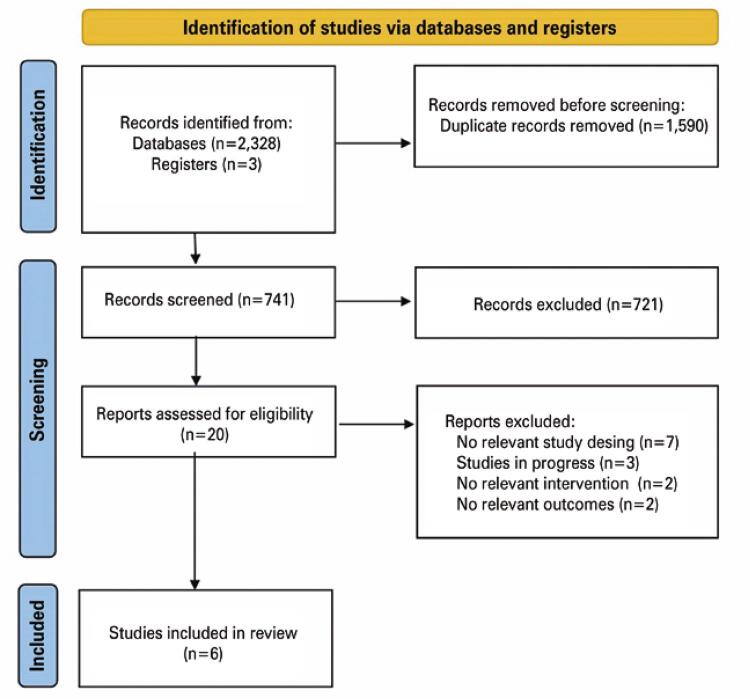
- Six studies including 295 participants with insomnia diagnosis were analyzed; exercise interventions included yoga, Tai Chi, resistance exercise, and aerobic exercise.
- Physical exercise improved subjective sleep quality: PSQI scores decreased by 3.17 points overall (95%CI: -4.23 to -2.12), and by 1.60 points in a sensitivity analysis focused on the larger/better-quality study.
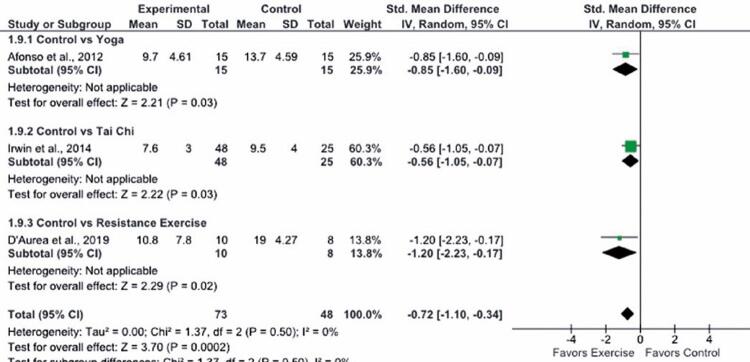
- Physical exercise reduced insomnia severity: the meta-analysis found a statistically significant decrease, but the improvement was not clinically significant (SMD, -0.72; 95%CI: -1.10 to -0.34).
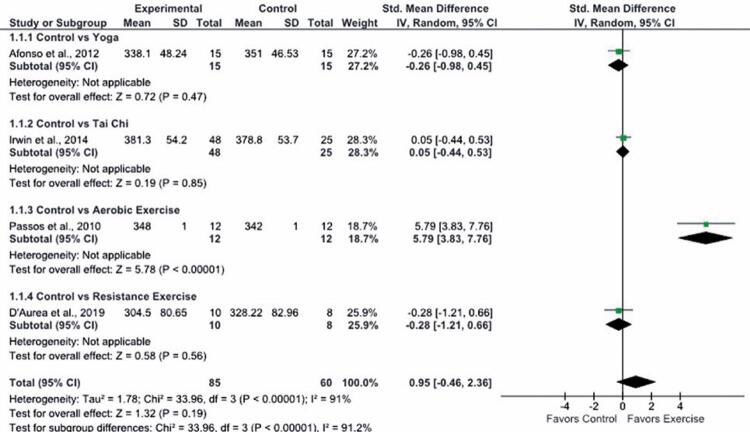
- Physical exercise did not significantly improve objective sleep outcomes: TST (SMD, 0.95; 95%CI: -0.46 to 2.36), SOL (MD, 0.8 minutes; 95%CI: -6.13 to -7.73), and WASO (MD, 0.79 minutes; 95%CI: -13.95 to 15.52) showed no significant pooled benefit.
## Methods
- Systematic review and meta-analysis registered in PROSPERO and conducted following PRISMA and Cochrane Handbook guidance.
- Searched PubMed, EMBASE, Cochrane Library, Scopus, and LILACS for RCTs and quasi-RCTs from inception to May 2021; also searched WHO ICTRP and ClinicalTrials.gov.
- Included adults (≥18 years) with insomnia diagnosed by standard criteria or validated measures; excluded participants with depressive symptoms, psychiatric/other medical disorders, or other sleep disorders. Data were pooled with a random-effects model, and study quality/risk of bias was assessed using Cochrane criteria and GRADE.
## Limitations
- The paper states that the included studies had several limitations: varied exercise types and protocols, some missing details about exercise interventions, different intervention durations, and inclusion of mind-based as well as aerobic/resistance exercise modalities.
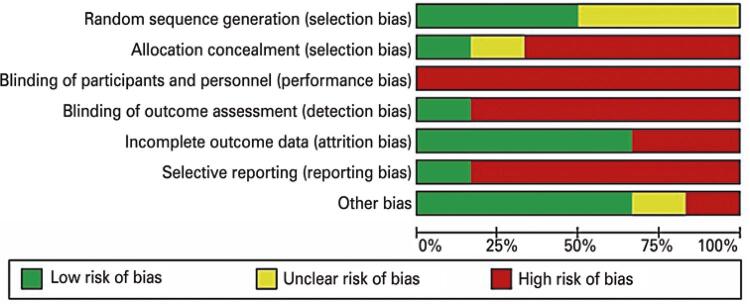
- The evidence base had high risk of bias and small sample size, and the paper notes these as important weaknesses; evidence quality ranged from very low to moderate.
- Evident from the text: only 6 studies were included, most outcomes came from a small number of studies, and heterogeneity was substantial for some outcomes (for example, PSQI I2 = 76% and TST I2 = 91%).
Model-written summary. Check it against the paper before relying on it.
Integrity signals
Registry
Cites
Statistics
Figures
Verification
Claims the paper makes
3 Valid · 2 Not valid · 18 Not checked · 32 Own results and interpretations
At least one cited source doesn’t support this claim or points to a different paper, and none confirmed it — see the verdicts below.
In the paper
“Acute aerobic exercise ( 15 ) was the only intervention associated with a statistically significant increase in SOL.”
§ Physical exercise as a therapeutic approach for adults with insomnia: systematic review and meta-analysis > RESULTS > Effects of interventions
What the sources say
- Disputedcites [15] Passos GS, Poyares D, Santana MG, Garbuio SA, Tufik S, Mello MT. Effect of acute physical exercise on patients with chronic primary insomnia. J Clin Sleep Med. 2010; 6 (3): 270 - 5. PMC2883039 20572421 sourceExperimental — accuracy not yet measured
The Results (Table 2; page not supplied) show a statistically significant decrease in sleep onset latency after moderate-intensity aerobic exercise, from 37.6 to 16.8 minutes. The Discussion likewise describes a 55% reduction, not the claimed increase. (LLM, conf=0.90)
Checked by a reasoning model — may be wrong.
plainstates an association- Asserted: passes — The authors put it forward as true.
- Checkable: passes — It can be checked against evidence.
- Load-bearing: unclear — It is unclear whether the paper’s conclusions depend on it.
- Based: passes — The paper gives a reason why it holds.
- Disputed
None of the sources cited for this claim have been checked yet.
In the paper
“The effects of exercise on insomnia have been investigated in prior studies in which mood disorders were a confounding factor. ( 6 , 20 , 21 )”
§ Physical exercise as a therapeutic approach for adults with insomnia: systematic review and meta-analysis > INTRODUCTION
What the sources say
- Could not verifycites [6] Banno M, Harada Y, Taniguchi M, Tobita R, Tsujimoto H, Tsujimoto Y, et al. Exercise can improve sleep quality: a systematic review and meta-analysis. Peer J. 2018; 6: e5172. PMC6045928 30018855 sourceExperimental — accuracy not yet measured
Our copy of Banno et al. (2018) nowhere states that mood disorders were a confounding factor in prior studies of exercise and insomnia; searched for 'mood disorders confounding', 'confounded by depression', 'psychiatric comorbidity excluded', and 'anxiety/depression'. The Introduction (p. n/a) does note that insomnia 'is strongly correlated with mental illness and poses an additional risk for depression' and that DSM-5/ICSD-3 abolished the primary/secondary distinction because insomnia often accompanies comorbid conditions, and it criticises prior reviews for using 'undefined populations' or mere 'sleep complaints' — but that is comorbidity and population heterogeneity, not confounding by mood disorders. Anxiety and depression appear in this paper only as secondary outcomes of its own meta-analysis (Results > Secondary outcomes), where they were 'significantly ameliorated in favor of the intervention', not as a limitation of earlier work. (LLM, conf=0.66)
- Not checked yetcites [20] Rubio-Arias JÁ, Marín-Cascales E, Ramos-Campo DJ, Hernandez AV, Pérez López FR. Effect of exercise on sleep quality and insomnia in middle-aged women: a systematic review and meta-analysis of randomized controlled trials. Maturitas. 2017; 100: 49 - 56. Review. 28539176 source
- Not checked yetcites [21] Lowe H, Haddock G, Mulligan LD, Gregg L, Fuzellier-Hart A, Carter LA, et al. Does exercise improve sleep for adults with insomnia? A systematic review with quality appraisal. Clin Psychol Rev. 2019; 68: 1 - 12. 30617012 source
plain- Asserted: passes — The authors put it forward as true.
- Checkable: passes — It can be checked against evidence.
- Load-bearing: passes — The paper’s conclusions depend on it.
- Based: passes — The paper gives a reason why it holds.
- Could not verify
Every source the paper cites for this claim was checked and supports it.
In the paper
“With the exception of acute aerobic exercise (80.9% relative to 81.9% in the Control Group), ( 15 ) which was associated with statistically significant differences, interventions were not associated with statistically significant improvements in sleep efficiency (MD, -0.90%; 95%CI: -4.52-2.73).”
§ Physical exercise as a therapeutic approach for adults with insomnia: systematic review and meta-analysis > RESULTS > Effects of interventions
What the sources say
- Supportedcites [15] Passos GS, Poyares D, Santana MG, Garbuio SA, Tufik S, Mello MT. Effect of acute physical exercise on patients with chronic primary insomnia. J Clin Sleep Med. 2010; 6 (3): 270 - 5. PMC2883039 20572421 source
Table 2 (RESULTS) of Passos et al. 2010 gives post-exercise sleep efficiency of 80.9 ± 13% for the moderate-intensity aerobic exercise (MAE) group and 81.9 ± 12% for the control (CTL) group, exactly the two figures the citing sentence attaches to reference (15), with the MAE value flagged as significantly different (*, repeated-measures ANOVA p < 0.05). The RESULTS text states the repeated-measures ANOVA showed 'an increase in TST (18%) and SE (13%) in the MAE', while high-intensity aerobic and moderate-intensity resistance exercise 'did not show any significant effect' on sleep quality (DISCUSSION), matching the claim that only acute aerobic exercise showed significant SE differences in this trial. Note that the significance in this source is within-group (baseline vs post-exercise) — the DISCUSSION states post-exercise sleep variables 'were not different between the MAE group and the control group' — and the pooled MD −0.90% (95%CI −4.52 to 2.73) is the citing meta-analysis's own estimate, not a figure attributed to this paper. (LLM, conf=0.85)
plain- Asserted: passes — The authors put it forward as true.
- Checkable: passes — It can be checked against evidence.
- Load-bearing: passes — The paper’s conclusions depend on it.
- Based: passes — The paper gives a reason why it holds.
- Supported
Every source the paper cites for this claim was checked and supports it.
In the paper
“Nonetheless, improvement in subjective sleep perception is one of the main clinical outcomes of insomnia treatment. ( 22 )”
§ Physical exercise as a therapeutic approach for adults with insomnia: systematic review and meta-analysis > DISCUSSION
What the sources say
- Supportedcites [22] Schutte-Rodin S, Broch L, Buysse D, Dorsey C, Sateia M. Clinical guideline for the evaluation and management of chronic insomnia in adults. J Clin Sleep Med. 2008; 4 (5): 487 - 504. PMC2576317 18853708 source
The Treatment Goals/Treatment Outcomes section identifies improved sleep quality and quantity as primary goals regardless of therapy type. The guideline also lists improvement in sleep quality as a primary goal, supporting the paraphrase about subjective sleep perception. (LLM, conf=0.91)
plain- Asserted: passes — The authors put it forward as true.
- Checkable: passes — It can be checked against evidence.
- Load-bearing: passes — The paper’s conclusions depend on it.
- Based: passes — The paper gives a reason why it holds.
- Supported
A result the paper reports from its own data — it cites no other source for it, so there is none to check. The quote shows it is in the paper.
In the paper
“Subgroup analysis failed to show statistically significant differences in TST between physical exercise and Control Groups (SMD, -0.09 minutes; 95%CI: -0.45-0.28).”
§ Physical exercise as a therapeutic approach for adults with insomnia: systematic review and meta-analysis > RESULTS > Effects of interventions
plain- Asserted: passes — The authors put it forward as true.
- Checkable: passes — It can be checked against evidence.
- Load-bearing: passes — The paper’s conclusions depend on it.
- Based: passes — The paper gives a reason why it holds.
18 more claims
Create a free account to see all 55 claims and to verify the 38 references still open.
- It may state two separate claims as one. 18
- Borderline: one of the tests for a substantial claim is unclear. 1
- Probably not a substantial claim. 21
- The quote only partly states this claim. 2
Claims other papers make about this one
Each is checked against this paper’s own text: does it say what the citing paper says it does?
The source backs part of the claim, not all of it — or backs it for a different population, condition or comparison.
In the citing paper
“A large amount of evidence exists that supports the efficacy of chronic exercise for improving subjective sleep quality in individuals suffering from insomnia symptoms.”
From The Cyclical Battle of Insomnia and Mental Health Impairment in Firefighters: A Narrative Review (2024) · cites this paper as [132]
Experimental — accuracy not yet measuredThe cited source says what the claim attributes to it.
In the citing paper
“Multiple meta-analytic reviews have investigated exercise interventions on sleep quality and demonstrated overall significant improvements, especially in subjective sleep complaints [131,132,133,134,135].”
From The Cyclical Battle of Insomnia and Mental Health Impairment in Firefighters: A Narrative Review (2024) · cites this paper as [132]
The cited source says what the claim attributes to it.
In the citing paper
“Multiple types of chronic exercise, from aerobic exercise to Tai Chi, have been shown to improve sleep [132].”
From The Cyclical Battle of Insomnia and Mental Health Impairment in Firefighters: A Narrative Review (2024) · cites this paper as [132]
Citations
Cites
Preferred Reporting Items for Systematic Reviews and Meta-Analyses: the PRISMA statement
Moher, D., Liberati, A., Tetzlaff, J., Altman, D. G., & for the PRISMA Group (2009) · BMJ · doi:10.1136/bmj.b2535 · Cited by 83,823
Preferred Reporting Items for Systematic Reviews and Meta-Analyses: The PRISMA Statement
Moher, D., Liberati, A., Tetzlaff, J., Altman, D. G., & The PRISMA Group (2009) · PLoS Medicine · doi:10.1371/journal.pmed.1000097 · Cited by 64,042 · cited 3×
“Preferred Reporting Items for Systematic Reviews and Meta-Analyses (PRISMA)(23) and the Cochrane Handbook for Systematic Reviews of Interventions(24) guidelines were followed.”
The Pittsburgh Sleep Quality Index: a new instrument for psychiatric practice and research
Buysse, D. J., Reynolds, C. F., Monk, T. H., Berman, S. R., & Kupfer, D. J. (1989) · Psychiatry Research · doi:10.1016/0165-1781(89)90047-4 · Cited by 35,234 · cited 1×
“2022;20:1-13 Type of participants: adults (≥18 years of age) of both sexes diagnosed with insomnia according to standard diagnostic criteria such as the Diagnostic and Statistical Manual of Mental Disorders (DSM-V) and the International Classification of Sleep Disorders (ICSD) or the Research Diagnostic Criteria(25) f…”
MethodGRADE: an emerging consensus on rating quality of evidence and strength of recommendations
Guyatt, G. H., Oxman, A. D., Vist, G. E., Kunz, R., Falck-Ytter, Y., Alonso-Coello, P., & Schünemann, H. J. (2008) · BMJ · doi:10.1136/bmj.39489.470347.ad · Cited by 23,305 · cited 3×
“GRADE: an emerging consensus on rating quality of evidence and strength of recommendations.”
MethodInfluentialWang, G., Ma, R., Qiao, G., Wada, K., Aizawa, Y., & Satoh, T. (2015) · Integrative Medicine International · doi:10.1159/000368408 · Cited by 18,657
(1985) · Europe PMC (PubMed Central) · Cited by 9,143
Validation of the Insomnia Severity Index as an outcome measure for insomnia research
Bastien, C. (2001) · Sleep Medicine · doi:10.1016/s1389-9457(00)00065-4 · Cited by 8,067 · cited 9×
“For continuous data (PSQI, ISI, TST, SE, SOL, WASO) the standardized mean difference (SMD) or the mean difference (MD) and the respective 95%CI were calculated, as per Cochrane handbook guidelines.”
MethodInfluentialCumpston, M., Li, T., Page, M. J., Chandler, J., Welch, V. A., Higgins, J. P., & Thomas, J. (2019) · Cochrane Database of Systematic Reviews · doi:10.1002/14651858.ed000142 · Cited by 7,218 · cited 9×
“Preferred Reporting Items for Systematic Reviews and Meta-Analyses (PRISMA)(23) and the Cochrane Handbook for Systematic Reviews of Interventions(24) guidelines were followed.”
MethodInfluentialMorin, C. M., Belleville, G., Bélanger, L., & Ivers, H. (2011) · Sleep · doi:10.1093/sleep/34.5.601 · Cited by 4,620 · cited 1×
“Findings of this study are in keeping with recent literature demonstrating inconsistent subjective and objective results regarding the effects of exercise on sleep.(6,50,51) Despite the lack of differences in “objectively probable insomnia”, statistically significant differences detected in subjective sleep parameters…”
ResultInternational Classification of Sleep Disorders-Third Edition
Sateia, M. J. (2014) · Chest · doi:10.1378/chest.14-0970 · Cited by 3,860 · cited 1×
“Insomnia is defined as subjective perception of poor night time sleep, including difficulty initiating or maintaining sleep, early morning wakening at least three times per week over a period of three months and daytime impairments such as a lack of energy, attention or memory difficulties, cognitive dysfunction, fati…”
BackgroundDSM-IV: Diagnostic and Statistical Manual of Mental Disorders
Bell, C. C. (1994) · JAMA: The Journal of the American Medical Association · doi:10.1001/jama.1994.03520100096046 · Cited by 2,610 · cited 2×
“Bell CC. DSM-IV: Diagnostic and Statistical Manual of Mental Disorders.”
MethodEuropean guideline for the diagnosis and treatment of insomnia
Riemann, D., Baglioni, C., Bassetti, C., Bjorvatn, B., Dolenc Groselj, L., Ellis, J. G., Espie, C. A., Garcia‐Borreguero, D., Gjerstad, M., Gonçalves, M., et al. (2017) · Journal of Sleep Research · doi:10.1111/jsr.12594 · Cited by 2,049 · cited 2×
“Therefore, further investigations are warranted.(8) According to a more recent metaanalysis, exercise improves subjective sleep quality(6) in patients with insomnia.”
BackgroundClinical Guideline for the Evaluation and Management of Chronic Insomnia in Adults
Schutte-Rodin, S., Broch, L., Buysse, D., Dorsey, C., & Sateia, M. (2008) · Journal of Clinical Sleep Medicine · doi:10.5664/jcsm.27286 · Cited by 1,943 · cited 2×
“(11,39-43) Nonetheless, improvement in subjective sleep perception is one of the main clinical outcomes of insomnia treatment.(22) In patients with appropriately and objectively measured sleep parameters, disproportionally severe subjective complaint of insomnia has attracted the attention of researchers and was named…”
BackgroundPhysical Activity and Mental Health: Current Concepts
Paluska, S. A., & Schwenk, T. L. (2000) · Sports Medicine · doi:10.2165/00007256-200029030-00003 · Cited by 1,722 · cited 1×
“(5,54) Exercise may have an “anti-depressant effect” and improve mood states,(62,63) promoting elevated levels of brain-derived neurotrophic factor (BDNF) and improving sleep quality.(4,64) Exercise may exert sleep pressure on the homeostatic dysfunction associated with insomnia.”
BackgroundThe effects of physical activity on sleep: A meta-analytic review
Kredlow, M. A., Capozzoli, M. C., Hearon, B. A., Calkins, A. W., & Otto, M. W. (2015) · Journal of Behavioral Medicine · doi:10.1007/s10865-015-9617-6 · Cited by 1,333 · cited 3×
“2022;20:1-13 In contrast, regular exercise had small beneficial effects on TST and SE, small to moderate beneficial effects on SOL and moderate beneficial effects on sleep quality.(5) Many researchers have investigated the effects of physical activity and exercise on insomnia.”
BackgroundEffects of exercise training on older patients with major depression
Blumenthal, J. A., Babyak, M. A., Moore, K. A., Craighead, W. E., Herman, S., Khatri, P., Waugh, R., Napolitano, M. A., Forman, L. M., Appelbaum, M., et al. (1999) · Archives of Internal Medicine · doi:10.1001/archinte.159.19.2349 · Cited by 1,277 · cited 1×
“(5,54) Exercise may have an “anti-depressant effect” and improve mood states,(62,63) promoting elevated levels of brain-derived neurotrophic factor (BDNF) and improving sleep quality.”
BackgroundValidation of the Brazilian Portuguese version of the Pittsburgh sleep quality index
Bertolazi, A. N., Fagondes, S. C., Hoff, L. S., Dartora, E. G., da Silva Miozzo, I. C., de Barba, M. E. F., & Menna Barreto, S. S. (2011) · Sleep Medicine · doi:10.1016/j.sleep.2010.04.020 · Cited by 1,211 · cited 1×
“2022;20:1-13 Type of participants: adults (≥18 years of age) of both sexes diagnosed with insomnia according to standard diagnostic criteria such as the Diagnostic and Statistical Manual of Mental Disorders (DSM-V) and the International Classification of Sleep Disorders (ICSD) or the Research Diagnostic Criteria(25) f…”
MethodExercise treatment for depression
Dunn, A. L., Trivedi, M. H., Kampert, J. B., Clark, C. G., & Chambliss, H. O. (2005) · American Journal of Preventive Medicine · doi:10.1016/j.amepre.2004.09.003 · Cited by 1,208 · cited 1×
“(5,54) Exercise may have an “anti-depressant effect” and improve mood states,(62,63) promoting elevated levels of brain-derived neurotrophic factor (BDNF) and improving sleep quality.”
BackgroundBesedovsky, L., Lange, T., & Born, J. (2012) · Pflügers Archiv - European Journal of Physiology · doi:10.1007/s00424-011-1044-0 · Cited by 1,153 · cited 1×
“(58) Exercise may reduce inflammation, boost the immune function(59) and enhance metabolic and endocrine functions by affecting growth hormone and cortisol levels, thereby inducing increased glucose utilization during REM sleep and increasing glucose levels in the evening, with reduced insulin sensitivity.”
BackgroundEdinger, J. D., Bonnet, M. H., Bootzin, R. R., Doghramji, K., Dorsey, C. M., Espie, C. A., Jamieson, A. O., McCall, W. V., Morin, C. M., & Stepanski, E. J. (2004) · Sleep · doi:10.1093/sleep/27.8.1567 · Cited by 1,039 · cited 2×
“2022;20:1-13 Type of participants: adults (≥18 years of age) of both sexes diagnosed with insomnia according to standard diagnostic criteria such as the Diagnostic and Statistical Manual of Mental Disorders (DSM-V) and the International Classification of Sleep Disorders (ICSD) or the Research Diagnostic Criteria(25) f…”
MethodPsychophysiological insomnia: the behavioural model and a neurocognitive perspective
PERLIS, M. L., GILES, D. E., MENDELSON, W. B., BOOTZIN, R. R., & WYATT, J. K. (1997) · Journal of Sleep Research · doi:10.1046/j.1365-2869.1997.00045.x · Cited by 795 · cited 1×
“Insomnia has also been shown to play a role in sleep initiation and perception.(47-49) Recognition of subjective-objective mismatch has important implications from a diagnostic and therapeutic perspective.”
BackgroundSleep and exercise: A reciprocal issue?
Chennaoui, M., Arnal, P. J., Sauvet, F., & Léger, D. (2015) · Sleep Medicine Reviews · doi:10.1016/j.smrv.2014.06.008 · Cited by 711 · cited 1×
“Findings of this study are in keeping with recent literature demonstrating inconsistent subjective and objective results regarding the effects of exercise on sleep.(6,50,51) Despite the lack of differences in “objectively probable insomnia”, statistically significant differences detected in subjective sleep parameters…”
ResultAerobic exercise improves self-reported sleep and quality of life in older adults with insomnia
Reid, K. J., Baron, K. G., Lu, B., Naylor, E., Wolfe, L., & Zee, P. C. (2010) · Sleep Medicine · doi:10.1016/j.sleep.2010.04.014 · Cited by 665 · cited 10×
“Two studies had a high risk of attrition bias, as less than 80% of participants completed follow-up.(33,36) In the four remaining studies, drop outs were explained Figure 1.”
BackgroundMethodInfluentialThe diagnostic validity of the Athens Insomnia Scale
Soldatos, C. R., Dikeos, D. G., & Paparrigopoulos, T. J. (2003) · Journal of Psychosomatic Research · doi:10.1016/s0022-3999(02)00604-9 · Cited by 661 · cited 2×
“(3) In healthy adults, regular exercise improves subjective(4-6) and objective sleep quality parameters such as total sleep time (TST), sleep efficiency (SE), slow wave sleep (SWS) and sleep onset latency (SOL),(7) which can be measured using polysomnography (PSG) or actigraphy (ACT).”
BackgroundMethod(1976) · American Journal of Psychiatry · doi:10.1176/ajp.133.12.1382 · Cited by 549 · cited 3×
“This subjective-objective mismatch is a common characteristic of insomnia reported in literature.(11,39-43) Nonetheless, improvement in subjective sleep perception is one of the main clinical outcomes of insomnia treatment.”
BackgroundYoungstedt, S. D. (2005) · Clinics in Sports Medicine · doi:10.1016/j.csm.2004.12.003 · Cited by 540 · cited 1×
“(1) Physical activity and exercise have been attracting attention as nonpharmacological treatment alternatives for patients with insomnia,(2) since physically active people have better sleep quality, less sleep-related complaints and less daytime sleepiness and fatigue.”
BackgroundMyths, Presumptions, and Facts about Obesity
Casazza, K., Fontaine, K. R., Astrup, A., Birch, L. L., Brown, A. W., Bohan Brown, M. M., Durant, N., Dutton, G., Foster, E. M., Heymsfield, S. B., et al. (2013) · New England Journal of Medicine · doi:10.1056/nejmsa1208051 · Cited by 442 · cited 1×
“Also, potential positive impacts on exercise performance create a positive circle.(15-18) In contrast, lack of regular physical activity may contribute to a wide range of conditions, including insomnia.”
BackgroundEffects of Exercise on Heart Rate Variability: Inferences from Meta-Analysis
SANDERCOCK, G. R. H., BROMLEY, P. D., & BRODIE, D. A. (2005) · Medicine & Science in Sports & Exercise · doi:10.1249/01.mss.0000155388.39002.9d · Cited by 391 · cited 1×
“(60) Exercise may affect autonomic function/heart rate variability(54) by mechanisms such as improved vagal modulation, leading to a decrease in heart rate,(61) with potentially beneficial effects, since autonomic hyperarousal plays a major role in the pathogenesis of insomnia.”
BackgroundYang, M., Morin, C. M., Schaefer, K., & Wallenstein, G. V. (2009) · Current Medical Research and Opinion · doi:10.1185/03007990903167415 · Cited by 309 · cited 1×
“Differences in insomnia severity suggest a clinically significant improvement, since pooled data indicated a moderate positive effect of exercise, with an increase in ISI scores greater than 7 points, which is thought to be clinically significant.(52) As to sleep quality, a three-point change in PSQI scores is conside…”
BackgroundIrwin, M. R., Olmstead, R., Carrillo, C., Sadeghi, N., Breen, E. C., Witarama, T., Yokomizo, M., Lavretsky, H., Carroll, J. E., Motivala, S. J., et al. (2014) · Sleep · doi:10.5665/sleep.4008 · Cited by 303 · cited 11×
“That study fell into the low risk of bias category.(37) Blinding of participants and personnel/researchers: articles selected had a high risk of bias, as participants and research team members were not blinded.”
BackgroundMethodInfluentialThe Effects of Acute and Chronic Exercise on Sleep: A Meta-Analytic Review
Kubitz, K. A., Landers, D. M., Petruzzello, S. J., & Han, M. (1996) · Sports Medicine · doi:10.2165/00007256-199621040-00004 · Cited by 282 · cited 2×
“(3) In healthy adults, regular exercise improves subjective(4-6) and objective sleep quality parameters such as total sleep time (TST), sleep efficiency (SE), slow wave sleep (SWS) and sleep onset latency (SOL),(7) which can be measured using polysomnography (PSG) or actigraphy (ACT).”
BackgroundExercise effects on sleep physiology
Uchida, S., Shioda, K., Morita, Y., Kubota, C., Ganeko, M., & Takeda, N. (2012) · Frontiers in Neurology · doi:10.3389/fneur.2012.00048 · Cited by 277 · cited 3×
“(60) Exercise may affect autonomic function/heart rate variability(54) by mechanisms such as improved vagal modulation, leading to a decrease in heart rate,(61) with potentially beneficial effects, since autonomic hyperarousal plays a major role in the pathogenesis of insomnia.”
BackgroundHartescu, I., Morgan, K., & Stevinson, C. D. (2015) · Journal of Sleep Research · doi:10.1111/jsr.12297 · Cited by 273 · cited 9×
“Overall, the systematic review comprised 295 individuals from three countries (Brazil,(15,33,34) United Kingdom(35) and United States of America),(36,37) who were aged 30 to 85 years (Table 1).”
BackgroundMethodInfluentialInterventions for promoting habitual exercise in people living with and beyond cancer
Bourke, L., Homer, K. E., Thaha, M. A., Steed, L., Rosario, D. J., Robb, K. A., Saxton, J. M., & Taylor, S. J. (2013) · Cochrane Database of Systematic Reviews · doi:10.1002/14651858.cd010192.pub2 · Cited by 248 · cited 1×
“Also, potential positive impacts on exercise performance create a positive circle.(15-18) In contrast, lack of regular physical activity may contribute to a wide range of conditions, including insomnia.”
BackgroundExercise can improve sleep quality: A systematic review and meta-analysis
Banno, M., Harada, Y., Taniguchi, M., Tobita, R., Tsujimoto, H., Tsujimoto, Y., Kataoka, Y., & Noda, A. (2018) · PeerJ · doi:10.7717/peerj.5172 · Cited by 246 · cited 4×
“(3) In healthy adults, regular exercise improves subjective(4-6) and objective sleep quality parameters such as total sleep time (TST), sleep efficiency (SE), slow wave sleep (SWS) and sleep onset latency (SOL),(7) which can be measured using polysomnography (PSG) or actigraphy (ACT).”
BackgroundMethodResultInfluentialInsomniacs’ perceptions of cognitive versus somatic determinants of sleep disturbance
Lichstein, K. L., & Rosenthal, T. L. (1980) · Journal of Abnormal Psychology · doi:10.1037/0021-843x.89.1.105 · Cited by 239 · cited 3×
“2022;20:1-13 A study carried out by a group of researchers in Pennsylvania reported two main phenotypes of insomnia patients: with or without objectively short TST.(47) Given the different insomnia phenotypes, apparent discrepancies between subjective and objective improvements might be expected in insomnia patients w…”
BackgroundInterventions for promoting habitual exercise in people living with and beyond cancer
Turner, R. R., Steed, L., Quirk, H., Greasley, R. U., Saxton, J. M., Taylor, S. J., Rosario, D. J., Thaha, M. A., & Bourke, L. (2018) · Cochrane Database of Systematic Reviews · doi:10.1002/14651858.cd010192.pub3 · Cited by 227
The distribution and clinical significance of sleep time misperceptions among insomniacs
Edinger, J. D., & Fins, A. I. (1995) · SLEEP · doi:10.1093/sleep/18.4.232 · Cited by 226 · cited 1×
“This subjective-objective mismatch is a common characteristic of insomnia reported in literature.(11,39-43) Nonetheless, improvement in subjective sleep perception is one of the main clinical outcomes of insomnia treatment.”
BackgroundAccuracy of sleep perceptions among insomnia sufferers and normal sleepers
Means, M. (2003) · Sleep Medicine · doi:10.1016/s1389-9457(03)00057-1 · Cited by 217 · cited 1×
“These patients often underestimate TST and overestimate SOL and nocturnal awakenings WASO when compared to objective sleep findings.(11-14) This discrepancy in subjective perception of insomnia symptoms is a common feature in insomnia patients.”
BackgroundEffect of acute physical exercise on patients with chronic primary insomnia
Passos, G. S., Poyares, D., Santana, M. G., Garbuio, S. A., Tufik, S., & Mello, M. T. (2010) · Journal of Clinical Sleep Medicine · doi:10.5664/jcsm.27825 · Cited by 211 · cited 10×
“Overall, the systematic review comprised 295 individuals from three countries (Brazil,(15,33,34) United Kingdom(35) and United States of America),(36,37) who were aged 30 to 85 years (Table 1).”
BackgroundMethodSelf-citationThe subjective–objective mismatch in sleep perception among those with insomnia and sleep apnea
Bianchi, M. T., Williams, K. L., Mckinney, S., & Ellenbogen, J. M. (2013) · Journal of Sleep Research · doi:10.1111/jsr.12046 · Cited by 180
Krystal, A. D. (2009) · Sleep Medicine Reviews · doi:10.1016/j.smrv.2008.08.001 · Cited by 180 · cited 1×
“However, side effects are common.(10) The diagnosis of insomnia relies on medical history (i.”
BackgroundBjorner, J. B., Wallenstein, G. V., Martin, M. C., Lin, P., Blaisdell-Gross, B., Tak Piech, C., & Mody, S. H. (2007) · Current Medical Research and Opinion · doi:10.1185/030079907x178757 · Cited by 174 · cited 1×
“Whenever necessary, the standard deviation(32) was calculated from: SE; 95%CI and sample size from the p value and the number of individuals in each group.”
MethodYoga decreases insomnia in postmenopausal women: a randomized clinical trial
Afonso, R. F., Hachul, H., Kozasa, E. H., de Souza Oliveira, D., Goto, V., Rodrigues, D., Tufik, S., & Leite, J. R. (2012) · Menopause · doi:10.1097/gme.0b013e318228225f · Cited by 174 · cited 10×
“Two studies had a high risk of attrition bias, as less than 80% of participants completed follow-up.(33,36) In the four remaining studies, drop outs were explained Figure 1.”
BackgroundMethodInfluentialReported chronic insomnia is independent of poor sleep as measured by electroencephalography
Rosa, R. R., & Bonnet, M. H. (2000) · Psychosomatic Medicine · doi:10.1097/00006842-200007000-00004 · Cited by 174 · cited 1×
“This subjective-objective mismatch is a common characteristic of insomnia reported in literature.(11,39-43) Nonetheless, improvement in subjective sleep perception is one of the main clinical outcomes of insomnia treatment.”
BackgroundVanable, P. A., Aikens, J. E., Tadimeti, L., Caruana-Montaldo, B., & Mendelson, W. B. (2000) · SLEEP · doi:10.1093/sleep/23.1.1d · Cited by 170
Rubio-Arias, J. Á., Marín-Cascales, E., Ramos-Campo, D. J., Hernandez, A. V., & Pérez-López, F. R. (2017) · Maturitas · doi:10.1016/j.maturitas.2017.04.003 · Cited by 159 · cited 1×
“(19) The effects of exercise on insomnia have been investigated in prior studies in which mood disorders were a confounding factor.(6,20,21) Physical exercise interventions were considered effective whenever the following goals were met: improvement in sleep quality and/or duration and improvement of insomnia symptoms…”
BackgroundMANCONI, M., FERRI, R., SAGRADA, C., PUNJABI, N. M., TETTAMANZI, E., ZUCCONI, M., OLDANI, A., CASTRONOVO, V., & FERINI-STRAMBI, L. (2010) · Journal of Sleep Research · doi:10.1111/j.1365-2869.2009.00801.x · Cited by 156 · cited 1×
“(22) In patients with appropriately and objectively measured sleep parameters, disproportionally severe subjective complaint of insomnia has attracted the attention of researchers and was named “misperception of sleep”,(37) “subjective insomnia” or “paradoxical insomnia”.(44-46) Table 3.”
BackgroundRelationships between sleep quality and glucose regulation in normal humans
Scheen, A. J., Byrne, M. M., Plat, L., Leproult, R., & Van Cauter, E. (1996) · American Journal of Physiology-Endocrinology and Metabolism · doi:10.1152/ajpendo.1996.271.2.e261 · Cited by 140 · cited 1×
“(58) Exercise may reduce inflammation, boost the immune function(59) and enhance metabolic and endocrine functions by affecting growth hormone and cortisol levels, thereby inducing increased glucose utilization during REM sleep and increasing glucose levels in the evening, with reduced insulin sensitivity.(60) Exercis…”
BackgroundSleep-related c-Fos protein expression in the preoptic hypothalamus: effects of ambient warming
Gong, H., Szymusiak, R., King, J., Steininger, T., & McGinty, D. (2000) · American Journal of Physiology-Regulatory, Integrative and Comparative Physiology · doi:10.1152/ajpregu.2000.279.6.r2079 · Cited by 140 · cited 1×
“When body temperature falls back to normal, drowsiness may be induced, promoting sleep.(54-57) Regular exercise may also increase melatonin secretion and improve sleep quality.”
BackgroundInsomniacs’ perception of wake instead of sleep
Mercer, J. D., Bootzin, R. R., & Lack, L. C. (2002) · SLEEP · doi:10.1093/sleep/25.5.559 · Cited by 138 · cited 1×
“This subjective-objective mismatch is a common characteristic of insomnia reported in literature.(11,39-43) Nonetheless, improvement in subjective sleep perception is one of the main clinical outcomes of insomnia treatment.”
BackgroundAcupuncture and Reflexology for Insomnia: A Feasibility Study
Hughes, C. M., McCullough, C. A., Bradbury, I., Boyde, C., Hume, D., Yuan, J., Quinn, F., & McDonough, S. M. (2009) · Acupuncture in Medicine · doi:10.1136/aim.2009.000760 · Cited by 136 · cited 1×
“(52) As to sleep quality, a three-point change in PSQI scores is considered indicative of a minimum clinically significant difference.(53) In this study, PSQI scores dropped by 3.”
BackgroundEvidence-Based Recommendations for the Prescription of Exercise for Major Depressive Disorder
RETHORST, C. D., & TRIVEDI, M. H. (2013) · Journal of Psychiatric Practice · doi:10.1097/01.pra.0000430504.16952.3e · Cited by 136 · cited 1×
“Also, potential positive impacts on exercise performance create a positive circle.(15-18) In contrast, lack of regular physical activity may contribute to a wide range of conditions, including insomnia.”
BackgroundSubjective and psychophysiologic insomnia: An examination of sleep tendency and personality
Dorsey, C. M., & Bootzin, R. R. (1997) · Biological Psychiatry · doi:10.1016/0006-3223(95)00659-1 · Cited by 135 · cited 1×
“(22) In patients with appropriately and objectively measured sleep parameters, disproportionally severe subjective complaint of insomnia has attracted the attention of researchers and was named “misperception of sleep”,(37) “subjective insomnia” or “paradoxical insomnia”.(44-46) Table 3.”
Background(1992) · American Journal of Psychiatry · doi:10.1176/ajp.149.7.904 · Cited by 135 · cited 1×
“(22) In patients with appropriately and objectively measured sleep parameters, disproportionally severe subjective complaint of insomnia has attracted the attention of researchers and was named “misperception of sleep”,(37) “subjective insomnia” or “paradoxical insomnia”.(44-46) Table 3.”
BackgroundInfluence of Exercise on Human Sleep
O??CONNOR, P. J., & YOUNGSTEDT, S. D. (1995) · Exercise and Sport Sciences Reviews · doi:10.1249/00003677-199500230-00006 · Cited by 121 · cited 1×
“(1) Physical activity and exercise have been attracting attention as nonpharmacological treatment alternatives for patients with insomnia,(2) since physically active people have better sleep quality, less sleep-related complaints and less daytime sleepiness and fatigue.(3) In healthy adults, regular exercise improves…”
BackgroundDoes exercise improve sleep for adults with insomnia? A systematic review with quality appraisal
Lowe, H., Haddock, G., Mulligan, L. D., Gregg, L., Fuzellier-Hart, A., Carter, L.-A., & Kyle, S. D. (2019) · Clinical Psychology Review · doi:10.1016/j.cpr.2018.11.002 · Cited by 121 · cited 1×
“(19) The effects of exercise on insomnia have been investigated in prior studies in which mood disorders were a confounding factor.(6,20,21) Physical exercise interventions were considered effective whenever the following goals were met: improvement in sleep quality and/or duration and improvement of insomnia symptoms…”
BackgroundSlow Wave Sleep Elevations After Body Heating: Proximity to Sleep and Effects of Aspirin
Horne, J. A., & Shackell, B. S. (1987) · Sleep · doi:10.1093/sleep/10.4.383 · Cited by 96
The role of polysomnography in the differential diagnosis of chronic insomnia
(1988) · American Journal of Psychiatry · doi:10.1176/ajp.145.3.346 · Cited by 93 · cited 2×
“High quality evidence indicated physical exercise significantly reduced insomnia severity(39) after a 4-month intervention period.”
BackgroundEffects of resistance exercise training and stretching on chronic insomnia
D’Aurea, C. V. R., Poyares, D., Passos, G. S., Santana, M. G., Youngstedt, S. D., Souza, A. A., Bicudo, J., Tufik, S., & de Mello, M. T. (2019) · Brazilian Journal of Psychiatry · doi:10.1590/1516-4446-2018-0030 · Cited by 77 · cited 10×
“D’Aurea et al.(34) Brazil 28 Inactive adults Both sexes 30-55 Clinical diagnosis of insomnia 3 groups: G1 = resistance exercise (1 hour, 3 sessions/week) G2 = low-intensity stretching (1 hour, 3 sessions/week) Ctrl = no treatment 4 months PSG: TST, SE, SOL, WASO ACT: TST, SE, SOL, WASO PSQI ISI SF-36”
BackgroundMethodSelf-citationSleep variability across consecutive nights of home monitoring in older mixed DIMS patients.
Edinger, J. D., Gr, M., McCall, W. V., Erwin, C. W., & Aw, L. (1991) · PubMed · Cited by 75
The Effect of Afternoon Body Heating on Body Temperature and Slow Wave Sleep
Jordan, J., Montgomery, I., & Trinder, J. (1990) · Psychophysiology · doi:10.1111/j.1469-8986.1990.tb01976.x · Cited by 65 · cited 1×
“When body temperature falls back to normal, drowsiness may be induced, promoting sleep.(54-57) Regular exercise may also increase melatonin secretion and improve sleep quality.”
BackgroundSleep Variability Across Consecutive Nights of Home Monitoring in Older Mixed DIMS Patients
Edinger, J. D., Marsh, G. R., McCall, W. V., Erwin, C. W., & Lininger, A. W. (1991) · Sleep · doi:10.1093/sleep/14.1.13 · Cited by 62
Taheri, M., & Irandoust, K. (2017) · Sleep and Hypnosis - International Journal · doi:10.5350/sleep.hypn.2017.19.0134 · Cited by 46 · cited 1×
“(54-57) Regular exercise may also increase melatonin secretion and improve sleep quality.(58) Exercise may reduce inflammation, boost the immune function(59) and enhance metabolic and endocrine functions by affecting growth hormone and cortisol levels, thereby inducing increased glucose utilization during REM sleep an…”
BackgroundSelf-management of severe predormital insomnia
Mitchell, K. R., & White, R. G. (1977) · Journal of Behavior Therapy and Experimental Psychiatry · doi:10.1016/0005-7916(77)90106-9 · Cited by 34 · cited 1×
“Insomnia has also been shown to play a role in sleep initiation and perception.(47-49) Recognition of subjective-objective mismatch has important implications from a diagnostic and therapeutic perspective.”
BackgroundNeu, D., Maîresse, O., & Bon, O. L. (2017) · Journal of Sleep Research · doi:10.1111/jsr.12625 · Cited by 9 · cited 1×
“(4,64) Exercise may exert sleep pressure on the homeostatic dysfunction associated with insomnia.(65) These mechanisms have positive effects on health and possibly on sleep disorders such as insomnia.”
Background
Research works printed but not linked: 3
- World Health Organization (WHO). Global recommendations on physical activity for health. Geneva: WHO; 2010 [ cited 2021 Oct 6 ]. Available from: https://www.who.int/publications/i/item/9789241599979. 26180873
- Deeks JJ, Higgins JP, Altman DG; on behalf of the Cochrane Statistical Methods Group. Chapter 10: Analysing data and undertaking meta-analyses. In: Higgins JP, Thomas J, Chandler J, Cumpston M, Li T, Page MJ, editors. Cochrane Handbook for Systematic Reviews of Interventions version 6.3 [ updated February 2022 [e-book]. London: The Cochrane Collaboration; @ 2022 [ cited 2021 Oct 6 ]. Available from: www.training.cochrane.org/handbook
- Deeks JJ, Higgins JP, Altman DG; on behalf of the Cochrane Statistical Methods Group. Chapter 8: Analysing and presenting results: 8.5.2 Data extraction for continuous outcomes. In: Higgins JP, Thomas J, Chandler J, Cumpston M, Li T, Page MJ, editors. Cochrane Handbook for Systematic Reviews of Interventions version 4.2.6 [updated September 2006] [e-book]. London: The Cochrane Collaboration; @ 2022 [ cited 2021 Oct 6 ]. Available from: https://training.cochrane.org/handbook/archive/v4.2.6
Cited by
The European Insomnia Guideline: An update on the diagnosis and treatment of insomnia 2023
Riemann, D., Espie, C. A., Altena, E., Arnardottir, E. S., Baglioni, C., Bassetti, C. L. A., Bastien, C., Berzina, N., Bjorvatn, B., Dikeos, D., et al. (2023) · Journal of Sleep Research · doi:10.1111/jsr.14035 · Cited by 834
“…there is some evidence; however, further high-quality studies are necessary (published meta-analyses: Amiri et al., 2021; Baglioni, Bostanova, et al., 2020; Banno et al., 2018; Choong et al., 2022; D'Aurea et al., 2022; Li, Li, et al., 2021; Mercier et al., 2017; Rubio-Arias et al., 2017 T).”
The Effect of Physical Activity on Sleep Quality and Sleep Disorder: A Systematic Review
Alnawwar, M. A., Alraddadi, M. I., Algethmi, R. A., Salem, G. A., Salem, M. A., & Alharbi, A. A. (2023) · Cureus · doi:10.7759/cureus.43595 · Cited by 253
“Physical exercise can act as a natural sleep aid, promoting relaxation, and reducing the hyperarousal associated with insomnia supporting the integration of physical exercise in the treatment modalities of insomnia [55,56].”
BackgroundXu, H., Liu, J., Li, P.-S., & Liang, Y. (2024) · Menopause · doi:10.1097/gme.0000000000002336 · Cited by 55
Frange, C., Franco, A. M., Brasil, E. L., Hirata, R. P., Lino, J. A., Mortari, D. M., Ykeda, D. S., Leocádio-Miguel, M. A., D’Aurea, C. V. R., Silva, L. O. E., et al. (2022) · Sleep Science · doi:10.5935/1984-0063.20220083 · Cited by 41
Self-citationThe effects of exercise on insomnia disorders: An umbrella review and network meta-analysis
Tian, C., Wei, Y., Xu, M., Liu, J., Tong, B., Ning, J., Wang, Y., Wang, Y., Estill, J. A. M., & Ge, L. (2024) · Sleep Medicine · doi:10.1016/j.sleep.2024.02.002 · Cited by 38
Metadata
- Authors
- D’Aurea, C. V. R., Frange, C., Poyares, D., Souza, A. A. L. D., & Lenza, M.
- Affiliations
- Hospital Israelita Albert Einstein (BR)
- Universidade Federal de São Paulo (BR)
- ORCID
- Venue
- Einstein (São Paulo)
- Published
- 2022
- Volume
- 20
- Pages
- eAO8058-eAO8058
- ISSN
- 1679-4508 (ISSN-L)
- 2317-6385
- PMC
- PMC9299578
- OpenAlex
- W4286358434
- Cited by
- 33
- References
- 72
- Citations by year
- 2026: 5 · 2025: 12 · 2024: 7 · 2023: 7 · 2022: 2
- FWCI
- 1.03
- Type
- journal article
- Language
- en
- Open access
- diamond
- doi.org
- Licence
- cc-by
- Locations
- Einstein (São Paulo) (publishedVersion, cc-by)
- PubMed Central (publishedVersion, cc-by)
- PubMed (publishedVersion)
- LA Referencia (Red Federada de Repositorios Institucionales de Publicaciones Científicas) (publishedVersion, other-oa)
- DOAJ (DOAJ: Directory of Open Access Journals) (submittedVersion, cc-by-sa)
- Funders
- Fundação de Amparo à Pesquisa do Estado de São Paulo (#2018/18952-1)
- Topics
- Social Sciences › Psychology › Experimental and Cognitive Psychology › Sleep and related disorders
- Health Sciences › Medicine › Public Health, Environmental and Occupational Health › Physical Activity and Health
- Life Sciences › Neuroscience › Endocrine and Autonomic Systems › Circadian rhythm and melatonin
- Keywords
- physical activity, insomnia, yoga, Tai Chi, resistance training, aerobic exercise, sleep quality, insomnia severity, older adults, postmenopausal women, sedentary adults, exercise therapy
- MeSH terms
- Aged, Exercise Therapy, Female, Humans, Sleep Initiation and Maintenance Disorders, Sleep, Yoga, Exercise
About these checks
Registry, retraction, Cites and statistics results are computed, not judged, with one exception: a printed reference that no index lists is read once by a model before it counts as a citation error. Claims are extracted by a model and kept only when their quote appears verbatim in the text; each cited source is then checked, with a model’s help, for whether it says what the claim relies on. Those verdicts can be wrong — read the claim’s quote and the cited source before relying on one.
The claim verdicts this report counts are experimental: their accuracy is not yet measured.
A language model drew the claims from the paper on 2026-10-11, under version 3 of the claim definition (model deepseek-v4.1-flash, prompt extract-v3).
A second model labelled each claim on 2026-10-11 (model jev-1.13-20260917, definition revision gold-guideline-v0.2).
Cited sources are checked with a language model’s help (gpt-6-sol and qwen3.8-omni-flash).
Statistics and arithmetic are recomputed, not judged.
Confidence bands are shown only for fields calibrated on our annotated test set. None is calibrated yet, so no band is shown.
What counts as a claim ›How we measure confidence ›How we check this ›
Are you an author, or do you see a problem with this page? Request a review
Data sources
Bibliographic data: Semantic Scholar, OpenAlex, Crossref.
Contains information from the Semantic Scholar Academic Graph Datasets, made available under the ODC Attribution License (ODC-BY 1.0).
Semantic Scholar’s data is described in: Kinney, R., et al. (2023). The Semantic Scholar Open Data Platform. arXiv:2301.10140.
