

The DOI matches its Crossref record; 63 of the 63 references it cites were found in a registry or an index.
Coupling Signals between the Osteoclast and Osteoblast: How are Messages Transmitted between These Temporary Visitors to the Bone Surface?
Open accessAbstract
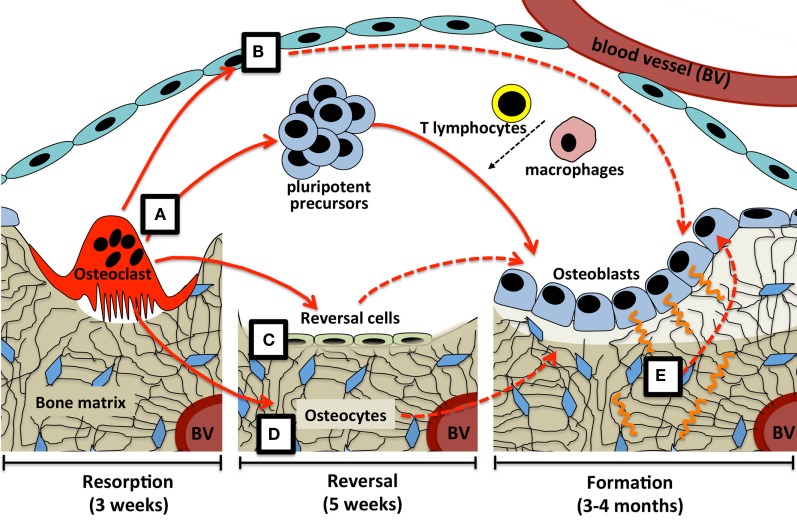
Skeletal mass is regulated by two key activities: bone removal (resorption) by hematopoietic lineage osteoclasts and bone matrix formation by mesenchymal lineage osteoblasts. During adult life, these activities occur sequentially on the same surface: a process termed as remodeling. Tiny packets of bone are removed by osteoclasts and replaced by new bone matrix produced by osteoblasts. This continual renewal process allows repair of mechanical imperfections and calcium homeostasis.
Overview
The claims and statistics of this paper haven’t been checked yet.
Run the check — free, no account needed. It reads the open-access text and checks the sources it cites.
Integrity signals
Registry
Cites
Statistics
Figures
Verification
Claims the paper makes
The claims and statistics of this paper haven’t been checked yet.
Run the check — free, no account needed. It reads the open-access text and checks the sources it cites.
Claims other papers make about this one
Each is checked against this paper’s own text: does it say what the citing paper says it does?
In the citing paper
“Since TGF-β1 and IGF1 do not remain accessible long enough to affect the complete refilling of the resorption cavity,220 their action might be limited to the early phases of remodeling, when osteoclasts are still actively resorbing the bone matrix.”
From Bone remodeling: an operational process ensuring survival and bone mechanical competence (2022) · cites this paper as [220]
Self-check
Percentages, sums and reported differences re-computed from the paper’s own numbers.
The self-check needs the paper’s full text.
Citations
Cites
Fadok, V. A., Bratton, D. L., Konowal, A., Freed, P. W., Westcott, J. Y., & Henson, P. M. (1998) · Journal of Clinical Investigation · doi:10.1172/jci1112 · Cited by 3,166 · cited 1×
“For example, TGF-β, Semaphorin 4D, Wnt10b, and BMP-2 are released by T-cells (44–46) and macrophages (47, 48), while sphingosine-1-phosphate and PDGF are released by endothelial cells (49, 50).”
BackgroundPresidential Address: Discount Rates
Cochrane, J. H. (2011) · The Journal of Finance · doi:10.1111/j.1540-6261.2011.01671.x · Cited by 2,135
Mechanical Stimulation of Bone in Vivo Reduces Osteocyte Expression of Sost/Sclerostin
Robling, A. G., Niziolek, P. J., Baldridge, L. A., Condon, K. W., Allen, M. R., Alam, I., Mantila, S. M., Gluhak-Heinrich, J., Bellido, T. M., Harris, S. E., et al. (2008) · Journal of Biological Chemistry · doi:10.1074/jbc.m705092200 · Cited by 1,350
TGF-β1–induced migration of bone mesenchymal stem cells couples bone resorption with formation
Tang, Y., Wu, X., Lei, W., Pang, L., Wan, C., Shi, Z., Zhao, L., Nagy, T. R., Peng, X., Hu, J., et al. (2009) · Nature Medicine · doi:10.1038/nm.1979 · Cited by 1,165
Bidirectional ephrinB2-EphB4 signaling controls bone homeostasis
Zhao, C., Irie, N., Takada, Y., Shimoda, K., Miyamoto, T., Nishiwaki, T., Suda, T., & Matsuo, K. (2006) · Cell Metabolism · doi:10.1016/j.cmet.2006.05.012 · Cited by 777
Sims, N. A., & Martin, T. J. (2014) · BoneKEy Reports · doi:10.1038/bonekey.2013.215 · Cited by 745
Self-citationOsteoclast-derived activity in the coupling of bone formation to resorption
Martin, T. J., & Sims, N. A. (2005) · Trends in Molecular Medicine · doi:10.1016/j.molmed.2004.12.004 · Cited by 661
Self-citationMatrix IGF-1 maintains bone mass by activation of mTOR in mesenchymal stem cells
Xian, L., Wu, X., Pang, L., Lou, M., Rosen, C. J., Qiu, T., Crane, J., Frassica, F., Zhang, L., Rodriguez, J. P., et al. (2012) · Nature Medicine · doi:10.1038/nm.2793 · Cited by 631
Pederson, L., Ruan, M., Westendorf, J. J., Khosla, S., & Oursler, M. J. (2008) · Proceedings of the National Academy of Sciences · doi:10.1073/pnas.0805133106 · Cited by 556
Rickard, D. J., Sullivan, T. A., Shenker, B. J., Leboy, P. S., & Kazhdan, I. (1994) · Developmental Biology · doi:10.1006/dbio.1994.1022 · Cited by 537
Osteocytes: master orchestrators of bone
Schaffler, M. B., Cheung, W.-Y., Majeska, R., & Kennedy, O. (2014) · Calcified Tissue International · doi:10.1007/s00223-013-9790-y · Cited by 514
Sims, N. A., & Gooi, J. H. (2008) · Seminars in Cell & Developmental Biology · doi:10.1016/j.semcdb.2008.07.016 · Cited by 513
Self-citationSuppression of bone formation by osteoclastic expression of semaphorin 4D
Negishi-Koga, T., Shinohara, M., Komatsu, N., Bito, H., Kodama, T., Friedel, R. H., & Takayanagi, H. (2011) · Nature Medicine · doi:10.1038/nm.2489 · Cited by 498
Pfeilschifter, J., & Mundy, G. R. (1987) · Proceedings of the National Academy of Sciences · doi:10.1073/pnas.84.7.2024 · Cited by 434
Proteolysis of Latent Transforming Growth Factor-β (TGF-β)-binding Protein-1 by Osteoclasts
Dallas, S. L., Rosser, J. L., Mundy, G. R., & Bonewald, L. F. (2002) · Journal of Biological Chemistry · doi:10.1074/jbc.m111663200 · Cited by 414
PARFITT, A. M. (1982) · Metabolic Bone Disease and Related Research · doi:10.1016/0221-8747(82)90002-9 · Cited by 396
Fiedler, J., Röderer, G., Günther, K., & Brenner, R. E. (2002) · Journal of Cellular Biochemistry · doi:10.1002/jcb.10309 · Cited by 395
Macrophage cell lines produce osteoinductive signals that include bone morphogenetic protein-2
Champagne, C. M., Takebe, J., Offenbacher, S., & Cooper, L. F. (2002) · Bone · doi:10.1016/s8756-3282(01)00638-x · Cited by 354
Chen, W., Jin, W., & Wahl, S. M. (1998) · The Journal of Experimental Medicine · doi:10.1084/jem.188.10.1849 · Cited by 352
A Physical Mechanism for Coupling Bone Resorption and Formation in Adult Human Bone
Andersen, T. L., Sondergaard, T. E., Skorzynska, K. E., Dagnaes-Hansen, F., Plesner, T. L., Hauge, E. M., Plesner, T., & Delaisse, J.-M. (2009) · The American Journal of Pathology · doi:10.2353/ajpath.2009.080627 · Cited by 325
Osteoprogenitor response to defined topographies with nanoscale depths
Dalby, M. J., McCloy, D. A., Robertson, M., Wilkinson, C. D. W., & Oreffo, R. O. C. (2005) · Biomaterials · doi:10.1016/j.biomaterials.2005.08.028 · Cited by 319
Walker, E. C., McGregor, N. E., Poulton, I. J., Solano, M., Pompolo, S., Fernandes, T. J., Constable, M. J., Nicholson, G. C., Zhang, J., Nicola, N. A., et al. (2010) · Journal of Clinical Investigation · doi:10.1172/jci40568 · Cited by 302
Self-citationQuantifying the osteocyte network in the human skeleton
Buenzli, P. R., & Sims, N. A. (2015) · Bone · doi:10.1016/j.bone.2015.02.016 · Cited by 300
Self-citationActivation of the bone-derived latent TGF beta complex by isolated osteoclasts
Oreffo, R. O. C., Mundy, G. R., Seyedin, S. M., & Bonewald, L. F. (1989) · Biochemical and Biophysical Research Communications · doi:10.1016/0006-291x(89)92795-2 · Cited by 285
Howard, G. A., Bottemiller, B. L., Turner, R. T., Rader, J. I., & Baylink, D. J. (1981) · Proceedings of the National Academy of Sciences · doi:10.1073/pnas.78.5.3204 · Cited by 266
Dynamic histomorphometry of alveolar bone remodeling in the adult rat
Vignery, A., & Baron, R. (1980) · The Anatomical Record · doi:10.1002/ar.1091960210 · Cited by 260
Osteoclast-secreted CTHRC1 in the coupling of bone resorption to formation
Takeshita, S., Fumoto, T., Matsuoka, K., Park, K.-A., Aburatani, H., Kato, S., Ito, M., & Ikeda, K. (2013) · Journal of Clinical Investigation · doi:10.1172/jci69493 · Cited by 257
Woo, S. M., Rosser, J., Dusevich, V., Kalajzic, I., & Bonewald, L. F. (2011) · Journal of Bone and Mineral Research · doi:10.1002/jbmr.465 · Cited by 243
Frost, H. M. (1964) · Medical Entomology and Zoology · Cited by 232
Osteoclast-Derived Complement Component 3a Stimulates Osteoblast Differentiation
Matsuoka, K., Park, K.-A., Ito, M., Ikeda, K., & Takeshita, S. (2014) · Journal of Bone and Mineral Research · doi:10.1002/jbmr.2187 · Cited by 225
Eriksen, E. F., Gundersen, H. J. G., Melsen, F., & Mosekilde, L. (1984) · Metabolic Bone Disease and Related Research · doi:10.1016/0221-8747(84)90066-3 · Cited by 198
Eriksen, E. F., Melsen, F., & Mosekilde, L. (1984) · Metabolic Bone Disease and Related Research · doi:10.1016/0221-8747(84)90065-1 · Cited by 196
T Lymphocytes Amplify the Anabolic Activity of Parathyroid Hormone through Wnt10b Signaling
Terauchi, M., Li, J., Bedi, B., Baek, K., Tawfeek, H. A. W., Galley, S. A., Gilbert, L. C., Nanes, M. S., Zayzafoon, M., Guldberg, R. E., et al. (2009) · Cell Metabolism · doi:10.1016/j.cmet.2009.07.010 · Cited by 195
Walker, E. C., McGregor, N. E., Poulton, I. J., Pompolo, S., Allan, E. H., Quinn, J. M., Gillespie, M. T., Martin, T. J., & Sims, N. A. (2008) · Journal of Bone and Mineral Research · doi:10.1359/jbmr.080706 · Cited by 190
Self-citationHock, J. M., & CANALIS, E. M. (1990) · Endocrinology · doi:10.1210/endo-126-1-421 · Cited by 189
Delaissé, J. (2014) · BoneKEy Reports · doi:10.1038/bonekey.2014.56 · Cited by 182
Hock, J. M., & CANALIS, E. M. (1994) · Endocrinology · doi:10.1210/endo.134.3.8119182 · Cited by 179
Molecular Mechanisms in Coupling of Bone Formation to Resorption
Martin, T. J., Gooi, J. H., & Sims, N. A. (2009) · Critical Reviews in Eukaryotic Gene Expression · doi:10.1615/critreveukargeneexpr.v19.i1.40 · Cited by 167
Self-citationOsteoimmunology: Interactions of the Immune and Skeletal Systems
Rho, J., Takami, M., & Choi, Y. (2004) · Molecules and Cells · doi:10.1016/s1016-8478(23)12997-9 · Cited by 159
Matthews, B. G., Grčević, D., Wang, L., Hagiwara, Y., Roguljić, H., Joshi, P., Shin, D., Adams, D. J., & Kalajzić, I. (2013) · Journal of Bone and Mineral Research · doi:10.1002/jbmr.2140 · Cited by 149
Campbell, P. G., Novak, J. F., Yanosick, T. B., & McMaster, J. H. (1992) · Endocrinology · doi:10.1210/endo.130.3.1371448 · Cited by 146
Understanding Coupling between Bone Resorption and Formation
Andersen, T. L., Abdelgawad, M. E., Kristensen, H. B., Hauge, E. M., Rolighed, L., Bollerslev, J., Kjærsgaard-Andersen, P., & Delaisse, J.-M. (2013) · The American Journal of Pathology · doi:10.1016/j.ajpath.2013.03.006 · Cited by 137
The effect of systemically administered PDGF-BB on the rodent skeleton
Mitlak, B., Finkelman, R. D., Hill, E. L., Li, J., Martin, B. A., Smith, T. S., D'Andrea, M., Antoniades, H. N., & Lynch, S. E. (1996) · Journal of Bone and Mineral Research · doi:10.1002/jbmr.5650110213 · Cited by 133
Rodan, G. A. (1991) · Journal of Bone and Mineral Research · doi:10.1002/jbmr.5650060602 · Cited by 132
Osteoclasts Control Osteoblast Chemotaxis via PDGF-BB/PDGF Receptor Beta Signaling
Sanchez-Fernandez, M. A., Gallois, A., Riedl, T., Jurdic, P., & Hoflack, B. (2008) · PLoS ONE · doi:10.1371/journal.pone.0003537 · Cited by 130
Wang, X., Kumanogoh, A., Watanabe, C., Shi, W., Yoshida, K., & Kikutani, H. (2001) · Blood · doi:10.1182/blood.v97.11.3498 · Cited by 125
Yee, J. A., Yan, L., Dominguez, J. C., Allan, E. H., & Martin, T. J. (1993) · Journal of Cellular Physiology · doi:10.1002/jcp.1041570312 · Cited by 120
Self-citationAn electron-microscopic study of the bone-remodeling sequence in the rat
Tran, P. V., Vignery, A., & Baron, R. (1982) · Cell and Tissue Research · doi:10.1007/bf00214682 · Cited by 119
Local Regulators of Skeletal Growth: A Perspective*
CANALIS, E. (1985) · Endocrine Reviews · doi:10.1210/edrv-6-4-544 · Cited by 119
Osteoclasts secrete non-bone derived signals that induce bone formation
Karsdal, M. A., Neutzsky-Wulff, A. V., Dziegiel, M. H., Christiansen, C., & Henriksen, K. (2008) · Biochemical and Biophysical Research Communications · doi:10.1016/j.bbrc.2007.11.168 · Cited by 112
Topographically induced bone formation in vitro: Implications for bone implants and bone grafts
Gray, C., BOYDE, A., & Jones, S. J. (1996) · Bone · doi:10.1016/8756-3282(95)00456-4 · Cited by 110
Increased presence of capillaries next to remodeling sites in adult human cancellous bone
Kristensen, H. B., Andersen, T. L., Marcussen, N., Rolighed, L., & Delaisse, J.-M. (2013) · Journal of Bone and Mineral Research · doi:10.1002/jbmr.1760 · Cited by 97
Hanamura, H., Higuchi, Y., Nakagawa, M., Iwata, H., Nogami, H., & Urist, M. R. (1980) · Clinical Orthopaedics and Related Research · doi:10.1097/00003086-198005000-00045 · Cited by 94
Stress-concentrating effect of resorption lacunae in trabecular bone
McNamara, L. M., der Linden, J. C. V., Weinans, H., & Prendergast, P. J. (2005) · Journal of Biomechanics · doi:10.1016/j.jbiomech.2004.12.027 · Cited by 92
Osteoblast Recruitment Routes in Human Cancellous Bone Remodeling
Kristensen, H. B., Andersen, T. L., Marcussen, N., Rolighed, L., & Delaissé, J. (2014) · American Journal Of Pathology · doi:10.1016/j.ajpath.2013.11.022 · Cited by 88
Non‐resorbing osteoclasts induce migration and osteogenic differentiation of mesenchymal stem cells
Kreja, L., Brenner, R. E., Tautzenberger, A., Liedert, A., Friemert, B., Ehrnthaller, C., Huber-Lang, M. S., & Ignatius, A. A. (2009) · Journal of Cellular Biochemistry · doi:10.1002/jcb.22406 · Cited by 81
Differentiation potential of a mouse bone marrow stromal cell line
Allan, E. H., Ho, P. W. M., Umezawa, A., Hata, J.-I., Makishima, F., Gillespie, M. T., & Martin, T. J. (2003) · Journal of Cellular Biochemistry · doi:10.1002/jcb.10614 · Cited by 74
Self-citationSims, N. A., & Ng, K. W. (2014) · Current Osteoporosis Reports · doi:10.1007/s11914-014-0196-1 · Cited by 62
Self-citationJensen, P. R., Andersen, T. L., Hauge, E., Bollerslev, J., & Delaissé, J. (2014) · Bone · doi:10.1016/j.bone.2014.12.004 · Cited by 57
Andersen, T. L., Hauge, E., Rolighed, L., Bollerslev, J., Kjærsgaard‐Andersen, P., & Delaissé, J. (2014) · American Journal Of Pathology · doi:10.1016/j.ajpath.2013.12.005 · Cited by 39
Jensen, P. R., Andersen, T. L., Pennypacker, B. L., Duong, L. T., & Delaissé, J. (2013) · Calcified Tissue International · doi:10.1007/s00223-013-9800-0 · Cited by 39
Estrogen Receptors Alpha (ESR1) and Beta (ESR2) Are Expressed in Circulating Human Lymphocytes
Scariano, J. K., EMERY-COHEN, A. J., Pickett, G., Morgan, M., Simons, P. C., & Alba, F. M. (2008) · Journal of Receptors and Signal Transduction · doi:10.1080/10799890802084614 · Cited by 39
Daniel, T. O., & Fen, Z. (1988) · Journal of Biological Chemistry · doi:10.1016/s0021-9258(19)77708-4 · Cited by 34
Research works printed but not linked: 2
- Sims, Coupling between immune and bone cells
- Hsu, 2014, Finding smart beta in the factor zoo
Cited by
Sorted by citations
Estrogens and androgens in skeletal physiology and pathophysiology
Almeida, M., Laurent, M. R., Dubois, V., Claessens, F., O'Brien, C. A., Bouillon, R., Vanderschueren, D., & Manolagas, S. C. (2017) · Physiological Reviews · doi:10.1152/physrev.00033.2015 · Cited by 860
Osteoclast differentiation by RANKL and OPG signaling pathways
Udagawa, N., Koide, M., Nakamura, M., Nakamichi, Y., Yamashita, T., Uehara, S., Kobayashi, Y., Furuya, Y., Yasuda, H., Fukuda, C., et al. (2020) · Journal of Bone and Mineral Metabolism · doi:10.1007/s00774-020-01162-6 · Cited by 765
Kenkre, J. E., & Bassett, J. H. D. (2018) · Annals of Clinical Biochemistry International Journal of Laboratory Medicine · doi:10.1177/0004563218759371 · Cited by 775
Agidigbi, T. S., & Kim, C. (2019) · International Journal of Molecular Sciences · doi:10.3390/ijms20143576 · Cited by 526
Bone remodeling: an operational process ensuring survival and bone mechanical competence
Bolamperti, S., Villa, I., & Rubinacci, A. (2022) · Bone Research · doi:10.1038/s41413-022-00219-8 · Cited by 482
Metadata
- Authors
- Sims, N. A., & Martin, T. J.
- Affiliations
- The University of Melbourne (AU)
- Corresponding author
- Sims, Natalie A.
- ORCID
- Sims, Natalie A.
- Venue
- Frontiers in Endocrinology
- Publisher
- Frontiers Media SA
- Published
- 2015-03-24
- Volume
- 6
- Pages
- 41-41
- ISSN
- 1664-2392 (ISSN-L)
- PMC
- PMC4371744
- OpenAlex
- W2053586178
- Cited by
- 184
- References
- 63
- Citations by year
- 2026: 14 · 2025: 8 · 2024: 9 · 2023: 11 · 2022: 19 · 2021: 19 · 2020: 19 · 2019: 27 · 2018: 17 · 2017: 19 · 2016: 13 · 2015: 9
- FWCI
- 1.87
- Type
- journal article
- Language
- en
- Open access
- gold
- doi.org
- Licence
- cc-by
- Locations
- Frontiers in Endocrinology (publishedVersion, cc-by)
- Europe PMC (PubMed Central) (publishedVersion, cc-by)
- PubMed Central (publishedVersion, cc-by)
- PubMed (publishedVersion)
- DOAJ (DOAJ: Directory of Open Access Journals) (submittedVersion, cc-by-sa)
- Minerva Access (University of Melbourne) (submittedVersion, cc-by)
- Topics
- Life Sciences › Biochemistry, Genetics and Molecular Biology › Molecular Biology › Bone Metabolism and Diseases
- Health Sciences › Medicine › Orthopedics and Sports Medicine › Bone health and osteoporosis research
- Life Sciences › Biochemistry, Genetics and Molecular Biology › Biochemistry › Bone and Dental Protein Studies
- Keywords
- bone remodeling, osteoclasts, osteoblasts, bone resorption, bone matrix formation, calcium homeostasis, bone turnover
About these checks
Registry, retraction, Cites and statistics results are computed, not judged, with one exception: a printed reference that no index lists is read once by a model before it counts as a citation error. Claims are extracted by a model and kept only when their quote appears verbatim in the text; each cited source is then checked, with a model’s help, for whether it says what the claim relies on. Those verdicts can be wrong — read the claim’s quote and the cited source before relying on one.
Statistics and arithmetic are recomputed, not judged.
Confidence bands are shown only for fields calibrated on our annotated test set. None is calibrated yet, so no band is shown.
What counts as a claim ›How we measure confidence ›How we check this ›
Are you an author, or do you see a problem with this page? Request a review
