

The DOI matches its Crossref record; 368 of the 369 references it cites were found in a registry or an index; none of the 276 sources its claims cite is checked for support yet.
Using mice to model Alzheimer's dementia: an overview of the clinical disease and the preclinical behavioral changes in 10 mouse models
Open accessAbstract
The goal of this review is to discuss how behavioral tests in mice relate to the pathological and neuropsychological features seen in human Alzheimer's disease (AD), and present a comprehensive analysis of the temporal progression of behavioral impairments in commonly used AD mouse models that contain mutations in amyloid precursor protein (APP). We begin with a brief overview of the neuropathological changes seen in the AD brain and an outline of some of the clinical neuropsychological assessments used to measure cognitive deficits associated with the disease. This is followed by a critical assessment of behavioral tasks that are used in AD mice to model the cognitive changes seen in the human disease. Behavioral tests discussed include spatial memory tests [Morris water maze (MWM), radial arm water maze (RAWM), Barnes maze], associative learning tasks (passive avoidance, fear conditioning), alternation tasks (Y-Maze/T-Maze), recognition memory tasks (Novel Object Recognition), attentional tasks (3 and 5 choice serial reaction time), set-shifting tasks, and reversal learning tasks. We discuss the strengths and weaknesses of each of these behavioral tasks, and how they may correlate with clinical assessments in humans. Finally, the temporal progression of both cognitive and non-cognitive deficits in 10 AD mouse models (PDAPP, TG2576, APP23, TgCRND8, J20, APP/PS1, TG2576 + PS1 (M146L), APP/PS1 KI, 5×FAD, and 3×Tg-AD) are discussed in detail. Mouse models of AD and the behavioral tasks used in conjunction with those models are immensely important in contributing to our knowledge of disease progression and are a useful tool to study AD pathophysiology and the resulting cognitive deficits. However, investigators need to be aware of the potential weaknesses of the available preclinical models in terms of their ability to model cognitive changes observed in human AD. It is our hope that this review will assist investigators in selecting an appropriate mouse model, and accompanying behavioral paradigms to investigate different aspects of AD pathology and disease progression.
Overview
AI snapshot
Written from the paper’s full text.
TL;DR
This review maps how behavioral tasks used in amyloid precursor protein (APP) mutant mice correspond to the neuropsychological assessments used clinically in Alzheimer's disease (AD), and tabulates the temporal onset of cognitive and non-cognitive deficits across 10 commonly used AD mouse models. It concludes that no single model recapitulates human AD, but that most models show spatial working memory deficits earlier than deficits in other cognitive domains.
Key findings
- Across the reviewed models, the earliest observable cognitive impairment is consistently in spatial working memory (assessed by water maze tasks), generally followed by associative learning/reference memory deficits, with recognition memory deficits appearing later (e.g., PDAPP: working memory at 4 months, NOR at 6 months; Tg2576: spatial working memory at 5 months, NOR at 12 months; APP/PS1 KI: RAWM at 9 months, recognition memory at 15 months).
- Onset varies substantially by model: J20 shows recognition memory deficits earliest (1–2 months), while APP/PS1 KI shows the latest onset (7–9 months for earliest deficits).
- Non-cognitive abnormalities are also present in most models, including increased locomotor activity (J20 and TgCRND8 earliest at ~1 month; PDAPP and Tg2576 at ~3 months; PS1, 3×Tg-AD, and APP23 at ~6–9 months), anxiety, circadian/sleep disruption, and aggression (e.g., APP23 aggression by 6 months).
- The review notes that increased aggression presents in as much as 65% of AD patients, and that depressive symptom prevalence in AD is reported to range from 2% to 85%, though little work has examined depressive-like behavior in AD mouse models.
Methods
- Narrative review, not primary experimental work: it summarizes human AD neuropathology (ABC scoring of Amyloid, Braak, CERAD), clinical neuropsychological instruments (MMSE, MoCA, SBT, ADAS-cog, Logical Memory I/II, BVRT), and mouse behavioral tasks (MWM, RAWM, Barnes maze, Y-/T-maze, NOR, fear conditioning, passive/active avoidance, DMTP/DMTS, 3- and 5-CSRTT, set-shifting, reversal learning, WWWhich).
- The core synthesis is two tables (Table 3 for five APP models: PDAPP, TG2576, APP23, TgCRND8, J20; Table 4 for five APP+PS1/Tau models: APP/PS1, TG2576+PS1(M146L), APP/PS1 KI, 5×FAD, 3×Tg-AD) coding impairment, no impairment, or no data by age, with an asterisk marking first appearance of diffuse amyloid plaques.
- No new data, sample sizes, or statistical analyses are reported; findings are drawn from cited primary studies.
Limitations
- Stated by the paper: no animal model recapitulates the entirety of AD; most models represent familial AD (FAD), which accounts for only a small percentage of total AD cases; background strain and likely overexpression of mutant human APP genes on brain development and function must always be considered; language-dependent domains (verbal acuity, verbal recall) cannot be modeled in rodents; the WWWhich episodic-like memory task is not comparable to human episodic memory tests because those rely on language; homology between rodent and human 5-CSRTT is "far from perfect."
- Stated by the paper: the tables are not an all-encompassing list of mouse models, only examples of commonly used APP-mutation models.
- Evident from the text: the tables contain many cells with no available data, and the review documents inconsistent reports across studies for several models (e.g., Tg2576 spatial memory deficits not replicated in some reports; PDAPP recognition memory findings inconsistent), indicating that model-by-model progression claims rest on heterogeneous and sometimes conflicting literature.
Model-written summary. Check it against the paper before relying on it.
Integrity signals
Registry
Cites
Statistics
Figures
Verification
Claims the paper makes
145 Not checked yet · 30 No basis given · 18 Own interpretation
None of the sources cited for this claim have been checked yet.
In the paper
“Similar to the reported activity disturbances, circadian rhythm disruptions are also observed in many of the AD mouse models”
§ Using mice to model Alzheimer's dementia: an overview of the clinical disease and the preclinical behavioral changes in 10 mouse models > Temporal progression of AD-like non-cognitive behavioral abnormalities seen in the commonly used mouse models > Circadian rhythm and sleep disruptions
What the sources say
- Not checked yetcites Huitron-Resendiz et al., 2002
- Not checked yetcites Vloeberghs et al., 2004
- Not checked yetcites Wisor et al., 2005
plaincorrelational- Asserted: passes — The authors put it forward as true.
- Checkable: passes — It can be checked against evidence.
- Load-bearing: unclear — It is unclear whether the paper’s conclusions depend on it.
- Based: passes — The paper gives a reason why it holds.
In the paper
“Other models such as the TG2576 develop the anxiety-like disturbances later at the age of 9–11 months of age”
§ Using mice to model Alzheimer's dementia: an overview of the clinical disease and the preclinical behavioral changes in 10 mouse models > Temporal progression of AD-like non-cognitive behavioral abnormalities seen in the commonly used mouse models > Anxiety disturbances
What the sources say
- Not checked yetcites Gil-Bea et al., 2007
plaindirect- Asserted: passes — The authors put it forward as true.
- Checkable: passes — It can be checked against evidence.
- Load-bearing: unclear — It is unclear whether the paper’s conclusions depend on it.
- Based: passes — The paper gives a reason why it holds.
None of the sources cited for this claim have been checked yet.
In the paper
“not all murine AD models exhibit anxiety disturbances”
§ Using mice to model Alzheimer's dementia: an overview of the clinical disease and the preclinical behavioral changes in 10 mouse models > Temporal progression of AD-like non-cognitive behavioral abnormalities seen in the commonly used mouse models > Anxiety disturbances
What the sources say
- Not checked yetcites Arendash et al., 2001b
- Not checked yetcites Lalonde et al., 2002
- Not checked yetcites Webster et al., 2013
plain- Asserted: passes — The authors put it forward as true.
- Checkable: passes — It can be checked against evidence.
- Load-bearing: unclear — It is unclear whether the paper’s conclusions depend on it.
- Based: passes — The paper gives a reason why it holds.
None of the sources cited for this claim have been checked yet.
In the paper
“Many AD mouse models also display increased aggressive behavior”
§ Using mice to model Alzheimer's dementia: an overview of the clinical disease and the preclinical behavioral changes in 10 mouse models > Temporal progression of AD-like non-cognitive behavioral abnormalities seen in the commonly used mouse models > Aggressive behaviors
What the sources say
- Not checked yetcites Moechars et al., 1996
- Not checked yetcites Van Dorpe et al., 2000
- Not checked yetcites Ambree et al., 2006 source
plaincorrelational- Asserted: passes — The authors put it forward as true.
- Checkable: passes — It can be checked against evidence.
- Load-bearing: unclear — It is unclear whether the paper’s conclusions depend on it.
- Based: passes — The paper gives a reason why it holds.
None of the sources cited for this claim have been checked yet.
In the paper
“Several mouse models of AD also display sleep disruption.”
§ Using mice to model Alzheimer's dementia: an overview of the clinical disease and the preclinical behavioral changes in 10 mouse models > Temporal progression of AD-like non-cognitive behavioral abnormalities seen in the commonly used mouse models > Circadian rhythm and sleep disruptions
plain- Asserted: passes — The authors put it forward as true.
- Checkable: passes — It can be checked against evidence.
- Load-bearing: unclear — It is unclear whether the paper’s conclusions depend on it.
- Based: passes — The paper gives a reason why it holds.
None of the sources cited for this claim have been checked yet.
In the paper
“These aggressive disruptions appear to develop later than the onset of cognitive deficits in this model”
§ Using mice to model Alzheimer's dementia: an overview of the clinical disease and the preclinical behavioral changes in 10 mouse models > Temporal progression of AD-like non-cognitive behavioral abnormalities seen in the commonly used mouse models > Aggressive behaviors
What the sources say
- Not checked yetcites Kelly et al., 2003
- Not checked yetcites Van Dam et al., 2003
- Not checked yetcites Vloeberghs et al., 2006
hedgedcorrelational- Asserted: passes — The authors put it forward as true.
- Checkable: passes — It can be checked against evidence.
- Load-bearing: unclear — It is unclear whether the paper’s conclusions depend on it.
- Based: passes — The paper gives a reason why it holds.
None of the sources cited for this claim have been checked yet.
In the paper
“Anxiety disturbances have been reported in many of the AD mouse models”
§ Using mice to model Alzheimer's dementia: an overview of the clinical disease and the preclinical behavioral changes in 10 mouse models > Temporal progression of AD-like non-cognitive behavioral abnormalities seen in the commonly used mouse models > Anxiety disturbances
What the sources say
- Not checked yetcites Moechars et al., 1996
- Not checked yetcites Lalonde et al., 2003
- Not checked yetcites Gil-Bea et al., 2007
plaincorrelational- Asserted: passes — The authors put it forward as true.
- Checkable: passes — It can be checked against evidence.
- Load-bearing: unclear — It is unclear whether the paper’s conclusions depend on it.
- Based: passes — The paper gives a reason why it holds.
The paper states this without a source or data behind it here, so there is nothing to check it against. The quote shows it is in the paper.
In the paper
“Still, the majority of models do display these disturbances”
§ Using mice to model Alzheimer's dementia: an overview of the clinical disease and the preclinical behavioral changes in 10 mouse models > Temporal progression of AD-like non-cognitive behavioral abnormalities seen in the commonly used mouse models > Anxiety disturbances
plaincorrelational- Asserted: passes — The authors put it forward as true.
- Checkable: passes — It can be checked against evidence.
- Load-bearing: unclear — It is unclear whether the paper’s conclusions depend on it.
- Based: passes — The paper gives a reason why it holds.
In the paper
“The APP23 mouse model of AD also shows increased aggressive behaviors”
§ Using mice to model Alzheimer's dementia: an overview of the clinical disease and the preclinical behavioral changes in 10 mouse models > Temporal progression of AD-like non-cognitive behavioral abnormalities seen in the commonly used mouse models > Aggressive behaviors
What the sources say
- Not checked yetcites Vloeberghs et al., 2006
plaincorrelational- Asserted: passes — The authors put it forward as true.
- Checkable: passes — It can be checked against evidence.
- Load-bearing: unclear — It is unclear whether the paper’s conclusions depend on it.
- Based: passes — The paper gives a reason why it holds.
The paper states this without a source or data behind it here, so there is nothing to check it against. The quote shows it is in the paper.
In the paper
“The temporal time course of these anxiety-like disturbances can vary depending on the mouse model.”
§ Using mice to model Alzheimer's dementia: an overview of the clinical disease and the preclinical behavioral changes in 10 mouse models > Temporal progression of AD-like non-cognitive behavioral abnormalities seen in the commonly used mouse models > Anxiety disturbances
plaincorrelational- Asserted: passes — The authors put it forward as true.
- Checkable: passes — It can be checked against evidence.
- Load-bearing: unclear — It is unclear whether the paper’s conclusions depend on it.
- Based: passes — The paper gives a reason why it holds.
- It may state two separate claims as one. 41
- The quote only partly states this claim. 1
- Probably not a substantial claim. 24
None of the sources cited for this claim have been checked yet.
In the paper
“The onset of the disturbances is different for each model, with the J20 and the TgCRND8 mice developing disruptions earliest (approximately 1 month of age), followed by PDAPP and TG2576 (approximately 3 months of age), and the PS1 [Tg2576 + PS1 (M146L)], 3×TgAD, and APP23 mice developing last (approximately 6–9 months of age)”
§ Using mice to model Alzheimer's dementia: an overview of the clinical disease and the preclinical behavioral changes in 10 mouse models > Temporal progression of AD-like non-cognitive behavioral abnormalities seen in the commonly used mouse models > Locomotor activity
What the sources say
- Not checked yetcites Dodart et al., 1999
- Not checked yetcites King et al., 1999
- Not checked yetcites Arendash et al., 2001b
plaincorrelational- Asserted: passes — The authors put it forward as true.
- Checkable: passes — It can be checked against evidence.
- Load-bearing: unclear — It is unclear whether the paper’s conclusions depend on it.
- Based: passes — The paper gives a reason why it holds.
It may state two separate claims as one.
None of the sources cited for this claim have been checked yet.
In the paper
“Other AD mouse models that show activity disturbances are the PDAPP, TG2576, J20, APP + PS1 [Tg2576 + PS1 (M146L)], and 3×Tg-AD mouse models of AD.”
§ Using mice to model Alzheimer's dementia: an overview of the clinical disease and the preclinical behavioral changes in 10 mouse models > Temporal progression of AD-like non-cognitive behavioral abnormalities seen in the commonly used mouse models > Locomotor activity
What the sources say
- Not checked yetcites Dodart et al., 1999
- Not checked yetcites King et al., 1999
- Not checked yetcites Arendash et al., 2001b
plaincorrelational- Asserted: passes — The authors put it forward as true.
- Checkable: passes — It can be checked against evidence.
- Load-bearing: unclear — It is unclear whether the paper’s conclusions depend on it.
- Based: passes — The paper gives a reason why it holds.
It may state two separate claims as one.
None of the sources cited for this claim have been checked yet.
In the paper
“the greater the sleep disruptions are, the more severe the cognitive decline seems to be”
§ Using mice to model Alzheimer's dementia: an overview of the clinical disease and the preclinical behavioral changes in 10 mouse models > Temporal progression of AD-like non-cognitive behavioral abnormalities seen in the commonly used mouse models > Circadian rhythm and sleep disruptions
What the sources say
- Not checked yetcites Huitron-Resendiz et al., 2002
- Not checked yetcites Huitron-Resendiz et al., 2005
hedgedcorrelational- Asserted: passes — The authors put it forward as true.
- Checkable: passes — It can be checked against evidence.
- Load-bearing: unclear — It is unclear whether the paper’s conclusions depend on it.
- Based: passes — The paper gives a reason why it holds.
The quote only partly states this claim.
In the paper
“in the TG2576 mouse increased aggressive behaviors display themselves in both the frequency of attacks on other home cage mice as well as on the latency to first attack when interacting with a novel mouse”
§ Using mice to model Alzheimer's dementia: an overview of the clinical disease and the preclinical behavioral changes in 10 mouse models > Temporal progression of AD-like non-cognitive behavioral abnormalities seen in the commonly used mouse models > Aggressive behaviors
What the sources say
- Not checked yetcites Alexander et al., 2011 source
plaincorrelational- Asserted: passes — The authors put it forward as true.
- Checkable: passes — It can be checked against evidence.
- Load-bearing: unclear — It is unclear whether the paper’s conclusions depend on it.
- Based: passes — The paper gives a reason why it holds.
It may state two separate claims as one.
None of the sources cited for this claim have been checked yet.
In the paper
“in some models the behavioral disturbances start early at 1–2 months of age or 3–6 months of age for the J20 and the APP/PS1 models, respectively”
§ Using mice to model Alzheimer's dementia: an overview of the clinical disease and the preclinical behavioral changes in 10 mouse models > Temporal progression of AD-like non-cognitive behavioral abnormalities seen in the commonly used mouse models > Anxiety disturbances
What the sources say
- Not checked yetcites Lalonde et al., 2004
- Not checked yetcites Reiserer et al., 2007
- Not checked yetcites Harris et al., 2010
plaincorrelational- Asserted: passes — The authors put it forward as true.
- Checkable: passes — It can be checked against evidence.
- Load-bearing: unclear — It is unclear whether the paper’s conclusions depend on it.
- Based: passes — The paper gives a reason why it holds.
It may state two separate claims as one.
The paper states this without a source or data behind it here, so there is nothing to check it against. The quote shows it is in the paper.
In the paper
“most of the studies using mouse models of AD have focused on understanding/correcting the cognitive deficits associated with the disease.”
§ Using mice to model Alzheimer's dementia: an overview of the clinical disease and the preclinical behavioral changes in 10 mouse models > Conclusions
plaincorrelational- Asserted: passes — The authors put it forward as true.
- Checkable: passes — It can be checked against evidence.
- Load-bearing: fails — The paper’s conclusions may not depend on it.
- Based: fails — The paper may give no reason why it holds.
Probably not a substantial claim. The paper’s conclusions may not depend on it. The paper may give no reason why it holds.
None of the sources cited for this claim have been checked yet.
In the paper
“NFTs spread to the limbic and medial temporal lobe (Braak stage III-IV), and this stage correlates with early AD symptoms related to memory (Schmitt et al., 2000; Riley et al., 2011).”
§ Using mice to model Alzheimer's dementia: an overview of the clinical disease and the preclinical behavioral changes in 10 mouse models > Overview of neuropathological changes in AD
What the sources say
- Not checked yetcites Schmitt et al., 2000
- Not checked yetcites Riley et al., 2011
plaincorrelational- Asserted: passes — The authors put it forward as true.
- Checkable: passes — It can be checked against evidence.
- Load-bearing: unclear — It is unclear whether the paper’s conclusions depend on it.
- Based: passes — The paper gives a reason why it holds.
It may state two separate claims as one.
In the paper
“Because the ADAS-cog has an excellent test-retest reliability and is considered to be one of the most sensitive scales for assessing cognitive changes related to AD (Emilien et al., 2004), this test is extensively used in AD clinical trials as an outcome measure of cognitive change (Schmitt and Wichems, 2006; Connor and Sabbagh, 2008).”
§ Using mice to model Alzheimer's dementia: an overview of the clinical disease and the preclinical behavioral changes in 10 mouse models > Cognitive neuropsychological assessments used in the AD field > Mental status exams
What the sources say
- Not checked yetcites Emilien et al., 2004
plain- Asserted: passes — The authors put it forward as true.
- Checkable: passes — It can be checked against evidence.
- Load-bearing: fails — The paper’s conclusions may not depend on it.
- Based: passes — The paper gives a reason why it holds.
Probably not a substantial claim. The paper’s conclusions may not depend on it. It may state two separate claims as one.
None of the sources cited for this claim have been checked yet.
In the paper
“Because the ADAS-cog has an excellent test-retest reliability and is considered to be one of the most sensitive scales for assessing cognitive changes related to AD (Emilien et al., 2004), this test is extensively used in AD clinical trials as an outcome measure of cognitive change (Schmitt and Wichems, 2006; Connor and Sabbagh, 2008).”
§ Using mice to model Alzheimer's dementia: an overview of the clinical disease and the preclinical behavioral changes in 10 mouse models > Cognitive neuropsychological assessments used in the AD field > Mental status exams
What the sources say
- Not checked yetcites Schmitt and Wichems, 2006
- Not checked yetcites Connor and Sabbagh, 2008
plain- Asserted: passes — The authors put it forward as true.
- Checkable: passes — It can be checked against evidence.
- Load-bearing: fails — The paper’s conclusions may not depend on it.
- Based: passes — The paper gives a reason why it holds.
Probably not a substantial claim. The paper’s conclusions may not depend on it.
None of the sources cited for this claim have been checked yet.
In the paper
“The MMSE has excellent reproducibility that lends itself well to longitudinal use in tracking the progression of the cognitive impairments associated with AD (Jacqmin-Gadda et al., 1997; Aevarsson and Skoog, 2000; Chatfield et al., 2007).”
§ Using mice to model Alzheimer's dementia: an overview of the clinical disease and the preclinical behavioral changes in 10 mouse models > Cognitive neuropsychological assessments used in the AD field > Mental status exams
What the sources say
- Not checked yetcites Jacqmin-Gadda et al., 1997
- Not checked yetcites Aevarsson and Skoog, 2000 source
- Not checked yetcites Chatfield et al., 2007
plaincorrelational- Asserted: passes — The authors put it forward as true.
- Checkable: passes — It can be checked against evidence.
- Load-bearing: fails — The paper’s conclusions may not depend on it.
- Based: passes — The paper gives a reason why it holds.
Probably not a substantial claim. The paper’s conclusions may not depend on it.
In the paper
“Another commonly used test battery is that of the Short Blessed Test (SBT) which consists of a six-item test designed to identify the cognitive dysfunction seen in AD (Katzman et al., 1983).”
§ Using mice to model Alzheimer's dementia: an overview of the clinical disease and the preclinical behavioral changes in 10 mouse models > Cognitive neuropsychological assessments used in the AD field > Mental status exams
What the sources say
- Not checked yetcites Katzman et al., 1983
plain- Asserted: passes — The authors put it forward as true.
- Checkable: passes — It can be checked against evidence.
- Load-bearing: fails — The paper’s conclusions may not depend on it.
- Based: passes — The paper gives a reason why it holds.
Probably not a substantial claim. The paper’s conclusions may not depend on it.
In the paper
“Despite the simplicity and brevity of the SBT, the results that it produces have demonstrated excellent reliability (Fuld, 1978).”
§ Using mice to model Alzheimer's dementia: an overview of the clinical disease and the preclinical behavioral changes in 10 mouse models > Cognitive neuropsychological assessments used in the AD field > Mental status exams
What the sources say
- Not checked yetcites Fuld, 1978
boosted- Asserted: passes — The authors put it forward as true.
- Checkable: passes — It can be checked against evidence.
- Load-bearing: fails — The paper’s conclusions may not depend on it.
- Based: passes — The paper gives a reason why it holds.
Probably not a substantial claim. The paper’s conclusions may not depend on it.
In the paper
“Similarly, the SBT was the first mental status examination to be correlated with amyloid plaque burden at autopsy (Carpenter et al., 2011).”
§ Using mice to model Alzheimer's dementia: an overview of the clinical disease and the preclinical behavioral changes in 10 mouse models > Cognitive neuropsychological assessments used in the AD field > Mental status exams
What the sources say
- Not checked yetcites Carpenter et al., 2011
plaincorrelational- Asserted: passes — The authors put it forward as true.
- Checkable: passes — It can be checked against evidence.
- Load-bearing: fails — The paper’s conclusions may not depend on it.
- Based: passes — The paper gives a reason why it holds.
Probably not a substantial claim. The paper’s conclusions may not depend on it.
None of the sources cited for this claim have been checked yet.
In the paper
“The Mini-Mental Status Examination (MMSE) is one of the most commonly used neuropsychological screening tools for cognitive impairments seen in AD (Simard and Van Reekum, 1999; Snyderman and Rovner, 2009).”
§ Using mice to model Alzheimer's dementia: an overview of the clinical disease and the preclinical behavioral changes in 10 mouse models > Cognitive neuropsychological assessments used in the AD field > Mental status exams
What the sources say
- Not checked yetcites Simard and Van Reekum, 1999
- Not checked yetcites Snyderman and Rovner, 2009
plain- Asserted: passes — The authors put it forward as true.
- Checkable: passes — It can be checked against evidence.
- Load-bearing: fails — The paper’s conclusions may not depend on it.
- Based: passes — The paper gives a reason why it holds.
Probably not a substantial claim. The paper’s conclusions may not depend on it.
None of the sources cited for this claim have been checked yet.
In the paper
“The data also support the “Amyloid Cascade Hypothesis”(Karran et al., 2011), a deceptively complex hypothesis which posits that beta-amyloid/plaque pathology kindles widespread tau/NFT pathology, with the tau/NFT pathology constituting the more direct cause of the cell loss and synapse elimination underlying clinical disease (Nelson et al., 2009b, 2012).”
§ Using mice to model Alzheimer's dementia: an overview of the clinical disease and the preclinical behavioral changes in 10 mouse models > Overview of neuropathological changes in AD
What the sources say
- Not checked yetcites Karran et al., 2011
- Not checked yetcites Nelson et al., 2009b
- Not checked yetcites Nelson et al., 2012
plaindirect- Asserted: passes — The authors put it forward as true.
- Checkable: passes — It can be checked against evidence.
- Load-bearing: unclear — It is unclear whether the paper’s conclusions depend on it.
- Based: passes — The paper gives a reason why it holds.
It may state two separate claims as one.
- Rests on an assumption: Outside of frontotemporal lobar degeneration (FTLD), one does not see widespread cortical NFTs without abundant plaque pathology.
In the paper
“The Alzheimer's Disease Assessment Scale (ADAS) was specifically developed to measure the severity of symptoms commonly seen in AD (Rosen et al., 1984).”
§ Using mice to model Alzheimer's dementia: an overview of the clinical disease and the preclinical behavioral changes in 10 mouse models > Cognitive neuropsychological assessments used in the AD field > Mental status exams
What the sources say
- Not checked yetcites Rosen et al., 1984
plain- Asserted: passes — The authors put it forward as true.
- Checkable: passes — It can be checked against evidence.
- Load-bearing: fails — The paper’s conclusions may not depend on it.
- Based: passes — The paper gives a reason why it holds.
Probably not a substantial claim. The paper’s conclusions may not depend on it.
In the paper
“These tasks rely on the natural exploratory behavior (tendency to choose an alternative arm over an arm which has been previously explored) of rodents and are considered the most rudimentary tasks to assess spatial working memory (Dudchenko, 2004).”
§ Using mice to model Alzheimer's dementia: an overview of the clinical disease and the preclinical behavioral changes in 10 mouse models > How commonly used preclinical mouse behavioral tasks relate to the clinical neuropsychological assessment tests in human AD? > Modeling working memory
What the sources say
- Not checked yetcites Dudchenko, 2004
plain- Asserted: passes — The authors put it forward as true.
- Checkable: passes — It can be checked against evidence.
- Load-bearing: unclear — It is unclear whether the paper’s conclusions depend on it.
- Based: passes — The paper gives a reason why it holds.
It may state two separate claims as one.
None of the sources cited for this claim have been checked yet.
In the paper
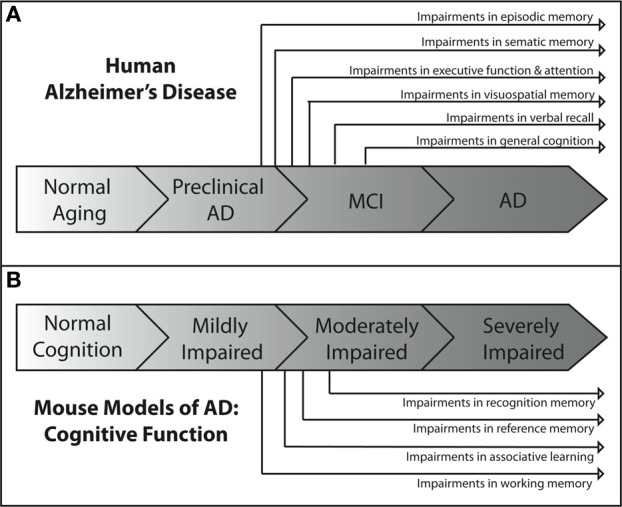
“Once the AD patient progresses past MCI and into dementia, general cognition continues to decline with deficits appearing in all respective cognitive domains (Huff et al., 1987; Locascio et al., 1995; Lambon Ralph et al., 2003; Mckhann et al., 2011).”
§ Using mice to model Alzheimer's dementia: an overview of the clinical disease and the preclinical behavioral changes in 10 mouse models > Cognitive neuropsychological assessments used in the AD field > Cognitive neuropsychological assessment summary
What the sources say
- Not checked yetcites Huff et al., 1987
- Not checked yetcites Locascio et al., 1995
- Not checked yetcites Lambon Ralph et al., 2003
plaindirect- Asserted: passes — The authors put it forward as true.
- Checkable: passes — It can be checked against evidence.
- Load-bearing: unclear — It is unclear whether the paper’s conclusions depend on it.
- Based: passes — The paper gives a reason why it holds.
It may state two separate claims as one.
In the paper
“Large numbers of AD mouse models have been tested in the MWM and most show AD related cognitive deficits (Webster et al., 2013).”
§ Using mice to model Alzheimer's dementia: an overview of the clinical disease and the preclinical behavioral changes in 10 mouse models > How commonly used preclinical mouse behavioral tasks relate to the clinical neuropsychological assessment tests in human AD? > Modeling working memory
What the sources say
- Not checked yetcites Webster et al., 2013
plaincorrelational- Asserted: passes — The authors put it forward as true.
- Checkable: passes — It can be checked against evidence.
- Load-bearing: unclear — It is unclear whether the paper’s conclusions depend on it.
- Based: passes — The paper gives a reason why it holds.
It may state two separate claims as one.
None of the sources cited for this claim have been checked yet.
In the paper
“Instead, spatial based working memory tasks are heavily employed in murine working memory testing and likely are more depictive of the visuospatial working memory tasks used clinically (Benton, 1992; Benedict and Groninger, 1994).”
§ Using mice to model Alzheimer's dementia: an overview of the clinical disease and the preclinical behavioral changes in 10 mouse models > How commonly used preclinical mouse behavioral tasks relate to the clinical neuropsychological assessment tests in human AD? > Modeling working memory
What the sources say
- Not checked yetcites Benton, 1992
- Not checked yetcites Benedict and Groninger, 1994
hedgedcorrelational- Asserted: passes — The authors put it forward as true.
- Checkable: passes — It can be checked against evidence.
- Load-bearing: unclear — It is unclear whether the paper’s conclusions depend on it.
- Based: passes — The paper gives a reason why it holds.
It may state two separate claims as one.
- Rests on an assumption: Working memory is perhaps one of the most well modeled aspects of the memory deficits in AD.
A conclusion the paper draws from its own results — it cites no other source for it, so there is none to check. The quote shows it is in the paper.
In the paper
“Some cognitive domains disrupted in AD have been extensively modeled (reference memory, working memory and executive function), some less so (attention), and some nearly not at all (episodic memory).”
§ Using mice to model Alzheimer's dementia: an overview of the clinical disease and the preclinical behavioral changes in 10 mouse models > How commonly used preclinical mouse behavioral tasks relate to the clinical neuropsychological assessment tests in human AD?
plain- Asserted: passes — The authors put it forward as true.
- Checkable: passes — It can be checked against evidence.
- Load-bearing: passes — The paper’s conclusions depend on it.
- Based: passes — The paper gives a reason why it holds.
It may state two separate claims as one.
- Rests on an assumption: Other cognitive domains impaired in human AD such as those involving language (i.e., verbal acuity tasks and verbal recall tasks) simply cannot be modeled in rodent models.
None of the sources cited for this claim have been checked yet.
In the paper
“Clinically, many of the neuropsychological tests that assess working memory rely heavily on the use of verbal tasks (Kaplan et al., 1978; Benedict et al., 1998; Spreen and Strauss, 1998; Delis et al., 2000), employing language as a core construct and thus are not feasible to model using mice.”
§ Using mice to model Alzheimer's dementia: an overview of the clinical disease and the preclinical behavioral changes in 10 mouse models > How commonly used preclinical mouse behavioral tasks relate to the clinical neuropsychological assessment tests in human AD? > Modeling working memory
What the sources say
- Not checked yetcites Kaplan et al., 1978
- Not checked yetcites Benedict et al., 1998 source
- Not checked yetcites Spreen and Strauss, 1998
plaindirect- Asserted: passes — The authors put it forward as true.
- Checkable: passes — It can be checked against evidence.
- Load-bearing: passes — The paper’s conclusions depend on it.
- Based: passes — The paper gives a reason why it holds.
It may state two separate claims as one.
- Rests on an assumption: Other cognitive domains impaired in human AD such as those involving language (i.e., verbal acuity tasks and verbal recall tasks) simply cannot be modeled in rodent models.
In the paper
“Composite scores encompassing multiple neuropsychological tests are often used and can provide some of the most reliable assessments of global cognitive status relating to AD as well as serving as efficacy outcome measures in clinical trials (Bernick et al., 2012).”
§ Using mice to model Alzheimer's dementia: an overview of the clinical disease and the preclinical behavioral changes in 10 mouse models > Cognitive neuropsychological assessments used in the AD field > Cognitive neuropsychological assessment summary
What the sources say
- Not checked yetcites Bernick et al., 2012 source
plaincorrelational- Asserted: passes — The authors put it forward as true.
- Checkable: passes — It can be checked against evidence.
- Load-bearing: unclear — It is unclear whether the paper’s conclusions depend on it.
- Based: passes — The paper gives a reason why it holds.
It may state two separate claims as one.
In the paper
“These early deficits in episodic memory are followed closely by deficits in semantic memory, and both are developed before other deficits in cognitive domains such as attention, visuospatial memory, or executive function (Bondi et al., 2008).”
§ Using mice to model Alzheimer's dementia: an overview of the clinical disease and the preclinical behavioral changes in 10 mouse models > Cognitive neuropsychological assessments used in the AD field > Cognitive neuropsychological assessment summary
What the sources say
- Not checked yetcites Bondi et al., 2008
plaincorrelational- Asserted: passes — The authors put it forward as true.
- Checkable: passes — It can be checked against evidence.
- Load-bearing: unclear — It is unclear whether the paper’s conclusions depend on it.
- Based: passes — The paper gives a reason why it holds.
It may state two separate claims as one.
In the paper
“Perhaps the most widely employed spatial working memory task is that of the Morris Water Maze (MWM) (Morris et al., 1982).”
§ Using mice to model Alzheimer's dementia: an overview of the clinical disease and the preclinical behavioral changes in 10 mouse models > How commonly used preclinical mouse behavioral tasks relate to the clinical neuropsychological assessment tests in human AD? > Modeling working memory
What the sources say
- Not checked yetcites Morris et al., 1982
hedged- Asserted: passes — The authors put it forward as true.
- Checkable: passes — It can be checked against evidence.
- Load-bearing: fails — The paper’s conclusions may not depend on it.
- Based: passes — The paper gives a reason why it holds.
Probably not a substantial claim. The paper’s conclusions may not depend on it.
None of the sources cited for this claim have been checked yet.
In the paper
“Other common tasks of murine spatial working memory are the Radial Arm Water Maze (RAWM) and the Barnes Maze (Barnes, 1979; Diamond et al., 1999; Alamed et al., 2006).”
§ Using mice to model Alzheimer's dementia: an overview of the clinical disease and the preclinical behavioral changes in 10 mouse models > How commonly used preclinical mouse behavioral tasks relate to the clinical neuropsychological assessment tests in human AD? > Modeling working memory
What the sources say
plain- Asserted: passes — The authors put it forward as true.
- Checkable: passes — It can be checked against evidence.
- Load-bearing: fails — The paper’s conclusions may not depend on it.
- Based: passes — The paper gives a reason why it holds.
Probably not a substantial claim. The paper’s conclusions may not depend on it.
None of the sources cited for this claim have been checked yet.
In the paper
“Depending on the baiting paradigm, unimpaired rats and mice will quickly learn where the food reward is and which arms have previously been visited, and will avoid re-entering a previously entered arm.”
§ Using mice to model Alzheimer's dementia: an overview of the clinical disease and the preclinical behavioral changes in 10 mouse models > How commonly used preclinical mouse behavioral tasks relate to the clinical neuropsychological assessment tests in human AD? > Modeling working memory
What the sources say
- Not checked yetcites Olton and Samuelson, 1976
- Not checked yetcites Olton et al., 1979
plain- Asserted: passes — The authors put it forward as true.
- Checkable: passes — It can be checked against evidence.
- Load-bearing: unclear — It is unclear whether the paper’s conclusions depend on it.
- Based: passes — The paper gives a reason why it holds.
It may state two separate claims as one.
None of the sources cited for this claim have been checked yet.
In the paper
“Response inhibition is required for the appropriate control of an individual's behavioral actions in response to a stimulus (Robbins, 1996; Humby et al., 1999; Perry and Hodges, 1999; Romberg et al., 2013a).”
§ Using mice to model Alzheimer's dementia: an overview of the clinical disease and the preclinical behavioral changes in 10 mouse models > How commonly used preclinical mouse behavioral tasks relate to the clinical neuropsychological assessment tests in human AD? > Modeling executive function
What the sources say
- Not checked yetcites Robbins, 1996
- Not checked yetcites Humby et al., 1999
- Not checked yetcites Perry and Hodges, 1999
plaindirect- Asserted: passes — The authors put it forward as true.
- Checkable: passes — It can be checked against evidence.
- Load-bearing: fails — The paper’s conclusions may not depend on it.
- Based: passes — The paper gives a reason why it holds.
Probably not a substantial claim. The paper’s conclusions may not depend on it.
None of the sources cited for this claim have been checked yet.
In the paper
“In many ways, set-shifting tasks are similar to the Wisconsin Card Sorting Task in that they form the gold standard for assessing executive function (Drewe, 1974; Robinson et al., 1980; Arnett et al., 1994).”
§ Using mice to model Alzheimer's dementia: an overview of the clinical disease and the preclinical behavioral changes in 10 mouse models > How commonly used preclinical mouse behavioral tasks relate to the clinical neuropsychological assessment tests in human AD? > Modeling executive function
What the sources say
- Not checked yetcites Drewe, 1974
- Not checked yetcites Robinson et al., 1980
- Not checked yetcites Arnett et al., 1994 source
plaincorrelational- Asserted: passes — The authors put it forward as true.
- Checkable: passes — It can be checked against evidence.
- Load-bearing: unclear — It is unclear whether the paper’s conclusions depend on it.
- Based: passes — The paper gives a reason why it holds.
It may state two separate claims as one.
The paper states this without a source or data behind it here, so there is nothing to check it against. The quote shows it is in the paper.
In the paper
“All of the rodent behavioral tasks discussed in this section have been specifically developed to assess deficits in cognitive domains related to what is seen in human AD.”
§ Using mice to model Alzheimer's dementia: an overview of the clinical disease and the preclinical behavioral changes in 10 mouse models > How commonly used preclinical mouse behavioral tasks relate to the clinical neuropsychological assessment tests in human AD? > Summary of mouse behavioral tests
plain- Asserted: passes — The authors put it forward as true.
- Checkable: passes — It can be checked against evidence.
- Load-bearing: fails — The paper’s conclusions may not depend on it.
- Based: fails — The paper may give no reason why it holds.
Probably not a substantial claim. The paper’s conclusions may not depend on it. The paper may give no reason why it holds.
None of the sources cited for this claim have been checked yet.
In the paper
“Cognitive decline is a defining feature of AD, and many mouse models have been developed that recapitulate aspects of the cognitive impairments seen in AD (Elder et al., 2010; Hochgrafe et al., 2013; Platt et al., 2013).”
§ Using mice to model Alzheimer's dementia: an overview of the clinical disease and the preclinical behavioral changes in 10 mouse models > Temporal progression of the cognitive deficits seen in the commonly used AD mouse models
What the sources say
- Not checked yetcites Elder et al., 2010
- Not checked yetcites Hochgrafe et al., 2013
- Not checked yetcites Platt et al., 2013
plaincorrelational- Asserted: passes — The authors put it forward as true.
- Checkable: passes — It can be checked against evidence.
- Load-bearing: passes — The paper’s conclusions depend on it.
- Based: passes — The paper gives a reason why it holds.
It may state two separate claims as one.
A conclusion the paper draws from its own results — it cites no other source for it, so there is none to check. The quote shows it is in the paper.
In the paper
“Therefore, caution should be used when attempting to correlate any preclinical finding concerning episodic memory in mice to that of human cognition.”
§ Using mice to model Alzheimer's dementia: an overview of the clinical disease and the preclinical behavioral changes in 10 mouse models > How commonly used preclinical mouse behavioral tasks relate to the clinical neuropsychological assessment tests in human AD? > Modeling episodic memory
plain- Asserted: passes — The authors put it forward as true.
- Checkable: fails — It may be too vague to check against evidence.
- Load-bearing: passes — The paper’s conclusions depend on it.
- Based: passes — The paper gives a reason why it holds.
Probably not a substantial claim. It may be too vague to check against evidence.
None of the sources cited for this claim have been checked yet.
In the paper
“However, work over the past few decades on episodic-like memory across a number of animal species has suggested otherwise, and several mouse behavioral tasks designed at assessing episodic-like memory have been developed (Clayton and Dickinson, 1998; Clayton et al., 2001; Griffiths and Clayton, 2001; Morris, 2001; Davis et al., 2013a,b).”
§ Using mice to model Alzheimer's dementia: an overview of the clinical disease and the preclinical behavioral changes in 10 mouse models > How commonly used preclinical mouse behavioral tasks relate to the clinical neuropsychological assessment tests in human AD? > Modeling episodic memory
What the sources say
- Not checked yetcites Clayton and Dickinson, 1998
- Not checked yetcites Clayton et al., 2001
- Not checked yetcites Griffiths and Clayton, 2001
hedgedcorrelational- Asserted: passes — The authors put it forward as true.
- Checkable: passes — It can be checked against evidence.
- Load-bearing: unclear — It is unclear whether the paper’s conclusions depend on it.
- Based: passes — The paper gives a reason why it holds.
It may state two separate claims as one.
The paper states this without a source or data behind it here, so there is nothing to check it against. The quote shows it is in the paper.
In the paper
“This is largely because the human tasks rely on language as a foundational construct for assessment. Obviously, there exists no such component in the WWWhich task for mice.”
§ Using mice to model Alzheimer's dementia: an overview of the clinical disease and the preclinical behavioral changes in 10 mouse models > How commonly used preclinical mouse behavioral tasks relate to the clinical neuropsychological assessment tests in human AD? > Modeling episodic memory
plain- Asserted: passes — The authors put it forward as true.
- Checkable: passes — It can be checked against evidence.
- Load-bearing: passes — The paper’s conclusions depend on it.
- Based: passes — The paper gives a reason why it holds.
It may state two separate claims as one.
In the paper
“Historically, episodic memory was thought to be unique to humans (Tulving and Markowitsch, 1998).”
§ Using mice to model Alzheimer's dementia: an overview of the clinical disease and the preclinical behavioral changes in 10 mouse models > How commonly used preclinical mouse behavioral tasks relate to the clinical neuropsychological assessment tests in human AD? > Modeling episodic memory
What the sources say
- Not checked yetcites Tulving and Markowitsch, 1998
plain- Asserted: passes — The authors put it forward as true.
- Checkable: passes — It can be checked against evidence.
- Load-bearing: fails — The paper’s conclusions may not depend on it.
- Based: passes — The paper gives a reason why it holds.
Probably not a substantial claim. The paper’s conclusions may not depend on it.
The paper states this without a source or data behind it here, so there is nothing to check it against. The quote shows it is in the paper.
In the paper
“While the NOR task itself is too simplistic a task to be considered a true episodic memory task (rather it is considered a task of recognition memory), the WWWhich task is able to model episodic-like memory.”
§ Using mice to model Alzheimer's dementia: an overview of the clinical disease and the preclinical behavioral changes in 10 mouse models > How commonly used preclinical mouse behavioral tasks relate to the clinical neuropsychological assessment tests in human AD? > Modeling episodic memory
plain- Asserted: passes — The authors put it forward as true.
- Checkable: passes — It can be checked against evidence.
- Load-bearing: unclear — It is unclear whether the paper’s conclusions depend on it.
- Based: passes — The paper gives a reason why it holds.
It may state two separate claims as one.
None of the sources cited for this claim have been checked yet.
In the paper
“Touchscreen versions of this task are also available in which the nose poke holes and stimulus lights are replaced with an LCD screen (Romberg et al., 2011; Bussey et al., 2012).”
§ Using mice to model Alzheimer's dementia: an overview of the clinical disease and the preclinical behavioral changes in 10 mouse models > How commonly used preclinical mouse behavioral tasks relate to the clinical neuropsychological assessment tests in human AD? > Modeling attention
What the sources say
- Not checked yetcites Romberg et al., 2011
- Not checked yetcites Bussey et al., 2012
plain- Asserted: passes — The authors put it forward as true.
- Checkable: passes — It can be checked against evidence.
- Load-bearing: fails — The paper’s conclusions may not depend on it.
- Based: passes — The paper gives a reason why it holds.
Probably not a substantial claim. The paper’s conclusions may not depend on it.
A conclusion the paper draws from its own results — it cites no other source for it, so there is none to check. The quote shows it is in the paper.
In the paper
“In addition, the contributions of both background strain and likely overexpression of mutant human APP genes on brain development and function must always be considered with regard to observed cognitive deficits in the various AD mouse models.”
§ Using mice to model Alzheimer's dementia: an overview of the clinical disease and the preclinical behavioral changes in 10 mouse models > Temporal progression of the cognitive deficits seen in the commonly used AD mouse models
hedgedconditional- Asserted: passes — The authors put it forward as true.
- Checkable: passes — It can be checked against evidence.
- Load-bearing: fails — The paper’s conclusions may not depend on it.
- Based: fails — The paper may give no reason why it holds.
Probably not a substantial claim. The paper’s conclusions may not depend on it. The paper may give no reason why it holds.
A conclusion the paper draws from its own results — it cites no other source for it, so there is none to check. The quote shows it is in the paper.
In the paper
“Although no one animal model fully replicates the progression of cognitive impairments seen in the human disease, AD mouse models have been invaluable in advancing our knowledge of the disease.”
§ Using mice to model Alzheimer's dementia: an overview of the clinical disease and the preclinical behavioral changes in 10 mouse models > Temporal progression of the cognitive deficits seen in the commonly used AD mouse models
plain- Asserted: passes — The authors put it forward as true.
- Checkable: passes — It can be checked against evidence.
- Load-bearing: passes — The paper’s conclusions depend on it.
- Based: passes — The paper gives a reason why it holds.
It may state two separate claims as one.
In the paper
“Deficits in recognition memory appear to develop after the working memory deficits in this model, as the first reported deficits in the NOR task are at 6 months old (Dodart et al., 1999).”
§ Using mice to model Alzheimer's dementia: an overview of the clinical disease and the preclinical behavioral changes in 10 mouse models > Temporal progression of the cognitive deficits seen in the commonly used AD mouse models > PDAPP
What the sources say
- Not checked yetcites Dodart et al., 1999
hedgedcorrelational- Asserted: passes — The authors put it forward as true.
- Checkable: passes — It can be checked against evidence.
- Load-bearing: unclear — It is unclear whether the paper’s conclusions depend on it.
- Based: passes — The paper gives a reason why it holds.
It may state two separate claims as one.
The paper states this without a source or data behind it here, so there is nothing to check it against. The quote shows it is in the paper.
In the paper
“Each transgenic mouse model of AD provides different insights into aspects of AD pathogenesis and the cognitive deficits associated with the disease.”
§ Using mice to model Alzheimer's dementia: an overview of the clinical disease and the preclinical behavioral changes in 10 mouse models > Temporal progression of the cognitive deficits seen in the commonly used AD mouse models
plaincorrelational- Asserted: passes — The authors put it forward as true.
- Checkable: passes — It can be checked against evidence.
- Load-bearing: passes — The paper’s conclusions depend on it.
- Based: passes — The paper gives a reason why it holds.
Probably not a substantial claim.
None of the sources cited for this claim have been checked yet.
In the paper
“TgCRND8 are impaired on spatial working memory tasks starting at 3 months of age. These deficits are seen in the MWM and progress with age of the animal (Janus et al., 2000; Chishti et al., 2001; Gortz et al., 2008; Richter et al., 2008; Ambree et al., 2009).”
§ Using mice to model Alzheimer's dementia: an overview of the clinical disease and the preclinical behavioral changes in 10 mouse models > Temporal progression of the cognitive deficits seen in the commonly used AD mouse models > TgCRND8
What the sources say
- Not checked yetcites Janus et al., 2000
- Not checked yetcites Chishti et al., 2001
- Not checked yetcites Gortz et al., 2008
plaincorrelational- Asserted: passes — The authors put it forward as true.
- Checkable: passes — It can be checked against evidence.
- Load-bearing: unclear — It is unclear whether the paper’s conclusions depend on it.
- Based: passes — The paper gives a reason why it holds.
It may state two separate claims as one.
In the paper
“The deficits appear to be progressive with age, and at 12 months old the animals also show cognitive deficits in a reference memory version of the Barnes maze (Prut et al., 2007).”
§ Using mice to model Alzheimer's dementia: an overview of the clinical disease and the preclinical behavioral changes in 10 mouse models > Temporal progression of the cognitive deficits seen in the commonly used AD mouse models > APP23
What the sources say
- Not checked yetcites Prut et al., 2007
hedgedcorrelational- Asserted: passes — The authors put it forward as true.
- Checkable: passes — It can be checked against evidence.
- Load-bearing: unclear — It is unclear whether the paper’s conclusions depend on it.
- Based: passes — The paper gives a reason why it holds.
It may state two separate claims as one.
None of the sources cited for this claim have been checked yet.
In the paper
“The cognitive deficits in recognition memory do not appear as robust as those in working memory in this model as there are inconsistent reports in the literature (Dodart et al., 1999, 2002; Chen et al., 2000).”
§ Using mice to model Alzheimer's dementia: an overview of the clinical disease and the preclinical behavioral changes in 10 mouse models > Temporal progression of the cognitive deficits seen in the commonly used AD mouse models > PDAPP
What the sources say
- Not checked yetcites Dodart et al., 1999, 2002
- Not checked yetcites Chen et al., 2000
hedged- Asserted: passes — The authors put it forward as true.
- Checkable: passes — It can be checked against evidence.
- Load-bearing: unclear — It is unclear whether the paper’s conclusions depend on it.
- Based: passes — The paper gives a reason why it holds.
It may state two separate claims as one.
In the paper
“It should be noted that most of the AD mouse models are representative of the familial form of AD (FAD) which accounts for only a small percentage of the total AD cases each year (Campion et al., 1999).”
§ Using mice to model Alzheimer's dementia: an overview of the clinical disease and the preclinical behavioral changes in 10 mouse models > Temporal progression of the cognitive deficits seen in the commonly used AD mouse models
What the sources say
- Not checked yetcites Campion et al., 1999
plain- Asserted: passes — The authors put it forward as true.
- Checkable: passes — It can be checked against evidence.
- Load-bearing: fails — The paper’s conclusions may not depend on it.
- Based: passes — The paper gives a reason why it holds.
Probably not a substantial claim. The paper’s conclusions may not depend on it. It may state two separate claims as one.
None of the sources cited for this claim have been checked yet.
In the paper
“Impairments in reference memory develop by 6 months and persist through the rest of the life of this model (Reiserer et al., 2007; Bernardo et al., 2009; O'leary and Brown, 2009).”
§ Using mice to model Alzheimer's dementia: an overview of the clinical disease and the preclinical behavioral changes in 10 mouse models > Temporal progression of the cognitive deficits seen in the commonly used AD mouse models > APP/PS1
What the sources say
- Not checked yetcites Reiserer et al., 2007
- Not checked yetcites Bernardo et al., 2009 source
- Not checked yetcites O'leary and Brown, 2009
plain- Asserted: passes — The authors put it forward as true.
- Checkable: passes — It can be checked against evidence.
- Load-bearing: unclear — It is unclear whether the paper’s conclusions depend on it.
- Based: passes — The paper gives a reason why it holds.
It may state two separate claims as one.
None of the sources cited for this claim have been checked yet.
In the paper
“Cognitive deficits are first seen at 3 months of age in the RAWM spatial working memory task and are also reported by 6 months of age in the MWM (Cao et al., 2007; Ding et al., 2008).”
§ Using mice to model Alzheimer's dementia: an overview of the clinical disease and the preclinical behavioral changes in 10 mouse models > Temporal progression of the cognitive deficits seen in the commonly used AD mouse models > APP/PS1
What the sources say
- Not checked yetcites Cao et al., 2007
- Not checked yetcites Ding et al., 2008
plaincorrelational- Asserted: passes — The authors put it forward as true.
- Checkable: passes — It can be checked against evidence.
- Load-bearing: unclear — It is unclear whether the paper’s conclusions depend on it.
- Based: passes — The paper gives a reason why it holds.
It may state two separate claims as one.
In the paper
“However, they do not appear to progress with the age of the animal and there has even been a report of no recognition memory deficits in old animals in advanced stages of the disease (Karl et al., 2012).”
§ Using mice to model Alzheimer's dementia: an overview of the clinical disease and the preclinical behavioral changes in 10 mouse models > Temporal progression of the cognitive deficits seen in the commonly used AD mouse models > J20
What the sources say
- Not checked yetcites Karl et al., 2012
hedged- Asserted: passes — The authors put it forward as true.
- Checkable: passes — It can be checked against evidence.
- Load-bearing: unclear — It is unclear whether the paper’s conclusions depend on it.
- Based: passes — The paper gives a reason why it holds.
It may state two separate claims as one.
None of the sources cited for this claim have been checked yet.
In the paper
“These working memory deficits are followed temporally with the development of associative learning impairment in fear conditioning (Ohno et al., 2006; Devi and Ohno, 2010) as well as the development of deficits in a working memory version of the Y-maze (Oakley et al., 2006; Devi and Ohno, 2012; Shukla et al., 2013).”
§ Using mice to model Alzheimer's dementia: an overview of the clinical disease and the preclinical behavioral changes in 10 mouse models > Temporal progression of the cognitive deficits seen in the commonly used AD mouse models > 5×FAD
What the sources say
- Not checked yetcites Ohno et al., 2006
- Not checked yetcites Devi and Ohno, 2010
- Not checked yetcites Oakley et al., 2006
plaincorrelational- Asserted: passes — The authors put it forward as true.
- Checkable: passes — It can be checked against evidence.
- Load-bearing: unclear — It is unclear whether the paper’s conclusions depend on it.
- Based: passes — The paper gives a reason why it holds.
It may state two separate claims as one.
In the paper
“The APP/PS1 knock-in mouse model (first described in Flood et al., 2002) uses endogenous promoters to drive the expression of humanized amyloid beta sequence, and AD-like pathology and cognitive deficits develop in the absence of APP or PS1 overexpression (Flood et al., 2002).”
§ Using mice to model Alzheimer's dementia: an overview of the clinical disease and the preclinical behavioral changes in 10 mouse models > Temporal progression of the cognitive deficits seen in the commonly used AD mouse models > APP/PS1 KI
What the sources say
- Not checked yetcites Flood et al., 2002
plaindirect- Asserted: passes — The authors put it forward as true.
- Checkable: passes — It can be checked against evidence.
- Load-bearing: unclear — It is unclear whether the paper’s conclusions depend on it.
- Based: passes — The paper gives a reason why it holds.
It may state two separate claims as one.
In the paper
“The first observable deficits in this model are shown in associative learning and present themselves between 4 and 5 months of age (Dineley et al., 2002).”
§ Using mice to model Alzheimer's dementia: an overview of the clinical disease and the preclinical behavioral changes in 10 mouse models > Temporal progression of the cognitive deficits seen in the commonly used AD mouse models > APP + PS1
What the sources say
- Not checked yetcites Dineley et al., 2002
plain- Asserted: passes — The authors put it forward as true.
- Checkable: passes — It can be checked against evidence.
- Load-bearing: unclear — It is unclear whether the paper’s conclusions depend on it.
- Based: passes — The paper gives a reason why it holds.
It may state two separate claims as one.
None of the sources cited for this claim have been checked yet.
In the paper
“These deficits are followed by impairments in associative memory (appearing by 14 months of age Thibault et al., 2012) and in recognition memory (not developing until 15 months of age Webster et al., 2013).”
§ Using mice to model Alzheimer's dementia: an overview of the clinical disease and the preclinical behavioral changes in 10 mouse models > Temporal progression of the cognitive deficits seen in the commonly used AD mouse models > APP/PS1 KI
What the sources say
- Not checked yetcites Thibault et al., 2012
- Not checked yetcites Webster et al., 2013
plaincorrelational- Asserted: passes — The authors put it forward as true.
- Checkable: passes — It can be checked against evidence.
- Load-bearing: unclear — It is unclear whether the paper’s conclusions depend on it.
- Based: passes — The paper gives a reason why it holds.
It may state two separate claims as one.
In the paper
“Indeed, these non-cognitive symptoms are seen as a very important concern among the family members of the patients and caregivers alike (Tan et al., 2005).”
§ Using mice to model Alzheimer's dementia: an overview of the clinical disease and the preclinical behavioral changes in 10 mouse models > Temporal progression of AD-like non-cognitive behavioral abnormalities seen in the commonly used mouse models
What the sources say
- Not checked yetcites Tan et al., 2005
plaincorrelational- Asserted: passes — The authors put it forward as true.
- Checkable: passes — It can be checked against evidence.
- Load-bearing: fails — The paper’s conclusions may not depend on it.
- Based: passes — The paper gives a reason why it holds.
Probably not a substantial claim. The paper’s conclusions may not depend on it. It may state two separate claims as one.
The paper states this without a source or data behind it here, so there is nothing to check it against. The quote shows it is in the paper.
In the paper
“Further, these disturbances increase with the age of the animals and with the severity of the disease.”
§ Using mice to model Alzheimer's dementia: an overview of the clinical disease and the preclinical behavioral changes in 10 mouse models > Temporal progression of AD-like non-cognitive behavioral abnormalities seen in the commonly used mouse models > Locomotor activity
plaindirect- Asserted: passes — The authors put it forward as true.
- Checkable: passes — It can be checked against evidence.
- Load-bearing: unclear — It is unclear whether the paper’s conclusions depend on it.
- Based: passes — The paper gives a reason why it holds.
It may state two separate claims as one.
None of the sources cited for this claim have been checked yet.
In the paper
“These non-cognitive symptoms are often more difficult to deal with, as they compose important sources of distress and psychological burden on the family members/caregivers and can drastically affect the quality of life of patients by leading to institutionalization (Hope et al., 1998; Shin et al., 2005).”
§ Using mice to model Alzheimer's dementia: an overview of the clinical disease and the preclinical behavioral changes in 10 mouse models > Temporal progression of AD-like non-cognitive behavioral abnormalities seen in the commonly used mouse models
What the sources say
- Not checked yetcites Hope et al., 1998
- Not checked yetcites Shin et al., 2005
plaindirect- Asserted: passes — The authors put it forward as true.
- Checkable: passes — It can be checked against evidence.
- Load-bearing: fails — The paper’s conclusions may not depend on it.
- Based: passes — The paper gives a reason why it holds.
Probably not a substantial claim. The paper’s conclusions may not depend on it. It may state two separate claims as one.
In the paper
“This suggests that perhaps aggressive deficits correlate best with moderate to severe stages of the disease, which is also what is observed clinically in human AD”
§ Using mice to model Alzheimer's dementia: an overview of the clinical disease and the preclinical behavioral changes in 10 mouse models > Temporal progression of AD-like non-cognitive behavioral abnormalities seen in the commonly used mouse models > Aggressive behaviors
What the sources say
- Not checked yetcites Senanarong et al., 2004
hedgedcorrelational- Asserted: passes — The authors put it forward as true.
- Checkable: passes — It can be checked against evidence.
- Load-bearing: unclear — It is unclear whether the paper’s conclusions depend on it.
- Based: passes — The paper gives a reason why it holds.
It may state two separate claims as one.
None of the sources cited for this claim have been checked yet.
In the paper
“Numerous meta-analysis studies have linked depression and AD”
§ Using mice to model Alzheimer's dementia: an overview of the clinical disease and the preclinical behavioral changes in 10 mouse models > Temporal progression of AD-like non-cognitive behavioral abnormalities seen in the commonly used mouse models > Depressive symptoms
What the sources say
- Not checked yetcites Chen et al., 1999
- Not checked yetcites Charlson and Peterson, 2002
- Not checked yetcites Ownby et al., 2006
boostedcorrelational- Asserted: passes — The authors put it forward as true.
- Checkable: passes — It can be checked against evidence.
- Load-bearing: fails — The paper’s conclusions may not depend on it.
- Based: passes — The paper gives a reason why it holds.
Probably not a substantial claim. The paper’s conclusions may not depend on it.
None of the sources cited for this claim have been checked yet.
In the paper
“These disturbances are characterized by the AD patient's propensity to frequently awaken during the nighttime and to increase the amount of time slept during the day”
§ Using mice to model Alzheimer's dementia: an overview of the clinical disease and the preclinical behavioral changes in 10 mouse models > Temporal progression of AD-like non-cognitive behavioral abnormalities seen in the commonly used mouse models > Circadian rhythm and sleep disruptions
What the sources say
- Not checked yetcites Ancoli-Israel et al., 1989 source
- Not checked yetcites Okawa et al., 1991
plain- Asserted: passes — The authors put it forward as true.
- Checkable: passes — It can be checked against evidence.
- Load-bearing: unclear — It is unclear whether the paper’s conclusions depend on it.
- Based: passes — The paper gives a reason why it holds.
It may state two separate claims as one.
The paper states this without a source or data behind it here, so there is nothing to check it against. The quote shows it is in the paper.
In the paper
“AD is not just a memory disorder, rather it is a complex disease with many different non-cognitive neuropsychiatric symptoms which are an important source of distress and a psychological burden on family members and caregivers alike.”
§ Using mice to model Alzheimer's dementia: an overview of the clinical disease and the preclinical behavioral changes in 10 mouse models > Conclusions
plain- Asserted: passes — The authors put it forward as true.
- Checkable: passes — It can be checked against evidence.
- Load-bearing: fails — The paper’s conclusions may not depend on it.
- Based: fails — The paper may give no reason why it holds.
Probably not a substantial claim. The paper’s conclusions may not depend on it. The paper may give no reason why it holds. It may state two separate claims as one.
A conclusion the paper draws from its own results — it cites no other source for it, so there is none to check. The quote shows it is in the paper.
In the paper
“No one animal model fully replicates the pathogenesis of AD, but rather only model different aspects of the disease.”
§ Using mice to model Alzheimer's dementia: an overview of the clinical disease and the preclinical behavioral changes in 10 mouse models > Conclusions
plain- Asserted: passes — The authors put it forward as true.
- Checkable: passes — It can be checked against evidence.
- Load-bearing: passes — The paper’s conclusions depend on it.
- Based: passes — The paper gives a reason why it holds.
It may state two separate claims as one.
A conclusion the paper draws from its own results — it cites no other source for it, so there is none to check. The quote shows it is in the paper.
In the paper
“the anatomical makeup and cognitive ability of mice make it difficult to model all of the intricacies of higher-order cognitive function exclusive to humans.”
§ Using mice to model Alzheimer's dementia: an overview of the clinical disease and the preclinical behavioral changes in 10 mouse models > Conclusions
plaindirect- Asserted: passes — The authors put it forward as true.
- Checkable: passes — It can be checked against evidence.
- Load-bearing: passes — The paper’s conclusions depend on it.
- Based: fails — The paper may give no reason why it holds.
Probably not a substantial claim. The paper may give no reason why it holds.
The paper relies on this without support.
No animal model recapitulates the entirety of AD in humans.
“However, no animal model recapitulates the entirety of AD in humans, and therefore it is important to understand both the utility and limitations of particular animal models.”
The paper relies on this without support.
Outside of frontotemporal lobar degeneration (FTLD), one does not see widespread cortical NFTs without abundant plaque pathology.
“It should be noted that outside of frontotemporal lobar degeneration (FTLD), one does not see widespread cortical NFTs without abundant plaque pathology.”
The paper relies on this without support.
During late stages (Braak stage V–VI), NFTs increase in number and manifest in neocortical areas responsible for higher cognitive domains such as executive function, visuospatial capacities, and speech in synchrony with observed AD-related cognitive deficits in these respective cognitive domains.
“During the late stages (Braak stage V–VI), NFTs increase in number and manifest in neocortical areas responsible for higher cognitive domains such as executive function, visuospatial capacities, and speech in synchrony with observed AD-related cognitive deficits in these respective cognitive domains.”
The paper relies on this without support.
Some of the earliest neuropathological changes in AD are in the hippocampus and entorhinal cortex, followed by changes in the medial temporal lobe.
“Some of the earliest neuropathological changes in AD are in the hippocampus and entorhinal cortex, followed by changes in the medial temporal lobe.”
The paper relies on this without support.
Neuropsychological assessment is the most reliable means to clinically evaluate the cognitive deficits seen in humans.
“Neuropsychological assessment is the most reliable means to clinically evaluate the cognitive deficits seen in humans.”
The paper relies on this without support.
Other cognitive domains impaired in human AD such as those involving language (i.e., verbal acuity tasks and verbal recall tasks) simply cannot be modeled in rodent models.
“Other cognitive domains impaired in human AD such as those involving language (i.e., verbal acuity tasks and verbal recall tasks) simply cannot be modeled in rodent models.”
The paper relies on this without support.
Working memory is perhaps one of the most well modeled aspects of the memory deficits in AD.
“Working memory is perhaps one of the most well modeled aspects of the memory deficits in AD.”
The paper relies on this without support.
As the patient moves from the preclinical phase of AD into MCI, more cognitive domains begin to be affected.
“As the patient moves from the preclinical phase of AD into MCI, more cognitive domains begin to be affected.”
Claims other papers make about this one
Each is checked against this paper’s own text: does it say what the citing paper says it does?
The source backs part of the claim, not all of it — or backs it for a different population, condition or comparison.
In the citing paper
“In preclinical AD, mouse models that contain a mutation in amyloid precursor protein (APP) have been widely used as models of AD, which play an essential role in cognitive function (Webster et al., 2014).”
From Arbovirus infection increases the risk for the development of neurodegenerative disease pathology in the murine model (2024) · cites this paper as Webster et al., 2014
Experimental — accuracy not yet measuredIn the citing paper
“There have been many clinicopathological studies that have correlated amyloid plaques with cognitive deficits in AD, with an emerging picture that the strongest correlation exists in the earliest stages of the disease and this association greatly weakens as NFTs and neocortical degeneration become more widespread [9, 102, 103, 157, 160, 169].”
From Alzheimer's disease: experimental models and reality (2017) · cites this paper as [169]
In the citing paper
“On the other hand, numerous studies have documented a strong link between neocortical NFTs and cognitive loss[26, 46, 48, 97, 123, 160, 169].”
From Alzheimer's disease: experimental models and reality (2017) · cites this paper as [169]
Citations
Cites
Folstein, M. F., Folstein, S. E., & McHugh, P. R. (1975) · Journal of Psychiatric Research · doi:10.1016/0022-3956(75)90026-6 · Cited by 88,282
The Montreal Cognitive Assessment, MoCA: a brief screening tool for mild cognitive impairment
Nasreddine, Z. S., Phillips, N. A., Bédirian, V., Charbonneau, S., Whitehead, V., Collin, I., Cummings, J. L., & Chertkow, H. (2005) · Journal of the American Geriatrics Society · doi:10.1111/j.1532-5415.2005.53221.x · Cited by 25,553
McKhann, G. M., Knopman, D. S., Chertkow, H., Hyman, B. T., Jack, C. R., Kawas, C. H., Klunk, W. E., Koroshetz, W. J., Manly, J. J., Mayeux, R., et al. (2011) · Alzheimer's & Dementia · doi:10.1016/j.jalz.2011.03.005 · Cited by 18,657 · cited 1×
“Once the AD patient progresses past MCI and into dementia, general cognition continues to decline with deficits appearing in all respective cognitive domains (Huff et al., 1987; Locascio et al., 1995; Lambon Ralph et al., 2003; Mckhann et al., 2011).”
BackgroundPlace navigation impaired in rats with hippocampal lesions
Morris, R. G. M., Garrud, P., Rawlins, J. N. P., & O'Keefe, J. (1982) · Nature · doi:10.1038/297681a0 · Cited by 6,340 · cited 8×
“In this model, the cognitive deficits first present themselves in spatial working memory at 4 months of age when assessed by MWM testing (Hartman et al., 2005).”
MethodInfluentialKaplan, E., Goodglass, H., Weıntraub, S., & Segal, O. (2001) · Medical Entomology and Zoology · Cited by 4,378
Correlative Memory Deficits, Aβ Elevation, and Amyloid Plaques in Transgenic Mice
Hsiao, K., Chapman, P., Nilsen, S., Eckman, C., Harigaya, Y., Younkin, S., Yang, F., & Cole, G. (1996) · Science · doi:10.1126/science.274.5284.99 · Cited by 4,210 · cited 6×
“(Promoter: Hamster PrP Promoter, Symbol: Tg (APPSWE) 2576Kha, MGI ID: 2385631) In the Tg2576 mouse (Hsiao et al., 1996), the first presentation of cognitive deficits is seen at 5 months of age in spatial working memory (Arendash et al., 2004).”
BackgroundMethodInfluentialA new rating scale for Alzheimer's disease
(1984) · American Journal of Psychiatry · doi:10.1176/ajp.141.11.1356 · Cited by 4,175 · cited 1×
“The Alzheimer’s Disease Assessment Scale (ADAS) was specifically developed to measure the severity of symptoms commonly seen in AD (Rosen et al., 1984).”
MethodMoms, J. C., Heyman, A., Mohs, R. C., Hughes, J. P., van Belle, G., Fillenbaum, G., Mellits, E. D., & Clark, C. (1989) · Neurology · doi:10.1212/wnl.39.9.1159 · Cited by 4,130 · cited 1×
“…tests are extensively used as clinical diagnostic tools (Schmitt, 1994) as well as to track the progression of the disease (Flicker et al., 1984; Morris et al., 1989; Storandt and Hill, 1989; Storandt, 1991; Welsh et al., 1991, 1992; Locascio et al., 1995; Albert, 1996; Storandt et al., 1998;…”
MethodTriple-Transgenic Model of Alzheimer’s Disease with Plaques and Tangles
Oddo, S., Caccamo, A., Shepherd, J. D., Murphy, M. P., Golde, T. E., Kayed, R., Metherate, R., Mattson, M. P., Akbari, Y., & LaFerla, F. M. (2003) · Neuron · doi:10.1016/s0896-6273(03)00434-3 · Cited by 4,126 · cited 1×
“…2006), 25: (Ohno et al., 2006), 26: (Shukla et al., 2013), 27: (Devi and Ohno, 2010), 28:(Devi and Ohno, 2012), 29: (Urano and Tohda, 2010), 30: (Oddo et al., 2003), 31: (Clinton et al., 2007), 32: (Carroll et al., 2007), 33: (Gimenez-Llort et al., 2007), 34: (Billings et al., 2005), 35:…”
Blessed, G., Tomlinson, B. E., & Roth, M. (1968) · British Journal of Psychiatry · doi:10.1192/bjp.114.512.797 · Cited by 4,117 · cited 1×
“There have been numerous clinicopathological studies attempting to correlate amyloid plaques with the cognitive deficits seen in AD (Blessed et al., 1968; Tomlinson et al., 1970; Duyckaerts et al., 1990, 1998; Berg et al., 1998; Gold et al., 2000; Mungas et al., 2001; Tiraboschi et al., 2002, 2004;…”
Background
Research works printed but not linked: 2
- Benedict, 1994, Preliminary standardization and validation of a multiple-form test for the assessment of visuospatial memory, Arch. Clin. Neuropsychol, 9, 109
- Benton, 1992, Benton Visual Retention Test, 5th Edn
Cited by
Sorted by citations
Items 301–400 of 752
Miedel, C. J., Patton, J. M., Miedel, A. N., Miedel, E. S., & Levenson, J. M. (2017) · Journal of Visualized Experiments · doi:10.3791/55523-v · Cited by 23
Farkas, S., Szabó, A., Török, B., Sólyomvári, C., Fazekas, C. L., Bánrévi, K., Correia, P., Chaves, T., & Zelena, D. (2022) · Frontiers in Endocrinology · doi:10.3389/fendo.2022.985424 · Cited by 25
“Although we used CFT as an associative learning and memory test (97), its result strongly depends on the animal’s anxiety state (98).”
MethodKamaruzzaman, M. A., Romli, M. H., Abas, R., Vidyadaran, S., Baharuldin, M. T. H., Nasaruddin, M. L., Vishnumukkala, T., Sura, S., Warsito, K., Nor, N. H. M., et al. (2023) · Frontiers in Pharmacology · doi:10.3389/fphar.2023.1053680 · Cited by 25
Lia, A., Spiezio, A. D., Vitalini, L., Tore, M., Puja, G., & Losi, G. (2023) · Life · doi:10.3390/life13102038 · Cited by 32
“These mutations are useful for obtaining genetic mouse models of the disease that recapitulate many of its features (Webster et al. (2014) [246]).”
BackgroundLiu, J., Wei, A., Liu, T., Ji, X., Zhang, Y., Yan, F., Chen, M., Hu, J., Zhou, S., Shi, J., et al. (2024) · FEBS Journal · doi:10.1111/febs.17099 · Cited by 24
“3 9 Tg-AD mice are broadly employed as potent animal models for AD and impairments of ADL in these mice were observed at the age of 6 months [43].”
Alterations of functional circuitry in aging brain and the impact of mutated APP expression
Bearer, E. L., Manifold-Wheeler, B. C., Medina, C. S., Gonzales, A., Chaves, F. L., & Jacobs, R. E. (2018) · Neurobiology of Aging · doi:10.1016/j.neurobiolaging.2018.06.018 · Cited by 25
Long-Term Fipronil Treatment Induces Hyperactivity in Female Mice
Koslowski, S., Latapy, C., Auvray, P., Blondel, M., & Meijer, L. (2020) · International Journal of Environmental Research and Public Health · doi:10.3390/ijerph17051579 · Cited by 24
“In order to assess the effects of fipronil treatment on basal motor activity and memory, two distinct behavior tests were carried out: the open-field test, which is classically used to monitor basal activity and anxiety parameters, and the Morris water maze task, which is generally considered to report spatial memory…”
MethodDoes Diet Have a Role in the Treatment of Alzheimer's Disease?
Thelen, M., & Brown‐Borg, H. M. (2020) · Frontiers in Aging Neuroscience · doi:10.3389/fnagi.2020.617071 · Cited by 24
“The most widely usedmethod of examining disruptions in attention for transgenic mice is through tasks, such as the five-choice serial-reaction time task (5-CSRTT), that utilize sustained attention divided among multiple spatial locations, where a large number of trials and errors of commission, omission, and reaction…”
Backgroundde Bruin, N. M. W. J., van Loevezijn, A., Wicke, K. M., de Haan, M., Venhorst, J., Lange, J. H. M., de Groote, L., van der Neut, M. A. W., Prickaerts, J., Andriambeloson, E., et al. (2016) · Neurobiology of Learning and Memory · doi:10.1016/j.nlm.2016.06.020 · Cited by 22
Environmental Enrichment and Neuronal Plasticity
Clemenson, G. D., Gage, F. H., & Stark, C. E. L. (2018) · Oxford University Press eBooks · doi:10.1093/oxfordhb/9780190635374.013.13 · Cited by 23
Jacob, S., Davies, G., Bock, M. D., Hermans, B., Wintmolders, C., Bottelbergs, A., Borgers, M., Theunis, C., Broeck, B. V., Manyakov, N. V., et al. (2019) · Scientific Reports · doi:10.1038/s41598-019-51928-w · Cited by 22
Kumari, E., Xu, A., Chen, R., Yan, Y., Yang, Z. R., & Zhang, T. (2022) · Experimental Neurology · doi:10.1016/j.expneurol.2022.114231 · Cited by 21
Oyelami, T., Bondt, A. D., den Wyngaert, I. V., Hoorde, K. V., Hoskens, L., Shaban, H., Kemp, J. A., & Drinkenburg, W. H. I. M. (2016) · Acta Neurobiologiae Experimentalis · doi:10.21307/ane-2017-027 · Cited by 22
“Furthermore, the fact that LTP deficit is a common theme observed in AD mouse models strengthens the link between LTP and memory deficits observed in both clinical and/or preclinical research (Gengler et al. 2010, Sheng et al. 2012, Webster et al. 2014, Viana da Silva et al. 2016).”
BackgroundGu, L., Chen, J., Gao, L., Shu, H., Wang, Z., Liu, D., Yan, Y.-N., Li, S., & Zhang, Z. (2017) · Frontiers in Aging Neuroscience · doi:10.3389/fnagi.2017.00145 · Cited by 23
“In APP mouse models of AD, spatial working memory (SWM) assessed by Morris water maze test was the earliest observable cognitive domain to demonstrate deficits, followed by recognition memory (Alescio-Lautier et al., 2007; Webster et al., 2013, 2014).”
BackgroundMethodCai, H., Wang, Y., He, J., Cai, T., Wu, J., Fang, J., Zhang, R., Guo, Z., Guan, L., Zhan, Q., et al. (2017) · Oncotarget · doi:10.18632/oncotarget.21515 · Cited by 22
“Nevertheless, none of them could fully simulate the cognitive impairment and pathological process described in AD patients [8].”
BackgroundBittlinger, M., & Müller, S. (2018) · BMC Medical Ethics · doi:10.1186/s12910-018-0275-4 · Cited by 23
“(14)Although animal studies cannot settle all open questions [12], there are more than 10 distinct transgenic mice models of AD [116] as well as “natural” Octodon degus, ovine or canine models, which may all be used to answer open questions how DBS interacts on a neurophysiological level with Alzheimer-like pathology.”
BackgroundFertan, E., Wong, A. A., Vienneau, N. A., & Brown, R. E. (2019) · Behavioural Brain Research · doi:10.1016/j.bbr.2019.111937 · Cited by 26
Evaluation of attention in APP/PS1 mice shows impulsive and compulsive behaviours
Shepherd, A. L., May, C., Churilov, L. P., Adlard, P. A., Hannan, A. J., & Burrows, E. L. (2019) · Genes Brain & Behavior · doi:10.1111/gbb.12594 · Cited by 24
Diffusion MRI detects early brain microstructure abnormalities in 2-month-old 3×Tg-AD mice
Falangola, M. F., Nie, X., Ward, R., McKinnon, E. T., Dhiman, S., Nietert, P. J., Helpern, J. A., & Jensen, J. H. (2020) · NMR in Biomedicine · doi:10.1002/nbm.4346 · Cited by 22
Nie, X., Falangola, M. F., Ward, R., McKinnon, E. T., Helpern, J. A., Nietert, P. J., & Jensen, J. H. (2019) · Magnetic Resonance Imaging · doi:10.1016/j.mri.2018.12.003 · Cited by 22
“Several different transgenic mouse models have contributed substantially to our understanding of AD pathogenesis [2,3].”
BackgroundWhisker exploration behaviours in the 5xFAD mouse are affected by sex and retinal degeneration
Grant, R. A., Wong, A. A., Fertan, E., & Brown, R. E. (2018) · Genes Brain & Behavior · doi:10.1111/gbb.12532 · Cited by 19
Commins, S., & Kirby, B. P. (2019) · Pharmacological Research · doi:10.1016/j.phrs.2019.104363 · Cited by 22
“Other models, such as the triple-transgenic AD (3xTgAD) mouse, do show region-specific Aβ plaques and tangles [44]; in addition, this model develops cognitive impairments, including associative learning deficits at 3–5 months of age, followed by working memory impairments at 6 months [39].”
BackgroundGao, J., Liu, L., Liu, C., Fan, S., Liu, L., Liu, S., Xian, X., & Li, W. (2020) · Frontiers in Aging Neuroscience · doi:10.3389/fnagi.2020.580772 · Cited by 21
“Glutamate, the primary neurotransmitter of glutamatergic neuronal system, exerts an essential function in learning and memory (Willard and Koochekpour, 2013).”
BackgroundDifferential methylation of circRNA m6A in an APP/PS1 Alzheimer's disease mouse model
Zhang, X., Yang, S., Han, S. H., Sun, Y., Han, M., Zheng, X., Li, F., Yan, W., Wang, Y., & Bi, J. (2023) · Molecular Medicine Reports · doi:10.3892/mmr.2023.12942 · Cited by 21
“Deficits in associative learning have also been described in the fear conditioning task at 6‐8 months of age and passive avoidance deficits were demonstrated at 12 months of age (35).”
Transgenic Mouse Models for the Study of Neurodegenerative Diseases
Marín‐Moreno, A., Canoyra, S., Fernández‐Borges, N., Espinosa, J. C., & Torres, J. M. (2023) · Frontiers in Bioscience-Landmark · doi:10.31083/j.fbl2801021 · Cited by 21
“However, cumulative evidence showed that AD has a more complex and multifactorial pathogenesis, in which cognitive decline seems to be more linked to NFTs accumulation than to A β deposition [146].”
BackgroundDahl, R. S., Moore, A. C., Knight, C., Mauger, C., Zhang, H., Schiltz, G. E., Koss, W. A., & Борисович, Б. И. (2023) · International Journal of Molecular Sciences · doi:10.3390/ijms241311057 · Cited by 21
“water maze (MWM) was performed to further examine the efficacy of NDC-1173 to reverse known deficits in spatial learning and memory [17].”
BackgroundMethodBabygirija, R., Sonsalla, M. M., Mill, J., James, I., Han, J. H., Green, C. L., Calubag, M. F., Wade, G., Tobon, A., Michael, J., et al. (2024) · Nature Communications · doi:10.1038/s41467-024-49589-z · Cited by 22
Cognitive ‘Omics’: Pattern-Based Validation of Potential Drug Targets
Gyertyán, I. (2016) · Trends in Pharmacological Sciences · doi:10.1016/j.tips.2016.10.010 · Cited by 20
The impact of anorexigenic peptides in experimental models of Alzheimer’s disease pathology
Maletı́nská, L., Popelová, A., Železná, B., Bencze, M., & Kuneš, J. (2018) · Journal of Endocrinology · doi:10.1530/joe-18-0532 · Cited by 21
Xiao, Q.-X., Wen, S., Zhang, X.-R., Xue, L.-L., Zhang, Z.-B., Tan, Y.-X., Du, R.-L., Zhu, Z.-Q., Zhu, Y.-H., Wang, T.-H., et al. (2020) · Brain Research Bulletin · doi:10.1016/j.brainresbull.2020.06.011 · Cited by 22
Dietary Wheat Amylase Trypsin Inhibitors Impact Alzheimer’s Disease Pathology in 5xFAD Model Mice
Guilherme, M. D. S., Zevallos, V. F., Pesi, A., Stoye, N. M., Nguyen, V. T. T., Radyushkin, K., Schwiertz, A., Schmitt, U., Schuppan, D., & Endres, K. (2020) · International Journal of Molecular Sciences · doi:10.3390/ijms21176288 · Cited by 21
Pansieri, J., Hadley, G., Lockhart, A., Pisa, M., & DeLuca, G. C. (2023) · Frontiers in Neurology · doi:10.3389/fneur.2023.1199491 · Cited by 21
Liu, G.-Z., Niu, T.-T., Yu, Q., Xu, B., Li, X., Yuan, B.-Y., Yuan, G.-B., Yang, T., Li, H., & Sun, Y. (2023) · Aging · doi:10.18632/aging.205072 · Cited by 20
CD2AP deficiency aggravates Alzheimer’s disease phenotypes and pathology through p38 MAPK activation
Xue, Y., Zhang, Z.-S., Lin, R.-R., Huang, H.-F., Zhu, K., Chen, D.-F., Wu, Z., & Tao, Q. (2024) · Translational Neurodegeneration · doi:10.1186/s40035-024-00454-5 · Cited by 22
“As previous studies reported, APP/PS1 mice exhibit cognitive deficits from 6 to 8 months of age and pre-sent decreased synaptophysin levels at 7–8 months [57–60].”
Exogenous Short Chain Fatty Acid Effects in APP/PS1 Mice
Zajac, D. J., Shaw, B. C., Braun, D. J., Green, S. J., Morganti, J. M., & Estus, S. (2022) · Frontiers in Neuroscience · doi:10.3389/fnins.2022.873549 · Cited by 21
“This is a less aggressive amyloid phenotype with a delayed onset compared to other mouse models, such as the 5xFAD (Webster et al., 2014), and we hypothesized that a mild agent, such as SCFA treatment, would be more likely to have an effect in the APP/PS1 model.”
BackgroundChavez, C. L. J., Doren, E. V., Matalon, J., Ogele, N., Kharwa, A., Madory, L. E., Kazerani, I., Herbert, J. N., Torres-Gonzalez, J., Rivera, E., et al. (2022) · Frontiers in Behavioral Neuroscience · doi:10.3389/fnbeh.2022.732375 · Cited by 20
“…in transgenic mouse models of AD that develop cognitive decline with aging, in concert with the manifestation of biomarkers of AD (e.g., accumulation of phosphorylated tau, Aβ1–40, Aβ1–42, neuritic plaque formation, etc.; e.g., Webster et al., 2014; Hu et al., 2015; Jankowsky and Zheng, 2017).”
BackgroundHua, J., Paco, E. G. D., Linck, N., Maurice, T., Desrumaux, C. M., Manoury, B., Rassendren, F., & Ulmann, L. (2023) · Cellular and Molecular Life Sciences · doi:10.1007/s00018-023-04784-x · Cited by 22
McGraw, C. M., Ward, C. S., & Samaco, R. C. (2017) · American Journal of Medical Genetics Part C Seminars in Medical Genetics · doi:10.1002/ajmg.c.31570 · Cited by 24
Animal Models of Psychosis in Alzheimer Disease
Krivinko, J. M., Koppel, J. L., Savonenko, A. V., & Sweet, R. A. (2019) · American Journal of Geriatric Psychiatry · doi:10.1016/j.jagp.2019.05.009 · Cited by 19
“A variety of behavioral tasks has been used to demonstrate cognitive deficits in APP transgenic mice (30).”
BackgroundPerry, V. H. (2016) · Microbiology Spectrum · doi:10.1128/microbiolspec.mchd-0003-2015 · Cited by 21
“In vivo animal models generated to mimic aspects of AD pathology have relied on the generation of transgenic mice that signi fi cantly overexpress mutated forms of the APP found in humans with early-onset familial AD (APP transgenics) or mutated forms of enzymes, such as β -site amyloid precursor-cleaving enzyme (BACE)…”
BackgroundInfluentialPayrits, M., Borbély, É., Godó, S., Ernszt, D., Kemény, Á., Kardos, J., Szőke, É., & Pintér, E. (2020) · Mechanisms of Ageing and Development · doi:10.1016/j.mad.2020.111268 · Cited by 18
“RAM is also frequently used in AD mouse models (Webster et al., 2014), and it is a suitable for evaluation of both short- and long-term memory (Puzzo et al.”
APOE genotype and sex modulate Alzheimer’s disease pathology in aged EFAD transgenic mice
Balu, D., Valencia‐Olvera, A. C., Islam, Z., Mielczarek, C., Hansen, A. L., Ramos, T. M. P., York, J. M., LaDu, M. J., & Tai, L. M. (2023) · Frontiers in Aging Neuroscience · doi:10.3389/fnagi.2023.1279343 · Cited by 20
Murai, T., Bailey, L. S., Schultz, L., Mongeau, L., DeSana, A., Silva, A. C., Roberts, A., & Rizzo, S. J. S. (2024) · Cognitive Affective & Behavioral Neuroscience · doi:10.3758/s13415-023-01144-x · Cited by 19
“…pathophysiology of aging and aging-related disorders and continue to be excellent tools for preclinical in vivo studies, especially those that inform drug pharmacokinetics, safety, and toxicity (Nakai et al., 2021; Poon et al., 2020; Sasaguri et al., 2017; Vitek et al., 2021; Webster et al., 2014).”
BackgroundShen, L., Han, B., Geng, Y., Wang, J., Wang, Z., & Wang, M. (2017) · PLoS ONE · doi:10.1371/journal.pone.0174763 · Cited by 19
Ohsawa, K., Uchida, N., Ohki, K., & Yokogoshi, H. (2017) · International Journal of Food Sciences and Nutrition · doi:10.1080/09637486.2017.1324564 · Cited by 19
“Available mouse models of AD associated with amyloid precursor protein (APP) reflect patterns of progression that occur in humans with AD but do not recapitulate all of their cognitive deficits (Webster et al. 2014).”
BackgroundPfeffer, A., Munder, T., Schreyer, S., Klein, C., Rasińska, J., Winter, Y., & Steiner, B. (2018) · Behavioural Brain Research · doi:10.1016/j.bbr.2018.03.030 · Cited by 20
O’Leary, T. P., Hussin, A. T., Gunn, R. K., & Brown, R. E. (2018) · Brain Research Bulletin · doi:10.1016/j.brainresbull.2018.05.021 · Cited by 18
Gu, L., Chen, J., Gao, L., Shu, H., Wang, Z., Liu, D., Yan, Y., Li, S., & Zhang, Z. (2019) · Clinical Neurophysiology · doi:10.1016/j.clinph.2019.01.025 · Cited by 19
He, Y., Li, Y., Zhou, F., Qi, J., & Wu, M. (2019) · Metabolic Brain Disease · doi:10.1007/s11011-019-00531-z · Cited by 19
Liu, L., Kelly, M. G., Yang, X. R., Fernandez, T. G., Wierzbicki, E. L., Skrobach, A., & Doré, S. (2020) · Cellular and Molecular Neurobiology · doi:10.1007/s10571-020-00807-4 · Cited by 20
“Many neuropsychological tests with different merits have been developed for assessing learning/ memory in rodent studies, such as the wet and dry spatial memory tasks (Morris water maze, radial arm water maze, Barnes maze), associative learning tests (fear conditioning, passive avoidance), alternation tests (T-Maze, Y…”
MethodTakahashi, K., Tsuji, M., Nakagawasai, O., Katsuyama, S., Miyagawa, K., Kurokawa, K., Mochida-Saito, A., Iwasa, M., Iwasa, H., Takeda, H., et al. (2021) · Behavioural Brain Research · doi:10.1016/j.bbr.2021.113283 · Cited by 19
Direct AT2R Stimulation Slows Post-stroke Cognitive Decline in the 5XFAD Alzheimer’s Disease Mice
Ahmed, H. A., Ismael, S., Salman, M., Devlin, P., McDonald, M. P., Liao, F., & Ishrat, T. (2022) · Molecular Neurobiology · doi:10.1007/s12035-022-02839-x · Cited by 18
Hippocampal functional connectivity across age in an App knock-in mouse model of Alzheimer's disease
Morrissey, Z. D., Gao, J., Zhan, L., Li, W., Fortel, I., Saido, T. C., Saito, T., Bakker, A., Mackin, S. R., Ajilore, O., et al. (2023) · Frontiers in Aging Neuroscience · doi:10.3389/fnagi.2022.1085989 · Cited by 18
“Many AD patients also experience disruptions in their circadian rhythm (Webster et al., 2014), and interhemispheric connectivity can also be modulated by sleep deprivation and changes in circadian rhythm (Zhu et al.”
BackgroundYadav, S., Waldeck‐Weiermair, M., Spyropoulos, F., Bronson, R. T., Pandey, A. K., Das, A. A., Sisti, A. C., Covington, T. A., Thulabandu, V., Caplan, S. L., et al. (2023) · Nature Communications · doi:10.1038/s41467-023-38961-0 · Cited by 18
“We then performed a broad range of behavioral tests 12 to further characterize the ataxia observed in these mice.”
Optogenetic and chemogenetic approaches for modeling neurological disorders in vivo
Krut’, V. G., Kalinichenko, A. L., Maltsev, D. I., Jappy, D., Shevchenko, E. K., Podgorny, O. V., & Belousov, V. V. (2024) · Progress in Neurobiology · doi:10.1016/j.pneurobio.2024.102600 · Cited by 18
Alasmari, F. F., Ashby, C. R., Hall, F. S., Sari, Y., & Tiwari, A. K. (2018) · Frontiers in Pharmacology · doi:10.3389/fphar.2018.00658 · Cited by 18
“Learning and memory impairments, as well as cognitive dysfunction, have been observed in animal models of AD (Dao et al., 2013; Webster et al., 2014; Xiao et al., 2017).”
BackgroundMitra, S., Turconi, G., Darreh‐Shori, T., Mätlik, K., Aquilino, M., Eriksdotter, M., & Andressoo, J. (2021) · Frontiers in Aging Neuroscience · doi:10.3389/fnagi.2021.714186 · Cited by 18
“, 2020) and in several mouse models of AD (Webster et al., 2014).”
BackgroundRiggs, L. M., An, X., Pereira, E. F. R., & Gould, T. D. (2021) · Translational Psychiatry · doi:10.1038/s41398-021-01685-0 · Cited by 18
“Passive avoidance The passive-avoidance task was used to assess threat-aggravated memory [42].”
BackgroundMethodInfluentialPrivitera, L., Hogg, E. L., Lopes, M., Domingos, L. B., Gaestel, M., Müller, J., Wall, M. J., & Corrêa, S. A. L. (2022) · Aging Cell · doi:10.1111/acel.13717 · Cited by 17
Improving Mouse Models for Dementia. Are All the Effects in Tau Mouse Models Due to Overexpression?Preprint
Joel, Z., Izquierdo, P., Salih, D. A. M., Richardson, J. C., Cummings, D. M., & Edwards, F. A. (2018) · Cold Spring Harbor Symposia on Quantitative Biology · doi:10.1101/sqb.2018.83.037531 · Cited by 18
“Many studies have attempted to define cognitive deficits as an end point in amyloid models and consider the reversal of cognitive deficits to be an important signifier of potentially therapeutically relevant modification of disease progression (Webster et al. 2014; Jankowsky and Zheng 2017).”
BackgroundPeng, X., Guo, H.-S., Zhang, X., Wu, X., Ruganzu, J. B., Wu, S., Zhao, M.-T., Li, L., Yang, Y., Ji, S., et al. (2025) · Experimental Neurology · doi:10.1016/j.expneurol.2025.115205 · Cited by 17
Shallie, O. F., Dallé, E., & Mabandla, M. V. (2020) · Neurobiology of Learning and Memory · doi:10.1016/j.nlm.2020.107187 · Cited by 20
The Effects of Physical Running on Dendritic Spines and Amyloid-beta Pathology in 3xTg-AD Male Mice
Xu, B., He, Y., Liu, L., Ye, G., Chen, L., Wang, Q., Chen, M. J., Chen, Y., & Long, D. (2022) · Aging and Disease · doi:10.14336/ad.2022.0110 · Cited by 19
“Because the 3xTg-AD mice display cognitive impairments by 6 months of age [43, 50] in a sex-dependent manner [51-53], male mice are employed in the study and all memory performances are tested at 7 months old.”
Huang, W., Wang, Z., Wang, G., Li, K., Jin, Y., & Zhao, F. (2022) · Environmental Pollution · doi:10.1016/j.envpol.2022.119813 · Cited by 16
Szumlinski, K. K., Herbert, J. N., Espinoza, B. M., Madory, L. E., & Scudder, S. L. (2023) · Addiction Neuroscience · doi:10.1016/j.addicn.2023.100099 · Cited by 15
Meningeal immunity and neurological diseases: new approaches, new insights
Su, Y., Zheng, H., Shi, C., Li, X., Zhang, S., Guo, G., Yu, W.-K., Zhang, S., Hu, Z., Yang, J., et al. (2023) · Journal of Neuroinflammation · doi:10.1186/s12974-023-02803-z · Cited by 21
Protective Role of Electroacupuncture Against Cognitive Impairment in Neurological Diseases
Xin, Y., Zhou, S., Chu, T., Zhou, Y., & Xu, A. (2024) · Current Neuropharmacology · doi:10.2174/1570159x22999240209102116 · Cited by 18
Acquisition and reversal of visual discrimination learning in APPSwDI/Nos2−/− (CVN) mice
Piiponniemi, T. O., Bragge, T., Vauhkonen, E. E., Vartiainen, P., Puoliväli, J. T., Sweeney, P. J., & Kopanitsa, M. V. (2017) · Neuroscience Letters · doi:10.1016/j.neulet.2017.04.049 · Cited by 17
Li, S., May, C., Hannan, A. J., Johnson, K. A., & Burrows, E. L. (2020) · Neuropsychopharmacology · doi:10.1038/s41386-020-00873-8 · Cited by 17
Khan, M. A., Srivastava, V., Kabir, M., Samal, M., Insaf, A., Ibrahim, M., Zahiruddin, S., & Ahmad, S. (2021) · Frontiers in Pharmacology · doi:10.3389/fphar.2021.678611 · Cited by 17
Bielarczyk, H., Jankowska-Kulawy, A., Höfling, C., Ronowska, A., Gul-Hinc, S., Roßner, S., Schliebs, R., Pawełczyk, T., & Szutowicz, A. (2015) · Journal of Alzheimer's Disease · doi:10.3233/jad-150327 · Cited by 16
“In different markers were observed despite evident memory cholinergic neurotransmission deficits [17, 20, 21].”
InfluentialA New Use for an Old Treatment: Radiation Therapy and Alzheimer's Disease
Wilson, G. D., & Marples, B. (2016) · Radiation Research · doi:10.1667/rr14367.1 · Cited by 17
“Many animal models of Alzheimer’s disease (6, 7) are available, but each model investigates different aspects of AD pathology and disease progression.”
BackgroundWu, M., Shi, H., He, Y., Li, Y., Qu, X., Zhang, J., Wang, Z.-J., Cai, H.-Y., & Qi, J. (2017) · Journal of Alzheimer s Disease · doi:10.3233/jad-170307 · Cited by 17
“These resultsareconsistentwithpreviousreportsforthe APP/PS1mousemodelofAD[4,18,19].”
Shabir, O., Sharp, P. S., Rebollar, M. A., Boorman, L. W., Howarth, C., Wharton, S. B., Francis, S., & Berwick, J. (2020) · Scientific Reports · doi:10.1038/s41598-020-64334-4 · Cited by 17
Harris, B. N., Roberts, B. R., DiMarco, G. M., Maldonado, K. A., Okwunwanne, Z., Savonenko, A. V., & Soto, P. L. (2022) · General and Comparative Endocrinology · doi:10.1016/j.ygcen.2022.114126 · Cited by 19
Xia, T.-S., Zhang, J., Guo, Y.-X., Jiang, Y.-P., Qiao, F., Li, K., Wang, N.-N., Han, T., & Xin, H.-L. (2023) · Molecules · doi:10.3390/molecules28020583 · Cited by 15
“In mice, the APP transgene combined with a PS1 transgene yielded Aβ plaques with earlier onset than the single transgenic sample [21].”
BackgroundFaisal, M., Aid, J., o‘g‘li, N. B. H., Lee, B., & Hickey, M. A. (2023) · PLoS ONE · doi:10.1371/journal.pone.0281003 · Cited by 16
“The Morris water maze has been widely used in this line of mice [61].”
MethodLiu, J., Xie, Y., Lu, Y., Zhao, Z., Zhuang, Z., Yang, L., Huang, H., Li, H., Mao, Z., Pi, S., et al. (2023) · Journal of Alzheimer s Disease · doi:10.3233/jad-221205 · Cited by 16
Hoeijmakers, L., Amelianchik, A., Verhaag, F., Kotah, J. M., Lucassen, P. J., & Kőrösi, A. (2018) · Frontiers in Aging Neuroscience · doi:10.3389/fnagi.2018.00061 · Cited by 18
“To our knowledge, the exact underlying pathways that are responsible for the hyperactive phenotype in APP/PS1 mice remains to be determined, although the phenotype seems to be relate to the APP metabolism and disease progression, as discussed in a recent review (Webster et al., 2014).”
BackgroundAnimal Research for Alzheimer Disease: Failures of Science and Ethics
Pippin, J. J., Cavanaugh, S. E., & Pistollato, F. (2019) · BRILL eBooks · doi:10.1163/9789004391192_021 · Cited by 16
“Numerous genetic mutations have been suggested to contribute to the pathological changes in the brains of AD patients, resulting in the selective breeding and research utili zation of many transgenic strains of mice and rats expressing those mutations (Cavanaugh, Pippin and Barnard, 2014; Do Carmo and Cuello, 2013; J…”
Guo, C., Long, B., Hu, Y., Yuan, J., Gong, H., & Li, X. (2017) · Biochemical and Biophysical Research Communications · doi:10.1016/j.bbrc.2017.03.094 · Cited by 16
Inhibition of Alzheimer's disease by 4-octyl itaconate revealed by RNA-seq transcriptome analysis
Liu, Y., Xia, P., Zong, S., Zheng, N., Cui, X., Wang, C., Wang, M., Wang, X., Yu, S., Zhao, H., et al. (2024) · European Journal of Pharmacology · doi:10.1016/j.ejphar.2024.176432 · Cited by 15
Telencephalic neurocircuitry and synaptic plasticity in rodent spatial learning and memory
Pooters, T., der Jeugd, A. V., Callaerts‐Vegh, Z., & D’Hooge, R. (2015) · Brain Research · doi:10.1016/j.brainres.2015.01.015 · Cited by 15
“Table 1 summarizes functional impairments seen in some of the available mouse models (Ashe, 2001; Phinney et al., 2003; Götz and Ittner, 2008; Spires-Jones and Knafo, 2012; Tanila, 2012; Pozueta et al., 2013; Webster et al., 2014).”
Peters, C., Bascuñán, D., Burgos, C. F., Bobadilla, C., González-Sanmiguel, J., Boopathi, S., Riffo-Lepe, N., Fernández-Pérez, E. J., Tarnok, M. E., Aguilar, L. F., et al. (2020) · Neurobiology of Disease · doi:10.1016/j.nbd.2020.104938 · Cited by 15
Rokot, N. T., Ataka, K., Iwai, H., Suzuki, H., Tachibe, H., Kairupan, T. S., Cheng, K., Amitani, H., Inui, A., & Asakawa, A. (2021) · Psychoneuroendocrinology · doi:10.1016/j.psyneuen.2021.105133 · Cited by 15
“The NOR task has been used to investigate cognitive paradigms based on working memory, attention, anxiety, and preference for novelty in rodents in the absence of reward or punishment (Antunes and Biala, 2012; Webster et al., 2014).”
MethodEarly and Late Pathomechanisms in Alzheimer’s Disease: From Zinc to Amyloid-β Neurotoxicity
Szutowicz, A., Bielarczyk, H., Zyśk, M., Dyś, A., Ronowska, A., Gul‐Hinc, S., & Klimaszewska‐Łata, J. (2016) · Neurochemical Research · doi:10.1007/s11064-016-2154-z · Cited by 15
Chiang, A. C. A., Fowler, S., Reddy, R., Pletniková, O., Troncoso, J. C., Sherman, M. A., Lesné, S., & Jankowsky, J. L. (2017) · American Journal Of Pathology · doi:10.1016/j.ajpath.2017.11.011 · Cited by 17
High Fat Diet Aggravates AD-Related Pathogenic Processes in APP/PS1 Mice
Gong, X., Liang, Z., Liu, W. D., Zhao, Y., Yang, Y., Wu, M., Shang, J., Xiao, Y., Mei, Y., Su, Q., et al. (2021) · Current Alzheimer Research · doi:10.2174/1567205018666210628100812 · Cited by 14
Age-related deficits in working memory in 5xFAD mice in the Hebb-Williams maze
Fertan, E., & Brown, R. E. (2022) · Behavioural Brain Research · doi:10.1016/j.bbr.2022.113806 · Cited by 15
Borah, A., & Kumar, D. S. (2022) · Elsevier eBooks · doi:10.1016/b978-0-12-823966-7.00003-7 · Cited by 16
Ying, N., Luo, H., Li, B., Gong, K., Shu, Q., Liang, F., Gao, H., Huang, T., & Zheng, H. X. (2023) · Journal of Proteome Research · doi:10.1021/acs.jproteome.2c00691 · Cited by 14
Neurophysiological alterations in mice and humans carrying mutations in APP and PSEN1 genes
van Heusden, F. C., van Nifterick, A. M., Souza, B. C., França, A. S. C., Nauta, I. M., Stam, C. J., Scheltens, P., Smit, A. B., Gouw, A. A., & van Kesteren, R. E. (2023) · Alzheimer s Research & Therapy · doi:10.1186/s13195-023-01287-6 · Cited by 16
“Human demographic data was analyzed by non-parametric Mann–Whitney U tests or X 2 tests when appropriate, using IBM SPSS statistics 26 (Armonk, NY: IBM Corp).”
BackgroundMethodApathy-like behaviour in tau mouse models of Alzheimer’s disease and frontotemporal dementia
Robinson, L., Dreesen, E., Mondésir, M., Harrington, C. R., Wischik, C. M., & Riedel, G. (2023) · Behavioural Brain Research · doi:10.1016/j.bbr.2023.114707 · Cited by 15
“Webster and colleagues have previously described various AD models in terms of non-cognitive behavioural symptoms but failed to consider apathy [10].”
Zhang, W., Uyemura, R., Zhong, K., Guo, R., & Zhong, L. (2023) · Aging and Disease · doi:10.14336/ad.2023.1206 · Cited by 14
“Common mouse models include 5×FAD, APP/PS1, 3×Tg-AD, SAMP8, and J20 mice, as well as normal mice treated with drugs to trigger disease symptoms [53-58].”
BackgroundWang, J., Li, Q., Chu, S., Liu, X., Zhang, J., & He, W. (2023) · Journal of Ethnopharmacology · doi:10.1016/j.jep.2023.117585 · Cited by 14
Lorenzini, L., Zanella, L., Sannia, M., Baldassarro, V. A., Moretti, M., Cescatti, M., Quadalti, C., Baldi, S., Bartolucci, G., Gloria, L. D., et al. (2024) · Alzheimer s Research & Therapy · doi:10.1186/s13195-024-01471-2 · Cited by 15
“We induced acute colitis in 3-month-old mice, considering that cognitive defects normally appear in this mouse strain between 6 and 10 months of age, depending on plaque deposition (which occurs between 8 and 10 months of age) and the cognitive domain explored [19].”
BackgroundMethodInfluentialNeutrophil-to-Lymphocyte Ratio in the Alzheimer’s Disease Continuum
Aprile, D., Marchi, F. D., Menegon, F., Comi, C., & Tondo, G. (2025) · International Journal of Molecular Sciences · doi:10.3390/ijms26115157 · Cited by 14
“These models have been invaluable for investigating how immune cells, including neutrophils, contribute to disease progression [29].”
Suryadevara, V., Klüppel, M., del Monte, F., & Willis, M. S. (2020) · American Journal Of Pathology · doi:10.1016/j.ajpath.2020.04.013 · Cited by 13
Unraveling Early Signs of Navigational Impairment in APPswe/PS1dE9 Mice Using Morris Water Maze
Karunakaran, S. (2020) · Frontiers in Neuroscience · doi:10.3389/fnins.2020.568200 · Cited by 16
The metabolic signaling of the nucleoredoxin-like 2 gene supports brain function
Jaillard, C., Ouechtati, F., Clérin, E., Millet-Puel, G., Corsi, M., Aït-Ali, N., Blond, F., Chevy, Q., Gales, L., Farinelli, M., et al. (2021) · Redox Biology · doi:10.1016/j.redox.2021.102198 · Cited by 15
“The specific task that relies on spatial working memory is the natural tendency to choose an alternative arm over an arm previously explored what is scored as % of spontaneous alternation [27].”
Metadata
- Authors
- Webster, S. J., Bachstetter, A. D., Nelson, P. T., Schmitt, F. A., & Van Eldik, L. J.
- Affiliations
- University of Kentucky (US)
- Venue
- Frontiers in Genetics
- Publisher
- Frontiers Media SA
- Published
- 2014-04-23
- Volume
- 5
- Pages
- 88-88
- ISSN
- 1664-8021 (ISSN-L)
- PMC
- PMC4005958
- OpenAlex
- W1982313782
- Semantic Scholar
- 6bbaedb9f24f173e0fcdb0d6b5b0bfe9eb3f4679
- Cited by
- 755
- References
- 365
- Citations by year
- 2026: 36 · 2025: 51 · 2024: 60 · 2023: 72 · 2022: 64 · 2021: 57 · 2020: 63 · 2019: 63 · 2018: 79 · 2017: 71 · 2016: 76 · 2015: 48 · 2014: 14
- FWCI
- 8.15
- Type
- journal article
- Language
- en
- Open access
- gold
- doi.org
- Licence
- cc-by
- Locations
- Frontiers in Genetics (publishedVersion, cc-by)
- Europe PMC (PubMed Central) (publishedVersion, cc-by)
- PubMed Central (publishedVersion, cc-by)
- PubMed (publishedVersion)
- DOAJ (DOAJ: Directory of Open Access Journals) (submittedVersion, cc-by-sa)
- Funders
- National Institutes of Health
- National Institute on Aging (P30AG028383)
- National Institute of Nursing Research
- National Institute of Child Health and Human Development
- Topics
- Life Sciences › Neuroscience › Cellular and Molecular Neuroscience › Alzheimer's disease research and treatments
- Health Sciences › Medicine › Psychiatry and Mental health › Dementia and Cognitive Impairment Research
- Life Sciences › Neuroscience › Cognitive Neuroscience › Memory and Neural Mechanisms
- Keywords
- Alzheimer's disease, mouse models of Alzheimer's disease, amyloid precursor protein mutations, APP/PS1 mice, PDAPP mice, Tg2576 mice, APP23 mice, TgCRND8 mice, 5xFAD mice, 3xTg-AD mice, behavioral tests, cognitive impairment, spatial memory, recognition memory, associative learning, attention, set-shifting, reversal learning, neuropsychological assessment
About these checks
Registry, retraction, Cites and statistics results are computed, not judged, with one exception: a printed reference that no index lists is read once by a model before it counts as a citation error. Claims are extracted by a model and kept only when their quote appears verbatim in the text; each cited source is then checked, with a model’s help, for whether it says what the claim relies on. Those verdicts can be wrong — read the claim’s quote and the cited source before relying on one.
A language model drew the claims from the paper on 2026-10-10, under version 3 of the claim definition (model deepseek-v4.1-flash, prompt extract-v3).
A second model labelled each claim on 2026-10-10 (model jev-1.13-20260917, definition revision gold-guideline-v0.2).
Statistics and arithmetic are recomputed, not judged.
Confidence bands are shown only for fields calibrated on our annotated test set. None is calibrated yet, so no band is shown.
What counts as a claim ›How we measure confidence ›How we check this ›
Are you an author, or do you see a problem with this page? Request a review
