

The DOI matches its Crossref record; 14 of the 14 references it cites were found in a registry or an index.
Nanoparticle Delivery of CRISPR/Cas9 for Genome Editing
Abstract
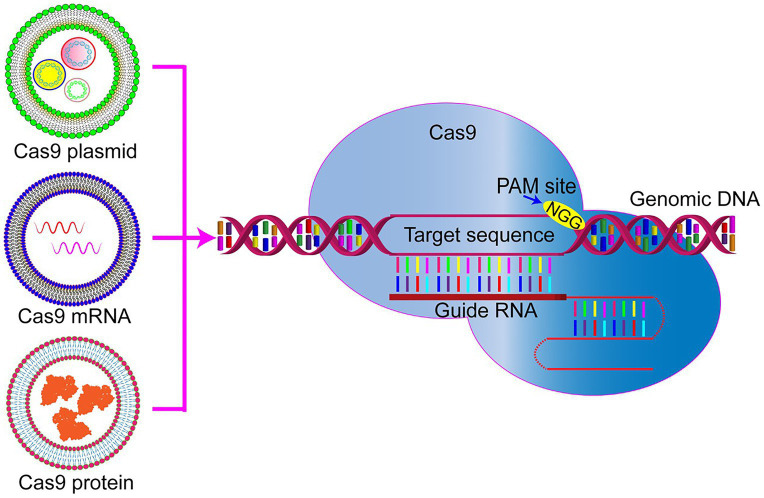
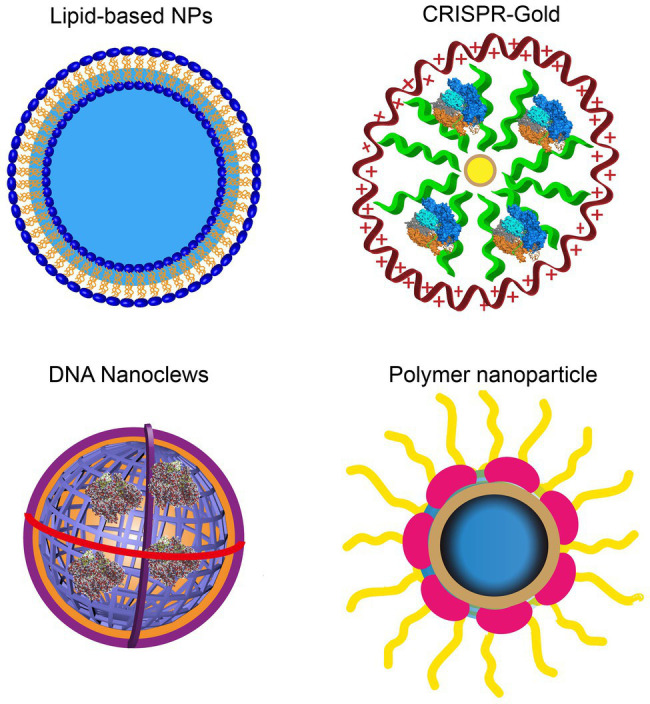
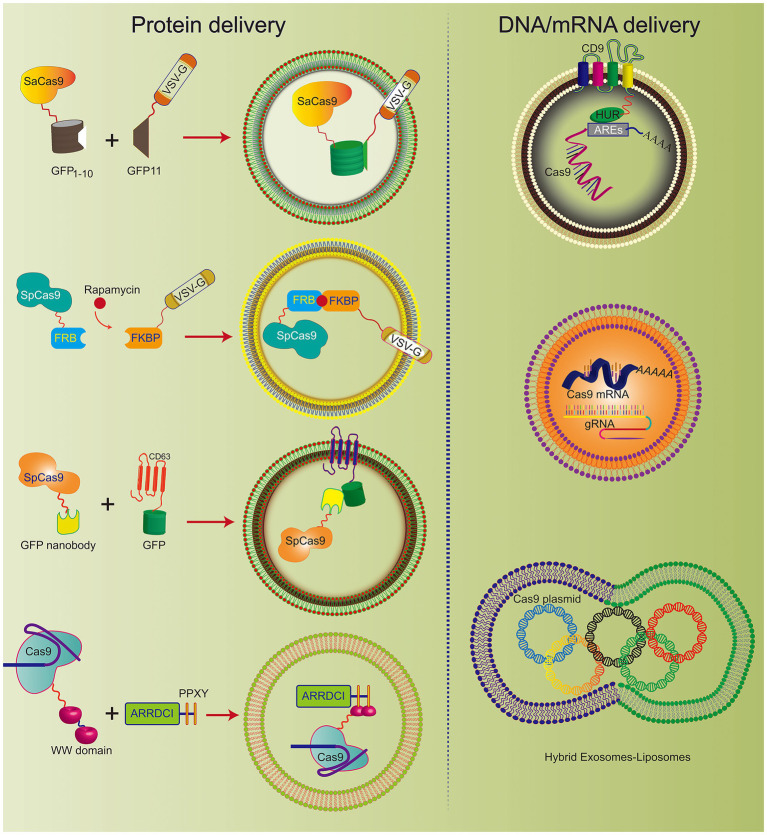
The emerging clustered regularly interspaced short palindromic repeat (CRISPR)/CRISPR-associated system (Cas) gene-editing system represents a promising tool for genome manipulation. However, its low intracellular delivery efficiency severely compromises its use and potency for clinical applications. Nanocarriers, such as liposomes, polymers, and inorganic nanoparticles, have shown great potential for gene delivery. The remarkable development of nanoparticles as non-viral carriers for the delivery of the CRISPR/Cas9 system has shown great promise for therapeutic applications. In this review, we briefly summarize the delivery components of the CRISPR/Cas9 system and report on the progress of nano-system development for CRISPR/Cas9 delivery. We also compare the advantages of various nano-delivery systems and their applications to deliver CRISPR/Cas9 for disease treatment. Nano-delivery systems can be modified to fulfill the tasks of targeting cells or tissues. We primarily emphasize the novel exosome-based CRISPR/Cas9 delivery system. Overall, we review the challenges, development trends, and application prospects of nanoparticle-based technology for CRISPR/Cas9 delivery.
Overview
The claims and statistics of this paper haven’t been checked yet.
Run the check — free, no account needed. It reads the open-access text and checks the sources it cites.
Integrity signals
Registry
Cites
Statistics
Figures
Verification
Claims the paper makes
The claims and statistics of this paper haven’t been checked yet.
Run the check — free, no account needed. It reads the open-access text and checks the sources it cites.
Claims other papers make about this one
Each is checked against this paper’s own text: does it say what the citing paper says it does?
In the citing paper
“Polymeric nanoparticles, such as polyethyleneimine and poly-L-lysine, are the most widely used carriers of CRISPR/Cas-9 components.”
From Mechanism and Applications of CRISPR/Cas-9-Mediated Genome Editing (2021) · cites this paper as [60]
In the citing paper
“Like lipid nanoparticles, polymer-based nanoparticles can also transverse the complex in the membrane through endocytosis.60”
From Mechanism and Applications of CRISPR/Cas-9-Mediated Genome Editing (2021) · cites this paper as [60]
Self-check
Percentages, sums and reported differences re-computed from the paper’s own numbers.
The self-check needs the paper’s full text.
Citations
Cites
Engineering exosomes for targeted drug delivery
Liang, Y., Duan, L., Lu, J., & Xia, J. (2021) · Theranostics · doi:10.7150/thno.52570 · Cited by 1,547
Self-citationFinn, J. D., Smith, A. R., Patel, M. C., Shaw, L., Youniss, M. R., van Heteren, J., Dirstine, T., Ciullo, C., Lescarbeau, R., Seitzer, J., et al. (2018) · Cell Reports · doi:10.1016/j.celrep.2018.02.014 · Cited by 878
Yin, H., Song, C.-Q., Dorkin, J. R., Zhu, L. J., Li, Y., Wu, Q., Park, A., Yang, J., Suresh, S., Bizhanova, A., et al. (2016) · Nature Biotechnology · doi:10.1038/nbt.3471 · Cited by 876
Large-scale generation of functional mRNA-encapsulating exosomes via cellular nanoporation
Yang, Z., Shi, J., Xie, J., Wang, Y., Sun, J., Liu, T., Zhao, Y., Zhao, X., Wang, X., Ma, Y., et al. (2019) · Nature Biomedical Engineering · doi:10.1038/s41551-019-0485-1 · Cited by 744
Direct cytosolic delivery of CRISPR/Cas9-ribonucleoprotein for efficient gene editing
Mout, R., Ray, M., Yesilbag Tonga, G., Lee, Y.-W., Tay, T., Sasaki, K., & Rotello, V. M. (2017) · ACS Nano · doi:10.1021/acsnano.6b07600 · Cited by 579
Miller, J. B., Zhang, S., Kos, P., Xiong, H., Zhou, K., Perelman, S. S., Zhu, H., & Siegwart, D. J. (2017) · Angewandte Chemie International Edition · doi:10.1002/anie.201610209 · Cited by 540
Kim, S. M., Yang, Y., Oh, S. J., Hong, Y., Seo, M., & Jang, M. (2017) · Journal of Controlled Release · doi:10.1016/j.jconrel.2017.09.013 · Cited by 481
Liang, Y., Xu, X., Li, X., Xiong, J., Li, B., Duan, L., Wang, D., & Xia, J. (2020) · ACS Applied Materials & Interfaces · doi:10.1021/acsami.0c10458 · Cited by 391
Self-citationXu, X., Liang, Y., Li, X., Ouyang, K., Wang, M., Cao, T., Li, W., Liu, J., Xiong, J., Li, B., et al. (2021) · Biomaterials · doi:10.1016/j.biomaterials.2020.120539 · Cited by 377
Self-citationLee, B., Lee, K., Panda, S., Gonzales-Rojas, R., Chong, A., Bugay, V., Park, H. M., Brenner, R., Murthy, N., & Lee, H. Y. (2018) · Nature Biomedical Engineering · doi:10.1038/s41551-018-0252-8 · Cited by 361
Li, Z., Zhou, X., Wei, M., Gao, X., Zhao, L., Shi, R., Sun, W., Duan, Y., Yang, G., & Yuan, L. (2019) · Nano Letters · doi:10.1021/acs.nanolett.8b02689 · Cited by 318
Self-citationViral Delivery Systems for CRISPR
Xu, C. L., Ruan, M. Z. C., Mahajan, V. B., & Tsang, S. H. (2019) · Viruses · doi:10.3390/v11010028 · Cited by 277
Strategies for nonviral nanoparticle‐based delivery of CRISPR/Cas9 therapeutics
Chen, F., Alphonse, M., & Liu, Q. (2020) · WIREs Nanomedicine and Nanobiotechnology · doi:10.1002/wnan.1609 · Cited by 197
Biodegradable Amino-Ester Nanomaterials for Cas9 mRNA Delivery in Vitro and in Vivo
Zhang, X., Li, B., Luo, X., Zhao, W., Jiang, J., Zhang, C., Gao, M., Chen, X., & Dong, Y. (2017) · ACS Applied Materials & Interfaces · doi:10.1021/acsami.7b08163 · Cited by 107
Research works printed but not linked: 40
- Campbell, 2019, Gesicle-mediated delivery of CRISPR/Cas9 ribonucleoprotein complex for inactivating the HIV provirus, Mol. Ther., 27, 151, 10.1016/j.ymthe.2018.10.002 · DOI
- Chang, 2013, Genome editing with RNA-guided Cas9 nuclease in zebrafish embryos, Cell Res., 23, 465, 10.1038/cr.2013.45 · DOI
- Chaverra-Rodriguez, 2018, Targeted delivery of CRISPR-Cas9 ribonucleoprotein into arthropod ovaries for heritable germline gene editing, Nat. Commun., 9, 3008, 10.1038/s41467-018-05425-9 · DOI
- Chen, 2019, Friend or foe? Evidence indicates endogenous exosomes can deliver functional gRNA and Cas9 protein, Small, 15, e1902686, 10.1002/smll.201902686 · DOI
- Chew, 2016, A multifunctional AAV-CRISPR-Cas9 and its host response, Nat. Methods, 13, 868, 10.1038/nmeth.3993 · DOI · Paper page
- Chin, 2019, Scaffold-mediated non-viral delivery platform for CRISPR/Cas9-based genome editing, Acta Biomater., 90, 60, 10.1016/j.actbio.2019.04.020 · DOI
- Duan, Recent progress on the role of miR-140 in cartilage matrix remodelling and its implications for osteoarthritis treatment, Arthritis Res. Ther., 22, 194, 10.1186/s13075-020-02290-0 · DOI
- Duan, Exosome-mediated drug delivery for cell-free therapy of osteoarthritis, Curr. Med. Chem., 10.2174/0929867327666201118161232 · DOI
- Duan, 2021, Exosome-mediated delivery of gene vectors for gene therapy, Nanoscale, 13, 1387, 10.1039/D0NR07622H · DOI · Paper page
- Gaj, 2013, ZFN, TALEN, and CRISPR/Cas-based methods for genome engineering, Trends Biotechnol., 31, 397, 10.1016/j.tibtech.2013.04.004 · DOI · Paper page
- Gee, 2020, Extracellular nanovesicles for packaging of CRISPR-Cas9 protein and sgRNA to induce therapeutic exon skipping, Nat. Commun., 11, 1334, 10.1038/s41467-020-14957-y · DOI
- Guo, 2019, Therapeutic genome editing of triple-negative breast tumors using a noncationic and deformable nanolipogel, Proc. Natl. Acad. Sci. U. S. A., 116, 18295, 10.1073/pnas.1904697116 · DOI
- Gupta, 2019, CRISPR-Cas9 system: a new-fangled dawn in gene editing, Life Sci., 232, 116636, 10.1016/j.lfs.2019.116636 · DOI
- Lee, 2017, Nanoparticle delivery of Cas9 ribonucleoprotein and donor DNA in vivo induces homology-directed DNA repair, Nat. Biomed. Eng., 1, 889, 10.1038/s41551-017-0137-2 · DOI · Paper page
- Levy, 2010, Gold nanoparticles delivery in mammalian live cells: a critical review, Nanotechnol. Rev., 1, 1, 10.3402/nano.v1i0.4889 · DOI
- Liang, Non-surgical osteoarthritis therapy, intra-articular drug delivery towards clinical applications, J. Drug Target., 1, 10.1080/1061186X.2020.1870231 · DOI
- Lin, 2018, Exosome-liposome hybrid nanoparticles deliver CRISPR/Cas9 system in MSCs, Adv. Sci., 5, 1700611, 10.1002/advs.201700611 · DOI · Paper page
- Liu, 2018, A dual-targeting delivery system for effective genome editing and in situ detecting related protein expression in edited cells, Biomacromolecules, 19, 2957, 10.1021/acs.biomac.8b00511 · DOI
- Liu, 2019, Multistage delivery nanoparticle facilitates efficient CRISPR/dCas9 activation and tumor growth suppression in vivo, Adv. Sci., 6, 1801423, 10.1002/advs.201801423 · DOI
- Luo, 2018, Macrophage-specific in vivo gene editing using cationic lipid-assisted polymeric nanoparticles, ACS Nano, 12, 994, 10.1021/acsnano.7b07874 · DOI
- Mout, 2017, Cytosolic and nuclear delivery of CRISPR/Cas9-ribonucleoprotein for gene editing using arginine functionalized gold nanoparticles, Bio Protoc., 7, e2586, 10.21769/BioProtoc.2586 · DOI
- Qiao, 2019, Cytosolic delivery of CRISPR/Cas9 ribonucleoproteins for genome editing using chitosan-coated red fluorescent protein, Chem. Commun., 55, 4707, 10.1039/C9CC00010K · DOI
- Shahbazi, 2019, Targeted homology-directed repair in blood stem and progenitor cells with CRISPR nanoformulations, Nat. Mater., 18, 1124, 10.1038/s41563-019-0385-5 · DOI
- Shen, 2014, Efficient genome modification by CRISPR-Cas9 nickase with minimal off-target effects, Nat. Methods, 11, 399, 10.1038/nmeth.2857 · DOI · Paper page
- Shi, 2020, MicroRNA-responsive release of Cas9/sgRNA from DNA nanoflower for cytosolic protein delivery and enhanced genome editing, Biomaterials, 256, 120221, 10.1016/j.biomaterials.2020.120221 · DOI
- Sun, Self-assembled DNA nanoclews for the efficient delivery of CRISPR-Cas9 for genome editing, Angew. Chem. Int. Ed. Eng., 54, 12029, 10.1002/anie.201506030 · DOI · Paper page
- Sun, Rolling circle replication for engineering drug delivery carriers, Ther. Deliv., 6, 765, 10.4155/tde.15.27 · DOI
- Tao, 2021, Coassembly of nucleus-targeting gold nanoclusters with CRISPR/Cas9 for simultaneous bioimaging and therapeutic genome editing, J. Mater. Chem. B, 9, 94, 10.1039/d0tb01925a · DOI
- Usman, 2018, Efficient RNA drug delivery using red blood cell extracellular vesicles, Nat. Commun., 9, 2359, 10.1038/s41467-018-04791-8 · DOI · Paper page
- Wang, 2019, Exosome-mediated CRISPR/Cas9 system targets to cut the intercellular transmission function of hepatitis B virus genome, Zhonghua Gan Zang Bing Za Zhi, 27, 610, 10.3760/cma.j.issn.1007-3418.2019.08.005 · DOI
- Wang, 2018, Thermo-triggered release of CRISPR-Cas9 system by lipid-encapsulated gold nanoparticles for tumor therapy, Angew. Chem. Int. Ed. Eng., 57, 1491, 10.1002/anie.201708689 · DOI · Paper page
- Wei, 2020, Systemic nanoparticle delivery of CRISPR-Cas9 ribonucleoproteins for effective tissue specific genome editing, Nat. Commun., 11, 3232, 10.1038/s41467-020-17029-3 · DOI
- Woo, 2015, DNA-free genome editing in plants with preassembled CRISPR-Cas9 ribonucleoproteins, Nat. Biotechnol., 33, 1162, 10.1038/nbt.3389 · DOI · Paper page
- Yang, 2011, Drug delivery using nanoparticle-stabilized nanocapsules, Angew. Chem. Int. Ed. Eng., 50, 477, 10.1002/anie.201005662 · DOI
- Ye, 2020, An engineered exosome for delivering sgRNA:Cas9 ribonucleoprotein complex and genome editing in recipient cells, Biomater. Sci., 8, 2966, 10.1039/d0bm00427h · DOI
- Yin, 2013, Reconfiguring the architectures of cationic helical polypeptides to control non-viral gene delivery, Biomaterials, 34, 2340, 10.1016/j.biomaterials.2012.11.064 · DOI
- Yip, 2020, Recent advances in CRISPR/Cas9 delivery strategies, Biomol. Ther., 10, 839, 10.3390/biom10060839 · DOI · Paper page
- Zhang, 2020, Programmable extracellular vesicles for macromolecule delivery and genome modifications, Dev. Cell, 55, 784.e789, 10.1016/j.devcel.2020.11.007 · DOI
- Zincarelli, 2008, Analysis of AAV serotypes 1-9 mediated gene expression and tropism in mice after systemic injection, Mol. Ther., 16, 1073, 10.1038/mt.2008.76 · DOI · Paper page
- Zuris, 2015, Cationic lipid-mediated delivery of proteins enables efficient protein-based genome editing in vitro and in vivo, Nat. Biotechnol., 33, 73, 10.1038/nbt.3081 · DOI · Paper page
Cited by
Sorted by citations
Mechanism and Applications of CRISPR/Cas-9-Mediated Genome Editing
Mengstie, M. A., & Wondimu, B. Z. (2021) · Biologics: Targets and Therapy · doi:10.2147/btt.s326422 · Cited by 478
Chondrocyte-specific genomic editing enabled by hybrid exosomes for osteoarthritis treatment
Liang, Y., Xu, X., Xu, L., Iqbal, Z., Ouyang, K., Zhang, H., Wen, C., Duan, L., & Xia, J. (2022) · Theranostics · doi:10.7150/thno.69368 · Cited by 217
Self-citationLiu, Q., Li, D., Pan, X., & Liang, Y. (2023) · Journal of Nanobiotechnology · doi:10.1186/s12951-023-02081-0 · Cited by 201
Self-citationExosomes as Targeted Delivery Platform of CRISPR/Cas9 for Therapeutic Genome Editing
Duan, L., Ouyang, K., Wang, J., Xu, L., Xu, X., Wen, C., Xie, Y., Liang, Y., & Xia, J. (2021) · ChemBioChem · doi:10.1002/cbic.202100359 · Cited by 82
Self-citationApproaches to gene modulation therapy for ALS
Meijboom, K. E., & Brown, R. H. (2022) · Neurotherapeutics · doi:10.1007/s13311-022-01285-w · Cited by 38
Metadata
- Authors
- Duan, L., Ouyang, K., Xu, X., Xu, L., Wen, C., Zhou, X., Qin, Z., Xu, Z., Sun, W., & Liang, Y.
- Venue
- Frontiers in Genetics
- Publisher
- Frontiers Media SA
- Published
- 2021-05-12
- Volume
- 12
- ISSN
- 1664-8021
- PMC
- PMC8149999
- Cited by
- 377
- References
- 14
- Funders
- National Natural Science Foundation of China (81772394, 81972116)
- China Postdoctoral Science Foundation (2020M672829)
About these checks
Registry, retraction, Cites and statistics results are computed, not judged, with one exception: a printed reference that no index lists is read once by a model before it counts as a citation error. Claims are extracted by a model and kept only when their quote appears verbatim in the text; each cited source is then checked, with a model’s help, for whether it says what the claim relies on. Those verdicts can be wrong — read the claim’s quote and the cited source before relying on one.
Statistics and arithmetic are recomputed, not judged.
Confidence bands are shown only for fields calibrated on our annotated test set. None is calibrated yet, so no band is shown.
What counts as a claim ›How we measure confidence ›How we check this ›
Are you an author, or do you see a problem with this page? Request a review
