

Revolutionizing dermatopathology using AI in skin diagnostics: scoping review
Open accessThe DOI matches its Crossref record; 38 of the 40 references it cites were found in a registry or an index; 68 of the 92 sources its claims cite were checked for support.
Abstract
AI models are becoming is increasingly used to enhance skin disease diagnosis and treatment. This scoping review complies with the PRISMA-ScR guidelines and after considering the inclusion and exclusion criteria, 12 articles published between 2017 and 2024 were considered. Majority of the publications are published from US and China. Among the selected studies, CNN- and ViT-based AI models were the most commonly used in literature, while LLM-based models (such as SkinGPT and Gemini-based models) appear in recently times more frequently to conduct interactive analysis for users. Recent studies have increasingly featured LLM-based models (e.g., SkinGPT, Gemini), indicating their growth as novel architectures in contrast to traditional CNN and ViT approaches. Among the diseases, the studied mainly covered melanoma, nevi, basal cell carcinoma, keratinocyte carcinoma, seborrheic keratosis, colorectal adenoma, etc. Our research reveals that while AI models excel in diagnosing prevalent and well-documented skin problems, their diagnostic efficacy significantly diminishes for rare or underrepresented diseases, highlighting the necessity for more robust, diversified, and clinically validated models. AI models are often too generic for multiple skin diseases. The studies utilized both private clinical data and public accessible resources, including ISIC and MoleMap. Majority of the AI models need improved clinical validation and regulatory standards covering ethical and legal standards to be considered as a tool for healthcare service providers. Despite these constraints, the reviewed studies indicate that AI models can enhance dermatopathology by increasing lesion classification precision, facilitating early detection, and reducing diagnostic strain; underscoring their prospective significance for clinicians and patients.
Overview
CoChat Summary
TL;DR
This scoping review mapped AI use in dermatopathology from 2017–2024 and included 12 studies. It finds strong performance in curated settings, but recurring drops in real-world or whole-slide use, with major concerns around external validation, dataset diversity, and explainability.
Key findings
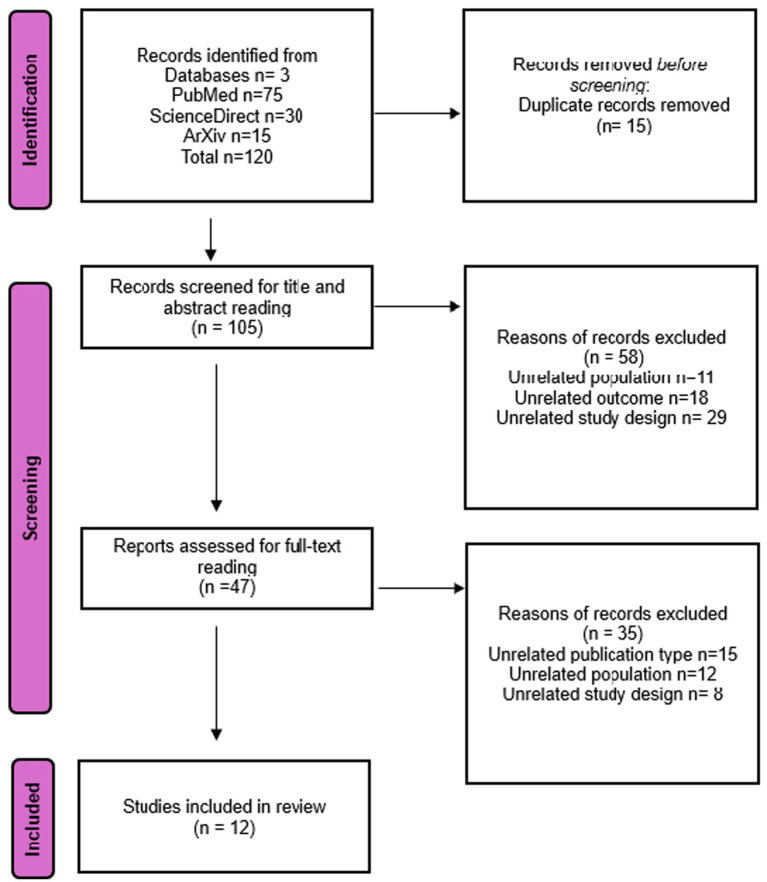
- The review screened 120 records and included 12 articles; 7 of the included studies were quantitative and 5 were mixed-methods.
- Across the included literature, AI was used mainly for diagnostic tasks such as lesion classification and detection, with fewer studies on decision support, patient engagement, and report generation.
- Reported performance varied by model and setting: GPT-4 had 74% sensitivity and 36% specificity in one cited histopathology task; CNNs were reported at 99% accuracy on curated datasets but 92% on whole-slide images with 85% sensitivity and 99% specificity; SkinGPT-4 achieved 78.76% accuracy on 150 real-life cases.
- The paper reports stronger results for some models on selected tasks, including ResNet50 with F1 0.93, sensitivity 0.92, specificity 0.97, and AUC 0.99 for melanoma detection, and DVFNet with AUC 98.32% on ISIC 2019.
Methods
- Scoping review conducted according to PRISMA-ScR; the review question focused on the current state of AI in dermatopathology for skin disease diagnosis.
- Searches were run in November 2024 in PubMed, ScienceDirect, and arXiv, covering English-language papers published from 2017 to 2024, with manual reference-list searching.
- Two reviewers screened studies using PICO-based eligibility criteria; 120 records were identified, 47 full texts were assessed, and 12 studies were included.
Limitations
- The paper states that many included studies lacked external validation, relied on curated datasets, and underrepresented rare disease classes; it also notes limited information on cost-effectiveness, ethics, and patient outcomes.
- It further states that the review is constrained by the scoping-review approach and does not perform experiments itself, so it cannot replicate or directly test the included models.
- Evident from the text: the evidence base is small and heterogeneous (12 studies across multiple model families, diseases, and metrics), which makes direct comparison difficult; this is implied by the synthesis rather than explicitly stated.
Model-written summary. Check it against the paper before relying on it.
Integrity signals
Registry
Cites
Statistics
Figures
Verification
Claims the paper makes
51 Valid · 6 Not valid · 22 Not checked · 55 Own results and interpretations
At least one cited source doesn’t support this claim or points to a different paper, and none confirmed it — see the verdicts below.
In the paper
“In a study, dermatopathologists were asked, and 81.5% of them found AI models useful.”
§ Revolutionizing dermatopathology using AI in skin diagnostics: scoping review > Discussion > Critical synthesis of findings
What the sources say
- Disputedcites [27] Polesie S McKee PH Gardner JM Gillstedt M Siarov J Neittaanmäki N. Attitudes toward artificial intelligence within dermatopathology: an international online survey. Front Med. (2020) 7: 591952. doi: 10.3389/fmed.2020.591952, 33195357 PMC7606983 sourceExperimental — accuracy not yet measured
In Results (Table 1; page unavailable), 81.5% said they were already aware of AI as a topic in pathology—not that they found AI models useful. The survey reports generally positive attitudes, but its Results give 72.3% for respondents who agreed that AI will improve dermatopathology. (LLM, conf=0.90)
Checked by a reasoning model — may be wrong.
plain- Asserted: passes — The authors put it forward as true.
- Checkable: passes — It can be checked against evidence.
- Load-bearing: unclear — It is unclear whether the paper’s conclusions depend on it.
- Based: passes — The paper gives a reason why it holds.
- Disputed
Some cited sources support this claim and some don’t — read each source’s verdict below.
In the paper
“The scoping review also captures how model performance reduces when the datasets used are non-curated or in real-world scenarios, as seen in the works of Hart et al. (22) and Olsen et al. (28).”
§ Revolutionizing dermatopathology using AI in skin diagnostics: scoping review > Discussion > Comparison with other methods, tools, and review paper
What the sources say
- Supportedcites [22] Hart SN Flotte W Norgan AP Shah KK Buchan ZR Mounajjed T. Classification of melanocytic lesions in selected and whole-slide images via convolutional neural networks. J. Pathol. Informat. (2019) 10: 5. doi: 10.4103/jpi.jpi_32_18, 30972224 PMC6415523 source
Hart's Results report 99.0% validation accuracy for the curated de novo model versus 52.3% for noncurated patches. The Conclusions also report 92% whole-slide accuracy versus 99% patch-level accuracy and describe whole-slide evaluation as the expected clinical workflow. These passages support the claim as it relates to Hart; they do not assess Olsen. (LLM, conf=0.93)
- Disputedcites [28] Olsen T Jackson B Feeser T Kent M Moad J Krishnamurthy S. Diagnostic performance of deep learning algorithms applied to three common diagnoses in dermatopathology. J Pathol Inform. (2018) 9: 32. doi: 10.4103/jpi.jpi_31_18, 30294501 PMC6166480 sourceExperimental — accuracy not yet measured
The Results (Sensitivity and specificity analysis; page unavailable) report 99.45% and 99.4% balanced accuracy for two algorithms and 100% correct classification for seborrheic keratosis. The Discussion (page unavailable) says the seborrheic keratosis training and test set was more rigorous, yet it had the highest yield—the opposite of reduced performance on a more challenging set. The paper does not report a separate test on non-curated datasets or in real-world deployment. (LLM, conf=0.82)
Checked by a reasoning model — may be wrong.
plainstates a cause- Asserted: passes — The authors put it forward as true.
- Checkable: passes — It can be checked against evidence.
- Load-bearing: unclear — It is unclear whether the paper’s conclusions depend on it.
- Based: passes — The paper gives a reason why it holds.
- Supported
The cited sources support only part of this claim — read each source’s verdict below.
In the paper
“there are still not enough dermatologists to treat the population, especially in remote areas”
§ Revolutionizing dermatopathology using AI in skin diagnostics: scoping review > Introduction
What the sources say
- Partly supportedcites [4] Akdeniz M Hahnel E Ulrich C Blume-Peytavi U Kottner J. Prevalence and associated factors of skin cancer in aged nursing home residents: A multicenter prevalence study. PLoS One. (2019) 14: 215379. doi: 10.1371/journal.pone.0215379, 31009466 PMC6476496 sourceExperimental — accuracy not yet measured
The Discussion (Interpretation; page not provided) identifies insufficient numbers of dermatologists as a challenge to providing regular dermatology visits in nursing homes. It does not address dermatologist availability for the general population or say the shortage is especially acute in remote areas. (LLM, conf=0.87)
plain- Asserted: passes — The authors put it forward as true.
- Checkable: passes — It can be checked against evidence.
- Load-bearing: passes — The paper’s conclusions depend on it.
- Based: passes — The paper gives a reason why it holds.
- Partly supported
Every source the paper cites for this claim was checked and supports it.
In the paper
“Clinical severity, amateur photos, and unclean derma were excluded in the study, and the remaining 150 real-life cases were diagnosed by certified dermatologists; 78.76% of the diagnoses made by SkinGPT-4 were accurate or relevant.”
§ Revolutionizing dermatopathology using AI in skin diagnostics: scoping review > Introduction > Literature review
What the sources say
- Supportedcites [31] Zhou J He X Sun L Xu J Chen X Chu Y. SkinGPT-4: an interactive dermatology diagnostic system with visual large language model. arXiv. (2023). doi: 10.48550/arXiv.2304.10691 source
Section 2.4 reports an evaluation of 150 real-life cases against diagnoses by certified dermatologists. It states that dermatologists rated 78.76% of SkinGPT-4’s diagnoses correct or relevant. (LLM, conf=0.94)
plainn = 150- Asserted: passes — The authors put it forward as true.
- Checkable: passes — It can be checked against evidence.
- Load-bearing: passes — The paper’s conclusions depend on it.
- Based: passes — The paper gives a reason why it holds.
- Supported
The cited sources that could be checked couldn’t confirm or dispute this claim.
In the paper
“The study showed that, in 94% of the cases, the Spitz lesions were misdiagnosed as conventional melanocytic lesions”
§ Revolutionizing dermatopathology using AI in skin diagnostics: scoping review > Introduction > Literature review
What the sources say
- Could not verifycites [28] Olsen T Jackson B Feeser T Kent M Moad J Krishnamurthy S. Diagnostic performance of deep learning algorithms applied to three common diagnoses in dermatopathology. J Pathol Inform. (2018) 9: 32. doi: 10.4103/jpi.jpi_31_18, 30294501 PMC6166480 sourceExperimental — accuracy not yet measured
The Results section reports classification of nodular basal cell carcinoma, dermal nevi, and seborrheic keratoses, not Spitz lesions. The Discussion mentions Spitz nevi only as possible distractors for future training. Searches for the claimed 94% Spitz-lesion misdiagnosis found no such result in our copy; page numbers were not available. (LLM, conf=0.77)
plain- Asserted: passes — The authors put it forward as true.
- Checkable: passes — It can be checked against evidence.
- Load-bearing: passes — The paper’s conclusions depend on it.
- Based: passes — The paper gives a reason why it holds.
- Could not verify
39 more claims · 13 with their cited sources checked
Create a free account to see all 134 claims and every source verdict.
- Probably not a substantial claim. 47
- It may state two separate claims as one. 62
Citations
Cites
Grad-CAM: Visual Explanations from Deep Networks via Gradient-Based Localization
Selvaraju, R. R., Cogswell, M., Das, A., Vedantam, R., Parikh, D., & Batra, D. (2017) · 2017 IEEE International Conference on Computer Vision (ICCV) · doi:10.1109/iccv.2017.74 · Cited by 24,513
Dermatologist-level classification of skin cancer with deep neural networks
Esteva, A., Kuprel, B., Novoa, R. A., Ko, J., Swetter, S. M., Blau, H. M., & Thrun, S. (2017) · Nature · doi:10.1038/nature21056 · Cited by 14,362 · cited 4×
“Esteva et al. (21) explained how CNN can accurately identify different forms of skin lesions.”
InfluentialHay, R. J., Johns, N. E., Williams, H. C., Bolliger, I. W., Dellavalle, R. P., Margolis, D. J., Marks, R., Naldi, L., Weinstock, M. A., Wulf, S. K., et al. (2014) · Journal of Investigative Dermatology · doi:10.1038/jid.2013.446 · Cited by 1,706
Haggenmüller, S., Maron, R. C., Hekler, A., Utikal, J. S., Barata, C., Barnhill, R. L., Beltraminelli, H., Berking, C., Betz-Stablein, B., Blum, A., et al. (2021) · European Journal of Cancer · doi:10.1016/j.ejca.2021.06.049 · Cited by 267
Pathologist-level classification of histopathological melanoma images with deep neural networks
Hekler, A., Utikal, J. S., Enk, A. H., Berking, C., Klode, J., Schadendorf, D., Jansen, P., Franklin, C., Holland-Letz, T., Krahl, D., et al. (2019) · European Journal of Cancer · doi:10.1016/j.ejca.2019.04.021 · Cited by 231 · cited 5×
“The study showed that, in 94% of the cases, the Spitz lesions were misdiagnosed as conventional melanocytic lesions thus highlighting the importance of large high quality and diverse datasets for training CNNs. Hekler et al. (29) aimed to determine the ability of DNNs in the classification of dermoscopy images of diff…”
InfluentialPre-trained multimodal large language model enhances dermatological diagnosis using SkinGPT-4
Zhou, J., He, X., Sun, L., Xu, J., Chen, X., Chu, Y., Zhou, L., Liao, X., Zhang, B., Afvari, S., et al. (2024) · Nature Communications · doi:10.1038/s41467-024-50043-3 · Cited by 189 · cited 1×
“Conversely, Large Language Models (LLMs) and emerging Large Multimodal Models (LMMs)—including GPT-4, SkinGPT-4, and Gemini—integrate image inputs with natural-language reasoning to produce diagnostic recommendations, clinical descriptions, or triage outputs (24).”
Celard, P., Iglesias, E. L., Sorribes-Fdez, J. M., Romero, R., Vieira, A. S., & Borrajo, L. (2023) · Neural Computing and Applications · doi:10.1007/s00521-022-07953-4 · Cited by 188 · cited 1×
“…of AI models in clinical practice, including inconsistent data quality, the absence of standardized performance metrics, and clinicians’ diminished confidence in AI-generated diagnostic recommendations—such as lesion classification, malignancy risk evaluation, and triage recommendations (9–11).”
Olsen, T. G., Jackson, B. H., Feeser, T. A., Kent, M. N., Moad, J. C., Krishnamurthy, S., Lunsford, D. D., & Soans, R. E. (2018) · Journal of Pathology Informatics · doi:10.4103/jpi.jpi_31_18 · Cited by 119
A Multimodal Vision Foundation Model for Clinical Dermatology
Yan, S., Yu, Z., Primiero, C., Vico-Alonso, C., Wang, Z., Yang, L., Tschandl, P., Hu, M., Ju, L., Tan, G., et al. (2025) · Nature Medicine · doi:10.1038/s41591-025-03747-y · Cited by 117
Ethical considerations for artificial intelligence in dermatology: a scoping review
Gordon, E. R., Trager, M. H., Kontos, D., Weng, C., Geskin, L. J., Dugdale, L. S., & Samie, F. H. (2024) · British Journal of Dermatology · doi:10.1093/bjd/ljae040 · Cited by 107 · cited 1×
“This question form is very general which allows to identify the current state of research and what topics are missing (13).”
Olayah, F., Senan, E. M., Ahmed, I. A., & Awaji, B. (2023) · Diagnostics · doi:10.3390/diagnostics13071314 · Cited by 97 · cited 1×
“In this way, using AI-based models can help doctors find diseases faster and more correctly, which can improve the care for patients and make healthcare systems less busy (18, 19).”
Artificial intelligence in dermatopathology: diagnosis, education, and research
Wells, A., Patel, S., Lee, J. B., & Motaparthi, K. (2021) · Journal of Cutaneous Pathology · doi:10.1111/cup.13954 · Cited by 95 · cited 1×
“Artificial intelligence has transformed diagnostic approaches in dermatology and dermatopathology by aiding accurate identification of various skin conditions (20).”
Hart, S. N., Flotte, W., Norgan, A. F., Shah, K. K., Buchan, Z. R., Mounajjed, T., & Flotte, T. J. (2019) · Journal of Pathology Informatics · doi:10.4103/jpi.jpi_32_18 · Cited by 69 · cited 6×
“The scoping review also captures how model performance reduces when the datasets used are non-curated or in real-world scenarios, as seen in the works of Hart et al. (22) and Olsen et al. (28).”
InfluentialAttitudes Toward Artificial Intelligence Within Dermatopathology: An International Online Survey
Polesie, S., McKee, P. H., Gardner, J. M., Gillstedt, M., Siarov, J., Neittaanmäki, N., & Paoli, J. (2020) · Frontiers in Medicine · doi:10.3389/fmed.2020.591952 · Cited by 53 · cited 4×
“In a worldwide survey, Polesie et al. (27) indicated that while the majority of dermatopathologists regarded AI as beneficial, only 18.8% said they possessed a good or excellent comprehension of these techniques, revealing a significant educational deficiency.”
InfluentialZhang, Y., Pan, Y., Zhong, T., Dong, P., Xie, K., Liu, Y., Jiang, H., Wu, Z., Liu, Z., Zhao, W., et al. (2024) · Meta-Radiology · doi:10.1016/j.metrad.2024.100103 · Cited by 52 · cited 2×
“Zhang et al. (34) improved Dermacen Analytica by integrating large language models with machine learning methods.”
Panagoulias, D. P., Tsoureli‐Nikita, E., Virvou, M. K., & Tsihrintzis, G. A. (2025) · International Journal of Medical Informatics · doi:10.1016/j.ijmedinf.2025.105898 · Cited by 49
Naeem, A., & Anees, T. (2024) · PLoS ONE · doi:10.1371/journal.pone.0297667 · Cited by 48
Artificial Intelligence in Diagnostic Dermatology: Challenges and the Way Forward
Sengupta, D. (2023) · Indian Dermatology Online Journal · doi:10.4103/idoj.idoj_462_23 · Cited by 46 · cited 2×
“There has never been a greater need for efficient and accurate AI models in dermatopathology as the field of AI models progresses and provides new ways to enhance diagnostic results, diminish the burden on clinicians, and provide better access to der-matological services (12).”
De, A., Mishra, N., & Chang, H.-T. (2024) · PeerJ Computer Science · doi:10.7717/peerj-cs.1884 · Cited by 42
Claret, S. P. A., Dharmian, J. P., & Manokar, A. M. (2024) · Egyptian Journal of Medical Human Genetics · doi:10.1186/s43042-024-00522-5 · Cited by 40
Defining the prognostic role of MicroRNAs in cutaneous melanoma
Dika, E., Riefolo, M., Porcellini, E., Broseghini, E., Ribero, S., Senetta, R., Osella-Abate, S., Scarfì, F., Lambertini, M., Veronesi, G., et al. (2020) · Journal of Investigative Dermatology · doi:10.1016/j.jid.2020.03.949 · Cited by 39 · cited 1×
“Recent studies have highlighted the predictive significance of microRNA expression—specifically miR-21-5p and miR-146a-5p—as molecular markers that exhibit a substantial correlation with Breslow thickness in superficially spreading melanoma and may enhance standard histopathologic evaluation (8).”
Rezaeian, O., Bayrak, A. E., & Asan, O. (2025) · arXiv · doi:10.48550/arxiv.2501.16693 · Cited by 39
Rezaeian, O., Bayrak, A. E., & Asan, O. (2026) · International Journal of Human–Computer Interaction · doi:10.1080/10447318.2025.2539458 · Cited by 39
Accuracy of GPT-4 in histopathological image detection and classification of colorectal adenomas
Laohawetwanit, T., Namboonlue, C., & Apornvirat, S. (2025) · Journal of Clinical Pathology · doi:10.1136/jcp-2023-209304 · Cited by 35 · cited 4×
“Initial multimodal and LLM-based systems encounter similar constraints: Laohawetwanit et al. (26) discovered that GPT-4 attained merely moderate sensitivity (74”
InfluentialSkin cancer in Europe today and challenges for tomorrow
Brochez, L., Volkmer, B., Hoorens, I., Garbe, C., Röcken, M., Schüz, J., Whiteman, D. C., Autier, P., Greinert, R., & Boonen, B. (2025) · Journal of the European Academy of Dermatology and Venereology · doi:10.1111/jdv.20368 · Cited by 33
Akdeniz, M., Hahnel, E., Ulrich, C., Blume-Peytavi, U., & Kottner, J. (2019) · PLoS ONE · doi:10.1371/journal.pone.0215379 · Cited by 31 · cited 1×
“Skin diseases, especially skin cancer, are on the rise, while there are still not enough dermatologists to treat the population, especially in remote areas, which calls for new approaches that can help diagnose the diseases more effectively and promptly (4).”
Xie, P., Zuo, K., Zhang, Y., Li, F., Yin, M., & Lu, K. (2019) · arXiv · doi:10.48550/arxiv.1904.06156 · Cited by 23 · cited 3×
“Extending further from this, Xie et al. (30) conducted multicenter studies using the ResNet50 model and obtained an F1 score of 0.93, a sensitivity of 0.92, a specificity of 0.97, and an AUC of 0.99 for the identification of melanoma.”
InfluentialLangley, R. G., Gherardi, G., Coleman, A., Ardeleanu, M., Rodríguez-Marco, A., Levy, S., Bansal, A., Chen, Z., Rossi, A. B., Shumel, B., et al. (2025) · American Journal of Clinical Dermatology · doi:10.1007/s40257-025-00952-w · Cited by 18
Artificial intelligence: its role in dermatopathology
Jartarkar, S. R. (2022) · Indian Journal of Dermatology Venereology and Leprology · doi:10.25259/ijdvl_725_2021 · Cited by 18 · cited 8×
“When comparing our results, the scoping review in y Jartarkar (17) reveals various similarities and distinctions.”
InfluentialSkinGPT-4: an interactive dermatology diagnostic system with visual large language model
Zhou, J., He, X., Sun, L., Xu, J., Chen, X., Chu, Y., Zhou, L., Liao, X., Zhang, B., & Gao, X. (2023) · arXiv · doi:10.48550/arxiv.2304.10691 · Cited by 17
Sarhan, A. M., Ali, H. A., Yasser, S., Gobara, M., Kandil, A. A., Sherif, G., & Moustafa, E. (2025) · Journal of Electrical Systems and Information Technology · doi:10.1186/s43067-025-00243-8 · Cited by 14
Clinical experience and perception of risk affect the acceptance and trust of using AI in medicine
Schulz, P. J., Kee, K. M., Lwin, M. O., Goh, W. W., Chia, K. Y., Cheung, M. F. K., Lam, T. Y. T., & Sung, J. J. Y. (2025) · Frontiers in Digital Health · doi:10.3389/fdgth.2025.1620127 · Cited by 12 · cited 1×
“…of AI models in clinical practice, including inconsistent data quality, the absence of standardized performance metrics, and clinicians’ diminished confidence in AI-generated diagnostic recommendations—such as lesion classification, malignancy risk evaluation, and triage recommendations (9–11).”
Merkel cell carcinoma: an updated review focused on bone and bone marrow metastases
Scotti, B., Broseghini, E., Ricci, C., Corti, B., Viola, C., Misciali, C., Baraldi, C., Vaccari, S., Lambertini, M., Venturi, F., et al. (2025) · Cancers · doi:10.3390/cancers17132253 · Cited by 9
Basic elements of artificial intelligence tools in the diagnosis of cutaneous melanoma
Querzoli, G., Veronesi, G., Corti, B., Nottegar, A., & Dika, E. (2023) · Critical Reviews™ in Oncogenesis · doi:10.1615/critrevoncog.2023050220 · Cited by 6 · cited 1×
“For melanocytic lesions, it is essential to evaluate critical histopathological parame-ters—silhouette and asymmetry, cellular distribution, mitotic count, and ulceration—to stratify risk and optimize pathologists’ workloads (7).”
Pathology of skin diseases a study from Western Saudi Arabia
Alghanmi, N. M., & Abdullah, L. S. (2013) · Saudi Medical Journal · doi:10.15537/1658-3175.5694 · Cited by 4
Panagoulias, D. P., Tsoureli-Nikita, E., Virvou, M., & Tsihrintzis, G. A. (2024) · arXiv · doi:10.48550/arxiv.2403.14243 · Cited by 3 · cited 2×
“Panagoulias et al. (32) created Dermacen Analytica, an improved AI model based on machine learning that can help teledermatology doctors do better diagnoses.”
Kong, S., Yang, X., Wei, Y., Wang, Z., Tang, H., Qin, J., Lan, S., Wang, Y., Bai, J., Chen, Z., et al. (2025) · arXiv · doi:10.48550/arxiv.2506.01252 · Cited by 3 · cited 1×
“Elevated ROUGE scores signify superior correspondence with expert-written descriptions, enabling these measures appropriate for evaluating LLM-based dermatology systems (33).”
Mehta, D., Betz-Stablein, B., Nguyen, T. D., Gal, Y., Bowling, A., Haskett, M., Sashindranath, M., Bonnington, P., Mar, V., Soyer, H. P., et al. (2023) · arXiv · doi:10.48550/arxiv.2311.01009 · Cited by 3 · cited 3×
“To tackle the OOD images and provide hierarchical classification in dermato-pathology, Mehta et al. (35) introduced the Hierarchical-Out Distribution-Clinical Triage (HOT) model.”
Influential(2017) · doi:10.9728/dcs.2024.25.7.1847 · Cited by 2
Proposed system for remote detection of skin diseases using artificial intelligence
Chaware, S. M., Deshpande, A., Palkar, A., Bahire, D., & Singh, R. (2021) · International Journal of Scientific Research in Computer Science Engineering and Information Technology · doi:10.32628/cseit217244 · Cited by 1
Research works printed but not linked: 1
- Mallikarjunaradhya V Mistry J. The optimized analysis for early detection of skin cancer using artificial intelligence. IJCRT. (2023) 11: c180– 7.
Cited by
Ivanovic, N., Popa, M. F., Toma, A.-O., Pilut, C. N., Fericean, R. M., Crainic, D., Twakor, A. N., Serban, D.-V., Csiki, K. L., & Dumache, R. (2026) · Diagnostics · doi:10.3390/diagnostics16172797 · Cited by 1
“We found similar evidence in the literature [52,53].”
Metadata
- Authors
- Rammal, R., Mohy U Din, A., & Alam, T.
- Affiliations
- Hamad bin Khalifa University (QA)
- College of Science and Engineering, Hamad Bin Khalifa University
- Corresponding author
- Alam, Tanvir
- ORCID
- Alam, Tanvir
- Venue
- Frontiers in Medicine
- Publisher
- Frontiers Media SA
- Published
- 2026-02-19
- Volume
- 13
- Pages
- 1614681-1614681
- ISSN
- 2296-858X (ISSN-L)
- PMC
- PMC12980796
- OpenAlex
- W7130517804
- Cited by
- 1
- References
- 35
- Citations by year
- 2026: 1
- FWCI
- 0.84
- Type
- journal article
- Language
- en
- Update notices
- correction (2026-02-26)
- Open access
- gold
- doi.org
- Licence
- Locations
- Frontiers in Medicine (publishedVersion, cc-by)
- PubMed (publishedVersion)
- PubMed Central (publishedVersion, cc-by)
- DOAJ (DOAJ: Directory of Open Access Journals) (submittedVersion)
- Funders
- Hamad Bin Khalifa University
- Khalifa University of Science, Technology and Research
- College of Science and Engineering, University of Minnesota
- Topics
- Health Sciences › Medicine › Oncology › Cutaneous Melanoma Detection and Management
- Physical Sciences › Computer Science › Artificial Intelligence › AI in cancer detection
- Health Sciences › Medicine › Health Informatics › Artificial Intelligence in Healthcare and Education
- Keywords
- dermatological diagnosis, convolutional neural networks, vision transformer, large language models, melanoma, basal cell carcinoma, non-melanoma skin cancer, seborrheic keratosis, nevi, colorectal adenoma, lesion classification, early detection, ISIC, clinical validation, regulatory standards
About these checks
Registry, retraction, Cites and statistics results are computed, not judged, with one exception: a printed reference that no index lists is read once by a model before it counts as a citation error. Claims are extracted by a model and kept only when their quote appears verbatim in the text; each cited source is then checked, with a model’s help, for whether it says what the claim relies on. Those verdicts can be wrong — read the claim’s quote and the cited source before relying on one.
The claim verdicts this report counts are experimental: their accuracy is not yet measured.
A language model drew the claims from the paper on 2026-10-09, under version 3 of the claim definition (model deepseek-v4.1-flash, prompt extract-v3).
A second model labelled each claim on 2026-10-09 (model jev-1.13-20260917, definition revision gold-guideline-v0.2).
Cited sources are checked with a language model’s help (gpt-6-sol).
Statistics and arithmetic are recomputed, not judged.
Confidence bands are shown only for fields calibrated on our annotated test set. None is calibrated yet, so no band is shown.
What counts as a claim ›How we measure confidence ›How we check this ›
Are you an author, or do you see a problem with this page? Request a review
Data sources
Bibliographic data: Semantic Scholar, OpenAlex, Crossref.
Contains information from the Semantic Scholar Academic Graph Datasets, made available under the ODC Attribution License (ODC-BY 1.0).
Semantic Scholar’s data is described in: Kinney, R., et al. (2023). The Semantic Scholar Open Data Platform. arXiv:2301.10140.
