

The DOI matches its Crossref record; 74 of the 74 references it cites were found in a registry or an index.
Changes in the Transcriptome of Human Astrocytes Accompanying Oxidative Stress-Induced Senescence
Open accessAbstract
Aging is a major risk factor for many neurodegenerative disorders. A key feature of aging biology that may underlie these diseases is cellular senescence. Senescent cells accumulate in tissues with age, undergo widespread changes in gene expression, and typically demonstrate altered, pro-inflammatory profiles. Astrocyte senescence has been implicated in neurodegenerative disease, and to better understand senescence-associated changes in astrocytes, we investigated changes in their transcriptome using RNA sequencing. Senescence was induced in human fetal astrocytes by transient oxidative stress. Brain-expressed genes, including those involved in neuronal development and differentiation, were downregulated in senescent astrocytes. Remarkably, several genes indicative of astrocytic responses to injury were also downregulated, including glial fibrillary acidic protein and genes involved in the processing and presentation of antigens by major histocompatibility complex class II proteins, while pro-inflammatory genes were upregulated. Overall, our findings suggest that senescence-related changes in the function of astrocytes may impact the pathogenesis of age-related brain disorders.
Overview
The claims and statistics of this paper haven’t been checked yet.
Run the check — free, no account needed. It reads the open-access text and checks the sources it cites.
Integrity signals
Registry
Cites
Statistics
Figures
Verification
Claims the paper makes
The claims and statistics of this paper haven’t been checked yet.
Run the check — free, no account needed. It reads the open-access text and checks the sources it cites.
Claims other papers make about this one
Each is checked against this paper’s own text: does it say what the citing paper says it does?
In the citing paper
“This is a hallmark of senescence in astrocytes, suggesting that these cells have taken on a secretive function [25].”
From DNA repair deficiency and senescence in concussed professional athletes involved in contact sports (2019) · cites this paper as [25]
Self-check
Percentages, sums and reported differences re-computed from the paper’s own numbers.
The self-check needs the paper’s full text.
Citations
Cites
Systematic and integrative analysis of large gene lists using DAVID bioinformatics resources
Huang, D. W., Sherman, B. T., & Lempicki, R. A. (2009) · Nature Protocols · doi:10.1038/nprot.2008.211 · Cited by 35,890
Astrocyte-endothelial interactions at the blood-brain barrier
Abbott, N. J., Rönnbäck, L., & Hansson, E. (2006) · Nature Reviews Neuroscience · doi:10.1038/nrn1824 · Cited by 5,595
Zhang, Y., Chen, K., Sloan, S. A., Bennett, M. L., Scholze, A. R., O'Keeffe, S., Phatnani, H. P., Guarnieri, P., Caneda, C., Ruderisch, N., et al. (2014) · The Journal of Neuroscience · doi:10.1523/jneurosci.1860-14.2014 · Cited by 4,875
Meta-Analysis of 74,046 Individuals Identifies 11 New Susceptibility Loci for Alzheimer’s Disease
(EADI), E. A. D. I., Lambert, J.-C., (GERAD), G. A. E. R. I. A. D., Alzheimer's Disease Genetic Consortium (ADGC), (CHARGE), C. F. H. A. A. R. I. G. E., Ibrahim-Verbaas, C. A., Harold, D., Naj, A. C., Sims, R., Bellenguez, C., et al. (2013) · Nature Genetics · doi:10.1038/ng.2802 · Cited by 4,336
Self-citationClearance of p16Ink4a-positive senescent cells delays ageing-associated disorders
Baker, D. J., Wijshake, T., Tchkonia, T., LeBrasseur, N. K., Childs, B. G., van de Sluis, B., Kirkland, J. L., & van Deursen, J. M. (2011) · Nature · doi:10.1038/nature10600 · Cited by 3,670 · cited 2×
“Frontiers in Aging Neuroscience | www.frontiersin.org 7 August 2016 | Volume 8 | Article 208”
BackgroundCahoy, J. D., Emery, B., Kaushal, A., Foo, L. C., Zamanian, J. L., Christopherson, K. S., Xing, Y., Lubischer, J. L., Krieg, P. A., Krupenko, S. A., et al. (2008) · The Journal of Neuroscience · doi:10.1523/jneurosci.4178-07.2008 · Cited by 3,129
Naturally occurring p16Ink4a-positive cells shorten healthy lifespan
Baker, D. J., Childs, B. G., Durik, M., Wijers, M. E., Sieben, C. J., Zhong, J., A. Saltness, R., Jeganathan, K. B., Verzosa, G. C., Pezeshki, A., et al. (2016) · Nature · doi:10.1038/nature16932 · Cited by 2,876
Molecular dissection of reactive astrogliosis and glial scar formation
Sofroniew, M. V. (2009) · Trends in Neurosciences · doi:10.1016/j.tins.2009.08.002 · Cited by 2,594
Hendzel, M. J., Wei, Y., Mancini, M. A., Hooser, A. A. V., Ranalli, T. A., Brinkley, B. R., Bazett‐Jones, D. P., & Allis, C. D. (1997) · Chromosoma · doi:10.1007/s004120050256 · Cited by 1,860
Tripartite synapses: astrocytes process and control synaptic information
Perea, G., Navarrete, M., & Araque, A. (2009) · Trends in Neurosciences · doi:10.1016/j.tins.2009.05.001 · Cited by 1,820
Reactive Astrocytes Protect Tissue and Preserve Function after Spinal Cord Injury
Faulkner, J. R., Herrmann, J. E., Woo, M. J., Tansey, K. E., Doan, N., & Sofroniew, M. V. (2004) · Journal of Neuroscience · doi:10.1523/jneurosci.3547-03.2004 · Cited by 1,652
Ink4a/Arf expression is a biomarker of aging
Krishnamurthy, J., Torrice, C., Ramsey, M. R., Kovalev, G. I., Al-Regaiey, K., Su, L., & Sharpless, N. E. (2004) · Journal of Clinical Investigation · doi:10.1172/jci22475 · Cited by 1,486
Inflammatory networks during cellular senescence: causes and consequences.
Freund, A., Orjalo, A. V., Desprez, P.-Y., & Campisi, J. (2010) · Trends in Molecular Medicine · doi:10.1016/j.molmed.2010.03.003 · Cited by 1,354
Excess brain protein oxidation and enzyme dysfunction in normal aging and in Alzheimer disease.
Smith, C. D., Carney, J. M., Starke-Reed, P. E., Oliver, C. N., Stadtman, E. R., Floyd, R. A., & Markesbery, W. R. (1991) · Proceedings of the National Academy of Sciences · doi:10.1073/pnas.88.23.10540 · Cited by 1,296
Cellular Senescence in Aging Primates
Herbig, U., Ferreira, M., Condel, L., Carey, D., & Sedivy, J. M. (2006) · Science · doi:10.1126/science.1122446 · Cited by 1,101
Senescence and apoptosis: dueling or complementary cell fates?
Childs, B. G., Baker, D. J., Kirkland, J. L., Campisi, J., & van Deursen, J. M. (2014) · The EMBO Reports · doi:10.15252/embr.201439245 · Cited by 915
Chronic inflammation induces telomere dysfunction and accelerates ageing in mice
Jurk, D., Wilson, C., Passos, J. F., Oakley, F., Correia-Melo, C., Greaves, L., Saretzki, G., Fox, C., Lawless, C., Anderson, R., et al. (2014) · Nature Communications · doi:10.1038/ncomms5172 · Cited by 819
Astrocytes: a central element in neurological diseases
Pekny, M., Pekna, M., Messing, A., Steinhäuser, C., Lee, J., Parpura, V., Hol, E. M., Sofroniew, M. V., & Verkhratsky, A. (2015) · Acta Neuropathologica · doi:10.1007/s00401-015-1513-1 · Cited by 793
Microarray analysis of replicative senescence
Shelton, D. N., Chang, E., Whittier, P. S., Choi, D., & Funk, W. D. (1999) · Current Biology · doi:10.1016/s0960-9822(99)80420-5 · Cited by 764
Astrocytic complexity distinguishes the human brain
Oberheim, N. A., Wang, X., Goldman, S., & Nedergaard, M. (2006) · Trends in Neurosciences · doi:10.1016/j.tins.2006.08.004 · Cited by 739
The neurobiology of glia in the context of water and ion homeostasis
Simard, M. F., & Nedergaard, M. (2004) · Neuroscience · doi:10.1016/j.neuroscience.2004.09.053 · Cited by 640
Jurk, D., Wang, C., Miwa, S., Maddick, M., Korolchuk, V., Tsolou, A., Gonos, E. S., Thrasivoulou, C., Jill Saffrey, M., Cameron, K., et al. (2012) · Aging Cell · doi:10.1111/j.1474-9726.2012.00870.x · Cited by 598
Astrocyte Senescence as a Component of Alzheimer’s Disease
Bhat, R., Crowe, E. P., Bitto, A., Moh, M., Katsetos, C. D., Garcia, F. U., Johnson, F. B., Trojanowski, J. Q., Sell, C., & Torres, C. (2012) · PLoS ONE · doi:10.1371/journal.pone.0045069 · Cited by 586
Self-citationEnergy metabolism and inflammation in brain aging and Alzheimer’s disease
Yin, F., Sancheti, H., Patil, I., & Cadenas, E. (2016) · Free Radical Biology and Medicine · doi:10.1016/j.freeradbiomed.2016.04.200 · Cited by 538
Heterogeneity of reactive astrocytes
Anderson, M. A., Ao, Y., & Sofroniew, M. V. (2013) · Neuroscience Letters · doi:10.1016/j.neulet.2013.12.030 · Cited by 478
Chen, Q. M., Bartholomew, J. C., Campisi, J., Acosta, M., REAGAN, J. D., & Ames, B. N. (1998) · Biochemical Journal · doi:10.1042/bj3320043 · Cited by 442
Astrocytes in Neurodegenerative Disease: Table 1.
Phatnani, H., & Maniatis, T. (2015) · Cold Spring Harbor Perspectives in Biology · doi:10.1101/cshperspect.a020628 · Cited by 420
Mitogen‐activated protein kinase p38 defines the common senescence‐signalling pathway
Iwasa, H., Han, J., & Ishikawa, F. (2003) · Genes to Cells · doi:10.1046/j.1365-2443.2003.00620.x · Cited by 407
The role of chondrocyte senescence in osteoarthritis
Price, J. S., Waters, J. G., Darrah, C., Pennington, C., Edwards, D. R., Donell, S. T., & Clark, I. M. (2002) · Aging Cell · doi:10.1046/j.1474-9728.2002.00008.x · Cited by 386
Garwood, C. J., Pooler, A. M., Atherton, J., Hanger, D. P., & Noble, W. (2011) · Cell Death & Disease · doi:10.1038/cddis.2011.50 · Cited by 379
mRNA up-regulation of MHC II and pivotal pro-inflammatory genes in normal brain aging
Frank, M. G., Barrientos, R. M., Biedenkapp, J. C., Rudy, J. W., Watkins, L. R., & Maier, S. F. (2006) · Neurobiology of Aging · doi:10.1016/j.neurobiolaging.2005.03.013 · Cited by 327
Adult Neurogenesis in Neurodegenerative Diseases: Figure 1.Preprint
Winner, B., & Winkler, J. (2015) · Cold Spring Harbor Perspectives in Biology · doi:10.1101/cshperspect.a021287 · Cited by 323
Twine, N. A., Janitz, K., Wilkins, M. R., & Janitz, M. (2011) · PLoS ONE · doi:10.1371/journal.pone.0016266 · Cited by 309
Coppé, J.-P., Patil, C. K., Rodier, F., Sun, Y., Muñoz, D. P., Goldstein, J., Nelson, P. S., Desprez, P.-Y., & Campisi, J. (2008) · PLoS Biology · doi:10.1371/journal.pbio.0060301 · Cited by 302 · cited 1×
“…and at sites of aging-related pathology (Price et al., 2002; Krishnamurthy et al., 2004; Herbig et al., 2006; Bhat et al., 2012; Jurk et al., 2012, 2014; Zhu et al., 2014), undergo widespread changes in gene expression, and demonstrate a pro-inflammatory secretion pattern (Coppé et al., 2008).”
BackgroundOrre, M., Kamphuis, W., Osborn, L. M., Melief, J., Kooijman, L., Huitinga, I., Klooster, J., Bossers, K., & Hol, E. M. (2013) · Neurobiology of Aging · doi:10.1016/j.neurobiolaging.2013.07.008 · Cited by 279
Cellular senescence and the senescent secretory phenotype in age-related chronic diseases
Zhu, Y., Armstrong, J. L., Tchkonia, T., & Kirkland, J. L. (2014) · Current Opinion in Clinical Nutrition and Metabolic Care · doi:10.1097/mco.0000000000000065 · Cited by 273
Age-associated neurodegeneration and oxidative damage to lipids, proteins and DNA
Radak, Z. O., Zhao, Z., Goto, S., & Koltai, E. (2011) · Molecular Aspects of Medicine · doi:10.1016/j.mam.2011.10.010 · Cited by 233
Immune Players in the CNS: The Astrocyte
Jensen, C., Massie, A., & Keyser, J. D. (2013) · Journal of Neuroimmune Pharmacology · doi:10.1007/s11481-013-9480-6 · Cited by 216
Stress-induced senescence in human and rodent astrocytes
Bitto, A., Sell, C., Crowe, E., Lorenzini, A., Malaguti, M., Hrelia, S., & Torres, C. (2010) · Experimental Cell Research · doi:10.1016/j.yexcr.2010.06.021 · Cited by 204
Self-citationEsiri, M. M. (2007) · The Journal of Pathology · doi:10.1002/path.2089 · Cited by 203
Sekar, S., McDonald, J., Cuyugan, L., Aldrich, J., Kurdoglu, A., Adkins, J., Serrano, G., Beach, T. G., Craig, D. W., Valla, J., et al. (2015) · Neurobiology of Aging · doi:10.1016/j.neurobiolaging.2014.09.027 · Cited by 199
Simpson, J. E., Ince, P. G., Shaw, P. J., Heath, P. R., Raman, R., Garwood, C. J., Gelsthorpe, C., Baxter, L., Forster, G., Matthews, F. E., et al. (2011) · Neurobiology of Aging · doi:10.1016/j.neurobiolaging.2011.04.013 · Cited by 197
Complex and region-specific changes in astroglial markers in the aging brain
Rodríguez, J. J., Yeh, C.-Y., Terzieva, S., Olabarria, M., Kulijewicz-Nawrot, M., & Verkhratsky, A. (2014) · Neurobiology of Aging · doi:10.1016/j.neurobiolaging.2013.07.002 · Cited by 189
Astrocytes aged in vitro show a decreased neuroprotective capacity
Pertusa, M., García‐Matas, S., Rodríguez‐Farré, E., Sanfeliu, C., & Cristòfol, R. (2007) · Journal of Neurochemistry · doi:10.1111/j.1471-4159.2006.04369.x · Cited by 168
Chinta, S. J., Lieu, C. A., DeMaria, M., Laberge, R. ‐., Campisi, J., & Andersen, J. K. (2013) · Journal of Internal Medicine · doi:10.1111/joim.12029 · Cited by 165 · cited 2×
“The induction of senescence in astrocytes has been implicated in neurodegenerative disease (Bhat et al., 2012; Chinta et al., 2013) .”
BackgroundIFN-γ–dependent transcription of MHC class II IA is impaired in macrophages from aged mice
Herrero, C., Marqués, L., Lloberas, J., & Celada, A. (2001) · Journal of Clinical Investigation · doi:10.1172/jci11696 · Cited by 162
Miranda, C. J., Braun, L., Jiang, Y., Hester, M. E., Zhang, L., Riolo, M., Wang, H., Rao, M., Altura, R. A., & Kaspar, B. K. (2012) · Aging Cell · doi:10.1111/j.1474-9726.2012.00816.x · Cited by 153
Permanent cell cycle exit in G2 phase after DNA damage in normal human fibroblasts
Baus, F., Gire, V., Fisher, D., Piette, J., & Dulić, V. (2003) · The EMBO Journal · doi:10.1093/emboj/cdg387 · Cited by 143
Mitogen-Activated Protein Kinase
Adam, L. P. (1996) · Elsevier eBooks · doi:10.1016/b978-012078160-7/50016-0 · Cited by 131
Yoon, I. K., Kim, H. K., Kim, W., Song, I., Kim, W., Kim, S., Baek, S.-H., Kim, J. H., & Kim, J. (2004) · Experimental Gerontology · doi:10.1016/j.exger.2004.07.002 · Cited by 128
Replicatively senescent cells are arrested in G1 and G2 phases
Mao, Z., Ke, Z., Gorbunova, V., & Seluanov, A. (2012) · Aging · doi:10.18632/aging.100467 · Cited by 128
Wood, S. H., Craig, T., Li, Y., Merry, B., & de Magalhães, J. P. (2013) · AGE · doi:10.1007/s11357-012-9410-1 · Cited by 105
The Role of Attenuated Astrocyte Activation in Infantile Neuronal Ceroid Lipofuscinosis
Macauley, S. L., Pekny, M., & Sands, M. S. (2011) · The Journal of Neuroscience · doi:10.1523/jneurosci.3579-11.2011 · Cited by 102
Neuroinflammation in Alzheimer’s disease wanes with age
Hoozemans, J. J., Rozemuller, A. J., van Haastert, E. S., Eikelenboom, P., & van Gool, W. A. (2011) · Journal of Neuroinflammation · doi:10.1186/1742-2094-8-171 · Cited by 100
Suzuki, N., Fukushi, M., Kosaki, K., Doyle, A. D., de Vega, S., Yoshizaki, K., Akazawa, C., Arikawa‐Hirasawa, E., & Yamada, Y. (2012) · Journal of Neuroscience · doi:10.1523/jneurosci.2045-11.2012 · Cited by 90
TrkB inhibition as a therapeutic target for CNS-related disorders
Boulle, F., Kenis, G., Cazorla, M., Hamon, M., Steinbusch, H. W. M., Lanfumey, L., & van den Hove, D. L. A. (2012) · Progress in Neurobiology · doi:10.1016/j.pneurobio.2012.06.002 · Cited by 80
HAMPEL, B., FORTSCHEGGER, K., RESSLER, S., CHANG, M., UNTERLUGGAUER, H., BREITWIESER, A., SOMMERGRUBER, W., FITZKY, B., LEPPERDINGER, G., & JANSENDURR, P. (2006) · Experimental Gerontology · doi:10.1016/j.exger.2006.03.001 · Cited by 78 · cited 2×
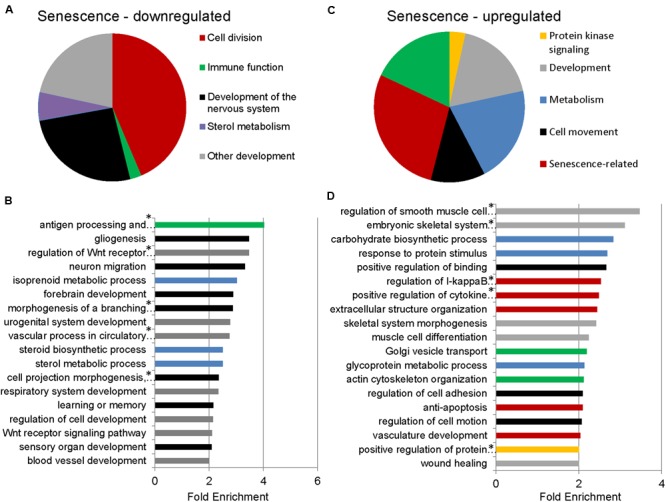
“Inflammation, modification of the extracellular matrix and resistance to apoptosis are known senescence-associated changes (Yoon et al., 2004; Hampel et al., 2006; Freund et al., 2010; Childs et al., 2014) and are represented by the GO terms regulation of I-kappaB kinase/NF-kappaB cascade, positive…”
BackgroundLin, Y., Chen, L., Lin, C., Luo, Y., Tsai, R. Y. L., & Wang, F. (2009) · Developmental Biology · doi:10.1016/j.ydbio.2009.02.011 · Cited by 76
Proteomic and metabolomic analysis of H2O2-induced premature senescent human mesenchymal stem cells
Kim, J. S., Kim, E.-J., Kim, H. J., Yang, J.-Y., Hwang, G., & Kim, C. (2011) · Experimental Gerontology · doi:10.1016/j.exger.2011.02.012 · Cited by 70
Long-term culture of astrocytes attenuates the readily releasable pool of synaptic vesicles
Kawano, H., Katsurabayashi, S., Kakazu, Y., Yamashita, Y., Kubo, N., Kubo, M., Okuda, H., Takasaki, K., Kubota, K., Mishima, K., et al. (2012) · PLoS ONE · doi:10.1371/journal.pone.0048034 · Cited by 68
The senescent hepatocyte gene signature in chronic liver disease
Aravinthan, A. D., Shannon, N. B., Heaney, J., Hoare, M., Marshall, A., & Alexander, G. (2014) · Experimental Gerontology · doi:10.1016/j.exger.2014.09.011 · Cited by 65
Yao, Y., Xu, Q., Kwon, M.-J., Matta, R., Liu, Y., Hong, S., & Chang, C. (2006) · The Journal of Immunology · doi:10.4049/jimmunol.177.1.70 · Cited by 62
Suzuki, N., Numakawa, T., Chou, J., de Vega, S., Mizuniwa, C., Sekimoto, K., Adachi, N., Kunugi, H., Arikawa‐Hirasawa, E., Yamada, Y., et al. (2013) · The FASEB Journal · doi:10.1096/fj.13-241034 · Cited by 56
Gruber, H. E., Hoelscher, G. L., Ingram, J. A., Zinchenko, N., & Hanley, E. N. (2010) · BMC Biotechnology · doi:10.1186/1472-6750-10-5 · Cited by 49
Coordinated Development of β-Glucuronidase and β-Galactosidase in Mouse Organs
Meisler, M. H., & Paigen, K. (1972) · Science · doi:10.1126/science.177.4052.894 · Cited by 44
Pišlar, A. H., Obermajer, N., & Kos, J. (2010) · Neurosignals · doi:10.1159/000324292 · Cited by 44
Phosphorylation of Histone H2AX in the Mouse Brain from Development to Senescence
Barral, S., Beltramo, R., Salio, C., Aimar, P., Lossi, L., & Merighi, A. (2014) · International Journal of Molecular Sciences · doi:10.3390/ijms15011554 · Cited by 40
The glia doctrine: Addressing the role of glial cells in healthy brain ageing
Nagelhus, E. A., Amiry-Moghaddam, M. R., Bergersen, L. H., Bjaalie, J. G., Eriksson, J., Gundersen, V., Leergaard, T. B., Morth, J. P., Storm‐Mathisen, J., Torp, R., et al. (2013) · Mechanisms of Ageing and Development · doi:10.1016/j.mad.2013.10.001 · Cited by 37
Elliott, R., Li, F., Dragomir, I. C., Chua, M. M., Gregory, B. D., & Weiss, S. R. (2013) · PLoS ONE · doi:10.1371/journal.pone.0075346 · Cited by 30
Self-citationOyama, K., Takahashi, K., & Sakurai, K. (2011) · Biological and Pharmaceutical Bulletin · doi:10.1248/bpb.34.501 · Cited by 30
Analysis of genome-wide significant bipolar disorder genes in borderline personality disorder
Witt, S. H., Kleindienst, N., Frank, J., Treutlein, J., Mühleisen, T. W., Degenhardt, F., Jungkunz, M., Krumm, B., Cichon, S., Tadić, A., et al. (2014) · Psychiatric Genetics · doi:10.1097/ypg.0000000000000060 · Cited by 29
Emx2 expression levels in NSC s modulate astrogenesis rates by regulating E gf R and F gf9
Falcone, C., Filippis, C., Granzotto, M., & Mallamaci, A. (2014) · Glia · doi:10.1002/glia.22761 · Cited by 24
Chandley, M. J., Crawford, J. D., Szebeni, A., Szebeni, K., & Ordway, G. A. (2015) · Molecular Autism · doi:10.1186/s13229-015-0023-2 · Cited by 22
Kipling, D., Jones, D. L., Smith, S. K., Giles, P. J., Jennert-Burston, K., Ibrahim, B., Sheerin, A. N. P., Evans, A. J. C., Rhys-Willams, W., & Faragher, R. G. A. (2009) · Experimental Eye Research · doi:10.1016/j.exer.2008.11.030 · Cited by 18
Cited by
Sorted by citations
Lin, Y.-T., Seo, J., Gao, F., Feldman, H. M., Wen, H.-L., Penney, J., Cam, H. P., Gjoneska, E., Raja, W. K., Cheng, J., et al. (2018) · Neuron · doi:10.1016/j.neuron.2018.05.008 · Cited by 1,125
Unmasking Transcriptional Heterogeneity in Senescent Cells
Hernandez-Segura, A., de Jong, T. V., Melov, S., Guryev, V., Campisi, J., & Demaria, M. (2017) · Current Biology · doi:10.1016/j.cub.2017.07.033 · Cited by 972
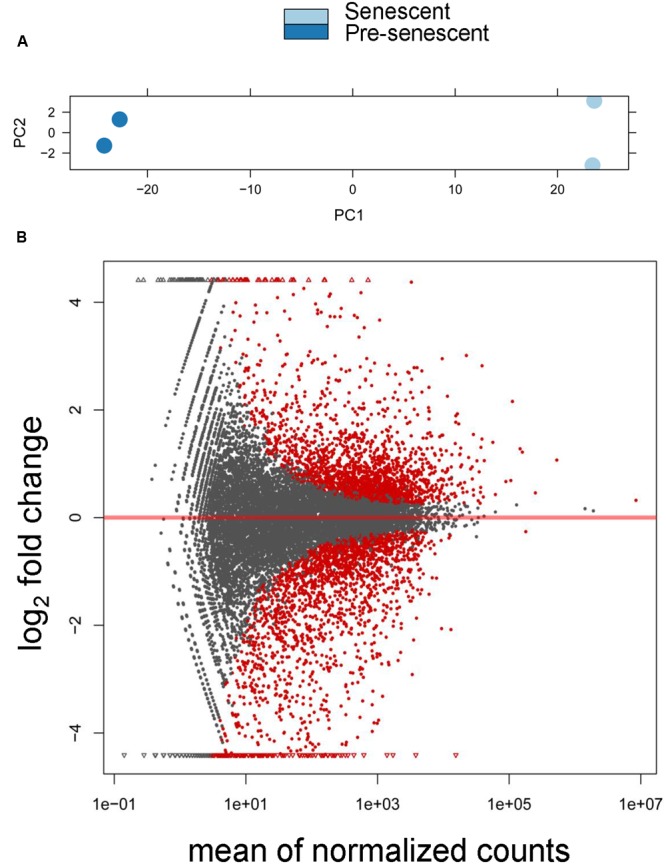
“The dataset from astrocytes was publicly available, and senescence was induced by oxidative stress [25] (Figure 2A).”
MethodCellular senescence in brain aging and neurodegenerative diseases: evidence and perspectives
Baker, D. J., & Petersen, R. C. (2018) · Journal of Clinical Investigation · doi:10.1172/jci95145 · Cited by 514
Ageing, Cellular Senescence and Neurodegenerative Disease
Kritsilis, M., V. Rizou, S., Koutsoudaki, P. N., Evangelou, K., Gorgoulis, V. G., & Papadopoulos, D. (2018) · International Journal of Molecular Sciences · doi:10.3390/ijms19102937 · Cited by 448
Astrocyte senescence: Evidence and significance
Cohen, J., & Torres, C. (2019) · Aging Cell · doi:10.1111/acel.12937 · Cited by 281
Self-citation
Metadata
- Authors
- Crowe, E. P., Tuzer, F., Gregory, B. D., Donahue, G., Gosai, S. J., Cohen, J., Leung, Y. Y., Yetkin, E., Nativio, R., Wang, L.-S., Sell, C., Bonini, N. M., Berger, S. L., Johnson, F. B., & Torres, C.
- Affiliations
- Drexel University (US)
- University of Pennsylvania (US)
- Corresponding author
- Torres, Claudio
- ORCID
- Venue
- Frontiers in Aging Neuroscience
- Publisher
- Frontiers Media SA
- Published
- 2016-08-31
- Volume
- 8
- Pages
- 208-208
- ISSN
- 1663-4365 (ISSN-L)
- PMC
- PMC5005348
- OpenAlex
- W2508551815
- Cited by
- 110
- References
- 74
- Citations by year
- 2026: 8 · 2025: 15 · 2024: 13 · 2023: 14 · 2022: 15 · 2021: 10 · 2020: 13 · 2019: 8 · 2018: 8 · 2017: 6
- FWCI
- 5.86
- Type
- journal article
- Language
- en
- Open access
- gold
- doi.org
- Licence
- cc-by
- Locations
- Frontiers in Aging Neuroscience (publishedVersion, cc-by)
- Europe PMC (PubMed Central) (publishedVersion, cc-by)
- PubMed Central (publishedVersion, cc-by)
- PubMed (publishedVersion)
- ScholarlyCommons (University of Pennsylvania) (submittedVersion, cc-by)
- DOAJ (DOAJ: Directory of Open Access Journals) (submittedVersion)
- Funders
- National Institute of Neurological Disorders and Stroke (RO1NS078283)
- National Institute on Aging (R21AG046943, F30AG043307)
- Topics
- Life Sciences › Biochemistry, Genetics and Molecular Biology › Cell Biology › Telomeres, Telomerase, and Senescence
- Life Sciences › Biochemistry, Genetics and Molecular Biology › Aging › Genetics, Aging, and Longevity in Model Organisms
- Life Sciences › Neuroscience › Neurology › Neuroinflammation and Neurodegeneration Mechanisms
- Keywords
- astrocyte senescence, oxidative stress, transcriptome, cellular senescence, neurodegenerative diseases, aging, pro-inflammatory genes, glial fibrillary acidic protein, MHC class II antigen presentation
About these checks
Registry, retraction, Cites and statistics results are computed, not judged, with one exception: a printed reference that no index lists is read once by a model before it counts as a citation error. Claims are extracted by a model and kept only when their quote appears verbatim in the text; each cited source is then checked, with a model’s help, for whether it says what the claim relies on. Those verdicts can be wrong — read the claim’s quote and the cited source before relying on one.
Statistics and arithmetic are recomputed, not judged.
Confidence bands are shown only for fields calibrated on our annotated test set. None is calibrated yet, so no band is shown.
What counts as a claim ›How we measure confidence ›How we check this ›
Are you an author, or do you see a problem with this page? Request a review
