

The DOI matches its Crossref record; 55 of the 55 references it cites were found in a registry or an index.
Adult hippocampal neurogenesis inversely correlates with microglia in conditions of voluntary running and aging
Open accessAbstract
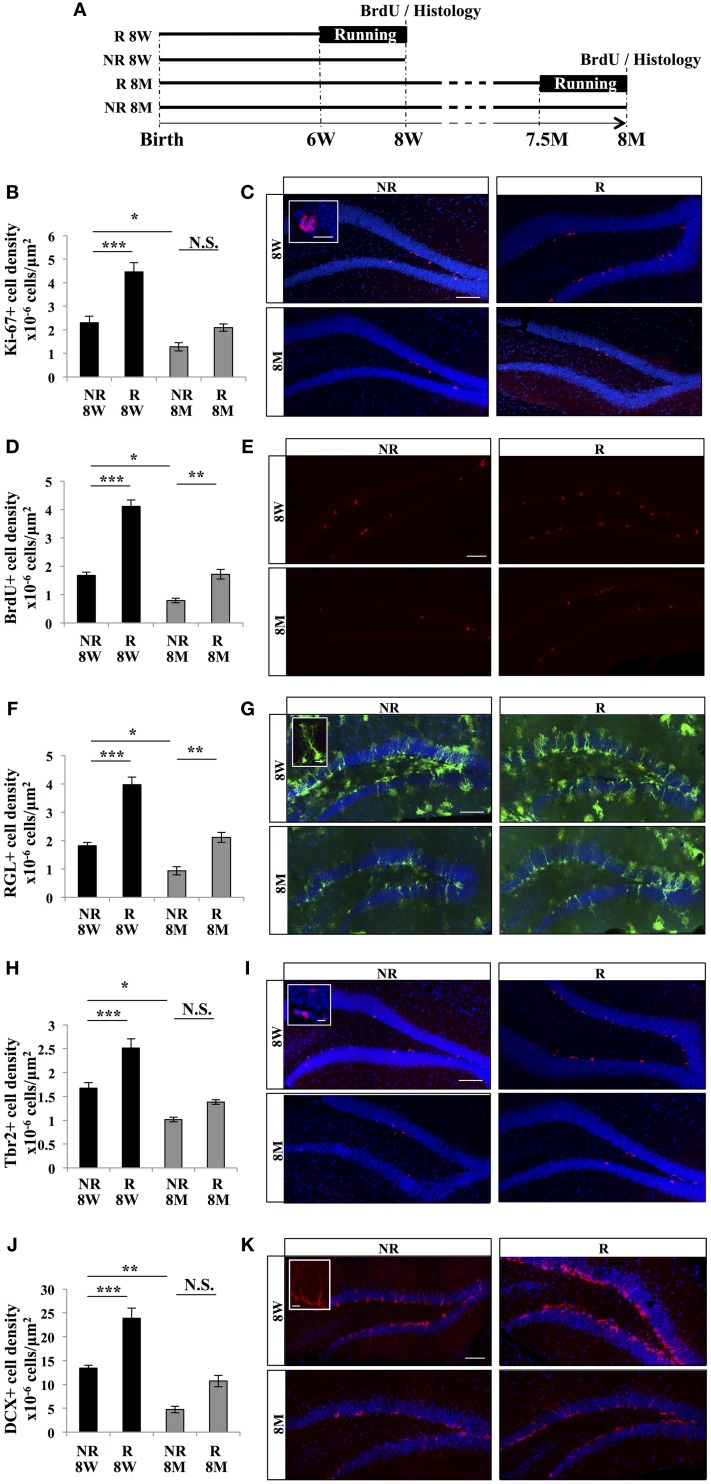
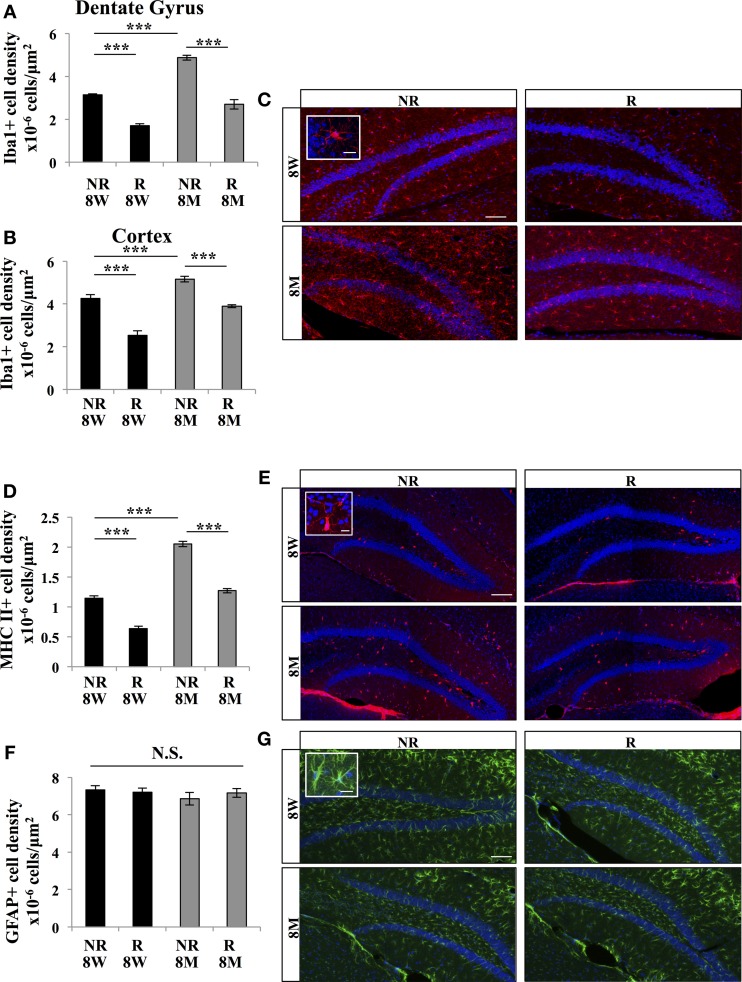
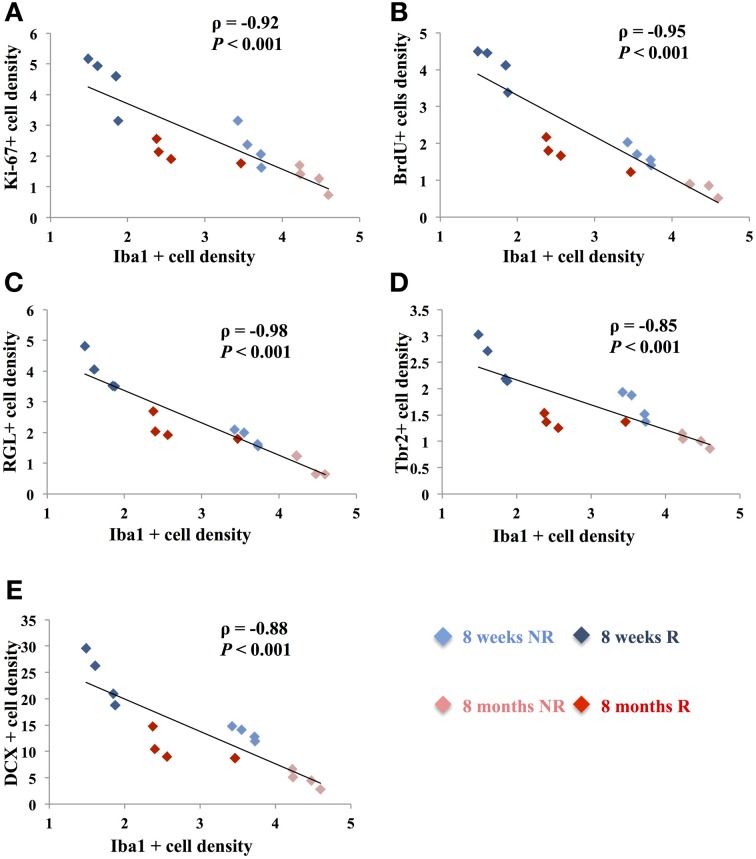
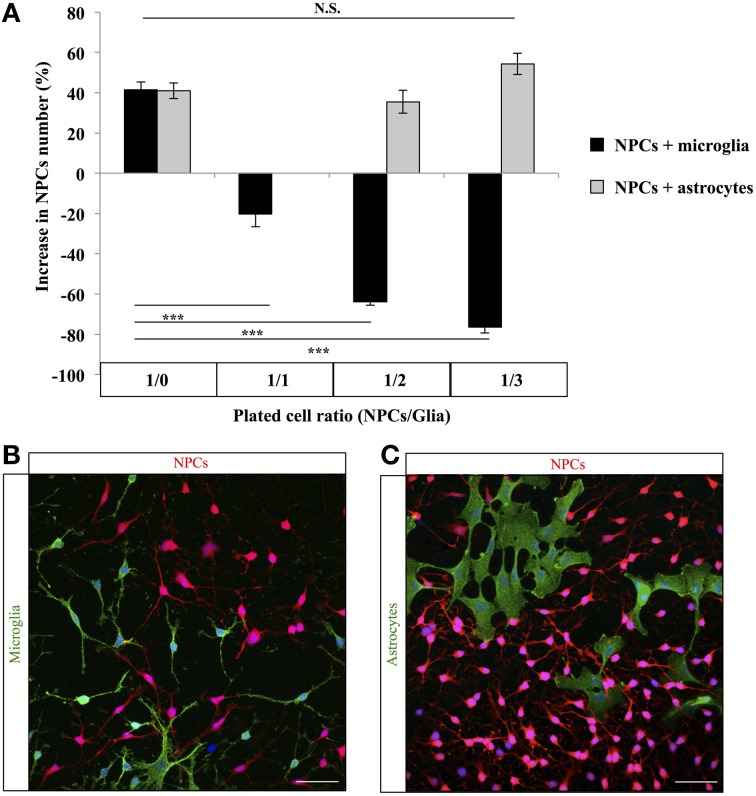
Adult hippocampal neurogenesis results in the formation of new neurons and is a process of brain plasticity involved in learning and memory. The proliferation of adult neural stem or progenitor cells is regulated by several extrinsic factors such as experience, disease or aging and intrinsic factors originating from the neurogenic niche. Microglia is very abundant in the dentate gyrus (DG) and increasing evidence indicates that these cells mediate the inflammation-induced reduction in neurogenesis. However, the role of microglia in neurogenesis in physiological conditions remains poorly understood. In this study, we monitored microglia and the proliferation of adult hippocampal stem/progenitor cells in physiological conditions known to increase or decrease adult neurogenesis, voluntary running and aging respectively. We found that the number of microglia in the DG was strongly inversely correlated with the number of stem/progenitor cells and cell proliferation in the granule cell layer. Accordingly, co-cultures of decreasing neural progenitor/glia ratio showed that microglia but not astroglia reduced the number of progenitor cells. Together, these results suggest that microglia inhibits the proliferation of neural stem/progenitor cells despite the absence of inflammatory stimulus.
Overview
The claims and statistics of this paper haven’t been checked yet.
Run the check — free, no account needed. It reads the open-access text and checks the sources it cites.
Integrity signals
Registry
Cites
Statistics
Figures
Verification
Claims the paper makes
The claims and statistics of this paper haven’t been checked yet.
Run the check — free, no account needed. It reads the open-access text and checks the sources it cites.
Claims other papers make about this one
Each is checked against this paper’s own text: does it say what the citing paper says it does?
In the citing paper
“On the contrary, aging has also been associated with an increase, rather than a decrease, in microglial population (Gebara et al, 2013;Mouton et al, 2002;Tremblay et al, 2012).”
From Microglia Priming with Aging and Stress (2017) · cites this paper as Gebara et al, 2013
In the citing paper
“Clinical and animal reports show that aerobic exercise (right) in humans and voluntary running in rodents is associated with enhanced neurogenesis, improved learning and memory, increased hippocampal BDNF, and dampened inflammatory response to immune challenge and microglia proliferation (Barrientos et al, 2011;Colcombe et al, 2003;Gebara et al, 2013).”
From Microglia Priming with Aging and Stress (2017) · cites this paper as Gebara et al, 2013
In the citing paper
“Exercise was also shown to prevent age-associated increase in microglia proliferation (Gebara et al, 2013).”
From Microglia Priming with Aging and Stress (2017) · cites this paper as Gebara et al, 2013
In the citing paper
“Clinical and animal reports show that aerobic exercise (right) in humans and voluntary running in rodents is associated with enhanced neurogenesis, improved learning and memory, increased hippocampal BDNF, and dampened inflammatory response to immune challenge and microglia proliferation(Barrientos et al, 2011;Colcombe et al, 2003;Gebara et al, 2013).”
From Microglia Priming with Aging and Stress (2017) · cites this paper as Gebara et al, 2013
Self-check
Percentages, sums and reported differences re-computed from the paper’s own numbers.
The self-check needs the paper’s full text.
Citations
Cites
Neurogenesis in the adult human hippocampus
Eriksson, P. S., Perfilieva, E., Björk-Eriksson, T., Alborn, A.-M., Nordborg, C., Peterson, D. A., & Gage, F. H. (1998) · Nature Medicine · doi:10.1038/3305 · Cited by 6,369
(2023) · doi:10.1126/science · Cited by 6,063
Gage, F. H. (2000) · Science · doi:10.1126/science.287.5457.1433 · Cited by 4,786
Synaptic Pruning by Microglia Is Necessary for Normal Brain Development
Paolicelli, R. C., Bolasco, G., Pagani, F., Maggi, L., Scianni, M., Panzanelli, P., Giustetto, M., Ferreira, T. A., Guiducci, E., Dumas, L., et al. (2011) · Science · doi:10.1126/science.1202529 · Cited by 4,244
Running increases cell proliferation and neurogenesis in the adult mouse dentate gyrus
van Praag, H., Kempermann, G., & Gage, F. H. (1999) · Nature Neuroscience · doi:10.1038/6368 · Cited by 3,880
Kuhn, H., Dickinson-Anson, H., & Gage, F. (1996) · The Journal of Neuroscience · doi:10.1523/jneurosci.16-06-02027.1996 · Cited by 3,139
Mechanisms and Functional Implications of Adult Neurogenesis
Zhao, C., Deng, W., & Gage, F. H. (2008) · Cell · doi:10.1016/j.cell.2008.01.033 · Cited by 3,007
The Glial Nature of Embryonic and Adult Neural Stem Cells
Kriegstein, A., & Alvarez-Buylla, A. (2009) · Annual Review of Neuroscience · doi:10.1146/annurev.neuro.051508.135600 · Cited by 2,475
Inflammatory Blockade Restores Adult Hippocampal Neurogenesis
Monje, M. L., Toda, H., & Palmer, T. D. (2003) · Science · doi:10.1126/science.1088417 · Cited by 2,426
Exercise enhances learning and hippocampal neurogenesis in aged mice
van Praag, H., Shubert, T., Zhao, C., & Gage, F. H. (2005) · The Journal of Neuroscience · doi:10.1523/jneurosci.1731-05.2005 · Cited by 2,078
Microglia Shape Adult Hippocampal Neurogenesis through Apoptosis-Coupled Phagocytosis
Sierra, A., Encinas, J. M., Deudero, J. J. P., Chancey, J. H., Enikolopov, G., Overstreet-Wadiche, L. S., Tsirka, S. E., & Maletic-Savatic, M. (2010) · Cell Stem Cell · doi:10.1016/j.stem.2010.08.014 · Cited by 1,622
Inflammation is detrimental for neurogenesis in adult brain
Ekdahl, C. T., Claasen, J.-H., Bonde, S., Kokaia, Z., & Lindvall, O. (2003) · Proceedings of the National Academy of Sciences · doi:10.1073/pnas.2234031100 · Cited by 1,559
Astroglia induce neurogenesis from adult neural stem cells
Song, H., Stevens, C. F., & Gage, F. H. (2002) · Nature · doi:10.1038/417039a · Cited by 1,452
Irradiation induces neural precursor-cell dysfunction
Monje, M. L., Mizumatsu, S., Fike, J. R., & Palmer, T. D. (2002) · Nature Medicine · doi:10.1038/nm749 · Cited by 1,271
Ziv, Y., Ron, N., Butovsky, O., Landa, G., Sudai, E., Greenberg, N., Cohen, H., Kipnis, J., & Schwartz, M. (2006) · Nature Neuroscience · doi:10.1038/nn1629 · Cited by 1,209
The Adult Rat Hippocampus Contains Primordial Neural Stem Cells
Palmer, T. D., TAKAHASHI, J. C., & Gage, F. H. (1997) · Molecular and Cellular Neuroscience · doi:10.1006/mcne.1996.0595 · Cited by 1,103
Encinas, J. M., Michurina, T. V., Peunova, N. I., Park, J.-H., Tordo, J., Peterson, D. A., Fishell, G., Koulakov, A. A., & Enikolopov, G. (2011) · Cell stem cell · doi:10.1016/j.stem.2011.03.010 · Cited by 918
VEGF is necessary for exercise‐induced adult hippocampal neurogenesis
Fabel, K., Fabel, K., Tam, B., Kaufer, D., Baiker, A., Simmons, N., Kuo, C. J., & Palmer, T. D. (2003) · European Journal of Neuroscience · doi:10.1111/j.1460-9568.2003.03041.x · Cited by 861
In vivo clonal analysis reveals self-renewing and multipotent adult neural stem cell characteristics
Bonaguidi, M. A., Wheeler, M. A., Shapiro, J. S., Stadel, R. P., Sun, G. J., Ming, G.-L., & Song, H. (2011) · Cell · doi:10.1016/j.cell.2011.05.024 · Cited by 831
Adult Spinal Cord Stem Cells Generate Neurons after Transplantation in the Adult Dentate Gyrus
Shihabuddin, L. S., Horner, P. J., Ray, J., & Gage, F. H. (2000) · Journal of Neuroscience · doi:10.1523/jneurosci.20-23-08727.2000 · Cited by 713
Neural stem and progenitor cells in nestin‐GFP transgenic mice
Mignone, J., Kukekov, V. G., Chiang, A., Steindler, D. A., & Enikolopov, G. (2004) · The Journal of Comparative Neurology · doi:10.1002/cne.10964 · Cited by 707
Taupin, P. (2007) · Brain Research Reviews · doi:10.1016/j.brainresrev.2006.08.002 · Cited by 645
Altman, J. (1969) · The Journal of Comparative Neurology · doi:10.1002/cne.901360303 · Cited by 630
Vallières, L., Campbell, I. L., Gage, F. H., & Sawchenko, P. E. (2002) · Journal of Neuroscience · doi:10.1523/jneurosci.22-02-00486.2002 · Cited by 608
Migration and differentiation of neural precursor cells can be directed by microglia
Aarum, J., Sandberg, K., Haeberlein, S. L. B., & Persson, M. A. A. (2003) · Proceedings of the National Academy of Sciences · doi:10.1073/pnas.2237050100 · Cited by 450
Microglia instruct subventricular zone neurogenesis
Walton, N. M., Sutter, B. M., Laywell, E. D., Levkoff, L. H., Kearns, S. M., Marshall, G. P., Scheffler, B., & Steindler, D. A. (2006) · Glia · doi:10.1002/glia.20419 · Cited by 400
Neurogenesis, inflammation and behavior
Kohman, R. A., & Rhodes, J. S. (2012) · Brain Behavior and Immunity · doi:10.1016/j.bbi.2012.09.003 · Cited by 380
Beckervordersandforth, R., Tripathi, P., Ninkovic, J., Bayam, E., Lepier, A., Stempfhuber, B., Kirchhoff, F., Hirrlinger, J., Haslinger, A., Lie, D. C., et al. (2010) · Cell Stem Cell · doi:10.1016/j.stem.2010.11.017 · Cited by 335
Nakanishi, M., Niidome, T., Matsuda, S., Akaike, A., Kihara, T., & Sugimoto, H. (2007) · European Journal of Neuroscience · doi:10.1111/j.1460-9568.2007.05309.x · Cited by 335
Effects of Exercise on Gene-Expression Profile in the Rat Hippocampus
Tong, L., Shen, H., Perreau, V. M., Balázs, R., & Cotman, C. W. (2001) · Neurobiology of Disease · doi:10.1006/nbdi.2001.0427 · Cited by 325
Hodge, R. D., Kowalczyk, T., Wolf, S. A., Encinas, J. M., Rippey, C., Enikolopov, G., Kempermann, G., & Hevner, R. F. (2008) · Journal of Neuroscience · doi:10.1523/jneurosci.4280-07.2008 · Cited by 317
Adult neurogenesis: integrating theories and separating functions
Aimone, J. B., Deng, W., & Gage, F. H. (2010) · Trends in Cognitive Sciences · doi:10.1016/j.tics.2010.04.003 · Cited by 303
Liu, Z., Yang, F., Won, S. J., Neumann, M., Hu, D., Zhou, L., Weinstein, P. R., & Liu, J. (2006) · Stroke · doi:10.1161/01.str.0000251791.64910.cd · Cited by 291
Neurogenesis in the adult hippocampus
Ehninger, D., & Kempermann, G. (2007) · Cell and Tissue Research · doi:10.1007/s00441-007-0478-3 · Cited by 258
Microglia Modulate Hippocampal Neural Precursor Activity in Response to Exercise and Aging
Vukovic, J., Colditz, M. J., Blackmore, D. G., Ruitenberg, M. J., & Bartlett, P. F. (2012) · The Journal of Neuroscience · doi:10.1523/jneurosci.5925-11.2012 · Cited by 241
Neural progenitor cells regulate microglia functions and activity
Mosher, K. I., Andres, R. H., Fukuhara, T., Bieri, G., Hasegawa‐Moriyama, M., He, Y., Guzman, R. G., & Wyss‐Coray, T. (2012) · Nature Neuroscience · doi:10.1038/nn.3233 · Cited by 223
Mandyam, C. D., Harburg, G. C., & Eisch, A. J. (2007) · Neuroscience · doi:10.1016/j.neuroscience.2006.12.064 · Cited by 206
Hüttmann, K., Sadgrove, M. P., Wallraff, A., Hinterkeuser, S., Kirchhoff, F., Steinhäuser, C., & Gray, W. (2003) · European Journal of Neuroscience · doi:10.1111/j.1460-9568.2003.03002.x · Cited by 190
Morgan, S. C., Taylor, D. L., & Pocock, J. M. (2004) · Journal of Neurochemistry · doi:10.1111/j.1471-4159.2004.02461.x · Cited by 184
Kohman, R. A., DeYoung, E. K., Bhattacharya, T. K., Peterson, L. N., & Rhodes, J. S. (2012) · Brain Behavior and Immunity · doi:10.1016/j.bbi.2011.10.006 · Cited by 176
Fournier, N. M., Lee, B., Banasr, M., Elsayed, M., & Duman, R. S. (2012) · Neuropharmacology · doi:10.1016/j.neuropharm.2012.04.033 · Cited by 167
Seven principles in the regulation of adult neurogenesis
Kempermann, G. (2011) · European Journal of Neuroscience · doi:10.1111/j.1460-9568.2011.07599.x · Cited by 124
Keohane, A., Ryan, S. M., Maloney, E. M., Sullivan, A. M., & Nolan, Y. M. (2009) · Molecular and Cellular Neuroscience · doi:10.1016/j.mcn.2009.10.003 · Cited by 115
ApoE is required for maintenance of the dentate gyrus neural progenitor pool
Yang, C.-P., Gilley, J. A., Zhang, G., & Kernie, S. G. (2011) · Development · doi:10.1242/dev.065540 · Cited by 109
Synapse formation on adult‐born hippocampal neurons
Toni, N., & Sultan, S. (2011) · European Journal of Neuroscience · doi:10.1111/j.1460-9568.2011.07604.x · Cited by 105
Self-citationGao, X., & Chen, J. (2012) · Experimental Neurology · doi:10.1016/j.expneurol.2012.09.012 · Cited by 82
Hippocampus‐dependent learning is associated with adult neurogenesis in MRL/MpJ mice
Thuret, S., Toni, N., Aigner, S., Yeo, G. W.-M., & Gage, F. H. (2009) · Hippocampus · doi:10.1002/hipo.20550 · Cited by 79
Self-citationVoluntary Wheel Running Reverses Age-Induced Changes in Hippocampal Gene Expression
Kohman, R. A., Rodriguez‐Zas, S. L., Southey, B. R., Kelley, K. W., Dantzer, R., & Rhodes, J. S. (2011) · PLoS ONE · doi:10.1371/journal.pone.0022654 · Cited by 76
Fujioka, H., & Akema, T. (2010) · Brain Research · doi:10.1016/j.brainres.2010.07.032 · Cited by 67
Olah, M., Ping, G., Haas, A. H. D., Brouwer, N., Meerlo, P., van der Zee, E. A., Biber, K. P. H., & Boddeke, H. W. G. M. (2008) · Glia · doi:10.1002/glia.20828 · Cited by 66
Neural stem cells: mechanisms and modeling
Yao, J., Mu, Y., & Gage, F. H. (2012) · Protein & Cell · doi:10.1007/s13238-012-2033-6 · Cited by 61
Doxycycline increases neurogenesis and reduces microglia in the adult hippocampus
Sultan, S., Gebara, E., & Toni, N. (2013) · Frontiers in Neuroscience · doi:10.3389/fnins.2013.00131 · Cited by 53
Self-citationGenetic influence on neurogenesis in the dentate gyrus of two strains of adult mice
Schauwecker, P. E. (2006) · Brain Research · doi:10.1016/j.brainres.2006.08.086 · Cited by 46
Freewheel Training Alters Mouse Hippocampal Cytokines
Pervaiz, N., & Hoffman‐Goetz, L. (2011) · International Journal of Sports Medicine · doi:10.1055/s-0031-1279780 · Cited by 25
Nolte (2001) · doi:10.1002/1098-1136(20010101)33:1
Cited by
Sorted by citations
Neuroinflammation: The Devil Is in the Details
DiSabato, D. J., Quan, N., & Godbout, J. P. (2016) · Journal of Neurochemistry · doi:10.1111/jnc.13607 · Cited by 1,640
Neurogenesis in the embryonic and adult brain: same regulators, different roles
Urbán, N., & Guillemot, F. (2014) · Frontiers in Cellular Neuroscience · doi:10.3389/fncel.2014.00396 · Cited by 493
Microglia Priming with Aging and Stress
Niraula, A., Sheridan, J. F., & Godbout, J. P. (2017) · Neuropsychopharmacology · doi:10.1038/npp.2016.185 · Cited by 398
Microglia: Architects of the Developing Nervous System
Frost, J. L., & Schafer, D. P. (2016) · Trends in Cell Biology · doi:10.1016/j.tcb.2016.02.006 · Cited by 385
Microglia Function in Central Nervous System Development and Plasticity
Schafer, D. P., & Stevens, B. (2015) · Cold Spring Harbor Perspectives in Biology · doi:10.1101/cshperspect.a020545 · Cited by 353
Metadata
- Authors
- Gebara, E., Sultan, S., Kocher-Braissant, J., & Toni, N.
- Affiliations
- University of Lausanne (CH)
- Corresponding author
- Toni, Nicolas
- Venue
- Frontiers in Neuroscience
- Publisher
- Frontiers Media SA
- Published
- 2013
- Volume
- 7
- Pages
- 145-145
- ISSN
- 1662-453X (ISSN-L)
- PMC
- PMC3747329
- OpenAlex
- W2074643664
- Cited by
- 102
- References
- 55
- Citations by year
- 2026: 3 · 2025: 4 · 2024: 7 · 2023: 2 · 2022: 2 · 2021: 8 · 2020: 7 · 2019: 4 · 2018: 6 · 2017: 13 · 2016: 14 · 2015: 17 · 2014: 13 · 2013: 2
- FWCI
- 5.69
- Type
- journal article
- Language
- en
- Open access
- gold
- doi.org
- Licence
- cc-by
- Locations
- Frontiers in Neuroscience (publishedVersion, cc-by)
- Europe PMC (PubMed Central) (publishedVersion, cc-by)
- PubMed Central (publishedVersion, cc-by)
- PubMed (publishedVersion)
- IRIS (submittedVersion)
- DOAJ (DOAJ: Directory of Open Access Journals) (submittedVersion, cc-by-sa)
- SERVAL (Université de Lausanne) (submittedVersion, other-oa)
- Funders
- National Science Foundation
- Schweizerischer Nationalfonds zur Förderung der Wissenschaftlichen Forschung
- Fondation Leenaards
- Université de Lausanne
- Topics
- Life Sciences › Neuroscience › Developmental Neuroscience › Neurogenesis and neuroplasticity mechanisms
- Life Sciences › Neuroscience › Neurology › Neuroinflammation and Neurodegeneration Mechanisms
- Life Sciences › Neuroscience › Cellular and Molecular Neuroscience › Neuroscience and Neuropharmacology Research
- Keywords
- adult hippocampal neurogenesis, microglia, neural stem/progenitor cells, voluntary running, aging, dentate gyrus, granular layer, cell proliferation, astrocyte-microglia interaction, neurogenic niche, neuroinflammation, neuroplasticity
About these checks
Registry, retraction, Cites and statistics results are computed, not judged, with one exception: a printed reference that no index lists is read once by a model before it counts as a citation error. Claims are extracted by a model and kept only when their quote appears verbatim in the text; each cited source is then checked, with a model’s help, for whether it says what the claim relies on. Those verdicts can be wrong — read the claim’s quote and the cited source before relying on one.
Statistics and arithmetic are recomputed, not judged.
Confidence bands are shown only for fields calibrated on our annotated test set. None is calibrated yet, so no band is shown.
What counts as a claim ›How we measure confidence ›How we check this ›
Are you an author, or do you see a problem with this page? Request a review
