

Perturbations in gut microbiota in autism spectrum disorder: a systematic review
Open accessThe DOI matches its Crossref record; 50 of the 50 references it cites were found in a registry or an index.
Abstract
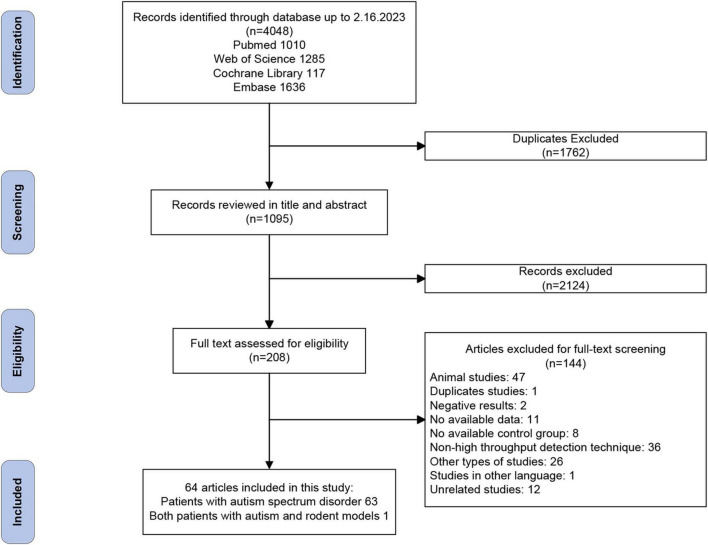
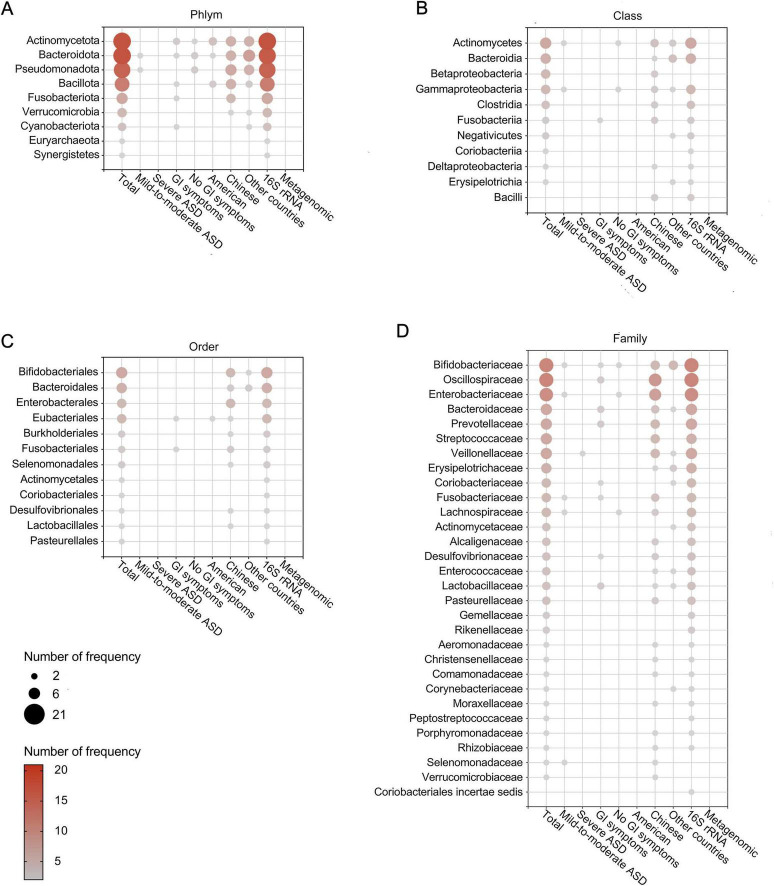
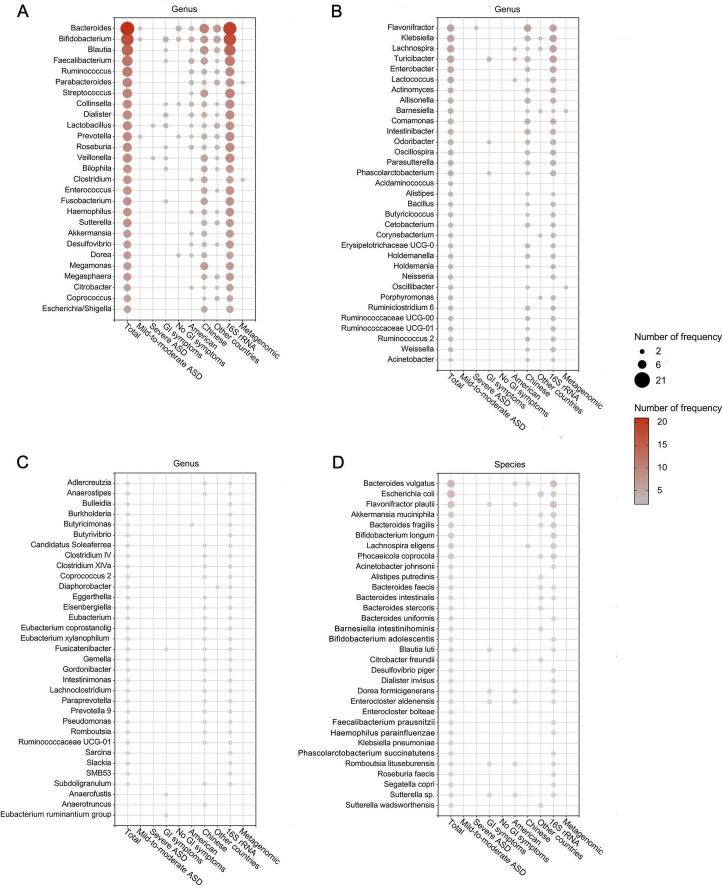
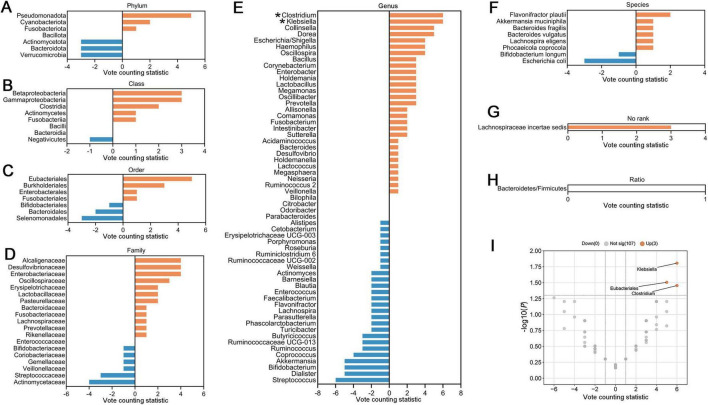
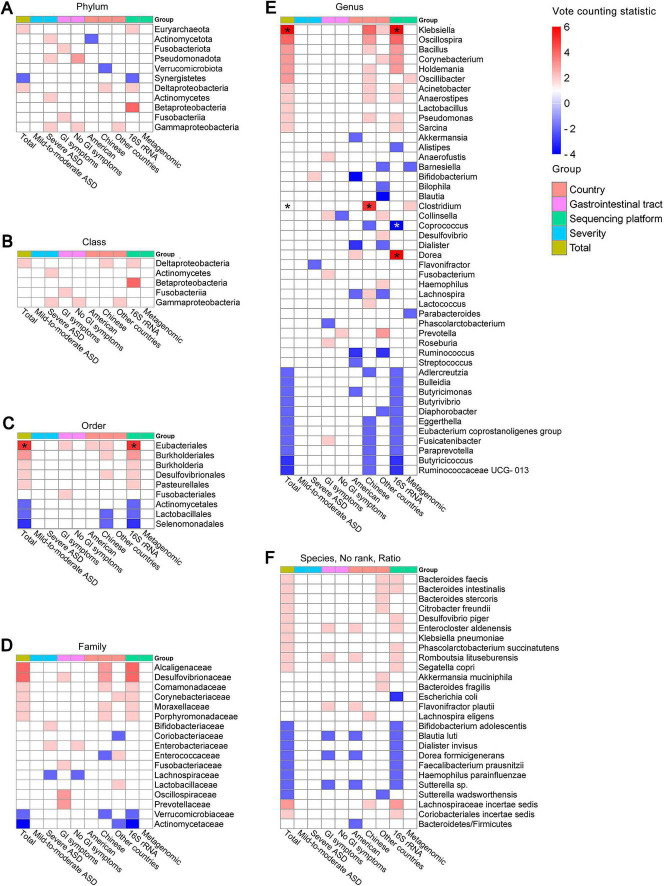
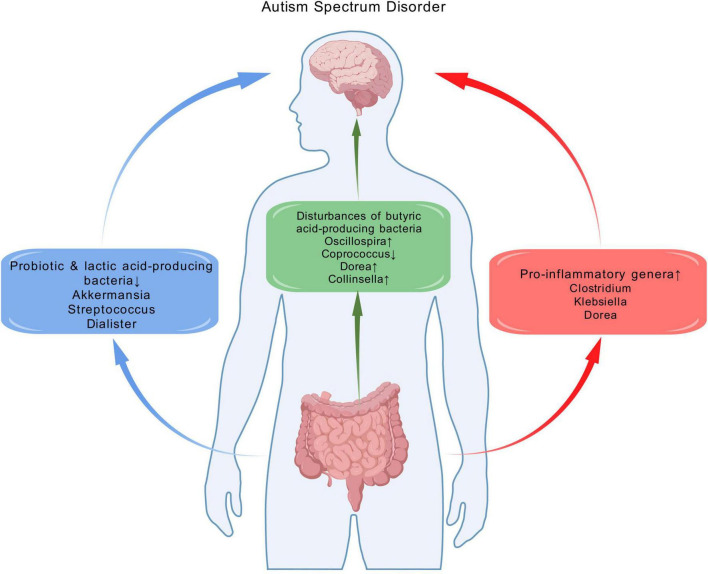
Background: Autism spectrum disorder (ASD) is a neurological and developmental disorder commonly accompanied by gut dysbiosis and gastrointestinal symptoms. Accumulating evidence supports a crucial role of gut microbiota dysbiosis in the pathophysiological mechanisms of ASD. However, the alteration of gut microbiota shows high heterogeneity across different studies. This study aims to identify potential biomarkers in the gut microbiota of patients with ASD. Methods: We conducted a comprehensive analysis by searching the PubMed, Web of Science, Cochrane Library, and Embase databases, for studies assessing the changes of gut microbial diversity and taxa in ASD patients and healthy controls using high-throughput sequencing. Vote counting analyses were performed to identify consistently altered gut microbes associated with ASD. Results: Sixty-four studies involving 189 differentially abundant gut microbial taxa were included. Our synthesis provided no strong evidence for a difference in α-diversity between ASD patients and healthy controls, while studies were relatively consistent in reporting differences in β-diversity. Among 189 taxa, we identified three significantly increased taxa in ASD patients: Eubacteriales, Klebsiella, and Clostridium. Additionally, there were enriched trends of Oscillospira, Dorea, and Collinsella, and depleted trends of Streptococcus, Akkermansia, Coprococcus, and Dialister. These findings suggest that the disrupted intestinal microecology and functional changes in ASD are characterized by an enrichment of pro-inflammatory genera, a reduction of specific probiotics, lactic acid-producing and utilizing bacteria, and an imbalance of anti-inflammatory butyrate-producing bacteria. Substantial heterogeneity across studies concerning demographics and methodologies was also observed. Conclusion: This systematic review contribute to a further understanding of the role of gut microbiota in ASD and support the development of microbiota-based diagnostic and therapeutic strategies for ASD.
Overview
The claims and statistics of this paper haven’t been checked yet.
Free: it reads the open-access text and checks the first 5 claims that cite a source we can check. Create a free account to check every claim.
Integrity signals
Registry
Cites
Statistics
Figures

Verification
Claims the paper makes
The claims and statistics of this paper haven’t been checked yet.
Free: it reads the open-access text and checks the first 5 claims that cite a source we can check. Create a free account to check every claim.
Claims other papers make about this one
Each is checked against this paper’s own text: does it say what the citing paper says it does?
The source backs part of the claim, not all of it — or backs it for a different population, condition or comparison.
In the citing paper
“Moreover, has been reported that the severity of gastrointestinal disorders in children with ASD may be closely linked to the intensity of neuropsychiatric symptoms, with more severe GI issues observed in individuals with more pronounced neuropsychiatric symptoms, and vice versa [33,34].”
From The Prevalence and Clinical Significance of Toe Walking in Autism Spectrum Disorder: A Cross-Sectional Study in an Italian Pediatric Sample (2025) · cites this paper as [34]
Experimental — accuracy not yet measured
Self-check
Percentages, sums and reported differences re-computed from the paper’s own numbers.
The self-check needs the paper’s full text.
Citations
Cites
The PRISMA 2020 statement: An updated guideline for reporting systematic reviews
Page, M. J., McKenzie, J. E., Bossuyt, P. M., Boutron, I., Hoffmann, T. C., Mulrow, C. D., Shamseer, L., Tetzlaff, J. M., Akl, E. A., Brennan, S. E., et al. (2021) · BMJ · doi:10.1136/bmj.n71 · Cited by 108,283
Diet rapidly and reproducibly alters the human gut microbiome
David, L. A., Maurice, C. F., Carmody, R. N., Gootenberg, D. B., Button, J. E., Wolfe, B. E., Ling, A. V., Devlin, A. S., Varma, Y., Fischbach, M. A., et al. (2014) · Nature · doi:10.1038/nature12820 · Cited by 10,100 · cited 1×
“…several studies have highlighted the influence of genetics and diet on the composition and function of the gut microbiota (Cho and Blaser, 2012; David et al., 2014; Derrien et al., 2019), in our current systematic review, we identified that data regarding the interaction between genetic forms…”
Human gut microbiome viewed across age and geography
Yatsunenko, T., Rey, F. E., Manary, M. J., Trehan, I., Dominguez-Bello, M. G., Contreras, M., Magris, M., Hidalgo, G., Baldassano, R. N., Anokhin, A. P., et al. (2012) · Nature · doi:10.1038/nature11053 · Cited by 7,815
The human microbiome: at the interface of health and disease
Cho, I., & Blaser, M. J. (2012) · Nature Reviews Genetics · doi:10.1038/nrg3182 · Cited by 3,449
Toward objective classification of childhood autism: Childhood Autism Rating Scale (CARS)
Schopler, E., Reichler, R. J., DeVellis, R. F., & Daly, K. (1980) · Journal of Autism and Developmental Disorders · doi:10.1007/bf02408436 · Cited by 2,432 · cited 1×
“Patients with a mean CARS score ranging from 30 to 35 were classified as the mild-to-moderate group (4 studies), and those with a mean score of 36 or higher were classified as the severe group (4 studies) (Schopler et al., 1980).”
Lord, C., Brugha, T. S., Charman, T., Cusack, J., Dumas, G., Frazier, T., Jones, E. J. H., Jones, R. M., Pickles, A., State, M. W., et al. (2020) · Nature Reviews Disease Primers · doi:10.1038/s41572-019-0138-4 · Cited by 1,859
The interplay between the intestinal microbiota and the brain
Collins, S. M., Surette, M., & Bercik, P. (2012) · Nature Reviews Microbiology · doi:10.1038/nrmicro2876 · Cited by 1,611 · cited 1×
“Thus, the crucial role of the gut-brain axis in the pathophysiology of neurological disorders appears to be driven by the ecology and function of the gut microbiota (Collins et al., 2012).”
Costs of Autism Spectrum Disorders in the United Kingdom and the United States
Buescher, A. V. S., Cidav, Z., Knapp, M., & Mandell, D. S. (2014) · JAMA Pediatrics · doi:10.1001/jamapediatrics.2014.210 · Cited by 1,296
New evidences on the altered gut microbiota in autism spectrum disorders
Strati, F., Cavalieri, D., Albanese, D., De Felice, C., Donati, C., Hayek, J., Jousson, O., Leoncini, S., Renzi, D., Calabrò, A., et al. (2017) · Microbiome · doi:10.1186/s40168-017-0242-1 · Cited by 1,040 · cited 2×
“Gut microbiota dysbiosis has been widely implicated in the pathogenesis of neurological disorders through the “microbiota-gut-brain” axis (Strati et al., 2017), which has been recognized to regulate the functions of the gastrointestinal and central nervous systems through a bidirectional…”
Decreased Diversity of the Fecal Microbiome in Recurrent Clostridium difficile–Associated Diarrhea
Chang, J. Y., Antonopoulos, D. A., Kalra, A., Tonelli, A., Khalife, W. T., Schmidt, T. M., & Young, V. B. (2008) · The Journal of Infectious Diseases · doi:10.1086/525047 · Cited by 1,010 · cited 1×
“There is an assumption that a higher diversity of gut microbiota symbolizes a healthy state (Shade, 2017), while a lower α -diversity is considered a marker of disease status (Chang et al., 2008).”
The microbiota-gut-brain axis: from motility to mood
Margolis, K. G., Cryan, J. F., & Mayer, E. A. (2021) · Gastroenterology · doi:10.1053/j.gastro.2020.10.066 · Cited by 999 · cited 1×
“…may play a potential role in the pathogenesis of depression, Alzheimer’s disease, and Parkinson’s disease through mechanisms such as immune activation and the action of microbial metabolites, influencing emotions and contributing to the development of these disorders (Margolis et al., 2021).”
Review: microbial transformations of human bile acids
Guzior, D. V., & Quinn, R. A. (2021) · Microbiome · doi:10.1186/s40168-021-01101-1 · Cited by 748
Maes, M. H. J., Kubera, M., & Leunis, J. (2008) · PubMed · Cited by 746
Akkermansia muciniphila is a promising probiotic
Zhang, T., Li, Q., Cheng, L., Buch, H., & Zhang, F. (2019) · Microbial Biotechnology · doi:10.1111/1751-7915.13410 · Cited by 708
Autistic-like social behaviour in Shank2-mutant mice improved by restoring NMDA receptor function
Won, H., Lee, H.-R., Gee, H. Y., Mah, W., Kim, J.-I., Lee, J., Ha, S., Chung, C., Jung, E. S., Cho, Y. S., et al. (2012) · Nature · doi:10.1038/nature11208 · Cited by 695
The Gut Microbiota in the First Decade of Life
Derrien, M., Alvarez, A.-S., & de Vos, W. M. (2019) · Trends in Microbiology · doi:10.1016/j.tim.2019.08.001 · Cited by 635
Host variables confound gut microbiota studies of human disease
Vujkovic-Cvijin, I., Sklar, J., Jiang, L., Natarajan, L., Knight, R., & Belkaid, Y. (2020) · Nature · doi:10.1038/s41586-020-2881-9 · Cited by 614 · cited 1×
“Additionally, medications are significant covariates of the gut microbiome (Vujkovic-Cvijin et al., 2020).”
Systematic Review of Gut Microbiota and Major Depression
Cheung, S. G., Goldenthal, A. R., Uhlemann, A.-C., Mann, J. J., Miller, J. M., & Sublette, M. E. (2019) · Frontiers in Psychiatry · doi:10.3389/fpsyt.2019.00034 · Cited by 597
Emerging Roles for the Gut Microbiome in Autism Spectrum Disorder
Vuong, H. E., & Hsiao, E. Y. (2017) · Biological Psychiatry · doi:10.1016/j.biopsych.2016.08.024 · Cited by 595
Diversity is the question, not the answer
Shade, A. (2017) · The ISME Journal · doi:10.1038/ismej.2016.118 · Cited by 466
Microbiota and the social brain
Sherwin, E., Bordenstein, S. R., Quinn, J. L., Dinan, T. G., & Cryan, J. F. (2019) · Science · doi:10.1126/science.aar2016 · Cited by 462 · cited 1×
“…indicated that the pathways by which the gut microbiota influences social behavior and brain physiology include immune activation (Buffington et al., 2021; Furness et al., 1999), production of microbial peptides, metabolites, and multiple neuroregulators and neurotransmitters (Sherwin et al., 2019).”
Wang, L., Christophersen, C. T., Sorich, M. J., Gerber, J. P., Angley, M. T., & Conlon, M. A. (2011) · Applied and Environmental Microbiology · doi:10.1128/aem.05212-11 · Cited by 432
The role of probiotics in children with autism spectrum disorder: A prospective, open-label study
Shaaban, S. Y., El Gendy, Y. G., Mehanna, N. S., El-Senousy, W. M., El-Feki, H. S. A., Saad, K., & El-Asheer, O. M. (2018) · Nutritional Neuroscience · doi:10.1080/1028415x.2017.1347746 · Cited by 374
Iglesias-Vázquez, L., Van Ginkel Riba, G., Arija, V., & Canals, J. (2020) · Nutrients · doi:10.3390/nu12030792 · Cited by 352 · cited 2×
“Therefore, the disturbances of butyric acid-producing bacteria may contribute to intestinal inflammation (Iglesias-Vázquez et al., 2020).”
Enhanced translocation of bacteria across metabolically stressed epithelia is reduced by butyrate†
Lewis, K., Lutgendorff, F., Phan, V., Söderholm, J. D., Sherman, P. M., & McKay, D. M. (2010) · Inflammatory Bowel Diseases · doi:10.1002/ibd.21177 · Cited by 335
Ehrlich, A. M., Pacheco, A. R., Henrick, B. M., Taft, D., Xu, G., Huda, M. N., Mishchuk, D., Goodson, M. L., Slupsky, C., Barile, D., et al. (2020) · BMC Microbiology · doi:10.1186/s12866-020-02023-y · Cited by 311
Urinary incontinence and quality of life: A systematic review and meta-analysis
Pizzol, D., Demurtas, J., Celotto, S., Maggi, S., Smith, L., Angiolelli, G., Trott, M., Yang, L., & Veronese, N. (2021) · Aging Clinical and Experimental Research · doi:10.1007/s40520-020-01712-y · Cited by 310
Xu, M., Xu, X., Li, J., & Li, F. (2019) · Frontiers in Psychiatry · doi:10.3389/fpsyt.2019.00473 · Cited by 309
II. The intestine as a sensory organ: neural, endocrine, and immune responses
Furness, J. B., Kunze, W. A. A., & Clerc, N. (1999) · American Journal of Physiology-Gastrointestinal and Liver Physiology · doi:10.1152/ajpgi.1999.277.5.g922 · Cited by 300
Kratsman, N., Getselter, D., & Elliott, E. (2016) · Neuropharmacology · doi:10.1016/j.neuropharm.2015.11.003 · Cited by 239
Dissecting the contribution of host genetics and the microbiome in complex behaviors
Buffington, S. A., Dooling, S. W., Sgritta, M., Noecker, C., Murillo, O. D., Felice, D. F., Turnbaugh, P. J., & Costa-Mattioli, M. (2021) · Cell · doi:10.1016/j.cell.2021.02.009 · Cited by 218
The contribution of the gut microbiome to neurodevelopment and neuropsychiatric disorders
Warner, B. B. (2019) · Pediatric Research · doi:10.1038/s41390-018-0191-9 · Cited by 168
Gut microbiota changes in patients with autism spectrum disorders
Ding, X., Xu, Y., Zhang, X., Zhang, L., Duan, G., Song, C., Li, Z., Yang, Y., Wang, Y., Wang, X., et al. (2020) · Journal of Psychiatric Research · doi:10.1016/j.jpsychires.2020.06.032 · Cited by 166 · cited 1×
“This has further impacts on brain function and behavior (Ding et al., 2020).”
Self-citationOlusanya, B. O., Smythe, T., Ogbo, F. A., Nair, M. K. C., Scher, M. S., & Davis, A. C. (2023) · Frontiers in Public Health · doi:10.3389/fpubh.2023.1122009 · Cited by 153
Fusobacterium nucleatum, inflammation, and immunity: the fire within human gut
Bashir, A., Miskeen, A. Y., Hazari, Y., Asrafuzzaman, S., & Fazili, K. M. (2015) · Tumor Biology · doi:10.1007/s13277-015-4724-0 · Cited by 148
Comparative Genomics of Bifidobacterium, Lactobacillus and Related Probiotic Genera
Lukjancenko, O., Ussery, D. W., & Wassenaar, T. M. (2012) · Microbial Ecology · doi:10.1007/s00248-011-9948-y · Cited by 118
Proença, M. A., Biselli, J. M., Succi, M., Severino, F. E., Berardinelli, G. N., Caetano, A., Reis, R. M., Hughes, D. J., & Silva, A. E. (2018) · World Journal of Gastroenterology · doi:10.3748/wjg.v24.i47.5351 · Cited by 108
Meta‐analysis of clinical metabolic profiling studies in cancer: challenges and opportunities
Goveia, J., Pircher, A., Conradi, L., Kalucka, J., Lagani, V., Dewerchin, M., Eelen, G., DeBerardinis, R. J., Wilson, I. D., & Carmeliet, P. (2016) · EMBO Molecular Medicine · doi:10.15252/emmm.201606798 · Cited by 108
In Silico Analysis of Putrefaction Pathways in Bacteria and Its Implication in Colorectal Cancer
Kaur, H., Das, C., & Mande, S. S. (2017) · Frontiers in Microbiology · doi:10.3389/fmicb.2017.02166 · Cited by 98
Feroe, A. G., Uppal, N., Gutiérrez-Sacristán, A., Mousavi, S., Greenspun, P., Surati, R., Kohane, I. S., & Avillach, P. (2021) · JAMA Pediatrics · doi:10.1001/jamapediatrics.2021.1329 · Cited by 72
Li, Z., Yang, L., Chen, H., Fang, Y., Zhang, T., Yin, X., Man, J., Yang, X., & Lu, M. (2022) · Epidemiology and Psychiatric Sciences · doi:10.1017/s2045796022000178 · Cited by 69
Self-citationLaue, H. E., Korrick, S., Baker, E., Karagas, M. R., & Madan, J. C. (2020) · Scientific Reports · doi:10.1038/s41598-020-72386-9 · Cited by 68
Abujamel, T. S., Al-Otaibi, N. M., Abuaish, S., Alharbi, R. H., Assas, M. B., Alzahrani, S. A., Alotaibi, S. M., El-Ansary, A. K., & Aabed, K. (2022) · Nutrients · doi:10.3390/nu14030608 · Cited by 48
Deng, W., Wang, S., Li, F., Wang, F., Xing, Y. P., Li, Y., Lv, Y., Ke, H., Li, Z., Lv, P. J., et al. (2022) · Frontiers in Microbiology · doi:10.3389/fmicb.2022.1000419 · Cited by 43
Self-citationRikke, B. A., Wynes, M. W., Rozeboom, L. M., Barón, A. E., & Hirsch, F. R. (2015) · Biomarkers in Medicine · doi:10.2217/bmm.15.39 · Cited by 42
Agarwala, S., Naik, B., & Ramachandra, N. B. (2021) · Brain Behavior & Immunity - Health · doi:10.1016/j.bbih.2021.100269 · Cited by 36
Wong, O. W. H., Lam, A. M. W., Or, B. P. N., Mo, F. Y. M., Shea, C. K., Lai, K. Y. C., Ma, S. L., Hung, S. F., Chan, S. S. M., Kwong, T. N. Y., et al. (2022) · Scientific Reports · doi:10.1038/s41598-022-14785-8 · Cited by 34
Glutamate-Mediated Signaling and Autism Spectrum Disorders: Emerging Treatment Targets
Yang, P., & Chang, C. (2014) · Current Pharmaceutical Design · doi:10.2174/1381612819666140110120725 · Cited by 33
Long, L., Zhao, X., Chen, J., Wang, Z., Tang, Y., Jian, H., & Yin, Y. (2023) · Animal nutrition · doi:10.1016/j.aninu.2023.08.011 · Cited by 17
A method for enhancing the visibility of stained DNA.
Hoffman, E. C. (1989) · PubMed · Cited by 4
Research works printed but not linked: 1
- Wells G. Tugwell P. O’Connell D. (2015). The Newcastle–Ottawa Scale (NOS) for Assessing the Quality of Nonrandomized Studies in Meta-Analyses. Available online at: http://www.ohri.ca/progr ams/clini cal_epide miolo gy/oxfor d.asp. (accessed June 1, 2020).
Cited by
Mavel, S., Pellé, L., & Andres, C. R. (2025) · Brain Behavior & Immunity - Health · doi:10.1016/j.bbih.2025.101074 · Cited by 9
Early-life microbiota dysbiosis as a link between Autism Spectrum Disorder and Parkinson’s Disease
Zhao, M., Hashimoto, K., & Yang, J. (2025) · Molecular Psychiatry · doi:10.1038/s41380-025-03281-w · Cited by 6
“…may compromise intestinal barrier integrity, promote low ‐ grade systemic in fl ammation, and alter the production of microbial metabolites — such as short ‐ chain fatty acids (SCFAs) and lipopolysaccharide — that in fl uence microglial activation and synaptic pruning in the developing brain [5, 6].”
Costanza, C., Gallai, B., Sorrentino, M., Gnazzo, M., Pisanò, G., Parisi, L., Germanò, E., Maltese, A., Esposito, M., Roccella, M., et al. (2025) · Medicina · doi:10.3390/medicina61081346 · Cited by 8
“Moreover, has been reported that the severity of gastrointestinal disorders in children with ASD may be closely linked to the intensity of neuropsychiatric symptoms, with more severe GI issues observed in individuals with more pronounced neuropsychiatric symptoms, and vice versa [33,34].”
Buendia-Corona, R. E., Dey, M. F. V., Robles, L. V., Biviano, H. J. H., Hermosillo‐Abundis, C., & Pastrana, L. I. C. (2026) · Molecules · doi:10.3390/molecules31020366 · Cited by 4
“%) relates to alterations in Firmicutes abundance and Firmicutes/Bacteroidetes ratios that have been consistently documented in ASD cohorts, though the direction of change varies across studies [18,20].”
Gut–Brain Inflammation and Disrupted Homeostasis Due to Activation of Mast Cells and Microglia
Katiraei, P., Frye, R. E., & Theoharides, T. C. (2026) · International Journal of Molecular Sciences · doi:10.3390/ijms27041768 · Cited by 5
“With respect to subjects with ASD, there are significant alterations in gut microbiota [70] with a shift towards depletion of beneficial species and an increase in pro-inflammatory species [71–75].”
Metadata
- Authors
- Tao, X., Li, Z., Wang, D., Pu, J., Liu, Y., Gui, S., Zhong, X., Yang, D., Zhou, H., Tao, W., Chen, W., Chen, X., Chen, Y., Chen, X., & Xie, P.
- Affiliations
- The Affiliated Yongchuan Hospital of Chongqing Medical University (CN)
- Corresponding author
- Xie, Peng
- ORCID
- Venue
- Frontiers in Neuroscience
- Publisher
- Frontiers Media SA
- Published
- 2025-05-16
- Volume
- 19
- Pages
- 1448478-1448478
- ISSN
- 1662-453X (ISSN-L)
- PMC
- PMC12122542
- OpenAlex
- W4410453720
- Cited by
- 23
- References
- 50
- Citations by year
- 2026: 20 · 2025: 3
- FWCI
- 2.04
- Type
- journal article
- Language
- en
- Open access
- gold
- doi.org
- Licence
- Locations
- Frontiers in Neuroscience (publishedVersion, cc-by)
- PubMed Central (publishedVersion, cc-by)
- PubMed (publishedVersion)
- DOAJ (DOAJ: Directory of Open Access Journals) (submittedVersion, cc-by-sa)
- Funders
- Natural Science Foundation of Chongqing (cstc2022ycjh, CSTB2024NSCQ)
- Centre Scientifique et Technique du Bâtiment
- Topics
- Life Sciences › Biochemistry, Genetics and Molecular Biology › Molecular Biology › Gut microbiota and health
- Life Sciences › Neuroscience › Cognitive Neuroscience › Autism Spectrum Disorder Research
- Health Sciences › Medicine › Gastroenterology › Gastrointestinal motility and disorders
- Keywords
- autism spectrum disorder, gut microbiota, dysbiosis, microbial biomarkers, gut dysbiosis, microbial diversity, pro-inflammatory bacteria, butyrate-producing bacteria, Akkermansia, Klebsiella, Clostridium, Oscillospira, Dorea, Collinsella, Streptococcus, lactic acid bacteria, gut-brain axis, microbiota-based therapy
About these checks
Registry, retraction, Cites and statistics results are computed, not judged, with one exception: a printed reference that no index lists is read once by a model before it counts as a citation error. Claims are extracted by a model and kept only when their quote appears verbatim in the text; each cited source is then checked, with a model’s help, for whether it says what the claim relies on. Those verdicts can be wrong — read the claim’s quote and the cited source before relying on one.
Statistics and arithmetic are recomputed, not judged.
Confidence bands are shown only for fields calibrated on our annotated test set. None is calibrated yet, so no band is shown.
What counts as a claim ›How we measure confidence ›How we check this ›
Are you an author, or do you see a problem with this page? Request a review
Data sources
Bibliographic data: Semantic Scholar, OpenAlex, Crossref.
Contains information from the Semantic Scholar Academic Graph Datasets, made available under the ODC Attribution License (ODC-BY 1.0).
Semantic Scholar’s data is described in: Kinney, R., et al. (2023). The Semantic Scholar Open Data Platform. arXiv:2301.10140.
