

The Effectiveness of Multi-Session FMT Treatment in Active Ulcerative Colitis Patients: A Pilot Study
Open accessThe DOI matches its Crossref record; 77 of the 77 references it cites were found in a registry or an index.
Abstract
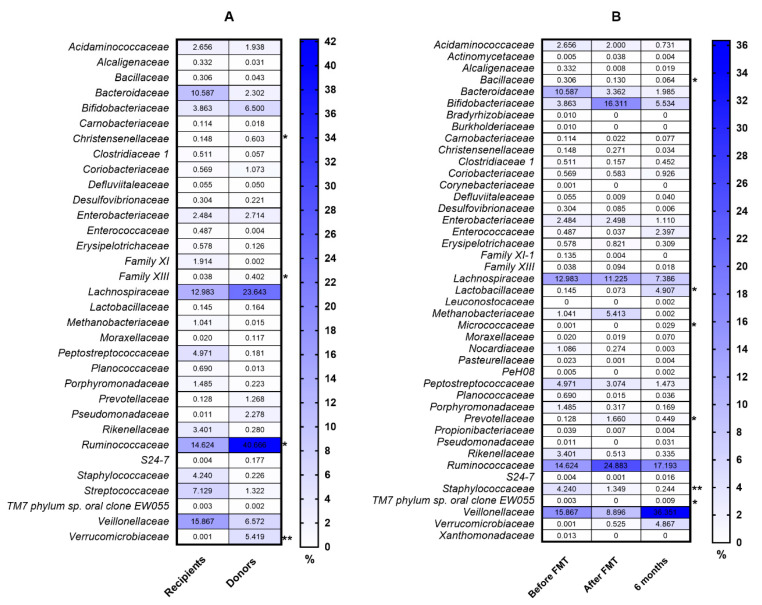
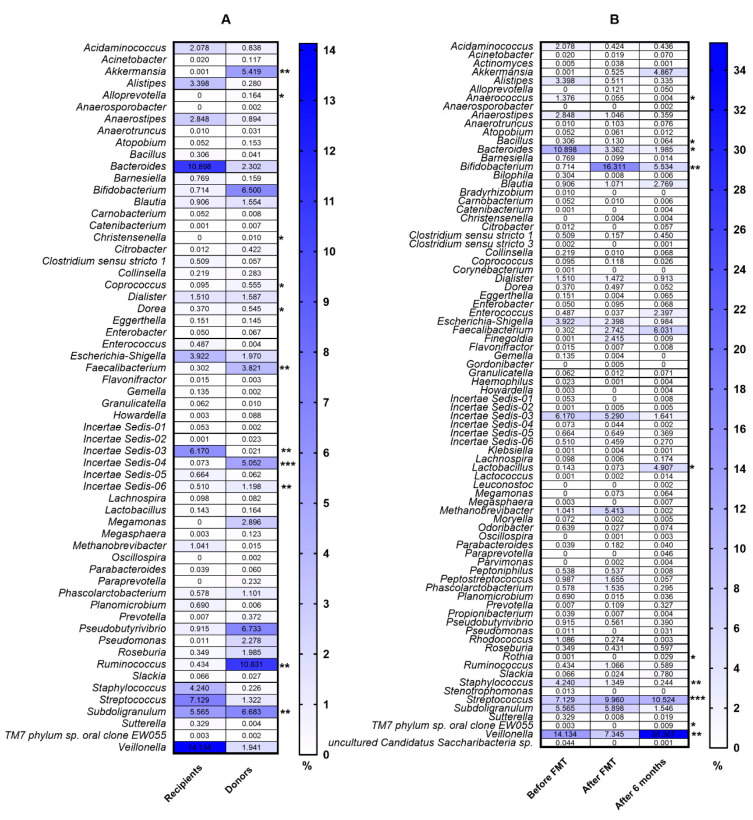
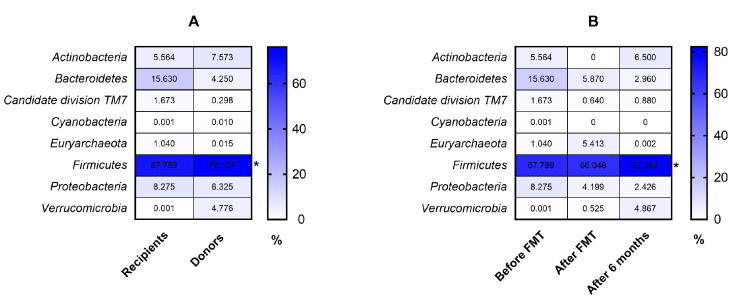
The modification of the microbiome through fecal microbiota transplantation (FMT) is becoming a very promising therapeutic option for inflammatory bowel disease (IBD) patients. Our pilot study aimed to assess the effectiveness of multi-session FMT treatment in active ulcerative colitis (UC) patients. Ten patients with UC were treated with multi-session FMT (200 mL) from healthy donors, via colonoscopy/gastroscopy. Patients were evaluated as follows: at baseline, at week 7, and after 6 months, routine blood tests (including C reactive protein (CRP) and calprotectin) were performed. 16S rRNA gene (V3V4) sequencing was used for metagenomic analysis. The severity of UC was classified based on the Truelove–Witts index. The assessment of microbial diversity showed significant differences between recipients and healthy donors. FMT contributed to long-term, significant clinical and biochemical improvement. Metagenomic analysis revealed an increase in the amount of Lactobacillaceaea, Micrococcaceae, Prevotellaceae, and TM7 phylumsp.oral clone EW055 during FMT, whereas Staphylococcaceae and Bacillaceae declined significantly. A positive increase in the proportion of the genera Bifidobacterium, Lactobacillus, Rothia, Streptococcus, and Veillonella and a decrease in Bacillus, Bacteroides, and Staphylococcus were observed based on the correlation between calprotectin and Bacillus and Staphylococcus; ferritin and Lactobacillus, Veillonella, and Bifidobacterium abundance was indicated. A positive change in the abundance of Firmicutes was observed during FMT and after 6 months. The application of multi-session FMT led to the restoration of recipients’ microbiota and resulted in the remission of patients with active UC.
Overview
The claims and statistics of this paper haven’t been checked yet.
Free: it reads the open-access text and checks the first 5 claims that cite a source we can check. Create a free account to check every claim.
Integrity signals
Registry
Cites
Statistics
Figures
Verification
Claims the paper makes
The claims and statistics of this paper haven’t been checked yet.
Free: it reads the open-access text and checks the first 5 claims that cite a source we can check. Create a free account to check every claim.
Self-check
Percentages, sums and reported differences re-computed from the paper’s own numbers.
The self-check needs the paper’s full text.
Citations
Cites
The SILVA ribosomal RNA gene database project: improved data processing and web-based tools
Quast, C., Pruesse, E., Yilmaz, P., Gerken, J., Schweer, T., Yarza, P., Peplies, J., & Glöckner, F. O. (2012) · Nucleic Acids Research · doi:10.1093/nar/gks1219 · Cited by 33,055
Frank, D. N., St. Amand, A. L., Feldman, R. A., Boedeker, E. C., Harpaz, N., & Pace, N. R. (2007) · Proceedings of the National Academy of Sciences · doi:10.1073/pnas.0706625104 · Cited by 4,611
Parada Venegas, D., De la Fuente, M. K., Landskron, G., González, M. J., Quera, R., Dijkstra, G., Harmsen, H. J. M., Faber, K. N., & Hermoso, M. A. (2019) · Frontiers in Immunology · doi:10.3389/fimmu.2019.00277 · Cited by 3,820
Duodenal Infusion of Donor Feces for Recurrent Clostridium difficile
van Nood, E., Vrieze, A., Nieuwdorp, M., Fuentes, S., Zoetendal, E. G., de Vos, W. M., Visser, C. E., Kuijper, E. J., Bartelsman, J. F. W. M., Tijssen, J. G. P., et al. (2013) · New England Journal of Medicine · doi:10.1056/nejmoa1205037 · Cited by 3,708
Human Genetics Shape the Gut Microbiome
Goodrich, J. K., Waters, J. L., Poole, A. C., Sutter, J. L., Koren, O., Blekhman, R., Beaumont, M., Van Treuren, W., Knight, R., Bell, J. T., et al. (2014) · Cell · doi:10.1016/j.cell.2014.09.053 · Cited by 3,164
An Immunomodulatory Molecule of Symbiotic Bacteria Directs Maturation of the Host Immune System
Mazmanian, S. K., Liu, C. H., Tzianabos, A. O., & Kasper, D. L. (2005) · Cell · doi:10.1016/j.cell.2005.05.007 · Cited by 2,910 · cited 1×
“For example, Bacteroides fragilis through the action of the bacterial-derived polysaccharide A (PSA) affects systemic Th1 response [5].”
BackgroundInfluence of diet on the gut microbiome and implications for human health
Singh, R. K., Chang, H.-W., Yan, D., Lee, K. M., Ucmak, D., Wong, K., Abrouk, M., Farahnik, B., Nakamura, M., Zhu, T. H., et al. (2017) · Journal of Translational Medicine · doi:10.1186/s12967-017-1175-y · Cited by 2,599
Population-level analysis of gut microbiome variation
Falony, G., Joossens, M., Vieira-Silva, S., Wang, J., Darzi, Y., Faust, K., Kurilshikov, A., Bonder, M. J., Valles-Colomer, M., Vandeputte, D., et al. (2016) · Science · doi:10.1126/science.aad3503 · Cited by 2,400
Inflammatory bowel disease: Pathogenesis
Zhang, Y.-Z. (2014) · World Journal of Gastroenterology · doi:10.3748/wjg.v20.i1.91 · Cited by 1,507
Moayyedi, P., Surette, M. G., Kim, P. T., Libertucci, J., Wolfe, M., Onischi, C., Armstrong, D., Marshall, J. K., Kassam, Z., Reinisch, W., et al. (2015) · Gastroenterology · doi:10.1053/j.gastro.2015.04.001 · Cited by 1,499 · cited 1×
“[28] performed FMT via enema, and Rossen et al.”
MethodPng, C. W., Lindén, S. K., Gilshenan, K. S., Zoetendal, E. G., McSweeney, C. S., Sly, L. I., McGuckin, M. A., & Florin, T. H. J. (2010) · American Journal of Gastroenterology · doi:10.1038/ajg.2010.281 · Cited by 1,364
Paramsothy, S., Kamm, M. A., Kaakoush, N. O., Walsh, A. J., van den Bogaerde, J., Samuel, D., Leong, R. W. L., Connor, S., Ng, W., Paramsothy, R., et al. (2017) · The Lancet · doi:10.1016/s0140-6736(17)30182-4 · Cited by 1,276 · cited 1×
“[44], increased abundance of Bacteroides (B.”
European consensus conference on faecal microbiota transplantation in clinical practice
Cammarota, G., Ianiro, G., Tilg, H., Rajilić-Stojanović, M., Kump, P., Satokari, R., Sokol, H., Arkkila, P., Pintus, C., Hart, A., et al. (2017) · Gut · doi:10.1136/gutjnl-2016-313017 · Cited by 1,207 · cited 1×
“[22], the exclusion criteria for fecal donors were as follows: the presence of HIV, hepatitis B and C virus, cytomegalovirus, Epstein–Barr virus, toxoplasmosis, syphilis, Clostridium difficile, Yersinia spp.”
BackgroundGhosh, T. S., Rampelli, S., Jeffery, I. B., Santoro, A., Neto, M., Capri, M., Giampieri, E., Jennings, A., Candela, M., Turroni, S., et al. (2020) · Gut · doi:10.1136/gutjnl-2019-319654 · Cited by 991
Kassam, Z., Lee, C. H., Yuan, Y., & Hunt, R. H. (2013) · American Journal of Gastroenterology · doi:10.1038/ajg.2013.59 · Cited by 904
LeBlanc, J. G., Chain, F., Martín, R., Bermúdez-Humarán, L. G., Courau, S., & Langella, P. (2017) · Microbial Cell Factories · doi:10.1186/s12934-017-0691-z · Cited by 881
The gut microbiota and inflammatory bowel disease
Matsuoka, K., & Kanai, T. (2015) · Seminars in Immunopathology · doi:10.1007/s00281-014-0454-4 · Cited by 804
Imhann, F., Vich Vila, A., Bonder, M. J., Fu, J., Gevers, D., Visschedijk, M. C., Spekhorst, L. M., Alberts, R., Franke, L., van Dullemen, H. M., et al. (2018) · Gut · doi:10.1136/gutjnl-2016-312135 · Cited by 788 · cited 1×
“Indeed, a growing body of evidence supports the consistent reduction of Christensenellaceae in patients with UC [9,35] and Crohn’s disease [9].”
ResultKhan, I., Ullah, N., Zha, L., Bai, Y., Khan, A., Zhao, T., Che, T., & Zhang, C. (2019) · Pathogens · doi:10.3390/pathogens8030126 · Cited by 771
Parada Venegas, D., De la Fuente, M. K., Landskron, G., González, M. J., Quera, R., Dijkstra, G., Harmsen, H. J. M., Faber, K. N., & Hermoso, M. A. (2019) · Frontiers in Immunology · doi:10.3389/fimmu.2019.01486 · Cited by 654
Shen, Z.-H., Zhu, C.-X., Quan, Y.-S., Yang, Z.-Y., Wu, S., Luo, W.-W., Tan, B., & Wang, X.-Y. (2018) · World Journal of Gastroenterology · doi:10.3748/wjg.v24.i1.5 · Cited by 646 · cited 1×
“The gut microbial composition of patients with IBD is characterized by lower taxonomic levels of the most frequently assessed beneficial bacteria, such as Faecalibacterium prausnitzii and Roseburia intestinalis [7].”
BackgroundLee, C. H., Steiner, T., Petrof, E. O., Smieja, M., Roscoe, D., Nematallah, A., Weese, J. S., Collins, S., Moayyedi, P., Crowther, M., et al. (2016) · JAMA · doi:10.1001/jama.2015.18098 · Cited by 627
Quraishi, M. N., Widlak, M., Bhala, N., Moore, D., Price, M., Sharma, N., & Iqbal, T. H. (2017) · Alimentary Pharmacology & Therapeutics · doi:10.1111/apt.14201 · Cited by 617
Kelly, C. R., Khoruts, A., Staley, C., Sadowsky, M. J., Abd, M., Alani, M., Bakow, B., Curran, P., McKenney, J., Tisch, A., et al. (2016) · Annals of Internal Medicine · doi:10.7326/m16-0271 · Cited by 613
Garcia-Mantrana, I., Selma-Royo, M., Alcantara, C., & Collado, M. C. (2018) · Frontiers in Microbiology · doi:10.3389/fmicb.2018.00890 · Cited by 574
Paramsothy, S., Nielsen, S., Kamm, M. A., Deshpande, N. P., Faith, J. J., Clemente, J. C., Paramsothy, R., Walsh, A. J., van den Bogaerde, J., Samuel, D., et al. (2019) · Gastroenterology · doi:10.1053/j.gastro.2018.12.001 · Cited by 512 · cited 2×
“[32], showing that Prevotella was a prominent feature in several patients during and after fecal microbiota transplantation.”
BackgroundMethodKummen, M., Holm, K., Anmarkrud, J. A., Nygård, S., Vesterhus, M., Høivik, M. L., Trøseid, M., Marschall, H.-U., Schrumpf, E., Moum, B., et al. (2017) · Gut · doi:10.1136/gutjnl-2015-310500 · Cited by 426
Porter, E. M., Bevins, C. L., Ghosh, D., & Ganz, T. (2002) · Cellular and Molecular Life Sciences (CMLS) · doi:10.1007/s00018-002-8412-z · Cited by 423
Primary sclerosing cholangitis is characterised by intestinal dysbiosis independent from IBD
Sabino, J., Vieira-Silva, S., Machiels, K., Joossens, M., Falony, G., Ballet, V., Ferrante, M., Van Assche, G., Van der Merwe, S., Vermeire, S., et al. (2016) · Gut · doi:10.1136/gutjnl-2015-311004 · Cited by 413
Damo, S. M., Kehl-Fie, T. E., Sugitani, N., Holt, M. E., Rathi, S., Murphy, W. J., Zhang, Y., Betz, C., Hench, L., Fritz, G., et al. (2013) · Proceedings of the National Academy of Sciences · doi:10.1073/pnas.1220341110 · Cited by 388 · cited 1×
“[74] reported that calprotectin hinders the growth of bacterial pathogens such as Staphylococcus aureus, S.”
BackgroundSantoru, M. L., Piras, C., Murgia, A., Palmas, V., Camboni, T., Liggi, S., Ibba, I., Lai, M. A., Orrù, S., Blois, S., et al. (2017) · Scientific Reports · doi:10.1038/s41598-017-10034-5 · Cited by 387 · cited 1×
“[10] also showed that the microbial profile is characterized by a significantly higher presence of Verrucomicrobia, Firmicutes, Proteobacteria, and Fusobacteria in the IBD group.”
BackgroundPhylogenetic Analysis of Dysbiosis in Ulcerative Colitis During Remission
Rajilić-Stojanović, M., Shanahan, F., Guarner, F., & de Vos, W. M. (2013) · Inflammatory Bowel Diseases · doi:10.1097/mib.0b013e31827fec6d · Cited by 355 · cited 1×
“Indeed, a growing body of evidence supports the consistent reduction of Christensenellaceae in patients with UC [9,35] and Crohn’s disease [9].”
ResultFungal Dysbiosis in Mucosa-associated Microbiota of Crohn’s Disease Patients
Liguori, G., Lamas, B., Richard, M. L., Brandi, G., da Costa, G., Hoffmann, T. W., Di Simone, M. P., Calabrese, C., Poggioli, G., Langella, P., et al. (2016) · Journal of Crohn's and Colitis · doi:10.1093/ecco-jcc/jjv209 · Cited by 332
Microbial Metabolite Signaling Is Required for Systemic Iron Homeostasis
Das, N. K., Schwartz, A. J., Barthel, G., Inohara, N., Liu, Q., Sankar, A., Hill, D. R., Ma, X., Lamberg, O., Schnizlein, M. K., et al. (2020) · Cell Metabolism · doi:10.1016/j.cmet.2019.10.005 · Cited by 331
Scanlan, P. D., Shanahan, F., O'Mahony, C., & Marchesi, J. R. (2006) · Journal of Clinical Microbiology · doi:10.1128/jcm.00312-06 · Cited by 330
Microbiota transplantation: Concept, methodology and strategy for its modernization
FMT-standardization Study Group, Zhang, F., Cui, B., He, X., Nie, Y., Wu, K., & Fan, D. (2018) · Protein & Cell · doi:10.1007/s13238-018-0541-8 · Cited by 300 · cited 1×
“A detailed medical history interview, physical examination, body composition analysis, and evaluation according to the following criteria were performed [20,21].”
MethodAlterations in the gut microbiome of children with severe ulcerative colitis
Michail, S., Durbin, M., Turner, D., Griffiths, A. M., Mack, D. R., Hyams, J., Leleiko, N., Kenche, H., Stolfi, A., & Wine, E. (2012) · Inflammatory Bowel Diseases · doi:10.1002/ibd.22860 · Cited by 284
Fecal Microbiota Transplantation: Indications, Methods, Evidence, and Future Directions
Borody, T. J., Paramsothy, S., & Agrawal, G. (2013) · Current Gastroenterology Reports · doi:10.1007/s11894-013-0337-1 · Cited by 275 · cited 1×
“A detailed medical history interview, physical examination, body composition analysis, and evaluation according to the following criteria were performed [20,21].”
MethodA next-generation beneficial microbe: Akkermansia muciniphila
Naito, Y., Uchiyama, K., & Takagi, T. (2018) · Journal of Clinical Biochemistry and Nutrition · doi:10.3164/jcbn.18-57 · Cited by 262 · cited 1×
“Furthermore, Akkermansia is associated with the immune response and the induction of interleukin-10 (IL-10) cytokine and SFCA production, supplying energy to goblet cells that produce mucin [43].”
BackgroundFecal microbiota transplantation as novel therapy in gastroenterology: A systematic review
Rossen, N. G. (2015) · World Journal of Gastroenterology · doi:10.3748/wjg.v21.i17.5359 · Cited by 242 · cited 2×
“Clinical improvement was observed in cases with higher frequency and longer duration of FMT, thus indicating this approach as superior to rare and short-term interventions, in which no significant differences in clinical and endoscopic remission in UC patients were observed [29].”
BackgroundResultThe microenvironment of injured murine gut elicits a local pro-restitutive microbiota
Alam, A., Leoni, G., Quiros, M., Wu, H., Desai, C., Nishio, H., Jones, R. M., Nusrat, A., & Neish, A. S. (2016) · Nature Microbiology · doi:10.1038/nmicrobiol.2015.21 · Cited by 238
Mancabelli, L., Milani, C., Lugli, G. A., Turroni, F., Cocconi, D., van Sinderen, D., & Ventura, M. (2017) · FEMS Microbiology Ecology · doi:10.1093/femsec/fix153 · Cited by 238 · cited 1×
“[34], Christensenellaceae is an indicator of a healthy gut.”
BackgroundNutritional immunity: S100 proteins at the host–pathogen interface
Zackular, J. P., Chazin, W. J., & Skaar, E. P. (2015) · Journal of Biological Chemistry · doi:10.1074/jbc.r115.645085 · Cited by 235 · cited 1×
“Calprotectin belongs to the antimicrobial proteins that inhibit the growth of microbial species [72,73].”
BackgroundFecal Microbiota Transplantation: An Update on Clinical Practice
Kim, K. O., & Gluck, M. (2019) · Clinical Endoscopy · doi:10.5946/ce.2019.009 · Cited by 233 · cited 1×
“FMT is an infusion of stool from a healthy donor into the colon, or its delivery through the upper gastrointestinal tract, to a recipient with a disease believed to be related to an unhealthy gut microbiome [14].”
BackgroundFuentes, S., Rossen, N. G., van der Spek, M. J., Hartman, J. H. A., Huuskonen, L., Korpela, K., Salojärvi, J., Aalvink, S., de Vos, W. M., D’Haens, G. R., et al. (2017) · The ISME Journal · doi:10.1038/ismej.2017.44 · Cited by 223 · cited 1×
“Another study [49] showed differences in the abundance of bacteria such as Lachnospiraceae, Bacteroidetes, Proteobacteria, and Clostridium clusters IV and XIVa (Firmicutes) in UC patients after FMT.”
BackgroundAndoh, A., Imaeda, H., Aomatsu, T., Inatomi, O., Bamba, S., Sasaki, M., Saito, Y., Tsujikawa, T., & Fujiyama, Y. (2011) · Journal of Gastroenterology · doi:10.1007/s00535-010-0368-4 · Cited by 220 · cited 1×
“[54] reported an increased abundance of this phylum in IBD patients.”
BackgroundKump, P., Wurm, P., Gröchenig, H. P., Wenzl, H., Petritsch, W., Halwachs, B., Wagner, M., Stadlbauer, V., Eherer, A., Hoffmann, K. M., et al. (2018) · Alimentary Pharmacology & Therapeutics · doi:10.1111/apt.14387 · Cited by 196
The Impact of Dietary Transition Metals on Host-Bacterial Interactions
Lopez, C. A., & Skaar, E. P. (2018) · Cell Host & Microbe · doi:10.1016/j.chom.2018.05.008 · Cited by 190 · cited 1×
“Calprotectin belongs to the antimicrobial proteins that inhibit the growth of microbial species [72,73].”
BackgroundWang, Y., Gao, X., Ghozlane, A., Hu, H., Li, X., Xiao, Y., Li, D., Yu, G., & Zhang, T. (2018) · Journal of Crohn's and Colitis · doi:10.1093/ecco-jcc/jjx153 · Cited by 174
Sha, S., Xu, B., Wang, X., Zhang, Y., Wang, H., Kong, X., Zhu, H., & Wu, K. (2013) · Diagnostic Microbiology and Infectious Disease · doi:10.1016/j.diagmicrobio.2012.11.022 · Cited by 165 · cited 1×
“Additionally, UC patients’ microbiota may harbor adherent/invasive Escherichia coli and Shigella species of the Enterobacteriaceae family [8].”
BackgroundRamakrishna, B., Jayakanthan, P., Pugazhendhi, S., & Kabeerdoss, J. (2015) · Indian Journal of Medical Research · doi:10.4103/0971-5916.162091 · Cited by 145
Goyal, A., Yeh, A., Bush, B. R., Firek, B. A., Siebold, L. M., Rogers, M. B., Kufen, A. D., & Morowitz, M. J. (2018) · Inflammatory Bowel Diseases · doi:10.1093/ibd/izx035 · Cited by 135
The role of diet in the prevention and treatment of Inflammatory Bowel Diseases.
Reddavide, R., Rotolo, O., Caruso, M. G., Stasi, E., Notarnicola, M., Miraglia, C., Nouvenne, A., Meschi, T., Angelis, G. L. D., Mario, F. D., et al. (2018) · Acta bio-medica dell'Ateneo parmense/Acta biomedica · doi:10.23750/abm.v89i9-s.7952 · Cited by 134
Vesterlund, S., Karp, M., Salminen, S., & Ouwehand, A. C. (2006) · Microbiology · doi:10.1099/mic.0.28522-0 · Cited by 128 · cited 1×
“However, some studies suggest an association of Staphylococcus aureus with IBD [63,64].”
ResultHirano, A., Umeno, J., Okamoto, Y., Shibata, H., Ogura, Y., Moriyama, T., Torisu, T., Fujioka, S., Fuyuno, Y., Kawarabayasi, Y., et al. (2018) · Journal of Gastroenterology and Hepatology · doi:10.1111/jgh.14129 · Cited by 128
The gut microbiome as a target for IBD treatment: are we there yet
Knox, N. C., Forbes, J. D., Van Domselaar, G., & Bernstein, C. N. (2019) · Current Treatment Options in Gastroenterology · doi:10.1007/s11938-019-00221-w · Cited by 117 · cited 1×
“In recent times, the involvement of gut microbiota is considered a new probable factor strongly connected with IBD pathogenesis [2].”
BackgroundVigsnæs, L. K., Brynskov, J., Steenholdt, C., Wilcks, A., & Licht, T. R. (2012) · Beneficial Microbes · doi:10.3920/bm2012.0018 · Cited by 107
Gut microbiome in chronic rheumatic and inflammatory bowel diseases: Similarities and differences
Salem, F., Kindt, N., Marchesi, J. R., Netter, P., Lopez, A., Kokten, T., Danese, S., Jouzeau, J.-Y., Peyrin-Biroulet, L., & Moulin, D. (2019) · United European Gastroenterology Journal · doi:10.1177/2050640619867555 · Cited by 103 · cited 1×
“The Staphylococcus genus was found more frequently in UC patients with coexisting arthritis [65].”
BackgroundHourigan, S. K., Chen, L. A., Grigoryan, Z., Laroche, G., Weidner, M., Sears, C. L., & Oliva‐Hemker, M. (2015) · Alimentary Pharmacology & Therapeutics · doi:10.1111/apt.13326 · Cited by 101
Nishida, A., Imaeda, H., Ohno, M., Inatomi, O., Bamba, S., Sugimoto, M., & Andoh, A. (2016) · Journal of Gastroenterology · doi:10.1007/s00535-016-1271-4 · Cited by 92 · cited 1×
“[59], an increasing proportion of Bifidobacterium and Lactobacillus in recipients’ stools might contribute to a favorable response to FMT.”
BackgroundDutta, S., Girotra, M., Garg, S., Dutta, A., von Rosenvinge, E. C., Maddox, C., Song, Y., Bartlett, J. G., Vinayek, R., & Fricke, W. F. (2014) · Clinical Gastroenterology and Hepatology · doi:10.1016/j.cgh.2013.12.032 · Cited by 88 · cited 1×
“[50] also reported, during FMT, a significant rise in Lachnospiraceae, which have anti-inflammatory qualities.”
Kiernan, M. G., Coffey, J. C., McDermott, K. W. G., Cotter, P. D., Cabrera‐Rubio, R., Kiely, P. A., & Dunne, C. P. (2018) · Journal of Crohn s and Colitis · doi:10.1093/ecco-jcc/jjy136 · Cited by 76 · cited 1×
“[46] where a lower abundance of Actinobacteria phyla including Mycobacteriaceae, Micrococcaceae, and Streptomycineae was detected in healthy individuals.”
BackgroundLu, J., Wang, A., Ansari, S., Hershberg, R. M., & McKay, D. M. (2003) · Gastroenterology · doi:10.1053/j.gastro.2003.09.020 · Cited by 73 · cited 1×
“However, some studies suggest an association of Staphylococcus aureus with IBD [63,64].”
ResultStep-up fecal microbiota transplantation (FMT) strategy
Cui, B., Li, P., Xu, L., Peng, Z., Xiang, J., He, Z., Zhang, T., Ji, G., Nie, Y., Wu, K., et al. (2016) · Gut Microbes · doi:10.1080/19490976.2016.1151608 · Cited by 71
Walujkar, S. A., Kumbhare, S. V., Marathe, N. P., Patangia, D. V., Lawate, P. S., Bharadwaj, R. S., & Shouche, Y. S. (2018) · World Journal of Microbiology and Biotechnology · doi:10.1007/s11274-018-2449-0 · Cited by 66 · cited 1×
“[45] showed an increase in the abundance of the genus Micrococcus in mucosal-associated microbiota (MAM) of exacerbated UC patients when compared with the remission phase.”
ResultFecal microbiota transplantation for ulcerative colitis
Matsuoka, K. (2020) · Immunological Medicine · doi:10.1080/25785826.2020.1792040 · Cited by 63
Fecal microbiota transplantation is a rescue treatment modality for refractory ulcerative colitis
Uygun, A., Ozturk, K., Demirci, H., Oger, C., Avci, I. Y., Turker, T., & Gulsen, M. (2017) · Medicine · doi:10.1097/md.0000000000006479 · Cited by 58 · cited 1×
“[70] reported that CRP and sedimentation level improved after FMT in both responder and non-responder to this therapy groups of patients.”
BackgroundA novel quick transendoscopic enteral tubing in mid-gut: technique and training with video
Long, C., Yu, Y., Cui, B., Jagessar, S. A. R., Zhang, J., Ji, G., Huang, G., & Zhang, F. (2018) · BMC Gastroenterology · doi:10.1186/s12876-018-0766-2 · Cited by 57
Fecal microbiota transplantation ameliorates active ulcerative colitis
Chen, H., Huang, H., Xu, H., Luo, Q., He, J., Li, Y., Zhou, Y., Nie, Y., & Zhou, Y. (2020) · Experimental and Therapeutic Medicine · doi:10.3892/etm.2020.8512 · Cited by 55 · cited 1×
“[47] reported changes in the abundance of Faecalibacterium prausnitzii following FMT, which is of high importance for inflammatory diseases.”
BackgroundCold, F., Browne, P. D., Günther, S., Halkjaer, S. I., Petersen, A. M., Al-Gibouri, Z., Hansen, L. H., & Christensen, A. H. (2019) · Scandinavian Journal of Gastroenterology · doi:10.1080/00365521.2019.1585939 · Cited by 47 · cited 1×
“[71] in an open-labeled pilot study confirmed that median fecal calprotectin decreased significantly during the FMT treatment period, but increased again in the follow-up.”
BackgroundKellingray, L., Gall, G. L., Defernez, M., Beales, I. L. P., Franslem-Elumogo, N., & Narbad, A. (2018) · Journal of Infection · doi:10.1016/j.jinf.2018.04.012 · Cited by 43
Tomasello, G., Bellavia, M., Palumbo, V. D., Gioviale, M. C., Damiani, P., & Ai, L. M. (2011) · PubMed · Cited by 42
Zhang, T., Cui, B., Li, P., He, Z., Long, C., Wei, L., Peng, Z., Ji, G., & Zhang, F. (2016) · PLOS ONE · doi:10.1371/journal.pone.0158227 · Cited by 39 · cited 1×
“From the clinical point of view, there are also several biomarkers such as C reactive protein (CRP), erythrocyte sedimentation rate (ESR), platelets, and fecal calprotectin that can be used for objective evaluation of disease activity and inflammation in IBD patients [69].”
BackgroundFecal microbiota transplantation in ulcerative colitis.
Blanchaert, C., Strubbe, B., & Peeters, H. (2019) · PubMed · Cited by 34
Methodology, Not Concept of Fecal Microbiota Transplantation, Affects Clinical Findings
Cui, B., Xu, F., & Zhang, F. (2015) · Gastroenterology · doi:10.1053/j.gastro.2015.05.065 · Cited by 18
Ni, X.-D., Fan, S., Zhang, Y., Wang, Z., Ding, L., Li, Y., & Li, J. (2016) · Gut and Liver · doi:10.5009/gnl15456 · Cited by 15
Leukocytapheresis in ulcerative colitis: A possible alternative to biological therapy?
Arseneau, K. O., & Cominelli, F. (2009) · Digestive and Liver Disease · doi:10.1016/j.dld.2009.05.014 · Cited by 12 · cited 1×
“Modifications of intracellular tight junctions cause significant penetration of antigens, which leads to activation of the intestinal lymphatic system (MALT) [4].”
Background
Cited by
The role of gut dysbiosis in Parkinson’s disease: mechanistic insights and therapeutic options
Wang, Q., Luo, Y., Ray Chaudhuri, K., Reynolds, R., Tan, E.-K., & Pettersson, S. (2021) · Brain · doi:10.1093/brain/awab156 · Cited by 281
Helmy, Y. A., Taha-Abdelaziz, K., Hawwas, H. A. E.-H., Ghosh, S., AlKafaas, S. S., Moawad, M. M. M., Saied, E. M., Kassem, I. I., & Mawad, A. M. M. (2023) · Antibiotics · doi:10.3390/antibiotics12020274 · Cited by 200
Disturbances of the Gut Microbiota and Microbiota-Derived Metabolites in Inflammatory Bowel Disease
Hu, Y., Chen, Z., Xu, C., Kan, S., & Chen, D. (2022) · Nutrients · doi:10.3390/nu14235140 · Cited by 168
“The abundance of protective bacteria species such as Bifidobacterium and Lactobacilli was reported to decreased in IBD patients, and these protective bacteria could increase the frequency of mucosal Treg cells to ameliorate IBD symptoms [50].”
BackgroundIron status influences non-alcoholic fatty liver disease in obesity through the gut microbiome
Mayneris-Perxachs, J., Cardellini, M., Hoyles, L., Latorre, J., Davato, F., Moreno-Navarrete, J. M., Arnoriaga-Rodríguez, M., Serino, M., Abbott, J., Barton, R. H., et al. (2021) · Microbiome · doi:10.1186/s40168-021-01052-7 · Cited by 139
“Also in agreement with our results, low serum ferritin concentrations coexisted with decreased abundance of Veillonella species in ulcerative colitis patients receiving FMT from healthy donors [15], while Veillonella genus abundance was dose-dependently enriched after improvement of steatosis in NASH patients [16].”
ResultDysbiosis of gut microbiota in Polish patients with ulcerative colitis: a pilot study
Zakerska‐Banaszak, O., Tomczak, H., Gabryel, M., Baturo, A., Wolko, Ł., Michalak, M., Malińska, N., Mańkowska‐Wierzbicka, D., Eder, P., Dobrowolska, A., et al. (2021) · Scientific Reports · doi:10.1038/s41598-021-81628-3 · Cited by 143
Self-citation
Metadata
- Authors
- Mańkowska-Wierzbicka, D., Stelmach-Mardas, M., Gabryel, M., Tomczak, H., Skrzypczak-Zielińska, M., Zakerska-Banaszak, O., Sowińska, A., Mahadea, D., Baturo, A., Wolko, Ł., Słomski, R., & Dobrowolska, A.
- Affiliations
- Department of Gastroenterology, Dietetics and Internal Medicine, Poznan University of Medical Sciences, Heliodor Święcicki Hospital, Przybyszewskiego 49, 60-355 Poznań, Poland
- Poznan University of Medical Sciences (PL)
- Institute of Human Genetics (PL)
- Institute of Human Genetics, Polish Academy of Sciences, Strzeszyńska 32, 60-479 Poznań, Poland
- Poznań University of Life Sciences (PL)
- ORCID
- Venue
- Biomedicines
- Publisher
- MDPI AG
- Published
- 2020-08-03
- Volume
- 8
- Issue
- 8
- Pages
- 268
- ISSN
- 2227-9059 (ISSN-L)
- PMC
- PMC7459721
- OpenAlex
- W3046785006
- Semantic Scholar
- a9b53d77c6b47b1b229da5547f827168def23c80
- Cited by
- 39
- References
- 77
- Citations by year
- 2026: 5 · 2025: 3 · 2024: 5 · 2023: 11 · 2022: 4 · 2021: 10 · 2020: 1
- FWCI
- 3.81
- Type
- journal article
- Language
- en
- Open access
- gold
- doi.org
- Licence
- Locations
- Biomedicines (publishedVersion, cc-by)
- PubMed Central (publishedVersion, cc-by)
- PubMed (publishedVersion)
- DOAJ (DOAJ: Directory of Open Access Journals) (submittedVersion, cc-by-sa)
- Funders
- grant for young scientists from Poznan University of Medical Sciences, Poznan, Poland (502-01-222-38-000)
- Topics
- Health Sciences › Medicine › Gastroenterology › Inflammatory Bowel Disease
- Life Sciences › Biochemistry, Genetics and Molecular Biology › Molecular Biology › Gut microbiota and health
- Health Sciences › Medicine › Gastroenterology › Microscopic Colitis
- Keywords
- fecal microbiota transplantation, ulcerative colitis, gut microbiota, inflammatory bowel disease, microbial diversity, calprotectin, C-reactive protein, 16S rRNA gene sequencing, Firmicutes, Bifidobacterium, Lactobacillus, Veillonella, Bacillus, Staphylococcus, remission
About these checks
Registry, retraction, Cites and statistics results are computed, not judged, with one exception: a printed reference that no index lists is read once by a model before it counts as a citation error. Claims are extracted by a model and kept only when their quote appears verbatim in the text; each cited source is then checked, with a model’s help, for whether it says what the claim relies on. Those verdicts can be wrong — read the claim’s quote and the cited source before relying on one.
Statistics and arithmetic are recomputed, not judged.
Confidence bands are shown only for fields calibrated on our annotated test set. None is calibrated yet, so no band is shown.
What counts as a claim ›How we measure confidence ›How we check this ›
Are you an author, or do you see a problem with this page? Request a review
Data sources
Bibliographic data: Semantic Scholar, OpenAlex, Crossref.
Contains information from the Semantic Scholar Academic Graph Datasets, made available under the ODC Attribution License (ODC-BY 1.0).
Semantic Scholar’s data is described in: Kinney, R., et al. (2023). The Semantic Scholar Open Data Platform. arXiv:2301.10140.
