

Smoking as a Common Modulator of Sensory Gating and Reward Learning in Individuals with Psychotic Disorders
Open accessThe DOI matches its Crossref record; 80 of the 80 references it cites were found in a registry or an index.
Abstract
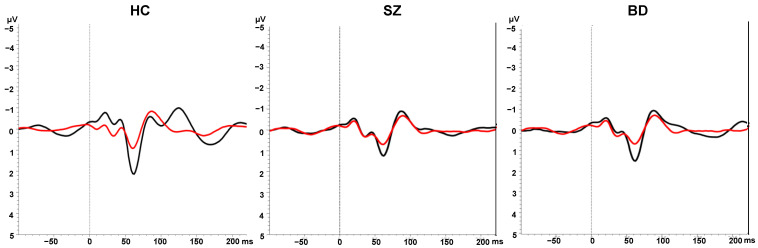
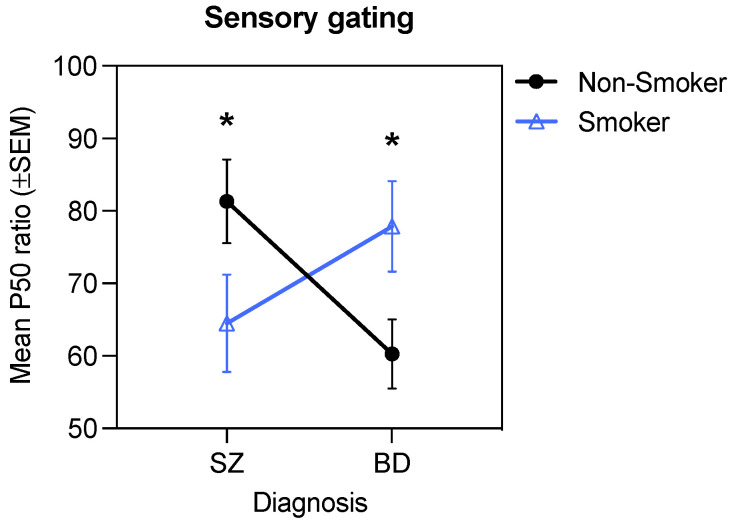
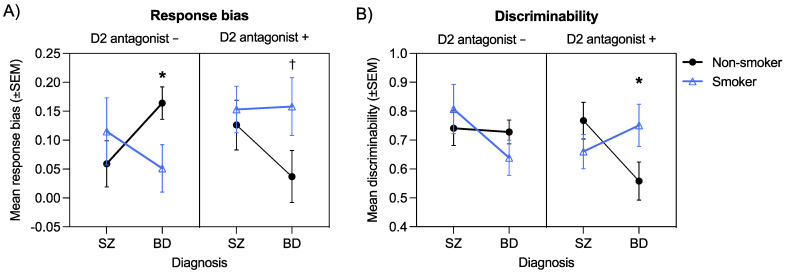
Motivational and perceptual disturbances co-occur in psychosis and have been linked to aberrations in reward learning and sensory gating, respectively. Although traditionally studied independently, when viewed through a predictive coding framework, these processes can both be linked to dysfunction in striatal dopaminergic prediction error signaling. This study examined whether reward learning and sensory gating are correlated in individuals with psychotic disorders, and whether nicotine—a psychostimulant that amplifies phasic striatal dopamine firing—is a common modulator of these two processes. We recruited 183 patients with psychotic disorders (79 schizophrenia, 104 psychotic bipolar disorder) and 129 controls and assessed reward learning (behavioral probabilistic reward task), sensory gating (P50 event-related potential), and smoking history. Reward learning and sensory gating were correlated across the sample. Smoking influenced reward learning and sensory gating in both patient groups; however, the effects were in opposite directions. Specifically, smoking was associated with improved performance in individuals with schizophrenia but impaired performance in individuals with psychotic bipolar disorder. These findings suggest that reward learning and sensory gating are linked and modulated by smoking. However, disorder-specific associations with smoking suggest that nicotine may expose pathophysiological differences in the architecture and function of prediction error circuitry in these overlapping yet distinct psychotic disorders.
Overview
The claims and statistics of this paper haven’t been checked yet.
Free: it reads the open-access text and checks the first 5 claims that cite a source we can check. Create a free account to check every claim.
Integrity signals
Registry
Cites
Statistics
Figures
Verification
Claims the paper makes
The claims and statistics of this paper haven’t been checked yet.
Free: it reads the open-access text and checks the first 5 claims that cite a source we can check. Create a free account to check every claim.
Claims other papers make about this one
Each is checked against this paper’s own text: does it say what the citing paper says it does?
The source backs part of the claim, not all of it — or backs it for a different population, condition or comparison.
In the citing paper
“Predictive coding impairments in sensory gating and probabilistic reward learning improve in SSD when smoking (Whitton et al., 2021).”
From Predictive coding in neuropsychiatric disorders: a systematic transdiagnostic review. (2025) · cites this paper as Whitton et al., 2021
Experimental — accuracy not yet measuredThe source backs part of the claim, not all of it — or backs it for a different population, condition or comparison.
In the citing paper
“In BD, smoking was associated with impaired sensory gating and reward-based learning performance, which appeared to be alleviated by the use of dopamine D2 receptor antagonists (i.e., i.e., antipsychotic dosage measured as chlorpromazine equivalents (Whitton et al., 2021).”
From Predictive coding in neuropsychiatric disorders: a systematic transdiagnostic review. (2025) · cites this paper as Whitton et al., 2021
Experimental — accuracy not yet measuredThe source backs part of the claim, not all of it — or backs it for a different population, condition or comparison.
In the citing paper
“Nicotine smoking is associated with improved sen sory gating (i.e., pre-attentive filtering of irrelevant stimuli) and prob abilistic reward-based learning (i.e., learning by probabilistic reward) in individuals with SCZ and is therefore used to stabilize predictive errors (Whitton et al., 2021).”
From Predictive coding in neuropsychiatric disorders: a systematic transdiagnostic review. (2025) · cites this paper as Whitton et al., 2021
Experimental — accuracy not yet measuredThe source backs part of the claim, not all of it — or backs it for a different population, condition or comparison.
In the citing paper
“This habit is related to impaired sensory gating and reward-based learning in individuals with BD”
From Predictive coding in neuropsychiatric disorders: a systematic transdiagnostic review. (2025) · cites this paper as Whitton et al., 2021
Experimental — accuracy not yet measuredThe cited source says what the claim attributes to it.
In the citing paper
“Electrophysiological studies showed a consistent pattern of reduced P3 in response to predictable stimuli (Fogelson et al., 2014), less N1 suppression (Ford et al., 2014), and higher P50 ratio (Whitton et al., 2021) in SCZ compared to HC.”
From Predictive coding in neuropsychiatric disorders: a systematic transdiagnostic review. (2025) · cites this paper as Whitton et al., 2021
1 more claim about this paper
Create a free account to see every claim other papers make about this one.
Self-check
Percentages, sums and reported differences re-computed from the paper’s own numbers.
The self-check needs the paper’s full text.
Citations
Cites
The Positive and Negative Syndrome Scale (PANSS) for schizophrenia.
Kay, S. R., Fiszbein, A., & Opler, L. A. (1987) · Schizophrenia Bulletin · doi:10.1093/schbul/13.2.261 · Cited by 21,378
A new depression scale designed to be sensitive to change
Montgomery, S. A., & Åsberg, M. (1979) · British Journal of Psychiatry · doi:10.1192/bjp.134.4.382 · Cited by 13,962 · cited 1×
“Positive, negative, and general symptoms of psychosis were assessed using the positive and negative syndrome scale (PANSS; [59]); manic symptom severity was assessed using the Young Mania Rating Scale (YMRS; [60]); and depressive symptom severity was assessed using the Montgomery-Asberg Depression Rating Scale (MADRS;…”
MethodA Rating Scale for Mania: Reliability, Validity and Sensitivity
Young, R. C., Biggs, J. T., Ziegler, V. E., & Meyer, D. A. (1978) · British Journal of Psychiatry · doi:10.1192/bjp.133.5.429 · Cited by 8,744 · cited 1×
“Positive, negative, and general symptoms of psychosis were assessed using the positive and negative syndrome scale (PANSS; [59]); manic symptom severity was assessed using the Young Mania Rating Scale (YMRS; [60]); and depressive symptom severity was assessed using the Montgomery-Asberg Depression Rating Scale (MADRS;…”
MethodRepetition and the brain: neural models of stimulus-specific effects
Grill-Spector, K., Henson, R., & Martin, A. (2006) · Trends in Cognitive Sciences · doi:10.1016/j.tics.2005.11.006 · Cited by 2,256 · cited 1×
“Sensory gating and other aspects of repetition suppression have historically been interpreted as arising from automatic, bottom-up sensory processes [35,36].”
BackgroundWatson, D., Weber, K., Assenheimer, J. S., Clark, L. A., Strauss, M. E., & McCormick, R. A. (1995) · Journal of Abnormal Psychology · doi:10.1037/0021-843x.104.1.3 · Cited by 1,423 · cited 1×
“Distinct aspects of negative affective symptoms were measured using the Mood and Anxiety Symptom Questionnaire (MASQ; [62]), which contains subscales for assessing general anxiety, general depression, anxious arousal, and anhedonic depression.”
MethodGenomic Relationships, Novel Loci, and Pleiotropic Mechanisms across Eight Psychiatric Disorders
Lee, P. H., Anttila, V., Won, H., Feng, Y.-C. A., Rosenthal, J., Zhu, Z., Tucker-Drob, E. M., Nivard, M. G., Grotzinger, A. D., Posthuma, D., et al. (2019) · Cell · doi:10.1016/j.cell.2019.11.020 · Cited by 1,381
The Predictive Coding Account of Psychosis
Sterzer, P., Adams, R. A., Fletcher, P., Frith, C., Lawrie, S. M., Muckli, L., Petrovic, P., Uhlhaas, P., Voss, M., & Corlett, P. R. (2018) · Biological Psychiatry · doi:10.1016/j.biopsych.2018.05.015 · Cited by 941 · cited 2×
“Predictive coding theories [1] and recent integrative models of psychosis emanating from these theories [2,3] provide us with a possible explanation for this link.”
BackgroundCorrections for extreme proportions and their biasing effects on estimated values ofd′
Hautus, M. J. (1995) · Behavior Research Methods, Instruments, & Computers · doi:10.3758/bf03203619 · Cited by 894 · cited 1×
“5 was added to each cell of the matrix [75].”
BackgroundReduced hedonic capacity in major depressive disorder: evidence from a probabilistic reward task
Pizzagalli, D. A., Iosifescu, D., Hallett, L. A., Ratner, K. G., & Fava, M. (2008) · Journal of Psychiatric Research · doi:10.1016/j.jpsychires.2008.03.001 · Cited by 780
Reward processing dysfunction in major depression, bipolar disorder and schizophrenia
Whitton, A. E., Treadway, M. T., & Pizzagalli, D. A. (2015) · Current Opinion in Psychiatry · doi:10.1097/yco.0000000000000122 · Cited by 739 · cited 2×
“This is an important comparison because although individuals with bipolar disorder share genetic susceptibility with schizophrenia [51], experience perceptual disturbances and P50 sensory gating deficits [24,52], and show high rates of smoking [53], several theoretical models (for reviews, see [4,54,55]) and recent em…”
BackgroundSelf-citationToward an objective characterization of an anhedonic phenotype: A signal-detection approach
Pizzagalli, D. A., Jahn, A. L., & O’Shea, J. P. (2005) · Biological Psychiatry · doi:10.1016/j.biopsych.2004.11.026 · Cited by 738 · cited 3×
“As in prior studies [71], the PRT data were first subjected to a quality control check, where reaction time outlier trials (<150 ms or >2500 ms) were excluded and where participants who performed below chance level on accuracy (i.”
BackgroundMethodNeural repetition suppression reflects fulfilled perceptual expectations
Summerfield, C., Trittschuh, E. H., Monti, J. M., Mesulam, M.-M., & Egner, T. (2008) · Nature Neuroscience · doi:10.1038/nn.2163 · Cited by 692 · cited 1×
“For example, suppression has been found to be stronger when repetition is highly probable and therefore easy to predict, compared to when it is less probable and therefore less predictable [37,38].”
BackgroundNormalization of auditory physiology by cigarette smoking in schizophrenic patients
(1993) · American Journal of Psychiatry · doi:10.1176/ajp.150.12.1856 · Cited by 679 · cited 2×
“Links between reward learning and sensory gating are also of interest, given that nicotine has been found to improve reward learning [41] and sensory gating [42] in individuals with psychosis.”
BackgroundMeta-analysis of the P300 and P50 waveforms in schizophrenia
BRAMON, E. (2004) · Schizophrenia Research · doi:10.1016/j.schres.2004.01.004 · Cited by 569 · cited 1×
“Meta-analyses indicate that compared to healthy controls, P50 suppression (computed as the ratio of P50 amplitude in response to S2 relative to S1) is attenuated in individuals with schizophrenia, as well as their unaffected family members [24,33], and is also present in individuals with affective psychoses, such as p…”
BackgroundReward Processing in Schizophrenia: A Deficit in the Representation of Value
Gold, J. M., Waltz, J. A., Prentice, K. J., Morris, S. E., & Heerey, E. A. (2008) · Schizophrenia Bulletin · doi:10.1093/schbul/sbn068 · Cited by 521
Nicotine use in schizophrenia: The self medication hypotheses
Kumari, V., & Postma, P. (2005) · Neuroscience & Biobehavioral Reviews · doi:10.1016/j.neubiorev.2005.02.006 · Cited by 468 · cited 1×
“This is an important gap, since the pro-cognitive effects of nicotine in schizophrenia have typically been taken as evidence of self-medication via smoking [80], with some noting that similar mechanisms could explain high rates of smoking in bipolar disorder [53].”
BackgroundThe neurobiology of nicotine addiction: bridging the gap from molecules to behaviour
Laviolette, S. R., & van der Kooy, D. (2004) · Nature Reviews Neuroscience · doi:10.1038/nrn1298 · Cited by 456 · cited 1×
“Nicotine is posited to enhance reward learning by amplifying reward-related phasic dopamine burst firing in the striatum [44,45].”
BackgroundA Review of Reward Processing and Motivational Impairment in Schizophrenia
Strauss, G. P., Waltz, J. A., & Gold, J. M. (2014) · Schizophrenia Bulletin · doi:10.1093/schbul/sbt197 · Cited by 452 · cited 1×
“Motivational disturbances, such as anhedonia and avolition, have been linked to aberrant function of brain reward systems [4,5].”
BackgroundWaters, F., Allen, P., Aleman, A., Fernyhough, C., Woodward, T. S., Badcock, J. C., Barkus, E., Johns, L., Varese, F., Menon, M., et al. (2012) · Schizophrenia Bulletin · doi:10.1093/schbul/sbs045 · Cited by 423 · cited 1×
“, [18,19]), and evidence implicates aberrant auditory sensory gating in the pathophysiology of this phenomenon [20–22].”
BackgroundCellular mechanisms of nicotine addiction
Dani, J. A., & De Biasi, M. (2001) · Pharmacology Biochemistry and Behavior · doi:10.1016/s0091-3057(01)00652-9 · Cited by 408 · cited 1×
“Nicotine is posited to enhance reward learning by amplifying reward-related phasic dopamine burst firing in the striatum [44,45].”
BackgroundEffects of nicotinic stimulation on cognitive performance
Newhouse, P. (2004) · Current Opinion in Pharmacology · doi:10.1016/j.coph.2003.11.001 · Cited by 405 · cited 1×
“A wealth of studies show that the effects of nicotine on mood and cognition are baseline-dependent, with nicotine improving performance in individuals with suboptimal functioning at baseline but impairing performance in individuals with optimal functioning at baseline (for reviews, see [76,77]).”
BackgroundBaldessarini, R. J. (2013) · doi:10.1007/978-1-4614-3710-9 · Cited by 365
Ventral Striatal Activation During Reward Processing in Psychosis: A Neurofunctional Meta-Analysis
Radua, J., Schmidt, A., Borgwardt, S., Heinz, A., Schlagenhauf, F., McGuire, P., & Fusar-Poli, P. (2015) · JAMA Psychiatry · doi:10.1001/jamapsychiatry.2015.2196 · Cited by 342 · cited 1×
“For example, neuroimaging meta-analyses show that compared to controls, individuals with psychotic disorders exhibit abnormal striatal reward prediction error signals and reduced ventral striatal activation during anticipation of reward [7].”
BackgroundWaltz, J. A., Frank, M. J., Robinson, B. M., & Gold, J. M. (2007) · Biological Psychiatry · doi:10.1016/j.biopsych.2006.09.042 · Cited by 327 · cited 1×
“Despite evidence of aberrant reward prediction error signaling in individuals with psychosis, research examining the acquisition of reward-based learning in psychotic disorders, particularly in schizophrenia, has generated debate about the nature and extent of reward learning deficits [10,11].”
BackgroundReward processing and mood-related symptoms: An RDoC and translational neuroscience perspective
Nusslock, R., & Alloy, L. B. (2017) · Journal of Affective Disorders · doi:10.1016/j.jad.2017.02.001 · Cited by 319 · cited 1×
“This is an important comparison because although individuals with bipolar disorder share genetic susceptibility with schizophrenia [51], experience perceptual disturbances and P50 sensory gating deficits [24,52], and show high rates of smoking [53], several theoretical models (for reviews, see [4,54,55]) and recent em…”
BackgroundMcCutcheon, R., Beck, K., Jauhar, S., & Howes, O. D. (2018) · Schizophrenia Bulletin · doi:10.1093/schbul/sbx180 · Cited by 305
Dopamine transients are sufficient and necessary for acquisition of model-based associations
Sharpe, M. J., Chang, C. Y., Liu, M. A., Batchelor, H. M., Mueller, L. E., Jones, J. L., Niv, Y., & Schoenbaum, G. (2017) · Nature Neuroscience · doi:10.1038/nn.4538 · Cited by 300 · cited 1×
“However, preclinical studies show that phasic dopamine signals are also critical for determining the salience of unexpected sensory stimuli [48] and support the formation of associations between two neutral stimuli, regardless of their reinforcing properties [49,50].”
BackgroundAn integrative perspective on the role of dopamine in schizophrenia
Maia, T. V., & Frank, M. J. (2017) · Biological Psychiatry · doi:10.1016/j.biopsych.2016.05.021 · Cited by 293 · cited 1×
“Although the mechanisms underpinning these disturbances are still unclear, findings of abnormally increased striatal dopamine synthesis, storage, and release in individuals with psychosis, relative to healthy controls [8], have led to the hypothesis that elevated levels of striatal dopamine may disrupt the phasic dopa…”
BackgroundNorth American Adult Reading Test: Age Norms, Reliability, and Validity
Uttl, B. (2002) · Journal of Clinical and Experimental Neuropsychology · doi:10.1076/jcen.24.8.1123.8375 · Cited by 288
Corollary discharge dysfunction in schizophrenia: Can it explain auditory hallucinations?
Ford, J. M., & Mathalon, D. H. (2005) · International Journal of Psychophysiology · doi:10.1016/j.ijpsycho.2005.01.014 · Cited by 267 · cited 1×
“, [18,19]), and evidence implicates aberrant auditory sensory gating in the pathophysiology of this phenomenon [20–22].”
BackgroundMenegas, W., Babayan, B. M., Uchida, N., & Watabe-Uchida, M. (2017) · eLife · doi:10.7554/elife.21886 · Cited by 265 · cited 1×
“However, preclinical studies show that phasic dopamine signals are also critical for determining the salience of unexpected sensory stimuli [48] and support the formation of associations between two neutral stimuli, regardless of their reinforcing properties [49,50].”
BackgroundSensory gating in schizophrenics and normal controls: Effects of changing stimulation interval
Nagamoto, H. T., Adler, L. E., Waldo, M. C., & Freedman, R. (1989) · Biological Psychiatry · doi:10.1016/0006-3223(89)90215-1 · Cited by 257 · cited 1×
“In accordance with prior work [69,70], the preceding negative trough was used to calculate the S1 amplitude.”
MethodA community ability scale for chronically mentally Ill consumers: Part I. Reliability and validity
Barker, S., Barron, N., McFarland, B. H., & Bigelow, D. A. (1994) · Community Mental Health Journal · doi:10.1007/bf02207489 · Cited by 250 · cited 1×
“Community functioning was assessed using the abbreviated Multnomah Community Ability Scale (MCAS; [63,64]).”
MethodSchizophrenia and Nicotinic Receptors
Freedman, R., Adler, L. E., Bickford, P., Byerley, W., Coon, H., Cullum, M. C., Griffith, J. M., Harris, J. G., Leonard, S., Miller, C., et al. (1994) · Harvard Review of Psychiatry · doi:10.3109/10673229409017136 · Cited by 217 · cited 1×
“Nicotine has also been found to improve sensory gating impairments in individuals with schizophrenia [42,46], with much of the literature focusing on nicotine’s ability to enhance sensory functions via attention-related release of acetylcholine [47].”
BackgroundHeritability and Reliability of P300, P50 and Duration Mismatch Negativity
Hall, M. H., Schulze, K., Rijsdijk, F., Picchioni, M., Ettinger, U., Bramon, E., Freedman, R., Murray, R. M., & Sham, P. (2006) · Behavior Genetics · doi:10.1007/s10519-006-9091-6 · Cited by 216 · cited 5×
“3) software according to our established methods [23,68].”
BackgroundMethodSelf-citationNormal P50 Suppression in Schizophrenia Patients Treated With Atypical Antipsychotic Medications
Light, G. A., Geyer, M. A., Clementz, B. A., Cadenhead, K. S., & Braff, D. L. (2000) · American Journal of Psychiatry · doi:10.1176/appi.ajp.157.5.767 · Cited by 206 · cited 1×
“For example, it has been reported that impaired sensory gating is associated with greater difficulties in attention, poorer working memory, or reduced processing speed [25–28], although other studies fail to find evidence of these associations [29].”
BackgroundSensory gating: A translational effort from basic to clinical science
Cromwell, H. C., Mears, R. P., Wan, L., & Boutros, N. N. (2008) · Clinical EEG and Neuroscience · doi:10.1177/155005940803900209 · Cited by 204 · cited 1×
“In healthy individuals, inspection of the auditory event-related potential at around 50 ms post-click (the P50 component) typically reveals reduced amplitude in response to S2 relative to S1 [32], interpreted as suppressions of neural responses to redundant auditory information.”
BackgroundDecision-Making Impairments in the Context of Intact Reward Sensitivity in Schizophrenia
Heerey, E. A., Bell-Warren, K. R., & Gold, J. M. (2008) · Biological Psychiatry · doi:10.1016/j.biopsych.2008.02.015 · Cited by 198
P50 Suppression among schizophrenia and normal comparison subjects: A methodological analysis
Clementz, B. A., Geyer, M. A., & Braff, D. L. (1997) · Biological Psychiatry · doi:10.1016/s0006-3223(96)00208-9 · Cited by 170 · cited 1×
“In accordance with prior work [69,70], the preceding negative trough was used to calculate the S1 amplitude.”
MethodReinforcement and Reversal Learning in First-Episode Psychosis
Murray, G. K., Cheng, F., Clark, L., Barnett, J. H., Blackwell, A. D., Fletcher, P. C., Robbins, T. W., Bullmore, E. T., & Jones, P. B. (2008) · Schizophrenia Bulletin · doi:10.1093/schbul/sbn078 · Cited by 160 · cited 1×
“, reversal learning) [13,14], as well as more rapid decay of reward-based memory [15].”
BackgroundErwin, R. J., Turetsky, B. I., Moberg, P., Gur, R. C., & Gur, R. E. (1998) · Schizophrenia Research · doi:10.1016/s0920-9964(98)00075-9 · Cited by 149
Heffner, J. L., Strawn, J. R., DelBello, M. P., Strakowski, S. M., & Anthenelli, R. M. (2011) · Bipolar Disorders · doi:10.1111/j.1399-5618.2011.00943.x · Cited by 148 · cited 2×
“This is an important gap, since the pro-cognitive effects of nicotine in schizophrenia have typically been taken as evidence of self-medication via smoking [80], with some noting that similar mechanisms could explain high rates of smoking in bipolar disorder [53].”
BackgroundHuman Scalp Electroencephalography Reveals that Repetition Suppression Varies with Expectation
Summerfield, C., Wyart, V., Johnen, V. M., & de Gardelle, V. (2011) · Frontiers in Human Neuroscience · doi:10.3389/fnhum.2011.00067 · Cited by 145 · cited 1×
“For example, suppression has been found to be stronger when repetition is highly probable and therefore easy to predict, compared to when it is less probable and therefore less predictable [37,38].”
BackgroundComorbidity of psychiatric and substance abuse disorders
George, T. P., & Krystal, J. H. (2000) · Current Opinion in Psychiatry · doi:10.1097/00001504-200005000-00015 · Cited by 106 · cited 1×
“Individuals with schizophrenia exhibit very high rates of nicotine dependence, exceeding those observed in the general population, as well as in other psychiatric disorders [43].”
BackgroundSchulze, K. K., Hall, M., McDonald, C., Marshall, N., Walshe, M., Murray, R. M., & Bramon, E. (2006) · Biological Psychiatry · doi:10.1016/j.biopsych.2006.08.006 · Cited by 105 · cited 1×
“Meta-analyses indicate that compared to healthy controls, P50 suppression (computed as the ratio of P50 amplitude in response to S2 relative to S1) is attenuated in individuals with schizophrenia, as well as their unaffected family members [24,33], and is also present in individuals with affective psychoses, such as p…”
BackgroundSelf-citationAn integrative framework for perceptual disturbances in psychosis
Horga, G., & Abi-Dargham, A. (2019) · Nature Reviews Neuroscience · doi:10.1038/s41583-019-0234-1 · Cited by 103 · cited 3×
“Predictive coding theories [1] and recent integrative models of psychosis emanating from these theories [2,3] provide us with a possible explanation for this link.”
BackgroundHall, M., Taylor, G., Salisbury, D. F., & Levy, D. L. (2010) · Schizophrenia Bulletin · doi:10.1093/schbul/sbq027 · Cited by 99 · cited 2×
“P50 waveforms were calculated using procedures described previously [23,68].”
MethodSelf-citationExplicit and implicit reinforcement learning across the psychosis spectrum.
Barch, D. M., Carter, C. S., Gold, J. M., Johnson, S. L., Kring, A. M., MacDonald, A. W., Pizzagalli, D. A., Ragland, J. D., Silverstein, S. M., & Strauss, M. E. (2017) · Journal of Abnormal Psychology · doi:10.1037/abn0000259 · Cited by 94
Dopamine transients do not act as model-free prediction errors during associative learning
Sharpe, M. J., Batchelor, H. M., Mueller, L. E., Yun Chang, C., Maes, E. J. P., Niv, Y., & Schoenbaum, G. (2020) · Nature Communications · doi:10.1038/s41467-019-13953-1 · Cited by 85 · cited 1×
“However, preclinical studies show that phasic dopamine signals are also critical for determining the salience of unexpected sensory stimuli [48] and support the formation of associations between two neutral stimuli, regardless of their reinforcing properties [49,50].”
BackgroundA Test of the Cognitive Self-Medication Hypothesis of Tobacco Smoking in Schizophrenia
Hahn, B., Harvey, A. N., Concheiro-Guisan, M., Huestis, M. A., Holcomb, H. H., & Gold, J. M. (2013) · Biological Psychiatry · doi:10.1016/j.biopsych.2013.03.017 · Cited by 81 · cited 1×
“, [81,82]) because individuals with schizophrenia do not show greater cognitive gains from smoking or greater cognitive impairments during smoking cessation relative to non-psychiatric healthy controls.”
BackgroundClinical and Cognitive Significance of Auditory Sensory Processing Deficits in Schizophrenia
Hamilton, H., Williams, T. J., Ventura, J., Jasperse, L. J., Owens, E. M., Miller, G. A., Subotnik, K. L., Nuechterlein, K. H., & Yee, C. M. (2017) · American Journal of Psychiatry · doi:10.1176/appi.ajp.2017.16111203 · Cited by 81 · cited 1×
“Similarly, sensory gating deficits have been found to be associated with negative symptoms in some [26,30] but not other studies [31].”
ResultMillard, S. J., Bearden, C. E., Karlsgodt, K. H., & Sharpe, M. J. (2022) · Neuropsychopharmacology · doi:10.1038/s41386-021-01188-y · Cited by 81
Auditory verbal hallucinations in schizophrenia correlate with P50 gating
Smith, D., Grant, B., Fisher, D. J., Borracci, G., Labelle, A., & Knott, V. (2013) · Clinical Neurophysiology · doi:10.1016/j.clinph.2013.02.004 · Cited by 80
Baseline-dependency of nicotine effects: a review
Perkins, K. A. (1999) · Behavioural Pharmacology · doi:10.1097/00008877-199911000-00006 · Cited by 79 · cited 1×
“A wealth of studies show that the effects of nicotine on mood and cognition are baseline-dependent, with nicotine improving performance in individuals with suboptimal functioning at baseline but impairing performance in individuals with optimal functioning at baseline (for reviews, see [76,77]).”
BackgroundLack of relationship of auditory gating defects to negative symptoms in schizophrenia
Adler, L. E., Waldo, M. C., Tatcher, A., Cawthra, E. M., Baker, N. J., & Freedman, R. (1990) · Schizophrenia Research · doi:10.1016/0920-9964(90)90046-a · Cited by 77 · cited 1×
“Similarly, sensory gating deficits have been found to be associated with negative symptoms in some [26,30] but not other studies [31].”
ResultAlloy, L. B., & Nusslock, R. (2019) · Journal of Clinical Child & Adolescent Psychology · doi:10.1080/15374416.2019.1567347 · Cited by 77 · cited 1×
“This is an important comparison because although individuals with bipolar disorder share genetic susceptibility with schizophrenia [51], experience perceptual disturbances and P50 sensory gating deficits [24,52], and show high rates of smoking [53], several theoretical models (for reviews, see [4,54,55]) and recent em…”
BackgroundP50 inhibitory gating deficit is correlated with the negative symptomatology of schizophrenia
la Chapelle, S. L.-D., Levillain, D., Ménard, J.-F., Elst, A. V. D., Allio, G., Haouzir, S., Dollfus, S., Campion, D., & Thibaut, F. (2005) · Psychiatry Research · doi:10.1016/j.psychres.2003.04.001 · Cited by 65 · cited 1×
“Similarly, sensory gating deficits have been found to be associated with negative symptoms in some [26,30] but not other studies [31].”
ResultNeural repetition suppression: evidence for perceptual expectation in object-selective regions
Mayrhauser, L., Bergmann, J., Crone, J., & Kronbichler, M. (2014) · Frontiers in Human Neuroscience · doi:10.3389/fnhum.2014.00225 · Cited by 59 · cited 1×
“When interpreted within a predictive coding framework, smaller neural responses to S2 when repetition is highly predictable occur because the prediction error is minimized [39].”
BackgroundMeta-analysis of auditory P50 sensory gating in schizophrenia and bipolar disorder
Atagün, M. İ., Drukker, M., Hall, M., Altun, İ. K., Tatlı, S. Z., Gülöksüz, S., van Os, J., & van Amelsvoort, T. (2020) · Psychiatry Research Neuroimaging · doi:10.1016/j.pscychresns.2020.111078 · Cited by 59 · cited 3×
“This is an important comparison because although individuals with bipolar disorder share genetic susceptibility with schizophrenia [51], experience perceptual disturbances and P50 sensory gating deficits [24,52], and show high rates of smoking [53], several theoretical models (for reviews, see [4,54,55]) and recent em…”
BackgroundSelf-citationAuditory sensory gating in patients with bipolar disorders: A meta-analysis
Cheng, C., Chan, P.-Y. S., Liu, C.-Y., & Hsu, S. (2016) · Journal of Affective Disorders · doi:10.1016/j.jad.2016.06.010 · Cited by 54 · cited 1×
“This is an important comparison because although individuals with bipolar disorder share genetic susceptibility with schizophrenia [51], experience perceptual disturbances and P50 sensory gating deficits [24,52], and show high rates of smoking [53], several theoretical models (for reviews, see [4,54,55]) and recent em…”
BackgroundDiminished auditory sensory gating during active auditory verbal hallucinations
Thoma, R. J., Meier, A. M., Houck, J. M., Clark, V. P., Lewine, J. D., Turner, J. A., Calhoun, V. D., & Stephen, J. M. (2017) · Schizophrenia Research · doi:10.1016/j.schres.2017.01.023 · Cited by 53
Impairment of probabilistic reward-based learning in schizophrenia.
Weiler, J. A., Bellebaum, C., Brüne, M., Juckel, G., & Daum, I. (2009) · Neuropsychology · doi:10.1037/a0016166 · Cited by 52
Lewandowski, K. E., Cohen, B. M., Keshavan, M. S., Sperry, S. H., & Öngür, D. (2013) · Schizophrenia Research · doi:10.1016/j.schres.2013.05.012 · Cited by 50 · cited 1×
“Community functioning was assessed using the abbreviated Multnomah Community Ability Scale (MCAS; [63,64]).”
MethodSelf-citationNeurophysiologic effect of GWAS derived schizophrenia and bipolar risk variants
Hall, M., Levy, D. L., Salisbury, D. F., Haddad, S., Gallagher, P., Lohan, M., Cohen, B. M., Öngür, D., & Smoller, J. W. (2013) · American Journal of Medical Genetics Part B Neuropsychiatric Genetics · doi:10.1002/ajmg.b.32212 · Cited by 40 · cited 1×
“The EEG recording and testing procedures followed our previous studies [23,66,67].”
MethodSelf-citationBoggs, D. L., Surti, T. S., Esterlis, I., Pittman, B. P., Cosgrove, K., Sewell, R. A., Ranganathan, M., & D’Souza, D. C. (2017) · Schizophrenia Research · doi:10.1016/j.schres.2017.03.047 · Cited by 39 · cited 1×
“, [81,82]) because individuals with schizophrenia do not show greater cognitive gains from smoking or greater cognitive impairments during smoking cessation relative to non-psychiatric healthy controls.”
BackgroundHall, M., Chen, C., Cohen, B. M., Spencer, K., Levy, D. L., Öngür, D., & Smoller, J. W. (2015) · American Journal of Medical Genetics Part B Neuropsychiatric Genetics · doi:10.1002/ajmg.b.32298 · Cited by 38 · cited 2×
“The EEG recording and testing procedures followed our previous studies [23,66,67].”
MethodSelf-citationImpairment in Long-Term Retention of Preference Conditioning in Schizophrenia
Herbener, E. S. (2009) · Biological Psychiatry · doi:10.1016/j.biopsych.2009.01.020 · Cited by 31
Millar, A., Smith, D., Choueiry, J., Fisher, D. J., Albert, P. R., & Knott, V. (2011) · Neuroscience · doi:10.1016/j.neuroscience.2011.02.008 · Cited by 30 · cited 1×
“Studies point to variation in dopamine availability as a factor that may underpin nicotine’s baseline-dependent effects, as the effects of nicotine on sensory gating are moderated by variability in the catechol-O-methyltransferase (COMT) genotype [78] and the dopamine transporter 1 gene [79], both of which are associa…”
BackgroundStrauss, G. P., Thaler, N. S., Matveeva, T. M., Vogel, S. J., Sutton, G. P., Lee, B. G., & Allen, D. N. (2015) · Journal of Abnormal Psychology · doi:10.1037/abn0000039 · Cited by 30 · cited 1×
“When examining reward learning in individuals across the psychosis spectrum, studies have also shown that even in the face of nonsignificant group differences, psychotic symptom severity correlated with performance on a measure of reward learning [17].”
BackgroundEnhanced Sensory–Cognitive Processing by Activation of Nicotinic Acetylcholine Receptors
Gil, S. M., & Metherate, R. (2018) · Nicotine & Tobacco Research · doi:10.1093/ntr/nty134 · Cited by 30 · cited 1×
“Nicotine has also been found to improve sensory gating impairments in individuals with schizophrenia [42,46], with much of the literature focusing on nicotine’s ability to enhance sensory functions via attention-related release of acetylcholine [47].”
Backgroundde la Salle, S., Smith, D., Choueiry, J., Impey, D., Philippe, T. J., Dort, H., Millar, A., Albert, P. R., & Knott, V. (2013) · Neuroscience · doi:10.1016/j.neuroscience.2013.03.029 · Cited by 29 · cited 1×
“Studies point to variation in dopamine availability as a factor that may underpin nicotine’s baseline-dependent effects, as the effects of nicotine on sensory gating are moderated by variability in the catechol-O-methyltransferase (COMT) genotype [78] and the dopamine transporter 1 gene [79], both of which are associa…”
BackgroundDifferent P50 sensory gating measures reflect different cognitive dysfunctions in schizophrenia
Toyomaki, A., Hashimoto, N., Kako, Y., Tomimatsu, Y., Koyama, T., & Kusumi, I. (2015) · Schizophrenia Research Cognition · doi:10.1016/j.scog.2015.07.002 · Cited by 29
Sharpening and formation: two distinct neuronal mechanisms of repetition priming
Martens, U., & Gruber, T. (2012) · European Journal of Neuroscience · doi:10.1111/j.1460-9568.2012.08222.x · Cited by 27 · cited 1×
“Sensory gating and other aspects of repetition suppression have historically been interpreted as arising from automatic, bottom-up sensory processes [35,36].”
BackgroundWhitton, A. E., Green, A. I., Pizzagalli, D. A., Roth, R. M., Williams, J. M., & Brunette, M. F. (2019) · Schizophrenia Bulletin · doi:10.1093/schbul/sby185 · Cited by 22 · cited 4×
“Links between reward learning and sensory gating are also of interest, given that nicotine has been found to improve reward learning [41] and sensory gating [42] in individuals with psychosis.”
BackgroundSelf-citationAssociation of cognitive and P50 suppression deficits in chronic patients with schizophrenia
Xia, L., Wang, D., Wang, J., Xu, H., Huo, L., Tian, Y., Dai, Q., Wei, S., Wang, W., Zhang, G., et al. (2020) · Clinical Neurophysiology · doi:10.1016/j.clinph.2019.12.405 · Cited by 21
Smucny, J., Tully, L. M., Howell, A. M., Lesh, T. A., Johnson, S. L., O’Reilly, R. C., Minzenberg, M., Ursu, S., Yoon, J. H., Niendam, T. A., et al. (2021) · Neuropsychopharmacology · doi:10.1038/s41386-020-00940-0 · Cited by 18 · cited 2×
“bipolar disorder suggest that these disorders may indeed be characterized by differences in dopamine function [56].”
BackgroundDoes sensory gating have a protective effect against hallucinatory behavior in schizophrenia?
Faugère, M., Micoulaud‐Franchi, J., Boyer, L., Cermolacce, M., Richieri, R. M., Faget, C., Vion‐Dury, J., & Lançon, C. (2015) · Clinical Neurophysiology · doi:10.1016/j.clinph.2015.10.031 · Cited by 14
Prediction-based attenuation as a general property of learning in neural circuits.
Tran, D. M. D., & Livesey, E. J. (2021) · Journal of Experimental Psychology Animal Learning and Cognition · doi:10.1037/xan0000280 · Cited by 8 · cited 1×
“Recent theories have posited that this form of prediction-based attenuation may be a general property of learning across all neural circuits [40].”
BackgroundWhitton, A. E., Rabinovich, N. E., Lindt, J. D., Pergadia, M. L., Pizzagalli, D. A., & Gilbert, D. G. (2021) · Nicotine & Tobacco Research · doi:10.1093/ntr/ntab072 · Cited by 7 · cited 1×
“Prior studies have shown that this response bias is enhanced following exposure to acute nicotine both in healthy controls [73] and in individuals with schizophrenia who are not taking potent dopamine D2 receptor antagonist medications [41].”
BackgroundSelf-citationReward processing and social functioning in psychosis
Whitton, A. E., & Lewandowski, K. E. (2019) · Elsevier eBooks · doi:10.1016/b978-0-12-815315-4.00007-0 · Cited by 6
Self-citation
Research works printed but not linked: 2
- First M.B. Spitzer R.L. Gibbon M. Williams J.B. Structured Clinical Interview for DSM-IV-TR Axis I Disorders, Research Version, Patient Edition (SCID-I/P) Biometrics Research New York State Psychiatric Institute New York, NY, USA 2002
- Macmillan N. Creelman C. Detection Theory: A User’s Guide Cambridge University Press Cambridge, UK 1991
Cited by
Predictive coding in neuropsychiatric disorders: a systematic transdiagnostic review.
Qela, B., Damiani, S., De Santis, S., Groppi, F., Pichiecchio, A., Asteggiano, C., Brondino, N., Monteleone, A. M., Grassi, L., Politi, P., et al. (2025) · Neuroscience & Biobehavioral Reviews · doi:10.1016/j.neubiorev.2025.106020 · Cited by 26
“Nicotine smoking is associated with improved sensory gating (i.e., pre-attentive filtering of irrelevant stimuli) and probabilistic reward-based learning (i.e., learning by probabilistic reward) in individuals with SCZ and is therefore used to stabilize predictive errors (Whitton et al., 2021).”
InfluentialPizzagalli, D. A. (2026) · Nature Mental Health · doi:10.1038/s44220-026-00631-7 · Cited by 7
“https://doi.org/10.1038/s44220-026-00631-7 need to be addressed in future work is that, with few exceptions 209,210,280 , PRT performance has been typically assessed in healthy and clinical cohorts independently from other tasks; thus, although response bias did not correlate with general…”
InfluentialWang, D., Xia, L., Zhou, H., Tian, Y., Dai, Q., Xiu, M., Chen, D., Wang, L., & Zhang, X. (2022) · Asian Journal of Psychiatry · doi:10.1016/j.ajp.2022.103391 · Cited by 7
Proshin, A. T. (2022) · Frontiers in Behavioral Neuroscience · doi:10.3389/fnbeh.2022.887312 · Cited by 3
Reward learning capacity in a community sample of individuals who use cannabis.
Turner, O., Punia, K., Pizzagalli, D. A., MacKillop, J. M., & Balodis, I. M. (2024) · Experimental and Clinical Psychopharmacology · doi:10.1037/pha0000701 · Cited by 3
Metadata
- Authors
- Whitton, A. E., Lewandowski, K. E., & Hall, M.-H.
- Affiliations
- Black Dog Institute (AU)
- Harvard University (US)
- Corresponding author
- Whitton, Alexis E.
- Venue
- Brain Sciences
- Publisher
- MDPI AG
- Published
- 2021-11-29
- Volume
- 11
- Issue
- 12
- Pages
- 1581
- ISSN
- 2076-3425 (ISSN-L)
- PMC
- PMC8699526
- OpenAlex
- W3216747352
- Cited by
- 4
- References
- 80
- Citations by year
- 2026: 1 · 2025: 1 · 2022: 2
- FWCI
- 0.36
- Type
- journal article
- Language
- en
- Open access
- gold
- doi.org
- Licence
- Locations
- Brain Sciences (publishedVersion, cc-by)
- PubMed Central (publishedVersion, cc-by)
- PubMed (publishedVersion)
- DOAJ (DOAJ: Directory of Open Access Journals) (submittedVersion, cc-by-sa)
- Funders
- National Institute of Mental Health (1K01MH086714, R01MH109687)
- Topics
- Health Sciences › Medicine › Psychiatry and Mental health › Schizophrenia research and treatment
- Life Sciences › Neuroscience › Cellular and Molecular Neuroscience › Neurotransmitter Receptor Influence on Behavior
- Life Sciences › Neuroscience › Cognitive Neuroscience › Neural and Behavioral Psychology Studies
- Keywords
- smoking, nicotine, sensory gating, reward learning, psychosis, schizophrenia, bipolar disorder, prediction error, striatal dopamine, probabilistic reward task, perceptual disorders
About these checks
Registry, retraction, Cites and statistics results are computed, not judged, with one exception: a printed reference that no index lists is read once by a model before it counts as a citation error. Claims are extracted by a model and kept only when their quote appears verbatim in the text; each cited source is then checked, with a model’s help, for whether it says what the claim relies on. Those verdicts can be wrong — read the claim’s quote and the cited source before relying on one.
Statistics and arithmetic are recomputed, not judged.
Confidence bands are shown only for fields calibrated on our annotated test set. None is calibrated yet, so no band is shown.
What counts as a claim ›How we measure confidence ›How we check this ›
Are you an author, or do you see a problem with this page? Request a review
Data sources
Bibliographic data: Semantic Scholar, OpenAlex, Crossref.
Contains information from the Semantic Scholar Academic Graph Datasets, made available under the ODC Attribution License (ODC-BY 1.0).
Semantic Scholar’s data is described in: Kinney, R., et al. (2023). The Semantic Scholar Open Data Platform. arXiv:2301.10140.
