

Cisplatin as an Anti-Tumor Drug: Cellular Mechanisms of Activity, Drug Resistance and Induced Side Effects
Open accessThe DOI matches its Crossref record; 80 of the 83 references it cites were found in a registry or an index.
Abstract
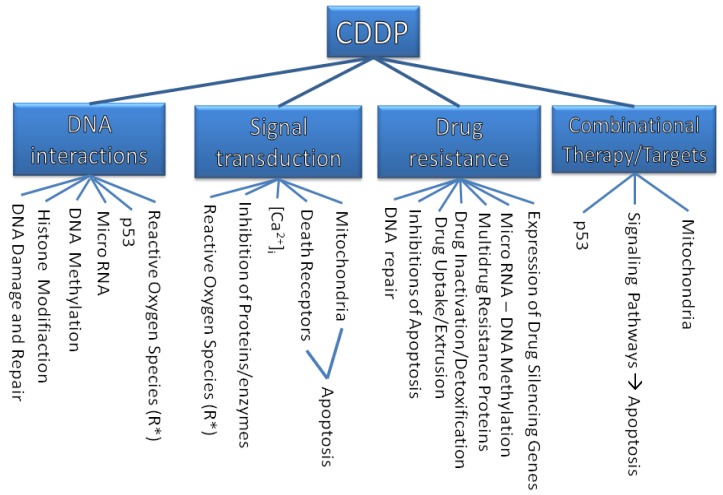
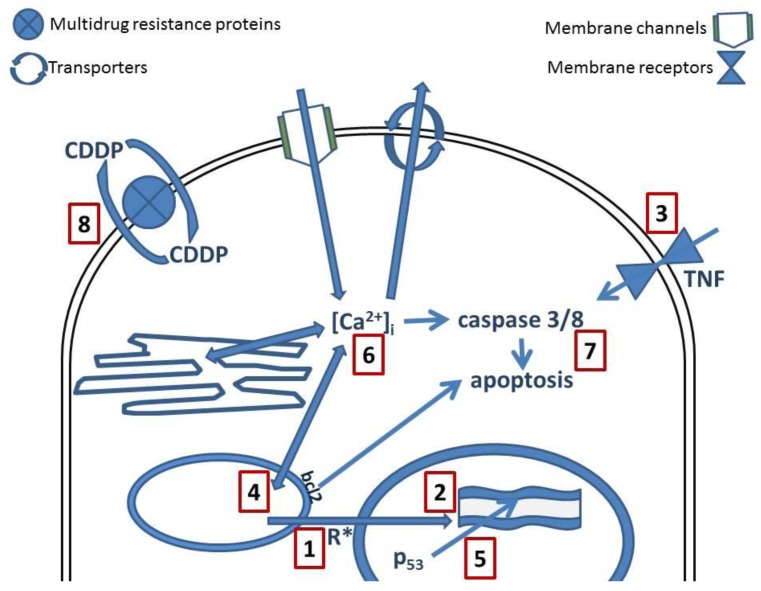
Platinum complexes are clinically used as adjuvant therapy of cancers aiming to induce tumor cell death. Depending on cell type and concentration, cisplatin induces cytotoxicity, e.g., by interference with transcription and/or DNA replication mechanisms. Additionally, cisplatin damages tumors via induction of apoptosis, mediated by the activation of various signal transduction pathways, including calcium signaling, death receptor signaling, and the activation of mitochondrial pathways. Unfortunately, neither cytotoxicity nor apoptosis are exclusively induced in cancer cells, thus, cisplatin might also lead to diverse side-effects such as neuro- and/or renal-toxicity or bone marrow-suppression. Moreover, the binding of cisplatin to proteins and enzymes may modulate its biochemical mechanism of action. While a combination-chemotherapy with cisplatin is a cornerstone for the treatment of multiple cancers, the challenge is that cancer cells could become cisplatin-resistant. Numerous mechanisms of cisplatin resistance were described including changes in cellular uptake, drug efflux, increased detoxification, inhibition of apoptosis and increased DNA repair. To minimize cisplatin resistance, combinatorial therapies were developed and have proven more effective to defeat cancers. Thus, understanding of the biochemical mechanisms triggered by cisplatin in tumor cells may lead to the design of more efficient platinum derivates (or other drugs) and might provide new therapeutic strategies and reduce side effects.
Overview
The claims and statistics of this paper haven’t been checked yet.
Free: it reads the open-access text and checks the first 5 claims that cite a source we can check. Create a free account to check every claim.
Integrity signals
Registry
Cites
Statistics
Figures
Verification
Claims the paper makes
The claims and statistics of this paper haven’t been checked yet.
Free: it reads the open-access text and checks the first 5 claims that cite a source we can check. Create a free account to check every claim.
Claims other papers make about this one
Each is checked against this paper’s own text: does it say what the citing paper says it does?
The source backs part of the claim, not all of it — or backs it for a different population, condition or comparison.
In the citing paper
“Platinum anticancer drugs, such as cisplatin, the most potent member of the platinum drug family, penetrate into the nucleus of cancer cells and form adducts with DNA leading to apoptosis [4].”
From Co-delivery of Paclitaxel and Cisplatin in Poly(2-oxazoline) Polymeric Micelles: Implications for Drug Loading, Release, Pharmacokinetics and Outcome of Ovarian and Breast Cancer Treatments (2019) · cites this paper as [4]
Experimental — accuracy not yet measured
Self-check
Percentages, sums and reported differences re-computed from the paper’s own numbers.
The self-check needs the paper’s full text.
Citations
Cites
1 retracted
Mohammad, R. M., Banerjee, S., Li, Y., Aboukameel, A., Küçük, Ö., & Sarkar, F. H. (2006) · Cancer · doi:10.1002/cncr.21731 · Cited by 84
RetractedMechanisms of resistance to cisplatin
Kartalou, M., & Essigmann, J. M. (2001) · Mutation Research - Fundamental and Molecular Mechanisms of Mutagenesis · doi:10.1016/s0027-5107(01)00141-5 · Cited by 869 · cited 7×
“While the knowledge of the mechanism of action of CDDP has improved our understanding of resistance [70], the mechanism of decreased intracellular accumulation of CDDP is not well understood.”
BackgroundInfluentialLebwohl, D., & Canetta, R. (1998) · European Journal of Cancer · doi:10.1016/s0959-8049(98)00224-x · Cited by 754 · cited 4×
“The research concentrated on platinum analogues focuses on two strategies: expanding the utilization of platinum therapy to other tumor types not usually treated with platinum compounds, while another area of research represents novel routes of administration [7].”
BackgroundMethodInfluentialCellular and molecular pharmacology of oxaliplatin.
Raymond, É., Faivre, S. J., Chaney, S. G., WOYNAROWSKI, J. M., & Cvitkovic, E. (2002) · PubMed · Cited by 576
Novel Metals and Metal Complexes as Platforms for Cancer Therapy
Frezza, M., Hindo, S., Chen, D., Davenport, A., Schmitt, S., Tomco, D., & Ping Dou, Q. (2010) · Current Pharmaceutical Design · doi:10.2174/138161210791209009 · Cited by 552 · cited 2×
“Nevertheless, metal compounds are potential candidates as anticancer agents [1].”
BackgroundThe Role of Cellular Accumulation in Determining Sensitivity to Platinum-Based Chemotherapy
Hall, M. D., Okabe, M., Shen, D.-W., Liang, X.-J., & Gottesman, M. M. (2008) · Annual Review of Pharmacology and Toxicology · doi:10.1146/annurev.pharmtox.48.080907.180426 · Cited by 474 · cited 2×
“, diffusion) only, but there is an active transport system involved [73].”
BackgroundMolecular mechanisms involved in cisplatin cytotoxicity
Jordan, P., & Carmo-Fonseca*, M. (2000) · Cellular and Molecular Life Sciences · doi:10.1007/pl00000762 · Cited by 398 · cited 2×
“Due to a shielding effect caused by these proteins, the CDDP-modified DNA is poorly repaired, resulting DNA damage triggers cell-cycle arrest and apoptosis [28].”
BackgroundRecognition and processing of cisplatin- and oxaliplatin-DNA adducts
Chaney, S. G., Campbell, S. L., Bassett, E., & Wu, Y. (2005) · Critical Reviews in Oncology/Hematology · doi:10.1016/j.critrevonc.2004.08.008 · Cited by 396 · cited 1×
“contribute to the differences in cytotoxicity and tumor range of CDDP and oxaliplatin [31].”
BackgroundParticular aspects of platinum compounds used at present in cancer treatment
Desoize, B., & Madoulet, C. (2002) · Critical Reviews in Oncology/Hematology · doi:10.1016/s1040-8428(01)00219-0 · Cited by 393 · cited 7×
“The hope is that the drugs will work together, producing synergistic or at least additive effects in killing cancer cells, while producing no additional side effects [3].”
BackgroundInfluentialModifications of DNA by platinum complexes
Brabec, V., & Kasparkova, J. (2005) · Drug Resistance Updates · doi:10.1016/j.drup.2005.04.006 · Cited by 373 · cited 4×
“Drug resistance is a major complication in cancer chemotherapy and accounts for the failure of chemotherapy to cure the majority of cancer patients [33,69].”
BackgroundInfluential
Research works printed but not linked: 2
- Chattopadhyay S. Machado-Pinilla R. Manguan-Garcia C. Belda-Iniesta C. Moratilla C. Cejas P. Fresno-Vara J.A. de Castro-Carpeno J. Casado E. Nistal M. Gonzalez-Che C.M. Siu F.M. Metal complexes in medicine with a focus on enzyme inhibition Curr. Opin. Chem. Biol. 2010 14 255 261 20018553 · DOI · Paper page
- Florea A.-M. Büsselberg D. Cisplatin as an anti-tumour drug: Cellular mechanisms of activity, drug resistance and induced side effects Cancers 2011 in press PMC3756417 24212665
Cited by
Items 901–1,000 of 1,000
Yempala, T., Babu, T., Karmakar, S., Nemirovski, A., Ishan, M., Gandin, V., & Gibson, D. (2019) · Angewandte Chemie · doi:10.1002/ange.201910014 · Cited by 14
Bernocchi, G., Fanizzi, F. P., Pascali, S. D., Piccolini, V. M., Gasperini, C., Insolia, V., & Bottone, M. G. (2015) · Toxics · doi:10.3390/toxics3020224 · Cited by 13
“The discovery of cisPt was therefore a corner stone [4], which triggered great interest in platinum (II) derivatives.”
BackgroundMechanical Stress Promotes Cisplatin-Induced Hepatocellular Carcinoma Cell Death
Ziko, L., Riad, S., Amer, M., Zdero, R., Bougherara, H., & Amleh, A. (2015) · BioMed Research International · doi:10.1155/2015/430569 · Cited by 13
Hameed, R., Khan, A., Khan, S., & Perveen, S. (2018) · Anti-Cancer Agents in Medicinal Chemistry · doi:10.2174/1871520618666181009163014 · Cited by 13
Jin, W., Zhang, H., Li, M., & Lin, S. (2020) · Cancer Biotherapy and Radiopharmaceuticals · doi:10.1089/cbr.2019.3525 · Cited by 13
Emerging and established therapies for chemotherapy-induced ototoxicity
Guthrie, O. W., & Spankovich, C. (2023) · Journal of Cancer Survivorship · doi:10.1007/s11764-022-01317-6 · Cited by 13
Balaji, S., Subarkhan, M. K. M., Balamurugan, G., & Ramesh, R. (2024) · Applied Organometallic Chemistry · doi:10.1002/aoc.7574 · Cited by 12
A review on platinum (II/IV) complexes of Schiff base ligands and application in biological activity
Sen, T., Sarkar, P., Sutradhar, S., Das, D., & Ghosh, B. N. (2024) · Inorganic Chemistry Communications · doi:10.1016/j.inoche.2024.113438 · Cited by 12
Sonogenetics in the Treatment of Chronic Diseases: A New Method for Cell Regulation
Zhu, M., Fang, Y., Sun, Y.-K., Li, S., Yu, J., Xiong, B., Wen, C., Zhou, B., Huang, B., Yin, H., et al. (2024) · Advanced Science · doi:10.1002/advs.202407373 · Cited by 14
Shahrahmani, F., Badamchizadeh, S., Kaihani, F., Alavi-Moghadam, S., Keshtkari, S., Rezaei–Tavirani, M., Arjmand, R., Larijani, B. A., & Arjmand, B. (2024) · International Urology and Nephrology · doi:10.1007/s11255-024-04303-2 · Cited by 12
“The myriad effects eventually impair the kidneys by raising serum creatinine and decreasing GFR. Knowledge of these mechanisms would therefore inform the development of strategies to reduce the nephrotoxicity of Lobapl-atin while leaving its therapeutic effects intact [106–109].”
Liu, Z., Fu, H., Dong, H., Lai, K., Yang, Z., Fan, C., Luo, Y., Qin, W., & Guo, L. (2024) · Inorganic Chemistry · doi:10.1021/acs.inorgchem.4c03975 · Cited by 12
Photoinduced DNA Crosslink Formation by Dichloridooxidovanadium(IV) Complexes of Polypyridyl Bases
Banerjee, S., Dixit, A., Kumar, A., Mukherjee, S., Karande, A. A., & Chakravarty, A. R. (2015) · European Journal of Inorganic Chemistry · doi:10.1002/ejic.201500587 · Cited by 12
Gattuso, H., Dumont, E. E., Chipot, C. J., Monari, A., & Dehez, F. (2016) · Physical Chemistry Chemical Physics · doi:10.1039/c6cp06078a · Cited by 12
Wang, H., Xiong, Y., Wang, R., Yu, Y., Wang, J., Hu, Z., Sun, C., Tu, J., & He, D. (2018) · European Journal of Pharmaceutical Sciences · doi:10.1016/j.ejps.2018.04.022 · Cited by 12
Li, R., Ma, Y., Hu, X., Wu, W., Wu, X., Dong, C., Shi, S., & Lin, Y. (2020) · Dalton Transactions · doi:10.1039/d0dt01877e · Cited by 12
Astani, S., Salehi, R., Massoumi, B., & Massoudi, A. (2020) · Journal of Biomaterials Science Polymer Edition · doi:10.1080/09205063.2020.1855393 · Cited by 12
“Cisplatin is recognized to be cell cycle specific, which shows cells arresting in S and G2/M stage because of cisplatin attachment to DNA, affecting DNA destruction [6, 8, 44, 45].”
BackgroundProsser, K. E., Xie, D., Chu, A., MacNeil, G. A., Varju, B. R., Kadakia, R. T., Que, E. L., & Walsby, C. J. (2021) · Chemistry - A European Journal · doi:10.1002/chem.202100603 · Cited by 12
Gulzar, S., Ammara, U., Abid, Z., Shahid, M., Ashraf, R. S., Baig, N., Kawde, A.-N. M., Bhatia, G., Isab, A. A., & Altaf, M. (2022) · Journal of Molecular Structure · doi:10.1016/j.molstruc.2022.132482 · Cited by 12
Effect and Mechanism of Herbal Medicines on Cisplatin-Induced Anorexia
Min, D., Kim, B., Ko, S., & Kim, W. (2022) · Pharmaceuticals · doi:10.3390/ph15020208 · Cited by 13
Wu, M., Xue, L., Chen, Y., Tang, W., Guo, Y., Xiong, J., Chen, D., Zhu, Q., Fu, F., & Wang, S. (2023) · Human Reproduction · doi:10.1093/humrep/dead145 · Cited by 12
Tumor Cells Transmit Drug Resistance via Cisplatin-Induced Extracellular Vesicles
Wang, J., Liu, Q., Zhao, Y., Fu, J., & Su, J. (2023) · International Journal of Molecular Sciences · doi:10.3390/ijms241512347 · Cited by 13
Pooyan, M., Shariatinia, Z., Mohammadpanah, F., Gholivand, K., Dušek, M., Eigner, V., Satari, M., & Valmoozi, A. A. E. (2023) · Journal of Molecular Liquids · doi:10.1016/j.molliq.2023.123442 · Cited by 12
Siva, M., Das, K., Guha, S., Sivagnanam, S., Das, G., Saha, A., Stewart, A., Maity, B., & Das, P. (2023) · ACS Applied Bio Materials · doi:10.1021/acsabm.3c00587 · Cited by 12
Mudi, A., Ray, S., Bera, M., Dolai, M., Das, M., Kundu, P., Laha, S., Choudhuri, I., Samanta, B. C., Bhattacharyya, N., et al. (2023) · Heliyon · doi:10.1016/j.heliyon.2023.e22712 · Cited by 12
Akçaöz-Alasar, A., Tüncel, Ö., Sağlam, B., Gazaloğlu, Y., Atbinek, M., Cagiral, U., İşcan, E., Özhan, G., & Akgül, B. (2024) · Journal of Cellular Physiology · doi:10.1002/jcp.31176 · Cited by 12
Bakalova, A. G., Buyukliev, R., Varbanov, H. P., & Momekov, G. (2014) · Inorganica Chimica Acta · doi:10.1016/j.ica.2014.07.030 · Cited by 12
Ethiraj, P., Veerappan, K., Balakrishnan, D., & Sundaresan, S. (2014) · International Immunopharmacology · doi:10.1016/j.intimp.2014.08.010 · Cited by 12
Design, synthesis, MTT assay, DNA interaction studies of platinum(II) complexes
Lunagariya, M. V., Thakor, K. P., Waghela, B. N., Vaidya, F. U., Pathak, C., & Patel, M. N. (2016) · Journal of Biomolecular Structure and Dynamics · doi:10.1080/07391102.2016.1268071 · Cited by 12
“It was observed that reaction between sulphur-containing proteins and platinum metal induces poisonous effect to carcinogenic cells and inactivate some enzymes (Farrell, 2003; Florea & Büsselberg, 2011; Kalyani, 2012; Kostova, 2006).”
BackgroundElballat, S. E. (2016) · The Journal of Basic and Applied Zoology · doi:10.1016/j.jobaz.2016.11.001 · Cited by 12
Pruchnik, H., Kral, T. E., & Hof, M. (2017) · The Journal of Membrane Biology · doi:10.1007/s00232-017-9972-z · Cited by 12
Synthesis of gamma radiation-induced PEGylated cisplatin for cancer treatment
González‐Torres, M., Cerna, J., Muñoz-Soto, R. B., Pérez, A. R., Pfeiffer, H., Leyva‐Gómez, G., Zúñiga, J., & Rivera, A. L. (2018) · RSC Advances · doi:10.1039/c8ra06296j · Cited by 12
Novel Palladium Complex: Cytotoxicity against Cisplatin-resistant K562 Cells.
Jahanian‐Najafabadi, A., Mirian, M., Rohani, F., Karami, K., Kharat, M. H., & Sadeghi‐Aliabadi, H. (2019) · PubMed Central · doi:10.22037/ijpr.2019.1100714 · Cited by 12
Soltanian, S., Sheikhbahaei, M., & Ziasistani, M. (2020) · Nutrition and Cancer · doi:10.1080/01635581.2020.1795695 · Cited by 13
Boroujeni, K. P., Tohidiyan, Z., Shahsanaei, H., Lorigooini, Z., & Fadavi, A. (2020) · Inorganic Chemistry Communications · doi:10.1016/j.inoche.2020.108206 · Cited by 12
Azadpour, M., Farajollahi, M. M., Varzi, A. M., Hashemzadeh, P., Mahmoudvand, H., & Barati, M. (2020) · Current Drug Discovery Technologies · doi:10.2174/1570163817666200827111127 · Cited by 12
Peng, S., Lin, L., Yang, Z.-W., Chang, F., Cheng, Y., Tang, J., & Chang, H. (2020) · Antioxidants · doi:10.3390/antiox9090876 · Cited by 13
“Clinical drugs were developed for anti-oral cancer therapy but some of them showed side effects under higher doses [42].”
BackgroundFranco, M. S., Silva, C. A., Leite, E. A., Silveira, J. N., Teixeira, C. S., Cardoso, V. N., Ferreira, E. F., Cassali, G. D., de Barros, A. L. B., & Oliveira, M. C. (2021) · Journal of Drug Delivery Science and Technology · doi:10.1016/j.jddst.2021.102400 · Cited by 12
Wang, Y., Chen, H., Sheng, R., Fu, Z., Fan, J., Wu, W., Tu, Q., & Guo, R. (2021) · Marine Drugs · doi:10.3390/md19040218 · Cited by 12
“EC50 was calculated with the slope of kinetic curve of enzymatic reaction based on the reciprocal activation of pro-uPA and plasminogen (Figures 1 and 2) [40].”
MethodA neutral polysaccharide from Ophiocordyceps lanpingensis restrains cisplatin‐induced nephrotoxicity
Zhou, S., Zhou, Y., Yu, J., Jiang, L., Xiang, Y., Wang, J., Du, Y., Cui, X., & Ge, F. (2021) · Food Science & Nutrition · doi:10.1002/fsn3.2317 · Cited by 14
“Under the oxidative stress and inflammation conditions, excessive ROS and pro- inflammatory cytokines could damage cellular proteins, lipids, and DNA, leading to apoptosis of cells (Dasari and Tchounwou, 2014; Florea and Busselberg, 2011).”
BackgroundDulay, R. M. R., Valdez, B. C., Li, Y., Chakrabarti, S., Dhillon, B. D. S., Kalaw, S. P., Reyes, R. G., & Cabrera, E. C. (2021) · PLoS ONE · doi:10.1371/journal.pone.0252541 · Cited by 12
Prabaharan, R., Ramesh, R., Umapathy, D., Arockiam, A. J. V., & Małecki, J. G. (2021) · Applied Organometallic Chemistry · doi:10.1002/aoc.6512 · Cited by 12
Polyherbal effect between Phyllanthus urinaria and Curcuma longa as an Anticancer and Antioxidant
Puspitarini, S., Widodo, N., Widyarti, S., Jatmiko, Y. D., & Rifa’i, M. (2022) · Research Journal of Pharmacy and Technology · doi:10.52711/0974-360x.2022.00111 · Cited by 12
Silva, J., Rodrigues, A. S., Videira, P. A., Lasri, J., Charmier, M. A. J., Pombeiro, A. J. L., & Fernandes, A. R. (2014) · Inorganica Chimica Acta · doi:10.1016/j.ica.2014.07.067 · Cited by 14
Vitamin C and diallyl sulfide as chemosensitizers to cisplatin in treating hepatocellular carcinoma
Abdel‐Hamid, N. M., Nazmy, M., & Nazmy, W. (2011) · Journal of Solid Tumors · doi:10.5430/jst.v1n3p90 · Cited by 12
Potgieter, K., Cronjé, M. J., & Meijboom, R. (2016) · Inorganica Chimica Acta · doi:10.1016/j.ica.2016.08.048 · Cited by 12
Wang, Z., Liang, Y., Liu, Y., Xia, H., Liu, J., Jin, X., & Li, Z. (2020) · Drug Development and Industrial Pharmacy · doi:10.1080/03639045.2020.1822860 · Cited by 12
Vitamin-anticancer drug conjugates: a new era for cancer therapy
Bhole, R. P., Jadhav, S., Zambare, Y., Chikhale, R. V., & Bonde, C. G. (2020) · Istanbul Journal of Pharmacy · doi:10.26650/istanbuljpharm.2019.0078 · Cited by 13
“Platinum: Florea & Büsselberg, 2011, developed a strategy to address the issue of non-specific anticancer medication binding, such as cisplastin, and its severe side effects.”
BackgroundPushpa Ragini, S., Naga Divya, A. V., Ch, A., & Kanthaiah, Y. V. (2014) · Journal of Medical and Scientific Research · doi:10.17727/jmsr.2014/2-012 · Cited by 12
“Generally, the following mechanisms could be involved in chemo-resistance: (i) Decreased intracellular drug concentrations (drug transporters, metabolic enzymes) (ii) Resistance to cell death due to disturbances affecting the cell cycle arrest, apoptosis and DNA repair (iii) Activation of signaling pathways related to…”
BackgroundMitra, I., Mukherjee, S., B., V. P. R., Chatterjee, S. K., Mukherjee, S., Ghosh, S., Chatterji, U., & Moi, S. C. (2017) · Journal of Molecular Liquids · doi:10.1016/j.molliq.2017.10.100 · Cited by 13
Bipyrazole-based palladium(II) complexes as DNA intercalator and artificial metallonuclease
Thakor, K. P., Lunagariya, M. V., Bhatt, B. S., & Patel, M. N. (2019) · Monatshefte für Chemie - Chemical Monthly · doi:10.1007/s00706-018-2316-6 · Cited by 12
Luo, B., Zhou, Y., Lv, H., Sun, S., & Tang, W. (2019) · Thoracic Cancer · doi:10.1111/1759-7714.13076 · Cited by 12
Marloye, M., Inam, H., Moore, C. J., Mertens, R. T., Ingels, A., Koch, M., Nowicki, M. O., Mathieu, V., Pritchard, J. R., Awuah, S. G., et al. (2022) · Inorganic Chemistry Frontiers · doi:10.1039/d2qi00423b · Cited by 12
Activity in Group-Housed Home Cages of Mice as a Novel Preclinical Biomarker in Oncology Studies
Terry, S., Gommet, C., Kerangueven, A.-C., Leguet, M., Thévenin, V., Berthelot, M., Begoud, L., Windenberger, F., & Lainée, P. (2023) · Cancers · doi:10.3390/cancers15194798 · Cited by 11
“Cisplatin and cyclophosphamide are two alkyl agents which are widely used to treat cancer patients [29,30].”
Mukherjee, S., Ghosh, S., Renuga Devi, M., Roy, S., Roy, S. S., Acharya, M., Kumar, B. K., & Mukherjee, A. (2025) · Journal of Medicinal Chemistry · doi:10.1021/acs.jmedchem.5c01150 · Cited by 11
Okulova, Y. N., Zenin, I. V., Shutkov, I. A., Игоревич, К. К., Ковалева, О. Н., Lesovaya, E. A., Fetisov, T. I., Milaeva, E. R., & Nazarov, A. A. (2019) · Inorganica Chimica Acta · doi:10.1016/j.ica.2019.119010 · Cited by 12
Liu, Y., Cao, J., Pu, Y., Ma, Y., Wu, M., & Wang, J. (2021) · PubMed · Cited by 11
An AIE-featured triphenyltin(IV)-triphenylamine acylhydrazone compound and anticancer application
Li, Q., Shao, M., Ran, W., Sun, X., Liu, H., Wang, Q., Liu, X., Tian, L., Chen, G., & Liu, Z. (2022) · Dyes and Pigments · doi:10.1016/j.dyepig.2022.110231 · Cited by 12
de Lima, D. G., do Amaral, G. C. L. S., Planello, A. C., Borgato, G. B., Guimarães, G. N., & de Souza, A. P. (2022) · PubMed · Cited by 15
A new insight into the diverse facets of microRNA-31 in oral squamous cell carcinoma
Kavitha, M., Dorairaj, J., Aishwarya, S. Y., Younus, P. M., Venugopal, A., Babu, H. W. S., Ajay, E., Sanjana, M., Arul, N., & Vellingiri, B. (2022) · Egyptian Journal of Medical Human Genetics · doi:10.1186/s43042-022-00361-2 · Cited by 11
Chemo-radiation therapy of U87-MG glioblastoma cells using SPIO@AuNP-Cisplatin-Alginate nanocomplex
Mousavi, M., Koosha, F., & Neshasteh‐Riz, A. (2023) · Heliyon · doi:10.1016/j.heliyon.2023.e13847 · Cited by 11
“These include kidney toxicity, nerve toxicity, and ear toxicity [30,31].”
BackgroundMonika, S., & Ramesh, R. (2023) · New Journal of Chemistry · doi:10.1039/d3nj02869k · Cited by 12
Claudio-Ares, O., Luciano-Rodríguez, J., Valle‐González, Y. L. D., Schiavone-Chamorro, S. L., Pastor, A. J., Rivera-Reyes, J. O., Metzler, C. L., Domínguez-Orona, L. M., Pérez, B. L. V., Skouta, R., et al. (2024) · Inorganics · doi:10.3390/inorganics12010026 · Cited by 12
Liu, X., Sun, Y., Li, Q., Zhang, P., Tao, R., Chang, J., Zhang, S., Zhang, Y., Zhang, Y., Yuan, X., et al. (2024) · Dyes and Pigments · doi:10.1016/j.dyepig.2024.111963 · Cited by 11
Ran, L., Xiao, J., Zhang, W., Wang, M., Xin, H., Li, H., Hao, H., Wang, M., Wang, X., Tian, G., et al. (2024) · Chemical Engineering Journal · doi:10.1016/j.cej.2024.149448 · Cited by 12
Rauf, A., Rashid, U., Akram, Z., Ghafoor, M., Muhammad, N., AlMasoud, N., Alomar, T. S., Naz, S., & Iriti, M. (2024) · Zeitschrift für Naturforschung C · doi:10.1515/znc-2023-0153 · Cited by 11
“Most anti-cancer drugs are notorious for the side e ff ects, especially nausea, vomiting, and diarrhea caused by cisplatin [26].”
BackgroundKharpan, B., Pyngrope, H., Chetia, J., Bhattacharyya, M., Shyam, A., Wangkheimayum, J., Pramanik, H. A. R., Paul, P. C., Majaw, S., Bhattacharjee, A., et al. (2024) · Journal of Molecular Structure · doi:10.1016/j.molstruc.2024.139075 · Cited by 11
Varney, A. M., Smitten, K. L., Southam, H. M., Fairbanks, S. D., Robertson, C. C., Thomas, J. A., & McLean, S. (2024) · ACS Infectious Diseases · doi:10.1021/acsinfecdis.4c00447 · Cited by 11
Dorairaj, D. P., Kumar, P., Rajasekaran, H., Bhuvanesh, N. S. P., Hsu, S. C. N., & Karvembu, R. (2024) · Journal of Inorganic Biochemistry · doi:10.1016/j.jinorgbio.2024.112759 · Cited by 11
Vo, V., Tanthmanatham, O., Han, H., Bhowmik, P. K., & Spangelo, B. L. (2013) · Metallomics · doi:10.1039/c3mt00128h · Cited by 11
Kanehira, Y., Togami, K., Tada, H., & Chono, S. (2016) · Journal of Drug Delivery Science and Technology · doi:10.1016/j.jddst.2016.04.001 · Cited by 11
Basu, A., Bhattacharjee, A., Samanta, A., & Bhattacharya, S. (2016) · Drug and Chemical Toxicology · doi:10.1080/01480545.2016.1237522 · Cited by 11
“Loss of labile chloride ligands results into nucleophilic substitution reactions with DNA and proteins, generation of oxidative stress, and ultimately cell death (Florea & Büsselberg, 2011).”
BackgroundNano drug delivery systems for ovarian cancer therapy
Hasçiçek, C., & Gun, O. (2017) · Integrative Cancer Science and Therapeutics · doi:10.15761/icst.1000235 · Cited by 12
Ndamase, A. S., Aderibigbe, B. A., Sadiku, E. R., Labuschagne, P. W., Lemmer, Y., Ray, S. S., & Nwamadi, M. S. (2017) · Journal of Drug Delivery Science and Technology · doi:10.1016/j.jddst.2017.10.011 · Cited by 11
Design and synthesis of a dual imageable theranostic platinum prodrug for efficient cancer therapy
Mukherjee, S., Patra, D., Dash, T. K., Chakraborty, I., Bhattacharyya, R., Senapati, S., & Shunmugam, R. (2019) · Polymer Chemistry · doi:10.1039/c8py01535j · Cited by 11
Koba, R., Fujita, H., Nishibori, M., Saeki, K., Nagayoshi, K., Sadakari, Y., Nagai, S., Sekizawa, O., Nitta, K., Manabe, T., et al. (2019) · International Journal of Cancer · doi:10.1002/ijc.32592 · Cited by 11
An In Vitro Study on the Interactions of Pycnogenol® with Cisplatin in Human Cervical Cancer Cells
Becit, M., & DİLSİZ, S. A. (2020) · Turkish Journal of Pharmaceutical Sciences · doi:10.4274/tjps.galenos.2018.97759 · Cited by 12
Dong, L., Xu, Z., An, S., Jia, X., Zhang, W., & Jiang, X. (2020) · New Journal of Chemistry · doi:10.1039/d0nj01211d · Cited by 11
Kadoya, Y., Hata, M., Tanaka, Y., Hirohata, A., Hitomi, Y., & Kodera, M. (2020) · Inorganic Chemistry · doi:10.1021/acs.inorgchem.0c02954 · Cited by 11
Novel Insights into Mice Multi-Organ Metabolism upon Exposure to a Potential Anticancer Pd(II)-Agent
Carneiro, T. J., Araújo, R., Vojtek, M., Gonçalves‐Monteiro, S., Diniz, C., de Carvalho, A. L. M. B., Marques, M. P. M., & Gil, A. M. (2021) · Metabolites · doi:10.3390/metabo11020114 · Cited by 11
“However, its high toxicity and acquired resistance are recognized drawbacks to its application in oncology [5,6], which have prompted intense research on biologically active alternative cDDP-analogs, e.”
BackgroundZakharchenko, B. V., Khomenko, D. M., Doroschuk, R. O., Raspertova, I. V., Shova, S. G., Grebinyk, A., Grynyuk, І. І., Prylutska, S., Matyshevska, O., Slobodyanik, M. S., et al. (2021) · Chemical Papers · doi:10.1007/s11696-021-01699-4 · Cited by 11
“) including nephrotoxicity and drug resistance by tumor cells (Florea and Büsselberg 2011) provide a motivation for the discovery of more efficient cytotoxic complexes with other transition metals (Hartinger and Dyson 2009; Teyssot et al.”
BackgroundSafi, A., Delgir, S., Ilkhani, K., Samei, A., Mousavi, S. R., Zaynali-Khasraghi, Z., Bastami, M., & Alivand, M. R. (2021) · BMC Research Notes · doi:10.1186/s13104-021-05647-z · Cited by 11
“chemotherapeutic agents is considered the main obstacle to successful treatment in patients with BC [12].”
BackgroundThe Neurokinin-1 Receptor: A Promising Antitumor Target
Coveñas, R., Rodriguez, F. D., & Muñoz, M. (2022) · Receptors · doi:10.3390/receptors1010005 · Cited by 12
Darroudi, M., Nazari, S. E., Karimzadeh, M., Asgharzadeh, F., Asghari, S. Z., Khalili‐Tanha, N., Rezayi, M., & Khazaei, M. (2023) · Applied Organometallic Chemistry · doi:10.1002/aoc.7068 · Cited by 11
Ohorodnik, Y. M., Khomenko, D. M., Doroshchuk, R. O., Raspertova, I. V., Shova, S. G., Babak, M. V., Milunović, M. N. M., & Lampeka, R. D. (2023) · Inorganica Chimica Acta · doi:10.1016/j.ica.2023.121646 · Cited by 11
Chang, Y.-W., & Singh, K. P. (2017) · PLoS ONE · doi:10.1371/journal.pone.0174227 · Cited by 11
Vasconcelos, R. O., Serini, S., Votto, A. P. D. S., Trindade, G. S., Fanali, C., Sgambato, A., & Calviello, G. (2018) · Melanoma Research · doi:10.1097/cmr.0000000000000564 · Cited by 11
Marković, K., Milačić, R., Marković, S., Kladnik, J., Turel, I., & Ščančar, J. (2020) · Molecules · doi:10.3390/molecules25071512 · Cited by 12
“However, the commonly use platinum-bas d chemothe apeut cs are also associated w th i uced drug resistance [6] and severe side effects like nephrotoxicity, o otoxicity, eme ogenesis and n ur oxicity [7].”
BackgroundSathiyanarayanan, V., Prasath, P. V., Sekhar, P. C., Ravichandran, K., Easwaramoorthy, D., Mohammad, F., Al‐Lohedan, H. A., Oh, W., & Sagadevan, S. (2020) · RSC Advances · doi:10.1039/d0ra01936d · Cited by 11
Development of DNA polymer films as a drug delivery system for the treatment of oral cancer
Jayme, C. C., Pires, A. F., & Tedesco, A. C. (2020) · Drug Delivery and Translational Research · doi:10.1007/s13346-020-00801-9 · Cited by 12
“Administration of anticancer agents close to cancerous lesions has demonstrated clinical effectiveness in the treatment of head and neck cancers [7].”
BackgroundVarela, J. G., Chatterjee, A. D., Guevara, P., Ramirez, V., Metta‐Magaña, A. J., Villagrán, D., Varela-Ramírez, A., Das, S., & Nunez, J. E. (2014) · JBIC Journal of Biological Inorganic Chemistry · doi:10.1007/s00775-014-1133-6 · Cited by 11
Lacouth-Silva, F., Xavier, C. V., Setúbal, S. D. S., Pontes, A. S., Néry, N. M., de Castro, O. B., Fernandes, C. F. C., Honda, E. R., Zanchi, F. B., Calderón, L. A., et al. (2015) · BMC Complementary and Alternative Medicine · doi:10.1186/s12906-015-0948-1 · Cited by 11
Al‐Awsi, G. R. L., Arshed, U., Arif, A., Ramírez‐Coronel, A. A., Alhassan, M. S., Mustafa, Y. F., Rahman, F. F., Zabibah, R. S., Gupta, J., Iqbal, M. S., et al. (2023) · Current Medicinal Chemistry · doi:10.2174/0929867330666230509162513 · Cited by 10
Dihydromyricetin Inhibits Ferroptosis to Attenuate Cisplatin-Induced Muscle Atrophy
You, L. (2024) · Physiological Research · doi:10.33549/physiolres.935317 · Cited by 11
Guan, Q., Tang, L.-H., Xu, M., Zhang, L., Huang, L., & Khan, M. S. (2024) · Food Bioscience · doi:10.1016/j.fbio.2024.105213 · Cited by 10
Pt(IV) Complexes as Anticancer Drugs and Their Relationship with Oxidative Stress
Iova, V., Ţincu, R. C., Scrobotă, I., & Tudosie, M. S. (2025) · Biomedicines · doi:10.3390/biomedicines13040981 · Cited by 11
“In the attempt to avoid the adverse effects of cisplatin, such as nephrotoxicity, ototoxicity, hepatotoxicity, and gastrointestinal toxicity [100,145], another two Pt(II)-based drugs were studied and approved worldwide, oxaliplatin and carboplatin, respectively [134].”
Benzimidazole-Coordinated Copper(II) Complexes as Effectual Chemotherapeutics against Malignancy
Saha, A., Debnath, A. I., Chettri, M. K., Mahato, R. K., Das, D., Sarkar, D., Chaurasia, R., Bhattacharyya, S., Mukherjee, M., & Biswas, B. (2025) · ACS Omega · doi:10.1021/acsomega.5c02269 · Cited by 10
Salem, S. I., El-Baky, A. A. A., & Mohammed, F. F. (2017) · Asian Journal of Animal Sciences · doi:10.3923/ajas.2017.140.152 · Cited by 12
Cheng, C., Meng, Y., Zhang, Z., Li, Y., Liu, C., & Zhang, Q. (2019) · Journal of Materials Science Materials in Medicine · doi:10.1007/s10856-019-6260-8 · Cited by 10
Nakaya, T., Aizawa, K., Taguchi, Y., Tsuji, K., Sekine, S., Murakami, K., Kasai, M., Nakano, H., Kondoh, Y., Dan, S., et al. (2022) · ACS Medicinal Chemistry Letters · doi:10.1021/acsmedchemlett.1c00721 · Cited by 10
Metadata
- Authors
- Florea, A.-M., & Büsselberg, D.
- Affiliations
- Heinrich Heine University Düsseldorf (DE)
- Weill Cornell Medical College in Qatar (QA)
- Corresponding author
- Büsselberg, Dietrich
- ORCID
- Büsselberg, Dietrich
- Venue
- Cancers
- Publisher
- MDPI AG
- Published
- 2011-03-15
- Volume
- 3
- Issue
- 1
- Pages
- 1351-1371
- ISSN
- 2072-6694 (ISSN-L)
- PMC
- PMC3756417
- OpenAlex
- W2073131323
- Cited by
- 1,759
- References
- 83
- Citations by year
- 2026: 65 · 2025: 111 · 2024: 154 · 2023: 148 · 2022: 165 · 2021: 177 · 2020: 195 · 2019: 176 · 2018: 133 · 2017: 129 · 2016: 100 · 2015: 82 · 2014: 70 · 2013: 28 · 2012: 21
- FWCI
- 19.39
- Type
- journal article
- Language
- en
- Open access
- gold
- doi.org
- Licence
- Locations
- Cancers (publishedVersion, cc-by)
- Europe PMC (PubMed Central) (publishedVersion, other-oa)
- PubMed Central (publishedVersion, cc-by)
- PubMed (publishedVersion)
- DOAJ (DOAJ: Directory of Open Access Journals) (submittedVersion)
- Topics
- Health Sciences › Medicine › Oncology › Metal complexes synthesis and properties
- Life Sciences › Biochemistry, Genetics and Molecular Biology › Molecular Biology › Cancer therapeutics and mechanisms
- Life Sciences › Biochemistry, Genetics and Molecular Biology › Molecular Biology › Cell death mechanisms and regulation
- Keywords
- cisplatin, platinum complexes, apoptosis, DNA replication inhibition, calcium signaling, death receptor signaling, mitochondrial apoptosis, drug resistance, neurotoxicity, nephrotoxicity, myelosuppression, combination chemotherapy, DNA repair, drug efflux, cellular uptake, platinum derivatives
About these checks
Registry, retraction, Cites and statistics results are computed, not judged, with one exception: a printed reference that no index lists is read once by a model before it counts as a citation error. Claims are extracted by a model and kept only when their quote appears verbatim in the text; each cited source is then checked, with a model’s help, for whether it says what the claim relies on. Those verdicts can be wrong — read the claim’s quote and the cited source before relying on one.
Statistics and arithmetic are recomputed, not judged.
Confidence bands are shown only for fields calibrated on our annotated test set. None is calibrated yet, so no band is shown.
What counts as a claim ›How we measure confidence ›How we check this ›
Are you an author, or do you see a problem with this page? Request a review
Data sources
Bibliographic data: Semantic Scholar, OpenAlex, Crossref.
Contains information from the Semantic Scholar Academic Graph Datasets, made available under the ODC Attribution License (ODC-BY 1.0).
Semantic Scholar’s data is described in: Kinney, R., et al. (2023). The Semantic Scholar Open Data Platform. arXiv:2301.10140.
