

Cisplatin as an Anti-Tumor Drug: Cellular Mechanisms of Activity, Drug Resistance and Induced Side Effects
Open accessThe DOI matches its Crossref record; 80 of the 83 references it cites were found in a registry or an index.
Abstract
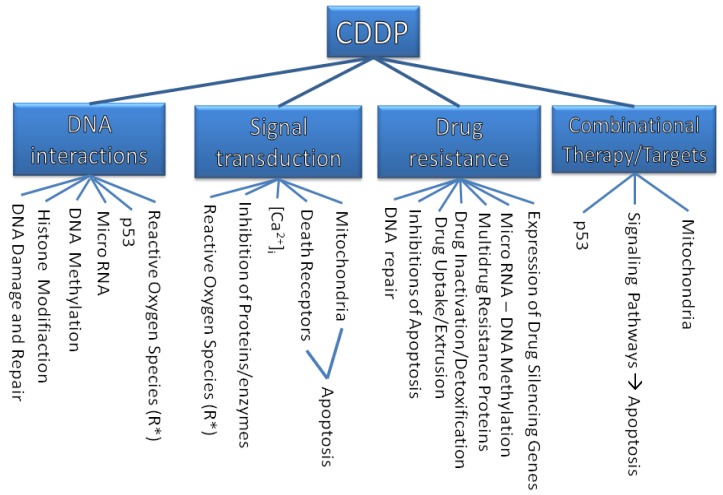
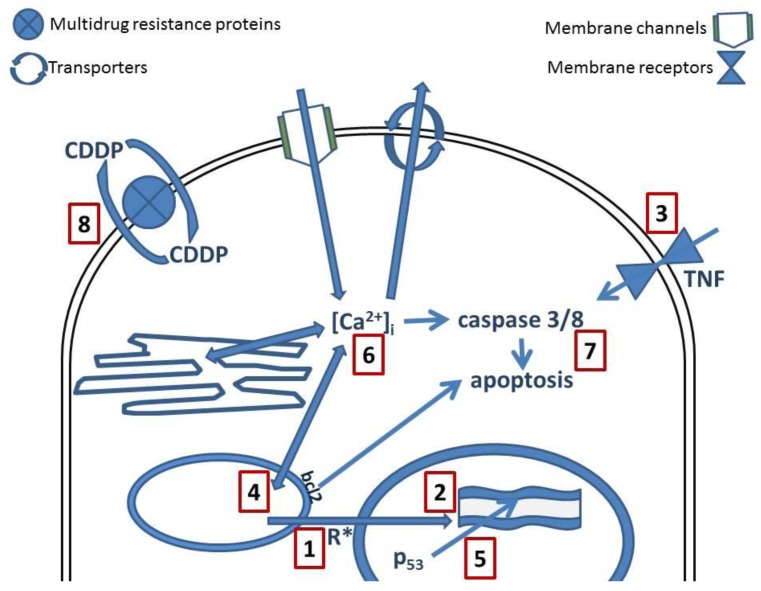
Platinum complexes are clinically used as adjuvant therapy of cancers aiming to induce tumor cell death. Depending on cell type and concentration, cisplatin induces cytotoxicity, e.g., by interference with transcription and/or DNA replication mechanisms. Additionally, cisplatin damages tumors via induction of apoptosis, mediated by the activation of various signal transduction pathways, including calcium signaling, death receptor signaling, and the activation of mitochondrial pathways. Unfortunately, neither cytotoxicity nor apoptosis are exclusively induced in cancer cells, thus, cisplatin might also lead to diverse side-effects such as neuro- and/or renal-toxicity or bone marrow-suppression. Moreover, the binding of cisplatin to proteins and enzymes may modulate its biochemical mechanism of action. While a combination-chemotherapy with cisplatin is a cornerstone for the treatment of multiple cancers, the challenge is that cancer cells could become cisplatin-resistant. Numerous mechanisms of cisplatin resistance were described including changes in cellular uptake, drug efflux, increased detoxification, inhibition of apoptosis and increased DNA repair. To minimize cisplatin resistance, combinatorial therapies were developed and have proven more effective to defeat cancers. Thus, understanding of the biochemical mechanisms triggered by cisplatin in tumor cells may lead to the design of more efficient platinum derivates (or other drugs) and might provide new therapeutic strategies and reduce side effects.
Overview
The claims and statistics of this paper haven’t been checked yet.
Free: it reads the open-access text and checks the first 5 claims that cite a source we can check. Create a free account to check every claim.
Integrity signals
Registry
Cites
Statistics
Figures
Verification
Claims the paper makes
The claims and statistics of this paper haven’t been checked yet.
Free: it reads the open-access text and checks the first 5 claims that cite a source we can check. Create a free account to check every claim.
Claims other papers make about this one
Each is checked against this paper’s own text: does it say what the citing paper says it does?
The source backs part of the claim, not all of it — or backs it for a different population, condition or comparison.
In the citing paper
“Platinum anticancer drugs, such as cisplatin, the most potent member of the platinum drug family, penetrate into the nucleus of cancer cells and form adducts with DNA leading to apoptosis [4].”
From Co-delivery of Paclitaxel and Cisplatin in Poly(2-oxazoline) Polymeric Micelles: Implications for Drug Loading, Release, Pharmacokinetics and Outcome of Ovarian and Breast Cancer Treatments (2019) · cites this paper as [4]
Experimental — accuracy not yet measured
Self-check
Percentages, sums and reported differences re-computed from the paper’s own numbers.
The self-check needs the paper’s full text.
Citations
Cites
1 retracted
Mohammad, R. M., Banerjee, S., Li, Y., Aboukameel, A., Küçük, Ö., & Sarkar, F. H. (2006) · Cancer · doi:10.1002/cncr.21731 · Cited by 84
RetractedMechanisms of resistance to cisplatin
Kartalou, M., & Essigmann, J. M. (2001) · Mutation Research - Fundamental and Molecular Mechanisms of Mutagenesis · doi:10.1016/s0027-5107(01)00141-5 · Cited by 869 · cited 7×
“While the knowledge of the mechanism of action of CDDP has improved our understanding of resistance [70], the mechanism of decreased intracellular accumulation of CDDP is not well understood.”
BackgroundInfluentialLebwohl, D., & Canetta, R. (1998) · European Journal of Cancer · doi:10.1016/s0959-8049(98)00224-x · Cited by 754 · cited 4×
“The research concentrated on platinum analogues focuses on two strategies: expanding the utilization of platinum therapy to other tumor types not usually treated with platinum compounds, while another area of research represents novel routes of administration [7].”
BackgroundMethodInfluentialCellular and molecular pharmacology of oxaliplatin.
Raymond, É., Faivre, S. J., Chaney, S. G., WOYNAROWSKI, J. M., & Cvitkovic, E. (2002) · PubMed · Cited by 576
Novel Metals and Metal Complexes as Platforms for Cancer Therapy
Frezza, M., Hindo, S., Chen, D., Davenport, A., Schmitt, S., Tomco, D., & Ping Dou, Q. (2010) · Current Pharmaceutical Design · doi:10.2174/138161210791209009 · Cited by 552 · cited 2×
“Nevertheless, metal compounds are potential candidates as anticancer agents [1].”
BackgroundThe Role of Cellular Accumulation in Determining Sensitivity to Platinum-Based Chemotherapy
Hall, M. D., Okabe, M., Shen, D.-W., Liang, X.-J., & Gottesman, M. M. (2008) · Annual Review of Pharmacology and Toxicology · doi:10.1146/annurev.pharmtox.48.080907.180426 · Cited by 474 · cited 2×
“, diffusion) only, but there is an active transport system involved [73].”
BackgroundMolecular mechanisms involved in cisplatin cytotoxicity
Jordan, P., & Carmo-Fonseca*, M. (2000) · Cellular and Molecular Life Sciences · doi:10.1007/pl00000762 · Cited by 398 · cited 2×
“Due to a shielding effect caused by these proteins, the CDDP-modified DNA is poorly repaired, resulting DNA damage triggers cell-cycle arrest and apoptosis [28].”
BackgroundRecognition and processing of cisplatin- and oxaliplatin-DNA adducts
Chaney, S. G., Campbell, S. L., Bassett, E., & Wu, Y. (2005) · Critical Reviews in Oncology/Hematology · doi:10.1016/j.critrevonc.2004.08.008 · Cited by 396 · cited 1×
“contribute to the differences in cytotoxicity and tumor range of CDDP and oxaliplatin [31].”
BackgroundParticular aspects of platinum compounds used at present in cancer treatment
Desoize, B., & Madoulet, C. (2002) · Critical Reviews in Oncology/Hematology · doi:10.1016/s1040-8428(01)00219-0 · Cited by 393 · cited 7×
“The hope is that the drugs will work together, producing synergistic or at least additive effects in killing cancer cells, while producing no additional side effects [3].”
BackgroundInfluentialModifications of DNA by platinum complexes
Brabec, V., & Kasparkova, J. (2005) · Drug Resistance Updates · doi:10.1016/j.drup.2005.04.006 · Cited by 373 · cited 4×
“Drug resistance is a major complication in cancer chemotherapy and accounts for the failure of chemotherapy to cure the majority of cancer patients [33,69].”
BackgroundInfluential
Research works printed but not linked: 2
- Chattopadhyay S. Machado-Pinilla R. Manguan-Garcia C. Belda-Iniesta C. Moratilla C. Cejas P. Fresno-Vara J.A. de Castro-Carpeno J. Casado E. Nistal M. Gonzalez-Che C.M. Siu F.M. Metal complexes in medicine with a focus on enzyme inhibition Curr. Opin. Chem. Biol. 2010 14 255 261 20018553 · DOI · Paper page
- Florea A.-M. Büsselberg D. Cisplatin as an anti-tumour drug: Cellular mechanisms of activity, drug resistance and induced side effects Cancers 2011 in press PMC3756417 24212665
Cited by
Reactive oxygen species generating systems meeting challenges of photodynamic cancer therapy
Zhou, Z., Song, J., Nie, L., & Chen, X. (2016) · Chemical Society Reviews · doi:10.1039/c6cs00271d · Cited by 2,098
Cisplatin: The first metal based anticancer drug
Ghosh, S. (2019) · Bioorganic Chemistry · doi:10.1016/j.bioorg.2019.102925 · Cited by 1,751
Zielonka, J., Joseph, J., Sikora, A., Hardy, M., Ouari, O., Vasquez-Vivar, J., Cheng, G., Lopez, M., & Kalyanaraman, B. (2017) · Chemical Reviews · doi:10.1021/acs.chemrev.7b00042 · Cited by 1,683
Platinum-based drugs for cancer therapy and anti-tumor strategies
Zhang, C., Xu, C., Gao, X., & Yao, Q. (2022) · Theranostics · doi:10.7150/thno.69424 · Cited by 1,018
“Chemotherapy is an effective method of anti-tumor treatment [1-4].”
MethodZeng, L., Gupta, P., Chen, Y., Wang, E., Ji, L., Chao, H., & Chen, Z.-S. (2017) · Chemical Society Reviews · doi:10.1039/c7cs00195a · Cited by 1,017
Metal complexes in cancer therapy – an update from drug design perspective
Ndagi, U., Mhlongo, N., & Soliman, M. (2017) · Drug Design, Development and Therapy · doi:10.2147/dddt.s119488 · Cited by 935
Cisplatin nephrotoxicity: a review of the literature
Manohar, S., & Leung, N. (2018) · Journal of Nephrology · doi:10.1007/s40620-017-0392-z · Cited by 636
Zhang, C.-C., Li, C.-G., Wang, Y.-F., Xu, L.-H., He, X.-H., Zeng, Q.-Z., Zeng, C.-Y., Mai, F.-Y., Hu, B., & Ouyang, D.-Y. (2019) · Apoptosis · doi:10.1007/s10495-019-01515-1 · Cited by 442
Cao, X., Ding, L., Xie, Z.-Z., Yang, Y., Whiteman, M., Moore, P. K., & Bian, J.-S. (2019) · Antioxidants & Redox Signaling · doi:10.1089/ars.2017.7058 · Cited by 408
Schiff bases in medicinal chemistry: a patent review (2010-2015)
Hameed, A., al-Rashida, M., Uroos, M., Abid Ali, S., & Khan, K. M. (2017) · Expert Opinion on Therapeutic Patents · doi:10.1080/13543776.2017.1252752 · Cited by 401
Liu, Y., Zheng, C., Huang, Y., He, M., Xu, W. W., & Li, B. (2021) · MedComm · doi:10.1002/mco2.55 · Cited by 387
“137 The CTR1 protein mentioned in this review has been thoroughly confirmed to affect cisplatin uptake, and a reduction in its expression will contribute to the development of cisplatin resistance.”
Small Molecule as Fluorescent Probes for Monitoring Intracellular Enzymatic Transformations
Singh, H., Tiwari, K., Tiwari, R., Pramanik, S. K., & Das, A. (2019) · Chemical Reviews · doi:10.1021/acs.chemrev.9b00379 · Cited by 343
The mutational footprints of cancer therapies
Pich, O., Muiños, F., Lolkema, M. P., Steeghs, N., Gonzalez-Perez, A., & Lopez-Bigas, N. (2019) · Nature Genetics · doi:10.1038/s41588-019-0525-5 · Cited by 309
Metal-based drugs that break the rules
Allardyce, C. S., & Dyson, P. J. (2016) · Dalton Transactions · doi:10.1039/c5dt03919c · Cited by 308
The role of oxidative stress on breast cancer development and therapy
Hecht, F., Pessoa, C. F., Gentile, L. B., Rosenthal, D., Carvalho, D. P., & Fortunato, R. S. (2016) · Tumor Biology · doi:10.1007/s13277-016-4873-9 · Cited by 303
“Nevertheless, platinum complexes also generate very large amounts of reactive oxygen species through mitochondria and/or NADPH oxidases, which is more frequently associated to its side effects than as a mediator of its anti-tumoral effects [86].”
BackgroundBetulin and betulinic acid: triterpenoids derivatives with a powerful biological potential
Hordyjewska, A., Ostapiuk, A., Horecka, A., & Kurzepa, J. (2019) · Phytochemistry Reviews · doi:10.1007/s11101-019-09623-1 · Cited by 298
Principe, D. R., Underwood, P. W., Korc, M., Trevino, J. G., Munshi, H. G., & Rana, A. (2021) · Frontiers in Oncology · doi:10.3389/fonc.2021.688377 · Cited by 250
Pathobiology of cancer chemotherapy-induced peripheral neuropathy (CIPN)
Han, Y., & Smith, M. T. (2013) · Frontiers in Pharmacology · doi:10.3389/fphar.2013.00156 · Cited by 273
Liu, Y.-Q., Wang, X.-L., He, D.-H., & Cheng, Y.-X. (2021) · Phytomedicine · doi:10.1016/j.phymed.2020.153402 · Cited by 259
Role of endoplasmic reticulum stress in drug‐induced toxicity
Foufelle, F., & Fromenty, B. (2016) · Pharmacology Research & Perspectives · doi:10.1002/prp2.211 · Cited by 246
“Cisplatin treatment can induce several types of adverse effects including GI disorders, kidney injury, neurotoxicity, hepatotoxicity, and cardiotoxicity (Kitamura 2008; Pabla and Dong 2008; Florea and B€usselberg 2011).”
BackgroundKarges, J., Yempala, T., Tharaud, M., Gibson, D., & Gasser, G. (2020) · Angewandte Chemie International Edition · doi:10.1002/anie.201916400 · Cited by 232
Platinum Compounds: A Hope for Future Cancer Chemotherapy
Ali, I., A. Wani, W., Saleem, K., & Haque, A. (2013) · Anti-Cancer Agents in Medicinal Chemistry · doi:10.2174/1871520611313020016 · Cited by 222
Asymmetric transfer hydrogenation by synthetic catalysts in cancer cells
Coverdale, J. P. C., Romero-Canelón, I., Sanchez-Cano, C., Clarkson, G. J., Habtemariam, A., Wills, M., & Sadler, P. J. (2018) · Nature Chemistry · doi:10.1038/nchem.2918 · Cited by 222
Targeting Glucose Metabolism to Overcome Resistance to Anticancer Chemotherapy in Breast Cancer
Varghese, E., Samuel, S. M., Líšková, A., Samec, M., Kubatka, P., & Büsselberg, D. (2020) · Cancers · doi:10.3390/cancers12082252 · Cited by 208
“Cisplatin (cis-diamminedichloroplatinum (II)) is a cytotoxic drug commonly used in the treatment of cancers of the breast, cervix, head, neck, and prostate [176,177].”
BackgroundSelf-citationFang, Z., Zhao, J., Xie, W., Sun, Q., Wang, H., & Qiao, B. (2017) · Cancer Medicine · doi:10.1002/cam4.1253 · Cited by 207
“Cisplatin (CDDP) is a platinumbased anticancer drug used for a broad range of cancers, whereas, the severe side effect and generated resistance often limit its clinical application [4].”
BackgroundWan, X., Beaudoin, J. J., Vinod, N., Min, Y., Makita, N., Bludau, H., Jordan, R., Wang, A., Sokolsky, M., & Kabanov, A. V. (2019) · Biomaterials · doi:10.1016/j.biomaterials.2018.10.032 · Cited by 201
Abadi, A. J., Mirzaei, S., Mahabady, M. K., Hashemi, F., Zabolian, A., Hashemi, F., Raee, P., Aghamiri, S., Ashrafizadeh, M., Aref, A. R., et al. (2022) · Phytotherapy Research · doi:10.1002/ptr.7305 · Cited by 200
Stimuli-responsive nano-assemblies for remotely controlled drug delivery
Li, F., Qin, Y., Lee, J., Liao, H., Wang, N., Davis, T. P., Qiao, R., & Ling, D. (2020) · Journal of Controlled Release · doi:10.1016/j.jconrel.2020.03.051 · Cited by 196
Gene editing and CRISPR in the clinic: current and future perspectives
Hirakawa, M. P., Krishnakumar, R., Timlin, J. A., Carney, J. P., & Butler, K. S. (2020) · Bioscience Reports · doi:10.1042/bsr20200127 · Cited by 192
“cisplatin for cancer chemotherapy (167).”
Xc− inhibitor sulfasalazine sensitizes colorectal cancer to cisplatin by a GSH-dependent mechanism
Ma, M.-Z., Chen, G., Wang, P., Lu, W.-H., Zhu, C.-F., Song, M., Yang, J., Wen, S., Xu, R.-H., Hu, Y., et al. (2015) · Cancer Letters · doi:10.1016/j.canlet.2015.07.031 · Cited by 186
Danese, A., Patergnani, S., Bonora, M., Wieckowski, M. R., Previati, M., Giorgi, C., & Pinton, P. (2017) · Biochimica et Biophysica Acta (BBA) - Bioenergetics · doi:10.1016/j.bbabio.2017.01.003 · Cited by 186
Small molecules regulating reactive oxygen species homeostasis for cancer therapy
Zhang, J., Duan, D., Song, Z., Liu, T., Hou, Y., & Fang, J. (2021) · Medicinal Research Reviews · doi:10.1002/med.21734 · Cited by 184
“Previous kinds of research have pointed out that ROS plays an important role in the anticancer actions of 100.(367) The antiproliferative effects of 100 and its important toxic actions are linked to ROS‐induced damage and its ability to increase oxidative stress.”
BackgroundChemotherapeutic agents for the treatment of metastatic breast cancer: An update
Abotaleb, M., Kubatka, P., Caprnda, M., Varghese, E., Zolakova, B., Zubor, P., Opatrilova, R., Kruzliak, P., Stefanicka, P., & Büsselberg, D. (2018) · Biomedicine & Pharmacotherapy · doi:10.1016/j.biopha.2018.02.108 · Cited by 184
Self-citationCisplatin-induced mitochondrial dysfunction is associated with impaired cognitive function in rats
Lomeli, N., Di, K., Czerniawski, J., Guzowski, J. F., & Bota, D. A. (2017) · Free Radical Biology and Medicine · doi:10.1016/j.freeradbiomed.2016.11.046 · Cited by 172
Yousuf, I., Bashir, M., Arjmand, F., & Tabassum, S. (2021) · Coordination Chemistry Reviews · doi:10.1016/j.ccr.2021.214104 · Cited by 166
Hu, L.-Y., Mi, W.-L., Wu, G.-C., Wang, Y.-Q., & Mao-Ying, Q.-L. (2019) · Current Neuropharmacology · doi:10.2174/1570159x15666170915143217 · Cited by 171
Near‐infrared light‐responsive nanomaterials for cancer theranostics
Kim, H., Chung, K., Lee, S., Kim, D. H., & Lee, H. (2016) · WIREs Nanomedicine and Nanobiotechnology · doi:10.1002/wnan.1347 · Cited by 167
“(a) TEM images of AuNRs (b) doxorubicin (DOX) release profiles from the complexes depending on the pH, (c) thermal image of tumor-bearing mice under 808 nm NIR laser, and (d) photographs of cancer size after excision; (1) control group, (2) laser group, (3) doxorubicin drug only group, (4) pGNRs@mSiO2-RGD with laser g…”
MethodShahid, F., Farooqui, Z., & Khan, F. (2018) · European Journal of Pharmacology · doi:10.1016/j.ejphar.2018.03.009 · Cited by 166
“Moreover, CP is the mainstay drug in the treatment regimen of advanced gastrointestinal cancers (Florea and Busselberg, 2011).”
BackgroundSathiya Kamatchi, T., Mohamed Subarkhan, M. K., Ramesh, R., Wang, H., & Małecki, J. G. (2020) · Dalton Transactions · doi:10.1039/d0dt01476a · Cited by 165
Balaram, V. (2016) · TrAC Trends in Analytical Chemistry · doi:10.1016/j.trac.2016.02.001 · Cited by 186
Cisplatin for cancer therapy and overcoming chemoresistance
Ranasinghe, R., Mathai, M. L., & Zulli, A. (2022) · Heliyon · doi:10.1016/j.heliyon.2022.e10608 · Cited by 163
“ROS metabolites provide the tumours with a selective advantage, such as inducing the metabolic pathways involving the amino acids and lipids which play key roles in modulating anabolic substrate oxidation and enhancing enzyme catalytic activities [87].”
BackgroundDesigning Ruthenium Anticancer Drugs: What Have We Learnt from the Key Drug Candidates?
Coverdale, J. P. C., Laroiya-McCarron, T., & Romero-Canelón, I. (2019) · Inorganics · doi:10.3390/inorganics7030031 · Cited by 161
Petruzzella, E., Sirota, R., Solazzo, I., Gandin, V., & Gibson, D. (2018) · Chemical Science · doi:10.1039/c8sc00428e · Cited by 161
Zhou, S., Zhong, Q., Wang, Y., Hu, P., Zhong, W. H., Huang, C., Yu, Z., Ding, C., Liu, H., & Fu, J. (2021) · Coordination Chemistry Reviews · doi:10.1016/j.ccr.2021.214309 · Cited by 161
LncRNA UCA1 in anti-cancer drug resistance
Wang, H., Guan, Z., He, K., Qian, J., Cao, J., & Teng, L. (2017) · Oncotarget · doi:10.18632/oncotarget.18344 · Cited by 155
Anticancer activity of palladium-based complexes against triple-negative breast cancer
Vojtek, M., Marques, M. P. M., Ferreira, I. M. P. L. V. O., Mota‐Filipe, H., & Diniz, C. (2019) · Drug Discovery Today · doi:10.1016/j.drudis.2019.02.012 · Cited by 159
Review on recent development of quinoline for anticancer activities
Ilakiyalakshmi, M., & Napoleon, A. A. (2022) · Arabian Journal of Chemistry · doi:10.1016/j.arabjc.2022.104168 · Cited by 154
Zhang, Z., Teruya, K., Yoshida, T., Eto, H., & Shirahata, S. (2013) · Marine Drugs · doi:10.3390/md11010081 · Cited by 150
“mediated by the activation of distinct signal pathways, including death receptor signaling, mitogen-activated protein kinases (MAPKs) signaling, protein kinase Akt signaling, p53 signaling and the activation of mitochondrial pathways [22].”
BackgroundFunctionalization and cancer-targeting design of ruthenium complexes for precise cancer therapy
Liu, J., Lai, H., Xiong, Z., Chen, B., & Chen, T. (2019) · Chemical Communications · doi:10.1039/c9cc04098f · Cited by 147
Shen, J., Kim, H.-C., Wolfram, J., Mu, C., Zhang, W., Liu, H., Xie, Y., Mai, J., Zhang, H., Li, Z., et al. (2017) · Nano Letters · doi:10.1021/acs.nanolett.7b00132 · Cited by 147
Tabasum, S., Noreen, A., Maqsood, M. F., Umer, H., Akram, N., Nazli, Z.-I.-H., Chatha, S. A. S., & Zia, K. M. (2018) · International Journal of Biological Macromolecules · doi:10.1016/j.ijbiomac.2018.07.154 · Cited by 146
Zeng, G., Chen, T., Huang, L., Liu, M., Jiang, R., Wan, Q., Dai, Y., Wen, Y., Zhang, X., & Wei, Y. (2017) · Journal of the Taiwan Institute of Chemical Engineers · doi:10.1016/j.jtice.2017.08.025 · Cited by 143
Rahikkala, A., Pereira, S. A. P., Figueiredo, P., Passos, M. L. C., Araújo, A. R. T. S., Saraiva, M. L. M. F. S., & Santos, H. A. (2018) · Advanced Biosystems · doi:10.1002/adbi.201800020 · Cited by 142
Amreddy, N., Babu, A., Panneerselvam, J., Srivastava, A., Muralidharan, R., Chen, A., Zhao, Y. D., Munshi, A., & Ramesh, R. (2017) · Nanomedicine Nanotechnology Biology and Medicine · doi:10.1016/j.nano.2017.11.010 · Cited by 137
Wagstaff, A. J., Brown, S. D., Holden, M., Craig, G. E., Plumb, J. A., Brown, R. E., Schreiter, N., Chrzanowski, W., & Wheate, N. (2012) · Inorganica Chimica Acta · doi:10.1016/j.ica.2012.05.012 · Cited by 146
Zheng, W., Cao, C., Liu, Y., Yu, Q., Zheng, C., Sun, D., Ren, X., & Liu, J. (2014) · Acta Biomaterialia · doi:10.1016/j.actbio.2014.08.035 · Cited by 136
Wang, Z., Niu, J., Zhao, C., Wang, X., Ren, J., & Qu, X. (2021) · Angewandte Chemie International Edition · doi:10.1002/anie.202016442 · Cited by 133
Mitra, K., Gautam, S., Kondaiah, P., & Chakravarty, A. R. (2015) · Angewandte Chemie International Edition · doi:10.1002/anie.201507281 · Cited by 132
Degradable silver-based nanoplatform for synergistic cancer starving-like/metal ion therapy
Zhang, Y., Yang, Y., Jiang, S., Li, F., Lin, J., Wang, T., & Huang, P. (2019) · Materials Horizons · doi:10.1039/c8mh00908b · Cited by 131
Mucoadhesive alginate pastes with embedded liposomes for local oral drug delivery
Shtenberg, Y., Goldfeder, M., Prinz, H., Shainsky, J., Ghantous, Y., El‐Naaj, I. A., Schroeder, A., & Bianco‐Peled, H. (2017) · International Journal of Biological Macromolecules · doi:10.1016/j.ijbiomac.2017.12.137 · Cited by 140
Abdel-Bary, A. S., Tolan, D. A., Nassar, M. Y., Taketsugu, T., & El‐Nahas, A. M. (2020) · International Journal of Biological Macromolecules · doi:10.1016/j.ijbiomac.2020.03.106 · Cited by 129
Anti-cancer Drug Delivery Using Metal Organic Frameworks (MOFs)
Ibrahim, M., Sabouni, R., & Husseini, G. A. (2016) · Current Medicinal Chemistry · doi:10.2174/0929867323666160926151216 · Cited by 136
“To reduce the unwanted side effects, one of the cisplatin derivatives, ethoxysuccinato-cisplatin (ESCP), which treats carcinomas including cancers of soft tissue, bones, muscles, sarcoma cancers and blood vessels [59], was”
BackgroundPotęga, A. (2022) · Molecules · doi:10.3390/molecules27165252 · Cited by 134
Drug screening on digital microfluidics for cancer precision medicine
Zhai, J., Liu, Y., Ji, W., Huang, X., Wang, P., Li, Y., Li, H., Wong, A. H., Zhou, X., Chen, P., et al. (2024) · Nature Communications · doi:10.1038/s41467-024-48616-3 · Cited by 133
“Cis is a widely used anti-cancer chemotherapy drug 24,25 ,Wzbhasbeenshowntoblockglucosetransport,promotecell apoptosis, and suppress tumor growth in a xenograft mouse model 26 – 28 ,whereasEPpossessesawidespectrumofantitumoreffects, showing ef fi cacy for the treatment of metastatic breast cancer…”
Xia, H., Li, F., Hu, X., Park, W., Wang, S., Jang, Y. J., Du, Y., Baik, S., Cho, S., Kang, T., et al. (2016) · ACS Central Science · doi:10.1021/acscentsci.6b00197 · Cited by 123
DNA binders in clinical trials and chemotherapy
Ali, A., & Bhattacharya, S. (2014) · Bioorganic & Medicinal Chemistry · doi:10.1016/j.bmc.2014.05.030 · Cited by 135
Electrochemotherapy of superficial tumors – Current status:
Campana, L. G., Miklavčič, D., Bertino, G., Marconato, R., Valpione, S., Imarisio, I., Dieci, M. V., Granziera, E., Čemažar, M., Alaibac, M., et al. (2019) · Seminars in Oncology · doi:10.1053/j.seminoncol.2019.04.002 · Cited by 124
Palladium complexes: new candidates for anti-cancer drugs
Jahromi, E. Z., Divsalar, A., Saboury, A. A., Khaleghizadeh, S., Mansouri‐Torshizi, H., & Kostova, I. P. (2016) · Journal of the Iranian Chemical Society · doi:10.1007/s13738-015-0804-8 · Cited by 118
“The discovery of CDDP as an anticancer drug in the 1960s opened a new era in cancer treatment [16, 29].”
BackgroundMethodInfluentialMollaei, M., Hassan, Z. M., Khorshidi, F., & Langroudi, L. (2021) · Translational Oncology · doi:10.1016/j.tranon.2021.101056 · Cited by 131
Rastogi, N., Duggal, S., Singh, S. K., Porwal, K., Srivastava, V. K., Maurya, R., Bhatt, M. L. B., & Mishra, D. P. (2015) · Oncotarget · doi:10.18632/oncotarget.6383 · Cited by 124
“Similarly, chemotherapy also suffers from several bottlenecks such as requirement of high doses, severe side effects related to toxicity, activation of pro-survival pathways upon long term exposure and development of chemoresistance [7, 8].”
Cellular Basis of Organotin(IV) Derivatives as Anticancer Metallodrugs: A Review
Annuar, S. N. S., Kamaludin, N. F., Awang, N., & Chan, K. M. (2021) · Frontiers in Chemistry · doi:10.3389/fchem.2021.657599 · Cited by 124
WANG, F., Zhou, J., Xie, X., Hu, J., CHEN, L., Hu, Q., GUO, H., & Yu, C. (2015) · Neoplasma · doi:10.4149/neo_2015_051 · Cited by 112
Jin, H., Du, W., Huang, W., Yan, J., Tang, Q., Chen, Y., & Zou, Z. (2021) · Molecular Therapy — Nucleic Acids · doi:10.1016/j.omtn.2021.08.005 · Cited by 122
Ang, C. Y., Tan, S. Y., & Zhao, Y. (2014) · Organic & Biomolecular Chemistry · doi:10.1039/c4ob00164h · Cited by 119
Platinum-Triggered Bond-Cleavage of Pentynoyl Amide and N -Propargyl Handles for Drug-Activation
Oliveira, B. L., Stenton, B. J., Unnikrishnan, V. B., de Almeida, C. R., Conde, J., Negrão, M., Schneider, F. S. S., CORDEIRO, C. A., Ferreira, M. G., Caramori, G. F., et al. (2020) · Journal of the American Chemical Society · doi:10.1021/jacs.0c01622 · Cited by 110
Park, Y. I., Kwon, S., Lee, G., Motoyama, K., Kim, M. W., Lin, M., Niidome, T., Choi, J. H., & Lee, A. (2020) · Journal of Controlled Release · doi:10.1016/j.jconrel.2020.12.011 · Cited by 113
Platinum(IV) antitumor complexes and their nano-drug delivery
Jia, C., Deacon, G. B., Zhang, Y., & Gao, C. (2020) · Coordination Chemistry Reviews · doi:10.1016/j.ccr.2020.213640 · Cited by 112
Xu, D., Li, Y., Yin, S., & Huang, F. (2024) · Chemical Society Reviews · doi:10.1039/d3cs00926b · Cited by 111
Salem, D. S., Sliem, M. A., Elsesy, M. E., Shouman, S. A., & Badr, Y. A. (2018) · Journal of Photochemistry and Photobiology B Biology · doi:10.1016/j.jphotobiol.2018.03.024 · Cited by 108
Recent advances in the chemistry of iron-based chemotherapeutic agents
Basu, U., Roy, M., & Chakravarty, A. R. (2020) · Coordination Chemistry Reviews · doi:10.1016/j.ccr.2020.213339 · Cited by 109
Cisplatin in Liver Cancer Therapy
Hamaya, S., Oura, K., Morishita, A., & Masaki, T. (2023) · International Journal of Molecular Sciences · doi:10.3390/ijms241310858 · Cited by 109
“Cisplatin induces apoptosis through protein kinase C (PKC), mitogen-active protein kinase (MAPK), Jun-amino-terminal kinase (JNK), p53, and Akt, which are molecules that constitute signaling pathways that stimulate these cascades.”
BackgroundInfluentialMolecular mechanisms of anticancer action and cell selectivity of short α-helical peptides
Chen, C., Hu, J., Zeng, P., Pan, F., Yaseen, M., Xu, H., & Lu, J. R. (2013) · Biomaterials · doi:10.1016/j.biomaterials.2013.10.082 · Cited by 106
Platinum and Palladium Polyamine Complexes as Anticancer Agents: The Structural Factor
Marques, M. P. M. (2013) · ISRN Spectroscopy · doi:10.1155/2013/287353 · Cited by 120
Hu, Y., Yin, H., Xu, Y., Liu, P., Guo, D., & Chen, Y. (2014) · APOPTOSIS · doi:10.1007/s10495-014-1030-z · Cited by 112
Han, Y., Yin, W., Li, J., Zhao, H. L., Zha, Z., Ke, W., Wang, Y., He, C., & Ge, Z. (2018) · Journal of Controlled Release · doi:10.1016/j.jconrel.2018.01.019 · Cited by 103
Zhang, X., Liu, L., Tang, M., Li, H., Guo, X. Q., & Yang, X. (2020) · Drug Development and Industrial Pharmacy · doi:10.1080/03639045.2020.1776320 · Cited by 107
Drug Targets for Cancer Treatment: An Overview
Kumar, S. (2015) · Medicinal Chemistry · doi:10.4172/2161-0444.1000252 · Cited by 109
Vesel, M., Rapp, J., Feller, D., Kiss, E., Jaromi, L., Meggyes, M., Miskei, G., Duga, B., Smuk, G., Laszlo, T., et al. (2017) · Respiratory Research · doi:10.1186/s12931-017-0537-6 · Cited by 97
Sahoo, D., Deb, P., Basu, T., Bardhan, S., Patra, S., & Sukul, P. K. (2024) · Bioorganic & Medicinal Chemistry · doi:10.1016/j.bmc.2024.117894 · Cited by 104
Cisplatin Resistance: Genetic and Epigenetic Factors Involved
Lugones, Y., Loren, P., & Salazar, L. A. (2022) · Biomolecules · doi:10.3390/biom12101365 · Cited by 101
Therapeutic Perspectives of Molecules from Urtica dioica Extracts for Cancer Treatment
Esposito, S., Bianco, A., Russo, R., Maro, A. D., Isernia, C., & Pedone, P. V. (2019) · Molecules · doi:10.3390/molecules24152753 · Cited by 106
“dioica methanolic extract from the aerial parts demonstrated hepatoprotective and nephroprotective activities against cisplatin-induced [74,75] toxicity, most likely due to increasing antioxidant defense mechanisms, in fact, this extract has been shown to increase the activities of catalase (CAT) and superoxide dismut…”
BackgroundSun, G., Li, Z., He, Z., Wang, W., Wang, S., Zhang, X., Cao, J., Xu, P., Wang, H., Huang, X., et al. (2020) · Journal of Experimental & Clinical Cancer Research · doi:10.1186/s13046-020-01758-w · Cited by 101
Zaki, M., Arjmand, F., & Tabassum, S. (2016) · Inorganica Chimica Acta · doi:10.1016/j.ica.2016.01.006 · Cited by 105
Petruzzelli, R., & Polishchuk, R. S. (2019) · Cells · doi:10.3390/cells8091080 · Cited by 96
Chen, G., Meng, C. L., Lin, K. C., Tuan, H., Yang, H. J., Chen, C.-L., Li, K.-C., Chiang, C., & Hu, Y. C. (2014) · Biomaterials · doi:10.1016/j.biomaterials.2014.11.034 · Cited by 97
Şahin, Ö., Özmen, Ü. Ö., Seferoğlu, N., Genç, Z. K., Kaya, K., Aydıner, B., Tekin, S., & Seferoğlu, Z. (2017) · Journal of Photochemistry and Photobiology B Biology · doi:10.1016/j.jphotobiol.2017.11.030 · Cited by 99
Interference between copper transport systems and platinum drugs
Arnesano, F., & Natile, G. (2021) · Seminars in Cancer Biology · doi:10.1016/j.semcancer.2021.05.023 · Cited by 103
Nasrollahi, F., Koh, Y. R., Chen, P., Varshosaz, J., Khodadadi, A. A., & Lim, S. (2018) · Materials Science and Engineering C · doi:10.1016/j.msec.2018.09.020 · Cited by 95
Cellular landscaping of cisplatin resistance in cervical cancer
Bhattacharjee, R., Dey, T., Kumar, L., Kar, S., Sarkar, R., Ghorai, M., Malik, S., Jha, N. K., Vellingiri, B., Kesari, K. K., et al. (2022) · Biomedicine & Pharmacotherapy · doi:10.1016/j.biopha.2022.113345 · Cited by 93
Cisplatin‐conjugated gold nanoparticles as a theranostic agent for head and neck cancer
Davidi, E. S., Dreifuss, T., Motiei, M., Shai, E., Bragilovski, D., Lubimov, L., Kindler, M. J. J., Popovtzer, A., Don, J., & Popovtzer, R. (2018) · Head & Neck · doi:10.1002/hed.24935 · Cited by 91
“Mice were divided into 6 groups (n 5 3 per group): (1) no treatment; (2) treatment with free cisplatin; (3) treatment with CG-GNPs; (4) X-ray irradiation alone (RT); (5) RT 1 free cisplatin; and (6) RT 1 CG-GNP (see Table 1).”
Method
Metadata
- Authors
- Florea, A.-M., & Büsselberg, D.
- Affiliations
- Heinrich Heine University Düsseldorf (DE)
- Weill Cornell Medical College in Qatar (QA)
- Corresponding author
- Büsselberg, Dietrich
- ORCID
- Büsselberg, Dietrich
- Venue
- Cancers
- Publisher
- MDPI AG
- Published
- 2011-03-15
- Volume
- 3
- Issue
- 1
- Pages
- 1351-1371
- ISSN
- 2072-6694 (ISSN-L)
- PMC
- PMC3756417
- OpenAlex
- W2073131323
- Cited by
- 1,759
- References
- 83
- Citations by year
- 2026: 65 · 2025: 111 · 2024: 154 · 2023: 148 · 2022: 165 · 2021: 177 · 2020: 195 · 2019: 176 · 2018: 133 · 2017: 129 · 2016: 100 · 2015: 82 · 2014: 70 · 2013: 28 · 2012: 21
- FWCI
- 19.39
- Type
- journal article
- Language
- en
- Open access
- gold
- doi.org
- Licence
- Locations
- Cancers (publishedVersion, cc-by)
- Europe PMC (PubMed Central) (publishedVersion, other-oa)
- PubMed Central (publishedVersion, cc-by)
- PubMed (publishedVersion)
- DOAJ (DOAJ: Directory of Open Access Journals) (submittedVersion)
- Topics
- Health Sciences › Medicine › Oncology › Metal complexes synthesis and properties
- Life Sciences › Biochemistry, Genetics and Molecular Biology › Molecular Biology › Cancer therapeutics and mechanisms
- Life Sciences › Biochemistry, Genetics and Molecular Biology › Molecular Biology › Cell death mechanisms and regulation
- Keywords
- cisplatin, platinum complexes, apoptosis, DNA replication inhibition, calcium signaling, death receptor signaling, mitochondrial apoptosis, drug resistance, neurotoxicity, nephrotoxicity, myelosuppression, combination chemotherapy, DNA repair, drug efflux, cellular uptake, platinum derivatives
About these checks
Registry, retraction, Cites and statistics results are computed, not judged, with one exception: a printed reference that no index lists is read once by a model before it counts as a citation error. Claims are extracted by a model and kept only when their quote appears verbatim in the text; each cited source is then checked, with a model’s help, for whether it says what the claim relies on. Those verdicts can be wrong — read the claim’s quote and the cited source before relying on one.
Statistics and arithmetic are recomputed, not judged.
Confidence bands are shown only for fields calibrated on our annotated test set. None is calibrated yet, so no band is shown.
What counts as a claim ›How we measure confidence ›How we check this ›
Are you an author, or do you see a problem with this page? Request a review
Data sources
Bibliographic data: Semantic Scholar, OpenAlex, Crossref.
Contains information from the Semantic Scholar Academic Graph Datasets, made available under the ODC Attribution License (ODC-BY 1.0).
Semantic Scholar’s data is described in: Kinney, R., et al. (2023). The Semantic Scholar Open Data Platform. arXiv:2301.10140.
