

Cisplatin as an Anti-Tumor Drug: Cellular Mechanisms of Activity, Drug Resistance and Induced Side Effects
Open accessThe DOI matches its Crossref record; 80 of the 83 references it cites were found in a registry or an index.
Abstract
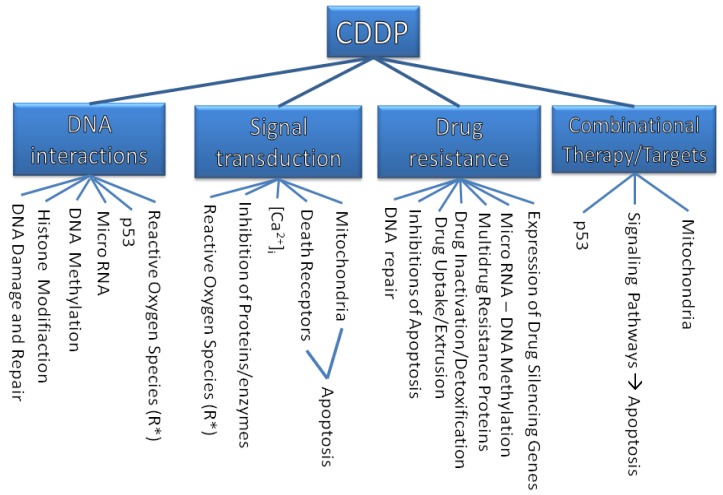
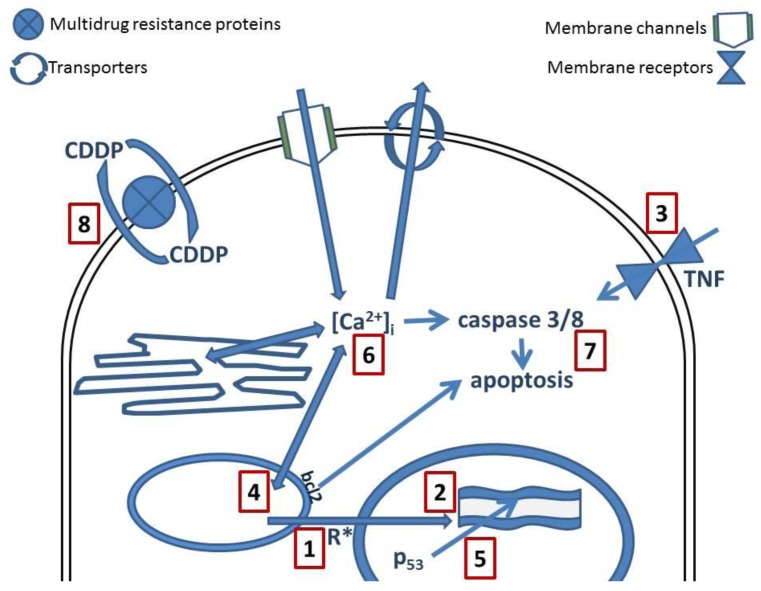
Platinum complexes are clinically used as adjuvant therapy of cancers aiming to induce tumor cell death. Depending on cell type and concentration, cisplatin induces cytotoxicity, e.g., by interference with transcription and/or DNA replication mechanisms. Additionally, cisplatin damages tumors via induction of apoptosis, mediated by the activation of various signal transduction pathways, including calcium signaling, death receptor signaling, and the activation of mitochondrial pathways. Unfortunately, neither cytotoxicity nor apoptosis are exclusively induced in cancer cells, thus, cisplatin might also lead to diverse side-effects such as neuro- and/or renal-toxicity or bone marrow-suppression. Moreover, the binding of cisplatin to proteins and enzymes may modulate its biochemical mechanism of action. While a combination-chemotherapy with cisplatin is a cornerstone for the treatment of multiple cancers, the challenge is that cancer cells could become cisplatin-resistant. Numerous mechanisms of cisplatin resistance were described including changes in cellular uptake, drug efflux, increased detoxification, inhibition of apoptosis and increased DNA repair. To minimize cisplatin resistance, combinatorial therapies were developed and have proven more effective to defeat cancers. Thus, understanding of the biochemical mechanisms triggered by cisplatin in tumor cells may lead to the design of more efficient platinum derivates (or other drugs) and might provide new therapeutic strategies and reduce side effects.
Overview
The claims and statistics of this paper haven’t been checked yet.
Free: it reads the open-access text and checks the first 5 claims that cite a source we can check. Create a free account to check every claim.
Integrity signals
Registry
Cites
Statistics
Figures
Verification
Claims the paper makes
The claims and statistics of this paper haven’t been checked yet.
Free: it reads the open-access text and checks the first 5 claims that cite a source we can check. Create a free account to check every claim.
Claims other papers make about this one
Each is checked against this paper’s own text: does it say what the citing paper says it does?
The source backs part of the claim, not all of it — or backs it for a different population, condition or comparison.
In the citing paper
“Platinum anticancer drugs, such as cisplatin, the most potent member of the platinum drug family, penetrate into the nucleus of cancer cells and form adducts with DNA leading to apoptosis [4].”
From Co-delivery of Paclitaxel and Cisplatin in Poly(2-oxazoline) Polymeric Micelles: Implications for Drug Loading, Release, Pharmacokinetics and Outcome of Ovarian and Breast Cancer Treatments (2019) · cites this paper as [4]
Experimental — accuracy not yet measured
Self-check
Percentages, sums and reported differences re-computed from the paper’s own numbers.
The self-check needs the paper’s full text.
Citations
Cites
1 retracted
Mohammad, R. M., Banerjee, S., Li, Y., Aboukameel, A., Küçük, Ö., & Sarkar, F. H. (2006) · Cancer · doi:10.1002/cncr.21731 · Cited by 84
RetractedMechanisms of resistance to cisplatin
Kartalou, M., & Essigmann, J. M. (2001) · Mutation Research - Fundamental and Molecular Mechanisms of Mutagenesis · doi:10.1016/s0027-5107(01)00141-5 · Cited by 869 · cited 7×
“While the knowledge of the mechanism of action of CDDP has improved our understanding of resistance [70], the mechanism of decreased intracellular accumulation of CDDP is not well understood.”
BackgroundInfluentialLebwohl, D., & Canetta, R. (1998) · European Journal of Cancer · doi:10.1016/s0959-8049(98)00224-x · Cited by 754 · cited 4×
“The research concentrated on platinum analogues focuses on two strategies: expanding the utilization of platinum therapy to other tumor types not usually treated with platinum compounds, while another area of research represents novel routes of administration [7].”
BackgroundMethodInfluentialCellular and molecular pharmacology of oxaliplatin.
Raymond, É., Faivre, S. J., Chaney, S. G., WOYNAROWSKI, J. M., & Cvitkovic, E. (2002) · PubMed · Cited by 576
Novel Metals and Metal Complexes as Platforms for Cancer Therapy
Frezza, M., Hindo, S., Chen, D., Davenport, A., Schmitt, S., Tomco, D., & Ping Dou, Q. (2010) · Current Pharmaceutical Design · doi:10.2174/138161210791209009 · Cited by 552 · cited 2×
“Nevertheless, metal compounds are potential candidates as anticancer agents [1].”
BackgroundThe Role of Cellular Accumulation in Determining Sensitivity to Platinum-Based Chemotherapy
Hall, M. D., Okabe, M., Shen, D.-W., Liang, X.-J., & Gottesman, M. M. (2008) · Annual Review of Pharmacology and Toxicology · doi:10.1146/annurev.pharmtox.48.080907.180426 · Cited by 474 · cited 2×
“, diffusion) only, but there is an active transport system involved [73].”
BackgroundMolecular mechanisms involved in cisplatin cytotoxicity
Jordan, P., & Carmo-Fonseca*, M. (2000) · Cellular and Molecular Life Sciences · doi:10.1007/pl00000762 · Cited by 398 · cited 2×
“Due to a shielding effect caused by these proteins, the CDDP-modified DNA is poorly repaired, resulting DNA damage triggers cell-cycle arrest and apoptosis [28].”
BackgroundRecognition and processing of cisplatin- and oxaliplatin-DNA adducts
Chaney, S. G., Campbell, S. L., Bassett, E., & Wu, Y. (2005) · Critical Reviews in Oncology/Hematology · doi:10.1016/j.critrevonc.2004.08.008 · Cited by 396 · cited 1×
“contribute to the differences in cytotoxicity and tumor range of CDDP and oxaliplatin [31].”
BackgroundParticular aspects of platinum compounds used at present in cancer treatment
Desoize, B., & Madoulet, C. (2002) · Critical Reviews in Oncology/Hematology · doi:10.1016/s1040-8428(01)00219-0 · Cited by 393 · cited 7×
“The hope is that the drugs will work together, producing synergistic or at least additive effects in killing cancer cells, while producing no additional side effects [3].”
BackgroundInfluentialModifications of DNA by platinum complexes
Brabec, V., & Kasparkova, J. (2005) · Drug Resistance Updates · doi:10.1016/j.drup.2005.04.006 · Cited by 373 · cited 4×
“Drug resistance is a major complication in cancer chemotherapy and accounts for the failure of chemotherapy to cure the majority of cancer patients [33,69].”
BackgroundInfluential
Research works printed but not linked: 2
- Chattopadhyay S. Machado-Pinilla R. Manguan-Garcia C. Belda-Iniesta C. Moratilla C. Cejas P. Fresno-Vara J.A. de Castro-Carpeno J. Casado E. Nistal M. Gonzalez-Che C.M. Siu F.M. Metal complexes in medicine with a focus on enzyme inhibition Curr. Opin. Chem. Biol. 2010 14 255 261 20018553 · DOI · Paper page
- Florea A.-M. Büsselberg D. Cisplatin as an anti-tumour drug: Cellular mechanisms of activity, drug resistance and induced side effects Cancers 2011 in press PMC3756417 24212665
Cited by
Items 401–500 of 1,000
de Carvalho, A. L. M. B., Mamede, A. P., Dopplapudi, A., Sakai, V. G., Doherty, J., Frogley, M. D., Cinque, G., Gardner, P., Gianolio, D., de Carvalho, L. A. E. B., et al. (2019) · Physical Chemistry Chemical Physics · doi:10.1039/c8cp05881d · Cited by 35
Morovati, A., Ahmadian, S., & Jafary, H. (2019) · Molecular Biology Reports · doi:10.1007/s11033-019-04954-w · Cited by 35
Steinemann, G., Dittmer, A., Schmidt, J., Josuttis, D., Fähling, M., Biersack, B., Beindorff, N., Koziolek, E. J., Schobert, R., Brenner, W., et al. (2019) · Molecular Oncology · doi:10.1002/1878-0261.12582 · Cited by 35
Sidhu, H., & Capalash, N. (2021) · Life Sciences · doi:10.1016/j.lfs.2021.119802 · Cited by 35
Han, N., Kim, K. C., Kim, J., Ko, S., Park, H., & Moon, P. (2021) · Journal of Ethnopharmacology · doi:10.1016/j.jep.2021.114893 · Cited by 37
Mitra, K., Gautam, S., Kondaiah, P., & Chakravarty, A. R. (2015) · Angewandte Chemie · doi:10.1002/ange.201507281 · Cited by 35
Lin, W., Jiang, W., Chen, C., Lee, L., Tsai, Y., Chien, L.-H., Chou, Y.-N., Deng, J., & Huang, G. (2022) · Nutrients · doi:10.3390/nu14142877 · Cited by 38
“The goal of cisplatin therapy is to kill the cancer, thereby increasing the lifespan of the patient [25,32].”
BackgroundRobinson, P., Coveñas, R., & Muñoz, M. (2022) · Current Medicinal Chemistry · doi:10.2174/0929867329666220811152602 · Cited by 38
MSC-NPRA loop drives fatty acid oxidation to promote stemness and chemoresistance of gastric cancer
Chen, Z., Xu, P., Wang, X., Li, Y., Yang, J., Xia, Y., Wang, S., Liu, H., Xu, Z., & Li, Z. (2023) · Cancer Letters · doi:10.1016/j.canlet.2023.216235 · Cited by 36
Kim, S.-J., Lim, J., Lee, J. N., Choe, S., Kim, Y., Song, S. R., Cho, M., So, H., & Park, R. (2014) · Toxicology · doi:10.1016/j.tox.2014.01.013 · Cited by 37
Kim, W. S., Kim, H., Kwon, K. W., Im, S., Lee, B. R., Ha, S., & Shin, S. J. (2016) · Oncotarget · doi:10.18632/oncotarget.9260 · Cited by 35
“However, cisplatin treatment is frequently accompanied by toxic side effects and tumor resistance, which in turn leads to secondary malignancies [1-3].”
BackgroundSambath, K., Jana, A., Selvakumar, M., Venkatesh, Y., Paul, A., Shah, S. S., & Singh, N. D. P. (2017) · Journal of Materials Chemistry B · doi:10.1039/c6tb02944b · Cited by 35
Castro, F. D., Benedetti, M., Antonaci, G., Coco, L. D., Pascali, S. A. D., Muscella, A., Marsigliante, S., & Fanizzi, F. P. (2018) · Molecules · doi:10.3390/molecules23092301 · Cited by 35
Saraswati, W., Dachlan, E. G., Saputra, K., & Sutrisno, T. C. (2019) · Medical Acupuncture · doi:10.1089/acu.2018.1316 · Cited by 36
“EA stimulation can stimulate parasympathetic nerves and, therefore, increase lymphocyte components in leucocyte subpopulations.(21) Although the percentage of NK cells that infiltrated the tumor tissues was very low in the current study, it showed that there was a significant difference in cervical tumor volume reduct…”
ResultRegulation of cisplatin resistance in lung cancer by epigenetic mechanisms
Yu, X., Jia, L., Tang, Q., Zhou, Q., Wang, G., & Wang, S. (2025) · Clinical Epigenetics · doi:10.1186/s13148-025-01961-6 · Cited by 36
“Intrinsic resistance occurs at the onset of treatment, while acquired resistance develops when the drug is initially effective but gradually becomes less active over time, resulting in resistance [19].”
Nguyen, T. T. T. N., Østergaard, J., Stürup, S., & Gammelgaard, B. (2012) · Analytical and Bioanalytical Chemistry · doi:10.1007/s00216-012-6355-2 · Cited by 35
Morrison, R., Lodge, T., Evidente, A., Kiss, R., & Townley, H. E. (2017) · International Journal of Oncology · doi:10.3892/ijo.2017.3858 · Cited by 35
“Intracellular [Ca 2+ ]i is strictly regulated in cells by a combination of the passive diffusion of calcium into the cell and by active transport of calcium against a concentration gradient (38).”
Combination of amino acid/dipeptide with ligustrazine-betulinic acid as antitumor agents
Xu, B., Yan, W., Xu, X., Wu, G., Zhang, C., Han, Y., Chu, F., Zhao, R., Wang, P., & Lei, H. (2017) · European Journal of Medicinal Chemistry · doi:10.1016/j.ejmech.2017.02.036 · Cited by 34
Wang, Q., Xiong, J., Qiu, D., Zhao, X. B., Yan, D., Xu, W., Wang, Z., Chen, Q., Panday, S., Li, A., et al. (2017) · The International Journal of Biochemistry & Cell Biology · doi:10.1016/j.biocel.2017.08.001 · Cited by 36
“Cisplatin (DDP)-based chemotherapy is widely used in clinical settings to treat most cancers, including GC, although it has shown unavoidable severe toxicity in patients (Florea and Busselberg, 2011, Kelland, 2007, Xu et al. , 2014a).”
BackgroundQiao, W., Lan, X., Tsoi, J. K. H., Chen, Z., Su, Y., Yeung, K., & Matinlinna, J. P. (2017) · RSC Advances · doi:10.1039/c7ra09204k · Cited by 34
Reddy, V. G., Reddy, T. S., Privér, S. H., Bai, Y., Mishra, S., Włodkowic, D., Mirzadeh, N., & Bhargava, S. K. (2019) · Inorganic Chemistry · doi:10.1021/acs.inorgchem.9b00281 · Cited by 34
Siller, I. G., Enders, A., Steinwedel, T., Epping, N.-M., Kirsch, M., Lavrentieva, A. V., Scheper, T. H., & Bahnemann, J. (2019) · Materials · doi:10.3390/ma12132125 · Cited by 37
“It is a well-known DNA-alkylating antitumor agent which is used as a chemotherapeutic drug [34,35].”
BackgroundEzzati, N., Mahjoub, A. R., Shahrnoy, A. A., & Syrgiannis, Z. (2019) · International Journal of Pharmaceutics · doi:10.1016/j.ijpharm.2019.118709 · Cited by 34
Rodrigues, J. A. O., Neto, J. G. D. O., de Barros, A. O. D. S., Ayala, A. P., Santos‐Oliveira, R., de Menezes, A. S., & de Sousa, F. F. (2020) · Polyhedron · doi:10.1016/j.poly.2020.114807 · Cited by 35
Li, Y., Feng, X., Zhang, Y., Wang, Y., Yu, X., Jia, R., Yu, T., Zheng, X., & Chu, Q. (2020) · Food & Function · doi:10.1039/d0fo01997f · Cited by 37
Ru(II)-Dppz Derivatives and Their Interactions with DNA: Thirty Years and Counting
Pietro, M. L. D., Ganga, G. L., Nastasi, F., & Puntoriero, F. (2021) · Applied Sciences · doi:10.3390/app11073038 · Cited by 34
Lakshmipraba, J., Arunachalam, S., Riyasdeen, A., Dhivya, R., & Akbarsha, M. A. (2014) · Journal of Photochemistry and Photobiology B Biology · doi:10.1016/j.jphotobiol.2014.11.005 · Cited by 34
Kamaludin, N. F., Awang, N., Baba, I., Hamid, A., & Meng, C. K. (2012) · Pakistan Journal of Biological Sciences · doi:10.3923/pjbs.2013.12.21 · Cited by 34
Exosomal miRs in Lung Cancer: A Mathematical Model
Lai, X., & Friedman, A. (2016) · PLoS ONE · doi:10.1371/journal.pone.0167706 · Cited by 36
Progressing neurobiological strategies against proteostasis failure: Challenges in neurodegeneration
Amanullah, A., Upadhyay, A., Joshi, V., Mishra, R., Jana, N. R., & Mishra, A. (2017) · Progress in Neurobiology · doi:10.1016/j.pneurobio.2017.08.005 · Cited by 35
Xu, Z., Zhang, Y., Zhang, S., Jia, X., Zhong, G., Yang, Y., Du, Q. B., Li, J., & Liu, Z. (2019) · Cancer Letters · doi:10.1016/j.canlet.2019.01.018 · Cited by 34
Shahsavani, M. B., Ahmadi, S., Aseman, M. D., Nabavizadeh, S. M., Alavianmehr, M. M., & Yousefi, R. (2016) · Journal of Photochemistry and Photobiology B Biology · doi:10.1016/j.jphotobiol.2016.09.035 · Cited by 33
“During the past decades, platinum complexes have been successfully applied in the clinical practice for the treatment of several solid tumors [1].”
Al-Bahlani, S. M., Al-Bulushi, K. H., Al-Alawi, Z. M., Al-Abri, N., Al-Hadidi, Z. R., & Al-Rawahi, S. S. (2016) · Clinical Breast Cancer · doi:10.1016/j.clbc.2016.12.001 · Cited by 33
Doğanlar, O., Doğanlar, Z. B., Kurtdere, A. K., Chasan, T., & Ok, E. S. (2020) · Ecotoxicology and Environmental Safety · doi:10.1016/j.ecoenv.2020.110940 · Cited by 37
Long Non-Coding RNAs in Drug Resistance of Breast Cancer
Du, T., Shi, Y., Xu, S., Wan, X., Sun, H., & Liu, B. (2020) · OncoTargets and Therapy · doi:10.2147/ott.s255226 · Cited by 36
“Cisplatin Cisplatin is a commonly used anticancer agent that is lethal to target DNAs in cancer cells.(73) LncRNA SNHG15 is upregu-”
BackgroundHeteronuclear dual-metal atom catalysts for nanocatalytic tumor therapy
Han, J., & Guan, J. (2023) · CHINESE JOURNAL OF CATALYSIS (CHINESE VERSION) · doi:10.1016/s1872-2067(22)64207-4 · Cited by 33
Ibrahim, M. A. A., Hamad, M. H. A., Mahmoud, A. H. M., Mekhemer, G. A. H., Sayed, S. R. M., El-Rahman, M. K. A., Sidhom, P. A., Dabbish, E., & Shoeib, T. (2023) · Pharmaceutics · doi:10.3390/pharmaceutics15061640 · Cited by 33
Gandioso, A., Izquierdo‐García, E., Mesdom, P., Arnoux, P., Demeubayeva, N., Bürckel, P., Saubaméa, B., Bosch, M., Frochot, C., Marchán, V., et al. (2023) · Chemistry - A European Journal · doi:10.1002/chem.202301742 · Cited by 33
Wang, Y., Lin, B., Wu, J., Zhang, H., & Wu, B. (2014) · Oncology Letters · doi:10.3892/ol.2014.2270 · Cited by 33
“Cisplatin is the most commonly used non‑specific anti-cancer drug, which binds to tumor cell DNA and interferes with its function (15).”
Launaea taraxacifolia Ameliorates Cisplatin-Induced Hepato-renal Injury
Adejuwon, A. C. (2014) · European Journal of Medicinal Plants · doi:10.9734/ejmp/2014/7314 · Cited by 36
Espinosa-Leal, L., & Lopez‐Acevedo, O. (2015) · Nanotechnology Reviews · doi:10.1515/ntrev-2012-0047 · Cited by 33
“This breakthrough gave a huge impulse in the search of alternative compounds with transition metals as prospects for anticancer treatment in general, in particular, because the cisplatin can also lead to side effects on other types of healthy cells [35].”
BackgroundLee, D. Y., Yu, J., Lee, S., Hwang, G. S., Kang, K. S., Park, J. G., Kim, H. J., Kim, K., & Yamabe, N. (2018) · International Journal of Molecular Sciences · doi:10.3390/ijms19041117 · Cited by 33
Predicting Tumor Sensitivity to Chemotherapeutic Drugs in Oral Squamous Cell Carcinoma Patients
Robert, B. M., Muralidharan, D., Brindha, G. R., Dhandapani, M., Radhiga, T., Muthusamy, G., Nirmal, R. M., & Prasad, N. R. (2018) · Scientific Reports · doi:10.1038/s41598-018-33998-4 · Cited by 33
Roy, S., Roy, S., Kar, M., Chakraborty, A., Kumar, A., Delogu, F., Asthana, S., Hande, M. P., & Banerjee, B. (2019) · Mutation Research/Genetic Toxicology and Environmental Mutagenesis · doi:10.1016/j.mrgentox.2019.503084 · Cited by 34
Zhong, B., Shi, D., Wu, F., Wang, S., Hu, H., Cheng, C., Qing, X., Huang, X., Luo, X., Zhang, Z., et al. (2019) · Cell Death and Disease · doi:10.1038/s41419-019-1917-2 · Cited by 38
Fekri, F., Abousawan, J., Bautista, S. J., Orofiamma, L. A., Dayam, R. M., Antonescu, C. N., & Karshafian, R. (2019) · Scientific Reports · doi:10.1038/s41598-019-54062-9 · Cited by 36
Feng, T., Chua, H. J., & Zhao, Y. (2017) · ACS Biomaterials Science & Engineering · doi:10.1021/acsbiomaterials.7b00264 · Cited by 32
Chen, X., Yang, Q., Chen, J., Zhang, P., Huang, Q., Zhang, X., Li, Y., Xu, D., Zhao, C., Wang, X., et al. (2018) · Cellular Physiology and Biochemistry · doi:10.1159/000493041 · Cited by 34
Siemer, S., Fauth, T., Scholz, P., Al-Zamel, Y., Khamis, A., Gül, D., Freudelsperger, L., Wollenberg, B., Becker, S., Stauber, R. H., et al. (2021) · Cancers · doi:10.3390/cancers13194831 · Cited by 35
Stimpson, S., Jenkinson, D., Sadler, A. J., Latham, M., Wragg, A. B., Meijer, A. J. H. M., & Thomas, J. A. (2015) · Angewandte Chemie · doi:10.1002/ange.201411346 · Cited by 32
Ligand Evolution in the Photoactivatable Platinum(IV) Anticancer Prodrugs
Huang, J., Ding, W., Zhu, X., Li, B., Zeng, F., Wu, K., Wu, X., & Wang, F. (2022) · Frontiers in Chemistry · doi:10.3389/fchem.2022.876410 · Cited by 33
“Cisplatin (1, Figure 1) is the first metal-based anticancer agent that the FDA approved in the late 1970s for clinical use and is also one of the most widely used anticancer agents (Florea and Busselberg, 2011; Dasari and Tchounwou, 2014; Ghosh, 2019).”
BackgroundMilutinović, M. G., Stanković, M. S., Cvetković, D. M., Maksimović, V. M., Šmit, B., Pavlović, R. Z., & Marković, S. (2015) · Journal of Food Biochemistry · doi:10.1111/jfbc.12123 · Cited by 32
“Cisplatin is a commonly used chemotherapeutic compound in anticancer therapy (Florea and Busselberg 2011).”
BackgroundExpression proteomics study to determine metallodrug targets and optimal drug combinations
Lee, R. F. S., Chernobrovkin, A. L., Rutishauser, D., Allardyce, C. S., Hacker, D. L., Johnsson, K., Zubarev, R. A., & Dyson, P. J. (2017) · Scientific Reports · doi:10.1038/s41598-017-01643-1 · Cited by 36
Lin, S., Shang, Z., Li, S., Gao, P., Zhang, Y., Hou, S., Qin, P., Dong, Z., Hu, T., & Chen, P. (2017) · Oncology Letters · doi:10.3892/ol.2017.7616 · Cited by 35
“However, the toxicity and the development of resistance often limit its efficacy (33).”
Rohini, G., Konakanchi, R., Aneesrahman, K. N., Aryasenan, M. C., Bhuvanesh, N. S. P., Kotha, L. R., & Sreekanth, A. (2018) · Applied Organometallic Chemistry · doi:10.1002/aoc.4567 · Cited by 32
Rühle, A., Perez, R. L., Zou, B., Grosu, A., Huber, P. E., & Nicolay, N. H. (2019) · Stem Cell Reviews and Reports · doi:10.1007/s12015-019-09886-3 · Cited by 32
Diastereomerically pure platinum(II) complexes as antitumoral agents.
Talancón, D., López, C., Font‐Bardía, M., Calvet, T., Quirante, J., Calvis, C., Messeguer, R., Cortés, R., Cascante, M., Baldomà, L., et al. (2012) · Journal of Inorganic Biochemistry · doi:10.1016/j.jinorgbio.2012.09.007 · Cited by 31
You, C., Wang, M., Wu, H., An, P., Pan, M., Luo, Y., & Sun, B. (2017) · Materials Science and Engineering C · doi:10.1016/j.msec.2017.05.064 · Cited by 31
Pérez-Arnáiz, C., Leal, J., Busto, N., Carrión, M. C., Rubio, A. R., Ortiz, I., Barone, G., de Greñu, B. D., Santolaya, J., Leal, J. M., et al. (2018) · Inorganic Chemistry · doi:10.1021/acs.inorgchem.8b00713 · Cited by 31
Recent Advances in the Development of Fatty Acid Synthase Inhibitors as Anticancer Agents
Singh, S., Karthikeyan, C., & Moorthy, N. S. H. N. (2020) · Mini-Reviews in Medicinal Chemistry · doi:10.2174/1389557520666200811100845 · Cited by 40
Dilmaghani, N. A., Safaroghli‐Azar, A., Pourbagheri‐Sigaroodi, A., & Bashash, D. (2021) · IUBMB Life · doi:10.1002/iub.2446 · Cited by 31
“Suppression of bone marrow and the risk of secondary cancer development are two main challenges faced by this anti-cancer agent.(184) Hence, many clinical approaches were adopted to enhance the therapeutic value of this agent at the lower concentrations.”
BackgroundVarma, R. R., Pandya, J. G., Vaidya, F. U., Pathak, C., Dabhi, R. A., Dhaduk, M. P., Bhatt, B. S., & Patel, M. N. (2021) · Journal of Molecular Structure · doi:10.1016/j.molstruc.2021.130529 · Cited by 31
Karges, J., Yempala, T., Tharaud, M., Gibson, D., & Gasser, G. (2020) · Angewandte Chemie · doi:10.1002/ange.201916400 · Cited by 31
Weng, H.-C., Sung, C., Hsu, J., Leu, W., Guh, J., Kung, F., & Hsu, L. (2022) · Frontiers in Pharmacology · doi:10.3389/fphar.2022.879748 · Cited by 31
“To determine whether #43 affected DNA damage induced by cisplatin, Western blot analysis of proteins involved in the DDR and its downstream signaling pathways was performed.”
BackgroundInfluentialHu, X., Guo, L., Liu, M., Zhang, Q., Gong, Y., Sun, M., Feng, S., Xu, Y., Liu, Y., & Liu, Z. (2022) · Inorganic Chemistry · doi:10.1021/acs.inorgchem.2c03279 · Cited by 31
Guo, L., Li, P., Li, J., Gong, Y., Li, X., Liu, Y., Yu, K., & Liu, Z. (2023) · Inorganic Chemistry · doi:10.1021/acs.inorgchem.3c02118 · Cited by 31
Pouryasin, Z., Yousefi, R., Nabavizadeh, S. M., Rashidi, M., Hamidizadeh, P., Alavian-Mehr, M.-M., & Moosavi‐Movahedi, A. A. (2014) · Applied Biochemistry and Biotechnology · doi:10.1007/s12010-013-0700-6 · Cited by 32
“The development of acquired resistance to cisplatin can occur for at least the following reasons: the reduction of cellular uptake, increased repair of cisplatin/DNA lesions, increased tolerance of cisplatin/DNA lesions, and deactivation of cisplatin by thiol-containing biomolecules [6, 7].”
BackgroundByun, J. S., Sohn, J. M., Leem, D. G., Park, B., Nam, J. H., Shin, D. H., Shin, J. S., Kim, H. J., Lee, K., & Lee, J. Y. (2015) · Bioorganic & Medicinal Chemistry Letters · doi:10.1016/j.bmcl.2015.12.010 · Cited by 31
Calcium-regulatory proteins as modulators of chemotherapy in human neuroblastoma
Florea, A.-M., Varghese, E., McCallum, J. E., Mahgoub, S., Helmy, I., Varghese, S., Gopinath, N., Sass, S., Theis, F. J., Reifenberger, G., et al. (2017) · Oncotarget · doi:10.18632/oncotarget.15283 · Cited by 32
“Several anti-cancer drugs, including cisplatin (CDDP), have been shown to modulate [Ca]i in cancer cells, triggering calcium-dependent cell death via apoptosis [5, 6, 7].”
BackgroundSelf-citationCompetitive reactions among glutathione, cisplatin and copper-phenanthroline complexes
Cadoni, E., Valletta, E., Caddeo, G., Isaia, F., Cabiddu, M. G., Vascellari, S., & Pivetta, T. (2017) · Journal of Inorganic Biochemistry · doi:10.1016/j.jinorgbio.2017.05.004 · Cited by 31
Xiong, S., & Xiao, G. (2018) · Experimental and Therapeutic Medicine · doi:10.3892/etm.2018.5912 · Cited by 33
“Cellular mechanisms include enzymes, targets of drugs and inside transport systems of cancer cells, whereas non-cellular mechanisms include extracellular factors, such as the microenvironment of the tumor and vascular accessibility (23-25).”
Deshpande, R., Raina, P., Shinde, K., Mansara, P., Karandikar, M., & Kaul-Ghanekar, R. (2019) · Prostaglandins & Other Lipid Mediators · doi:10.1016/j.prostaglandins.2019.04.002 · Cited by 31
Shokrzadeh, M., Mohammadpour, A., Modanloo, M., HASSANI, M., Ghassemi-Barghi, N., & NIROOMAND, P. (2019) · Arquivos de Gastroenterologia · doi:10.1590/s0004-2803.201900000-31 · Cited by 31
Yamamoto, T., Sato, A., Takai, Y., Yoshimori, A., Umehara, M., Ogino, Y., Inada, M., Shimada, N., Nishida, A., Ichida, R., et al. (2019) · Biochemistry and Biophysics Reports · doi:10.1016/j.bbrep.2019.100684 · Cited by 31
Güntürk, İ., Yazıcı, C., KÖSE, S. K., DAĞLI, F., Yücel, B., & Yay, A. (2019) · TURKISH JOURNAL OF MEDICAL SCIENCES · doi:10.3906/sag-1903-225 · Cited by 36
“As no approved treatment protocol or specific antidote to be used against possible toxic effects of cisplatin use currently exists [4], different toxicity-preventing strategies are being rigorously investigated today.”
BackgroundInfluentialBreast cancer and possible mechanisms of therapy resistance
Florea, A., & Büsselberg, D. (2013) · Journal of Local and Global Health Science · doi:10.5339/jlghs.2013.2 · Cited by 30
Self-citationHuang, C., & Yu, Y. (2017) · Medical Science Monitor · doi:10.12659/msm.903783 · Cited by 30
“Cisplatin is a DNA-damaging agent that is commonly used in the treatment of numerous types of cancer, including lung cancer, ovarian cancer, and head and neck carcinomas, especially oral squamous cell carcinoma [6].”
BackgroundRole of CC Chemokines Subfamily in the Platinum Drugs Resistance Promotion in Cancer
Reyes, M. E., la Fuente, M. D., Hermoso, M. A., Ili, C., & Brebi, P. (2020) · Frontiers in Immunology · doi:10.3389/fimmu.2020.00901 · Cited by 31
“Platinum drugs are an effective way to treat cancer, however, drug resistance may hinder therapy (14).”
BackgroundXu, Z., Huang, J., Kong, D., Yang, Y., Guo, L., Jia, X., Zhong, G., & Liu, Z. (2020) · European Journal of Medicinal Chemistry · doi:10.1016/j.ejmech.2020.112763 · Cited by 31
Mechanism of kidney injury induced by cisplatin
Huang, G., Zhang, Q., Xu, C., Chen, L., & Zhang, H. (2022) · Toxicology Research · doi:10.1093/toxres/tfac019 · Cited by 32
Zarkesh, K., Heidari, R., Iranpour, P., Azarpira, N., Ahmadi, F., Mohammadi‐Samani, S., & Farjadian, F. (2022) · Journal of Drug Delivery Science and Technology · doi:10.1016/j.jddst.2022.103903 · Cited by 31
Synthesis, biological and medicinal impacts of metallodrugs: A study
Kabir, E., Noyon, M. R. O. K., & Hossain, M. A. (2023) · Results in Chemistry · doi:10.1016/j.rechem.2023.100935 · Cited by 32
Wu, Y., Huang, C.-S., Hsieh, M., Huang, C.-M., Setiawan, S. A., Yeh, C., Kuo, K.-T., & Liu, S. (2024) · Aging · doi:10.18632/aging.205409 · Cited by 36
“DTP cells have been reported to adapt to new environments through epigenome modification, transcriptome regulation, flexible energy metabolism, and interaction with the tumor microenvironment [25– 27].”
BackgroundSBA-15 mesoporous silica particles loaded with cisplatin induce senescence in B16F10 cells
Edeler, D., Kaluđerović, M. R., Dojčinović, B., Schmidt, H., & Kaluđerović, G. N. (2016) · RSC Advances · doi:10.1039/c6ra22596a · Cited by 30
Galván‐Hidalgo, J. M., Chans, G. M., Ramírez‐Ápan, T., Nieto‐Camacho, A., Hernández‐Ortega, S., & Gómez, E. (2017) · Applied Organometallic Chemistry · doi:10.1002/aoc.3704 · Cited by 30
Tomasello, M. F., Nardon, C., Lanza, V., Natale, G. D., Pettenuzzo, N., Salmaso, S., Milardi, D., Caliceti, P., Pappalardo, G., & Fregona, D. (2017) · European Journal of Medicinal Chemistry · doi:10.1016/j.ejmech.2017.06.013 · Cited by 34
Long Noncoding RNAs as Biotargets in Cisplatin-Based Drug Resistance
Abu, N., Hon, K. W., Jeyaraman, S., & Jamal, R. A. (2018) · Future Oncology · doi:10.2217/fon-2018-0303 · Cited by 34
Patel, T. H., Norman, L., Chang, S., Abedi, S., Liu, C., Chwa, M., Atilano, S. R., Thaker, K., Lu, S. Y., Jazwinski, S. M., et al. (2019) · Frontiers in Oncology · doi:10.3389/fonc.2019.00640 · Cited by 31
Zhou, H., Feng, B., Abudoureyimu, M., Lai, Y., Lin, X., Tian, C., Huang, G., Chu, X., & Wang, R. (2020) · Life Sciences · doi:10.1016/j.lfs.2020.118362 · Cited by 31
Delivery of Cationic Platinum Prodrugs via Reduction Sensitive Polymer for Improved Chemotherapy
Chen, H., Wang, Y., Liu, Y., Tang, L., Mu, Q., Yin, X., Zheng, L., Chen, Y., & Liu, C. (2021) · Small · doi:10.1002/smll.202101804 · Cited by 29
Satapathi, D., Das, M., Rajak, K., Laha, S., Islam, M. M., Choudhuri, I., Bhattacharyya, N., Das, S., Samanta, B. C., & Maity, T. (2021) · Applied Organometallic Chemistry · doi:10.1002/aoc.6473 · Cited by 29
Gross, D., Chintala, N. K., Vaghjiani, R. G., Grosser, R. A., Tan, K. S., Li, X., Choe, J. K., Li, Y., Aly, R. G. M., Emoto, K., et al. (2021) · Journal of Thoracic Oncology · doi:10.1016/j.jtho.2021.09.009 · Cited by 34
Recent progress of macrophage vesicle-based drug delivery systems
Xu, W., Cai, J., Li, Y., Wu, J., & Xiang, D. (2022) · Drug Delivery and Translational Research · doi:10.1007/s13346-021-01110-5 · Cited by 29
“Since chemical therapeutic agents were found to cause severe side effects such as organ toxicity and immune suppression [1], researchers have been concentrating on developing safer drugs or optimized drug formulations [2, 3].”
BackgroundSantos, I. A., Pereira, A. K. D. S., Guevara-Vega, M. F., de Paiva, R. E. F., Silva, R. S., Bergamini, F. R. G., Corbi, P. P., & Jardim, A. C. G. (2021) · Acta Tropica · doi:10.1016/j.actatropica.2021.106300 · Cited by 31
Wang, H., Kong, L., Zhang, J., Yu, G., Lv, G., Zhang, F., Chen, X., Tian, J., & Fu, F. (2014) · Scientific Reports · doi:10.1038/srep04986 · Cited by 29
Amenla, L., & Prasad, S. B. (2015) · Toxicology Reports · doi:10.1016/j.toxrep.2015.01.017 · Cited by 29
Verma, A. K., & Prasad, S. B. (2013) · Journal of Ethnopharmacology · doi:10.1016/j.jep.2013.05.032 · Cited by 29
Antimetabolite Treatment for Pancreatic Cancer
Valenzuela, M. M. A. (2014) · Chemotherapy Open access · doi:10.4172/2167-7700.1000137 · Cited by 29
“resistance, a decrease in drug sensitivity, and increased DNA repair protein levels has been described [39,47,48].”
BackgroundInfluentialPharmacological effects of asiatic acid in glioblastoma cells under hypoxia
Thakor, F. K., Wan, K., Welsby, P. J., & Welsby, G. (2017) · Molecular and Cellular Biochemistry · doi:10.1007/s11010-017-2965-5 · Cited by 29
“As cisplatin exerts its cytotoxicity by forming DNA lesions, this mechanism of action delayed reductions in cell viability until after 48 h of treatment [6, 29].”
BackgroundYu, L., Lu, Y., Yao, Y., Liu, Y., Wang, Y., Lai, Q., Zhang, R., Li, W., Wang, R., Fu, Y., et al. (2017) · Oncotarget · doi:10.18632/oncotarget.23708 · Cited by 31
Metadata
- Authors
- Florea, A.-M., & Büsselberg, D.
- Affiliations
- Heinrich Heine University Düsseldorf (DE)
- Weill Cornell Medical College in Qatar (QA)
- Corresponding author
- Büsselberg, Dietrich
- ORCID
- Büsselberg, Dietrich
- Venue
- Cancers
- Publisher
- MDPI AG
- Published
- 2011-03-15
- Volume
- 3
- Issue
- 1
- Pages
- 1351-1371
- ISSN
- 2072-6694 (ISSN-L)
- PMC
- PMC3756417
- OpenAlex
- W2073131323
- Cited by
- 1,759
- References
- 83
- Citations by year
- 2026: 65 · 2025: 111 · 2024: 154 · 2023: 148 · 2022: 165 · 2021: 177 · 2020: 195 · 2019: 176 · 2018: 133 · 2017: 129 · 2016: 100 · 2015: 82 · 2014: 70 · 2013: 28 · 2012: 21
- FWCI
- 19.39
- Type
- journal article
- Language
- en
- Open access
- gold
- doi.org
- Licence
- Locations
- Cancers (publishedVersion, cc-by)
- Europe PMC (PubMed Central) (publishedVersion, other-oa)
- PubMed Central (publishedVersion, cc-by)
- PubMed (publishedVersion)
- DOAJ (DOAJ: Directory of Open Access Journals) (submittedVersion)
- Topics
- Health Sciences › Medicine › Oncology › Metal complexes synthesis and properties
- Life Sciences › Biochemistry, Genetics and Molecular Biology › Molecular Biology › Cancer therapeutics and mechanisms
- Life Sciences › Biochemistry, Genetics and Molecular Biology › Molecular Biology › Cell death mechanisms and regulation
- Keywords
- cisplatin, platinum complexes, apoptosis, DNA replication inhibition, calcium signaling, death receptor signaling, mitochondrial apoptosis, drug resistance, neurotoxicity, nephrotoxicity, myelosuppression, combination chemotherapy, DNA repair, drug efflux, cellular uptake, platinum derivatives
About these checks
Registry, retraction, Cites and statistics results are computed, not judged, with one exception: a printed reference that no index lists is read once by a model before it counts as a citation error. Claims are extracted by a model and kept only when their quote appears verbatim in the text; each cited source is then checked, with a model’s help, for whether it says what the claim relies on. Those verdicts can be wrong — read the claim’s quote and the cited source before relying on one.
Statistics and arithmetic are recomputed, not judged.
Confidence bands are shown only for fields calibrated on our annotated test set. None is calibrated yet, so no band is shown.
What counts as a claim ›How we measure confidence ›How we check this ›
Are you an author, or do you see a problem with this page? Request a review
Data sources
Bibliographic data: Semantic Scholar, OpenAlex, Crossref.
Contains information from the Semantic Scholar Academic Graph Datasets, made available under the ODC Attribution License (ODC-BY 1.0).
Semantic Scholar’s data is described in: Kinney, R., et al. (2023). The Semantic Scholar Open Data Platform. arXiv:2301.10140.
