

Cisplatin as an Anti-Tumor Drug: Cellular Mechanisms of Activity, Drug Resistance and Induced Side Effects
Open accessThe DOI matches its Crossref record; 80 of the 83 references it cites were found in a registry or an index.
Abstract
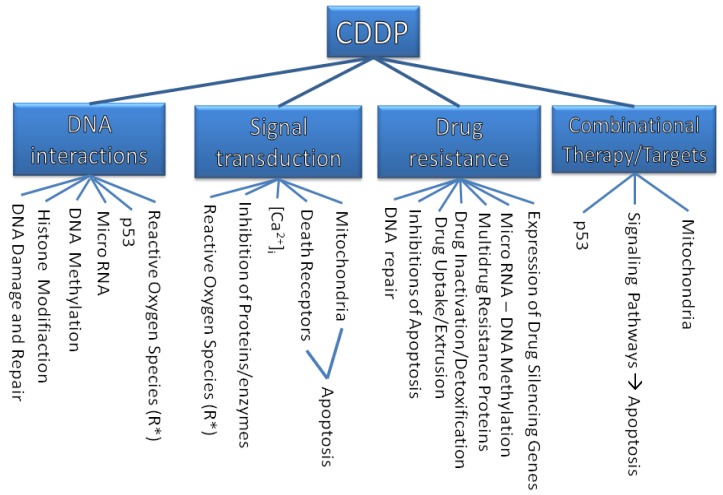
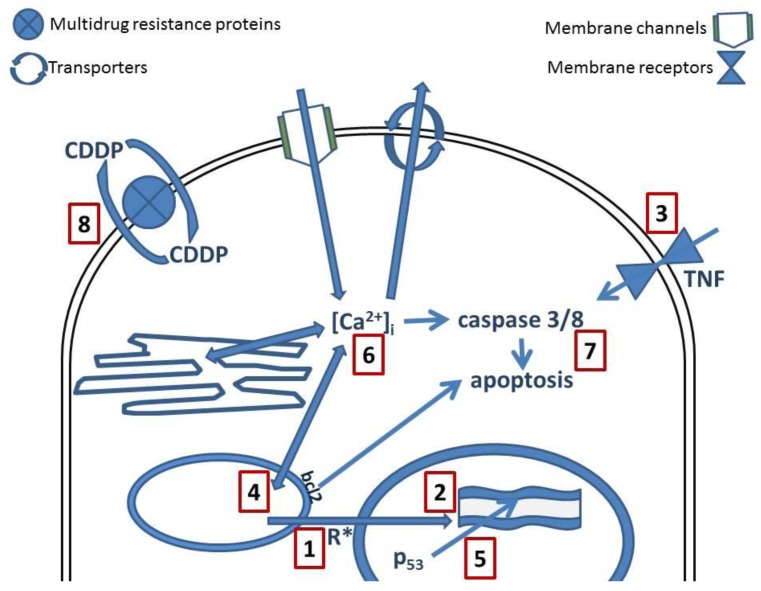
Platinum complexes are clinically used as adjuvant therapy of cancers aiming to induce tumor cell death. Depending on cell type and concentration, cisplatin induces cytotoxicity, e.g., by interference with transcription and/or DNA replication mechanisms. Additionally, cisplatin damages tumors via induction of apoptosis, mediated by the activation of various signal transduction pathways, including calcium signaling, death receptor signaling, and the activation of mitochondrial pathways. Unfortunately, neither cytotoxicity nor apoptosis are exclusively induced in cancer cells, thus, cisplatin might also lead to diverse side-effects such as neuro- and/or renal-toxicity or bone marrow-suppression. Moreover, the binding of cisplatin to proteins and enzymes may modulate its biochemical mechanism of action. While a combination-chemotherapy with cisplatin is a cornerstone for the treatment of multiple cancers, the challenge is that cancer cells could become cisplatin-resistant. Numerous mechanisms of cisplatin resistance were described including changes in cellular uptake, drug efflux, increased detoxification, inhibition of apoptosis and increased DNA repair. To minimize cisplatin resistance, combinatorial therapies were developed and have proven more effective to defeat cancers. Thus, understanding of the biochemical mechanisms triggered by cisplatin in tumor cells may lead to the design of more efficient platinum derivates (or other drugs) and might provide new therapeutic strategies and reduce side effects.
Overview
The claims and statistics of this paper haven’t been checked yet.
Free: it reads the open-access text and checks the first 5 claims that cite a source we can check. Create a free account to check every claim.
Integrity signals
Registry
Cites
Statistics
Figures
Verification
Claims the paper makes
The claims and statistics of this paper haven’t been checked yet.
Free: it reads the open-access text and checks the first 5 claims that cite a source we can check. Create a free account to check every claim.
Claims other papers make about this one
Each is checked against this paper’s own text: does it say what the citing paper says it does?
The source backs part of the claim, not all of it — or backs it for a different population, condition or comparison.
In the citing paper
“Platinum anticancer drugs, such as cisplatin, the most potent member of the platinum drug family, penetrate into the nucleus of cancer cells and form adducts with DNA leading to apoptosis [4].”
From Co-delivery of Paclitaxel and Cisplatin in Poly(2-oxazoline) Polymeric Micelles: Implications for Drug Loading, Release, Pharmacokinetics and Outcome of Ovarian and Breast Cancer Treatments (2019) · cites this paper as [4]
Experimental — accuracy not yet measured
Self-check
Percentages, sums and reported differences re-computed from the paper’s own numbers.
The self-check needs the paper’s full text.
Citations
Cites
1 retracted
Mohammad, R. M., Banerjee, S., Li, Y., Aboukameel, A., Küçük, Ö., & Sarkar, F. H. (2006) · Cancer · doi:10.1002/cncr.21731 · Cited by 84
RetractedMechanisms of resistance to cisplatin
Kartalou, M., & Essigmann, J. M. (2001) · Mutation Research - Fundamental and Molecular Mechanisms of Mutagenesis · doi:10.1016/s0027-5107(01)00141-5 · Cited by 869 · cited 7×
“While the knowledge of the mechanism of action of CDDP has improved our understanding of resistance [70], the mechanism of decreased intracellular accumulation of CDDP is not well understood.”
BackgroundInfluentialLebwohl, D., & Canetta, R. (1998) · European Journal of Cancer · doi:10.1016/s0959-8049(98)00224-x · Cited by 754 · cited 4×
“The research concentrated on platinum analogues focuses on two strategies: expanding the utilization of platinum therapy to other tumor types not usually treated with platinum compounds, while another area of research represents novel routes of administration [7].”
BackgroundMethodInfluentialCellular and molecular pharmacology of oxaliplatin.
Raymond, É., Faivre, S. J., Chaney, S. G., WOYNAROWSKI, J. M., & Cvitkovic, E. (2002) · PubMed · Cited by 576
Novel Metals and Metal Complexes as Platforms for Cancer Therapy
Frezza, M., Hindo, S., Chen, D., Davenport, A., Schmitt, S., Tomco, D., & Ping Dou, Q. (2010) · Current Pharmaceutical Design · doi:10.2174/138161210791209009 · Cited by 552 · cited 2×
“Nevertheless, metal compounds are potential candidates as anticancer agents [1].”
BackgroundThe Role of Cellular Accumulation in Determining Sensitivity to Platinum-Based Chemotherapy
Hall, M. D., Okabe, M., Shen, D.-W., Liang, X.-J., & Gottesman, M. M. (2008) · Annual Review of Pharmacology and Toxicology · doi:10.1146/annurev.pharmtox.48.080907.180426 · Cited by 474 · cited 2×
“, diffusion) only, but there is an active transport system involved [73].”
BackgroundMolecular mechanisms involved in cisplatin cytotoxicity
Jordan, P., & Carmo-Fonseca*, M. (2000) · Cellular and Molecular Life Sciences · doi:10.1007/pl00000762 · Cited by 398 · cited 2×
“Due to a shielding effect caused by these proteins, the CDDP-modified DNA is poorly repaired, resulting DNA damage triggers cell-cycle arrest and apoptosis [28].”
BackgroundRecognition and processing of cisplatin- and oxaliplatin-DNA adducts
Chaney, S. G., Campbell, S. L., Bassett, E., & Wu, Y. (2005) · Critical Reviews in Oncology/Hematology · doi:10.1016/j.critrevonc.2004.08.008 · Cited by 396 · cited 1×
“contribute to the differences in cytotoxicity and tumor range of CDDP and oxaliplatin [31].”
BackgroundParticular aspects of platinum compounds used at present in cancer treatment
Desoize, B., & Madoulet, C. (2002) · Critical Reviews in Oncology/Hematology · doi:10.1016/s1040-8428(01)00219-0 · Cited by 393 · cited 7×
“The hope is that the drugs will work together, producing synergistic or at least additive effects in killing cancer cells, while producing no additional side effects [3].”
BackgroundInfluentialModifications of DNA by platinum complexes
Brabec, V., & Kasparkova, J. (2005) · Drug Resistance Updates · doi:10.1016/j.drup.2005.04.006 · Cited by 373 · cited 4×
“Drug resistance is a major complication in cancer chemotherapy and accounts for the failure of chemotherapy to cure the majority of cancer patients [33,69].”
BackgroundInfluential
Research works printed but not linked: 2
- Chattopadhyay S. Machado-Pinilla R. Manguan-Garcia C. Belda-Iniesta C. Moratilla C. Cejas P. Fresno-Vara J.A. de Castro-Carpeno J. Casado E. Nistal M. Gonzalez-Che C.M. Siu F.M. Metal complexes in medicine with a focus on enzyme inhibition Curr. Opin. Chem. Biol. 2010 14 255 261 20018553 · DOI · Paper page
- Florea A.-M. Büsselberg D. Cisplatin as an anti-tumour drug: Cellular mechanisms of activity, drug resistance and induced side effects Cancers 2011 in press PMC3756417 24212665
Cited by
Items 601–700 of 1,000
Hepatotoxic mechanism of cantharidin: insights and strategies for therapeutic intervention
Jin, D., Huang, N., & Wei, J.-X. (2023) · Frontiers in Pharmacology · doi:10.3389/fphar.2023.1201404 · Cited by 24
Zhang, C., Zhang, N., Niu, W., Li, R., Liu, Y., Mu, Y., Xu, C., Yao, Q., & Gao, X. (2024) · Nano Today · doi:10.1016/j.nantod.2024.102195 · Cited by 23
Unveiling the promise of pyrimidine-modified CDK inhibitors in cancer treatment
Dubey, R., Makhija, R., Sharma, A., Sahu, A., & Asati, V. (2024) · Bioorganic Chemistry · doi:10.1016/j.bioorg.2024.107508 · Cited by 26
Osman, A. M., Al-malky, H. S., Alharthi, S., El-Hanafy, A. A., El-Ashmaoui, H. M., & Elshal, M. F. (2012) · Molecular Medicine Reports · doi:10.3892/mmr.2015.3513 · Cited by 23
Arjmand, F., Yousuf, I., Zaidi, Y., & TOUPET, L. J. (2015) · RSC Advances · doi:10.1039/c4ra13718c · Cited by 23
Understanding Immune Checkpoint Inhibitors for Effective Patient Care
Rubin, K. M. (2015) · Clinical journal of oncology nursing · doi:10.1188/15.cjon.709-717 · Cited by 23
“…at killing tumor cells rapidly, and toxicity results from the untoward effects on the healthy cells causing anemia, leukopenia, diarrhea, rash, and other side effects (Chapman et al., 2011; Flaherty, Robert, et al., 2012; Florea & Büsselberg, 2011; Marchesi et al., 2007; Sosman et al., 2012).”
Naini, A. S., Zhou, S., Gangeh, M. J., Jahedmotlagh, Z., Falou, O., Ranieri, S., Azrif, M., Giles, A., & Czarnota, G. J. (2015) · Oncoscience · doi:10.18632/oncoscience.235 · Cited by 23
Wang, R., MoYung, K. C., Yj, Z., & Poon, K. (2016) · International Journal of Medical Sciences · doi:10.7150/ijms.15449 · Cited by 23
“Cisplatin is one of the important chemotherapeutic drugs having high level and broad spectrum of antitumor activity commonly used to treat various human cancers [4].”
BackgroundSanie‐Jahromi, F., Saadat, I., & Saadat, M. (2016) · Life Sciences · doi:10.1016/j.lfs.2016.10.006 · Cited by 24
Waseem, M., Parvez, S., & Tabassum, H. (2017) · Archives of Medical Research · doi:10.1016/j.arcmed.2017.01.010 · Cited by 23
Chitosan-based self-assembled nanocarriers coordinated to cisplatin for cancer treatment
Trummer, R., Rangsimawong, W., Sajomsang, W., Kumpugdee-Vollrath, M., Opanasopit, P., & Tonglairoum, P. (2018) · RSC Advances · doi:10.1039/c8ra03069c · Cited by 23
Structural basis for the bypass of the major oxaliplatin–DNA adducts by human DNA polymerase η
Ouzon‐Shubeita, H., Baker, M., Koag, M., & Lee, S. (2019) · Biochemical Journal · doi:10.1042/bcj20180848 · Cited by 23
Wumaier, M., Shi, J., Yao, T., Hu, X., Gao, R., & Shi, S. (2019) · Journal of Inorganic Biochemistry · doi:10.1016/j.jinorgbio.2019.03.021 · Cited by 23
El‐Ashmawy, N. E., Salem, M. L., Khedr, E. G., El-Zamarany, E., & Ibrahim, A. O. (2019) · Clinical & Translational Oncology · doi:10.1007/s12094-019-02242-4 · Cited by 23
Drača, D., Edeler, D., Saoud, M., Dojčinović, B., Đunđerović, D., Đmura, G., Maksimović‐Ivanić, D., Mijatović, S., & Kaluđerović, G. N. (2021) · Journal of Inorganic Biochemistry · doi:10.1016/j.jinorgbio.2021.111383 · Cited by 23
Os( ii ) complexes for catalytic anticancer therapy: recent update
Kushwaha, R., Kumar, A., Saha, S., Bajpai, S., Yadav, A. K., & Banerjee, S. (2022) · Chemical Communications · doi:10.1039/d2cc00341d · Cited by 23
Elias, S. T., Borges, G. Á., Rêgo, D. F., Silva, L. F. O. E., Avelino, S. R., Neto, J. N. D. M., Simeoni, L. A., & Guerra, E. N. S. (2015) · Oncology Letters · doi:10.3892/ol.2015.3458 · Cited by 23
“To minimize cisplatin resistance, combinatorial therapies have been developed, which have been demonstrated to exert greater efficacy in the treatment of cancer (14).”
Whole blood transcriptome correlates with treatment response in nasopharyngeal carcinoma
Zaatar, A., Lim, C. R., Bong, C. W., Lee, M. M. L., Ooi, J. J., Suria, D., Raman, R., Chao, S. T., Yang, H., Neoh, S. B., et al. (2012) · Journal of Experimental & Clinical Cancer Research · doi:10.1186/1756-9966-31-76 · Cited by 23
“[20-26].”
1H NMR toxicometabolomics following cisplatin-induced nephrotoxicity in male rats
Ryu, S. H., Lee, J. D., Kim, J. W., Kim, S., Kim, S., & Kim, K. (2019) · The Journal of Toxicological Sciences · doi:10.2131/jts.44.57 · Cited by 24
Zhang, C., Ma, P., Zhao, Z., Jiang, N., Lian, D., Huo, P., & Yang, H. (2019) · Molecular Medicine Reports · doi:10.3892/mmr.2019.10383 · Cited by 26
Liu, B., Wang, R. Y., & Liu, H. (2021) · BioMed Research International · doi:10.1155/2021/6622342 · Cited by 22
“Cisplatin (DDP) is a metal-based chemotherapeutic drug [3], which can exert anticancer activity by targeting multiple sites [4].”
BackgroundRetractedLi, L., Mangali, S., Kour, N., Dasari, D., Ghatage, T., Sharma, V., Dhar, A., & Bhat, A. (2021) · Journal of Cancer Research and Therapeutics · doi:10.4103/jcrt.jcrt_210_20 · Cited by 22
Kawasaki, K., Kasamatsu, A., Ando, T., Saito, T., Nobuchi, T., Nozaki, R., Iyoda, M., & Uzawa, K. (2021) · Cancers · doi:10.3390/cancers13246299 · Cited by 22
A Systems Biology Approach for Addressing Cisplatin Resistance in Non-Small Cell Lung Cancer
Ramisetty, S. K., Kulkarni, P., Bhattacharya, S., Nam, A., Singhal, S. S., Guo, L., Mirzapoiazova, T., Mambetsariev, B., Mittan, S., Malhotra, J. D., et al. (2023) · Journal of Clinical Medicine · doi:10.3390/jcm12020599 · Cited by 23
The role of the Nrf2/GSH antioxidant system in cisplatin resistance in malignant rhabdoid tumours
Barroeta, P. H., O’Sullivan, M. J., & Zisterer, D. M. (2023) · Journal of Cancer Research and Clinical Oncology · doi:10.1007/s00432-023-04734-x · Cited by 22
“However, cisplatin treatment is associated with toxic side effects and tumour cells can develop resistance to its effects thereby limiting its efficacy (Florea and Büsselberg 2011).”
BackgroundGuo, L., Li, P., Li, J., Gong, Y., Li, X., Wen, T., Wu, X., Yang, X., & Liu, Z. (2023) · Inorganic Chemistry · doi:10.1021/acs.inorgchem.3c03471 · Cited by 22
Karapurkar, J. K., Colaco, J. C., Suresh, B., Tyagi, A., Woo, S. H., Jo, W.-J., Ko, N. R., Singh, V., Hong, S., Oh, S. J., et al. (2024) · Cellular and Molecular Life Sciences · doi:10.1007/s00018-024-05187-2 · Cited by 22
“The platinum-based drug cisplatin (cis-diaminedichlo-roplatinum) is one of the most effective anti-cancer agents and is a standard treatment for a wide range of cancer types [2–4].”
BackgroundOlszewski, U., Deally, A., Tacke, M., & Hamilton, G. (2012) · Neoplasia · doi:10.1593/neo.12962 · Cited by 22
“In general, cisplatin like most metals, induces ROS and thus triggers cell death, apart from its DNA damaging effect [45,46].”
BackgroundA DFT/ECP-Small Basis Set Modelling of Cisplatin: Molecular Structure and Vibrational Spectrum
Dodoff, N. I. (2012) · Computational Molecular Bioscience · doi:10.4236/cmb.2012.22004 · Cited by 22
“1021/ed083p728 [4] A.”
BackgroundSpin-labelled photo-cytotoxic diazido platinum( iv ) anticancer complex
Venkatesh, V., Wedge, C. J., Romero‐Canelón, I., Habtemariam, A., & Sadler, P. J. (2016) · Dalton Transactions · doi:10.1039/c6dt01382a · Cited by 22
Barra, C. V., & Netto, A. V. G. (2015) · Revista Virtual de Química · doi:10.5935/1984-6835.20150118 · Cited by 22
Ueno, M., Shiomi, T., Mochizuki, S., Chijiiwa, M., Shimoda, M., Kanai, Y., Kataoka, F., Hirasawa, A., Susumu, N., Aoki, D., et al. (2017) · Cancer Science · doi:10.1111/cas.13469 · Cited by 22
Penman, S. L., Carter, A. S., & Chadwick, A. E. (2020) · Biochemical Society Transactions · doi:10.1042/bst20190233 · Cited by 25
Capper, M. S., Garcia, A. E., Macia, N., Lai, B. C. H., Lin, J., Nomura, M., Alihosseinzadeh, A., Ponnurangam, S., Heyne, B., Shemanko, C. S., et al. (2020) · JBIC Journal of Biological Inorganic Chemistry · doi:10.1007/s00775-020-01798-9 · Cited by 22
Eltamany, E. E., Elhady, S. S., Nafie, M. S., Ahmed, H. A., Abo–Elmatty, D. M., Ahmed, S. A., Badr, J. M., & Abdel-Hamed, A. R. (2021) · Antioxidants · doi:10.3390/antiox10060825 · Cited by 22
“Inflammation participates in cisplatin induced toxicities [66].”
Niu, L., Ren, G., Hou, T., Shen, X., & Zhu, D. (2021) · Inorganic Chemistry Communications · doi:10.1016/j.inoche.2021.108737 · Cited by 22
Drug–drug interactions in HIV positive cancer patients
Flepisi, B. T., Bouic, P. J., Sissolak, G., & Rosenkranz, B. (2014) · Biomedicine & Pharmacotherapy · doi:10.1016/j.biopha.2014.04.010 · Cited by 22
Biological evaluation of dimethylpyridine–platinum complexes with potent antiproliferative activity
Czarnomysy, R., Bielawski, K., Muszyńska, A., Bielawska, A., & Gornowicz, A. (2016) · Journal of Enzyme Inhibition and Medicinal Chemistry · doi:10.1080/14756366.2016.1212191 · Cited by 22
Dermol‐Černe, J., Vidmar, J., Ščančar, J., Uršič, K., Serša, G., & Miklavčič, D. (2018) · Journal of Controlled Release · doi:10.1016/j.jconrel.2018.07.021 · Cited by 22
Swanepoel, B., Nițulescu, G. M., Olaru, O. T., Venables, L., & van de Venter, M. (2019) · International Journal of Molecular Sciences · doi:10.3390/ijms20225559 · Cited by 22
“These side effects include nausea, vomiting, myelosuppression (decreased blood cell and platelet production in bone marrow), immunosuppression, nephrotoxicity, hepatotoxicity, and cardiotoxicity [7,8].”
BackgroundPan, Q. L., Wu, W., Jing, D., Huang, W., Cui, Y., Zhang, Z., Shao, Z., Hu, H., & Yang, W. (2025) · ACS Nano · doi:10.1021/acsnano.5c00223 · Cited by 21
“29 Based on current research, precision therapies targeting the heterogeneous DNA damage − repair processes within both tumor cells and tumor-associated stromal cells remain a pivotal strategy.”
Meshram, D. D., Pike, C. V. S., & Coussons, P. J. (2017) · European Journal of Pharmacology · doi:10.1016/j.ejphar.2017.09.035 · Cited by 21
Pan, Q., Sun, L., Zheng, D., Li, N., Shi, H., Song, J., Shao, G., & Xu, G. (2018) · BioMed Research International · doi:10.1155/2018/1769040 · Cited by 21
“The process of cisplatin resistance is multifactorial and includes changes in drug accumulation and the apoptosis pathway, drug target interaction, and increasedDNArepair [4].”
BackgroundBaul, T. S. B., Addepalli, M. R., Duthie, A., Singh, P., Koch, B., Gildenast, H., Englert, U., Rojas‐León, I., & Herbert Höpfl, B. (2020) · Applied Organometallic Chemistry · doi:10.1002/aoc.6080 · Cited by 21
El‐Wakil, M. H., Teleb, M., Abu-Serie, M. M., Huang, S., Zamponi, G. W., & Fahmy, H. T. Y. (2021) · Bioorganic Chemistry · doi:10.1016/j.bioorg.2021.105262 · Cited by 21
Mert, H., Kerem, Ö., Mıs, L., Yıldırım, S., & Mert, N. (2022) · International Journal of Neuroscience · doi:10.1080/00207454.2022.2147430 · Cited by 22
“Additionally, cisplatin binding to proteins and enzymes may modulate its biochemical mechanism of action [ 3 ].”
BackgroundSong, X., Li, M., Ni, S., Yang, K., Li, S., Li, R., Zheng, W., Tu, D., Chen, X., & Yang, H. (2023) · Nano Letters · doi:10.1021/acs.nanolett.2c04849 · Cited by 21
Zhou, M., Boulos, J. C., Omer, E. A., Rudbari, H. A., Schirmeister, T., Micale, N., & Efferth, T. (2023) · European Journal of Pharmacology · doi:10.1016/j.ejphar.2023.175980 · Cited by 23
Ward, M. M. S. A., Abdallah, A. E., Zayed, M. F., Ayyad, R. R. A., & El‐Zahabi, M. A. (2023) · Journal of Molecular Structure · doi:10.1016/j.molstruc.2023.137041 · Cited by 25
Rickard, B. P., Overchuk, M., Tulino, J., Tan, X. M., Ligler, F. S., Bae-Jump, V. L., Fenton, S. E., & Rizvi, I. (2023) · Environmental Health · doi:10.1186/s12940-023-01034-2 · Cited by 21
Okkay, I. F., Famurewa, A. C., Bayram, C., Okkay, U., Mendĭl, A. S., Sezen, S., Ayaz, T., Gecili, I., Özkaraca, M., Senyayla, S., et al. (2024) · Toxicology Research · doi:10.1093/toxres/tfae075 · Cited by 21
5,6-Dihydropyrrolo[2,1-a]isoquinolines as Alternative of New Drugs with Cytotoxic Activity
Chávez‐Santos, R. M., Reyes‐Gutierrez, P. E., Torres‐Ochoa, R. O., Ramírez‐Apán, M. T., & Martínez, R. (2017) · Chemical and Pharmaceutical Bulletin · doi:10.1248/cpb.c17-00409 · Cited by 21
Willis, A. J., Indra, R., Wohak, L. E., Sözeri, O., Feser, K., Mrízová, I., Phillips, D. H., Stiborová, M., & Arlt, V. M. (2018) · Toxicology · doi:10.1016/j.tox.2018.02.006 · Cited by 22
Ali, S., Muhammad, S., Khurshid, A., Ikram, M., Maqsood, M., Fisher, C., Cathcart, J., & Lilge, L. D. (2018) · Photodiagnosis and Photodynamic Therapy · doi:10.1016/j.pdpdt.2018.02.010 · Cited by 21
Tan, J., Sivaram, H., & Huynh, H. V. (2018) · Applied Organometallic Chemistry · doi:10.1002/aoc.4441 · Cited by 21
Xie, F., Cai, H., & Peng, F. (2018) · JBIC Journal of Biological Inorganic Chemistry · doi:10.1007/s00775-018-1596-y · Cited by 21
Pentoxifylline Enhances the Apoptotic Effect of Carboplatin in Y79 Retinoblastoma Cells
Cruz-Gálvez, C. C., Ortiz‐Lazareno, P. C., Pedraza‐Brindis, E. J., Villaseñor-García, M. M., Reyes-Uribe, E., Bravo‐Hernández, A., Solís-Martínez, R., Marentes, M. E. C., Rodríguez-Padilla, C., Bravo‐Cuéllar, A., et al. (2019) · In Vivo · doi:10.21873/invivo.11487 · Cited by 21
Calcium homeostasis in cisplatin resistant epithelial ovarian cancer
Küçükkaya, B., Başoğlu, H., Erdag, D., Akbaş, F., Süsgün, S., & Yalçıntepe, L. (2019) · General Physiology and Biophysics · doi:10.4149/gpb_2019013 · Cited by 23
Polyphenols enhance the activity of alkylating agents in leukaemia cell lines
Mahbub, A. A., Maitre, C. L. L., Haywood‐Small, S., Cross, N. A., & Jordan, N. (2019) · Oncotarget · doi:10.18632/oncotarget.27068 · Cited by 21
“Unfortunately, the use of alkylating agents is commonly associated with many side effects including: nausea, vomiting, hearing loss, nephrotoxicity, myelosuppression and immunosuppression, all of which commonly occur in leukaemia patients [2–8].”
BackgroundGallo, D., & Brown, G. W. (2019) · Critical Reviews in Biochemistry and Molecular Biology · doi:10.1080/10409238.2019.1651817 · Cited by 23
Hassan, S. S., & Mohamed, E. F. (2019) · Applied Organometallic Chemistry · doi:10.1002/aoc.5258 · Cited by 21
Abyar, F., & Tabrizi, L. (2020) · BioMetals · doi:10.1007/s10534-020-00235-3 · Cited by 21
Alkahtani, S. H., Alarifi, S. A., Albasher, G. I., Al-Zharani, M. M., Aljarba, N. H., Almarzoug, M. H. A., Alhoshani, N. M., AL–Johani, N. S., Alothaid, H., & Alkahtane, A. A. (2021) · Oxidative Medicine and Cellular Longevity · doi:10.1155/2021/5834418 · Cited by 23
“It was regularly accepted that cisplatin is a model chemotherapeutic drug of high proficiency and induces cytotoxicity by interference of transcription and/or the DNA replication mechanisms [17].”
BackgroundHASSANI, M., Ghassemi-Barghi, N., Modanloo, M., Mohammadpour, A., & Shokrzadeh, M. (2019) · Arquivos de Gastroenterologia · doi:10.1590/s0004-2803.201900000-71 · Cited by 21
“have many side effects, it is now highly desirable to build and use new drugs that have less toxicity to normal cells and high toxicity to malignant cells(2,16-19).”
BackgroundExpression of a novel peptide derived from PCNA damages DNA and reverses cisplatin resistance
Lingeman, R. G., Hickey, R. J., & Malkas, L. H. (2014) · Cancer Chemotherapy and Pharmacology · doi:10.1007/s00280-014-2574-x · Cited by 23
“Cisplatin resistance is a common problem in the treatment of many forms of cancer [22].”
InfluentialLuo, H., Li, J., Li, Y., Zhang, L., Li, J.-Y., Jia, D., & Xu, G. (2016) · RSC Advances · doi:10.1039/c6ra23938b · Cited by 21
Nawaz, H., Waseem, A., Rehman, Z., Nafees, M., Arshad, M. N., & Rashid, U. (2017) · Applied Organometallic Chemistry · doi:10.1002/aoc.3771 · Cited by 21
The effect of 1:2 Ag(I) thiocyanate complexes in MCF-7 breast cancer cells
Ferreira, E., Munyaneza, A., Omondi, B. O., Meijboom, R., & Cronjé, M. J. (2015) · BioMetals · doi:10.1007/s10534-015-9865-5 · Cited by 21
Metal-based Complexes as Potential Anti-cancer Agents
Banerjee, S., & Banerjee, S. (2022) · Anti-Cancer Agents in Medicinal Chemistry · doi:10.2174/1871520622666220331085144 · Cited by 22
Dorairaj, D. P., Haribabu, J., Penki, V. S. S., Chang, Y., Echeverría, C., Hsu, S. C. N., & Karvembu, R. (2022) · Journal of Inorganic Biochemistry · doi:10.1016/j.jinorgbio.2022.111843 · Cited by 20
Munny, K. N., Ahmed, T., Piya, A. A., & Shamim, S. U. D. (2023) · Structural Chemistry · doi:10.1007/s11224-023-02150-y · Cited by 20
Analysis of montmorillonite clay as a vehicle in platinum anticancer drug delivery
Apps, M. G., Ammit, A. J., Gu, A., & Wheate, N. (2014) · Inorganica Chimica Acta · doi:10.1016/j.ica.2014.07.009 · Cited by 20
Maria, R. M., Altei, W. F., Selistre-de-Araújo, H. S., & Colnago, L. A. (2017) · Biochemistry · doi:10.1021/acs.biochem.7b00015 · Cited by 20
A new triple system DNA-Nanosilver-Berberine for cancer therapy
Grebinyk, A., Yashchuk, V. M. N., Bashmakova, N. V., Gryn, D., Hagemann, T., Naumenko, A. P., Kutsevol, N. V., Dandekar, T., & Frohme, M. (2018) · Applied Nanoscience · doi:10.1007/s13204-018-0688-x · Cited by 21
“2013) and Cisplatin (Florea and Büsselberg 2011).”
Chuffa, L. G. D. A., Ferreira, G. M., Lupi, L. A., Nunes, I. D. S., & Fávaro, W. J. (2018) · Journal of Ovarian Research · doi:10.1186/s13048-018-0380-5 · Cited by 20
“Cis-Diamminedichloroplatinum (cisplatin or “CIS”) is a potent antitumor agent, which is active against a variety of cancers, including OC [16, 17].”
BackgroundInsights on the activity of platinum-based anticancer complexes through computational methods
Paciotti, R., Tolbatov, I., Graziani, V., Marrone, A., Re, N., & Coletti, C. (2018) · AIP conference proceedings · doi:10.1063/1.5079061 · Cited by 20
Kallu, J., Banerjee, T., Sulthana, S., Darji, S., Higginbotham, R., Fletcher, C., Gerasimchuk, N., & Santra, S. (2019) · Nanotheranostics · doi:10.7150/ntno.28468 · Cited by 20
Zhang, W., Shao, W., Dong, Z., Zhang, S., Liu, C., & Chen, S. (2019) · Cell Death and Disease · doi:10.1038/s41419-019-1644-8 · Cited by 23
Sundaram, M. K., Raina, R., Afroze, N., Dhupkar, A., Kaur, N. P., Arte, A., Khan, F. A., & Hussain, A. (2019) · International Journal of Cancer Management · doi:10.5812/ijcm.91783 · Cited by 20
“Cisplatin has lots of side-effects such as nephrotoxicity, nausea and vomiting, hearing loss, electrolyte imbalance, and hemolytic anemia, which can limit its use (17).”
BackgroundTabrizi, L., Zouchoune, B., & Zaiter, A. (2019) · Inorganica Chimica Acta · doi:10.1016/j.ica.2019.119211 · Cited by 20
Castro, F. D., Vergaro, V., Benedetti, M., Baldassarre, F., Coco, L. D., Dell’Anna, M. M., Mastrorilli, P., Fanizzi, F. P., & Ciccarella, G. (2020) · ACS Applied Bio Materials · doi:10.1021/acsabm.0c00766 · Cited by 20
Current Advances on the Regeneration of Musculoskeletal Interfaces
Balestri, W., Morris, R. H., Hunt, J. A., & Reinwald, Y. (2020) · Tissue Engineering Part B Reviews · doi:10.1089/ten.teb.2020.0112 · Cited by 22
“39 These therapies can induce, for example, chondrocytes senescence and bone differentiation leading to osteoarthritis.”
Liu, X., Wu, F., Cai, K., Zhao, Z., Zhang, Z., Chen, Y., Liu, Y., Cheng, J., & Yin, L. (2021) · Biomaterials Science · doi:10.1039/d0bm01709d · Cited by 21
González‐Pastor, R., Lancelot, A., Morcuende-Ventura, V., Anselmo, M. S., Sierra, T., Serrano, J. L., & Martín‐Duque, P. (2021) · International Journal of Molecular Sciences · doi:10.3390/ijms22105223 · Cited by 21
Bhavya, K., Mantipally, M., Roy, S., Arora, L., Badavath, V. N., Gangireddy, M. S. R., Dasgupta, S., Gundla, R., & Pal, D. (2022) · Life Sciences · doi:10.1016/j.lfs.2022.120334 · Cited by 21
Das, M., Mukherjee, S., Islam, M. M., Choudhuri, I., Bhattacharyya, N., Samanta, B. C., Dutta, B., & Maity, T. (2022) · ACS Omega · doi:10.1021/acsomega.2c01403 · Cited by 20
Potent Chlorambucil-Platinum(IV) Prodrugs
Aputen, A. D., Elias, M. G., Gilbert, J., Sakoff, J. A., Gordon, C. P., Scott, K. F., & Aldrich-Wright, J. R. (2022) · International Journal of Molecular Sciences · doi:10.3390/ijms231810471 · Cited by 20
“The toxicity of platinum(II) drugs results from poor selectivity, which means that such drugs cannot discriminate between normal healthy cells and cancer cells [22,23].”
BackgroundKuppusamy, P., Yusoff, M. M., Maniam, G. P., & Govindan, N. (2013) · Journal of Pharmacy Research · doi:10.1016/j.jopr.2013.08.002 · Cited by 20
Ahn, J.-C., Biswas, R., Mondal, A., Lee, Y., & Chung, P. (2013) · General Physiology and Biophysics · doi:10.4149/gpb_2013046 · Cited by 22
Neutral and Ionic Cycloruthenated 2-Phenylindoles as Cytotoxic Agents
Belsa, L., López, C., González, A., Font‐Bardía, M., Calvet, T., Calvis, C., & Messeguer, R. (2013) · Organometallics · doi:10.1021/om400941b · Cited by 20
Metallodrugs: Mechanisms of Action, Molecular Targets and Biological Activity
Ferraro, G., & Merlino, A. (2022) · International Journal of Molecular Sciences · doi:10.3390/ijms23073504 · Cited by 20
“Unfortunately, the use of cisplatin and its derivatives is associated with undesired side effects, such as general toxicity and intrinsic and acquired drug-resistance [2].”
BackgroundZhao, L., Yue, Z., Wang, G., Qin, J., Ma, H., Tang, D., & Yin, G. (2025) · Phytomedicine · doi:10.1016/j.phymed.2025.156550 · Cited by 22
Bhagat, K. K., Cheke, R. S., Gavali, V. D., Kharkar, P. S., & Arote, N. D. (2025) · Discover Chemistry. · doi:10.1007/s44371-025-00174-3 · Cited by 21
“Platinum (II) complexes are used for cancer treatment [130–133].”
Identifying therapeutic targets in gastric cancer: the current status and future direction
Yu, B., & Xie, J. (2016) · Acta Biochimica et Biophysica Sinica · doi:10.1093/abbs/gmv084 · Cited by 20
“The inactivation of platinum is related with sulfur-contained glutathione [25].”
BackgroundChen, F., Li, D., Shen, H., Wang, C., Li, E., Xing, H., Guo, L., Zhao, Q., Shi, J., Nguyen, H. C., et al. (2017) · BioMed Research International · doi:10.1155/2017/6160785 · Cited by 19
WANG, J., Jia, J., & Zhou, L.-N. (2020) · Neoplasma · doi:10.4149/neo_2020_191029n1102 · Cited by 20
“chemo-therapy regimen for the treatment of OSCC, but it usually fails in the chemotherapy of OSCC due to the rapid development of chemo-resistance [7].”
Sumkhemthong, S., Chamni, S., Ecoy, G. A. U., Taweecheep, P., Suwanborirux, K., Prompetchara, E., Chanvorachote, P., & Chaotham, C. (2021) · Marine Drugs · doi:10.3390/md19050261 · Cited by 19
Sarkar, B., Das, K., Saha, T., Prasad, E., & Gardas, R. L. (2021) · ACS Physical Chemistry Au · doi:10.1021/acsphyschemau.1c00016 · Cited by 19
Polysaccharide‑platinum complexes for cancer theranostics
Yang, Y., Wang, P., Ji, Z., Xu, X., Zhang, H., & Wang, Y. (2023) · Carbohydrate Polymers · doi:10.1016/j.carbpol.2023.120997 · Cited by 19
Zhao, X., Wu, H., Zhu, R., Shang, G., Wei, J., Shang, H., Tian, P., Chen, T., & Wei, H. (2023) · Frontiers in Immunology · doi:10.3389/fimmu.2023.1220165 · Cited by 24
Metadata
- Authors
- Florea, A.-M., & Büsselberg, D.
- Affiliations
- Heinrich Heine University Düsseldorf (DE)
- Weill Cornell Medical College in Qatar (QA)
- Corresponding author
- Büsselberg, Dietrich
- ORCID
- Büsselberg, Dietrich
- Venue
- Cancers
- Publisher
- MDPI AG
- Published
- 2011-03-15
- Volume
- 3
- Issue
- 1
- Pages
- 1351-1371
- ISSN
- 2072-6694 (ISSN-L)
- PMC
- PMC3756417
- OpenAlex
- W2073131323
- Cited by
- 1,759
- References
- 83
- Citations by year
- 2026: 65 · 2025: 111 · 2024: 154 · 2023: 148 · 2022: 165 · 2021: 177 · 2020: 195 · 2019: 176 · 2018: 133 · 2017: 129 · 2016: 100 · 2015: 82 · 2014: 70 · 2013: 28 · 2012: 21
- FWCI
- 19.39
- Type
- journal article
- Language
- en
- Open access
- gold
- doi.org
- Licence
- Locations
- Cancers (publishedVersion, cc-by)
- Europe PMC (PubMed Central) (publishedVersion, other-oa)
- PubMed Central (publishedVersion, cc-by)
- PubMed (publishedVersion)
- DOAJ (DOAJ: Directory of Open Access Journals) (submittedVersion)
- Topics
- Health Sciences › Medicine › Oncology › Metal complexes synthesis and properties
- Life Sciences › Biochemistry, Genetics and Molecular Biology › Molecular Biology › Cancer therapeutics and mechanisms
- Life Sciences › Biochemistry, Genetics and Molecular Biology › Molecular Biology › Cell death mechanisms and regulation
- Keywords
- cisplatin, platinum complexes, apoptosis, DNA replication inhibition, calcium signaling, death receptor signaling, mitochondrial apoptosis, drug resistance, neurotoxicity, nephrotoxicity, myelosuppression, combination chemotherapy, DNA repair, drug efflux, cellular uptake, platinum derivatives
About these checks
Registry, retraction, Cites and statistics results are computed, not judged, with one exception: a printed reference that no index lists is read once by a model before it counts as a citation error. Claims are extracted by a model and kept only when their quote appears verbatim in the text; each cited source is then checked, with a model’s help, for whether it says what the claim relies on. Those verdicts can be wrong — read the claim’s quote and the cited source before relying on one.
Statistics and arithmetic are recomputed, not judged.
Confidence bands are shown only for fields calibrated on our annotated test set. None is calibrated yet, so no band is shown.
What counts as a claim ›How we measure confidence ›How we check this ›
Are you an author, or do you see a problem with this page? Request a review
Data sources
Bibliographic data: Semantic Scholar, OpenAlex, Crossref.
Contains information from the Semantic Scholar Academic Graph Datasets, made available under the ODC Attribution License (ODC-BY 1.0).
Semantic Scholar’s data is described in: Kinney, R., et al. (2023). The Semantic Scholar Open Data Platform. arXiv:2301.10140.
