

Cisplatin as an Anti-Tumor Drug: Cellular Mechanisms of Activity, Drug Resistance and Induced Side Effects
Open accessThe DOI matches its Crossref record; 80 of the 83 references it cites were found in a registry or an index.
Abstract
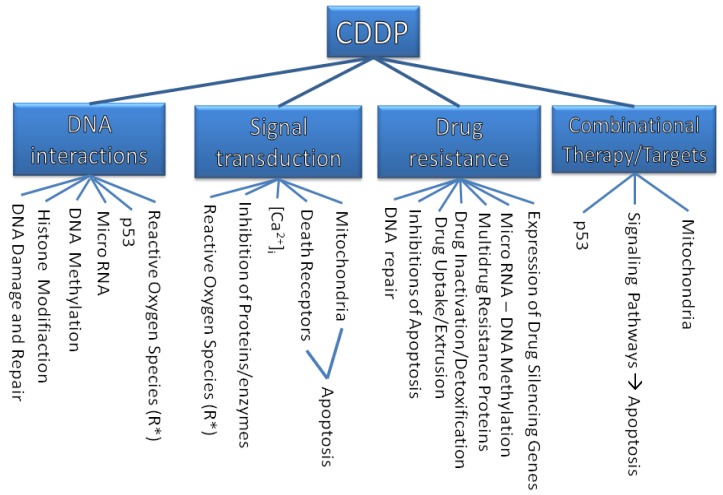
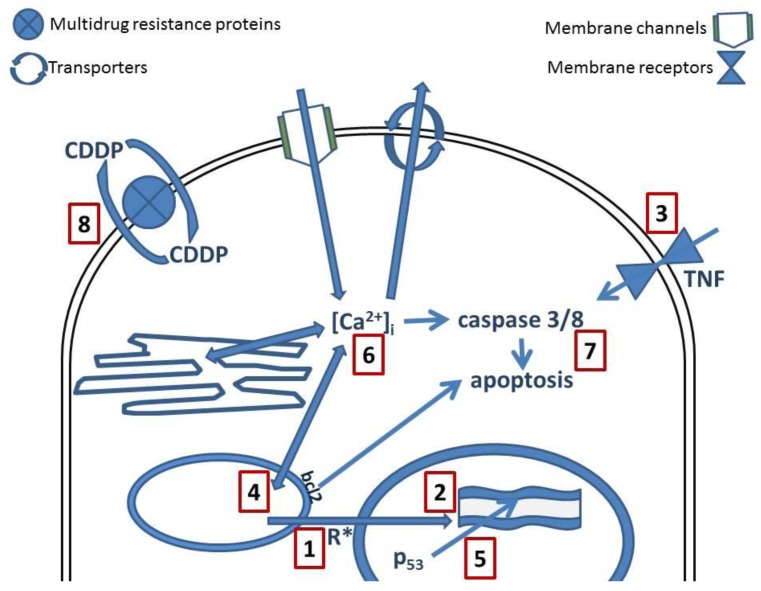
Platinum complexes are clinically used as adjuvant therapy of cancers aiming to induce tumor cell death. Depending on cell type and concentration, cisplatin induces cytotoxicity, e.g., by interference with transcription and/or DNA replication mechanisms. Additionally, cisplatin damages tumors via induction of apoptosis, mediated by the activation of various signal transduction pathways, including calcium signaling, death receptor signaling, and the activation of mitochondrial pathways. Unfortunately, neither cytotoxicity nor apoptosis are exclusively induced in cancer cells, thus, cisplatin might also lead to diverse side-effects such as neuro- and/or renal-toxicity or bone marrow-suppression. Moreover, the binding of cisplatin to proteins and enzymes may modulate its biochemical mechanism of action. While a combination-chemotherapy with cisplatin is a cornerstone for the treatment of multiple cancers, the challenge is that cancer cells could become cisplatin-resistant. Numerous mechanisms of cisplatin resistance were described including changes in cellular uptake, drug efflux, increased detoxification, inhibition of apoptosis and increased DNA repair. To minimize cisplatin resistance, combinatorial therapies were developed and have proven more effective to defeat cancers. Thus, understanding of the biochemical mechanisms triggered by cisplatin in tumor cells may lead to the design of more efficient platinum derivates (or other drugs) and might provide new therapeutic strategies and reduce side effects.
Overview
The claims and statistics of this paper haven’t been checked yet.
Free: it reads the open-access text and checks the first 5 claims that cite a source we can check. Create a free account to check every claim.
Integrity signals
Registry
Cites
Statistics
Figures
Verification
Claims the paper makes
The claims and statistics of this paper haven’t been checked yet.
Free: it reads the open-access text and checks the first 5 claims that cite a source we can check. Create a free account to check every claim.
Claims other papers make about this one
Each is checked against this paper’s own text: does it say what the citing paper says it does?
The source backs part of the claim, not all of it — or backs it for a different population, condition or comparison.
In the citing paper
“Platinum anticancer drugs, such as cisplatin, the most potent member of the platinum drug family, penetrate into the nucleus of cancer cells and form adducts with DNA leading to apoptosis [4].”
From Co-delivery of Paclitaxel and Cisplatin in Poly(2-oxazoline) Polymeric Micelles: Implications for Drug Loading, Release, Pharmacokinetics and Outcome of Ovarian and Breast Cancer Treatments (2019) · cites this paper as [4]
Experimental — accuracy not yet measured
Self-check
Percentages, sums and reported differences re-computed from the paper’s own numbers.
The self-check needs the paper’s full text.
Citations
Cites
1 retracted
Mohammad, R. M., Banerjee, S., Li, Y., Aboukameel, A., Küçük, Ö., & Sarkar, F. H. (2006) · Cancer · doi:10.1002/cncr.21731 · Cited by 84
RetractedMechanisms of resistance to cisplatin
Kartalou, M., & Essigmann, J. M. (2001) · Mutation Research - Fundamental and Molecular Mechanisms of Mutagenesis · doi:10.1016/s0027-5107(01)00141-5 · Cited by 869 · cited 7×
“While the knowledge of the mechanism of action of CDDP has improved our understanding of resistance [70], the mechanism of decreased intracellular accumulation of CDDP is not well understood.”
BackgroundInfluentialLebwohl, D., & Canetta, R. (1998) · European Journal of Cancer · doi:10.1016/s0959-8049(98)00224-x · Cited by 754 · cited 4×
“The research concentrated on platinum analogues focuses on two strategies: expanding the utilization of platinum therapy to other tumor types not usually treated with platinum compounds, while another area of research represents novel routes of administration [7].”
BackgroundMethodInfluentialCellular and molecular pharmacology of oxaliplatin.
Raymond, É., Faivre, S. J., Chaney, S. G., WOYNAROWSKI, J. M., & Cvitkovic, E. (2002) · PubMed · Cited by 576
Novel Metals and Metal Complexes as Platforms for Cancer Therapy
Frezza, M., Hindo, S., Chen, D., Davenport, A., Schmitt, S., Tomco, D., & Ping Dou, Q. (2010) · Current Pharmaceutical Design · doi:10.2174/138161210791209009 · Cited by 552 · cited 2×
“Nevertheless, metal compounds are potential candidates as anticancer agents [1].”
BackgroundThe Role of Cellular Accumulation in Determining Sensitivity to Platinum-Based Chemotherapy
Hall, M. D., Okabe, M., Shen, D.-W., Liang, X.-J., & Gottesman, M. M. (2008) · Annual Review of Pharmacology and Toxicology · doi:10.1146/annurev.pharmtox.48.080907.180426 · Cited by 474 · cited 2×
“, diffusion) only, but there is an active transport system involved [73].”
BackgroundMolecular mechanisms involved in cisplatin cytotoxicity
Jordan, P., & Carmo-Fonseca*, M. (2000) · Cellular and Molecular Life Sciences · doi:10.1007/pl00000762 · Cited by 398 · cited 2×
“Due to a shielding effect caused by these proteins, the CDDP-modified DNA is poorly repaired, resulting DNA damage triggers cell-cycle arrest and apoptosis [28].”
BackgroundRecognition and processing of cisplatin- and oxaliplatin-DNA adducts
Chaney, S. G., Campbell, S. L., Bassett, E., & Wu, Y. (2005) · Critical Reviews in Oncology/Hematology · doi:10.1016/j.critrevonc.2004.08.008 · Cited by 396 · cited 1×
“contribute to the differences in cytotoxicity and tumor range of CDDP and oxaliplatin [31].”
BackgroundParticular aspects of platinum compounds used at present in cancer treatment
Desoize, B., & Madoulet, C. (2002) · Critical Reviews in Oncology/Hematology · doi:10.1016/s1040-8428(01)00219-0 · Cited by 393 · cited 7×
“The hope is that the drugs will work together, producing synergistic or at least additive effects in killing cancer cells, while producing no additional side effects [3].”
BackgroundInfluentialModifications of DNA by platinum complexes
Brabec, V., & Kasparkova, J. (2005) · Drug Resistance Updates · doi:10.1016/j.drup.2005.04.006 · Cited by 373 · cited 4×
“Drug resistance is a major complication in cancer chemotherapy and accounts for the failure of chemotherapy to cure the majority of cancer patients [33,69].”
BackgroundInfluential
Research works printed but not linked: 2
- Chattopadhyay S. Machado-Pinilla R. Manguan-Garcia C. Belda-Iniesta C. Moratilla C. Cejas P. Fresno-Vara J.A. de Castro-Carpeno J. Casado E. Nistal M. Gonzalez-Che C.M. Siu F.M. Metal complexes in medicine with a focus on enzyme inhibition Curr. Opin. Chem. Biol. 2010 14 255 261 20018553 · DOI · Paper page
- Florea A.-M. Büsselberg D. Cisplatin as an anti-tumour drug: Cellular mechanisms of activity, drug resistance and induced side effects Cancers 2011 in press PMC3756417 24212665
Cited by
Items 201–300 of 1,000
Grandis, R. A. D., dos Santos, P. W. D. S., de Oliveira, K. M., Machado, A. R. T., Aissa, A. F., Batista, A. A., Antunes, L. M. G., & Pavan, F. R. (2019) · Bioorganic Chemistry · doi:10.1016/j.bioorg.2019.02.010 · Cited by 63
Singh, M. P., Cho, H. J., Kim, J.-T., Baek, K. E., Lee, H. G., & Kang, S. C. (2019) · Cancers · doi:10.3390/cancers11070986 · Cited by 61
“Although the mechanism of chemoresistance is not fully understood, recent evidence has revealed that stress-induced autophagy may contribute in part to the HCC chemoresistance [4].”
BackgroundInfluentialWang, K., Qian, M., Qi, H., Gao, Q., & Zhang, C. (2020) · Nanoscale · doi:10.1039/d0nr02149k · Cited by 60
tRNALys-Derived Fragment Alleviates Cisplatin-Induced Apoptosis in Prostate Cancer Cells
Yang, C., Lee, M., Song, G., & Lim, W. (2021) · Pharmaceutics · doi:10.3390/pharmaceutics13010055 · Cited by 61
“Cisplatin is a standard chemoth r agent widely used for various types of cancer, includi g ovarian and cervical cancer, as well as prostate cancer [26].”
BackgroundLi, R.-Y., Zheng, Z.-Y., Li, Z., Heng, J.-H., Zheng, Y.-Q., Deng, D.-X., Xu, X., Liao, L., Lin, W., Xu, H.-Y., et al. (2022) · Chemico-Biological Interactions · doi:10.1016/j.cbi.2022.109967 · Cited by 59
Hasheminezhad, S. H., Boozari, M., Iranshahi, M., Yazarlu, O., Sahebkar, A., Hasanpour, M., & Iranshahy, M. (2021) · Phytotherapy Research · doi:10.1002/ptr.7290 · Cited by 62
Liberation of drugs from multi-wall carbon nanotube carriers
Boncel, S., Zając, P., & Koziol, K. K. (2013) · Journal of Controlled Release · doi:10.1016/j.jconrel.2013.04.009 · Cited by 64
A nanocomplex of C60 fullerene with cisplatin: design, characterization and toxicity
Prylutska, S., Politenkova, S., Afanasieva, K. S., Korolovych, V. F., Bogutska, K. I., Sivolob, A., Skivka, L. M., Evstigneev, M. P., Kostjukov, V. V., Prylutskyy, Y. І., et al. (2017) · Beilstein Journal of Nanotechnology · doi:10.3762/bjnano.8.149 · Cited by 58
Yang, Y., Guo, L., Ge, X., Tian, Z., Gong, Y., Zheng, H., Du, Q. B., Zheng, X., & Liu, Z. (2018) · Dyes and Pigments · doi:10.1016/j.dyepig.2018.09.044 · Cited by 59
c-MYC and Epithelial Ovarian Cancer
Reyes‐González, J. M., & Vivas‐Mejía, P. E. (2021) · Frontiers in Oncology · doi:10.3389/fonc.2021.601512 · Cited by 65
“Several mechanisms of platinum resistance have been proposed, including the altered expression of oncogenes such as c-MYC (4, 5).”
BackgroundRecent Trends in the Development of Novel Metal-Based Antineoplastic Drugs
Todorov, L. T., & Kostova, I. P. (2023) · Molecules · doi:10.3390/molecules28041959 · Cited by 57
“Its biological activity was serendipitously discovered in the 1960s by Rosenberg and coworkers [11].”
BackgroundPlatinum-based drugs in cancer treatment: Expanding horizons and overcoming resistance
Shahlaei, M., Asl, S. M., Derakhshani, A., Kurek, L., Karges, J., Macgregor, R. B., Saeidifar, M., Kostova, I. P., & Saboury, A. A. (2023) · Journal of Molecular Structure · doi:10.1016/j.molstruc.2023.137366 · Cited by 60
Isatin-Schiff base-copper (II) complex induces cell death in p53-positive tumors
Bulatov, E., Sayarova, R., Mingaleeva, R. N., Рифкатовна, М. Р., Gomzikova, M. O., Ignatyev, Y., Petukhov, A., Davidovich, P. B., Rizvanov, A. A., & Barlev, N. A. (2018) · Cell Death Discovery · doi:10.1038/s41420-018-0120-z · Cited by 61
Rehman, M. U., & Rather, I. A. (2019) · Plants · doi:10.3390/plants9010028 · Cited by 54
RetractedIn Situ-Induced Multivalent Anticancer Drug Clusters in Cancer Cells for Enhancing Drug Efficacy
Zhou, L., Lv, F., Liu, L., & Wang, S. (2019) · CCS Chemistry · doi:10.31635/ccschem.019.20180015 · Cited by 57
Ko, E., Jang, Y.-G., Kim, C., Go, R., Lee, H. K., & Choi, K. (2021) · Biomolecules & Therapeutics · doi:10.4062/biomolther.2021.074 · Cited by 57
“Because treatment of CDDP is often accompanied with side effects including nausea, vomiting, viscera toxicity, and tumor resistance (Yousef et al., 2009; Florea and Busselberg, 2011), it is necessary to identify more effective agents and fewer side effects.”
BackgroundAguilar-Jiménez, Z., Espinoza-Guillén, A., Reséndiz-Acevedo, K., Fuentes-Noriega, I., Mejía, C., & Ruíz-Azuara, L. (2023) · Inorganics · doi:10.3390/inorganics11100394 · Cited by 57
“Despite being useful in therapies, this compound presents several secondary toxic effects on the kidneys, as well as myelotoxicity and neuropathy [14–18].”
BackgroundSulfonated Schiff base Sn(IV) complexes as potential anticancer agents
Hazra, S., Paul, A., Sharma, G., Koch, B., da Silva, M. F. C. G., & Pombeiro, A. J. L. (2016) · Journal of Inorganic Biochemistry · doi:10.1016/j.jinorgbio.2016.06.008 · Cited by 56
Jose, G. M., Raghavankutty, M., & Kurup, G. M. (2018) · Process Biochemistry · doi:10.1016/j.procbio.2018.02.014 · Cited by 59
Allen, C. M., Lopes, F., Mitchell, R. T., & Spears, N. (2020) · Molecular Human Reproduction · doi:10.1093/molehr/gaaa008 · Cited by 58
“Cisplatin is associated with many toxic side effects including emesis, nephrotoxicity, neurotoxicity, myelosuppression, immunosuppression and ototoxicity; together, these side effects can limit the use of cisplatin in treatment protocols (Florea and Büsselberg, 2011).”
BackgroundGuo, H., Liu, Y., Wang, Y., Wu, J., Yang, X., 李荣珊, Wang, Y., & Zhang, N. (2014) · Carbohydrate Polymers · doi:10.1016/j.carbpol.2014.05.057 · Cited by 57
Tian, Y., Guo, Y., Zhu, P., Zhang, D., Liu, S., Tang, M., Wang, Y., Jin, Z., Li, D., Yan, D., et al. (2019) · Aging · doi:10.18632/aging.102351 · Cited by 56
Low-Dose X-ray-Responsive Diselenide Nanocarriers for Effective Delivery of Anticancer Agents
Zhang, L., Zhang, S., Xu, J., Li, Y., He, J., Yang, Y., Huynh, T., Ni, P., Duan, G., Yang, Z., et al. (2020) · ACS Applied Materials & Interfaces · doi:10.1021/acsami.0c11627 · Cited by 56
MicroRNA-31: a pivotal oncogenic factor in oral squamous cell carcinoma
Lin, X., Wu, W., Ying, Y., Luo, J., Xu, X., Zheng, L., Wu, W.-L., Yang, S., & Zhao, S. (2022) · Cell Death Discovery · doi:10.1038/s41420-022-00948-z · Cited by 54
“Cisplatin is one of the common-used first-line chemotherapy regimens for treating OSCC but usually fails because of chemoresistance [53].”
BackgroundMarotta, C., Giorgi, E., Binacchi, F., Cirri, D., Gabbiani, C., & Pratesi, A. (2023) · Inorganica Chimica Acta · doi:10.1016/j.ica.2023.121388 · Cited by 55
“This labor-intensive research process was mainly justified by cisplatin ’ s drawbacks that emerged over the years of clinical use [6].”
Li, H., Lan, R., Chan, C., Jiang, L., Dai, L., Kwong, D. W. J., Lam, M. H., & Wong, K. (2015) · Chemical Communications · doi:10.1039/c5cc05461c · Cited by 54
cis-Pt I 2 (NH 3 ) 2 : a reappraisal
Marzo, T., Pillozzi, S., Hrabina, O., Kašpárková, J., Brabec, V., Arcangeli, A., Bartoli, G., Severi, M., Lunghi, A., Totti, F., et al. (2015) · Dalton Transactions · doi:10.1039/c5dt01196e · Cited by 54
Sato, I., Umemura, M., Mitsudo, K., Kioi, M., Nakashima, H., Iwai, T., Feng, X., Oda, K., Miyajima, A., Makino, A., et al. (2014) · The Journal of Physiological Sciences · doi:10.1007/s12576-014-0309-8 · Cited by 58
Al-Taweel, N., Varghese, E., Florea, A.-M., & Büsselberg, D. (2014) · The Journal of Toxicological Sciences · doi:10.2131/jts.39.765 · Cited by 54
“Modulations of the intracellular calcium concentration are considered to be a ubiquitous cellular signal in tumor and non-tumor cells (Florea and Büsselberg, 2011, 2012, 2013; Szatkowski et al., 2010).”
Self-citationTaxol from Corylus avellana: paving the way for a new source of this anti-cancer drug
Gallego, A., Malik, S., Yousefzadi, M., Makhzoum, A. B., Trémouillaux‐Guiller, J., & Bonfill, M. (2017) · Plant Cell Tissue and Organ Culture (PCTOC) · doi:10.1007/s11240-016-1164-5 · Cited by 54
“Whereas most anti-cancer drugs act by interfering with the DNA of tumor cells, the mechanism of action of taxol is different focusing on the microtubular cell system (Florea and Büsselberg 2011).”
BackgroundPrashanth, T., Avin, B. R. V., Thirusangu, P., Ranganatha, V. L., Prabhakar, B. T., Chandra, J. N. N. S., & Khanum, S. A. (2019) · Biomedicine & Pharmacotherapy · doi:10.1016/j.biopha.2019.108707 · Cited by 54
Maji, M., Acharya, S., Bhattacharya, I., Gupta, A., & Mukherjee, A. (2021) · Inorganic Chemistry · doi:10.1021/acs.inorgchem.0c03706 · Cited by 55
Omoruyi, S. I., Ekpo, O. E., Semenya, D. M., Jardine, A., & Prince, S. (2020) · Apoptosis · doi:10.1007/s10495-020-01594-5 · Cited by 53
“A notable example of an apoptosis inducing chemotherapeutic agent that is linked to drug resistance in cancer cells is the platinum based drug cisplatin and this limits its usage in clinical settings [70, 71].”
BackgroundHess, U., Shahabi, S., Treccani, L., Streckbein, P., Heiß, C., & Rezwan, K. (2017) · Materials Science and Engineering C · doi:10.1016/j.msec.2017.03.164 · Cited by 54
Pang, J., Xiong, H., Zhan, T., Cheng, G., Jia, H., Ye, Y., Su, Z., Chen, H., Lin, H., Lai, L., et al. (2019) · Frontiers in Cellular Neuroscience · doi:10.3389/fncel.2018.00515 · Cited by 55
“Despite decades of research, effective approaches against CDDP-induced side effects including ototoxicity, nephrotoxicity, and neurotoxicity remain unavailable (Rybak et al., 2007; Florea and Büsselberg, 2011; Kim et al., 2018).”
BackgroundXue, D., Pan, S., Zhou, X., Ye, F., Zhou, Q., Shi, F., He, F., Yu, H., & Qiu, J. (2020) · Oxidative Medicine and Cellular Longevity · doi:10.1155/2020/5649174 · Cited by 56
“However, its effectiveness is often limited as a result of drug resistance and severe side effects [3].”
BackgroundNatural products targeting the ATR-CHK1 signaling pathway in cancer therapy
Ahmed, S., Alam, W., Aschner, M., Alsharif, K. F., Albrakati, A., Saso, L., & Khan, H. Z. (2022) · Biomedicine & Pharmacotherapy · doi:10.1016/j.biopha.2022.113797 · Cited by 58
“Cisplatin’s anticancer activity comes from its capacity to cause DNA damage, but this therapy’s efficacy is frequently reduced quickly due to cancer cell resistance [92].”
BackgroundLiu, J., Yang, Y., He, Y., Feng, C., Ou, H., Yang, J., Chen, Y., You, F., Shao, B., Bao, J., et al. (2022) · Journal of Ethnopharmacology · doi:10.1016/j.jep.2022.116046 · Cited by 53
Determination of platinum drug release and liposome stability in human plasma by CE-ICP-MS
Nguyen, T. T. T. N., Østergaard, J., Stürup, S., & Gammelgaard, B. (2013) · International Journal of Pharmaceutics · doi:10.1016/j.ijpharm.2013.03.055 · Cited by 52
Hsin, I., Ou, C., Wu, M., Jan, M., Hsiao, Y., Lin, C., & Ko, J. (2015) · Molecular Pharmaceutics · doi:10.1021/mp500840z · Cited by 52
Ferguson, H. M., Chan, D., Sockolosky, J. T., Finney, L. A., Maxey, E., Vogt, S., & Szoka, F. C. (2017) · European Journal of Pharmaceutical Sciences · doi:10.1016/j.ejps.2017.03.003 · Cited by 52
“We can conjecture that the platinum leakage from the more leakier formulations prior to the cis-platinum reaching the tumor cell may explain the lower platinum adducts on the DNA because of the inactivation of cis-platinum by nucleophiles prior to reaching the nucleus (Florea and Büsselberg, 2011).”
InfluentialYudhani, R. D., Astuti, I., Mustofa, M., Indarto, D., & Muthmainah, M. (2019) · Asian Pacific Journal of Cancer Prevention · doi:10.31557/apjcp.2019.20.6.1667 · Cited by 53
“These protein binding complexes contribute in cisplatin resistance of some cancer cells including cervical cancer (Florea and Büsselberg, 2011; Yang-Hartwich et al., 2014; Zhu et al., 2016).”
BackgroundSioud, F., Toumia, I. B., Lahmer, A., Khlifi, R., Dhaouefi, Z., Maâtouk, M., Ghédira, K., & Ghédira, L. C. (2020) · Environmental Science and Pollution Research · doi:10.1007/s11356-020-07904-3 · Cited by 52
Aldawsari, H. M., & Singh, S. (2020) · Nanomaterials · doi:10.3390/nano10030510 · Cited by 52
“However, cisplatin treatment presents significant constraints due to drug dose-induced systemic toxicities, such as neurotoxicity, ototoxicity, gastrointestinal disorders, myelosuppression, and nephrotoxicity [20].”
BackgroundYang, Y., Guo, L., Tian, Z., Ge, X., Gong, Y., Zheng, H., Shi, S., & Liu, Z. (2019) · Organometallics · doi:10.1021/acs.organomet.9b00080 · Cited by 51
JZL184 is anti-hyperalgesic in a murine model of cisplatin-induced peripheral neuropathy
Khasabova, I. A., Yao, X., Paz, J., Lewandowski, C. T., Lindberg, A. E., Coicou, L., Burlakova, N., Simone, D. A., & Seybold, V. S. (2014) · Pharmacological Research · doi:10.1016/j.phrs.2014.09.008 · Cited by 50
Abdel‐Wahab, B. A., Alkahtani, S. A., & Elagab, E. A. M. (2020) · Reproductive Toxicology · doi:10.1016/j.reprotox.2020.06.015 · Cited by 50
Mehtala, J. G., Torregrosa‐Allen, S. E., Elzey, B. D., Jeon, M., Kim, C., & Wei, A. (2014) · Nanomedicine · doi:10.2217/nnm.13.209 · Cited by 50
Kubanik, M., Kandioller, W., Kim, K., Anderson, R. F., Klapproth, E., Jakupec, M. A., Roller, A., Söhnel, T., Keppler, B. K., & Hartinger, C. G. (2016) · Dalton Transactions · doi:10.1039/c6dt01110a · Cited by 50
Mitra, K. (2016) · Dalton Transactions · doi:10.1039/c6dt03665a · Cited by 50
Purena, R., Seth, R., & Bhatt, R. (2018) · Toxicology Reports · doi:10.1016/j.toxrep.2018.01.008 · Cited by 50
In vitro nephrotoxicity and anticancer potency of newly synthesized cadmium complexes
Abyar, S., Khandar, A. A., Salehi, R., Hosseini‐Yazdi, S. A., Alizadeh, E., Mahkam, M., Jamalpoor, A., White, J. M., Shojaei, M., Aizpurua‐Olaizola, O., et al. (2019) · Scientific Reports · doi:10.1038/s41598-019-51109-9 · Cited by 51
“322(2) Å) in the complex decreased, compared to the free ligand (1.”
BackgroundLakshmi, B. A., Ankireddy, S. R., Sangubotla, R., Hong, J. W., & Kim, S. (2021) · Colloids and Surfaces B Biointerfaces · doi:10.1016/j.colsurfb.2021.111773 · Cited by 50
Adokoh, C. K., Quan, S., Hitt, M., Darkwa, J., Kumar, P., & Narain, R. (2014) · Biomacromolecules · doi:10.1021/bm5010977 · Cited by 49
Wang, W., Cheng, J., Qin, J., Voruganti, S., Nag, S. A., Fan, J., Gao, Q., & Zhang, R. (2014) · Oncotarget · doi:10.18632/oncotarget.2598 · Cited by 51
“It has been reported that cisplatin-induced cell apoptosis is mediated by various signal transduction pathways, including death receptor signaling and mitochondrial signaling pathways [28, 29].”
BackgroundCisplatin-Induced Nephrotoxicity; Protective Supplements and Gender Differences
Nematbakhsh, M., Pezeshki, Z., Eshraghi-Jazi, F., Mazaheri, B., Moeini, M., Safari, T., Azarkish, F., Moslemi, F., Maleki, M., Rezaei, A., et al. (2017) · PubMed Central · doi:10.22034/apjcp.2017.18.2.295 · Cited by 57
Handayani, S., Susidarti, R. A., Jenie, R. I., & Meiyanto, E. (2017) · Advanced Pharmaceutical Bulletin · doi:10.15171/apb.2017.045 · Cited by 54
Reddy, T. S., Privér, S. H., Mirzadeh, N., & Bhargava, S. K. (2017) · European Journal of Medicinal Chemistry · doi:10.1016/j.ejmech.2017.12.048 · Cited by 49
Resveratrol induces apoptosis in SGC‑7901 gastric cancer cells
Wu, X., Xu, Y., Zhu, B., Liu, Q., Yao, Q., & Zhao, G. (2018) · Oncology Letters · doi:10.3892/ol.2018.9045 · Cited by 60
Badea, M. A., Prodana, M., Dinischiotu, A., Crihana, C., Ioniță, D., & Balaș, M. (2018) · Pharmaceutics · doi:10.3390/pharmaceutics10040228 · Cited by 50
“The most common mechanisms are based on drug inactivation by increased levels of reduced glutathione and glutathione S-transferase, reduced cellular uptake/reduced accumulation of the drug or increased drug efflux [21,22].”
BackgroundLin, K., Cheng, H., Yen, C., Hung, C., Huang, Y., Yang, H.-L., Cheng, W.-T., & Tsai, K. (2021) · International Journal of Environmental Research and Public Health · doi:10.3390/ijerph18031291 · Cited by 53
“ability to interact with DNA, denature the double helix, inhibit the repair of DNA and induce apoptosis in tumor cells [6,7].”
BackgroundChi, T., Sang, T., Wang, Y., & Ye, Z. (2023) · Bioconjugate Chemistry · doi:10.1021/acs.bioconjchem.3c00476 · Cited by 54
Farooqui, Z., Afsar, M., Rizwan, S., Khan, A. A., & Khan, F. (2016) · Toxicology Reports · doi:10.1016/j.toxrep.2016.02.004 · Cited by 48
Strong in Vitro Cytotoxic Potential of New Ruthenium–Cymene Complexes
Nikolić, S. R., Opsenica, D., Filipović, V. V., Dojčinović, B., Aranđelović, S., Radulovic, S. S., & Grgurić‐Šipka, S. (2015) · Organometallics · doi:10.1021/acs.organomet.5b00041 · Cited by 48
Ko, J., Shin, N., Jung, T.-Y., Shin, I., Moon, C., Kim, S., Lee, I.-C., Kim, S., Yun, W.-K., Kim, H.-C., et al. (2019) · Food and Chemical Toxicology · doi:10.1016/j.fct.2019.04.049 · Cited by 50
Rajan, M., Murugan, M., Ponnamma, D., Sadasivuni, K. K., & Munusamy, M. A. (2016) · Biomedicine & Pharmacotherapy · doi:10.1016/j.biopha.2016.06.026 · Cited by 48
SNPs in predicting clinical efficacy and toxicity of chemotherapy: walking through the quicksand
Palmirotta, R., Carella, C., Silvestris, E., Cives, M., Stucci, S. L., Tucci, M., Lovero, D., & Silvestris, F. (2018) · Oncotarget · doi:10.18632/oncotarget.25256 · Cited by 55
“Platinum derivatives are highly efficacious against a broad spectrum of solid tumors and currently constitute the backbone for the treatment of pulmonary, head and neck, gastroentero-pancreatic and genitourinary neoplasms [70].”
BackgroundŞen, B., Kalhan, H. K., Demir, V., Güler, E. E., Kayalı, H. A., & Subaşı, E. (2018) · Materials Science and Engineering C · doi:10.1016/j.msec.2018.12.080 · Cited by 48
Structural self-organization of C 60 and cisplatin in physiological solution
Prylutskyy, Y. І., Cherepanov, V. V., Evstigneev, M. P., Kyzyma, O. A., Petrenko, V. I., Styopkin, V., Булавін, Л. А., Давиденко, Н. А., Wyrzykowski, D., Woziwodzka, A., et al. (2015) · Physical Chemistry Chemical Physics · doi:10.1039/c5cp02688a · Cited by 47
Hu, W., Jin, P., & Liu, W. (2016) · Cellular Physiology and Biochemistry · doi:10.1159/000443068 · Cited by 49
Fabrication and Cytotoxicity of Fucoidan-Cisplatin Nanoparticles for Macrophage and Tumor Cells
Hwang, P., Lin, X.-Z., Kuo, K.-L., & Hsu, F. (2017) · Materials · doi:10.3390/ma10030291 · Cited by 49
Song, M., Liu, N., He, L., Liu, G., Ling, D., Su, X., & Sun, X. (2018) · Nano Research · doi:10.1007/s12274-017-1910-y · Cited by 48
Rodríguez‐Fanjul, V., López‐Torres, E., Mendiola, M. A., & Pizarro, A. M. (2018) · European Journal of Medicinal Chemistry · doi:10.1016/j.ejmech.2018.02.009 · Cited by 48
Preclinical Pharmacokinetics of Triptolide: A Potential Antitumor Drug
Song, W., Liu, M., Wu, J., Zhai, H., Chen, Y., & Peng, Z. (2018) · Current Drug Metabolism · doi:10.2174/1389200219666180816141506 · Cited by 47
Ahmad, S., Hussain, A., Hussain, A., Abdullah, I., Ali, M. S., Froeyen, M., & Mirza, M. U. (2019) · Antioxidants · doi:10.3390/antiox8060185 · Cited by 52
“It is among the most common frontline medicines for the treatment of some of the most devastating types of solid-organ cancers such as lung, esophagus, head, neck, stomach, testis, and ovary, as well as lymphoma and osteosarcoma [1].”
BackgroundSarkar, B., Mondal, A., Madaan, Y., Roy, N., Moorthy, A., Kuo, Y., & Paira, P. (2019) · Dalton Transactions · doi:10.1039/c9dt00921c · Cited by 47
Attanzio, A., D’Agostino, S., Busà, R., Frazzitta, A., Rubino, S., Girasolo, M. A., Sabatino, P., & Tesoriere, L. (2020) · Molecules · doi:10.3390/molecules25040859 · Cited by 50
Overcoming Chemotherapy Resistance in Germ Cell Tumors
Országhová, Z., Kaľavská, K., Mego, M., & Chovanec, M. (2022) · Biomedicines · doi:10.3390/biomedicines10050972 · Cited by 51
“The production of reactive oxygen species (ROS) that are responsible for DNA damage and mitochondrial dysfunction subsequently leads to apoptosis [18,19].”
BackgroundRole of micro-RNAs in drug resistance of multiple myeloma
Abdi, J., Hou, J., & Chang, H. (2016) · Oncotarget · doi:10.18632/oncotarget.11032 · Cited by 47
Wang, J., Zhang, L., Jiang, W., Zhang, R., Zhang, B., Silayiding, A., & Duan, X. (2019) · European Journal of Obstetrics & Gynecology and Reproductive Biology X · doi:10.1016/j.eurox.2019.100103 · Cited by 48
“Cisplatin is one of the most effective cytotoxic platinum-based chemotherapy drug used in a variety of cancers treatment [6].”
BackgroundFe 3 O 4 @SiO 2 @Au nanoparticles for MRI-guided chemo/NIR photothermal therapy of cancer cells
Maximenko, A., Depciuch, J., Łopuszyńska, N., Stec, M., Światkowska-Warkocka, Ż., Bayev, V., Zieliński, P. M., Baran, J., Fedotova, J. A., Węglarz, W. P., et al. (2020) · RSC Advances · doi:10.1039/d0ra03699d · Cited by 48
Shoari, A., Tooyserkani, R., Tahmasebi, M., & Löwik, D. W. P. M. (2021) · Pharmaceutics · doi:10.3390/pharmaceutics13091391 · Cited by 48
“One of the major chemotherapy treatments for glioblastoma multiforme is cisplatinbased therapy, however, drug resistance and unwanted side effects have restricted the efficiency of this particular therapy [190].”
BackgroundSami, D. H., Soliman, A. S., Khowailed, A. A., Hassanein, E. H. M., Kamel, E. M., & Mahmoud, A. M. (2022) · Life Sciences · doi:10.1016/j.lfs.2022.121104 · Cited by 49
The Nephrotoxicity of Drugs Used in Causal Oncological Therapies
Hałka, J., Spaleniak, S., Kade, G., Antosiewicz, S., & Sigorski, D. (2022) · Current Oncology · doi:10.3390/curroncol29120760 · Cited by 49
“The mechanism of its action is based on the inhibition of DNA synthesis by creating bonds preventing the replication of the DNA chain [15].”
BackgroundMahmoud, A. M. A., Mantawy, E. M., Wahdan, S. A., Ammar, R. M., & El‐Demerdash, E. (2023) · Biomedicine & Pharmacotherapy · doi:10.1016/j.biopha.2023.114238 · Cited by 45
Chen, J., Zhang, W., Zhang, M., Guo, Z. G., Wang, H., He, M., Xu, P., Zhou, J., Liu, Z., & Chen, Q. (2015) · Nanoscale · doi:10.1039/c5nr02402a · Cited by 46
Zhu, X., Wang, J., Ou, Y., Han, W., & Li, H. (2013) · European journal of medical research · doi:10.1186/2047-783x-18-46 · Cited by 45
“However, the curative effect of traditional chemotherapeutic drugs is limitedm and their side effects, such as neurological and/or renal [8] and cardiac [9] toxicity, are serious.”
BackgroundZhang, Y., Ma, Z., Gao, C., Qiao, X., Tian, J., Gu, W., Liu, X., Xu, J., Zhao, J., & Yan, S. (2016) · New Journal of Chemistry · doi:10.1039/c6nj00346j · Cited by 45
Synergistic antitumor effect of brusatol combined with cisplatin on colorectal cancer cells
Chen, H., Lai, Z., Liao, H., Xie, J., Xian, Y., Chen, Y., Ip, S., Lin, Z., & Su, Z. (2018) · International Journal of Molecular Medicine · doi:10.3892/ijmm.2018.3372 · Cited by 53
“CDDP is a chemotherapy drug commonly used in cancer therapy; however, the side effects, including digestive tract reactions, renal toxicity, bone marrow suppression and auditory neurotoxicity, cannot be ignored (25).”
BackgroundKouser, R., Vashist, A., Zafaryab, M., Rizvi, M. M. A., & Ahmad, S. (2018) · ACS Omega · doi:10.1021/acsomega.8b01691 · Cited by 48
Malfatti, M. C., Gerratana, L., Dalla, E., Isola, M., Damante, G., Loreto, C. D., Puglisi, F., & Tell, G. (2019) · Journal of Experimental & Clinical Cancer Research · doi:10.1186/s13046-019-1294-9 · Cited by 49
“Regarding the molecular effects of Pt-salts, although several mechanisms of action were hypothesized and are still under investigation, the most accredited is the generation of mono-adducts, intra-strand and inter-strand (ICL) DNA cross links, able to distort the DNA backbone causing the formation of toxic single (SSB…”
BackgroundAntitumor activity of tridentate pincer and related metal complexes
Wu, S., Wu, Z., Ge, Q., Zheng, X., & Yang, Z. (2021) · Organic & Biomolecular Chemistry · doi:10.1039/d1ob00577d · Cited by 45
An Overview of the Potential Medicinal and Pharmaceutical Properties of Ru(II)/(III) Complexes
Skoczyńska, A., Lewiñski, A., Pokora, M., Paneth, P., & Budzisz, E. (2023) · International Journal of Molecular Sciences · doi:10.3390/ijms24119512 · Cited by 46
“Despite their anticancer effectiveness, they have some disadvantages, such as toxicity to the excretory and nervous systems, as well as loss of hair, nausea, suppression of bone marrow, vomiting and resistance to drugs [1–5].”
BackgroundCurcumin as a hepatoprotective agent against chemotherapy-induced liver injury
de Porras, V. R., Figols, M., Pous, A. F., & Pardina, E. (2023) · Life Sciences · doi:10.1016/j.lfs.2023.122119 · Cited by 50
Sato, T., Mori, S., Arai, Y., & Kodama, T. (2014) · Ultrasound in Medicine & Biology · doi:10.1016/j.ultrasmedbio.2013.12.012 · Cited by 44
Law, B. Y. K., Qu, Y. Q., Mok, S. W. F., Liu, H., Wu, J., Han, Y. K., Gordillo-Martínez, F., Chan, W.-K., Wong, K. M., & Wong, V. K. W. (2017) · Oncotarget · doi:10.18632/oncotarget.18991 · Cited by 45
“Nevertheless, the anti-tumor efficacy of cisplatin is often limited in multidrug-resistant or p53-deficient cancers [21].”
BackgroundRoy, S., Kar, M., Roy, S., Saha, A., Padhi, S., & Banerjee, B. (2017) · Cellular Oncology · doi:10.1007/s13402-017-0365-1 · Cited by 52
Wu, K., Hu, Y., Yan, K., Qi, Y., Zhang, C., Dengyan, Z., Liu, D., & Zhao, S. (2019) · Journal of Cellular Physiology · doi:10.1002/jcp.29040 · Cited by 44
“Cisplatin (DDP and CDDP) is widely used as a therapeutic agent in many kinds of tumors, including esophageal cancer (Florea & Büsselberg, 2011).”
BackgroundZhang, W., Xiong, H., Pang, J., Su, Z., Lai, L., Lin, H., Jian, B., He, W., Yang, H., & Zheng, Y. (2020) · Toxicology Letters · doi:10.1016/j.toxlet.2020.04.005 · Cited by 45
Miranda, V. M. (2021) · Reviews in Inorganic Chemistry · doi:10.1515/revic-2020-0030 · Cited by 48
Metadata
- Authors
- Florea, A.-M., & Büsselberg, D.
- Affiliations
- Heinrich Heine University Düsseldorf (DE)
- Weill Cornell Medical College in Qatar (QA)
- Corresponding author
- Büsselberg, Dietrich
- ORCID
- Büsselberg, Dietrich
- Venue
- Cancers
- Publisher
- MDPI AG
- Published
- 2011-03-15
- Volume
- 3
- Issue
- 1
- Pages
- 1351-1371
- ISSN
- 2072-6694 (ISSN-L)
- PMC
- PMC3756417
- OpenAlex
- W2073131323
- Cited by
- 1,759
- References
- 83
- Citations by year
- 2026: 65 · 2025: 111 · 2024: 154 · 2023: 148 · 2022: 165 · 2021: 177 · 2020: 195 · 2019: 176 · 2018: 133 · 2017: 129 · 2016: 100 · 2015: 82 · 2014: 70 · 2013: 28 · 2012: 21
- FWCI
- 19.39
- Type
- journal article
- Language
- en
- Open access
- gold
- doi.org
- Licence
- Locations
- Cancers (publishedVersion, cc-by)
- Europe PMC (PubMed Central) (publishedVersion, other-oa)
- PubMed Central (publishedVersion, cc-by)
- PubMed (publishedVersion)
- DOAJ (DOAJ: Directory of Open Access Journals) (submittedVersion)
- Topics
- Health Sciences › Medicine › Oncology › Metal complexes synthesis and properties
- Life Sciences › Biochemistry, Genetics and Molecular Biology › Molecular Biology › Cancer therapeutics and mechanisms
- Life Sciences › Biochemistry, Genetics and Molecular Biology › Molecular Biology › Cell death mechanisms and regulation
- Keywords
- cisplatin, platinum complexes, apoptosis, DNA replication inhibition, calcium signaling, death receptor signaling, mitochondrial apoptosis, drug resistance, neurotoxicity, nephrotoxicity, myelosuppression, combination chemotherapy, DNA repair, drug efflux, cellular uptake, platinum derivatives
About these checks
Registry, retraction, Cites and statistics results are computed, not judged, with one exception: a printed reference that no index lists is read once by a model before it counts as a citation error. Claims are extracted by a model and kept only when their quote appears verbatim in the text; each cited source is then checked, with a model’s help, for whether it says what the claim relies on. Those verdicts can be wrong — read the claim’s quote and the cited source before relying on one.
Statistics and arithmetic are recomputed, not judged.
Confidence bands are shown only for fields calibrated on our annotated test set. None is calibrated yet, so no band is shown.
What counts as a claim ›How we measure confidence ›How we check this ›
Are you an author, or do you see a problem with this page? Request a review
Data sources
Bibliographic data: Semantic Scholar, OpenAlex, Crossref.
Contains information from the Semantic Scholar Academic Graph Datasets, made available under the ODC Attribution License (ODC-BY 1.0).
Semantic Scholar’s data is described in: Kinney, R., et al. (2023). The Semantic Scholar Open Data Platform. arXiv:2301.10140.
