

Cisplatin as an Anti-Tumor Drug: Cellular Mechanisms of Activity, Drug Resistance and Induced Side Effects
Open accessThe DOI matches its Crossref record; 80 of the 83 references it cites were found in a registry or an index.
Abstract
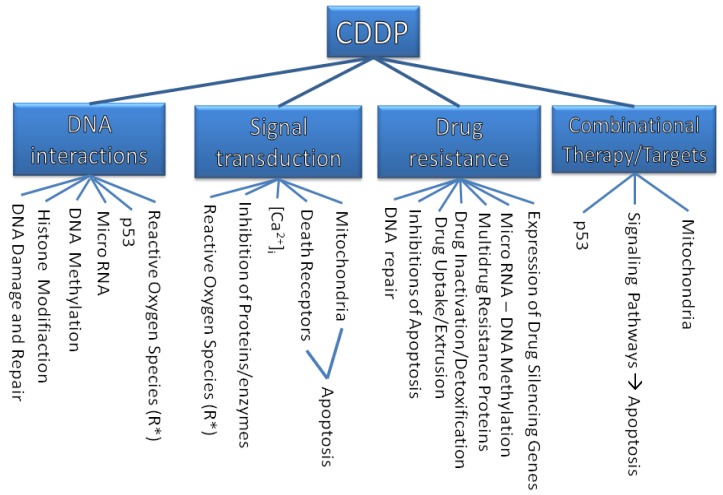
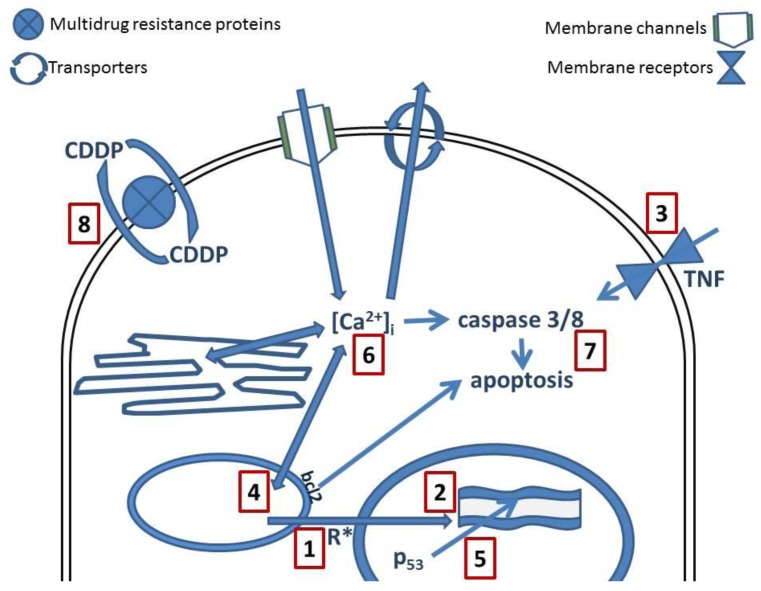
Platinum complexes are clinically used as adjuvant therapy of cancers aiming to induce tumor cell death. Depending on cell type and concentration, cisplatin induces cytotoxicity, e.g., by interference with transcription and/or DNA replication mechanisms. Additionally, cisplatin damages tumors via induction of apoptosis, mediated by the activation of various signal transduction pathways, including calcium signaling, death receptor signaling, and the activation of mitochondrial pathways. Unfortunately, neither cytotoxicity nor apoptosis are exclusively induced in cancer cells, thus, cisplatin might also lead to diverse side-effects such as neuro- and/or renal-toxicity or bone marrow-suppression. Moreover, the binding of cisplatin to proteins and enzymes may modulate its biochemical mechanism of action. While a combination-chemotherapy with cisplatin is a cornerstone for the treatment of multiple cancers, the challenge is that cancer cells could become cisplatin-resistant. Numerous mechanisms of cisplatin resistance were described including changes in cellular uptake, drug efflux, increased detoxification, inhibition of apoptosis and increased DNA repair. To minimize cisplatin resistance, combinatorial therapies were developed and have proven more effective to defeat cancers. Thus, understanding of the biochemical mechanisms triggered by cisplatin in tumor cells may lead to the design of more efficient platinum derivates (or other drugs) and might provide new therapeutic strategies and reduce side effects.
Overview
The claims and statistics of this paper haven’t been checked yet.
Free: it reads the open-access text and checks the first 5 claims that cite a source we can check. Create a free account to check every claim.
Integrity signals
Registry
Cites
Statistics
Figures
Verification
Claims the paper makes
The claims and statistics of this paper haven’t been checked yet.
Free: it reads the open-access text and checks the first 5 claims that cite a source we can check. Create a free account to check every claim.
Claims other papers make about this one
Each is checked against this paper’s own text: does it say what the citing paper says it does?
The source backs part of the claim, not all of it — or backs it for a different population, condition or comparison.
In the citing paper
“Platinum anticancer drugs, such as cisplatin, the most potent member of the platinum drug family, penetrate into the nucleus of cancer cells and form adducts with DNA leading to apoptosis [4].”
From Co-delivery of Paclitaxel and Cisplatin in Poly(2-oxazoline) Polymeric Micelles: Implications for Drug Loading, Release, Pharmacokinetics and Outcome of Ovarian and Breast Cancer Treatments (2019) · cites this paper as [4]
Experimental — accuracy not yet measured
Self-check
Percentages, sums and reported differences re-computed from the paper’s own numbers.
The self-check needs the paper’s full text.
Citations
Cites
1 retracted
Mohammad, R. M., Banerjee, S., Li, Y., Aboukameel, A., Küçük, Ö., & Sarkar, F. H. (2006) · Cancer · doi:10.1002/cncr.21731 · Cited by 84
RetractedMechanisms of resistance to cisplatin
Kartalou, M., & Essigmann, J. M. (2001) · Mutation Research - Fundamental and Molecular Mechanisms of Mutagenesis · doi:10.1016/s0027-5107(01)00141-5 · Cited by 869 · cited 7×
“While the knowledge of the mechanism of action of CDDP has improved our understanding of resistance [70], the mechanism of decreased intracellular accumulation of CDDP is not well understood.”
BackgroundInfluentialLebwohl, D., & Canetta, R. (1998) · European Journal of Cancer · doi:10.1016/s0959-8049(98)00224-x · Cited by 754 · cited 4×
“The research concentrated on platinum analogues focuses on two strategies: expanding the utilization of platinum therapy to other tumor types not usually treated with platinum compounds, while another area of research represents novel routes of administration [7].”
BackgroundMethodInfluentialCellular and molecular pharmacology of oxaliplatin.
Raymond, É., Faivre, S. J., Chaney, S. G., WOYNAROWSKI, J. M., & Cvitkovic, E. (2002) · PubMed · Cited by 576
Novel Metals and Metal Complexes as Platforms for Cancer Therapy
Frezza, M., Hindo, S., Chen, D., Davenport, A., Schmitt, S., Tomco, D., & Ping Dou, Q. (2010) · Current Pharmaceutical Design · doi:10.2174/138161210791209009 · Cited by 552 · cited 2×
“Nevertheless, metal compounds are potential candidates as anticancer agents [1].”
BackgroundThe Role of Cellular Accumulation in Determining Sensitivity to Platinum-Based Chemotherapy
Hall, M. D., Okabe, M., Shen, D.-W., Liang, X.-J., & Gottesman, M. M. (2008) · Annual Review of Pharmacology and Toxicology · doi:10.1146/annurev.pharmtox.48.080907.180426 · Cited by 474 · cited 2×
“, diffusion) only, but there is an active transport system involved [73].”
BackgroundMolecular mechanisms involved in cisplatin cytotoxicity
Jordan, P., & Carmo-Fonseca*, M. (2000) · Cellular and Molecular Life Sciences · doi:10.1007/pl00000762 · Cited by 398 · cited 2×
“Due to a shielding effect caused by these proteins, the CDDP-modified DNA is poorly repaired, resulting DNA damage triggers cell-cycle arrest and apoptosis [28].”
BackgroundRecognition and processing of cisplatin- and oxaliplatin-DNA adducts
Chaney, S. G., Campbell, S. L., Bassett, E., & Wu, Y. (2005) · Critical Reviews in Oncology/Hematology · doi:10.1016/j.critrevonc.2004.08.008 · Cited by 396 · cited 1×
“contribute to the differences in cytotoxicity and tumor range of CDDP and oxaliplatin [31].”
BackgroundParticular aspects of platinum compounds used at present in cancer treatment
Desoize, B., & Madoulet, C. (2002) · Critical Reviews in Oncology/Hematology · doi:10.1016/s1040-8428(01)00219-0 · Cited by 393 · cited 7×
“The hope is that the drugs will work together, producing synergistic or at least additive effects in killing cancer cells, while producing no additional side effects [3].”
BackgroundInfluentialModifications of DNA by platinum complexes
Brabec, V., & Kasparkova, J. (2005) · Drug Resistance Updates · doi:10.1016/j.drup.2005.04.006 · Cited by 373 · cited 4×
“Drug resistance is a major complication in cancer chemotherapy and accounts for the failure of chemotherapy to cure the majority of cancer patients [33,69].”
BackgroundInfluential
Research works printed but not linked: 2
- Chattopadhyay S. Machado-Pinilla R. Manguan-Garcia C. Belda-Iniesta C. Moratilla C. Cejas P. Fresno-Vara J.A. de Castro-Carpeno J. Casado E. Nistal M. Gonzalez-Che C.M. Siu F.M. Metal complexes in medicine with a focus on enzyme inhibition Curr. Opin. Chem. Biol. 2010 14 255 261 20018553 · DOI · Paper page
- Florea A.-M. Büsselberg D. Cisplatin as an anti-tumour drug: Cellular mechanisms of activity, drug resistance and induced side effects Cancers 2011 in press PMC3756417 24212665
Cited by
Items 801–900 of 1,000
Lahmar, A., Dhaouefi, Z., Khlifi, R., Sioud, F., & Ghédira, L. C. (2020) · Journal of Toxicology · doi:10.1155/2020/7054534 · Cited by 15
“&e high genotoxic potency of cisplatin may be responsible for secondary malignancies, which have been observed in cured patients treated with cisplatin [24].”
BackgroundSafi, A., Bastami, M., Delghir, S., Ilkhani, K., Seif, F., & Alivand, M. R. (2020) · Anti-Cancer Agents in Medicinal Chemistry · doi:10.2174/1871520620666200903145939 · Cited by 15
Cytotoxicity mechanisms of plumbagin in drug-resistant tongue squamous cell carcinoma
Xue, D., Zhou, X., & Qiu, J. (2021) · Journal of Pharmacy and Pharmacology · doi:10.1093/jpp/rgaa027 · Cited by 16
Lin, C., Liu, S., Wu, Z.-S., Wang, Y., & Huang, S. (2021) · Life · doi:10.3390/life11020160 · Cited by 16
Tabrizi, L., Yang, W. S., Chintha, C., Morrison, L., Samali, A., Ramos, J. W., & Erxleben, A. (2021) · European Journal of Inorganic Chemistry · doi:10.1002/ejic.202100120 · Cited by 15
State of the Art and Future Implications of SH003: Acting as a Therapeutic Anticancer Agent
Lee, K., Youn, B.-Y., Choi, Y., Moon, S., Im, J., Cho, K., Ko, S., & Cheon, C. (2022) · Cancers · doi:10.3390/cancers14041089 · Cited by 15
“The immune system of cancer patients who receive several therapies, including chemotherapy and radiotherapy, is commonly weakened, resulting in tumor progression and poor prognosis [59,60].”
BackgroundSelected platinum complexes in standard and modern anti-cancer therapies
Kopacz-Bednarska, A., & Król, T. (2022) · Nowotwory Journal of Oncology · doi:10.5603/njo.a2022.0011 · Cited by 18
Evaluation of anti-metastatic potential of Cisplatin polymeric nanocarriers on B16F10 melanoma cells
Shrikhande, S. S., Jain, D. S., Athawale, R., Bajaj, A. N., Goel, P. N., Kamran, M. Z., Nikam, Y., & Gude, R. P. (2015) · Saudi Pharmaceutical Journal · doi:10.1016/j.jsps.2014.08.004 · Cited by 15
Liu, Y., Zhang, G., Zhang, B., Wang, Y., Liu, Z., Jiao, Y., Liu, N., & Zhao, Y. (2015) · Asian Pacific Journal of Cancer Prevention · doi:10.7314/apjcp.2015.16.3.1025 · Cited by 15
Prokop, A., Czaplewska, J. A., Clausen, M., König, M., Wild, A., Thorwirth, R., Schulze, B., Babiuch, K., Pretzel, D., Schubert, U. S., et al. (2016) · European Journal of Inorganic Chemistry · doi:10.1002/ejic.201600325 · Cited by 15
Medříková, Z., Novohradský, V., Zajac, J., Vrána, O., Kašpárková, J., Bakandritsos, A., Petr, M., Zbořil, R., & Brabec, V. (2016) · Chemistry - A European Journal · doi:10.1002/chem.201600949 · Cited by 15
Baig, U., Gondal, M. A., Alam, M. F., Wani, W. A., & Younus, H. (2016) · Journal of Photochemistry and Photobiology B Biology · doi:10.1016/j.jphotobiol.2016.09.034 · Cited by 17
Skowron, M. A., Niegisch, G., Albrecht, P., van Koeveringe, G. A., Romano, A., Albers, P., Schulz, W. A., & Hoffmann, M. J. (2017) · International Journal of Molecular Sciences · doi:10.3390/ijms18081680 · Cited by 17
“In these patients, cisplatin-based chemotherapy is the standard of care, whereas carboplatin-based combinations or monotherapies are less efficient [7,8].”
BackgroundHsieh, M., Huang, L.-J., Wu, T.-S., Lin, H.-Y., Morris-Natschke, S. L., Lee, K., & Kuo, S. (2018) · Bioorganic & Medicinal Chemistry · doi:10.1016/j.bmc.2018.06.011 · Cited by 15
Wu, W., Liu, Y., Ye, H., & Li, Z. (2018) · Phytotherapy Research · doi:10.1002/ptr.6180 · Cited by 17
Ma, X., Yang, Z., Jiang, S., Huo, B., Cao, Q., Chai, S., & Wang, H. (2018) · Journal of Contemporary Brachytherapy · doi:10.5114/jcb.2018.77957 · Cited by 15
“But the treatment effect will vary due to the unique physique of each person, and chemotherapeutic agents usually have serious side effects on the patient [3,4,5].”
BackgroundWaykar, B. B., & Alqadhi, Y. A. (2018) · Biomedical & Pharmacology Journal · doi:10.13005/bpj/1601 · Cited by 15
Evaluation of cisplatin-hydrogel for improving localized antitumor efficacy in gastric cancer
Qian, K., Qian, H., Cai, J., Yue, W., Yu, X., & Liu, B. (2019) · Pathology - Research and Practice · doi:10.1016/j.prp.2019.01.005 · Cited by 15
New Platinum-Based Prodrug Pt(IV)Ac-POA: Antitumour Effects in Rat C6 Glioblastoma Cells
Ferrari, B., Urselli, F., Gilodi, M., Camuso, S., Priori, E. C., Rangone, B., Ravera, M., Veneroni, P., Zanellato, I., Roda, E., et al. (2019) · Neurotoxicity Research · doi:10.1007/s12640-019-00076-0 · Cited by 15
Huang, X., Chang, K., Lee, S., Li, C., Liao, H.-H., Hsieh, M., & Tsai, N. (2020) · Molecules · doi:10.3390/molecules25122746 · Cited by 15
“Several researchers have recently reported that cisplatin is also used in the treatment of various additional cancers, such as cervical cancer, lung cancer, osteosarcoma and neuroblastoma [6].”
BackgroundLuo, X., Zhang, L., Han, G.-D., Lu, P., & Zhang, Y. (2020) · Human & Experimental Toxicology · doi:10.1177/0960327120952158 · Cited by 15
“Cisplatin, a broad-spectrum antineoplastic drug, acts by binding to and inducing cross-linking of deoxyribonucleic acid, ultimately triggering cell apoptosis, which has been widely used in clinical chemotherapy of various solid tumors.(1) But unfortunately, the optimal usefulness and efficacy of cisplatin-based chemor…”
BackgroundSharifan, A., Etebari, M., Zolfaghari, B., & Aliomrani, M. (2021) · Toxicology Research · doi:10.1093/toxres/tfab006 · Cited by 15
“Moreover, side effects, such as neuro and/or renal toxicity or bone marrow suppression, may emerge during the treatment with cisplatin [5].”
BackgroundDhukhwa, A., Aameri, R. F. H. A., Sheth, S., Mukherjea, D., Rybak, L. P., & Ramkumar, V. (2021) · Scientific Reports · doi:10.1038/s41598-021-87387-5 · Cited by 16
Targeting SIRT2 Sensitizes Melanoma Cells to Cisplatin via an EGFR-Dependent Mechanism
Karwaciak, I., Sałkowska, A., Karaś, K., Dastych, J., & Ratajewski, M. (2021) · International Journal of Molecular Sciences · doi:10.3390/ijms22095034 · Cited by 15
“However, in addition to cisplatin’s action on DNA, this drug also modifies proteins and gene expression and influences signaling involved in cell survival and proliferation [16].”
BackgroundSalazar-García, S., Silva‐Ramírez, A. S., Ramirez-Lee, M. A., Rosas-Hernández, H., Rangel‐López, E., Castillo, C. G., Santamaría, A., Martínez-Castañón, G. A., & González, C. (2015) · Journal of Nanoparticle Research · doi:10.1007/s11051-015-3257-1 · Cited by 15
Benedetti, M., Romano, A., Castro, F. D., Girelli, C. R., Antonucci, D., Migoni, D., Verri, T., & Fanizzi, F. P. (2016) · Journal of Inorganic Biochemistry · doi:10.1016/j.jinorgbio.2016.07.004 · Cited by 15
Ruthenium(II)-N-alkyl phenothiazine complexes as potential anticancer agents
Leskovac, A. R., Petrović, S. Ž., Pašti, T. D. L., Krstic, M., & Vasić, V. (2018) · JBIC Journal of Biological Inorganic Chemistry · doi:10.1007/s00775-018-1560-x · Cited by 15
Pavlović, M., Nikolić, S. R., Gligorijević, N., Dojčinović, B., Aranđelović, S., Grgurić‐Šipka, S., & Radulovic, S. S. (2019) · JBIC Journal of Biological Inorganic Chemistry · doi:10.1007/s00775-019-01647-4 · Cited by 15
Shahsavani, M. B., Heidari, M., Yousefi, R., & Moosavi‐Movahedi, A. A. (2025) · Chemical Biology & Drug Design · doi:10.1111/cbdd.70208 · Cited by 16
Platinum based theranostics nanoplatforms for antitumor applications
Li, H., Cheng, S., Zhai, J., Lei, K., Zhou, P., Cai, K., & Li, J. (2023) · Journal of Materials Chemistry B · doi:10.1039/d3tb01035j · Cited by 14
Cisplatin induces acute liver injury by triggering caspase-3/GSDME-mediated cell pyroptosis
Wu, P.-P., Shen, X., & Zheng, S. (2024) · Hepatobiliary & pancreatic diseases international · doi:10.1016/j.hbpd.2024.09.010 · Cited by 15
Multi-functional biotinylated platinum( iv )–SAHA conjugate for tumor-targeted chemotherapy
Gupta, A., & Sasmal, P. K. (2024) · Dalton Transactions · doi:10.1039/d4dt01571a · Cited by 14
Cao, Z., Yan, R., Chen, J., She, M., Jia, S., Sun, W. L., Liu, P., Zhang, S., & Li, J. (2024) · Journal of the American Chemical Society · doi:10.1021/jacs.4c10460 · Cited by 14
Pauty, J., Côté, M., Rodrigue, A., Velic, D., Masson, J., & Fortin, S. (2016) · Scientific Reports · doi:10.1038/srep23302 · Cited by 14
Mukherjee, S., Mitra, I., B., V. P. R., Mahata, S., Bose, J. C., Dasgupta, S., Linert, W., & Moi, S. C. (2016) · Polyhedron · doi:10.1016/j.poly.2016.08.024 · Cited by 14
Altoum, A. O. S., Alhoshani, A., Al-Hosaini, K. A., Altaf, M., Ahmad, S., Popoola, S. A., Al‐Saadi, A. A., Sulaiman, A. A. A., & Isab, A. A. (2017) · Journal of Coordination Chemistry · doi:10.1080/00958972.2017.1287355 · Cited by 14
Yin, P., Song, G., & Jiang, Z. (2018) · Cancer Chemotherapy and Pharmacology · doi:10.1007/s00280-018-3536-5 · Cited by 14
Koch, V., Meschkov, A., Feuerstein, W., Pfeifer, J., Fuhr, O., Nieger, M., Schepers, U., & Bräse, S. (2019) · Inorganic Chemistry · doi:10.1021/acs.inorgchem.9b02402 · Cited by 15
4-Hydroxyhalcone effects on cisplatin-induced genotoxicity model
Nazari, A., Mirian, M., Aghaei, M., & Aliomrani, M. (2021) · Toxicology Research · doi:10.1093/toxres/tfaa091 · Cited by 14
“Its exposure is frequently associated with increased free radicals and subsequently different types of damages to a cellular genetic material, which can cause subsequent malignancies in normal cells [32].”
BackgroundAlharbi, W., Hassan, I., Khan, R. A., Parveen, S., Alharbi, K. H., BinSharfan, I. I., Alhazza, I. M., Ebaid, H., & Alsalme, A. (2021) · Molecules · doi:10.3390/molecules26061606 · Cited by 14
Casanova, A. G., Harvat, M., Vicente-Vicente, L., Pellicer-Valero, Ó. J., Morales, A. I., López-Hernández, F. J., & Martín‐Guerrero, J. D. (2021) · Antioxidants · doi:10.3390/antiox10091355 · Cited by 17
“Cisplatin is one of the most potent and widely used chemotherapeutic drugs for the treatment of a variety of solid cancers [1], but its dosage and clinical utility are limited by nephrotoxicity [2].”
BackgroundLv, X., & Xu, G. (2021) · World Journal of Gastrointestinal Oncology · doi:10.4251/wjgo.v13.i11.1648 · Cited by 15
Curcio, M., Cirillo, G., Amato, R., Guidotti, L., Amantea, D., Luca, M. D., Nicoletta, F. P., Iemma, F., & Garcia‐Gil, M. (2022) · Pharmaceuticals · doi:10.3390/ph15040394 · Cited by 14
“After entering cells, CDDP undergoes hydration and the loss of chlorine ions, leading to the cross-linking of nuclear and mitochondrial DNA [6,7], an increase in reactive oxygen species (ROS), and/or depletion of cell antioxidant defences [8], resulting in cell death due to the inhibition of DNA replication and cellul…”
BackgroundDorairaj, D. P., Haribabu, J., Chang, Y., Echeverría, C., Hsu, S. C. N., & Karvembu, R. (2022) · Applied Organometallic Chemistry · doi:10.1002/aoc.6765 · Cited by 14
Majd, N. E., Shahraki, R., Tabandeh, M. R., & Hosseinifar, S. (2022) · PubMed Central · doi:10.30466/vrf.2020.119876.2835 · Cited by 15
Park, S., Jung, W. K., Kim, H. L., Yu, H.-Y., Kim, Y. Y., & Kim, J. (2022) · Experimental and Therapeutic Medicine · doi:10.3892/etm.2022.11460 · Cited by 14
“Thereafter, escu‑ letin (100 mg/kg per day) or cisplatin (7.5 mg/kg per day), as a positive control, was orally administered for 18 days (19,20).”
InfluentialNath, P., Datta, A., & Adhikari, S. (2022) · Handbook of Animal Models and its Uses in Cancer Research · doi:10.1007/978-981-19-1282-5_47-1 · Cited by 14
Alshaikh, N. E., Zaki, M., Sharfalddin, A. A., Al‐Radadi, N. S., Hussien, M. A., & Hassan, W. M. I. (2023) · Arabian Journal of Chemistry · doi:10.1016/j.arabjc.2023.104845 · Cited by 14
Competition between p53 and YY1 determines PHGDH expression and malignancy in bladder cancer
Shi, T., Yuan, Z., He, Y., Zhang, D., Chen, S., Wang, X., Yao, L., Shao, J., & Wang, X. (2023) · Cellular Oncology · doi:10.1007/s13402-023-00823-8 · Cited by 14
“Cisplatin (Pt) is one of the commonly used chemotherapy drugs in tumors that induce a mitochondrial-ROS response [25, 26].”
BackgroundNiezgoda, N., Gliszczyńska, A., Gładkowski, W., Kempińska, K., Wietrzyk, J., & Wawrzeńczyk, C. (2015) · Australian Journal of Chemistry · doi:10.1071/ch14606 · Cited by 14
Koiri, R. K., Mehrotra, A., & Trigun, S. K. (2013) · Medical Hypotheses · doi:10.1016/j.mehy.2013.03.029 · Cited by 14
“This resulted in the development of platinum-based anticancer agents which could respond against a wide range of tumors like, ovarian, testicular, bladder and lung cancers [3].”
BackgroundMukherjee, S., B., V. P. R., Mitra, I., & Moi, S. C. (2017) · Polyhedron · doi:10.1016/j.poly.2016.12.046 · Cited by 14
Prylutska, S., Grynyuk, І. І., Grebinyk, A., Hurmach, V. V., Shatrava, I., Sliva, T. Y., Аmirkhanov, V. M., Prylutskyy, Y. І., Matyshevska, O., Slobodyanik, N. S., et al. (2017) · Nanoscale Research Letters · doi:10.1186/s11671-017-1893-3 · Cited by 14
“The higher HL1 toxic effect could be connected with the presence in its structure of Cl atoms, which possess alkylating potential and are the constituents of chemotherapeutic drug such as cisplatin [29].”
BackgroundKaul-Ghanekar, R., Aphale, S., Pandita, S., Raina, P., & Mishra, J. N. (2018) · Pharmacognosy Magazine · doi:10.4103/pm.pm_252_18 · Cited by 14
“[3,4] Nowadays, cancer research has shifted its focus towards identification of herbal based drugs that have no or minimum side effects; exhibit anticancer activity; and could be used as adjunct to conventional therapies.”
BackgroundGwee, E. S. H., Seeger, Z. L., Appadoo, D., Wood, B. R., & Izgorodina, E. I. (2019) · ACS Omega · doi:10.1021/acsomega.8b03455 · Cited by 14
Propofol alleviates cisplatin-related cognitive impairment
Zhou, Y., & Qiu, Y. (2019) · Neurological Sciences · doi:10.1007/s10072-019-03895-3 · Cited by 14
Lal, B., Kanwal, A., Altaf, A. A., Badshah, A., Asghar, F., Akhter, S., Ullah, S., Khan, S. I., & Tahir, M. N. (2019) · Journal of Coordination Chemistry · doi:10.1080/00958972.2019.1651846 · Cited by 14
Kadoya, Y., Fukui, K., Hata, M., Miyano, R., Hitomi, Y., Yanagisawa, S., Kubo, M., & Kodera, M. (2019) · Inorganic Chemistry · doi:10.1021/acs.inorgchem.9b02093 · Cited by 14
Martín‐Encinas, E., Conejo-Rodríguez, V., Miguel, J. A., Martínez‐Ilarduya, J. M., Rubiales, G., Knudsen, B. R., Palácios, F., & Alonso, C. (2020) · Dalton Transactions · doi:10.1039/d0dt01467b · Cited by 14
Novel Pt(IV) Prodrugs Displaying Antimitochondrial Effects
Tabrizi, L., Thompson, K., Mnich, K., Chintha, C., Gorman, A. M., Morrison, L., Luessing, J., Lowndes, N. F., Dockery, P., Samali, A., et al. (2020) · Molecular Pharmaceutics · doi:10.1021/acs.molpharmaceut.0c00417 · Cited by 14
Metallodrug-protein interaction probed by synchrotron terahertz and neutron scattering spectroscopy
de Carvalho, L. A. E. B., Mamede, A. P., de Carvalho, A. L. M. B., Marques, J., Cinque, G., Rudić, S., & Marques, M. P. M. (2021) · Biophysical Journal · doi:10.1016/j.bpj.2021.06.012 · Cited by 14
Abbas, M., Kushwaha, V. S., Srivastava, K., & Banerjee, M. (2015) · PLoS ONE · doi:10.1371/journal.pone.0142501 · Cited by 14
Ali, M. M., Provoost, A., Maertens, L., Leys, N., Monsieurs, P., Charlier, D., & Houdt, R. V. (2019) · Genes · doi:10.3390/genes10010063 · Cited by 17
“It is extensively used in industry, vehicle exhaust catalysts (VECs), and anticancer drugs [3], with cisplatin being one of the potent anti-cancer drugs in use [4].”
BackgroundThảo, Đ. T., Nga, N. T., Van, N. A., & Hung, K. D. (2019) · Natural Product Communications · doi:10.1177/1934578x19858461 · Cited by 14
“Mice in other groups (2, 4, 6, 8, 10) were continuously monitored and the survival time assessed.”
MethodVural, H., & Kaya, M. (2018) · Computers in Biology and Medicine · doi:10.1016/j.compbiomed.2018.09.019 · Cited by 14
Jiang, Z., Yang, X., Ainiwaer, M., Chen, F., & Liu, J. (2022) · Journal of Clinical Medicine · doi:10.3390/jcm12010173 · Cited by 13
“For example, surgical excision can be a potential stimulator that triggers the local invasion or distant metastasis of the tumor [3]; chemotherapies can lead to hepatotoxicity, nephrotoxicity, gastrointestinal disturbance, bone marrow suppression or even carcinogenesis [4,5]; radiotherapy can result in dysphagia, xero…”
BackgroundIbrahim, M. A. A., Mahmoud, A. H. H., Rady, A. S. M., Sidhom, P. A., Sayed, S. R. M., Yassin, M. T., Rabee, A. I. M., Shoeib, T., & Mohamed, L. A. (2024) · Journal of Molecular Structure · doi:10.1016/j.molstruc.2024.138995 · Cited by 13
Optimization of Antiproliferative Properties of Triimine Copper(II) Complexes
Choroba, K., Zowiślok, B., Kula, S., Machura, B., Maroń, A. M., Erfurt, K., Marques, C., Cordeiro, S. Z., Baptista, P. V., & Fernandes, A. R. (2024) · Journal of Medicinal Chemistry · doi:10.1021/acs.jmedchem.4c01806 · Cited by 14
Biological and Analytical Perspectives on D-Amino Acids in Cancer Diagnosis and Therapy
Uifălean, A., Iacobescu, M., Salanță, L. C., Hegheş, S. C., Moldovan, R.-C., & Iuga, C. A. (2025) · Pharmaceuticals · doi:10.3390/ph18050705 · Cited by 13
“Cisplatin, a platinum-based chemotherapy drug, is used in the treatment of various cancers, including carcinomas, germ cell tumours, lymphomas, and sarcomas [135].”
Roux, K. L., Prinsloo, L. C., & Meyer, D. (2015) · Toxicology in Vitro · doi:10.1016/j.tiv.2015.08.002 · Cited by 13
“Introduction Cervical cancer, which is primarily caused by a sexually transmitted human papillomavirus (strains 16 and 18), is increasingly becoming a threat in low income countries.”
BackgroundBarik, S., Bhuniya, A., Banerjee, S., Das, A., Sarkar, M., Paul, T., Ghosh, T., Ghosh, S., Roy, S., Pal, S., et al. (2013) · International Immunopharmacology · doi:10.1016/j.intimp.2013.05.005 · Cited by 13
Burkett, J. R., & Dwyer, T. M. (2019) · Journal of Chemical Education · doi:10.1021/acs.jchemed.8b00940 · Cited by 13
Nair, Y., Venkataraman, S. K., Joy, F., Krishna, P. M., Agarwal, A. K., Vinod, T. P., Madathil, P. K., & Kurup, M. R. P. (2020) · Journal of Molecular Structure · doi:10.1016/j.molstruc.2020.128453 · Cited by 13
Photocytotoxic Activity of Ruthenium(II) Complexes with Phenanthroline-Hydrazone Ligands
Silva, P. P., de Oliveira, A. C. A., & Pereira-Maia, E. C. (2021) · Molecules · doi:10.3390/molecules26072084 · Cited by 13
“Chemotherapy with cisplatin and related Pt-based drugs, despite being among the most effective anticancer drugs for a variety of tumors, presents several problems, such as acquired resistance [1], limited activity against some of the most common tumors, and severe side-effects [2,3].”
BackgroundLee, Y., Oh, C., Kim, J., Park, M., Bae, W. K., Yoo, K. H., & Hong, S. (2021) · Chemical Science · doi:10.1039/d1sc05094j · Cited by 13
Structural and morphological changes of breast cancer cells induced by iron( ii ) complexes
Nel, J., Siniscalco, D., Hognon, C., Bouché, M., Touche, N., Brunner, É., Gros, P. C., Monari, A., Grandemange, S., & Francius, G. (2022) · Nanoscale · doi:10.1039/d1nr08301e · Cited by 13
Kim, J., Im, E., Lee, J., Lee, H.-J., Sim, D. Y., Park, J. E., Ahn, C., Kwon, H. H., Shim, B. S., Kim, B., et al. (2022) · Cells · doi:10.3390/cells11081343 · Cited by 13
“Though cisplatin has been used in several solid tumors such as lung, colorectal, testicular and bladder cancers for years as a DNA-damaging anticancer drug, it has some limitations due to drug resistance [3,4].”
BackgroundMasternak, J., Gilewska, A., Kowalik, M., Kazimierczuk, K., Sitkowski, J., Okła, K., Wietrzyk, J., & Barszcz, B. (2022) · Polyhedron · doi:10.1016/j.poly.2022.115837 · Cited by 13
Bera, B., Mondal, S., Gharami, S., Naskar, R., Saha, K. D., & Mondal, T. K. (2022) · New Journal of Chemistry · doi:10.1039/d2nj01894b · Cited by 13
Schiff base complexes, cancer cell lines, and anticancer evaluation: a review
Majid, S. A., Mir, J. M., Jan, G., & Shalla, A. H. (2022) · Journal of Coordination Chemistry · doi:10.1080/00958972.2022.2131402 · Cited by 13
In vitro Analytical Techniques as Screening Tools to investigate the Metal chelate‐DNA interactions
Varghese, N., Jose, J. R., Krishna, P. M., Philip, D., Joy, F., Vinod, T. P., Kurup, M. R. P., & Nair, Y. (2023) · ChemistrySelect · doi:10.1002/slct.202203615 · Cited by 15
Bera, B., Mondal, S., Mandal, S., Saha, K. D., & Mondal, T. K. (2023) · Applied Organometallic Chemistry · doi:10.1002/aoc.7185 · Cited by 13
Kumari, P., Ghosh, S., Acharya, S., Mitra, P., Roy, S., Ghosh, S., Maji, M., Singh, S., & Mukherjee, A. (2023) · Journal of Medicinal Chemistry · doi:10.1021/acs.jmedchem.3c01092 · Cited by 13
AbdelSamad, A. L., El‐Saadi, M. T., Gouda, A. M., & AboulMagd, A. M. (2023) · RSC Advances · doi:10.1039/d3ra05310e · Cited by 13
Xin, Y., Jiang, Q., Liu, C., & Qiu, J. (2023) · Aging · doi:10.18632/aging.205175 · Cited by 14
Abdoul‐Latif, F. M., Ainane, A., Aboubaker, I. H., Jalludin, M., & Ainane, T. (2023) · Pharmaceuticals · doi:10.3390/ph16111617 · Cited by 13
“For instance, platinum drugs (such as oxaliplatin, carboplatin, and cisplatin) disrupt nucleotide synthesis and metabolism, inducing DNA damage [9].”
BackgroundEmergence of metal-based anticancer therapeutics: A promising perspective
Nath, P., Datta, A., Sen, T., & Adhikari, S. (2024) · Elsevier eBooks · doi:10.1016/b978-0-323-95114-2.00012-1 · Cited by 15
Interplay of p62-mTORC1 and EGFR signaling promotes cisplatin resistance in oral cancer
Chang, H., Yang, C., Loi, L., Hung, C.-H., Wu, C., & Lin, Y. (2024) · Heliyon · doi:10.1016/j.heliyon.2024.e28406 · Cited by 13
“CDDP-based agent is the first-line chemotherapeutic drug for the treatment of multiple types of solid tumors, including bladder, esophageal, ovarian, and head and neck squamous cell carcinoma (HNSCC) [6,7].”
BackgroundSelective DNA Recognition and Cytotoxicity of Water-Soluble Helical Metallosupramolecular Polymers
Rana, U., Chakraborty, C., Pandey, R. K., Hossain, M. D., Nagano, R., Morita, H., Hattori, S., Minowa, T., & Higuchi, M. (2016) · Bioconjugate Chemistry · doi:10.1021/acs.bioconjchem.6b00255 · Cited by 13
Basu, A., Bhattacharjee, A., Hajra, S., Samanta, A., & Bhattacharya, S. (2016) · Redox Report · doi:10.1080/13510002.2016.1260192 · Cited by 13
“toxicity, myelosuppression, and neurotoxicity [2].”
Tan, G., Uson‐Lopez, R. A., Rahman, M. M., Hosokawa, T., Saito, T., & Kurasaki, M. (2017) · Environmental Toxicology and Pharmacology · doi:10.1016/j.etap.2017.12.016 · Cited by 13
Use of Anticancer Platinum Compounds in Combination Therapies and Challenges in Drug Delivery
Xiao, X., Oswald, J. T., Wang, T., Zhang, W., & Li, W. (2018) · Current Medicinal Chemistry · doi:10.2174/0929867325666181105115849 · Cited by 13
Zuo Jin Wan Reverses DDP Resistance in Gastric Cancer through ROCK/PTEN/PI3K Signaling Pathway
Sun, M., Sun, J., Tao, J., Yuan, Y., Ni, Z., & Tang, Q. (2018) · Evidence-based Complementary and Alternative Medicine · doi:10.1155/2018/4278568 · Cited by 14
Vascellari, S., Valletta, E., Perra, D., Pinna, E., Serra, A., Isaia, F., Pani, A., & Pivetta, T. (2019) · RSC Advances · doi:10.1039/c8ra09652j · Cited by 13
Vojtek, M., Pinto, E., Gonçalves‐Monteiro, S., Almeida, A. A., Marques, M. P. M., Mota‐Filipe, H., Ferreira, I. M. P. L. V. O., & Diniz, C. (2020) · Analytical Methods · doi:10.1039/d0ay01328e · Cited by 13
Pomegranate Juice Extract Decreases Cisplatin Toxicity on Peripheral Blood Mononuclear Cells
Nasser, M., Damaj, Z., Hijazi, A., Merah, O., Al-Khatib, B., Hijazi, N., Trabolsi, C., Damaj, R., & Nasser, M. (2020) · Medicines · doi:10.3390/medicines7100066 · Cited by 13
Rossini, E., Bosatta, V., Abate, A., Fragni, M., Salvi, V., Basnet, R. M., Zizioli, D., Bosisio, D., Piovani, G., Valcamonico, F., et al. (2021) · Clinical Genitourinary Cancer · doi:10.1016/j.clgc.2021.01.006 · Cited by 13
“These side effects included the general cell-damaging effects and platinum-specific nephro- and neuro-toxicity [30].”
BackgroundFenton-magnetic based therapy by dual-chemodrug-loaded magnetic hydroxyapatite against colon cancer
Khoshtabiat, L., Meshkini, A., & Matin, M. M. (2021) · Materials Science and Engineering C · doi:10.1016/j.msec.2021.112238 · Cited by 14
Miklášová, N., Herich, P., Dávila-Becerril, J. C., Barroso‐Flores, J., Fischer‐Fodor, E., Valentová, J., Leskovská, J., Kožíšek, J., Takáč, P., & Mojžíš, J. (2021) · Molecules · doi:10.3390/molecules26144369 · Cited by 13
Anticancer potential of Pd and Pt metallo-macrocycles of phosphines and 4,4΄-dipyridyldiselenide
Pal, M. K., Wadawale, A., Chauhan, N., Majumdar, A. G., Subramanian, M., Bhuvanesh, N. S. P., & Dey, S. (2021) · Polyhedron · doi:10.1016/j.poly.2021.115547 · Cited by 13
Metadata
- Authors
- Florea, A.-M., & Büsselberg, D.
- Affiliations
- Heinrich Heine University Düsseldorf (DE)
- Weill Cornell Medical College in Qatar (QA)
- Corresponding author
- Büsselberg, Dietrich
- ORCID
- Büsselberg, Dietrich
- Venue
- Cancers
- Publisher
- MDPI AG
- Published
- 2011-03-15
- Volume
- 3
- Issue
- 1
- Pages
- 1351-1371
- ISSN
- 2072-6694 (ISSN-L)
- PMC
- PMC3756417
- OpenAlex
- W2073131323
- Cited by
- 1,759
- References
- 83
- Citations by year
- 2026: 65 · 2025: 111 · 2024: 154 · 2023: 148 · 2022: 165 · 2021: 177 · 2020: 195 · 2019: 176 · 2018: 133 · 2017: 129 · 2016: 100 · 2015: 82 · 2014: 70 · 2013: 28 · 2012: 21
- FWCI
- 19.39
- Type
- journal article
- Language
- en
- Open access
- gold
- doi.org
- Licence
- Locations
- Cancers (publishedVersion, cc-by)
- Europe PMC (PubMed Central) (publishedVersion, other-oa)
- PubMed Central (publishedVersion, cc-by)
- PubMed (publishedVersion)
- DOAJ (DOAJ: Directory of Open Access Journals) (submittedVersion)
- Topics
- Health Sciences › Medicine › Oncology › Metal complexes synthesis and properties
- Life Sciences › Biochemistry, Genetics and Molecular Biology › Molecular Biology › Cancer therapeutics and mechanisms
- Life Sciences › Biochemistry, Genetics and Molecular Biology › Molecular Biology › Cell death mechanisms and regulation
- Keywords
- cisplatin, platinum complexes, apoptosis, DNA replication inhibition, calcium signaling, death receptor signaling, mitochondrial apoptosis, drug resistance, neurotoxicity, nephrotoxicity, myelosuppression, combination chemotherapy, DNA repair, drug efflux, cellular uptake, platinum derivatives
About these checks
Registry, retraction, Cites and statistics results are computed, not judged, with one exception: a printed reference that no index lists is read once by a model before it counts as a citation error. Claims are extracted by a model and kept only when their quote appears verbatim in the text; each cited source is then checked, with a model’s help, for whether it says what the claim relies on. Those verdicts can be wrong — read the claim’s quote and the cited source before relying on one.
Statistics and arithmetic are recomputed, not judged.
Confidence bands are shown only for fields calibrated on our annotated test set. None is calibrated yet, so no band is shown.
What counts as a claim ›How we measure confidence ›How we check this ›
Are you an author, or do you see a problem with this page? Request a review
Data sources
Bibliographic data: Semantic Scholar, OpenAlex, Crossref.
Contains information from the Semantic Scholar Academic Graph Datasets, made available under the ODC Attribution License (ODC-BY 1.0).
Semantic Scholar’s data is described in: Kinney, R., et al. (2023). The Semantic Scholar Open Data Platform. arXiv:2301.10140.
