

Cisplatin as an Anti-Tumor Drug: Cellular Mechanisms of Activity, Drug Resistance and Induced Side Effects
Open accessThe DOI matches its Crossref record; 80 of the 83 references it cites were found in a registry or an index.
Abstract
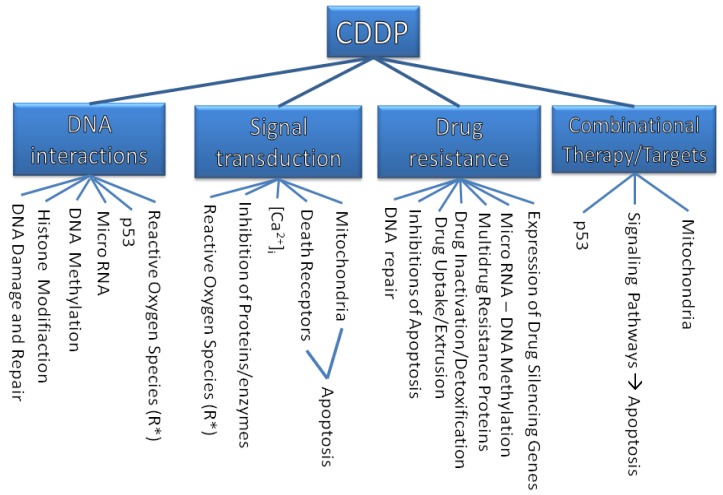
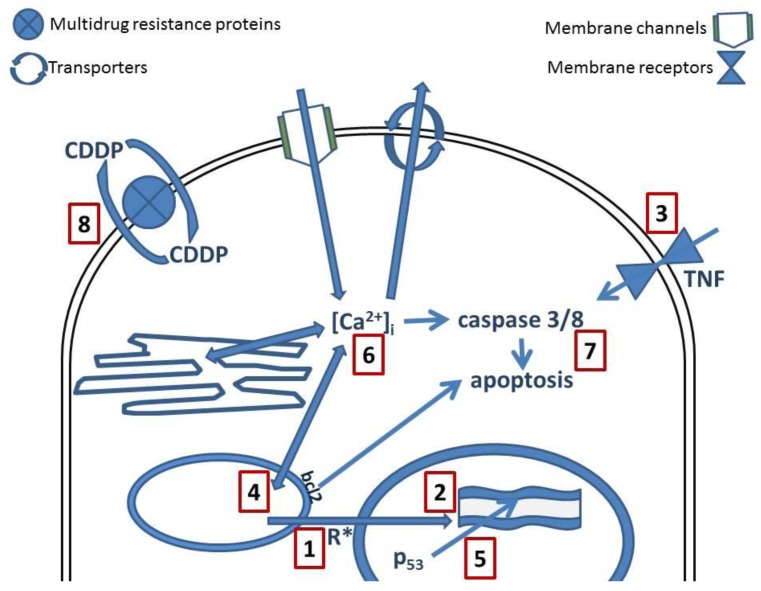
Platinum complexes are clinically used as adjuvant therapy of cancers aiming to induce tumor cell death. Depending on cell type and concentration, cisplatin induces cytotoxicity, e.g., by interference with transcription and/or DNA replication mechanisms. Additionally, cisplatin damages tumors via induction of apoptosis, mediated by the activation of various signal transduction pathways, including calcium signaling, death receptor signaling, and the activation of mitochondrial pathways. Unfortunately, neither cytotoxicity nor apoptosis are exclusively induced in cancer cells, thus, cisplatin might also lead to diverse side-effects such as neuro- and/or renal-toxicity or bone marrow-suppression. Moreover, the binding of cisplatin to proteins and enzymes may modulate its biochemical mechanism of action. While a combination-chemotherapy with cisplatin is a cornerstone for the treatment of multiple cancers, the challenge is that cancer cells could become cisplatin-resistant. Numerous mechanisms of cisplatin resistance were described including changes in cellular uptake, drug efflux, increased detoxification, inhibition of apoptosis and increased DNA repair. To minimize cisplatin resistance, combinatorial therapies were developed and have proven more effective to defeat cancers. Thus, understanding of the biochemical mechanisms triggered by cisplatin in tumor cells may lead to the design of more efficient platinum derivates (or other drugs) and might provide new therapeutic strategies and reduce side effects.
Overview
The claims and statistics of this paper haven’t been checked yet.
Free: it reads the open-access text and checks the first 5 claims that cite a source we can check. Create a free account to check every claim.
Integrity signals
Registry
Cites
Statistics
Figures
Verification
Claims the paper makes
The claims and statistics of this paper haven’t been checked yet.
Free: it reads the open-access text and checks the first 5 claims that cite a source we can check. Create a free account to check every claim.
Claims other papers make about this one
Each is checked against this paper’s own text: does it say what the citing paper says it does?
The source backs part of the claim, not all of it — or backs it for a different population, condition or comparison.
In the citing paper
“Platinum anticancer drugs, such as cisplatin, the most potent member of the platinum drug family, penetrate into the nucleus of cancer cells and form adducts with DNA leading to apoptosis [4].”
From Co-delivery of Paclitaxel and Cisplatin in Poly(2-oxazoline) Polymeric Micelles: Implications for Drug Loading, Release, Pharmacokinetics and Outcome of Ovarian and Breast Cancer Treatments (2019) · cites this paper as [4]
Experimental — accuracy not yet measured
Self-check
Percentages, sums and reported differences re-computed from the paper’s own numbers.
The self-check needs the paper’s full text.
Citations
Cites
1 retracted
Mohammad, R. M., Banerjee, S., Li, Y., Aboukameel, A., Küçük, Ö., & Sarkar, F. H. (2006) · Cancer · doi:10.1002/cncr.21731 · Cited by 84
RetractedMechanisms of resistance to cisplatin
Kartalou, M., & Essigmann, J. M. (2001) · Mutation Research - Fundamental and Molecular Mechanisms of Mutagenesis · doi:10.1016/s0027-5107(01)00141-5 · Cited by 869 · cited 7×
“While the knowledge of the mechanism of action of CDDP has improved our understanding of resistance [70], the mechanism of decreased intracellular accumulation of CDDP is not well understood.”
BackgroundInfluentialLebwohl, D., & Canetta, R. (1998) · European Journal of Cancer · doi:10.1016/s0959-8049(98)00224-x · Cited by 754 · cited 4×
“The research concentrated on platinum analogues focuses on two strategies: expanding the utilization of platinum therapy to other tumor types not usually treated with platinum compounds, while another area of research represents novel routes of administration [7].”
BackgroundMethodInfluentialCellular and molecular pharmacology of oxaliplatin.
Raymond, É., Faivre, S. J., Chaney, S. G., WOYNAROWSKI, J. M., & Cvitkovic, E. (2002) · PubMed · Cited by 576
Novel Metals and Metal Complexes as Platforms for Cancer Therapy
Frezza, M., Hindo, S., Chen, D., Davenport, A., Schmitt, S., Tomco, D., & Ping Dou, Q. (2010) · Current Pharmaceutical Design · doi:10.2174/138161210791209009 · Cited by 552 · cited 2×
“Nevertheless, metal compounds are potential candidates as anticancer agents [1].”
BackgroundThe Role of Cellular Accumulation in Determining Sensitivity to Platinum-Based Chemotherapy
Hall, M. D., Okabe, M., Shen, D.-W., Liang, X.-J., & Gottesman, M. M. (2008) · Annual Review of Pharmacology and Toxicology · doi:10.1146/annurev.pharmtox.48.080907.180426 · Cited by 474 · cited 2×
“, diffusion) only, but there is an active transport system involved [73].”
BackgroundMolecular mechanisms involved in cisplatin cytotoxicity
Jordan, P., & Carmo-Fonseca*, M. (2000) · Cellular and Molecular Life Sciences · doi:10.1007/pl00000762 · Cited by 398 · cited 2×
“Due to a shielding effect caused by these proteins, the CDDP-modified DNA is poorly repaired, resulting DNA damage triggers cell-cycle arrest and apoptosis [28].”
BackgroundRecognition and processing of cisplatin- and oxaliplatin-DNA adducts
Chaney, S. G., Campbell, S. L., Bassett, E., & Wu, Y. (2005) · Critical Reviews in Oncology/Hematology · doi:10.1016/j.critrevonc.2004.08.008 · Cited by 396 · cited 1×
“contribute to the differences in cytotoxicity and tumor range of CDDP and oxaliplatin [31].”
BackgroundParticular aspects of platinum compounds used at present in cancer treatment
Desoize, B., & Madoulet, C. (2002) · Critical Reviews in Oncology/Hematology · doi:10.1016/s1040-8428(01)00219-0 · Cited by 393 · cited 7×
“The hope is that the drugs will work together, producing synergistic or at least additive effects in killing cancer cells, while producing no additional side effects [3].”
BackgroundInfluentialModifications of DNA by platinum complexes
Brabec, V., & Kasparkova, J. (2005) · Drug Resistance Updates · doi:10.1016/j.drup.2005.04.006 · Cited by 373 · cited 4×
“Drug resistance is a major complication in cancer chemotherapy and accounts for the failure of chemotherapy to cure the majority of cancer patients [33,69].”
BackgroundInfluential
Research works printed but not linked: 2
- Chattopadhyay S. Machado-Pinilla R. Manguan-Garcia C. Belda-Iniesta C. Moratilla C. Cejas P. Fresno-Vara J.A. de Castro-Carpeno J. Casado E. Nistal M. Gonzalez-Che C.M. Siu F.M. Metal complexes in medicine with a focus on enzyme inhibition Curr. Opin. Chem. Biol. 2010 14 255 261 20018553 · DOI · Paper page
- Florea A.-M. Büsselberg D. Cisplatin as an anti-tumour drug: Cellular mechanisms of activity, drug resistance and induced side effects Cancers 2011 in press PMC3756417 24212665
Cited by
Items 701–800 of 1,000
Anticancer Study on IrIII and RhIII Half-Sandwich Complexes with the Bipyridylsulfonamide Ligand
Kowalik, M., Masternak, J., Olszewski, M., Maciejewska, N., Kazimierczuk, K., Sitkowski, J., Dąbrowska, A., Chylewska, A., & Makowski, M. (2024) · Inorganic Chemistry · doi:10.1021/acs.inorgchem.3c03801 · Cited by 19
Role of Epigenetics for the Efficacy of Cisplatin
Lumpp, T., Stößer, S., Fischer, F., Hartwig, A., & Köberle, B. (2024) · International Journal of Molecular Sciences · doi:10.3390/ijms25021130 · Cited by 23
PROTECTIVE EFFECT OF QUERCETIN ON CISPLATIN-INDUCED NEPHROTOXICITY IN RATS
Ilić, S., Stojiljković, N. I., Veljković, M., Veljković, S., & Stojanović, G. (2014) · Cited by 19
Photoinduced Intercalation and Coordination of a Dirhodium Complex to DNA: Dual DNA Binding
Palmer, A. M., Burya, S. J., Gallucci, J. C., & Turró, C. (2014) · ChemMedChem · doi:10.1002/cmdc.201402004 · Cited by 22
Micro-RNAs associated with the evolution of ovarian cancer cisplatin resistance
Boac, B. M., Xiong, Y., Marchion, D. C., Abbasi, F., Bush, S., Ramirez, I. J., Khulpateea, B. R., McClung, C., Berry, A., Zgheib, N. B., et al. (2015) · Gynecologic Oncology · doi:10.1016/j.ygyno.2015.12.026 · Cited by 20
Effects of Cisplatin Electrochemotherapy on Human Neuroblastoma Cells
Eşmekaya, M. A., Kayhan, H., Coşkun, A., & Canseven, A. G. (2016) · The Journal of Membrane Biology · doi:10.1007/s00232-016-9891-4 · Cited by 19
“It exerts its cytotoxic properties by reacting with DNA (its main target) which causes apoptotic cell death (Balis et al. 1997). p53 have been also implicated in DNA damaging drug-induced apoptosis in neuroblastoma cells (Florea and Büsselberg 2011).”
BackgroundThree Weekly Versus Weekly Cisplatin as Radiosensitizer in Head and Neck Cancer: a Decision Dilemma
Negi, P., Kingsley, P. A., Srivastava, H., & Sharma, S. K. (2016) · Asian Pacific Journal of Cancer Prevention · doi:10.7314/apjcp.2016.17.4.1617 · Cited by 19
Tesmar, A., Wyrzykowski, D., Kruszyński, R., Niska, K., Inkielewicz‐Stępniak, I., Drzeżdżon, J., Jacewicz, D., & Chmurzyński, L. (2017) · BioMetals · doi:10.1007/s10534-017-0001-6 · Cited by 19
Mansouri‐Torshizi, H., Khosravi, F., Ghahghaei, A., Shahraki, S., & Zareian-Jahromi, S. (2017) · Journal of Biomolecular Structure and Dynamics · doi:10.1080/07391102.2017.1363086 · Cited by 19
Oxidative stress regulates cellular bioenergetics in esophageal squamous cell carcinoma cell
Zhang, X., Lan, L., Niu, L., Lu, J., Li, C., Guo, M., Mo, S., Lü, J., Liu, Y., & Lü, B. (2017) · Bioscience Reports · doi:10.1042/bsr20171006 · Cited by 23
Ghosh, S., Jawed, J. J., Halder, K., Banerjee, S., Chowdhury, B. P., Saha, A., Juin, S. K., Majumdar, S. B., Bose, A., Baral, R., et al. (2018) · Oncotarget · doi:10.18632/oncotarget.26478 · Cited by 19
“Cisplatin, an effective platinum-containing antineoplastic agent is widely utilized in the treatment of a variety of cancers [10, 11], but its adverse effect due to its ability to generate toxicity in various tissue types is a major concern [12, 13].”
BackgroundElrashidy, R. A., & Hasan, R. A. (2020) · Cytokine · doi:10.1016/j.cyto.2020.155260 · Cited by 20
Chen, S., Gao, W., Zhang, M., Chan, J. Y. W., & Wong, T. (2019) · Oncology Letters · doi:10.3892/ol.2019.10479 · Cited by 21
Kinunda, G. A., & Jaganyi, D. (2014) · Transition Metal Chemistry · doi:10.1007/s11243-014-9819-8 · Cited by 19
Elias, S. T., Macedo, C. C. S., Simeoni, L. A., Silveira, D., Magalhães, P. O., Lofrano‐Porto, A., Coletta, R. D., Neves, F. D. A. R., & Guerra, E. N. S. (2016) · Cell Cycle · doi:10.1080/15384101.2016.1151583 · Cited by 18
“therapy drugs target rapidly dividing cells, including healthy cells undergoing mitosis as well as cancer cells.(26,27) Therefore, the identification of new agents with a higher selectivity for cancer cells is crucial.”
BackgroundVižintin, A., Marković, S., Ščančar, J., Kladnik, J., Turel, I., & Miklavčič, D. (2022) · Radiology and Oncology · doi:10.2478/raon-2022-0028 · Cited by 18
Regulatory miRNAs, circRNAs and lncRNAs in cell cycle progression of breast cancer
Huan, C., Xie, G., Luo, Q., Yang, Y., & Hu, S. (2023) · Functional & Integrative Genomics · doi:10.1007/s10142-023-01130-z · Cited by 18
Orshiso, T. A., Murthy, H. C. A., Zereffa, E. A., Rajappan, R., & Ramachandran, V. P. (2023) · ChemistrySelect · doi:10.1002/slct.202302113 · Cited by 18
Ameliorative effects of pine bark extract on cisplatin-induced acute kidney injury in rats
Lee, I.-C., Ko, J., Park, S.-H., Shin, N., Shin, I.-S., Kim, Y.-B., & Kim, J.-C. (2017) · Renal Failure · doi:10.1080/0886022x.2017.1282871 · Cited by 18
“Similar to other chemotherapy agents, chemotherapy with Csp causes many clinical adverse signs, particularly, hearing loss, hair loss, myelosuppression, emesis, and diarrhea.(36,37) In the present study, clinical signs, including depression, diarrhea, and loss of facial fur, were observed during the study period in th…”
Shabana, A. A., Butler, I. S., Castonguay, A., Mostafa, M. M., Jean‐Claude, B. J., & Mostafa, S. I. (2018) · Polyhedron · doi:10.1016/j.poly.2018.07.020 · Cited by 18
Lei, K. F., Hsieh, S.-C., Goh, A., Kuo, R., & Tsang, N. (2018) · Biomedical Microdevices · doi:10.1007/s10544-018-0339-8 · Cited by 21
Kim, A., & Yeul, J. (2018) · Phytomedicine · doi:10.1016/j.phymed.2018.12.017 · Cited by 19
Terenzi, A., Gattuso, H., Spinello, A., Keppler, B. K., Chipot, C. J., Dehez, F., Barone, G., & Monari, A. (2019) · Antioxidants · doi:10.3390/antiox8100472 · Cited by 18
Maji, M., Karmakar, S., Ruturaj, Gupta, A., & Mukherjee, A. (2020) · Dalton Transactions · doi:10.1039/c9dt04269e · Cited by 19
Intracellular water as a mediator of anticancer drug action
Marques, M. P. M., de Carvalho, A. L. M. B., Mamede, A. P., Rudić, S., Dopplapudi, A., Sakai, V. G., & de Carvalho, L. A. E. B. (2020) · International Reviews in Physical Chemistry · doi:10.1080/0144235x.2020.1700083 · Cited by 18
Khan, R. A., Khan, M. R., Usman, M., Sayeed, F., Al‐Ghamdi, H. A., Alrumman, S. A., Alharbi, W., Farshori, N. N., Al-Oqail, M. M., Siddiqui, M. R., et al. (2020) · Saudi Journal of Biological Sciences · doi:10.1016/j.sjbs.2020.05.001 · Cited by 18
Cisplatin's dual-effect on the circadian clock triggers proliferation and apoptosis
Sadiq, Z., Varghese, E., & Büsselberg, D. (2020) · Neurobiology of Sleep and Circadian Rhythms · doi:10.1016/j.nbscr.2020.100054 · Cited by 19
Self-citationKaur, M., Loveleen, & Kumar, R. (2020) · Bioorganic Chemistry · doi:10.1016/j.bioorg.2020.104396 · Cited by 18
Ciniero, G., Elmenoufy, A. H., Gentile, F., Weinfeld, M., Deriu, M. A., West, F. G., Tuszyński, J. A., Dumontet, C., Cros‐Perrial, E., & Jordheim, L. P. (2021) · Cancer Chemotherapy and Pharmacology · doi:10.1007/s00280-020-04213-x · Cited by 18
Hypoxia Active Platinum(IV) Prodrugs of Orotic Acid Selective to Liver Cancer Cells
Maji, M., Bhattacharya, I., Acharya, S., Chakraborty, M. P., Gupta, A., & Mukherjee, A. (2021) · Inorganic Chemistry · doi:10.1021/acs.inorgchem.0c03803 · Cited by 19
Kiran, A. V. V. V. R., Kumari, G. K., & Krishnamurthy, P. T. (2021) · Investigational New Drugs · doi:10.1007/s10637-021-01158-7 · Cited by 18
Gaiddon, C., Groß, I., Meng, X., Sidhoum, M., Mellitzer, G., Romain, B., Delhorme, J., Venkatasamy, A., Jung, A. C., & Pfeffer, M. (2021) · Molecules · doi:10.3390/molecules26175386 · Cited by 18
“, ERCC1) [9], pumps (ATP7B, PGP) [10] or epigenetic regulators [11].”
Antitumor activity of solamargine in mouse melanoma model: relevance to clinical safety
Furtado, R. A., Ozelin, S. D., Ferreira, N. H., Miura, B. A., de Almeida, S., Magalhães, G. M., Nassar, E. J., Miranda, M. A., Bastos, J. K., & Tavares, D. C. (2021) · Journal of Toxicology and Environmental Health · doi:10.1080/15287394.2021.1984348 · Cited by 18
Metal-Tyrosine Kinase Inhibitors: Targeted metal-drug conjugates
Beirne, D. F., Via, M. D., Velasco‐Torrijos, T., & Montagner, D. (2022) · Coordination Chemistry Reviews · doi:10.1016/j.ccr.2022.214655 · Cited by 18
“While cis-platin chemotherapy remains the success story of bio-inorganic medicinal chemistry, it shows several drawbacks and side-effects: (i) development of resistance (acquired or intrinsic), (ii) dose limiting toxicity, including but not limited to ototoxicity, nephrotoxicity, neurotoxicity and fatigue, (iii) poor…”
BackgroundCytotoxic and Luminescent Properties of Novel Organotin Complexes with Chelating Antioxidant Ligand
Nikitin, E. A., Mironova, E., Shpakovsky, D. B., Gracheva, Y. A., Koshelev, D. S., Utochnikova, V. V., Lyssenko, K. A., Oprunenko, Y. F., Yakovlev, D. S., Litvinov, R., et al. (2022) · Molecules · doi:10.3390/molecules27238359 · Cited by 18
“Platinum drugs are a common remedy [2], yet they possess flaws—such as low selectivity, a plethora of side effects, and tumor cell resistance [3].”
BackgroundSami, D. H., Soliman, A. S., Khowailed, A. A., Alruhaimi, R. S., Hassanein, E. H. M., Kamel, E. M., & Mahmoud, A. M. (2023) · Environmental Science and Pollution Research · doi:10.1007/s11356-023-27879-1 · Cited by 18
“Excess ROS deleteriously affects the cells by provoking peroxidation of the membrane lipids, altering signal transduction, depleting sulfhydryl groups, and promoting DNA damage (Florea and Büsselberg 2011).”
BackgroundGinger augmented chemotherapy: A novel multitarget nontoxic approach for cancer management
Saxena, R., Rida, P. C. G., Küçük, Ö., & Aneja, R. (2016) · Molecular Nutrition & Food Research · doi:10.1002/mnfr.201500955 · Cited by 22
Vishwasrao, H. M., Master, А. M., Seo, Y. G., Liu, X. M., Pothayee, N., Zhou, Z., Yuan, D., Boska, M. D., Bronich, T. K., Davis, R. M., et al. (2016) · Chemistry of Materials · doi:10.1021/acs.chemmater.6b00197 · Cited by 18
Filipović, N. R., Bjelogrlić, S., Portalone, G., Pelliccia, S., Silvestri, R., Klisurić, O. R., Senćanski, M., Stanković, D. M., Todorović, T. R., & Muller, C. D. (2016) · MedChemComm · doi:10.1039/c6md00199h · Cited by 18
Łakomska, I., Babinska, M., Wojtczak, A., & Sitkowski, J. (2016) · Inorganica Chimica Acta · doi:10.1016/j.ica.2016.09.010 · Cited by 18
Çetin, Y., Adıgüzel, Z., Polat, H. Ü., Akkoç, T., Tas, A. C., Cevatemre, B., Celik, G., Carikci, B., Yılmaz, V. T., Ulukaya, E., et al. (2017) · Anti-Cancer Drugs · doi:10.1097/cad.0000000000000531 · Cited by 18
Shen, J.-L., Lin, H., Li, G.-H., Jin, R., Shi, L., Chen, M., Chang, C., & Cai, X.-J. (2016) · OncoTarget · doi:10.18632/oncotarget.8525 · Cited by 18
“Early studies indicated Cisplatin’s anticancer activity was associated with its DNA damaging effects and induction of cancer cell apoptosis [36, 37], that might involve altering various signal transduction pathways, including activating ATF3 signaling pathways [22, 38].”
BackgroundWang, J., Xu, Z., Hu, X., Yang, Y., Su, J., Liu, Y., Zhou, L., Qin, J., Zhang, D., & Yu, H. (2020) · OncoTargets and Therapy · doi:10.2147/ott.s253716 · Cited by 17
“Therefore, the normal function of mitochondria in tumor cells and the mitochondria-related apoptotic pathway play important roles in the mechanisms of some antitumor drugs.(25) According to our data, we found that epoxycytochalasin H could increase the ROS level in mitochondria and decrease mitochondrial membrane pote…”
BackgroundIn Vitro Nephrotoxicity Studies of Established and Experimental Platinum-Based Compounds
Schoch, S., Sen', V. D., Brenner, W., Hartwig, A., & Köberle, B. (2021) · Biomedicines · doi:10.3390/biomedicines9081033 · Cited by 17
HADI, H. A., & Safari, R. (2022) · Molecular Physics · doi:10.1080/00268976.2022.2108516 · Cited by 17
An in-depth physicochemical investigation of drug-loaded core–shell UiO66 nanoMOFs
Ding, M., Moreira-Álvarez, B., Calderón‐Celis, F., Costa-Fernandez, J. M., Encinar, J. R., & Gref, R. (2024) · RSC Advances · doi:10.1039/d3ra07098k · Cited by 17
Yousef, R. G., Elwan, A., Abdallah, A. E., Elkady, H., Mehany, A. B. M., Abo-Saif, M. A., Radwan, M. M., ElSohly, M. A., Ibrahim, I. M., Elkady, M. A., et al. (2024) · Journal of Molecular Structure · doi:10.1016/j.molstruc.2024.137753 · Cited by 17
Kamatchi, T. S., Kasim, M. S. M., & Ramesh, R. (2024) · Inorganic Chemistry · doi:10.1021/acs.inorgchem.4c01265 · Cited by 17
Shahabadi, N., Amiri, S., & Taherpour, A. A. (2019) · Journal of Coordination Chemistry · doi:10.1080/00958972.2019.1568419 · Cited by 17
Alpha-linolenic acid confers protection on mice renal cells against cisplatin-induced nephrotoxicity
Istıflı, E. S., Demir, E., Kaplan, H. M., Ateş, K. E., & Doran, F. (2019) · Cytotechnology · doi:10.1007/s10616-019-00333-2 · Cited by 19
Khayamian, M. A., Shalileh, S., Vanaei, S., Parizi, M. S., Ansaryan, S., Saghafi, M., Abbasvandi, F., Ebadi, A., Khamsi, P. S., & Abdolahad, M. (2019) · Drug Delivery · doi:10.1080/10717544.2019.1662514 · Cited by 17
Baek, D. W., Park, J. Y., Lee, S. J., & Chae, Y. S. (2020) · Journal of Yeungnam Medical Science · doi:10.12701/yujm.2019.00423 · Cited by 18
“fering with the DNA repair mechanism [9].”
Chatterjee, R., Bhattacharya, I., Roy, S., Purkait, K., Koley, T. S., Gupta, A., & Mukherjee, A. (2021) · Inorganic Chemistry · doi:10.1021/acs.inorgchem.1c01363 · Cited by 17
Chakraborty, A., Roy, S., Chakraborty, M. P., Roy, S. S., Purkait, K., Koley, T. S., Das, R., Acharya, M., & Mukherjee, A. (2021) · Inorganic Chemistry · doi:10.1021/acs.inorgchem.1c02979 · Cited by 17
Novel organotin complexes with phenol and imidazole moieties for optimized antitumor properties
Nikitin, E. A., Shpakovsky, D. B., Tyurin, V. Y., Kazak, A. A., Gracheva, Y. A., Vasilichin, V. A., Pavlyukov, M. S., Mironova, E., Gontcharenko, V. E., Lyssenko, K. A., et al. (2021) · Journal of Organometallic Chemistry · doi:10.1016/j.jorganchem.2021.122212 · Cited by 17
Sharma, A., Sinha, S., & Shrivastava, N. (2022) · Natural Product Research · doi:10.1080/14786419.2022.2045603 · Cited by 18
Melatonin Sensitizes OVCAR-3 Cells to Cisplatin through Suppression of PI3K/Akt Pathway
Baghal-Sadriforoush, S., Bagheri, M., Rad, I. A., & Sotoodehnejadnematalahi, F. (2022) · Cellular and Molecular Biology · doi:10.14715/cmb/2022.68.4.19 · Cited by 17
“Cisplatin is a DNA-damaging agent and the platinum analogs that have been successfully used to treat various types of cancer, including blood vessels, bone, muscle, soft tissue, and ovarian sarcoma (11).”
BackgroundGholivand, K., Barzegari, A., Yousefian, M., Malekshah, R. E., & Faraghi, M. (2023) · Biocatalysis and Agricultural Biotechnology · doi:10.1016/j.bcab.2023.102612 · Cited by 17
Xu, Q., Zhang, Z., Tang, M., Xing, C., Chen, H., Zheng, K., Zhao, Z., Zhou, S., Zhao, A. Z., Li, F., et al. (2023) · Free Radical Biology and Medicine · doi:10.1016/j.freeradbiomed.2023.03.005 · Cited by 18
O'Neill, L. A. J., Perdisatt, L., & O’Connor, C. M. (2012) · The Journal of Physical Chemistry A · doi:10.1021/jp306927a · Cited by 18
Liu, C., Krishnan, J., & Xu, X. Y. (2012) · Integrative Biology · doi:10.1039/c2ib20238g · Cited by 17
Zhang, L., Su, J., Xie, Q., Zeng, L., Wang, Y., Yi, D., Yu, Y., Liu, S., Li, S., & Xu, Y. (2015) · Journal of Biochemical and Molecular Toxicology · doi:10.1002/jbt.21730 · Cited by 17
Revealing Three Stages of DNA-Cisplatin Reaction by a Solid-State Nanopore
Zhou, Z. L., Hu, Y., Shan, X., Li, W., Bai, X., Wang, P., & Lu, X. (2015) · Scientific Reports · doi:10.1038/srep11868 · Cited by 17
Agudo-López, A., Prieto‐García, E., Alemán, J., Pérez, C., Díaz-García, C. V., Parrilla‐Rubio, L., Cabrera, S., Navarro‐Ranninger, C., Cortés-Funes, H., Lopez-Martin, J. A., et al. (2017) · Molecular Cancer · doi:10.1186/s12943-017-0618-7 · Cited by 17
“TP53 plays a very important role in CDDP cytotoxicity [20], so it is not surprising that a TP53 mutant line show some resistance to this drug [21, 22].”
Gano, L., Pinheiro, T., Matos, A., Tortosa, F., Jorge, T. F., Gonçalves, M. S., Martins, M., Morais, T. S., Valente, A., Tomaz, A. I., et al. (2019) · Anti-Cancer Agents in Medicinal Chemistry · doi:10.2174/1871520619666190318152726 · Cited by 17
Zafar, A., Singh, S., Ahmad, S., Khan, S., Siddiqi, M. I., & Naseem, I. (2019) · Bioorganic Chemistry · doi:10.1016/j.bioorg.2019.03.031 · Cited by 18
Schneider, L. A., Larocca, M., Wu, W., Babu, V. V. S., Padrutt, R., Slyshkina, E., König, C., Ferrari, S. M., & Spingler, B. (2019) · Photochemical & Photobiological Sciences · doi:10.1039/c9pp00336c · Cited by 17
Kašpárková, J., Kostrhunová, H., Novohradský, V., Logvinov, A. A., Temnov, V. V., Borisova, N. E., Podrugina, T. A., Marková, L., Štarha, P., Nazarov, A. A., et al. (2022) · Bioinorganic Chemistry and Applications · doi:10.1155/2022/1717200 · Cited by 16
GSTO1 confers drug resistance in HCT‑116 colon cancer cells through an interaction with TNFαIP3/A20
Paul, S., Bhardwaj, M., & Kang, S. C. (2022) · International Journal of Oncology · doi:10.3892/ijo.2022.5426 · Cited by 16
Guo, L., Li, P., Jing, Z., Gong, Y., Lai, K., Fu, H., Dong, H., Yang, Z., & Liu, Z. (2024) · Journal of Inorganic Biochemistry · doi:10.1016/j.jinorgbio.2024.112631 · Cited by 16
El‐Ghiaty, M. A., Ibrahim, O. M., Abdou, S., & Hussein, F. Z. (2014) · International Urology and Nephrology · doi:10.1007/s11255-014-0644-y · Cited by 16
Li, P. D., Liu, Z., Cheng, T. T., Luo, W., Yao, J., Chen, J., Zou, Z. W., Chen, L., Ma, C., & Dai, X. F. (2017) · Oncotarget · doi:10.18632/oncotarget.18907 · Cited by 16
“Platinum-based chemotherapy such as cisplatin has been widely used in the clinic for a broad spectrum of tumors including ESCC [28].”
BackgroundSanie‐Jahromi, F., & Saadat, M. (2018) · Molecular Biology Reports · doi:10.1007/s11033-018-4223-7 · Cited by 17
Bjelogrlić, S., Todorović, T. R., Cvijetić, I., Rodić, M. V., Vujčić, M. T., Marković, S. B., Araškov, J. B., Janović, B. S., Emhemmed, F., Muller, C. D., et al. (2018) · Journal of Inorganic Biochemistry · doi:10.1016/j.jinorgbio.2018.10.002 · Cited by 17
Wu, D., Guo, L., & Li, S.-J. (2019) · Journal of Molecular Structure · doi:10.1016/j.molstruc.2019.126938 · Cited by 16
RetractedChen, C., Peng, P.-C., Tsai, T., Chien, H., & Lee, M. (2020) · Pharmaceutics · doi:10.3390/pharmaceutics12040317 · Cited by 16
“Cisplatin (cDDP) is a platinum-containing compound that acts as a DNA-crosslinking agent with further interfering with replication and transcription, leading to cell death [8].”
Is GSH Chelated Pt Molecule Inactive in Anti‐Cancer Treatment? A Case Study of Pt6GS4
Zhang, C., Gao, L., Yuan, Q., Zhao, L., Niu, W., Cai, P., Li, J., Han, X., He, Z., Gao, F., et al. (2020) · Small · doi:10.1002/smll.202002044 · Cited by 16
The protective effect of rutin against the cisplatin-induced cochlear damage in vitro
Zheng, S., Liu, C., Tang, D., Zheng, Z., Yan, R., Wu, C., Zuo, N., Ma, J., He, Y., & Liu, S. (2022) · NeuroToxicology · doi:10.1016/j.neuro.2022.03.005 · Cited by 16
Almeida, C. M., Marcon, P. H. S., Nascimento, É. C. M., Martins, J. B. L., Chagas, M. A. S., Fujimori, M., de Marchi, P. G. F., França, E. L., Honório‐França, A. C., & Gatto, C. C. (2022) · Applied Organometallic Chemistry · doi:10.1002/aoc.6761 · Cited by 16
Das, A., Saha, M., Mandal, S., Das, S., Saha, K. D., & Mondal, T. K. (2023) · New Journal of Chemistry · doi:10.1039/d3nj00334e · Cited by 16
Chlorambucil-Loaded Graphene-Oxide-Based Nano-Vesicles for Cancer Therapy
Kumari, S., Nehra, A., Gupta, K., Puri, A., Kumar, V., Singh, K. P., Kumar, M., & Sharma, A. (2023) · Pharmaceutics · doi:10.3390/pharmaceutics15020649 · Cited by 16
Sawkmie, M., Bhattacharyya, M., Banothu, V., Kaminsky, W., Gannon, P. M., Majaw, S., & Kollipara, M. R. (2023) · Journal of Molecular Structure · doi:10.1016/j.molstruc.2023.135994 · Cited by 16
Pomegranate Flower Extract does not Prevent Cisplatin-Induced Nephrotoxicity in Female Rats.
Jilanchi, S., Nematbakhsh, M., Mazaheri, S., Talebi, A., Zolfaghari, B., Pezeshki, Z., Eshraghi-Jazi, F., & Moeini, M. (2014) · PubMed Central · Cited by 16
Gattuso, H., Duchanois, T., Besancenot, V., Barbieux, C., Assfeld, X., Bécuwe, P., Gros, P. C., Grandemange, S., & Monari, A. (2015) · Frontiers in Chemistry · doi:10.3389/fchem.2015.00067 · Cited by 17
Ban, Q., Du, J., Sun, W. C., Chen, J., Wu, S., & Kong, J. (2018) · Macromolecular Rapid Communications · doi:10.1002/marc.201800171 · Cited by 16
Jurišević, M., Arsenijević, A., Pantic, J. M., Gajović, N., Milovanović, J., Milovanović, M., Poljarević, J. M., Sabo, T. J., Vojvodić, D., Radosavljevic, G. D., et al. (2018) · Oncotarget · doi:10.18632/oncotarget.25610 · Cited by 21
Bhagya, N., Prabhu, A., Rekha, P. D., & Chandrashekar, K. R. (2020) · Synergy · doi:10.1016/j.synres.2020.100063 · Cited by 16
Astesana, V., Faris, P. S., Ferrari, B., Siciliani, S., Lim, D., Biggiogera, M., Pascali, S. A. D., Fanizzi, F. P., Roda, E., Moccia, F. D., et al. (2020) · Cellular and Molecular Neurobiology · doi:10.1007/s10571-020-00873-8 · Cited by 16
Hassanshahi, J., Mirzahosseini-pourranjbar, A., Hajializadeh, Z., & Kaeidi, A. (2020) · Molecular Biology Reports · doi:10.1007/s11033-020-05694-y · Cited by 16
Lunetti, P., Romano, A., Carrisi, C., Antonucci, D., Verri, T., Benedetto, G. E. D., Dolce, V., Fanizzi, F. P., Benedetti, M., & Capobianco, L. (2016) · ChemistrySelect · doi:10.1002/slct.201600961 · Cited by 16
pH-triggered liposomal strategy for cisplatin in lung cancer therapy
Demirbolat, G. M., Çakırlı, E., Saglam, A. B., Özbek, S. S., Abas, B. İ., & Çevik, Ö. D. (2025) · Scientific Reports · doi:10.1038/s41598-025-20144-0 · Cited by 15
“2, 3, 4, 5).”
Versatile Platinum(IV) Prodrugs of Naproxen and Acemetacin as Chemo-Anti-Inflammatory Agents
Aputen, A. D., Elias, M. G., Gilbert, J., Sakoff, J. A., Gordon, C. P., Scott, K. F., & Aldrich-Wright, J. R. (2023) · Cancers · doi:10.3390/cancers15092460 · Cited by 15
Lim, J. V., Nepacina, M. R., & Hsu, Y. (2024) · Journal of the Taiwan Institute of Chemical Engineers · doi:10.1016/j.jtice.2023.105326 · Cited by 15
Altyar, A. E., Albadrani, G. M., Farouk, S. M., Alamoudi, M. K., Sayed, A. A., Mohammedsaleh, Z. M., Al‐Ghadi, M. Q., Saleem, R. M., Sakr, H. I., & Abdel‐Daim, M. M. (2024) · Renal Failure · doi:10.1080/0886022x.2024.2378212 · Cited by 15
“This binding causes significant DNA damage, replication arrest, transcription inhibition, and apoptosis in malignant cells [4].”
BackgroundXu, N., Mu, R., Deng, S., Ye, H., Shi, Y., Fu, X., Li, H., & Yao, Q. (2024) · Renal Failure · doi:10.1080/0886022x.2024.2406395 · Cited by 17
Green Light Activated Dual‐Action Pt(IV) Prodrug with Enhanced PDT Activity
Spector, D. V., Bykusov, V., Isaeva, Y. A., Akasov, R., Zharova, A., Родин, И. А., Vokuev, M. F., Grishin, Y. K., Nikitina, V. N., Martynov, A. G., et al. (2025) · ChemMedChem · doi:10.1002/cmdc.202400786 · Cited by 15
Shahraki, S., Dehghanian, E., & Shahraki, K. (2025) · Inorganica Chimica Acta · doi:10.1016/j.ica.2025.122642 · Cited by 15
Valora, G., Munzi, G., & Bonomo, R. P. (2018) · Journal of Inorganic Biochemistry · doi:10.1016/j.jinorgbio.2018.10.012 · Cited by 15
In Vitro Anti-proliferative Activity and Mechanism of Action of Anemone nemorosa
Swanepoel, B., Venables, L., Olaru, O. T., Nițulescu, G. M., & van de Venter, M. (2019) · International Journal of Molecular Sciences · doi:10.3390/ijms20051217 · Cited by 15
“Excessive production of reactive oxygen species can induce lipid peroxidation, depletion of sulfhydryl groups, altered signal transduction pathways, altered calcium homeostasis and DNA damage, which could lead to the induction of apoptosis [12].”
BackgroundMicroRNA-423 Drug Resistance and Proliferation of Breast Cancer Cells by Targeting ZFP36
Xia, W., Liu, Y., Du, Y., Cheng, T., Hu, X., & Li, X. (2020) · OncoTargets and Therapy · doi:10.2147/ott.s217745 · Cited by 15
Retracted
Metadata
- Authors
- Florea, A.-M., & Büsselberg, D.
- Affiliations
- Heinrich Heine University Düsseldorf (DE)
- Weill Cornell Medical College in Qatar (QA)
- Corresponding author
- Büsselberg, Dietrich
- ORCID
- Büsselberg, Dietrich
- Venue
- Cancers
- Publisher
- MDPI AG
- Published
- 2011-03-15
- Volume
- 3
- Issue
- 1
- Pages
- 1351-1371
- ISSN
- 2072-6694 (ISSN-L)
- PMC
- PMC3756417
- OpenAlex
- W2073131323
- Cited by
- 1,759
- References
- 83
- Citations by year
- 2026: 65 · 2025: 111 · 2024: 154 · 2023: 148 · 2022: 165 · 2021: 177 · 2020: 195 · 2019: 176 · 2018: 133 · 2017: 129 · 2016: 100 · 2015: 82 · 2014: 70 · 2013: 28 · 2012: 21
- FWCI
- 19.39
- Type
- journal article
- Language
- en
- Open access
- gold
- doi.org
- Licence
- Locations
- Cancers (publishedVersion, cc-by)
- Europe PMC (PubMed Central) (publishedVersion, other-oa)
- PubMed Central (publishedVersion, cc-by)
- PubMed (publishedVersion)
- DOAJ (DOAJ: Directory of Open Access Journals) (submittedVersion)
- Topics
- Health Sciences › Medicine › Oncology › Metal complexes synthesis and properties
- Life Sciences › Biochemistry, Genetics and Molecular Biology › Molecular Biology › Cancer therapeutics and mechanisms
- Life Sciences › Biochemistry, Genetics and Molecular Biology › Molecular Biology › Cell death mechanisms and regulation
- Keywords
- cisplatin, platinum complexes, apoptosis, DNA replication inhibition, calcium signaling, death receptor signaling, mitochondrial apoptosis, drug resistance, neurotoxicity, nephrotoxicity, myelosuppression, combination chemotherapy, DNA repair, drug efflux, cellular uptake, platinum derivatives
About these checks
Registry, retraction, Cites and statistics results are computed, not judged, with one exception: a printed reference that no index lists is read once by a model before it counts as a citation error. Claims are extracted by a model and kept only when their quote appears verbatim in the text; each cited source is then checked, with a model’s help, for whether it says what the claim relies on. Those verdicts can be wrong — read the claim’s quote and the cited source before relying on one.
Statistics and arithmetic are recomputed, not judged.
Confidence bands are shown only for fields calibrated on our annotated test set. None is calibrated yet, so no band is shown.
What counts as a claim ›How we measure confidence ›How we check this ›
Are you an author, or do you see a problem with this page? Request a review
Data sources
Bibliographic data: Semantic Scholar, OpenAlex, Crossref.
Contains information from the Semantic Scholar Academic Graph Datasets, made available under the ODC Attribution License (ODC-BY 1.0).
Semantic Scholar’s data is described in: Kinney, R., et al. (2023). The Semantic Scholar Open Data Platform. arXiv:2301.10140.
