

Cisplatin as an Anti-Tumor Drug: Cellular Mechanisms of Activity, Drug Resistance and Induced Side Effects
Open accessThe DOI matches its Crossref record; 80 of the 83 references it cites were found in a registry or an index.
Abstract
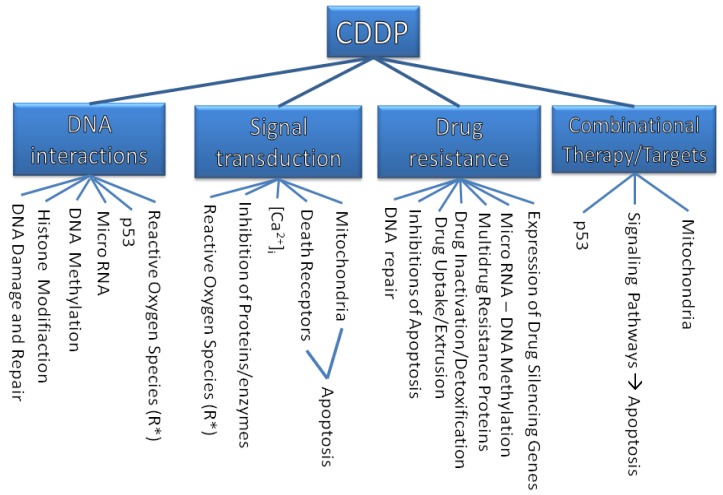
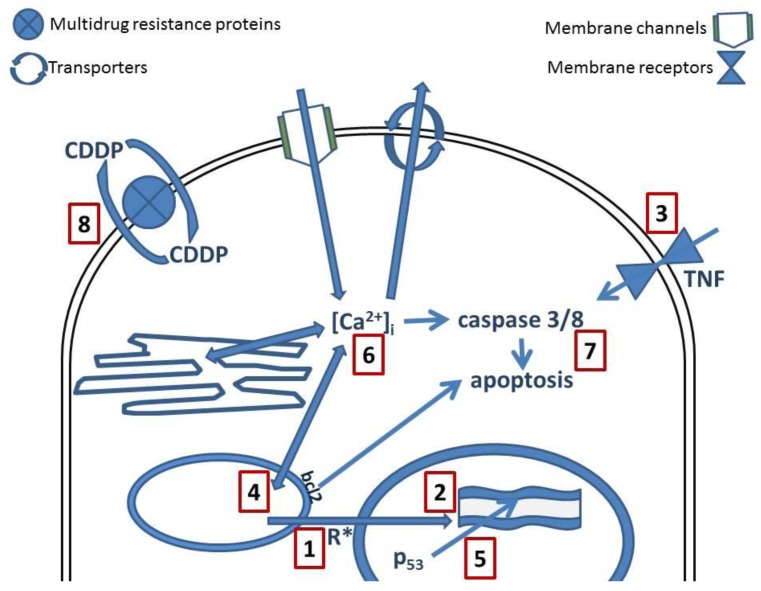
Platinum complexes are clinically used as adjuvant therapy of cancers aiming to induce tumor cell death. Depending on cell type and concentration, cisplatin induces cytotoxicity, e.g., by interference with transcription and/or DNA replication mechanisms. Additionally, cisplatin damages tumors via induction of apoptosis, mediated by the activation of various signal transduction pathways, including calcium signaling, death receptor signaling, and the activation of mitochondrial pathways. Unfortunately, neither cytotoxicity nor apoptosis are exclusively induced in cancer cells, thus, cisplatin might also lead to diverse side-effects such as neuro- and/or renal-toxicity or bone marrow-suppression. Moreover, the binding of cisplatin to proteins and enzymes may modulate its biochemical mechanism of action. While a combination-chemotherapy with cisplatin is a cornerstone for the treatment of multiple cancers, the challenge is that cancer cells could become cisplatin-resistant. Numerous mechanisms of cisplatin resistance were described including changes in cellular uptake, drug efflux, increased detoxification, inhibition of apoptosis and increased DNA repair. To minimize cisplatin resistance, combinatorial therapies were developed and have proven more effective to defeat cancers. Thus, understanding of the biochemical mechanisms triggered by cisplatin in tumor cells may lead to the design of more efficient platinum derivates (or other drugs) and might provide new therapeutic strategies and reduce side effects.
Overview
The claims and statistics of this paper haven’t been checked yet.
Free: it reads the open-access text and checks the first 5 claims that cite a source we can check. Create a free account to check every claim.
Integrity signals
Registry
Cites
Statistics
Figures
Verification
Claims the paper makes
The claims and statistics of this paper haven’t been checked yet.
Free: it reads the open-access text and checks the first 5 claims that cite a source we can check. Create a free account to check every claim.
Claims other papers make about this one
Each is checked against this paper’s own text: does it say what the citing paper says it does?
The source backs part of the claim, not all of it — or backs it for a different population, condition or comparison.
In the citing paper
“Platinum anticancer drugs, such as cisplatin, the most potent member of the platinum drug family, penetrate into the nucleus of cancer cells and form adducts with DNA leading to apoptosis [4].”
From Co-delivery of Paclitaxel and Cisplatin in Poly(2-oxazoline) Polymeric Micelles: Implications for Drug Loading, Release, Pharmacokinetics and Outcome of Ovarian and Breast Cancer Treatments (2019) · cites this paper as [4]
Experimental — accuracy not yet measured
Self-check
Percentages, sums and reported differences re-computed from the paper’s own numbers.
The self-check needs the paper’s full text.
Citations
Cites
1 retracted
Mohammad, R. M., Banerjee, S., Li, Y., Aboukameel, A., Küçük, Ö., & Sarkar, F. H. (2006) · Cancer · doi:10.1002/cncr.21731 · Cited by 84
RetractedMechanisms of resistance to cisplatin
Kartalou, M., & Essigmann, J. M. (2001) · Mutation Research - Fundamental and Molecular Mechanisms of Mutagenesis · doi:10.1016/s0027-5107(01)00141-5 · Cited by 869 · cited 7×
“While the knowledge of the mechanism of action of CDDP has improved our understanding of resistance [70], the mechanism of decreased intracellular accumulation of CDDP is not well understood.”
BackgroundInfluentialLebwohl, D., & Canetta, R. (1998) · European Journal of Cancer · doi:10.1016/s0959-8049(98)00224-x · Cited by 754 · cited 4×
“The research concentrated on platinum analogues focuses on two strategies: expanding the utilization of platinum therapy to other tumor types not usually treated with platinum compounds, while another area of research represents novel routes of administration [7].”
BackgroundMethodInfluentialCellular and molecular pharmacology of oxaliplatin.
Raymond, É., Faivre, S. J., Chaney, S. G., WOYNAROWSKI, J. M., & Cvitkovic, E. (2002) · PubMed · Cited by 576
Novel Metals and Metal Complexes as Platforms for Cancer Therapy
Frezza, M., Hindo, S., Chen, D., Davenport, A., Schmitt, S., Tomco, D., & Ping Dou, Q. (2010) · Current Pharmaceutical Design · doi:10.2174/138161210791209009 · Cited by 552 · cited 2×
“Nevertheless, metal compounds are potential candidates as anticancer agents [1].”
BackgroundThe Role of Cellular Accumulation in Determining Sensitivity to Platinum-Based Chemotherapy
Hall, M. D., Okabe, M., Shen, D.-W., Liang, X.-J., & Gottesman, M. M. (2008) · Annual Review of Pharmacology and Toxicology · doi:10.1146/annurev.pharmtox.48.080907.180426 · Cited by 474 · cited 2×
“, diffusion) only, but there is an active transport system involved [73].”
BackgroundMolecular mechanisms involved in cisplatin cytotoxicity
Jordan, P., & Carmo-Fonseca*, M. (2000) · Cellular and Molecular Life Sciences · doi:10.1007/pl00000762 · Cited by 398 · cited 2×
“Due to a shielding effect caused by these proteins, the CDDP-modified DNA is poorly repaired, resulting DNA damage triggers cell-cycle arrest and apoptosis [28].”
BackgroundRecognition and processing of cisplatin- and oxaliplatin-DNA adducts
Chaney, S. G., Campbell, S. L., Bassett, E., & Wu, Y. (2005) · Critical Reviews in Oncology/Hematology · doi:10.1016/j.critrevonc.2004.08.008 · Cited by 396 · cited 1×
“contribute to the differences in cytotoxicity and tumor range of CDDP and oxaliplatin [31].”
BackgroundParticular aspects of platinum compounds used at present in cancer treatment
Desoize, B., & Madoulet, C. (2002) · Critical Reviews in Oncology/Hematology · doi:10.1016/s1040-8428(01)00219-0 · Cited by 393 · cited 7×
“The hope is that the drugs will work together, producing synergistic or at least additive effects in killing cancer cells, while producing no additional side effects [3].”
BackgroundInfluentialModifications of DNA by platinum complexes
Brabec, V., & Kasparkova, J. (2005) · Drug Resistance Updates · doi:10.1016/j.drup.2005.04.006 · Cited by 373 · cited 4×
“Drug resistance is a major complication in cancer chemotherapy and accounts for the failure of chemotherapy to cure the majority of cancer patients [33,69].”
BackgroundInfluential
Research works printed but not linked: 2
- Chattopadhyay S. Machado-Pinilla R. Manguan-Garcia C. Belda-Iniesta C. Moratilla C. Cejas P. Fresno-Vara J.A. de Castro-Carpeno J. Casado E. Nistal M. Gonzalez-Che C.M. Siu F.M. Metal complexes in medicine with a focus on enzyme inhibition Curr. Opin. Chem. Biol. 2010 14 255 261 20018553 · DOI · Paper page
- Florea A.-M. Büsselberg D. Cisplatin as an anti-tumour drug: Cellular mechanisms of activity, drug resistance and induced side effects Cancers 2011 in press PMC3756417 24212665
Cited by
Items 301–400 of 1,000
Li, Z., Yao, Q., Tian, Y., Jiang, Y., Xu, M., Wang, H., Xiong, Y., Fang, J., Wen, L., Yu, D., et al. (2021) · Biochemical Pharmacology · doi:10.1016/j.bcp.2021.114904 · Cited by 44
Core–shell-type organogel–alginate hybrid microparticles: A controlled delivery vehicle
Sagiri, S. S., Singh, V. K., Banerjee, I., Pramanik, K., Basak, P., & Pal, K. (2014) · Chemical Engineering Journal · doi:10.1016/j.cej.2014.11.032 · Cited by 43
Ghorbanpour, M., Shayanfar, A., & Soltani, B. (2023) · Coordination Chemistry Reviews · doi:10.1016/j.ccr.2023.215459 · Cited by 45
Selenium protects cerebral cells by cisplatin induced neurotoxicity
Karavelioğlu, E., Boyacı, M. G., Şimşek, N., Sönmez, M. A., Koç, E. R., Karademir, M., Güven, M., & Eser, O. (2015) · Acta Cirúrgica Brasileira · doi:10.1590/s0102-865020150060000004 · Cited by 43
Wang, Y., Liu, Y., Liu, Y., Zhou, W., Wang, H., Wan, G., Sun, D., Zhang, N., & Wang, Y. (2015) · International Journal of Pharmaceutics · doi:10.1016/j.ijpharm.2015.02.027 · Cited by 43
Saczko, J., Kamińska, I., Kotulska, M., Bar, J. K., Choromańska, A., Rembiałkowska, N., Bieżuńska-Kusiak, K., Rossowska, J., Nowakowska, D., & Kulbacka, J. (2014) · Biomedicine & Pharmacotherapy · doi:10.1016/j.biopha.2014.05.005 · Cited by 43
Im, J., Lee, K.-W., Won, K., Kim, B., Ban, H. S., Yoon, S.-H., Lee, Y.-J., Kim, Y., Song, K., & Won, M. (2015) · Biochimica et Biophysica Acta (BBA) - Molecular Cell Research · doi:10.1016/j.bbamcr.2015.10.011 · Cited by 46
“Cisplatin exerts its anti-cancer effects via multiple mechanisms; however, its most crucial mode of action involves the generation of DNA lesions, followed by activation of the DNA damage response and apoptosis [38,39].”
BackgroundOxaliplatin-induced Oxidative Stress Provokes Toxicity in Isolated Rat Liver Mitochondria
Tabassum, H., Waseem, M., Parvez, S., & Qureshi, M. I. (2015) · Archives of Medical Research · doi:10.1016/j.arcmed.2015.10.002 · Cited by 43
Mu, C., Chang, S. W., Prosser, K. E., Leung, A. W. Y., Santacruz, S., Jang, T., Thompson, J. R., Yapp, D. T. T., Warren, J. J., Bally, M. B., et al. (2015) · Inorganic Chemistry · doi:10.1021/acs.inorgchem.5b02109 · Cited by 43
Manatunga, D. C., de Silva, R. M., de Silva, K. M. N., Malavige, G. N., Wijeratne, D. T., Williams, G. R., Jayasinghe, C. D., & Udagama, P. V. (2018) · European Journal of Pharmaceutics and Biopharmaceutics · doi:10.1016/j.ejpb.2018.04.001 · Cited by 43
Kunjiappan, S., Theivendren, P., Baskararaj, S., Sankaranarayanan, B., Palanisamy, P., Saravanan, G., Arunachalam, S., Murugesan, S., Natarajan, J., Somasundaram, B., et al. (2019) · 3 Biotech · doi:10.1007/s13205-019-1720-x · Cited by 43
“The antioxidant compounds modulated the cytotoxic effect of anticancer drugs towards the drug-resistant mutants of cancer cells (Florea and Büsselberg 2011).”
BackgroundLiu, S., Zhang, X., & Wang, J. (2020) · International Immunopharmacology · doi:10.1016/j.intimp.2020.106437 · Cited by 43
Singh, G., Nenavathu, B. P., Imtiyaz, K., & Rizvi, M. M. A. (2020) · Biomedicine & Pharmacotherapy · doi:10.1016/j.biopha.2020.110443 · Cited by 43
Acharya, D., Satapathy, S., Yadav, K. K., Somu, P., & Mishra, G. (2021) · Journal of Inorganic and Organometallic Polymers and Materials · doi:10.1007/s10904-021-02133-8 · Cited by 46
Mariya, T., Hirohashi, Y., Torigoe, T., Tabuchi, Y., Asano, T., Saijo, H., Kuroda, T., Yasuda, K., Mizuuchi, M., Saito, T., et al. (2016) · Oncotarget · doi:10.18632/oncotarget.8645 · Cited by 45
“There are several mechanisms underlying resistance to platinum reagents, including changes in cellular uptake, drug efflux, increased detoxification, inhibition of apoptosis and increased DNA repair [4].”
BackgroundThe application of bacteria-nanomaterial hybrids in antitumor therapy
Xiao, S., Mu, M., Feng, C., Pan, S., & Chen, N. (2024) · Journal of Nanobiotechnology · doi:10.1186/s12951-024-02793-x · Cited by 45
Li, G., Che, X., Wang, S., Liu, D., Xie, D., Jiang, B., Zheng, Z., Xu, Z., & Wu, G. (2025) · Annals of Medicine · doi:10.1080/07853890.2024.2447403 · Cited by 55
Varghese, E., & Büsselberg, D. (2014) · Cancers · doi:10.3390/cancers6042243 · Cited by 42
“The well-established anticancer drug cisplatin targets multiple intracellular sites resulting in cell death and calcium signaling is one among them [26].”
BackgroundSelf-citationSharawy, N., Rashed, L. A., & Youakim, M. F. (2015) · Experimental and Toxicologic Pathology · doi:10.1016/j.etp.2015.02.003 · Cited by 43
Ćoćić, D., Jovanović, S., Nišavić, M., Baskić, D., Todorović, D., Popović, S., Bugarčić, Ž. D., & Petrović, B. (2017) · Journal of Inorganic Biochemistry · doi:10.1016/j.jinorgbio.2017.07.009 · Cited by 42
Renal Protective Effect of Hydrogen Sulfide in Cisplatin-Induced Nephrotoxicity
Cao, X., Xiong, S., Zhou, Y., Wu, Z., Ding, L., Zhu, Y., Wood, M. E., Whiteman, M., Moore, P. K., & Bian, J. (2018) · Antioxidants and Redox Signaling · doi:10.1089/ars.2017.7157 · Cited by 42
“However, its effective usage for cancer therapy has been severely limited due to the induction of numerous severe adverse effects (14).”
Zhang, C., Wang, M., Shi, C., Shi, F., & Pei, C. (2018) · BioScience Trends · doi:10.5582/bst.2018.01052 · Cited by 42
Chei, S., Oh, H., Song, J.-H., Seo, Y., Lee, K., & Lee, B.-Y. (2019) · Frontiers in Oncology · doi:10.3389/fonc.2019.00752 · Cited by 44
“However, apoptosis-inducing cancer therapy causes several side effects (13), including damage to normal cells and reduced production of blood cells and platelets in the bone marrow (14).”
BackgroundShi, H., Xu, M. J., Zhu, J., Yang, L., He, Z., Zhang, Y., Xu, Q., Niu, Y., & Liu, Y. (2019) · Journal of Materials Chemistry B · doi:10.1039/c9tb02055a · Cited by 42
The Synergistic Combination of Cisplatin and Piperine Induces Apoptosis in MCF-7 Cell Line
Fattah, A., Morovati, A., Niknam, Z., Mashouri, L., Asadi, A., Rizi, S. T., Abbasi, M., Shakeri, F., & Abazari, O. (2021) · Iranian Journal of Public Health · doi:10.18502/ijph.v50i5.6121 · Cited by 45
“Platinum drugs such as cisplatin (also called cisdiammine-dichloro-platinum (II)) and its analogs are the most effective anti-tumor compounds which routinely used in clinics for the different types of human solid tumors remedy via multiple mechanisms (2, 3).”
BackgroundGholivand, K., Sabaghian, M., & Malekshah, R. E. (2021) · Bioorganic Chemistry · doi:10.1016/j.bioorg.2021.105193 · Cited by 42
Mahbub, A. A., Maitre, C. L. L., Cross, N. A., & Jordan, N. (2022) · Scientific Reports · doi:10.1038/s41598-022-11441-z · Cited by 45
Platinum(II) Complexes of Curcumin Showing Photocytotoxicity in Visible Light
Mitra, K., Gautam, S., Kondaiah, P., & Chakravarty, A. R. (2016) · European Journal of Inorganic Chemistry · doi:10.1002/ejic.201601078 · Cited by 41
API5 induces cisplatin resistance through FGFR signaling in human cancer cells
Jang, H. S., Woo, S. R., Song, K., Cho, H., Chay, D. B., Hong, S.-O., Lee, H., Oh, S. J., Chung, J., Kim, J., et al. (2017) · Experimental & Molecular Medicine · doi:10.1038/emm.2017.130 · Cited by 42
Manogaran, P., Beeraka, N. M., Huang, C., & Padma, V. V. (2019) · Food and Chemical Toxicology · doi:10.1016/j.fct.2019.110652 · Cited by 45
The assembly and antitumor activity of lycium barbarum polysaccharide-platinum-based conjugates
Wang, Y., Han, Q., Bai, F., Luo, Q., Wu, M., Song, G., Zhang, H., & Wang, Y. (2020) · Journal of Inorganic Biochemistry · doi:10.1016/j.jinorgbio.2020.111001 · Cited by 41
Özdemir, S., Küçükler, S., Çomaklı, S., & Kandemır, F. M. (2020) · Drug and Chemical Toxicology · doi:10.1080/01480545.2020.1822390 · Cited by 42
“Thus NF-jB up-regulates the expression of pro-inflammatory mediator (Ghosh and Karin 2002).”
BackgroundKarmakar, S., Kostrhunová, H., Ctvrtlikova, T., Novohradský, V., Gibson, D., & Brabec, V. (2020) · Journal of Medicinal Chemistry · doi:10.1021/acs.jmedchem.0c01400 · Cited by 43
Chitosan-Modified Silver Nanoparticles Enhance Cisplatin Activity in Breast Cancer Cells
(2020) · Biointerface Research in Applied Chemistry · doi:10.33263/briac113.1057210584 · Cited by 41
Mandal, S., Tarai, S. K., Patra, P., Nandi, P., Sing, S., Rajak, B., & Moi, S. C. (2022) · Langmuir · doi:10.1021/acs.langmuir.2c02490 · Cited by 41
Epigenetics and Testicular Cancer: Bridging the Gap Between Fundamental Biology and Patient Care
Nicu, A.-T., Medar, C., Chifiriuc, M. C., Pîrcălăbioru, G. G., & Burlibaşa, L. (2022) · Frontiers in Cell and Developmental Biology · doi:10.3389/fcell.2022.861995 · Cited by 45
Hanif, A., Ibrahim, A. H., Ismail, S., Al-Rawi, S. S., Ahmad, J. N., Hameed, M., Mustufa, G., & Tanwir, S. (2023) · Molecules · doi:10.3390/molecules28062812 · Cited by 40
“There are a number of Pt complexes that are used for the adjuvant therapy of cancers [17].”
BackgroundLi, X., Cai, J., Zhang, H., Sun, S., Zhao, S., Wang, Z., Nie, X., Xu, C., Zhang, Y., & Xiao, H. (2024) · ACS Nano · doi:10.1021/acsnano.3c06194 · Cited by 42
Tian, Z., Yang, Y., Guo, L., Zhong, G., Li, J., & Liu, Z. (2018) · Inorganic Chemistry Frontiers · doi:10.1039/c8qi00920a · Cited by 40
Induction/reversal of drug resistance in gastric cancer by non-coding RNAs (Review)
Chen, C., Tang, X., Liu, Y., Zhu, J., & Liu, J. (2019) · International Journal of Oncology · doi:10.3892/ijo.2019.4751 · Cited by 48
D’Abrosca, B., Ciaramella, V., Graziani, V., Papaccio, F., Corte, C. M. D., Potenza, N., Fiorentino, A., Ciardiello, F., & Morgillo, F. (2019) · Scientific Reports · doi:10.1038/s41598-019-41372-1 · Cited by 40
Zayed, N., Aly, H. F., El‐mezayen, H. A., & El-Salamony, H. E. (2019) · Toxicology Reports · doi:10.1016/j.toxrep.2019.08.007 · Cited by 47
Rochford, G., Molphy, Z. E., Kavanagh, K. A., McCann, M., Devereux, M. M., Kellett, A., & Howe, O. L. (2019) · Metallomics · doi:10.1039/c9mt00187e · Cited by 42
Liu, Z., Wang, M., Wang, H., Fang, L., & Gou, S. (2019) · Journal of Medicinal Chemistry · doi:10.1021/acs.jmedchem.9b01223 · Cited by 41
Song, X., Liu, R.-P., Wang, S., Li, Z., Ma, Z., Zhang, R., Xie, C., Qiao, X., & Xu, J. (2020) · Journal of Medicinal Chemistry · doi:10.1021/acs.jmedchem.0c00343 · Cited by 40
Freitas‐Lima, L. C., Budu, A., Arruda, A. C., Perilhão, M. S., Barrera‐Chimal, J., Araújo, R. C., & Estrela, G. R. (2020) · International Journal of Molecular Sciences · doi:10.3390/ijms21197416 · Cited by 41
Martínez‐Rodríguez, O. P., Gonzalez-Torres, A., Álvarez-Salas, L. M., Hernández‐Sánchez, H., García‐Pérez, B. E., Thompson-Bonilla, M. D. R., & Jaramillo‐Flores, M. E. (2020) · RSC Advances · doi:10.1039/d0ra07309a · Cited by 40
Dong, Y., Ma, Y., Li, X., Wang, F., & Zhang, Y. (2021) · Molecular Pharmaceutics · doi:10.1021/acs.molpharmaceut.1c00303 · Cited by 40
Kotb, A. R., Bakhotmah, D. A., Abdallah, A. E., Elkady, H., Taghour, M. S., Eissa, I. H., & El‐Zahabi, M. A. (2022) · RSC Advances · doi:10.1039/d2ra06188k · Cited by 40
Huo, L., Li, C.-W., Huang, T.-H., Lam, Y. C., Xia, W., Tu, C., Chang, W., Hsu, J. L., Lee, D., Nie, L., et al. (2014) · Europe PMC (PubMed Central) · Cited by 49
Banerjee, S., Dixit, A., Karande, A. A., & Chakravarty, A. R. (2016) · Dalton Transactions · doi:10.1039/c5dt03412d · Cited by 40
Dinçsoy, A. B., & Cansaran‐Duman, D. (2017) · TURKISH JOURNAL OF BIOLOGY · doi:10.3906/biy-1609-40 · Cited by 40
“The mechanism of many anticancer drugs in the pharmaceutical industry is based on their ability to induce apoptosis (Motomura et al., 2008; Florea and Busselberg, 2011).”
BackgroundCopper decorated graphyne as a promising nanocarrier for cisplatin anti-cancer drug: A DFT study
Deb, J., Kundu, A., Garg, N., Sarkar, U., & Chakraborty, B. (2023) · Applied Surface Science · doi:10.1016/j.apsusc.2023.156885 · Cited by 42
A Small Sugar Molecule with Huge Potential in Targeted Cancer Therapy
Pastuch-Gawołek, G., Szreder, J., Domińska, M., Pielok, M., Cichy, P., & Grymel, M. (2023) · Pharmaceutics · doi:10.3390/pharmaceutics15030913 · Cited by 39
“However, their application is limited by severe side effects, such as renal toxicity, ototoxicity, neurotoxicity, and alopecia, as well as the problems of drug and cross-resistance and intrinsic or acquired resistance [54].”
BackgroundLameijer, L. N., Brevé, T. G., van Rixel, V. H. S., Askes, S. H. C., Siegler, M. A., & Bonnet, S. (2017) · Chemistry - A European Journal · doi:10.1002/chem.201705388 · Cited by 39
Mitra, I., Mukherjee, S., B., V. P. R., Misini, B., Das, P., Dasgupta, S., Linert, W., & Moi, S. C. (2018) · New Journal of Chemistry · doi:10.1039/c7nj05173e · Cited by 43
Attanzio, A., Ippolito, M., Girasolo, M. A., Saiano, F., Rotondo, A., Rubino, S., Mondello, L., Capobianco, M. L., Sabatino, P., Tesoriere, L., et al. (2018) · Journal of Inorganic Biochemistry · doi:10.1016/j.jinorgbio.2018.04.006 · Cited by 39
Bhattacharya, K., Banerjee, S. L., Das, S., Samanta, S., Mandal, M., & Singha, N. K. (2019) · ACS Applied Bio Materials · doi:10.1021/acsabm.9b00267 · Cited by 39
Roy, S., Roy, S., Kar, M., Padhi, S., Saha, A., Anuja, K., & Banerjee, B. (2018) · Journal of Oral Pathology and Medicine · doi:10.1111/jop.12707 · Cited by 39
“Previous reports have shown that cisplatin exerts its cytotoxic effects by its ability to form intra-strand and inter-strand crosslinks with DNA thereby forming cisplatin-DNA adduct.(23) It has been reported that nucleotide excision repair (NER) removes cisplatin-induced intra-strand crosslinks.”
BackgroundMultifunctional Iridium(III)–Platinum(IV) Conjugates as Potent Anticancer Theranostic Agents
Gupta, A., Pandey, A. K., Mondal, T., Bhattacharya, J., & Sasmal, P. K. (2023) · Journal of Medicinal Chemistry · doi:10.1021/acs.jmedchem.3c00336 · Cited by 39
Keikha, A. O., Shahraki, S., Dehghanian, E., & Mansouri‐Torshizi, H. (2024) · Spectrochimica Acta Part A Molecular and Biomolecular Spectroscopy · doi:10.1016/j.saa.2024.125034 · Cited by 42
Köppen, C., Reifschneider, O., Castanheira, I. P., Sperling, M., Kärst, U., & Ciarimboli, G. (2015) · Metallomics · doi:10.1039/c5mt00226e · Cited by 38
Cheng, X. L., Liu, H. Q., Wang, Q., Huo, J. G., Wang, X. N., & Cao, P. (2015) · Frontiers in Pharmacology · doi:10.3389/fphar.2015.00234 · Cited by 38
“In CIPN animals, oxidative stress markers such as oxidative lipid, protein, and DNA damage are dramatically increased in sciatic nerve and lumbar spinal cord (Florea and Büsselberg, 2011; Wang et al., 2011; Di Cesare et al., 2012).”
BackgroundSamatiwat, P., Prawan, A., Senggunprai, L., Kukongviriyapan, U., & Kukongviriyapan, V. (2016) · Tumor Biology · doi:10.1007/s13277-016-5015-0 · Cited by 40
XPA, XPC, and XPD Modulate Sensitivity in Gastric Cisplatin Resistance Cancer Cells
Pajuelo‐Lozano, N., Bargiela-Iparraguirre, J., Domínguez, G., Quiroga, A. G., Perona, R., & Sánchez‐Pérez, I. (2018) · Frontiers in Pharmacology · doi:10.3389/fphar.2018.01197 · Cited by 40
“CDDP binds to the DNA and induces bulky lesions which are mainly repaired by NER mechanism and if the cells are not able to repair the damage they end dying by apoptosis induction (Florea and Busselberg, 2011).”
BackgroundProtective Smell of Hydrogen Sulfide and Polysulfide in Cisplatin-Induced Nephrotoxicity
Cao, X., Zhang, W., Moore, P. K., & Bian, J. (2019) · International Journal of Molecular Sciences · doi:10.3390/ijms20020313 · Cited by 44
“However, its usage in cancer therapy is largely compromised due to its numerous adverse effects, which include nephrotoxicity, hearing loss, neurotoxicity, severe nausea, and myelosuppression [18].”
BackgroundZhang, H., Jiang, H., Zhang, H., Liu, J., Hu, X., & Chen, L. (2019) · International Journal of Biological Macromolecules · doi:10.1016/j.ijbiomac.2019.01.195 · Cited by 41
Toxicity of C60 fullerene–cisplatin nanocomplex against Lewis lung carcinoma cells
Prylutska, S., Grynyuk, І. І., Skaterna, T. D., Horak, I. R., Grebinyk, A., Дробот, Л. Б., Matyshevska, O., Senenko, A., Prylutskyy, Y. І., Наумовець, А. Г., et al. (2019) · Archives of Toxicology · doi:10.1007/s00204-019-02441-6 · Cited by 38
HDAC4 Levels Control Sensibility toward Cisplatin in Gastric Cancer via the p53-p73/BIK Pathway
Spaety, M.-É., Gries, A., Badie, A., Venkatasamy, A., Romain, B., Orvain, C., Yanagihara, K., Okamoto, K., Jung, A. C., Mellitzer, G., et al. (2019) · Cancers · doi:10.3390/cancers11111747 · Cited by 42
“Unfortunately, only a limited number of tumors respond to the treatment due to intrinsic or acquired resistance [2].”
He, C., Majd, M. H., Shiri, F., & Shahraki, S. (2020) · Journal of Molecular Structure · doi:10.1016/j.molstruc.2020.129806 · Cited by 38
Baiken, Y., Kanayeva, D. A., Taipakova, S., Groisman, R., Ishchenko, A. A., Бегимбетова, Д., Matkarimov, B. T., & Saparbaev, M. K. (2021) · Frontiers in Cell and Developmental Biology · doi:10.3389/fcell.2020.617884 · Cited by 41
“Cisplatin or cis-diamminedichloroplatinum(II) (cis-DDP) reacts with the N7 atom of the deoxyguanosine residue forming initially one covalent bond with DNA then covalently binds to other neighboring guanine residues resulting in DNA cross-linking (Bancroft et al., 1990; Florea and Busselberg, 2011) (Figure 1B).”
BackgroundSalem, D. S., Hegazy, S. F., & Obayya, S. S. A. (2021) · Colloids and Interface Science Communications · doi:10.1016/j.colcom.2021.100361 · Cited by 38
Jiang, Q., Wang, Z., Qi, Q., Li, J., Xin, Y., & Qiu, J. (2021) · Molecular Therapy — Oncolytics · doi:10.1016/j.omto.2021.12.021 · Cited by 38
“Scholars have noted that the poor prognosis of TSCC patients is closely associated with poor chemotherapy efficacy due to chemotherapy resistance.(7,8) Therefore, the present investigation explores the molecular mechanisms related to TSCC chemotherapy resistance and provides a basis for improving the efficacy of TSCC…”
BackgroundBioinspired and Biomimetic Nanomedicines for Targeted Cancer Therapy
Xu, X., Li, T., & Jin, K. (2022) · Pharmaceutics · doi:10.3390/pharmaceutics14051109 · Cited by 43
Alhazmi, M. I., Hasan, T. N., Shafi, G., Alassaf, A. M., Alfawaz, M. A., & Alshatwi, A. A. (2014) · Asian Pacific Journal of Cancer Prevention · doi:10.7314/apjcp.2014.15.22.9655 · Cited by 38
“The mechanism of action of many anticancer drugs is based on their ability to induce apoptosis (Motomura et al, 2008; Florea and Busselberg, 2011).”
BackgroundMolecular mechanisms of cisplatin resistance in ovarian cancer
Jiang, C., Shen, C., Ni, M., Huang, L., Hu, H., Dai, Q. Y., Zhao, H., & Zhu, Z. (2023) · Genes & Diseases · doi:10.1016/j.gendis.2023.06.032 · Cited by 48
“9 It is used for various solid cancers, including ovarian, cervical, bladder, and lung cancer.”
BackgroundYamaguchi, T., Watanabe, S., Matsumura, Y., Tokuoka, Y., & Yokoyama, A. (2012) · Bioorganic & Medicinal Chemistry · doi:10.1016/j.bmc.2012.02.063 · Cited by 37
Radin, D. P., LIPPA, A. S., Patel, P., & Leonardi, D. (2015) · Biomedicine & Pharmacotherapy · doi:10.1016/j.biopha.2015.12.022 · Cited by 37
A Comprehensive Review on the Genetic Regulation of Cisplatin-induced Nephrotoxicity
Pérez, Z. H., Gretz, N., & Dweep, H. (2016) · Current Genomics · doi:10.2174/1389202917666160202220555 · Cited by 40
“Moreover, CDDP shows a broad spectrum of antitumor activity and currently has been used in the treatment of numerous and different types of cancers, such as ovarian [3, 4], cervical [5], bladder [6], non-small cell lung cancers [7], head and neck [8] and testicular cancer [9-12], among many others.”
BackgroundRasanani, S. H., Moghadam, M. E., Soleimani, E., Divsalar, A., Ajloo, D., Tarlani, A., & Amiri, M. (2017) · Journal of Biomolecular Structure and Dynamics · doi:10.1080/07391102.2017.1385538 · Cited by 37
Yang, Y., Guo, L., Ge, X., Shi, S., Gong, Y., Xu, Z., Zheng, X., & Liu, Z. (2018) · Journal of Inorganic Biochemistry · doi:10.1016/j.jinorgbio.2018.11.007 · Cited by 37
Piotrowska, A., Wierzbicka, J., Rybarczyk, A., Tuckey, R. C., Slominski, A. T., & Zmijewski, M. A. (2019) · International Journal of Oncology · doi:10.3892/ijo.2019.4725 · Cited by 41
“These two drugs are widely used in melanoma treatment and their activity, at least partially, relies on ROS generation (35,57,58,66).”
BackgroundSioud, F., Amor, S., Toumia, I. B., Lahmar, A., Aires, V., Ghédira, L. C., & Delmas, D. (2020) · Cells · doi:10.3390/cells9020362 · Cited by 37
“However, the restricted region for the surgical procedure, the development of drug-resistance, and patients who suffer from side effects are the most important factors that limit the total success of these treatment modalities [3,4].”
BackgroundSun, H., Leng, B., Wu, Z., & Bian, J. (2020) · International Journal of Molecular Sciences · doi:10.3390/ijms21207805 · Cited by 41
When metal–organic framework mediated smart drug delivery meets gastrointestinal cancers
Hashemzadeh, A., Drummen, G. P. C., Avan, A., Darroudi, M., Khazaei, M., Khajavian, R., Rangrazi, A., & Mirzaei, M. (2021) · Journal of Materials Chemistry B · doi:10.1039/d1tb00155h · Cited by 37
BODIPY-Tagged Platinum(II) Curcumin Complexes for Endoplasmic Reticulum-Targeted Red Light PDT
Upadhyay, A., Kundu, P., Ramu, V., Kondaiah, P., & Chakravarty, A. R. (2022) · Inorganic Chemistry · doi:10.1021/acs.inorgchem.1c02745 · Cited by 37
Nguyen, V.-T., Huynh, T., Ho, T. G., Nguyen, T., Nguyen, T. L. A., Dao, D. Q., Mai, T. V. ‐., Huynh, L. K., & Hoang, T. (2022) · Royal Society Open Science · doi:10.1098/rsos.220659 · Cited by 37
“nephrotoxicity, hepatotoxicity, ototoxicity and neurotoxicity) and drug resistance [6].”
BackgroundAli, A. Q., Teoh, S. G., Salhin, A., Eltayeb, N. E., Ahamed, M. B. K., & Majid, A. M. S. A. (2014) · Inorganica Chimica Acta · doi:10.1016/j.ica.2014.03.029 · Cited by 37
Li, Y., Zheng, M., Sah, S. K., Mishra, A., & Singh, Y. P. (2018) · Molecular and Cellular Biochemistry · doi:10.1007/s11010-018-3472-z · Cited by 39
MiR-494 acts as a tumor promoter by targeting CASP2 in non-small cell lung cancer
Zhang, Q., Li, Y., Zhao, M., Lin, H., Wang, W., Li, D., Cui, W., Zhou, C., Zhong, J., & Huang, C. (2019) · Scientific Reports · doi:10.1038/s41598-019-39453-2 · Cited by 37
Stimpson, S., Jenkinson, D., Sadler, A., Latham, M., Wragg, A. B., Meijer, A. J. H. M., & Thomas, J. A. (2015) · Angewandte Chemie International Edition · doi:10.1002/anie.201411346 · Cited by 36
Iridium(III)-based chemosensors for the detection of metal ions
Ma, D., Wong, S.-Y., Kang, T., Hing Pan, N. G., Han, Q., & Leung, C. (2019) · Methods · doi:10.1016/j.ymeth.2019.02.013 · Cited by 36
Conti, L., Mengoni, A., Giacomazzo, G. E., Mari, L., Perfetti, M., Fagorzi, C., Sorace, L., Valtancoli, B., & Giorgi, C. (2021) · Journal of Inorganic Biochemistry · doi:10.1016/j.jinorgbio.2021.111467 · Cited by 38
Wang, Z., Niu, J., Zhao, C., Wang, X., Ren, J., & Qu, X. (2021) · Angewandte Chemie · doi:10.1002/ange.202016442 · Cited by 36
Arunachalam, A., Ramesh, R., Umapathy, D., & Arockiam, A. J. V. (2022) · Organometallics · doi:10.1021/acs.organomet.2c00290 · Cited by 36
Nurcahyanti, A. D., & Wink, M. (2016) · PeerJ · doi:10.7717/peerj.1542 · Cited by 36
Kumar, G., Solanki, M. H., Xue, X., Mintz, R. L., Madankumar, S., Chatterjee, P. K., & Metz, C. N. (2017) · American Journal of Physiology-Renal Physiology · doi:10.1152/ajprenal.00688.2016 · Cited by 36
The Role of Intracellular Calcium for the Development and Treatment of Neuroblastoma
Satheesh, N. J., & Büsselberg, D. (2015) · Cancers · doi:10.3390/cancers7020811 · Cited by 36
Self-citationFigueiredo, S. A. C., Salvador, J. A. R., Cortés, R., & Cascante, M. (2017) · European Journal of Medicinal Chemistry · doi:10.1016/j.ejmech.2017.06.029 · Cited by 35
Wattanathamsan, O., Treesuwan, S., Sritularak, B., & Pongrakhananon, V. (2018) · Journal of Natural Medicines · doi:10.1007/s11418-018-1176-z · Cited by 35
“Although cisplatin is highly efficacious, resistance to the drug is becoming increasingly common, causing major challenges to achieving a clinical outcome [4].”
Background
Metadata
- Authors
- Florea, A.-M., & Büsselberg, D.
- Affiliations
- Heinrich Heine University Düsseldorf (DE)
- Weill Cornell Medical College in Qatar (QA)
- Corresponding author
- Büsselberg, Dietrich
- ORCID
- Büsselberg, Dietrich
- Venue
- Cancers
- Publisher
- MDPI AG
- Published
- 2011-03-15
- Volume
- 3
- Issue
- 1
- Pages
- 1351-1371
- ISSN
- 2072-6694 (ISSN-L)
- PMC
- PMC3756417
- OpenAlex
- W2073131323
- Cited by
- 1,759
- References
- 83
- Citations by year
- 2026: 65 · 2025: 111 · 2024: 154 · 2023: 148 · 2022: 165 · 2021: 177 · 2020: 195 · 2019: 176 · 2018: 133 · 2017: 129 · 2016: 100 · 2015: 82 · 2014: 70 · 2013: 28 · 2012: 21
- FWCI
- 19.39
- Type
- journal article
- Language
- en
- Open access
- gold
- doi.org
- Licence
- Locations
- Cancers (publishedVersion, cc-by)
- Europe PMC (PubMed Central) (publishedVersion, other-oa)
- PubMed Central (publishedVersion, cc-by)
- PubMed (publishedVersion)
- DOAJ (DOAJ: Directory of Open Access Journals) (submittedVersion)
- Topics
- Health Sciences › Medicine › Oncology › Metal complexes synthesis and properties
- Life Sciences › Biochemistry, Genetics and Molecular Biology › Molecular Biology › Cancer therapeutics and mechanisms
- Life Sciences › Biochemistry, Genetics and Molecular Biology › Molecular Biology › Cell death mechanisms and regulation
- Keywords
- cisplatin, platinum complexes, apoptosis, DNA replication inhibition, calcium signaling, death receptor signaling, mitochondrial apoptosis, drug resistance, neurotoxicity, nephrotoxicity, myelosuppression, combination chemotherapy, DNA repair, drug efflux, cellular uptake, platinum derivatives
About these checks
Registry, retraction, Cites and statistics results are computed, not judged, with one exception: a printed reference that no index lists is read once by a model before it counts as a citation error. Claims are extracted by a model and kept only when their quote appears verbatim in the text; each cited source is then checked, with a model’s help, for whether it says what the claim relies on. Those verdicts can be wrong — read the claim’s quote and the cited source before relying on one.
Statistics and arithmetic are recomputed, not judged.
Confidence bands are shown only for fields calibrated on our annotated test set. None is calibrated yet, so no band is shown.
What counts as a claim ›How we measure confidence ›How we check this ›
Are you an author, or do you see a problem with this page? Request a review
Data sources
Bibliographic data: Semantic Scholar, OpenAlex, Crossref.
Contains information from the Semantic Scholar Academic Graph Datasets, made available under the ODC Attribution License (ODC-BY 1.0).
Semantic Scholar’s data is described in: Kinney, R., et al. (2023). The Semantic Scholar Open Data Platform. arXiv:2301.10140.
