

Cisplatin as an Anti-Tumor Drug: Cellular Mechanisms of Activity, Drug Resistance and Induced Side Effects
Open accessThe DOI matches its Crossref record; 80 of the 83 references it cites were found in a registry or an index.
Abstract
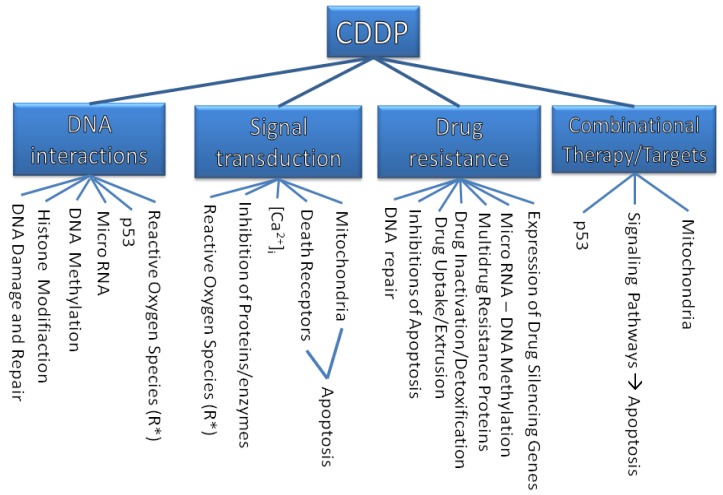
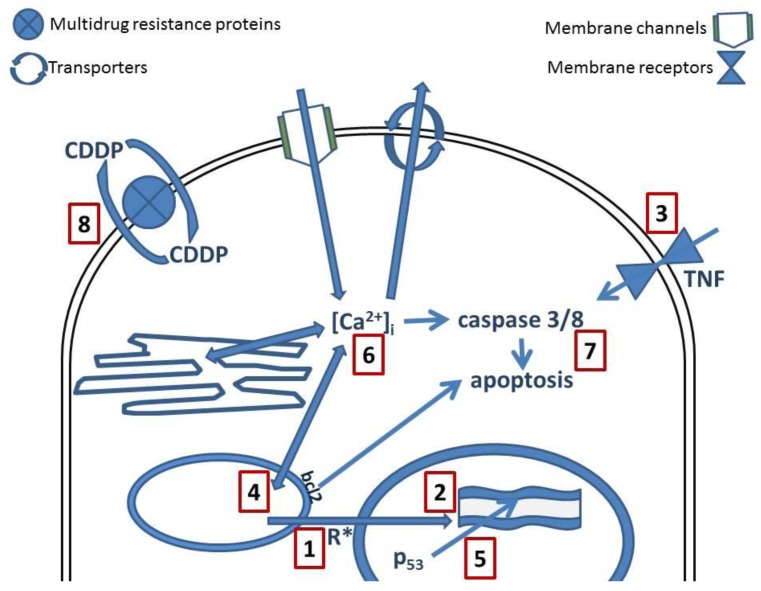
Platinum complexes are clinically used as adjuvant therapy of cancers aiming to induce tumor cell death. Depending on cell type and concentration, cisplatin induces cytotoxicity, e.g., by interference with transcription and/or DNA replication mechanisms. Additionally, cisplatin damages tumors via induction of apoptosis, mediated by the activation of various signal transduction pathways, including calcium signaling, death receptor signaling, and the activation of mitochondrial pathways. Unfortunately, neither cytotoxicity nor apoptosis are exclusively induced in cancer cells, thus, cisplatin might also lead to diverse side-effects such as neuro- and/or renal-toxicity or bone marrow-suppression. Moreover, the binding of cisplatin to proteins and enzymes may modulate its biochemical mechanism of action. While a combination-chemotherapy with cisplatin is a cornerstone for the treatment of multiple cancers, the challenge is that cancer cells could become cisplatin-resistant. Numerous mechanisms of cisplatin resistance were described including changes in cellular uptake, drug efflux, increased detoxification, inhibition of apoptosis and increased DNA repair. To minimize cisplatin resistance, combinatorial therapies were developed and have proven more effective to defeat cancers. Thus, understanding of the biochemical mechanisms triggered by cisplatin in tumor cells may lead to the design of more efficient platinum derivates (or other drugs) and might provide new therapeutic strategies and reduce side effects.
Overview
The claims and statistics of this paper haven’t been checked yet.
Free: it reads the open-access text and checks the first 5 claims that cite a source we can check. Create a free account to check every claim.
Integrity signals
Registry
Cites
Statistics
Figures
Verification
Claims the paper makes
The claims and statistics of this paper haven’t been checked yet.
Free: it reads the open-access text and checks the first 5 claims that cite a source we can check. Create a free account to check every claim.
Claims other papers make about this one
Each is checked against this paper’s own text: does it say what the citing paper says it does?
The source backs part of the claim, not all of it — or backs it for a different population, condition or comparison.
In the citing paper
“Platinum anticancer drugs, such as cisplatin, the most potent member of the platinum drug family, penetrate into the nucleus of cancer cells and form adducts with DNA leading to apoptosis [4].”
From Co-delivery of Paclitaxel and Cisplatin in Poly(2-oxazoline) Polymeric Micelles: Implications for Drug Loading, Release, Pharmacokinetics and Outcome of Ovarian and Breast Cancer Treatments (2019) · cites this paper as [4]
Experimental — accuracy not yet measured
Self-check
Percentages, sums and reported differences re-computed from the paper’s own numbers.
The self-check needs the paper’s full text.
Citations
Cites
1 retracted
Mohammad, R. M., Banerjee, S., Li, Y., Aboukameel, A., Küçük, Ö., & Sarkar, F. H. (2006) · Cancer · doi:10.1002/cncr.21731 · Cited by 84
RetractedMechanisms of resistance to cisplatin
Kartalou, M., & Essigmann, J. M. (2001) · Mutation Research - Fundamental and Molecular Mechanisms of Mutagenesis · doi:10.1016/s0027-5107(01)00141-5 · Cited by 869 · cited 7×
“While the knowledge of the mechanism of action of CDDP has improved our understanding of resistance [70], the mechanism of decreased intracellular accumulation of CDDP is not well understood.”
BackgroundInfluentialLebwohl, D., & Canetta, R. (1998) · European Journal of Cancer · doi:10.1016/s0959-8049(98)00224-x · Cited by 754 · cited 4×
“The research concentrated on platinum analogues focuses on two strategies: expanding the utilization of platinum therapy to other tumor types not usually treated with platinum compounds, while another area of research represents novel routes of administration [7].”
BackgroundMethodInfluentialCellular and molecular pharmacology of oxaliplatin.
Raymond, É., Faivre, S. J., Chaney, S. G., WOYNAROWSKI, J. M., & Cvitkovic, E. (2002) · PubMed · Cited by 576
Novel Metals and Metal Complexes as Platforms for Cancer Therapy
Frezza, M., Hindo, S., Chen, D., Davenport, A., Schmitt, S., Tomco, D., & Ping Dou, Q. (2010) · Current Pharmaceutical Design · doi:10.2174/138161210791209009 · Cited by 552 · cited 2×
“Nevertheless, metal compounds are potential candidates as anticancer agents [1].”
BackgroundThe Role of Cellular Accumulation in Determining Sensitivity to Platinum-Based Chemotherapy
Hall, M. D., Okabe, M., Shen, D.-W., Liang, X.-J., & Gottesman, M. M. (2008) · Annual Review of Pharmacology and Toxicology · doi:10.1146/annurev.pharmtox.48.080907.180426 · Cited by 474 · cited 2×
“, diffusion) only, but there is an active transport system involved [73].”
BackgroundMolecular mechanisms involved in cisplatin cytotoxicity
Jordan, P., & Carmo-Fonseca*, M. (2000) · Cellular and Molecular Life Sciences · doi:10.1007/pl00000762 · Cited by 398 · cited 2×
“Due to a shielding effect caused by these proteins, the CDDP-modified DNA is poorly repaired, resulting DNA damage triggers cell-cycle arrest and apoptosis [28].”
BackgroundRecognition and processing of cisplatin- and oxaliplatin-DNA adducts
Chaney, S. G., Campbell, S. L., Bassett, E., & Wu, Y. (2005) · Critical Reviews in Oncology/Hematology · doi:10.1016/j.critrevonc.2004.08.008 · Cited by 396 · cited 1×
“contribute to the differences in cytotoxicity and tumor range of CDDP and oxaliplatin [31].”
BackgroundParticular aspects of platinum compounds used at present in cancer treatment
Desoize, B., & Madoulet, C. (2002) · Critical Reviews in Oncology/Hematology · doi:10.1016/s1040-8428(01)00219-0 · Cited by 393 · cited 7×
“The hope is that the drugs will work together, producing synergistic or at least additive effects in killing cancer cells, while producing no additional side effects [3].”
BackgroundInfluentialModifications of DNA by platinum complexes
Brabec, V., & Kasparkova, J. (2005) · Drug Resistance Updates · doi:10.1016/j.drup.2005.04.006 · Cited by 373 · cited 4×
“Drug resistance is a major complication in cancer chemotherapy and accounts for the failure of chemotherapy to cure the majority of cancer patients [33,69].”
BackgroundInfluential
Research works printed but not linked: 2
- Chattopadhyay S. Machado-Pinilla R. Manguan-Garcia C. Belda-Iniesta C. Moratilla C. Cejas P. Fresno-Vara J.A. de Castro-Carpeno J. Casado E. Nistal M. Gonzalez-Che C.M. Siu F.M. Metal complexes in medicine with a focus on enzyme inhibition Curr. Opin. Chem. Biol. 2010 14 255 261 20018553 · DOI · Paper page
- Florea A.-M. Büsselberg D. Cisplatin as an anti-tumour drug: Cellular mechanisms of activity, drug resistance and induced side effects Cancers 2011 in press PMC3756417 24212665
Cited by
Items 101–200 of 1,000
Velma, V., Dasari, S. R., & Tchounwou, P. B. (2016) · Biomarker Insights · doi:10.4137/bmi.s39445 · Cited by 98
Ruthenium( ii )–arene complexes as anti-metastatic agents, and related techniques
Sonkar, C., Sarkar, S., & Mukhopadhyay, S. (2021) · RSC Medicinal Chemistry · doi:10.1039/d1md00220a · Cited by 96
Biological applications of Ru(II) polypyridyl complexes
Mital, M., & Ziora, Z. M. (2018) · Coordination Chemistry Reviews · doi:10.1016/j.ccr.2018.02.013 · Cited by 99
Brock, R. M., Beitel-White, N., Davalos, R. V., & Allen, I. C. (2020) · Frontiers in Oncology · doi:10.3389/fonc.2020.01235 · Cited by 99
Suberu, J., Romero‐Canelón, I., Sullivan, N. F., Lapkin, A. A., & Barker, G. C. (2014) · ChemMedChem · doi:10.1002/cmdc.201402285 · Cited by 93
Transition Metal Intercalators as Anticancer Agents—Recent Advances
Deo, K. M., Pages, B. J., Ang, D. L., Gordon, C. P., & Aldrich-Wright, J. R. (2016) · International Journal of Molecular Sciences · doi:10.3390/ijms17111818 · Cited by 89
“These complexes exhibit different side-effects and overcome some cisplatin resistance, respectively, although otherwise they demonstrate no significant improvements in efficacy overall [5,6].”
BackgroundYoon, S. Y., Yoon, J. A., Park, M., Shin, E., Jung, S.-K., Lee, J. E., Eum, J. H., Song, H., Lee, D. R., Lee, W. S., et al. (2020) · Stem Cell Research & Therapy · doi:10.1186/s13287-020-01769-6 · Cited by 89
Rationally Designed Ruthenium Complexes for Breast Cancer Therapy
Golbaghi, G., & Castonguay, A. (2020) · Molecules · doi:10.3390/molecules25020265 · Cited by 94
Waseem, M., & Parvez, S. (2015) · PROTOPLASMA · doi:10.1007/s00709-015-0821-6 · Cited by 88
“Chemotherapy is among the pilot methods of treatment for cancer patients (Florea and Büsselberg 2011; Luo et al. 2012; Raschi and De Ponti 2012).”
Alibakhshi, T., Khodayar, M. J., Khorsandi, L., Rashno, M. M., & Zeidooni, L. (2018) · Biomedicine & Pharmacotherapy · doi:10.1016/j.biopha.2018.05.085 · Cited by 87
“Cisplatin use is associated with several side effects such as nephrotoxicity, severe nausea and vomiting, bone marrow suppression, ear toxicity (hearing loss), neurotoxicity and allergic reactions [8].”
BackgroundLiu, P., Li, X., Lv, W., & Xu, Z. (2019) · Biomedicine & Pharmacotherapy · doi:10.1016/j.biopha.2019.109693 · Cited by 87
Substrate Stiffness Modulates the Growth, Phenotype, and Chemoresistance of Ovarian Cancer Cells
Fan, Y., Sun, Q., Li, X., Feng, J., Ao, Z., Li, X., & Wang, J. (2021) · Frontiers in Cell and Developmental Biology · doi:10.3389/fcell.2021.718834 · Cited by 89
Maj, M. A., Ma, J., Krukowski, K., Kavelaars, A., & Heijnen, C. J. (2017) · Frontiers in Molecular Neuroscience · doi:10.3389/fnmol.2017.00108 · Cited by 92
“…demonstrate that ex vivo incubation with cisplatin activates an apoptotic pathway as shown by Tunel staining, along with cytochrome c release and increase of reactive oxygen species production (McDonald and Windebank, 2002; Jiang et al., 2008; Melli et al., 2008; Florea and Busselberg, 2011).”
BackgroundWang, Q., Niu, L., Liu, H., Wu, Y., Li, M., & Jia, Q. (2020) · International Journal of Biological Macromolecules · doi:10.1016/j.ijbiomac.2020.12.053 · Cited by 85
A Feedback Loop Between miR-30a/c-5p and DNMT1 Mediates Cisplatin Resistance in Ovarian Cancer Cells
Han, X., Zhen, S., Ye, Z., Lu, J., Wang, L., Li, P., Li, J., Zheng, X., Li, H., Chen, W., et al. (2017) · Cellular Physiology and Biochemistry · doi:10.1159/000460618 · Cited by 89
Bajpai, V. K., Shukla, S., Kang, S., Hwang, S. K., Song, X., Huh, Y. S., & Han, Y. (2018) · Marine Drugs · doi:10.3390/md16060179 · Cited by 86
“Individuals may not be sufficiently tolerant to an increased dose of the drugs, and this may lead to terminate the drug in going for clinical trial approval [73].”
BackgroundGoldberg, M., Manzi, A., Birdi, A., LaPorte, B., Conway, P., Cantin, S., Mishra, V., Singh, A., Pearson, A. T., Goldberg, E. R., et al. (2022) · Nature Communications · doi:10.1038/s41467-022-31859-3 · Cited by 88
“Complete blood counts showed no evidence of myelosuppression (Supplementary Table 9), which is typically seen with IV cisplatin administration 46 .”
Chaudhry, G.-E.-S., Akim, A. M., Sung, Y. Y., & Muhammad, T. S. T. (2022) · Methods in molecular biology · doi:10.1007/978-1-0716-2553-8_16 · Cited by 89
Fischer, C., Leithner, K., Wohlkoenig, C., Quehenberger, F., Bertsch, A., Olschewski, A., Olschewski, H., & Hrzenjak, A. (2015) · Molecular Cancer · doi:10.1186/1476-4598-14-4 · Cited by 95
“Although its prognostic impact is still not clear, increased expression of HIF-1α correlates with a poorer survival in NSCLC and in patients with other solid tumors [10-18].”
BackgroundLi, C., Jin, H., Sun, H., Zhang, Z.-Z., Zheng, J., Li, S., & Han, S.-H. (2015) · European Journal of Pharmacology · doi:10.1016/j.ejphar.2015.12.042 · Cited by 83
Ibrahim, A. R., Kareem, M. M., AL-Noor, T. H., Al‐Muhimeed, T. I., AlObaid, A. A., Albukhaty, S., Sulaiman, G. M., Jabir, M. S., Taqi, Z. J., & Sahib, U. I. (2021) · Pharmaceuticals · doi:10.3390/ph14060509 · Cited by 92
Agnello, L., Tortorella, S., d’Argenio, A., Carbone, C., Camorani, S., Locatelli, E., Auletta, L., Sorrentino, D., Fedele, M., Zannetti, A., et al. (2021) · Journal of Experimental & Clinical Cancer Research · doi:10.1186/s13046-021-02039-w · Cited by 84
Chen, X., Bi, Y., Wang, T., Li, P., Yan, X., Hou, S., Bammert, C. E., Ju, J., Gibson, K. M., Pavan, W. J., et al. (2015) · Scientific Reports · doi:10.1038/srep09004 · Cited by 87
Jagadeesan, S., Balasubramanian, V., Baumann, P., Neuburger, M. A., Häußinger, D., & Palivan, C. G. (2013) · Inorganic Chemistry · doi:10.1021/ic4016228 · Cited by 82
Kaya, S., Erkan, S., & Karakaş, D. (2020) · Spectrochimica Acta Part A Molecular and Biomolecular Spectroscopy · doi:10.1016/j.saa.2020.118829 · Cited by 81
Platinum Anticancer Drugs and Photochemotherapeutic Agents: Recent Advances and Future Developments
Shaili, E. (2014) · Science Progress · doi:10.3184/003685014x13904811808460 · Cited by 86
Wawruszak, A., Łuszczki, J. J., Grabarska, A., Gumbarewicz, E., Dmoszyńska‐Graniczka, M., Polberg, K., & Stepulak, A. (2015) · PLoS ONE · doi:10.1371/journal.pone.0143013 · Cited by 92
“It is also related to inhibition of DNA synthesis followed by cells arrest in G1, S, G2/M phases of the cell cycle [68, 69].”
BackgroundDutta, P., Sahu, R. K., Dey, T., Lahkar, M. D., Manna, P., & Kalita, J. (2019) · Chemico-Biological Interactions · doi:10.1016/j.cbi.2019.108824 · Cited by 78
Zhang, Q., Liu, J., Liu, B., Xia, J., Chen, N., Chen, X., Cao, Y., Zhang, C., Lu, C., Li, M., et al. (2014) · Scientific Reports · doi:10.1038/srep04628 · Cited by 83
MiR-199a-3p enhances breast cancer cell sensitivity to cisplatin by downregulating TFAM (TFAM)
Fan, X., Zhou, S., Zheng, M., Deng, X., Yi, Y., & Huang, T. (2017) · Biomedicine & Pharmacotherapy · doi:10.1016/j.biopha.2017.01.058 · Cited by 78
Alfonso-Herrera, L. Á., Hernández‐Romero, D., Cruz-Navarro, J. A., Ramos-Ligonio, Á., López‐Monteon, A., Rivera, J. M., Morales‐Morales, D., & Colorado‐Peralta, R. (2024) · Coordination Chemistry Reviews · doi:10.1016/j.ccr.2024.215698 · Cited by 77
Xia, M., Yu, H., GU, S., Xu, Y., Su, J., LI, H., KANG, J., & Cui, M. (2014) · International Journal of Oncology · doi:10.3892/ijo.2014.2669 · Cited by 80
de Carvalho, A. L. M. B., Pilling, M. J., Gardner, P., Doherty, J., Cinque, G., Wehbe, K., Kelley, C. S., de Carvalho, L. A. E. B., & Marques, M. P. M. (2016) · Faraday Discussions · doi:10.1039/c5fd00148j · Cited by 80
Khasabova, I. A., Khasabov, S. G., Olson, J. K., Uhelski, M. L., Kim, A. H., Albino-Ramírez, A. M., Wagner, C. L., Seybold, V. S., & Simone, D. A. (2018) · Pain · doi:10.1097/j.pain.0000000000001448 · Cited by 77
Yuan, Y., Zhu, L., Li, L., Liu, J., Chen, Y., Cheng, J., Peng, T., & Lu, Y. (2019) · Antioxidants and Redox Signaling · doi:10.1089/ars.2019.7728 · Cited by 77
“Unfortunately, its effective utility for cancer therapy is severely limited due to the induction of numerous severe adverse effects (15).”
Chitosan: A versatile bio-platform for breast cancer theranostics
Madamsetty, V. S., Tavakol, S., Moghassemi, S., Dadashzadeh, A., Schneible, J. D., Fatemi, I., Shirvani, A., Zarrabi, A., Azedi, F., Dehshahri, A., et al. (2021) · Journal of Controlled Release · doi:10.1016/j.jconrel.2021.12.012 · Cited by 76
Rodrigo, M. Á. M., Jimenez, A. M. J., Haddad, Y., Bodoor, K., Adam, P., Křížková, S., Heger, Z., & Adam, V. (2020) · Drug Resistance Updates · doi:10.1016/j.drup.2020.100691 · Cited by 81
Chang, T., Chi, M., Chiang, Y., Lin, C., Fang, M.-L., Lee, C., Liu, J., & Kou, Y. R. (2024) · International Journal of Biological Sciences · doi:10.7150/ijbs.85443 · Cited by 76
Zhou, Y., Pan, D., Shan, S., Zhu, J.-Z., Zhang, K., Yue, X., Nie, L., Wan, J., Lu, X., Zhang, W., et al. (2014) · Biomedicine & Pharmacotherapy · doi:10.1016/j.biopha.2014.03.011 · Cited by 77
MiR-99a and MiR-491 Regulate Cisplatin Resistance in Human Gastric Cancer Cells by Targeting CAPNS1
Zhang, Y., Xu, W., Ni, P., Li, A., Zhou, J., & Xu, S. (2016) · International Journal of Biological Sciences · doi:10.7150/ijbs.16529 · Cited by 78
“Cisplatin is an effective DNA-damaging antitumor agent utilized for the treatment of a wide variety of solid tumors including gastric cancer [2].”
BackgroundPlatinum Salts in Patients with Breast Cancer: A Focus on Predictive Factors
Garutti, M., Pelizzari, G., Bartoletti, M., Malfatti, M. C., Gerratana, L., Tell, G., & Puglisi, F. (2019) · International Journal of Molecular Sciences · doi:10.3390/ijms20143390 · Cited by 78
C60 fullerene enhances cisplatin anticancer activity and overcomes tumor cell drug resistance
Prylutska, S., Panchuk, R. R., Gołuński, G., Skivka, L. M., Prylutskyy, Y. І., Hurmach, V. V., Skorohyd, N., Borowik, A., Woziwodzka, A., Piosik, J., et al. (2016) · Nano Research · doi:10.1007/s12274-016-1324-2 · Cited by 74
“However, these effects are accompanied by virtually all of the side effects mentioned above [4].”
BackgroundInfluentialEvaluating protective and therapeutic effects of alpha-lipoic acid on cisplatin-induced ototoxicity
Kim, K., Lee, B., Kim, Y., Kim, M.-A., Ryu, N., Jung, D. J., Kim, U., Baek, J., & Lee, K.-Y. (2018) · Cell Death and Disease · doi:10.1038/s41419-018-0888-z · Cited by 77
Kim, J., Shim, M. K., Yang, S., Moon, Y., Song, S., Choi, J., Kim, J., & Kim, K. (2020) · Journal of Controlled Release · doi:10.1016/j.jconrel.2020.10.065 · Cited by 76
Polysaccharide-Drug Conjugates: A Tool for Enhanced Cancer Therapy
Yadav, N., Francis, A. P., Priya, V. V., Patil, S., Mustaq, S., Khan, S. S., Alzahrani, K. J., Banjer, H. J., Surapaneni, K. M., Mony, U., et al. (2022) · Polymers · doi:10.3390/polym14050950 · Cited by 76
Hamano, N., Böttger, R., Lee, S. E., Yang, Y., Kulkarni, J. A., Ip, S. Y., Cullis, P. R., & Li, S. (2019) · Molecular Pharmaceutics · doi:10.1021/acs.molpharmaceut.9b00583 · Cited by 77
Immunogenic Effect of Hyperthermia on Enhancing Radiotherapeutic Efficacy
Lee, S., Son, B., Park, G., Kim, H., Kang, H., Jeon, J., Youn, H., & Youn, B. (2018) · International Journal of Molecular Sciences · doi:10.3390/ijms19092795 · Cited by 74
“However, these chemicals also showed cytotoxicity to normal tissues and induced severe side effects, which slows their clinical application [16,17].”
BackgroundYu, K.-H., Hu, V., Wang, F., Matulonis, U. A., Mutter, G. L., Golden, J. A., & Kohane, I. S. (2020) · BMC Medicine · doi:10.1186/s12916-020-01684-w · Cited by 72
Zhang, T., Zhang, P., & Li, H.-X. (2021) · International Journal of Nanomedicine · doi:10.2147/ijn.s271976 · Cited by 74
The Biogenesis, Biological Functions, and Applications of Macrophage-Derived Exosomes
Shan, X., Zhang, C., Mai, C.-T., Hu, X., Cheng, N., Chen, W., Peng, D., Wang, L., Ji, Z., & Xie, Y. (2021) · Frontiers in Molecular Biosciences · doi:10.3389/fmolb.2021.715461 · Cited by 73
Elbouzidi, A., Ouassou, H., Aherkou, M., Kharchoufa, L., Meskali, N., Baraich, A., Mechchate, H., Bouhrim, M., Idir, A., Hano, C., et al. (2022) · Pharmaceuticals · doi:10.3390/ph15091156 · Cited by 76
Microneedle‐assisted transdermal delivery of nanoparticles: Recent insights and prospects
Guillot, A. J., Martínez‐Navarrete, M., Zinchuk‐Mironova, V., & Melero, A. (2023) · Wiley Interdisciplinary Reviews Nanomedicine and Nanobiotechnology · doi:10.1002/wnan.1884 · Cited by 76
Goswami, T. K., Gadadhar, S., Roy, M., Nethaji, M., Karande, A. A., & Chakravarty, A. R. (2012) · Organometallics · doi:10.1021/om201102k · Cited by 72
Jing, T., Liao, J.-Z., Shen, K., Chen, X., Xu, Z., Tian, W., Wang, Y., Jin, B., & Pan, H. (2019) · Food and Chemical Toxicology · doi:10.1016/j.fct.2019.04.031 · Cited by 73
Nanoparticle-based drug delivery systems with platinum drugs for overcoming cancer drug resistance
Xie, P., Wang, Y., Wei, D., Zhang, L., Zhang, B., Xiao, H., Song, H., & Mao, X. (2021) · Journal of Materials Chemistry B · doi:10.1039/d1tb00753j · Cited by 76
Prasanthan, P., & Kishore, N. (2021) · RSC Advances · doi:10.1039/d1ra03770f · Cited by 74
Campello, M. P. C., Palma, E., Correia, I., Paulo, P. M. R., Matos, A., Rino, J., Coimbra, J., Pessoa, J. C., Gambino, D., Paulo, A., et al. (2019) · Dalton Transactions · doi:10.1039/c9dt00640k · Cited by 73
Tumor hypoxia: The major culprit behind cisplatin resistance in cancer patients
Devarajan, N., Manjunathan, R., & Ganesan, S. K. (2021) · Critical Reviews in Oncology/Hematology · doi:10.1016/j.critrevonc.2021.103327 · Cited by 77
Cisplatin Induces Differentiation of Breast Cancer Cells
Prabhakaran, P., Hassiotou, F., Blancafort, P., & Filgueira, L. (2013) · Frontiers in Oncology · doi:10.3389/fonc.2013.00134 · Cited by 70
“Particularly in breast cancer, cisplatin has been used in combination with other drugs, such as taxanes, vinca alkaloids, and 5-fluorouracil (Florea and Busselberg, 2011; Holliday and Speirs, 2011), resulting in synergistic or additive effects.”
BackgroundInfluentialXiang, T., Du, L., Pham, P., Zhu, B., & Jiang, S. (2015) · Cancer Letters · doi:10.1016/j.canlet.2015.04.027 · Cited by 74
Vergallo, C., Ahmadi‐Zeidabadi, M., Mobasheri, H., & Dini, L. (2014) · PLoS ONE · doi:10.1371/journal.pone.0113530 · Cited by 70
“Side effects of cisPt therapy involve general cellular damage, which leads to nausea and vomiting, decreased blood cell and platelet production in bone marrow (myelosuppresion) and weakened response to infection (immunosuppression) [13].”
BackgroundChen, P., Liu, H., Ji, H.-H., Sun, N., & Feng, Y. (2018) · International Journal of Biological Macromolecules · doi:10.1016/j.ijbiomac.2018.09.098 · Cited by 70
Babu, T., Sarkar, A., Karmakar, S., Schmidt, C., & Gibson, D. (2020) · Inorganic Chemistry · doi:10.1021/acs.inorgchem.0c00445 · Cited by 74
A comprehensive review of computational cell cycle models in guiding cancer treatment strategies
Ma, C., & Gürkan-Çavusoglu, E. (2024) · npj Systems Biology and Applications · doi:10.1038/s41540-024-00397-7 · Cited by 76
“This resistance arises from various mechanisms, including genetic mutations, overexpression of drug ef fl ux pumps,epigeneticreprogramming,andactivationofsurvivalpathwaysthat contribute to drug resistance (e.g., DNA repair pathway, apoptosis resistance pathway) 352 – 355 .”
Yempala, T., Babu, T., Karmakar, S., Nemirovski, A., Ishan, M., Gandin, V., & Gibson, D. (2019) · Angewandte Chemie International Edition · doi:10.1002/anie.201910014 · Cited by 70
Anticancer Half-Sandwich Rhodium(III) Complexes
Máliková, K., Masaryk, L., & Štarha, P. (2021) · Inorganics · doi:10.3390/inorganics9040026 · Cited by 71
Understanding DNA under oxidative stress and sensitization: the role of molecular modeling
Dumont, E. E., & Monari, A. (2015) · Frontiers in Chemistry · doi:10.3389/fchem.2015.00043 · Cited by 73
“For instance, we may cite the renown case of the cisplatin (Florea and Büsselberg, 2011), whose therapeutic effects are known since the 60’s.”
BackgroundSo, H. M., Eom, H. J., Lee, D., Kim, S., Kang, K. S., Lee, I. K., Baek, K., Park, J. Y., & Kim, K. H. (2018) · Archives of Pharmacal Research · doi:10.1007/s12272-018-1064-9 · Cited by 71
Zhou, W., Chen, Y.-W., Liu, X., Chu, P., Loria, S., Wang, Y., Yen, Y., & Chou, K.-M. (2013) · PLoS ONE · doi:10.1371/journal.pone.0083978 · Cited by 60
“It is known that platinum-based anticancer agents inhibit tumor growth mainly by forming DNA adducts [50].”
BackgroundNajafi, M., Mortezaee, K., Rahimifard, M., Farhood, B., & Haghi‐Aminjan, H. (2020) · Life Sciences · doi:10.1016/j.lfs.2020.118051 · Cited by 67
Baldivia, D. D. S., Leite, D. F., de Castro, D. T. H., Campos, J. F., dos Santos, U. P., Paredes‐Gamero, E. J., Carollo, C. A., Silva, D. B., Souza, K. D. P., & dos Santos, E. L. (2018) · International Journal of Molecular Sciences · doi:10.3390/ijms19082432 · Cited by 74
“Apoptosis is a programed cell death process essential for maintaining homeostasis; however, this is the mechanism of action of some antitumor drugs, such as doxorubicin [59], cisplatin [60] and vinblastine [61].”
BackgroundpH-Responsive Biocompatible Nanocomposite Hydrogels for Therapeutic Drug Delivery
Kouser, R., Vashist, A., Zafaryab, M., Rizvi, M. M. A., & Ahmad, S. (2018) · ACS Applied Bio Materials · doi:10.1021/acsabm.8b00260 · Cited by 66
Ojha, R., Singh, S. K., & Bhattacharyya, S. (2016) · Biochimica et Biophysica Acta (BBA) - General Subjects · doi:10.1016/j.bbagen.2016.07.021 · Cited by 66
Anticancer potential of Trigonella foenum graecum: Cellular and molecular targets
Bairi, K. E., Ouzir, M., Najda, A., & Khalki, L. (2017) · Biomedicine & Pharmacotherapy · doi:10.1016/j.biopha.2017.03.071 · Cited by 70
Elango, R., Athinarayanan, J., Periasamy, V. S., Lei, D. K. Y., & Alshatwi, A. A. (2017) · Journal of Asian Natural Products Research · doi:10.1080/10286020.2017.1327949 · Cited by 65
Zhang, W.-Y., Du, F., He, M., Bai, L., Gu, Y., Yang, L.-L., & Liu, Y. (2019) · European Journal of Medicinal Chemistry · doi:10.1016/j.ejmech.2019.06.009 · Cited by 65
Massaro, M., Colletti, C. G., Noto, R., Riela, S., Poma, P., Guernelli, S., Parisi, F., Milioto, S., & Lazzara, G. (2014) · International Journal of Pharmaceutics · doi:10.1016/j.ijpharm.2014.12.004 · Cited by 64
Zou, W., MA, X., Wei, H., Chen, B., & CAI, G. (2015) · Oncology Reports · doi:10.3892/or.2015.4320 · Cited by 65
Immune Checkpoint Blockade: A New Paradigm in Treating Advanced Cancer
Kreamer, K. M. (2014) · Journal of the Advanced Practitioner in Oncology · doi:10.6004/jadpro.2014.5.6.3 · Cited by 70
A novel nickel complex works as a proteasomal deubiquitinase inhibitor for cancer therapy
Zhao, C., Chen, X., Zang, D., Lan, X., Liao, S., Yang, C., Zhang, P., Wu, J., Li, X., Liu, N., et al. (2016) · Oncogene · doi:10.1038/onc.2016.114 · Cited by 67
Moreira‐Pais, A., Ferreira, R. M., & da Costa, R. M. G. (2018) · Life Sciences · doi:10.1016/j.lfs.2018.07.010 · Cited by 74
Hu, W., Dai, D. K., Zheng, B. Z.-Y., Duan, R., Dong, T. T.-X., Qin, Q., & Tsim, K. W. K. (2020) · Molecules · doi:10.3390/molecules25173769 · Cited by 67
“, hair loss, myelosuppression, nausea and gastrointestinal dysfunction [45].”
BackgroundMiR-218 regulates cisplatin chemosensitivity in breast cancer by targeting BRCA1
He, X., Xiao, X., Dong, L., Wan, N., Zhou, Z., Deng, H., & Zhang, X. (2014) · Tumor Biology · doi:10.1007/s13277-014-2814-z · Cited by 63
“These results are meaningful since cytotoxic lesions caused by platinating agents serve as platinum-DNA adducts that cause intra- or interstrand DNA crosslinks, which result in double-strand DNA breaks [32].”
BackgroundJi, P., Huang, H., Yuan, S., Wang, L., Wang, S., Chen, Y., Feng, N., Veroniaina, H., Wu, Z., Wu, Z., et al. (2019) · Advanced Healthcare Materials · doi:10.1002/adhm.201900911 · Cited by 63
Autophagy modulating agents as chemosensitizers for cisplatin therapy in cancer
Gąsiorkiewicz, B., Koczurkiewicz, P., Piska, K., & Pękala, E. (2020) · Investigational New Drugs · doi:10.1007/s10637-020-01032-y · Cited by 65
“Additionally due to its great reactivity cisplatin may bind to various proteins including enzymes thus modulating their activity [4].”
BackgroundLiang, L., Wen, L., Weng, Y., Song, J., Li, H., Zhang, Y., He, X., Zhao, W., Zhan, M., Li, Y., et al. (2021) · Chemical Engineering Journal · doi:10.1016/j.cej.2021.131451 · Cited by 64
Azadirachta indica attenuates cisplatin-induced neurotoxicity in rats
Moneim, A. E. A. (2014) · Indian Journal of Pharmacology · doi:10.4103/0253-7613.132182 · Cited by 62
“[15] The activation of NF‐κB contributes to drug resistance in different carcinoma and it was demonstrated that pretreatment of carcinoma cells with genistein down‐regulates NF‐κB activity and contributes toward enhancing the apoptosis‐inducing effect of CP, leading to greater antitumor activity in vivo.[24] Thus, hig…”
Metals and Breast Cancer: Risk Factors or Healing Agents?
Florea, A., & Büsselberg, D. (2011) · Journal of Toxicology · doi:10.1155/2011/159619 · Cited by 62
“, platinum compounds have been a breakthrough for the treatment of breast cancer) [11].”
InfluentialSelf-citationRomero‐Canelón, I., Pizarro, A. M., Habtemariam, A., & Sadler, P. J. (2012) · Metallomics · doi:10.1039/c2mt20189e · Cited by 62
Rhenium‐Based Complexes and in Vivo Testing: A Brief History
Capper, M. S., Packman, H., & Rehkämper, M. (2020) · ChemBioChem · doi:10.1002/cbic.202000117 · Cited by 62
Kozak, J., Forma, A., Czeczelewski, M., Kozyra, P., Sitarz, R., Radzikowska-Büchner, E., Sitarz, M., & Baj, J. (2020) · International Journal of Molecular Sciences · doi:10.3390/ijms22010277 · Cited by 63
“Florea and Büsselberg list the following mechanisms of the cellular activity of platinum compounds: Induction of ROS, cytotoxicity, extrinsic apoptosis, and intrinsic apoptosis [216].”
Oh, S. J., Lim, J. Y., Son, M. K., Ahn, J. H., Song, K., Lee, H., Kim, S., Cho, E., Chung, J., Cho, H., et al. (2023) · Nature Communications · doi:10.1038/s41467-023-38318-7 · Cited by 61
Dorairaj, D. P., Haribabu, J., Dharmasivam, M., Malekshah, R. E., Subarkhan, M. K. M., Echeverría, C., & Karvembu, R. (2023) · Inorganic Chemistry · doi:10.1021/acs.inorgchem.3c00757 · Cited by 61
Lee, R. F. S., Theiner, S., Meibom, A., Koellensperger, G., Keppler, B. K., & Dyson, P. J. (2017) · Metallomics · doi:10.1039/c6mt00231e · Cited by 64
MiR-216b increases cisplatin sensitivity in ovarian cancer cells by targeting PARP1
Liu, Y., Niu, Z., Lin, X., & Tian, Y. (2017) · Cancer Gene Therapy · doi:10.1038/cgt.2017.6 · Cited by 62
Rao, N. N., Kishan, E., Gopichand, K., Nagaraju, R., Ganai, A. M., & Rao, P. V. (2020) · Chemical Data Collections · doi:10.1016/j.cdc.2020.100368 · Cited by 61
Das, M., Mukherjee, S., Koley, B., Choudhuri, I., Bhattacharyya, N., Roy, P., Samanta, B. C., Barai, M., & Maity, T. (2020) · New Journal of Chemistry · doi:10.1039/d0nj03844j · Cited by 62
Qian, C., Yang, C., Tang, Y. R., Zheng, W., Zhou, Y., Zhang, S., Song, M., Cheng, P., Wei, Z., Zhong, C., et al. (2022) · Pharmacological Research · doi:10.1016/j.phrs.2022.106333 · Cited by 60
Huynh, V. T., Binauld, S., de Souza, P. L., & Stenzel, M. H. (2012) · Chemistry of Materials · doi:10.1021/cm301556b · Cited by 65
Büsselberg, D., & Florea, A. (2017) · Cancers · doi:10.3390/cancers9050048 · Cited by 63
“To reduce CDDP resistance, combinatorial therapies by adding other drugs were developed, and are currently in use [20,21] but still might fail as the cancer cells could develop a multi-drug resistance (MDR).”
BackgroundSelf-citation
Metadata
- Authors
- Florea, A.-M., & Büsselberg, D.
- Affiliations
- Heinrich Heine University Düsseldorf (DE)
- Weill Cornell Medical College in Qatar (QA)
- Corresponding author
- Büsselberg, Dietrich
- ORCID
- Büsselberg, Dietrich
- Venue
- Cancers
- Publisher
- MDPI AG
- Published
- 2011-03-15
- Volume
- 3
- Issue
- 1
- Pages
- 1351-1371
- ISSN
- 2072-6694 (ISSN-L)
- PMC
- PMC3756417
- OpenAlex
- W2073131323
- Cited by
- 1,759
- References
- 83
- Citations by year
- 2026: 65 · 2025: 111 · 2024: 154 · 2023: 148 · 2022: 165 · 2021: 177 · 2020: 195 · 2019: 176 · 2018: 133 · 2017: 129 · 2016: 100 · 2015: 82 · 2014: 70 · 2013: 28 · 2012: 21
- FWCI
- 19.39
- Type
- journal article
- Language
- en
- Open access
- gold
- doi.org
- Licence
- Locations
- Cancers (publishedVersion, cc-by)
- Europe PMC (PubMed Central) (publishedVersion, other-oa)
- PubMed Central (publishedVersion, cc-by)
- PubMed (publishedVersion)
- DOAJ (DOAJ: Directory of Open Access Journals) (submittedVersion)
- Topics
- Health Sciences › Medicine › Oncology › Metal complexes synthesis and properties
- Life Sciences › Biochemistry, Genetics and Molecular Biology › Molecular Biology › Cancer therapeutics and mechanisms
- Life Sciences › Biochemistry, Genetics and Molecular Biology › Molecular Biology › Cell death mechanisms and regulation
- Keywords
- cisplatin, platinum complexes, apoptosis, DNA replication inhibition, calcium signaling, death receptor signaling, mitochondrial apoptosis, drug resistance, neurotoxicity, nephrotoxicity, myelosuppression, combination chemotherapy, DNA repair, drug efflux, cellular uptake, platinum derivatives
About these checks
Registry, retraction, Cites and statistics results are computed, not judged, with one exception: a printed reference that no index lists is read once by a model before it counts as a citation error. Claims are extracted by a model and kept only when their quote appears verbatim in the text; each cited source is then checked, with a model’s help, for whether it says what the claim relies on. Those verdicts can be wrong — read the claim’s quote and the cited source before relying on one.
Statistics and arithmetic are recomputed, not judged.
Confidence bands are shown only for fields calibrated on our annotated test set. None is calibrated yet, so no band is shown.
What counts as a claim ›How we measure confidence ›How we check this ›
Are you an author, or do you see a problem with this page? Request a review
Data sources
Bibliographic data: Semantic Scholar, OpenAlex, Crossref.
Contains information from the Semantic Scholar Academic Graph Datasets, made available under the ODC Attribution License (ODC-BY 1.0).
Semantic Scholar’s data is described in: Kinney, R., et al. (2023). The Semantic Scholar Open Data Platform. arXiv:2301.10140.
