

Cisplatin as an Anti-Tumor Drug: Cellular Mechanisms of Activity, Drug Resistance and Induced Side Effects
Open accessThe DOI matches its Crossref record; 80 of the 83 references it cites were found in a registry or an index.
Abstract
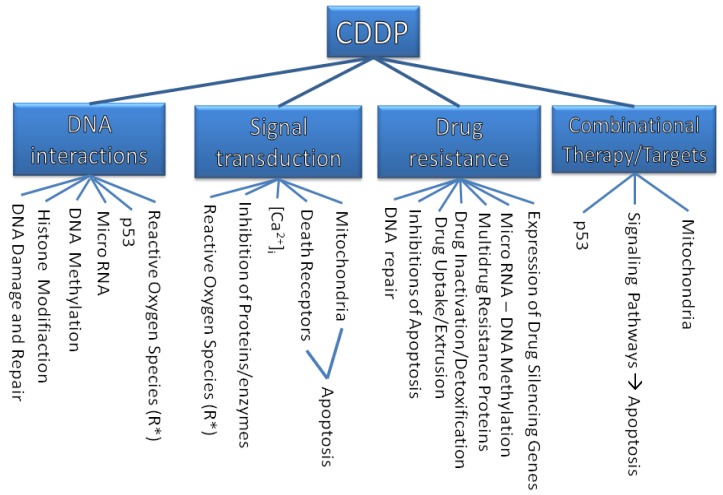
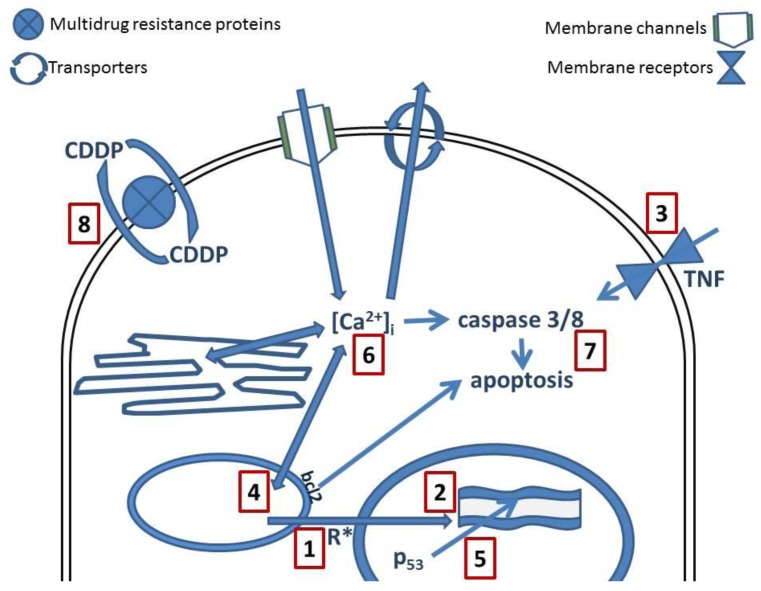
Platinum complexes are clinically used as adjuvant therapy of cancers aiming to induce tumor cell death. Depending on cell type and concentration, cisplatin induces cytotoxicity, e.g., by interference with transcription and/or DNA replication mechanisms. Additionally, cisplatin damages tumors via induction of apoptosis, mediated by the activation of various signal transduction pathways, including calcium signaling, death receptor signaling, and the activation of mitochondrial pathways. Unfortunately, neither cytotoxicity nor apoptosis are exclusively induced in cancer cells, thus, cisplatin might also lead to diverse side-effects such as neuro- and/or renal-toxicity or bone marrow-suppression. Moreover, the binding of cisplatin to proteins and enzymes may modulate its biochemical mechanism of action. While a combination-chemotherapy with cisplatin is a cornerstone for the treatment of multiple cancers, the challenge is that cancer cells could become cisplatin-resistant. Numerous mechanisms of cisplatin resistance were described including changes in cellular uptake, drug efflux, increased detoxification, inhibition of apoptosis and increased DNA repair. To minimize cisplatin resistance, combinatorial therapies were developed and have proven more effective to defeat cancers. Thus, understanding of the biochemical mechanisms triggered by cisplatin in tumor cells may lead to the design of more efficient platinum derivates (or other drugs) and might provide new therapeutic strategies and reduce side effects.
Overview
The claims and statistics of this paper haven’t been checked yet.
Free: it reads the open-access text and checks the first 5 claims that cite a source we can check. Create a free account to check every claim.
Integrity signals
Registry
Cites
Statistics
Figures
Verification
Claims the paper makes
The claims and statistics of this paper haven’t been checked yet.
Free: it reads the open-access text and checks the first 5 claims that cite a source we can check. Create a free account to check every claim.
Claims other papers make about this one
Each is checked against this paper’s own text: does it say what the citing paper says it does?
The source backs part of the claim, not all of it — or backs it for a different population, condition or comparison.
In the citing paper
“Platinum anticancer drugs, such as cisplatin, the most potent member of the platinum drug family, penetrate into the nucleus of cancer cells and form adducts with DNA leading to apoptosis [4].”
From Co-delivery of Paclitaxel and Cisplatin in Poly(2-oxazoline) Polymeric Micelles: Implications for Drug Loading, Release, Pharmacokinetics and Outcome of Ovarian and Breast Cancer Treatments (2019) · cites this paper as [4]
Experimental — accuracy not yet measured
Self-check
Percentages, sums and reported differences re-computed from the paper’s own numbers.
The self-check needs the paper’s full text.
Citations
Cites
1 retracted
Mohammad, R. M., Banerjee, S., Li, Y., Aboukameel, A., Küçük, Ö., & Sarkar, F. H. (2006) · Cancer · doi:10.1002/cncr.21731 · Cited by 84
RetractedMechanisms of resistance to cisplatin
Kartalou, M., & Essigmann, J. M. (2001) · Mutation Research - Fundamental and Molecular Mechanisms of Mutagenesis · doi:10.1016/s0027-5107(01)00141-5 · Cited by 869 · cited 7×
“While the knowledge of the mechanism of action of CDDP has improved our understanding of resistance [70], the mechanism of decreased intracellular accumulation of CDDP is not well understood.”
BackgroundInfluentialLebwohl, D., & Canetta, R. (1998) · European Journal of Cancer · doi:10.1016/s0959-8049(98)00224-x · Cited by 754 · cited 4×
“The research concentrated on platinum analogues focuses on two strategies: expanding the utilization of platinum therapy to other tumor types not usually treated with platinum compounds, while another area of research represents novel routes of administration [7].”
BackgroundMethodInfluentialCellular and molecular pharmacology of oxaliplatin.
Raymond, É., Faivre, S. J., Chaney, S. G., WOYNAROWSKI, J. M., & Cvitkovic, E. (2002) · PubMed · Cited by 576
Novel Metals and Metal Complexes as Platforms for Cancer Therapy
Frezza, M., Hindo, S., Chen, D., Davenport, A., Schmitt, S., Tomco, D., & Ping Dou, Q. (2010) · Current Pharmaceutical Design · doi:10.2174/138161210791209009 · Cited by 552 · cited 2×
“Nevertheless, metal compounds are potential candidates as anticancer agents [1].”
BackgroundThe Role of Cellular Accumulation in Determining Sensitivity to Platinum-Based Chemotherapy
Hall, M. D., Okabe, M., Shen, D.-W., Liang, X.-J., & Gottesman, M. M. (2008) · Annual Review of Pharmacology and Toxicology · doi:10.1146/annurev.pharmtox.48.080907.180426 · Cited by 474 · cited 2×
“, diffusion) only, but there is an active transport system involved [73].”
BackgroundMolecular mechanisms involved in cisplatin cytotoxicity
Jordan, P., & Carmo-Fonseca*, M. (2000) · Cellular and Molecular Life Sciences · doi:10.1007/pl00000762 · Cited by 398 · cited 2×
“Due to a shielding effect caused by these proteins, the CDDP-modified DNA is poorly repaired, resulting DNA damage triggers cell-cycle arrest and apoptosis [28].”
BackgroundRecognition and processing of cisplatin- and oxaliplatin-DNA adducts
Chaney, S. G., Campbell, S. L., Bassett, E., & Wu, Y. (2005) · Critical Reviews in Oncology/Hematology · doi:10.1016/j.critrevonc.2004.08.008 · Cited by 396 · cited 1×
“contribute to the differences in cytotoxicity and tumor range of CDDP and oxaliplatin [31].”
BackgroundParticular aspects of platinum compounds used at present in cancer treatment
Desoize, B., & Madoulet, C. (2002) · Critical Reviews in Oncology/Hematology · doi:10.1016/s1040-8428(01)00219-0 · Cited by 393 · cited 7×
“The hope is that the drugs will work together, producing synergistic or at least additive effects in killing cancer cells, while producing no additional side effects [3].”
BackgroundInfluentialModifications of DNA by platinum complexes
Brabec, V., & Kasparkova, J. (2005) · Drug Resistance Updates · doi:10.1016/j.drup.2005.04.006 · Cited by 373 · cited 4×
“Drug resistance is a major complication in cancer chemotherapy and accounts for the failure of chemotherapy to cure the majority of cancer patients [33,69].”
BackgroundInfluential
Research works printed but not linked: 2
- Chattopadhyay S. Machado-Pinilla R. Manguan-Garcia C. Belda-Iniesta C. Moratilla C. Cejas P. Fresno-Vara J.A. de Castro-Carpeno J. Casado E. Nistal M. Gonzalez-Che C.M. Siu F.M. Metal complexes in medicine with a focus on enzyme inhibition Curr. Opin. Chem. Biol. 2010 14 255 261 20018553 · DOI · Paper page
- Florea A.-M. Büsselberg D. Cisplatin as an anti-tumour drug: Cellular mechanisms of activity, drug resistance and induced side effects Cancers 2011 in press PMC3756417 24212665
Cited by
Items 501–600 of 1,000
Reigosa, F., Raposo, L. R., Munín‐Cruz, P., Pereira, M. T., Roma‐Rodrigues, C., Baptista, P. V., Fernandes, A. R., & Vila, J. M. (2021) · Inorganic Chemistry · doi:10.1021/acs.inorgchem.0c03763 · Cited by 29
Advances in technical strategies for monitoring the reduction of platinum( iv ) complexes
Chen, S., Zhou, Q., Ng, K.-Y., Xu, Z., Xu, W., & Zhu, G. (2024) · Inorganic Chemistry Frontiers · doi:10.1039/d4qi00459k · Cited by 28
“1,19,20 These challenges present substantial obstacles to the e ff ectiveness of Pt( II )-based antitumor therapy.”
Soni, H., Matthews, A. T., Pallikkuth, S., Gangaraju, R., & Adebiyi, A. (2018) · Journal of Cellular and Molecular Medicine · doi:10.1111/jcmm.13926 · Cited by 30
“is noteworthy due to its association with poor clinical outcomes including therapeutic failure and cancer recurrence.(2,3,5) Apart from chemoresistance, cisplatin therapy is beset with marked adverse effects that hamper its clinical use.”
BackgroundXing, J., Mi, X.-J., Hou, J., Cai, E., Zheng, S., Wang, S., Wang, Z., Chen, C., & Li, W. (2022) · Phytotherapy Research · doi:10.1002/ptr.7405 · Cited by 29
Chen, H., Sun, R., Zheng, J., Kawazoe, N., Yang, Y., & Chen, G. (2022) · Journal of Materials Chemistry B · doi:10.1039/d2tb00993e · Cited by 29
The Distinct Roles of LKB1 and AMPK in p53-Dependent Apoptosis Induced by Cisplatin
Shimada, T., Yabuki, Y., Noguchi, T., Tsuchida, M., Komatsu, R., Hamano, S., Yamada, M., Ezaki, Y., Hirata, Y., & Matsuzawa, A. (2022) · International Journal of Molecular Sciences · doi:10.3390/ijms231710064 · Cited by 29
“However, there is a critical problem in that its toxicity sometimes perturbs cellular homeostasis in normal cells, and thereby initiates various side effects [19].”
BackgroundLopes, É. D. O., Oliveira, C. G., da Silva, P. B., Eismann, C. E., Suárez, C., Menegário, A. A., Leite, C. Q. F., Deflon, V. M., & Pavan, F. R. (2016) · International Journal of Molecular Sciences · doi:10.3390/ijms17050781 · Cited by 28
“Thus, se eral drug resistance mechanisms, including drug efflux, inhibition of apoptosis, and increased DNA repair, have been studied and described [10].”
Chu, H.-Y., Wang, W., Chen, X., Jiang, Y.-E., Cheng, R., Xiao, Q., Zhong, Z.-M., Zeng, M., Zhu, X., & Sun, C. (2018) · Cancer Letters · doi:10.1016/j.canlet.2018.03.003 · Cited by 28
Rjeibi, I., Feriani, A., Saad, A. B., Sdayria, J., Saidi, I., Ncib, S., Souid, S., Allagui, M. S., & Hfaïedh, N. (2018) · Oxidative Medicine and Cellular Longevity · doi:10.1155/2018/1630751 · Cited by 28
The effects of N-acetylcysteine on cisplatin induced cardiotoxicity
Güntürk, E. E., Yucel, B., Güntürk, İ., Yazıcı, C., Yay, A., & Köse, K. (2019) · Bratislavské lekárske listy/Bratislava medical journal · doi:10.4149/bll_2019_068 · Cited by 28
“Since it has been reported that cisplatin induces oxidative damage in various tissues (2), it seems reasonable to investigate NAC supplementation as potential therapeutic approach for the attenuation of cisplatin toxicities.”
InfluentialÖzdemir, İ., Çiftçi, O., Evren, E., Gürbüz, N., Kaloğlu, N., Türkmen, N. B., Yaşar, Ş., Üstün, E., Hamdi, N., Mansour, L. A., et al. (2020) · Inorganica Chimica Acta · doi:10.1016/j.ica.2020.119530 · Cited by 28
Arshad, N., Abbas, N., Perveen, F., Mirza, B., Almuhaini, A. M., & Alkahtani, S. H. (2021) · Journal of Saudi Chemical Society · doi:10.1016/j.jscs.2021.101323 · Cited by 28
Recent trends in the design and delivery strategies of ruthenium complexes for breast cancer therapy
Das, U., Basu, U., & Paira, P. (2024) · Dalton Transactions · doi:10.1039/d4dt01482k · Cited by 27
Sorhie, V., Lotha, T. N., Mal, S., Das, S. K., Jamir, L., & Bharali, P. (2025) · Tetrahedron · doi:10.1016/j.tet.2025.134626 · Cited by 28
Conductive nanoparticles improve cell electropermeabilization
Ghorbel, A., Mir, L. M., & García-Sánchez, T. (2019) · Nanotechnology · doi:10.1088/1361-6528/ab3be9 · Cited by 27
Phytochemicals and Cytotoxicity of Quercus infectoria Ethyl Acetate Extracts on Human Cancer Cells
Yusof, W. N. S. W., & Abdullah, H. (2020) · Tropical Life Sciences Research · doi:10.21315/tlsr2020.31.1.5 · Cited by 27
“For example, gallotannic acid (tannin) which present as real constituent of QI galls has been uncovered to show antimutagenic, anticancer and cancer prevention agent properties (Srivastava et al. 2000; Gao et al. 2018).”
BackgroundEl‐Garawani, I. M., El-Sabbagh, S. M., Abbas, N. H., Ahmed, H. S., Eissa, O. A., Abo‐Atya, D. M., Khalifa, S. A. M., & El-Seedi, H. R. (2020) · Scientific Reports · doi:10.1038/s41598-020-70945-8 · Cited by 28
RetractedJiang, Y., Liu, Y., Wang, M., Li, Z., Su, L., Xu, X., Xing, C., Li, J., Lin, L., Lü, C., et al. (2021) · ACS Applied Materials & Interfaces · doi:10.1021/acsami.1c20898 · Cited by 28
Sun, T., Wang, D., Wang, B., Liu, X., Li, N., & Shi, K. (2022) · Food and Chemical Toxicology · doi:10.1016/j.fct.2022.112970 · Cited by 27
Date, T., Kuche, K., Chaudhari, D., Ghadi, R., Sahel, D. K., Chitkara, D., & Jain, S. (2022) · ACS Biomaterials Science & Engineering · doi:10.1021/acsbiomaterials.1c01582 · Cited by 27
Boosting cisplatin chemotherapy by nanomotor-enhanced tumor penetration and DNA adducts formation
Xu, L., Zhang, K., Ma, X., Li, Y., Jin, Y., Liang, C., Wang, Y., Duan, W., Zhang, Z., Zhang, Z., et al. (2022) · Journal of Nanobiotechnology · doi:10.1186/s12951-022-01622-3 · Cited by 29
“Introduction Due to the antitumor broad-spectrum, cisplatin (cisdiamminedichloroplatinum [CDDP]) remains the frontline therapy against various cancers, whose main pharmacological effect is to inhibit DNA replication by forming Pt–DNA adducts, thus leading to apoptosis of tumor cells [1, 2].”
BackgroundFan, J., Xu, X., Li, Y., Zhang, L., Miao, M., Niu, Y., Zhang, Y., Zhang, A., Jia, Z., & Wu, M. (2022) · Free Radical Biology and Medicine · doi:10.1016/j.freeradbiomed.2022.11.029 · Cited by 29
Ehrlich, M., & Carell, T. (2012) · European Journal of Organic Chemistry · doi:10.1002/ejoc.201201256 · Cited by 27
Wang, Y., Molin, D. G. M., Sevrin, C., Grandfils, C., van den Akker, N. M. S., Gagliardi, M., Knetsch, M. L. W., Delhaas, T., & Koole, L. H. (2016) · International Journal of Pharmaceutics · doi:10.1016/j.ijpharm.2016.03.002 · Cited by 29
Mattheolabakis, G., Ling, D., Ahmad, G., & Amiji, M. M. (2016) · Pharmaceutical Research · doi:10.1007/s11095-016-2016-z · Cited by 27
“The development of resistance by the tumors cells has been associated with epigenetic changes in the tumor cells that result in alterations in the expression of several proteins, surface receptors, microRNAs and other (5).”
BackgroundEfficacy of safranal to cisplatin-induced nephrotoxicity
Karafakıoğlu, Y. S., Bozkurt, M. F., Hazman, Ö., & Fidan, A. F. (2017) · Biochemical Journal · doi:10.1042/bcj20160971 · Cited by 29
Youm, I., West, M., Li, W., Du, X., Ewert, D. L., & Kopke, R. D. (2017) · International Journal of Pharmaceutics · doi:10.1016/j.ijpharm.2017.06.035 · Cited by 27
Gao, L., Cai, S., Cai, A., Zhao, Y., Xu, T., Ma, Y., Xu, Y., Wang, Y., Wang, H., & Hu, Y. (2019) · Drug Delivery · doi:10.1080/10717544.2019.1574938 · Cited by 29
Pro-apoptotic functions of TRAF2 in p53-mediated apoptosis induced by cisplatin
Tsuchida, M., Yokosawa, T., Noguchi, T., Shimada, T., Yamada, M., Sekiguchi, Y., Hirata, Y., & Matsuzawa, A. (2020) · The Journal of Toxicological Sciences · doi:10.2131/jts.45.219 · Cited by 27
“Meanwhile, its strong cytotoxicity frequently dysregulates diverse cellular functions in normal cells, and thereby causes a wide variety of side effects, including bone marrow suppression, deafness, renal dysfunction, and vomiting (Florea and Büsselberg, 2011).”
Jakob, C. H. G., Dominelli, B., Hahn, E. M., Berghausen, T., Pinheiro, T., Marques, F., Reich, R. M., Correia, J. D. G., & Kühn, F. E. (2020) · Chemistry - An Asian Journal · doi:10.1002/asia.202000620 · Cited by 27
The ameliorative effects of methylene blue on testicular damage induced by cisplatin in rats
Jourabi, F. G., Yari, S., Amiri, P., Heidarianpour, A., & Hashemi, H. (2020) · Andrologia · doi:10.1111/and.13850 · Cited by 27
“However, clinical uses of CP are restricted due to severe side effects like nephrotoxicity, ototoxicity, hepatotoxicity and neurotoxicity (Florea & Büsselberg, 2011).”
BackgroundXue, Z., Lui, V. W. Y., Li, Y., Jia, L., You, C., Li, X., Piao, W., Yuan, H., Khong, P. L., Lo, K. W., et al. (2020) · Journal of Experimental & Clinical Cancer Research · doi:10.1186/s13046-020-01763-z · Cited by 30
Silva, V. A. O., Alves, A. L. V., Rosa, M. N., Silva, L. R. V., Melendez, M. E., Cury, F. P., Gomes, I. N. F., Tansini, A., Longato, G. B., Martinho, O., et al. (2018) · Investigational New Drugs · doi:10.1007/s10637-018-0657-y · Cited by 26
Activating p53 family member TAp63: A novel therapeutic strategy for targeting p53‐altered tumors
Gunaratne, P. H., Pan, Y., Rao, A. K., Lin, C., Hernández-Herrera, A., Liang, K., Rait, A. S., Venkatanarayan, A., Benham, A. L., Rubab, F., et al. (2019) · Cancer · doi:10.1002/cncr.32053 · Cited by 26
“Cisplatin (CDDP) is a first-line chemotherapeutic agent used to treat OVCA.(2,3) The 5-year survival rate for patients with OVCA is 92% if it is diagnosed when the cancer is localized, 72% when it has spread to lymph nodes, 27% when it has metastasized to distant sites, and 22% when it is unstaged”
BackgroundEisa, N. H., El‐Sherbiny, M., & El‐Magd, N. F. A. (2021) · International Immunopharmacology · doi:10.1016/j.intimp.2021.107925 · Cited by 27
Komarnicka, U. K., Pucelik, B., Wojtala, D. B., Lesiów, M. K., Stochel, G., & Kyzioł, A. (2021) · Scientific Reports · doi:10.1038/s41598-021-03352-2 · Cited by 27
Yuan, Y., Shi, C., Wu, X., Li, W., Huang, C., Liang, L., Chen, J., Wang, Y., & Liu, Y. (2022) · Journal of Inorganic Biochemistry · doi:10.1016/j.jinorgbio.2022.111820 · Cited by 26
Mehan, S., Arora, N., Bhalla, S., Khan, A., Rehman, M. U., Alghamdi, B. S. A., Zughaibi, T. A., & Ashraf, G. M. (2022) · Molecules · doi:10.3390/molecules27113561 · Cited by 27
Molecular mechanisms underlying the regulation of tumour suppressor genes in lung cancer
Jy, L., Bhandare, R. R., Boddu, S. H. S., SHAIK, A. B., Saktivel, L. P., Gupta, G., Negi, P., Barakat, M. M., Singh, S. K., Dua, K., et al. (2024) · Biomedicine & Pharmacotherapy · doi:10.1016/j.biopha.2024.116275 · Cited by 27
Zhou, X., Wang, Q., Lei, Z., Zhang, K., Zhen, S., Yao, H., & Zu, Y. (2024) · ACS Omega · doi:10.1021/acsomega.3c09987 · Cited by 32
Ramírez‐Rave, S., Ramírez‐Apán, M. T., Tlahuext, H., Morales‐Morales, D., Toscano, R. A., & Jean-Michel Grévy, M. (2016) · Journal of Organometallic Chemistry · doi:10.1016/j.jorganchem.2016.04.022 · Cited by 26
Gattuso, H., Dumont, E. E., Marazzi, M., & Monari, A. (2016) · Physical Chemistry Chemical Physics · doi:10.1039/c6cp02592g · Cited by 27
Yousuf, I., & Arjmand, F. (2016) · Journal of Photochemistry and Photobiology B Biology · doi:10.1016/j.jphotobiol.2016.09.016 · Cited by 26
Skowron, M. A., Sathe, A., Romano, A., Hoffmann, M. J., Schulz, W. A., van Koeveringe, G. A., Albers, P., Nawroth, R., & Niegisch, G. (2017) · Urologic Oncology Seminars and Original Investigations · doi:10.1016/j.urolonc.2017.05.003 · Cited by 26
Jakubowski, M., Łakomska, I., Sitkowski, J., & Wísniewska, J. (2018) · New Journal of Chemistry · doi:10.1039/c8nj01199k · Cited by 26
Khan, S., Zafar, A., & Naseem, I. (2018) · Chemico-Biological Interactions · doi:10.1016/j.cbi.2018.05.010 · Cited by 28
Saral, S., Dokumacıoğlu, E., Mercantepe, T., Atak, M., Çınar, S., Saral, Ö., Yıldız, L., İskender, H., & Tümkaya, L. (2019) · Biomedicine & Pharmacotherapy · doi:10.1016/j.biopha.2019.108604 · Cited by 28
Saad, K. M., Abdelrahman, R. S., & Said, E. (2020) · Environmental Toxicology and Pharmacology · doi:10.1016/j.etap.2020.103334 · Cited by 26
Jose, P. A., Sankarganesh, M., Raja, J. D., & Senthilkumar, G. S. (2020) · Journal of Molecular Liquids · doi:10.1016/j.molliq.2020.112821 · Cited by 26
Althurwi, S. I., Yu, J., Beale, P. J., & Huq, F. (2020) · International Journal of Molecular Sciences · doi:10.3390/ijms21207500 · Cited by 27
“Combination treatments [4] with tumour active plant based compounds that have atypical mechanisms of action, and minor or no side effects, can provide a means to overcome drug resistance [5].”
BackgroundUncovering the Effect of Passage Number on HT29 Cell Line Based on the Cell Metabolomic Approach
Cao, J., Wu, X., Qin, X., & Li, Z. (2021) · Journal of Proteome Research · doi:10.1021/acs.jproteome.0c00806 · Cited by 27
Zhang, Y., Zhou, Y., Zhang, H., Li, T. X., Hao, J. C., Yuan, Y., Li, W., & Liu, Y. (2021) · Journal of Inorganic Biochemistry · doi:10.1016/j.jinorgbio.2021.111580 · Cited by 25
Role of Mitochondrial Dysfunction in the Pathogenesis of Cisplatin-Induced Myotube Atrophy
Matsumoto, C., Sekine, H., Nahata, M., Mogami, S., Ohbuchi, K., Fujitsuka, N., & Takeda, H. (2022) · Biological and Pharmaceutical Bulletin · doi:10.1248/bpb.b22-00171 · Cited by 25
Rahman, M. M., Islam, M. R., Akash, S., Hossain, M. E., Tumpa, M. A. A., Ishtiaque, G. M. A., Ahmed, L., Rauf, A., Khalil, A. A., Abdulmonem, W. A., et al. (2023) · Heliyon · doi:10.1016/j.heliyon.2023.e18090 · Cited by 26
RetractedRevolutionizing anticancer treatment: Ruthenium-based nanoplatforms pave new paths
Karati, D., Meur, S., Mukherjee, S., & Roy, S. (2024) · Coordination Chemistry Reviews · doi:10.1016/j.ccr.2024.216118 · Cited by 27
Xu, Y., LI, D., Zeng, L., Wang, C., Zhang, L., Wang, Y., Yu, Y., LIU, S., & Li, Z. (2014) · Molecular Medicine Reports · doi:10.3892/mmr.2014.2683 · Cited by 25
“The side effects and acquired drug resistance that occur during cisplatin treatment limit its clinical use (1-3).”
Reddy, E. R., Trivedi, R., Sarma, A. V. S., Sridhar, B., Anantaraju, H. S., Sriram, D., Yogeeswari, P., & Nagesh, N. (2015) · Dalton Transactions · doi:10.1039/c5dt03266k · Cited by 25
Ghoshal, A., Goswami, U., Sahoo, A. K., Chattopadhyay, A., & Ghosh, S. S. (2015) · ACS Biomaterials Science & Engineering · doi:10.1021/acsbiomaterials.5b00305 · Cited by 26
Repich, H. H., Orysyk, V. V., Palchykovska, L. G., Orysyk, S. I., Zborovskii, Y. L., Vasylchenko, O. V., Storozhuk, O. V., Biluk, A. A., Nikulina, V. V., Garmanchuk, L., et al. (2016) · Journal of Inorganic Biochemistry · doi:10.1016/j.jinorgbio.2016.12.004 · Cited by 26
Baul, T. S. B., Dutta, D., Duthie, A., Prasad, R., Rana, N. K., Koch, B., & Tiekink, E. R. T. (2017) · Journal of Inorganic Biochemistry · doi:10.1016/j.jinorgbio.2017.04.020 · Cited by 26
Spreckelmeyer, S., Estrada‐Ortiz, N., Prins, G. H., van der Zee, M., Gammelgaard, B., Stürup, S., de Graaf, I. A. M., Groothuis, G. M. M., & Casini, A. (2017) · Metallomics · doi:10.1039/c7mt00271h · Cited by 25
Tang, C., Luo, H., Luo, D., Yang, H., & Zhou, X. (2017) · Oncology Reports · doi:10.3892/or.2017.6109 · Cited by 26
Choo, K. B., Mah, W. L., Lee, S. M., Lee, W.-L., & Cheow, Y. L. (2018) · Applied Organometallic Chemistry · doi:10.1002/aoc.4377 · Cited by 25
Mondal, J., Patra, M., Panigrahi, A. K., & Khuda‐Bukhsh, A. R. (2018) · Journal of Ayurveda and Integrative Medicine · doi:10.1016/j.jaim.2017.11.002 · Cited by 25
“It has also been reported that both p53 dependent expression of caspases-cascade and p53-independent activation of caspases [11] through Bax/Bcl2 mediated release of cytochrome C contribute to Cisplatin induced cellular death [12].”
BackgroundRehm, T., Rothemund, M., Bär, A., Dietel, T., Kempe, R., Kostrhunová, H., Brabec, V., Kašpárková, J., & Schobert, R. (2018) · Dalton Transactions · doi:10.1039/c8dt03360a · Cited by 26
Hydrogen peroxide in the reactions of cancer cells to cisplatin
Nerush, A. S., Shchukina, K. M., Balalaeva, I. V., & Orlova, A. (2019) · Biochimica et Biophysica Acta (BBA) - General Subjects · doi:10.1016/j.bbagen.2019.01.013 · Cited by 28
Bhatti, M. Z., Ali, A., Duong, H., Chen, J., & Rahman, F. (2019) · Journal of Inorganic Biochemistry · doi:10.1016/j.jinorgbio.2019.01.019 · Cited by 27
Carfilzomib enhances cisplatin-induced apoptosis in SK-N-BE(2)-M17 human neuroblastoma cells
Lee, S.-I., Jeong, Y. J., Yu, A.-R., Kwak, H.-J., Cha, J.-Y., Kang, I., & Yeo, E. (2019) · Scientific Reports · doi:10.1038/s41598-019-41527-0 · Cited by 25
Interaction of curcumin on cisplatin cytotoxicity in HeLa and HepG2 carcinoma cells
Becit, M., DİLSİZ, S. A., & Başaran, N. (2020) · Istanbul Journal of Pharmacy · doi:10.26650/istanbuljpharm.2020.0039 · Cited by 25
One-step synthesis of silver metallosurfactant as an efficient antibacterial and anticancer material
Kaur, G., Kumar, S., Kant, R., Bhanjana, G., Dilbaghi, N., Guru, S. K., Bhushan, S., & Jaglan, S. (2016) · RSC Advances · doi:10.1039/c6ra09677h · Cited by 25
Arsenijević, M., Milovanović, M., Jovanović, S., Arsenijevic, N., Marković, B. S., Gazdic, M., & Volarević, V. (2017) · JBIC Journal of Biological Inorganic Chemistry · doi:10.1007/s00775-017-1459-y · Cited by 25
Tayeh, Z., & Ofir, R. (2018) · International Journal of Molecular Sciences · doi:10.3390/ijms19082219 · Cited by 26
“However, these anti-cancer strategies were not particularly specific for cancer [7,8] and chemotherapeutic agents”
BackgroundA new gold(I) complex-Au(PPh3)PT is a deubiquitinase inhibitor and inhibits tumor growth
Li, X., Huang, Q., Long, H., Zhang, P., Su, H., & Liu, J. (2018) · EBioMedicine · doi:10.1016/j.ebiom.2018.11.047 · Cited by 28
“While cisplatin has been commonly used for treatment of several types of solid tumors, its clinical application has been associated with severe side effects: drug resistance and reoccurrence of malignancies [33].”
BackgroundMethodZia, M. K., Siddiqui, T., Ali, S. S., Ahsan, H., & Khan, F. H. (2018) · International Journal of Biological Macromolecules · doi:10.1016/j.ijbiomac.2018.05.041 · Cited by 24
Zhang, X., Liu, D., Lv, F., Yu, B., Shen, Y., & Cong, H. (2019) · Colloids and Surfaces B Biointerfaces · doi:10.1016/j.colsurfb.2019.110373 · Cited by 24
Wolff, C. M., Steuer, A., Stoffels, I., von Woedtke, T., Weltmann, K., Bekeschus, S., & Kolb, J. F. (2019) · Clinical Plasma Medicine · doi:10.1016/j.cpme.2020.100096 · Cited by 25
Gupta, P. K., & Mishra, L. (2020) · Nanoscale Advances · doi:10.1039/d0na00051e · Cited by 24
Intersection of Inorganic Chemistry and Nanotechnology for the Creation of New Cancer Therapies
Shah, A. S., Surnar, B., Kolishetti, N., & Dhar, S. (2022) · Accounts of Materials Research · doi:10.1021/accountsmr.1c00178 · Cited by 24
Brunner, T. F., Probst, F., Troeltzsch, M., Schwenk‐Zieger, S., Zimmermann, J. L., Morfill, G. E., Becker, S., Harréus, U., & Welz, C. (2022) · Head & Face Medicine · doi:10.1186/s13005-022-00322-5 · Cited by 24
The current status in computational exploration of Pt( iv ) prodrug activation by reduction
Ponte, F., Scoditti, S., Mazzone, G., & Sicilia, E. (2023) · Physical Chemistry Chemical Physics · doi:10.1039/d3cp01150j · Cited by 24
Costanzo, V., Ratre, Y. K., Andretta, E., Acharya, R. K., Bhaskar, L. V., & Verma, H. K. (2024) · Current Treatment Options in Oncology · doi:10.1007/s11864-023-01175-z · Cited by 25
Liu, Y., Bai, Q., Pang, N., & Xue, J. (2024) · Cell Biology International · doi:10.1002/cbin.12211 · Cited by 24
“However, a considerable number of patients develop chemotherapy resistance after several rounds of chemotherapy, resulting in poor treatment results (Florea & Büsselberg, 2011).”
Preparation and evaluation of a novel liposomal formulation of cisplatin
Zhou, X., Wang, J., Wu, J., Yang, X., Yung, B. C., Lee, L. J., & Lee, R. J. (2014) · European Journal of Pharmaceutical Sciences · doi:10.1016/j.ejps.2014.10.004 · Cited by 24
Laforce, B., Carlier, C., Vekemans, B., Villanova, J., Tucoulou, R., Ceelen, W. P., & Vincze, L. (2016) · Scientific Reports · doi:10.1038/srep29999 · Cited by 27
Wang, X., Cheng, Y., Wang, K.-L., Liu, R., Yang, X., Wen, H., Chai, C., Liang, J., & Wu, H. (2016) · Cancer Science · doi:10.1111/cas.13029 · Cited by 26
Kolokotroni, E. A., Dionysiou, D. D., Veith, C., Kim, Y.-J., Sabczynski, J., Franz, A., Grgic, A., Palm, J., Bohle, R. M., & STAMATAKOS, G. S. (2016) · PLoS Computational Biology · doi:10.1371/journal.pcbi.1005093 · Cited by 25
Withania somnifera Root Extract Enhances Chemotherapy through ‘Priming’
Henley, A. B., Yang, L., Chuang, K.-L., Sahuri-Arisoylu, M., Wu, L.-H., Bligh, S. W. A., & Bell, J. D. (2017) · PLoS ONE · doi:10.1371/journal.pone.0170917 · Cited by 25
Moharana, P., Ghosh, D., & Paira, P. (2020) · Inorganic Chemistry Communications · doi:10.1016/j.inoche.2020.108364 · Cited by 24
A Logic AND-Gated Sonogene Nanosystem for Precisely Regulating the Apoptosis of Tumor Cells
Wang, T., Wang, H., Pang, G., He, T., Yu, P., Cheng, G., Zhang, Y., & Chang, J. K. (2020) · ACS Applied Materials & Interfaces · doi:10.1021/acsami.0c13453 · Cited by 24
Acharya, S., Maji, M., Chakraborty, M. P., Bhattacharya, I., Das, R., Gupta, A., & Mukherjee, A. (2021) · Inorganic Chemistry · doi:10.1021/acs.inorgchem.0c03820 · Cited by 24
Lupidi, G., Avenali, L., Bramucci, M., Quassinti, L., Pettinari, R., Khalife, H. K., Gali‐Muhtasib, H. U., Marchetti, F., & Pettinari, C. (2013) · Journal of Inorganic Biochemistry · doi:10.1016/j.jinorgbio.2013.03.014 · Cited by 24
Ivanović, I., Jovanović, K., Gligorijević, N., Radulovic, S. S., Arion, V. B., Sheweshein, K. S. A. M., Tešić, Ž., & Grgurić‐Šipka, S. (2013) · Journal of Organometallic Chemistry · doi:10.1016/j.jorganchem.2013.10.023 · Cited by 24
Zhang, Z., Zhang, Y., Qin, X., Wang, Y., & Fu, J. F. (2019) · Experimental and Therapeutic Medicine · doi:10.3892/etm.2019.8399 · Cited by 27
“Chemotherapy using agents such as cisplatin and oxaliplatin is the conventional treatment approach for colorectal cancer patients (2,3); however development of chemoresistance frequently occurs leading to a mortality rate of >33% in developed countries (4).”
Backgroundαvβ3 Integrin Antagonists Enhance Chemotherapy Response in an Orthotopic Pancreatic Cancer Model
Coskun, M. D., Sudha, T., Bharali, D. J., Çelikler, S., Davis, P. J., & Mousa, S. A. (2020) · Frontiers in Pharmacology · doi:10.3389/fphar.2020.00095 · Cited by 23
Cisplatin — properties and clinical application
Kopacz-Bednarska, A., & Król, T. (2022) · Oncology in Clinical Practice · doi:10.5603/ocp.2022.0020 · Cited by 23
Wu, X., Zhai, J., Huan, X., Xu, W., Tian, J., & Farhood, B. (2022) · Mini-Reviews in Medicinal Chemistry · doi:10.2174/1389557522666220907145153 · Cited by 26
Crosstalk between Ca2+ Signaling and Cancer Stemness: The Link to Cisplatin Resistance
Kouba, S., Hague, F., Ahidouch, A., & Ouadid‐Ahidouch, H. (2022) · International Journal of Molecular Sciences · doi:10.3390/ijms231810687 · Cited by 26
“Cisplatin was first synthesized in 1845 and, approximately 50 years later, its structure was established by Alfred Werner [3].”
BackgroundLarasati, L., Lestari, W. W., & Firdaus, M. (2022) · Bulletin of the Chemical Society of Japan · doi:10.1246/bcsj.20220218 · Cited by 23
DANCR Induces Cisplatin Resistance of Triple-Negative Breast Cancer by KLF5/p27 Signaling
Su, A., Yao, K., Zhang, H., Wang, Y., Zhang, H., & Tang, J. (2022) · American Journal Of Pathology · doi:10.1016/j.ajpath.2022.11.007 · Cited by 23
Selim, M. S., Kassem, A. B., El‐Bassiouny, N. A., Salahuddin, A., El‐Ela, R. Y. A., & Hamza, M. S. (2023) · Medical Oncology · doi:10.1007/s12032-022-01928-0 · Cited by 23
Metadata
- Authors
- Florea, A.-M., & Büsselberg, D.
- Affiliations
- Heinrich Heine University Düsseldorf (DE)
- Weill Cornell Medical College in Qatar (QA)
- Corresponding author
- Büsselberg, Dietrich
- ORCID
- Büsselberg, Dietrich
- Venue
- Cancers
- Publisher
- MDPI AG
- Published
- 2011-03-15
- Volume
- 3
- Issue
- 1
- Pages
- 1351-1371
- ISSN
- 2072-6694 (ISSN-L)
- PMC
- PMC3756417
- OpenAlex
- W2073131323
- Cited by
- 1,759
- References
- 83
- Citations by year
- 2026: 65 · 2025: 111 · 2024: 154 · 2023: 148 · 2022: 165 · 2021: 177 · 2020: 195 · 2019: 176 · 2018: 133 · 2017: 129 · 2016: 100 · 2015: 82 · 2014: 70 · 2013: 28 · 2012: 21
- FWCI
- 19.39
- Type
- journal article
- Language
- en
- Open access
- gold
- doi.org
- Licence
- Locations
- Cancers (publishedVersion, cc-by)
- Europe PMC (PubMed Central) (publishedVersion, other-oa)
- PubMed Central (publishedVersion, cc-by)
- PubMed (publishedVersion)
- DOAJ (DOAJ: Directory of Open Access Journals) (submittedVersion)
- Topics
- Health Sciences › Medicine › Oncology › Metal complexes synthesis and properties
- Life Sciences › Biochemistry, Genetics and Molecular Biology › Molecular Biology › Cancer therapeutics and mechanisms
- Life Sciences › Biochemistry, Genetics and Molecular Biology › Molecular Biology › Cell death mechanisms and regulation
- Keywords
- cisplatin, platinum complexes, apoptosis, DNA replication inhibition, calcium signaling, death receptor signaling, mitochondrial apoptosis, drug resistance, neurotoxicity, nephrotoxicity, myelosuppression, combination chemotherapy, DNA repair, drug efflux, cellular uptake, platinum derivatives
About these checks
Registry, retraction, Cites and statistics results are computed, not judged, with one exception: a printed reference that no index lists is read once by a model before it counts as a citation error. Claims are extracted by a model and kept only when their quote appears verbatim in the text; each cited source is then checked, with a model’s help, for whether it says what the claim relies on. Those verdicts can be wrong — read the claim’s quote and the cited source before relying on one.
Statistics and arithmetic are recomputed, not judged.
Confidence bands are shown only for fields calibrated on our annotated test set. None is calibrated yet, so no band is shown.
What counts as a claim ›How we measure confidence ›How we check this ›
Are you an author, or do you see a problem with this page? Request a review
Data sources
Bibliographic data: Semantic Scholar, OpenAlex, Crossref.
Contains information from the Semantic Scholar Academic Graph Datasets, made available under the ODC Attribution License (ODC-BY 1.0).
Semantic Scholar’s data is described in: Kinney, R., et al. (2023). The Semantic Scholar Open Data Platform. arXiv:2301.10140.
