

The Impact of COVID-19 on Physician Burnout Globally: A Review
Open accessThe DOI matches its Crossref record; 25 of the 25 references it cites were found in a registry or an index.
Abstract
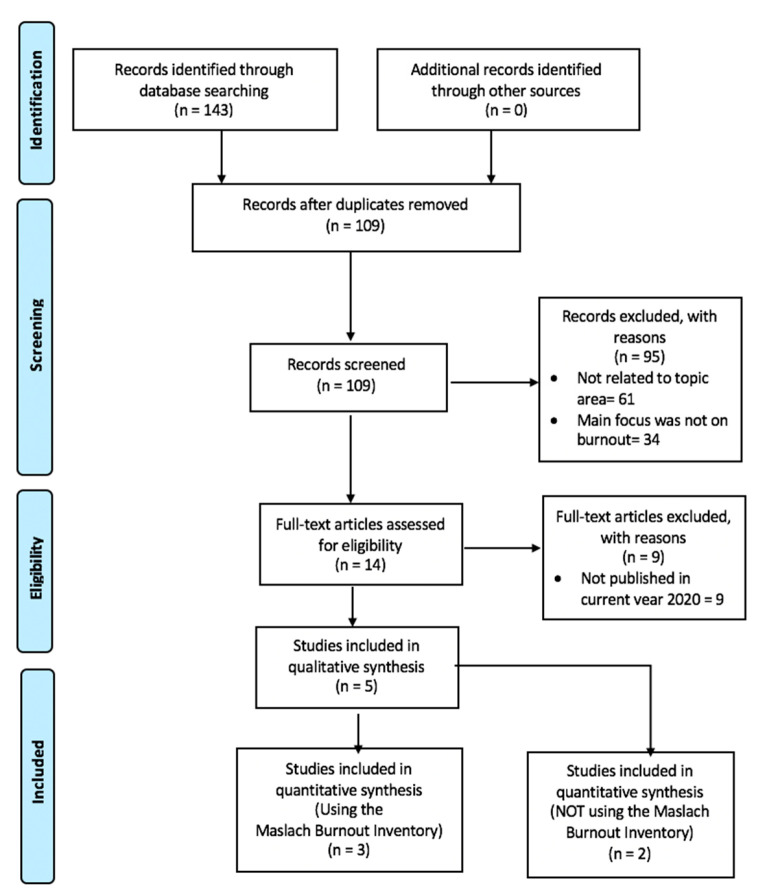
Background: The current pandemic, COVID-19, has added to the already high levels of stress that medical professionals face globally. While most health professionals have had to shoulder the burden, physicians are not often recognized as being vulnerable and hence little attention is paid to morbidity and mortality within this group. Objective: To analyse and summarise the current knowledge on factors/potential factors contributing to burnout amongst healthcare professionals amidst the pandemic. This review also makes a few recommendations on how best to prepare intervention programmes for physicians. Methods: In August 2020, a systematic review was performed using the database Medline and Embase (OVID) to search for relevant papers on the impact of COVID-19 on physician burnout–the database was searched for terms such as “COVID-19 OR pandemic” AND “burnout” AND “healthcare professional OR physician”. A manual search was done for other relevant studies included in this review. Results: Five primary studies met the inclusion criteria. A further nine studies were included which evaluated the impact of occupational factors (n = 2), gender differences (n = 4) and increased workload/sleep deprivation (n = 3) on burnout prior to the pandemic. Additionally, five reviews were analysed to support our recommendations. Results from the studies generally showed that the introduction of COVID-19 has heightened existing challenges that physicians face such as increasing workload, which is directly correlated with increased burnout. However, exposure to COVID-19 does not necessarily correlate with increased burnout and is an area for more research. Conclusions: There is some evidence showing that techniques such as mindfulness may help relieve burnout. However, given the small number of studies focusing on physician burnout amidst a pandemic, conclusions should be taken with caution. More studies are needed to support these findings.
Overview
The claims and statistics of this paper haven’t been checked yet.
Free: it reads the open-access text and checks the first 5 claims that cite a source we can check. Create a free account to check every claim.
Integrity signals
Registry
Cites
Statistics
Figures
Verification
Claims the paper makes
The claims and statistics of this paper haven’t been checked yet.
Free: it reads the open-access text and checks the first 5 claims that cite a source we can check. Create a free account to check every claim.
Claims other papers make about this one
Each is checked against this paper’s own text: does it say what the citing paper says it does?
The source backs part of the claim, not all of it — or backs it for a different population, condition or comparison.
In the citing paper
“MBI-HSS has been suggested by previous studies as the “instrument of choice” for assessing burnout.12 , 13”
From Burnout syndrome among residents of different surgical specialties in a tertiary referral teaching hospital in Indonesia during COVID-19 pandemic (2022) · cites this paper as [13]
Experimental — accuracy not yet measuredThe source backs part of the claim, not all of it — or backs it for a different population, condition or comparison.
In the citing paper
“Escalating this issue are high rates of absence and turnover, driven by an unprecedented level of physician and nurse burnout due to psychosocial stressors and occupational hazards such as exposure to infectious diseases, shiftwork, or ergonomic challenges, that place health care workers at risk for long-term mental and physical health consequences [6-9].”
From AI Interventions to Alleviate Healthcare Shortages and Enhance Work Conditions in Critical Care: Qualitative Analysis (2025) · cites this paper as [6]
Experimental — accuracy not yet measured
Self-check
Percentages, sums and reported differences re-computed from the paper’s own numbers.
The self-check needs the paper’s full text.
Citations
Cites
Shanafelt, T. D., Boone, S., Tan, L., Dyrbye, L. N., Sotile, W., Satele, D., West, C. P., Sloan, J., & Oreskovich, M. R. (2012) · Archives of Internal Medicine · doi:10.1001/archinternmed.2012.3199 · Cited by 3,439 · cited 4×
“agree that having a partner or being married was associated with a decreased risk of burnout [6].”
BackgroundInfluentialAssessing Risk of Bias in Included Studies
Higgins, J. P., & Altman, D. G. (2008) · Cochrane Handbook for Systematic Reviews of Interventions · doi:10.1002/9780470712184.ch8 · Cited by 3,396 · cited 2×
“In order to assess the risk of bias, we used the Cochrane Manual for Systematic Intervention Review [22] as a guide; any discrepancies were discussed and agreed between the authors.”
MethodShanafelt, T., Ripp, J., & Trockel, M. (2020) · JAMA · doi:10.1001/jama.2020.5893 · Cited by 1,956 · cited 3×
“Being busy was often cited as a reason for not being able to be part of the study [21].”
BackgroundInfluentialKrasner, M. S. (2009) · JAMA · doi:10.1001/jama.2009.1384 · Cited by 1,650 · cited 2×
“The authors saw the role of a mindfulness-based programme as being positive [20].”
BackgroundMorgantini, L. A., Naha, U., Wang, H., Francavilla, S., Acar, Ö., Flores, J. M., Crivellaro, S., Moreira, D., Abern, M., Eklund, M., et al. (2020) · PLOS ONE · doi:10.1371/journal.pone.0238217 · Cited by 682
Relationship Between Work-Home Conflicts and Burnout Among American Surgeons: A Comparison by Sex
Dyrbye, L. N. (2011) · Archives of Surgery · doi:10.1001/archsurg.2010.310 · Cited by 591 · cited 2×
“, 2011 [2] Cross-sectional survey of Members of the American College of Surgeons.”
BackgroundResultWu, Y., Wang, J., Luo, C., Hu, S., Lin, X., Anderson, A. E., Bruera, E., Yang, X., Wei, S., & Qian, Y. (2020) · Journal of Pain and Symptom Management · doi:10.1016/j.jpainsymman.2020.04.008 · Cited by 567 · cited 1×
“Wu et al., 2020 [7] A survey compose of the MBI was administered to physicians and nurses on the frontline (FL) wards compared with those working in usual wards (UWs).”
MethodThe psychological impact of the COVID-19 outbreak on health professionals: A cross-sectional study
Giusti, E. M., Pedroli, E., D'Aniello, G. E., Stramba Badiale, C., Pietrabissa, G., Manna, C., Stramba Badiale, M., Riva, G., Castelnuovo, G., & Molinari, E. (2020) · Frontiers in Psychology · doi:10.3389/fpsyg.2020.01684 · Cited by 533 · cited 8×
“, 2020 [12] A cross-sectional study of health professionals working in an institution in Northern Italy were sent online surveys investigating burnout using MBI.”
BackgroundMethodResultInfluentialRuiz‐Fernández, M. D., Ramos‐Pichardo, J. D., Ibáñez‐Masero, O., Cabrera‐Troya, J., Carmona‐Rega, M. I., & Ortega‐Galán, Á. M. (2020) · Journal of Clinical Nursing · doi:10.1111/jocn.15469 · Cited by 514 · cited 1×
“used the “Professional Quality of Life Questionnaire” (ProQoL) to assess burnout and found that burnout levels amongst Spanish healthcare professionals have remained similar to those studies prior to the pandemic despite the health crisis situation [8].”
MethodKoh, D., Lim, M. K., Chia, S. E., Ko, S. M., Qian, F., Ng, V., Tan, B. H., Wong, K. S., Chew, W. M., Tang, H. K., et al. (2005) · Medical Care · doi:10.1097/01.mlr.0000167181.36730.cc · Cited by 454
Research works printed but not linked: 1
- Maslach C. Jackson S.E. Leiter M.P. Maslach Burnout Inventory Manual 3rd ed. Consulting Psychologists Press Palo Alto, CA, USA 1996
Cited by
Burnout among healthcare workers in the COVID 19 era: a review of the existing literature
Leo, C. G., Sabina, S., Tumolo, M. R., Bodini, A., Ponzini, G., Sabato, E., & Mincarone, P. (2021) · Frontiers in Public Health · doi:10.3389/fpubh.2021.750529 · Cited by 303
A Systematic Review and Meta-Analysis of Burnout Among Healthcare Workers During COVID-19
Ghahramani, S., Lankarani, K. B., Yousefi, M., Heydari, K., Shahabi, S., & Azmand, S. (2021) · Frontiers in Psychiatry · doi:10.3389/fpsyt.2021.758849 · Cited by 293
“Most of the currently published studies have focused on burnout among healthcare staff of COVID-19 wards (26), physicians (27), or female healthcare workers (28), and primarily described the triggers and risk factors, as well as interventions and suggestions for burnout reduction.”
BackgroundLluch, C., Galiana, L., Doménech, P., & Sansó, N. (2022) · Healthcare · doi:10.3390/healthcare10020364 · Cited by 281
Gualano, M. R., Sinigaglia, T., Lo Moro, G., Rousset, S., Cremona, A., Bert, F., & Siliquini, R. (2021) · International Journal of Environmental Research and Public Health · doi:10.3390/ijerph18158172 · Cited by 241
“Moreover, very recently, Amanullah and colleagues explored the burnout issue among general HCWs during the COVID-19 pandemic and, like in the specific population that is the target of the present review, the authors concluded that, despite the COVID-19 having heightened existing challenges that physicians might face,…”
BackgroundSpilg, E. G., Rushton, C. H., Phillips, J. L., Kendzerska, T., Saad, M., Gifford, W., Gautam, M., Bhatla, R., Edwards, J. D., Quilty, L., et al. (2022) · BMC Psychiatry · doi:10.1186/s12888-021-03637-w · Cited by 188
Magnavita, N., Chirico, F., Garbarino, S., Bragazzi, N. L., Santacroce, E., & Zaffina, S. (2021) · International Journal of Environmental Research and Public Health · doi:10.3390/ijerph18084361 · Cited by 178
Tracking Turnover Among Health Care Workers During the COVID-19 Pandemic: A Cross-sectional Study
Frogner, B. K., & Dill, J. S. (2022) · JAMA Health Forum · doi:10.1001/jamahealthforum.2022.0371 · Cited by 135
Khan, N. A., Palepu, A., Dodek, P., Salmon, A., Leitch, H. A., Ruzycki, S. M., Townson, A. F., & Lacaille, D. V. (2021) · BMJ Open · doi:10.1136/bmjopen-2021-050380 · Cited by 144
Woon, L. S., Mansor, N. S., Mohamad, M. A., Teoh, S. H., & Abdullah, M. F. I. L. B. (2021) · Frontiers in Psychology · doi:10.3389/fpsyg.2021.652326 · Cited by 112
Bienefeld, N., Keller, E., & Grote, G. (2025) · Journal of Medical Internet Research · doi:10.2196/50852 · Cited by 91
Burnout of Healthcare Workers amid the COVID-19 Pandemic: A Japanese Cross-Sectional Survey
Nishimura, Y., Miyoshi, T., Hagiya, H., Kosaki, Y., & Otsuka, F. (2021) · International Journal of Environmental Research and Public Health · doi:10.3390/ijerph18052434 · Cited by 112
Stodolska, A., Wójcik, G., Barańska, I., Kijowska, V., & Szczerbińska, K. E. (2023) · International Journal of Occupational Medicine and Environmental Health · doi:10.13075/ijomeh.1896.02007 · Cited by 121
Mehta, A., Awuah, W. A., Ng, J. C., Kundu, M., Yarlagadda, R., Sen, M., Nansubuga, E. P., Abdul‐Rahman, T., & Hasan, M. M. (2022) · Annals of Medicine and Surgery · doi:10.1016/j.amsu.2022.104395 · Cited by 108
“the burnout syndrome, involving mental exhaustion, loss of motivation, depersonalization or cynicism, and reduced professional efficiency has been empirically described and applicable to physicians [34,35].”
Burnout in Hospital-Based Healthcare Workers during COVID-19
Maunder, R., Heeney, N. D., Strudwick, G., Shin, H. D., O’Neill, B. G., Young, N., Jeffs, L. P., Barrett, K. A., Bodmer, N. S., Born, K. B., et al. (2021) · doi:10.47326/ocsat.2021.02.46.1.0 · Cited by 141
Physician’s Burnout during the COVID-19 Pandemic: A Systematic Review and Meta-Analysis
Alkhamees, A. A., Aljohani, M., Kalani, S., Ali, A. M., Almatham, F., Alwabili, A., Alsughier, N. A., & Rutledge, T. R. (2023) · International Journal of Environmental Research and Public Health · doi:10.3390/ijerph20054598 · Cited by 97
Sun, X., Li, B. J., Zhang, H., & Zhang, G. (2023) · Frontiers in Psychology · doi:10.3389/fpsyg.2023.1140312 · Cited by 109
“As a result, they often assume additional work obligations during this period, which can cause exhaustion and burnout (Amanullah and Ramesh, 2020; Islam et al., 2020b).”
BackgroundDelivery of biologics: Topical administration
Kulchar, R. J., SINGH, R. K., Ding, S., Alexander, E., Leong, K. W., & Daniell, H. (2023) · Biomaterials · doi:10.1016/j.biomaterials.2023.122312 · Cited by 64
Tement, S., Ketiš, Z. K., Miroševič, Š., & Selič-Zupančič, P. (2021) · International Journal of Environmental Research and Public Health · doi:10.3390/ijerph182111181 · Cited by 54
Mental health among healthcare workers during COVID-19 pandemic in Thailand
Chinvararak, C., Kerdcharoen, N., Pruttithavorn, W., Polruamngern, N., Asawaroekwisoot, T., Munsukpol, W., & Kirdchok, P. (2022) · PLoS ONE · doi:10.1371/journal.pone.0268704 · Cited by 79
Burnout Status of Italian Healthcare Workers during the First COVID-19 Pandemic Peak Period
Conti, C. M., Fontanesi, L., Lanzara, R., Rosa, I., Doyle, R., & Porcelli, P. (2021) · Healthcare · doi:10.3390/healthcare9050510 · Cited by 70
“A recent review [26] showed that novel COVID-19 has heightened existing challenges that HCWs face, such as increased workload, which is directly correlated with increased burnout.”
BackgroundPerfectionism as a predictor of physician burnout
Martin, S. R., Fortier, M. A., Heyming, T. W., Ahn, K. S., Nichols, W., Golden, C. J., Saadat, H., & Kain, Z. N. (2022) · BMC Health Services Research · doi:10.1186/s12913-022-08785-7 · Cited by 76
“Recent work, although limited, has reported considerable variability in burnout among health care professionals during the COVID-19 pandemic, with global rates of burnout ranging from 13 to 76% [14].”
BackgroundCourtney, E., Blackburn, D. J., & Reuber, M. (2021) · Patient Education and Counseling · doi:10.1016/j.pec.2020.12.027 · Cited by 54
Association of Electronic Health Record Inbasket Message Characteristics With Physician Burnout
Baxter, S. L., Saseendrakumar, B. R., Cheung, M. W., Savides, T. J., Longhurst, C., Sinsky, C. A., Millen, M. M., & Tai‐Seale, M. (2022) · JAMA Network Open · doi:10.1001/jamanetworkopen.2022.44363 · Cited by 60
Physician Burnout: Evidence-Based Roadmaps to Prioritizing and Supporting Personal Wellbeing
Underdahl, L., Ditri, M., & Duthely, L. M. (2024) · Journal of Healthcare Leadership · doi:10.2147/jhl.s389245 · Cited by 71
“21 22–25 In Patel et al, researchers discussed the unique internal and external pressures physicians face that contribute to burnout in medicine.”
BackgroundBuonomo, I., Santoro, P. E., Benevene, P., Borrelli, I., Angelini, G., Fiorilli, C., Gualano, M. R., & Moscato, U. (2022) · International Journal of Environmental Research and Public Health · doi:10.3390/ijerph19158966 · Cited by 56
US Primary Care Workforce Growth: A Decade of Limited Progress, and Projected Needs Through 2040
Bazemore, A., Petterson, S. M., & McCulloch, K. K. (2024) · Journal of General Internal Medicine · doi:10.1007/s11606-024-09121-x · Cited by 57
Virtual Reality for Health Care Professionals During a Pandemic: A Pilot Program
Croghan, I. T., Hurt, R. T., Aakre, C. A., Fokken, S. C., Fischer, K. M., Lindeen, S. A., Schroeder, D. R., Ganesh, R., Ghosh, K., & Bauer, B. A. (2022) · Journal of Primary Care & Community Health · doi:10.1177/21501319221086716 · Cited by 39
Predictors of Burnout in Hospital Health Workers during the COVID-19 Outbreak in South Korea
Jihn, C.-H., Kim, B.-K., & Kim, K. S. (2021) · International Journal of Environmental Research and Public Health · doi:10.3390/ijerph182111720 · Cited by 46
Burnout: A Call to Action From the AUA Workforce Workgroup
Harris, A. M., Teplitsky, S. L., Kraft, K. H., Fang, R. S., Meeks, W., & North, A. C. (2023) · The Journal of Urology · doi:10.1097/ju.0000000000003108 · Cited by 39
“Not surprisingly, those health care workers reporting higher rates of burnout were also working longer hours and getting less sleep.(30) A substantial proportion of urologists, 46%, felt COVID19 contributed to burnout.”
BackgroundMarzo, R. R., Elsherif, M., Abdullah, M. S. A. M. B., Thew, H. Z., Chong, C., Soh, S. Y., Siau, C. S., Chauhan, S., & Lin, Y. (2022) · Frontiers in Public Health · doi:10.3389/fpubh.2022.1021495 · Cited by 47
Nkrumah, S. O., Adu, M. K., Agyapong, B., Dias, R. D. L., & Agyapong, V. I. O. (2025) · Frontiers in Public Health · doi:10.3389/fpubh.2025.1537108 · Cited by 54
Physician's Burnout and the COVID-19 Pandemic—A Nationwide Cross-Sectional Study in Austria
Kurzthaler, I., Kemmler, G., Holzner, B., & Hofer, A. (2021) · Frontiers in Psychiatry · doi:10.3389/fpsyt.2021.784131 · Cited by 34
Chakma, T., Thomas, B. E., Kohli, S., Moral, R., Menon, G., Periyasamy, M., Venkatesh, U., Kulkarni, R., Prusty, R. K., Balu, V., et al. (2021) · The Indian Journal of Medical Research · doi:10.4103/ijmr.ijmr_2204_21 · Cited by 37
Mental wellness among psychiatric-mental health nurses during the COVID-19 pandemic
Kameg, B., Fradkin, D., Lee, H., & Mitchell, A. M. (2021) · Archives of Psychiatric Nursing · doi:10.1016/j.apnu.2021.05.003 · Cited by 36
Doraiswamy, S., Chaabna, K., Jithesh, A., Mamtani, R., & Cheema, S. (2021) · Journal of Global Health · doi:10.7189/jogh.11.04043 · Cited by 30
Walker, H., Evans, E., Nirula, R., Hyngstrom, J. R., Matsen, C. B., Nelson, E., Pickron, B., Zurbuchen, E., & Morrow, E. H. (2021) · The American Journal of Surgery · doi:10.1016/j.amjsurg.2021.07.029 · Cited by 31
Pluut, H., Curșeu, P. L., & Fodor, O. C. (2022) · Healthcare · doi:10.3390/healthcare10020339 · Cited by 36
Nestor, M. S., Lawson, A., & Fischer, D. L. (2023) · PLoS ONE · doi:10.1371/journal.pone.0265046 · Cited by 35
Longitudinal dynamics of psychological need satisfaction, meaning in work, and burnout
Maunz, L. A., & Glaser, J. (2024) · Journal of Vocational Behavior · doi:10.1016/j.jvb.2024.103971 · Cited by 31
“In recent years, work-related challenges have increased the prevalence of burnout in many professions and countries (Amanullah & Ramesh Shankar, 2020; S ø vold et al., 2021).”
Dominic, C., Gopal, D. P., & Sidhu, A. (2021) · Work · doi:10.3233/wor-205337 · Cited by 35
Daryanto, B., Rahmadiani, N., Amorga, R., Kautsarani, I., Susilo, H., & Persada Isma, S. P. (2022) · Clinical Epidemiology and Global Health · doi:10.1016/j.cegh.2022.100994 · Cited by 25
Physician and Advanced Practice Clinician Burnout in Rural and Urban Settings
Harry, M. L., Sudak, N. L., Engels, M. J., Horn, K. K., Dean, K., Poplau, S., Stillman, M. J., & Linzer, M. (2024) · The Journal of the American Board of Family Medicine · doi:10.3122/jabfm.2023.230233r1 · Cited by 27
E-Sanjeevani: A Pathbreaking Telemedicine Initiative from India
Suhas, S., Kumar, C. N., Math, S. B., & Manjunatha, N. (2022) · Journal of Psychiatry Spectrum · doi:10.4103/jopsys.jopsys_8_21 · Cited by 25
Racial and Gender Differences in Medical Student Burnout
Briggs, L. G., Riew, G. J., Kim, N. H., Aharon, S., Klickstein, J. A., Cao, A. Q., Lites, C., Sedlacek, V., Seward, M. W., Soled, D. R., et al. (2023) · Mayo Clinic Proceedings · doi:10.1016/j.mayocp.2022.11.003 · Cited by 40
Workplace environment around physicians’ burnout: A qualitative study in French hospitals
Sibéoni, J., Bellon-Champel, L., Verneuil, L., Siaugues, C., Révah‐Levy, A., & Farges, O. (2021) · Scandinavian Journal of Work Environment & Health · doi:10.5271/sjweh.3977 · Cited by 31
The Effect of COVID-19 Endemicity on the Mental Health of Health Workers
Kanneganti, A., Tan, B. Y., Tan, M., Tan, L. F., Sia, C., Chua, Y. X., Lim, L. J. H., Suppiah, C. M., Sim, K., Chan, Y. H., et al. (2022) · Journal of the American Medical Directors Association · doi:10.1016/j.jamda.2022.01.059 · Cited by 32
Müller, M., Baillés, E., Blanch, J., Torres, X., Rousaud, A., Cañizares, S., Teruel, M. C., Conti, C. M., Dunne, P. J., Stănculete, M. F., et al. (2022) · Journal of Psychosomatic Research · doi:10.1016/j.jpsychores.2022.111102 · Cited by 32
“During the pandemic, international cross-sectional studies in hospitals showed that a high number of staff (ranging from 13 to 76%) experienced burnout symptoms [7-11], a phenomenon which also affected the staff in”
BackgroundKaseweter, K., Nazemi, M., Gregoire, N., Louw, W. F., Walsh, Z., & Holtzman, S. (2023) · BMC Health Services Research · doi:10.1186/s12913-023-10157-8 · Cited by 29
“These issues have been further compounded by the COVID-19 pandemic, with physicians facing even greater work-loads and burnout [35–37].”
BackgroundZhang, Y., Kuang, D., Zhang, B., Liu, Y., Ren, J., Chen, L., Ning, L., Xie, X., & Han, J. (2023) · Heliyon · doi:10.1016/j.heliyon.2023.e16898 · Cited by 23
“Correlation of hopelessness and job burnout Studies have shown that individuals with hopelessness can be apathetic and unable to cope with stressful situations, suggesting that hopelessness is closely related to job burnout [9].”
Vilović, T., Božić, J., Vilović, M., Rušić, D., Furlan, S. Ž., Rađa, M., & Tomičić, M. (2021) · International Journal of Environmental Research and Public Health · doi:10.3390/ijerph18042093 · Cited by 28
Wu, Y., Wei, Y., Li, Y., Pang, J., & Su, Y. (2022) · Frontiers in Public Health · doi:10.3389/fpubh.2022.952269 · Cited by 30
Legha, R. K., & Martinek, N. (2022) · Medical Humanities · doi:10.1136/medhum-2022-012398 · Cited by 23
Bui, T. H. T., Tran, T. M. D., Nguyen, T. N. T., Vu, T. C., Ngo, X. D., Nguyen, T. H. P., & Do, T. L. H. (2022) · Health Psychology and Behavioral Medicine · doi:10.1080/21642850.2021.2019585 · Cited by 22
“Especially in the face of Covid-19 pandemic, burnout becomes an unavoidable challenge for those working in hospital settings globally (Amanullah & Ramesh Shankar, 2020; Gualano et al., 2021).”
BackgroundDitton, E., Knott, B., Hodyl, N., Horton, G., Oldmeadow, C., Walker, F. R., & Nilsson, M. (2023) · JMIR Mental Health · doi:10.2196/42566 · Cited by 22
Telemedicine use by pediatric rheumatologists during the COVID-19 pandemic
Pooni, R., Ronis, T., Lee, T. C., & the CARRA Investigators (2021) · Pediatric Rheumatology · doi:10.1186/s12969-021-00565-7 · Cited by 21
Mohan, V., Garrison, C., & Gold, J. A. (2021) · JMIR Medical Informatics · doi:10.2196/29374 · Cited by 23
Taylor, M. K., Kinder, K., George, J., Bazemore, A., Mannie, C., Phillips, R. L., Strydom, S., & Goodyear‐Smith, F. (2022) · SSM - Qualitative Research in Health · doi:10.1016/j.ssmqr.2022.100041 · Cited by 22
Prevalence of psychological distress on public health officials amid COVID-19 pandemic
Nishimura, Y., Miyoshi, T., Hagiya, H., & Otsuka, F. (2022) · Asian Journal of Psychiatry · doi:10.1016/j.ajp.2022.103160 · Cited by 26
Peng, S., Zhang, J., Liu, X., Pei, M., Wang, T., & Zhang, P. (2023) · BMC Public Health · doi:10.1186/s12889-022-14945-5 · Cited by 28
Mental health outcomes in health care providers during the COVID-19 pandemic: an umbrella review
Majid, U., Hussain, S. A. S., Zahid, A., Haider, M. H., & Arora, R. (2023) · Health Promotion International · doi:10.1093/heapro/daad025 · Cited by 27
Delivering High-Quality Cancer Care: Charting a New Course for a System in Crisis: One Decade Later
Nekhlyudov, L., Levit, L. A., & Ganz, P. A. (2024) · Journal of Clinical Oncology · doi:10.1200/jco-24-01243 · Cited by 26
“3,61-63 Going forward, there is a need to remain focused on improving oncology care competencies, coordination, and communication, while reducing burdens of practice for clinicians.”
Kubota, T., Kuroda, N., Horinouchi, T., Ikegaya, N., Kitazawa, Y., Kodama, S., Kuramochi, I., Matsubara, T., Nagino, N., Neshige, S., et al. (2021) · Epilepsy & Behavior · doi:10.1016/j.yebeh.2021.108487 · Cited by 23
Park, S., Thrul, J., Cooney, E. E., Atkins, K., Kalb, L. G., Closser, S., McDonald, K. M., Schneider-Firestone, S., Surkan, P. J., Rushton, C. H., et al. (2023) · Journal of Trauma & Dissociation · doi:10.1080/15299732.2023.2289195 · Cited by 26
“Numerous studies have indicated that the COVID-19 pandemic has led to various mental health problems among HHWs by amplifying workload demands, moral distress, and increasing burnout among physicians and nurses (Amanullah & Shankar, 2020; Galanis et al., 2021; Spilg et al., 2022).”
BackgroundPsychometric properties of the Copenhagen Burnout Inventory (CBI) in Italian Physicians
Aiello, E. N., Fiabane, E., Margheritti, S., Magnone, S., Bolognini, N., Miglioretti, M., & Giorgi, I. (2022) · La Medicina del Lavoro · doi:10.23749/mdl.v113i4.13219 · Cited by 26
“The pandemic has indeed entered novel stressors possibly contributing to physician burnout (Amanullah & Shankar, 2020; Bradley & Chahar, 2020) : fears of becoming infected or infecting a family member, a lack of appropriate personal protective equipment, impossibility to access to up-to-date…”
Experiences of community pharmacists administering COVID-19 vaccinations: A qualitative study
Gerges, S., Gudzak, V., Bowles, S. K., Logeman, C., Fadaleh, S. M. A., Bucci, L. M., & Taddio, A. (2022) · Canadian Pharmacists Journal / Revue des Pharmaciens du Canada · doi:10.1177/17151635221136552 · Cited by 19
Lee, Y.-L., Dai, J.-W., Li, X.-W., Chiang, M.-Y., Chen, P.-T., Lin, Y.-C., & Wang, C. (2024) · BMC Public Health · doi:10.1186/s12889-024-21084-6 · Cited by 39
Prevalence and determinants of Italian physicians’ burnout in the “post-COVID-19” era
Fiabane, E., Margheritti, S., Aiello, E. N., Magnone, S., Miglioretti, M., Gabanelli, P., & Giorgi, I. (2022) · International Archives of Occupational and Environmental Health · doi:10.1007/s00420-022-01929-6 · Cited by 26
“2000; Amanullah and Shankar 2020) helping in managing duties and workload.”
BackgroundInfluentialAssociations between effort–reward imbalance and risk of burnout among Swedish physicians
Christiansen, F., Gynning, B. E., Lashari, A. A., Johansson, G., & Brulin, E. (2024) · Occupational Medicine · doi:10.1093/occmed/kqae039 · Cited by 26
“Second, data collection occurred during the third wave of the COVID-19 pandemic (i.e. February to May 2021), known to have increased work stress among physicians globally [21,22].”
BackgroundChristiansen, F., Gynning, B. E., Lashari, A. A., Zuberbühler, J. P., Johansson, G., & Brulin, E. (2024) · Journal of Occupational Medicine and Toxicology · doi:10.1186/s12995-024-00441-6 · Cited by 32
“Third, data was gathered during the COVID-19 pandemic (i.e., the peak of the third wave in Sweden), associated with increased levels of work stress among physicians globally [42].”
Key Strategies to Promote Professional Wellness and Reduce Burnout in Oncology Clinicians
Lapen, K., Chino, F. L., Noble, A., Jin, J. O., Levit, L. A., Kirkwood, M. K., Schenkel, C., & Subbiah, I. M. (2025) · JCO Oncology Practice · doi:10.1200/op.24.00199 · Cited by 22
High workload and under-appreciation lead to burnout and low job satisfaction among radiographers
Kennedy, E., Ryan, M., England, A., Sarkodie, B. D., Khine, R., & McEntee, M. F. (2024) · Radiography · doi:10.1016/j.radi.2024.11.019 · Cited by 37
The Role of Moral Distress on Physician Burnout during COVID-19
Powell, C. A. J., & Butler, J. P. (2022) · International Journal of Environmental Research and Public Health · doi:10.3390/ijerph19106066 · Cited by 20
Lovell, L.-M. P., Atherley, A., Watson, H. R., & King, R. (2022) · The Lancet Regional Health - Americas · doi:10.1016/j.lana.2022.100357 · Cited by 27
Reshetnikov, A., Abaeva, O. P., Prisyazhnaya, N. V., Romanova, T. E., Romanov, S. V., Соболев, К., & Manukyan, A. (2024) · Heliyon · doi:10.1016/j.heliyon.2024.e36769 · Cited by 16
“The main symptoms of emotional burnout among medical workers include cognitive impairment, feelings of energy depletion or exhaustion, lack of effort at work, longer recovery time, excessive stress, and feelings of cynicism [13 – 15].”
BackgroundMoller, A. C., Olafsen, A. H., Jager, A. J., Kao, A. C., & Williams, G. C. (2021) · Medical Care Research and Review · doi:10.1177/10775587211007748 · Cited by 25
Physician electronic health record usage as affected by the COVID-19 pandemic
Ruan, E., Beiser, M., Lu, V., Paul, S., Ni, J., Nazar, N., Liu, J., Kim, M., Epstein, E., Keller, M., et al. (2022) · Applied Clinical Informatics · doi:10.1055/a-1877-2745 · Cited by 15
Fink-Samnick, E. (2022) · Professional Case Management · doi:10.1097/ncm.0000000000000559 · Cited by 27
Dabbah, N. A. E., & Elhadi, Y. A. M. (2023) · Scientific Reports · doi:10.1038/s41598-023-33399-2 · Cited by 28
Impact of COVID-19 pandemic on pediatric healthcare burnout in acute care: a longitudinal study
Martin, S. R., Heyming, T. W., Morphew, T. L., Sayrs, L. W., Fortier, M. A., Sanger, T. D., & Kain, Z. N. (2023) · Pediatric Research · doi:10.1038/s41390-023-02674-3 · Cited by 14
Yuan, J., Huang, Y., Rosgen, B. K., Donnelly, S., Lan, X., & Katz, S. J. (2023) · PLoS ONE · doi:10.1371/journal.pone.0291457 · Cited by 25
Macedo, M. J. D. A., de Freitas, C. P. P., Bermúdez, M. B., Vazquez, A. C. S., Salum, G. A., & Dreher, C. B. (2023) · Journal of Psychiatric Research · doi:10.1016/j.jpsychires.2023.09.005 · Cited by 18
Smith, A. J., Wright, H., Griffin, B. J., Ehman, A. C., Shoji, K., Love, T., Morrow, E. H., Locke, A., Call, M., Kerig, P. K., et al. (2021) · Brain Behavior & Immunity - Health · doi:10.1016/j.bbih.2021.100285 · Cited by 21
Finuf, K. D., Lopez, S., & Carney, M. T. (2021) · American Journal of Hospice and Palliative Medicine® · doi:10.1177/10499091211045612 · Cited by 16
“”(11-13) Although burnout is pertinent in all professions, healthcare providers experience burnout more frequently than other working adults in the general population and has been extensively documented among providers both prior to and during the onset of the COVID-19 pandemic.(7,9,14-16) Furthermore, poorer mental a…”
BackgroundPandemics and the Impact on Physician Mental Health: A Systematic Review
Peck, J. A., & Porter, T. H. (2022) · Medical Care Research and Review · doi:10.1177/10775587221091772 · Cited by 17
“…stress (Chan & Huak, 2004) to anxiety and depression (Thomaier et al., 2020), and these studies cross many pandemics including Middle East respiratory syndrome (MERS; Al Ghobain et al., 2017), H1N1 (Matsuishi et al., 2012), SARS (Wong et al., 2005), and COVID-19 (Amanullah & Ramesh Shankar, 2020).”
BackgroundGunsilius, C. Z., Price, M. M., Rogers, S. L., Flynn, E., & Jha, A. P. (2024) · BMC Medical Education · doi:10.1186/s12909-024-05119-5 · Cited by 20
“This risk has been further heightened recently by the extraordinary demands placed on physicians during the COVID-19 pandemic [2].”
BackgroundKanchibhotla, D., Harsora, P., Gupte, P., Mehrotra, S., Sharma, P., & Trehan, N. K. (2022) · Frontiers in Psychology · doi:10.3389/fpsyg.2022.670227 · Cited by 18
Dong, P., Lin, X., Wu, F., Lou, S., Li, N., Hu, S., Shi, L., He, J., Ma, Y., Bao, Y., et al. (2023) · BMC Psychiatry · doi:10.1186/s12888-023-04969-5 · Cited by 16
“4% [31], and the introduction of COVID-19 has heightened existing challenges that physicians face, such as increased workload, which is directly correlated with increased burnout [32].”
BackgroundBailey, J. G., Wong, M. J., Bailey, K. M., Banfield, J. C., Barry, G. S., Munro, A., Kirkland, S., & Leiter, M. P. (2021) · Psychology Health & Medicine · doi:10.1080/13548506.2021.1990366 · Cited by 14
“Worsening physician burnout is now reported as the global COVID-19 pandemic amplifies pre-existing stressors (Amanullah & Ramesh Shankar, 2020; Wu et al., 2020).”
Jones, C. E., Fox, E. D., Holsten, S. B., White, C. Q., Sayyid, R. K., O’Keeffe, T., & Lawson, A. G. (2022) · The Journal of Trauma: Injury, Infection, and Critical Care · doi:10.1097/ta.0000000000003736 · Cited by 18
“These are all factors that directly contribute to burnout among physicians.(19,20) Specifically, for 10 consecutive weeks in the fall of 2020, 1 additional faculty member was pulled from a lighter clinical duty week to run a separate intensive care unit, thereby influencing workload and potentially altering sense of c…”
BackgroundLGBTQ+ Identity and Ophthalmologist Burnout
Chang, T. C., Rafael, A., Candelario, R. A. C., Berrocal, A. M., Briceño, C. A., Chen, J. Y., Shoham-Hazon, N., Berco, E., Valle, D. S.-D., & Vanner, E. A. (2022) · American Journal of Ophthalmology · doi:10.1016/j.ajo.2022.10.002 · Cited by 13
Szczerbińska, K. E., Barańska, I., Kijowska, V., Stodolska, A., Wójcik, G., Różańska, A., & Wójkowska‐Mach, J. (2023) · Journal of Clinical Nursing · doi:10.1111/jocn.16654 · Cited by 17
Well-being in trainee and faculty physicians
Frishman, G. N., Raker, C., & Frankfurter, D. (2021) · Medical Education Online · doi:10.1080/10872981.2021.1950107 · Cited by 12
Factors influencing burnout in millennial medical students during the COVID-19 pandemic!
Joshi, V. R., Younger, M. J., Das, S., Goud, M., & Pramanik, K. C. (2022) · Irish Journal of Medical Science (1971 -) · doi:10.1007/s11845-022-03016-8 · Cited by 21
Boet, S., Etherington, C., Andreas, C., & Denis-LeBlanc, M. (2022) · Journal of Continuing Education in the Health Professions · doi:10.1097/ceh.0000000000000450 · Cited by 13
Health and Mortality in Korean Healthcare Workers
Shin, Y., Kim, U. J., Lee, H. A., Choi, E. J., Park, H., Ahn, H. S., & Park, H. (2022) · Journal of Korean Medical Science · doi:10.3346/jkms.2022.37.e22 · Cited by 14
de Guillebon, E., He, C., Akhtar, S. R., Pietrzak, R. H., Ripp, J., & Peccoralo, L. A. (2024) · Journal of General Internal Medicine · doi:10.1007/s11606-024-09034-9 · Cited by 13
Teaching with Technology—Matching Pedagogy with Purpose in Radiology Education
McBee, M. P., Agarwal, A. K., Alexander, L. F., Bajaj, G., Kelahan, L. C., Leake, R. L., Richardson, M. L., & Burns, J. (2022) · Academic Radiology · doi:10.1016/j.acra.2022.03.019 · Cited by 11
Backlog in ophthalmic surgeries associated with the COVID-19 pandemic in Ontario 2020
Jin, Y.-P., Cañizares, M., El-Defrawy, S. R., & Buys, Y. M. (2022) · Canadian Journal of Ophthalmology · doi:10.1016/j.jcjo.2022.06.020 · Cited by 13
“The pandemic has heightened existing challenges that physicians face and increased physician burnout.(28) 30 Adding additional operating hours is necessary to clear the backlog but may worsen existing burnout and other health issues in physicians and allied health care providers.”
BackgroundGonzález, C. M., Hossain, O. B., & Peek, M. E. (2022) · Journal of General Internal Medicine · doi:10.1007/s11606-022-07792-y · Cited by 13
Metadata
- Authors
- Amanullah, S., & Ramesh Shankar, R.
- Affiliations
- University of Toronto (CA)
- Norwich Medical School, University of East Anglia, Norwich NR4 7TJ, UK
- Corresponding author
- Amanullah, Shabbir
- Venue
- Healthcare
- Publisher
- MDPI AG
- Published
- 2020-10-22
- Volume
- 8
- Issue
- 4
- Pages
- 421
- ISSN
- 2227-9032 (ISSN-L)
- PMC
- PMC7712764
- OpenAlex
- W3093585517
- Semantic Scholar
- c83bb9c3ba0b28d229b5bdee7b2bd34b652f22f9
- Cited by
- 276
- References
- 24
- Citations by year
- 2026: 6 · 2025: 18 · 2024: 41 · 2023: 61 · 2022: 94 · 2021: 53 · 2020: 3
- FWCI
- 55.08
- Type
- journal article
- Language
- en
- Open access
- gold
- doi.org
- Licence
- Locations
- Healthcare (publishedVersion, cc-by)
- PubMed Central (publishedVersion, cc-by)
- PubMed (publishedVersion)
- DOAJ (DOAJ: Directory of Open Access Journals) (submittedVersion, cc-by-sa)
- Topics
- Health Sciences › Health Professions › General Health Professions › Healthcare professionals’ stress and burnout
- Social Sciences › Psychology › Clinical Psychology › COVID-19 and Mental Health
- Health Sciences › Medicine › Public Health, Environmental and Occupational Health › Occupational Health and Burnout
- Keywords
- physician burnout, COVID-19 pandemic, occupational stress, physician workload, sleep deprivation, gender differences in burnout, mindfulness-based interventions, burnout prevention, healthcare workers
About these checks
Registry, retraction, Cites and statistics results are computed, not judged, with one exception: a printed reference that no index lists is read once by a model before it counts as a citation error. Claims are extracted by a model and kept only when their quote appears verbatim in the text; each cited source is then checked, with a model’s help, for whether it says what the claim relies on. Those verdicts can be wrong — read the claim’s quote and the cited source before relying on one.
Statistics and arithmetic are recomputed, not judged.
Confidence bands are shown only for fields calibrated on our annotated test set. None is calibrated yet, so no band is shown.
What counts as a claim ›How we measure confidence ›How we check this ›
Are you an author, or do you see a problem with this page? Request a review
Data sources
Bibliographic data: Semantic Scholar, OpenAlex, Crossref.
Contains information from the Semantic Scholar Academic Graph Datasets, made available under the ODC Attribution License (ODC-BY 1.0).
Semantic Scholar’s data is described in: Kinney, R., et al. (2023). The Semantic Scholar Open Data Platform. arXiv:2301.10140.
