

Rise and Recharge: Effects on Activity Outcomes of an e-Health Smartphone Intervention to Reduce Office Workers’ Sitting Time
Open accessThe DOI matches its Crossref record; 67 of the 68 references it cites were found in a registry or an index.
Abstract
This feasibility study evaluated the effects of an individual-level intervention to target office workers total and prolonged sedentary behaviour during working hours, using an e-health smartphone application. A three-arm (Prompt-30 or 60 min Intervention arm and a No-Prompt Comparison arm), quasi-randomised intervention was conducted over 12 weeks. Behavioural outcomes (worktime sitting, standing, stepping, prolonged sitting, and physical activity) were monitored using accelerometers and anthropometrics measured at baseline, 6 weeks and 12 weeks. Cardiometabolic measures were taken at baseline and 12 weeks. Fifty-six office workers (64% female) completed baseline assessments. The Prompt-60 arm was associated with a reduction in occupational sitting time at 6 (−46.8 min/8 h workday [95% confidence interval = −86.4, −6.6], p < 0.05) and 12 weeks (−69.6 min/8 h workday [−111.0, −28.2], p < 0.05) relative to the No-Prompt Comparison arm. Sitting was primarily replaced with standing in both arms (p > 0.05). Both Intervention arms reduced time in prolonged sitting bouts at 12 weeks (Prompt-30: −27.0 [−99.0, 45.0]; Prompt-60: −25.8 [−98.4, 47.4] min/8 h workday; both p > 0.05). There were no changes in steps or cardiometabolic risk. Findings highlight the potential of a smartphone e-health application, suggesting 60 min prompts may present an optimal frequency to reduce total occupational sedentary behaviour.
Overview
The claims and statistics of this paper haven’t been checked yet.
Free: it reads the open-access text and checks the first 5 claims that cite a source we can check. Create a free account to check every claim.
Integrity signals
Registry
Cites
Statistics
Figures
Verification
Claims the paper makes
The claims and statistics of this paper haven’t been checked yet.
Free: it reads the open-access text and checks the first 5 claims that cite a source we can check. Create a free account to check every claim.
Claims other papers make about this one
Each is checked against this paper’s own text: does it say what the citing paper says it does?
The source backs part of the claim, not all of it — or backs it for a different population, condition or comparison.
In the citing paper
“which also often is reported with regard to nontechnical solutions for WHP [9, 23, 24, 29, 39, 43, 44, 46, 53–55, 57, 58]”
From Advantages and disadvantages of mobile applications for workplace health promotion: A scoping review (2024) · cites this paper as [23]
Experimental — accuracy not yet measuredThe source backs part of the claim, not all of it — or backs it for a different population, condition or comparison.
In the citing paper
“Furthermore, authors referred to flexibility, the possibility of integrating various programmes into one app and cost-effectiveness [9, 23, 24, 26, 27, 32, 35, 38–41, 43, 44, 47, 56, 57].”
From Advantages and disadvantages of mobile applications for workplace health promotion: A scoping review (2024) · cites this paper as [23]
Experimental — accuracy not yet measuredThe source backs part of the claim, not all of it — or backs it for a different population, condition or comparison.
In the citing paper
“Problems encountered regarding the use and acceptance of apps included the following: employees reporting a lack of time to use the apps, particularly at work–which also often is reported with regard to nontechnical solutions for WHP [9, 23, 24, 29, 39, 43, 44, 46, 53–55, 57, 58], and a lack of adherence and a drop in engagement over time [24, 25, 29, 30, 35, 38, 39, 42, 53].”
From Advantages and disadvantages of mobile applications for workplace health promotion: A scoping review (2024) · cites this paper as [23]
Experimental — accuracy not yet measuredThe cited source says what the claim attributes to it.
In the citing paper
“In particular, authors highlighted reminders, prompts and alerts [9, 23, 24, 27, 38, 48, 53–55].”
From Advantages and disadvantages of mobile applications for workplace health promotion: A scoping review (2024) · cites this paper as [23]
Self-check
Percentages, sums and reported differences re-computed from the paper’s own numbers.
The self-check needs the paper’s full text.
Citations
Cites
Statistical power analysis for the behavioral sciences
(1990) · Computers, Environment and Urban Systems · doi:10.1016/0198-9715(90)90050-4 · Cited by 65,269
The Cochrane Collaboration's tool for assessing risk of bias in randomised trials
Higgins, J. P. T., Altman, D. G., Gotzsche, P. C., Juni, P., Moher, D., Oxman, A. D., Savovic, J., Schulz, K. F., Weeks, L., Sterne, J. A. C., et al. (2011) · BMJ · doi:10.1136/bmj.d5928 · Cited by 33,817
Statistical Power Analysis for the Behavioral Sciences
Cohen, J. (2013) · doi:10.4324/9780203771587 · Cited by 25,373
Cochrane Handbook for Systematic Reviews of Interventions: Cochrane Book Series
(2008) · doi:10.1002/9780470712184 · Cited by 25,048
Dermyshi, E., Wang, Y., Yan, C., Hong, W., Qiu, G., Gong, X., & Zhang, T. (2017) · Neonatology · doi:10.1159/000454668 · Cited by 24,451
Michie, S., van Stralen, M. M., & West, R. (2011) · Implementation Science · doi:10.1186/1748-5908-6-42 · Cited by 13,697 · cited 1×
“Alternatively, implementing e-health intervention components alongside effective multi-component strategies, such as height-adjustable workstations, may also help to optimise occupational behaviour change by enhancing employees capabilities, opportunities and motivation to sit less and move more [56].”
BackgroundDeveloping and evaluating complex interventions: the new Medical Research Council guidance
Craig, P., Dieppe, P., Macintyre, S., Michie, S., Nazareth, I., & Petticrew, M. (2008) · BMJ · doi:10.1136/bmj.a1655 · Cited by 10,995 · cited 1×
“The secondary aim was to provide a description and indication of preliminary effects of the secondary outcomes, including anthropometrics and cardiometabolic data, to inform the development of a potentially scalable and cost-effective workplace behaviour change intervention [23,24].”
BackgroundToward an experimental ecology of human development.
Bronfenbrenner, U. (1977) · American Psychologist · doi:10.1037/0003-066x.32.7.513 · Cited by 10,853 · cited 1×
“The Rise and Recharge intervention was a single-level intervention which aligned with the intrapersonal level within the socioecological model [31,32].”
BackgroundHoffmann, T. C., Glasziou, P. P., Boutron, I., Milne, R., Perera, R., Moher, D., Altman, D. G., Barbour, V., Macdonald, H., Johnston, M., et al. (2014) · BMJ · doi:10.1136/bmj.g1687 · Cited by 10,548 · cited 1×
“The study is reported in line with the Template for Intervention Description and Replication (TIDieR) checklist to enhance transparency and replicability for future trials [25].”
MethodLakens, D. (2013) · Frontiers in Psychology · doi:10.3389/fpsyg.2013.00863 · Cited by 10,303 · cited 1×
“To account for uncertainty in the effect size estimates, 95% confidence intervals were calculated [49,50].”
MethodMoher, D., Hopewell, S., Schulz, K. F., Montori, V., Gotzsche, P. C., Devereaux, P. J., Elbourne, D., Egger, M., & Altman, D. G. (2010) · BMJ · doi:10.1136/bmj.c869 · Cited by 8,883 · cited 2×
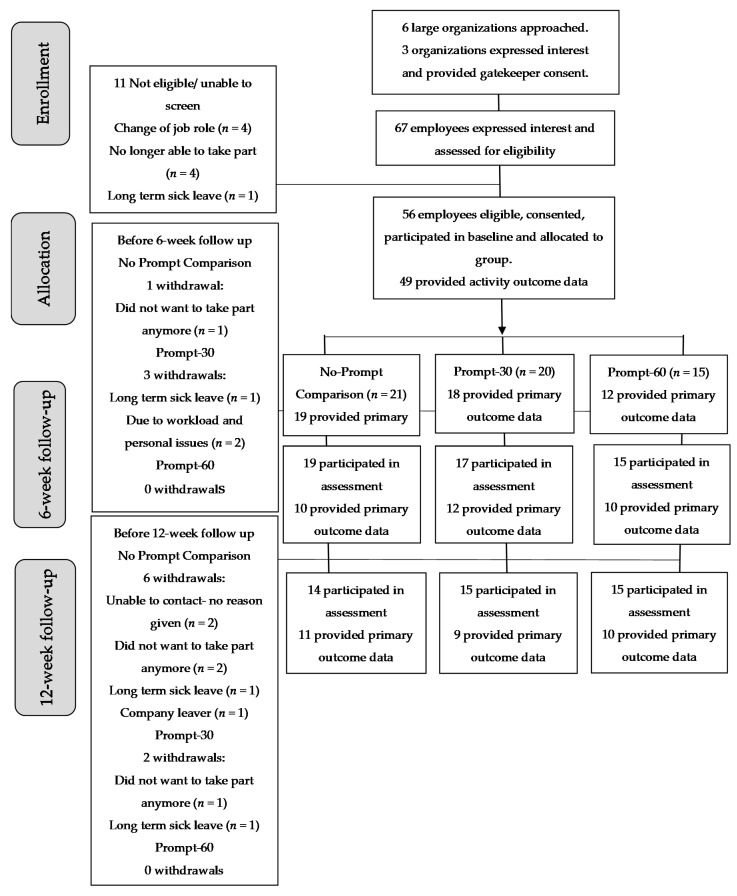
“Recruitment, Retention and Attrition Participants’ intervention pathway and completion rates for all outcome measures were assessed in line with the guidelines for Consolidated Standards of Reporting Trials [36] (Figure 1).”
MethodMichie, S., Richardson, M., Johnston, M., Abraham, C., Francis, J., Hardeman, W., Eccles, M. P., Cane, J., & Wood, C. E. (2013) · Annals of Behavioral Medicine · doi:10.1007/s12160-013-9486-6 · Cited by 7,629 · cited 2×
“The present trial targeted a behavioural intervention at a single level, which encompassed prompts as the primary behaviour change technique [34].”
BackgroundMethodProcess evaluation of complex interventions: Medical Research Council guidance
Moore, G. F., Audrey, S., Barker, M., Bond, L., Bonell, C., Hardeman, W., Moore, L., O'Cathain, A., Tinati, T., Wight, D., et al. (2015) · BMJ · doi:10.1136/bmj.h1258 · Cited by 6,204 · cited 1×
“The secondary aim was to provide a description and indication of preliminary effects of the secondary outcomes, including anthropometrics and cardiometabolic data, to inform the development of a potentially scalable and cost-effective workplace behaviour change intervention [23,24].”
BackgroundSedentary Behavior Research Network (SBRN)—Terminology Consensus Project process and outcome
on behalf of SBRN Terminology Consensus Project Participants, Tremblay, M. S., Aubert, S., Barnes, J. D., Saunders, T. J., Carson, V., Latimer-Cheung, A. E., Chastin, S. F. M., Altenburg, T. M., & Chinapaw, M. J. M. (2017) · International Journal of Behavioral Nutrition and Physical Activity · doi:10.1186/s12966-017-0525-8 · Cited by 3,793 · cited 1×
“Moreover, multiple interruptions of standing or light PA are more effective at enhancing cardiometabolic health than a single standing or PA break of a longer duration [10,12,13].”
BackgroundConsort 2010 statement: extension to cluster randomised trials
Campbell, M. K., Piaggio, G., Elbourne, D. R., Altman, D. G., & for the CONSORT Group (2012) · BMJ · doi:10.1136/bmj.e5661 · Cited by 3,510
Ecological models of health behavior.
Sallis, J. F., Owen, N. G., & Fisher, E. B. (2008) · Swinburne figshare (Swinburne University of Technology) · Cited by 3,217
Self-citationSample size of 12 per group rule of thumb for a pilot study
Julious, S. A. (2005) · Pharmaceutical Statistics · doi:10.1002/pst.185 · Cited by 3,068
CONSORT statement: extension to cluster randomised trials
Campbell, M. K., Elbourne, D. R., & Altman, D. G. (2004) · BMJ · doi:10.1136/bmj.328.7441.702 · Cited by 2,557 · cited 1×
“Future trials should therefore attempt to deliver a cluster randomised controlled trial design to mitigate these risks [68].”
BackgroundMoher, D., Hopewell, S., Schulz, K. F., Montori, V., Gøtzsche, P. C., Devereaux, P. J., Elbourne, D., Egger, M., & Altman, D. G. (2012) · International Journal of Surgery · doi:10.1016/j.ijsu.2011.10.001 · Cited by 2,345
Analysing controlled trials with baseline and follow up measurements
Vickers, A. J., & Altman, D. G. (2001) · BMJ · doi:10.1136/bmj.323.7321.1123 · Cited by 2,116 · cited 1×
“To control for any imbalances at baseline, baseline values for the variable were controlled for in all analyses [47].”
MethodHealy, G. N., Dunstan, D. W., Salmon, J., Cerin, E., Shaw, J. E., Zimmet, P. Z., & Owen, N. (2008) · Diabetes Care · doi:10.2337/dc07-2046 · Cited by 1,465
Self-citationPatterson, R., McNamara, E., Tainio, M., de Sá, T. H., Smith, A. D., Sharp, S. J., Edwards, P., Woodcock, J., Brage, S., & Wijndaele, K. (2018) · European Journal of Epidemiology · doi:10.1007/s10654-018-0380-1 · Cited by 1,423 · cited 1×
“High levels (6–8 h/day) of sedentary behaviour (SB) are associated with risk factors for chronic diseases and all-cause mortality in adults, with associations remaining even after controlling for time spent in moderate-to-vigorous physical activity [1].”
BackgroundAge Group Comparability of Raw Accelerometer Output from Wrist- and Hip-Worn Monitors
HILDEBRAND, M., VAN HEES, V. T., HANSEN, B. H., & EKELUND, U. (2014) · Medicine & Science in Sports & Exercise · doi:10.1249/mss.0000000000000289 · Cited by 1,043
Sim, J., & Lewis, M. (2012) · Journal of Clinical Epidemiology · doi:10.1016/j.jclinepi.2011.07.011 · Cited by 1,036 · cited 1×
“Our initial findings, however, are encouraging and provide sufficient data to conduct a power calculation to inform the development of a fully powered trial among desk-based office workers, to explore effectiveness and sustainability of behavioural and cardiometabolic changes [27].”
BackgroundSpecifying and reporting complex behaviour change interventions: the need for a scientific method
Michie, S., Fixsen, D., Grimshaw, J. M., & Eccles, M. P. (2009) · Implementation Science · doi:10.1186/1748-5908-4-40 · Cited by 976 · cited 1×
“The Intervention arms (Prompt-30 and Prompt-60) involved self-monitoring and prompting behaviour change techniques, whereas the No-Prompt Comparison arm provided an opportunity for participants to self-monitor only [33,34].”
MethodBillingham, S. A., Whitehead, A. L., & Julious, S. A. (2013) · BMC Medical Research Methodology · doi:10.1186/1471-2288-13-104 · Cited by 962
Best Practices for Using Physical Activity Monitors in Population-Based Research
MATTHEWS, C. E., HAGSTRÖMER, M., POBER, D. M., & BOWLES, H. R. (2012) · Medicine & Science in Sports & Exercise · doi:10.1249/mss.0b013e3182399e5b · Cited by 703 · cited 1×
“Data were considered valid if there were more than 10 h of valid activity data per day with >90% estimated wear time and recorded >1 valid workday at baseline, 6 and 12 weeks [46].”
BackgroundMicrorandomized trials: An experimental design for developing just-in-time adaptive interventions.
Klasnja, P., Hekler, E. B., Shiffman, S., Boruvka, A., Almirall, D., Tewari, A., & Murphy, S. A. (2015) · Health Psychology · doi:10.1037/hea0000305 · Cited by 671
Considerations when using the activPAL monitor in field-based research with adult populations
Edwardson, C. L., Winkler, E. A. H., Bodicoat, D. H., Yates, T., Davies, M. J., Dunstan, D. W., & Healy, G. N. (2017) · Journal of Sport and Health Science · doi:10.1016/j.jshs.2016.02.002 · Cited by 502 · cited 3×
“Summary data from the algorithm were quality checked using heat maps against participant diaries to check whether the algorithm had successfully been applied to the data [37].”
BackgroundMethodInfluentialSelf-citationAlternatives to P value: confidence interval and effect size
Lee, D. K. (2016) · Korean Journal of Anesthesiology · doi:10.4097/kjae.2016.69.6.555 · Cited by 479 · cited 1×
“To account for uncertainty in the effect size estimates, 95% confidence intervals were calculated [49,50].”
MethodBuckley, J. P., Hedge, A., Yates, T., Copeland, R. J., Loosemore, M., Hamer, M., Bradley, G., & Dunstan, D. W. (2015) · British Journal of Sports Medicine · doi:10.1136/bjsports-2015-094618 · Cited by 437 · cited 1×
“Rather, participants were encouraged to transition from a seated posture to either a standing or ambulatory posture when prompted, in line with the current workplace recommendations [57].”
BackgroundSelf-citationDempsey, P. C., Larsen, R. N., Sethi, P., Sacre, J. W., Straznicky, N. E., Cohen, N. D., Cerin, E., Lambert, G. W., Owen, N., Kingwell, B. A., et al. (2016) · Diabetes Care · doi:10.2337/dc15-2336 · Cited by 405
Self-citationWorkplace interventions for reducing sitting at work
Shrestha, N., Kukkonen-Harjula, K. T., Verbeek, J. H., Ijaz, S., Hermans, V., & Bhaumik, S. (2016) · Cochrane Database of Systematic Reviews · doi:10.1002/14651858.cd010912.pub3 · Cited by 385
Meta‐analysis of the relationship between breaks in sedentary behavior and cardiometabolic health
Chastin, S. F. M., Egerton, T., Leask, C., & Stamatakis, E. (2015) · Obesity · doi:10.1002/oby.21180 · Cited by 363 · cited 1×
“This finding is pertinent given office workers high exposure to total and prolonged sitting time at work [3,53] and the detrimental association with prolonged sitting and cardiometabolic [54], psychosocial [55] and musculoskeletal health [7].”
BackgroundThe association between sedentary behaviour and risk of anxiety: a systematic review
Teychenne, M., Costigan, S. A., & Parker, K. (2015) · BMC Public Health · doi:10.1186/s12889-015-1843-x · Cited by 351 · cited 2×
“Notably, cardiometabolic changes in both intervention groups occurred following a single-component intervention and may be of importance for future interventions seeking to attenuate cardiometabolic risk factors associated with adverse health outcomes [55].”
BackgroundClemes, S. A., O'Connell, S. E., & Edwardson, C. L. (2014) · Journal of Occupational & Environmental Medicine · doi:10.1097/jom.0000000000000101 · Cited by 348 · cited 1×
“Indeed, office and desk-based workers in the UK spend 60–80% of their working hours sedentary, which is not compensated for by increasing PA or decreasing SB during leisure time [5].”
BackgroundHEALY, G. N., EAKIN, E. G., OWEN, N., LAMONTAGNE, A. D., MOODIE, M., WINKLER, E. A. H., FJELDSOE, B. S., WIESNER, G., WILLENBERG, L., & DUNSTAN, D. W. (2016) · Medicine & Science in Sports & Exercise · doi:10.1249/mss.0000000000000972 · Cited by 295
Self-citationStephenson, A., McDonough, S. M., Murphy, M. H., Nugent, C. D., & Mair, J. L. (2017) · International Journal of Behavioral Nutrition and Physical Activity · doi:10.1186/s12966-017-0561-4 · Cited by 290 · cited 2×
“However, the advancement of wearable activity trackers and e-health smartphone applications offers a potential opportunity to evaluate low-cost and widely accessible alternatives to multi-component workplace interventions [21,22].”
BackgroundMethodWinkler, E. A. H., Bodicoat, D. H., Healy, G. N., Bakrania, K., Yates, T., Owen, N., Dunstan, D. W., & Edwardson, C. L. (2016) · Physiological Measurement · doi:10.1088/0967-3334/37/10/1653 · Cited by 287 · cited 3×
“8 for 88% of participants) agreement with the traditional diary method [42].”
BackgroundMethodResultInfluentialSelf-citationChu, A. H. Y., Ng, S. H. X., Tan, C. S., Win, A. M., Koh, D., & Müller‐Riemenschneider, F. (2016) · Obesity Reviews · doi:10.1111/obr.12388 · Cited by 281
Effectiveness of the Stand More AT (SMArT) Work intervention: cluster randomised controlled trial
Edwardson, C. L., Yates, T., Biddle, S. J. H., Davies, M. J., Dunstan, D. W., Esliger, D. W., Gray, L. J., Jackson, B., O’Connell, S. E., Waheed, G., et al. (2018) · BMJ · doi:10.1136/bmj.k3870 · Cited by 272 · cited 2×
“While multi-component interventions have been effective for significantly reducing total and prolonged occupational sitting time in desk-based workers over 12 months [14,15], implementation can often incorporate adapting working environments, which can be costly [16].”
BackgroundMethodSelf-citationHenson, J., Davies, M. J., Bodicoat, D. H., Edwardson, C. L., Gill, J. M. R., Stensel, D. J., Tolfrey, K., Dunstan, D. W., Khunti, K., & Yates, T. (2016) · Diabetes Care · doi:10.2337/dc15-1240 · Cited by 270 · cited 1×
“Nonetheless, our findings provide some preliminary evidence in support of further evaluation of an e-health smartphone intervention to prompt regular breaks from seated work, in line with the current workplace guidelines [59].”
ResultSelf-citationWaist and hip circumferences, and waist-hip ratio in 19 populations of the WHO MONICA Project
Molarius, A., Seidell, J., Sans, S., Tuomilehto, J., & Kuulasmaa, K. (1999) · International Journal of Obesity · doi:10.1038/sj.ijo.0800772 · Cited by 233 · cited 1×
“Hip circumference was standardised to the maximum circumference around the gluteals [39].”
MethodSitting patterns at work: objective measurement of adherence to current recommendations
Ryan, C. G., Dall, P. M., Granat, M. H., & Grant, P. M. (2011) · Ergonomics · doi:10.1080/00140139.2011.570458 · Cited by 225 · cited 3×
“Workplaces in particular have been identified as pivotal settings to target modifiable health behaviours, such as physical activity (PA) and SB, as the majority of daily sedentary time is accrued during working hours [3,4].”
BackgroundWorkplace interventions for reducing sitting at work
Shrestha, N., Kukkonen-Harjula, K. T., Verbeek, J. H., Ijaz, S., Hermans, V., & Pedisic, Z. (2018) · Cochrane Database of Systematic Reviews · doi:10.1002/14651858.cd010912.pub4 · Cited by 206 · cited 7×
“Currently, less is known about the specific role of smartphone e-health technology in promoting a reduction in total and prolonged occupational sitting time compared to computer software-prompting interventions [17].”
BackgroundResultInfluentialBlood Pressure Measurement Guidelines for Physical Therapists
Frese, E. M., Fick, A., & Sadowsky, S. H. (2011) · Cardiopulmonary Physical Therapy Journal · doi:10.1097/01823246-201122020-00002 · Cited by 198 · cited 2×
“On average, at baseline, participants were pre-hypertensive [40], overweight [51], had an elevated waist circumference [52], were sedentary for ≥10 h per day and spent 69% of work hours sitting (of which 64% was spent in prolonged bouts ≥30 min), 24% standing and 7% stepping.”
BackgroundMethodThorp, A. A., Kingwell, B. A., Owen, N., & Dunstan, D. W. (2014) · Occupational and Environmental Medicine · doi:10.1136/oemed-2014-102348 · Cited by 198 · cited 2×
“This finding is pertinent given office workers high exposure to total and prolonged sitting time at work [3,53] and the detrimental association with prolonged sitting and cardiometabolic [54], psychosocial [55] and musculoskeletal health [7].”
BackgroundSelf-citationHadgraft, N. T., Winkler, E., Climie, R. E., Grace, M. S., Romero, L., Owen, N., Dunstan, D., Healy, G., & Dempsey, P. C. (2021) · British Journal of Sports Medicine · doi:10.1136/bjsports-2019-101154 · Cited by 179 · cited 2×
“Overall, the short-term changes to cardiometabolic outcomes appears similar to those observed in a recent meta-analysis of multi-component workplace interventions [66] and indicates small to moderate, changes irrespective of Intervention arm, at 12 weeks.”
BackgroundResultSelf-citationRegular walking breaks prevent the decline in cerebral blood flow associated with prolonged sitting
Carter, S. E., Draijer, R., Holder, S. M., Brown, L., Thijssen, D. H. J., & Hopkins, N. D. (2018) · Journal of Applied Physiology · doi:10.1152/japplphysiol.00310.2018 · Cited by 172 · cited 2×
“Moreover, multiple interruptions of standing or light PA are more effective at enhancing cardiometabolic health than a single standing or PA break of a longer duration [10,12,13].”
BackgroundEvaluation of sit-stand workstations in an office setting: a randomised controlled trial
E. F. Graves, L., C. Murphy, R., Shepherd, S. O., Cabot, J., & Hopkins, N. D. (2015) · BMC Public Health · doi:10.1186/s12889-015-2469-8 · Cited by 167 · cited 1×
“To describe the sample, participants completed an online questionnaire including a non-validated survey adapted from a previous trial [41] to assess sociodemographic (age, gender, ethnicity, marital status, and education), work history (employment history, employment status, job category, hours worked, and main work t…”
MethodSitting time and step counts in office workers
Clemes, S. A., Patel, R., Mahon, C., & Griffiths, P. L. (2014) · Occupational Medicine · doi:10.1093/occmed/kqt164 · Cited by 152 · cited 1×
“This finding is pertinent given office workers high exposure to total and prolonged sitting time at work [3,53] and the detrimental association with prolonged sitting and cardiometabolic [54], psychosocial [55] and musculoskeletal health [7].”
BackgroundRaw Accelerometer Data Analysis with GGIR R-package: Does Accelerometer Brand Matter?
ROWLANDS, A. V., YATES, T., DAVIES, M., KHUNTI, K., & EDWARDSON, C. L. (2016) · Medicine & Science in Sports & Exercise · doi:10.1249/mss.0000000000000978 · Cited by 137
Coenen, P., Willenberg, L., Parry, S., Shi, J. W., Romero, L., Blackwood, D. M., Maher, C. G., Healy, G. N., Dunstan, D. W., & Straker, L. M. (2018) · British Journal of Sports Medicine · doi:10.1136/bjsports-2016-096795 · Cited by 128 · cited 1×
“Of particular concern is that desk-based workers in the UK spend the majority (52%) of their sedentary time in prolonged bouts (≥30 min), with 25% in prolonged bouts exceeding 55 min [3], a pattern detrimentally associated with musculoskeletal discomfort [6,7], cardiometabolic outcomes [8,9], cerebral blood flow [10]…”
BackgroundSelf-citationHadgraft, N. T., Brakenridge, C. L., LaMontagne, A. D., Fjeldsoe, B. S., Lynch, B. M., Dunstan, D. W., Owen, N., Healy, G. N., & Lawler, S. P. (2016) · BMC Public Health · doi:10.1186/s12889-016-3611-y · Cited by 121 · cited 1×
“The feasibility of implementing frequent breaks consisting of light-to-moderate-intensity activities within real-world office settings, however, is questionable, due to perceived social norms which consider PA as disruptive and unproductive among management and employees [61,62].”
BackgroundSelf-citationWorkplace interventions for reducing sitting at work
Shrestha, N., Kukkonen-Harjula, K. T., Verbeek, J. H., Ijaz, S., Hermans, V., & Pedisic, Z. (2018) · Cochrane Database of Systematic Reviews · doi:10.1002/14651858.cd010912.pub5 · Cited by 119
De Cocker, K., Veldeman, C., De Bacquer, D., Braeckman, L., Owen, N., Cardon, G., & De Bourdeaudhuij, I. (2015) · International Journal of Behavioral Nutrition and Physical Activity · doi:10.1186/s12966-015-0177-5 · Cited by 110 · cited 1×
“The feasibility of implementing frequent breaks consisting of light-to-moderate-intensity activities within real-world office settings, however, is questionable, due to perceived social norms which consider PA as disruptive and unproductive among management and employees [61,62].”
BackgroundSelf-citationBrakenridge, C. L., Fjeldsoe, B. S., Young, D. C., Winkler, E. A. H., Dunstan, D. W., Straker, L. M., & Healy, G. N. (2016) · International Journal of Behavioral Nutrition and Physical Activity · doi:10.1186/s12966-016-0441-3 · Cited by 109 · cited 1×
“Previous studies have also highlighted the importance of harnessing interpersonal factors, such as management support [64] and workplace champions [65], to facilitate a change in attitudes and workplace cultures around typical sitting behaviours.”
BackgroundSelf-citationBellettiere, J., Carlson, J. A., Rosenberg, D., Singhania, A., Natarajan, L., Berardi, V., LaCroix, A. Z., Sears, D. D., Moran, K., Crist, K., et al. (2015) · PLOS ONE · doi:10.1371/journal.pone.0136161 · Cited by 92 · cited 1×
“Of particular concern is that desk-based workers in the UK spend the majority (52%) of their sedentary time in prolonged bouts (≥30 min), with 25% in prolonged bouts exceeding 55 min [3], a pattern detrimentally associated with musculoskeletal discomfort [6,7], cardiometabolic outcomes [8,9], cerebral blood flow [10]…”
BackgroundHadgraft, N. T., Brakenridge, C. L., Dunstan, D. W., Owen, N. G., Healy, G. N., & Lawler, S. (2018) · International Journal of Behavioral Nutrition and Physical Activity · doi:10.1186/s12966-018-0718-9 · Cited by 89 · cited 1×
“Common barriers to reducing sitting time and increasing PA at work have previously been identified as having a high workload and productivity demands, in addition to job demands which are synonymous with seated working postures [63].”
BackgroundSelf-citationCardiometabolic Impact of Changing Sitting, Standing, and Stepping in the Workplace
WINKLER, E. A. H., CHASTIN, S. F. M., Eakin, E., Owen, N. G., LaMontagne, A. D., Moodie, M., Dempsey, P. C., Kingwell, B. A., Dunstan, D. W., & Healy, G. N. (2017) · Medicine & Science in Sports & Exercise · doi:10.1249/mss.0000000000001453 · Cited by 82
Self-citationPeachey, M. M., Richardson, J., V Tang, A., Dal-Bello Haas, V., & Gravesande, J. (2020) · British Journal of Sports Medicine · doi:10.1136/bjsports-2017-098968 · Cited by 68 · cited 3×
“Overall, changes in total and prolonged sitting at work appeared smaller in magnitude compared to other multi-component trials involving a combination of behavioural and environmental components [17,19].”
BackgroundMackenzie, K., Goyder, E., & Eves, F. (2015) · BMC Public Health · doi:10.1186/s12889-015-2635-z · Cited by 59 · cited 1×
“While multi-component interventions have been effective for significantly reducing total and prolonged occupational sitting time in desk-based workers over 12 months [14,15], implementation can often incorporate adapting working environments, which can be costly [16].”
BackgroundBrakenridge, C. L., Chong, Y. Y., WINKLER, E. A. H., Hadgraft, N. T., Fjeldsoe, B. S., Johnston, V., Straker, L. M., Healy, G. N., & Clark, B. (2018) · International Journal of Environmental Research and Public Health · doi:10.3390/ijerph15091975 · Cited by 51 · cited 1×
“Of particular concern is that desk-based workers in the UK spend the majority (52%) of their sedentary time in prolonged bouts (≥30 min), with 25% in prolonged bouts exceeding 55 min [3], a pattern detrimentally associated with musculoskeletal discomfort [6,7], cardiometabolic outcomes [8,9], cerebral blood flow [10]…”
BackgroundIntermittent Standing but not a Moderate Exercise Bout Reduces Postprandial Glycemia
Benatti, F. B., Larsen, S. A., KOFOED, K., Nielsen, S. T., Harder-Lauridsen, N. M., Lyngbæk, M. P. P., Eriksen, D., Karstoft, K., Krogh‐Madsen, R., Pedersen, B. K., et al. (2017) · Medicine & Science in Sports & Exercise · doi:10.1249/mss.0000000000001354 · Cited by 43 · cited 2×
“Indeed, frequent interruptions to prolonged sitting bouts with standing appears to be more important for regulating the postprandial glycaemic response compared to solely achieving the minimum PA guidelines [12].”
BackgroundGao, L., Flego, A., Dunstan, D. W., Winkler, E. A., Healy, G. N., Eakin, E. G., Willenberg, L., Owen, N., LaMontagne, A. D., Lal, A., et al. (2018) · Scandinavian Journal of Work, Environment & Health · doi:10.5271/sjweh.3740 · Cited by 43 · cited 2×
“The behavioural observations in the present trial provide some preliminary evidence in support of implementing a simple e-health intervention as a cost-effective, and widely accessible strategy to support office workers to reduce their total and prolonged sitting time [20].”
BackgroundSelf-citationClemes, S. A., Bingham, D. D., Pearson, N., Chen, Y., Edwardson, C. L., McEachan, R., Tolfrey, K., Cale, L., Richardson, G. A., Fray, M., et al. (2020) · International Journal of Behavioral Nutrition and Physical Activity · doi:10.1186/s12966-020-00958-z · Cited by 40 · cited 1×
“A sample of this size is suitable for informing future estimates regarding recruitment, retention and attrition to further inform the development of a full randomised controlled trial [30].”
MethodSelf-citationPerceptions of an online ‘train-the-champion’ approach to increase workplace movement
Goode, A. D., Hadgraft, N. T., Neuhaus, M., & Healy, G. N. (2018) · Health Promotion International · doi:10.1093/heapro/day092 · Cited by 29 · cited 1×
“Previous studies have also highlighted the importance of harnessing interpersonal factors, such as management support [64] and workplace champions [65], to facilitate a change in attitudes and workplace cultures around typical sitting behaviours.”
Background
Research works printed but not linked: 1
- Bort-Roig J. Chirveches-Perez E. Gine-Garriga M. Navarro-Blasco L. Bausa-Peris R. Iturrioz-Rosell P. Gonzalez-suarez A.M. Martinez-Lemos I. Puigoriol-Juvanteny E. Dowd K. An m-health workplace-based ‘sit less, move more’ program: Impact on employees’ sedentary and physical activity patterns Journal of Physical Activity and Health 2018 Human Kinetics Publisl Inc. Champaign, IL, USA 2018 PMC7730175 33260697
Cited by
Falk, G. E., Mailey, E. L., Okut, H., Rosenkranz, S. K., Rosenkranz, R. R., Montney, J. L., & Ablah, E. A. (2022) · International Journal of Environmental Research and Public Health · doi:10.3390/ijerph19116401 · Cited by 35
Advantages and disadvantages of mobile applications for workplace health promotion: A scoping review
Junker, M., Böhm, M., & Krcmar, H. (2024) · PLoS ONE · doi:10.1371/journal.pone.0296212 · Cited by 21
“In particular, authors highlighted reminders, prompts and alerts [9, 23, 24, 27, 38, 48, 53–55].”
BackgroundMethodInfluentialBrierley, M. L., Smith, L. R., Bailey, D. P., Ojo, S. O., Hewson, D. J., Every, S. A., Staines, T. A., & Chater, A. (2022) · BMC Public Health · doi:10.1186/s12889-022-12794-w · Cited by 23
“For example, in a recent study of Welsh office workers, 69% of the workday was spent seated and 64% of that time was accumulated in bouts over 30 min [12].”
BackgroundResultDeery, E., Buckley, J., Morris, M., & Kennedy, L. (2024) · Occupational Health Science · doi:10.1007/s41542-024-00176-0 · Cited by 10
“This has been expressed by participants in the present study and is supported by the wider literature (Brierley et al., 2022; Morris et al., 2020).”
InfluentialMorris, A. S., Mackintosh, K. A., Owen, N., Dempsey, P. C., Dunstan, D. W., & McNarry, M. A. (2021) · International Journal of Environmental Research and Public Health · doi:10.3390/ijerph18189627 · Cited by 7
“This study and the intervention have been described in full elsewhere [27].”
BackgroundMethodInfluentialSelf-citation
Metadata
- Authors
- Morris, A. S., Mackintosh, K. A., Dunstan, D., Owen, N., Dempsey, P., Pennington, T., & McNarry, M. A.
- Affiliations
- Swansea University (GB)
- Baker Heart and Diabetes Institute (AU)
- Corresponding author
- McNarry, Melitta A.
- ORCID
- Venue
- International Journal of Environmental Research and Public Health
- Publisher
- MDPI AG
- Published
- 2020-12-12
- Volume
- 17
- Issue
- 24
- Pages
- 9300
- ISSN
- 1660-4601 (ISSN-L)
- PMC
- PMC7764765
- OpenAlex
- W3111837988
- Cited by
- 15
- References
- 68
- Citations by year
- 2026: 2 · 2025: 4 · 2024: 2 · 2023: 1 · 2022: 4 · 2021: 2
- FWCI
- 1.05
- Type
- journal article
- Language
- en
- Open access
- gold
- doi.org
- Licence
- Locations
- International Journal of Environmental Research and Public Health (publishedVersion, cc-by)
- PubMed Central (publishedVersion, cc-by)
- PubMed (publishedVersion)
- Lancaster EPrints (Lancaster University) (acceptedVersion)
- Apollo (University of Cambridge) (submittedVersion, cc-by)
- RePEc: Research Papers in Economics (submittedVersion)
- DOAJ (DOAJ: Directory of Open Access Journals) (submittedVersion)
- Own your potential (DEAKIN) (submittedVersion)
- Figshare (submittedVersion, cc-by)
- Apollo (cc-by)
- Funders
- GetAMoveOn (532526)
- Topics
- Health Sciences › Medicine › Public Health, Environmental and Occupational Health › Physical Activity and Health
- Health Sciences › Health Professions › General Health Professions › Mobile Health and mHealth Applications
- Physical Sciences › Computer Science › Computer Vision and Pattern Recognition › Context-Aware Activity Recognition Systems
- Keywords
- sedentary behavior, occupational sitting, office workers, smartphone-based intervention, e-health applications, standing at work, prolonged sitting, physical activity, step count, cardiometabolic risk, workplace health promotion
- MeSH terms
- Smartphone, Sitting Position, Female, Health Promotion, Humans, Male, Exercise, Occupational Health, Workplace, Telemedicine
About these checks
Registry, retraction, Cites and statistics results are computed, not judged, with one exception: a printed reference that no index lists is read once by a model before it counts as a citation error. Claims are extracted by a model and kept only when their quote appears verbatim in the text; each cited source is then checked, with a model’s help, for whether it says what the claim relies on. Those verdicts can be wrong — read the claim’s quote and the cited source before relying on one.
Statistics and arithmetic are recomputed, not judged.
Confidence bands are shown only for fields calibrated on our annotated test set. None is calibrated yet, so no band is shown.
What counts as a claim ›How we measure confidence ›How we check this ›
Are you an author, or do you see a problem with this page? Request a review
Data sources
Bibliographic data: Semantic Scholar, OpenAlex, Crossref.
Contains information from the Semantic Scholar Academic Graph Datasets, made available under the ODC Attribution License (ODC-BY 1.0).
Semantic Scholar’s data is described in: Kinney, R., et al. (2023). The Semantic Scholar Open Data Platform. arXiv:2301.10140.
