

Under the Threat of an Epidemic: People with Higher Subjective Socioeconomic Status Show More Unethical Behaviors
Open accessThe DOI matches its Crossref record; 50 of the 51 references it cites were found in a registry or an index.
Abstract
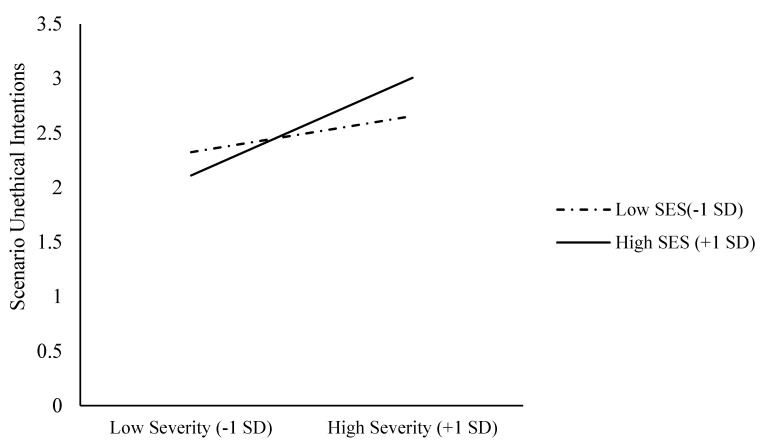
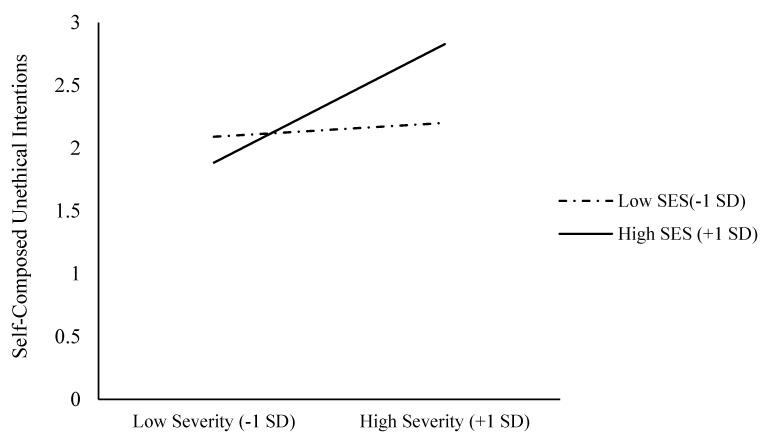
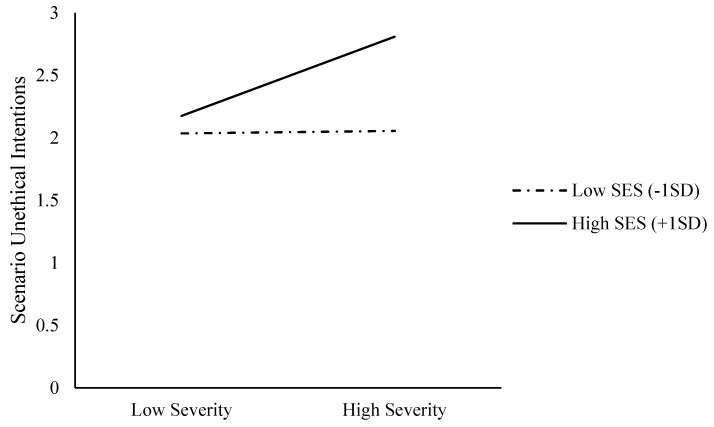
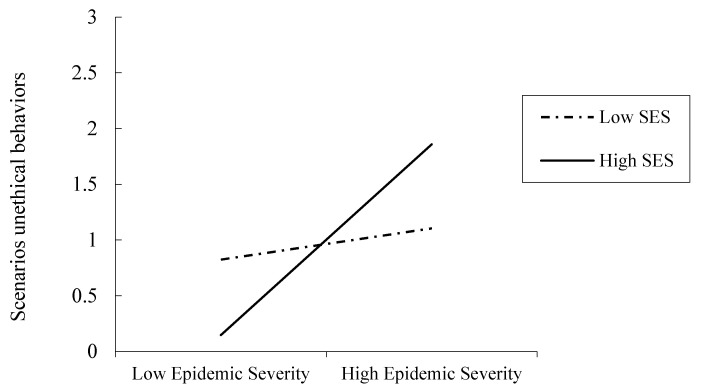
This research focused on the psychological impact of an epidemic. We conducted a cross-sectional survey and two empirical experiments to examine how an epidemic would influence unethical behaviors and how the effect differs in people of different subjective socioeconomic statuses. These studies consistently demonstrated that subjective socioeconomic status moderates the relationship between an epidemic and unethical behaviors. Specifically, the perceived severity of an epidemic positively predicts the unethical behaviors of people with a high socioeconomic status, but it does not predict the unethical behaviors of people with a low socioeconomic status. These findings elucidate the effects of epidemics and bring theoretical and practical implications.
Overview
The claims and statistics of this paper haven’t been checked yet.
Free: it reads the open-access text and checks the first 5 claims that cite a source we can check. Create a free account to check every claim.
Integrity signals
Registry
Cites
Statistics
Figures
Verification
Claims the paper makes
The claims and statistics of this paper haven’t been checked yet.
Free: it reads the open-access text and checks the first 5 claims that cite a source we can check. Create a free account to check every claim.
Claims other papers make about this one
Each is checked against this paper’s own text: does it say what the citing paper says it does?
The source backs part of the claim, not all of it — or backs it for a different population, condition or comparison.
In the citing paper
“Third, in the current study, we recruited participants via an online platform. Although online recruitment platforms (i.e., Credamo; Turkprime) are reliable and have been widely used [54,55] and we also used questions to exclude participants who do not have workplace communication experience, nevertheless, longitudinal design and field study would be needed to complement our experimental and cross”
From Power Distance Belief and Workplace Communication: The Mediating Role of Fear of Authority (2022) · cites this paper as [55]
Experimental — accuracy not yet measured
Self-check
Percentages, sums and reported differences re-computed from the paper’s own numbers.
The self-check needs the paper’s full text.
Citations
Cites
The Dishonesty of Honest People: A Theory of Self-Concept Maintenance
Mazar, N., Amir, O., & Ariely, D. (2008) · Journal of Marketing Research · doi:10.1509/jmkr.45.6.633 · Cited by 2,875 · cited 1×
“Moreover, people struggle to compromise in the conflict between benefiting from unethical behavior and maintaining a positive self-image [15].”
BackgroundGraham, J., Nosek, B. A., Haidt, J., Iyer, R., Koleva, S., & Ditto, P. H. (2011) · Journal of Personality and Social Psychology · doi:10.1037/a0021847 · Cited by 2,666 · cited 1×
“People behave unethically toward others to compensate for their personal suffering [12].”
BackgroundFrustration-aggression hypothesis: Examination and reformulation.
Berkowitz, L. (1989) · Psychological Bulletin · doi:10.1037/0033-2909.106.1.59 · Cited by 2,283
At what sample size do correlations stabilize?
Schönbrodt, F. D., & Perugini, M. (2013) · Journal of Research in Personality · doi:10.1016/j.jrp.2013.05.009 · Cited by 2,232 · cited 2×
“Based on Monte Carlo simulations, Schönbrodt and Perugini [47] recommended using a typical sample of approximately 250 for stable estimates.”
MethodSARS control and psychological effects of quarantine, Toronto, Canada
Hawryluck, L., Gold, W. L., Robinson, S., Pogorski, S., Galea, S., & Styra, R. (2004) · Emerging Infectious Diseases · doi:10.3201/eid1007.030703 · Cited by 1,929
The sense of control as a moderator of social class differences in health and well-being.
Lachman, M. E., & Weaver, S. L. (1998) · Journal of Personality and Social Psychology · doi:10.1037//0022-3514.74.3.763 · Cited by 1,674
Wu, P., Fang, Y., Guan, Z., Fan, B., Kong, J., Yao, Z., Liu, X., Fuller, C. J., Susser, E., Lu, J., et al. (2009) · The Canadian Journal of Psychiatry · doi:10.1177/070674370905400504 · Cited by 1,647
Having less, giving more: The influence of social class on prosocial behavior.
Piff, P. K., Kraus, M. W., Côté, S., Cheng, B. H., & Keltner, D. (2010) · Journal of Personality and Social Psychology · doi:10.1037/a0020092 · Cited by 1,478
Social class, solipsism, and contextualism: How the rich are different from the poor.
Kraus, M. W., Piff, P. K., Mendoza-Denton, R., Rheinschmidt, M. L., & Keltner, D. (2012) · Psychological Review · doi:10.1037/a0028756 · Cited by 1,397
Psychological Entitlement: Interpersonal Consequences and Validation of a Self-Report Measure
Campbell, W. K., Bonacci, A. M., Shelton, J., Exline, J. J., & Bushman, B. J. (2004) · Journal of Personality Assessment · doi:10.1207/s15327752jpa8301_04 · Cited by 1,275
Higher social class predicts increased unethical behavior
Piff, P. K., Stancato, D. M., Côté, S., Mendoza-Denton, R., & Keltner, D. (2012) · Proceedings of the National Academy of Sciences · doi:10.1073/pnas.1118373109 · Cited by 1,038 · cited 2×
“[37] found high-SES people were more likely to cut off other vehicles or pedestrians while driving, make unethical decisions, take candies meant for nearby children, lie in negotiations, cheat to win a cash prize, and engage in unethical behaviors at work.”
BackgroundSocial class, sense of control, and social explanation.
Kraus, M. W., Piff, P. K., & Keltner, D. (2009) · Journal of Personality and Social Psychology · doi:10.1037/a0016357 · Cited by 956
The Role of Chaos in Poverty and Children's Socioemotional Adjustment
Evans, G. W., Gonnella, C., Marcynyszyn, L. A., Gentile, L., & Salpekar, N. (2005) · Psychological Science · doi:10.1111/j.0956-7976.2005.01575.x · Cited by 709
Social Class, Contextualism, and Empathic Accuracy
Kraus, M. W., Côté, S., & Keltner, D. (2010) · Psychological Science · doi:10.1177/0956797610387613 · Cited by 663 · cited 2×
“In social interactions, they showed greater social interest [31], social-oriented emotions [32], and cognizance of others’ emotions [33].”
BackgroundChoices of Degree or Degrees of Choice? Class, ‘Race’ and the Higher Education Choice Process
Reay, D., Davies, J., David, M., & Ball, S. J. (2001) · Sociology · doi:10.1017/s0038038501008550 · Cited by 642
Choice as an act of meaning: The case of social class.
Stephens, N. M., Markus, H. R., & Townsend, S. S. M. (2007) · Journal of Personality and Social Psychology · doi:10.1037/0022-3514.93.5.814 · Cited by 536
Signs of Socioeconomic Status: A Thin-Slicing Approach
Kraus, M. W., & Keltner, D. (2009) · Psychological Science · doi:10.1111/j.1467-9280.2008.02251.x · Cited by 456
Dubois, D., Rucker, D. D., & Galinsky, A. D. (2015) · Journal of Personality and Social Psychology · doi:10.1037/pspi0000008 · Cited by 404
Cultural differences are not always reducible to individual differences
Na, J., Grossmann, I., Varnum, M. E. W., Kitayama, S., Gonzalez, R., & Nisbett, R. E. (2010) · Proceedings of the National Academy of Sciences · doi:10.1073/pnas.1001911107 · Cited by 393 · cited 1×
“In social interactions, they showed greater social interest [31], social-oriented emotions [32], and cognizance of others’ emotions [33].”
BackgroundJohnson, W., & Krueger, R. F. (2006) · Journal of Personality and Social Psychology · doi:10.1037/0022-3514.90.4.680 · Cited by 382
Wealth and the Inflated Self: Class, Entitlement, and Narcissism
Piff, P. K. (2014) · Personality and Social Psychology Bulletin · doi:10.1177/0146167213501699 · Cited by 363
Kouchaki, M., & Desai, S. D. (2015) · Journal of Applied Psychology · doi:10.1037/a0037796 · Cited by 344
A Road Map for an Emerging Psychology of Social Class
Kraus, M. W., & Stephens, N. M. (2012) · Social and Personality Psychology Compass · doi:10.1111/j.1751-9004.2012.00453.x · Cited by 303 · cited 1×
“Thus, low-SES people have consistently appeared responsive to social cues [9].”
BackgroundA Large Scale Test of the Effect of Social Class on Prosocial Behavior
Korndörfer, M., Egloff, B., & Schmukle, S. C. (2015) · PLOS ONE · doi:10.1371/journal.pone.0133193 · Cited by 255
Polluted Morality: Air Pollution Predicts Criminal Activity and Unethical Behavior
Lu, J. G., Lee, J. J., Gino, F., & Galinsky, A. D. (2018) · Psychological Science · doi:10.1177/0956797617735807 · Cited by 233 · cited 1×
“These findings have implications for the socioecological environment’s psychology, which focuses on how socioecological factors impact human behaviors [23].”
BackgroundCorrigan, P. W., & Watson, A. C. (2005) · Psychiatry Research · doi:10.1016/j.psychres.2005.06.005 · Cited by 209
Psychological Distress of Nurses in Taiwan Who Worked During the Outbreak of SARS
Chen, C.-S., Wu, H.-Y., Yang, P., & Yen, C.-F. (2005) · Psychiatric Services · doi:10.1176/appi.ps.56.1.76 · Cited by 205
Subjective socioeconomic status causes aggression: A test of the theory of social deprivation.
Greitemeyer, T., & Sagioglou, C. (2016) · Journal of Personality and Social Psychology · doi:10.1037/pspi0000058 · Cited by 202 · cited 1×
“Furthermore, low-SES people have behaved aggressively [53].”
Social class and prosocial behavior: current evidence, caveats, and questions
Piff, P. K., & Robinson, A. R. (2017) · Current Opinion in Psychology · doi:10.1016/j.copsyc.2017.06.003 · Cited by 179
Understanding ordinary unethical behavior: why people who value morality act immorally
Gino, F. (2015) · Current Opinion in Behavioral Sciences · doi:10.1016/j.cobeha.2015.03.001 · Cited by 175 · cited 1×
“People behave unethically when a short-term, self-benefiting goal overrides the long-term goal of maintaining a positive self-image [16].”
BackgroundChen, Y., & Tang, T. L. (2006) · Journal of Business Ethics · doi:10.1007/s10551-006-9069-6 · Cited by 173 · cited 2×
“We assessed unethical behaviors using two measures, adapting the first from the Propensity to Engage in Unethical Behaviors scale [49].”
MethodPsychological Predictors of Health Anxiety in Response to the Zika Virus
Blakey, S. M., & Abramowitz, J. S. (2017) · Journal of Clinical Psychology in Medical Settings · doi:10.1007/s10880-017-9514-y · Cited by 159
Investigating the Effects of Anger and Guilt on Unethical Behavior: A Dual-Process Approach
Motro, D., Ordóñez, L. D., Pittarello, A., & Welsh, D. T. (2016) · Journal of Business Ethics · doi:10.1007/s10551-016-3337-x · Cited by 131 · cited 1×
“For example, anger increases unethical behaviors, but guilt reduces unethical behaviors [21].”
BackgroundWhy Did They “Choose” to Stay?: Perspectives of Hurricane Katrina Observers and Survivors
Stephens, N. M., Hamedani, M. G., Markus, H. R., Bergsieker, H. B., & Eloul, L. (2009) · Psychological Science · doi:10.1111/j.1467-9280.2009.02386.x · Cited by 129
Social Class and Prosocial Behavior: The Moderating Role of Public Versus Private Contexts
Kraus, M. W., & Callaghan, B. (2016) · Social Psychological and Personality Science · doi:10.1177/1948550616659120 · Cited by 119
“Fear of Falling”: Economic Instability Enhances Collective Angst among Societies’ Wealthy Class
Jetten, J., Mols, F., Healy, N., & Spears, R. (2017) · Journal of Social Issues · doi:10.1111/josi.12204 · Cited by 118
Johnson, W., & Krueger, R. F. (2005) · Journal of Personality and Social Psychology · doi:10.1037/0022-3514.88.1.165 · Cited by 108
Feeling Entitled to More: Ostracism Increases Dishonest Behavior
Poon, K.-T., Chen, Z., & DeWall, C. N. (2013) · Personality and Social Psychology Bulletin · doi:10.1177/0146167213493187 · Cited by 105
Self-citationToo Far to Care? Measuring Public Attention and Fear for Ebola Using Twitter
van Lent, L. G., Sungur, H., Kunneman, F. A., van de Velde, B., & Das, E. (2017) · Journal of Medical Internet Research · doi:10.2196/jmir.7219 · Cited by 92
Equity with the World: The Trans-Relational Effects of Equity and Inequity
Austin, W., & Walster, E. (1975) · Sociometry · doi:10.2307/2786362 · Cited by 90 · cited 1×
“Similarly, when allowed to distribute rewards, previously under-rewarded people are more likely to keep more undeserved rewards at the expense of others’ interests [14].”
BackgroundJiang, T., Chen, Z., & Sedikides, C. (2020) · Journal of Personality and Social Psychology · doi:10.1037/pspp0000259 · Cited by 88 · cited 1×
“, “Please choose 4”; “Please choose moderately agree”) [48].”
Self-citationProtect thyself: How affective self-protection increases self-interested, unethical behavior
Winterich, K. P., Mittal, V., & Morales, A. C. (2014) · Organizational Behavior and Human Decision Processes · doi:10.1016/j.obhdp.2014.07.004 · Cited by 54
Hormones and ethics: Understanding the biological basis of unethical conduct.
Lee, J., Gino, F., Jin, E. S., Rice, L. K., & Josephs, R. A. (2015) · Journal of Experimental Psychology General · doi:10.1037/xge0000099 · Cited by 53
Why Do the Privileged Resort to Oppression? A Look at Some Intragroup Factors
Postmes, T., & Smith, L. G. E. (2009) · Journal of Social Issues · doi:10.1111/j.1540-4560.2009.01624.x · Cited by 48 · cited 1×
“We suggest that a sudden epidemic affects the psychological characteristics of high-SES people, making them more sensitive to an epidemic’s threat—at least psychologically—because high-SES people feel that they have more to lose and that they have a strong motivation to preserve their privileged statuses [43,51].”
BackgroundSocioeconomic status and online shaming: The mediating role of belief in a just world
Hou, Y., Jiang, T., & Wang, Q. (2017) · Computers in Human Behavior · doi:10.1016/j.chb.2017.07.003 · Cited by 48 · cited 1×
“A cross-sectional study found high-SES people were more likely to engage in online shaming compared to low-SES people [39].”
BackgroundSelf-citationDiscrimination in wealth and power intergroup structures
Harvey, S.-P., & Bourhis, R. Y. (2012) · Group Processes & Intergroup Relations · doi:10.1177/1368430211408364 · Cited by 25 · cited 1×
“Low-SES people strive for wealth, but high-SES people want to preserve their privileged statuses [42,43].”
BackgroundBerger, S. E., Levin, P. R., Jacobson, L. I., & Millham, J. (1977) · Journal of Personality · doi:10.1111/j.1467-6494.1977.tb00164.x · Cited by 19
Bad news, bad times, and violence: The link between economic distress and aggression.
Barlett, C. P., & Anderson, C. A. (2014) · Psychology of Violence · doi:10.1037/a0034479 · Cited by 13
Perceiving a Lack of Social Justice: Lower Class Individuals Apply Higher Moral Standards to Others
Wang, X., Chen, Z., Poon, K., & Jiang, T. (2020) · Social Psychological and Personality Science · doi:10.1177/1948550619898558 · Cited by 11
Self-citationThe Psychosocial Aspects of a Deadly Epidemic: What Ebola Has Taught Us about Holistic Healing
(2016) · ABC-CLIO eBooks · doi:10.5040/9798216002932 · Cited by 8
Research works printed but not linked: 1
- Lazarus R.S. Folkman S. Stress, Appraisal, and Coping Springer Publishing Company New York, NY, USA 1984
Cited by
Power Distance Belief and Workplace Communication: The Mediating Role of Fear of Authority
Dai, Y., Li, H., Xie, W., & Deng, T. (2022) · International Journal of Environmental Research and Public Health · doi:10.3390/ijerph19052932 · Cited by 74
“, Credamo, Turkprime) which are reliable and have been widely used [54,55].”
BackgroundMethodSocioeconomic status and entrepreneurial networking responses to the COVID-19 crisis
Brändle, L., Signer, H., & Kuckertz, A. (2022) · Journal of Business Economics · doi:10.1007/s11573-022-01120-w · Cited by 27
“This seems particularly plausible in times of economic threat when the imminent financial pressure to survive gains importance relative to long-term developments (Wang et al. 2021).”
BackgroundSubjective social status, COVID-19 health worries, and mental health symptoms in perinatal women
Liu, C. H., Koire, A. M., Erdei, C., & Mittal, L. P. (2022) · SSM - Population Health · doi:10.1016/j.ssmph.2022.101116 · Cited by 11
“In that study, the researchers hypothesized that people with high SSS were more sensitive to the threat of loss of status and control, thus having a propensity to engage in unethical behavior (Wang, Wang, Jiang, Wang, & Chen, 2021).”
Ren, Y., Zhuang, L., & Xu, D. (2024) · Agriculture · doi:10.3390/agriculture14071105 · Cited by 2
SOSYOEKONOMİK STATÜNÜN DUYGU VE DAVRANIŞLARA ETKİSİ
Kamilçelebi, H. (2024) · Marmara Üniversitesi İktisadi ve İdari Bilimler Dergisi · doi:10.14780/muiibd.1439507 · Cited by 2
Metadata
- Authors
- Wang, T., Wang, X., Jiang, T., Wang, S., & Chen, Z.
- Affiliations
- Peking University (CN)
- Chinese University of Hong Kong (HK)
- University of Hong Kong (HK)
- Corresponding author
- Jiang, Tonglin
- Venue
- International Journal of Environmental Research and Public Health
- Publisher
- MDPI AG
- Published
- 2021-03-19
- Volume
- 18
- Issue
- 6
- Pages
- 3170
- ISSN
- 1660-4601 (ISSN-L)
- PMC
- PMC8003342
- OpenAlex
- W3137844773
- Cited by
- 9
- References
- 51
- Citations by year
- 2026: 2 · 2024: 4 · 2022: 3
- FWCI
- 1.18
- Type
- journal article
- Language
- en
- Open access
- gold
- doi.org
- Licence
- Locations
- International Journal of Environmental Research and Public Health (publishedVersion, cc-by)
- PubMed Central (publishedVersion, cc-by)
- PubMed (publishedVersion)
- RePEc: Research Papers in Economics (submittedVersion)
- DOAJ (DOAJ: Directory of Open Access Journals) (submittedVersion)
- Topics
- Social Sciences › Decision Sciences › General Decision Sciences › Decision-Making and Behavioral Economics
- Social Sciences › Business, Management and Accounting › Organizational Behavior and Human Resource Management › Ethics in Business and Education
- Social Sciences › Sociology and Political Science › Social Power and Status Dynamics
- Keywords
- epidemics, unethical behavior, subjective socioeconomic status, moderating effect
- MeSH terms
- Cross-Sectional Studies, Humans, Social Class, Epidemics
About these checks
Registry, retraction, Cites and statistics results are computed, not judged, with one exception: a printed reference that no index lists is read once by a model before it counts as a citation error. Claims are extracted by a model and kept only when their quote appears verbatim in the text; each cited source is then checked, with a model’s help, for whether it says what the claim relies on. Those verdicts can be wrong — read the claim’s quote and the cited source before relying on one.
Statistics and arithmetic are recomputed, not judged.
Confidence bands are shown only for fields calibrated on our annotated test set. None is calibrated yet, so no band is shown.
What counts as a claim ›How we measure confidence ›How we check this ›
Are you an author, or do you see a problem with this page? Request a review
Data sources
Bibliographic data: Semantic Scholar, OpenAlex, Crossref.
Contains information from the Semantic Scholar Academic Graph Datasets, made available under the ODC Attribution License (ODC-BY 1.0).
Semantic Scholar’s data is described in: Kinney, R., et al. (2023). The Semantic Scholar Open Data Platform. arXiv:2301.10140.
