

The DOI matches its Crossref record; 37 of the 37 references it cites were found in a registry or an index; none of the 11 sources its claims cite is checked for support yet.
Regulatory Efficacy of the Polyunsaturated Fatty Acids from Microalgae Spirulina platensis on Lipid Metabolism and Gut Microbiota in High-Fat Diet Rats
Open accessAbstract
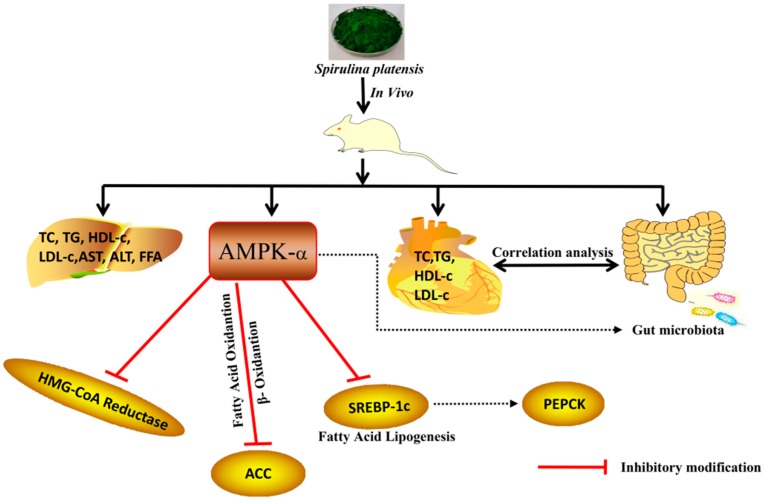
Ultra-high performance liquid chromatography coupled with photo-diode array detector and electrospray ionization-mass spectrometry was employed to analyze the major fatty acids in Spirulina platensis 95% ethanol extract (SPL95). The effects of SPL95 on hepatoprotection were evaluated, including liver tissue histopathology, liver, and serum biochemical analysis. The active principle of SPL95 revealed a hypolipidemic effect, as indicated by down-regulating the mRNA and protein levels of sterol regulatory element-binding transcription factor-1c, 3-hydroxy-3-methyl glutaryl coenzyme A reductase, acetyl CoA carboxylase pathway, and upregulating adenosine 5′-monophosphate-activated protein kinase-α in liver. SPL95 enriched the beneficial bacteria, including Prevotella, Alloprevotella, Porphyromonadaceae, Barnesiella, and Paraprevotella. Treatment with SPL95 led to a decrease in microbes, such as Turicibacter, Romboutsia, Phascolarctobacterium, Olsenella, and Clostridium XVIII, which were positively correlated with serum triglyceride, total cholesterol, and low-density-lipoprotein cholesterol levels, but negatively correlated with the serum high-density-lipoprotein cholesterol levels. These results provide evidence that the fatty acid from SPL95 may be used as a novel adjuvant therapy and functional food to regulate gut microbiota in obese and diabetic individuals.
Overview
AI snapshot
Written from the paper’s full text.
TL;DR
SPL95, a 95% ethanol extract of *Spirulina platensis* rich in polyunsaturated fatty acids, improved lipid profiles and liver steatosis in high-fat-diet rats while remodeling gut microbiota. The effects were associated with upregulation of AMPK-α and downregulation of SREBP-1c, HMG-CoA, and ACC pathways.
Key findings
- SPL95 contained ten major components, eight of which were polyunsaturated fatty acids, identified by UPLC-QTOF-MS/MS.
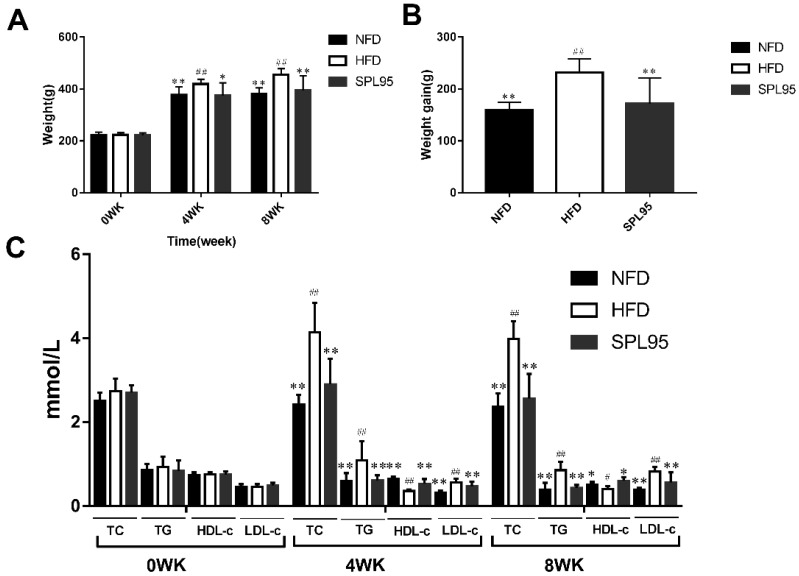
- In high-fat-diet (HFD) rats, SPL95 reduced serum TG and TC by 49.41% and 35.68%, respectively, after 8 weeks; increased HDL-c by 47.22% at 4 weeks and 50.00% at 8 weeks; and lowered LDL-c at 4 and 8 weeks (p < 0.01).
- SPL95 reduced liver TC, TG, LDL-c, ALT, AST, and FFA (p < 0.01), alleviated HFD-induced hepatic steatosis, upregulated AMPK-α, and downregulated SREBP-1c, HMG-CoA, and ACC at mRNA and protein levels.
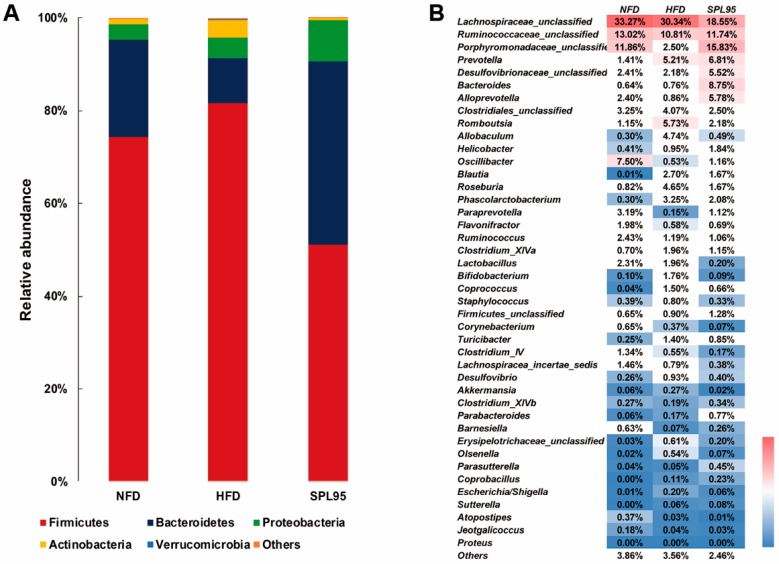
- SPL95 increased Prevotella, Alloprevotella, Porphyromonadaceae, Barnesiella, and Paraprevotella, and decreased Turicibacter, Romboutsia, Phascolarctobacterium, Olsenella, and Clostridium XVIII; Firmicutes fell from 81.51% to 57.09% and Bacteroidetes rose from 9.76% to 33.75% with SPL95 treatment.
Methods
- SPL95 was prepared by 95% ethanol extraction of *S. platensis* and characterized using UPLC-QTOF-MS/MS.
- Twenty-four male Wistar rats were divided into three groups (n = 8 each): normal-fat diet (NFD), high-fat diet (HFD), and HFD plus SPL95 (150 mg/kg/day by gavage) for 8 weeks. The HFD contained 67% normal diet, 20% sugar, 10% lard, and 3% cholesterol.
- Outcomes included serum and liver biochemical assays, liver H&E histopathology, RT-qPCR and western blot for AMPK-α, SREBP-1c, HMG-CoA, and ACC, 16S rRNA V3–V4 sequencing of caecal contents, one-way ANOVA, and Spearman correlation analysis.
Limitations
- Not stated in the paper. Evident from the text: the study used a small sample (n = 8 per group), only male Wistar rats, a single 8-week duration, and one SPL95 dose (150 mg/kg/day), with no dose-response or human validation.
- Evident from the text: microbiota findings are correlational (Spearman analysis) and based on 16S genus-level profiling; no causal experiments (e.g., germ-free, antibiotic, or fecal transplant) were performed.
- Evident from the text: SPL95 is a complex extract, and although the paper attributes effects to polyunsaturated fatty acids, individual compounds were not isolated and tested in vivo; no explicit safety or toxicity data are reported.
Model-written summary. Check it against the paper before relying on it.
Integrity signals
Registry
Cites
Statistics
Figures
Verification
Claims the paper makes
19 Own result · 12 Own interpretation · 10 Not checked yet
A result the paper reports from its own data — it cites no other source for it, so there is none to check. The quote shows it is in the paper.
In the paper
“In particular, the average weight of rats in the HFD group was observably higher than that in the normal-fat-diet (NFD) group (p < 0.01).”
§ Regulatory Efficacy of the Polyunsaturated Fatty Acids from Microalgae Spirulina platensis on Lipid Metabolism and Gut Microbiota in High-Fat Diet Rats > 2. Results > 2.2. Effect of SPL95 on Body Weight and Serum Lipids of High-Fat-Diet Rats
plaincorrelational- Asserted: passes — The authors put it forward as true.
- Checkable: passes — It can be checked against evidence.
- Load-bearing: passes — The paper’s conclusions depend on it.
- Based: passes — The paper gives a reason why it holds.
A result the paper reports from its own data — it cites no other source for it, so there is none to check. The quote shows it is in the paper.
In the paper
“TG and TC concentrations of the SPL95-treated group were lowered significantly when compared to those of HFD (p < 0.01).”
- Also stated in: § 2.2. Effect of SPL95 on Body Weight and Serum Lipids of High-Fat-Diet Rats · plain
“SPL95 had decreased serum TG and TC levels by 49.41% and 35.68% compared to those of the HFD group after 8 weeks’ supplement, respectively.”
§ Regulatory Efficacy of the Polyunsaturated Fatty Acids from Microalgae Spirulina platensis on Lipid Metabolism and Gut Microbiota in High-Fat Diet Rats > 2. Results > 2.2. Effect of SPL95 on Body Weight and Serum Lipids of High-Fat-Diet Rats
plaindirect- Asserted: passes — The authors put it forward as true.
- Checkable: passes — It can be checked against evidence.
- Load-bearing: passes — The paper’s conclusions depend on it.
- Based: passes — The paper gives a reason why it holds.
- Also stated in: § 2.2. Effect of SPL95 on Body Weight and Serum Lipids of High-Fat-Diet Rats · plain
A result the paper reports from its own data — it cites no other source for it, so there is none to check. The quote shows it is in the paper.
In the paper
“The HDL-c levels of the SPL95 treatment group were significantly increased by 47.22% (p < 0.01) and 50.00% (p < 0.05) compared to those of the HFD group at the end of the 4th or 8th week, respectively.”
§ Regulatory Efficacy of the Polyunsaturated Fatty Acids from Microalgae Spirulina platensis on Lipid Metabolism and Gut Microbiota in High-Fat Diet Rats > 2. Results > 2.2. Effect of SPL95 on Body Weight and Serum Lipids of High-Fat-Diet Rats
plaindirect- Asserted: passes — The authors put it forward as true.
- Checkable: passes — It can be checked against evidence.
- Load-bearing: passes — The paper’s conclusions depend on it.
- Based: passes — The paper gives a reason why it holds.
A result the paper reports from its own data — it cites no other source for it, so there is none to check. The quote shows it is in the paper.
In the paper
“Compared with the high fat diet-induced HFD model, the SPL95 significantly reduced the body weight of rats after 8 weeks of treatment.”
§ Regulatory Efficacy of the Polyunsaturated Fatty Acids from Microalgae Spirulina platensis on Lipid Metabolism and Gut Microbiota in High-Fat Diet Rats > 2. Results > 2.2. Effect of SPL95 on Body Weight and Serum Lipids of High-Fat-Diet Rats
plaindirect- Asserted: passes — The authors put it forward as true.
- Checkable: passes — It can be checked against evidence.
- Load-bearing: passes — The paper’s conclusions depend on it.
- Based: passes — The paper gives a reason why it holds.
A result the paper reports from its own data — it cites no other source for it, so there is none to check. The quote shows it is in the paper.
In the paper
“Similarly, the LDL-c levels in the SPL95 group were significantly lower than those of the HFD group after 4 and 8 weeks of treatment (p < 0.01).”
§ Regulatory Efficacy of the Polyunsaturated Fatty Acids from Microalgae Spirulina platensis on Lipid Metabolism and Gut Microbiota in High-Fat Diet Rats > 2. Results > 2.2. Effect of SPL95 on Body Weight and Serum Lipids of High-Fat-Diet Rats
plaindirect- Asserted: passes — The authors put it forward as true.
- Checkable: passes — It can be checked against evidence.
- Load-bearing: passes — The paper’s conclusions depend on it.
- Based: passes — The paper gives a reason why it holds.
A result the paper reports from its own data — it cites no other source for it, so there is none to check. The quote shows it is in the paper.
In the paper
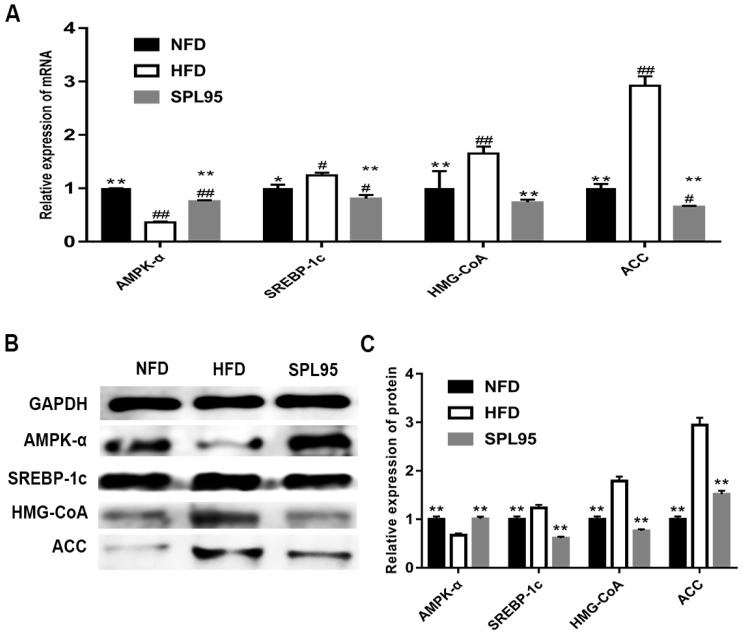
“The SREBP-1, HMGCR, ACC (p < 0.01), and AMPK-α (p < 0.05) had the same trends at protein levels.”
§ Regulatory Efficacy of the Polyunsaturated Fatty Acids from Microalgae Spirulina platensis on Lipid Metabolism and Gut Microbiota in High-Fat Diet Rats > 2. Results > 2.5. Effect of SPL95 on mRNA and Protein Levels Involved in Lipid and Glucose Metabolism
plaincorrelational- Asserted: passes — The authors put it forward as true.
- Checkable: passes — It can be checked against evidence.
- Load-bearing: passes — The paper’s conclusions depend on it.
- Based: passes — The paper gives a reason why it holds.
A result the paper reports from its own data — it cites no other source for it, so there is none to check. The quote shows it is in the paper.
In the paper
“SPL95 enriched the beneficial bacteria, including Prevotella, Alloprevotella, Porphyromonadaceae, Barnesiella, and Paraprevotella.”
- Also stated in: § 2.6. SPL95 Modulated Gut Microbiota of High-Fat-Diet Rats · plain
“Through 8 weeks of treatment, great changes were made to the relative abundance of specific taxa, such as Ruminococcaceae, Porphyromonadaceae, Prevotella, Desulfovibrionaceae, Bacteroides, Alloprevotella, Helicobacter, Paraprevotella, Oscillibacter, and Barnesiella, which happened the most prominent increase after SPL95 administration at the genus level.”
§ Regulatory Efficacy of the Polyunsaturated Fatty Acids from Microalgae Spirulina platensis on Lipid Metabolism and Gut Microbiota in High-Fat Diet Rats > Abstract
plaindirect- Asserted: passes — The authors put it forward as true.
- Checkable: passes — It can be checked against evidence.
- Load-bearing: passes — The paper’s conclusions depend on it.
- Based: passes — The paper gives a reason why it holds.
- Also stated in: § 2.6. SPL95 Modulated Gut Microbiota of High-Fat-Diet Rats · plain
A result the paper reports from its own data — it cites no other source for it, so there is none to check. The quote shows it is in the paper.
In the paper
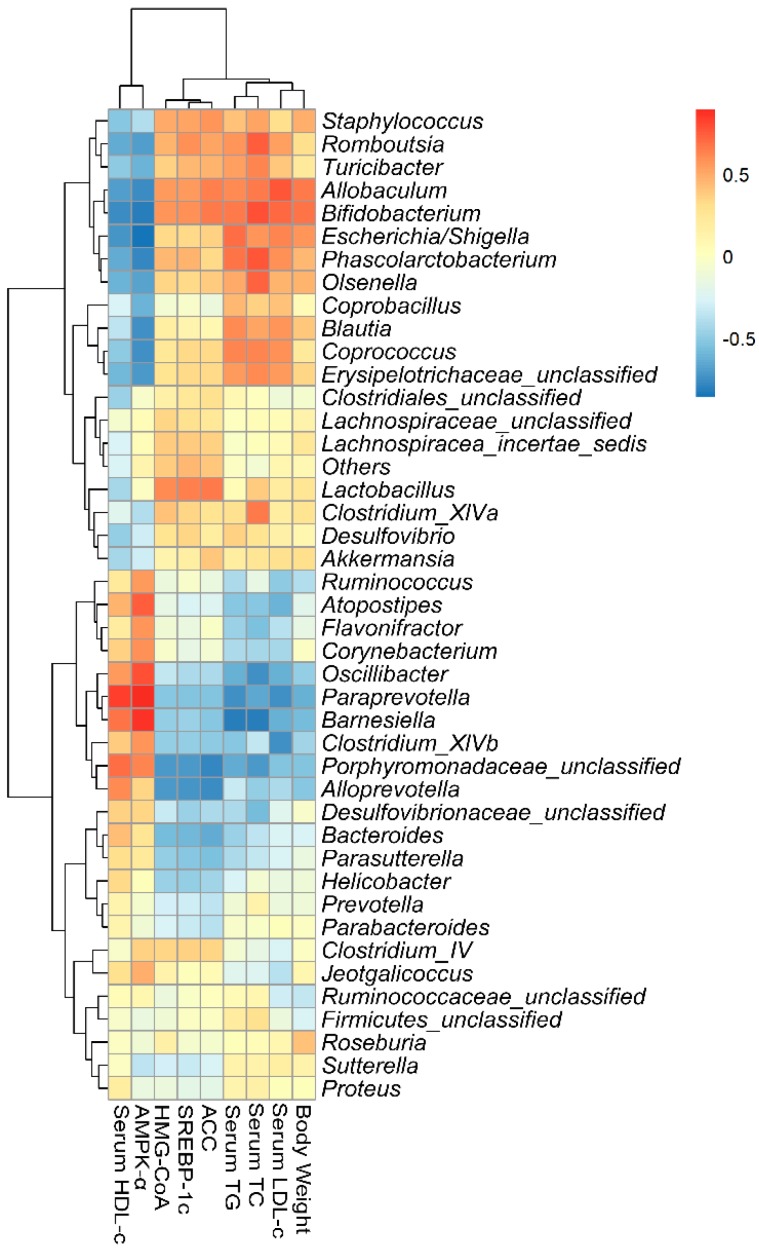
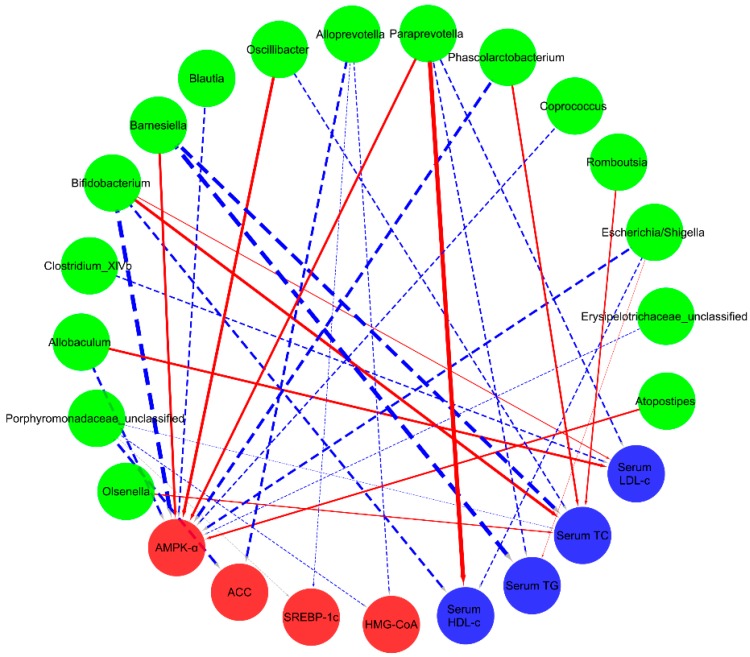
“Moreover, the relative abundances of Porphyromonadaceae and Alloprevotella revealed negative relationships with liver HMG-CoA, SREBP-1c, and ACC”
§ Regulatory Efficacy of the Polyunsaturated Fatty Acids from Microalgae Spirulina platensis on Lipid Metabolism and Gut Microbiota in High-Fat Diet Rats > 2. Results > 2.7. Correlations of Biochemical Data and Key Phylotypes of Caecal Microbiota
plaincorrelational- Asserted: passes — The authors put it forward as true.
- Checkable: passes — It can be checked against evidence.
- Load-bearing: passes — The paper’s conclusions depend on it.
- Based: passes — The paper gives a reason why it holds.
A result the paper reports from its own data — it cites no other source for it, so there is none to check. The quote shows it is in the paper.
In the paper
“SPL95 treatment could downregulate the mRNA expression of HMG-CoA, ACC, and SREBP-1c genes (p < 0.01).”
§ Regulatory Efficacy of the Polyunsaturated Fatty Acids from Microalgae Spirulina platensis on Lipid Metabolism and Gut Microbiota in High-Fat Diet Rats > 2. Results > 2.5. Effect of SPL95 on mRNA and Protein Levels Involved in Lipid and Glucose Metabolism
hedgeddirect- Asserted: passes — The authors put it forward as true.
- Checkable: passes — It can be checked against evidence.
- Load-bearing: passes — The paper’s conclusions depend on it.
- Based: passes — The paper gives a reason why it holds.
A result the paper reports from its own data — it cites no other source for it, so there is none to check. The quote shows it is in the paper.
In the paper
“Treatment with SPL95 led to a decrease in microbes, such as Turicibacter, Romboutsia, Phascolarctobacterium, Olsenella, and Clostridium XVIII”
- Also stated in: § 2.6. SPL95 Modulated Gut Microbiota of High-Fat-Diet Rats · plain
“Furthermore, the numbers of Lachnospiraceae_unclassified, Romboutsia, Allobaculum, Roseburia, Clostridium_XlVa, Erysipelotrichaceae, Coprococcus, Turicibacter, Escherichia/Shigella, Clostridiales, Phascolarctobacterium, and Desulfovibrio decreased in the intestinal contents of SPL95-fed rats compared to those of the HFD group.”
§ Regulatory Efficacy of the Polyunsaturated Fatty Acids from Microalgae Spirulina platensis on Lipid Metabolism and Gut Microbiota in High-Fat Diet Rats > Abstract
plaindirect- Asserted: passes — The authors put it forward as true.
- Checkable: passes — It can be checked against evidence.
- Load-bearing: passes — The paper’s conclusions depend on it.
- Based: passes — The paper gives a reason why it holds.
- Also stated in: § 2.6. SPL95 Modulated Gut Microbiota of High-Fat-Diet Rats · plain
- It may state two separate claims as one. 17
- Probably not a substantial claim. 8
- The quote only partly states this claim. 1
A result the paper reports from its own data — it cites no other source for it, so there is none to check. The quote shows it is in the paper.
In the paper
“The analysis of SPL95 resulted in the isolation of ten major components, eight of which were polyunsaturated fatty acids (Figure S1).”
§ Regulatory Efficacy of the Polyunsaturated Fatty Acids from Microalgae Spirulina platensis on Lipid Metabolism and Gut Microbiota in High-Fat Diet Rats > 2. Results > 2.1. Characterization of Potent Major Compounds
plain- Asserted: passes — The authors put it forward as true.
- Checkable: passes — It can be checked against evidence.
- Load-bearing: unclear — It is unclear whether the paper’s conclusions depend on it.
- Based: passes — The paper gives a reason why it holds.
It may state two separate claims as one.
A result the paper reports from its own data — it cites no other source for it, so there is none to check. The quote shows it is in the paper.
In the paper
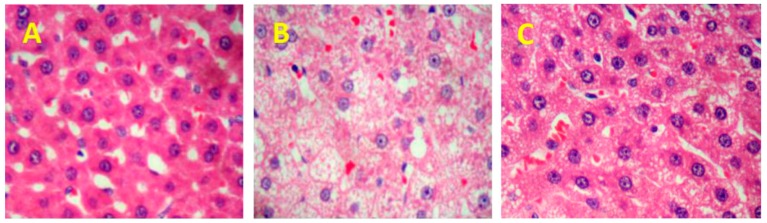
“However, treatment of liver with SPL95 alleviated hepatocyte injury and inflammation in hyperlipemia rats except for a few fat droplets (Figure 2C), which showed that SPL95 has displayed a protective effect on the liver.”
§ Regulatory Efficacy of the Polyunsaturated Fatty Acids from Microalgae Spirulina platensis on Lipid Metabolism and Gut Microbiota in High-Fat Diet Rats > 2. Results > 2.3. SPL95 Attenuates HFD-Induced Hepatic Steatosis
plaindirect- Asserted: passes — The authors put it forward as true.
- Checkable: passes — It can be checked against evidence.
- Load-bearing: passes — The paper’s conclusions depend on it.
- Based: passes — The paper gives a reason why it holds.
It may state two separate claims as one.
A result the paper reports from its own data — it cites no other source for it, so there is none to check. The quote shows it is in the paper.
In the paper
“TC, TG, LDL-c, and free fatty acids (FFA) levels were significantly increased in the HFD group over those in the NFD group. Meanwhile, HDL-c levels were decreased, which showed that the fatty liver rat model has been successfully established.”
§ Regulatory Efficacy of the Polyunsaturated Fatty Acids from Microalgae Spirulina platensis on Lipid Metabolism and Gut Microbiota in High-Fat Diet Rats > 2. Results > 2.4. Effect of SPL95 on Liver Function
plaindirect- Asserted: passes — The authors put it forward as true.
- Checkable: passes — It can be checked against evidence.
- Load-bearing: passes — The paper’s conclusions depend on it.
- Based: passes — The paper gives a reason why it holds.
It may state two separate claims as one.
A result the paper reports from its own data — it cites no other source for it, so there is none to check. The quote shows it is in the paper.
In the paper
“The transcription level of AMPK-α was significantly upregulated by SPL95 compared to that of HFD rats (p < 0.01), which was similar to that observed in NFD rats.”
§ Regulatory Efficacy of the Polyunsaturated Fatty Acids from Microalgae Spirulina platensis on Lipid Metabolism and Gut Microbiota in High-Fat Diet Rats > 2. Results > 2.5. Effect of SPL95 on mRNA and Protein Levels Involved in Lipid and Glucose Metabolism
plaindirect- Asserted: passes — The authors put it forward as true.
- Checkable: passes — It can be checked against evidence.
- Load-bearing: passes — The paper’s conclusions depend on it.
- Based: passes — The paper gives a reason why it holds.
It may state two separate claims as one.
A result the paper reports from its own data — it cites no other source for it, so there is none to check. The quote shows it is in the paper.
In the paper
“More interestingly, the relative abundance of Paraprevotella showed positive relationships with serum HDL-c and liver AMPK-α.”
§ Regulatory Efficacy of the Polyunsaturated Fatty Acids from Microalgae Spirulina platensis on Lipid Metabolism and Gut Microbiota in High-Fat Diet Rats > 2. Results > 2.7. Correlations of Biochemical Data and Key Phylotypes of Caecal Microbiota
plaindirect- Asserted: fails — The authors may not put it forward as true.
- Checkable: passes — It can be checked against evidence.
- Load-bearing: passes — The paper’s conclusions depend on it.
- Based: fails — The paper may give no reason why it holds.
Probably not a substantial claim. The authors may not put it forward as true. The paper may give no reason why it holds. It may state two separate claims as one. The quote only partly states this claim.
A result the paper reports from its own data — it cites no other source for it, so there is none to check. The quote shows it is in the paper.
In the paper
“These strains were positively correlated with serum TG, TC, and LDL-c levels, or liver SREBP-1c, HMG-CoA, and ACC levels, while negatively with serum HDL-c and liver AMPK-α levels (Figure 5).”
§ Regulatory Efficacy of the Polyunsaturated Fatty Acids from Microalgae Spirulina platensis on Lipid Metabolism and Gut Microbiota in High-Fat Diet Rats > 2. Results > 2.7. Correlations of Biochemical Data and Key Phylotypes of Caecal Microbiota
plaincorrelational- Asserted: passes — The authors put it forward as true.
- Checkable: passes — It can be checked against evidence.
- Load-bearing: passes — The paper’s conclusions depend on it.
- Based: passes — The paper gives a reason why it holds.
It may state two separate claims as one.
A result the paper reports from its own data — it cites no other source for it, so there is none to check. The quote shows it is in the paper.
In the paper
“Firmicutes (57.09%) was significantly decreased and Bacteroidetes (33.75%) was significantly increased over time with SPL95 treatment”
- Also stated in: § 3. Discussion · plain
“Moreover, SPL95 has decreased the percentage of Firmicutes and increased the percentage of Bacteroidetes in cecal contents.”
§ Regulatory Efficacy of the Polyunsaturated Fatty Acids from Microalgae Spirulina platensis on Lipid Metabolism and Gut Microbiota in High-Fat Diet Rats > 2. Results > 2.6. SPL95 Modulated Gut Microbiota of High-Fat-Diet Rats
plaindirect- Asserted: passes — The authors put it forward as true.
- Checkable: passes — It can be checked against evidence.
- Load-bearing: passes — The paper’s conclusions depend on it.
- Based: passes — The paper gives a reason why it holds.
It may state two separate claims as one.
- Also stated in: § 3. Discussion · plain
A result the paper reports from its own data — it cites no other source for it, so there is none to check. The quote shows it is in the paper.
In the paper
“The therapeutic effect of the SPL95-supplemented group was determined by a decrease in lipid parameters, such as reductions in TC, TG, LDL-c, alanine transaminase (ALT), aspartate transaminase (AST), and FFA levels (p < 0.01).”
§ Regulatory Efficacy of the Polyunsaturated Fatty Acids from Microalgae Spirulina platensis on Lipid Metabolism and Gut Microbiota in High-Fat Diet Rats > 2. Results > 2.4. Effect of SPL95 on Liver Function
plaindirect- Asserted: passes — The authors put it forward as true.
- Checkable: passes — It can be checked against evidence.
- Load-bearing: passes — The paper’s conclusions depend on it.
- Based: passes — The paper gives a reason why it holds.
It may state two separate claims as one.
A result the paper reports from its own data — it cites no other source for it, so there is none to check. The quote shows it is in the paper.
In the paper
“And HFD also induced a significant phylum-wide shift between Bacteroidetes (9.76%) and Firmicutes (81.51%), which was modified by SPL95 treatment during the active period.”
§ Regulatory Efficacy of the Polyunsaturated Fatty Acids from Microalgae Spirulina platensis on Lipid Metabolism and Gut Microbiota in High-Fat Diet Rats > 2. Results > 2.6. SPL95 Modulated Gut Microbiota of High-Fat-Diet Rats
plaindirect- Asserted: passes — The authors put it forward as true.
- Checkable: passes — It can be checked against evidence.
- Load-bearing: passes — The paper’s conclusions depend on it.
- Based: passes — The paper gives a reason why it holds.
It may state two separate claims as one.
In the paper
“The 3-hydroxy-3-methyl glutaryl coenzyme A reductase (HMG-CoA), as the rate-limiting enzyme in cholesterol biosynthesis, is regulated through a negative feedback mechanism [12].”
§ Regulatory Efficacy of the Polyunsaturated Fatty Acids from Microalgae Spirulina platensis on Lipid Metabolism and Gut Microbiota in High-Fat Diet Rats > 1. Introduction
What the sources say
- Not checked yetcites [12] Deboseboyd, 2008, Feedback regulation of cholesterol synthesis: Sterol-accelerated ubiquitination and degradation of HMG-CoA reductase, Cell Res. source
plaindirect- Asserted: passes — The authors put it forward as true.
- Checkable: passes — It can be checked against evidence.
- Load-bearing: fails — The paper’s conclusions may not depend on it.
- Based: passes — The paper gives a reason why it holds.
Probably not a substantial claim. The paper’s conclusions may not depend on it. It may state two separate claims as one.
None of the sources cited for this claim have been checked yet.
In the paper
“Moreover, ethanol extracts of many algae can change the gut microbiota [6,14].”
§ Regulatory Efficacy of the Polyunsaturated Fatty Acids from Microalgae Spirulina platensis on Lipid Metabolism and Gut Microbiota in High-Fat Diet Rats > 1. Introduction
What the sources say
- Not checked yetcites [6] Zhao, 2018, Bioactive compounds from marine macroalgae and their hypoglycemic benefits, Trends Food Sci. Technol. source
- Not checked yetcites [14] Zhao, C., Yang, C.F., Wai, S.T.C., Zhang, Y.B., Portillo, M.Y., Paoli, P., Wu, Y.J., Cheang, W.S., Liu, B., and Carpéné, C. (2018). Regulation of glucose metabolism by bioactive phytochemicals for the management of type 2 diabetes mellitus. Crit. Rev. Food Sci. source
plaindirect- Asserted: passes — The authors put it forward as true.
- Checkable: passes — It can be checked against evidence.
- Load-bearing: fails — The paper’s conclusions may not depend on it.
- Based: passes — The paper gives a reason why it holds.
Probably not a substantial claim. The paper’s conclusions may not depend on it.
In the paper
“The serine kinase adenosine 5’-monophosphate-activated protein kinase is an intracellular energy sensor that is a key factor that plays a role in regulating glucose and lipid metabolism [10].”
§ Regulatory Efficacy of the Polyunsaturated Fatty Acids from Microalgae Spirulina platensis on Lipid Metabolism and Gut Microbiota in High-Fat Diet Rats > 1. Introduction
What the sources say
- Not checked yetcites [10] 2014, AMP-activated protein kinase: A key regulator of energy balance with many roles in human disease, J. Intern. Med. source
plaindirect- Asserted: passes — The authors put it forward as true.
- Checkable: passes — It can be checked against evidence.
- Load-bearing: fails — The paper’s conclusions may not depend on it.
- Based: passes — The paper gives a reason why it holds.
Probably not a substantial claim. The paper’s conclusions may not depend on it. It may state two separate claims as one.
In the paper
“Acetyl CoA carboxylase (ACC), as the rate-limiting enzyme in de-novo lipogenesis, exists around the mitochondria and controls β-oxidation of fatty acids in the mitochondria [13].”
§ Regulatory Efficacy of the Polyunsaturated Fatty Acids from Microalgae Spirulina platensis on Lipid Metabolism and Gut Microbiota in High-Fat Diet Rats > 1. Introduction
What the sources say
- Not checked yetcites [13] Munday, 2002, Regulation of mammalian acetyl-CoA carboxylase, Biochem. Soc. Trans. source
plaindirect- Asserted: passes — The authors put it forward as true.
- Checkable: passes — It can be checked against evidence.
- Load-bearing: fails — The paper’s conclusions may not depend on it.
- Based: passes — The paper gives a reason why it holds.
Probably not a substantial claim. The paper’s conclusions may not depend on it. It may state two separate claims as one.
In the paper
“Recent studies have shown that dietary factors play a role in regulating metabolism, and making it a safe and economic way to treat LMD [4].”
§ Regulatory Efficacy of the Polyunsaturated Fatty Acids from Microalgae Spirulina platensis on Lipid Metabolism and Gut Microbiota in High-Fat Diet Rats > 1. Introduction
What the sources say
- Not checked yetcites [4] Sarin, 2016, Effects of preoperative statin on liver reperfusion injury in major hepatic resection: A pilot study, Updates Surg. source
plaindirect- Asserted: passes — The authors put it forward as true.
- Checkable: passes — It can be checked against evidence.
- Load-bearing: passes — The paper’s conclusions depend on it.
- Based: passes — The paper gives a reason why it holds.
It may state two separate claims as one.
A conclusion the paper draws from its own results — it cites no other source for it, so there is none to check. The quote shows it is in the paper.
In the paper
“Therefore, SPL95 may be beneficial for anti-hyperlipidemia and may reduce the risk of LMD.”
§ Regulatory Efficacy of the Polyunsaturated Fatty Acids from Microalgae Spirulina platensis on Lipid Metabolism and Gut Microbiota in High-Fat Diet Rats > 3. Discussion
hedgedconditional- Asserted: passes — The authors put it forward as true.
- Checkable: passes — It can be checked against evidence.
- Load-bearing: passes — The paper’s conclusions depend on it.
- Based: passes — The paper gives a reason why it holds.
It may state two separate claims as one.
In the paper
“These bacteria are short chain fatty acid (SCFA) producers and negatively correlated with nonalcoholic fatty liver disease and LMD [29].”
§ Regulatory Efficacy of the Polyunsaturated Fatty Acids from Microalgae Spirulina platensis on Lipid Metabolism and Gut Microbiota in High-Fat Diet Rats > 3. Discussion
What the sources say
- Not checked yetcites [29] Shang, 2017, Dietary fucoidan improves metabolic syndrome in association with increased Akkermansia population in the gut microbiota of high-fat diet-fed mice, J. Funct. Foods. source
plaincorrelational- Asserted: passes — The authors put it forward as true.
- Checkable: passes — It can be checked against evidence.
- Load-bearing: passes — The paper’s conclusions depend on it.
- Based: passes — The paper gives a reason why it holds.
It may state two separate claims as one.
In the paper
“Moreover, Barnesiella spp. regulates the composition of the microbiota and optimizes host survival [28].”
§ Regulatory Efficacy of the Polyunsaturated Fatty Acids from Microalgae Spirulina platensis on Lipid Metabolism and Gut Microbiota in High-Fat Diet Rats > 3. Discussion
What the sources say
- Not checked yetcites [28] Ubeda, 2013, Intestinal microbiota containing Barnesiella species cures vancomycin-resistant Enterococcus faecium colonization, Infect. Immun. source
plaindirect- Asserted: passes — The authors put it forward as true.
- Checkable: passes — It can be checked against evidence.
- Load-bearing: fails — The paper’s conclusions may not depend on it.
- Based: passes — The paper gives a reason why it holds.
Probably not a substantial claim. The paper’s conclusions may not depend on it. It may state two separate claims as one.
In the paper
“Long-term intake of HFD is associated with metabolic syndrome in humans and rodents [19].”
§ Regulatory Efficacy of the Polyunsaturated Fatty Acids from Microalgae Spirulina platensis on Lipid Metabolism and Gut Microbiota in High-Fat Diet Rats > 3. Discussion
What the sources say
- Not checked yetcites [19] Buettner, 2006, Defining high-fat-diet rat models: Metabolic and molecular effects of different fat types, J. Mol. Endocrinol. source
plaincorrelational- Asserted: passes — The authors put it forward as true.
- Checkable: passes — It can be checked against evidence.
- Load-bearing: fails — The paper’s conclusions may not depend on it.
- Based: passes — The paper gives a reason why it holds.
Probably not a substantial claim. The paper’s conclusions may not depend on it.
In the paper
“Sterol regulatory element-binding transcription factor-1c (SREBP-1c) can preferentially enhance the transcription of genes required for fatty acid synthesis [11].”
§ Regulatory Efficacy of the Polyunsaturated Fatty Acids from Microalgae Spirulina platensis on Lipid Metabolism and Gut Microbiota in High-Fat Diet Rats > 1. Introduction
What the sources say
- Not checked yetcites [11] Cheng, 2017, (-)-Epicatechin regulates blood lipids and attenuates hepatic steatosis in rats fed high-fat diet, Mol. Nutr. Food Res. source
plaindirect- Asserted: passes — The authors put it forward as true.
- Checkable: passes — It can be checked against evidence.
- Load-bearing: fails — The paper’s conclusions may not depend on it.
- Based: passes — The paper gives a reason why it holds.
Probably not a substantial claim. The paper’s conclusions may not depend on it.
In the paper
“Allopathic hypolipidemic drugs are available at large in the market, but with their own adverse effects and contraindications [3].”
§ Regulatory Efficacy of the Polyunsaturated Fatty Acids from Microalgae Spirulina platensis on Lipid Metabolism and Gut Microbiota in High-Fat Diet Rats > 1. Introduction
What the sources say
- Not checked yetcites [3] Waness, 2008, Simvastatin-induced rhabdomyolysis and acute renal injury, Blood Purif. source
plain- Asserted: passes — The authors put it forward as true.
- Checkable: passes — It can be checked against evidence.
- Load-bearing: passes — The paper’s conclusions depend on it.
- Based: passes — The paper gives a reason why it holds.
It may state two separate claims as one.
The paper relies on this without support.
The observed effects of SPL95 are attributable to its polyunsaturated fatty acids rather than other components.
“Regulatory Efficacy of the Polyunsaturated Fatty Acids from Microalgae Spirulina platensis on Lipid Metabolism and Gut Microbiota in High-Fat Diet Rats”
“Taken together, the polyunsaturated fatty acids from S. platensis were able to influence the lipid metabolism of Wistar rats fed with a high-fat diet.”
The paper relies on this without support.
Findings in HFD Wistar rats can be extrapolated to obese and diabetic humans.
“These results provide evidence that the fatty acid from SPL95 may be used as a novel adjuvant therapy and functional food to regulate gut microbiota in obese and diabetic individuals.”
Claims other papers make about this one
Each is checked against this paper’s own text: does it say what the citing paper says it does?
In the citing paper
“Li et al found that spirulina given for 8 weeks increased HDL-C and lowered LDL-C, TG and TC levels when fed a high fat diet.29 Similar to other previous studies, it was also shown to normalise hepatic steatosis with improvements in liver function tests, including transaminases, free fatty acids and overall lipid profile.”
From Effects of spirulina on weight loss and blood lipids: A review (2020) · cites this paper as [29]
In the citing paper
“Additionally, spirulina can alter gut microbiota to have lipid lowering effects. Studies have revealed an increase in abundance of Prevotella, Porphyromonadaceae, Barnesiella and Paraprevotella.”
From Effects of spirulina on weight loss and blood lipids: A review (2020) · cites this paper as [29]
Citations
Cites
SREBPs: activators of the complete program of cholesterol and fatty acid synthesis in the liver
Horton, J. D., Goldstein, J. L., & Brown, M. S. (2002) · Journal of Clinical Investigation · doi:10.1172/jci15593 · Cited by 4,794
SREBPs: activators of the complete program of cholesterol and fatty acid synthesis in the liver
Horton, J. D., Goldstein, J. L., & Brown, M. S. (2002) · Journal of Clinical Investigation · doi:10.1172/jci0215593 · Cited by 4,092
Inflammasome-mediated dysbiosis regulates progression of NAFLD and obesity
Henao-Mejia, J., Elinav, E., Jin, C., Hao, L., Mehal, W. Z., Strowig, T., Thaiss, C. A., Kau, A. L., Eisenbarth, S. C., Jurczak, M. J., et al. (2012) · Nature · doi:10.1038/nature10809 · Cited by 2,435
Lovastatin and beyond: the history of the HMG-CoA reductase inhibitors
Tobert, J. A. (2003) · Nature Reviews Drug Discovery · doi:10.1038/nrd1112 · Cited by 896
Defining high-fat-diet rat models: Metabolic and molecular effects of different fat types
Buettner, R., Parhofer, K. G., Woenckhaus, M., Wrede, C. E., Kunz-Schughart, L. A., Schölmerich, J., & Bollheimer, L. C. (2006) · Journal of Molecular Endocrinology · doi:10.1677/jme.1.01909 · Cited by 704
Ubeda, C., Bucci, V., Caballero, S., Djukovic, A., Toussaint, N. C., Equinda, M., Lipuma, L., Ling, L., Gobourne, A., No, D., et al. (2013) · Infection and Immunity · doi:10.1128/iai.01197-12 · Cited by 466
Hypolipidemic, Antioxidant, and Antiinflammatory Activities of Microalgae Spirulina
Deng, R., & Chow, T. (2010) · Cardiovascular Therapeutics · doi:10.1111/j.1755-5922.2010.00200.x · Cited by 435
DeBose-Boyd, R. A. (2008) · Cell Research · doi:10.1038/cr.2008.61 · Cited by 391
Regulation of mammalian acetyl-CoA carboxylase
Munday, M. R. (2002) · Biochemical Society Transactions · doi:10.1042/bst0301059 · Cited by 301
Diversity in gut bacterial community of school-age children in Asia
Nakayama, J., Watanabe, K., Jiang, J., Matsuda, K., Chao, S.-H., Haryono, P., La-ongkham, O., Sarwoko, M.-A., Sujaya, I. N., Zhao, L., et al. (2015) · Scientific Reports · doi:10.1038/srep08397 · Cited by 297
Cited by
Sorted by citations
Extraction of lipids from microalgae using classical and innovative approaches
Zhou, J., Wang, M., Saraiva, J. A., Martins, A. P., Pinto, C. A., Prieto, M. A., Simal‐Gándara, J., Cao, H., Xiao, J., & Barba, F. J. (2022) · Food Chemistry · doi:10.1016/j.foodchem.2022.132236 · Cited by 242
Ramos-Romero, S., Torrella, J. R., Pagès, T., Viscor, G., & Torres, J. L. (2021) · Nutrients · doi:10.3390/nu13020563 · Cited by 134
Oleanolic Acid Targets the Gut–Liver Axis to Alleviate Metabolic Disorders and Hepatic Steatosis
Xue, C., Li, Y., Lv, H., Zhang, L., Bi, C., Dong, N., Shan, A. S., & Wang, J. (2021) · Journal of Agricultural and Food Chemistry · doi:10.1021/acs.jafc.1c02257 · Cited by 124
Gao, X., Chang, S., Liu, S., Peng, L., Xie, J., Dong, W., Tian, Y., & Sheng, J. (2020) · mSystems · doi:10.1128/msystems.00391-20 · Cited by 122
Bioactive Properties of Spirulina: A Review
Anvar, A. A., & Nowruzi, B. (2021) · Microbial Bioactives · doi:10.25163/microbbioacts.412117b0719110521 · Cited by 116
Yuan, Y., Lü, L., Nan, B., Yang, C., & Yan, H. (2021) · Journal of Agricultural and Food Chemistry · doi:10.1021/acs.jafc.1c05014 · Cited by 106
Brandt, A., Hernández-Arriaga, A. M., Kehm, R., Sánchez, V., Jin, C. J., Nier, A., Baumann, A., Camarinha‐Silva, A., & Bergheim, I. (2019) · Scientific Reports · doi:10.1038/s41598-019-43228-0 · Cited by 108
Effects of spirulina on weight loss and blood lipids: A review
DiNicolantonio, J. J., Bhat, A. G., & OKeefe, J. (2020) · Open Heart · doi:10.1136/openhrt-2018-001003 · Cited by 98
Li, T., Tong, A.-J., Liu, Y.-Y., Huang, Z., Wan, X., Pan, Y., Jia, R., Liu, B., Chen, X., & Zhao, C. (2019) · Food and Chemical Toxicology · doi:10.1016/j.fct.2019.06.005 · Cited by 97
Self-citationYu, T., Wang, Y., Chen, X., Xiong, W., Tang, Y., & Lin, L. (2020) · Journal of Cellular and Molecular Medicine · doi:10.1111/jcmm.15489 · Cited by 97
Wu, S., Zuo, J., Cheng, Y., Zhang, Y., Zhang, Z., Wu, M., Yang, Y., & Tong, H. (2021) · Food Research International · doi:10.1016/j.foodres.2021.110550 · Cited by 93
Wan, X., Li, T.-T., Zhong, R.-T., Chen, H., Xia, X., Gao, L., Gao, X., Liu, B., Zhang, H., & Zhao, C. (2019) · Food and Chemical Toxicology · doi:10.1016/j.fct.2019.04.017 · Cited by 92
Self-citationWan, X., Li, T., Liu, D., Chen, Y., Liu, Y., Liu, B., Zhang, H., & Zhao, C. (2018) · Marine Drugs · doi:10.3390/md16120498 · Cited by 69
Self-citationLi, R., Yao, Y., Gao, P., & Bu, S. (2021) · Frontiers in Microbiology · doi:10.3389/fmicb.2020.555293 · Cited by 64
Microalgal Lipid Extracts Have Potential to Modulate the Inflammatory Response: A Critical Review
Conde, T., Zabetakis, I., Τσούπρας, Α., Medina, I., Costa, M., Silva, J., Neves, B. M., Domingues, P. M., & Domingues, M. R. (2021) · International Journal of Molecular Sciences · doi:10.3390/ijms22189825 · Cited by 57
Ge, X., Wang, C., Chen, H., Liu, T., Chen, L., Huang, Y., Zeng, F., & Liu, B. (2020) · Food & Function · doi:10.1039/d0fo01840f · Cited by 53
Self-citationPan, Y., Wan, X., Zeng, F., Zhong, R., Guo, W.-L., Lv, X.-C., Zhao, C., & Liu, B. (2019) · International Journal of Biological Macromolecules · doi:10.1016/j.ijbiomac.2019.11.067 · Cited by 46
Self-citationXia, F., Xiang, S., Chen, Z., Song, L., Li, Y., Liao, Z., Ge, B., & Zhou, B. (2021) · Archives of Biochemistry and Biophysics · doi:10.1016/j.abb.2021.109080 · Cited by 52
Zhou, L., Xiao, X., Zhang, Q., Zheng, J., & Deng, M. (2019) · Frontiers in Physiology · doi:10.3389/fphys.2019.00985 · Cited by 46
Associations between Maternal Diet, Body Composition and Gut Microbial Ecology in Pregnancy
Ruebel, M. L., Gilley, S. P., Sims, C. R., Zhong, Y., Turner, D., Chintapalli, S. V., Piccolo, B. D., Andres, A., & Shankar, K. (2021) · Nutrients · doi:10.3390/nu13093295 · Cited by 46
Zhou, L., Xiao, X., Zhang, Q., Zheng, J., Li, M., Wang, X., Deng, M., Zhai, X., & Liu, J. Y. (2019) · Food & Function · doi:10.1039/c9fo01046g · Cited by 42
Zhou, L., Xiao, X., Li, M., Zhang, Q., Yu, M., Zheng, J., & Deng, M. (2020) · Frontiers in Cellular and Infection Microbiology · doi:10.3389/fcimb.2020.00292 · Cited by 41
Spirulina active substance mediated gut microbes improve lipid metabolism in high-fat diet fed rats
Chen, H., Zeng, F., Li, S., Liu, Y., Gong, S., Lv, X., Zhang, J., & Liu, B. (2019) · Journal of Functional Foods · doi:10.1016/j.jff.2019.04.049 · Cited by 40
Self-citationBreaking barriers: bacterial-microalgae symbiotic systems as a probiotic delivery system
Huang, H., Liu, X., Lang, Y., Cui, J., Zhong, D., & Zhou, M. (2024) · Journal of Nanobiotechnology · doi:10.1186/s12951-024-02647-6 · Cited by 39
Zhang, S., Wei, D., Lv, S., Wang, L., An, H., Shao, W., Wang, Y., Huang, Y., Peng, D., & Zhang, Z. (2022) · Journal of Alzheimer s Disease · doi:10.3233/jad-220532 · Cited by 36
Tong, A., Wu, W., Chen, Z., Wen, J., Jia, R., Liu, B., Cao, H., & Zhao, C. (2022) · Current Research in Food Science · doi:10.1016/j.crfs.2022.100427 · Cited by 35
Self-citationLu, M., Sun, J., Zhao, Y., Zhang, H., Li, X., Zhou, J., Dang, H., Zhang, J., Huang, W., Qi, C., et al. (2022) · Frontiers in Nutrition · doi:10.3389/fnut.2022.851541 · Cited by 37
Obtaining Bioproducts from the Studies of Signals and Interactions between Microalgae and Bacteria
Santo, É. D. E., Ishii, M., Pinto, U. M., Matsudo, M. C., & de Carvalho, J. C. M. (2022) · Microorganisms · doi:10.3390/microorganisms10102029 · Cited by 35
Sun, Y., Wang, R., Sun, Y., Zhang, X., Hao, Z., Xu, J., Yang, B., & Guo, S. (2023) · Food Research International · doi:10.1016/j.foodres.2023.113797 · Cited by 35
Huang, X., Chen, Q., Fan, Y., Yang, R., Gong, G., Yan, C., Song, Y., Zhang, B., Xi, S., Huang, Y., et al. (2023) · Biomedicine & Pharmacotherapy · doi:10.1016/j.biopha.2023.114300 · Cited by 38
Papadaki, S., Tricha, N., Panagiotopoulou, M., & Krokida, M. K. (2024) · Marine Drugs · doi:10.3390/md22040152 · Cited by 37
Jin, J. B., Cha, J. W., Shin, I., Jeon, J. Y., Hyun, K., & Pan, C. (2020) · Journal of the Science of Food and Agriculture · doi:10.1002/jsfa.10321 · Cited by 34
Moughaizel, M., Dagher, E., Jablaoui, A., Thorin, C., Rhimi, M., Desfontis, J., & Mallem, Y. (2022) · PLoS ONE · doi:10.1371/journal.pone.0264215 · Cited by 34
Muscle aging amelioration by yeast protein supplementation was associated with gut microbiota
Liao, Y., Zhou, X., Peng, Z., Li, D., Meng, Z., Xu, S., Yang, X., Liu, L., & Yang, W. Q. (2022) · Journal of Functional Foods · doi:10.1016/j.jff.2022.104948 · Cited by 30
Gu, C., Zhou, Z., Yu, Z., He, M., He, L., Luo, Z., Xiao, W., Yang, Q., Zhao, F., Li, W., et al. (2022) · Frontiers in Cellular and Infection Microbiology · doi:10.3389/fcimb.2022.870785 · Cited by 31
He, X., Wang, C., Zhu, Y., Jiang, X., Qiu, Y., Yin, F., Xiong, W., Liu, B., & Huang, Y. (2022) · Algal Research · doi:10.1016/j.algal.2022.102791 · Cited by 32
Self-citationYan, H., Yu, B., Degroote, J., Spranghers, T., Noten, N. V., Majdeddin, M., Poucke, M. V., Peelman, L. J., Vrieze, J. D., Boon, N., et al. (2020) · BMC Veterinary Research · doi:10.1186/s12917-020-02592-0 · Cited by 35
Mei, X., Li, Y., Zhang, X., Zhai, X., Yang, Y., Li, Z., & Li, L. (2024) · Journal of Agricultural and Food Chemistry · doi:10.1021/acs.jafc.3c06370 · Cited by 30
Wang, B., Xu, Y., Zhang, M., Zhang, J., Hou, X., Li, J., Cai, Y., Sun, Z., Ban, Y., & Wang, W. (2020) · American Journal of Physiology-Endocrinology and Metabolism · doi:10.1152/ajpendo.00234.2020 · Cited by 28
Liu, Y., Cai, J., & Zhang, F. (2021) · LWT · doi:10.1016/j.lwt.2021.111976 · Cited by 26
Self-citationWang, Y., Shen, Q., Zhong, S., Chen, Y., & Yang, Y. (2020) · Microorganisms · doi:10.3390/microorganisms8070981 · Cited by 25
Kolluri, G., Gopi, M., Yadav, A. S., Kumar, A., Mariappan, A. K., Tyagi, J. S., Rokade, J. J., & Prabakar, G. (2021) · Journal of Thermal Biology · doi:10.1016/j.jtherbio.2021.103100 · Cited by 25
Application of photosensitive microalgae in targeted tumor therapy
Wang, R., Wang, Z., Zhang, M., Zhong, D., & Zhou, M. (2025) · Advanced Drug Delivery Reviews · doi:10.1016/j.addr.2025.115519 · Cited by 24
Guo, Z., Ali, Q., Abaidullah, M., Gao, Z., Diao, X., Liu, B., Wang, Z., Zhu, X., Cui, Y., Li, D., et al. (2022) · Applied Microbiology and Biotechnology · doi:10.1007/s00253-022-12203-7 · Cited by 24
Self-citationShedding light on the impacts of Spirulina platensis on gut microbiota and related health benefits
Alves, J. L. D. B., Costa, P. C. T. D., Sales, L. C. S. D., Silva Luis, C. C., Bezerra, T. P. T., Souza, M. L. A., Costa, B. A., & de Souza, E. L. (2025) · Critical Reviews in Food Science and Nutrition · doi:10.1080/10408398.2024.2323112 · Cited by 21
Lactobacillus paracasei N1115 attenuates obesity in high‐fat diet‐induced obese mice
Sun, Y., Chen, S., Ren, F., & Li, Y. (2022) · Food Science & Nutrition · doi:10.1002/fsn3.3073 · Cited by 21
Ghanbari, F., Amerizadeh, A., Behshood, P., Moradi, S., & Asgary, S. (2021) · Current Problems in Cardiology · doi:10.1016/j.cpcardiol.2021.100942 · Cited by 21
Ouyang, Y., Liu, D., Zhang, L., Li, X., Chen, X., & Zhao, C. (2021) · Molecular Nutrition & Food Research · doi:10.1002/mnfr.202100564 · Cited by 20
Self-citationWang, Z., Liang, Y., Lu, J., Wei, Z., Bao, Y., Yao, X., Fan, Y., Wang, F., Wang, D., & Zhang, Y. L. (2023) · Frontiers in Veterinary Science · doi:10.3389/fvets.2023.1001621 · Cited by 23
Fermented Garlic Ameliorates Hypercholesterolemia and Inhibits Platelet Activation
Irfan, M., Kim, M., Kim, K., Kim, T., Kim, S., Hong, S.-B., Kim, H. K., & Rhee, M. H. (2019) · Evidence-based Complementary and Alternative Medicine · doi:10.1155/2019/3030967 · Cited by 20
Zhong, S. S., Yang, Y., Huo, J., Sun, Y., Ren, N., Lu, Q., Li, D., Zhan, P., Wu, W., Chen, H., et al. (2023) · Journal of Functional Foods · doi:10.1016/j.jff.2023.105906 · Cited by 19
Basnet, T. B., Srijana, G. C., Basnet, R., Fatima, S., Safdar, M., Sehar, B., Alsubaie, A. S. R., & Zeb, F. (2023) · Access Microbiology · doi:10.1099/acmi.0.000403 · Cited by 16
Deng, D., Lin, X., Liu, Y., Li, C., Jiang, Q., Shi, J., Feng, S., & Lin, Y. (2025) · Lipids in Health and Disease · doi:10.1186/s12944-025-02565-y · Cited by 15
Self-citationCao, B., Sun, Y., Lam, C., Chen, Y., Dri, C. E., & McIntyre, R. S. (2025) · Diabetes Obesity and Metabolism · doi:10.1111/dom.16535 · Cited by 17
Chen, D., Wang, A., Lv, J., Peng, Y., Zheng, Y., Zuo, J., Kan, J., Zong, S., Zeng, X., & Liu, J. (2024) · International Journal of Biological Macromolecules · doi:10.1016/j.ijbiomac.2024.135340 · Cited by 15
Chen, J., Gong, S., Wan, X., Gao, X., Wang, C., Zeng, F., Zhao, C., Liu, B., & Huang, Y. (2020) · Food Science & Nutrition · doi:10.1002/fsn3.2014 · Cited by 14
Self-citationSynergistic Hypolipidemic and Immunomodulatory Activity of Lactobacillus and Spirulina platensis
Hamouda, R. A., Hamza, H. A., Salem, M. L., Kamal, S., Alhasani, R. H., Alsharif, I., Mahrous, H. A., & Abdella, A. (2022) · Fermentation · doi:10.3390/fermentation8050220 · Cited by 14
He, X., Hu, Y., Liu, W., Zhu, G., Zhang, R., You, J., Shao, Y., Li, Y., Zhang, Z., Cui, J., et al. (2022) · Frontiers in Pharmacology · doi:10.3389/fphar.2021.818227 · Cited by 12
Ogbuewu, I. P., & Mbajiorgu, C. A. (2025) · Tropical Animal Health and Production · doi:10.1007/s11250-025-04587-1 · Cited by 11
Wei, X., Gao, Y., Cheng, F., Yun, S., Chang, M., Cao, J., Cheng, Y., & Feng, C. (2022) · Food Technology and Biotechnology · doi:10.17113/ftb.60.04.22.7561 · Cited by 11
Physicochemical properties and anti-diabetic ability of polysaccharides from a thinned peach fruit
Zhou, L., Song, Y., Jiang, Y., Wei, Y., Jiang, S., Chen, Y., Ye, J., & Shao, X. (2023) · Food & Function · doi:10.1039/d3fo03041e · Cited by 11
Navarro, F., Toimil, A., Ramírez, S., P., Y., Fuentes, J. L., Perona, J. S., Castaño, M. Á., Pásaro, R., Vega, J. M., & Vı́lchez, C. (2020) · Journal of Applied Phycology · doi:10.1007/s10811-020-02280-4 · Cited by 10
Yu, J., Liu, C., Wang, M., Liu, Y., Ran, L., Yu, Z., Ma, D., Chen, G., Han, F., You, S., et al. (2024) · Journal of Functional Foods · doi:10.1016/j.jff.2024.106149 · Cited by 12
Self-citationHan, W., Huang, C., Ji, Y., Zhou, L., Chen, J., & Hou, J. (2021) · Frontiers in Medicine · doi:10.3389/fmed.2021.805029 · Cited by 9
Guibourdenche, M., Sabbouri, H. E. K. E., Bonnet-Serrano, F., Djekkoun, N., Khorsi‐Cauet, H., Corona, A., Guibourdenche, J., Bach, V., Anton, P. M., & Gay‐Queheillard, J. (2021) · Cells and Development · doi:10.1016/j.cdev.2021.203678 · Cited by 9
Li, Q., Fu, B., Huang, L., Wang, F., Zhou, D., Yang, Q., Zou, Y., Xiao, Y., Liao, S., & Xing, D. (2024) · Aquaculture Reports · doi:10.1016/j.aqrep.2024.102435 · Cited by 8
Progress in therapeutic applications of microalgae and their bioactive compounds
Geng, X., Qu, J. T., Yin, X., Wang, Q., Li, W., Cui, H., & Qin, S. (2025) · Algal Research · doi:10.1016/j.algal.2025.104226 · Cited by 9
Vasudevan, S. K., Seetharam, S., Dohnalek, M. H., & Cartwright, E. J. (2021) · International Journal of Noncommunicable Diseases · doi:10.4103/2468-8827.330650 · Cited by 10
Spirulina (Arthrospira), as feed additive in finfish and shellfish aquaculture
Ringø, E. (2025) · Aquaculture and Fisheries · doi:10.1016/j.aaf.2025.06.005 · Cited by 9
Sun, W., Du, M., Shen, G., Lai, D., & Wang, J. (2026) · Phycology · doi:10.3390/phycology6010009 · Cited by 9
Wazir, N. U., Khan, I. A., Javed, A., Khan, T., & Jabbar, A. (2023) · Saudi Journal of Biological Sciences · doi:10.1016/j.sjbs.2023.103712 · Cited by 6
Developing natural marine products for treating liver diseases
Wei, Q., & Guo, J. (2022) · World Journal of Clinical Cases · doi:10.12998/wjcc.v10.i8.2369 · Cited by 6
Adiham, A., Zhang, Z., Han, F., Han, C., Yan, Y., Huang, F., Fei, Y., Li, D., & Gong, P. (2025) · Food Bioscience · doi:10.1016/j.fbio.2025.106733 · Cited by 5
Xia, X., Zhang, Z., Xu, Z., Zeng, C., Xiang, X., & Huang, F. (2025) · Food Research International · doi:10.1016/j.foodres.2025.116999 · Cited by 5
Wang, P., Chen, M., Liu, C., & Zheng, L. (2025) · Trends in Food Science & Technology · doi:10.1016/j.tifs.2025.105427 · Cited by 6
Trubetskaya, A., Haseneder, R., Herdegen, V., Leimbrock, L., Pisanó, I., Joseph, Y., Vogt, C., Kaschabek, S. R., & Zuber, J. (2026) · ACS Omega · doi:10.1021/acsomega.5c11039 · Cited by 5
Shaman, A. A., Zidan, N. S., Atteia, H. H., Tayel, A. A., Alzahrani, S., Albishi, L. A., Alsayegh, A. A., Sakran, M., & EL-Ezaly, F. M. (2023) · Biomass Conversion and Biorefinery · doi:10.1007/s13399-023-04866-7 · Cited by 5
Effect of Spirulina on the Rumen Microbiota and Serum Biochemical Parameters of Lambs
Wang, Z., Liu, X., Zhao, M., Ma, W., Wang, Y., Jia, Y., & Ge, G. (2024) · Microorganisms · doi:10.3390/microorganisms12122473 · Cited by 4
Microbial oil, alone or paired with β-glucans, can control hypercholesterolemia in a zebrafish model
Gora, A. H., Rehman, S., Dias, J. P., Fernandes, J. M. O., Olsvik, P. A., Sørensen, M., & Kiron, V. (2023) · Biochimica et Biophysica Acta (BBA) - Molecular and Cell Biology of Lipids · doi:10.1016/j.bbalip.2023.159383 · Cited by 4
Dongkun, D., Jiang, Q., Chang, L., Yunhua, L., Shi, J., Liu, Y., & Lin, X. (2025) · Frontiers in Medicine · doi:10.3389/fmed.2025.1609751 · Cited by 3
Self-citationIatrou, A. M., Michailidou, S., Papadopoulos, G. Α., Afaloniati, H., Lagou, M. K., Kiritsi, M., Argiriou, A., Angelopoulou, K., Poutahidis, T., & Fortomaris, P. D. (2023) · Animals · doi:10.3390/ani13020190 · Cited by 5
Shehata, F., Dwyer, K. M., Axtens, M. J., McGee, S. L., & Rivera, L. R. (2025) · Metabolites · doi:10.3390/metabo15110692 · Cited by 3
Zhang, P., Cui, M.-Y., Shen, Y., Han, B., Yu, W., Wei, T., Zeng, K.-W., & Tu, P. F. (2026) · Microbial Pathogenesis · doi:10.1016/j.micpath.2026.108464 · Cited by 2
Antioxidant Activity of Spirulina Powder in Male Rate with Adenine–Induced Chronic Renal Failure
Yonis, W. (2020) · Medico-Legal Update · doi:10.37506/mlu.v20i4.2082 · Cited by 2
Nutrition and Gut Health: Recent Advances and Implications for Development of Functional Foods
Wu, G. (2023) · International Journal of Molecular Sciences · doi:10.3390/ijms241210075 · Cited by 1
Tu, M., Chen, S., Ma, L., Zhang, J., Cai, G., Wang, T. Z., & Wang, C. (2025) · Biological Trace Element Research · doi:10.1007/s12011-025-04754-3 · Cited by 1
Cardio-protective and Anti-obesity Properties of Polyunsaturated Fatty Acids from Algae
Kariyawasam, K. M. G. M. M., Kariyawasam, K. M. G. M. M., & Wickramasinghe, I. (2025) · Springer eBooks · doi:10.1007/978-981-95-0571-5_11 · Cited by 1
Mbajiorgu, C. A., Ogbuewu, I. P., & Mabelebele, M. (2025) · Journal of Animal Physiology and Animal Nutrition · doi:10.1111/jpn.70016 · Cited by 1
Mucignat, G., Stefanutti, D., Pauletto, M., Pietropoli, E., Lopparelli, R. M., Giantin, M., Dacasto, M., & Ricci, R. (2026) · BMC Veterinary Research · doi:10.1186/s12917-025-05253-2 · Cited by 1
Wang, Y., Jia, Y., Ge, G., Bao, J. R., Ding, X., Liu, X., & Wang, Z. (2026) · Microorganisms · doi:10.3390/microorganisms14020288 · Cited by 1
Assessment of growth and physiological effects of dietary Arthrospira platensis in broiler chickens
Abideen, Z. U., Haider, M. Z., Zaman, M. K., Farooq, M., Majdalawieh, A. F., Abu‐Yousef, I. A., Ruby, T., & Khan, A. A. (2026) · Livestock Science · doi:10.1016/j.livsci.2026.106014 · Cited by 1
Wang, Q., Zhu, L., He, F., Zhu, T., Tang, Y., Chen, C., Zhang, X., & Wang, L. (2026) · Frontiers in Immunology · doi:10.3389/fimmu.2026.1903979 · Cited by 1
Aktaş, A. B. (2024) · Springer eBooks · doi:10.1007/978-3-031-69872-9_7 · Cited by 1
Seaweeds: A Comprehensive Review of Pharmacological Interests
Mohiuddin, A. K. (2019) · International Journal of Clinical Pharmacology & Toxicology · doi:10.19070/2167-910x-1900050
Yurista, S., & Aditiawati, P. (2021) · 3BIO Journal of Biological Science Technology and Management · doi:10.5614/3bio.2021.3.2.3
Utility of Spirulina as Immunity Booster Agent
Yadav, B. (2023) · International Journal of Advanced Research in Science Communication and Technology · doi:10.48175/ijarsct-9151
Cherita, C., Punarvasu, T. P., P, P. K. K., Prashanth, K. G., & Chauhan, V. S. (2025) · Food Bioscience · doi:10.1016/j.fbio.2025.106884
Anticholesterol activities of the microalgae
Hamouda, R. A., Abuelmagd, M. A., Alhumairi, A. M., & El‐Bialy, B. E. (2025) · Elsevier eBooks · doi:10.1016/b978-0-443-22080-7.00040-5
Huang, H., Liu, X., Lang, Y., Cui, J., Zhong, D., & Zhou, M. (2024) · Figshare · doi:10.6084/m9.figshare.26738712
Yan, H., Yu, B., Degroote, J., Spranghers, T., Noten, N. V., Majdeddin, M., Van Poucke, M., Peelman, L., Vrieze, J. D., Boon, N., et al. (2020) · Figshare · doi:10.6084/m9.figshare.13106246
Metadata
- Authors
- Li, T.-T., Liu, Y.-Y., Wan, X.-Z., Huang, Z.-R., Liu, B., & Zhao, C.
- Affiliations
- College of Food Science, Fujian Agriculture and Forestry University, Fuzhou 350002, China
- Fujian Agriculture and Forestry University (CN)
- Quanzhou Normal University (CN)
- Corresponding author
- Liu, Bin
- Zhao, Chao
- ORCID
- Venue
- International Journal of Molecular Sciences
- Publisher
- MDPI AG
- Published
- 2018-10-09
- Volume
- 19
- Issue
- 10
- Pages
- 3075
- ISSN
- 1422-0067 (ISSN-L)
- PMC
- PMC6213792
- OpenAlex
- W2897091331
- Semantic Scholar
- 943985c91e95c4837d28f4b0f33679b49fa991b1
- Cited by
- 103
- References
- 37
- Citations by year
- 2026: 8 · 2025: 16 · 2024: 10 · 2023: 12 · 2022: 15 · 2021: 18 · 2020: 13 · 2019: 10 · 2018: 1
- FWCI
- 3.74
- Type
- journal article
- Language
- en
- Open access
- gold
- dx.doi.org
- Licence
- Locations
- International Journal of Molecular Sciences (publishedVersion, cc-by)
- Europe PMC (PubMed Central) (publishedVersion, other-oa)
- PubMed Central (publishedVersion, cc-by)
- PubMed (publishedVersion)
- Funders
- National Natural Science Foundation of China (2016J06009, 81741163)
- Topics
- Life Sciences › Biochemistry, Genetics and Molecular Biology › Molecular Biology › Gut microbiota and health
- Health Sciences › Nursing › Nutrition and Dietetics › Fatty Acid Research and Health
- Life Sciences › Agricultural and Biological Sciences › Aquatic Science › Seaweed-derived Bioactive Compounds
- Keywords
- Spirulina platensis, polyunsaturated fatty acids, high-fat diet, lipid metabolism, gut microbiota, hepatoprotection, hypolipidemic effect, SREBP-1c, HMG-CoA reductase, acetyl-CoA carboxylase, AMPK, serum lipids, cholesterol, triglycerides, functional foods, obesity, diabetes mellitus
- MeSH terms
- Gastrointestinal Microbiome, Animals, Biopsy, Chromatography, High Pressure Liquid, Fatty Acids, Unsaturated, Fatty Liver, Feces, Glucose, Lipids, Liver Function Tests, Biomarkers, Gene Expression, Spectrometry, Mass, Matrix-Assisted Laser Desorption-Ionization, MAP Kinase Signaling System, Lipid Metabolism, Rats, Spirulina, Diet, High-Fat
About these checks
Registry, retraction, Cites and statistics results are computed, not judged, with one exception: a printed reference that no index lists is read once by a model before it counts as a citation error. Claims are extracted by a model and kept only when their quote appears verbatim in the text; each cited source is then checked, with a model’s help, for whether it says what the claim relies on. Those verdicts can be wrong — read the claim’s quote and the cited source before relying on one.
A language model drew the claims from the paper on 2026-10-07, under version 3 of the claim definition (model deepseek-v4.1-flash, prompt extract-v3).
A second model labelled each claim on 2026-10-07 (model jev-1.13-20260917, definition revision gold-guideline-v0.2).
Statistics and arithmetic are recomputed, not judged.
Confidence bands are shown only for fields calibrated on our annotated test set. None is calibrated yet, so no band is shown.
What counts as a claim ›How we measure confidence ›How we check this ›
Are you an author, or do you see a problem with this page? Request a review
