

The DOI matches its Crossref record; 105 of the 105 references it cites were found in a registry or an index; none of the 119 sources its claims cite is checked for support yet.
Youth and Adolescent Athlete Musculoskeletal Health: Dietary and Nutritional Strategies to Optimise Injury Prevention and Support Recovery
Open accessAbstract
Background: Despite the well-documented benefits of exercise and sports participation, young athletes are particularly vulnerable to musculoskeletal injuries. This is especially true during periods of rapid growth, sports specialisation, and high training loads. While injuries are an inevitable aspect of sports participation, the risk can be minimised by promoting the development of strong, resilient tissues through proper nutrition and injury prevention strategies. Moreover, targeted nutrition strategies can accelerate recovery and rehabilitation, allowing for a quicker return to sports participation. Methods: This narrative review synthesises scientific evidence with practical insights to offer comprehensive dietary recommendations aimed at strengthening tissues and supporting the healing process during recovery and rehabilitation. The selection of all sources cited and synthesised in this narrative review were agreed upon by contributing author consensus, experts in sports nutrition (R.A., H.V., B.D.) and exercise and sports medicine (M.H.). Results: Key topics include factors that contribute to injury susceptibility, general dietary recommendations for growth and development, sports nutrition guidelines, and nutrition considerations during injury and rehabilitation. This review also addresses external factors that may lead to suboptimal nutrition, such as food literacy and eating disorders. Conclusions: By highlighting these factors, this article aims to equip coaches, nutritionists, dietitians, athletic trainers, physical therapists, parents/guardians, sporting organisations, and schools with essential knowledge to implement effective nutritional strategies for injury prevention, recovery, and rehabilitation, ultimately enhancing long-term health and athletic performance.
Overview
CoChat Summary
TL;DR
This narrative review synthesises evidence and practical guidance on nutrition for youth and adolescent athletes to reduce musculoskeletal injury risk and support recovery. It covers growth-related nutrient demands, low energy availability/relative energy deficiency in sport (LEA/REDs), post-injury nutrition, collagen strategies, and psychosocial determinants including food literacy and eating disorders.
Key findings
- Injury burden and risk factors: reports include 2.29 injuries per 1000 athletic exposures in US high school athletes (2015–2019), 2.6 million US emergency room visits for sports-related injuries in 2001, 18,700 Australian child/adolescent sport/exercise/recreation injuries in 2021–2022, and 33–41% of Canadian youth reporting at least one serious sport injury requiring medical attention (data from 2003, 2005, 2007). Risk factors include growth periods, early sports specialisation, high training loads, and inadequate dietary intake.
- Growth and nutrient demands: total bone mineral content increases can reach 1.1 g/day, and lean body mass gains can reach ~2.3 g/day in females and ~3.8 g/day in males, a threefold increase from the prepubertal period. Energy deposited in growing tissues is estimated at ~2.0 kcal/gram of daily weight gain (e.g., a 15-year-old male gaining 6 kg/year ≈ 33 kcal/day). Adequate energy, protein, calcium, vitamin D, iron, and zinc are emphasised for musculoskeletal resilience.
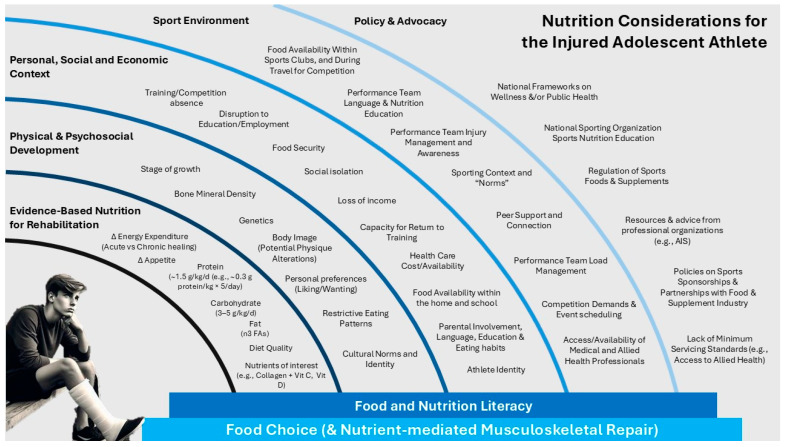
- Post-injury nutrition: trauma or surgery elevates resting metabolic rate by 20–50%; early energy needs increase despite reduced activity. The review suggests carbohydrate intake in the lower range of standard sports nutrition recommendations (3–5 g/kg body mass) and protein distribution of 0.3 g/kg body mass across five meals/snacks. It notes preliminary evidence for ~10–15 g gelatine 30–60 min before rehabilitation exercises for connective tissue, but supplementation is generally considered inappropriate for young athletes unless clinically indicated.
- LEA/REDs and psychosocial factors: LEA/REDs can disrupt growth, bone health, immune function, and mental health, but diagnosis in youth is challenging due to limited research and no standardised criteria. Eating disorders and food literacy influence dietary intake, and practical recommendations include sports nutrition education, parent/guardian involvement, healthy body image promotion, policy advocacy, and access to multidisciplinary healthcare.
Methods
- Narrative review synthesising scientific evidence with practical insights; topics include injury susceptibility, general dietary recommendations for growth and development, sports nutrition guidelines, nutrition during injury/rehabilitation, and external factors such as food literacy and eating disorders.
- All cited and synthesised sources were selected by consensus of contributing authors, described as experts in sports nutrition (R.A., H.V., B.D.) and exercise and sports medicine (M.H.).
- No systematic search strategy, data extraction process, or formal quality appraisal is described in the text.
Limitations
- Paper-stated limitations: exact youth injury prevalence is difficult to determine due to lack of comprehensive databases, varied sports/ages, and under-reporting; sports-specific nutrition research in youth remains limited; LEA/REDs diagnosis lacks standardised criteria and is challenging; collagen research has been conducted in cell cultures, animal models, and adults, with safety/efficacy in children and adolescents not established; routine dual-energy X-ray absorptiometry (DXA) scanning is not recommended for those under 18.
- Evident from the text: as a narrative review with consensus-based source selection, it lacks systematic search and quality appraisal and may be subject to selection bias; many recommendations appear extrapolated from adult or mixed-age evidence because youth-specific data are limited.
Model-written summary. Check it against the paper before relying on it.
Integrity signals
Registry
Cites
Statistics
Figures
Verification
Claims the paper makes
0 Valid · 0 Not valid · 87 Not checked · 34 Own results and interpretations
In the paper
“Trauma or surgery elevates RMR (i.e., energy expenditure at rest) by 20–50%.”
§ Youth and Adolescent Athlete Musculoskeletal Health: Dietary and Nutritional Strategies to Optimise Injury Prevention and Support Recovery > 3. Nutrition to Support Injury Management and Rehabilitation > 3.1. General Nutrition Considerations Post-Injury: Energy and Macronutrients
What the sources say
- Not checked yetcites [62] Demling, 2009, Nutrition, Anabolism, and the Wound Healing Process: An Overview, Eplasty
plainstates a cause- Asserted: passes — The authors put it forward as true.
- Checkable: passes — It can be checked against evidence.
- Load-bearing: passes — The paper’s conclusions depend on it.
- Based: passes — The paper gives a reason why it holds.
A check of a cited source is scheduled, or we don’t hold its full text yet; the claim is checked once it runs.
In the paper
“Furthermore, due to increased physical activity, which places additional stress on the musculoskeletal system, adolescent athletes may also require higher nutrient intakes than less active children and adolescents [9,31].”
§ Youth and Adolescent Athlete Musculoskeletal Health: Dietary and Nutritional Strategies to Optimise Injury Prevention and Support Recovery > 1. Introduction > 1.3. Injury Risk Factors and Prevention Strategies
What the sources say
hedgedstates a possible cause- Asserted: passes — The authors put it forward as true.
- Checkable: passes — It can be checked against evidence.
- Load-bearing: passes — The paper’s conclusions depend on it.
- Based: passes — The paper gives a reason why it holds.
A check of a cited source is scheduled, or we don’t hold its full text yet; the claim is checked once it runs.
In the paper
“Dietary factors, such as insufficient dietary intake to fully support growth and development, limited nutrition education (including sports-specific knowledge), low food literacy, or the presence of an eating disorder can increase the risk of injury due to inadequate nutrient intake [9].”
§ Youth and Adolescent Athlete Musculoskeletal Health: Dietary and Nutritional Strategies to Optimise Injury Prevention and Support Recovery > 1. Introduction
What the sources say
- Not checked yetcites [9] Desbrow, 2021, Youth Athlete Development and Nutrition, Sports Med. source
A check is scheduled.
plainstates a cause- Asserted: passes — The authors put it forward as true.
- Checkable: passes — It can be checked against evidence.
- Load-bearing: passes — The paper’s conclusions depend on it.
- Based: passes — The paper gives a reason why it holds.
- Not checked yet
A conclusion the paper draws from its own results — it cites no other source for it, so there is none to check. The quote shows it is in the paper.
In the paper
“Deficiencies in these nutrients can hinder growth and development, resulting in a weakened musculoskeletal system that is less resilient and more injury prone.”
§ Youth and Adolescent Athlete Musculoskeletal Health: Dietary and Nutritional Strategies to Optimise Injury Prevention and Support Recovery > 1. Introduction > 1.3. Injury Risk Factors and Prevention Strategies
plainstates a cause- Asserted: passes — The authors put it forward as true.
- Checkable: passes — It can be checked against evidence.
- Load-bearing: passes — The paper’s conclusions depend on it.
- Based: passes — The paper gives a reason why it holds.
In the paper
“insufficient caloric intake relative to the demands of training can significantly impair tissue health and increase injury susceptibility [32].”
§ Youth and Adolescent Athlete Musculoskeletal Health: Dietary and Nutritional Strategies to Optimise Injury Prevention and Support Recovery > 2. Nutrition to Support Injury Prevention
What the sources say
- Not checked yetcites [32] Kelly, R.K., and Ackerman, K.E. (2023). Relative energy deficits in sport in the youth athlete, Chapter 51. The Youth Athlete, Krabek, B.J., Brooks, A., Eds., Academic Press. source
plainstates a cause- Asserted: passes — The authors put it forward as true.
- Checkable: passes — It can be checked against evidence.
- Load-bearing: passes — The paper’s conclusions depend on it.
- Based: passes — The paper gives a reason why it holds.
54 more claims
Create a free account to see all 121 claims and to verify the 119 references still open.
- Probably not a substantial claim. 26
- It may state two separate claims as one. 44
Self-check
Percentages, sums and reported differences re-computed from the paper’s own numbers.
Each contradiction between two passages listed here was confirmed by an independent check.
Rated minor: it would not touch a result — a value no result rests on, a p-value that stays on the same side of the significance level, or a conflict that is clerical, resolved elsewhere in the paper, or outside its own findings.
In the paper
§ Youth and Adolescent Athlete Musculoskeletal Health: Dietary and Nutritional Strategies to Optimise Injury Prevention and Support Recovery > 1. Introduction > 1.3. Injury Risk Factors and Prevention Strategies
“The USA baseball medical and safety advisory committee recommends limits on the number of pitches thrown per game and per week by young pitchers, along with mandatory rest periods to help prevent arm injuries [22].”
§ Youth and Adolescent Athlete Musculoskeletal Health: Dietary and Nutritional Strategies to Optimise Injury Prevention and Support Recovery > References
“22. Corbi F. Matas S. Álvarez-Herms J. Sitko S. Baiget E. Reverter-Masia J. López-Laval I. Osgood-Schlatter Disease: Appearance, Diagnosis and Treatment: A Narrative Review”
Rated minor: it would not touch a result — a value no result rests on, a p-value that stays on the same side of the significance level, or a conflict that is clerical, resolved elsewhere in the paper, or outside its own findings.
In the paper
§ Youth and Adolescent Athlete Musculoskeletal Health: Dietary and Nutritional Strategies to Optimise Injury Prevention and Support Recovery > 3. Nutrition to Support Injury Management and Rehabilitation > 3.2. Micronutrients: Diet Quality vs. Supplementation for Youth Injury Recovery
“Adhering to dietary guidelines such as the Australian Guide to Healthy Eating (AGHE) [60] or the American dietary guidelines [84]”
§ Youth and Adolescent Athlete Musculoskeletal Health: Dietary and Nutritional Strategies to Optimise Injury Prevention and Support Recovery > References
“60. Giraldo-Vallejo J.E. Cardona-Guzmán M. Rodríguez-Alcivar E.J. Kočí J. Petro J.L. Kreider R.B. Cannataro R. Bonilla D.A. Nutritional Strategies in the Rehabilitation of Musculoskeletal Injuries in Athletes: A Systematic Integrative Review”
Cited works that were retracted
Works this paper cites that were later retracted, from the retraction notices publishers deposit. Major when the notice came out before this paper was published.
A note, not an issue: for example, a cited work that was retracted only after this paper was published, which its authors could not have known.
In the paper
“Pizzarro, 2024, Epidemiology of Sports Injuries Among High School Athletes in the United States: Data From 2015 to 2019, Orthop. J. Sports Med., 12, 23259671241252637, 10.1177/23259671241252637”
Cited work 10.1177/23259671241252637 · retracted 2024-11-05 · notice 10.1177/23259671241290250 · this paper published 2024-11-05
Citations
Cites
1 retracted
Pizzarro, J., Chiang, B., Malyavko, A., Monroig, C., Mehran, N., Ahmed, S. I., & Tabaie, S. (2024) · Orthopaedic Journal of Sports Medicine · doi:10.1177/23259671241252637 · Cited by 13
RetractedDiagnostic and Statistical Manual of Mental Disorders
American Psychiatric Association (2013) · doi:10.1176/appi.books.9780890425596 · Cited by 116,369
Michie, S., van Stralen, M. M., & West, R. (2011) · Implementation Science · doi:10.1186/1748-5908-6-42 · Cited by 13,697
Lost in knowledge translation: Time for a map?
Graham, I. D., Logan, J., Harrison, M. B., Straus, S. E., Tetroe, J., Caswell, W., & Robinson, N. (2006) · Journal of Continuing Education in the Health Professions · doi:10.1002/chp.47 · Cited by 4,705
Weaver, C. M., Gordon, C. M., Janz, K. F., Kalkwarf, H. J., Lappe, J. M., Lewis, R., O’Karma, M., Wallace, T. C., & Zemel, B. S. (2016) · Osteoporosis International · doi:10.1007/s00198-015-3440-3 · Cited by 1,378
IOC Consensus Statement: Dietary Supplements and the High-performance Athlete
Maughan, R. J., Burke, L. M., Dvorak, J., Larson-Meyer, D. E., Peeling, P., Phillips, S. M., Rawson, E. S., Walsh, N. P., Garthe, I., Geyer, H., et al. (2018) · British Journal of Sports Medicine · doi:10.1136/bjsports-2018-099027 · Cited by 1,004
Carbohydrates for training and competition
Burke, L. M., Hawley, J. A., Wong, S. H. S., & Jeukendrup, A. E. (2011) · Journal of Sports Sciences · doi:10.1080/02640414.2011.585473 · Cited by 985
Mountjoy, M., Ackerman, K. E., Bailey, D. M., Burke, L. M., Constantini, N., Hackney, A. C., Heikura, I. A., Melin, A., Pensgaard, A. M., Stellingwerff, T., et al. (2023) · British Journal of Sports Medicine · doi:10.1136/bjsports-2023-106994 · Cited by 974
International Olympic Committee consensus statement on youth athletic development
Bergeron, M. F., Mountjoy, M., Armstrong, N., Chia, M., Côté, J., Emery, C. A., Faigenbaum, A., Hall, G., Kriemler, S., Léglise, M., et al. (2015) · British Journal of Sports Medicine · doi:10.1136/bjsports-2015-094962 · Cited by 881
Defining food literacy and its components
Vidgen, H. A., & Gallegos, D. (2014) · Appetite · doi:10.1016/j.appet.2014.01.010 · Cited by 846
Self-citationOverview of Injuries in the Young Athlete
Adirim, T. A., & Cheng, T. L. (2003) · Sports Medicine · doi:10.2165/00007256-200333010-00006 · Cited by 638
Weight status and body image perceptions in adolescents: current perspectives.
Reel, J., Voelker, D., & Greenleaf, C. (2015) · Adolescent Health, Medicine and Therapeutics · doi:10.2147/ahmt.s68344 · Cited by 637
Growth and pubertal development in children and adolescents: effects of diet and physical activity
Rogol, A. D., Clark, P. A., & Roemmich, J. N. (2000) · The American Journal of Clinical Nutrition · doi:10.1093/ajcn/72.2.521s · Cited by 614
Constructing Food Choice Decisions
Sobal, J., & Bisogni, C. A. (2009) · Annals of Behavioral Medicine · doi:10.1007/s12160-009-9124-5 · Cited by 586
Vitamin C-Sources, Physiological Role, Kinetics, Deficiency, Use, Toxicity, and Determination
Doseděl, M., Jirkovský, E., Macáková, K., Krčmová, L., Javorská, L., Pourová, J., Mercolini, L., Remião, F., Nováková, L., Mladěnka, P., et al. (2021) · Nutrients · doi:10.3390/nu13020615 · Cited by 553
Hind, K., & Burrows, M. (2007) · Bone · doi:10.1016/j.bone.2006.07.006 · Cited by 543
Dietary protein for athletes: From requirements to optimum adaptation
Phillips, S. M., & Van Loon, L. J. C. (2011) · Journal of Sports Sciences · doi:10.1080/02640414.2011.619204 · Cited by 530
Janssen, C. I. F., & Kiliaan, A. J. (2014) · Progress in Lipid Research · doi:10.1016/j.plipres.2013.10.002 · Cited by 514
Aparicio-Martinez, P., Perea-Moreno, A.-J., Martinez-Jimenez, M. P., Redel-Macías, M. D., Pagliari, C., & Vaquero-Abellan, M. (2019) · International Journal of Environmental Research and Public Health · doi:10.3390/ijerph16214177 · Cited by 411
Joy, E., Kussman, A., & Nattiv, A. (2016) · British Journal of Sports Medicine · doi:10.1136/bjsports-2015-095735 · Cited by 373
Wound Healing: A Comprehensive Review
Almadani, Y. H., Vorstenbosch, J., Davison, P. G., & Murphy, A. M. (2021) · Seminars in Plastic Surgery · doi:10.1055/s-0041-1731791 · Cited by 310
Zinc deficiency and child development
Black, M. M. (1998) · The American Journal of Clinical Nutrition · doi:10.1093/ajcn/68.2.464s · Cited by 303
Physeal injuries in children’s and youth sports: Reasons for concern?
Caine, D., DiFiori, J., & Maffulli, N. (2006) · British Journal of Sports Medicine · doi:10.1136/bjsm.2005.017822 · Cited by 291
Pediatric Exposures to Ionizing Radiation: Carcinogenic Considerations
Kutanzi, K., Lumen, A., Koturbash, I., & Miousse, I. (2016) · International Journal of Environmental Research and Public Health · doi:10.3390/ijerph13111057 · Cited by 287
Response of Protein and Urea Kinetics in Burn Patients to Different Levels of Protein Intake
WOLFE, R. R., GOODENOUGH, R. D., BURKE, J. F., & WOLFE, M. H. (1983) · Annals of Surgery · doi:10.1097/00000658-198302000-00007 · Cited by 273
Shams-White, M. M., Chung, M., Du, M., Fu, Z., Insogna, K. L., Karlsen, M. C., LeBoff, M. S., Shapses, S. A., Sackey, J., Wallace, T. C., et al. (2017) · The American Journal of Clinical Nutrition · doi:10.3945/ajcn.116.145110 · Cited by 263
Organized Sports for Children, Preadolescents, and Adolescents
Logan, K., Cuff, S., COUNCIL ON SPORTS MEDICINE AND FITNESS, LaBella, C. R., Brooks, M. A., Canty, G., Diamond, A. B., Hennrikus, W., Moffatt, K., Nemeth, B. A., et al. (2019) · Pediatrics · doi:10.1542/peds.2019-0997 · Cited by 261
Low-Grade Inflammation and Ultra-Processed Foods Consumption: A Review
Tristan Asensi, M., Napoletano, A., Sofi, F., & Dinu, M. (2023) · Nutrients · doi:10.3390/nu15061546 · Cited by 257
Alkerwi, A. (2013) · Nutrition · doi:10.1016/j.nut.2013.10.001 · Cited by 237
Nutritional strategies to attenuate muscle disuse atrophy
Wall, B. T., & van Loon, L. J. (2013) · Nutrition Reviews · doi:10.1111/nure.12019 · Cited by 228
Vitamin C–enriched gelatin supplementation before intermittent activity augments collagen synthesis
Shaw, G., Lee-Barthel, A., Ross, M. L., Wang, B., & Baar, K. (2017) · The American Journal of Clinical Nutrition · doi:10.3945/ajcn.116.138594 · Cited by 227
Hay, P., Aouad, P., Le, A., Marks, P., Maloney, D., Barakat, S., Boakes, R. A., Brennan, L., Bryant, E., Byrne, S. M., et al. (2023) · Journal of Eating Disorders · doi:10.1186/s40337-023-00738-7 · Cited by 196
Identifying factors perceived to influence the development of elite youth football academy players
Mills, A., Butt, J., Maynard, I., & Harwood, C. (2012) · Journal of Sports Sciences · doi:10.1080/02640414.2012.710753 · Cited by 178
Prieto-González, P., Martínez-Castillo, J. L., Fernández-Galván, L. M., Casado, A., Soporki, S., & Sánchez-Infante, J. (2021) · International Journal of Environmental Research and Public Health · doi:10.3390/ijerph18094857 · Cited by 173
DePhillipo, N. N., Aman, Z. S., Kennedy, M. I., Begley, J. P., Moatshe, G., & LaPrade, R. F. (2018) · Orthopaedic Journal of Sports Medicine · doi:10.1177/2325967118804544 · Cited by 165
Hirsch, K. R., Wolfe, R. R., & Ferrando, A. A. (2021) · Nutrients · doi:10.3390/nu13051675 · Cited by 159
Youth Athlete Development and Nutrition
Desbrow, B. (2021) · Sports Medicine · doi:10.1007/s40279-021-01534-6 · Cited by 159
Self-citationSterol Regulation of Metabolism, Homeostasis, and Development
Wollam, J., & Antebi, A. (2011) · Annual Review of Biochemistry · doi:10.1146/annurev-biochem-081308-165917 · Cited by 158
Energy requirements of children and adolescents
Torun, B. (2005) · Public Health Nutrition · doi:10.1079/phn2005791 · Cited by 157
Role of Vitamin D in Athletes and Their Performance: Current Concepts and New Trends
de la Puente Yagüe, M., Collado Yurrita, L., Ciudad Cabañas, M., & Cuadrado Cenzual, M. (2020) · Nutrients · doi:10.3390/nu12020579 · Cited by 151
Injuries in youth amateur soccer and rugby players—Comparison of incidence and characteristics
Junge, A., Cheung, K., Edwards, T., & Dvorak, J. (2004) · British Journal of Sports Medicine · doi:10.1136/bjsm.2002.003020 · Cited by 150
Overuse Injuries, Overtraining, and Burnout in Young Athletes
Brenner, J. S., Watson, A., COUNCIL ON SPORTS MEDICINE AND FITNESS, Brooks, M. A., Carl, R. L., Briskin, S. M., Canty, G., Cuff, S., Edwards, N. M., Kinsella, S., et al. (2024) · Pediatrics · doi:10.1542/peds.2023-065129 · Cited by 148
Nutritional concerns for the child and adolescent competitor
Petrie, H. J., Stover, E. A., & Horswill, C. A. (2004) · Nutrition · doi:10.1016/j.nut.2004.04.002 · Cited by 132
Khatri, M., Naughton, R. J., Clifford, T., Harper, L. D., & Corr, L. (2021) · Amino Acids · doi:10.1007/s00726-021-03072-x · Cited by 124
Athletic Identity in Youth Athletes: A Systematic Review of the Literature
Edison, B. R., Christino, M. A., & Rizzone, K. H. (2021) · International Journal of Environmental Research and Public Health · doi:10.3390/ijerph18147331 · Cited by 123
More data needed on injury risk among young elite athletes
Steffen, K., & Engebretsen, L. (2010) · British Journal of Sports Medicine · doi:10.1136/bjsm.2010.073833 · Cited by 120
Peeling, P., Castell, L. M., Derave, W., de Hon, O., & Burke, L. M. (2019) · International Journal of Sport Nutrition and Exercise Metabolism · doi:10.1123/ijsnem.2018-0271 · Cited by 116
Mata, F., Valenzuela, P. L., Gimenez, J., Tur, C., Ferreria, D., Domínguez, R., Sanchez-Oliver, A. J., & Martínez Sanz, J. M. (2019) · Nutrients · doi:10.3390/nu11051084 · Cited by 112
Howarth, K. R., Phillips, S. M., MacDonald, M. J., Richards, D., Moreau, N. A., & Gibala, M. J. (2010) · Journal of Applied Physiology · doi:10.1152/japplphysiol.00108.2009 · Cited by 108
A Comprehensive Summary of Systematic Reviews on Sports Injury Prevention Strategies
Stephenson, S., Kocan, J. W., Vinod, A. V., Kluczynski, M. A., & Bisson, L. J. (2021) · Orthopaedic Journal of Sports Medicine · doi:10.1177/23259671211035776 · Cited by 106
Maximal Fat Oxidation Rates in an Athletic Population
RANDELL, R. K., ROLLO, I., ROBERTS, T. J., DALRYMPLE, K. J., JEUKENDRUP, A. E., & CARTER, J. M. (2017) · Medicine & Science in Sports & Exercise · doi:10.1249/mss.0000000000001084 · Cited by 101
On the Construction of the Infancy‐Childhood‐Puberty Growth Standard
KARLBERG, J. (1989) · Acta Paediatrica · doi:10.1111/j.1651-2227.1989.tb11237.x · Cited by 101
Nutritional Considerations and Strategies to Facilitate Injury Recovery and Rehabilitation
Smith-Ryan, A. E., Hirsch, K. R., Saylor, H. E., Gould, L. M., & Blue, M. N. M. (2020) · Journal of Athletic Training · doi:10.4085/1062-6050-550-19 · Cited by 101
A Systematic Review on the Role of Vitamin C in Tissue Healing
Bechara, N., Flood, V. M., & Gunton, J. E. (2022) · Antioxidants · doi:10.3390/antiox11081605 · Cited by 93
Zinc at the crossroads of exercise and proteostasis
Hernández-Camacho, J. D., Vicente-García, C., Parsons, D. S., & Navas-Enamorado, I. (2020) · Redox Biology · doi:10.1016/j.redox.2020.101529 · Cited by 88
Hilkens, L., Cruyff, M., Woertman, L., Benjamins, J., & Evers, C. (2021) · Sports Medicine - Open · doi:10.1186/s40798-021-00371-1 · Cited by 87
Youness, R. A., Dawoud, A., ElTahtawy, O., & Farag, M. A. (2022) · Nutrition & Metabolism · doi:10.1186/s12986-022-00696-y · Cited by 87
Collagen Supplementation for Joint Health: The Link between Composition and Scientific Knowledge
Martínez-Puig, D., Costa-Larrión, E., Rubio-Rodríguez, N., & Gálvez-Martín, P. (2023) · Nutrients · doi:10.3390/nu15061332 · Cited by 79
Lynch, B. A., Kaufman, T. K., Rajjo, T. I., Mohammed, K., Kumar, S., Murad, M. H., Gentile, N. E., Koepp, G. A., McCrady-Spitzer, S. K., & Levine, J. A. (2019) · Journal of Primary Care & Community Health · doi:10.1177/2150132719874252 · Cited by 68
Role of nutrition in oral and maxillofacial surgery patients
Giridhar, V. U. (2016) · National Journal of Maxillofacial Surgery · doi:10.4103/0975-5950.196146 · Cited by 67
Jayanthi, N., Kleithermes, S., Dugas, L., Pasulka, J., Iqbal, S., & LaBella, C. (2020) · Orthopaedic Journal of Sports Medicine · doi:10.1177/2325967120922764 · Cited by 67
Howard, E. E., Pasiakos, S. M., Fussell, M. A., & Rodriguez, N. R. (2020) · Advances in Nutrition · doi:10.1093/advances/nmaa015 · Cited by 66
Zaremski, J. L., & Krabak, B. J. (2012) · PM&R · doi:10.1016/j.pmrj.2012.04.005 · Cited by 65
Agoncillo, M., Yu, J., & Gunton, J. E. (2023) · Nutrients · doi:10.3390/nu15204377 · Cited by 64
A Biographical Study of Food Choice Capacity: Standards, Circumstances, and Food Management Skills
Bisogni, C. A., Jastran, M., Shen, L., & Devine, C. M. (2005) · Journal of Nutrition Education and Behavior · doi:10.1016/s1499-4046(06)60158-9 · Cited by 63
(2016) · doi:10.4324/9781315708492 · Cited by 61
Self-citationTestosterone Trajectories and Reference Ranges in a Large Longitudinal Sample of Male Adolescents
Khairullah, A., Cousino Klein, L., Ingle, S. M., May, M. T., Whetzel, C. A., Susman, E. J., & Paus, T. (2014) · PLoS ONE · doi:10.1371/journal.pone.0108838 · Cited by 60
Baldwin, C., Kimber, K. L., Gibbs, M., & Weekes, C. E. (2016) · Cochrane Database of Systematic Reviews · doi:10.1002/14651858.cd009840.pub2 · Cited by 60
Fridman, L., Fraser-Thomas, J. L., McFaull, S. R., & Macpherson, A. K. (2013) · Sports Medicine, Arthroscopy, Rehabilitation, Therapy & Technology · doi:10.1186/2052-1847-5-30 · Cited by 59
Eating disorders in men—an underestimated problem, an unseen need
Halbeisen, G., Laskowski, N. M., Brandt, G., Waschescio, U., & Paslakis, G. (2024) · Deutsches Ärzteblatt international · doi:10.3238/arztebl.m2023.0246 · Cited by 58
Athletic identity and disordered eating in obligatory and non-obligatory runners
Gapin, J. I., & Petruzzello, S. J. (2011) · Journal of Sports Sciences · doi:10.1080/02640414.2011.571275 · Cited by 55
Giraldo-Vallejo, J. E., Cardona-Guzmán, M. Á., Rodríguez-Alcivar, E. J., Kočí, J., Petro, J. L., Kreider, R. B., Cannataro, R., & Bonilla, D. A. (2023) · Nutrients · doi:10.3390/nu15040819 · Cited by 55
IOC consensus statement on sports nutrition 2010
(2011) · Journal of Sports Sciences · doi:10.1080/02640414.2011.619349 · Cited by 50
Iron Status and Physical Performance in Athletes
Solberg, A., & Reikvam, H. (2023) · Life · doi:10.3390/life13102007 · Cited by 50
Sleep, Nutrition, and Injury Risk in Adolescent Athletes: A Narrative Review
Mason, L., Connolly, J., Devenney, L. E., Lacey, K., O’Donovan, J., & Doherty, R. (2023) · Nutrients · doi:10.3390/nu15245101 · Cited by 50
Determinants of Food Choice in Athletes: A Systematic Scoping Review
Pelly, F. E., Thurecht, R. L., & Slater, G. (2022) · Sports Medicine - Open · doi:10.1186/s40798-022-00461-8 · Cited by 48
Sports-Related Injuries in Adolescent Athletes: A Systematic Review
Alqahtani, M. A., Al-Lajhar, M. A., Alzahrani, A. A., Asiri, M. A., alsalem, A. F. A., Alshahrani, S. A., & Alqahtani, N. M. (2023) · Cureus · doi:10.7759/cureus.49392 · Cited by 47
Nutritional Modulation of the Microbiome and Immune Response
Burr, A. H. P., Bhattacharjee, A., & Hand, T. W. (2020) · The Journal of Immunology · doi:10.4049/jimmunol.2000419 · Cited by 46
Relative Energy Deficiency in Sport (RED-S) in Adolescents – A Practical Review
Gould, R. J., Ridout, A. J., & Newton, J. L. (2023) · International Journal of Sports Medicine · doi:10.1055/a-1947-3174 · Cited by 46
Sardinha, L. B., & Júdice, P. B. (2017) · European Journal of Clinical Nutrition · doi:10.1038/ejcn.2017.2 · Cited by 40
Osgood-Schlatter Disease: Appearance, Diagnosis and Treatment: A Narrative Review
Corbi, F., Matas, S., Álvarez-Herms, J., Sitko, S., Baiget, E., Reverter-Masia, J., & López-Laval, I. (2022) · Healthcare · doi:10.3390/healthcare10061011 · Cited by 39
Alcock, R. D., Shaw, G. C., Tee, N., & Burke, L. M. (2019) · Frontiers in Nutrition · doi:10.3389/fnut.2019.00163 · Cited by 34
Self-citationVinoy, S., Laville, M., & Feskens, E. J. M. (2016) · Food & Nutrition Research · doi:10.3402/fnr.v60.31662 · Cited by 33
Itoh, G., Ishii, H., Kato, H., Nagano, Y., Hayashi, H., & Funasaki, H. (2018) · PLOS ONE · doi:10.1371/journal.pone.0190503 · Cited by 32
Pizzuto, F., Bonato, M., Vernillo, G., La Torre, A., & Piacentini, M. F. (2017) · International Journal of Sports Physiology and Performance · doi:10.1123/ijspp.2015-0717 · Cited by 30
Shoemaker, M. E., Gillen, Z. M., McKay, B. D., Koehler, K., & Cramer, J. T. (2020) · Journal of the American College of Nutrition · doi:10.1080/07315724.2019.1621229 · Cited by 29
Mazzulla, M., Volterman, K. A., Packer, J. E., Wooding, D. J., Brooks, J. C., Kato, H., & Moore, D. R. (2018) · Nutrition & Metabolism · doi:10.1186/s12986-018-0301-z · Cited by 28
Bone Health in School Age Children: Effects of Nutritional Intake on Outcomes
Abrams, S. A. (2021) · Frontiers in Nutrition · doi:10.3389/fnut.2021.773425 · Cited by 26
Janiczak, A., Alcock, R., Forsyth, A., & Trakman, G. L. (2024) · British Journal of Nutrition · doi:10.1017/s0007114523001769 · Cited by 25
Self-citationBody talk, athletic identity, and eating disorder symptoms in men
Ahlich, E., Choquette, E. M., & Rancourt, D. (2019) · Psychology of Men & Masculinities · doi:10.1037/men0000168 · Cited by 23
Reale, R. J., Roberts, T. J., Lee, K. A., Bonsignore, J. L., & Anderson, M. L. (2020) · International Journal of Sport Nutrition and Exercise Metabolism · doi:10.1123/ijsnem.2019-0323 · Cited by 22
Shaw, G., Serpell, B., & Baar, K. (2019) · Journal of Sports Sciences · doi:10.1080/02640414.2019.1594571 · Cited by 21
Growth plate injury in children: Review of literature on PubMed
Sananta, P., Lesmana, A., & Alwy Sugiarto, M. (2022) · Journal of Public Health Research · doi:10.1177/22799036221104155 · Cited by 20
Kim, J. (2023) · Physical Activity and Nutrition · doi:10.20463/pan.2023.0012 · Cited by 16
Growth of the lean body mass during childhood and adolescence
Forbes, G. B. (1964) · The Journal of Pediatrics · doi:10.1016/s0022-3476(64)80640-5 · Cited by 15
Sensory influences on food choice and energy intake
Forde, C. G., & de Graaf, K. C. (2022) · Elsevier eBooks · doi:10.1016/b978-0-323-89903-1.00013-x · Cited by 15
Alcock, R., Shaw, G., & Burke, L. M. (2018) · International Journal of Sport Nutrition and Exercise Metabolism · doi:10.1123/ijsnem.2018-0139 · Cited by 14
Self-citationLow Energy Availability Risk Is Associated with Anxiety in Female Collegiate Athletes
Scheid, J. L., Basile, S., & West, S. L. (2024) · Sports · doi:10.3390/sports12100269 · Cited by 11
Painelli, V. D. S. (2023) · Journal of Science in Sport and Exercise · doi:10.1007/s42978-023-00251-y · Cited by 10
Youth injuries in British Columbia: Type, settings, treatment and costs, 2003–2007
Leadbeater, B., Babul, S., Jansson, M., Scime, G., & Pike, I. (2010) · International Journal of Injury Control and Safety Promotion · doi:10.1080/17457300903564561 · Cited by 6
Relative energy deficiency in sport in the youth athlete
Kelly, R. K., & Ackerman, K. E. (2023) · The Youth Athlete · doi:10.1016/b978-0-323-99992-2.00019-0 · Cited by 1
(2014) · PubMed Central
(2010) · PubMed
(2009) · PubMed Central
(2004) · Stirling Online Research Repository (University of Stirling)
Research works printed but not linked: 2
- Maughan, R.J. (2013). How to assess the energy costs of exercise and sport, Chapter 4. The Encylopedia of Sports Medicine, International Olympic Committee (IOC), John Wiley and Sons.
- (2024, July 18). Dietary Guidelines for Americans, 2020–2025, 2020, 164, Available online: https://www.dietaryguidelines.gov/sites/default/files/2020-12/Dietary_Guidelines_for_Americans_2020-2025.pdf.
Cited by
Cherni, Y., Mzita, I., Oranchuk, D. J., Dhahbi, W., Hammami, M., Ceylan, H. İ., Ștefănică, V., & Chelly, M. S. (2025) · Sport Sciences for Health · doi:10.1007/s11332-025-01498-4 · Cited by 37
The Sleep, Recovery, and Nutrition Characteristics of Elite Adolescent Athletes
Mason, L., Connolly, J., Devenney, L. E., Lacey, K., O’Donovan, J., Faulkner, M., & Doherty, R. (2025) · Sports · doi:10.3390/sports13020050 · Cited by 17
Veloso-Pulgar, M., Fernández de Arriba, R., & Farran-Codina, A. (2025) · Nutrition Research Reviews · doi:10.1017/s0954422425100152 · Cited by 4
Veloso-Pulgar, M., & Farran-Codina, A. (2025) · Nutrients · doi:10.3390/nu17152560 · Cited by 4
Prevalence of Sports Injuries Among Athletes in the Lucknow Region: A Cross-Sectional Study
Chowdhery, A., Agarwal, A., & Saini, A. (2025) · Cureus · doi:10.7759/cureus.90266 · Cited by 3
Metadata
- Authors
- Alcock, R., Hislop, M., Vidgen, H. A., & Desbrow, B.
- Affiliations
- The University of Queensland (AU)
- Brisbane Sports and Exercise Medicine Specialists, Brisbane, QLD 4170, Australia
- Queensland University of Technology (AU)
- Griffith University (AU)
- Corresponding author
- Desbrow, Ben
- Venue
- Journal of Functional Morphology and Kinesiology
- Publisher
- MDPI AG
- Published
- 2024-11-05
- Volume
- 9
- Issue
- 4
- Pages
- 221
- ISSN
- 2411-5142 (ISSN-L)
- PMC
- PMC11587028
- OpenAlex
- W4404064941
- Cited by
- 33
- References
- 105
- Citations by year
- 2026: 17 · 2025: 14 · 2024: 2
- FWCI
- 2.66
- Type
- journal article
- Language
- en
- Open access
- gold
- doi.org
- Licence
- Locations
- Journal of Functional Morphology and Kinesiology (publishedVersion, cc-by)
- PubMed Central (publishedVersion, cc-by)
- PubMed (publishedVersion)
- DOAJ (DOAJ: Directory of Open Access Journals) (submittedVersion, cc-by-sa)
- Topics
- Health Sciences › Medicine › Orthopedics and Sports Medicine › Sports injuries and prevention
- Health Sciences › Medicine › Physiology (medical) › Exercise and Physiological Responses
- Health Sciences › Nursing › Nutrition and Dietetics › Muscle metabolism and nutrition
- Keywords
- youth athletes, musculoskeletal injuries, injury prevention, sports nutrition, injury recovery, rehabilitation nutrition, dietary recommendations, growth and development, training load, food literacy, eating disorders, return to sport
About these checks
Registry, retraction, Cites and statistics results are computed, not judged, with one exception: a printed reference that no index lists is read once by a model before it counts as a citation error. Claims are extracted by a model and kept only when their quote appears verbatim in the text; each cited source is then checked, with a model’s help, for whether it says what the claim relies on. Those verdicts can be wrong — read the claim’s quote and the cited source before relying on one.
A language model drew the claims from the paper on 2026-11-14, under version 3 of the claim definition (model deepseek-v4.1-flash, prompt extract-v3).
A second model labelled each claim on 2026-11-14 (model jev-1.13-20260917, definition revision gold-guideline-v0.2).
Statistics and arithmetic are recomputed, not judged.
Confidence bands are shown only for fields calibrated on our annotated test set. None is calibrated yet, so no band is shown.
What counts as a claim ›How we measure confidence ›How we check this ›
Are you an author, or do you see a problem with this page? Request a review
Data sources
Bibliographic data: Semantic Scholar, OpenAlex, Crossref.
Contains information from the Semantic Scholar Academic Graph Datasets, made available under the ODC Attribution License (ODC-BY 1.0).
Semantic Scholar’s data is described in: Kinney, R., et al. (2023). The Semantic Scholar Open Data Platform. arXiv:2301.10140.
