

The DOI matches its Crossref record; 12 of the 12 references it cites were found in a registry or an index.
Modulation of microRNAs through Lifestyle Changes in Alzheimer’s Disease
Abstract
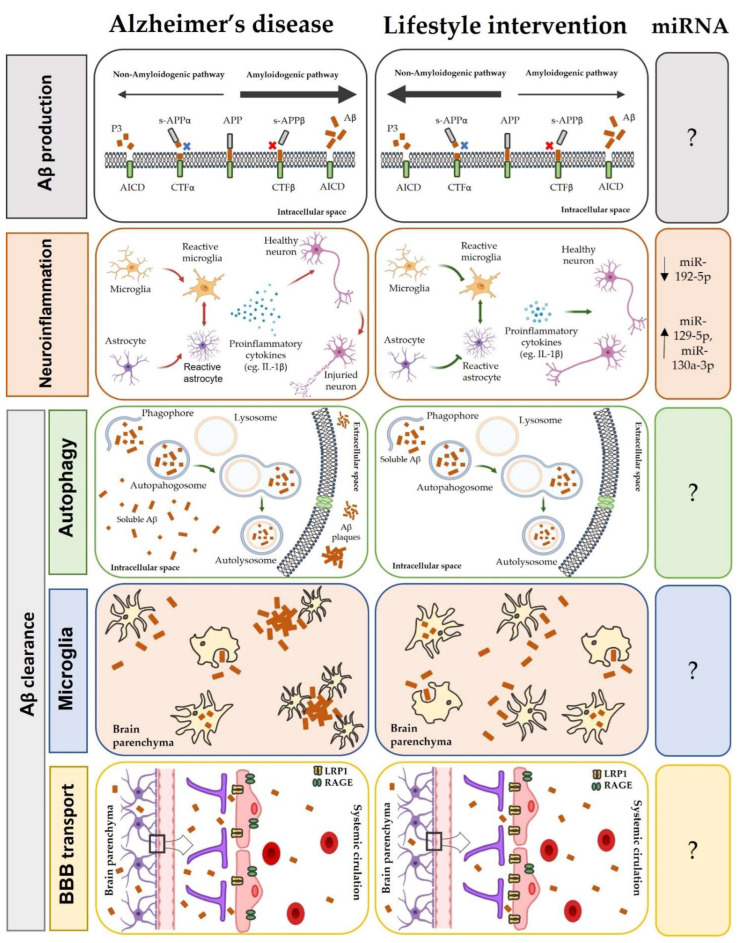
Lifestyle factors, including diet and physical activity (PA), are known beneficial strategies to prevent and delay Alzheimer’s disease (AD) development. Recently, microRNAs have emerged as potential biomarkers in multiple diseases, including AD. The aim of this review was to analyze the available information on the modulatory effect of lifestyle on microRNA expression in AD. Few studies have addressed this question, leaving important gaps and limitations: (1) in human studies, only circulating microRNAs were analyzed; (2) in mice studies, microRNA expression was only analyzed in brain tissue; (3) a limited number of microRNAs was analyzed; (4) no human nutritional intervention studies were conducted; and (5) PA interventions in humans and mice were poorly detailed and only included aerobic training. Despite this, some conclusions could be drawn. Circulating levels of let-7g-5p, miR-107, and miR-144-3p were associated with overall diet quality in mild cognitive impairment patients. In silico analysis showed that these microRNAs are implicated in synapse formation, microglia activation, amyloid beta accumulation, and pro-inflammatory pathways, the latter also being targeted by miR-129-5p and miR-192-5p, whose circulating levels are modified by PA in AD patients. PA also modifies miR-132, miR-15b-5p, miR-148b-3p, and miR-130a-5p expression in mice brains, which targets are related to the regulation of neuronal activity, ageing, and pro-inflammatory pathways. This supports the need to further explore lifestyle-related miRNA changes in AD, both as biomarkers and therapeutic targets.
Overview
The claims and statistics of this paper haven’t been checked yet.
Run the check — free, no account needed. It reads the open-access text and checks the sources it cites.
Integrity signals
Registry
Cites
Statistics
Figures
Verification
Claims the paper makes
The claims and statistics of this paper haven’t been checked yet.
Run the check — free, no account needed. It reads the open-access text and checks the sources it cites.
Claims other papers make about this one
Each is checked against this paper’s own text: does it say what the citing paper says it does?
In the citing paper
“physical exercise has been found to elevate miR-129-5p levels in the blood samples of AD patients and AD mouse models [95–97].”
From A role for astrocytic miR-129-5p in frontotemporal dementia (2025) · cites this paper as [96]
Self-check
Percentages, sums and reported differences re-computed from the paper’s own numbers.
The self-check needs the paper’s full text.
Citations
Cites
Stages of the Pathologic Process in Alzheimer Disease: Age Categories From 1 to 100 Years
Braak, H., Thal, D. R., Ghebremedhin, E., & Del Tredici, K. (2011) · Journal of Neuropathology & Experimental Neurology · doi:10.1097/nen.0b013e318232a379 · Cited by 2,194
Microglia in Alzheimer’s disease
Hansen, D. V., Hanson, J. E., & Sheng, M. (2018) · Journal of Cell Biology · doi:10.1083/jcb.201709069 · Cited by 1,935 · cited 1×
“Extracellularly, microglia collect and clean up soluble Aβ species, phagocyte insoluble fibrillar Aβ deposits, and induce both the activated microglia state and the trapping of amyloid plaques [8].”
BackgroundPreclinical Alzheimer’s Disease: Definition, Natural History, and Diagnostic Criteria
Dubois, B., Hampel, H., Feldman, H. H., Scheltens, P., Aisen, P., Andrieu, S., Bakardjian, H., Benali, H., Bertram, L., Blennow, K., et al. (2016) · Alzheimer's & Dementia · doi:10.1016/j.jalz.2016.02.002 · Cited by 1,925
Amyloid cascade hypothesis: Pathogenesis and therapeutic strategies in Alzheimer's disease
Barage, S. H., & Sonawane, K. D. (2015) · Neuropeptides · doi:10.1016/j.npep.2015.06.008 · Cited by 579
He, X.-F., Liu, D.-X., Zhang, Q., Liang, F.-Y., Dai, G.-Y., Zeng, J.-S., Pei, Z., Xu, G.-Q., & Lan, Y. (2017) · Frontiers in Molecular Neuroscience · doi:10.3389/fnmol.2017.00144 · Cited by 371
Nianogo, R. A., Rosenwohl-Mack, A., Yaffe, K., Carrasco, A., Hoffmann, C. M., & Barnes, D. E. (2022) · JAMA Neurology · doi:10.1001/jamaneurol.2022.0976 · Cited by 269 · cited 1×
“In fact, adherence to a healthy lifestyle is associated with a 60% lower risk of LOAD [18], with the top risk factors being obesity in middle age and a sedentary lifestyle [19].”
BackgroundHladky, S. B., & Barrand, M. A. (2018) · Fluids and Barriers of the CNS · doi:10.1186/s12987-018-0113-6 · Cited by 206
Rocchi, A., Yamamoto, S., Ting, T., Fan, Y., Sadleir, K., Wang, Y., Zhang, W., Huang, S., Levine, B., Vassar, R., et al. (2017) · PLOS Genetics · doi:10.1371/journal.pgen.1006962 · Cited by 166
Physical exercise and epigenetic modifications in skeletal muscle
Widmann, M., Nieß, A. M., & Munz, B. (2019) · Sports Medicine · doi:10.1007/s40279-019-01070-4 · Cited by 165
Blood–brain barrier link to human cognitive impairment and Alzheimer’s disease
Barisano, G., Montagne, A., Kisler, K., Schneider, J. A., Wardlaw, J. M., & Zlokovic, B. V. (2022) · Nature Cardiovascular Research · doi:10.1038/s44161-021-00014-4 · Cited by 157
Research works printed but not linked: 118
- Alzheimer’s Association (2022). 2022 Alzheimer’s disease facts and figures. Alzheimers Dement., 18, 700–789. · DOI
- Chen, 2019, Alzheimer Disease Pathogenesis: Insights From Molecular and Cellular Biology Studies of Oligomeric Abeta and Tau Species, Front. Neurosci., 13, 659, 10.3389/fnins.2019.00659 · DOI
- Zhao, 2018, The effects of treadmill exercise on autophagy in hippocampus of APP/PS1 transgenic mice, Neuroreport, 29, 819, 10.1097/WNR.0000000000001038 · DOI
- Mee-Inta, O., Zhao, Z.W., and Kuo, Y.M. (2019). Physical Exercise Inhibits Inflammation and Microglial Activation. Cells, 8. · DOI
- Khodadadi, 2018, Treadmill Exercise Ameliorates Spatial Learning and Memory Deficits Through Improving the Clearance of Peripheral and Central Amyloid-Beta Levels, Neurochem. Res., 43, 1561, 10.1007/s11064-018-2571-2 · DOI
- Uddin, 2018, Autophagy and Alzheimer’s Disease: From Molecular Mechanisms to Therapeutic Implications, Front. Aging Neurosci., 10, 4, 10.3389/fnagi.2018.00004 · DOI · Paper page
- Tang, 2016, Differential Roles of M1 and M2 Microglia in Neurodegenerative Diseases, Mol. Neurobiol., 53, 1181, 10.1007/s12035-014-9070-5 · DOI · Paper page
- Henderson, 2014, Sustained peripheral depletion of amyloid-beta with a novel form of neprilysin does not affect central levels of amyloid-beta, Brain, 137, 553, 10.1093/brain/awt308 · DOI
- Sharma, C., Woo, H., and Kim, S.R. (2022). Addressing Blood-Brain Barrier Impairment in Alzheimer’s Disease. Biomedicines, 10. · DOI
- Dhana, 2020, Healthy lifestyle and the risk of Alzheimer dementia: Findings from 2 longitudinal studies, Neurology, 95, e374, 10.1212/WNL.0000000000009816 · DOI
- Singh, 2014, Association of mediterranean diet with mild cognitive impairment and Alzheimer’s disease: A systematic review and meta-analysis, J. Alzheimers Dis., 39, 271, 10.3233/JAD-130830 · DOI
- 2020, Nutritional status assessment in Alzheimer disease and its influence on disease progression, Neurologia, 37, 735
- Chauhan, 2022, Dietary Nutrients and Prevention of Alzheimer’s Disease, CNS Neurol. Disord. Drug Targets, 21, 217, 10.2174/1871527320666210405141123 · DOI
- Ogbodo, 2022, Alzheimer’s Disease: Pathogenesis and Therapeutic Interventions, Curr. Aging Sci., 15, 2, 10.2174/1874609814666210302085232 · DOI
- Phan, H.T.T., Samarat, K., Takamura, Y., Azo-Oussou, A.F., Nakazono, Y., and Vestergaard, M.C. (2019). Polyphenols Modulate Alzheimer’s Amyloid Beta Aggregation in a Structure-Dependent Manner. Nutrients, 11. · DOI
- Yan, 2020, Omega-3 polyunsaturated fatty acids promote brain-to-blood clearance of beta-Amyloid in a mouse model with Alzheimer’s disease, Brain Behav. Immun., 85, 35, 10.1016/j.bbi.2019.05.033 · DOI
- Wen, 2019, Eicosapentaenoic Acid-Enriched Phosphatidylcholine Mitigated Abeta1-42-Induced Neurotoxicity via Autophagy-Inflammasome Pathway, J. Agric. Food Chem., 67, 13767, 10.1021/acs.jafc.9b05947 · DOI
- Park, Y.H., Shin, S.J., Kim, H.S., Hong, S.B., Kim, S., Nam, Y., Kim, J.J., Lim, K., Kim, J.S., and Kim, J.I. (2020). Omega-3 Fatty Acid-Type Docosahexaenoic Acid Protects against Abeta-Mediated Mitochondrial Deficits and Pathomechanisms in Alzheimer’s Disease-Related Animal Model. Int. J. Mol. Sci., 21. · DOI
- Grimm, 2011, Docosahexaenoic acid reduces amyloid beta production via multiple pleiotropic mechanisms, J. Biol. Chem., 286, 14028, 10.1074/jbc.M110.182329 · DOI
- Davinelli, 2014, Epigenetic nutraceutical diets in Alzheimer’s disease, J. Nutr. Health Aging, 18, 800, 10.1007/s12603-014-0552-y · DOI
- Yusufov, 2017, Alzheimer’s disease and diet: A systematic review, Int. J. Neurosci., 127, 161, 10.3109/00207454.2016.1155572 · DOI
- Miranda, 2017, Role of Mediterranean diet on the prevention of Alzheimer disease, Rev. Med. Chil., 145, 501, 10.4067/S0034-98872017000400010 · DOI
- 2020, Effectiveness of omega-3 fatty acid supplementation in patients with Alzheimer disease: A systematic review and meta-analysis, Neurologia, 35, 105
- Ramesh, 2010, Neuronutrition and Alzheimer’s disease, J. Alzheimers Dis., 19, 1123, 10.3233/JAD-2010-1312 · DOI
- Davinelli, 2012, Pleiotropic protective effects of phytochemicals in Alzheimer’s disease, Oxid. Med. Cell. Longev., 2012, 386527, 10.1155/2012/386527 · DOI
- Erickson, 2011, Exercise training increases size of hippocampus and improves memory, Proc. Natl. Acad. Sci. USA, 108, 3017, 10.1073/pnas.1015950108 · DOI · Paper page
- Daimiel, 2020, Physical fitness and physical activity association with cognitive function and quality of life: Baseline cross-sectional analysis of the PREDIMED-Plus trial, Sci. Rep., 10, 3472, 10.1038/s41598-020-59458-6 · DOI
- Valenzuela, 2021, Exercise interventions in Alzheimer’s disease: A systematic review and meta-analysis of randomized controlled trials, Ageing Res. Rev., 72, 101479, 10.1016/j.arr.2021.101479 · DOI · Paper page
- Morris, J.K., Vidoni, E.D., Johnson, D.K., Van Sciver, A., Mahnken, J.D., Honea, R.A., Wilkins, H.M., Brooks, W.M., Billinger, S.A., and Swerdlow, R.H. (2017). Aerobic exercise for Alzheimer’s disease: A randomized controlled pilot trial. PLoS ONE, 12. · DOI
- Sobol, 2018, Change in Fitness and the Relation to Change in Cognition and Neuropsychiatric Symptoms After Aerobic Exercise in Patients with Mild Alzheimer’s Disease, J. Alzheimers Dis., 65, 137, 10.3233/JAD-180253 · DOI
- Shatenstein, 2015, Prevention of Age-Related Cognitive Decline: Which Strategies, When, and for Whom?, J. Alzheimers Dis., 48, 35, 10.3233/JAD-150256 · DOI
- Millan, 2020, Physical exercise in the prevention and treatment of Alzheimer’s disease, J. Sport Health Sci., 9, 394, 10.1016/j.jshs.2020.01.004 · DOI
- Kempermann, 2015, Activity Dependency and Aging in the Regulation of Adult Neurogenesis, Cold Spring Harb. Perspect. Biol., 7, a018929, 10.1101/cshperspect.a018929 · DOI
- Fernandez, 2020, Autophagy is required for performance adaptive response to resistance training and exercise-induced adult neurogenesis, Scand. J. Med. Sci. Sports, 30, 238, 10.1111/sms.13586 · DOI
- He, 2012, Exercise induces autophagy in peripheral tissues and in the brain, Autophagy, 8, 1548, 10.4161/auto.21327 · DOI
- Zhang, 2018, Long-term treadmill exercise attenuates Abeta burdens and astrocyte activation in APP/PS1 mouse model of Alzheimer’s disease, Neurosci. Lett., 666, 70, 10.1016/j.neulet.2017.12.025 · DOI
- Trigiani, 2017, An endothelial link between the benefits of physical exercise in dementia, J. Cereb. Blood Flow Metab., 37, 2649, 10.1177/0271678X17714655 · DOI
- Moore, 2016, A spectrum of exercise training reduces soluble Abeta in a dose-dependent manner in a mouse model of Alzheimer’s disease, Neurobiol. Dis., 85, 218, 10.1016/j.nbd.2015.11.004 · DOI
- Hill, 2019, BDNF, endurance activity, and mechanisms underlying the evolution of hominin brains, Am. J. Phys. Anthropol., 168, 47, 10.1002/ajpa.23762 · DOI
- Kempermann, 2010, Why and how physical activity promotes experience-induced brain plasticity, Front. Neurosci., 4, 189, 10.3389/fnins.2010.00189 · DOI · Paper page
- Sun, 2018, Physical exercise reserved amyloid-beta induced brain dysfunctions by regulating hippocampal neurogenesis and inflammatory response via MAPK signaling, Brain Res., 1697, 1, 10.1016/j.brainres.2018.04.040 · DOI
- Nikolac Perkovic, M., Videtic Paska, A., Konjevod, M., Kouter, K., Svob Strac, D., Nedic Erjavec, G., and Pivac, N. (2021). Epigenetics of Alzheimer’s Disease. Biomolecules, 11. · DOI
- Cui, 2021, Effects of exosomal miRNAs in the diagnosis and treatment of Alzheimer’s disease, Mech. Ageing Dev., 200, 111593, 10.1016/j.mad.2021.111593 · DOI
- Lee, C.Y., Ryu, I.S., Ryu, J.H., and Cho, H.J. (2021). miRNAs as Therapeutic Tools in Alzheimer’s Disease. Int. J. Mol. Sci., 22. · DOI
- Ebert, 2012, Roles for microRNAs in conferring robustness to biological processes, Cell, 149, 515, 10.1016/j.cell.2012.04.005 · DOI · Paper page
- Wei, 2020, MicroRNAs in Alzheimer’s Disease: Function and Potential Applications as Diagnostic Biomarkers, Front. Mol. Neurosci., 13, 160, 10.3389/fnmol.2020.00160 · DOI · Paper page
- Siedlecki-Wullich, D., Minano-Molina, A.J., and Rodriguez-Alvarez, J. (2021). microRNAs as Early Biomarkers of Alzheimer’s Disease: A Synaptic Perspective. Cells, 10. · DOI · Paper page
- Kanach, C., Blusztajn, J.K., Fischer, A., and Delalle, I. (2021). MicroRNAs as Candidate Biomarkers for Alzheimer’s Disease. Noncoding RNA, 7. · DOI
- Wang, 2008, The expression of microRNA miR-107 decreases early in Alzheimer’s disease and may accelerate disease progression through regulation of beta-site amyloid precursor protein-cleaving enzyme 1, J. Neurosci., 28, 1213, 10.1523/JNEUROSCI.5065-07.2008 · DOI · Paper page
- Barbato, 2014, A lentiviral sponge for miR-101 regulates RanBP9 expression and amyloid precursor protein metabolism in hippocampal neurons, Front. Cell. Neurosci., 8, 37, 10.3389/fncel.2014.00037 · DOI
- Zhang, 2016, MiR-299-5p regulates apoptosis through autophagy in neurons and ameliorates cognitive capacity in APPswe/PS1dE9 mice, Sci. Rep., 6, 24566, 10.1038/srep24566 · DOI
- Salta, 2017, microRNA-132: A key noncoding RNA operating in the cellular phase of Alzheimer’s disease, FASEB J., 31, 424, 10.1096/fj.201601308 · DOI · Paper page
- Silvestro, S., Bramanti, P., and Mazzon, E. (2019). Role of miRNAs in Alzheimer’s Disease and Possible Fields of Application. Int. J. Mol. Sci., 20. · DOI
- Cho, 2015, MicroRNA-Let-7a regulates the function of microglia in inflammation, Mol. Cell. Neurosci., 68, 167, 10.1016/j.mcn.2015.07.004 · DOI
- Song, 2015, miR-155 is involved in Alzheimer’s disease by regulating T lymphocyte function, Front. Aging Neurosci., 7, 61, 10.3389/fnagi.2015.00061 · DOI
- Jiang, 2018, Micro-RNA-137 Inhibits Tau Hyperphosphorylation in Alzheimer’s Disease and Targets the CACNA1C Gene in Transgenic Mice and Human Neuroblastoma SH-SY5Y Cells, Med. Sci. Monit., 24, 5635, 10.12659/MSM.908765 · DOI
- Weinberg, 2015, Evidence for a neuroprotective microRNA pathway in amnestic mild cognitive impairment, Front. Neurosci., 9, 430, 10.3389/fnins.2015.00430 · DOI
- Krauskopf, 2020, Circulating microRNAs as potential biomarkers for psychiatric and neurodegenerative disorders, Prog. Neurobiol., 185, 101732, 10.1016/j.pneurobio.2019.101732 · DOI
- Zhao, 2019, The Potential Markers of Circulating microRNAs and long non-coding RNAs in Alzheimer’s Disease, Aging Dis., 10, 1293, 10.14336/AD.2018.1105 · DOI
- Gupta, 2017, miRNAs in Alzheimer Disease A Therapeutic Perspective, Curr. Alzheimer. Res., 14, 1198, 10.2174/1567205014666170829101016 · DOI
- Maciotta, 2013, The involvement of microRNAs in neurodegenerative diseases, Front. Cell. Neurosci., 7, 265, 10.3389/fncel.2013.00265 · DOI
- Improta-Caria, A.C., Nonaka, C.K.V., Cavalcante, B.R.R., De Sousa, R.A.L., Aras Junior, R., and Souza, B.S.F. (2020). Modulation of MicroRNAs as a Potential Molecular Mechanism Involved in the Beneficial Actions of Physical Exercise in Alzheimer Disease. Int. J. Mol. Sci., 21. · DOI
- Li, 2020, Exercise protects against spinal cord injury through miR-21-mediated suppression of PDCD4, Am. J. Transl. Res., 12, 5708
- Li, 2015, A MicroRNA Signature in Gestational Diabetes Mellitus Associated with Risk of Macrosomia, Cell. Physiol. Biochem., 37, 243, 10.1159/000430349 · DOI · Paper page
- Niu, 2021, Aerobic exercise improves VCI through circRIMS2/miR-186/BDNF-mediated neuronal apoptosis, Mol. Med., 27, 4, 10.1186/s10020-020-00258-z · DOI
- 2021, Expression levels of specific microRNAs are increased after exercise and are associated with cognitive improvement in Parkinson’s disease, Mol. Med. Rep., 24, 1
- Guz, M., Jeleniewicz, W., Malm, A., and Korona-Glowniak, I. (2021). A Crosstalk between Diet, Microbiome and microRNA in Epigenetic Regulation of Colorectal Cancer. Nutrients, 13. · DOI
- De Martinis, M., Ginaldi, L., Allegra, A., Sirufo, M.M., Pioggia, G., Tonacci, A., and Gangemi, S. (2020). The Osteoporosis/Microbiota Linkage: The Role of miRNA. Int. J. Mol. Sci., 21. · DOI
- McKay, 2011, Diet induced epigenetic changes and their implications for health, Acta Physiol., 202, 103, 10.1111/j.1748-1716.2011.02278.x · DOI
- Kumari, 2022, Health-promoting role of dietary bioactive compounds through epigenetic modulations: A novel prophylactic and therapeutic approach, Crit. Rev. Food Sci. Nutr., 62, 619, 10.1080/10408398.2020.1825286 · DOI
- Martin, 2014, Docosahexaenoic Acid Modulates the Enterocyte Caco-2 Cell Expression of MicroRNAs Involved in Lipid Metabolism, J. Nutr., 144, 575, 10.3945/jn.113.189050 · DOI
- Ross, 2014, The emerging role of microRNAs and nutrition in modulating health and disease, Annu. Rev. Nutr., 34, 305, 10.1146/annurev-nutr-071813-105729 · DOI
- Crespo, 2016, Hydroxytyrosol supplementation modulates the expression of miRNAs in rodents and in humans, J. Nutr. Biochem., 34, 146, 10.1016/j.jnutbio.2016.05.009 · DOI
- Olmedillas, 2018, Circulating microRNA as Emerging Biomarkers of Exercise, Exerc. Sport Sci. Rev., 46, 160, 10.1249/JES.0000000000000148 · DOI
- Kura, B., Parikh, M., Slezak, J., and Pierce, G.N. (2019). The Influence of Diet on MicroRNAs that Impact Cardiovascular Disease. Molecules, 24. · DOI
- Otsuka, 2021, Possible connection between diet and microRNA in cancer scenario, Semin. Cancer Biol., 73, 4, 10.1016/j.semcancer.2020.11.014 · DOI
- Zhang, 2021, Diet quality, gut microbiota, and microRNAs associated with mild cognitive impairment in middle-aged and elderly Chinese population, Am. J. Clin. Nutr., 114, 429, 10.1093/ajcn/nqab078 · DOI
- Liu, 2015, Folic acid deficiency enhances abeta accumulation in APP/PS1 mice brain and decreases amyloid-associated miRNAs expression, J. Nutr. Biochem., 26, 1502, 10.1016/j.jnutbio.2015.07.020 · DOI
- An, 2018, Patterns of cognitive function in middle-aged and elderly Chinese adults-findings from the EMCOA study, Alzheimers Res. Ther., 10, 93, 10.1186/s13195-018-0421-8 · DOI
- Zhang, 2019, 27-hydroxycholesterol promotes Abeta accumulation via altering Abeta metabolism in mild cognitive impairment patients and APP/PS1 mice, Brain Pathol., 29, 558, 10.1111/bpa.12698 · DOI
- Andrews, V., Zammit, G., and O’Leary, F. (2023). Dietary pattern, food, and nutritional supplement effects on cognitive outcomes in mild cognitive impairment: A systematic review of previous reviews. Nutr. Rev., 1–28. · DOI
- Jankowsky, 2004, Mutant presenilins specifically elevate the levels of the 42 residue beta-amyloid peptide in vivo: Evidence for augmentation of a 42-specific gamma secretase, Hum. Mol. Genet., 13, 159, 10.1093/hmg/ddh019 · DOI · Paper page
- Qin, 2021, Exercise-Mediated Alteration of miR-192-5p Is Associated with Cognitive Improvement in Alzheimer’s Disease, Neuroimmunomodulation, 29, 36, 10.1159/000516928 · DOI
- Li, 2020, Physical Exercise Ameliorates the Cognitive Function and Attenuates the Neuroinflammation of Alzheimer’s Disease via miR-129-5p, Dement. Geriatr. Cogn. Disord., 49, 163, 10.1159/000507285 · DOI · Paper page
- Lu, 2022, The Involvement of lncRNA HOTAIR/miR-130a-3p Axis in the Regulation of Voluntary Exercise on Cognition and Inflammation of Alzheimer’s Disease, Am. J. Alzheimers Dis. Other Demen., 37, 15333175221091424, 10.1177/15333175221091424 · DOI
- Sheinin, 2021, miR-128 as a Regulator of Synaptic Properties in 5xFAD Mice Hippocampal Neurons, J. Mol. Neurosci., 71, 2593, 10.1007/s12031-021-01862-2 · DOI
- Dungan, 2020, Exercise-mediated alteration of hippocampal Dicer mRNA and miRNAs is associated with lower BACE1 gene expression and Abeta(1-42) in female 3xTg-AD mice, J. Neurophysiol., 124, 1571, 10.1152/jn.00503.2020 · DOI
- Dong, 2018, MicroRNA-132 is associated with the cognition improvement following voluntary exercise in SAMP8 mice, Brain Res. Bull., 140, 80, 10.1016/j.brainresbull.2018.04.007 · DOI
- Lalanza, 2014, Epigenetic alterations in hippocampus of SAMP8 senescent mice and modulation by voluntary physical exercise, Front. Aging Neurosci., 6, 51
- Kang, 2019, Baicalin alleviates 6-hydroxydopamine-induced neurotoxicity in PC12 cells by down-regulation of microRNA-192-5p, Brain Res., 1708, 84, 10.1016/j.brainres.2018.12.015 · DOI
- Rahman, 2019, Network-based approach to identify molecular signatures and therapeutic agents in Alzheimer’s disease, Comput. Biol. Chem., 78, 431, 10.1016/j.compbiolchem.2018.12.011 · DOI
- Zhang, 2021, Roles and Mechanisms of Axon-Guidance Molecules in Alzheimer’s Disease, Mol. Neurobiol., 58, 3290, 10.1007/s12035-021-02311-2 · DOI
- Bruno, L., Karagil, S., Mahmood, A., Elbediwy, A., Stolinski, M., and Mackenzie, F.E. (2021). Mechanosensing and the Hippo Pathway in Microglia: A Potential Link to Alzheimer’s Disease Pathogenesis?. Cells, 10. · DOI
- Kumar, 2022, Implications of Phosphoinositide 3-Kinase-Akt (PI3K-Akt) Pathway in the Pathogenesis of Alzheimer’s Disease, Mol. Neurobiol., 59, 354, 10.1007/s12035-021-02611-7 · DOI
- Poursaei, 2022, Evaluation of hsa-let-7d-5p, hsa-let-7g-5p and hsa-miR-15b-5p plasma levels in patients with Alzheimer’s disease, Psychiatr. Genet., 32, 25, 10.1097/YPG.0000000000000303 · DOI
- Kumar, 2016, Are circulating microRNAs peripheral biomarkers for Alzheimer’s disease?, Biochim. Biophys. Acta, 1862, 1617, 10.1016/j.bbadis.2016.06.001 · DOI
- Nunomura, 2020, RNA and Oxidative Stress in Alzheimer’s Disease: Focus on microRNAs, Oxid. Med. Cell. Longev., 2020, 2638130, 10.1155/2020/2638130 · DOI
- Nelson, 2010, MiR-107 is reduced in Alzheimer’s disease brain neocortex: Validation study, J. Alzheimers Dis., 21, 75, 10.3233/JAD-2010-091603 · DOI · Paper page
- Cheng, 2013, MicroRNA-144 is regulated by activator protein-1 (AP-1) and decreases expression of Alzheimer disease-related a disintegrin and metalloprotease 10 (ADAM10), J. Biol. Chem., 288, 13748, 10.1074/jbc.M112.381392 · DOI
- Oliveira Monteiro, E.P.d.A.M.P., Valle Pedroso, R., Mantellatto Grigoli, M., Vicente Silva, T., Manzine, P.R., and Cominetti, M.R. (2023). ADAM10 as a biomarker for Alzheimer’s disease: A systematic review. Rev. Neurol.
- Zhou, 2019, Relationship between single nucleotide polymorphisms in the 3’UTR of amyloid precursor protein and risk of Alzheimer’s disease and its mechanism, Biosci. Rep., 39, BSR20182485, 10.1042/BSR20182485 · DOI
- Cascella, R., and Cecchi, C. (2021). Calcium Dyshomeostasis in Alzheimer’s Disease Pathogenesis. Int. J. Mol. Sci., 22. · DOI
- Jung, 2014, Circulating miRNAs in ageing and ageing-related diseases, J. Genet. Genomics, 41, 465, 10.1016/j.jgg.2014.07.003 · DOI
- Khorraminezhad, 2022, Dairy Product Intake Modifies MicroRNA Expression among Individuals with Hyperinsulinemia: A Post-Intervention Cross-Sectional Study, Lifestyle Genom., 15, 77, 10.1159/000523809 · DOI
- Joven, 2012, Plant-derived polyphenols regulate expression of miRNA paralogs miR-103/107 and miR-122 and prevent diet-induced fatty liver disease in hyperlipidemic mice, Biochim. Biophys. Acta, 1820, 894, 10.1016/j.bbagen.2012.03.020 · DOI
- Cremonini, 2019, Nutrients in the Prevention of Alzheimer’s Disease, Oxid. Med. Cell. Longev., 2019, 9874159, 10.1155/2019/9874159 · DOI
- Roman, 2019, Mediterranean diet: The role of long-chain omega-3 fatty acids in fish; polyphenols in fruits, vegetables, cereals, coffee, tea, cacao and wine; probiotics and vitamins in prevention of stroke, age-related cognitive decline, and Alzheimer disease, Rev. Neurol., 175, 724, 10.1016/j.neurol.2019.08.005 · DOI
- Arora, 2022, Dysregulated miRNAs in Progression and Pathogenesis of Alzheimer’s Disease, Mol. Neurobiol., 59, 6107, 10.1007/s12035-022-02950-z · DOI · Paper page
- Putteeraj, 2017, MicroRNA Dysregulation in Alzheimer’s Disease, CNS Neurol. Disord. Drug Targets, 16, 1000
- Lew, 2020, Exercise Regulates MicroRNAs to Preserve Coronary and Cardiac Function in the Diabetic Heart, Circ. Res., 127, 1384, 10.1161/CIRCRESAHA.120.317604 · DOI
- Ultimo, 2018, Cardiovascular disease-related miRNAs expression: Potential role as biomarkers and effects of training exercise, Oncotarget, 9, 17238, 10.18632/oncotarget.24428 · DOI
- Davalos, 2021, Dietary microRNAs and cancer: A new therapeutic approach?, Semin. Cancer Biol., 73, 19, 10.1016/j.semcancer.2020.10.006 · DOI
- Azevedo, 2023, The effects of resistance exercise on cognitive function, amyloidogenesis, and neuroinflammation in Alzheimer’s disease, Front. Neurosci., 17, 1131214, 10.3389/fnins.2023.1131214 · DOI
- Chow, 2021, The Central Mechanisms of Resistance Training and Its Effects on Cognitive Function, Sports Med., 51, 2483, 10.1007/s40279-021-01535-5 · DOI
- Laguette, 2019, MicroRNA Profile and Adaptive Response to Exercise Training: A Review, Int. J. Sports Med., 40, 227, 10.1055/a-0824-4813 · DOI
- Inukai, S., de Lencastre, A., Turner, M., and Slack, F. (2012). Novel microRNAs differentially expressed during aging in the mouse brain. PLoS ONE, 7. · DOI
- Wang, 2021, MiR-130a-3p Has Protective Effects in Alzheimer’s Disease via Targeting DAPK1, Am. J. Alzheimers Dis. Other Dement., 36, 15333175211020572, 10.1177/15333175211020572 · DOI
- Kou, 2020, The Regulation of microRNAs in Alzheimer’s Disease, Front. Neurol., 11, 288, 10.3389/fneur.2020.00288 · DOI · Paper page
Cited by
Sorted by citations
A role for astrocytic miR-129-5p in frontotemporal dementia
Kaurani, L., Pradhan, R., Schröder, S., Burkhardt, S., Schuetz, A.-L., Krüger, D. M., Pena, T., Heutink, P., Sananbenesi, F., & Fischer, A. (2025) · Translational Psychiatry · doi:10.1038/s41398-025-03338-y · Cited by 10
Metadata
- Authors
- Pinto-Hernandez, P., Castilla-Silgado, J., Coto-Vilcapoma, A., Fernández-Sanjurjo, M., Fernández-García, B., Tomás-Zapico, C., & Iglesias-Gutiérrez, E.
- Affiliations
- Department of Functional Biology, Physiology, University of Oviedo, 33006 Asturias, Spain
- Health Research Institute of the Principality of Asturias (ISPA), 33011 Asturias, Spain
- ORCID
- Venue
- Nutrients
- Publisher
- MDPI AG
- Published
- 2023-08-23
- Volume
- 15
- Issue
- 17
- Pages
- 3688
- ISSN
- 2072-6643
- PMC
- PMC10490103
- Cited by
- 22
- References
- 12
- Language
- en
- Funders
- Fundación Tatiana Pérez de Guzmán el Bueno
About these checks
Registry, retraction, Cites and statistics results are computed, not judged, with one exception: a printed reference that no index lists is read once by a model before it counts as a citation error. Claims are extracted by a model and kept only when their quote appears verbatim in the text; each cited source is then checked, with a model’s help, for whether it says what the claim relies on. Those verdicts can be wrong — read the claim’s quote and the cited source before relying on one.
Statistics and arithmetic are recomputed, not judged.
Confidence bands are shown only for fields calibrated on our annotated test set. None is calibrated yet, so no band is shown.
What counts as a claim ›How we measure confidence ›How we check this ›
Are you an author, or do you see a problem with this page? Request a review
How to cite
Cite CoChat for the checks on this page, and the paper for its own findings.
- This page
- CoChat. (2026). Citation check: Modulation of microRNAs through Lifestyle Changes in Alzheimer’s Disease. https://app.cochat.ai/papers/10.3390/nu15173688
- The paper
- Pinto-Hernandez, P., Castilla-Silgado, J., Coto-Vilcapoma, A., Fernández-Sanjurjo, M., Fernández-García, B., Tomás-Zapico, C., & Iglesias-Gutiérrez, E. (2023). Modulation of microRNAs through Lifestyle Changes in Alzheimer’s Disease. Nutrients. https://doi.org/10.3390/nu15173688
