

Predicting as a learning strategy
Open accessThe DOI matches its Crossref record; 64 of the 66 references it cites were found in a registry or an index; 11 of the 26 sources its claims cite were checked for support.
Abstract
This article attempts to delineate the procedural and mechanistic characteristics of predicting as a learning strategy. While asking students to generate a prediction before presenting the correct answer has long been a popular learning strategy, the exact mechanisms by which it improves learning are only beginning to be unraveled. Moreover, predicting shares many features with other retrieval-based learning strategies (e.g., practice testing, pretesting, guessing), which begs the question of whether there is more to it than getting students to engage in active retrieval. I argue that active retrieval as such does not suffice to explain beneficial effects of predicting. Rather, the effectiveness of predicting is also linked to changes in the way the ensuing feedback is processed. Initial evidence suggests that predicting boosts surprise about unexpected answers, which leads to enhanced attention to the correct answer and strengthens its encoding. I propose that it is this affective aspect of predicting that sets it apart from other retrieval-based learning strategies, particularly from guessing. Predicting should thus be considered as a learning strategy in its own right. Studying its unique effects on student learning promises to bring together research on formal models of learning from prediction error, epistemic emotions, and instructional design.
Overview
CoChat Summary
TL;DR
This review argues that predicting is a learning strategy in its own right, not just a form of retrieval practice or guessing. Its main distinctive mechanism is that incorrect predictions can increase surprise, which enhances attention to feedback and improves encoding of the correct answer.
Key findings
- Predicting differs procedurally from practice testing because it does not include an initial study phase; instead, learners generate a response and then receive immediate feedback.
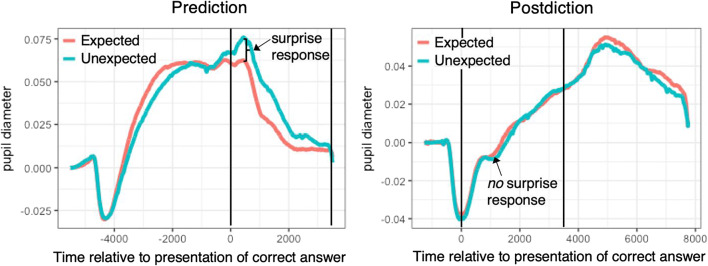
- In Brod et al. (2018), comparing prediction with postdiction, incorrectly predicted geography outcomes produced a pupil dilation to the correct answer in the prediction condition but not the postdiction condition, and that pupil dilation was positively related to later correction; a second experiment found incorrectly predicted soccer outcomes were better remembered in the prediction than postdiction condition.
- A follow-up study (Breitwieser & Brod, 2021) found that generating predictions, but not generating examples, induced pupil dilation to the correct answer, and this pupil response was associated with later retrieval success.
- The paper argues that semantic elaboration explains some benefits of predicting, but not all: for semantically distant predictions, some findings still showed a benefit of predicting relative to studying when the feedback processing of the correct answer was improved.
Methods
- Narrative review of the predicting literature, comparing predicting with practice testing, pretesting, guessing, and related retrieval-based learning strategies.
- Synthesizes evidence from multiple studies, including geography trivia, soccer outcomes, vocabulary/translation tasks, numerical trivia facts, and science education curricula.
- Main analysis is conceptual and taxonomical: it contrasts procedural features and proposed mechanisms (semantic elaboration, curiosity, surprise, and attention) rather than reporting a new empirical study.
Limitations
- The paper states it is restricted to simple declarative learning (facts, definitions) and does not cover predicting for complex conceptual change or indirect effects such as motivation or identifying knowledge gaps.
- It notes that current evidence is insufficient to determine whether curiosity plays a causal role in encoding the correct answer, versus only affecting the prediction phase.
- Evident from the text: this is a review, so its conclusions depend on the cited studies; it does not provide a single new sample or experimental dataset.
Model-written summary. Check it against the paper before relying on it.
Integrity signals
Registry
Cites
Statistics
Figures
Verification
Claims the paper makes
9 Valid · 0 Not valid · 12 Not checked · 34 Own results and interpretations
Every source the paper cites for this claim was checked and supports it.
In the paper
“Practice testing with feedback has been shown to be more effective than testing alone (Butler & Roediger, 2008).”
§ Predicting as a learning strategy > Procedural commonalities and differences between predicting and other retrieval-based learning strategies
What the sources say
- Supportedcites Butler & Roediger, 2008 matched to “Feedback enhances the positive effects and reduces the negative effects of multiple-choice testing” (2008) source
In “The Acquisition of Misinformation,” the paper reports that both immediate and delayed feedback produced large gains in correct responses compared with testing without feedback. Its “Implications for Educational Practice” section likewise states that feedback enhances the positive effects of taking a test. The study examined multiple-choice testing. (LLM, conf=0.93)
plainstates a cause- Asserted: passes — The authors put it forward as true.
- Checkable: passes — It can be checked against evidence.
- Load-bearing: unclear — It is unclear whether the paper’s conclusions depend on it.
- Based: passes — The paper gives a reason why it holds.
- Supported
Every source the paper cites for this claim was checked and supports it.
In the paper
“It was found that generating predictions led to higher curiosity ratings than generating examples, indicating that generating predictions indeed triggers curiosity.”
§ Predicting as a learning strategy > Can the benefits of predicting be explained by semantic elaboration alone? > Predicting stimulates curiosity
What the sources say
- Supportedcites Brod & Breitwieser, 2019 matched to “Lighting the wick in the candle of learning: generating a prediction stimulates curiosity” (2019) source
The Results (Behavioral data) report significantly higher absolute curiosity ratings in the prediction condition than in the example condition. The Discussion likewise interprets the comparison as showing that generating predictions stimulated curiosity. (LLM, conf=0.95)
hedgedstates a cause- Asserted: passes — The authors put it forward as true.
- Checkable: passes — It can be checked against evidence.
- Load-bearing: passes — The paper’s conclusions depend on it.
- Based: passes — The paper gives a reason why it holds.
- Supported
Every source the paper cites for this claim was checked and supports it.
In the paper
“A boundary condition for the benefit of guessing to occur is that the correct answer has to be presented shortly after the guess (Vaughn & Rawson, 2012).”
§ Predicting as a learning strategy > Procedural commonalities and differences between predicting and other retrieval-based learning strategies
What the sources say
- Supportedcites Vaughn & Rawson, 2012 matched to “When is guessing incorrectly better than studying for enhancing memory?” (2012) source
The Experiment 2 Results report better recall for incorrectly guessed items than prestudied items when study followed immediately, but the reverse when study was delayed. The paper therefore supports the stated timing boundary condition for the benefit of guessing relative to prestudy. (LLM, conf=0.91)
plainstates a possible cause- Asserted: passes — The authors put it forward as true.
- Checkable: passes — It can be checked against evidence.
- Load-bearing: unclear — It is unclear whether the paper’s conclusions depend on it.
- Based: passes — The paper gives a reason why it holds.
- Supported
The cited sources support only part of this claim — read each source’s verdict below.
In the paper
“Surprise as measured by pupil dilations is closely coupled with the release of norepinephrine in the brainstem’s locus coeruleus (Joshi et al., 2016).”
§ Predicting as a learning strategy > Can the benefits of predicting be explained by semantic elaboration alone? > Predicting boosts surprise Indirect evidence for a beneficial role of surprise in learning from feedback can be drawn from research on the hypercorrection effect. The hypercorrection effect refers to the finding that erroneous responses committed with high confidence are more likely to be corrected than erroneous responses committed with low confidence (Butterfield & Metcalfe, 2001). In their original experiment, Butterfield and Metcalfe (2001) asked students to predict answers to trivia questions, followed by confidence ratings and presentation of the correct answer. In a retest 5 minutes later, participants demonstrated better memory for those correct answers that they had initially predicted incorrectly with high confidence than with low confidence. The authors suggested that this effect is due to the corrective feedback being more surprising for high-confidence errors than for low-confidence errors, and that the ensuing increased arousal facilitates encoding of the correct answer. Subsequent studies provided evidence for this suggestion by demonstrating that electrophysiological markers of surprise and increased arousal during the presentation of the correct answer were associated with correct retention later on, in particular for those answers that were predicted incorrectly with high confidence (Butterfield & Mangels, 2003). Further evidence for this account was provided in a study that tested both memory for the correct answer and memory for irrelevant surface features of this answer, such as its font color (Fazio & Marsh, 2009). It was found that incorrect predictions made with high confidence improved memory for both, which suggests increased attention during the feedback presentation. While findings on the hypercorrection effect lend support to the idea that surprising outcomes lead to enhanced attention, which in turn leads to facilitated memory encoding, they cannot substantiate whether this effect is because participants generate a prediction beforehand. The studies did not include a control condition in which participants did not generate an answer prior to the feedback. It is thus possible that the hypercorrection effect could be observed as well if participants indicated their prior belief as well as their confidence in this belief after having seen the correct answer. The causal role of predicting in driving the improved memory for surprising answers is thus unclear. In two experiments, we tested the causal role of predicting with regard to boosting surprise and memory for the correct answer (Brod et al., 2018). Predicting was compared with a condition in which participants stated their predictions afterwards (postdiction condition). The only difference between conditions was the presentation order of the stimuli. In the first experiment, we found that incorrectly predicted outcomes in a geography knowledge task induced a succinct pupil dilation to the presentation of the correct answer (see Fig. 1), which is indicative of surprise and enhanced attention to the feedback. This was not the case in the postdiction condition, which indicates that generating a prediction beforehand boosted surprise about the correct answer. The size of the pupil dilation in response to an incorrectly predicted answer was further positively related to the correction of this prediction in a later test. A second experiment confirmed the beneficial effect of predicting on memory. Here, participants had to predict or postdict results of soccer matches. It was found that particularly incorrectly predicted outcomes were better remembered in the prediction condition than in the postdiction condition, indicating facilitated encoding due to enhanced surprise. In sum, findings indicate that predicting boosts both surprise and memory for the correct answer. A follow-up study confirmed that it is not the case that any generative activity before presentation of the correct answer suffices to induce surprise (Breitwieser & Brod, 2021). Here, generating predictions was compared with generating examples. It was found that only generating predictions induced a pupil dilation response to the presentation of the correct answer. This pupil dilation response was further associated with later retrieval success. These findings thus provide further support for the claim that surprise induced by incorrect predictions facilitates encoding of the correct answer. Does guessing suffice to induce surprise? The degree of surprise about an unexpected answer is a function of learners’ confidence in their erroneous belief, which has been demonstrated both using formal models of surprise (Itti & Baldi, 2009) and empirically for trivia facts questions (Reisenzein, 2000). This means that incorrect guesses, which are by definition provided with low confidence, are highly unlikely to elicit strong surprise reactions. This indicates that surprise cannot be a major driving force underlying the effectiveness of guessing. In line with this theoretical argument, a recent study that let participants rate their surprise after guessing found no difference in surprise ratings between guess trials and study trials (Seabrooke et al., 2019). In sum, both empirical and theoretical evidence suggest that guessing does not elicit strong surprise reactions for unexpected outcomes or answers. Surprise thus qualifies as a mechanism that distinguishes between the learning strategies of guessing and predicting. The mechanistic role of surprise in boosting learning has been elucidated in recent cognitive neuroscience studies. Surprise as measured by pupil dilations is closely coupled with the release of norepinephrine in the brainstem’s locus coeruleus (Joshi et al., 2016). Release of norepinephrine by the locus coeruleus influences arousal levels and has been shown to prioritize processing of goal-relevant information and to promote memory formation in the hippocampus (Clewett et al., 2018; Mather et al., 2016). Applying these findings to the current goal of describing the cognitive mechanisms of predicting, a causal chain has been proposed in which (1) incorrect predictions lead to surprise, (2) surprise leads to enhanced attention to the correct answer, and (3) enhanced attention to the correct answer strengthens its encoding (Brod et al., 2018).
What the sources say
- Partly supportedcites Joshi et al., 2016 matched to “Relationships between Pupil Diameter and Neuronal Activity in the Locus Coeruleus, Colliculi, and Cingulate Cortex” (2016) sourceExperimental — accuracy not yet measured
The Results section on startling events reports that unexpected tones dilated monkeys’ pupils and that the pupil response had a weak but reliable trial-by-trial relationship with LC-region neural activity. The Discussion links pupil fluctuations to LC-region activity and proposes associated norepinephrine release throughout the brain. The study did not measure norepinephrine release or establish that pupil dilation measures surprise specifically, so the claim states the coupling more strongly than the evidence supports. (LLM, conf=0.86)
plainstates an association- Asserted: passes — The authors put it forward as true.
- Checkable: passes — It can be checked against evidence.
- Load-bearing: passes — The paper’s conclusions depend on it.
- Based: passes — The paper gives a reason why it holds.
- Partly supported
The sources with a verdict support this claim; the rest weren’t checked yet, have no full text we could read, or their verdicts aren’t rated yet.
In the paper
“The degree of surprise about an unexpected answer is a function of learners’ confidence in their erroneous belief, which has been demonstrated both using formal models of surprise (Itti & Baldi, 2009) and empirically for trivia facts questions (Reisenzein, 2000).”
§ Predicting as a learning strategy > Can the benefits of predicting be explained by semantic elaboration alone? > Predicting boosts surprise Indirect evidence for a beneficial role of surprise in learning from feedback can be drawn from research on the hypercorrection effect. The hypercorrection effect refers to the finding that erroneous responses committed with high confidence are more likely to be corrected than erroneous responses committed with low confidence (Butterfield & Metcalfe, 2001). In their original experiment, Butterfield and Metcalfe (2001) asked students to predict answers to trivia questions, followed by confidence ratings and presentation of the correct answer. In a retest 5 minutes later, participants demonstrated better memory for those correct answers that they had initially predicted incorrectly with high confidence than with low confidence. The authors suggested that this effect is due to the corrective feedback being more surprising for high-confidence errors than for low-confidence errors, and that the ensuing increased arousal facilitates encoding of the correct answer. Subsequent studies provided evidence for this suggestion by demonstrating that electrophysiological markers of surprise and increased arousal during the presentation of the correct answer were associated with correct retention later on, in particular for those answers that were predicted incorrectly with high confidence (Butterfield & Mangels, 2003). Further evidence for this account was provided in a study that tested both memory for the correct answer and memory for irrelevant surface features of this answer, such as its font color (Fazio & Marsh, 2009). It was found that incorrect predictions made with high confidence improved memory for both, which suggests increased attention during the feedback presentation. While findings on the hypercorrection effect lend support to the idea that surprising outcomes lead to enhanced attention, which in turn leads to facilitated memory encoding, they cannot substantiate whether this effect is because participants generate a prediction beforehand. The studies did not include a control condition in which participants did not generate an answer prior to the feedback. It is thus possible that the hypercorrection effect could be observed as well if participants indicated their prior belief as well as their confidence in this belief after having seen the correct answer. The causal role of predicting in driving the improved memory for surprising answers is thus unclear. In two experiments, we tested the causal role of predicting with regard to boosting surprise and memory for the correct answer (Brod et al., 2018). Predicting was compared with a condition in which participants stated their predictions afterwards (postdiction condition). The only difference between conditions was the presentation order of the stimuli. In the first experiment, we found that incorrectly predicted outcomes in a geography knowledge task induced a succinct pupil dilation to the presentation of the correct answer (see Fig. 1), which is indicative of surprise and enhanced attention to the feedback. This was not the case in the postdiction condition, which indicates that generating a prediction beforehand boosted surprise about the correct answer. The size of the pupil dilation in response to an incorrectly predicted answer was further positively related to the correction of this prediction in a later test. A second experiment confirmed the beneficial effect of predicting on memory. Here, participants had to predict or postdict results of soccer matches. It was found that particularly incorrectly predicted outcomes were better remembered in the prediction condition than in the postdiction condition, indicating facilitated encoding due to enhanced surprise. In sum, findings indicate that predicting boosts both surprise and memory for the correct answer. A follow-up study confirmed that it is not the case that any generative activity before presentation of the correct answer suffices to induce surprise (Breitwieser & Brod, 2021). Here, generating predictions was compared with generating examples. It was found that only generating predictions induced a pupil dilation response to the presentation of the correct answer. This pupil dilation response was further associated with later retrieval success. These findings thus provide further support for the claim that surprise induced by incorrect predictions facilitates encoding of the correct answer. Does guessing suffice to induce surprise? The degree of surprise about an unexpected answer is a function of learners’ confidence in their erroneous belief, which has been demonstrated both using formal models of surprise (Itti & Baldi, 2009) and empirically for trivia facts questions (Reisenzein, 2000). This means that incorrect guesses, which are by definition provided with low confidence, are highly unlikely to elicit strong surprise reactions. This indicates that surprise cannot be a major driving force underlying the effectiveness of guessing. In line with this theoretical argument, a recent study that let participants rate their surprise after guessing found no difference in surprise ratings between guess trials and study trials (Seabrooke et al., 2019). In sum, both empirical and theoretical evidence suggest that guessing does not elicit strong surprise reactions for unexpected outcomes or answers. Surprise thus qualifies as a mechanism that distinguishes between the learning strategies of guessing and predicting. The mechanistic role of surprise in boosting learning has been elucidated in recent cognitive neuroscience studies. Surprise as measured by pupil dilations is closely coupled with the release of norepinephrine in the brainstem’s locus coeruleus (Joshi et al., 2016). Release of norepinephrine by the locus coeruleus influences arousal levels and has been shown to prioritize processing of goal-relevant information and to promote memory formation in the hippocampus (Clewett et al., 2018; Mather et al., 2016). Applying these findings to the current goal of describing the cognitive mechanisms of predicting, a causal chain has been proposed in which (1) incorrect predictions lead to surprise, (2) surprise leads to enhanced attention to the correct answer, and (3) enhanced attention to the correct answer strengthens its encoding (Brod et al., 2018).
What the sources say
- Supportedcites Itti & Baldi, 2009 matched to “Bayesian surprise attracts human attention” (2009) source
Section 2.1 defines surprise by the change from prior to posterior beliefs and illustrates that overturning a belief produces substantial surprise. Section 2.3 shows that the same observation produces different amounts of surprise depending on the observer’s existing beliefs. This supports the formal-model point attributed to Itti and Baldi; the sentence attributes the trivia-question evidence to a different source. (LLM, conf=0.88)
- Not checked — no full text of the sourcecites Reisenzein, 2000 matched to “Exploring the Strength of Association between the Components of Emotion Syndromes: The Case of Surprise” (2000) source
boostedstates an association- Asserted: passes — The authors put it forward as true.
- Checkable: passes — It can be checked against evidence.
- Load-bearing: passes — The paper’s conclusions depend on it.
- Based: passes — The paper gives a reason why it holds.
- Supported
37 more claims · 2 with their cited sources checked
Create a free account to see all 55 claims and to verify the 3 references still open.
- It may state two separate claims as one. 11
- Probably not a substantial claim. 3
Citations
Cites
Rescorla, R. A. (1972) · Medical Entomology and Zoology · Cited by 9,661
Reciprocal Teaching of Comprehension-Fostering and Comprehension-Monitoring Activities
Palinscar, A. S., & Brown, A. L. (1984) · Cognition and Instruction · doi:10.1207/s1532690xci0102_1 · Cited by 5,186
Journal of Experimental Psychology: Human Learning and Memory
Bourne, L. E. (1977) · Cited by 4,328
The psychology of curiosity: A review and reinterpretation.
Loewenstein, G. (1994) · Psychological Bulletin · doi:10.1037/0033-2909.116.1.75 · Cited by 2,738 · cited 1×
“Curiosity has been suggested to arise from a perceived knowledge gap (Loewenstein, 1994) and to involve an increase in arousal, which results in increased attention and improved memory encoding (Berlyne, 1954).”
BackgroundThe Critical Importance of Retrieval for Learning
Karpicke, J. D., & Roediger, H. L. (2008) · Science · doi:10.1126/science.1152408 · Cited by 1,791
The generation effect: delineation of a phenomenon
Slamecka, N. J., & Graf, P. (1978) · Journal of Experimental Psychology: Human Learning and Memory · doi:10.1037/0278-7393.4.6.592 · Cited by 1,659 · cited 1×
“In sum, errorful generation can be considered a special case of the generation effect (Bertsch et al., 2007; Slamecka & Graf, 1978), which denotes that actively produced information is better remembered than information that is just read.”
BackgroundInternational Handbook of Emotions in Education
(2014) · Routledge eBooks · doi:10.4324/9780203148211 · Cited by 1,579
Joshi, S., Li, Y., Kalwani, R. M., & Gold, J. I. (2016) · Neuron · doi:10.1016/j.neuron.2015.11.028 · Cited by 1,387
Bayesian surprise attracts human attention
Itti, L., & Baldi, P. (2009) · Vision Research · doi:10.1016/j.visres.2008.09.007 · Cited by 1,224
The proactive brain: using analogies and associations to generate predictions
Bar, M. (2007) · Trends in Cognitive Sciences · doi:10.1016/j.tics.2007.05.005 · Cited by 1,144 · cited 1×
“Prediction errors play a key role in knowledge restructuring throughout the human brain (Bar, 2007).”
BackgroundUnderstanding dopamine and reinforcement learning: the dopamine reward prediction error hypothesis
Glimcher, P. W. (2011) · Proceedings of the National Academy of Sciences · doi:10.1073/pnas.1014269108 · Cited by 955 · cited 1×
“They have long been known to drive associative learning, which resulted in wellestablished formal models of learning from prediction error (Glimcher, 2011; Rescorla & Wagner, 1972).”
BackgroundBERLYNE, D. E. (1954) · British Journal of Psychology. General Section · doi:10.1111/j.2044-8295.1954.tb01243.x · Cited by 905 · cited 1×
“Curiosity has been suggested to arise from a perceived knowledge gap (Loewenstein, 1994) and to involve an increase in arousal, which results in increased attention and improved memory encoding (Berlyne, 1954).”
BackgroundKang, M. J., Hsu, M., Krajbich, I. M., Loewenstein, G., McClure, S. M., Wang, J. T.-Y., & Camerer, C. F. (2009) · Psychological Science · doi:10.1111/j.1467-9280.2009.02402.x · Cited by 882
Learning as a generative process 1
Wittrock, M. C. (1974) · Educational Psychologist · doi:10.1080/00461527409529129 · Cited by 834
Eight Ways to Promote Generative Learning
Fiorella, L., & Mayer, R. E. (2016) · Educational Psychology Review · doi:10.1007/s10648-015-9348-9 · Cited by 832
Mather, M., Clewett, D., Sakaki, M., & Harley, C. W. (2016) · Behavioral and Brain Sciences · doi:10.1017/s0140525x15000667 · Cited by 695
Cue strength as a moderator of the testing effect: The benefits of elaborative retrieval.
Carpenter, S. K. (2009) · Journal of Experimental Psychology: Learning, Memory, and Cognition · doi:10.1037/a0017021 · Cited by 503 · cited 1×
“Alternatively or additionally, spreading activation theory suggests that if the correct item gets co-activated during the retrieval attempt, this semantic preactivation could improve encoding of the item when it is revealed (Carpenter, 2009; Zawadzka & Hanczakowski, 2018).”
BackgroundUnsuccessful retrieval attempts enhance subsequent learning.
Kornell, N., Hays, M. J., & Bjork, R. A. (2009) · Journal of Experimental Psychology: Learning, Memory, and Cognition · doi:10.1037/a0015729 · Cited by 484
Feedback enhances the positive effects and reduces the negative effects of multiple-choice testing
Butler, A. C., & Roediger, H. L. (2008) · Memory & Cognition · doi:10.3758/mc.36.3.604 · Cited by 457
Measuring emotions during epistemic activities: the Epistemically-Related Emotion Scales
Pekrun, R., Vogl, E., Muis, K. R., & Sinatra, G. M. (2017) · Cognition and Emotion · doi:10.1080/02699931.2016.1204989 · Cited by 373
Why Testing Improves Memory: Mediator Effectiveness Hypothesis
Pyc, M. A., & Rawson, K. A. (2010) · Science · doi:10.1126/science.1191465 · Cited by 371
The generation effect: a meta-analytic review
Bertsch, S., Pesta, B. J., Wiscott, R., & McDaniel, M. A. (2007) · Memory & Cognition · doi:10.3758/bf03193441 · Cited by 352
Gaze tutor: A gaze-reactive intelligent tutoring system
D'Mello, S., Olney, A., Williams, C., & Hays, P. (2012) · International Journal of Human-Computer Studies · doi:10.1016/j.ijhcs.2012.01.004 · Cited by 335
Retrieval-Based Learning: An Episodic Context Account
Karpicke, J. D., Lehman, M. S., & Aue, W. R. (2012) · Current Directions in Psychological Science · Cited by 320
Shame and Pride and their Effects on Student Achievement
Oades-Sese, G. V., Matthews, T. A., & Lewis, M. (2015) · International Handbook of Emotions in Education · doi:10.4324/9780203148211.ch13 · Cited by 308
The pretesting effect: do unsuccessful retrieval attempts enhance learning?
Richland, L. E., Kornell, N., & Kao, L. S. (2009) · Journal of Experimental Psychology: Applied · doi:10.1037/a0016496 · Cited by 302
Classroom demonstrations: Learning tools or entertainment?
Crouch, C., Fagen, A. P., Callan, J. P., & Mazur, E. (2004) · American Journal of Physics · doi:10.1119/1.1707018 · Cited by 288
Application of the testing and spacing effects to name learning
Carpenter, S. K., & DeLosh, E. L. (2005) · Applied Cognitive Psychology · doi:10.1002/acp.1101 · Cited by 270
Hardy, I., Jonen, A., Möller, K., & Stern, E. (2006) · Journal of Educational Psychology · doi:10.1037/0022-0663.98.2.307 · Cited by 245
Reisenzein, R. (2000) · Cognition & Emotion · doi:10.1080/026999300378978 · Cited by 229 · cited 1×
“The degree of surprise about an unexpected answer is a function of learners’ confidence in their erroneous belief, which has been demonstrated both using formal models of surprise (Itti & Baldi, 2009) and empirically for trivia facts questions (Reisenzein, 2000).”
ResultErrors committed with high confidence are hypercorrected.
Butterfield, B., & Metcalfe, J. (2001) · Journal of Experimental Psychology: Learning, Memory, and Cognition · doi:10.1037/0278-7393.27.6.1491 · Cited by 223 · cited 2×
“In their original experiment, Butterfield and Metcalfe (2001) asked students to predict answers to trivia questions, followed by confidence ratings and presentation of the correct answer.”
BackgroundThe Cognitive‐Evolutionary Model of Surprise: A Review of the Evidence
Reisenzein, R., Horstmann, G., & Schützwohl, A. (2019) · Topics in Cognitive Science · doi:10.1111/tops.12292 · Cited by 194 · cited 1×
“Surprise is thought to arise from a violation of expectation and to likewise involve a temporary increase in arousal that has motivational and cognitive effects such as increased attention (Reisenzein et al., 2019).”
BackgroundKarpicke, J. D., Lehman, M., & Aue, W. R. (2014) · Psychology of Learning and Motivation · doi:10.1016/b978-0-12-800283-4.00007-1 · Cited by 185 · cited 2×
“, the different contextual features), which likewise increases probability of future retrieval success (Karpicke et al., 2014).”
BackgroundCognitive research and the design of science instruction
Champagne, A. B., Klopfer, L. E., & Gunstone, R. F. (1982) · Educational Psychologist · doi:10.1080/00461528209529242 · Cited by 180
Making related errors facilitates learning, but learners do not know it
Huelser, B. J., & Metcalfe, J. (2012) · Memory & Cognition · doi:10.3758/s13421-011-0167-z · Cited by 171
The benefit of generating errors during learning
Potts, R., & Shanks, D. R. (2014) · Journal of Experimental Psychology: General · doi:10.1037/a0033194 · Cited by 166
Does prediction error drive one-shot declarative learning?
Greve, A., Cooper, E., Kaula, A., Anderson, M. C., & Henson, R. (2017) · Journal of Memory and Language · doi:10.1016/j.jml.2016.11.001 · Cited by 164
Retrieval mode distinguishes the testing effect from the generation effect
Karpicke, J. D., & Zaromb, F. M. (2010) · Journal of Memory and Language · doi:10.1016/j.jml.2009.11.010 · Cited by 163
Learning as a Generative Process
WITTROCK, M. C. (2010) · Educational Psychologist · doi:10.1080/00461520903433554 · Cited by 160 · cited 1×
“Predicting thus belongs to the group of generative learning strategies (Fiorella & Mayer, 2016; Wittrock, 2010).”
BackgroundLocus Coeruleus Activity Strengthens Prioritized Memories Under Arousal
Clewett, D. V., Huang, R., Velasco, R., Lee, T.-H., & Mather, M. (2018) · The Journal of Neuroscience · doi:10.1523/jneurosci.2097-17.2017 · Cited by 152
Generative Learning: Which Strategies for What Age?
Brod, G. (2021) · Educational Psychology Review · doi:10.1007/s10648-020-09571-9 · Cited by 145 · cited 1×
“Doing so requires active retrieval of semantic knowledge, which is the mechanistic hallmark of generative learning strategies (Brod, 2020).”
BackgroundSelf-citationNeural correlates of error detection and correction in a semantic retrieval task
Butterfield, B., & Mangels, J. A. (2003) · Cognitive Brain Research · doi:10.1016/s0926-6410(03)00203-9 · Cited by 133
When generating a prediction boosts learning: The element of surprise
Brod, G., Hasselhorn, M., & Bunge, S. A. (2018) · Learning and Instruction · doi:10.1016/j.learninstruc.2018.01.013 · Cited by 131
Self-citationSurprising feedback improves later memory
Fazio, L. K., & Marsh, E. J. (2009) · Psychonomic Bulletin & Review · doi:10.3758/pbr.16.1.88 · Cited by 124
Why is test–restudy practice beneficial for memory? An evaluation of the mediator shift hypothesis.
Pyc, M. A., & Rawson, K. A. (2012) · Journal of Experimental Psychology: Learning, Memory, and Cognition · doi:10.1037/a0026166 · Cited by 98
Sinatra, G. M., Broughton, S. H., & Lombardi, D. (2014) · doi:10.4324/9780203148211-28 · Cited by 98
Reading TE leaves: New approaches to the identification of transposable element insertions
Ray, D. A., & Batzer, M. A. (2011) · Genome Research · doi:10.1101/gr.110528.110 · Cited by 94
Role of physics lecture demonstrations in conceptual learning
Miller, K., Lasry, N., Chu, K., & Mazur, E. (2013) · Physical Review Special Topics - Physics Education Research · doi:10.1103/physrevstper.9.020113 · Cited by 88
Kornell, N. (2014) · Journal of Experimental Psychology: Learning, Memory, and Cognition · doi:10.1037/a0033699 · Cited by 88 · cited 2×
“This approach has been successfully implemented in studies on pretesting that let learners answer questions well before the correct answers are revealed, such as in a text that learners have to read later on (Kornell, 2014; Richland et al., 2009).”
BackgroundLiew, C. W., & Treagust, D. F. (1995) · Australian science teachers journal · Cited by 85
The benefit of generating errors during learning: What is the locus of the effect?
Potts, R., Davies, G., & Shanks, D. R. (2019) · Journal of Experimental Psychology: Learning, Memory, and Cognition · doi:10.1037/xlm0000637 · Cited by 75
Does incorrect guessing impair fact learning?
Kang, S. H. K., Pashler, H., Cepeda, N. J., Rohrer, D., Carpenter, S. K., & Mozer, M. C. (2011) · Journal of Educational Psychology · doi:10.1037/a0021977 · Cited by 67
When is guessing incorrectly better than studying for enhancing memory?
Vaughn, K. E., & Rawson, K. A. (2012) · Psychonomic Bulletin & Review · doi:10.3758/s13423-012-0276-0 · Cited by 62
Lighting the wick in the candle of learning: generating a prediction stimulates curiosity
Brod, G., & Breitwieser, J. (2019) · npj Science of Learning · doi:10.1038/s41539-019-0056-y · Cited by 60 · cited 3×
“These findings are similar to those on predicting (Brod & Breitwieser, 2019), for which the relation between curiosity and later memory remained unclear as well.”
BackgroundMethodResultSelf-citationBrod, G., Lindenberger, U., & Shing, Y. L. (2017) · Developmental Science · doi:10.1111/desc.12475 · Cited by 50
Self-citationWhy does guessing incorrectly enhance, rather than impair, retention?
Yan, V. X., Yu, Y., Garcia, M. A., & Bjork, R. A. (2014) · Memory & Cognition · doi:10.3758/s13421-014-0454-6 · Cited by 43
Amplification of Cognitive Motivation and Its Effects on Epistemic Observation
Inagaki, K., & Hatano, G. (1977) · American Educational Research Journal · doi:10.2307/1162345 · Cited by 35
Breitwieser, J., & Brod, G. (2021) · Child Development · doi:10.1111/cdev.13393 · Cited by 35
Self-citationTwo routes to memory benefits of guessing.
Zawadzka, K., & Hanczakowski, M. (2019) · Journal of Experimental Psychology: Learning, Memory, and Cognition · doi:10.1037/xlm0000676 · Cited by 33
Selective effects of errorful generation on recognition memory: the role of motivation and surprise
Seabrooke, T., Mitchell, C. J., Wills, A. J., Waters, J. L., & Hollins, T. J. (2019) · Memory · doi:10.1080/09658211.2019.1647247 · Cited by 22
Learning from your mistakes: does it matter if you’re out in left foot, I mean field?
Cyr, A.-A., & Anderson, N. D. (2018) · Memory · doi:10.1080/09658211.2018.1464189 · Cited by 20
Pretesting boosts recognition, but not cued recall, of targets from unrelated word pairs
Seabrooke, T., Mitchell, C. J., Wills, A. J., & Hollins, T. J. (2021) · Psychonomic Bulletin & Review · doi:10.3758/s13423-020-01810-y · Cited by 20
The testing effect is moderated by experimental design
Mulligan, N. W., Susser, J. A., & Smith, S. (2016) · Journal of Memory and Language · doi:10.1016/j.jml.2016.03.006 · Cited by 15
How Discussion Questions Influence Children's Story Understanding. Technical Report No. 490.
Fielding, L. G. (1990) · Cited by 1
Cited by
Making Sense of Generative Learning
Fiorella, L. (2023) · Educational Psychology Review · doi:10.1007/s10648-023-09769-7 · Cited by 135
“A related barrier concerns whether learners have sufficient available working memory capacity to engage in GLAs effectively (Breitweister & Brod, 2021a, 2021b).”
BackgroundInfluentialPan, S. C., & Carpenter, S. K. (2023) · Educational Psychology Review · doi:10.1007/s10648-023-09814-5 · Cited by 60
“The prediction error account suggests that the discrepancy between an erroneous response and subsequent correct answer feedback triggers an error signal, which in turn enhances attention and subsequent learning (Kang et al., 2011; Metcalfe, 2017; see also Brod, 2021).”
BackgroundSkulmowski, A. (2024) · Educational Psychology Review · doi:10.1007/s10648-024-09869-y · Cited by 112
“For instance, a body of research suggests that predicting the results of scientific phenomena or processes can enhance learning (for an overview, see Brod, 2021), and the surprise element is often emphasized in such studies (Brod et al., 2018, 2022; Theobald & Brod, 2021).”
Lapidow, E. S., Killeen, I., & Walker, C. M. (2021) · Developmental Science · doi:10.1111/desc.13178 · Cited by 41
“…compliments and extendspastworkshowingthatsurprisingoutcomesmaybecriticalfor initiating, motivating, and retaining information during learning (see Brod, 2021 for review; also Brod et al., 2018; Stahl & Feigenson, 2015, 2017), and raises the intriguing possibility that these experiences may also…”
BackgroundVilhunen, E., Chiu, M., Salmela‐Aro, K., Lavonen, J., & Juuti, K. (2022) · International Journal of Science and Mathematics Education · doi:10.1007/s10763-022-10310-5 · Cited by 45
“Thus, the findings corroborate those of previous studies (e.g. Jacobson et al., 2021; Theobald & Brod, 2021; Watkins et al., 2018; Wu et al., 2018).”
BackgroundResultInfluential
Metadata
- Authors
- Brod, G.
- Affiliations
- Goethe University Frankfurt (DE)
- Corresponding author
- Brod, Garvin
- ORCID
- Brod, Garvin
- Venue
- Psychonomic Bulletin & Review
- Published
- 2021-03-25
- Volume
- 28
- Issue
- 6
- Pages
- 1839-1847
- ISSN
- 1069-9384 (ISSN-L)
- 1531-5320
- PMC
- PMC8642250
- OpenAlex
- W3138597356
- Cited by
- 52
- References
- 66
- Citations by year
- 2026: 10 · 2025: 6 · 2024: 8 · 2023: 15 · 2022: 9 · 2021: 4
- FWCI
- 1.33
- Type
- journal article
- Language
- en
- Open access
- hybrid
- doi.org
- Licence
- cc-by
- creativecommons.org/licenses/by/4.0 (tdm)
- creativecommons.org/licenses/by/4.0 (vor)
- Locations
- Psychonomic Bulletin & Review (publishedVersion, cc-by)
- PubMed Central (publishedVersion, cc-by)
- PubMed (publishedVersion)
- Publication Server of Goethe University Frankfurt am Main (Goethe University Frankfurt) (submittedVersion, cc-by)
- Funders
- DIPF | Leibniz-Institut für Bildungsforschung und Bildungsinformation
- Topics
- Life Sciences › Neuroscience › Cognitive Neuroscience › Memory Processes and Influences
- Social Sciences › Psychology › Experimental and Cognitive Psychology › Visual and Cognitive Learning Processes
- Social Sciences › Psychology › Developmental and Educational Psychology › Innovative Teaching and Learning Methods
- Keywords
- surprise, feedback processing, epistemic emotions, prediction error, guessing, practice tests, pretesting, student learning
- MeSH terms
- Educational Measurement, Emotions, Feedback, Humans, Mental Recall, Students
About these checks
Registry, retraction, Cites and statistics results are computed, not judged, with one exception: a printed reference that no index lists is read once by a model before it counts as a citation error. Claims are extracted by a model and kept only when their quote appears verbatim in the text; each cited source is then checked, with a model’s help, for whether it says what the claim relies on. Those verdicts can be wrong — read the claim’s quote and the cited source before relying on one.
The claim verdicts this report counts are experimental: their accuracy is not yet measured.
A language model drew the claims from the paper on 2026-10-11, under version 3 of the claim definition (model deepseek-v4.1-flash, prompt extract-v3).
A second model labelled each claim on 2026-10-11 (model jev-1.13-20260917, definition revision gold-guideline-v0.2).
Cited sources are checked with a language model’s help (gpt-6-sol).
Statistics and arithmetic are recomputed, not judged.
Confidence bands are shown only for fields calibrated on our annotated test set. None is calibrated yet, so no band is shown.
What counts as a claim ›How we measure confidence ›How we check this ›
Are you an author, or do you see a problem with this page? Request a review
Data sources
Bibliographic data: Semantic Scholar, OpenAlex, Crossref.
Contains information from the Semantic Scholar Academic Graph Datasets, made available under the ODC Attribution License (ODC-BY 1.0).
Semantic Scholar’s data is described in: Kinney, R., et al. (2023). The Semantic Scholar Open Data Platform. arXiv:2301.10140.
