

COVID-19–Related Infodemic and Its Impact on Public Health: A Global Social Media Analysis
Open accessThe DOI matches its Crossref record; 21 of the 21 references it cites were found in a registry or an index.
Abstract
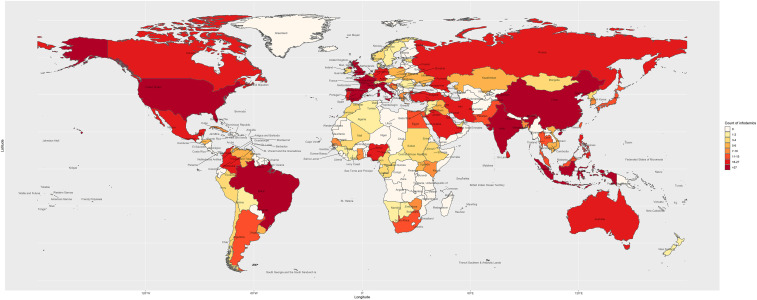
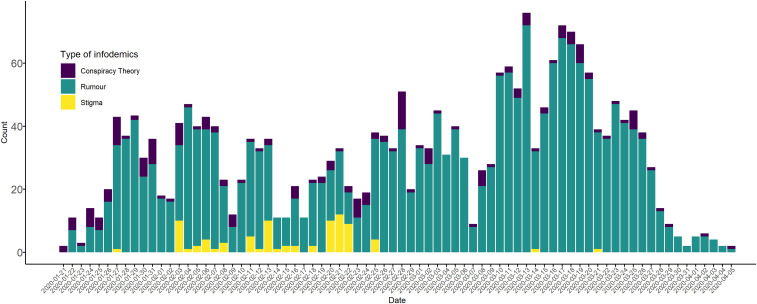
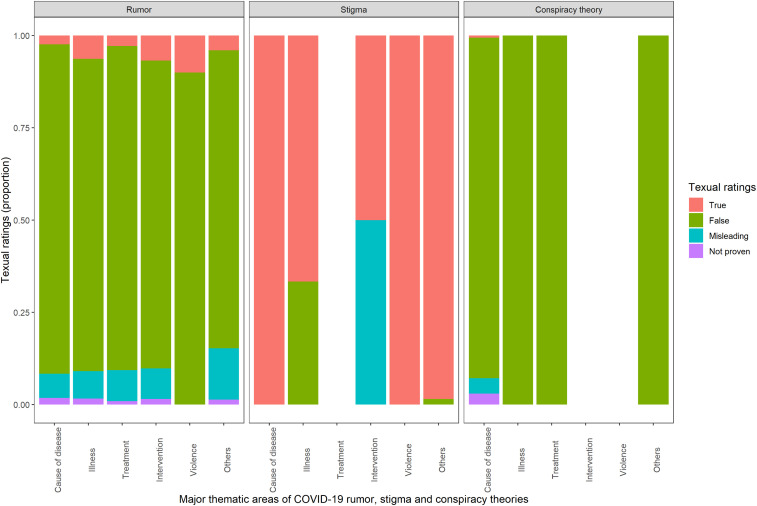
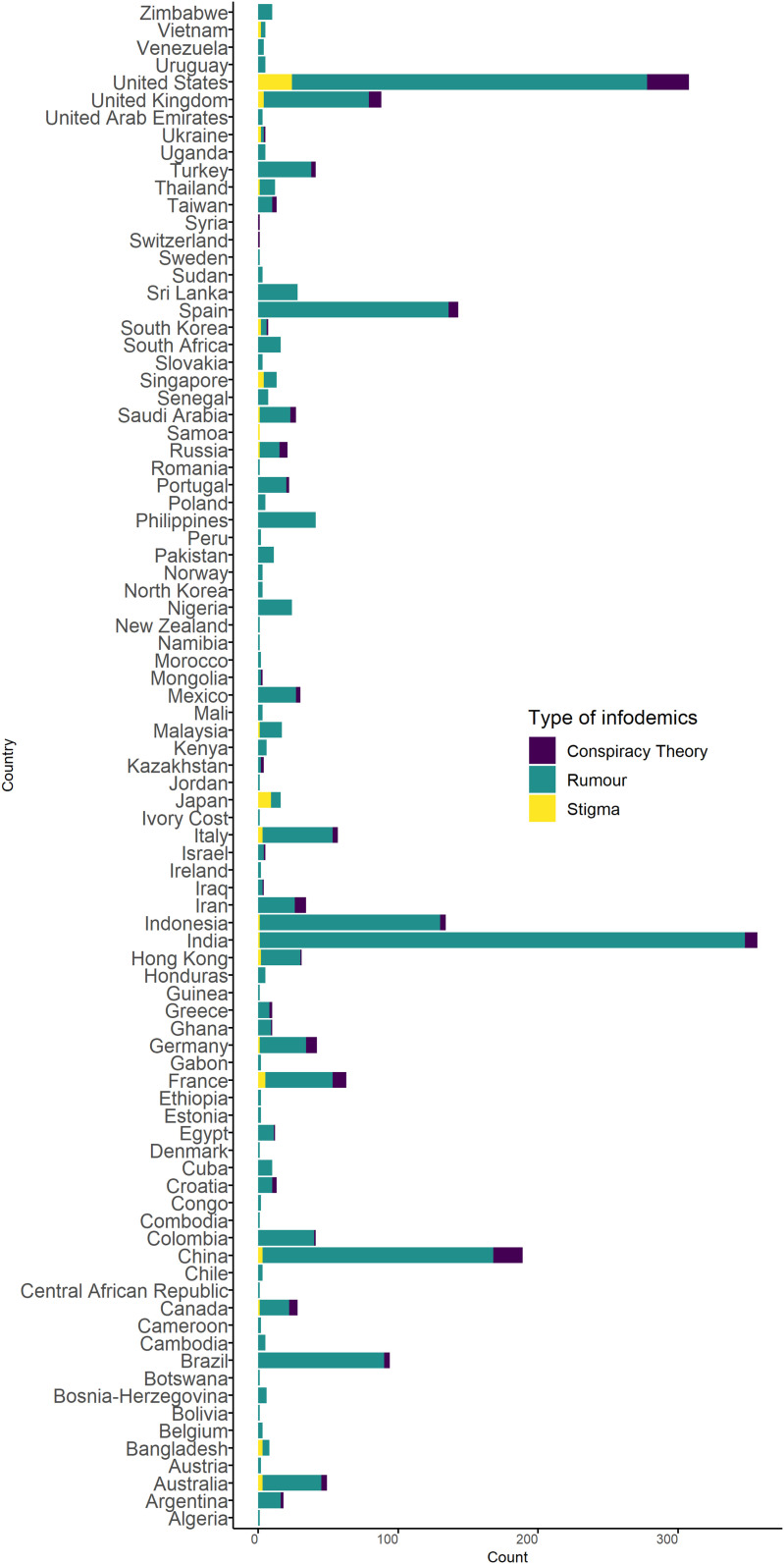
Infodemics, often including rumors, stigma, and conspiracy theories, have been common during the COVID-19 pandemic. Monitoring social media data has been identified as the best method for tracking rumors in real time and as a possible way to dispel misinformation and reduce stigma. However, the detection, assessment, and response to rumors, stigma, and conspiracy theories in real time are a challenge. Therefore, we followed and examined COVID-19-related rumors, stigma, and conspiracy theories circulating on online platforms, including fact-checking agency websites, Facebook, Twitter, and online newspapers, and their impacts on public health. Information was extracted between December 31, 2019 and April 5, 2020, and descriptively analyzed. We performed a content analysis of the news articles to compare and contrast data collected from other sources. We identified 2,311 reports of rumors, stigma, and conspiracy theories in 25 languages from 87 countries. Claims were related to illness, transmission and mortality (24%), control measures (21%), treatment and cure (19%), cause of disease including the origin (15%), violence (1%), and miscellaneous (20%). Of the 2,276 reports for which text ratings were available, 1,856 claims were false (82%). Misinformation fueled by rumors, stigma, and conspiracy theories can have potentially serious implications on the individual and community if prioritized over evidence-based guidelines. Health agencies must track misinformation associated with the COVID-19 in real time, and engage local communities and government stakeholders to debunk misinformation.
Overview
The claims and statistics of this paper haven’t been checked yet.
Free: it reads the open-access text and checks the first 5 claims that cite a source we can check. Create a free account to check every claim.
Integrity signals
Registry
Cites
Statistics
Figures
Verification
Claims the paper makes
The claims and statistics of this paper haven’t been checked yet.
Free: it reads the open-access text and checks the first 5 claims that cite a source we can check. Create a free account to check every claim.
Claims other papers make about this one
Each is checked against this paper’s own text: does it say what the citing paper says it does?
The cited source says what the claim attributes to it.
In the citing paper
“Misinformation during the Ebola outbreak in the Democratic Republic of the Congo in 2019 was associated with aggression, mistrust, social unrest, and targeted assaults on healthcare workers [45].”
From Social Media Role and Its Impact on Public Health: A Narrative Review (2023) · cites this paper as [45]
The cited source says what the claim attributes to it.
In the citing paper
“Rumors about COVID-19 have been labeled a global enemy by the UN secretary-general [45].”
From Social Media Role and Its Impact on Public Health: A Narrative Review (2023) · cites this paper as [45]
The cited source says what the claim attributes to it.
In the citing paper
“During the SARS outbreak in China in 2002-2003, Asian people faced social stigma as a result of their fear of contracting the disease [45].”
From Social Media Role and Its Impact on Public Health: A Narrative Review (2023) · cites this paper as [45]
Self-check
Percentages, sums and reported differences re-computed from the paper’s own numbers.
The self-check needs the paper’s full text.
Citations
Cites
Understanding Conspiracy Theories
Douglas, K. M., Uscinski, J. E., Sutton, R. M., Cichocka, A., Nefes, T., Ang, C. S., & Deravi, F. (2019) · Political Psychology · doi:10.1111/pops.12568 · Cited by 1,511 · cited 1×
“defined as explanatory beliefs about an individual or group of people working in secret to reaching malicious goals.(16) Data extraction and consistency.”
BackgroundFear and Stigma: The Epidemic within the SARS Outbreak
Person, B., Sy, F., Holton, K., Govert, B., Liang, A., the, N. C. I. D., SARS Community Outreach Team (listed in alphabetical order), Garza, B., Gould, D., Hickson, M., et al. (2004) · Emerging Infectious Diseases · doi:10.3201/eid1002.030750 · Cited by 790
YouTube as a source of information on COVID-19: a pandemic of misinformation?
Li, H. O.-Y., Bailey, A., Huynh, D., & Chan, J. (2020) · BMJ Global Health · doi:10.1136/bmjgh-2020-002604 · Cited by 781
See Something, Say Something: Correction of Global Health Misinformation on Social Media
Bode, L., & Vraga, E. K. (2018) · Health Communication · doi:10.1080/10410236.2017.1331312 · Cited by 745 · cited 1×
“aimed at promoting evidence against misinformation quickly and clearly might change people’s perception and healthseeking behaviors.(52,53) Currently, the WHO and other health”
BackgroundZubiaga, A., Liakata, M., Procter, R., Wong Sak Hoi, G., & Tolmie, P. (2016) · PLOS ONE · doi:10.1371/journal.pone.0150989 · Cited by 722 · cited 1×
“Rumor is defined as unverified information that canbe foundas true, fabricated, or entirely false after verification.(14) Stigma is a socially constructed process through which a person with stigma can experience discrimination and devaluation in society.”
BackgroundTuran, B., Budhwani, H., Fazeli, P. L., Browning, W. R., Raper, J. L., Mugavero, M. J., & Turan, J. M. (2017) · AIDS and Behavior · doi:10.1007/s10461-016-1451-5 · Cited by 480
Prevention is better than cure: addressing anti-vaccine conspiracy theories
Jolley, D., & Douglas, K. M. (2017) · Journal of Applied Social Psychology · doi:10.1111/jasp.12453 · Cited by 446 · cited 1×
“aimed at promoting evidence against misinformation quickly and clearly might change people’s perception and healthseeking behaviors.(52,53) Currently, the WHO and other health”
BackgroundEbola, Twitter, and misinformation: a dangerous combination?
Oyeyemi, S. O., Gabarron, E., & Wynn, R. (2014) · BMJ · doi:10.1136/bmj.g6178 · Cited by 348 · cited 1×
“Last, there are the well-documented issues with misinformation with Ebola, including false treatments, health workers were deliberately spreading the Ebola virus, and Ebola epidemic was a hoax.(49,50) Such conspiracy theories and misinformation may have impeded the ability of healthcare workers and emergency responder…”
BackgroundAttacks against health-care personnel must stop, especially as the world fights COVID-19
McKay, D., Heisler, M., Mishori, R., Catton, H., & Kloiber, O. (2020) · The Lancet · doi:10.1016/s0140-6736(20)31191-0 · Cited by 186
Young, W. B., Park, J. E., Tian, I. X., & Kempner, J. (2013) · PLoS ONE · doi:10.1371/journal.pone.0054074 · Cited by 138 · cited 1×
“Stigma is a socially constructed process through which a person with stigma can experience discrimination and devaluation in society.(15) A conspiracy theory is”
Background
Research works printed but not linked: 29
- World Health Organization, 2020 Coronavirus Disease 2019 (COVID-19) Situation Report – 13. Geneva, Switzerland: WHO.
- Lederer EM, 2020 U.N. Chief Antonio Guterres: Misinformation about COVID-19 Is the New Enemy. TIME. New York, NY: TIME.
- World Health Organization, 2018 Managing Epidemics: Key Facts about Major Deadly Diseases. Luxembourg: WHO.
- Center for Preparedness and Response, 2020 Responding to Rumors and Misinformation. Emergency Preparedness and Response. Atlanta, GA: Centre for Disease Control and Prevention.
- Eckert KS 2016 Evidence Syntheses to Support the Guideline on Emergency Risk Communication. Geneva, Switzerland: World Health Organization.
- Victoria Knight of Kaiser Health News, 2020 COVID-19: Beware Online Tests and Cures, Experts Say. The Guardian. Surry Hills, NSW, Australia: The Guardian.
- Spencer SH, 2020 Fake Coronavirus Cures, Part 1: MMS Is Industrial Bleach. Available at: https://www.factcheck.org/2020/02/fake-coronavirus-cures-part-1-mms-is-industrial-bleach/. Accessed April 4, 2020.
- Vrajlal A, 2020 Chinese-Australians Facing Racism after Coronavirus Outbreak. Available at: https://www.huffingtonpost.com.au/entry/coronavirus-australia-racism_au_5e33a522c5b6f2623326d72b. Accessed April 4, 2020.
- BBC Reality Check Team, 2020 Coronavirus: Does Drinking Tea Help? BBC News. Delhi, India: BBC News.
- Cable T, 2020 CDD FACT CHECK: Can Camel Urine, Lime Cure Coronavirus? The Cable. Abuja, Nigeria: The Cable Newspaper.
- Landsverk G, 2020 Holding Your Breath Can’t Help You Self-Diagnose the Coronavirus. Here’s What You Should Do Instead. Business Insider Australia. Surry Hills, NSW, Australia: Business Insider Australia.
- Ellis-Petersen H Rahman SA, 2020 Indian Doctors Being Evicted from Homes over Coronavirus Fears. The Guardian. Surry Hills, NSW, Australia: The Guardian.
- Mead WR, 2020 China Is the Real Sick Man of Asia. The Wall Street Journal. New York, NY: The Wall Street Journal.
- Breland A, 2020 Russian Media Outlets Are Blaming the Coronavirus on the United States. Mother Jones. San Francisco, CA: Mother Jones.
- Gertz B, 2020 Coronavirus May Have Originated in Lab Linked to China’s Biowarfare Program. The Washington Post. Washington, DC: The Washington Post.
- Gregory J, 2020 The Coronavirus ‘Infodemic’ Is Real. We Rated the Websites Responsible for It. Statnews. Boston, MA: Statnews.
- Richtel M, 2020 WHO Fights a Pandemic besides Coronavirus: An ‘Infodemic’. The New York Times. New York, NY: The New York Times.
- Meddle East Media Research Institute, 2020 Arab Writers: The Coronavirus Is Part of Biological Warfare Waged by the U.S. against China. Egypt, Saudi Arabia, and Syria: Meddle East Media Research Institute TV.
- Farda R, 2020 Iran Cleric Blames Trump for Coronavirus Outbreak in Religious City. Radio Farda. Prague, Czech Republic: Radio Farda.
- Colson T, 2020 A Fake Claim That Cocaine Cures the Coronavirus Is Spreading Online, and the French Government Was Forced to Tell People That It Won’t. Business Insider Australia. Surry Hills, NSW, Australia: Business Insider Australia.
- Frenkel S Alba D Zhong R, 2020 Surge of Virus Misinformation Stumps Facebook and Twitter. The New York Times. New York, NY: The New York Times.
- World Health Organization, 2020 Alcohol Does Not Protect against COVID-19; Access Should Be Restricted during Lockdown. Alcohol Use. Geneva, Switzerland: WHO, Regional Office for Europe.
- CNN Türk, 2020 9 Kişi Daha Saf Alkolden Öldü [9 More Poeple Died from Pre Alcohol]. Available at: https://www.cnnturk.com/video/turkiye/9-kisi-daha-saf-alkolden-oldu. Accessed June 4, 2020.
- Staff Reporter, 2020 Twelve Taken Ill after Consuming ‘Coronavirus Shaped’ Datura Seeds. The Hindu. Andhra Pradesh, India: The Hindu.
- Chan-Kyong P, 2020 Coronavirus: Saltwater Spray Infects 46 Church-Goers in South Korea. South China Morning Post. Causeway Bay, Hong Kong: South China Morning Post.
- Eckel M, 2020 Tractors, Herbs, Vodka, Saunas? Some Leaders Offer Strange, Unhelpful Advice On Warding Off COVID-19. Available at: https://www.rferl.org/a/coronavirus-unhelpful-advice-tractors-herbs-vodka-saunas-gurbanguly-lukashenka-vucic/30495810.html. Accessed June 4, 2020.
- Tajmim T, 2020 Coronavirus: 41 Doctors, 10 Nurses Infected. The Business Standard. Dhaka, Bangladesh: The Business Standard.
- National Herald, 2020 Social Stigma Forcing Corona Patients to Avoid Screening in India. National Herald. New Delhi, India: National Herald.
- Kabananukye K, 2001 Denial, Discrimination and Stigmatisation: The Case of Ebola Epidemic in Some Districts. Kampala, Uganda: Ugandan Ministry of Health, National Ebola Task Force.
Cited by
Items 101–200 of 997
Buchy, P., Buisson, Y., Cintra, O. A. L., Dwyer, D. E., Nissen, M. D., de Lejarazu, R. O., & Petersen, E. (2021) · International Journal of Infectious Diseases · doi:10.1016/j.ijid.2021.09.045 · Cited by 51
The Future of Infodemic Surveillance as Public Health Surveillance
Chiou, H., Voegeli, C., Wilhelm, E., Kolis, J., Brookmeyer, K. A., & Prybylski, D. (2022) · Emerging infectious diseases · doi:10.3201/eid2813.220696 · Cited by 58
“Globally, rumors, stigma, and conspiracy theories about COVID-19 have been pervasive (2), and persons can find information about COVID-19 to be conflicting, confusing, and overwhelming (3).”
BackgroundWill Africans Take COVID-19 Vaccination?Preprint
Anjorin, A. A., Odetokun, I. A., Abioye, A. I., Elnadi, H., Umoren, M. V., Damaris, B. F., Eyedo, J., Umar, H. I., Nyandwi, J. B., Abdalla, M., et al. (2021) · SSRN Electronic Journal · doi:10.2139/ssrn.3813174 · Cited by 41
Govere-Hwenje, S., Jarolimova, J., Yan, J., Khumalo, A. R., Zondi, G., Ngcobo, M., Wara, N. J., Zionts, D. L., Bogart, L. M., Parker, R. A., et al. (2022) · BMC Public Health · doi:10.1186/s12889-022-13623-w · Cited by 47
“Notably, social media as a main source of information on COVID-19, which we found to be negatively associated with willingness to accept COVID-19 vaccination, has also been associated with COVID-19 misinformation/mistrust [42, 45] and with decreased willingness to accept COVID-19 vaccination in other studies [44].”
Health Misinformation on Social Media: A Systematic Literature Review and Future Research Directions
Li, Y., Marga, J. J., Cheung, C. M. K., Shen, X., & Lee, M. (2022) · AIS Transactions on Human-Computer Interaction · doi:10.17705/1thci.00164 · Cited by 55
Avery, E. J., & Park, S. (2020) · Health Communication · doi:10.1080/10410236.2020.1847438 · Cited by 43
Accost, Accede, or Amplify: Attitudes towards COVID-19 Misinformation on WhatsApp in India
Varanasi, R. A., Pal, J., & Vashistha, A. (2022) · CHI Conference on Human Factors in Computing Systems · doi:10.1145/3491102.3517588 · Cited by 51
“ings [124] and deaths of several people [62].”
Gurgun, S., Cemiloglu, D., Arden-Close, E. J., Phalp, K. T., Nakov, P., & Ali, R. (2023) · Technology in Society · doi:10.1016/j.techsoc.2023.102444 · Cited by 55
Covid -19, misinformation, and antimicrobial resistance
Arshad, M., Mahmood, S. F., Khan, M. S., & Hasan, R. (2020) · BMJ · doi:10.1136/bmj.m4501 · Cited by 45
Chan, H., Chiu, C. P., Zuo, S., Wang, X., Liu, L., & Hong, Y. (2021) · Humanities and Social Sciences Communications · doi:10.1057/s41599-021-00781-2 · Cited by 40
Siu, A. F., Fan, D., Kim, G. S.-H., Rao, H. V., Vazquez, X., O'Modhrain, S., & Follmer, S. (2021) · Proceedings of the 18th International Web for All Conference · doi:10.1145/3430263.3452432 · Cited by 37
“More generally, as social media and news sources struggle to contain widespread misinformation [39, 56, 103], broadening data literacy can empower individuals to explore, interpret, and evaluate data-driven sources”
BackgroundMind the “worry fatigue” amid Omicron scares
Su, Z., McDonnell, D., Aḥmad, J., Cheshmehzangi, A., & Xiang, Y. (2021) · Brain Behavior and Immunity · doi:10.1016/j.bbi.2021.12.023 · Cited by 38
“Factor in the accumulated negative health consequences from previous variants (Our 2021), public health guidance that could range from disputable to deadly (Islam et al., 2020), and media coverage that feeds on both hope and fear (Su et al.”
BackgroundMining User-aware Multi-relations for Fake News Detection in Large Scale Online Social Networks
Su, X., Yang, J. Y., Wu, J. X., & Zhang, Y. (2023) · ACM International Conference on Web Search and Data Mining (WSDM) · doi:10.1145/3539597.3570478 · Cited by 55
“For instance, the spread of COVID19 fake news that “consuming highly concentrated alcohol could disinfect the body and kill the virus” resulted in more than 5,800 hospitalizations [13].”
BackgroundSocial media and COVID-19 misinformation: how ignorant Facebook users are?
Al-Zaman, M. S. (2021) · Heliyon · doi:10.1016/j.heliyon.2021.e07144 · Cited by 49
Monkeypox Outbreaks in 2022: Battling Another “Pandemic” of Misinformation
Ennab, F., Nawaz, F. A., Narain, K., Nchasi, G., Essar, M. Y., Head, M., Singla, R. K., Atanasov, A. G., & Shen, B. (2022) · International Journal of Public Health · doi:10.3389/ijph.2022.1605149 · Cited by 37
RETRACTED: Why are we vaccinating children against COVID-19?
Kostoff, R. N., Călina, D. C., Kanduc, D., Briggs, M. B., Vlachoyiannopoulos, P. G., Svistunov, A. А., & Tsatsakis, A. M. (2021) · Toxicology Reports · doi:10.1016/j.toxrep.2021.08.010 · Cited by 50
RetractedChu, T. H., Yeo, T. E. D., & Su, Y. (2022) · Journalism & Mass Communication Quarterly · doi:10.1177/10776990211068857 · Cited by 46
“In contrast to the deluge of pandemic-related information on social media (Islam et al., 2020), traditional news media are known for their editorial function to present the most pertinent and important information during crises (Perse & Lambe, 2016).”
BackgroundLohiniva, A., Nurzhynska, A., Hudi, A.-H., Anim, B., & Aboagye, D. C. (2022) · JMIR Infodemiology · doi:10.2196/37134 · Cited by 43
“A number of recent studies highlight the negative effects of the infodemic on public perceptions of the COVID-19 pandemic [2-4] and reluctance to comply with public health guidance, including willingness to accept a COVID-19 vaccine [5-7].”
BackgroundMiller, L. M., Gee, P. M., & Katz, R. A. (2021) · Frontiers in Public Health · doi:10.3389/fpubh.2021.581497 · Cited by 41
Haupt, M. R., Li, J., & Mackey, T. K. (2021) · Big Data & Society · doi:10.1177/20539517211013843 · Cited by 43
“An inductive coding approach was used to create the scientific credibility and authority categories, which was also partially informed by a combination of existing COVID-19 misinformation categories and prior studies on scientific credibility use per the definitions below (Islam et al., 2020; Lu, 2020) (see Table 1 fo…”
BackgroundMethodInfluentialMedical Mistrust and Stigma Associated with COVID-19 Among People Living with HIV in South Africa
Jarolimova, J., Yan, J., Govere, S., Ngobese, N., Shazi, Z. M., Khumalo, A. R., Bunda, B. A., Wara, N. J., Zionts, D. L., Thulare, H., et al. (2021) · AIDS and Behavior · doi:10.1007/s10461-021-03307-8 · Cited by 36
Lin, T.-H., Chang, M.-C., Chang, C.-C., & Chou, Y.-H. (2022) · Social Science & Medicine · doi:10.1016/j.socscimed.2022.114744 · Cited by 43
Social Media, Fake News, and the COVID-19 Pandemic: Sketching the Case of Southeast Asia
Dang, H. L. (2021) · Advances in Southeast Asian Studies · doi:10.14764/10.aseas-0054 · Cited by 48
Staender, A., Humprecht, E., Esser, F., Morosoli, S., & Aelst, P. V. (2021) · Digital Journalism · doi:10.1080/21670811.2021.1966315 · Cited by 46
Duong, T. V., Nguyen, M. H., Lai, C.-F., Chen, S., Dadaczynski, K., Okan, O., & Lin, C.-Y. (2022) · Annals of Medicine · doi:10.1080/07853890.2022.2101688 · Cited by 37
“pandemic [35,36], putting more pressure on them to”
BackgroundInfluence of Mass Media on Italian Web Users During the COVID-19 Pandemic: Infodemiological Analysis
Rovetta, A., & Castaldo, L. (2021) · JMIRx Med · doi:10.2196/32233 · Cited by 41
“The role of social and traditional media in spreading disinformation and misinformation has now been recognized in a substantial number of literature reports [5-10].”
BackgroundSocial Media Use and Misinformation Among Asian Americans During COVID-19
Chong, S. K., Ali, S. H., Ðoàn, L. N., Yi, S. S., Trinh‐Shevrin, C., & Kwon, S. C. (2022) · Frontiers in Public Health · doi:10.3389/fpubh.2021.764681 · Cited by 37
COVID-19: time to flatten the infodemic curve
Tentolouris, A., Ntanasis‐Stathopoulos, I., Vlachakis, P. K., Tsilimigras, D. I., Gavriatopoulou, M., & Dimopoulos, M. A. (2021) · Clinical and Experimental Medicine · doi:10.1007/s10238-020-00680-x · Cited by 41
Li, Y. K., Liu, G., Egolet, R. O., Yang, R., Huang, Y., & Zheng, Z. (2021) · International Journal of Environmental Research and Public Health · doi:10.3390/ijerph18084090 · Cited by 34
“It is noted that the distortion in the process of information dissemination such as rumors, stigma, and conspiracy theories could help initiate and spread misinformation [28].”
BackgroundAdversary-Aware Rumor Detection
Song, Y.-Z., Chen, Y.-S., Chang, Y.-T., Weng, S.-Y., & Shuai, H.-H. (2021) · Findings of the Association for Computational Linguistics: ACL (Findings of ACL) · doi:10.18653/v1/2021.findings-acl.118 · Cited by 41
A Literature Review on Detecting, Verifying, and Mitigating Online Misinformation
Bodaghi, A., Schmitt, K., Watine, P., & Fung, B. C. M. (2023) · IEEE Transactions on Computational Social Systems · doi:10.1109/tcss.2023.3289031 · Cited by 48
“In one case, false information about the protective ability (and safety) of highly concentrated methanol to kill coronavirus infection resulted in the death of almost 800 people and the hospitalization of 5876 [6].”
BackgroundZamir, M. T., Ullah, F., Tariq, R., Bangyal, W. H., Arif, M., & Gelbukh, A. F. (2024) · PLoS ONE · doi:10.1371/journal.pone.0315407 · Cited by 45
Papaneophytou, C. P., & Nicolaou, S. A. (2025) · Trends in Higher Education · doi:10.3390/higheredu4020024 · Cited by 73
Nguyen, T. T., Nguyen, M. H., Pham, T. T. M., Le, V.-T. T., Nguyen, T. T., Công, T. L., Binh, N., Dao, H. K., Nguyen, H. C., Ha, T. H., et al. (2021) · Frontiers in Nutrition · doi:10.3389/fnut.2021.774328 · Cited by 39
Health-related fake news during the COVID-19 pandemic: perceived trust and information search
Zheng, L., Elhai, J. D., Miao, M., Wang, Y., Wang, Y., & Gan, Y. (2022) · Internet Research · doi:10.1108/intr-11-2020-0624 · Cited by 37
Fighting the Infodemic on Two Fronts: Reducing False Beliefs Without Increasing Polarization
Dan, V., & Dixon, G. (2021) · Science Communication · doi:10.1177/10755470211020411 · Cited by 37
“Recent research even linked COVID19 misinformation to preventable death and hospitalization (Islam et al., 2020).”
BackgroundCorrection format has a limited role when debunking misinformation
Swire-Thompson, B., Cook, J., Butler, L., Sanderson, J., Lewandowsky, S., & Ecker, U. K. H. (2021) · doi:10.31234/osf.io/gwxe4 · Cited by 4
“Given that being misinformed can have negative ramifications on both the individual and society (e.g., Islam et al., 2020; Treen et al., 2020), finding optimal corrective techniques has become a key focus of research and educational campaigns (Walter et al., 2020).”
BackgroundHy-DeFake: Hypergraph neural networks for detecting fake news in online social networks
Su, X., Yang, J. Y., Wu, J. X., & Qiu, Z. (2025) · Neural Networks · doi:10.1016/j.neunet.2025.107302 · Cited by 46
Mudenda, S., Witika, B. A., Mantargi, M. J. S., Banda, M., Mfune, R. L., Daka, V., Kalui, D., Phiri, M. N., Kasanga, M., Mudenda, F., et al. (2020) · European Journal of Environment and Public Health · doi:10.29333/ejeph/9308 · Cited by 51
“Rampant COVID-19 related infodemics or rumours have contributed to self-medication because they spread wrong information about possible medicines used in prophylaxis and treatment of COVID-19 (Islam et al., 2020).”
BackgroundInfluentialIslam, M. M., Islam, M. M., Ahmed, F., & Rumana, A. S. (2021) · Social Network Analysis and Mining · doi:10.1007/s13278-021-00744-0 · Cited by 38
Self-citationPublic Health Challenges in Saudi Arabia during the COVID-19 Pandemic: A Literature Review
Sheerah, H. A., Almuzaini, Y. S., & Khan, A. A. (2023) · Healthcare · doi:10.3390/healthcare11121757 · Cited by 36
Tibbels, N. J., Dosso, A., Fordham, C., Benié, W., Brou, J. A., Kamara, D., Hendrickson, Z. M., & Naugle, D. A. (2022) · Vaccine · doi:10.1016/j.vaccine.2022.02.032 · Cited by 32
“In the case of COVID-19, the extent of misinformation about the virus and associated vaccine development is complex and unprecedented, with rumors circulating widely that minimize the existence or threat of the virus itself and the safety of the vaccines [13,14].”
BackgroundHelfers, A., & Ebersbach, M. (2022) · Journal of Communications In Healthcare · doi:10.1080/17538068.2022.2047497 · Cited by 37
Misinformation can prevent the suppression of epidemics
Sontag, A., Rogers, T., & Yates, C. A. (2022) · Journal of The Royal Society Interface · doi:10.1098/rsif.2021.0668 · Cited by 36
Chun, H., Park, E., Choi, S. K., Yoon, H., Okan, O., & Dadaczynski, K. (2022) · International Journal of Environmental Research and Public Health · doi:10.3390/ijerph19063437 · Cited by 31
“The “infodemic”, information epidemic, makes it more difficult for people to pick up the correct health information [3,4].”
BackgroundCaiazzo, V., & Stimpfel, A. W. (2022) · Public Health · doi:10.1016/j.puhe.2022.03.017 · Cited by 32
Castellano‐Tejedor, C., Torres-Serrano, M., & Cencerrado, A. (2021) · Journal of Health Psychology · doi:10.1177/1359105320985580 · Cited by 30
“This further leads to other psychosocial challenges including stigmatization and discrimination (Islam et al., 2020).”
BackgroundCOVID-19-related online misinformation in Bangladesh
Al-Zaman, M. S. (2021) · Journal of Health Research · doi:10.1108/jhr-09-2020-0414 · Cited by 33
Public health decisions in the COVID-19 pandemic require more than ‘follow the science’
de Campos, T. C., & Undurraga, E. A. (2021) · Journal of Medical Ethics · doi:10.1136/medethics-2020-107134 · Cited by 49
Özdemir, S., Akça, H. Ş., Algın, A., Altunok, İ., & Eroğlu, S. E. (2021) · The American Journal of Emergency Medicine · doi:10.1016/j.ajem.2021.06.020 · Cited by 28
“Firstly, misinformation about COVID-19 spreading especially on social media negatively affects the patients' willingness to participate in studies on COVID-19 [18,19].”
BackgroundFake News on COVID-19 in Indonesia
Muzykant, V. L., Muqsith, M. A., Pratomo, R. R., & Barabash, V. (2021) · Risk, systems and decisions · doi:10.1007/978-3-030-77344-1_22 · Cited by 35
Nowak, B. M., Miedziarek, C., Pełczyński, S., & Rzymski, P. (2021) · International Journal of Environmental Research and Public Health · doi:10.3390/ijerph182212266 · Cited by 35
An Entropy Based Method to Control Covid-19 Rumors in Online Social Networks Using Opinion Leaders
Jain, L. (2022) · Technology in Society · doi:10.1016/j.techsoc.2022.102048 · Cited by 31
“So, the rumor leads to misinfor-mation and produces mental fear, distress, and social disorder [4].”
Fake news on Facebook and their impact on supply chain disruption during COVID-19
Hossain, M. A., Chowdhury, M. M. H., Pappas, I. O., Metri, B. A., Hughes, L., & Dwivedi, Y. K. (2022) · Annals of Operations Research · doi:10.1007/s10479-022-05124-1 · Cited by 32
“Studies suggest that COVID-19 pandemic itself (e.g., Bag et al., 2021; Dubey et al., 2021) as well as SM fake news (Barua et al., 2020; Butt, 2021; Islam et al., 2020; Zheng et al., 2021) have disrupted supply chains globally, mostly through a sudden surge in demand ‘by surprise’ (Ho, 2020).”
BackgroundInfluentialKamal, A.-H. M., Huda, M. N., Dell, C. A., Hossain, S. Z., & Ahmed, S. S. (2020) · Global Biosecurity · doi:10.31646/gbio.77 · Cited by 36
d’Arqom, A., Sawitri, B., Nasution, M. Z., & Lazuardi, R. (2021) · International Journal of Women s Health · doi:10.2147/ijwh.s316417 · Cited by 35
Wagner, A. L., Porth, J. M., Wu, Z., Boulton, M. L., Finlay, J., & Kobayashi, L. C. (2022) · Journal of Community Health · doi:10.1007/s10900-022-01064-w · Cited by 28
“The current COVID-19 pandemic has unleashed an “infodemic” related to COVID-19 vaccine development and vaccine safety [11, 12].”
BackgroundCrisis communication strategies for health officials
Su, Z., Zhang, H., McDonnell, D., Aḥmad, J., Cheshmehzangi, A., & Yuan, C. (2022) · Frontiers in Public Health · doi:10.3389/fpubh.2022.796572 · Cited by 39
Baghdadi, J. D., Coffey, K., Belcher, R., Frisbie, J., Hassan, N., Sim, D., & Malik, R. D. (2023) · JAMIA Open · doi:10.1093/jamiaopen/ooad013 · Cited by 44
“Second, our study was limited to videos in English despite COVID-19 related rumors, stigma, and conspiracy theories have been posted in 25 languages from 87 countries.(29) Third, we did not examine the characteristics of users posting comments, which are known to influence susceptibility to health-related misinformati…”
A Meta-Analysis of State-of-the-Art Automated Fake News Detection Methods
Kozik, R., Pawlicka, A., Pawlicki, M., Choraś, M., Mazurczyk, W., & Cabaj, K. (2023) · IEEE Transactions on Computational Social Systems · doi:10.1109/tcss.2023.3296627 · Cited by 36
“According to early estimates, hundreds of more senseless deaths may be attributed to bogus health advice that has boomed in the coronavirus pandemic, for example, the advice to drink bleach [8].”
BackgroundBuchanan, G. R., Kelly, R., Makri, S., & McKay, D. (2022) · Conference on Human Information Interaction and Retrieval · doi:10.1145/3498366.3505823 · Cited by 29
“Misinformation has been blamed for everything from the spread of COVID-19 to the outcome of elections [27; 52], and is the focus of much research: how it is created and by whom, what can be done to minimise its spread, and how to prevent people from believing it [14; 52; 70].”
BackgroundJoerg, L., Kabakova, M., Wang, J. Y., Austin, E., Cohen, M., Kurtti, A., & Jagdeo, J. R. (2025) · Journal of the European Academy of Dermatology and Venereology · doi:10.1111/jdv.20849 · Cited by 36
“52 Misdiagnoses also pose challenges to physicians, including compromised clinical decision-making, heightened risk of legal liability and increased stress, all of which can negatively impact patient outcomes.”
Enners, S., Gradl, G., Kieble, M., Böhm, M., Laufs, U., & Schulz, M. (2021) · Pharmacoepidemiology and Drug Safety · doi:10.1002/pds.5324 · Cited by 27
“19% of the claims were related to treatment and cure.(2) Several drugs were being tested for treatment or prevention of COVID-19 and might have been used off-label.”
BackgroundWeerakoon, S. M., Henson-García, M., Valerio-Shewmaker, M. A., Messiah, S. E., & Knell, G. (2022) · JMIR Formative Research · doi:10.2196/38076 · Cited by 41
“Additionally, information found on the internet regarding health and medicine can be harmful toward patient health since it can be misleading or entirely fabricated, whether intentionally or unintentionally [52,53].”
Zmigrod, L., Burnell, R., & Hameleers, M. (2023) · European Psychologist · doi:10.1027/1016-9040/a000498 · Cited by 34
Propagation Structure Fusion for Rumor Detection Based on Node-Level Contrastive Learning
Ma, J., Liu, Y., Han, M., Hu, C., & Ju, Z. (2023) · IEEE Transactions on Neural Networks and Learning Systems · doi:10.1109/tnnls.2023.3319661 · Cited by 35
Science, technology and innovation in the time of COVID-19
Paunov, C., & Planes-Satorra, S. (2021) · OECD science, technology and industry policy papers · doi:10.1787/234a00e5-en · Cited by 33
Schück, S., Foulquié, P., Mebarki, A., Faviez, C., Khadhar, M., Texier, N., Katsahian, S., Burgun, A., & Chen, X. (2021) · JMIR Formative Research · doi:10.2196/23593 · Cited by 25
“Regarding the objective, most of the content analyses focused on a specific interest related to COVID-19, including public engagement and government responsiveness in Chinese Weibo during the early epidemic stage [26,27], nursing appeals on Twitter and Instagram in Brazil [28], pharmacists’ perception on social media…”
BackgroundInfluentialCOVID-19 vaccine delay: An examination of United States residents’ intention to delay vaccine uptake
Latkin, C. A., Dayton, L., Yi, G. T., Jaleel, A., Nwosu, C. C., & Limaye, R. J. (2021) · Human Vaccines & Immunotherapeutics · doi:10.1080/21645515.2021.1917234 · Cited by 24
Dascalu, S., Flammer, P. G., Ghafari, M., Henson, S. C., Nascimento, R., & Bonsall, M. B. (2021) · Frontiers in Public Health · doi:10.3389/fpubh.2021.768091 · Cited by 30
Rovetta, A., & Castaldo, L. (2022) · BMC Medical Research Methodology · doi:10.1186/s12874-022-01523-x · Cited by 31
“…of tweets via deep learning Gallotti et al. [49] Manual selection of official names, early tentatives, and geographical-related names Islam et al. [50] Manual review of social media, mass media, and fact-checking agency websites to examine the use of stigmatizing COVID-19 names ("health"…”
BackgroundDharawat, A., Lourentzou, I., Morales, A., & Zhai, C. (2022) · Proceedings of the International AAAI Conference on Web and Social Media · doi:10.1609/icwsm.v16i1.19372 · Cited by 90
“Overall, the severity of each message can vary depending on its content, e.g. , urging users to eat garlic is less severe than urging users to drink bleach which has led to hundreds of deaths (Islam et al. 2020).”
BackgroundLightweight source localization for large-scale social networks
Wang, Z., Hou, D., Gao, C., Li, X., & Li, X. (2023) · International World Wide Web Conference (WWW) · doi:10.1145/3543507.3583299 · Cited by 38
“, fake news, rumors) posted on social networks is one of the essential issues that has received widespread consideration [22, 23], The rapid spread of such information results in substantial economic losses [8, 12, 13].”
BackgroundSocial Media Fake News in India
Al-Zaman, M. S. (2021) · DOAJ (DOAJ: Directory of Open Access Journals) · doi:10.15206/ajpor.2021.9.1.25 · Cited by 51
“The surge in health-related online misinformation is a global problem during the pandemic (Islam et al., 2020), and it is intense in India thanks to the higher Internet penetration rate and a lack of users’ Internet literacy.”
BackgroundReal-Time Tracking of COVID-19 Rumors Using Community-Based Methods in Côte d'Ivoire
Tibbels, N. J., Dosso, A., Allen-Valley, A., Benié, W., Fordham, C., Brou, J. A., Nana, M., Zounneme, V., Silué, K. F., Kamara, D., et al. (2021) · Global Health Science and Practice · doi:10.9745/ghsp-d-21-00031 · Cited by 23
“During the current COVID-19 pandemic, misinformation has spread widely throughout communities and social networks alike.(6,7) Rumors about this novel pathogen and its associated illness, COVID-19, have flourished, complicating individuals’ ability to determine which information about the virus can and should be truste…”
BackgroundInfluentialVerifying online information: Development and validation of a self-report scale
Tifferet, S. (2021) · Technology in Society · doi:10.1016/j.techsoc.2021.101788 · Cited by 33
EvidenceNet: Evidence Fusion Network for Fact Verification
Chen, Z., Hui, S. C., Zhuang, F., Liao, L., Li, F., Jia, M., & Li, J. (2022) · International World Wide Web Conference (WWW) · doi:10.1145/3485447.3512135 · Cited by 41
Ayre, J., Muscat, D. M., Mac, O. A., Batcup, C., Cvejic, E., Pickles, K. M., Dolan, H., Bonner, C., Mouwad, D., Zachariah, D., et al. (2022) · Patient Education and Counseling · doi:10.1016/j.pec.2022.03.028 · Cited by 24
“Whilst social media is often discussed as a contributor to misinformation [32], in this study, it was associated with greater COVID-19 knowledge and perceived seriousness of COVID-19.”
The supply and demand of news during COVID-19 and assessment of questionable sources production
Gravino, P., Prevedello, G., Martina, G., & Loreto, V. (2022) · Nature Human Behaviour · doi:10.1038/s41562-022-01353-3 · Cited by 34
Shen, Z., Zhong, Z., Xie, J., Zhang, Q., & Li, S. (2022) · Psychology Research and Behavior Management · doi:10.2147/prbm.s368537 · Cited by 28
“However, at least one study has concluded that much of this negative subjective information may have contributed to “excessive” panic among the public.(40) Traditional media were the second most popular information-seeking channel in this study.”
BackgroundMusi, E., & Reed, C. (2022) · Discourse & Society · doi:10.1177/09579265221076609 · Cited by 54
“A recent study (Islam et al., 2020) has shown that during the first 3 months of the pandemic, nearly 6000 people around the world were hospitalised due to coronavirus dis-and mis-information.”
BackgroundDubé, È., Labbé, F., Malo, B., & Pelletier, C. (2022) · Canadian Journal of Public Health · doi:10.17269/s41997-022-00697-7 · Cited by 35
“This infodemic was associated with decreased public trust in authorities, highlighting the importance of evidence-informed communication strategies (Islam et al., 2020).”
BackgroundAI Ethics in Higher Education: Insights from Africa and Beyond
Corrigan, C. C., Asakipaam, S. A., Kponyo, J. J., & Luetge, C. (2023) · SpringerBriefs in ethics · doi:10.1007/978-3-031-23035-6 · Cited by 41
Quon, C. M., Walker, M., & Graves, L. E. (2023) · Journal of Medical Internet Research · doi:10.2196/45417 · Cited by 25
“A preponderance of the COVID-19 rumors, stigma, and conspiracy theories circulating on the internet at the peak of the pandemic were shown to be false [4].”
Perceived experts are prevalent and influential within an antivaccine community on Twitter
Harris, M., Murtfeldt, R., Wang, S., Mordecai, E. A., & West, J. D. (2024) · PNAS Nexus · doi:10.1093/pnasnexus/pgae007 · Cited by 42
“The internet, particularly social media, is an important source of both vaccine information and misinformation (3, 7, 9 – 11).”
Rosenbaum, J. E., Stillo, M., Graves, N., & Rivera, R. (2021) · Journal of Public Health Policy · doi:10.1057/s41271-021-00309-7 · Cited by 24
“behavior [24], so delays in reaching complete provisional mortality counts may contribute to the pandemic misinformation that COVID-19 mortality was exaggerated [25] and reduce public adherence to non-pharmaceutical interventions such as maskwearing [14], 26].”
BackgroundMaqsood, S., Iqbal, S., Zakar, R., Zakar, M. Z., & Fischer, F. (2021) · BMC Public Health · doi:10.1186/s12889-021-12406-z · Cited by 23
“Secondly, it is responsible for countering infodemics by avoiding misinformation regarding any health-related issue [42].”
BackgroundCOVID-19 vaccine literacy in patients with systemic autoimmune diseases
Correa‐Rodríguez, M., Rueda‐Medina, B., Callejas-Rubio, J. L., Ríos-Fernández, R., de la Hera-Fernández, J., & Ortego‐Centeno, N. (2022) · Current Psychology · doi:10.1007/s12144-022-02713-y · Cited by 30
Effects of Health Literacy in the Fight Against the COVID-19 Infodemic: The Case of Japan
Cheng, J. W., & Nishikawa, M. (2022) · Health Communication · doi:10.1080/10410236.2022.2065745 · Cited by 33
“In the Middle East, misinformation that drinking toxic methanol can cure COVID-19 led to approximately 800 deaths (Islam et al., 2020).”
BackgroundJiang, L. C., Sun, M., Chu, T. H., & Chia, S. C. (2022) · Frontiers in Psychology · doi:10.3389/fpsyg.2022.976091 · Cited by 27
“For example, there were claims that the vaccines were embedded with microchips, that the vaccines had been manufactured before the pandemic, and that the virus was human-made to increase vaccine sales (Islam et al., 2020; Agley and Xiao, 2021).”
BackgroundEvaluating the generalisability of neural rumour verification models
Kochkina, E., Hossain, T., Logan, R. L., Arana‐Catania, M., Procter, R., Zubiaga, A., Singh, S., He, Y., & Liakata, M. (2022) · Information Processing & Management · doi:10.1016/j.ipm.2022.103116 · Cited by 43
Hou, D., Gao, C., Wang, Z., Li, X., & Li, X. (2024) · IEEE Transactions on Network Science and Engineering · doi:10.1109/tnse.2024.3406394 · Cited by 28
“The rapid spread of the malicious source (e.g., fake news, rumors) in social networks results in panic and a substantial economic loss [4], [5], [6].”
BackgroundYang, H., Chen, Z., Fan, Y., Hu, X., Wu, T. T., Kang, S., Xiao, B., & Zhang, M. (2021) · Journal of Public Health · doi:10.1093/pubmed/fdaa268 · Cited by 25
Kusama, T., Kiuchi, S., Takeuchi, K., Ikeda, T., Nakazawa, N., Kinugawa, A., Osaka, K., & Tabuchi, T. (2022) · Healthcare · doi:10.3390/healthcare10030521 · Cited by 23
“has recently emerged as a vehicle for strong social impacts and is commonly regarded as a source of misinformation, including for COVID-19 [8,9].”
BackgroundAutomatic detection of health misinformation: a systematic review
Schlicht, I. B., Fernandez, E., Chulvi, B., & Rosso, P. (2023) · Journal of Ambient Intelligence and Humanized Computing · doi:10.1007/s12652-023-04619-4 · Cited by 42
“Furthermore, we included methods and datasets for languages other than English since misinformation is not limited to the English language and there is a need for assessing detection methods across multiple languages as evidenced by the current pandemic (Islam et al. 2020a).”
BackgroundMethodA Thematic Analysis of Misinformation in India during the COVID-19 Pandemic
Al-Zaman, M. S. (2021) · The International Information & Library Review · doi:10.1080/10572317.2021.1908063 · Cited by 24
“From meddling elections (Allcott & Gentzkow, 2017) to causing death (Islam et al., 2020), misinformation is everywhere.”
BackgroundHype News Diffusion and Risk of Misinformation: The Oz Effect in Health Care
Shi, Z., Liu, X., & Srinivasan, K. (2021) · Journal of Marketing Research · doi:10.1177/00222437211044472 · Cited by 32
Castellon‐Lopez, Y., Carson, S. L., Mansfield, L. N., Garrison, N. A., Barron, J., Morris, D. M., Ntekume, E., Vassar, S. D., Norris, K. C., Brown, A. F., et al. (2022) · International Journal of Environmental Research and Public Health · doi:10.3390/ijerph19105785 · Cited by 25
Hwang, J., Su, M.-H., Jiang, X., Lian, R., Tveleneva, A., & Shah, D. V. (2022) · PLoS ONE · doi:10.1371/journal.pone.0271394 · Cited by 23
“For example, content with negative sentiment toward vaccines was prominently present across social media platforms, with topics ranging from vaccine safety concerns [9, 10, 14], pharmaceutical and medical skepticism [9], conspiracy-style beliefs [9, 11, 12, 14], and infringement of civil liberties [13].”
BackgroundMulti-View mutual learning network for multimodal fake news detection
Cui, W., Zhang, X., & Shang, M. (2025) · Expert Systems with Applications · doi:10.1016/j.eswa.2025.127407 · Cited by 25
Metadata
- Authors
- Islam, M. S., Sarkar, T., Khan, S. H., Mostofa Kamal, A.-H., Hasan, S. M. M., Kabir, A., Yeasmin, D., Islam, M. A., Amin Chowdhury, K. I., Anwar, K. S., Chughtai, A. A., & Seale, H.
- Affiliations
- International Centre for Diarrhoeal Disease Research (BD)
- Khulna University of Engineering and Technology, Khulna, Bangladesh;
- Mahidol University (TH)
- UNSW Sydney (AU)
- Program for Emerging Infections, Infectious Diseases Division, icddr,b, Dhaka, Bangladesh;
- International University of Health and Welfare (JP)
- Corresponding author
- Islam, Md Saiful
- Islam, Mohammad Ariful
- ORCID
- Venue
- The American Journal of Tropical Medicine and Hygiene
- Published
- 2020-10-07
- Volume
- 103
- Issue
- 4
- Pages
- 1621-1629
- ISSN
- 0002-9637 (ISSN-L)
- 1476-1645
- PMC
- PMC7543839
- OpenAlex
- W3048848247
- Cited by
- 1,178
- References
- 21
- Citations by year
- 2026: 88 · 2025: 117 · 2024: 127 · 2023: 207 · 2022: 319 · 2021: 274 · 2020: 45
- FWCI
- 282.36
- Type
- journal article
- Language
- en
- Open access
- bronze
- doi.org
- Locations
- American Journal of Tropical Medicine and Hygiene (publishedVersion)
- PubMed Central (publishedVersion, cc-by)
- PubMed (publishedVersion)
- Funders
- International Centre for Diarrhoeal Disease Research, Bangladesh
- Topics
- Social Sciences › Sociology and Political Science › Misinformation and Its Impacts
- Social Sciences › Communication › Communication and COVID-19 Impact
- Social Sciences › Library and Information Sciences › Academic Publishing and Open Access
- Keywords
- COVID-19 pandemic, infodemic, misinformation, rumors, stigma, conspiracy theories, social media, public health impact, fact-checking, misinformation debunking, COVID-19 containment measures
- MeSH terms
- Betacoronavirus, Data Analysis, COVID-19, SARS-CoV-2, Data Collection, Humans, Pneumonia, Viral, Public Health, Retrospective Studies, Global Health, Coronavirus Infections, Social Stigma, Pandemics, Social Media, Social Discrimination
About these checks
Registry, retraction, Cites and statistics results are computed, not judged, with one exception: a printed reference that no index lists is read once by a model before it counts as a citation error. Claims are extracted by a model and kept only when their quote appears verbatim in the text; each cited source is then checked, with a model’s help, for whether it says what the claim relies on. Those verdicts can be wrong — read the claim’s quote and the cited source before relying on one.
Statistics and arithmetic are recomputed, not judged.
Confidence bands are shown only for fields calibrated on our annotated test set. None is calibrated yet, so no band is shown.
What counts as a claim ›How we measure confidence ›How we check this ›
Are you an author, or do you see a problem with this page? Request a review
Data sources
Bibliographic data: Semantic Scholar, OpenAlex, Crossref.
Contains information from the Semantic Scholar Academic Graph Datasets, made available under the ODC Attribution License (ODC-BY 1.0).
Semantic Scholar’s data is described in: Kinney, R., et al. (2023). The Semantic Scholar Open Data Platform. arXiv:2301.10140.
