

COVID-19–Related Infodemic and Its Impact on Public Health: A Global Social Media Analysis
Open accessThe DOI matches its Crossref record; 21 of the 21 references it cites were found in a registry or an index.
Abstract
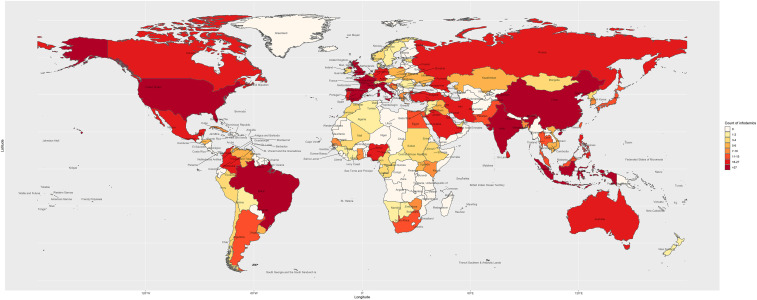
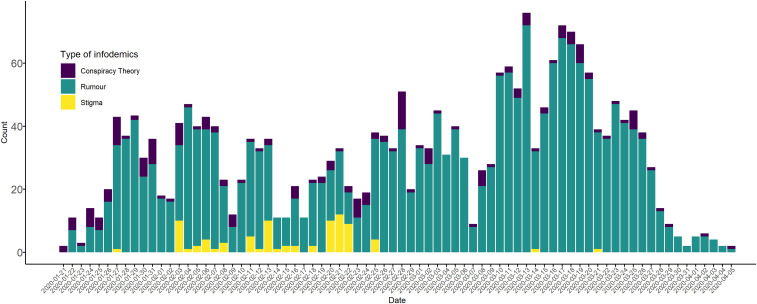
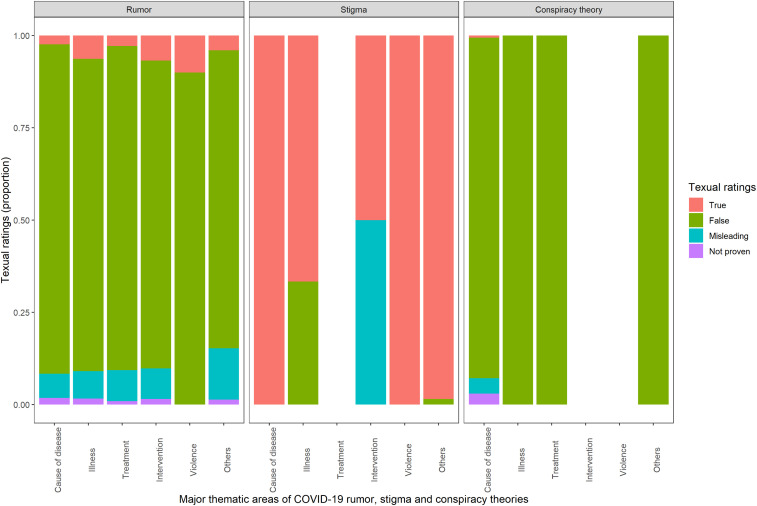
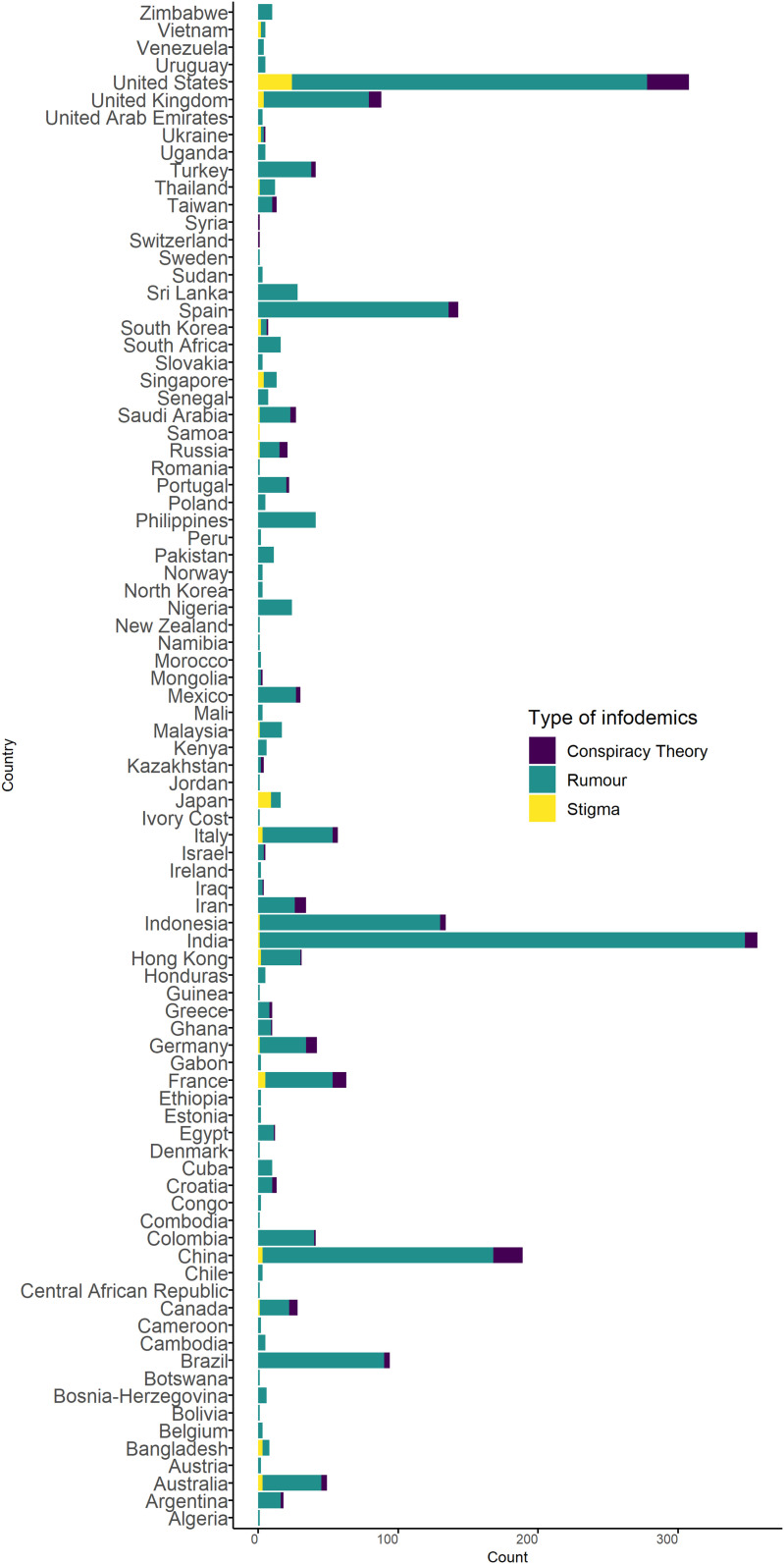
Infodemics, often including rumors, stigma, and conspiracy theories, have been common during the COVID-19 pandemic. Monitoring social media data has been identified as the best method for tracking rumors in real time and as a possible way to dispel misinformation and reduce stigma. However, the detection, assessment, and response to rumors, stigma, and conspiracy theories in real time are a challenge. Therefore, we followed and examined COVID-19-related rumors, stigma, and conspiracy theories circulating on online platforms, including fact-checking agency websites, Facebook, Twitter, and online newspapers, and their impacts on public health. Information was extracted between December 31, 2019 and April 5, 2020, and descriptively analyzed. We performed a content analysis of the news articles to compare and contrast data collected from other sources. We identified 2,311 reports of rumors, stigma, and conspiracy theories in 25 languages from 87 countries. Claims were related to illness, transmission and mortality (24%), control measures (21%), treatment and cure (19%), cause of disease including the origin (15%), violence (1%), and miscellaneous (20%). Of the 2,276 reports for which text ratings were available, 1,856 claims were false (82%). Misinformation fueled by rumors, stigma, and conspiracy theories can have potentially serious implications on the individual and community if prioritized over evidence-based guidelines. Health agencies must track misinformation associated with the COVID-19 in real time, and engage local communities and government stakeholders to debunk misinformation.
Overview
The claims and statistics of this paper haven’t been checked yet.
Free: it reads the open-access text and checks the first 5 claims that cite a source we can check. Create a free account to check every claim.
Integrity signals
Registry
Cites
Statistics
Figures
Verification
Claims the paper makes
The claims and statistics of this paper haven’t been checked yet.
Free: it reads the open-access text and checks the first 5 claims that cite a source we can check. Create a free account to check every claim.
Claims other papers make about this one
Each is checked against this paper’s own text: does it say what the citing paper says it does?
The cited source says what the claim attributes to it.
In the citing paper
“Misinformation during the Ebola outbreak in the Democratic Republic of the Congo in 2019 was associated with aggression, mistrust, social unrest, and targeted assaults on healthcare workers [45].”
From Social Media Role and Its Impact on Public Health: A Narrative Review (2023) · cites this paper as [45]
The cited source says what the claim attributes to it.
In the citing paper
“Rumors about COVID-19 have been labeled a global enemy by the UN secretary-general [45].”
From Social Media Role and Its Impact on Public Health: A Narrative Review (2023) · cites this paper as [45]
The cited source says what the claim attributes to it.
In the citing paper
“During the SARS outbreak in China in 2002-2003, Asian people faced social stigma as a result of their fear of contracting the disease [45].”
From Social Media Role and Its Impact on Public Health: A Narrative Review (2023) · cites this paper as [45]
Self-check
Percentages, sums and reported differences re-computed from the paper’s own numbers.
The self-check needs the paper’s full text.
Citations
Cites
Understanding Conspiracy Theories
Douglas, K. M., Uscinski, J. E., Sutton, R. M., Cichocka, A., Nefes, T., Ang, C. S., & Deravi, F. (2019) · Political Psychology · doi:10.1111/pops.12568 · Cited by 1,511 · cited 1×
“defined as explanatory beliefs about an individual or group of people working in secret to reaching malicious goals.(16) Data extraction and consistency.”
BackgroundFear and Stigma: The Epidemic within the SARS Outbreak
Person, B., Sy, F., Holton, K., Govert, B., Liang, A., the, N. C. I. D., SARS Community Outreach Team (listed in alphabetical order), Garza, B., Gould, D., Hickson, M., et al. (2004) · Emerging Infectious Diseases · doi:10.3201/eid1002.030750 · Cited by 790
YouTube as a source of information on COVID-19: a pandemic of misinformation?
Li, H. O.-Y., Bailey, A., Huynh, D., & Chan, J. (2020) · BMJ Global Health · doi:10.1136/bmjgh-2020-002604 · Cited by 781
See Something, Say Something: Correction of Global Health Misinformation on Social Media
Bode, L., & Vraga, E. K. (2018) · Health Communication · doi:10.1080/10410236.2017.1331312 · Cited by 745 · cited 1×
“aimed at promoting evidence against misinformation quickly and clearly might change people’s perception and healthseeking behaviors.(52,53) Currently, the WHO and other health”
BackgroundZubiaga, A., Liakata, M., Procter, R., Wong Sak Hoi, G., & Tolmie, P. (2016) · PLOS ONE · doi:10.1371/journal.pone.0150989 · Cited by 722 · cited 1×
“Rumor is defined as unverified information that canbe foundas true, fabricated, or entirely false after verification.(14) Stigma is a socially constructed process through which a person with stigma can experience discrimination and devaluation in society.”
BackgroundTuran, B., Budhwani, H., Fazeli, P. L., Browning, W. R., Raper, J. L., Mugavero, M. J., & Turan, J. M. (2017) · AIDS and Behavior · doi:10.1007/s10461-016-1451-5 · Cited by 480
Prevention is better than cure: addressing anti-vaccine conspiracy theories
Jolley, D., & Douglas, K. M. (2017) · Journal of Applied Social Psychology · doi:10.1111/jasp.12453 · Cited by 446 · cited 1×
“aimed at promoting evidence against misinformation quickly and clearly might change people’s perception and healthseeking behaviors.(52,53) Currently, the WHO and other health”
BackgroundEbola, Twitter, and misinformation: a dangerous combination?
Oyeyemi, S. O., Gabarron, E., & Wynn, R. (2014) · BMJ · doi:10.1136/bmj.g6178 · Cited by 348 · cited 1×
“Last, there are the well-documented issues with misinformation with Ebola, including false treatments, health workers were deliberately spreading the Ebola virus, and Ebola epidemic was a hoax.(49,50) Such conspiracy theories and misinformation may have impeded the ability of healthcare workers and emergency responder…”
BackgroundAttacks against health-care personnel must stop, especially as the world fights COVID-19
McKay, D., Heisler, M., Mishori, R., Catton, H., & Kloiber, O. (2020) · The Lancet · doi:10.1016/s0140-6736(20)31191-0 · Cited by 186
Young, W. B., Park, J. E., Tian, I. X., & Kempner, J. (2013) · PLoS ONE · doi:10.1371/journal.pone.0054074 · Cited by 138 · cited 1×
“Stigma is a socially constructed process through which a person with stigma can experience discrimination and devaluation in society.(15) A conspiracy theory is”
Background
Research works printed but not linked: 29
- World Health Organization, 2020 Coronavirus Disease 2019 (COVID-19) Situation Report – 13. Geneva, Switzerland: WHO.
- Lederer EM, 2020 U.N. Chief Antonio Guterres: Misinformation about COVID-19 Is the New Enemy. TIME. New York, NY: TIME.
- World Health Organization, 2018 Managing Epidemics: Key Facts about Major Deadly Diseases. Luxembourg: WHO.
- Center for Preparedness and Response, 2020 Responding to Rumors and Misinformation. Emergency Preparedness and Response. Atlanta, GA: Centre for Disease Control and Prevention.
- Eckert KS 2016 Evidence Syntheses to Support the Guideline on Emergency Risk Communication. Geneva, Switzerland: World Health Organization.
- Victoria Knight of Kaiser Health News, 2020 COVID-19: Beware Online Tests and Cures, Experts Say. The Guardian. Surry Hills, NSW, Australia: The Guardian.
- Spencer SH, 2020 Fake Coronavirus Cures, Part 1: MMS Is Industrial Bleach. Available at: https://www.factcheck.org/2020/02/fake-coronavirus-cures-part-1-mms-is-industrial-bleach/. Accessed April 4, 2020.
- Vrajlal A, 2020 Chinese-Australians Facing Racism after Coronavirus Outbreak. Available at: https://www.huffingtonpost.com.au/entry/coronavirus-australia-racism_au_5e33a522c5b6f2623326d72b. Accessed April 4, 2020.
- BBC Reality Check Team, 2020 Coronavirus: Does Drinking Tea Help? BBC News. Delhi, India: BBC News.
- Cable T, 2020 CDD FACT CHECK: Can Camel Urine, Lime Cure Coronavirus? The Cable. Abuja, Nigeria: The Cable Newspaper.
- Landsverk G, 2020 Holding Your Breath Can’t Help You Self-Diagnose the Coronavirus. Here’s What You Should Do Instead. Business Insider Australia. Surry Hills, NSW, Australia: Business Insider Australia.
- Ellis-Petersen H Rahman SA, 2020 Indian Doctors Being Evicted from Homes over Coronavirus Fears. The Guardian. Surry Hills, NSW, Australia: The Guardian.
- Mead WR, 2020 China Is the Real Sick Man of Asia. The Wall Street Journal. New York, NY: The Wall Street Journal.
- Breland A, 2020 Russian Media Outlets Are Blaming the Coronavirus on the United States. Mother Jones. San Francisco, CA: Mother Jones.
- Gertz B, 2020 Coronavirus May Have Originated in Lab Linked to China’s Biowarfare Program. The Washington Post. Washington, DC: The Washington Post.
- Gregory J, 2020 The Coronavirus ‘Infodemic’ Is Real. We Rated the Websites Responsible for It. Statnews. Boston, MA: Statnews.
- Richtel M, 2020 WHO Fights a Pandemic besides Coronavirus: An ‘Infodemic’. The New York Times. New York, NY: The New York Times.
- Meddle East Media Research Institute, 2020 Arab Writers: The Coronavirus Is Part of Biological Warfare Waged by the U.S. against China. Egypt, Saudi Arabia, and Syria: Meddle East Media Research Institute TV.
- Farda R, 2020 Iran Cleric Blames Trump for Coronavirus Outbreak in Religious City. Radio Farda. Prague, Czech Republic: Radio Farda.
- Colson T, 2020 A Fake Claim That Cocaine Cures the Coronavirus Is Spreading Online, and the French Government Was Forced to Tell People That It Won’t. Business Insider Australia. Surry Hills, NSW, Australia: Business Insider Australia.
- Frenkel S Alba D Zhong R, 2020 Surge of Virus Misinformation Stumps Facebook and Twitter. The New York Times. New York, NY: The New York Times.
- World Health Organization, 2020 Alcohol Does Not Protect against COVID-19; Access Should Be Restricted during Lockdown. Alcohol Use. Geneva, Switzerland: WHO, Regional Office for Europe.
- CNN Türk, 2020 9 Kişi Daha Saf Alkolden Öldü [9 More Poeple Died from Pre Alcohol]. Available at: https://www.cnnturk.com/video/turkiye/9-kisi-daha-saf-alkolden-oldu. Accessed June 4, 2020.
- Staff Reporter, 2020 Twelve Taken Ill after Consuming ‘Coronavirus Shaped’ Datura Seeds. The Hindu. Andhra Pradesh, India: The Hindu.
- Chan-Kyong P, 2020 Coronavirus: Saltwater Spray Infects 46 Church-Goers in South Korea. South China Morning Post. Causeway Bay, Hong Kong: South China Morning Post.
- Eckel M, 2020 Tractors, Herbs, Vodka, Saunas? Some Leaders Offer Strange, Unhelpful Advice On Warding Off COVID-19. Available at: https://www.rferl.org/a/coronavirus-unhelpful-advice-tractors-herbs-vodka-saunas-gurbanguly-lukashenka-vucic/30495810.html. Accessed June 4, 2020.
- Tajmim T, 2020 Coronavirus: 41 Doctors, 10 Nurses Infected. The Business Standard. Dhaka, Bangladesh: The Business Standard.
- National Herald, 2020 Social Stigma Forcing Corona Patients to Avoid Screening in India. National Herald. New Delhi, India: National Herald.
- Kabananukye K, 2001 Denial, Discrimination and Stigmatisation: The Case of Ebola Epidemic in Some Districts. Kampala, Uganda: Ugandan Ministry of Health, National Ebola Task Force.
Cited by
Items 301–400 of 997
A Survey on Data-driven COVID-19 and Future Pandemic Management
Tao, Y., Yang, C., Wang, T., Coltey, E., Jin, Y., Liu, Y., Jiang, R., Fan, Z., Song, X., Shibasaki, R., et al. (2022) · ACM Computing Surveys · doi:10.1145/3542818 · Cited by 17
“Moreover, rumors are found to be spread over social media much faster than the facts [61], which raises the “infodemic” challenge.”
BackgroundJournalism, press freedom and Covid-19
Sak, K. O., Ryskeldinova, S. B., Abdrakhmanova, A., & Toplu, M. (2021) · Bulletin of L N Gumilyov Eurasian National University JOURNALISM Series · doi:10.32523/2616-7174-2021-137-4-95-101 · Cited by 12
Evaluating ChatGPT as an Agent for Providing Genetic EducationPreprint
Walton, N., Graceffo, S., Sutherland, N., Kozel, B. A., Danford, C. J., & McGrath, S. (2023) · bioRxiv (Cold Spring Harbor Laboratory) · doi:10.1101/2023.10.25.564074 · Cited by 16
Strategies and bottlenecks to tackle infodemic in public health: a scoping review
Gentili, A., Villani, L., Osti, T., Corona, V. F., Gris, A. V., Zaino, A., Bonacquisti, M., De Maio, L., Solimene, V., Gualano, M. R., et al. (2024) · Frontiers in Public Health · doi:10.3389/fpubh.2024.1438981 · Cited by 11
From Stigma to Acceptance: Ethical Implications of Anthropomorphic Design in Healthcare Chatbots
Chen, F., Pang, Y., & Wang, L. (2025) · Journal of Business Ethics · doi:10.1007/s10551-025-06052-3 · Cited by 16
“Meanwhile, to simulate the situational factors influencing perceived stigma in the real world (Islam et al., 2020; McGinty et al., 2018; Sangma et al., 2022), Study 2 uses a news article reading task to manipulate stigma.”
InfluentialOchi, S. (2020) · Journal of Radiation Research · doi:10.1093/jrr/rraa135 · Cited by 12
“Currently, the social disturbances caused by the COVID-19 pandemic cause mistrust and distrust of scientists and authorities [25], resulting in an infodemic that is killing many people [26].”
BackgroundInfodemic: Challenges and solutions in topic discovery and data process
Zhang, J., Pan, Y., Lin, H., Sun, Z., Wu, P., & Tu, J. (2023) · Archives of Public Health · doi:10.1186/s13690-023-01179-z · Cited by 13
“If people believe false information, more than scientific guidelines, this can lead to a great danger to public health safety [5, 6].”
Backgroundvan Rensburg, D., Adams, A., Perez, G., Bishop, S. K., Warne, T., Hassell, L., Quigley, T., Garza, L., Dupuis, V., Drain, P. K., et al. (2023) · Frontiers in Public Health · doi:10.3389/fpubh.2023.1220052 · Cited by 13
Survival analysis of the duration of rumors during the COVID-19 pandemic
Liu, X., Zhang, L., Sun, L., & Liu, R. (2024) · BMC Public Health · doi:10.1186/s12889-024-17991-3 · Cited by 14
“Several studies have focused on categorizing rumors specific to the COVID-19 pandemic [12], offering customized strategies for each identified category [13].”
BackgroundKwao, L., Yang, Y., Zou, J., & Ma, J. (2025) · Wiley Interdisciplinary Reviews Data Mining and Knowledge Discovery · doi:10.1002/widm.70001 · Cited by 26
“They serve as a bridge between traditional communication theories and modern computational methods (Dhiman et al. 2023; Fan et al. 2021; Islam et al. 2020).”
COVID-19 and Suicide: A Deadly Association
Daou, M. A. Z., Rached, G., & Geller, J. L. (2021) · The Journal of Nervous and Mental Disease · doi:10.1097/nmd.0000000000001338 · Cited by 12
The Pandemic, Infodemic, and People’s Resilience in India: Viewpoint
Syed-Abdul, S., Ramaswamy, M., Fernández-Luque, L., John, O., Pitti, T., & Parashar, B. (2021) · JMIR Public Health and Surveillance · doi:10.2196/31645 · Cited by 15
“Following the spread of misinformation, 5876 hospitalizations and 800 deaths were reported [26].”
BackgroundMelotti, G., Bonomo, M., Hakoköngäs, E. J., & Pivetti, M. (2022) · Journal of Pacific Rim Psychology · doi:10.1177/18344909221074469 · Cited by 14
“Consistent with what has been asserted in the conspiracy literature (Allington et al., 2020; Islam et al., 2020; Jolley & Paterson, 2020; Lewandowsky et al., 2015; Mancosu et al., 2017), in comparison with the other three groups, this cluster is the one that is least of all confident in science,…”
BackgroundResultInfluentialLocal News in Colorado: Comparing Journalism Quality Across Four Counties
Damanhoury, K. E., Coppini, D., Johnson, B., & Rodriguez, G. (2022) · Journalism Practice · doi:10.1080/17512786.2022.2083003 · Cited by 15
“At one point, the U.S. was the source of the second highest number of online Covid-related conspiracies and rumors worldwide (Islam et al. 2020).”
BackgroundInfodemics during era of COVID-19 pandemic: A review of literature
Sharma, L., Joshi, K. J., Acharya, T. A., Dwivedi, M. G., & Sethy, G. B. (2022) · Journal of Family Medicine and Primary Care · doi:10.4103/jfmpc.jfmpc_2446_21 · Cited by 13
“[8] Fear arising out of infodemics and lack of access to services during lockdown created a vicious cycle that led to serious mental issues ranging from anxiety, depression to suicide in the susceptible population.”
BackgroundKhan, E., Chowdhury, M., Hossain, M. A., Baabdullah, A., Giannakis, M., & Dwivedi, Y. K. (2022) · International Journal of Physical Distribution & Logistics Management · doi:10.1108/ijpdlm-03-2022-0094 · Cited by 8
Hurstak, E., Farina, F. R., Paasche‐Orlow, M. K., Hahn, E. A., Henault, L. E., Moreno, P. I., Weaver, C., Marquez, M., Serrano, E., Thomas, J. L., et al. (2023) · Vaccines · doi:10.3390/vaccines11121848 · Cited by 11
“Specifically, the development and evaluation of interventions that increase media health literacy are greatly needed due to the volume of conflicting information about the COVID-19 virus and vaccination [57–59].”
BackgroundAli, I., Sadique, S., & Ali, S. (2021) · Disaster Medicine and Public Health Preparedness · doi:10.1017/dmp.2021.220 · Cited by 11
Impact of Covid-19 on University Final Year Internship Students
Zaman, A., Banna, H., Rakib, M. A. A., Ahmed, S., & Khan, M. M. (2021) · Journal of Software Engineering and Applications · doi:10.4236/jsea.2021.148022 · Cited by 11
“Internships teach you how to work in a team, how to communicate with them properly, and how to manage a bad situation [13].”
BackgroundVasist, P. N., & Sebastian, M. P. (2022) · International Journal of Information Management Data Insights · doi:10.1016/j.jjimei.2022.100133 · Cited by 13
Govere-Hwenje, S., Jarolimova, J., Yan, J., Khumalo, A. R., Zondi, G., Ngcobo, M., Wara, N. J., Zionts, D. L., Bogart, L. M., Parker, R. A., et al. (2022) · Research Square · doi:10.21203/rs.3.rs-824083/v1 · Cited by 11
Mousavi, S. Z., Barry, C. T., & Halter, B. M. (2022) · Journal of Child and Family Studies · doi:10.1007/s10826-022-02465-0 · Cited by 13
“This point is supported by evidence that social media is a conduit of misinformation (Brown et al., 2019; Islam et al., 2020; Su, 2021).”
BackgroundEstimation and Distributed Eradication of SIR Epidemics on Networks
Zhang, C., Leung, H. C. H., Butler, B. A., & Paré, P. E. (2023) · IEEE Transactions on Control of Network Systems · doi:10.1109/tcns.2023.3306491 · Cited by 13
Informing social media analysis for public health: a cross-sectional survey of professionals
White, B. K., Wilhelm, E., Ishizumi, A., Abeyesekera, S., Pereira, A., Yau, B., Kuzmanovic, A., Nguyen, T., Briand, S. C., & Purnat, T. D. (2024) · Archives of Public Health · doi:10.1186/s13690-023-01230-z · Cited by 13
“The infodemic can impact poorly on health outcomes and health systems [4, 5] and there is evidence that those who are most at risk in an emergency, may be most vulnerable to the infodemic as well [6].”
BackgroundYesmin, S., & Ahmed, S. M. Z. (2021) · Digital Library Perspectives · doi:10.1108/dlp-03-2021-0020 · Cited by 12
Jarvis, C. M., & Eddington, S. M. (2021) · New Media & Society · doi:10.1177/14614448211051648 · Cited by 17
“Among the misinformation propagated online included the widespread belief that consuming highly concentrated alcohol could disin-fect the body and kill the virus (Saiful Islam et al., 2020).”
BackgroundRumor Transmission in Online Social Networks Under Nash Equilibrium of a Psychological Decision Game
Liu, W., Wang, J., & Ouyang, Y. (2022) · Networks and Spatial Economics · doi:10.1007/s11067-022-09574-9 · Cited by 13
“For example, in January 2020, false information on possible ways to cure COVID-19, such as drinking detergent products, was widely transmitted in OSNs and resulted in hundreds of deaths (Islam et al. 2020).”
BackgroundExploring Author Profiling for Fake News Detection
Rathod, S. (2022) · IEEE Annual International Computer Software and Applications Conference (COMPSAC) · doi:10.1109/compsac54236.2022.00256 · Cited by 13
Health Literacy and Anxiety Among Hemodialysis Patients During the Coronavirus Disease Pandemic
Yoon, I. J., & Lee, S. J. (2023) · Psychology Research and Behavior Management · doi:10.2147/prbm.s395479 · Cited by 12
“Recent reports have indicated that during a pandemic, media reports tend to focus more on the damage caused by the spread of the infectious disease than on providing accurate information on the symptoms of the disease.(10,11) This trend often aggravates public anxiety and panic.”
BackgroundInformation literacy in the age of internet conspiracism
Hannah, M. (2023) · Journal of Information Literacy · doi:10.11645/17.1.3277 · Cited by 18
Fighting Fire or Fighting War: Examining the Framing Effects of COVID-19 Metaphors
Tao, R., Kim, S. J., Lu, L., Kang, J.-W., & McLeod, D. M. (2023) · Health Communication · doi:10.1080/10410236.2023.2253398 · Cited by 18
“…health misinformation can spread rampantly (van der Linden, 2022; Wang et al., 2019), resulting in an “infodemic” that threatens public health, as seen during the COVID-19 pandemic (Islam et al., 2020) and other virus epidemics such as Zika and Ebola (Fung et al., 2016; Sharma et al., 2017).”
Underwood, T., Hopkins, K. L., Sommers, T., Howell, C., Boehman, N., Dockery, M., Dubé, È., Dhaliwal, B. K., Kazi, A. M., Limaye, R. J., et al. (2023) · BMC Proceedings · doi:10.1186/s12919-023-00280-z · Cited by 10
“Fighting the infodemic & harnessing social media for good The current “infodemic” era means that public health issues are accompanied by an overabundance of information, much of which can be false or misleading, particularly on social media [30, 31].”
BackgroundSelf-citationDisinformation about COVID-19 Preventions and Treatments: Analysis of USFDA Warning Letters
Sridharan, K., & Sivaramakrishnan, G. (2021) · Health Communication · doi:10.1080/10410236.2021.1980254 · Cited by 14
“Islam et al. (2020) identified several rumors, stigmas, and conspiracy theories that emerged in social media during the current pandemic.”
BackgroundSocial and Cognitive Psychology Theories in Understanding COVID-19 as the Pandemic of Blame
Bouguettaya, A., Walsh, C. E. C., & Victoria Team (2022) · Frontiers in Psychology · doi:10.3389/fpsyg.2021.672395 · Cited by 13
Kou, Z., Shang, L., Zhang, Y., Yue, Z., Zeng, H., & Wang, D. (2022) · International Joint Conference on Artificial Intelligence · doi:10.24963/ijcai.2022/706 · Cited by 10
Exploring Crowdsourced Content Moderation Through Lens of Reddit during COVID-19
Iqbal, W., Arshad, M. H., Tyson, G., & Castro, I. (2022) · Asian Internet Engineering Conference · doi:10.1145/3570748.3570753 · Cited by 9
“On March 11, 2020, WHO declared COVID-19 a global epidemic, which acted as a cherry on top of the massive wave of misinformation on online social platform [3, 21, 51].”
BackgroundFake News on Social Media: Predicting Which Media Format Influences Fake News Most on Facebook
Demuyakor, J., & Opata, E. M. (2022) · Journal of Intelligent Communication · doi:10.54963/jic.v2i1.56 · Cited by 9
Reis, M., Michalski, N., Bartig, S., Wulkotte, E., Poethko‐Müller, C., Graeber, D., Rosario, A. S., Hövener, C., & Hoebel, J. (2024) · Scientific Reports · doi:10.1038/s41598-024-75273-9 · Cited by 14
“Misinformation about COVID-19 in general was particularly widespread across social media 47–49 , which was frequently the sole source of COVID-19-related information 50 .”
BackgroundCauchi, M., Ball, H. A., Ben‐Shlomo, Y., & Robertson, N. P. (2021) · Journal of Neurology · doi:10.1007/s00415-021-10747-8 · Cited by 11
Fujii, S., Nonaka, S., & Nakayama, M. (2021) · The Tohoku Journal of Experimental Medicine · doi:10.1620/tjem.255.183 · Cited by 14
“Tokushima Prefecture is promoting a Tokushima Model (Iwaka 2016) for pre-disaster reconstruction, thereby adopting the premise of the Nankai Trough Earthquake.”
MethodIles, I. A., Gaysynsky, A., & Chou, W. S. (2022) · American Journal of Health Promotion · doi:10.1177/08901171221075612 · Cited by 9
“Another key challenge in communicating about COVID-19 is that rumors and falsehoods about this pandemic, from the severity of the disease to potential treatments, have circulated on social media since COVID-19 emerged.(10) Although misinformation is not a novel phenomenon, the speed and scale at which it spreads in th…”
BackgroundWeinzierl, M., Hopfer, S., & Harabagiu, S. M. (2022) · Journal of Behavioral Medicine · doi:10.1007/s10865-022-00328-z · Cited by 12
“We therefore uncover not only vaccine confidence themes on social media, which may have been recognized in prior literature (Dunn et al., 2017; Islam et al., 2020; Shapiro et al., 2017; Wawrzuta et al., 2021), but we also collection (422,078 unique tweets).”
BackgroundThe Global Health Security Index: Another Look
Goldschmidt, P. G. (2022) · Frontiers in Epidemiology · doi:10.3389/fepid.2022.846260 · Cited by 12
A Comparative Study on COVID-19 Fake News Detection Using Different Transformer Based Models
Joy, S. K. S., Dofadar, D. F., Khan, R. H., Ahmed, M. S., & Rahman, R. (2022) · IEEE Symposium on Industrial Electronics & Applications (ISIEA) · doi:10.1109/isiea54517.2022.9873797 · Cited by 11
Reshaping the Management of Allergic Rhinitis in Primary Care: Lessons from the COVID-19 Pandemic
Abdullah, B., Snidvongs, K., Poerbonegoro, N. L., & Sutikno, B. (2022) · International Journal of Environmental Research and Public Health · doi:10.3390/ijerph192013632 · Cited by 10
“Termed ‘infodemic’ by the World Health Organization, this overabundance of information—some accurate and some not—has made it challenging for people to find trustworthy sources of information and guidance [2].”
BackgroundGrace, B., Shawe, J., & Stephenson, J. (2023) · Sexual & Reproductive Healthcare · doi:10.1016/j.srhc.2023.100826 · Cited by 13
Stephen, A., Nair, S., Joshi, A., Aggarwal, S. S., Adhikari, T., Diwan, V., Devi, K. R., Mishra, B. K., Yadav, G. K., Sahu, D., et al. (2023) · International Journal of Disaster Risk Reduction · doi:10.1016/j.ijdrr.2023.103776 · Cited by 14
Pitsillou, E., Yu, Y., Beh, R. C., Liang, J. J., Hung, A., & Karagiannis, T. C. (2023) · Clinical and Experimental Medicine · doi:10.1007/s10238-023-01168-0 · Cited by 9
Khalaf, M. A., & Shehata, A. M. K. (2023) · BMC Psychology · doi:10.1186/s40359-023-01425-7 · Cited by 11
Laforet, P. E., Basch, C. H., & Tang, H. (2022) · Human Vaccines & Immunotherapeutics · doi:10.1080/21645515.2022.2066935 · Cited by 10
“Social media platforms such as YouTube, Instagram, Facebook are also major sources of information,(29) but recent studies suggest that widespread misinformation about COVID-19 on the internet has posed new challenges to the pandemic.(30,31) YouTube is one of the most popular online platforms, with more than two billio…”
BackgroundA multistage retrieval system for health-related misinformation detection
Fernández-Pichel, M., Losada, D. E., & Pichel, J. C. (2022) · Engineering Applications of Artificial Intelligence · doi:10.1016/j.engappai.2022.105211 · Cited by 14
Faruk, M. O., Devnath, P., Kar, S., Eshaa, E. A., & Naziat, H. (2022) · Health Policy OPEN · doi:10.1016/j.hpopen.2022.100075 · Cited by 11
Herdea, V., Ghionaru, R., Lungu, C. N., Leibovitz, E., & Diaconescu, S. (2022) · Children · doi:10.3390/children9091334 · Cited by 9
Wang, Y., Gao, Z., Lv, H., & Xu, Y. S. (2022) · Frontiers in Public Health · doi:10.3389/fpubh.2022.971525 · Cited by 9
Online information seeking during the COVID-19 pandemic: A cross-country analysis
Khosrowjerdi, M., Fylking, C. B., & Zeraatkar, N. (2023) · IFLA Journal · doi:10.1177/03400352221141466 · Cited by 12
“Islam et al. (2020) showed that infodemics, in the form of rumours, stigma and conspiracy theories, have become widespread during the COVID-19 pandemic.”
BackgroundHuang, C., Yan, D., & Liang, S. (2023) · Journal of Environmental and Public Health · doi:10.1155/2023/6915125 · Cited by 12
Investigating User Behavior Towards Fake News on Social Media Using Gaze and Mouse Movements
Abdrabou, Y., Karypidou, E., Alt, F., & Hassib, M. E. (2023) · Workshop on Usable Security (USEC) · doi:10.14722/usec.2023.232041 · Cited by 18
“Finally, the consumption and belief in fake news has been shown to have an impact on humans’ physical and psychological health [25].”
BackgroundCommunity Level of COVID-19 Information Exposure and Influencing Factors in Northwest Ethiopia
Tamiru, A. T., Rade, B. K., Taye, E. B., Azene, Z. N., Merid, M. W., Muluneh, A. G., Kassa, G. M., Yenit, M. K., Taddese, A. A., Gelaye, K. A., et al. (2020) · Risk Management and Healthcare Policy · doi:10.2147/rmhp.s280346 · Cited by 10
Misinformation about COVID-19: Psychological Insights
Anastasiades, E., Argyrides, M., & Mousoulidou, M. (2021) · Encyclopedia · doi:10.3390/encyclopedia1040091 · Cited by 12
“For instance, the myth that COVID-19 can be cured by drinking highly concentrated alcohol led many to follow this information, resulting in over 5800 hospitalizations, 60 cases of blindness, and 800 deaths worldwide [54].”
Assessing the Validity of Health Messages Used by the Saudi Public in WhatsApp
AlFaris, E., Alhazzani, Y., Alkhenizan, A. H., Irfan, F., Almoneef, N., Alyousefi, N. A., Alfaris, H., Alodhaibi, K., & Ahmed, A. M. A. (2023) · Patient Preference and Adherence · doi:10.2147/ppa.s397661 · Cited by 10
Ng, J. Y., Liu, S., Maini, I., Pereira, W., Cramer, H., & Moher, D. (2023) · Integrative Medicine Research · doi:10.1016/j.imr.2023.100975 · Cited by 12
Disinformation, Misinformation and the Agri-Food Sector
Čechmánek, K. (2024) · EU agrarian Law · doi:10.2478/eual-2024-0003 · Cited by 10
Problematic internet use profiles and their associated factors among adolescents
Piqueras, J. A., Rico‐Bordera, P., Galán, M., García‐Oliva, C., Marzo, J. C., & Pineda, D. (2024) · Journal of Research on Adolescence · doi:10.1111/jora.13014 · Cited by 13
A Comparative Study of Hybrid Models in Health Misinformation Text Classification
Sikosana, M., Ajao, O., & Maudsley-Barton, S. (2024) · doi:10.1145/3677117.3685007 · Cited by 8
“For example, [7] reported substantial numbers of premature deaths (800 deaths) and 5 876 hospitalizations in Iran due to methanol consumption, a misguided COVID-19 remedy.”
BackgroundDetecting Misinformation on Social Media using Community Insights and Contrastive Learning
Ozcelik, O., Toraman, Ç., & Can, F. (2025) · ACM Transactions on Intelligent Systems and Technology · doi:10.1145/3709009 · Cited by 13
“For example, false rumors that consuming methanol is the cure for COVID-19 have caused many deaths [21].”
Identifying vaccine-hesitant subgroups in the Western Pacific using latent class analysis
Choi, Y., Leung, K. S. M., Wu, J. T. K., Larson, H. J., & Lin, L. K. (2025) · npj Vaccines · doi:10.1038/s41541-025-01067-3 · Cited by 11
“Widespread vaccine misinformation increased the prevalence of mistrust in public health recommendations 11,12 and drove many people to rely on unproven treatments for COVID-19 13,14 .”
Yang, F., Ren, Y., Wang, S., & Zhang, X. (2022) · Healthcare · doi:10.3390/healthcare10081475 · Cited by 11
“The public also tends to use social media to seek credible health information from the government or social organizations [34].”
BackgroundManiou, T. A., & Papa, V. (2023) · Communication & Society · doi:10.15581/003.36.1.35-46 · Cited by 10
Kawchuk, G. N., Harsted, S., Hartvigsen, J., Nyirö, L., & Nim, C. G. (2023) · Chiropractic & Manual Therapies · doi:10.1186/s12998-022-00469-7 · Cited by 8
“Adding to this challenge was the emergence and growth of pandemic-specific misinformation [4].”
BackgroundHealth Preparedness and Narrative Rationality: A Call for Narrative Preparedness
Engebretsen, E., & Baker, M. (2023) · International Journal of Health Policy and Management · doi:10.34172/ijhpm.2023.7532 · Cited by 13
Zong, R., Zhang, Y., Shang, L., & Wang, D. (2023) · International World Wide Web Conference (WWW) · doi:10.1145/3543507.3583869 · Cited by 10
MacDonald, S., & Wiens, B. I. (2023) · Journal of Digital Social Research · doi:10.33621/jdsr.v5i3.151 · Cited by 8
McKay, D., Makri, S., Lopez, M. G., Porlezza, C., MacFarlane, A., Cooper, G., & Missaoui, S. (2024) · Journal of the Association for Information Science and Technology · doi:10.1002/asi.24885 · Cited by 13
“These “ information structures ” have also been blamed for influencing important personal decisions, such as those around political voting and vaccination (Islam et al., 2020; Weeks et al., 2016).”
BackgroundFakhrzad, N., Yazdi‐Feyzabadi, V., & Fakhrzad, M. (2024) · BMC Health Services Research · doi:10.1186/s12913-024-10805-7 · Cited by 11
Yang, H., Chen, Z., Fan, Y., Xiang, L., Hu, X., Wu, T. T., Xiao, B., Feng, L., Zhao, Z., Chi, Y., et al. (2020) · Frontiers in Neurology · doi:10.3389/fneur.2020.604907 · Cited by 10
Islam, M. S., Al‐Masud, A., Maixenchs, M., Cossa, S., Guilaze, R., Diarra, K., Fofana, I., Hussain, F., Blevins, J., Koné, A., et al. (2021) · PLoS ONE · doi:10.1371/journal.pone.0244552 · Cited by 8
Self-citationLiu, F., & Zuo, M. (2021) · Journal of Database Management · doi:10.4018/jdm.2021070103 · Cited by 9
The Pandemic of Conspiracies in the COVID-19 Age: How Twitter Reinforces Online Infodemic
Monaci, S. (2021) · Online Journal of Communication and Media Technologies · doi:10.30935/ojcmt/11203 · Cited by 12
“The research of Islam et al. (2020) for example, focused on three types of misinformation circulating on Facebook, Twitter, in online newspapers, including fact-checking agency websites, and which can have serious implications for public health: they are identified as rumors, contents that…”
BackgroundZuin, D. R., Zuin, M. P., Peñalver, F., & Tarulla, A. (2021) · Neurología Argentina · doi:10.1016/j.neuarg.2021.08.005 · Cited by 17
COVID-19 vaccine online misinformation in Fiji: Preliminary findings
Kant, R., Varea, R., & Titifanue, J. (2021) · Pacific Journalism Review – Te Koakoa · doi:10.24135/pjr.v27i1and2.1189 · Cited by 10
MUFFLE: Multi-Modal Fake News Influence Estimator on Twitter
Wu, C.-L., Hsieh, H.-P., Jiang, J., Yang, Y.-C., Shei, C., & Chen, Y. (2022) · Applied Sciences · doi:10.3390/app12010453 · Cited by 9
Koç, S. D. G., Metintaş, S., & Önsüz, M. F. (2022) · Türkiye Halk Sağlığı Dergisi · doi:10.20518/tjph.932008 · Cited by 8
Fostering Engagement of Underserved Communities with Credible Health Information on Social Media
Raza, A. A., Naseem, M., Qasmi, N. H., Randhawa, S., Malik, F., Taimur, B., Ahmad, S. S.-O., Hirshleifer, S., Rezaee, A., & Vashistha, A. (2022) · International World Wide Web Conference (WWW) · doi:10.1145/3485447.3512267 · Cited by 11
Akel, K. B., Noppert, G. A., Rajamoorthy, Y., Lu, Y., Singh, A. K., Harapan, H., Chang, H., Zhang, F., Shih, S., & Wagner, A. L. (2022) · PLOS Global Public Health · doi:10.1371/journal.pgph.0000734 · Cited by 8
“One group analyzing the role of social media “infodemics,” defined as COVID-19 rumors, stigma, and conspiracy theories circulating through the Internet, found that among other nations, both India and Indonesia had rather notable levels of detected misinformation on social media, primarily in the form of false or misle…”
BackgroundWratil, P. R., Kotter, K., Bischof, M. L., Hollerbach, S., Apak, E., Kalteis, A.-L., Pflantz, T., Kaderali, L., Adorjan, K., & Keppler, O. T. (2022) · Infection · doi:10.1007/s15010-022-01947-z · Cited by 8
“1 3 stigma, and conspiracy theories [27].”
Sharma, A. E., Khosla, K., Potharaju, K. A., Mukherjea, A., & Sarkar, U. (2022) · JMIR Infodemiology · doi:10.2196/38607 · Cited by 9
“For example, myths circulating about various remedies, such as highly concentrated alcohol, ingested sanitizer, or Datura seeds led to cases of illness, blindness, and death [10].”
Houlden, S., Hodson, J., Veletsianos, G., Thompson, C. P., & Reid, D. (2021) · American Behavioral Scientist · doi:10.1177/00027642211050903 · Cited by 11
“Widespread dissemination and belief in misinformation about COVID-19 is a major public health issue (Islam et al., 2020), but it is not an issue that can be improved with the provision of more “good” information under a deficit model of science communication alone.”
BackgroundInfodemic, Ignorance, or Imagination? The Problem of Misinformation in Health Emergencies
Kirk, J. (2024) · International Political Sociology · doi:10.1093/ips/olae036 · Cited by 8
Patterns and trends of global social media censorship: Insights from 76 countries
Al-Zaman, M. S. (2024) · International Communication Gazette · doi:10.1177/17480485241288768 · Cited by 12
“Many countries reported an abundance of online health misinformation, including fake prescriptions and remedies, circulating on social media platforms, ultimately posing a threat to people ’ s health and lives (Islam et al., 2020; Taylor, 2020; Ward and Beyer, 2019).”
A Multimodal Semantic-Enhanced Attention Network for Fake News Detection
Chen, W., Dang, Y., & Zhang, X. (2025) · Entropy · doi:10.3390/e27070746 · Cited by 8
Dascalu, S., Raiu, C. V., Olteanu, G., Comanici, A. V., Comanici, M. M., Toma, T., Robu, B. I., Mihailov, R., Mina-Raiu, L., Dumitra, G. G., et al. (2025) · Frontiers in Public Health · doi:10.3389/fpubh.2025.1631799 · Cited by 8
Theoretical Bases of Methods of Counteraction to Modern Forms of Information Warfare
Bakirov, A. S., & Suleimenov, I. E. (2025) · Computers · doi:10.3390/computers14100410 · Cited by 25
Jain, K., & Achuthan, K. (2025) · Frontiers in Computer Science · doi:10.3389/fcomp.2025.1570085 · Cited by 16
SENI DAN STRATEGI MERANCANG MEDIA PROMOSI KESEHATAN ONLINE
Aryani, P., Dewi, A. A. I. S., Duarsa, D. P. P., Wirawan, I. M. A., Sari, K. A. K., Wati, D. K., Arisnawan, W. A., Widiana, I. G. R., Suwangto, E. G., Darwinata, A. E., et al. (2021) · Baswara Press eBooks · doi:10.53638/9786239838560 · Cited by 14
Exploiting Conversation-Branch-Tweet HyperGraph Structure to Detect Misinformation on Social Media
Li, F., Liu, Z., Duan, J., Mao, X., Shi, H., & Zhang, S. (2023) · ACM Transactions on Knowledge Discovery from Data · doi:10.1145/3610297 · Cited by 13
“For instance, the misinformation concerning COVID-19 that drinking highly concentrated alcohol would disinfect the body and kill the virus has resulted in the deaths of at least 800 individuals [ 11 ].”
BackgroundHow COVID-19 is reshaping U.S. national security policy
Kosal, M. E. (2023) · Politics and the Life Sciences · doi:10.1017/pls.2023.13 · Cited by 10
“…surrounding the COVID-19 pandemic and its effects, resulting in increased morbidity and mortality, have been well documented in the United States and globally (Akintobi et al., 2023; Farooq & Rathore, 2021; Gisondi et al., 2022; Islam et al., 2020; Naeem & Boulos, 2021; Pian et al., 2021).”
BackgroundA syntactic evidence network model for fact verification
Chen, Z., Hui, S. C., Zhuang, F., Liao, L., Jia, M., Li, J., & Huang, H. (2024) · Neural Networks · doi:10.1016/j.neunet.2024.106424 · Cited by 9
What is infodemiology? An overview and its role in public health
Klimiuk, K. B., & Balwicki, Ł. (2024) · Przeglad Epidemiologiczny · doi:10.32394/pe/188119 · Cited by 10
Magno, L., Terto, V., & Parker, R. (2024) · Global Public Health · doi:10.1080/17441692.2024.2371390 · Cited by 7
“These processes have fed into moral panics and the deployment of stigma and discrimination into a range of health conditions and crises, with a veritable boom in relation to COVID-19 (Bhanot et al., 2020; Islam et al., 2020).”
Moon, J. Y., Yoon, D. Y., Hong, J. H., Lim, K. J., Baek, S., Seo, Y. L., & Yun, E. J. (2021) · Healthcare · doi:10.3390/healthcare9020239 · Cited by 7
“Such misinformation can have potentially serious implications on individuals and communities in dealing with the pandemic crisis [19].”
Background
Metadata
- Authors
- Islam, M. S., Sarkar, T., Khan, S. H., Mostofa Kamal, A.-H., Hasan, S. M. M., Kabir, A., Yeasmin, D., Islam, M. A., Amin Chowdhury, K. I., Anwar, K. S., Chughtai, A. A., & Seale, H.
- Affiliations
- International Centre for Diarrhoeal Disease Research (BD)
- Khulna University of Engineering and Technology, Khulna, Bangladesh;
- Mahidol University (TH)
- UNSW Sydney (AU)
- Program for Emerging Infections, Infectious Diseases Division, icddr,b, Dhaka, Bangladesh;
- International University of Health and Welfare (JP)
- Corresponding author
- Islam, Md Saiful
- Islam, Mohammad Ariful
- ORCID
- Venue
- The American Journal of Tropical Medicine and Hygiene
- Published
- 2020-10-07
- Volume
- 103
- Issue
- 4
- Pages
- 1621-1629
- ISSN
- 0002-9637 (ISSN-L)
- 1476-1645
- PMC
- PMC7543839
- OpenAlex
- W3048848247
- Cited by
- 1,178
- References
- 21
- Citations by year
- 2026: 88 · 2025: 117 · 2024: 127 · 2023: 207 · 2022: 319 · 2021: 274 · 2020: 45
- FWCI
- 282.36
- Type
- journal article
- Language
- en
- Open access
- bronze
- doi.org
- Locations
- American Journal of Tropical Medicine and Hygiene (publishedVersion)
- PubMed Central (publishedVersion, cc-by)
- PubMed (publishedVersion)
- Funders
- International Centre for Diarrhoeal Disease Research, Bangladesh
- Topics
- Social Sciences › Sociology and Political Science › Misinformation and Its Impacts
- Social Sciences › Communication › Communication and COVID-19 Impact
- Social Sciences › Library and Information Sciences › Academic Publishing and Open Access
- Keywords
- COVID-19 pandemic, infodemic, misinformation, rumors, stigma, conspiracy theories, social media, public health impact, fact-checking, misinformation debunking, COVID-19 containment measures
- MeSH terms
- Betacoronavirus, Data Analysis, COVID-19, SARS-CoV-2, Data Collection, Humans, Pneumonia, Viral, Public Health, Retrospective Studies, Global Health, Coronavirus Infections, Social Stigma, Pandemics, Social Media, Social Discrimination
About these checks
Registry, retraction, Cites and statistics results are computed, not judged, with one exception: a printed reference that no index lists is read once by a model before it counts as a citation error. Claims are extracted by a model and kept only when their quote appears verbatim in the text; each cited source is then checked, with a model’s help, for whether it says what the claim relies on. Those verdicts can be wrong — read the claim’s quote and the cited source before relying on one.
Statistics and arithmetic are recomputed, not judged.
Confidence bands are shown only for fields calibrated on our annotated test set. None is calibrated yet, so no band is shown.
What counts as a claim ›How we measure confidence ›How we check this ›
Are you an author, or do you see a problem with this page? Request a review
Data sources
Bibliographic data: Semantic Scholar, OpenAlex, Crossref.
Contains information from the Semantic Scholar Academic Graph Datasets, made available under the ODC Attribution License (ODC-BY 1.0).
Semantic Scholar’s data is described in: Kinney, R., et al. (2023). The Semantic Scholar Open Data Platform. arXiv:2301.10140.
