

COVID-19–Related Infodemic and Its Impact on Public Health: A Global Social Media Analysis
Open accessThe DOI matches its Crossref record; 21 of the 21 references it cites were found in a registry or an index.
Abstract
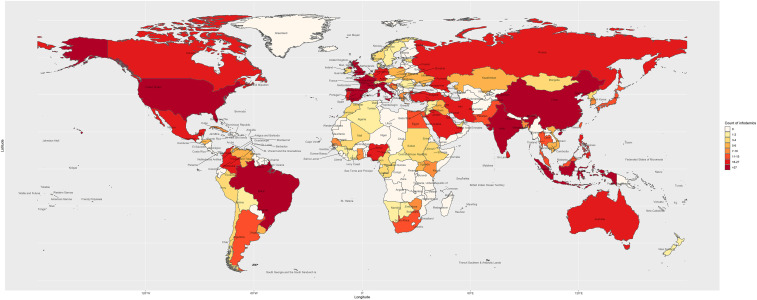
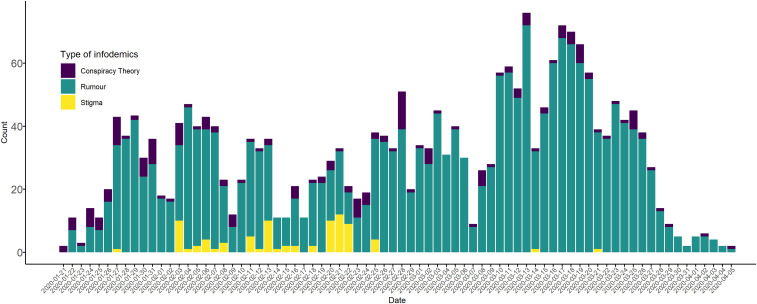
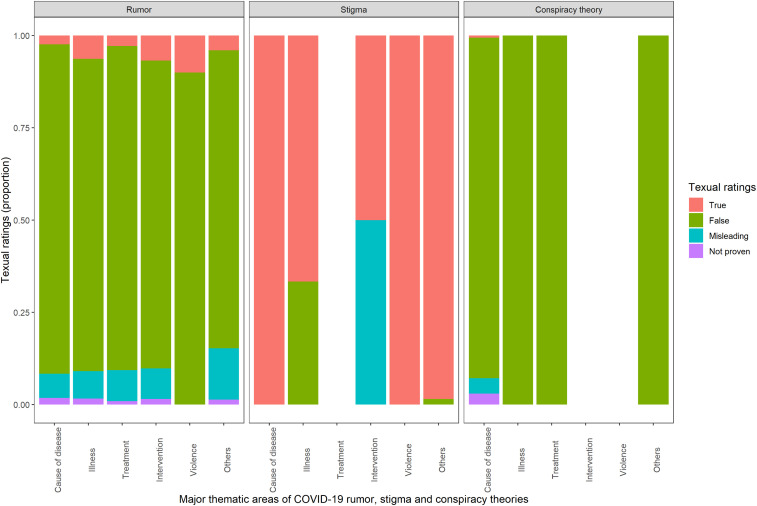
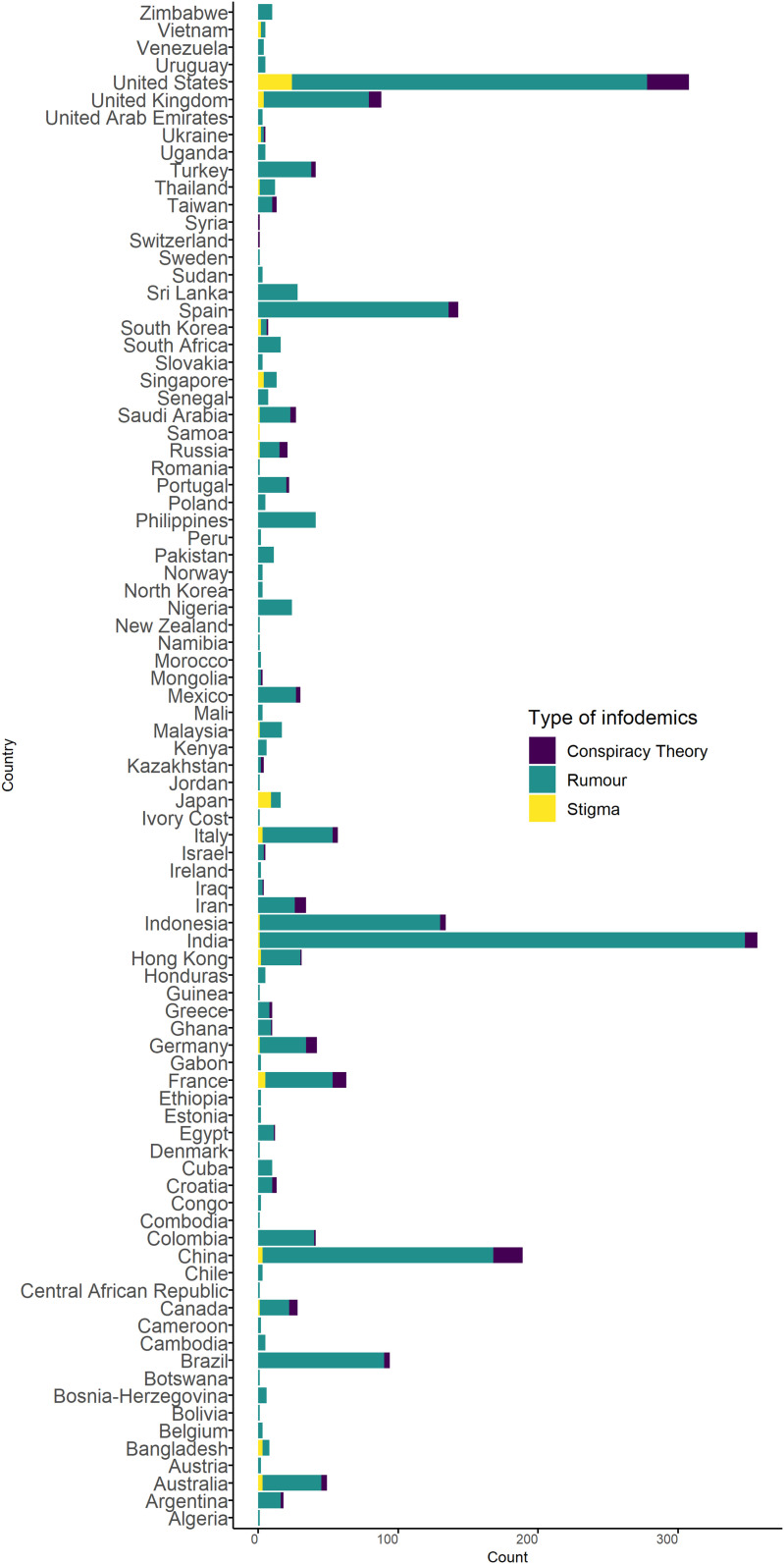
Infodemics, often including rumors, stigma, and conspiracy theories, have been common during the COVID-19 pandemic. Monitoring social media data has been identified as the best method for tracking rumors in real time and as a possible way to dispel misinformation and reduce stigma. However, the detection, assessment, and response to rumors, stigma, and conspiracy theories in real time are a challenge. Therefore, we followed and examined COVID-19-related rumors, stigma, and conspiracy theories circulating on online platforms, including fact-checking agency websites, Facebook, Twitter, and online newspapers, and their impacts on public health. Information was extracted between December 31, 2019 and April 5, 2020, and descriptively analyzed. We performed a content analysis of the news articles to compare and contrast data collected from other sources. We identified 2,311 reports of rumors, stigma, and conspiracy theories in 25 languages from 87 countries. Claims were related to illness, transmission and mortality (24%), control measures (21%), treatment and cure (19%), cause of disease including the origin (15%), violence (1%), and miscellaneous (20%). Of the 2,276 reports for which text ratings were available, 1,856 claims were false (82%). Misinformation fueled by rumors, stigma, and conspiracy theories can have potentially serious implications on the individual and community if prioritized over evidence-based guidelines. Health agencies must track misinformation associated with the COVID-19 in real time, and engage local communities and government stakeholders to debunk misinformation.
Overview
The claims and statistics of this paper haven’t been checked yet.
Free: it reads the open-access text and checks the first 5 claims that cite a source we can check. Create a free account to check every claim.
Integrity signals
Registry
Cites
Statistics
Figures
Verification
Claims the paper makes
The claims and statistics of this paper haven’t been checked yet.
Free: it reads the open-access text and checks the first 5 claims that cite a source we can check. Create a free account to check every claim.
Claims other papers make about this one
Each is checked against this paper’s own text: does it say what the citing paper says it does?
The cited source says what the claim attributes to it.
In the citing paper
“Misinformation during the Ebola outbreak in the Democratic Republic of the Congo in 2019 was associated with aggression, mistrust, social unrest, and targeted assaults on healthcare workers [45].”
From Social Media Role and Its Impact on Public Health: A Narrative Review (2023) · cites this paper as [45]
The cited source says what the claim attributes to it.
In the citing paper
“Rumors about COVID-19 have been labeled a global enemy by the UN secretary-general [45].”
From Social Media Role and Its Impact on Public Health: A Narrative Review (2023) · cites this paper as [45]
The cited source says what the claim attributes to it.
In the citing paper
“During the SARS outbreak in China in 2002-2003, Asian people faced social stigma as a result of their fear of contracting the disease [45].”
From Social Media Role and Its Impact on Public Health: A Narrative Review (2023) · cites this paper as [45]
Self-check
Percentages, sums and reported differences re-computed from the paper’s own numbers.
The self-check needs the paper’s full text.
Citations
Cites
Understanding Conspiracy Theories
Douglas, K. M., Uscinski, J. E., Sutton, R. M., Cichocka, A., Nefes, T., Ang, C. S., & Deravi, F. (2019) · Political Psychology · doi:10.1111/pops.12568 · Cited by 1,511 · cited 1×
“defined as explanatory beliefs about an individual or group of people working in secret to reaching malicious goals.(16) Data extraction and consistency.”
BackgroundFear and Stigma: The Epidemic within the SARS Outbreak
Person, B., Sy, F., Holton, K., Govert, B., Liang, A., the, N. C. I. D., SARS Community Outreach Team (listed in alphabetical order), Garza, B., Gould, D., Hickson, M., et al. (2004) · Emerging Infectious Diseases · doi:10.3201/eid1002.030750 · Cited by 790
YouTube as a source of information on COVID-19: a pandemic of misinformation?
Li, H. O.-Y., Bailey, A., Huynh, D., & Chan, J. (2020) · BMJ Global Health · doi:10.1136/bmjgh-2020-002604 · Cited by 781
See Something, Say Something: Correction of Global Health Misinformation on Social Media
Bode, L., & Vraga, E. K. (2018) · Health Communication · doi:10.1080/10410236.2017.1331312 · Cited by 745 · cited 1×
“aimed at promoting evidence against misinformation quickly and clearly might change people’s perception and healthseeking behaviors.(52,53) Currently, the WHO and other health”
BackgroundZubiaga, A., Liakata, M., Procter, R., Wong Sak Hoi, G., & Tolmie, P. (2016) · PLOS ONE · doi:10.1371/journal.pone.0150989 · Cited by 722 · cited 1×
“Rumor is defined as unverified information that canbe foundas true, fabricated, or entirely false after verification.(14) Stigma is a socially constructed process through which a person with stigma can experience discrimination and devaluation in society.”
BackgroundTuran, B., Budhwani, H., Fazeli, P. L., Browning, W. R., Raper, J. L., Mugavero, M. J., & Turan, J. M. (2017) · AIDS and Behavior · doi:10.1007/s10461-016-1451-5 · Cited by 480
Prevention is better than cure: addressing anti-vaccine conspiracy theories
Jolley, D., & Douglas, K. M. (2017) · Journal of Applied Social Psychology · doi:10.1111/jasp.12453 · Cited by 446 · cited 1×
“aimed at promoting evidence against misinformation quickly and clearly might change people’s perception and healthseeking behaviors.(52,53) Currently, the WHO and other health”
BackgroundEbola, Twitter, and misinformation: a dangerous combination?
Oyeyemi, S. O., Gabarron, E., & Wynn, R. (2014) · BMJ · doi:10.1136/bmj.g6178 · Cited by 348 · cited 1×
“Last, there are the well-documented issues with misinformation with Ebola, including false treatments, health workers were deliberately spreading the Ebola virus, and Ebola epidemic was a hoax.(49,50) Such conspiracy theories and misinformation may have impeded the ability of healthcare workers and emergency responder…”
BackgroundAttacks against health-care personnel must stop, especially as the world fights COVID-19
McKay, D., Heisler, M., Mishori, R., Catton, H., & Kloiber, O. (2020) · The Lancet · doi:10.1016/s0140-6736(20)31191-0 · Cited by 186
Young, W. B., Park, J. E., Tian, I. X., & Kempner, J. (2013) · PLoS ONE · doi:10.1371/journal.pone.0054074 · Cited by 138 · cited 1×
“Stigma is a socially constructed process through which a person with stigma can experience discrimination and devaluation in society.(15) A conspiracy theory is”
Background
Research works printed but not linked: 29
- World Health Organization, 2020 Coronavirus Disease 2019 (COVID-19) Situation Report – 13. Geneva, Switzerland: WHO.
- Lederer EM, 2020 U.N. Chief Antonio Guterres: Misinformation about COVID-19 Is the New Enemy. TIME. New York, NY: TIME.
- World Health Organization, 2018 Managing Epidemics: Key Facts about Major Deadly Diseases. Luxembourg: WHO.
- Center for Preparedness and Response, 2020 Responding to Rumors and Misinformation. Emergency Preparedness and Response. Atlanta, GA: Centre for Disease Control and Prevention.
- Eckert KS 2016 Evidence Syntheses to Support the Guideline on Emergency Risk Communication. Geneva, Switzerland: World Health Organization.
- Victoria Knight of Kaiser Health News, 2020 COVID-19: Beware Online Tests and Cures, Experts Say. The Guardian. Surry Hills, NSW, Australia: The Guardian.
- Spencer SH, 2020 Fake Coronavirus Cures, Part 1: MMS Is Industrial Bleach. Available at: https://www.factcheck.org/2020/02/fake-coronavirus-cures-part-1-mms-is-industrial-bleach/. Accessed April 4, 2020.
- Vrajlal A, 2020 Chinese-Australians Facing Racism after Coronavirus Outbreak. Available at: https://www.huffingtonpost.com.au/entry/coronavirus-australia-racism_au_5e33a522c5b6f2623326d72b. Accessed April 4, 2020.
- BBC Reality Check Team, 2020 Coronavirus: Does Drinking Tea Help? BBC News. Delhi, India: BBC News.
- Cable T, 2020 CDD FACT CHECK: Can Camel Urine, Lime Cure Coronavirus? The Cable. Abuja, Nigeria: The Cable Newspaper.
- Landsverk G, 2020 Holding Your Breath Can’t Help You Self-Diagnose the Coronavirus. Here’s What You Should Do Instead. Business Insider Australia. Surry Hills, NSW, Australia: Business Insider Australia.
- Ellis-Petersen H Rahman SA, 2020 Indian Doctors Being Evicted from Homes over Coronavirus Fears. The Guardian. Surry Hills, NSW, Australia: The Guardian.
- Mead WR, 2020 China Is the Real Sick Man of Asia. The Wall Street Journal. New York, NY: The Wall Street Journal.
- Breland A, 2020 Russian Media Outlets Are Blaming the Coronavirus on the United States. Mother Jones. San Francisco, CA: Mother Jones.
- Gertz B, 2020 Coronavirus May Have Originated in Lab Linked to China’s Biowarfare Program. The Washington Post. Washington, DC: The Washington Post.
- Gregory J, 2020 The Coronavirus ‘Infodemic’ Is Real. We Rated the Websites Responsible for It. Statnews. Boston, MA: Statnews.
- Richtel M, 2020 WHO Fights a Pandemic besides Coronavirus: An ‘Infodemic’. The New York Times. New York, NY: The New York Times.
- Meddle East Media Research Institute, 2020 Arab Writers: The Coronavirus Is Part of Biological Warfare Waged by the U.S. against China. Egypt, Saudi Arabia, and Syria: Meddle East Media Research Institute TV.
- Farda R, 2020 Iran Cleric Blames Trump for Coronavirus Outbreak in Religious City. Radio Farda. Prague, Czech Republic: Radio Farda.
- Colson T, 2020 A Fake Claim That Cocaine Cures the Coronavirus Is Spreading Online, and the French Government Was Forced to Tell People That It Won’t. Business Insider Australia. Surry Hills, NSW, Australia: Business Insider Australia.
- Frenkel S Alba D Zhong R, 2020 Surge of Virus Misinformation Stumps Facebook and Twitter. The New York Times. New York, NY: The New York Times.
- World Health Organization, 2020 Alcohol Does Not Protect against COVID-19; Access Should Be Restricted during Lockdown. Alcohol Use. Geneva, Switzerland: WHO, Regional Office for Europe.
- CNN Türk, 2020 9 Kişi Daha Saf Alkolden Öldü [9 More Poeple Died from Pre Alcohol]. Available at: https://www.cnnturk.com/video/turkiye/9-kisi-daha-saf-alkolden-oldu. Accessed June 4, 2020.
- Staff Reporter, 2020 Twelve Taken Ill after Consuming ‘Coronavirus Shaped’ Datura Seeds. The Hindu. Andhra Pradesh, India: The Hindu.
- Chan-Kyong P, 2020 Coronavirus: Saltwater Spray Infects 46 Church-Goers in South Korea. South China Morning Post. Causeway Bay, Hong Kong: South China Morning Post.
- Eckel M, 2020 Tractors, Herbs, Vodka, Saunas? Some Leaders Offer Strange, Unhelpful Advice On Warding Off COVID-19. Available at: https://www.rferl.org/a/coronavirus-unhelpful-advice-tractors-herbs-vodka-saunas-gurbanguly-lukashenka-vucic/30495810.html. Accessed June 4, 2020.
- Tajmim T, 2020 Coronavirus: 41 Doctors, 10 Nurses Infected. The Business Standard. Dhaka, Bangladesh: The Business Standard.
- National Herald, 2020 Social Stigma Forcing Corona Patients to Avoid Screening in India. National Herald. New Delhi, India: National Herald.
- Kabananukye K, 2001 Denial, Discrimination and Stigmatisation: The Case of Ebola Epidemic in Some Districts. Kampala, Uganda: Ugandan Ministry of Health, National Ebola Task Force.
Cited by
Items 701–800 of 997
Taimoor, S., Tariq, B., & Baig, F. N. (2025) · Journal of Consumer Health on the Internet · doi:10.1080/15398285.2025.2515341 · Cited by 1
“During the peak of the pandemic, there was a ubiquitous spread of uncor-roborated medical advice as user-generated content which, for many, resulted in health complications and added burden on the health infrastructure (Islam et al. 2020; Tsao et al. 2021).”
Dual Stimulus–Organism–Response paradigms cross-domain aware model for rumor detection
Yun-yun, L., & Jin, J. (2025) · Engineering Applications of Artificial Intelligence · doi:10.1016/j.engappai.2025.111895 · Cited by 3
Wang, S., Zhang, L., Liu, Y., Feng, X., & Ren, S. (2025) · JMIR Medical Informatics · doi:10.2196/76378 · Cited by 3
“…reveals focal areas of global concern: the mental health impact of the infodemic [32], the development of infodemic response strategies and various facets of information governance, including thematic communication and evolution [33,34], as well as monitoring and evaluative frameworks [35,36].”
Alarfaj, L., Blackburn, J., Amjad, M., Patel, J. K., & Ertem, Z. (2025) · Information · doi:10.3390/info16090748 · Cited by 1
Seytre, B. (2025) · Discover Public Health · doi:10.1186/s12982-025-00919-6 · Cited by 1
“These findings are consistent with a study by Islam et al. [11] conducted in the first three months of 2020, which revealed that the frequency of COVID-19 misinformation on social media was highest in countries such as India and the United States, high in Spain and the United Kingdom, but very low…”
College Students’ Mental Health During the COVID-19 Pandemic
Khan, R. K., Alam, M. T., Zaman, S. B., & Jehi, T. (2025) · Psychiatry International · doi:10.3390/psychiatryint6030112 · Cited by 1
“There was misinformation on the origin of the pandemic, vaccine side effects, and other speculations that could negatively influence college students, especially considering that at college level, not all students are equally health literate [60].”
Debunk Lists as External Knowledge Structures for Health Misinformation Detection with Generative AI
Rostami, M., & Hawamdeh, S. (2025) · Systems · doi:10.3390/systems13100882 · Cited by 2
AI-Powered Health News Announcement: Integrating Public Psychology to Optimize Crisis Responses
Alami, A. C., Lamghafri, A. L., Harraj, A. E., & Ziti, S. (2025) · Lecture notes in networks and systems · doi:10.1007/978-3-032-01970-7_16 · Cited by 1
Detecting Health Misinformation by Leveraging LLM Models and Debunk List
Rostami, M., Hossain, K. S. M. T., & Hawamdeh, S. (2025) · IEEE/ACM Conference on Connected Health: Applications, Systems and Engineering Technologies · doi:10.1145/3721201.3725518 · Cited by 1
Facing GAIa: A Tale of Three ChatGPToxicities
Galanos, V., & Xi, I. (2025) · Deleuze and Guattari Studies · doi:10.3366/dlgs.2025.0609 · Cited by 1
Content and Engagement Trends in COVID-19 Youtube Videos: Evidence from the Late Pandemic
Thakur, N., Hartel, M. D., Boden, L. M., Enriquez, D., & Ricks, B. J. (2025) · IEEE Annual Ubiquitous Computing, Electronics & Mobile Communication Conference (UEMCON) · doi:10.1109/uemcon67449.2025.11267598 · Cited by 2
URU-SIS: A model for information propagation in multiplex networks
Maojie, R. (2025) · Chaos Solitons & Fractals · doi:10.1016/j.chaos.2025.117788 · Cited by 2
Kwao, L., Yang, Y., Ativi, W. X., & Yussif, S. B. (2025) · Knowledge-Based Systems · doi:10.1016/j.knosys.2025.115167 · Cited by 2
de Campos, T. C. (2026) · doi:10.1093/9780197762400.001.0001 · Cited by 1
Delen, E., & İlter, B. (2026) · Health Marketing Quarterly · doi:10.1080/07359683.2026.2624296 · Cited by 1
“These studies have revealed that mHealth applications provide significant contributions to these technologies at both clinical and individual levels (Islam et al., 2020; Sawesi et al., 2016).”
Nurses as public educators: A scoping review of literature on misinformation mitigation
Stubbs, M. A., Wissen, K. A. V., Blanchard, D. L., & Reis, J. (2026) · Teaching and learning in nursing · doi:10.1016/j.teln.2026.01.008 · Cited by 2
Semi-Supervised Fake News Detection with Mixture of Experts
Yang, Z., Yang, C., Xu, W., Hao, X., Wang, H., Zhang, G., Ma, X., & Shen, J. (2026) · International World Wide Web Conference (WWW) · doi:10.1145/3774904.3792312 · Cited by 2
A Context-Aware Transformer Ensemble Framework With Particle Swarm Optimization for Rumor Detection
Jaiswal, M., Gupta, C., Singh, T., Pandey, A. K., Sharma, A., & Mittal, A. (2026) · International Conference on Computing, Sciences and Communications (ICCSC) · doi:10.1109/iccsc67078.2026.11468640 · Cited by 1
Aslam, S., Abid, S., Ali, A., Hussain, B., & Bilal, M. Z. (2026) · Next research. · doi:10.1016/j.nexres.2026.101752 · Cited by 1
Novello, P., Weeks, R., Sedoc, J., Ou, Y., Sangha, P., Miller, E. A., Jamison, A., & Agarwal, S. (2026) · BMJ Digital Health & AI · doi:10.1136/bmjdh-2026-000036 · Cited by 1
EFCV: Entity-aware fusion of consistency and visual clues for multimodal fake news detection
Jin, H., Zhang, M., Zhang, Y., Wei, B., & Wang, Y. (2026) · Neurocomputing · doi:10.1016/j.neucom.2026.133999 · Cited by 1
Harris, M., Sinclair, A. H., Pullano, G., Beckett, S. J., LeJeune, L., Agusto, F. B., Bauch, C. T., Baur, C., Berestycki, H., Dushoff, J. G., et al. (2026) · Royal Society Open Science · doi:10.1098/rsos.260369 · Cited by 1
Sheppard, B., Durnell, L., & Haufler, A. J. (2026) · Frontiers in Medicine · doi:10.3389/fmed.2026.1814102 · Cited by 1
da Silva, W. C., da Silva, C. P. M., Vampre, G. G., & Maltempi, N. (2021) · Revista Agraria Academica · doi:10.32406/v4n2/2021/29-42/agrariacad · Cited by 1
Technologie cyfrowe i kanały komunikacji w budowaniu relacji animatorów kultury z odbiorcami działań
Michalak-Pawłowska, A., & Plebańczyk, K. (2021) · Kultura - Media - Teologia · doi:10.21697/kmt.48.13 · Cited by 3
Lee, G., & Lee, J. (2021) · Korean Journal of Journalism & Communication Studies · doi:10.20879/kjjcs.2021.65.6.006 · Cited by 1
KAP towards COVID-19: A Case Study of Undergraduate Students in Malaysia
Ismail, S., Mohamad, S. F. S., Rosli, F. A., Ibrahim, N., & Mohamad, S. N. S. (2021) · Ulum Islamiyyah · doi:10.33102/uij.vol33nos4.421 · Cited by 1
Stavovi knjižničara o ulozi narodnih knjižnica u informacijskom poremećaju
Katavić, S. S., Čepčar, A., & Badurina, B. (2022) · Vjesnik bibliotekara Hrvatske · doi:10.30754/vbh.65.1.936 · Cited by 2
The Global Impact of COVID-19 Misinformation and Politicization on Vaccination Compliance
Buckingham, R. W., Ferretti, R., Adams, B., & Kepon, T. (2022) · Journal of Public Health Issues and Practices · doi:10.33790/jphip1100201 · Cited by 1
Conversa Saudável: abordagens sobre novo coronavírus e saúde mental na rádio CBN João Pessoa
Mendes, P. M., & Mendes, L. A. D. C. (2021) · doi:10.29327/561168.1-3 · Cited by 1
Data from Social Media: Harnessing Social Medial for Health Intelligence
Gaspar, M. A., Sharp, J., Nayyar, G., & Siarri, D. (2022) · Health informatics · doi:10.1007/978-3-030-91237-6_18 · Cited by 1
Michel, B. A., Navarro, M., Pritsch, M., du Plessis, J., Shock, J. P., Schwienhorst-Stich, E., Zirkel, J., Schrader, H., Irala, C. S., Rubilar, G., et al. (2022) · BMJ Open · doi:10.1136/bmjopen-2021-058572 · Cited by 1
Do Greek University Students Trust Social Media Regarding Science Related Issues? The Covid-19 Case
Vranias, K., & Kyridis, A. (2022) · International Journal of Social Science Research · doi:10.5296/ijssr.v11i1.20259 · Cited by 1
User Perception Based Trust Model of Online Sources: A Case Study of Misinformation on COVID-19
Alajramy, L., & Taweel, A. (2022) · Lecture notes in computer science · doi:10.1007/978-3-031-18253-2_1 · Cited by 2
Analysis of Healthcare Professionals’ and Institutions’ Roles in Twitter Colostomy Information
Hidalgo, P. J. J., Jiménez-Gómez, B., Ruíz-Núñez, C., Segado-Fernández, S., Diez-Villacañas, F., López‐Espuela, F., & Herrera‐Peco, I. (2023) · Healthcare · doi:10.3390/healthcare11020215 · Cited by 2
“Nevertheless, when analyzing interactions, no effect on the network was observed, corresponding with the usual behavior of these accounts, which generate information but not interactions with users [22,31].”
BackgroundPawlicka, A. (2022) · Applied Linguistics Papers · doi:10.32612/uw.25449354.2022.4.pp.74-83 · Cited by 1
Identification Semantic Text of Indonesian Medical Terms from Question-Answer Data
Purwitasari, D., Juanita, S., Purnama, I. K. E., Raihan, M., & Purnomo, M. H. (2022) · International Conference on Information Technology, Information Systems and Electrical Engineering (ICITISEE) · doi:10.1109/icitisee57756.2022.10057601 · Cited by 1
“The growing health information could have a negative effect, like the possibility of misinformation [4].”
BackgroundMemenga, P., Scheper, J., & Link, E. (2023) · Bundesgesundheitsblatt - Gesundheitsforschung - Gesundheitsschutz · doi:10.1007/s00103-023-03677-5 · Cited by 1
“Dadurch werden jedoch auch falsche und irreführende Informationen schnell verbreitet [16], die Verunsicherung und gesundheitsschädigendes Verhalten bedingen [17] sowie zu einem unüberschaubaren Informationsangebot beitragen können.”
BackgroundOrmea, V., Evaristo, R., Durand, S., Lover, A. A., & Rüegg, S. R. (2023) · CABI One Health · doi:10.1079/cabionehealth.2023.0006 · Cited by 1
Countering Dis-information by Multimodal Entailment via Joint Embedding
Bobde, A., Tawari, S., Narnaware, V., Suryawanshi, A., & Kshirsagar, P. R. (2023) · International Conference on Intelligent and Innovative Technologies in Computing, Electrical and Electronics (IITCEE) · doi:10.1109/iitcee57236.2023.10090876 · Cited by 1
“Similarly fake news has also been spread in the Healthcare domain, for instance, in 2020 people became skeptical of medical care and even avoided vaccinations as a result of the widespread dissemination of false information concerning COVID-19 [3].”
BackgroundSocial media and Infodemiology—use of social media monitoring in emergency preparedness
Batra, K., Batra, R., & Sharma, M. (2023) · Elsevier eBooks · doi:10.1016/b978-0-323-95630-7.00015-9 · Cited by 1
Misinformation in Open and Closed Online Platforms: Impacts and Countermeasures
Butler, L. H., & Ecker, U. K. H. (2023) · Mobile communication in Asia · doi:10.1007/978-94-024-2225-2_15 · Cited by 5
Nuypukiaw, S., & Chompurach, W. (2023) · English Language Teaching · doi:10.5539/elt.v16n10p21 · Cited by 1
“For Islam et al.’s (2020) study, they found that 18.1% of the students had a high level of learning anxiety because of online teaching and learning unreadiness and students’ financial instability.”
BackgroundInfluentialTeachers in a world of information: Detecting false information
Kopecký, K., Voráč, D., Szotkowski, R., Krejčí, V., Mackenzie, K., & Navas-Parejo, M. R. (2023) · El Profesional de la Informacion · doi:10.3145/epi.2023.sep.01 · Cited by 1
Pinto, P. A., Antunes, M. J., Almeida, A. M., & Renó, D. P. (2023) · Canadian Journal of Communication · doi:10.3138/cjc-2022-0059 · Cited by 2
Pait, K. C., Exline, J. J., Schutt, W. A., & Wilt, J. A. (2023) · Religion Brain & Behavior · doi:10.1080/2153599x.2023.2258178 · Cited by 2
“With it came a deluge of information on COVID-19 symptoms, severity, and health behaviors communicated via traditional and social media (Islam et al., 2020).”
Exploring social media use for healthcare professionals
Xi, I., & Cochrane, T. (2023) · ASCILITE Publications · doi:10.14742/apubs.2023.490 · Cited by 3
“It is indicated that a significant portion of online health content is incorrect (Islam et al., 2020).”
BackgroundGuardia, J. S., & Fresnadillo, A. T. (2023) · Revista de Comunicación y Salud · doi:10.35669/rcys.2024.14.e340 · Cited by 1
“A recent study points out that, because of misinformation about COVID-19, in the first few months of 2020, at least 800 people may have lost their lives and 5,800 may have been admitted to the hospital (Islam, 2020).”
BackgroundIntensification of New Media Against the Spread of Fake News in the Post Truth Era
Anggrayni, D., Siregar, N. C., & Khairani, S. (2024) · Semantik Journal of Social Media Communication and Journalism · doi:10.31958/semantik.v1i2.11105 · Cited by 1
“Islam et al. (2020) studied the infodemic phenomenon in 87 countries and 25 different languages.”
BackgroundHealth protocol adherence to emerging and re-emerging diseases: Basis for community engagement
Mendoza, M. (2023) · International Journal of Research Studies in Psychology · doi:10.5861/ijrsp.2023.2005 · Cited by 2
So, B., & Kwon, K. H. (2024) · Global Knowledge, Memory and Communication · doi:10.1108/gkmc-05-2023-0158 · Cited by 4
Abo.Abdou, S. H.-H., Fahmy, A. M., & Adam, S. S. (2024) · Egyptian Journal of Health Care · doi:10.21608/ejhc.2024.340878 · Cited by 1
“Adolescents usually have emotional instability due to personality immaturity, making them vulnerable to stress and anxiety (Islam et al., 2020).”
BackgroundSrem‐Sai, M., Ankomah, F., Agormedah, E. K., Quansah, F., Hagan, J. E., Okan, O., Dadaczynski, K., & Schack, T. (2024) · BMC Digital Health · doi:10.1186/s44247-024-00063-2 · Cited by 1
A Nomogram for Predicting the Infectious Disease-specific Health Literacy of Older Adults in China
Zhang, Q., Yin, J., Wang, Y., Song, L., Liu, T., Chen, S., & Shang, S. (2024) · Asian Nursing Research · doi:10.1016/j.anr.2024.04.002 · Cited by 1
Shutting down to save lives: A regression discontinuity analysis of non-essential business closure
Gaggero, A., Mesa-Pedrazas, Á., & Fernández-Pérez, Á. (2024) · Socio-Economic Planning Sciences · doi:10.1016/j.seps.2024.101925 · Cited by 2
Duarte, F. P. (2024) · JANUS NET e-journal of International Relation · doi:10.26619/1647-7251.15.1.18 · Cited by 6
Scientific Appearance in Telegram
Choi, J., Schäfer, K., & Yannikos, Y. (2024) · Proceedings of the International AAAI Conference on Web and Social Media · doi:10.1609/icwsm.v18i1.31451 · Cited by 1
Navigating the infodemic maze: Does information literacy reduce the infodemic?
Islam, M. S. U., Islam, M. A., & Widén, G. (2024) · IFLA Journal · doi:10.1177/03400352241252923 · Cited by 2
Self-citationMahafzah, A. M., Sallam, M., Bakri, F. G., & Mubarak, M. S. (2024) · Advances in experimental medicine and biology · doi:10.1007/978-3-031-61939-7_17 · Cited by 3
Eman, S., Jha, R. P., Safdar, M., Singh, M., Patel, P. D., & Javeria, U. (2024) · Health Information & Libraries Journal · doi:10.1111/hir.12549 · Cited by 1
Meyer, J., Fraser, D. S., & Barnett, J. C. (2024) · The Cartographic Journal · doi:10.1080/00087041.2024.2366591 · Cited by 1
“The proliferation of false or unsubstantiated information about COVID-19 was recognized as a signi fi cant challenge to pandemic mitigation e ff orts (see e.g. Islam et al ., 2020; Li et al ., 2020; Puri et al ., 2020; Romer and Jamieson, 2020; Loomba et al ., 2021).”
Büyüktür, A. G., Cross, F. L., Platt, J. E., Aramburu, J., Movva, P., Zhao, Z., Cornwall, T., Hunt, R., McCollum, J. A., Reyes, A. G., et al. (2024) · Journal of Clinical and Translational Science · doi:10.1017/cts.2024.591 · Cited by 2
Jogos educativos sobre Fake News: uma mapeamento sistemático
Braga, C., & Sasaki, D. (2024) · Simpósio Brasileiro de Jogos e Entretenimento Digital (SBGames) · doi:10.5753/sbgames.2024.240052 · Cited by 1
“Em uma pesquisa publicada pelo peri´odico American Journal Of Tropical Medicine and Hygiene [Islam et al. 2020], foram identificadas e mapeadas as principais Fake News sobre a pandemia.”
Rashid, T., Arefin, S., Bhattacharjee, M., & Islam, M. A. (2025) · BMC Infectious Diseases · doi:10.1186/s12879-025-10734-8 · Cited by 1
Self-citation“They're Eating the Dogs”: Fake News in the 2024 U.S. Presidential Election
Jorge, G. F., & Duarte, A. (2025) · Advances in wireless technologies and telecommunication book series · doi:10.4018/979-8-3693-9999-6.ch011 · Cited by 1
Impact of the COVID-19 Pandemic on Scoial Media Use: Evidence from Scopus Database
Musa, T. H., Abdelrahman, R. M., Suliman, M. H., Khalifa, A. G. A., Arbab, I. A., Adetola, B. D., Nyarkoa, W. A., Akintunde, T. Y., Tassang, A. E., Al-sharai, M. A. A., et al. (2025) · British journal of healthcare and medical research · doi:10.14738/bjhmr.1202.18664 · Cited by 1
Tuomola, S., Hujanen, J., Lehtisaari, K., Ruotsalainen, J., & Grönlund, M. (2025) · Digital Journalism · doi:10.1080/21670811.2025.2514219 · Cited by 3
“This was the case during the COVID-19 pandemic as rumours, stigmas and conspiracy theories became globally widespread and millions of people were exposed to deceptive material, especially on social media (e.g., Islam et al. 2020).”
COVID-19 Infodemic: Media Literacy & Perception of Fake News Among Residents of Ikeja, Lagos State
Ogunbola, O., Amodu, L. O., Miteu, G. D., & Ajayi, O. (2021) · Annals of Medicine and Surgery · doi:10.1097/ms9.0000000000003530 · Cited by 5
“The findings also align with global studies, such as those by Wang et al [ 16 ] and Islam et al [ 17 ] , which observed similar spikes in misinformation exposure and reliance on social media for pandemic-related news.”
Marcinkowski, T., Sikorski, J., & Vomlela, L. (2025) · Politeja · doi:10.12797/politeja.22.2025.98.17 · Cited by 1
Indonesian Agenda: Fake News About Russia’s Special Military Operation on Social Media in Indonesia
Muqsith, M. A., Pratomo, R. R., & Muzykant, V. L. (2024) · Vestnik RUDN International Relations · doi:10.22363/2313-0660-2024-24-2-239-251 · Cited by 5
Huang, F. S., Spearman, P. W., Baldwin, N., & Schaffzin, J. K. (2020) · Journal of the Pediatric Infectious Diseases Society · doi:10.1093/jpids/piaa169 · Cited by 1
“2 The current severe acute respiratory syndrome coronavirus 2 (SARS-CoV-2) pandemic has spawned an “infodemic” of inaccurate information in traditional and social media such as the rapid spread of conspiracy theories like drinking bleach or alcohol for COVID-19 prophylaxis with occasionally fatal results [1].”
BackgroundThe Clinical Utility of the World Wide Web As It Relates to the COVID-19 Pandemic: Part 2
Hageman, J. R., Anderson, T., Allen, K., & Goldstein, M. (2020) · Neonatology Today · doi:10.51362/neonatology.today/2020111511109111 · Cited by 1
A Dynamic Scientific Model for Recovery of Coronavirus Disease
Miah, M. R., Rahman, A. S., Samdany, A. A., & Chowdhury, S. H. (2021) · Cited by 1
Manfrin, B. C., & Mastella, V. (2021) · Ámbitos Revista Internacional de Comunicación · doi:10.12795/ambitos.2021.i52.04 · Cited by 1
Latifi, M., Davaridolatabadi, N., & Shahi, M. (2021) · Mudīrīyyat-i salāmat. · doi:10.52547/jha.24.1.54 · Cited by 1
الفيفي, أ. ع. (2020) · doi:10.33948/1300-032-003-008 · Cited by 1
Measuring the Factors of Hesitancy in Saudi Population toward COVID-19 Vaccines
Attar, R. M. S., Karkashan, A., Abbas, B., Almarashi, A., & Hashem, T. (2021) · Academic Journal of Research and Scientific Publishing · doi:10.52132/ajrsp.e.2021.292
Angelina, A., Lesmanadjaja, A., Agung, F. H., & Octavius, G. S. (2021) · Journal of Maternal and Child Health · doi:10.26911/thejmch.2021.06.04.05 · Cited by 1
Fatos e fake news: conhecimento de estudantes de Enfermagem frente à pandemia da COVID-19
Oliveira, A. D. S., de Deus, A. J. S., Neto, E. A. S., de Melo, B. D. O., Nogueira, F. A. B., Jaber, A. C. M. A., Ferreira, L. D. R., Silva, R. D. S., de Sousa, E. M., & Galvão, L. C. D. C. (2021) · Research Society and Development · doi:10.33448/rsd-v10i13.21362
Cartografía de Controversias como recurso para analizar el espacio habitado
España-Naveira, P., Soler, E. M., & Blanco‐López, Á. (2021) · Jornadas sobre Innovación Docente en Arquitectura (JIDA) · doi:10.5821/jida.2021.10573 · Cited by 1
Information: Too Much or Too Soon?
Sabei, S. D. A. (2021) · Advances in information quality and management · doi:10.4018/978-1-7998-7503-1.ch003 · Cited by 1
U.S. Geographic Differences in Media Source Use During COVID-19 Shelter in Place Orders
Byrd, A. R., Gibson, K. E., & Lamm, A. J. (2021) · Journal of Applied Communications · doi:10.4148/1051-0834.2415 · Cited by 1
“They identified that “rumors, stigma, and conspiracy theories” sparked panic in the early stages of the pandemic that negatively affected individuals and their resulting societal actions as well as the healthcare system (Islam et al., 2020, p. 1627).”
BackgroundDetecting Misinformation in Tweets Related to COVID-19
da Cruz, R. S., Neto, G. N., & Anchiêta, R. T. (2021) · doi:10.5753/eniac.2021.18260 · Cited by 1
Awareness, attitude and practice of COVID-19 and its vaccination in J&K, India
Rouf, A., Nazir, F., & Masoodi, M. A. (2021) · Indian Journal of Forensic and Community Medicine · doi:10.18231/j.ijfcm.2021.045 · Cited by 1
“Nazir, Rouf and Masoodi / Indian Journal of Forensic and Community Medicine 2021;8(4):220–226 223”
BackgroundInfluentialKNOWLEDGE, ATTITUDE AND PRACTICE TOWARDS COVID-19 AMONG NURSING STUDENTS DURING PANDEMIC
Watania, L. N., Gultom, E. C. V., & Sinaga, C. R. A. (2021) · Nursing Current Jurnal Keperawatan · doi:10.19166/nc.v9i2.4928 · Cited by 1
“and conspiracy theories might have implications for the individual and community negatively (Islam et al., 2020).”
BackgroundAn exploratory study of social media users’ engagement with COVID-19 vaccine-related content
Al-Zaman, M. S. (2021) · F1000Research · doi:10.12688/f1000research.51210.2 · Cited by 1
Preocupante aumento de la resistencia antimicrobiana asociada al COVID-19
Martínez, M. (2021) · Memorias del Instituto de Investigaciones en Ciencias de la Salud · doi:10.18004/mem.iics/1812-9528/2021.019.03.03 · Cited by 1
Reisz, D., & Crișan, I. (2022) · Healthcare · doi:10.3390/healthcare10020191 · Cited by 2
“A meta-analysis on mainstream and social media information sources reflected the infodemic’s expansion, revealing 2311 reports from 87 countries containing COVID-19 related information, of which 82% were false [7].”
BackgroundPandemic Information Dissemination Web Application: A Manual Design for Everyone
Jáuregui, O. N., & Téllez, L. A. Q. (2022) · International Journal of Computational Science Information Technology and Control Engineering · doi:10.5121/ijcsitce.2022.9101 · Cited by 1
“3 [22] shows that rumors affect trust in health workers, in governments, and in health experts, even affecting people's health.”
Blanco‐Herrero, D., Calderón, C. A., & Gallardo-Camacho, J. (2022) · Palabra Clave · doi:10.5294/pacla.2022.25.1.2 · Cited by 1
Post-Truth and Hoaxes: Instagram's Fact Checking of Content on Vaccines in Indonesia
Ayu, A. S., Haryono, N., & Arzil, A. P. A. (2022) · KnE Social Sciences · doi:10.18502/kss.v7i5.10582 · Cited by 1
“The most appropriate platforms for monitoring hoaxes are Facebook, Twitter, Instagram and online news portals (7).”
Backgroundd’Arqom, A., Sawitri, B., Nasution, M. Z., Setyanto, D., Izzah, S. N., Wiradhika, L. D., & Maulana, R. A. (2021) · Jurnal Layanan Masyarakat (Journal of Public Services) · doi:10.20473/jlm.v5i1.2021.26-34 · Cited by 1
Discursos de ódio no contexto da desordem informacional: como resolver?
Forster, R., & de Carvalho, R. M. (2022) · Revista SOLETRAS · doi:10.12957/soletras.2022.64759 · Cited by 1
Bogor City Government’s Communication Crisis in Handling Covid-19
Putri, T. I., Lubis, D. P., & Budianto, H. (2022) · Jurnal Komunikasi Ikatan Sarjana Komunikasi Indonesia · doi:10.25008/jkiski.v7i1.620 · Cited by 1
Comunicação de risco em saúde da covid-19 na difusão institucional na rede social digital Facebook
González, J. G., & Flores, P. A. L. (2021) · doi:10.29327/561168.1-9 · Cited by 2
Zahra, F. (2022) · ESENSIA Jurnal Ilmu-Ilmu Ushuluddin · doi:10.14421/esensia.v22i2.3043 · Cited by 3
Ilieva, A. (2022) · Slovenský národopis · doi:10.31577/sn.2022.3.28 · Cited by 1
“…society”; and a conspiracy theory, “defined as explanatory beliefs about an individual or group of people working in secret to reaching malicious goals” (Islam et al., 2020: 1622). e proposed solutions have been in accordance with WHO’s recommendations and focused on tracking, fact-checking, and…”
MethodCostantino, C., Bonaccorso, N., Sciortino, M., D’Azzo, L., Carubia, A., Chifari, D., Segreto, D., Marchese, D., Russo, F., Graziano, G., et al. (2022) · Journal of preventive medicine and hygiene · doi:10.15167/2421-4248/jpmh2022.63.3.2688 · Cited by 2
“They identified about 2311 reports related to COVID-19 infodemic from 87 countries, most of them, 2049 (89%), were classified as rumors while the rest conspiracy theories, and stigma (182 and 82, respectively) [23].”
BackgroundDesinformación: una disputa por el discurso
Gallegos, M. I. P. (2022) · #PerDebate · doi:10.18272/pd.v6i1.2467 · Cited by 1
Skoczek, A. C., Ruane, P. W., Onley, C., Haydel, T., Ortega, M. V., Sutphin, H. D., & Stoner, A. M. (2022) · International Journal of Medical Students · doi:10.5195/ijms.2022.1616 · Cited by 1
Metadata
- Authors
- Islam, M. S., Sarkar, T., Khan, S. H., Mostofa Kamal, A.-H., Hasan, S. M. M., Kabir, A., Yeasmin, D., Islam, M. A., Amin Chowdhury, K. I., Anwar, K. S., Chughtai, A. A., & Seale, H.
- Affiliations
- International Centre for Diarrhoeal Disease Research (BD)
- Khulna University of Engineering and Technology, Khulna, Bangladesh;
- Mahidol University (TH)
- UNSW Sydney (AU)
- Program for Emerging Infections, Infectious Diseases Division, icddr,b, Dhaka, Bangladesh;
- International University of Health and Welfare (JP)
- Corresponding author
- Islam, Md Saiful
- Islam, Mohammad Ariful
- ORCID
- Venue
- The American Journal of Tropical Medicine and Hygiene
- Published
- 2020-10-07
- Volume
- 103
- Issue
- 4
- Pages
- 1621-1629
- ISSN
- 0002-9637 (ISSN-L)
- 1476-1645
- PMC
- PMC7543839
- OpenAlex
- W3048848247
- Cited by
- 1,178
- References
- 21
- Citations by year
- 2026: 88 · 2025: 117 · 2024: 127 · 2023: 207 · 2022: 319 · 2021: 274 · 2020: 45
- FWCI
- 282.36
- Type
- journal article
- Language
- en
- Open access
- bronze
- doi.org
- Locations
- American Journal of Tropical Medicine and Hygiene (publishedVersion)
- PubMed Central (publishedVersion, cc-by)
- PubMed (publishedVersion)
- Funders
- International Centre for Diarrhoeal Disease Research, Bangladesh
- Topics
- Social Sciences › Sociology and Political Science › Misinformation and Its Impacts
- Social Sciences › Communication › Communication and COVID-19 Impact
- Social Sciences › Library and Information Sciences › Academic Publishing and Open Access
- Keywords
- COVID-19 pandemic, infodemic, misinformation, rumors, stigma, conspiracy theories, social media, public health impact, fact-checking, misinformation debunking, COVID-19 containment measures
- MeSH terms
- Betacoronavirus, Data Analysis, COVID-19, SARS-CoV-2, Data Collection, Humans, Pneumonia, Viral, Public Health, Retrospective Studies, Global Health, Coronavirus Infections, Social Stigma, Pandemics, Social Media, Social Discrimination
About these checks
Registry, retraction, Cites and statistics results are computed, not judged, with one exception: a printed reference that no index lists is read once by a model before it counts as a citation error. Claims are extracted by a model and kept only when their quote appears verbatim in the text; each cited source is then checked, with a model’s help, for whether it says what the claim relies on. Those verdicts can be wrong — read the claim’s quote and the cited source before relying on one.
Statistics and arithmetic are recomputed, not judged.
Confidence bands are shown only for fields calibrated on our annotated test set. None is calibrated yet, so no band is shown.
What counts as a claim ›How we measure confidence ›How we check this ›
Are you an author, or do you see a problem with this page? Request a review
Data sources
Bibliographic data: Semantic Scholar, OpenAlex, Crossref.
Contains information from the Semantic Scholar Academic Graph Datasets, made available under the ODC Attribution License (ODC-BY 1.0).
Semantic Scholar’s data is described in: Kinney, R., et al. (2023). The Semantic Scholar Open Data Platform. arXiv:2301.10140.
