

COVID-19–Related Infodemic and Its Impact on Public Health: A Global Social Media Analysis
Open accessThe DOI matches its Crossref record; 21 of the 21 references it cites were found in a registry or an index.
Abstract
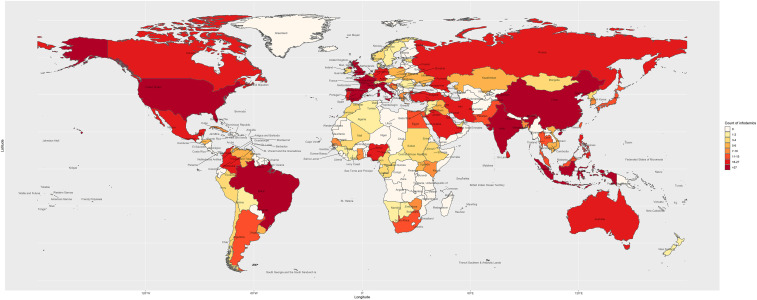
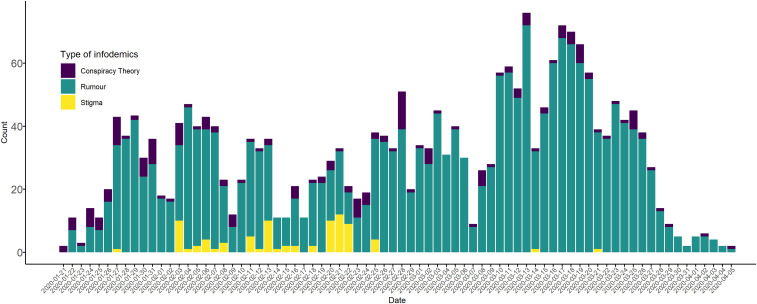
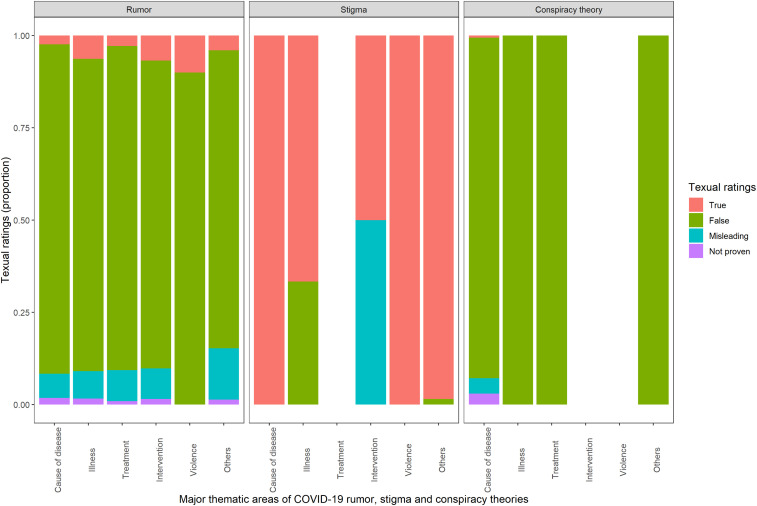
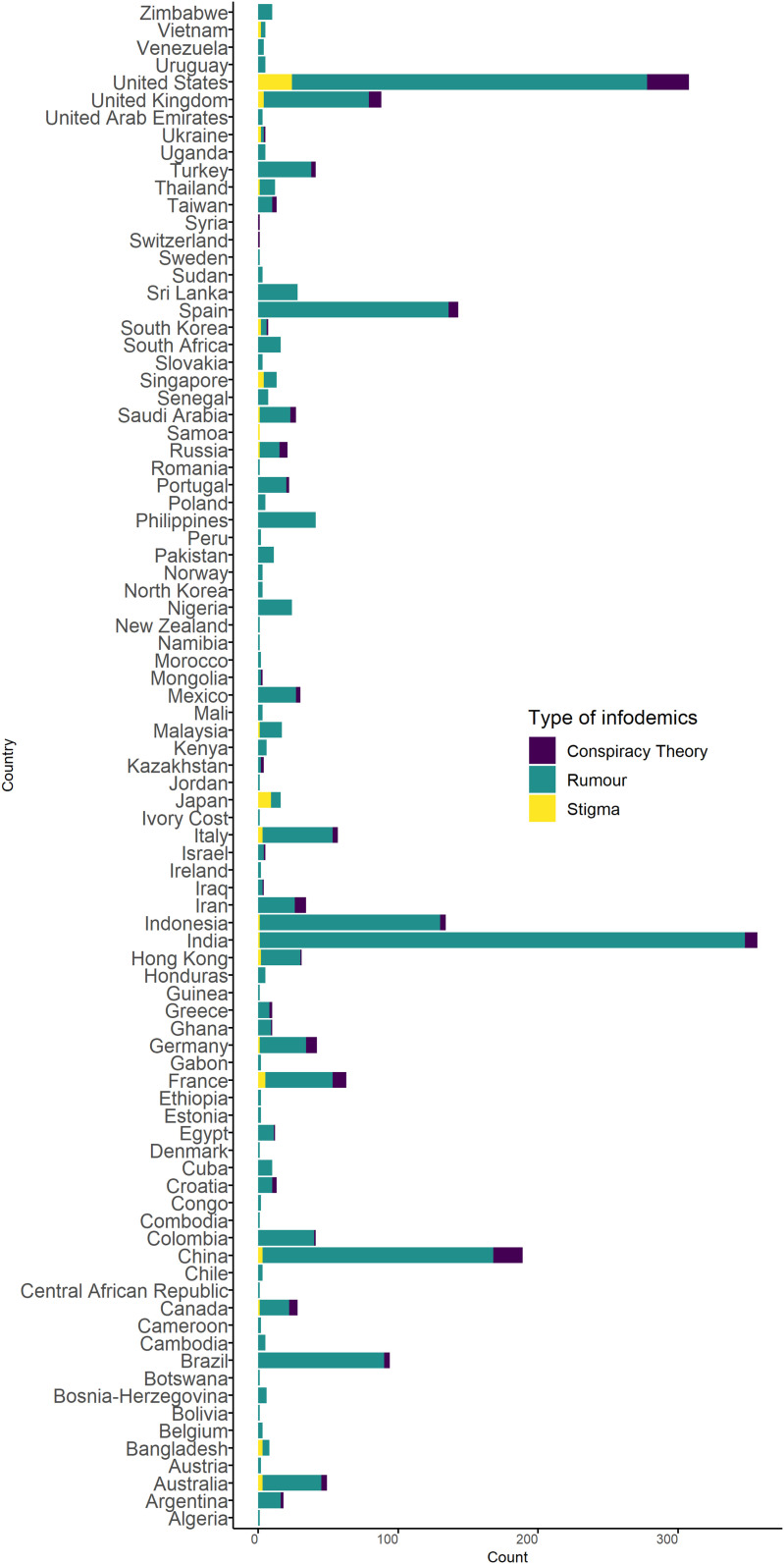
Infodemics, often including rumors, stigma, and conspiracy theories, have been common during the COVID-19 pandemic. Monitoring social media data has been identified as the best method for tracking rumors in real time and as a possible way to dispel misinformation and reduce stigma. However, the detection, assessment, and response to rumors, stigma, and conspiracy theories in real time are a challenge. Therefore, we followed and examined COVID-19-related rumors, stigma, and conspiracy theories circulating on online platforms, including fact-checking agency websites, Facebook, Twitter, and online newspapers, and their impacts on public health. Information was extracted between December 31, 2019 and April 5, 2020, and descriptively analyzed. We performed a content analysis of the news articles to compare and contrast data collected from other sources. We identified 2,311 reports of rumors, stigma, and conspiracy theories in 25 languages from 87 countries. Claims were related to illness, transmission and mortality (24%), control measures (21%), treatment and cure (19%), cause of disease including the origin (15%), violence (1%), and miscellaneous (20%). Of the 2,276 reports for which text ratings were available, 1,856 claims were false (82%). Misinformation fueled by rumors, stigma, and conspiracy theories can have potentially serious implications on the individual and community if prioritized over evidence-based guidelines. Health agencies must track misinformation associated with the COVID-19 in real time, and engage local communities and government stakeholders to debunk misinformation.
Overview
The claims and statistics of this paper haven’t been checked yet.
Free: it reads the open-access text and checks the first 5 claims that cite a source we can check. Create a free account to check every claim.
Integrity signals
Registry
Cites
Statistics
Figures
Verification
Claims the paper makes
The claims and statistics of this paper haven’t been checked yet.
Free: it reads the open-access text and checks the first 5 claims that cite a source we can check. Create a free account to check every claim.
Claims other papers make about this one
Each is checked against this paper’s own text: does it say what the citing paper says it does?
The cited source says what the claim attributes to it.
In the citing paper
“Misinformation during the Ebola outbreak in the Democratic Republic of the Congo in 2019 was associated with aggression, mistrust, social unrest, and targeted assaults on healthcare workers [45].”
From Social Media Role and Its Impact on Public Health: A Narrative Review (2023) · cites this paper as [45]
The cited source says what the claim attributes to it.
In the citing paper
“Rumors about COVID-19 have been labeled a global enemy by the UN secretary-general [45].”
From Social Media Role and Its Impact on Public Health: A Narrative Review (2023) · cites this paper as [45]
The cited source says what the claim attributes to it.
In the citing paper
“During the SARS outbreak in China in 2002-2003, Asian people faced social stigma as a result of their fear of contracting the disease [45].”
From Social Media Role and Its Impact on Public Health: A Narrative Review (2023) · cites this paper as [45]
Self-check
Percentages, sums and reported differences re-computed from the paper’s own numbers.
The self-check needs the paper’s full text.
Citations
Cites
Understanding Conspiracy Theories
Douglas, K. M., Uscinski, J. E., Sutton, R. M., Cichocka, A., Nefes, T., Ang, C. S., & Deravi, F. (2019) · Political Psychology · doi:10.1111/pops.12568 · Cited by 1,511 · cited 1×
“defined as explanatory beliefs about an individual or group of people working in secret to reaching malicious goals.(16) Data extraction and consistency.”
BackgroundFear and Stigma: The Epidemic within the SARS Outbreak
Person, B., Sy, F., Holton, K., Govert, B., Liang, A., the, N. C. I. D., SARS Community Outreach Team (listed in alphabetical order), Garza, B., Gould, D., Hickson, M., et al. (2004) · Emerging Infectious Diseases · doi:10.3201/eid1002.030750 · Cited by 790
YouTube as a source of information on COVID-19: a pandemic of misinformation?
Li, H. O.-Y., Bailey, A., Huynh, D., & Chan, J. (2020) · BMJ Global Health · doi:10.1136/bmjgh-2020-002604 · Cited by 781
See Something, Say Something: Correction of Global Health Misinformation on Social Media
Bode, L., & Vraga, E. K. (2018) · Health Communication · doi:10.1080/10410236.2017.1331312 · Cited by 745 · cited 1×
“aimed at promoting evidence against misinformation quickly and clearly might change people’s perception and healthseeking behaviors.(52,53) Currently, the WHO and other health”
BackgroundZubiaga, A., Liakata, M., Procter, R., Wong Sak Hoi, G., & Tolmie, P. (2016) · PLOS ONE · doi:10.1371/journal.pone.0150989 · Cited by 722 · cited 1×
“Rumor is defined as unverified information that canbe foundas true, fabricated, or entirely false after verification.(14) Stigma is a socially constructed process through which a person with stigma can experience discrimination and devaluation in society.”
BackgroundTuran, B., Budhwani, H., Fazeli, P. L., Browning, W. R., Raper, J. L., Mugavero, M. J., & Turan, J. M. (2017) · AIDS and Behavior · doi:10.1007/s10461-016-1451-5 · Cited by 480
Prevention is better than cure: addressing anti-vaccine conspiracy theories
Jolley, D., & Douglas, K. M. (2017) · Journal of Applied Social Psychology · doi:10.1111/jasp.12453 · Cited by 446 · cited 1×
“aimed at promoting evidence against misinformation quickly and clearly might change people’s perception and healthseeking behaviors.(52,53) Currently, the WHO and other health”
BackgroundEbola, Twitter, and misinformation: a dangerous combination?
Oyeyemi, S. O., Gabarron, E., & Wynn, R. (2014) · BMJ · doi:10.1136/bmj.g6178 · Cited by 348 · cited 1×
“Last, there are the well-documented issues with misinformation with Ebola, including false treatments, health workers were deliberately spreading the Ebola virus, and Ebola epidemic was a hoax.(49,50) Such conspiracy theories and misinformation may have impeded the ability of healthcare workers and emergency responder…”
BackgroundAttacks against health-care personnel must stop, especially as the world fights COVID-19
McKay, D., Heisler, M., Mishori, R., Catton, H., & Kloiber, O. (2020) · The Lancet · doi:10.1016/s0140-6736(20)31191-0 · Cited by 186
Young, W. B., Park, J. E., Tian, I. X., & Kempner, J. (2013) · PLoS ONE · doi:10.1371/journal.pone.0054074 · Cited by 138 · cited 1×
“Stigma is a socially constructed process through which a person with stigma can experience discrimination and devaluation in society.(15) A conspiracy theory is”
Background
Research works printed but not linked: 29
- World Health Organization, 2020 Coronavirus Disease 2019 (COVID-19) Situation Report – 13. Geneva, Switzerland: WHO.
- Lederer EM, 2020 U.N. Chief Antonio Guterres: Misinformation about COVID-19 Is the New Enemy. TIME. New York, NY: TIME.
- World Health Organization, 2018 Managing Epidemics: Key Facts about Major Deadly Diseases. Luxembourg: WHO.
- Center for Preparedness and Response, 2020 Responding to Rumors and Misinformation. Emergency Preparedness and Response. Atlanta, GA: Centre for Disease Control and Prevention.
- Eckert KS 2016 Evidence Syntheses to Support the Guideline on Emergency Risk Communication. Geneva, Switzerland: World Health Organization.
- Victoria Knight of Kaiser Health News, 2020 COVID-19: Beware Online Tests and Cures, Experts Say. The Guardian. Surry Hills, NSW, Australia: The Guardian.
- Spencer SH, 2020 Fake Coronavirus Cures, Part 1: MMS Is Industrial Bleach. Available at: https://www.factcheck.org/2020/02/fake-coronavirus-cures-part-1-mms-is-industrial-bleach/. Accessed April 4, 2020.
- Vrajlal A, 2020 Chinese-Australians Facing Racism after Coronavirus Outbreak. Available at: https://www.huffingtonpost.com.au/entry/coronavirus-australia-racism_au_5e33a522c5b6f2623326d72b. Accessed April 4, 2020.
- BBC Reality Check Team, 2020 Coronavirus: Does Drinking Tea Help? BBC News. Delhi, India: BBC News.
- Cable T, 2020 CDD FACT CHECK: Can Camel Urine, Lime Cure Coronavirus? The Cable. Abuja, Nigeria: The Cable Newspaper.
- Landsverk G, 2020 Holding Your Breath Can’t Help You Self-Diagnose the Coronavirus. Here’s What You Should Do Instead. Business Insider Australia. Surry Hills, NSW, Australia: Business Insider Australia.
- Ellis-Petersen H Rahman SA, 2020 Indian Doctors Being Evicted from Homes over Coronavirus Fears. The Guardian. Surry Hills, NSW, Australia: The Guardian.
- Mead WR, 2020 China Is the Real Sick Man of Asia. The Wall Street Journal. New York, NY: The Wall Street Journal.
- Breland A, 2020 Russian Media Outlets Are Blaming the Coronavirus on the United States. Mother Jones. San Francisco, CA: Mother Jones.
- Gertz B, 2020 Coronavirus May Have Originated in Lab Linked to China’s Biowarfare Program. The Washington Post. Washington, DC: The Washington Post.
- Gregory J, 2020 The Coronavirus ‘Infodemic’ Is Real. We Rated the Websites Responsible for It. Statnews. Boston, MA: Statnews.
- Richtel M, 2020 WHO Fights a Pandemic besides Coronavirus: An ‘Infodemic’. The New York Times. New York, NY: The New York Times.
- Meddle East Media Research Institute, 2020 Arab Writers: The Coronavirus Is Part of Biological Warfare Waged by the U.S. against China. Egypt, Saudi Arabia, and Syria: Meddle East Media Research Institute TV.
- Farda R, 2020 Iran Cleric Blames Trump for Coronavirus Outbreak in Religious City. Radio Farda. Prague, Czech Republic: Radio Farda.
- Colson T, 2020 A Fake Claim That Cocaine Cures the Coronavirus Is Spreading Online, and the French Government Was Forced to Tell People That It Won’t. Business Insider Australia. Surry Hills, NSW, Australia: Business Insider Australia.
- Frenkel S Alba D Zhong R, 2020 Surge of Virus Misinformation Stumps Facebook and Twitter. The New York Times. New York, NY: The New York Times.
- World Health Organization, 2020 Alcohol Does Not Protect against COVID-19; Access Should Be Restricted during Lockdown. Alcohol Use. Geneva, Switzerland: WHO, Regional Office for Europe.
- CNN Türk, 2020 9 Kişi Daha Saf Alkolden Öldü [9 More Poeple Died from Pre Alcohol]. Available at: https://www.cnnturk.com/video/turkiye/9-kisi-daha-saf-alkolden-oldu. Accessed June 4, 2020.
- Staff Reporter, 2020 Twelve Taken Ill after Consuming ‘Coronavirus Shaped’ Datura Seeds. The Hindu. Andhra Pradesh, India: The Hindu.
- Chan-Kyong P, 2020 Coronavirus: Saltwater Spray Infects 46 Church-Goers in South Korea. South China Morning Post. Causeway Bay, Hong Kong: South China Morning Post.
- Eckel M, 2020 Tractors, Herbs, Vodka, Saunas? Some Leaders Offer Strange, Unhelpful Advice On Warding Off COVID-19. Available at: https://www.rferl.org/a/coronavirus-unhelpful-advice-tractors-herbs-vodka-saunas-gurbanguly-lukashenka-vucic/30495810.html. Accessed June 4, 2020.
- Tajmim T, 2020 Coronavirus: 41 Doctors, 10 Nurses Infected. The Business Standard. Dhaka, Bangladesh: The Business Standard.
- National Herald, 2020 Social Stigma Forcing Corona Patients to Avoid Screening in India. National Herald. New Delhi, India: National Herald.
- Kabananukye K, 2001 Denial, Discrimination and Stigmatisation: The Case of Ebola Epidemic in Some Districts. Kampala, Uganda: Ugandan Ministry of Health, National Ebola Task Force.
Cited by
Items 601–700 of 997
Newspaper coverage of advance care planning during the COVID-19 pandemic: Content analysis
van der Smissen, D., van Leeuwen, M., Sudore, R. L., Koffman, J., Heyland, D. K., van der Heide, A., Rietjens, J. A. C., & Korfage, I. J. (2023) · Death Studies · doi:10.1080/07481187.2023.2180693 · Cited by 5
“The COVID-19 pandemic is associated with considerable uncertainty that was amplified by an ‘infodemic’ of misinformation fueled by rumours, stigma, and conspiracy theories (Koffman et al., 2020a; Islam et al., 2020).”
Lessons from COVID-19: How human behaviour may influence the science
Ceriello, A. (2020) · Diabetes Research and Clinical Practice · doi:10.1016/j.diabres.2020.108491 · Cited by 3
“Furthermore, these situations were driven by a global debate in the media, with excess information and ‘fake news’, causing widespread fear and confusion [16].”
Social Media Surveillance and (Dis)Misinformation in the COVID ‐19 Pandemic
Spitzberg, B. H., Tsou, M., & Gawron, M. (2021) · Wiley eBooks · doi:10.1002/9781119751809.ch12 · Cited by 6
Batte, C., Semulimi, A. W., Mutebi, R. K., Mukisa, J., Olum, R., & Bongomin, F. (2021) · Research Square · doi:10.21203/rs.3.rs-620499/v1 · Cited by 3
Age as a Moderator of Health Outcomes and Trust in Physicians and the Healthcare System
Katz, E. (2021) · The Research Repository @ WVU (West Virginia University) · doi:10.33915/etd.8331 · Cited by 7
Iqbal, W., Tyson, G., & Castro, I. (2022) · SSRN Electronic Journal · doi:10.2139/ssrn.4007864 · Cited by 4
Mental Health Effects of the COVID‐19 Pandemic on Healthcare Professionals
Eibschutz, L. S., Sackett, C. L., Sakulsaengprapha, V., Faghankhani, M., Baumann, G., & Pappa, S. (2022) · Wiley eBooks · doi:10.1002/9781119789741.ch26 · Cited by 3
Characterizing the Gendered Twitter Discussion of COVID-19 Hoax
Al‐Rawi, A., & Jamieson, K. (2022) · Health Communication · doi:10.1080/10410236.2022.2149112 · Cited by 3
“…the online communities and platforms from which the majority of this misinformation is disseminated (Ball & Maxmen, 2020; Cinelli et al., 2020; Islam et al., 2020), especially considering the largely unfiltered nature of content that is easily spread across social media (Lazer et al., 2018).”
BackgroundChlabicz, M., Nabożny, A., Koszelew, J., Łaguna, W., Szpakowicz, A., Sowa, P., Budny, W., Guziejko, K., Róg‐Makal, M., Pancewicz, S. A., et al. (2024) · Journal of Medical Internet Research · doi:10.2196/48130 · Cited by 9
“Numerous articles perpetuated the notion that light alcohol such as beer or wine could stimulate the immune system to combat the coronavirus [7,35,36].”
InfluentialHou, D., Wang, Y., Gao, C., Li, X., & Wang, Z. (2024) · ACM International Conference on Information and Knowledge Management (CIKM) · doi:10.1145/3627673.3679796 · Cited by 6
“While people enjoy considerable convenience in exchanging information, this also provides opportunities for the spread of malicious information such as fake news and rumors, posing significant economic and societal challenges [10, 11, 36].”
Leveraging AI/NLP to Combat Health Misinformation and Promote Trust in Science
Uppu, S. P. (2025) · European Journal of Computer Science and Information Technology · doi:10.37745/ejcsit.2013/vol13n256385 · Cited by 2
Leveraging Rationality Labels for Explainable Claim Check-Worthiness
Sundriyal, M., Akhtar, M. S., & Chakraborty, T. (2025) · IEEE Transactions on Artificial Intelligence · doi:10.1109/tai.2025.3571707 · Cited by 2
“A study revealed that at least 800 individuals died world-wide in the first quarter of 2020 due to misinformation about COVID-19 [2].”
Pandemic Recipes—Nutritional Values of Recipes in Legacy Media
Gaba, A., Bennett, R., Flórez, K. R., & Soliman, G. A. (2025) · Nutrients · doi:10.3390/nu17111830 · Cited by 2
“It has a long history of use in the social sciences [48] and also in health professions [49–51].”
White, B. K., Talamayan, F., Aynsley, T. R., Riziki, R. B., Bertrand-Ferrandis, C., Harbou, K. V., Inigo, R. L., Moran, T., Samuel, R., Scales, D. A., et al. (2025) · JMIR Infodemiology · doi:10.2196/72165 · Cited by 2
“The impact of infodemics on public health has been extensively documented [4-7], yet methods to prevent, assess, and identify early opportunities to mitigate the impact are less well-defined.”
Gökseven, Y., Aksu, S. B., Sever, S. Ö., & Öztürk, G. Z. (2026) · Frontiers in Public Health · doi:10.3389/fpubh.2025.1675473 · Cited by 2
Wang, Y., Gu, X., & Li, S. (2026) · Humanities and Social Sciences Communications · doi:10.1057/s41599-026-06555-y · Cited by 2
Amin, A., & Hong, Y. (2026) · Telematics and Informatics Reports · doi:10.1016/j.teler.2026.100326 · Cited by 4
The response from the Sciences to misinformation and the Infodemic is now
Galdames, I. S. (2020) · International Journal of Medical and Surgical Sciences · doi:10.32457/ijmss.v7i2.581 · Cited by 2
Kurelović, E. K., Tomac, F., & Polić, T. (2021) · Zbornik Veleučilišta u Rijeci · doi:10.31784/zvr.9.1.7 · Cited by 15
Effect of COVID-19 Infodemic on Media Trust and Perceived Stress
Sanni, S. A., Rajabu, N., Umezuruike, C., & Alamu, L. K. (2021) · Journal of Health Promotion and Behavior · doi:10.26911/thejhpb.2021.06.02.07 · Cited by 2
“…in Europe and America experienced all sorts of discrimination, from assaults to denial of service, while African immigrants, students and business men were assaulted and evicted from their homes in Guangdong province, which has China’s largest African community (HRW, 2020; Islam et al., 2020).”
Sharadga, T. M. A. (2022) · Studies in Media and Communication · doi:10.11114/smc.v10i1.5512 · Cited by 2
“…a certain behavior in their lives that they would not do without that idea, and the responsibility now remains on the national media outlets to collect express government opinions or decisions to achieve higher national interests away from deception and media misinformation (Islam et al, 2020).”
BackgroundLad, S. S., Bhakta, S., & Hira, V. (2022) · International Perspectives in Psychology · doi:10.1027/2157-3891/a000051 · Cited by 3
Addressing COVID-19 Rumors and Behaviors Using Theory in Guyana: A Program Case Study
Olapeju, B., Adams, C., Simpson, J., Mitchum, L., Wilson, S., Jarrah, M., Hunter, G. C., Davis, T., Martín, A., Shaw, S., et al. (2022) · Global Health Science and Practice · doi:10.9745/ghsp-d-22-00071 · Cited by 2
“Rumors and misinformation can exaggerate fears and undermine trust or confidence in viable solutions, which makes rumor tracking and response so important in the fight against outbreaks like COVID-19.(4,8,9) This study details how Guyana’s MOH and Breakthrough ACTION Guyana used EPPM to inform a strategy to identify r…”
BackgroundInfluentialSocial Implications of Infodemic Concurrent with COVID-19
Sikorski, J. (2023) · Polish Political Science Yearbook · doi:10.15804/ppsy202253 · Cited by 3
Guidozzi, N. (2022) · Journal of Surgery · doi:10.29011/2575-9760.001665 · Cited by 2
“This is explored in an article by Islam et al.[19] assessing how the Covid-19 infodemic affected people and their behaviour based on rumours, stigmas and conspiracy theories.”
BackgroundInfluentialStern, C., & Ruisch, B. C. (2023) · Perspectives on Psychological Science · doi:10.1177/17456916231185298 · Cited by 2
“Moreover, given that information tying China to COVID-19 was widespread (Islam et al., 2020), even ostensibly “neutral” reminders of the threat of the virus may have increased bias.”
Peran Komunikasi Sains di Media Sosial pada Masa Pandemi Covid-19
Sugiono, S. (2023) · Jurnal ILMU KOMUNIKASI · doi:10.24002/jik.v20i1.4792 · Cited by 7
On the Design of a Misinformation Widget (MsW) Against Cloaked Science
Arroyo, D., Esposti, S. D., Espés, A. G., Palmero, S., & Pérez-Miguel, L. (2023) · Lecture notes in computer science · doi:10.1007/978-3-031-39828-5_21 · Cited by 2
Cooper, D., Harmon, D., Alemayehu, C., Levy, J. A., Gastañaduy, M., Fort, L. B., & McCoin, N. S. (2023) · Western Journal of Emergency Medicine · doi:10.5811/westjem.57449 · Cited by 2
“12,13 21 Research in COVID-19 vaccine hesitancy remains limited.”
BackgroundFNDaaS: Content-agnostic Detection of Websites Distributing Fake News
Papadopoulos, P., Spythouris, D., Markatos, E. P., & Kourtellis, N. (2023) · IEEE International Conference on Big Data (BigData) · doi:10.1109/bigdata59044.2023.10386830 · Cited by 7
“But fake news may even have an impact on human life too: e.g., PizzaGate during the 2016 US presidential elections [6], the unfounded concerns about a link between the MMR vaccine and autism [7]), the deaths [8] caused by COVID-19-related misinformation.”
Enhancing COVID ‐19 misinformation detection through novel attention mechanisms in NLP
Hussain, A., Ali, W., Ahmad, A., Iqbal, M. S., Moqurrab, S. A., Paul, A., Jabbar, S., & Akram, S. (2024) · Expert Systems · doi:10.1111/exsy.13571 · Cited by 3
“It has been reported that thousands of people have been hospitalized and tragically, there have been deaths as a result of the consumption of harmful sub-stances in the mistaken belief that these substances will cure COVID-19 (Islam et al., 2020).”
Osuagwu, U. L., Agho, K. E., Ekpenyong, B. N., Mashige, K. P., & Ishaya, T. (2024) · doi:10.61588/vbox7053 · Cited by 2
Fear of monkeypox and intention to vaccinate against monkeypox: a network analysis
Caycho‐Rodríguez, T., Ventura‐León, J., Carbajal‐León, C., Vilca, L. W., Gallegos, M., Delgado-Campusano, M., Noé-Grijalva, M., Toia, Á. M. D. C., Barria‐Asenjo, N. A., Torales, J. C., et al. (2024) · Medicina Clínica y Social · doi:10.52379/mcs.v8i2.403 · Cited by 3
Pak, J., & Kim, H. S. (2024) · Journalism & Mass Communication Quarterly · doi:10.1177/10776990241257588 · Cited by 2
Anjelia, L. O., Mulyana, D., & Suminar, J. R. (2024) · Jurnal Komunikasi Indonesia · doi:10.7454/jkmi.v13i2.1253 · Cited by 10
Fake News Detection in Hausa Language Using Transfer Learning Method
Ibrahim, A. A., Ali, H. U., Yakubu, I. Z., & Lawal, I. A. (2024) · International Journal of Innovative Science and Research Technology (IJISRT) · doi:10.38124/ijisrt/ijisrt24oct1050 · Cited by 5
Pepe, V. L. E., de Albuquerque, M. V., & Oliveira, C. V. D. S. (2024) · Revista Panamericana de Salud Pública · doi:10.26633/rpsp.2024.130 · Cited by 3
“…rumores na infodemia recaíram justamente sobre temas de atuação das ARN: medidas de controle, prevenção e tratamento da doença, especialmente isolamento, vacinas e medicamentos, sobre os quais a desinformação e a instru-mentalização política da ciência e do debate público foram notórias 25 .”
Zhong, N., Jiang, X., & Yao, Y. (2025) · Computers, materials & continua/Computers, materials & continua (Print) · doi:10.32604/cmc.2025.059536 · Cited by 4
“For example, Islam et al. [2] found that during the COVID-19 pandemic, 82% of the news information between 31 December 2019, and 05 April 2020, consisted of rumors.”
Undermining Scientific Progress
Silva, H. M. (2025) · The American Biology Teacher · doi:10.1525/abt.2025.87.2.132 · Cited by 2
“…often have to explain to their students how a vaccine works, the value of a vaccine, to students who read unfounded information on their social networks, media (Silva, 2023) disseminated by all kinds of professionals, including doctors, in this process of misinformation (Islam et al., 2020).”
Kour, P., Adari, S. H., Kumar, B., & Díaz, E. (2025) · Frontiers in Public Health · doi:10.3389/fpubh.2025.1488080 · Cited by 2
“They reported that 82% of the claims with text ratings were false, with topics ranging from illness, transmission and control measures to causes, treatment and cure (8).”
From Disease Detection to Health Campaigns: The Role of Social Media Analytics in Public Health
Yafooz, W. M. S., Al-Gumaei, Y. A., Alsaeedi, A., & Mandala, S. (2025) · Studies in computational intelligence · doi:10.1007/978-3-031-80334-5_6 · Cited by 3
Wang, W., & Zhang, W. (2025) · BMC Public Health · doi:10.1186/s12889-025-21840-2 · Cited by 3
“Therefore, it is crucial to complement studies centred on social media content analysis [41, 42] with examinations of content from mainstream media, which continue to exert substantial influence, although relevant studies remain limited [43].”
2020–2024 Döneminde Türkiye’de infodemi konulu lisansüstü tezlerin bibliyometrik ve tematik analizi
Can, E., Gökhan, B. A. K., Karadağ, B., & Nazlı, F. (2025) · Oğuzhan Sosyal Bilimler Dergisi · doi:10.55580/oguzhan.1701729 · Cited by 2
Grah, J. S., Irrgang, C., Schaade, L., Ladewig, K., & Körber, N. (2025) · Bundesgesundheitsblatt - Gesundheitsforschung - Gesundheitsschutz · doi:10.1007/s00103-025-04098-2 · Cited by 2
Bui, N. D., Nguyen, H. T., Duong, B. T., Susilawati, T. N., Thai, T. T., Vu, M. T., Lin, J., Bui, T. A., & Duong, M. C. (2025) · Frontiers in Public Health · doi:10.3389/fpubh.2025.1633756 · Cited by 2
Year 100 of the American Journal of Tropical Medicine and Hygiene: A Remarkable Year
Rosenthal, P. J. (2021) · American Journal of Tropical Medicine and Hygiene · doi:10.4269/ajtmh.20-1504 · Cited by 2
SAÇ, H., & Çobaner, A. A. (2021) · Aksaray İletişim Dergisi · doi:10.47771/aid.930415 · Cited by 7
Evaluation of Knowledge about COVID-19 and Its Effect on Psychological States of University Students
Aslan, R., Unal, C., & Yılmaz, H. Ö. (2021) · European Journal of Environment and Public Health · doi:10.21601/ejeph/11059 · Cited by 3
“…some others found that social media can create fear, anxiety and stress by constantly spreading rumors and unconfirmed information (Boberg et al., 2020; Gao et al., 2020; Kumar and Nayar, 2021) The spread of these messages also can have devastating effects on public health (Islam et al., 2020).”
BackgroundCOVID-19 Mask Usage and Social Distancing in Social Media Images: Large-scale Deep Learning Analysis
Singh, A. K., Mehan, P., Sharma, D., Pandey, R., Sethi, T., & Kumaraguru, P. (2022) · JMIR Public Health and Surveillance · doi:10.2196/26868 · Cited by 2
Senaharjanta, I. L., & Fendista, S. (2021) · Cakrawala - Jurnal Humaniora · doi:10.31294/jc.v21i2.10072 · Cited by 2
IMPACT OF EPIDEMIOLOGICAL SITUATION ON RESPECT FOR HUMAN RIGHTS AND FREEDOMS: INFORMATIONAL ASPECT
Shul'ha, M. G., Mazur, A. V., & Georgiievskyi, І. (2021) · Wiadomości Lekarskie · doi:10.36740/wlek202111222 · Cited by 2
Forecasting High-risk Areas of COVID-19 Infection Through Socioeconomic and Static Spatial Analysis
Alhamadani, A., Sarkar, S., Zhang, L., Alkulaib, L., & Lu, C. (2021) · IEEE International Conference on Big Data (BigData) · doi:10.1109/bigdata52589.2021.9671896 · Cited by 4
“Believ-ing in conspiracy theories that promote misinformation like “COVID-19 is a hoax” may result in serious implications [21], [50].”
Parajuli, S. B., Shakya, A., Koirala, S. P., Heera, K. C., & Koirala, P. (2021) · Journal of Patan Academy of Health Sciences · doi:10.3126/jpahs.v8i3.33352 · Cited by 3
Falsas Narrativas da Pandemia no Brasil: desinformação na página do Ministério da Saúde e checadores
Santana, G. P., & Simeão, E. L. M. S. (2021) · doi:10.29327/561168.1-5 · Cited by 2
Covid-19 & Stigma of Patient Families and Health Workers in Makassar City, Indonesia
Gafur, A., Zainuddin, Z., Musdalifah, M., & Darmansyah, S. (2021) · Al-sihah The Public Health Science Journal · doi:10.24252/al-sihah.v13i1.21463 · Cited by 2
Colonial Privilege and COVID-19
Blume, A. W. (2022) · International and cultural psychology/International and cultural psychology series · doi:10.1007/978-3-030-92825-4_9 · Cited by 2
Perang Melawan Bahaya Hoaks COVID-19 di Dunia
Balatif, R. (2021) · JIMKI Jurnal Ilmiah Mahasiswa Kedokteran Indonesia · doi:10.53366/jimki.v9i2.330 · Cited by 3
The Menace of Medical Fake News
Aleem, A., & Aleem, T. A. (2022) · Journal of Nature and Science of Medicine · doi:10.4103/jnsm.jnsm_70_21 · Cited by 2
Communicating COVID: Learnings and Way Forward
Suneja, N., & Bose, K. (2022) · Springer eBooks · doi:10.1007/978-981-16-7385-6_16 · Cited by 3
Gangireddy, R., Chakraborty, S., Pakenham-Walsh, N. M., Nagarajan, B., Krishan, P., McGuire, R., Vaghela, G., & Sriharan, A. (2022) · JMIR Infodemiology · doi:10.2196/30167 · Cited by 3
Onal, E. G. (2022) · McGill Journal of Medicine · doi:10.26443/mjm.v20i2.905 · Cited by 2
Löber, L. I. (2022) · Nomos Verlagsgesellschaft mbH & Co. KG eBooks · doi:10.5771/9783748913344-289 · Cited by 4
Leite, L., Dourado, L. G. P., Mapatse, M. V. F., Arão, J., Moraes, J., & Castellar, S. M. V. (2023) · Cogent Social Sciences · doi:10.1080/23311886.2023.2186578 · Cited by 2
“One of the former, probably influenced by media and social media advertisements, has to do with the pseudoscientific belief that Vitamin C (Ascorbic acid) supplements are enough to prevent COVID-19 (Ali et al., 2021; S. Islam et al., 2020).”
BackgroundInfluentialImpact Of Social Media Apps On Public Health: An Overview with Analysis
Rawat, V., Amoli, M., Ruwari, S., & Rajput, S. (2023) · International Conference on Computational Intelligence and Sustainable Engineering Solutions (CISES) · doi:10.1109/cises58720.2023.10183521 · Cited by 4
A Comparative Analysis of Active Learning for Rumor Detection on Social Media Platforms
Feng, Y., Liu, H., He, H., & Su, L. (2023) · Applied Sciences · doi:10.3390/app132212098 · Cited by 3
Manifestation of Health Denialism in Attitudes toward COVID-19 Vaccination: A Qualitative Study
Młoźniak, I., Zwierczyk, U., Rzepecka, E., Kobryn, M., Wilk, M., & Duplaga, M. (2023) · Vaccines · doi:10.3390/vaccines11121822 · Cited by 6
“Studies performed in the first year of the pandemic revealed that considerable proportions of the populations believed in COVID-19 conspiracy theories [13,15,16].”
BackgroundKoukaras, P., Rousidis, D., & Tjortjis, C. (2023) · Informatics · doi:10.3390/informatics10040088 · Cited by 2
Joshi, G., Pande, A., Gupta, O., Nautiyal, A., Jasola, S., & Gahtori, P. (2023) · Coronaviruses · doi:10.2174/0126667975257267231213071226 · Cited by 2
Feng, Y., Li, K. C., & Wang, Z. (2024) · Asian Journal of Criminology · doi:10.1007/s11417-024-09439-9 · Cited by 3
“…of COVID-19 rumors: (1) requiring government departments to timely disclose factual COVID-19 information (Yang et al., 2022), (2) requiring social media providers to remove rumors (Islam et al., 2020) promptly, and (3) enacting punitive rules to hold rumor-makers accountable (Rodrigues & Xu, 2020).”
MISINFORMATION AND DISINFORMATION DURING COVID-19: THE EFFECTS AND THE RELEVANT LAWS IN MALAYSIA
Wahed, H. (2020) · International Journal of Law Government and Communication · doi:10.35631/ijlgc.5210015 · Cited by 3
Effect of Coronavirus Worldwide through Misusing of Wireless Sensor Networks
Miah, M. R., Rahman, A. S., Khan, M. S., Hannan, M. A., Hossain, M. S., Shahriar, C. S., Hossain, S. A. M. I., Talukdar, M. T. H., Samdany, A. A., Alam, M. S., et al. (2021) · American Journal of Bioinformatics Research · Cited by 3
Shaheen, H., Ali, F., Awais, M., & Saeed, M. (2021) · International Journal of Media and Information Literacy · doi:10.13187/ijmil.2021.1.201 · Cited by 3
COVID-19 Pandemic Social Media and Stress
Rahman, A., & Islam, A. (2021) · European Scientific Journal ESJ · doi:10.19044/esj.2021.v17n35p166 · Cited by 2
COVID-19 Infodemic: Underlining the importance of digital literacy skills
Sari, K. A. K. (2021) · Public Health and Preventive Medicine Archive · doi:10.15562/phpma.v9i1.320 · Cited by 4
Heidary, F., & Gharebaghi, R. (2021) · Journal of Biomedical Physics and Engineering · doi:10.31661/jbpe.v0i0.2202-1459
“False news, rumors, stigma, propaganda, and conspiracy beliefs have been distributed since the commencement of the COVID-19 outbreak, mostly through social media [5].”
BackgroundUsing Google Health Trends to investigate COVID-19 incidence in AfricaPreprint
Fulk, A., Romero-Álvarez, D., Abu-Saymeh, Q., Onge, J. M. S., Peterson, A. T., & Agusto, F. B. (2021) · medRxiv · doi:10.1101/2021.03.26.21254369 · Cited by 2
Çelebi, A. R. C., Bulut, E., Köprübaşı, S., & Dokur, M. (2022) · Research Square · doi:10.21203/rs.3.rs-1021430/v1 · Cited by 2
Johnson, S. S. (2022) · American Journal of Health Promotion · doi:10.1177/08901171211070957a · Cited by 12
The influence of mass media on Italian web users during COVID-19: an infodemiological analysis.Preprint
Rovetta, A., & Castaldo, L. (2021) · SocArXiv (OSF Preprints) · doi:10.31235/osf.io/28m6n · Cited by 2
The Influence of Mass Media on Italian Web Users during COVID-19: an Infodemiological Analysis.Preprint
Rovetta, A., & Castaldo, L. (2021) · PsyArXiv (OSF Preprints) · doi:10.31234/osf.io/bu6cg · Cited by 3
ADEBIYI, S. K. (2023) · Research Square · doi:10.21203/rs.3.rs-3210901/v1 · Cited by 3
The Content Analysis of Social Media Shares in Turkish Related to COVID-19
Esen, M. F. (2021) · doi:10.12658/m0629 · Cited by 1
Bund katholischer Ärzte: Homeopathic Conversion Therapists in 21st Century Germany
Borkens, Y. (2022) · Frontiers in Sociology · doi:10.3389/fsoc.2021.667772 · Cited by 1
“Further damages are poisoning (caused by the consumption of disinfectants or high percentage alcohol) or blindness (Harder 2020b; Islam et al., 2020).”
BackgroundAfzal, S. (2022) · Annals of King Edward Medical University · doi:10.21649/akemu.v27i4.4825 · Cited by 3
González-Uribe, C., Yañez, N., Niño, A. O., Velasco, N., Cordovez, J. M., Santos‐Vega, M., Niño, N., Burbano, A., Forbes, A., Amaya, C. A., et al. (2022) · F1000Research · doi:10.12688/f1000research.110958.1 · Cited by 1
Inobemhe, K., Santas, T., & Udeh, N.-T. S. (2022) · Mediterranean Journal of Social & Behavioral Research · doi:10.30935/mjosbr/12331 · Cited by 4
Mugisha, M., Uwase, M., Manzi, E., Ishimwe, V., Habineza, P., & Mugisha, E. (2022) · Studies in health technology and informatics · doi:10.3233/shti220902 · Cited by 1
Fake News in the Field of COVID Communication: Investigating the ‘Infodemic’ in Taiwan
Kuo, W., & Wang, S. (2023) · Critical Criminology · doi:10.1007/s10612-023-09704-w · Cited by 2
Volek, J. J., & Moravec, V. (2023) · European Journal of Public Health · doi:10.1093/eurpub/ckad194 · Cited by 1
“Numerous studies have shed light on the widespread impact of COVID-19 misinformation, 2 which has undermined compliance with recommended preventive measures and cultivated unwarranted concerns about vaccination, thereby significantly contributing to vaccine hesitancy.”
BackgroundUpadhyay, U., Dhar, E., Bomrah, S., Huang, Y., Uddin, M., Kabir, M. A., & Syed-Abdul, S. (2024) · Studies in health technology and informatics · doi:10.3233/shti231009 · Cited by 1
Srem‐Sai, M., Quansah, F., Agormedah, E. K., Hagan, J. E., & Schack, T. (2024) · COVID · doi:10.3390/covid4030025 · Cited by 1
Yillah, R. M., Wurie, H. R., Reindorf, B., Sawaneh, A. B., Hodges, M. H., & Turay, H. (2024) · BMJ Open · doi:10.1136/bmjopen-2023-080308 · Cited by 2
Public interest in science or bots? Selective amplification of scientific articles on Twitter
Rahman, A., Mohammadi, E., & Alhoori, H. (2024) · Aslib Journal of Information Management · doi:10.1108/ajim-01-2024-0050 · Cited by 1
“For ‘Behavior Profiling,’ an extensive collection of features for any user is compiled and analyzed to determine bot-like behavior.”
BackgroundFrom infodemic to resilience: Exploring COVID‐19 protective measures in armed‐conflict zone
Salim, M., & Wei, J. (2024) · Risk Analysis · doi:10.1111/risa.17670 · Cited by 1
Disparities in disaster healthcare: A review through a pandemic lens
Cornelius, A. P., Mace, S. E., Char, D. M., Doyle, C. J., Noll, S., Reyes, V., & Wang, J. (2024) · American Journal of Disaster Medicine · doi:10.5055/ajdm.0482 · Cited by 2
Binyet, M. A. O., Tchopba, C. N., Beavogui, F. T., Tawambe, P. B., Quashie, P. K., Debnet, J., Maka, A. M., & Vanlerbeghe, V. (2024) · Journal of Global Health Economics and Policy · doi:10.52872/001c.126658 · Cited by 1
Anggrainingsih, R., Wardani, D. W., Cahyono, H. D., Hendrasuryawan, B., Widoyono, B., & Setiadi, H. (2024) · International Seminar on Research of Information Technology and Intelligent Systems (ISRITI) · doi:10.1109/isriti64779.2024.10963454 · Cited by 1
“The same study further indicates that around 5,800 individuals were hospitalized due to misinformation propagated across social media platforms [1].”
Murillo, J., Pulido, T. R., Loyd, A. B., Subica, A. M., Yen, I. H., & Payán, D. D. (2025) · Preventive Medicine Reports · doi:10.1016/j.pmedr.2025.103098 · Cited by 1
“One study found ~82 % of COVID-19 claims on social media platforms were false (Islam et al., 2020).”
Burney, S., Donelle, L., & Kothari, A. R. (2025) · FACETS · doi:10.1139/facets-2022-0186 · Cited by 4
AI and Digital Literacy: Preparing Learners for a Technologically Advanced Sustainable Future
Costa, P., & Joaquim, A. F. V. L. (2025) · Advances in computational intelligence and robotics book series · doi:10.4018/979-8-3373-0725-1.ch003 · Cited by 2
Metadata
- Authors
- Islam, M. S., Sarkar, T., Khan, S. H., Mostofa Kamal, A.-H., Hasan, S. M. M., Kabir, A., Yeasmin, D., Islam, M. A., Amin Chowdhury, K. I., Anwar, K. S., Chughtai, A. A., & Seale, H.
- Affiliations
- International Centre for Diarrhoeal Disease Research (BD)
- Khulna University of Engineering and Technology, Khulna, Bangladesh;
- Mahidol University (TH)
- UNSW Sydney (AU)
- Program for Emerging Infections, Infectious Diseases Division, icddr,b, Dhaka, Bangladesh;
- International University of Health and Welfare (JP)
- Corresponding author
- Islam, Md Saiful
- Islam, Mohammad Ariful
- ORCID
- Venue
- The American Journal of Tropical Medicine and Hygiene
- Published
- 2020-10-07
- Volume
- 103
- Issue
- 4
- Pages
- 1621-1629
- ISSN
- 0002-9637 (ISSN-L)
- 1476-1645
- PMC
- PMC7543839
- OpenAlex
- W3048848247
- Cited by
- 1,178
- References
- 21
- Citations by year
- 2026: 88 · 2025: 117 · 2024: 127 · 2023: 207 · 2022: 319 · 2021: 274 · 2020: 45
- FWCI
- 282.36
- Type
- journal article
- Language
- en
- Open access
- bronze
- doi.org
- Locations
- American Journal of Tropical Medicine and Hygiene (publishedVersion)
- PubMed Central (publishedVersion, cc-by)
- PubMed (publishedVersion)
- Funders
- International Centre for Diarrhoeal Disease Research, Bangladesh
- Topics
- Social Sciences › Sociology and Political Science › Misinformation and Its Impacts
- Social Sciences › Communication › Communication and COVID-19 Impact
- Social Sciences › Library and Information Sciences › Academic Publishing and Open Access
- Keywords
- COVID-19 pandemic, infodemic, misinformation, rumors, stigma, conspiracy theories, social media, public health impact, fact-checking, misinformation debunking, COVID-19 containment measures
- MeSH terms
- Betacoronavirus, Data Analysis, COVID-19, SARS-CoV-2, Data Collection, Humans, Pneumonia, Viral, Public Health, Retrospective Studies, Global Health, Coronavirus Infections, Social Stigma, Pandemics, Social Media, Social Discrimination
About these checks
Registry, retraction, Cites and statistics results are computed, not judged, with one exception: a printed reference that no index lists is read once by a model before it counts as a citation error. Claims are extracted by a model and kept only when their quote appears verbatim in the text; each cited source is then checked, with a model’s help, for whether it says what the claim relies on. Those verdicts can be wrong — read the claim’s quote and the cited source before relying on one.
Statistics and arithmetic are recomputed, not judged.
Confidence bands are shown only for fields calibrated on our annotated test set. None is calibrated yet, so no band is shown.
What counts as a claim ›How we measure confidence ›How we check this ›
Are you an author, or do you see a problem with this page? Request a review
Data sources
Bibliographic data: Semantic Scholar, OpenAlex, Crossref.
Contains information from the Semantic Scholar Academic Graph Datasets, made available under the ODC Attribution License (ODC-BY 1.0).
Semantic Scholar’s data is described in: Kinney, R., et al. (2023). The Semantic Scholar Open Data Platform. arXiv:2301.10140.
