

COVID-19–Related Infodemic and Its Impact on Public Health: A Global Social Media Analysis
Open accessThe DOI matches its Crossref record; 21 of the 21 references it cites were found in a registry or an index.
Abstract
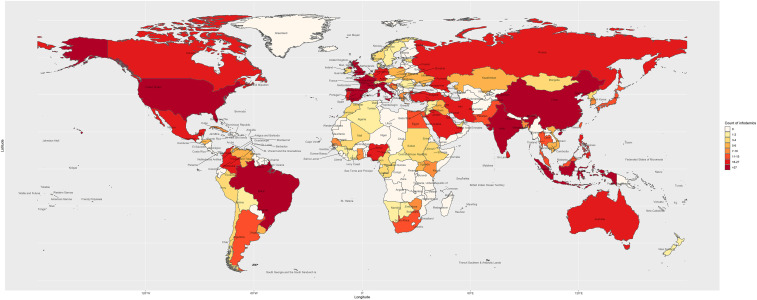
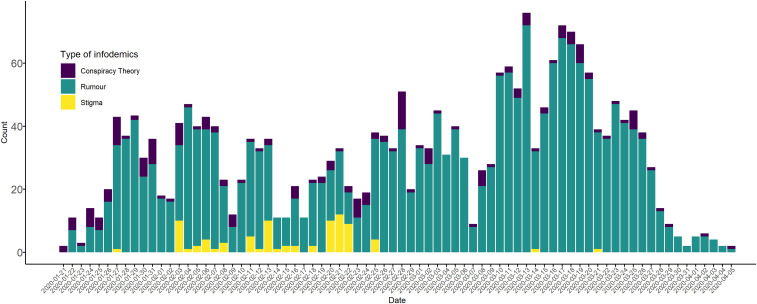
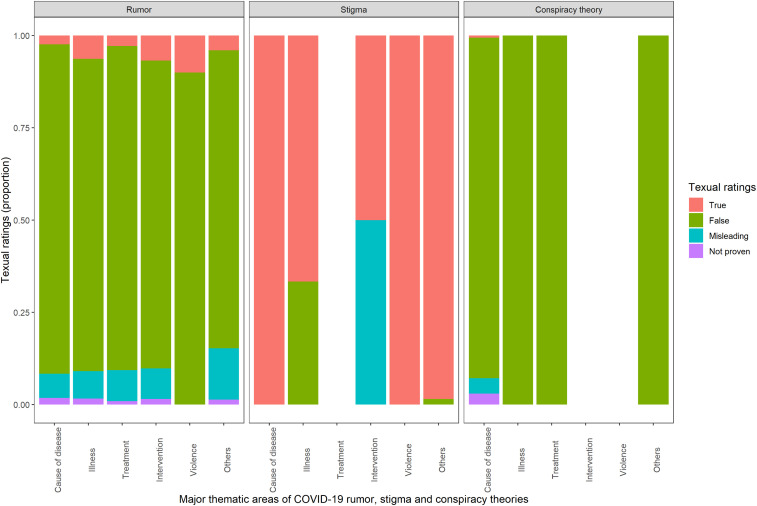
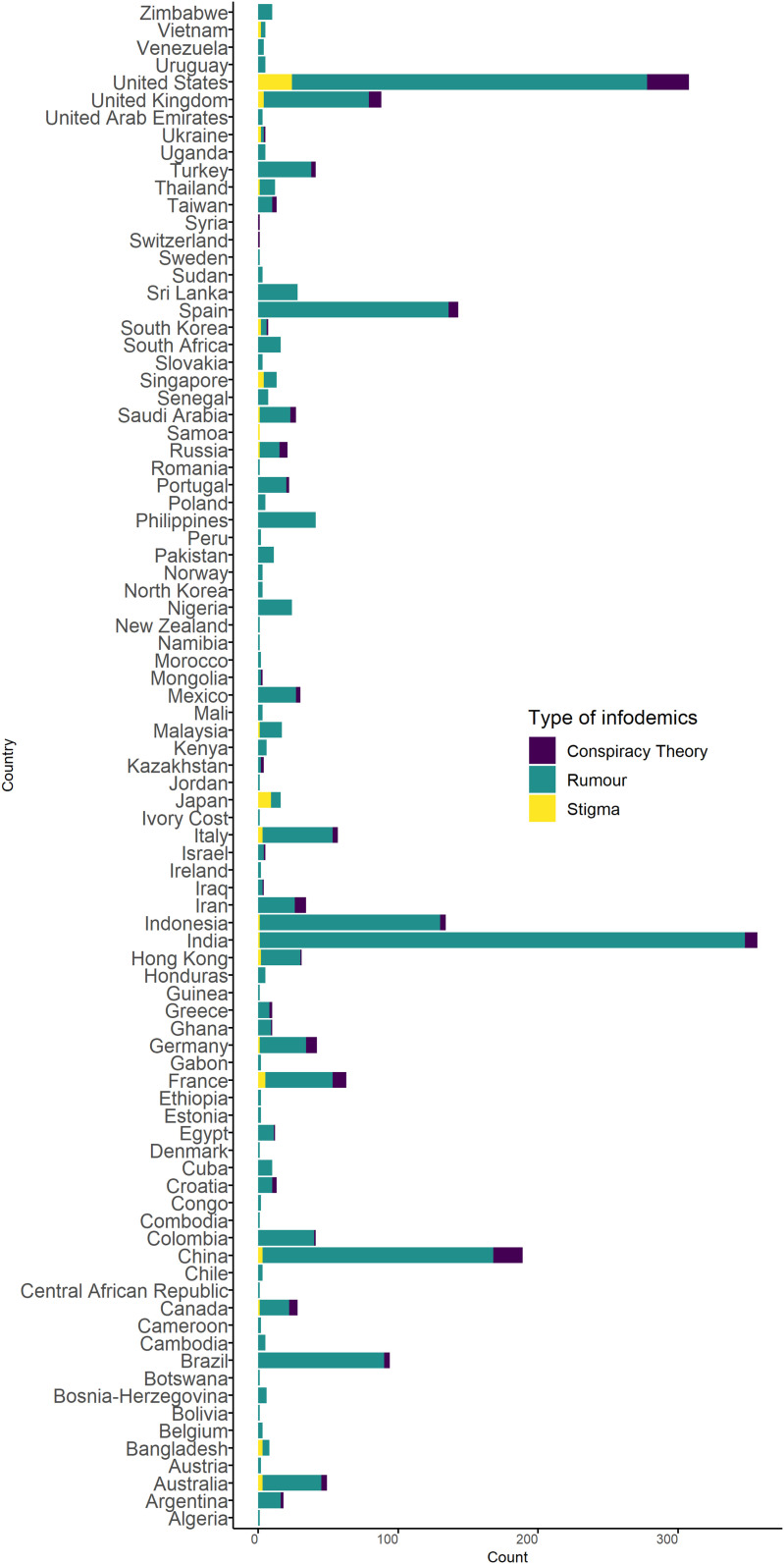
Infodemics, often including rumors, stigma, and conspiracy theories, have been common during the COVID-19 pandemic. Monitoring social media data has been identified as the best method for tracking rumors in real time and as a possible way to dispel misinformation and reduce stigma. However, the detection, assessment, and response to rumors, stigma, and conspiracy theories in real time are a challenge. Therefore, we followed and examined COVID-19-related rumors, stigma, and conspiracy theories circulating on online platforms, including fact-checking agency websites, Facebook, Twitter, and online newspapers, and their impacts on public health. Information was extracted between December 31, 2019 and April 5, 2020, and descriptively analyzed. We performed a content analysis of the news articles to compare and contrast data collected from other sources. We identified 2,311 reports of rumors, stigma, and conspiracy theories in 25 languages from 87 countries. Claims were related to illness, transmission and mortality (24%), control measures (21%), treatment and cure (19%), cause of disease including the origin (15%), violence (1%), and miscellaneous (20%). Of the 2,276 reports for which text ratings were available, 1,856 claims were false (82%). Misinformation fueled by rumors, stigma, and conspiracy theories can have potentially serious implications on the individual and community if prioritized over evidence-based guidelines. Health agencies must track misinformation associated with the COVID-19 in real time, and engage local communities and government stakeholders to debunk misinformation.
Overview
The claims and statistics of this paper haven’t been checked yet.
Free: it reads the open-access text and checks the first 5 claims that cite a source we can check. Create a free account to check every claim.
Integrity signals
Registry
Cites
Statistics
Figures
Verification
Claims the paper makes
The claims and statistics of this paper haven’t been checked yet.
Free: it reads the open-access text and checks the first 5 claims that cite a source we can check. Create a free account to check every claim.
Claims other papers make about this one
Each is checked against this paper’s own text: does it say what the citing paper says it does?
The cited source says what the claim attributes to it.
In the citing paper
“Misinformation during the Ebola outbreak in the Democratic Republic of the Congo in 2019 was associated with aggression, mistrust, social unrest, and targeted assaults on healthcare workers [45].”
From Social Media Role and Its Impact on Public Health: A Narrative Review (2023) · cites this paper as [45]
The cited source says what the claim attributes to it.
In the citing paper
“Rumors about COVID-19 have been labeled a global enemy by the UN secretary-general [45].”
From Social Media Role and Its Impact on Public Health: A Narrative Review (2023) · cites this paper as [45]
The cited source says what the claim attributes to it.
In the citing paper
“During the SARS outbreak in China in 2002-2003, Asian people faced social stigma as a result of their fear of contracting the disease [45].”
From Social Media Role and Its Impact on Public Health: A Narrative Review (2023) · cites this paper as [45]
Self-check
Percentages, sums and reported differences re-computed from the paper’s own numbers.
The self-check needs the paper’s full text.
Citations
Cites
Understanding Conspiracy Theories
Douglas, K. M., Uscinski, J. E., Sutton, R. M., Cichocka, A., Nefes, T., Ang, C. S., & Deravi, F. (2019) · Political Psychology · doi:10.1111/pops.12568 · Cited by 1,511 · cited 1×
“defined as explanatory beliefs about an individual or group of people working in secret to reaching malicious goals.(16) Data extraction and consistency.”
BackgroundFear and Stigma: The Epidemic within the SARS Outbreak
Person, B., Sy, F., Holton, K., Govert, B., Liang, A., the, N. C. I. D., SARS Community Outreach Team (listed in alphabetical order), Garza, B., Gould, D., Hickson, M., et al. (2004) · Emerging Infectious Diseases · doi:10.3201/eid1002.030750 · Cited by 790
YouTube as a source of information on COVID-19: a pandemic of misinformation?
Li, H. O.-Y., Bailey, A., Huynh, D., & Chan, J. (2020) · BMJ Global Health · doi:10.1136/bmjgh-2020-002604 · Cited by 781
See Something, Say Something: Correction of Global Health Misinformation on Social Media
Bode, L., & Vraga, E. K. (2018) · Health Communication · doi:10.1080/10410236.2017.1331312 · Cited by 745 · cited 1×
“aimed at promoting evidence against misinformation quickly and clearly might change people’s perception and healthseeking behaviors.(52,53) Currently, the WHO and other health”
BackgroundZubiaga, A., Liakata, M., Procter, R., Wong Sak Hoi, G., & Tolmie, P. (2016) · PLOS ONE · doi:10.1371/journal.pone.0150989 · Cited by 722 · cited 1×
“Rumor is defined as unverified information that canbe foundas true, fabricated, or entirely false after verification.(14) Stigma is a socially constructed process through which a person with stigma can experience discrimination and devaluation in society.”
BackgroundTuran, B., Budhwani, H., Fazeli, P. L., Browning, W. R., Raper, J. L., Mugavero, M. J., & Turan, J. M. (2017) · AIDS and Behavior · doi:10.1007/s10461-016-1451-5 · Cited by 480
Prevention is better than cure: addressing anti-vaccine conspiracy theories
Jolley, D., & Douglas, K. M. (2017) · Journal of Applied Social Psychology · doi:10.1111/jasp.12453 · Cited by 446 · cited 1×
“aimed at promoting evidence against misinformation quickly and clearly might change people’s perception and healthseeking behaviors.(52,53) Currently, the WHO and other health”
BackgroundEbola, Twitter, and misinformation: a dangerous combination?
Oyeyemi, S. O., Gabarron, E., & Wynn, R. (2014) · BMJ · doi:10.1136/bmj.g6178 · Cited by 348 · cited 1×
“Last, there are the well-documented issues with misinformation with Ebola, including false treatments, health workers were deliberately spreading the Ebola virus, and Ebola epidemic was a hoax.(49,50) Such conspiracy theories and misinformation may have impeded the ability of healthcare workers and emergency responder…”
BackgroundAttacks against health-care personnel must stop, especially as the world fights COVID-19
McKay, D., Heisler, M., Mishori, R., Catton, H., & Kloiber, O. (2020) · The Lancet · doi:10.1016/s0140-6736(20)31191-0 · Cited by 186
Young, W. B., Park, J. E., Tian, I. X., & Kempner, J. (2013) · PLoS ONE · doi:10.1371/journal.pone.0054074 · Cited by 138 · cited 1×
“Stigma is a socially constructed process through which a person with stigma can experience discrimination and devaluation in society.(15) A conspiracy theory is”
Background
Research works printed but not linked: 29
- World Health Organization, 2020 Coronavirus Disease 2019 (COVID-19) Situation Report – 13. Geneva, Switzerland: WHO.
- Lederer EM, 2020 U.N. Chief Antonio Guterres: Misinformation about COVID-19 Is the New Enemy. TIME. New York, NY: TIME.
- World Health Organization, 2018 Managing Epidemics: Key Facts about Major Deadly Diseases. Luxembourg: WHO.
- Center for Preparedness and Response, 2020 Responding to Rumors and Misinformation. Emergency Preparedness and Response. Atlanta, GA: Centre for Disease Control and Prevention.
- Eckert KS 2016 Evidence Syntheses to Support the Guideline on Emergency Risk Communication. Geneva, Switzerland: World Health Organization.
- Victoria Knight of Kaiser Health News, 2020 COVID-19: Beware Online Tests and Cures, Experts Say. The Guardian. Surry Hills, NSW, Australia: The Guardian.
- Spencer SH, 2020 Fake Coronavirus Cures, Part 1: MMS Is Industrial Bleach. Available at: https://www.factcheck.org/2020/02/fake-coronavirus-cures-part-1-mms-is-industrial-bleach/. Accessed April 4, 2020.
- Vrajlal A, 2020 Chinese-Australians Facing Racism after Coronavirus Outbreak. Available at: https://www.huffingtonpost.com.au/entry/coronavirus-australia-racism_au_5e33a522c5b6f2623326d72b. Accessed April 4, 2020.
- BBC Reality Check Team, 2020 Coronavirus: Does Drinking Tea Help? BBC News. Delhi, India: BBC News.
- Cable T, 2020 CDD FACT CHECK: Can Camel Urine, Lime Cure Coronavirus? The Cable. Abuja, Nigeria: The Cable Newspaper.
- Landsverk G, 2020 Holding Your Breath Can’t Help You Self-Diagnose the Coronavirus. Here’s What You Should Do Instead. Business Insider Australia. Surry Hills, NSW, Australia: Business Insider Australia.
- Ellis-Petersen H Rahman SA, 2020 Indian Doctors Being Evicted from Homes over Coronavirus Fears. The Guardian. Surry Hills, NSW, Australia: The Guardian.
- Mead WR, 2020 China Is the Real Sick Man of Asia. The Wall Street Journal. New York, NY: The Wall Street Journal.
- Breland A, 2020 Russian Media Outlets Are Blaming the Coronavirus on the United States. Mother Jones. San Francisco, CA: Mother Jones.
- Gertz B, 2020 Coronavirus May Have Originated in Lab Linked to China’s Biowarfare Program. The Washington Post. Washington, DC: The Washington Post.
- Gregory J, 2020 The Coronavirus ‘Infodemic’ Is Real. We Rated the Websites Responsible for It. Statnews. Boston, MA: Statnews.
- Richtel M, 2020 WHO Fights a Pandemic besides Coronavirus: An ‘Infodemic’. The New York Times. New York, NY: The New York Times.
- Meddle East Media Research Institute, 2020 Arab Writers: The Coronavirus Is Part of Biological Warfare Waged by the U.S. against China. Egypt, Saudi Arabia, and Syria: Meddle East Media Research Institute TV.
- Farda R, 2020 Iran Cleric Blames Trump for Coronavirus Outbreak in Religious City. Radio Farda. Prague, Czech Republic: Radio Farda.
- Colson T, 2020 A Fake Claim That Cocaine Cures the Coronavirus Is Spreading Online, and the French Government Was Forced to Tell People That It Won’t. Business Insider Australia. Surry Hills, NSW, Australia: Business Insider Australia.
- Frenkel S Alba D Zhong R, 2020 Surge of Virus Misinformation Stumps Facebook and Twitter. The New York Times. New York, NY: The New York Times.
- World Health Organization, 2020 Alcohol Does Not Protect against COVID-19; Access Should Be Restricted during Lockdown. Alcohol Use. Geneva, Switzerland: WHO, Regional Office for Europe.
- CNN Türk, 2020 9 Kişi Daha Saf Alkolden Öldü [9 More Poeple Died from Pre Alcohol]. Available at: https://www.cnnturk.com/video/turkiye/9-kisi-daha-saf-alkolden-oldu. Accessed June 4, 2020.
- Staff Reporter, 2020 Twelve Taken Ill after Consuming ‘Coronavirus Shaped’ Datura Seeds. The Hindu. Andhra Pradesh, India: The Hindu.
- Chan-Kyong P, 2020 Coronavirus: Saltwater Spray Infects 46 Church-Goers in South Korea. South China Morning Post. Causeway Bay, Hong Kong: South China Morning Post.
- Eckel M, 2020 Tractors, Herbs, Vodka, Saunas? Some Leaders Offer Strange, Unhelpful Advice On Warding Off COVID-19. Available at: https://www.rferl.org/a/coronavirus-unhelpful-advice-tractors-herbs-vodka-saunas-gurbanguly-lukashenka-vucic/30495810.html. Accessed June 4, 2020.
- Tajmim T, 2020 Coronavirus: 41 Doctors, 10 Nurses Infected. The Business Standard. Dhaka, Bangladesh: The Business Standard.
- National Herald, 2020 Social Stigma Forcing Corona Patients to Avoid Screening in India. National Herald. New Delhi, India: National Herald.
- Kabananukye K, 2001 Denial, Discrimination and Stigmatisation: The Case of Ebola Epidemic in Some Districts. Kampala, Uganda: Ugandan Ministry of Health, National Ebola Task Force.
Cited by
Measuring the impact of COVID-19 vaccine misinformation on vaccination intent in the UK and USA
Loomba, S., de Figueiredo, A., Piatek, S. J., de Graaf, K., & Larson, H. J. (2021) · Nature Human Behaviour · doi:10.1038/s41562-021-01056-1 · Cited by 1,800
Wouters, O. J., Shadlen, K. C., Salcher-Konrad, M., Pollard, A. J., Larson, H. J., Teerawattananon, Y., & Jit, M. (2021) · The Lancet · doi:10.1016/s0140-6736(21)00306-8 · Cited by 1,288
What social media told us in the time of COVID-19: A scoping review
Tsao, S.-F., Chen, H., Tisseverasinghe, T., Yang, Y., Li, L., & Butt, Z. A. (2021) · The Lancet Digital Health · doi:10.1016/s2589-7500(20)30315-0 · Cited by 816
Infodemics and health misinformation: a systematic review of reviews
Borges do Nascimento, I. J., Beatriz Pizarro, A., Almeida, J., Azzopardi-Muscat, N., André Gonçalves, M., Björklund, M., & Novillo-Ortiz, D. (2022) · Bulletin of the World Health Organization · doi:10.2471/blt.21.287654 · Cited by 605
Islam, M. S., Kamal, A.-H. M., Kabir, A., Southern, D. L., Khan, S. H., Hasan, S. M. M., Sarkar, T., Sharmin, S., Das, S., Roy, T., et al. (2021) · PLOS ONE · doi:10.1371/journal.pone.0251605 · Cited by 530
“During a pandemic, people may use social media to improve their knowledge about the disease, transmission, and prevention mechanisms [9, 10].”
BackgroundSelf-citationVuong, Q.-H., Le, T.-T., La, V.-P., Nguyen, H. T. T., Ho, M.-T., Van Khuc, Q., & Nguyen, M.-H. (2022) · Humanities and Social Sciences Communications · doi:10.1057/s41599-022-01034-6 · Cited by 344
Antecedents and consequences of COVID-19 conspiracy beliefs: A systematic review
van Mulukom, V., Pummerer, L. J., Alper, S., Bai, H., Čavojová, V., Farias, J., Kay, C. S., Lazarevic, L. B., Lobato, E. J. C., Marinthe, G., et al. (2022) · Social Science & Medicine · doi:10.1016/j.socscimed.2022.114912 · Cited by 337
De Coninck, D., Frissen, T., Matthijs, K., d’Haenens, L., Lits, G., Champagne-Poirier, O., Carignan, M.-E., David, M. D., Pignard-Cheynel, N., Salerno, S., et al. (2021) · Frontiers in Psychology · doi:10.3389/fpsyg.2021.646394 · Cited by 308
Misinformation on Misinformation: Conceptual and Methodological Challenges
Altay, S., Berriche, M., & Acerbi, A. (2023) · Social Media + Society · doi:10.1177/20563051221150412 · Cited by 299
“During the pandemic, many people supposedly engaged in extremely dangerous hygiene practices to fight COVID-19 because of misinformation encountered on social media, such as drinking diluted bleach (Islam et al., 2020).”
Neely, S., Eldredge, C., & Sanders, R. (2021) · Journal of Medical Internet Research · doi:10.2196/29802 · Cited by 287
“…skills to include data mining and natural language processing skills as well as skills that can only be called “active measures” (ie, those for monitoring, anticipating, and responding to misinformation and disinformation on social media platforms), especially during a public health crisis [29].”
The COVID-19 pandemic and global environmental change: Emerging research needs
Barouki, R., Kogevinas, M., Audouze, K., Belesova, K., Bergman, A., Birnbaum, L., Boekhold, S., Denys, S., Desseille, C., Drakvik, E., et al. (2021) · Environment International · doi:10.1016/j.envint.2020.106272 · Cited by 284
Zhou, J., Zhang, Y., Luo, Q., Parker, A. G., & De Choudhury, M. (2023) · Proceedings of the 2023 CHI Conference on Human Factors in Computing Systems · doi:10.1145/3544548.3581318 · Cited by 288
“Examples of such efects include mortality and hospital admissions [20, 48], public fear and anxiety [79, 107], eroded trust in health institutions [87], and exacerbated racial discrimination and stigma [41, 48].”
BackgroundThe impact of misinformation on the COVID-19 pandemic
Ferreira Caceres, M. M., Division of Research & Academic Affairs, L. C. H., Sosa, J. P., Lawrence, J. A., Sestacovschi, C., Tidd-Johnson, A., Rasool, M. H. U., Gadamidi, V. K., Ozair, S., Pandav, K., et al. (2022) · AIMS Public Health · doi:10.3934/publichealth.2022018 · Cited by 249
“In addition, information supported by scientific evidence should continue to be continuously shared on the governmental and health organizations’ websites [9].”
BackgroundInfluentialGoverning the Pandemic: The Politics of Navigating a Mega-Crisis
Boin, A., McConnell, A., & 't Hart, P. (2021) · Springer eBooks · doi:10.1007/978-3-030-72680-5 · Cited by 234
A Global Map of COVID-19 Vaccine Acceptance Rates per Country: An Updated Concise Narrative Review
Sallam, M., Al-Sanafi, M., & Sallam, M. (2022) · Journal of Multidisciplinary Healthcare · doi:10.2147/jmdh.s347669 · Cited by 232
A multinational Delphi consensus to end the COVID-19 public health threat
Lazarus, J. V., Romero, D., Kopka, C. J., Karim, S. A., Abu-Raddad, L. J., Almeida, G., Baptista-Leite, R., Barocas, J. A., Barreto, M. L., Bar-Yam, Y., et al. (2022) · Nature · doi:10.1038/s41586-022-05398-2 · Cited by 226
Social Media Role and Its Impact on Public Health: A Narrative Review
Kanchan, S., & Gaidhane, A. (2023) · Cureus · doi:10.7759/cureus.33737 · Cited by 221
“Rumors about COVID-19 have been labeled a global enemy by the UN secretary-general [45].”
BackgroundInfluentialA review and agenda for integrated disease models including social and behavioural factors
Bedson, J., Skrip, L. A., Pedi, D., Abramowitz, S., Carter, S., Jalloh, M. F., Funk, S., Gobat, N., Giles-Vernick, T., Chowell, G., et al. (2021) · Nature Human Behaviour · doi:10.1038/s41562-021-01136-2 · Cited by 215
Escandón, K., Rasmussen, A. L., Bogoch, I. I., Murray, E. J., Escandón, K., Popescu, S. V., & Kindrachuk, J. (2021) · BMC Infectious Diseases · doi:10.1186/s12879-021-06357-4 · Cited by 187
COVID-19 infodemic and digital health literacy in vulnerable populations: A scoping review
Choukou, M.-A., Sanchez-Ramirez, D. C., Pol, M., Uddin, M., Monnin, C., & Syed-Abdul, S. (2022) · DIGITAL HEALTH · doi:10.1177/20552076221076927 · Cited by 180
“Misinformation can negatively affect and endanger human health and lives.(7,8) To deal with complex health information, one needs health literacy to understand, assimilate and use health information and be able to communicate effectively with their care provider.”
BackgroundPian, W., Chi, J., & Ma, F. (2021) · Information Processing & Management · doi:10.1016/j.ipm.2021.102713 · Cited by 179
Rattay, P., Michalski, N., Domanska, O. M., Kaltwasser, A., De Bock, F., Wieler, L. H., & Jordan, S. (2021) · PLOS ONE · doi:10.1371/journal.pone.0251694 · Cited by 166
“The fact that misinformation about COVID-19 is widespread in social media [67, 68] could be relevant to this finding.”
BackgroundKabir, S., Udo-Imeh, D. N., Kou, B., & Zhang, T. (2024) · Proceedings of the CHI Conference on Human Factors in Computing Systems · doi:10.1145/3613904.3642596 · Cited by 160
“These types of misinformation have the power to mislead and mis-guide people and can potentially impair the normal functionalities of society and cause chaos [33, 45, 49, 79].”
BackgroundRzymski, P., Borkowski, L., Drąg, M., Flisiak, R., Jemielity, J., Krajewski, J., Mastalerz–Migas, A., Matyja, A., Pyrć, K., Simon, K. A., et al. (2021) · Vaccines · doi:10.3390/vaccines9020109 · Cited by 172
“It has been undermining trust in health institutions, programs, and expert opinions, resulting in lower adherence to pivotal sanitary recommendations and contributing to the SARS-CoV-2 transmission and deaths [48].”
BackgroundCOVID-19 and household energy implications: what are the main impacts on energy use?
Cheshmehzangi, A. (2020) · Heliyon · doi:10.1016/j.heliyon.2020.e05202 · Cited by 149
The implications of the Covid-19 pandemic for delivering the Sustainable Development Goals
Fenner, R. A., & Cernev, T. (2021) · Futures · doi:10.1016/j.futures.2021.102726 · Cited by 164
DDGCN: Dual Dynamic Graph Convolutional Networks for Rumor Detection on Social Media
Sun, M., Zhang, X., Zheng, J., & Ma, G. (2022) · Proceedings of the AAAI Conference on Artificial Intelligence · doi:10.1609/aaai.v36i4.20385 · Cited by 175
“The parameters are optimized using Adam algorithm (Kingma and Ba 2014).”
MethodRomer, D., & Jamieson, K. H. (2021) · Journal of Medical Internet Research · doi:10.2196/25215 · Cited by 165
“Misleading information percolated through social media as the pandemic unfolded [14,23].”
Infodemics and infodemiology: a short history, a long future
Zielinski, C. (2021) · Revista Panamericana de Salud Pública · doi:10.26633/rpsp.2021.40 · Cited by 131
“can Journal of Tropical Medicine and Hygiene (16) estimated that about 5 800 people were admitted to hospital as a result of false information on social media.”
BackgroundThe Role of the Crowd in Countering Misinformation: A Case Study of the COVID-19 Infodemic
Micallef, N., He, B., Kumar, S., Ahamad, M., & Memon, N. (2020) · 2020 IEEE International Conference on Big Data (Big Data) · doi:10.1109/bigdata50022.2020.9377956 · Cited by 116
“Some of the false claims related to COVID-19 have already had severe harmful consequences, including violence [9] and over 800 deaths [10].”
BackgroundData Paradoxes: The Politics of Intensified Data Sourcing in Contemporary Healthcare
Hoeyer, K. (2023) · The MIT Press eBooks · doi:10.7551/mitpress/14926.001.0001 · Cited by 196
Domain Adaptive Fake News Detection via Reinforcement Learning
Mosallanezhad, A., Karami, M., Shu, K., Mancenido, M. V., & Liu, H. (2022) · International World Wide Web Conference (WWW) · doi:10.1145/3485447.3512258 · Cited by 140
From crisis to reform? Exploring three post-COVID pathways
Boin, A., & Hart, P. ‘. (2022) · Policy and Society · doi:10.1093/polsoc/puab007 · Cited by 130
“Conspir-acy theories emerged with regard to the origins of the virus and the “agendas” that were purportedly facilitated and spurred by the pandemic (Centers for Disease Control and Prevention, 2020; Islam et al., 2020; Mian & Khan, 2020).”
BackgroundSingh, K., Lima, G., Cha, M., Cha, C., Kulshrestha, J., Ahn, Y., & Varol, O. (2022) · PLoS ONE · doi:10.1371/journal.pone.0263381 · Cited by 126
Paradoxes of Media and Information Literacy: The Crisis of Information
Haider, J., & Sundin, O. (2022) · Routledge eBooks · doi:10.4324/9781003163237 · Cited by 189
Will Africans take COVID-19 vaccination?
Anjorin, A. A., Odetokun, I. A., Abioye, A. I., Elnadi, H., Umoren, M. V., Damaris, B. F., Eyedo, J., Umar, H. I., Nyandwi, J. B., Abdalla, M. M., et al. (2021) · PLOS ONE · doi:10.1371/journal.pone.0260575 · Cited by 94
The impact of the COVID-19 on households’ hourly electricity consumption in Canada
Abdeen, A., Kharvari, F., O’Brien, W., & Gunay, B. (2021) · Energy and Buildings · doi:10.1016/j.enbuild.2021.111280 · Cited by 95
Infodemic, Institutional Trust, and COVID-19 Vaccine Hesitancy: A Cross-National Survey
Chen, X., Lee, W., & Lin, F. (2022) · International Journal of Environmental Research and Public Health · doi:10.3390/ijerph19138033 · Cited by 95
“Despite emerging studies addressing the pressing issue of the COVID-19 infodemic, most of these studies were from a computational or exploratory perspective [18,19].”
BackgroundCapacity Building for Vaccine Manufacturing Across Developing Countries: The Way Forward
Kumraj, G., Pathak, S., Shah, S. M., Majumder, P., Jain, J., Bhati, D., Hanif, S., Mukherjee, S., & Ahmed, S. M. (2022) · Human Vaccines & Immunotherapeutics · doi:10.1080/21645515.2021.2020529 · Cited by 99
Desai, A. N., Ruidera, D., Steinbrink, J. M., Granwehr, B., & Lee, D. H. (2022) · Clinical Infectious Diseases · doi:10.1093/cid/ciac109 · Cited by 82
“As the coronavirus disease 2019 (COVID-19) pandemic has illustrated, misinformation and in some instances, disinformation, surrounding public health and communicable diseases have disseminated over social media channels to reach a large and diverse audience [3, 4].”
InfluentialKong, J. D., Tekwa, E. W., & Gignoux‐Wolfsohn, S. (2021) · PLoS ONE · doi:10.1371/journal.pone.0252373 · Cited by 84
“One study showed that more than 80% of online claims about COVID-19 were false at the beginning of the pandemic [67].”
COVID-19 Misinformation on Social Media: A Scoping Review
Joseph, A. M., Fernandez, V., Kritzman, S., Eaddy, I., Cook, O. M., Lambros, S., Jara Silva, C. E., Arguelles, D., Abraham, C., Dorgham, N., et al. (2022) · Cureus · doi:10.7759/cureus.24601 · Cited by 80
“Other studies concluded those who had a professional responsibility to combat misinformation should take ownership, namely, internal health agencies, scientists, health information professionals, and journalists [4,8,13].”
BackgroundInfluentialAdvancing One Health: Updated core competencies
Laing, G., Duffy, E., Anderson, N. E., Antoine‐Moussiaux, N., Aragrande, M., Beber, C. L., Berezowski, J. A., Boriani, E., Canali, M., Carmo, L. P., et al. (2023) · CABI One Health · doi:10.1079/cabionehealth.2023.0002 · Cited by 99
“While previous domains and competencies mention communication as an important skill, the application of communication appears to be lacking as could be seen with the degree of misinformation (Islam et al., 2020) during the COVID-19 pandemic.”
BackgroundVijaykumar, S., Jin, Y., Rogerson, D., Lu, X., Sharma, S., Maughan, A. D., Fadel, B., de Oliveira-Costa, M. S., Pagliari, C., & Morris, D. (2021) · Humanities and Social Sciences Communications · doi:10.1057/s41599-021-00752-7 · Cited by 114
AraCOVID19-MFH: Arabic COVID-19 Multi-label Fake News & Hate Speech Detection Dataset
Ameur, M. S. H., & Aliane, H. (2021) · Procedia Computer Science · doi:10.1016/j.procs.2021.05.086 · Cited by 119
Loomba, S., de Figueiredo, A., Piatek, S. J., de Graaf, K., & Larson, H. J. (2020) · medRxiv · doi:10.1101/2020.10.22.20217513 · Cited by 75
Majeed, M., Irshad, M., Fatima, T., Khan, J., & Hassan, M. M. (2020) · Frontiers in Psychology · doi:10.3389/fpsyg.2020.557987 · Cited by 73
“Prior studies have also found an association between social media use and mental health issues, such as anxiety and depression (Primack et al., 2017; Jasso-Medrano and Lopez-Rosales, 2018; Van der Velden et al., 2019).”
BackgroundCOVID-19 Vaccine Hesitancy and Acceptance in a Cohort of Diverse New Zealanders
Prickett, K. C., Habibi, H., & Carr, P. A. (2021) · The Lancet Regional Health - Western Pacific · doi:10.1016/j.lanwpc.2021.100241 · Cited by 84
“…get some information about COVID-19 vaccine from social media [18] —an environment particularly adept at spreading COVID-19 misinformation [ 28 , 29 ]—it is important to gauge how these hesitancy rates may have changed leading up to vaccine roll-out, and therefore, how the strategy must adapt…”
Antecedents and consequences of COVID-19 conspiracy beliefs: a systematic reviewPreprint
van Mulukom, V., Pummerer, L., Alper, S., Bai, H., Čavojová, V., Farias, J. E. M., Kay, C. S., Lazarević, L. B., Lobato, E. J. C., Marinthe, G., et al. (2020) · doi:10.31234/osf.io/u8yah · Cited by 71
Arshad, M. S., Hussain, I., Mahmood, T., Hayat, K., Majeed, A., Imran, I., Saeed, H., Iqbal, M. O., Uzair, M., Rehman, A. U., et al. (2021) · Vaccines · doi:10.3390/vaccines9070720 · Cited by 79
Self-citationCOVID-19 infodemic and adult and elderly mental health: a scoping review
Delgado, C. E., Silva, E. A., de Castro, E. A. B., Carbogim, F. D. C., Püschel, V. A. D. A., & Cavalcante, R. B. (2021) · Revista da Escola de Enfermagem da USP · doi:10.1590/1980-220x-reeusp-2021-0170 · Cited by 100
The social specificities of hostility toward vaccination against Covid-19 in France
Bajos, N., Spire, A., Silberzan, L., & for the EPICOV study group (2022) · PLoS ONE · doi:10.1371/journal.pone.0262192 · Cited by 82
“Misinformation campaigns in the media and on social networks could have influenced vaccination intentions [37, 38].”
BackgroundKumari, R., Kumar, N. A., Ghosal, T., & Ekbal, A. (2021) · Information Processing & Management · doi:10.1016/j.ipm.2021.102631 · Cited by 79
The sharing of disinformation in cross-national comparison: analyzing patterns of resilience
Humprecht, E., Esser, F., Aelst, P. V., Staender, A., & Morosoli, S. (2021) · Information Communication & Society · doi:10.1080/1369118x.2021.2006744 · Cited by 126
“Especially during the current ‘infodemic’, it seems important to equip these vulnerable citizens with weapons to combat attempts at deception and manipulation, which can have serious consequences (Islam et al., 2020).”
BackgroundKrishnan, N., Gu, J., Tromble, R., & Abroms, L. C. (2021) · Harvard Kennedy School Misinformation Review · doi:10.37016/mr-2020-85 · Cited by 95
Cato, S., Iida, T., Ishida, K., Ito, A., Katsumata, H., McElwain, K. M., & Shoji, M. (2021) · International Journal of Disaster Risk Reduction · doi:10.1016/j.ijdrr.2020.102034 · Cited by 74
“Furthermore, due to the misinformation that drinking highly concentrated alcohol could disinfect the body and kill the coronavirus, 800 people have died and 6000 have been hospitalized around the world [15].”
BackgroundMisinformation About COVID-19 in Sub-Saharan Africa: Evidence from a Cross-Sectional Survey
Osuagwu, U. L., Miner, C. A., Bhattarai, D., Mashige, K. P., Oloruntoba, R., Abu, E. K., Ekpenyong, B. N., Timothy, C. G., Goson, P. C., Ovenseri-Ogbomo, G. O., et al. (2021) · Health Security · doi:10.1089/hs.2020.0202 · Cited by 71
Misinformation on Misinformation: Conceptual and Methodological Challenges
Altay, S., Berriche, M., & Acerbi, A. (2021) · doi:10.31234/osf.io/edqc8 · Cited by 62
Tran, H., Nguyen, M. H., Pham, T. T. M., Giang, K. B., Nguyen, H. T., Nguyen, N., Dam, H. T. B., Duong, T. H., Nguyen, Y. H., Do, T. T., et al. (2022) · International Journal of Environmental Research and Public Health · doi:10.3390/ijerph19073766 · Cited by 81
“Notably, the flood of fake, inaccurate information related to the pandemic on social media and other platforms can cause uncertainty and fear [9], worsening the mental health of nursing students.”
BackgroundLabrague, L. J., De los Santos, J. A. A., & Fronda, D. C. (2021) · International Journal of Mental Health Nursing · doi:10.1111/inm.12920 · Cited by 60
Alakija, A. (2023) · The Lancet Infectious Diseases · doi:10.1016/s1473-3099(23)00279-7 · Cited by 65
ChatGPT: the new panacea of the academic world
Quintans-Júnior, L. J., Gurgel, R. Q., Araújo, A. A. D. S., Correia, D., & Martins-Filho, P. R. (2023) · Revista da Sociedade Brasileira de Medicina Tropical · doi:10.1590/0037-8682-0060-2023 · Cited by 60
Shirish, A., Srivastava, S. C., & Chandra, S. (2021) · European Journal of Information Systems · doi:10.1080/0960085x.2021.1886614 · Cited by 68
“For better pandemic preparedness and control, it is necessary to mitigate fear among people, manage rumours, and dispel misinformation (Sakurai and Chughtai 2020; Islam et al., 2020).”
BackgroundInfluentialConspiracy Beliefs and Acceptance of COVID-Vaccine: An Exploratory Study in Italy
Pivetti, M., Melotti, G., Bonomo, M., & Hakoköngäs, E. J. (2021) · Social Sciences · doi:10.3390/socsci10030108 · Cited by 72
“These items were created ad-hoc for this study, based on relevant literature (e.g., Allington et al. 2020; Islam et al. 2020; Jolley and Paterson 2020) and based on brainstorming among the researchers.”
MethodAdebesin, F., Smuts, H., Mawela, T., Maramba, G., & Hattingh, M. (2023) · JMIR Infodemiology · doi:10.2196/48620 · Cited by 57
“The paper with the highest number of citations (n=522) was written by Puri et al [37], followed by the paper by Romer and Jamieson [38] in the second position with 491 citations and the paper by Islam et al [39] with 461 citations in the third position.”
Engagement of Government Social Media on Facebook during the COVID-19 Pandemic in Macao
Pang, P. C., Cai, Q., Jiang, W., & Chan, K. S. (2021) · International Journal of Environmental Research and Public Health · doi:10.3390/ijerph18073508 · Cited by 66
“Plans and Measures Disposition of government [48] Government’s handling of crisis [9] Preventive measures [8] Government response [12,49] Policies, guidelines and official actions [17] Notifications and measures been taken [50] Control measures [51]”
BackgroundShim, J., Ryu, K., Lee, S. H., Cho, E.-A., Lee, Y. J., & Ahn, J. H. (2021) · International Journal of Environmental Research and Public Health · doi:10.3390/ijerph18126549 · Cited by 56
“However, anxiety and distrust about the vaccine’s effectiveness and safety have become major obstacles to rapid vaccination [5,6].”
BackgroundCOVID-19 vaccine acceptance, hesitancy, and associated factors among medical students in Sudan
Raja, S. M., Osman, M. E., Musa, A. O., Hussien, A. A., & Yusuf, K. (2022) · PLoS ONE · doi:10.1371/journal.pone.0266670 · Cited by 68
“The situation, known as "infodemic", has a strong impact on public health response to the COVID-19 pandemic [16].”
BackgroundMoral Emotions Shape the Virality of COVID-19 Misinformation on Social Media
Solovev, K., & Pröllochs, N. (2022) · Proceedings of the ACM Web Conference 2022 · doi:10.1145/3485447.3512266 · Cited by 56
“On the other hand, however, this crisis has bred a multitude of rumors [24, 26, 33, 36, 45], and verdicts of reputable fact-checking organizations (e.”
BackgroundCOVID-19 Vaccination and the Challenge of Infodemic and Disinformation
Farooq, F., & Rathore, F. A. (2021) · Journal of Korean Medical Science · doi:10.3346/jkms.2021.36.e78 · Cited by 56
Prevalence and source analysis of COVID-19 misinformation in 138 countries
Al-Zaman, M. S. (2021) · IFLA Journal · doi:10.1177/03400352211041135 · Cited by 59
“claimed many lives around the world (1,32).”
Galletta, M. A. K., Oliveira, A. M. D. S. S., Albertini, J. G. L., Benute, G. R. G., Peres, S. V., Brizot, M. D. L., & Francisco, R. P. V. (2021) · Journal of Affective Disorders · doi:10.1016/j.jad.2021.09.091 · Cited by 94
“An international study of the monitoring of accuracy in news about the COVID-19 pandemic (Islam et al., 2020) detected some type of fake news in 82% of the content of diverse online platforms worldwide, and the study put Brazil in sixth place in this type of false propagation.”
BackgroundStigmatisation associated with COVID-19 in the general Colombian population
Cassiani-Miranda, C. A., Campo‐Arias, A., Otálvaro, A. F. T., Botero-Tobón, L. A., Upegui-Arango, L. D., Rodríguez-Verdugo, M. S., Botero-Tobón, M. E., Arismendy-López, Y. A., Fonnegra, W. A. R., Niño, L., et al. (2020) · International Journal of Social Psychiatry · doi:10.1177/0020764020972445 · Cited by 62
Controlling of Fake Information Dissemination in Online Social Networks: An Epidemiological Approach
Ojha, R. P., Srivastava, P. K., Awasthi, S., Srivastava, V. K., Pandey, P. S., Dwivedi, R. S., Singh, R., & Galletta, A. (2023) · IEEE Access · doi:10.1109/access.2023.3262737 · Cited by 52
“Islam et al. [7] have presented an analysis of global media in which they analyzed the effect of misinformation on public health due to COVID-19 related rumours.”
BackgroundShehata, A. M. K. (2020) · Information Development · doi:10.1177/0266666920976181 · Cited by 54
“The term has been coined to describe the seriousness of misinformation phenomena that accompanied the COVID-19 outbreak (Cinelli et al., 2020) and outlines some false information features that appeared during the health crises (Islam et al., 2020).”
BackgroundMihelj, S., Kondor, K., & Štětka, V. (2021) · Journalism Studies · doi:10.1080/1461670x.2021.1931410 · Cited by 80
“…from digital platforms to investigated the prevalence and diffusion of misinformation on digital platforms (e.g., Ferrara 2020; Gruzd and Mai 2020; Islam et al. 2020) or used surveys to examine links between sources of information and susceptibility to misinformation (e.g., Allington et al. 2020;…”
BackgroundGhaziri, M. E., Johnson, S., Purpora, C., Simons, S., & Taylor, R. (2021) · Workplace Health & Safety · doi:10.1177/21650799211024867 · Cited by 57
“…from the qualitative data of on edge indicates, during the time this study was conducted, the United States was not only dealing with a pandemic but also with racial tensions, a contentious political climate, and a decline in civility in public discourse (Islam et al., 2020; Mello et al., 2020).”
Patelarou, A. E., Saliaj, A., Galanis, P., Pulomenaj, V., Prifti, V., Sopjani, I., Mechili, E. A., Laredo‐Aguilera, J. A., Kiçaj, E., Kalokairinou, A., et al. (2021) · Journal of Clinical Nursing · doi:10.1111/jocn.15980 · Cited by 62
“Additionally, an individual- based approach focusing on the personal reasons of hesitancy could be an effective intervention (Jarrett et al., 2015).”
BackgroundCombating the COVID-19 infodemic: a three-level approach for low and middle-income countries
Dash, S., Parray, A. A., Freitas, L. D., Mithu, M. I. H., Rahman, M. M., Aarthy, R., & Pandya, A. (2021) · BMJ Global Health · doi:10.1136/bmjgh-2020-004671 · Cited by 61
Sumner, R. C., & Kinsella, E. L. (2021) · Frontiers in Psychology · doi:10.3389/fpsyg.2021.645504 · Cited by 56
“Much Western news and social media has often focused on images and stories of non-compliance, panic buying, conspiracy rhetoric, and legislative hypocrisy, which have been shared across the globe (e.g., Arafat et al., 2020; Islam et al., 2020; Lunn et al., 2020; Mevorach et al., 2021).”
BackgroundBiancovilli, P., Makszin, L., & Jurberg, C. (2021) · BMC Public Health · doi:10.1186/s12889-021-11165-1 · Cited by 62
Combating the infodemic: COVID-19 induced fake news recognition in social media networks
Biradar, S., Saumya, S., & Chauhan, A. (2022) · Complex & Intelligent Systems · doi:10.1007/s40747-022-00672-2 · Cited by 63
The role of social media in public health crises caused by infectious disease: a scoping review
Terry, K., Yang, F. H., Yao, Q., & Liu, C. (2023) · BMJ Global Health · doi:10.1136/bmjgh-2023-013515 · Cited by 61
“35 64 70 71 42 Q2: What has been studied in terms of the potential roles played by social media in public health crises caused by infectious diseases?”
BackgroundBots Amplify and Redirect Hate Speech in Online Discourse About Racism During the COVID-19 Pandemic
Uyheng, J., Bellutta, D., & Carley, K. M. (2022) · Social Media + Society · doi:10.1177/20563051221104749 · Cited by 61
“These findings emphasize growing consensus around the assessment that social media constitutes a major domain in which public health crises play out, especially as regards their distinctly social dimensions (Islam et al., 2020; Tsao et al., 2021; Van Bavel et al., 2020).”
Backgroundde Figueiredo, A., Simas, C., & Larson, H. J. (2022) · Vaccine · doi:10.1016/j.vaccine.2022.10.051 · Cited by 48
Mackey, T. K., Purushothaman, V. L., Haupt, M. R., Nali, M. C., & Li, J. (2021) · The Lancet Digital Health · doi:10.1016/s2589-7500(20)30318-6 · Cited by 47
Fan, D., Fay Siu, A., Rao, H., Kim, G. S.-H., Vazquez, X., Greco, L., O'Modhrain, S., & Follmer, S. (2023) · ACM Transactions on Accessible Computing · doi:10.1145/3557899 · Cited by 46
“More generally, as social media and news sources struggle to contain widespread misinformation [47, 65, 131],”
BackgroundMarie, V., & Gordon, M. L. (2023) · Viruses · doi:10.3390/v15081638 · Cited by 61
Mugisha, M., Uwitonze, A. M., Chesire, F., Ssenyonga, R., Oxman, M., Nsangi, A., Semakula, D., Kaseje, M., Lewin, S. A., Sewankambo, N. K., et al. (2021) · PLoS ONE · doi:10.1371/journal.pone.0248773 · Cited by 50
Fittler, A., Adeniye, L., Katz, Z., & Bella, R. (2021) · International Journal of Environmental Research and Public Health · doi:10.3390/ijerph18147475 · Cited by 60
“This phenomenon has the potential to decrease the trust of community regarding health agencies and influence communication among health care professionals and emergency responders [20].”
BackgroundMahameed, H., Al-Mahzoum, K., AlRaie, L. A., Aburumman, R., Al-Naimat, H., Al-Hiary, S. S., Barakat, M. M., Al‐Tammemi, A. B., Salim, N. A., & Sallam, M. (2023) · Vaccines · doi:10.3390/vaccines11050897 · Cited by 46
Irrational Beliefs about COVID-19: A Scoping Review
Magarini, F. M., Pinelli, M., Sinisi, A., Ferrari, S., Fazio, G. L. D., & Galeazzi, G. M. (2021) · International Journal of Environmental Research and Public Health · doi:10.3390/ijerph18199839 · Cited by 52
Alimentos, Sars-CoV-2 e Covid-19: contato possível, transmissão improvável
Franco, B. D. G. D. M., Landgraf, M., & Pinto, U. M. (2020) · Estudos Avançados · doi:10.1590/s0103-4014.2020.34100.012 · Cited by 84
Cognitive cascades: How to model (and potentially counter) the spread of fake news
Rabb, N., Cowen, L., de Ruiter, J. P., & Scheutz, M. J. (2022) · PLoS ONE · doi:10.1371/journal.pone.0261811 · Cited by 57
“[71].”
Stewart, R. J., Madonsela, A., Tshabalala, N., Etale, L., & Theunissen, N. (2022) · Digital Health · doi:10.1177/20552076221085070 · Cited by 51
An Invertible Graph Diffusion Neural Network for Source Localization
Wang, J., Jiang, J., & Zhao, L. (2022) · International World Wide Web Conference (WWW) · doi:10.1145/3485447.3512155 · Cited by 42
Tsamakis, K., Tsiptsios, D., Stubbs, B., Ma, R., Romano, E., Mueller, C., Ahmad, A., Triantafyllis, A. S., Tsitsas, G. D., & Dragioti, E. (2022) · BMC Psychology · doi:10.1186/s40359-022-00959-6 · Cited by 56
Making Science Simple: Corpora for the Lay Summarisation of Scientific Literature
Goldsack, T., Zhang, Z., Lin, C., & Scarton, C. (2022) · Conference on Empirical Methods in Natural Language Processing (EMNLP) · doi:10.18653/v1/2022.emnlp-main.724 · Cited by 138
Herrera‐Peco, I., Jiménez-Gómez, B., Deudero, J. J. P., de Gracia, E. B., & Ruíz-Núñez, C. (2021) · Healthcare · doi:10.3390/healthcare9060662 · Cited by 46
“This situation, coupled with the increased stress and anxiety levels described during the pandemic [17,42] and the users’ lack of trust towards information coming up from official institutions in times of great social confusion [19] as occurs in the COVID-19 pandemic [7,8,43], raise the need for reference figures, not…”
BackgroundCurating Quality? How Twitter’s Timeline Algorithm Treats Different Types of News
Bandy, J., & Diakopoulos, N. (2021) · Social Media + Society · doi:10.1177/20563051211041648 · Cited by 40
“They have been shown to spread conspir-acy theories that spark violence (Amarasingam & Argentino, 2020), amplify misinformation that threatens public health (Islam et al., 2020), provide false information that under-mines voting rights (Scott & Overly, 2020), and more.”
Background
Metadata
- Authors
- Islam, M. S., Sarkar, T., Khan, S. H., Mostofa Kamal, A.-H., Hasan, S. M. M., Kabir, A., Yeasmin, D., Islam, M. A., Amin Chowdhury, K. I., Anwar, K. S., Chughtai, A. A., & Seale, H.
- Affiliations
- International Centre for Diarrhoeal Disease Research (BD)
- Khulna University of Engineering and Technology, Khulna, Bangladesh;
- Mahidol University (TH)
- UNSW Sydney (AU)
- Program for Emerging Infections, Infectious Diseases Division, icddr,b, Dhaka, Bangladesh;
- International University of Health and Welfare (JP)
- Corresponding author
- Islam, Md Saiful
- Islam, Mohammad Ariful
- ORCID
- Venue
- The American Journal of Tropical Medicine and Hygiene
- Published
- 2020-10-07
- Volume
- 103
- Issue
- 4
- Pages
- 1621-1629
- ISSN
- 0002-9637 (ISSN-L)
- 1476-1645
- PMC
- PMC7543839
- OpenAlex
- W3048848247
- Cited by
- 1,178
- References
- 21
- Citations by year
- 2026: 88 · 2025: 117 · 2024: 127 · 2023: 207 · 2022: 319 · 2021: 274 · 2020: 45
- FWCI
- 282.36
- Type
- journal article
- Language
- en
- Open access
- bronze
- doi.org
- Locations
- American Journal of Tropical Medicine and Hygiene (publishedVersion)
- PubMed Central (publishedVersion, cc-by)
- PubMed (publishedVersion)
- Funders
- International Centre for Diarrhoeal Disease Research, Bangladesh
- Topics
- Social Sciences › Sociology and Political Science › Misinformation and Its Impacts
- Social Sciences › Communication › Communication and COVID-19 Impact
- Social Sciences › Library and Information Sciences › Academic Publishing and Open Access
- Keywords
- COVID-19 pandemic, infodemic, misinformation, rumors, stigma, conspiracy theories, social media, public health impact, fact-checking, misinformation debunking, COVID-19 containment measures
- MeSH terms
- Betacoronavirus, Data Analysis, COVID-19, SARS-CoV-2, Data Collection, Humans, Pneumonia, Viral, Public Health, Retrospective Studies, Global Health, Coronavirus Infections, Social Stigma, Pandemics, Social Media, Social Discrimination
About these checks
Registry, retraction, Cites and statistics results are computed, not judged, with one exception: a printed reference that no index lists is read once by a model before it counts as a citation error. Claims are extracted by a model and kept only when their quote appears verbatim in the text; each cited source is then checked, with a model’s help, for whether it says what the claim relies on. Those verdicts can be wrong — read the claim’s quote and the cited source before relying on one.
Statistics and arithmetic are recomputed, not judged.
Confidence bands are shown only for fields calibrated on our annotated test set. None is calibrated yet, so no band is shown.
What counts as a claim ›How we measure confidence ›How we check this ›
Are you an author, or do you see a problem with this page? Request a review
Data sources
Bibliographic data: Semantic Scholar, OpenAlex, Crossref.
Contains information from the Semantic Scholar Academic Graph Datasets, made available under the ODC Attribution License (ODC-BY 1.0).
Semantic Scholar’s data is described in: Kinney, R., et al. (2023). The Semantic Scholar Open Data Platform. arXiv:2301.10140.
