

COVID-19–Related Infodemic and Its Impact on Public Health: A Global Social Media Analysis
Open accessThe DOI matches its Crossref record; 21 of the 21 references it cites were found in a registry or an index.
Abstract
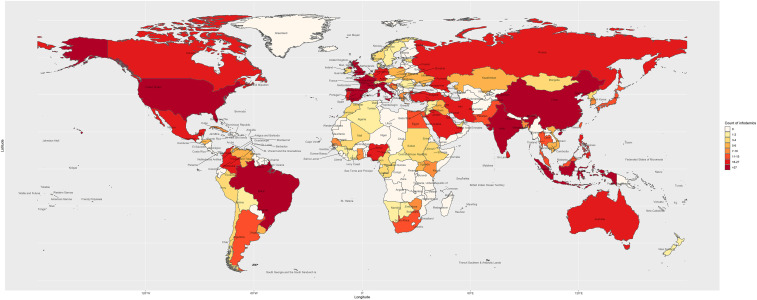
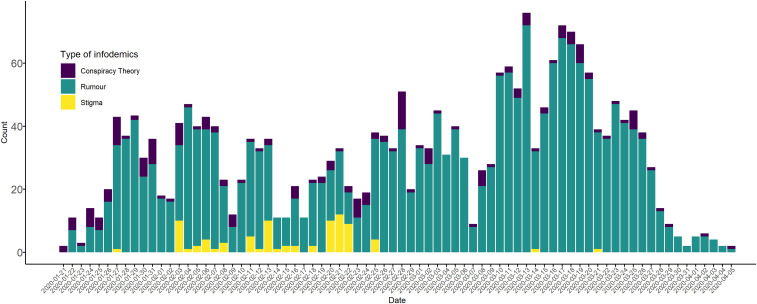
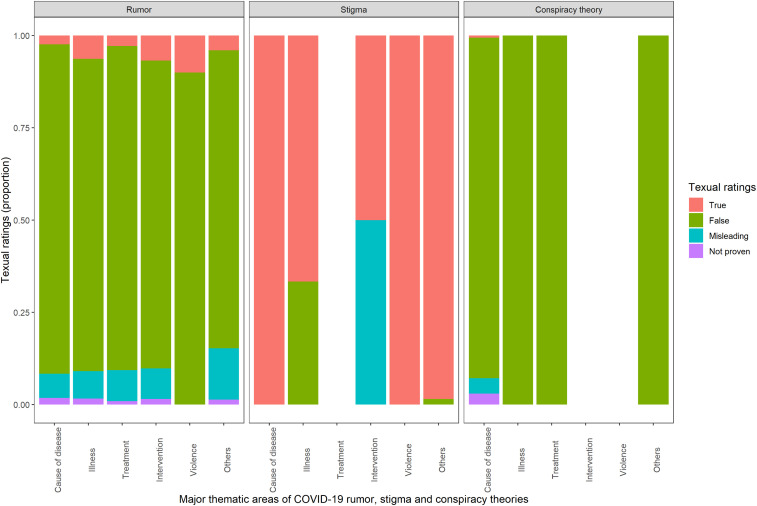
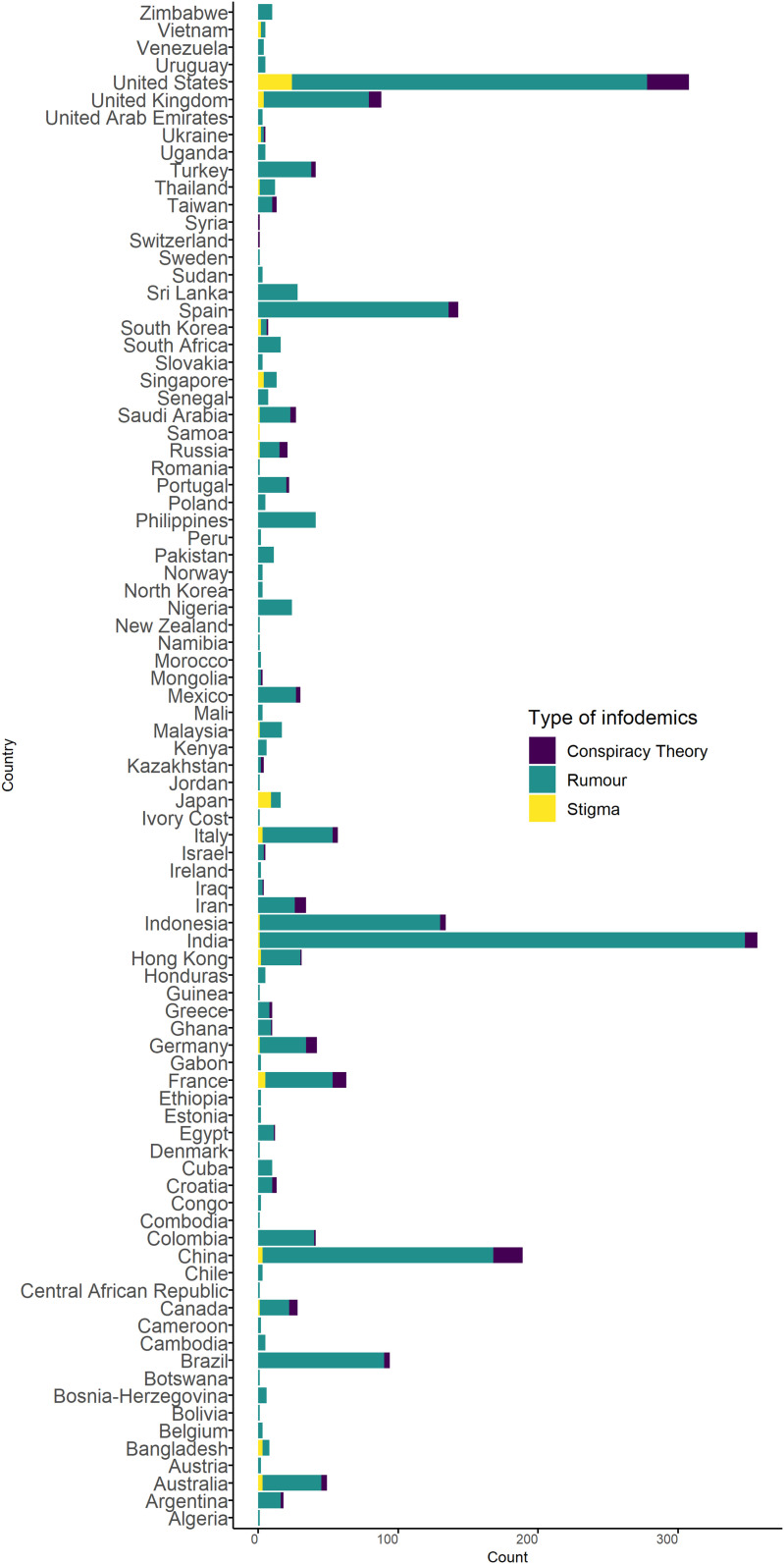
Infodemics, often including rumors, stigma, and conspiracy theories, have been common during the COVID-19 pandemic. Monitoring social media data has been identified as the best method for tracking rumors in real time and as a possible way to dispel misinformation and reduce stigma. However, the detection, assessment, and response to rumors, stigma, and conspiracy theories in real time are a challenge. Therefore, we followed and examined COVID-19-related rumors, stigma, and conspiracy theories circulating on online platforms, including fact-checking agency websites, Facebook, Twitter, and online newspapers, and their impacts on public health. Information was extracted between December 31, 2019 and April 5, 2020, and descriptively analyzed. We performed a content analysis of the news articles to compare and contrast data collected from other sources. We identified 2,311 reports of rumors, stigma, and conspiracy theories in 25 languages from 87 countries. Claims were related to illness, transmission and mortality (24%), control measures (21%), treatment and cure (19%), cause of disease including the origin (15%), violence (1%), and miscellaneous (20%). Of the 2,276 reports for which text ratings were available, 1,856 claims were false (82%). Misinformation fueled by rumors, stigma, and conspiracy theories can have potentially serious implications on the individual and community if prioritized over evidence-based guidelines. Health agencies must track misinformation associated with the COVID-19 in real time, and engage local communities and government stakeholders to debunk misinformation.
Overview
The claims and statistics of this paper haven’t been checked yet.
Free: it reads the open-access text and checks the first 5 claims that cite a source we can check. Create a free account to check every claim.
Integrity signals
Registry
Cites
Statistics
Figures
Verification
Claims the paper makes
The claims and statistics of this paper haven’t been checked yet.
Free: it reads the open-access text and checks the first 5 claims that cite a source we can check. Create a free account to check every claim.
Claims other papers make about this one
Each is checked against this paper’s own text: does it say what the citing paper says it does?
The cited source says what the claim attributes to it.
In the citing paper
“Misinformation during the Ebola outbreak in the Democratic Republic of the Congo in 2019 was associated with aggression, mistrust, social unrest, and targeted assaults on healthcare workers [45].”
From Social Media Role and Its Impact on Public Health: A Narrative Review (2023) · cites this paper as [45]
The cited source says what the claim attributes to it.
In the citing paper
“Rumors about COVID-19 have been labeled a global enemy by the UN secretary-general [45].”
From Social Media Role and Its Impact on Public Health: A Narrative Review (2023) · cites this paper as [45]
The cited source says what the claim attributes to it.
In the citing paper
“During the SARS outbreak in China in 2002-2003, Asian people faced social stigma as a result of their fear of contracting the disease [45].”
From Social Media Role and Its Impact on Public Health: A Narrative Review (2023) · cites this paper as [45]
Self-check
Percentages, sums and reported differences re-computed from the paper’s own numbers.
The self-check needs the paper’s full text.
Citations
Cites
Understanding Conspiracy Theories
Douglas, K. M., Uscinski, J. E., Sutton, R. M., Cichocka, A., Nefes, T., Ang, C. S., & Deravi, F. (2019) · Political Psychology · doi:10.1111/pops.12568 · Cited by 1,511 · cited 1×
“defined as explanatory beliefs about an individual or group of people working in secret to reaching malicious goals.(16) Data extraction and consistency.”
BackgroundFear and Stigma: The Epidemic within the SARS Outbreak
Person, B., Sy, F., Holton, K., Govert, B., Liang, A., the, N. C. I. D., SARS Community Outreach Team (listed in alphabetical order), Garza, B., Gould, D., Hickson, M., et al. (2004) · Emerging Infectious Diseases · doi:10.3201/eid1002.030750 · Cited by 790
YouTube as a source of information on COVID-19: a pandemic of misinformation?
Li, H. O.-Y., Bailey, A., Huynh, D., & Chan, J. (2020) · BMJ Global Health · doi:10.1136/bmjgh-2020-002604 · Cited by 781
See Something, Say Something: Correction of Global Health Misinformation on Social Media
Bode, L., & Vraga, E. K. (2018) · Health Communication · doi:10.1080/10410236.2017.1331312 · Cited by 745 · cited 1×
“aimed at promoting evidence against misinformation quickly and clearly might change people’s perception and healthseeking behaviors.(52,53) Currently, the WHO and other health”
BackgroundZubiaga, A., Liakata, M., Procter, R., Wong Sak Hoi, G., & Tolmie, P. (2016) · PLOS ONE · doi:10.1371/journal.pone.0150989 · Cited by 722 · cited 1×
“Rumor is defined as unverified information that canbe foundas true, fabricated, or entirely false after verification.(14) Stigma is a socially constructed process through which a person with stigma can experience discrimination and devaluation in society.”
BackgroundTuran, B., Budhwani, H., Fazeli, P. L., Browning, W. R., Raper, J. L., Mugavero, M. J., & Turan, J. M. (2017) · AIDS and Behavior · doi:10.1007/s10461-016-1451-5 · Cited by 480
Prevention is better than cure: addressing anti-vaccine conspiracy theories
Jolley, D., & Douglas, K. M. (2017) · Journal of Applied Social Psychology · doi:10.1111/jasp.12453 · Cited by 446 · cited 1×
“aimed at promoting evidence against misinformation quickly and clearly might change people’s perception and healthseeking behaviors.(52,53) Currently, the WHO and other health”
BackgroundEbola, Twitter, and misinformation: a dangerous combination?
Oyeyemi, S. O., Gabarron, E., & Wynn, R. (2014) · BMJ · doi:10.1136/bmj.g6178 · Cited by 348 · cited 1×
“Last, there are the well-documented issues with misinformation with Ebola, including false treatments, health workers were deliberately spreading the Ebola virus, and Ebola epidemic was a hoax.(49,50) Such conspiracy theories and misinformation may have impeded the ability of healthcare workers and emergency responder…”
BackgroundAttacks against health-care personnel must stop, especially as the world fights COVID-19
McKay, D., Heisler, M., Mishori, R., Catton, H., & Kloiber, O. (2020) · The Lancet · doi:10.1016/s0140-6736(20)31191-0 · Cited by 186
Young, W. B., Park, J. E., Tian, I. X., & Kempner, J. (2013) · PLoS ONE · doi:10.1371/journal.pone.0054074 · Cited by 138 · cited 1×
“Stigma is a socially constructed process through which a person with stigma can experience discrimination and devaluation in society.(15) A conspiracy theory is”
Background
Research works printed but not linked: 29
- World Health Organization, 2020 Coronavirus Disease 2019 (COVID-19) Situation Report – 13. Geneva, Switzerland: WHO.
- Lederer EM, 2020 U.N. Chief Antonio Guterres: Misinformation about COVID-19 Is the New Enemy. TIME. New York, NY: TIME.
- World Health Organization, 2018 Managing Epidemics: Key Facts about Major Deadly Diseases. Luxembourg: WHO.
- Center for Preparedness and Response, 2020 Responding to Rumors and Misinformation. Emergency Preparedness and Response. Atlanta, GA: Centre for Disease Control and Prevention.
- Eckert KS 2016 Evidence Syntheses to Support the Guideline on Emergency Risk Communication. Geneva, Switzerland: World Health Organization.
- Victoria Knight of Kaiser Health News, 2020 COVID-19: Beware Online Tests and Cures, Experts Say. The Guardian. Surry Hills, NSW, Australia: The Guardian.
- Spencer SH, 2020 Fake Coronavirus Cures, Part 1: MMS Is Industrial Bleach. Available at: https://www.factcheck.org/2020/02/fake-coronavirus-cures-part-1-mms-is-industrial-bleach/. Accessed April 4, 2020.
- Vrajlal A, 2020 Chinese-Australians Facing Racism after Coronavirus Outbreak. Available at: https://www.huffingtonpost.com.au/entry/coronavirus-australia-racism_au_5e33a522c5b6f2623326d72b. Accessed April 4, 2020.
- BBC Reality Check Team, 2020 Coronavirus: Does Drinking Tea Help? BBC News. Delhi, India: BBC News.
- Cable T, 2020 CDD FACT CHECK: Can Camel Urine, Lime Cure Coronavirus? The Cable. Abuja, Nigeria: The Cable Newspaper.
- Landsverk G, 2020 Holding Your Breath Can’t Help You Self-Diagnose the Coronavirus. Here’s What You Should Do Instead. Business Insider Australia. Surry Hills, NSW, Australia: Business Insider Australia.
- Ellis-Petersen H Rahman SA, 2020 Indian Doctors Being Evicted from Homes over Coronavirus Fears. The Guardian. Surry Hills, NSW, Australia: The Guardian.
- Mead WR, 2020 China Is the Real Sick Man of Asia. The Wall Street Journal. New York, NY: The Wall Street Journal.
- Breland A, 2020 Russian Media Outlets Are Blaming the Coronavirus on the United States. Mother Jones. San Francisco, CA: Mother Jones.
- Gertz B, 2020 Coronavirus May Have Originated in Lab Linked to China’s Biowarfare Program. The Washington Post. Washington, DC: The Washington Post.
- Gregory J, 2020 The Coronavirus ‘Infodemic’ Is Real. We Rated the Websites Responsible for It. Statnews. Boston, MA: Statnews.
- Richtel M, 2020 WHO Fights a Pandemic besides Coronavirus: An ‘Infodemic’. The New York Times. New York, NY: The New York Times.
- Meddle East Media Research Institute, 2020 Arab Writers: The Coronavirus Is Part of Biological Warfare Waged by the U.S. against China. Egypt, Saudi Arabia, and Syria: Meddle East Media Research Institute TV.
- Farda R, 2020 Iran Cleric Blames Trump for Coronavirus Outbreak in Religious City. Radio Farda. Prague, Czech Republic: Radio Farda.
- Colson T, 2020 A Fake Claim That Cocaine Cures the Coronavirus Is Spreading Online, and the French Government Was Forced to Tell People That It Won’t. Business Insider Australia. Surry Hills, NSW, Australia: Business Insider Australia.
- Frenkel S Alba D Zhong R, 2020 Surge of Virus Misinformation Stumps Facebook and Twitter. The New York Times. New York, NY: The New York Times.
- World Health Organization, 2020 Alcohol Does Not Protect against COVID-19; Access Should Be Restricted during Lockdown. Alcohol Use. Geneva, Switzerland: WHO, Regional Office for Europe.
- CNN Türk, 2020 9 Kişi Daha Saf Alkolden Öldü [9 More Poeple Died from Pre Alcohol]. Available at: https://www.cnnturk.com/video/turkiye/9-kisi-daha-saf-alkolden-oldu. Accessed June 4, 2020.
- Staff Reporter, 2020 Twelve Taken Ill after Consuming ‘Coronavirus Shaped’ Datura Seeds. The Hindu. Andhra Pradesh, India: The Hindu.
- Chan-Kyong P, 2020 Coronavirus: Saltwater Spray Infects 46 Church-Goers in South Korea. South China Morning Post. Causeway Bay, Hong Kong: South China Morning Post.
- Eckel M, 2020 Tractors, Herbs, Vodka, Saunas? Some Leaders Offer Strange, Unhelpful Advice On Warding Off COVID-19. Available at: https://www.rferl.org/a/coronavirus-unhelpful-advice-tractors-herbs-vodka-saunas-gurbanguly-lukashenka-vucic/30495810.html. Accessed June 4, 2020.
- Tajmim T, 2020 Coronavirus: 41 Doctors, 10 Nurses Infected. The Business Standard. Dhaka, Bangladesh: The Business Standard.
- National Herald, 2020 Social Stigma Forcing Corona Patients to Avoid Screening in India. National Herald. New Delhi, India: National Herald.
- Kabananukye K, 2001 Denial, Discrimination and Stigmatisation: The Case of Ebola Epidemic in Some Districts. Kampala, Uganda: Ugandan Ministry of Health, National Ebola Task Force.
Cited by
Items 401–500 of 997
Boin, A., McConnell, A., & Hart, P. ‘. (2021) · Springer eBooks · doi:10.1007/978-3-030-72680-5_4 · Cited by 10
“Conspiracy theories emerged with regard to the origins of the virus and the ‘agendas’ that were purportedly served by the pandemic (Islam et al., 2020).”
BackgroundHeyerdahl, L. W., Lana, B., & Giles‐Vernick, T. (2021) · JMIR Infodemiology · doi:10.2196/27472 · Cited by 9
Racsko, P. (2021) · Society and Economy · doi:10.1556/204.2021.00020 · Cited by 8
Prawira, B., Pratama, A. J., Bella, A., & Nuraini, S. (2021) · Journal of Health Psychology · doi:10.1177/13591053211037730 · Cited by 10
“A descriptive study conducted by Islam et al. (2020) found at least 2311 unique pieces of misinformation regarding COVID-19, circulating in various platforms, in 25 languages, and 87 countries from December 2019 to April 2020.”
BackgroundAssis, J. A., Komesu, F. C., & Pollet, M.-C. (2021) · Scripta · doi:10.5752/p.2358-3428.2021v25n54p9-38 · Cited by 7
Bodas, M., Ragoler, M., Rabby, Y., & Krasner, E. (2021) · International Journal of Environmental Research and Public Health · doi:10.3390/ijerph19010342 · Cited by 7
“[37], approximately 800 people lost their lives, 5876 have been hospitalized and 60 lost their eyesight after drinking methanol, believing it to be a cure for the disease.”
BackgroundStevens, H., & Palomares, N. A. (2022) · JMIR Infodemiology · doi:10.2196/29246 · Cited by 8
“COVID-19 misinformation items were selected by comparing the Centers for Disease Control and Prevention guidelines for slowing the spread of COVID-19 with common, prevalent COVID-19 myths [26-28].”
The COVID-19 Infodemic: Misinformation About Health on Social Media in Istanbul
Tunçer, S., & Mehmet Sinan, T. A. M. (2022) · Türkiye İletişim Araştırmaları Dergisi · doi:10.17829/turcom.1050696 · Cited by 17
Vitamin D in the news: A call for clear public health messaging during Covid-19
Heer, R. S., Sandhu, P., Wenban, C., Mandal, A. K. J., & Missouris, C. G. (2022) · Nutrition and Health · doi:10.1177/02601060221090293 · Cited by 7
“Online news articles are a major influential source of information obtainable through internet searches and previous studies have highlighted instances of inaccurate information present in these articles during the Covid-19 pandemic (Islam et al., 2020).”
BackgroundMalik, J. A., Musharraf, S., Safdar, R., & Iqbal, M. (2022) · BMC Health Services Research · doi:10.1186/s12913-022-08217-6 · Cited by 7
“Myths and infodemic may contribute to mitigating fear and undermining public trust in health agencies and governments [19].”
BackgroundDesign Principles for an Educational Intervention Into Online Vaccine Misinformation
Veletsianos, G., Houlden, S., Reid, D., Hodson, J., & Thompson, C. P. (2022) · TechTrends · doi:10.1007/s11528-022-00755-4 · Cited by 7
“, 2021), and increased numbers of infections, hospitalizations, and deaths (Islam et al., 2020).”
BackgroundKostarella, I., & Kotsakis, R. (2022) · Journalism and Media · doi:10.3390/journalmedia3030033 · Cited by 8
Caliskan, C., & Kilicaslan, A. (2022) · Journal of Computational Social Science · doi:10.1007/s42001-022-00193-5 · Cited by 7
“For instance, a study shows that over just a few months in the first of half 2020, approximately 800 people died and many more were hospitalized after drinking methanol as a cure for coronavirus [21].”
BackgroundRiadi, I., Herman, H., & Siregar, N. H. (2022) · Ingénierie des systèmes d information · doi:10.18280/isi.270606 · Cited by 7
A Data-Political Spectacle: How COVID-19 Became A Source of Societal Division in Denmark
Rogvi, S. Á., & Hoeyer, K. (2023) · Minerva · doi:10.1007/s11024-022-09486-5 · Cited by 8
“Resistance against government responses to COVID-19 have often been connected with conspiracy theories (e.g. Gruzd and Mai 2020; Islam et al. 2020; Fuchs 2021; Prasad 2021).”
BackgroundImproving Source Localization by Perturbing Graph Diffusion
Zhao, Y., Wang, Z., & Lam, E. Y. M. (2022) · IEEE International Conference on Data Science and Advanced Analytics (DSAA) · doi:10.1109/dsaa54385.2022.10032349 · Cited by 7
“For instance, tracking rumors to the source in real time is a possible way to dispel misinformation and reduce stigma [6]; identifying the source Emails carrying viruses in the online networks offer prevention of computer virus epidemics [7]; source localization enables us to build a detection system against malware b…”
BackgroundThe Impact of Sex and Personality Traits on Social Media Use during the COVID-19 Pandemic in Poland
Zdonek, D., & Król, K. (2021) · Sustainability · doi:10.3390/su13094793 · Cited by 13
“Simultaneously, it was in social media that gossip and conspiracy theories spread the quickest [8].”
BackgroundBleyer-Simon, K. (2021) · Journal of Digital Media & Policy · doi:10.1386/jdmp_00053_1 · Cited by 7
COVID-19 syndemic, stigmatization, and social vulnerabilities: A case of Bangladesh
Mahmud, A., Zaman, F., & Islam, M. R. (2021) · Local Development & Society · doi:10.1080/26883597.2021.1952846 · Cited by 11
“By comparison, the most popular social media, media credibility, and media information contribute more than the administrative procedure to influence the changing lifestyle and social relationship during COVID-19 pandemic (Islam et al., 2020).”
BackgroundSelf-citationSakamoto, Y., Sallam, S., Salo, A., Leboe-McGowan, J. P., & Irani, P. (2022) · IEEE Pacific Visualization Symposium · doi:10.1109/pacificvis53943.2022.00028 · Cited by 12
“Some-times such misinformation is dangerous and even life-threatening (e.g., “Drinking bleach may kill the virus” [1]).”
BackgroundWe Need to Do Better: Five Notable Failings in Science Communication
Cormick, C. (2022) · Sustainability · doi:10.3390/su14148393 · Cited by 10
COVID-19 knowledge deconstruction and retrieval: an intelligent bibliometric solution
Wu, M., Zhang, Y., Markley, M., Cassidy, C., Newman, N. C., & Porter, A. L. (2023) · Scientometrics · doi:10.1007/s11192-023-04747-w · Cited by 7
“The other subordinate branch of social media indicates the role of social media as a double-edged sword for governments when it comes to information dissemination and evaluation (Islam et al., 2020b; Li et al., 2020a; Tsao et al., 2021), given the presence of misinformation.”
Lai, K., Jing, G., Zhao, J., & Xiong, X. (2023) · Current Psychology · doi:10.1007/s12144-023-04903-8 · Cited by 6
Casale, M., Somefun, O. D., Ronnie, G. H., Sumankuuro, J., Akintola, O., Sherr, L., & Cluver, L. D. (2025) · PLOS Global Public Health · doi:10.1371/journal.pgph.0003795 · Cited by 8
“While technology and social media platforms can be used as a tool for information dissemination, they can also amplify misinformation and information overload during an infodemic [68,69], and clearly in some cases the latter may dominate.”
PANACEA: An Automated Misinformation Detection System on COVID-19
Zhao, R., Arana‐Catania, M., Zhu, L., Kochkina, E., Gui, L., Zubiaga, A., Procter, R., Liakata, M., & He, Y. (2023) · Conference of the European Chapter of the Association for Computational Linguistics · doi:10.18653/v1/2023.eacl-demo.9 · Cited by 15
Exploring Information Behavior Patterns in Response to False and Misleading Health Information
Bressel, P., Dewitz, L., & Greifeneder, E. (2023) · Proceedings of the Association for Information Science and Technology · doi:10.1002/pra2.770 · Cited by 8
“This became especially apparent during the Covid-19 pandemic (Islam et al., 2020).”
BackgroundmRNA Technology in Modern Medicine: Review and Future Prospects
Silva, H. M. (2025) · Clinical and Molecular Epidemiology · doi:10.53964/cme.2025001 · Cited by 4
Evolución e impacto de la infodemia en la población infantil en tiempos de COVID-19
Cevallos-Robalino, D., Reyes-Morales, N., & Rubio-Neira, M. (2021) · Revista Panamericana de Salud Pública · doi:10.26633/rpsp.2021.38 · Cited by 13
“al estigma, otra de las categorías comunes de la infodemia (15), que señalaba a los niños como los “super spreaders” del virus (11,16).”
BackgroundLappeman, J., Munyai, K., & Kagina, B. M. N. (2021) · F1000Research · doi:10.12688/f1000research.52061.1 · Cited by 7
The Development of Fake News in the Post-Truth Age
Muqsith, M. A., & Pratomo, R. R. (2021) · SALAM Jurnal Sosial dan Budaya Syar i · doi:10.15408/sjsbs.v8i5.22395 · Cited by 9
Vivion, M., & Gauvin, L. I. (2022) · Canadian Journal of Public Health · doi:10.17269/s41997-021-00575-8 · Cited by 9
Mijatović, N., Šljivić, J., Tošić, N., Conić, L., Petrović, M., & Žeželj, I. L. (2022) · Studia Psychologica · doi:10.31577/sp.2022.01.841 · Cited by 6
Li, X., Wang, W., Fang, J., Jin, L., Kang, H., & Liu, C. (2022) · Applied Sciences · doi:10.3390/app12199688 · Cited by 7
“Research indicates that the proportion of false claims is only approximately 1% of total news dissemination on all platforms, while the percentage of false claims is almost more than 6% of total tweets on social media [2].”
BackgroundMethodDiers-Lawson, A. R., Omondi, G., & Hillier, S. L. (2021) · Journal of Visual Political Communication · doi:10.1386/jvpc_00017_1 · Cited by 5
Geo-sentiment trends analysis of tweets in context of economy and employment during COVID-19
Sukhavasi, N., Misra, J., Kaulgud, V., & Podder, S. (2023) · Journal of Computational Social Science · doi:10.1007/s42001-023-00201-2 · Cited by 8
“There are significant number of published studies based on analysis of social media, including Twitter, to uncover various population level trends related to COVID1-19 pandemic [7, 13, 17, 27, 29, 31].”
BackgroundAharon, A. A., Warshawski, S., & Itzhaki, M. (2023) · Journal of Advanced Nursing · doi:10.1111/jan.15748 · Cited by 7
Bazrafshan, A., Sadeghi, A., Bazrafshani, M. S., Mirzaie, H., Shafiee, M., Geerts, J. M., & Sharifi, H. P. (2023) · BMJ Open · doi:10.1136/bmjopen-2023-072326 · Cited by 14
The design and psychometric evaluation of a COVID-19 social stigma questionnaire in nurses
Rahmani, N., Roshan, F. S., Nabavian, M., & Alipour, H. (2023) · BMC Nursing · doi:10.1186/s12912-023-01620-2 · Cited by 10
“The phenomenon of COVID-19-associated stigma needs to be studied in more detail to determine its effects on different populations, including those of healthcare workers [34].”
BackgroundLocal Government, Social Media and Management of COVID-19: The Case of Chilean Mayoral Communication
Luna, J. P., Alcatruz, D., Muñoz, C. P., Rosenblatt, F., Toro, S., & Valenzuela, S. (2023) · Political Communication · doi:10.1080/10584609.2023.2290494 · Cited by 7
“During the COVID-19 pandemic, both the demand for and supply of information increased (Grassau et al., 2021; Islam et al., 2020), and social media played a crucial role during that period.”
BackgroundPromote to protect: data-driven computational model of peer influence for vaccine perception
Ghosh, S., Bhattacharya, S., Mukherjee, S., & Chakravarty, S. (2024) · Scientific Reports · doi:10.1038/s41598-023-50756-3 · Cited by 6
Encouraging vaccination against COVID-19 has no compensatory spillover effects
Kourtidis, P., Fasolo, B., & Galizzi, M. M. (2024) · Behavioural Public Policy · doi:10.1017/bpp.2024.1 · Cited by 6
“Effective communication is a key non-pharmaceutical intervention (NPI) to protect people against health-related threats and misinformation about diseases (Islam et al ., 2020; Pennycook et al ., 2020; Lorna, 2021; World Health Organization, 2021).”
Luo, Y., Li, Y., Wen, D., & Lan, L. (2024) · International World Wide Web Conference (WWW) · doi:10.1145/3589334.3648139 · Cited by 15
Politics meets healthcare? Religious misinformation in India during the COVID-19 pandemic
Al-Zaman, M. S. (2021) · Jurnal Sosial Humaniora · doi:10.12962/j24433527.v13i2.8119 · Cited by 6
Kuhn, E. J., Walker, G., Wright, J., Whiley, H., & Ross, K. (2021) · Australian and New Zealand Journal of Public Health · doi:10.1111/1753-6405.13067 · Cited by 6
HIV vaccines beyond COVID‐19: merits of trust
Kublin, J. G. (2021) · Journal of the International AIDS Society · doi:10.1002/jia2.25742 · Cited by 6
“Moreover, accuracy suffers from the media (including social media) and consumers’ bad-news bias [7].”
BackgroundCOVID-19 vaccination and the power of rumors: Why we must “Tune in”
Dasgupta, R., Mishra, P., & Yadav, K. (2021) · Indian Journal of Public Health · doi:10.4103/ijph.ijph_89_21 · Cited by 5
Illescas, A. C., Argyropoulos, C., Combs, S., Shaffi, S. K., Xu, Z., Aragon, M. A., & Teixeira, J. P. (2021) · Renal Replacement Therapy · doi:10.1186/s41100-021-00362-8 · Cited by 6
“Worldwide, it has been estimated that hundreds of people have died in 2020 alone related to misuse of methanol during the coronavirus disease 2019 (COVID-19) pandemic [3].”
BackgroundGutiérrez‐Velasco, L., Liébana‐Presa, C., Abella-Santos, E., Villar‐Suárez, V., Fernández-Gutiérrez, R., & Fernández‐Martínez, E. (2021) · Healthcare · doi:10.3390/healthcare9020104 · Cited by 7
“[22], in which 2311 articles published on social networks from 87 different countries were evaluated; 89% were classified as rumors or unverified information, including conspiracy theories about the origins of the pandemic with a malicious intent (7.”
BackgroundKuty-Pachecka, M., Marta Kuty-Pachecka Cognitive Behavioural Diagnosis and Therapy Practice, W., Kozłowska, M. A., Skórska, K., Gucwa, K., Trzebińska, M., Stępień-Grzelak, P., & Żurawska, E. (2020) · Psychiatria i Psychologia Kliniczna · doi:10.15557/pipk.2020.0029 · Cited by 22
Arpacı, İ., Shehabi, S. A., Mahariq, I., & Topcu, A. E. (2021) · Journal of Information & Knowledge Management · doi:10.1142/s0219649221500386 · Cited by 6
Pan, T., Sun, Y., Guo, X., & Zhang, M. (2024) · Internet Research · doi:10.1108/intr-12-2023-1137 · Cited by 8
Meksawasdichai, S., Lerksuthirat, T., Ongphiphadhanakul, B., & Sriphrapradang, C. (2023) · JMIR Cancer · doi:10.2196/48786 · Cited by 5
“This is particularly important in public health emergencies, such as disease outbreaks or natural disasters, where timely and accurate information can save lives [4,5].”
BackgroundMarsall, M., Dinse, H., Schröder, J., Skoda, E., Teufel, M., & Bäuerle, A. (2024) · JMIR Formative Research · doi:10.2196/52189 · Cited by 8
“This infodemic arose right after the beginning of the worldwide pandemic, and an analysis to investigate the proportion of false information revealed that more than 80% of the information spread via social media was presumably wrong [17].”
BackgroundImpacts of the COVID-19 infodemic on emotions through cognitive appraisals
Han, W., Lee, H., Xu, Y., & Cheng, Y. (2024) · Online Information Review · doi:10.1108/oir-12-2023-0616 · Cited by 10
Dimitris, M. C., Galea, S., Marcus, J. L., Pan, A., Sander, B., & Platt, R. W. (2022) · American Journal of Epidemiology · doi:10.1093/aje/kwac012 · Cited by 5
Ünal, R., & Çiçeklioğlu, A. Ş. (2022) · Erciyes İletişim Dergisi · doi:10.17680/erciyesiletisim.1001922 · Cited by 7
Myths about Coronavirus: A Research Defense
Miah, M. R., Hasan, M. M., Hannan, M. A., Parisha, J. T., Uddin, M. J., Uddin, M. B., Rahman, A., Hossain, S., Sharif, M. A., Akhtar, F., et al. (2022) · Global Journal of Health Science · doi:10.5539/gjhs.v14n2p63 · Cited by 6
Fear of coronavirus in intensive care nurses: A cross-sectional study
Dığın, F., Özkan, Z. K., Güçlü, F., & Gözde, E. R. O. L. (2022) · Journal of Surgery and Medicine · doi:10.28982/josam.938582 · Cited by 6
In.To. COVID-19 socio-epidemiological co-causality
Galbraith, E., Li, J., Vilas, V. D. R., & Convertino, M. (2022) · Scientific Reports · doi:10.1038/s41598-022-09656-1 · Cited by 6
At the End of Every Pandemic: Beginning a Pandemic Playbook to Respond to the Next
Goldschmidt, P. G. (2022) · Frontiers in Public Health · doi:10.3389/fpubh.2022.838561 · Cited by 8
Wong, B. Y.-M., Ho, S. Y., Sit, S. M.-M., Gong, W. J., Lai, A. Y. K., Wang, M. P., & Lam, T. H. (2022) · Frontiers in Public Health · doi:10.3389/fpubh.2022.948955 · Cited by 7
Bourreau, C., Baron, A., Schwarzinger, M., Alla, F., Cambon, L., Godinot, L. D., & CoVaMax Study Group (2022) · Vaccines · doi:10.3390/vaccines10101661 · Cited by 8
“It is known that the media can be the source of rapidly spreading unreliable information [49], and misinformation has a negative impact on willingness to be vaccinated [50].”
BackgroundCOVID-19 Conspiracy Beliefs and Vaccination Intentions among Social Media Users
Gemenis, K. (2022) · Statistics Politics and Policy · doi:10.1515/spp-2022-0005 · Cited by 6
"Comments Matter and The More The Better!": Improving Rumor Detection with User Comments
Xu, Y., Guo, J., Qiu, W., Huang, Z., Altuncu, E., & Li, S. (2022) · IEEE International Conference on Trust, Security and Privacy in Computing and Communications (TrustCom) · doi:10.1109/trustcom56396.2022.00060 · Cited by 6
“…or rumors related to COVID-19 on different online platforms, leading to unwanted consequences such as failures of COVID-19 interventions and even deaths of people who chose to believe in misinformation or rumors rather than follow official guidelines from authorities and health experts [1].”
BackgroundMeza, X. V., & Park, H. W. (2023) · Journal of Medical Internet Research · doi:10.2196/42669 · Cited by 8
“Among scientific inquiries related to our regions of interest, Islam et al [23] assessed agency websites, Facebook, Twitter, and web-based newspapers between December 2019 and April 2020 in 25 languages from 87 countries and found that 82% of the texts included false information.”
FAKE NEWS AND MISINFORMATION ON COVID-19: IMPLICATIONS FOR MEDIA CREDIBILITY IN NIGERIA
Okocha, D. O., & Akpe, S. M. (2022) · Health & New Media Research · doi:10.22720/hnmr.2022.6.1.139 · Cited by 9
Memenga, P., & Link, E. (2024) · European Journal of Health Communication · doi:10.47368/ejhc.2024.201 · Cited by 6
Fast Naïve Bayes classifiers for COVID-19 news in social networks
Cahyono, H. D., Mahadewa, A., Wijayanto, A., Wardani, D. W., & Setiadi, H. (2024) · Indonesian Journal of Electrical Engineering and Computer Science · doi:10.11591/ijeecs.v34.i2.pp1033-1041 · Cited by 10
“For instance, some algorithms rely on human intervention to train the model and detect hoaxes, making those [7].”
BackgroundSchröder, J., Dinse, H., Jahre, L. M., Skoda, E., Stettner, M., Kleinschnitz, C., Teufel, M., & Bäuerle, A. (2024) · Telemedicine Journal and e-Health · doi:10.1089/tmj.2024.0088 · Cited by 6
“47,48 This may have given rise to in-securities that would intensify the demand for up-to-date, verified, and expert-provided information in this field.”
Kolis, J., Brookmeyer, K. A., Chuvileva, Y. E., Voegeli, C., Juma, S., Ishizumi, A., Renfro, K. J., Wilhelm, E., Tice, H., Fogarty, H., et al. (2024) · JMIR Public Health and Surveillance · doi:10.2196/51909 · Cited by 8
“…information voids left by evolving science and rapidly spreading misinformation have served as breeding grounds for public confusion [3], posing a serious risk to compliance with public health prevention and the uptake of mitigation measures, such as mask wearing and vaccination efforts [4,5].”
BackgroundHealth and health literacy among social work students in Germany: A cross-sectional health survey
Hollederer, A., & Dieckmännken, I. (2024) · Social Work in Public Health · doi:10.1080/19371918.2024.2434737 · Cited by 5
“During the pandemic, the understanding of health information was particularly relevant, as there has been a flood of information and misinformation (Ferreira Caceres et al., 2022; Islam et al., 2020).”
Healthcare Perspectives of Panic Buying
George, A. B., & Singh, A. K. (2021) · SpringerBriefs in psychology · doi:10.1007/978-3-030-70726-2_3 · Cited by 6
Comparing Traditional and Neural Approaches for Detecting Health-Related Misinformation
Fernández-Pichel, M., Losada, D. E., Pichel, J. C., & Elsweiler, D. (2021) · Lecture notes in computer science · doi:10.1007/978-3-030-85251-1_7 · Cited by 4
“The urgent need for effective quality filtering devices has only been underlined during the 2020 pandemic, when large quantities of information about COVID-19 and its treatments was of questionable or poor quality [15,26].”
BackgroundRethinking the Infodemic: Social Media and Offline Action in the COVID-19 Pandemic
Heyerdahl, L. W., Lana, B., & Giles‐Vernick, T. (2021) · Economics, law, and institutions in Asia Pacific · doi:10.1007/978-981-16-5727-6_4 · Cited by 6
“…the activities of social media companies, TV channels, newspapers and public authorities in regulating the information arena (Donovan 2020; Mackey et al. 2020; Naeem et al. 2020); and to evaluate the impact and diffusion of specific information (Islam et al. 2020; Rovetta and Bhagavathula 2020).”
BackgroundLulu, R. A., Habeeb, L. S., & Racman, S. M. H. A. (2021) · Linguistics and Literature Review · doi:10.32350/llr.72/01 · Cited by 5
How Health-Related Misinformation Spreads Across the Internet: Evidence for the “Typhoon Eye” Effect
Zheng, L., Cai, J., Wang, F., Ruan, C., Xu, M., & Miao, M. (2022) · Cyberpsychology Behavior and Social Networking · doi:10.1089/cyber.2022.0047 · Cited by 5
Almeda, N., Díaz-Milanés, D., Gutiérrez-Colosía, M. R., & GARCÍA-ALONSO, C. R. (2022) · BMC Psychiatry · doi:10.1186/s12888-022-04257-8 · Cited by 7
“This fact is crucial to fight against the spread of fake news not only because people often visit international health agencies and the Ministry of Health’s websites or read reports from them in search of credible information [54] but also because this could prevent conspiracy theories and misinformation that can comp…”
BackgroundArefin, S., Rashid, T., Bhattacharjee, M., Habib, M. D., Islam, M. A., & Rahaman, M. A. (2022) · Frontiers in Sociology · doi:10.3389/fsoc.2022.1054921 · Cited by 5
“Moreover, due to misinformation (Islam et al., 2020; Bakebillah et al., 2021), fake COVID-19-test reports of some private hospitals (Updates, 2022), and media, some frontline workers of this study expressed their concern and confusion about the diagnosis process.”
BackgroundSelf-citationBurden of mental distress in the US associated with trust in media for COVID-19 information
Jalan, M., Riehm, K. E., Agarwal, S., Gibson, D. G., Labrique, A. B., & Thrul, J. (2022) · Health Promotion International · doi:10.1093/heapro/daac162 · Cited by 6
Sheng, A. Y., Gottlieb, M. A., Bautista, J. R., Trueger, N. S., Westafer, L. M., & Gisondi, M. A. (2023) · AEM Education and Training · doi:10.1002/aet2.10877 · Cited by 7
Kopsco, H. L., Krell, R. K., Mather, T. N., & Connally, N. P. (2023) · JMIR Formative Research · doi:10.2196/43516 · Cited by 10
“More recently, social media and internet platforms have been strongly implicated in the spread of misinformation and conspiracy theories regarding the COVID-19 pandemic and its origin, transmission, treatment, and prevention [8].”
Backgroundd’Arqom, A., Sawitri, B., Nasution, M. Z., Setyanto, D., Izzah, S. N., Wiradhika, L. D., & Maulana, R. A. (2020) · Jurnal Layanan Masyarakat (Journal of Public Services) · doi:10.20473/jlm.v4i2.2020.251-258 · Cited by 6
“In addition, the infodemic, rapidly spreading of unreliable information about COVID-19, such as the use of herbal or vitamin supplements that have no scientific evidence but disseminated as COVID-19 prevention (Islam et al. 2020).”
BackgroundPrasanti, D., & Karimah, K. E. (2020) · Jurnal Ilmu Komunikasi · doi:10.31315/jik.v18i3.4000 · Cited by 13
An exploratory study of social media users’ engagement with COVID-19 vaccine-related content
Al-Zaman, M. S. (2021) · F1000Research · doi:10.12688/f1000research.51210.1 · Cited by 6
Dror, A. A., Layous, E., Mizrachi, M., Daoud, A., Eisenbach, N., Morozov, N. G., Srouji, S., Avraham, K. B., & Sela, E. (2020) · bioRxiv (Cold Spring Harbor Laboratory) · doi:10.1101/2020.08.16.252676 · Cited by 7
“Due to the diversity of reporting sources and the harmful consequences of disinformation (Islam et al ., 2020), governments often encourage the public to check local health authority websites frequently for regular updates.”
BackgroundLigot, D. V., Tayco, F. C., Toledo, M., Nazareno, C., & Brennan-Rieder, D. (2021) · OSF Preprints (OSF Preprints) · doi:10.2139/ssrn.3771695 · Cited by 5
Kasai, H., Saito, G., Takeda, K., Tajima, H., Kawame, C., Hayama, N., Shikino, K., Shimizu, I., Yamauchi, K., Asahina, M., et al. (2024) · Medical Education Online · doi:10.1080/10872981.2024.2357411 · Cited by 4
“For example, erroneous medical information regarding coro-navirus disease 2019 was disseminated, causing confusion even among medical professionals [4].”
BackgroundJalbert, M. C., Harris, M., & Williams, L. (2024) · Information Communication & Society · doi:10.1080/1369118x.2024.2436001 · Cited by 7
Older adults and online health misinformation: a systematic literature review
Hu, H., Jin, G., & Zhang, X. (2026) · BMC Psychology · doi:10.1186/s40359-026-04714-z · Cited by 6
“Others have synthesized health misinformation research more broadly, concentrating on specific health domains such as vaccine hesitancy [48], cancer-related misinformation [49], or pandemic-related infodemics [50, 51].”
Knowledge and attitude of human monkeypox among university students and staff in Tehran, Iran
Alimohamadi, Y., Sepandi, M., & Marhamati, T. (2025) · Frontiers in Public Health · doi:10.3389/fpubh.2025.1510185 · Cited by 4
“During the COVID-19 pandemic in Iran and other countries in the region, the situation of managing information resources in cyberspace was not favorable, so that misinformation caused several deaths by direct consumption of alcohol and detergents to avoid the risk of coronavirus (51).”
A Review of COVID-19 Pandemic: Myths, Misconceptions, and Role of Media Education in Nigeria
Izekor, E. D., Okpuzor, V. N., Morka, E., & Nnaji, P. (2020) · Asian Journal of Research in Infectious Diseases · doi:10.9734/ajrid/2020/v5i430172 · Cited by 5
Benzian, H., Johnston, M., Stauf, N., & Niederman, R. (2021) · Frontiers in Public Health · doi:10.3389/fpubh.2021.645229 · Cited by 4
Alam, E. (2022) · Policing A Journal of Policy and Practice · doi:10.1093/police/paac012 · Cited by 8
Habibi, M., Maarif, M. R., & Subekti, D. (2022) · Telematika · doi:10.31315/telematika.v19i1.6447 · Cited by 6
“Secara lebih khusus, social media analytics juga digunakan secara intensif untuk melakukan analisis kebijakan publik yang berkaitan dengan penanaganan pandemi Covid-19 di berbagai negara di dunia [34], [35].”
BackgroundCuidar de idosos durante a pandemia da COVID-19: a experiência de cuidadores familiares
Rezende, C. D. P., do Nascimento, M. M. G., de França, A. P., Santos, A. S. D. A., Oliveira, I. V., & de Oliveira, D. R. (2022) · Revista gaúcha de enfermagem · doi:10.1590/1983-1447.2022.20210038.pt · Cited by 5
Social Stigma and Suffering: Perceptions, Practices and Impacts around COVID-19 in Bangladesh
Siddiqi, B. A., & Khan, N. N. (2022) · South Asia Multidisciplinary Academic Journal · doi:10.4000/samaj.8253 · Cited by 5
[De]Politicizing the Pandemic: Visually Communicating Digital Public Sociology
Robinson, L., Trammel, J. M., & Moles, K. (2023) · American Behavioral Scientist · doi:10.1177/00027642231156769 · Cited by 4
“Further, social media has provided fertile terrain for the spread of potentially harmful information surrounding public health such as mis/disin-formation regarding masking, vaccines, and COVID denial (Islam et al., 2020; Jamison et al., 2020; Srivastava et al., 2021).”
Timotin, A., Paladi, A., Mîţa, V., Chihai, V., & Lozan, O. (2023) · One Health & Risk Management · doi:10.38045/ohrm.2023.3.09 · Cited by 5
Sallam, M., Abbasi, H., Obeidat, R. J., Badayneh, R., Alkhashman, F., Obeidat, A. H., Oudeh, D., Uqba, Z., & Mahafzah, A. M. (2023) · Vaccine X · doi:10.1016/j.jvacx.2023.100405 · Cited by 5
“Specifically, several claims that lacked credible scientific evidence were circulating widely during different phases of the pandemic resulting in an accompanying infodemic [9,12 – 14].”
BackgroundAbou-Taleb, H., van Gilst, S., Mohamed, N., & Mataria, A. (2024) · BMJ Global Health · doi:10.1136/bmjgh-2023-012601 · Cited by 4
Metadata
- Authors
- Islam, M. S., Sarkar, T., Khan, S. H., Mostofa Kamal, A.-H., Hasan, S. M. M., Kabir, A., Yeasmin, D., Islam, M. A., Amin Chowdhury, K. I., Anwar, K. S., Chughtai, A. A., & Seale, H.
- Affiliations
- International Centre for Diarrhoeal Disease Research (BD)
- Khulna University of Engineering and Technology, Khulna, Bangladesh;
- Mahidol University (TH)
- UNSW Sydney (AU)
- Program for Emerging Infections, Infectious Diseases Division, icddr,b, Dhaka, Bangladesh;
- International University of Health and Welfare (JP)
- Corresponding author
- Islam, Md Saiful
- Islam, Mohammad Ariful
- ORCID
- Venue
- The American Journal of Tropical Medicine and Hygiene
- Published
- 2020-10-07
- Volume
- 103
- Issue
- 4
- Pages
- 1621-1629
- ISSN
- 0002-9637 (ISSN-L)
- 1476-1645
- PMC
- PMC7543839
- OpenAlex
- W3048848247
- Cited by
- 1,178
- References
- 21
- Citations by year
- 2026: 88 · 2025: 117 · 2024: 127 · 2023: 207 · 2022: 319 · 2021: 274 · 2020: 45
- FWCI
- 282.36
- Type
- journal article
- Language
- en
- Open access
- bronze
- doi.org
- Locations
- American Journal of Tropical Medicine and Hygiene (publishedVersion)
- PubMed Central (publishedVersion, cc-by)
- PubMed (publishedVersion)
- Funders
- International Centre for Diarrhoeal Disease Research, Bangladesh
- Topics
- Social Sciences › Sociology and Political Science › Misinformation and Its Impacts
- Social Sciences › Communication › Communication and COVID-19 Impact
- Social Sciences › Library and Information Sciences › Academic Publishing and Open Access
- Keywords
- COVID-19 pandemic, infodemic, misinformation, rumors, stigma, conspiracy theories, social media, public health impact, fact-checking, misinformation debunking, COVID-19 containment measures
- MeSH terms
- Betacoronavirus, Data Analysis, COVID-19, SARS-CoV-2, Data Collection, Humans, Pneumonia, Viral, Public Health, Retrospective Studies, Global Health, Coronavirus Infections, Social Stigma, Pandemics, Social Media, Social Discrimination
About these checks
Registry, retraction, Cites and statistics results are computed, not judged, with one exception: a printed reference that no index lists is read once by a model before it counts as a citation error. Claims are extracted by a model and kept only when their quote appears verbatim in the text; each cited source is then checked, with a model’s help, for whether it says what the claim relies on. Those verdicts can be wrong — read the claim’s quote and the cited source before relying on one.
Statistics and arithmetic are recomputed, not judged.
Confidence bands are shown only for fields calibrated on our annotated test set. None is calibrated yet, so no band is shown.
What counts as a claim ›How we measure confidence ›How we check this ›
Are you an author, or do you see a problem with this page? Request a review
Data sources
Bibliographic data: Semantic Scholar, OpenAlex, Crossref.
Contains information from the Semantic Scholar Academic Graph Datasets, made available under the ODC Attribution License (ODC-BY 1.0).
Semantic Scholar’s data is described in: Kinney, R., et al. (2023). The Semantic Scholar Open Data Platform. arXiv:2301.10140.
