

Hybrid forecasting: blending climate predictions with AI models
Open accessPublished version of a preprint
The DOI matches its Crossref record; 167 of the 167 references it cites were found in a registry or an index.
Abstract
Hybrid hydroclimatic forecasting systems employ data-driven (statistical or machine learning) methods to harness and integrate a broad variety of predictions from dynamical, physics-based models – such as numerical weather prediction, climate, land, hydrology, and Earth system models – into a final prediction product. They are recognized as a promising way of enhancing the prediction skill of meteorological and hydroclimatic variables and events, including rainfall, temperature, streamflow, floods, droughts, tropical cyclones, or atmospheric rivers. Hybrid forecasting methods are now receiving growing attention due to advances in weather and climate prediction systems at subseasonal to decadal scales, a better appreciation of the strengths of AI, and expanding access to computational resources and methods. Such systems are attractive because they may avoid the need to run a computationally expensive offline land model, can minimize the effect of biases that exist within dynamical outputs, benefit from the strengths of machine learning, and can learn from large datasets, while combining different sources of predictability with varying time horizons. Here we review recent developments in hybrid hydroclimatic forecasting and outline key challenges and opportunities for further research. These include obtaining physically explainable results, assimilating human influences from novel data sources, integrating new ensemble techniques to improve predictive skill, creating seamless prediction schemes that merge short to long lead times, incorporating initial land surface and ocean/ice conditions, acknowledging spatial variability in landscape and atmospheric forcing, and increasing the operational uptake of hybrid prediction schemes.
Overview
The claims and statistics of this paper haven’t been checked yet.
Free: it reads the open-access text and checks the first 5 claims that cite a source we can check. Create a free account to check every claim.
Integrity signals
Registry
Cites
Statistics
Figures
Verification
Claims the paper makes
The claims and statistics of this paper haven’t been checked yet.
Free: it reads the open-access text and checks the first 5 claims that cite a source we can check. Create a free account to check every claim.
Self-check
Percentages, sums and reported differences re-computed from the paper’s own numbers.
The self-check needs the paper’s full text.
Citations
Cites
River flow forecasting through conceptual models part I — A discussion of principles
Nash, J. E., & Sutcliffe, J. V. (1970) · Journal of Hydrology · doi:10.1016/0022-1694(70)90255-6 · Cited by 23,674
Convolutional LSTM Network: A Machine Learning Approach for Precipitation Nowcasting
Shi, X., Chen, Z., Wang, H., Yeung, D.-Y., Wong, W.-K., & Woo, W.-C. (2015) · arXiv · doi:10.48550/arxiv.1506.04214 · Cited by 7,709
Deep learning and process understanding for data-driven Earth system science
Reichstein, M., Camps-Valls, G., Stevens, B., Jung, M., Denzler, J., Carvalhais, N., & Prabhat (2019) · Nature · doi:10.1038/s41586-019-0912-1 · Cited by 5,673
Stationarity Is Dead: Whither Water Management?
Milly, P. C. D., Betancourt, J., Falkenmark, M., Hirsch, R. M., Kundzewicz, Z. W., Lettenmaier, D. P., & Stouffer, R. J. (2008) · Science · doi:10.1126/science.1151915 · Cited by 4,537
The quiet revolution of numerical weather prediction
Bauer, P., Thorpe, A., & Brunet, G. (2015) · Nature · doi:10.1038/nature14956 · Cited by 2,729 · cited 1×
“been advancing by about one day per decade, such that ‘today’s 6-day forecast is as accurate as the 5-day forecast ten years ago’ (Bauer et al., 2015, p.47). Low flows may have skill up to 20 days in the case of Fundel et al. (2013) and even longer in other cases, especially with good information on initial conditions…”
BackgroundImprovement of a parsimonious model for streamflow simulation
Perrin, C., Michel, C., & Andréassian, V. (2003) · Journal of Hydrology · doi:10.1016/s0022-1694(03)00225-7 · Cited by 1,821 · cited 1×
“(2016) used a combination of historical observations and downscaled dynamical forecasts of rainfall and potential evapotranspiration in southern Australia from POAMA (Predictive Ocean Atmosphere Model for Australia) to drive the conceptual rainfall–runoff model GR4J (Perrin et al., 2003).”
MethodFlood Prediction Using Machine Learning Models: Literature Review
Mosavi, A., Ozturk, P., & Chau, K.-W. (2018) · Water · doi:10.3390/w10111536 · Cited by 1,672 · cited 2×
“Environment Agency, 2022), close co-operation is needed between the hydrology, forecasting, and ML communities to explore their potential either alone or in hybrid frameworks (Mosavi et al., 2018), build trust (Haupt et al.”
BackgroundMethodKratzert, F., Klotz, D., Shalev, G., Klambauer, G., Hochreiter, S., & Nearing, G. (2019) · Hydrology and Earth System Sciences · doi:10.5194/hess-23-5089-2019 · Cited by 1,223 · cited 1×
“Since long (50 year + ) hydroclimatic time series data are not available everywhere (Krabbenhoft, 2022), methods are required that can draw on pooled multi-site approaches with similar catchment and climate characteristics (Kratzert et al., 2019a .”
BackgroundSelf-citationThe CAMELS data set: catchment attributes and meteorology for large-sample studies
Addor, N., Newman, A. J., Mizukami, N., & Clark, M. P. (2017) · Hydrology and Earth System Sciences · doi:10.5194/hess-21-5293-2017 · Cited by 1,037 · cited 2×
“Such models may start to emerge with the growing availability of observational training datasets, such as the national CAMELS datasets (available for the USA, United Kingdom, Chile, Brazil, Australia, and soon France and Switzerland; e.g. Newman et al., 2015; Addor et al., 2017; Coxon et al., 2020) and international C…”
BackgroundSkilful precipitation nowcasting using deep generative models of radar
Ravuri, S., Lenc, K., Willson, M., Kangin, D., Lam, R., Mirowski, P., Fitzsimons, M., Athanassiadou, M., Kashem, S., Madge, S., et al. (2021) · Nature · doi:10.1038/s41586-021-03854-z · Cited by 1,024
Kirtman, B. P., Min, D., Infanti, J. M., Kinter, J. L., Paolino, D. A., Zhang, Q., van den Dool, H., Saha, S., Mendez, M. P., Becker, E., et al. (2014) · Bulletin of the American Meteorological Society · doi:10.1175/bams-d-12-00050.1 · Cited by 1,014
Toward Improved Predictions in Ungauged Basins: Exploiting the Power of Machine Learning
Kratzert, F., Klotz, D., Herrnegger, M., Sampson, A. K., Hochreiter, S., & Nearing, G. S. (2019) · Water Resources Research · doi:10.1029/2019wr026065 · Cited by 990 · cited 1×
“Since long (50 year + ) hydroclimatic time series data are not available everywhere (Krabbenhoft, 2022), methods are required that can draw on pooled multi-site approaches with similar catchment and climate characteristics (Kratzert et al., 2019a .”
BackgroundSelf-citationWhat Role Does Hydrological Science Play in the Age of Machine Learning?
Nearing, G. S., Kratzert, F., Sampson, A. K., Pelissier, C. S., Klotz, D., Frame, J. M., Prieto, C., & Gupta, H. V. (2021) · Water Resources Research · doi:10.1029/2020wr028091 · Cited by 894
Self-citationNewman, A. J., Clark, M. P., Sampson, K., Wood, A., Hay, L. E., Bock, A., Viger, R. J., Blodgett, D., Brekke, L., Arnold, J. R., et al. (2015) · Hydrology and Earth System Sciences · doi:10.5194/hess-19-209-2015 · Cited by 777 · cited 1×
“Newman et al., 2015; Addor et al., 2017; Coxon et al., 2020) and international Caravan streamflow dataset (Kratzert et al., 2023 .”
BackgroundSelf-citationBlueprint for a physically-based, digitally-simulated hydrologic response model
Freeze, R. A., & Harlan, R. L. (1969) · Journal of Hydrology · doi:10.1016/0022-1694(69)90020-1 · Cited by 737
Feng, D., Fang, K., & Shen, C. (2020) · Water Resources Research · doi:10.1029/2019wr026793 · Cited by 633 · cited 3×
“Differentiable modelling can also provide diverse physical variable outputs, trained or untrained, which help develop a narrative (Feng et al., 2022b). Fleming et al. (2021) showed how hydroclimatic storylines can be produced for clients to make the forecast 510”
BackgroundMethodInfluentialSelf-citationGloFAS – global ensemble streamflow forecasting and flood early warning
Alfieri, L., Burek, P., Dutra, E., Krzeminski, B., Muraro, D., Thielen, J., & Pappenberger, F. (2013) · Hydrology and Earth System Sciences · doi:10.5194/hess-17-1161-2013 · Cited by 582
The European Flood Alert System – Part 1: Concept and development
Thielen, J., Bartholmes, J., Ramos, M.-H., & de Roo, A. (2009) · Hydrology and Earth System Sciences · doi:10.5194/hess-13-125-2009 · Cited by 549
Prediction in ungauged basins: a grand challenge for theoretical hydrology
Sivapalan, M. (2003) · Hydrological Processes · doi:10.1002/hyp.5155 · Cited by 483
The Decadal Climate Prediction Project (DCPP) contribution to CMIP6
Boer, G. J., Smith, D. M., Cassou, C., Doblas-Reyes, F., Danabasoglu, G., Kirtman, B., Kushnir, Y., Kimoto, M., Meehl, G. A., Msadek, R., et al. (2016) · Geoscientific Model Development · doi:10.5194/gmd-9-3751-2016 · Cited by 483
The curse(s) of dimensionality
Altman, N., & Krzywinski, M. (2018) · Nature Methods · doi:10.1038/s41592-018-0019-x · Cited by 475
Challenges in modeling and predicting floods and droughts: A review
Brunner, M. I., Slater, L., Tallaksen, L. M., & Clark, M. (2021) · WIREs Water · doi:10.1002/wat2.1520 · Cited by 467 · cited 1×
“Another emerging challenge is assimilating human influences on the water cycle to obtain better predictions of hydroclimate variables, especially droughts (Brunner et al., 2021; Van Loon et al., 2022).”
BackgroundSelf-citationDeep learning rainfall–runoff predictions of extreme events
Frame, J. M., Kratzert, F., Klotz, D., Gauch, M., Shalev, G., Gilon, O., Qualls, L. M., Gupta, H. V., & Nearing, G. S. (2022) · Hydrology and Earth System Sciences · doi:10.5194/hess-26-3377-2022 · Cited by 396
Self-citationSlater, L. J., Anderson, B., Buechel, M., Dadson, S., Han, S., Harrigan, S., Kelder, T., Kowal, K., Lees, T., Matthews, T., et al. (2021) · Hydrology and Earth System Sciences · doi:10.5194/hess-25-3897-2021 · Cited by 357
Self-citationFeng, D., Liu, J., Lawson, K., & Shen, C. (2022) · Water Resources Research · doi:10.1029/2022wr032404 · Cited by 323 · cited 1×
“Differentiable modelling can also provide diverse physical variable outputs, trained or untrained, which help develop a narrative (Feng et al., 2022b) Fleming et al. (2021) showed how hydroclimatic storylines can be produced for clients to make the forecast interpretable in terms of under-standable…”
BackgroundSelf-citationLópez, J., & Francés, F. (2013) · Hydrology and Earth System Sciences · doi:10.5194/hess-17-3189-2013 · Cited by 318
Tsai, W.-P., Feng, D., Pan, M., Beck, H., Lawson, K., Yang, Y., Liu, J., & Shen, C. (2021) · Nature Communications · doi:10.1038/s41467-021-26107-z · Cited by 315 · cited 1×
“A differentiable MLbased parameter learning scheme can be trained on satellitebased soil moisture observations for the entire continental USA with one GPU in under 1 h, but the conventional approach would take a cluster machine of 100 central processing units (CPUs) 2–3 d to calibrate the model (Tsai et al., 2021).”
Self-citationCoxon, G., Addor, N., Bloomfield, J. P., Freer, J., Fry, M., Hannaford, J., Howden, N. J. K., Lane, R., Lewis, M., Robinson, E. L., et al. (2020) · Earth System Science Data · doi:10.5194/essd-12-2459-2020 · Cited by 312
Toms, B. A., Barnes, E. A., & Ebert‐Uphoff, I. (2020) · Journal of Advances in Modeling Earth Systems · doi:10.1029/2019ms002002 · Cited by 311
Daily streamflow forecasting by machine learning methods with weather and climate inputs
Rasouli, K., Hsieh, W. W., & Cannon, A. J. (2012) · Journal of Hydrology · doi:10.1016/j.jhydrol.2011.10.039 · Cited by 298 · cited 4×
“Ouyang et al. (2021) used a dataset of > 3000 basins across the USA and found that basins with small and medium reservoirs behaved differently from the reference basins but could be well simulated by a LSTM model with input attributes describing basin-lumped reservoir statistics Large-scale climate indices or modes ca…”
BackgroundInfluentialFang, K., Shen, C., Kifer, D., & Yang, X. (2017) · Geophysical Research Letters · doi:10.1002/2017gl075619 · Cited by 297
Self-citationNorth Atlantic climate far more predictable than models imply
Smith, D. M., Scaife, A. A., Eade, R., Athanasiadis, P., Bellucci, A., Bethke, I., Bilbao, R., Borchert, L. F., Caron, L.-P., Counillon, F., et al. (2020) · Nature · doi:10.1038/s41586-020-2525-0 · Cited by 287
The Subseasonal Experiment (SubX): A Multimodel Subseasonal Prediction Experiment
Pegion, K., Kirtman, B. P., Becker, E., Collins, D. C., LaJoie, E., Burgman, R., Bell, R., DelSole, T., Min, D., Zhu, Y., et al. (2019) · Bulletin of the American Meteorological Society · doi:10.1175/bams-d-18-0270.1 · Cited by 278 · cited 1×
“The International Research Institute for Climate and Society (IRI) has a multi-model-calibrated prediction based on three Subseasonal Experiment (SubX) models (Pegion et al., 2019).”
Lees, T., Buechel, M., Anderson, B., Slater, L., Reece, S., Coxon, G., & Dadson, S. J. (2021) · Hydrology and Earth System Sciences · doi:10.5194/hess-25-5517-2021 · Cited by 278
Self-citationHumphrey, G. B., Gibbs, M. S., Dandy, G. C., & Maier, H. R. (2016) · Journal of Hydrology · doi:10.1016/j.jhydrol.2016.06.026 · Cited by 273
A Brief review of flood forecasting techniques and their applications
Jain, S. K., Mani, P., Jain, S. K., Prakash, P., Singh, V. P., Tullos, D., Kumar, S., Agarwal, S. P., & Dimri, A. P. (2018) · International Journal of River Basin Management · doi:10.1080/15715124.2017.1411920 · Cited by 270 · cited 1×
“In contrast with traditional forecast workflows, data-driven prediction has historically relied more on observed data than dynamical climate model predictions, building empirical relationships between, for example, streamflow and precipitation (Garen, 1992), using time lag relationships between upstream and downstream…”
Flood forecasting with machine learning models in an operational framework
Nevo, S., Morin, E., Gerzi Rosenthal, A., Metzger, A., Barshai, C., Weitzner, D., Voloshin, D., Kratzert, F., Elidan, G., Dror, G., et al. (2022) · Hydrology and Earth System Sciences · doi:10.5194/hess-26-4013-2022 · Cited by 267
Self-citationFrame, J. M., Kratzert, F., Raney, A., Rahman, M., Salas, F. R., & Nearing, G. S. (2021) · JAWRA Journal of the American Water Resources Association · doi:10.1111/1752-1688.12964 · Cited by 248
Self-citationMa, K., Feng, D., Lawson, K., Tsai, W., Liang, C., Huang, X., Sharma, A., & Shen, C. (2021) · Water Resources Research · doi:10.1029/2020wr028600 · Cited by 241
Self-citationDetection of conceptual model rainfall—runoff processes inside an artificial neural network
WILBY, R. L., ABRAHART, R. J., & DAWSON, C. W. (2003) · Hydrological Sciences Journal · doi:10.1623/hysj.48.2.163.44699 · Cited by 232
Self-citationCaravan - A global community dataset for large-sample hydrology
Kratzert, F., Nearing, G., Addor, N., Erickson, T., Gauch, M., Gilon, O., Gudmundsson, L., Hassidim, A., Klotz, D., Nevo, S., et al. (2023) · Scientific Data · doi:10.1038/s41597-023-01975-w · Cited by 232 · cited 5×
“(2004) and Kumanlioglu and Fistikoglu (2019) replaced the routing component of the GR4J model with an ANN to predict streamflow in catchments in France, the USA and Turkey. These studies concluded that the hybrid model was superior to a purely ML model. Other conceptual hydrological models have also been used in hybri…”
BackgroundMethodInfluentialSelf-citationHydrological concept formation inside long short-term memory (LSTM) networks
Lees, T., Reece, S., Kratzert, F., Klotz, D., Gauch, M., De Bruijn, J., Kumar Sahu, R., Greve, P., Slater, L., & Dadson, S. J. (2022) · Hydrology and Earth System Sciences · doi:10.5194/hess-26-3079-2022 · Cited by 226
Self-citationAssessing placement bias of the global river gauge network
Krabbenhoft, C. A., Allen, G. H., Lin, P., Godsey, S. E., Allen, D. C., Burrows, R. M., DelVecchia, A. G., Fritz, K. M., Shanafield, M., Burgin, A. J., et al. (2022) · Nature Sustainability · doi:10.1038/s41893-022-00873-0 · Cited by 217 · cited 1×
“Since long (50 year +) hydroclimatic time series data are not available everywhere (Krabbenhoft, 2022), methods are required that can draw on pooled multi-site approaches with similar catchment and climate characteristics (Kratzert et al.”
BackgroundKratzert, F., Klotz, D., Hochreiter, S., & Nearing, G. S. (2021) · Hydrology and Earth System Sciences · doi:10.5194/hess-25-2685-2021 · Cited by 213
Self-citationGenerating Ensemble Streamflow Forecasts: A Review of Methods and Approaches Over the Past 40 Years
Troin, M., Arsenault, R., Wood, A. W., Brissette, F., & Martel, J. (2021) · Water Resources Research · doi:10.1029/2020wr028392 · Cited by 209
Self-citationA Generative Deep Learning Approach to Stochastic Downscaling of Precipitation Forecasts
Harris, L., McRae, A. T. T., Chantry, M., Dueben, P. D., & Palmer, T. N. (2022) · Journal of Advances in Modeling Earth Systems · doi:10.1029/2022ms003120 · Cited by 198 · cited 1×
“For instance, generative adversarial networks (GANs) have been used to spatially downscale precipitation forecasts (Harris et al., 2022; Pan et al., 2022) to capture the complex joint distributions between precipitation and initial climate conditions from climate simulations.”
MethodFeng, D., Beck, H., Lawson, K., & Shen, C. (2023) · Hydrology and Earth System Sciences · doi:10.5194/hess-27-2357-2023 · Cited by 197
Self-citationDeep learning for post-processing ensemble weather forecasts
Grönquist, P., Yao, C., Ben-Nun, T., Dryden, N., Dueben, P., Li, S., & Hoefler, T. (2021) · Philosophical Transactions of the Royal Society A: Mathematical, Physical and Engineering Sciences · doi:10.1098/rsta.2020.0092 · Cited by 195 · cited 2×
“For instance, Grönquist et al. (2021) applied a deep neural network to ensemble predictions to improve forecast skill and reduce the computational requirements of the forecast system. Massoud et al. (2020) applied Bayesian Model Averaging (BMA) to weight models according to their skill at reproducing 240”
BackgroundA critical review of real-time modelling of flood forecasting in urban drainage systems
Piadeh, F., Behzadian, K., & Alani, A. M. (2022) · Journal of Hydrology · doi:10.1016/j.jhydrol.2022.127476 · Cited by 195 · cited 1×
“In contrast, the strengths of ML are the small number of input parameters making the models easy to develop, quick to run, and accurate for short lead time events (Piadeh et al., 2022).”
BackgroundImproved Techniques in Regression‐Based Streamflow Volume Forecasting
Garen, D. C. (1992) · Journal of Water Resources Planning and Management · doi:10.1061/(asce)0733-9496(1992)118:6(654 · Cited by 193
Global catchment modelling using World-Wide HYPE (WWH), open data, and stepwise parameter estimation
Arheimer, B., Pimentel, R., Isberg, K., Crochemore, L., Andersson, J. C. M., Hasan, A., & Pineda, L. (2020) · Hydrology and Earth System Sciences · doi:10.5194/hess-24-535-2020 · Cited by 191
The Data Synergy Effects of Time‐Series Deep Learning Models in Hydrology
Fang, K., Kifer, D., Lawson, K., Feng, D., & Shen, C. (2022) · Water Resources Research · doi:10.1029/2021wr029583 · Cited by 190
Self-citationSkilful seasonal forecasts of streamflow over Europe?
Arnal, L., Cloke, H. L., Stephens, E., Wetterhall, F., Prudhomme, C., Neumann, J., Krzeminski, B., & Pappenberger, F. (2018) · Hydrology and Earth System Sciences · doi:10.5194/hess-22-2057-2018 · Cited by 186 · cited 2×
“Outputs from coupled atmosphere– ocean–land GCMs may be used over longer time horizons, as is the case with the European and Global Flood Awareness Systems, EFAS and GloFAS (Alfieri et al., 2013; Thielen et al., 2009; Smith et al., 2016; Arnal et al., 2018; Emerton et al., 2018; Harrigan et al., 2023).”
BackgroundMethodSelf-citationCalibration of the Global Flood Awareness System (GloFAS) using daily streamflow data
Hirpa, F. A., Salamon, P., Beck, H. E., Lorini, V., Alfieri, L., Zsoter, E., & Dadson, S. J. (2018) · Journal of Hydrology · doi:10.1016/j.jhydrol.2018.09.052 · Cited by 184
Fang, K., & Shen, C. (2020) · Journal of Hydrometeorology · doi:10.1175/jhm-d-19-0169.1 · Cited by 182 · cited 1×
“, 2020; Fang and Shen, 2020a; Lees et al., 2021). In one of the most comprehensive studies to date, Mai et al. (2022) compared 13 locally- and globally-calibrated models (including ML, lumped and gridded models) in terms of their ability to simulate streamflow, actual evapotranspiration, surface soil moisture and snow…”
BackgroundSelf-citationHandbook of Hydrometeorological Ensemble Forecasting
(2019) · Springer eBooks · doi:10.1007/978-3-642-39925-1 · Cited by 180
MAP D‐PHASE: real‐time demonstration of hydrological ensemble prediction systems
Zappa, M., Rotach, M. W., Arpagaus, M., Dorninger, M., Hegg, C., Montani, A., Ranzi, R., Ament, F., Germann, U., Grossi, G., et al. (2008) · Atmospheric Science Letters · doi:10.1002/asl.183 · Cited by 179
Self-citationDeep learning, hydrological processes and the uniqueness of place
Beven, K. (2020) · Hydrological Processes · doi:10.1002/hyp.13805 · Cited by 179
Correcting Errors in Streamflow Forecast Ensemble Mean and Spread
Wood, A. W., & Schaake, J. C. (2008) · Journal of Hydrometeorology · doi:10.1175/2007jhm862.1 · Cited by 176
Self-citationThe Great Lakes Runoff Intercomparison Project Phase 4: the Great Lakes (GRIP-GL)
Mai, J., Shen, H., Tolson, B. A., Gaborit, É., Arsenault, R., Craig, J. R., Fortin, V., Fry, L. M., Gauch, M., Klotz, D., et al. (2022) · Hydrology and earth system sciences · doi:10.5194/hess-26-3537-2022 · Cited by 169
Feng, D., Lawson, K., & Shen, C. (2021) · Geophysical Research Letters · doi:10.1029/2021gl092999 · Cited by 162 · cited 2×
“, 2019a), and to poorly gauged large regions (Feng et al., 2021; Ma et al., 2021).”
BackgroundSelf-citationGibson, P. B., Chapman, W. E., Altinok, A., Delle Monache, L., DeFlorio, M. J., & Waliser, D. E. (2021) · Communications Earth & Environment · doi:10.1038/s43247-021-00225-4 · Cited by 160 · cited 2×
“In a hybrid system, one may easily integrate the predictions from multi-model ensembles with over 50 or 100 model members as covariates (Gibson et al., 2021; Slater and Villarini, 2018).”
BackgroundNeal, R., Fereday, D., Crocker, R., & Comer, R. E. (2016) · Meteorological Applications · doi:10.1002/met.1563 · Cited by 159
Miao, Q., Pan, B., Wang, H. E., Hsu, K., & Sorooshian, S. (2019) · Water · doi:10.3390/w11050977 · Cited by 159 · cited 1×
“Hybrid models have been applied to predict a variety of hydrometeorological variables, including extreme heat and precipitation (Najafi et al., 2021; Miao et al., 2019; Ma et al., 2022), seasonal climate variables (Golian et al.”
MethodStatistical–Dynamical Predictions of Seasonal North Atlantic Hurricane Activity
Vecchi, G. A., Zhao, M., Wang, H., Villarini, G., Rosati, A. J., Kumar, A., Held, I. M., & Gudgel, R. (2010) · Monthly Weather Review · doi:10.1175/2010mwr3499.1 · Cited by 156
Self-citationA soil moisture index as an auxiliary ANN input for stream flow forecasting
Anctil, F., Michel, C., Perrin, C., & Andréassian, V. (2003) · Journal of Hydrology · doi:10.1016/j.jhydrol.2003.09.006 · Cited by 137
Artificial Skill due to Predictor Screening
DelSole, T., & Shukla, J. (2008) · Journal of Climate · doi:10.1175/2008jcli2414.1 · Cited by 133
Correcting Weather and Climate Models by Machine Learning Nudged Historical Simulations
Watt‐Meyer, O., Brenowitz, N. D., Clark, S. K., Henn, B., Kwa, A., McGibbon, J., Perkins, W. A., & Bretherton, C. S. (2021) · Geophysical Research Letters · doi:10.1029/2021gl092555 · Cited by 133
Streamflow droughts aggravated by human activities despite management
Loon, A. F. V., Rangecroft, S., Coxon, G., Werner, M., Wanders, N., Baldassarre, G. D., Tijdeman, E., Bosman, M., Gleeson, T., Nauditt, A., et al. (2022) · Environmental Research Letters · doi:10.1088/1748-9326/ac5def · Cited by 133
On the Operational Implementation of the European Flood Awareness System (EFAS)
Smith, P. J., Pappenberger, F., Wetterhall, F., Thielen, J., Krzeminski, B., Salamon, P., Muraro, D., Kalaš, M., & Baugh, C. A. (2016) · Elsevier eBooks · doi:10.1016/b978-0-12-801884-2.00011-6 · Cited by 128
An intercomparison of approaches for improving operational seasonal streamflow forecasts
Mendoza, P. A., Wood, A. W., Clark, E., Rothwell, E., Clark, M., Nijssen, B., Brekke, L. D., & Arnold, J. R. (2017) · Hydrology and earth system sciences · doi:10.5194/hess-21-3915-2017 · Cited by 123
Self-citationEmerton, R., Zsótér, E., Arnal, L., Cloke, H., Muraro, D., Prudhomme, C., Stephens, E., Salamon, P., & Pappenberger, F. (2018) · Geoscientific model development · doi:10.5194/gmd-11-3327-2018 · Cited by 123
Self-citationCohen, J., Coumou, D., Hwang, J., Mackey, L., Orenstein, P., Totz, S., & Tziperman, E. (2019) · WIREs Climate Change · doi:10.1002/wcc.567 · Cited by 111 · cited 1×
“Finally, there are questions about the acceptance and viability of hybrid models in operational contexts, given the dominance, familiarity with, and deep embedding of physics-based forecasting and prediction methods (Cohen et al., 2019 .”
BackgroundOuyang, W., Lawson, K., Feng, D., Ye, L., Zhang, C., & Shen, C. (2021) · Journal of Hydrology · doi:10.1016/j.jhydrol.2021.126455 · Cited by 110 · cited 1×
“Ouyang et al. (2021) used a dataset of > 3000 basins across the USA and found that basins with small and medium reservoirs behaved differently from the reference basins but could be well simulated by a LSTM model with input attributes describing basin-lumped reservoir statistics Large-scale climate…”
MethodSelf-citationWang, H., Cao, J., Li, J., Tian, Q., & Niyogi, D. (2022) · Remote Sensing · doi:10.3390/rs14071707 · Cited by 110
Application of machine learning to an early warning system for very short-term heavy rainfall
Moon, S.-H., Kim, Y.-H., Lee, Y. H., & Moon, B.-R. (2019) · Journal of Hydrology · doi:10.1016/j.jhydrol.2018.11.060 · Cited by 109
Monthly runoff simulation: Comparing and combining conceptual and neural network models
Nilsson, P., Uvo, C. B., & Berndtsson, R. (2005) · Journal of Hydrology · doi:10.1016/j.jhydrol.2005.08.007 · Cited by 101
Mohammadi, B., Moazenzadeh, R., Christian, K., & Duan, Z. (2021) · Environmental Science and Pollution Research · doi:10.1007/s11356-021-15563-1 · Cited by 100
Okkan, U., Ersoy, Z. B., Kumanlıoğlu, A. A., & Fıstıkoğlu, O. (2021) · Journal of Hydrology · doi:10.1016/j.jhydrol.2021.126433 · Cited by 98
Operational and emerging capabilities for surface water flood forecasting
Speight, L. J., Cranston, M. D., White, C. J., & Kelly, L. (2021) · WIREs Water · doi:10.1002/wat2.1517 · Cited by 97
Self-citationMassoud, E., Lee, H. K., Gibson, P. B., Loikith, P. C., & Waliser, D. E. (2020) · Journal of Hydrometeorology · doi:10.1175/jhm-d-19-0258.1 · Cited by 95
Bretherton, C. S., Henn, B., Kwa, A., Brenowitz, N. D., Watt‐Meyer, O., McGibbon, J., Perkins, W. A., Clark, S. K., & Harris, L. (2022) · Journal of Advances in Modeling Earth Systems · doi:10.1029/2021ms002794 · Cited by 93 · cited 1×
“A similar approach was used by Bretherton et al. (2022) to nudge the output of a low-resolution climate model towards the coarsened output of a high-resolution climate model.”
MethodFleming, S. W., Garen, D. C., Goodbody, A. G., McCarthy, C. S., & Landers, L. (2021) · Journal of Hydrology · doi:10.1016/j.jhydrol.2021.126782 · Cited by 92 · cited 1×
“…modelling can also provide diverse physical variable outputs, trained or untrained, which help develop a narrative (Feng et al., 2022b) Fleming et al. (2021) showed how hydroclimatic storylines can be produced for clients to make the forecast interpretable in terms of under-standable…”
BackgroundMoulds, S., Buytaert, W., & Mijić, A. (2015) · Geoscientific model development · doi:10.5194/gmd-8-3215-2015 · Cited by 87 · cited 1×
“Here, the increasing coverage and resolution of satellite data may help to provide relevant inputs to hybrid forecasting models such as future predictions of land use change (e.g. Moulds et al., 2015).”
BackgroundSelf-citationBennett, J. C., Wang, Q. J., Li, M., Robertson, D. E., & Schepen, A. (2016) · Water Resources Research · doi:10.1002/2016wr019193 · Cited by 87 · cited 4×
“In Bennett et al. (2016), post-processed General Circulation Model (GCM) forecasts are used to force a monthly rainfall-runoff model.”
MethodInfluentialDynamic-LSTM hybrid models to improve seasonal drought predictions over China
Wu, Z., Yin, H., He, H., & Li, Y. (2022) · Journal of Hydrology · doi:10.1016/j.jhydrol.2022.128706 · Cited by 86
Nearing, G., Klotz, D., Frame, J., Gauch, M., Gilon, O., Kratzert, F., Sampson, A. K., Shalev, G., & Nevo, S. (2022) · Hydrology and earth system sciences · doi:10.5194/hess-26-5493-2022 · Cited by 84
Self-citationMadadgar, S., AghaKouchak, A., Shukla, S., Wood, A. W., Cheng, L., Hsu, K., & Svoboda, M. (2016) · Water Resources Research · doi:10.1002/2015wr018547 · Cited by 83 · cited 4×
“For instance, atmosphere–ocean teleconnections obtained from the NMME – including the Pacific Decadal Oscillation (PDO), Multi-variate ENSO Index (MEI), and Atlantic Multi-decadal Oscillation (AMO) – were used to successfully predict seasonal precipitation anomalies in the southwestern USA using a statistical Bayesian…”
BackgroundMethodInfluentialSelf-citationUsing Convolutional Neural Networks for Streamflow Projection in California
Duan, S., Ullrich, P. A., & Shu, L. (2020) · Frontiers in Water · doi:10.3389/frwa.2020.00028 · Cited by 82 · cited 1×
“, 2020), streamflow (Wood and Schaake, 2008; Mendoza et al., 2017; Rasouli et al., 2012; Duan et al., 2020), flooding (Slater and Villarini, 2018), drought (Madadgar et al.”
BackgroundMurakami, H., Villarini, G., Vecchi, G. A., Zhang, W., & Gudgel, R. (2016) · Monthly Weather Review · doi:10.1175/mwr-d-15-0308.1 · Cited by 75 · cited 2×
“, 2020), tropical cyclones/hurricanes (Vecchi et al., 2011; Murakami et al., 2016; Kang and Elsner, 2020; Klotzbach et al., 2020), streamflow (Wood and Schaake, 2008; Mendoza et al.”
Self-citationImpact‐Based Forecasting for Pluvial Floods
Rözer, V., Peche, A., Berkhahn, S., Feng, Y., Fuchs, L., Graf, T., Haberlandt, U., Kreibich, H., Sämann, R., Sester, M., et al. (2021) · Earth s Future · doi:10.1029/2020ef001851 · Cited by 75
Seasonal predictability of the summer hydrometeorology of the River Thames, UK
Wilby, R. L., Wedgbrow, C. S., & Fox, H. R. (2004) · Journal of Hydrology · doi:10.1016/j.jhydrol.2004.02.015 · Cited by 74
Self-citationRegionalization of hydrological models for flow estimation in ungauged catchments in Ireland
Golian, S., Murphy, C., & Meresa, H. K. (2021) · Journal of Hydrology Regional Studies · doi:10.1016/j.ejrh.2021.100859 · Cited by 73 · cited 3×
“Golian et al. (2021) found that random forests worked best at regionalizing the parameters of the GR6J conceptual model for low flow prediction in ungauged Irish catchments.”
BackgroundMethodInfluentialSelf-citationHybrid Physically Based and Deep Learning Modeling of a Snow Dominated, Mountainous, Karst Watershed
Xu, T., Longyang, Q., Tyson, C., Zeng, R., & Neilson, B. T. (2022) · Water Resources Research · doi:10.1029/2021wr030993 · Cited by 71
Enhancing the Predictability of Seasonal Streamflow With a Statistical‐Dynamical Approach
Slater, L. J., & Villarini, G. (2018) · Geophysical Research Letters · doi:10.1029/2018gl077945 · Cited by 69
Self-citationFundel, F., Jörg-Hess, S., & Zappa, M. (2013) · Hydrology and Earth System Sciences · doi:10.5194/hess-17-395-2013 · Cited by 68
Self-citationAghaKouchak, A., Pan, B., Mazdiyasni, O., Sadegh, M., Jiwa, S., Zhang, W., Love, C. A., Madadgar, S., Papalexiou, S. M., Davis, S. J., et al. (2022) · Philosophical Transactions of the Royal Society A: Mathematical, Physical and Engineering Sciences · doi:10.1098/rsta.2021.0288 · Cited by 67 · cited 1×
“We do not provide a prescriptive definition of hybrid forecasting, as it exists along a continuum from loosely to fully hybrid (e.g. AghaKouchak et al., 2022) and may include a wide range of models and big data, such as Earth observations (EOs). models such as a hydrological model.”
BackgroundLehner, F., Wood, A. W., Llewellyn, D., Blatchford, D. B., Goodbody, A. G., & Pappenberger, F. (2017) · Geophysical Research Letters · doi:10.1002/2017gl076043 · Cited by 66
Self-citationFlora, M. L., Potvin, C. K., Skinner, P. S., Handler, S., & McGovern, A. (2021) · Monthly Weather Review · doi:10.1175/mwr-d-20-0194.1 · Cited by 66 · cited 1×
“The potential of ML as a means to post-process dynamical forecasts and produce warning scenarios for convective weather is also emerging (e.g. Moon et al., 2019; Flora et al., 2021) but has not yet been widely utilised as input to hydrological models.”
BackgroundThe History and Practice of AI in the Environmental Sciences
Haupt, S. E., Gagne, D. J., Hsieh, W. W., Krasnopolsky, V. M., McGovern, A., Marzban, C., Moninger, W. R., Lakshmanan, V., Tissot, P. E., & Williams, J. K. Y. (2021) · Bulletin of the American Meteorological Society · doi:10.1175/bams-d-20-0234.1 · Cited by 66 · cited 1×
“, 2018), build trust (Haupt et al., 2022), communicate skill (Thielen-del Pozo and Bruen, 2019), and overcome barriers to operational uptake (Speight et al.”
BackgroundProbabilistic Forecasts of Snow Water Equivalent and Runoff in Mountainous Areas*
Jörg-Hess, S., Grießinger, N., & Zappa, M. (2015) · Journal of Hydrometeorology · doi:10.1175/jhm-d-14-0193.1 · Cited by 62
Self-citationHagen, J. S., Leblois, É., Lawrence, D., SOLOMATINE, D. P., & Sorteberg, A. (2021) · Journal of Hydrology · doi:10.1016/j.jhydrol.2021.126086 · Cited by 61
Machine Learning Predictions of a Multiresolution Climate Model Ensemble
Anderson, G. J., & Lucas, D. D. (2018) · Geophysical Research Letters · doi:10.1029/2018gl077049 · Cited by 60 · cited 1×
“Random Forest (RF) models can be trained to map low-resolution climate model predictions to high resolution values (Anderson and Lucas, 2018).”
BackgroundMeißner, D., Klein, B., & Ionita-Scholz, M. (2017) · Hydrology and earth system sciences · doi:10.5194/hess-21-6401-2017 · Cited by 60 · cited 2×
“, 2021), flood risk mitigation, navigation (Meißner et al., 2017), and agricultural crop forecasting (Cao et al.”
BackgroundWeighting of NMME temperature and precipitation forecasts across Europe
Slater, L. J., Villarini, G., & Bradley, A. A. (2017) · Journal of Hydrology · doi:10.1016/j.jhydrol.2017.07.029 · Cited by 58
Self-citationUnger, D. A., van den Dool, H., O’Lenic, E. A., & Collins, D. C. (2009) · Monthly Weather Review · doi:10.1175/2008mwr2605.1 · Cited by 58
Development of a national 7-day ensemble streamflow forecasting service for Australia
Hapuarachchi, H. A. P., Bari, M., Kabir, A., Hasan, M. M., Woldemeskel, F., Gamage, N., Sunter, P., Zhang, X. S., Robertson, D., Bennett, J., et al. (2022) · Hydrology and earth system sciences · doi:10.5194/hess-26-4801-2022 · Cited by 58
Bogner, K., Pappenberger, F., & Zappa, M. (2019) · Sustainability · doi:10.3390/su11123328 · Cited by 55 · cited 1×
“Last, information on the day of the week and on local festivities has been used successfully as a proxy for difference in energy demand (Bogner et al., 2019).”
MethodSelf-citationObservation‐Constrained Projection of Global Flood Magnitudes With Anthropogenic Warming
Liu, W., Yang, T., Sun, F., Wang, H., Yao, F., & Du, M. (2021) · Water Resources Research · doi:10.1029/2020wr028830 · Cited by 52
Tian, D., He, X., Srivastava, P., & Kalin, L. (2021) · Stochastic Environmental Research and Risk Assessment · doi:10.1007/s00477-021-02023-y · Cited by 51 · cited 3×
“Hybrid hydroclimatic forecasts and predictions have numerous operational and strategic applications, including water resources planning, reservoir inflow management (Tian et al., 2022; Essenfelder et al., 2020), surface water flooding (Rözer et al.”
BackgroundInfluentialHarrigan, S., Zsoter, E., Cloke, H., Salamon, P., & Prudhomme, C. (2023) · Hydrology and Earth System Sciences · doi:10.5194/hess-27-1-2023 · Cited by 51
Ren, W., Yang, T., Huang, C., Xu, C., & Shao, Q. (2018) · Stochastic Environmental Research and Risk Assessment · doi:10.1007/s00477-018-1553-x · Cited by 50
Improving Seasonal Forecast Using Probabilistic Deep Learning
Pan, B., Anderson, G. J., Goncalves, A., Lucas, D. D., Bonfils, C. J. W., & Lee, J. (2022) · Journal of Advances in Modeling Earth Systems · doi:10.1029/2021ms002766 · Cited by 49
A dynamical statistical framework for seasonal streamflow forecasting in an agricultural watershed
Slater, L. J., Villarini, G., Bradley, A. A., & Vecchi, G. A. (2017) · Climate Dynamics · doi:10.1007/s00382-017-3794-7 · Cited by 48
Self-citationContribution of urbanisation to non-stationary river flow in the UK
Han, S., Slater, L. J., Wilby, R. L., & Faulkner, D. (2022) · Journal of Hydrology · doi:10.1016/j.jhydrol.2022.128417 · Cited by 48 · cited 1×
“For instance, census information on the number of households has be used to extend UK urbanization records (Han et al., 2022).”
BackgroundSelf-citationPerformance Enhancement of a Conceptual Hydrological Model by Integrating Artificial Intelligence
Kumanlıoğlu, A. A., & Fıstıkoğlu, O. (2019) · Journal of Hydrologic Engineering · doi:10.1061/(asce)he.1943-5584.0001850 · Cited by 47
On Strictly Enforced Mass Conservation Constraints for Modeling the Rainfall-Runoff ProcessPreprint
Frame, J., Ullrich, P. A., Nearing, G., Gupta, H. V., & Kratzert, F. (2022) · EarthArXiv (California Digital Library) · doi:10.31223/x5bh0p · Cited by 47
Self-citationSimultaneous calibration of ensemble river flow predictions over an entire range of lead times
Hemri, S., Fundel, F., & Zappa, M. (2013) · Water Resources Research · doi:10.1002/wrcr.20542 · Cited by 46
Self-citationNeal, R., Dankers, R., Saulter, A., Lane, A. M., Millard, J., Robbins, G. L., & Price, D. (2018) · Meteorological Applications · doi:10.1002/met.1719 · Cited by 46 · cited 1×
“, 2016) and then feeds several downstream forecasting applications, such as for coastal flooding (Neal et al., 2018) and fluvial flooding (Richardson et al.”
BackgroundDonegan, S., Murphy, C., Harrigan, S., Broderick, C., Golian, S., Knight, J., Matthews, T., Prudhomme, C., Quinn, D. F., Scaife, A. A., et al. (2021) · Hydrology and earth system sciences · doi:10.5194/hess-25-4159-2021 · Cited by 45
Self-citationMonhart, S., Zappa, M., Spirig, C., Schär, C., & Bogner, K. (2019) · Hydrology and earth system sciences · doi:10.5194/hess-23-493-2019 · Cited by 44 · cited 1×
“Similarly, many post-processing methods can be applied to weather and climate inputs or the hydrological outputs to enhance skill (Monhart et al., 2019; Bogner et al., 2022).”
MethodSelf-citationRichardson, D., Neal, R., Dankers, R., Mylne, K., Cowling, R., Clements, H., & Millard, J. (2020) · Meteorological Applications · doi:10.1002/met.1931 · Cited by 42 · cited 1×
“In Richardson et al. (2020), weather patterns are identified in an ensemble prediction system and subsequently used to forecast threshold ex-ceedance probabilities of extreme precipitation and flooding.”
MethodArnal, L., Anspoks, L., Manson, S., Neumann, J. L., Norton, T., Stephens, E., Wolfenden, L., & Cloke, H. (2020) · Geoscience Communication · doi:10.5194/gc-3-203-2020 · Cited by 41
Self-citationHauswirth, S. M., Bierkens, M. F. P., Beijk, V., & Wanders, N. (2023) · Hydrology and earth system sciences · doi:10.5194/hess-27-501-2023 · Cited by 38
Brunner, M. I., & Naveau, P. (2023) · Hydrology and earth system sciences · doi:10.5194/hess-27-673-2023 · Cited by 38 · cited 1×
“flow (Brunner and Naveau, 2023)? To what extent can hybrid models uncover hidden large-scale climatic or anthropogenic drivers of change (Renard et al.”
BackgroundZhang, B., Wang, S., Qing, Y., Zhu, J., Wang, D., & Liu, J. (2022) · Water Resources Research · doi:10.1029/2022wr031954 · Cited by 37
Constraining Projections Using Decadal Predictions
Befort, D. J., O’Reilly, C., & Weisheimer, A. (2020) · Geophysical Research Letters · doi:10.1029/2020gl087900 · Cited by 36 · cited 3×
“Befort et al. (2020) developed a method that does this by selecting the climate projections that best match the mean of the decadal predictions over the next 10 years.”
BackgroundMethodSpatial Variability Aware Deep Neural Networks (SVANN): A General Approach
Gupta, J., Molnar, C., Xie, Y., Knight, J., & Shekhar, S. (2021) · ACM Transactions on Intelligent Systems and Technology · doi:10.1145/3466688 · Cited by 36
Multi-model ensemble forecasting of North Atlantic tropical cyclone activity
Villarini, G., Luitel, B., Vecchi, G. A., & Ghosh, J. (2016) · Climate Dynamics · doi:10.1007/s00382-016-3369-z · Cited by 35
Self-citationResilience of UK crop yields to compound climate change
Slater, L. J., Huntingford, C., Pywell, R. F., Redhead, J. W., & Kendon, E. (2022) · Earth System Dynamics · doi:10.5194/esd-13-1377-2022 · Cited by 33 · cited 1×
“, 2017), and agricultural crop forecasting (Cao et al., 2022; Slater et al., 2022).”
Self-citationRevealing Hidden Climate Indices from the Occurrence of Hydrologic Extremes
Renard, B., & Thyer, M. (2019) · Water Resources Research · doi:10.1029/2019wr024951 · Cited by 30
Essenfelder, A. H., Larosa, F., Mazzoli, P., Bagli, S., Broccoli, D., Luzzi, V., Myšiak, J., Mercogliano, P., & Valle, F. D. (2020) · Atmosphere · doi:10.3390/atmos11121305 · Cited by 30 · cited 3×
“For instance, Essenfelder et al. (2020) use data-driven methods to predict seasonal reservoir inflows for hydropower plants .”
BackgroundMethodInfluentialPropagating reliable estimates of hydrological forecast uncertainty to many lead times
Bennett, J., Robertson, D., Wang, Q. J., Li, M., & Perraud, J. (2021) · Journal of Hydrology · doi:10.1016/j.jhydrol.2021.126798 · Cited by 30
Sahu, N., Robertson, A. W., Boer, R., Behera, S. K., DeWitt, D. G., Takara, K., Kumar, M., & Singh, R. B. (2016) · Stochastic Environmental Research and Risk Assessment · doi:10.1007/s00477-016-1297-4 · Cited by 29 · cited 1×
“managers need to quickly run different scenarios (Scher et al., 2021). For instance, the UK Flood Forecasting Centre will produce a ‘reasonable worst case’ and a ‘best estimate’ based on the most likely scenario (see Met Office, Environment Agency and Flood Forecasting Centre (2013)) ahead of a flood event (Arnal et a…”
BackgroundSalvi, K. A., Villarini, G., & Vecchi, G. A. (2017) · Journal of Hydrology · doi:10.1016/j.jhydrol.2017.07.043 · Cited by 29
Self-citationImproved ENSO Forecasting Using Bayesian Updating and the North American Multimodel Ensemble (NMME)
Zhang, W., Villarini, G., Slater, L. J., Vecchi, G. A., & Bradley, A. A. (2017) · Journal of Climate · doi:10.1175/jcli-d-17-0073.1 · Cited by 28 · cited 1×
“Bayesian updating provides the best results when the raw GCM predictions have high skill to begin with, such as SST-based ENSO forecasts (Zhang et al., 2017).”
BackgroundSelf-citationOn the decadal predictability of the frequency of flood events across the U.S. Midwest
Neri, A., Villarini, G., Salvi, K. A., Slater, L. J., & Napolitano, F. (2018) · International Journal of Climatology · doi:10.1002/joc.5915 · Cited by 28 · cited 1×
“hourly or seasonal mean forecasts), lead times (from the next hour to next decade; e.g. Ravuri et al., 2021; Neri et al., 2019), and geographical domains (from point to street level; from a single river catchment through to global approaches).”
BackgroundSelf-citationBaker, S. A., Wood, A. W., & Rajagopalan, B. (2020) · Journal of Hydrometeorology · doi:10.1175/jhm-d-19-0155.1 · Cited by 27 · cited 1×
“, 2022), seasonal climate variables (Golian et al., 2022; Baker et al., 2020), tropical cyclones/hurricanes (Vecchi et al.”
BackgroundSelf-citationSchlef, K., François, B., & Brown, C. (2021) · Water Resources Research · doi:10.1029/2019wr025861 · Cited by 27
Flood Forecasting — A National Overview for Great Britain
Pilling, C., Dodds, V., Cranston, M. D., Price, D., Harrison, T., & How, A. (2016) · Elsevier eBooks · doi:10.1016/b978-0-12-801884-2.00009-8 · Cited by 26 · cited 1×
“these scenarios to run their catchment models (Pilling et al., 2016).”
BackgroundGolian, S., Murphy, C., Wilby, R. L., Matthews, T. K. R., Donegan, S., Quinn, D. F., & Harrigan, S. (2022) · International Journal of Climatology · doi:10.1002/joc.7557 · Cited by 22 · cited 1×
“, 2022), seasonal climate variables (Golian et al., 2022; Baker et al., 2020), tropical cyclones/hurricanes (Vecchi et al.”
BackgroundSelf-citationBefort, D. J., Brunner, L., Borchert, L., O’Reilly, C., Mignot, J., Ballinger, A. P., Hegerl, G. C., Murphy, J. M., & Weisheimer, A. (2022) · Geophysical Research Letters · doi:10.1029/2022gl098568 · Cited by 22 · cited 3×
“jumps or step changes) between, for example, decadal climate predictions and the climate projections (Befort et al., 2022).”
BackgroundMethodSkillful Decadal Flood Prediction
Moulds, S., Slater, L. J., Dunstone, N., & Smith, D. M. (2023) · Geophysical Research Letters · doi:10.1029/2022gl100650 · Cited by 21
Self-citationChang, A. Y.-Y., Bogner, K., Grams, C. M., Monhart, S., Domeisen, D. I. V., & Zappa, M. (2023) · Journal of Hydrometeorology · doi:10.1175/jhm-d-21-0245.1 · Cited by 21
Self-citationDifferentiable modeling to unify machine learning and physical models and advance Geosciences
Shen, C., Appling, A., Gentine, P., Bandai, T., Gupta, H. V., Tartakovsky, A. M., Baity‐Jesi, M., Fenicia, F., Kifer, D., Liu, X., et al. (2023) · EGU General Assembly Conference Abstracts · doi:10.5194/egusphere-egu23-15968 · Cited by 20
Self-citationA Hidden Climate Indices Modeling Framework for Multivariable Space‐Time Data
Renard, B., Thyer, M., McInerney, D., Kavetski, D., Leonard, M., & Westra, S. (2021) · Water Resources Research · doi:10.1029/2021wr030007 · Cited by 19
Tercile Forecasts for Extending the Horizon of Skillful Hydrological Predictions
Bogner, K., Chang, A. Y.-Y., Bernhard, L., Zappa, M., Monhart, S., & Spirig, C. (2022) · Journal of Hydrometeorology · doi:10.1175/jhm-d-21-0020.1 · Cited by 19 · cited 2×
“For instance, a Gaussian process (GP) model was trained to post-process weekly tercile forecasts of runoff and soil moisture from a Swiss conceptual hydrological model PREVAH (PREcipitation–Runoff– EVApotranspiration HRU-related model) and showed improvements in the forecast skill up to 4 weeks ahead (Bogner et al., 2…”
MethodSelf-citationA seasonal forecasting procedure for reservoir inflows in Central Asia
Dixon, S. G., & Wilby, R. L. (2019) · River Research and Applications · doi:10.1002/rra.3506 · Cited by 18
Self-citationMonthly streamflow forecasting at varying spatial scales in the Rhine basin
Schick, S., Rößler, O., & Weingartner, R. (2018) · Hydrology and earth system sciences · doi:10.5194/hess-22-929-2018 · Cited by 17
Najafi, H., Robertson, A. W., Bavani, A. R. M., Irannejad, P., Wanders, N., & Wood, E. F. (2021) · International Journal of Climatology · doi:10.1002/joc.7148 · Cited by 17 · cited 1×
“Hybrid models have been applied to predict a variety of hydrometeorological variables, including extreme heat and precipitation (Najafi et al., 2021; Miao et al., 2019; Ma et al., 2022), seasonal climate variables (Golian et al.”
MethodLi, Y., Wu, Z., He, H., & Yin, H. (2022) · Hydrology and earth system sciences · doi:10.5194/hess-26-4975-2022 · Cited by 17
A Statistical/Dynamical Model for North Atlantic Seasonal Hurricane Prediction
Klotzbach, P. J., Caron, L., & Bell, M. M. (2020) · Geophysical Research Letters · doi:10.1029/2020gl089357 · Cited by 16
Robust worst-case scenarios from ensemble forecasts
Scher, S., Jewson, S. P., & Messori, G. (2021) · Weather and Forecasting · doi:10.1175/waf-d-20-0219.1 · Cited by 15
Decadal temperature predictions over the continental United States: Analysis and Enhancement
Salvi, K. A., Villarini, G., Vecchi, G. A., & Ghosh, S. (2017) · Climate Dynamics · doi:10.1007/s00382-017-3532-1 · Cited by 14
Self-citationBindas, T., Tsai, W., Liu, J., Rahmani, F., Feng, D., Bian, Y., Lawson, K., & Shen, C. (2022) · doi:10.1002/essoar.10512512.1 · Cited by 14
Self-citationMcInerney, D., Thyer, M., Kavetski, D., Laugesen, R., Woldemeskel, F., Tuteja, N. K., & Kuczera, G. A. (2022) · Hydrology and earth system sciences · doi:10.5194/hess-26-5669-2022 · Cited by 14
Seasonal predictability of high sea level frequency using ENSO patterns along the U.S. West Coast
Khouakhi, A., Villarini, G., Zhang, W., & Slater, L. J. (2019) · Advances in Water Resources · doi:10.1016/j.advwatres.2019.07.007 · Cited by 13 · cited 1×
“, 2022), sea level (Khouakhi et al., 2019), and reservoir levels (Tian et al.”
BackgroundSelf-citationNeri, A., Villarini, G., & Napolitano, F. (2020) · Hydrological Processes · doi:10.1002/hyp.13902 · Cited by 12 · cited 2×
“Seasonal flood counts Poisson regression 9/14 CMIP5 GCMs Stat-dyn 1-10 years Neri et al. (2019)”
BackgroundSelf-citationAn error model for long-range ensemble forecasts of ephemeral rivers
Bennett, J., Wang, Q. J., Robertson, D., Bridgart, R., Lerat, J., Li, M., & Michael, K. J. (2021) · Advances in Water Resources · doi:10.1016/j.advwatres.2021.103891 · Cited by 12
Ma, J., Sun, J., & Liu, C. (2022) · Meteorological Applications · doi:10.1002/met.2057 · Cited by 12
Sabeerali, C. T., Sreejith, O. P., Acharya, N., Surendran, D. E., & Pai, D. S. (2022) · International Journal of Climatology · doi:10.1002/joc.7651 · Cited by 9
Overview of Forecast Communication and Use of Ensemble Hydrometeorological Forecasts
Thielen, J., & Bruen, M. (2019) · Springer eBooks · doi:10.1007/978-3-642-39925-1_40 · Cited by 8
Kang, N.-Y., & Elsner, J. B. (2020) · Environmental Research Letters · doi:10.1088/1748-9326/abcdd3 · Cited by 6 · cited 1×
“, 2020), tropical cyclones/hurricanes (Vecchi et al., 2011; Murakami et al., 2016; Kang and Elsner, 2020; Klotzbach et al., 2020), streamflow (Wood and Schaake, 2008; Mendoza et al.”
The Use of Model Output Statistics (MOS) in Objective Weather Forecasting
(1972) · doi:10.1175/1520-0450(1972)011<1203:tuomos>2.0.co;2 · cited 2×
“This approach is similar to that of model output statistics (MOSs) long used by the weather forecasting community (Glahn and Lowry, 1972) and in seasonal hydrological predictions (Schick et al.”
MethodResultDifferentiable modeling to unify machine learning and physical models and advance Geosciences
Shen, C., Appling, A. P., Gentine, P., Bandai, T., Gupta, H., Tartakovsky, A., Baity-Jesi, M., Fenicia, F., Kifer, D., Li, L., et al. (2023) · arXiv · doi:10.48550/arxiv.2301.04027
Self-citationOverview of Forecast Communication and Use of Ensemble Hydro-Meteorological Forecasts
Thielen, J., & Bruen, M. (2016) · Springer eBooks · doi:10.1007/978-3-642-40457-3_40-1
Feng, D., Beck, H., Lawson, K., & Shen, C. (2022) · doi:10.5194/hess-2022-245
Self-citation
Research works printed but not linked: 3
- Bisson, J. and Roberge, F.: Prévision des apports naturels: Ex- périence d'Hydro-Québec, workshop on flow predictions, in: IEEE Institute of Electrical and Electronics Engineers, Novem- ber 1983, Toronto, 1983.
- Fang, K. and Shen, C.: Near-real-time forecast of satellite-based soil moisture using long short-term memory with an adaptive data integration kernel, J. Hydrometeorol., 21, 399-413, 2020b. · DOI · Paper page
- Hoedt, P.-J., Kratzert, F., Klotz, D., Halmich, C., Holzleitner, M., Nearing, G. S., Hochreiter, S., and Klambauer, G.: Mc- lstm: Mass-conserving LSTM, Vol. 139, International Confer- ence on Machine Learning, 18-24 July 2021, Virtual, 4275- 4286, https://proceedings.mlr.press/v139/hoedt21a.html (last ac- cess: 6 May 2023), 2021.
Cited by
A review of hybrid deep learning applications for streamflow forecasting
Ng, K. W., Huang, Y. F., Koo, C. H., Chong, K. L., El‐Shafie, A., & Ahmed, A. N. (2023) · Journal of Hydrology · doi:10.1016/j.jhydrol.2023.130141 · Cited by 257
Hai, T., Abba, S. I., Al‐Areeq, A. M., Tangang, F., Samantaray, S., Sahoo, A., Siqueira, H. V., Maroufpoor, S., Demir, V., Bokde, N. D., et al. (2023) · Engineering Applications of Artificial Intelligence · doi:10.1016/j.engappai.2023.107559 · Cited by 151
Artificial intelligence and numerical weather prediction models: A technical survey
Waqas, M., Humphries, U. W., Chueasa, B., & Wangwongchai, A. (2024) · Natural Hazards Research · doi:10.1016/j.nhres.2024.11.004 · Cited by 155
Materia, S., García, L. P., van Straaten, C., O, S., Mamalakis, A., Cavicchia, L., Coumou, D., de Luca, P., Kretschmer, M., & Donat, M. (2024) · WIREs Climate Change · doi:10.1002/wcc.914 · Cited by 130
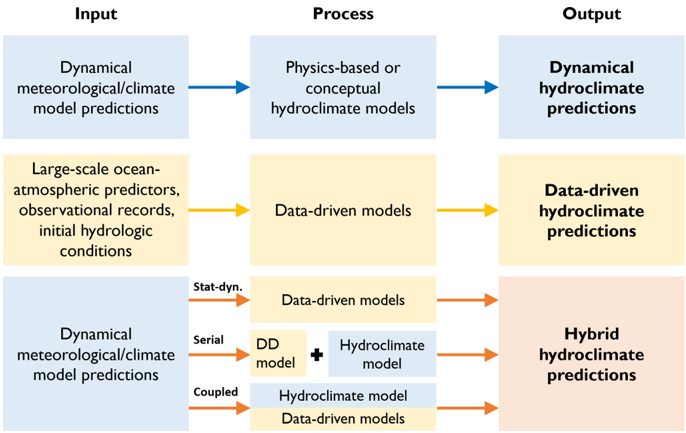
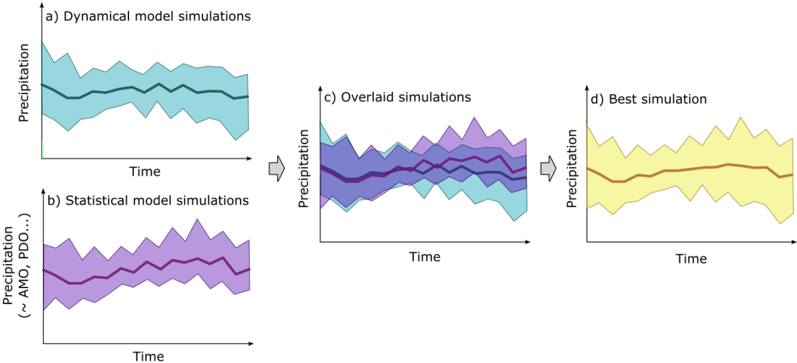
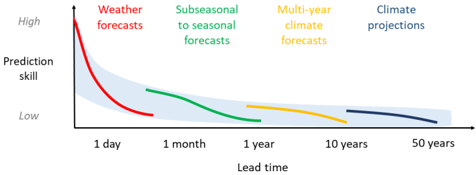
“The third category of hybrid predictions, statistical-dynamical forecasting (Slater et al., 2023) combines dynamical predictions with different empirical, purely data-driven approaches (Figure 2d).”
Shah, P., Pahari, S., Bhavsar, R., & Kwon, J. S. (2024) · Computers & Chemical Engineering · doi:10.1016/j.compchemeng.2024.108926 · Cited by 135
Metadata
- Authors
- Slater, L. J., Arnal, L., Boucher, M.-A., Chang, A. Y.-Y., Moulds, S., Murphy, C., Nearing, G., Shalev, G., Shen, C., Speight, L., Villarini, G., Wilby, R. L., Wood, A., & Zappa, M.
- Affiliations
- University of Oxford (GB)
- University of Saskatchewan (CA)
- Université de Sherbrooke (CA)
- Swiss Federal Institute for Forest, Snow and Landscape Research (CH)
- National University of Ireland, Maynooth (IE)
- Google (United States) (US)
- Google (Israel) (IL)
- Pennsylvania State University (US)
- University of Iowa (US)
- Loughborough University (GB)
- NSF National Center for Atmospheric Research (US)
- Corresponding author
- Slater, Louise J.
- ORCID
- Venue
- Hydrology and Earth System Sciences
- Publisher
- Copernicus GmbH
- Published
- 2023-05-15
- Volume
- 27
- Issue
- 9
- Pages
- 1865-1889
- ISSN
- 1027-5606 (ISSN-L)
- 1607-7938
- OpenAlex
- W4387437512
- Semantic Scholar
- 70def1c9bdf053b526f5798935508cbb1ef1c214
- Cited by
- 281
- References
- 163
- Citations by year
- 2026: 89 · 2025: 94 · 2024: 66 · 2023: 28
- FWCI
- 23.08
- Type
- journal article
- Language
- en
- Open access
- gold
- doi.org
- Licence
- Locations
- Hydrology and earth system sciences (publishedVersion, cc-by)
- Maynooth University ePrints and eTheses Archive (Maynooth University) (acceptedVersion)
- DORA WSL (Swiss Federal Institute for Forest, Snow and Landscape Research) (submittedVersion, cc-by)
- HARVEST (University of Saskatchewan) (submittedVersion, cc-by)
- DOAJ (DOAJ: Directory of Open Access Journals) (submittedVersion, cc-by-sa)
- Loughborough University Research Repository (Loughborough University) (submittedVersion, cc-by)
- Edinburgh Research Explorer (University of Edinburgh) (submittedVersion, cc-by)
- Repository for Publications and Research Data (ETH Zurich) (submittedVersion, cc-by)
- ETH Zürich Research Collection
- Funders
- UK Research and Innovation (MR/V022008/1, NE/S015728/1)
- Swiss Federal Institute for Forest, Snow and Landscape Research (MaLeFix (Extremes))
- Canada First Research Excellence Fund (Global Water Futures programme)
- U.S. Army Corps of Engineers (USACE Institute for Water Resources)
- Science Foundation Ireland (SFI/17/CDA/4783)
- Topics
- Physical Sciences › Environmental Science › Environmental Engineering › Hydrological Forecasting Using AI
- Physical Sciences › Earth and Planetary Sciences › Atmospheric Science › Meteorological Phenomena and Simulations
- Physical Sciences › Environmental Science › Global and Planetary Change › Climate variability and models
- Keywords
- hybrid forecasting, machine learning, numerical weather prediction, ensemble forecasting, streamflow forecasting, flood forecasting, drought forecasting, tropical cyclones, atmospheric rivers, data assimilation, operational forecasting
About these checks
Registry, retraction, Cites and statistics results are computed, not judged, with one exception: a printed reference that no index lists is read once by a model before it counts as a citation error. Claims are extracted by a model and kept only when their quote appears verbatim in the text; each cited source is then checked, with a model’s help, for whether it says what the claim relies on. Those verdicts can be wrong — read the claim’s quote and the cited source before relying on one.
Statistics and arithmetic are recomputed, not judged.
Confidence bands are shown only for fields calibrated on our annotated test set. None is calibrated yet, so no band is shown.
What counts as a claim ›How we measure confidence ›How we check this ›
Are you an author, or do you see a problem with this page? Request a review
Data sources
Bibliographic data: Semantic Scholar, OpenAlex, Crossref.
Contains information from the Semantic Scholar Academic Graph Datasets, made available under the ODC Attribution License (ODC-BY 1.0).
Semantic Scholar’s data is described in: Kinney, R., et al. (2023). The Semantic Scholar Open Data Platform. arXiv:2301.10140.
