

LIMA: Less Is More for Alignment
Open accessThe DOI matches its Crossref record; 12 of the 12 references it cites were found in a registry or an index.
Abstract
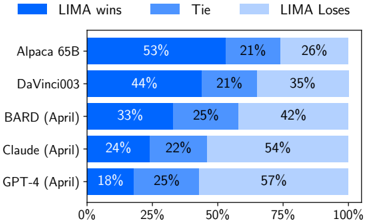
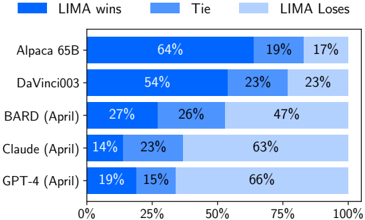
Large language models are trained in two stages: (1) unsupervised pretraining from raw text, to learn general-purpose representations, and (2) large scale instruction tuning and reinforcement learning, to better align to end tasks and user preferences. We measure the relative importance of these two stages by training LIMA, a 65B parameter LLaMa language model fine-tuned with the standard supervised loss on only 1,000 carefully curated prompts and responses, without any reinforcement learning or human preference modeling. LIMA demonstrates remarkably strong performance, learning to follow specific response formats from only a handful of examples in the training data, including complex queries that range from planning trip itineraries to speculating about alternate history. Moreover, the model tends to generalize well to unseen tasks that did not appear in the training data. In a controlled human study, responses from LIMA are either equivalent or strictly preferred to GPT-4 in 43% of cases; this statistic is as high as 58% when compared to Bard and 65% versus DaVinci003, which was trained with human feedback. Taken together, these results strongly suggest that almost all knowledge in large language models is learned during pretraining, and only limited instruction tuning data is necessary to teach models to produce high quality output.
Overview
The claims and statistics of this paper haven’t been checked yet.
Free: it reads the open-access text and checks the first 5 claims that cite a source we can check. Create a free account to check every claim.
Integrity signals
Registry
Cites
Statistics
Figures
Verification
Claims the paper makes
The claims and statistics of this paper haven’t been checked yet.
Free: it reads the open-access text and checks the first 5 claims that cite a source we can check. Create a free account to check every claim.
Claims other papers make about this one
Each is checked against this paper’s own text: does it say what the citing paper says it does?
The source backs part of the claim, not all of it — or backs it for a different population, condition or comparison.
In the citing paper
“However, when focusing specifically on a single task or narrow set of tasks, far fewer instruction instances may suffice.”
From A Survey of Large Language Models (2026) · cites this paper as [195]
Experimental — accuracy not yet measuredThe source backs part of the claim, not all of it — or backs it for a different population, condition or comparison.
In the citing paper
“Recent studies [323] show that the knowledge within LLMs is almost entirely acquired during pretraining.”
From Survey of Hallucination in Natural Language Generation (2023) · cites this paper as [323]
Experimental — accuracy not yet measuredThe source backs part of the claim, not all of it — or backs it for a different population, condition or comparison.
In the citing paper
“Redundancy and Inefficient Use of Information: Treating all N training samples ( x i , y i ) in D train as equally informative is inefficient, as the number of truly effective samples N eff is often much smaller than N (i.e., N eff ≪ N ) (Zhou et al., 2023).”
From TT-SI: Self-Improving LLM Agents with Test-Time Training (2026) · cites this paper as Zhou et al., 2023
Experimental — accuracy not yet measuredThe source backs part of the claim, not all of it — or backs it for a different population, condition or comparison.
In the citing paper
“Nevertheless, smaller datasets can be vital in enabling key post -training techniques such as fine-tuning, in-context learning, and prompt engineering (cf. [86, 122]).”
From Engaging Communities Meaningfully in Defining Disability Representation for AI Image Generation (2026) · cites this paper as [122]
Experimental — accuracy not yet measuredThe cited source says what the claim attributes to it.
In the citing paper
“For example, the authors of LIMA collected a diverse dataset of 1,000 carefully curated prompts and responses which are aligned with each other [323].”
From Survey of Hallucination in Natural Language Generation (2023) · cites this paper as [323]
3 more claims about this paper
Create a free account to see every claim other papers make about this one.
Self-check
Percentages, sums and reported differences re-computed from the paper’s own numbers.
The self-check needs the paper’s full text.
Citations
Cites
The publisher hasn’t deposited this paper’s reference list.
Research works printed but not linked: 7
- Yuntao Bai, Saurav Kadavath, Sandipan Kundu, Amanda Askell, Jackson Kernion, Andy Jones, Anna Chen, Anna Goldie, Azalia Mirhoseini, Cameron McKinnon, et al. Constitutional ai: Harmlessness from ai feedback. arXiv preprint arXiv:2212.08073, 2022b. · arXiv
- Ari Holtzman, Jan Buys, Li Du, Maxwell Forbes, and Yejin Choi. The curious case of neural text degeneration. In International Conference on Learning Representations, 2019.
- Yuval Kirstain, Patrick Lewis, Sebastian Riedel, and Omer Levy. A few more examples may be worth billions of parameters. arXiv preprint arXiv:2110.04374, 2021. · arXiv
- Long Ouyang, Jeffrey Wu, Xu Jiang, Diogo Almeida, Carroll Wainwright, Pamela Mishkin, Chong Zhang, Sandhini Agarwal, Katarina Slama, Alex Ray, et al. Training language models to follow instructions with human feedback. Advances in Neural Information Processing Systems, 35: 27730-27744, 2022.
- Victor Sanh, Albert Webson, Colin Raffel, Stephen Bach, Lintang Sutawika, Zaid Alyafeai, Antoine Chaffin, Arnaud Stiegler, Teven Le Scao, Arun Raja, et al. Multitask prompted training enables zero-shot task generalization. In The Tenth International Conference on Learning Representations, 2022.
- Yizhong Wang, Swaroop Mishra, Pegah Alipoormolabashi, Yeganeh Kordi, Amirreza Mirzaei, Anjana Arunkumar, Arjun Ashok, Arut Selvan Dhanasekaran, Atharva Naik, David Stap, et al. Super-naturalinstructions:generalization via declarative instructions on 1600+ tasks. In EMNLP, 2022b.
- Jason Wei, Maarten Bosma, Vincent Zhao, Kelvin Guu, Adams Wei Yu, Brian Lester, Nan Du, Andrew M Dai, and Quoc V Le. Finetuned language models are zero-shot learners. In International Conference on Learning Representations, 2022a.
Cited by
Items 201–300 of 938
MELTing Point: Mobile Evaluation of Language Transformers
Laskaridis, S., Katevas, K., Minto, L., & Haddadi, H. (2024) · Proceedings of the 30th Annual International Conference on Mobile Computing and Networking · doi:10.1145/3636534.3690668 · Cited by 37
“Training cost generally scales down as we move from pretraining downstream, as do data ingestion needs [120].”
The Road to Artificial SuperIntelligence: A Comprehensive Survey of Superalignment
Kim, H., Yi, X., Bak, J., Yao, J., Lian, J., Huang, M., Duan, S., & Xie, X. (2025) · SuperIntelligence - Robotics - Safety & Alignment · doi:10.70777/si.v2i1.13963 · Cited by 41
Zhou, J., & Ma, Z. (2025) · Automation in Construction · doi:10.1016/j.autcon.2025.106151 · Cited by 45
A Critical Evaluation of AI Feedback for Aligning Large Language Models
Sharma, A., Keh, S. S., Mitchell, E., Finn, C., Arora, K., & Kollar, T. (2024) · neural information processing systems · doi:10.52202/079017-0919 · Cited by 62
LLM-Assisted Code Cleaning For Training Accurate Code Generators
Jain, N., Zhang, T., Chiang, W.-L., Gonzalez, J. E., Sen, K., & Stoica, I. G. (2024) · International Conference on Learning Representations · doi:10.48550/arxiv.2311.14904 · Cited by 66
van Dijk, B., Kouwenhoven, T., Spruit, M. R., & van Duijn, M. J. (2023) · Conference on Empirical Methods in Natural Language Processing (EMNLP) · doi:10.18653/v1/2023.emnlp-main.779 · Cited by 57
Dissecting Human and LLM Preferences
Li, J., Zhou, F., Sun, S., Zhang, Y., Zhao, H., & Liu, P. (2024) · Proceedings of the conference - Association for Computational Linguistics. Meeting · doi:10.18653/v1/2024.acl-long.99 · Cited by 59
Self-citationEvaluating and Advancing Large Language Models for Water Knowledge Tasks in Engineering and Research
Xu, B., Li, Z., Yang, Y., Wu, G., Wang, C., Tang, X., Li, Y., Wu, Z., Su, Q., Shi, X., et al. (2025) · Environmental Science & Technology Letters · doi:10.1021/acs.estlett.5c00038 · Cited by 40
Zhou, D., Wang, K., Gu, J., Peng, X., Lian, D., Zhang, Y., You, Y., & Feng, J. (2023) · IEEE/CVF International Conference on Computer Vision (ICCV) · doi:10.1109/iccv51070.2023.01578 · Cited by 78
“We fine-tune the LLaMA-7B [52] model on the sampled datasets with hyper-parameters introduced in [67] for a smaller dataset.”
Fine-tuning a large language model for automated code compliance of building regulations
Shi, J. W. L., Solihin, W., & Yeoh, J. K. W. (2025) · Advanced Engineering Informatics · doi:10.1016/j.aei.2025.103676 · Cited by 56
Safe-CLIP: Removing NSFW Concepts from Vision-and-Language Models
Poppi, S., Poppi, T., Cocchi, F., Cornia, M., Baraldi, L., & Cucchiara, R. (2024) · Lecture notes in computer science · doi:10.1007/978-3-031-73668-1_20 · Cited by 84
Learning and Forgetting Unsafe Examples in Large Language ModelsPreprint
Zhao, J., Deng, Z., Madras, D., Zou, J., & Ren, M. (2023) · arXiv (Cornell University) · doi:10.48550/arxiv.2312.12736 · Cited by 43
Reducing Tool Hallucination via Reliability AlignmentPreprint
Xu, H., Zhu, Z., Pan, L., Wang, Z., Zhu, S., Ma, D., Cao, R., Chen, L., & Yu, K. (2024) · arXiv (Cornell University) · doi:10.48550/arxiv.2412.04141 · Cited by 53
Lee, U., Jeon, M., Lee, Y., Byun, G., Son, Y., Shin, J., Ko, H., & Kim, H. (2024) · Computers and Education Artificial Intelligence · doi:10.1016/j.caeai.2024.100297 · Cited by 46
“Quantitatively, only 1000 samples of docent-like dialogue data were generated to train LLaVA-Docent, referencing the LIMA (Zhou et al., 2023) and Platypus (Lee et al., 2023).”
MethodThe Best Instruction-Tuning Data are Those That Fit
Zhang, D., Dai, Q., & Peng, H. M. (2025) · neural information processing systems · doi:10.52202/085713-4717 · Cited by 60
He, Z., Zhao, H., Qiao, Y., Yang, F., Payani, A., Ma, J., & Du, M. (2026) · Lecture notes in computer science · doi:10.1007/978-3-032-37676-3_11 · Cited by 38
Aggarwal, T., Salatino, A. A., Osborne, F., & Motta, E. (2025) · Information Processing & Management · doi:10.1016/j.ipm.2025.104262 · Cited by 46
“This highlights the trade-o ff s inherent in optimising for general capabilities versus domain-specific knowledge retention [89].”
TinyAgent: Function Calling at the EdgePreprint
Erdogan, L. E., Lee, N., Jha, S., Kim, S. H., Tabrizi, R., Moon, S., Hooper, C. R. C., Anumanchipalli, G. K., Keutzer, K., & Gholami, A. (2024) · arXiv · doi:10.48550/arxiv.2409.00608 · Cited by 51
“Recent advancements have shown that by filtering these datasets or generating smaller, higher quality datasets, one can achieve similar or better performance [2, 1, 34, 41].”
BackgroundSource2Synth: Synthetic Data Generation and Curation Grounded in Real Data SourcesPreprint
Lupidi, A., Gemmell, C., Cancedda, N., Dwivedi-Yu, J., Weston, J., Foerster, J., Răileanu, R., & Lomelí, M. (2024) · arXiv (Cornell University) · doi:10.48550/arxiv.2409.08239 · Cited by 39
Large Language Models are not Fair Evaluators
Wang, P., Li, L., Chen, L., Cai, Z., Zhu, D., Lin, B., Cao, Y., Liu, Q., Liu, T., & Sui, Z. (2023) · arXiv · doi:10.48550/arxiv.2305.17926 · Cited by 34
“Recently, a lot of works (Zheng et al., 2023; Wang et al., 2023a; Sun et al., 2023; Zhou et al., 2023) have been utilizing LLMs such as GPT-4 as evaluators to compare the performance of two AI assistants.”
BackgroundMo, L., Wang, B., Chen, M., & Sun, H. (2024) · Conference of the North American Chapter of the Association for Computational Linguistics: Human Language Technologies (NAACL-HLT) · doi:10.18653/v1/2024.naacl-long.152 · Cited by 47
On the Vulnerability of Safety Alignment in Open-Access LLMs
Yi, J.-W., Ye, R., Chen, Q.-S., Zhu, B., Chen, S.-H., Lian, D.-F., Sun, G.-Z., Xie, X., & Wu, F.-Z. (2024) · Annual Meeting of the Association for Computational Linguistics · doi:10.18653/v1/2024.findings-acl.549 · Cited by 91
“We proceed the typical supervised fine-tuning process (Wei et al., 2021; Zhou et al., 2023a).”
MethodInfluentialTinyAgent: Function Calling at the Edge
Erdogan, L. E., Lee, N., Jha, S., Kim, S., Tabrizi, R., Moon, S., Hooper, C. R. C., Anumanchipalli, G. K., Keutzer, K., & Gholami, A. (2024) · Conference on Empirical Methods in Natural Language Processing: System Demonstrations (EMNLP) · doi:10.18653/v1/2024.emnlp-demo.9 · Cited by 73
Sušnjak, T. (2023) · arXiv · doi:10.48550/arxiv.2306.14905 · Cited by 43
A Preliminary Study of the Intrinsic Relationship between Complexity and AlignmentPreprint
Zhao, Y., Yu, B., Hui, B., Yu, H., Huang, F., Li, Y., & Zhang, N. L. (2023) · arXiv (Cornell University) · doi:10.48550/arxiv.2308.05696 · Cited by 42
“Building upon this foundation, LIMA (Zhou et al., 2023) and Alpagasus (Chen et al., 2023a) separately validate the significant impact of data diversity and quality on instructional effectiveness.”
BackgroundMethodInfluentialLanguage Model Unalignment: Parametric Red-Teaming to Expose Hidden Harms and BiasesPreprint
Bhardwaj, R., & Poria, S. (2023) · arXiv (Cornell University) · doi:10.48550/arxiv.2310.14303 · Cited by 43
EDA Corpus: A Large Language Model Dataset for Enhanced Interaction with OpenROAD
Wu, B.-Y., Sharma, U., Kankipati, S. R. D., Yadav, A., George, B. K., Guntupalli, S. R., Rovinski, A., & Chhabria, V. A. (2024) · IEEE LLM Aided Design Workshop (LAD) · doi:10.1109/lad62341.2024.10691774 · Cited by 38
“Restrictions apply. fine-tuning foundation models [22].”
Improving Retrieval Augmented Language Model with Self-Reasoning
Xia, Y., Zhou, J., Shi, Z., Chen, J., & Huang, H. (2025) · Proceedings of the AAAI Conference on Artificial Intelligence · doi:10.1609/aaai.v39i24.34743 · Cited by 66
Holtzman, A., West, P., & Zettlemoyer, L. (2025) · Journal of Social Computing · doi:10.23919/jsc.2025.0009 · Cited by 38
Self-citationChatGLM-RLHF: Practices of Aligning Large Language Models with Human FeedbackPreprint
Hou, Z., Niu, Y.-L., Du, Z.-X., Zhang, X.-H., Liu, X., Zeng, A.-H., Zheng, Q., Huang, M.-L., Wang, H.-N., Tang, J., et al. (2024) · arXiv.org · doi:10.48550/arxiv.2404.00934 · Cited by 38
“The quality of instruction data has been proved to be significantly critical Zhou et al. (2023);”
BackgroundSocial-LLaVA: Enhancing Social Robot Navigation through Human-Language Reasoning
Payandeh, A., Song, D., Nazeri, M., Liang, J., Mukherjee, P., Raj, A. H., Kong, Y., Manocha, D., & Xiao, X. (2025) · IEEE/RSJ International Conference on Intelligent Robots and Systems (IROS) · doi:10.1109/iros60139.2025.11247618 · Cited by 46
“A small amount of hand-crafted human data can significantly improve performance [16], [17], as demonstrated by our quantitative analysis of over 400 VQA samples and qualitative analysis based on the average scores from fifteen different human judges across 50 VQA social navigation tasks.”
Improving the Robustness of Large Language Models via Consistency Alignment
Zhao, Y., Yan, L., Sun, W., Xing, G., Wang, S., Meng, C., Cheng, Z., Ren, Z., & Yin, D. (2024) · Language Resources and Evaluation Conference (LREC) · doi:10.63317/4p5t4qbdw6ca · Cited by 63
He, Z., Wang, X., Jiao, W., Zhang, Z., Wang, R., Shi, S., & Tu, Z. (2024) · Conference of the North American Chapter of the Association for Computational Linguistics: Human Language Technologies (NAACL-HLT) · doi:10.18653/v1/2024.naacl-long.451 · Cited by 49
MMAC-Copilot: Multi-modal Agent Collaboration Operating CopilotPreprint
Song, Z., Li, Y., Fang, M., Li, Y., Chen, Z., Shi, Z., Huang, Y., Chen, X., & Chen, L. (2024) · arXiv · doi:10.48550/arxiv.2404.18074 · Cited by 37
“Soon afterwards, Large Vision Models (LVMs) (Cai et al., 2023; Li et al., 2024; Liu et al., 2023, 2024; Luo * Equal contributions. et al., 2023; Zhou et al., 2023a) expand beyond traditional text-based processing by integrating a visual dimension into LLMs.”
Sketch2Code: Evaluating Vision-Language Models for Interactive Web Design Prototyping
Li, R., Zhang, Y., & Yang, D. (2025) · Conference of the North American Chapter of the Association for Computational Linguistics: Human Language Technologies (NAACL-HLT) · doi:10.18653/v1/2025.naacl-long.198 · Cited by 58
SaulLM-54B & SaulLM-141B: Scaling Up Domain Adaptation for the Legal Domain
Colombo, P., Pires, T., Boudiaf, M., Melo, R., Culver, D., Malaboeuf, E., Hautreux, G., Charpentier, J., & Desa, M. (2024) · neural information processing systems · doi:10.52202/079017-4120 · Cited by 72
Preference Tuning with Human Feedback on Language, Speech, and Vision Tasks: A Survey
Winata, G. I., Zhao, H., Das, A., Tang, W., Yao, D. D. W., Zhang, S.-X., & Sahu, S. (2025) · Journal of Artificial Intelligence Research · doi:10.1613/jair.1.17541 · Cited by 45
Self-citationChern, I.-C., Chern, S., Chen, S., Yuan, W., Feng, K., Zhou, C., He, J., Neubig, G., & Liu, P. (2023) · arXiv · doi:10.48550/arxiv.2307.13528 · Cited by 29
“For prompts selection, we follow the same intuition as (Zhou et al., 2023): KB-QA is the most common scenario.”
BackgroundMethodSelf-citationSample-Efficient Human Evaluation of Large Language Models via Maximum Discrepancy Competition
Feng, K., Ding, K., Hongzhi, T., Ma, K., Wang, Z., Guo, S., Yuzhou, C., Sun, G., Zheng, G., Zhang, Q., et al. (2025) · Proceedings of the conference - Association for Computational Linguistics. Meeting · doi:10.18653/v1/2025.acl-long.535 · Cited by 39
Using In-Context Learning to Improve Dialogue SafetyPreprint
Meade, N., Gella, S., Hazarika, D., Gupta, P., Jin, D., Reddy, S., Liu, Y., & Hakkani-Tür, D. Z. (2023) · arXiv (Cornell University) · doi:10.48550/arxiv.2302.00871 · Cited by 32
Loh, S. B., & Raamkumar, A. S. (2023) · arXiv (Cornell University) · doi:10.48550/arxiv.2310.08017 · Cited by 39
CITB: A Benchmark for Continual Instruction Tuning
Zhang, Z., Fang, M., Chen, L., & Namazi‐Rad, M. (2023) · Findings of the Association for Computational Linguistics: EMNLP (Findings of EMNLP) · doi:10.18653/v1/2023.findings-emnlp.633 · Cited by 54
Qiu, X., Hao, T., Shi, S., Tan, X., & Xiong, Y.-J. (2024) · IEEE Signal Processing Letters · doi:10.1109/lsp.2024.3377590 · Cited by 32
“Thislabelingmethodhasbeenusedin[23]toevaluatethequality oftheLLMoutputs.”
MethodResultInfluentialFake Alignment: Are LLMs Really Aligned Well?
Wang, Y., Teng, Y., Huang, K., Lyu, C., Zhang, S., Zhang, W., Ma, X., Jiang, Y., Qiao, Y., & Wang, Y. (2024) · Conference of the North American Chapter of the Association for Computational Linguistics: Human Language Technologies (NAACL-HLT) · doi:10.18653/v1/2024.naacl-long.263 · Cited by 63
Self-citationGao, K., He, S., He, Z., Lin, J., Pei, Q., Shao, J., & Zhang, W. (2023) · arXiv (Cornell University) · doi:10.48550/arxiv.2308.14149 · Cited by 33
“We evaluate the consistency between annotators using a tie-discounted accuracy [7].”
MethodHD-Eval: Aligning Large Language Model Evaluators Through Hierarchical Criteria Decomposition
Liu, Y., Yang, T., Huang, S., Zhang, Z., Huang, H., Wei, F., Deng, W., Sun, F., & Zhang, Q. (2024) · Proceedings of the conference - Association for Computational Linguistics. Meeting · doi:10.18653/v1/2024.acl-long.413 · Cited by 49
Towards Artificial Intelligence Applications in Next Generation Cytopathology
Giarnieri, E., & Scardapane, S. (2023) · Biomedicines · doi:10.3390/biomedicines11082225 · Cited by 33
Critical Data Size of Language Models from a Grokking PerspectivePreprint
Zhu, X., Fu, Y., Zhou, B., & Lin, Z. (2024) · arXiv (Cornell University) · doi:10.48550/arxiv.2401.10463 · Cited by 33
“Zhou et al. [27] use only 1000 samples to fine-tune a 65B parameter LLaMa [20] without reinforcement learning.”
BackgroundLongSkywork: A Training Recipe for Efficiently Extending Context Length in Large Language ModelsPreprint
Zhao, L., Wei, T., Zeng, L., Cheng, C., Yang, L., Cheng, P., Wang, L., Li, C., Wu, X., Zhu, B., et al. (2024) · arXiv · doi:10.48550/arxiv.2406.00605 · Cited by 33
RA-DIT: Retrieval-Augmented Dual Instruction Tuning
Lin, X. V., Chen, X., Chen, M., Shi, W., Lomeli, M., James, R., Rodriguez, P., Kahn, J., Szilvasy, G., Lewis, M., et al. (2023) · arXiv · doi:10.48550/arxiv.2310.01352 · Cited by 26
Self-citationFlaharty, K. A., Hu, P., Hanchard, S. L., Ripper, M. E., Duong, D., Waikel, R. L., & Solomon, B. D. (2024) · The American Journal of Human Genetics · doi:10.1016/j.ajhg.2024.07.011 · Cited by 26
Miao, Z., Zhang, Y., Fabian, Z., Celis, A. H., Beery, S., Li, C., Liu, Z., Gupta, A., Nasir, M., Li, W., et al. (2025) · Methods in Ecology and Evolution · doi:10.1111/2041-210x.70120 · Cited by 32
“…considered relatively low compared to training multimodal language models from scratch or even the traditional transfer learning with supervised approaches, the quality and variety within these annota - tions are critical to ensuring the performance of instruction tuning (Zhou, Liu, et al., 2023 ).”
Self-Prompt Tuning: Enable Autonomous Role-Playing in LLMs
Kong, A., Zhao, S., Chen, H., Li, Q., Qin, Y., Zhou, J., & Sun, H. (2025) · Lecture notes in computer science · doi:10.1007/978-981-95-3343-5_33 · Cited by 32
A Survey of Deep Active Learning for Foundation Models
Wan, T., Xu, K., Yu, T., Wang, X., Feng, D., Ding, B. Y., & Wang, H. (2023) · Intelligent Computing · doi:10.34133/icomputing.0058 · Cited by 35
Knowledge Verification to Nip Hallucination in the Bud
Wan, F., Huang, X., Cui, L., Quan, X., Bi, W., & Shi, S. (2024) · Conference on Empirical Methods in Natural Language Processing (EMNLP) · doi:10.18653/v1/2024.emnlp-main.152 · Cited by 33
“Following previous studies (Zhou et al., 2023; Zheng et al., 2023), we conduct LLM-based judgments on LIMAEval, VicunaEval, WizardLMEval, and TruthfulQA 3 to evaluate the hallucination rate.”
BackgroundMethodJointly Training Large Autoregressive Multimodal Models
Aiello, E., Yu, L., Nie, Y., Aghajanyan, A., & Oğuz, B. (2023) · International Conference on Learning Representations · doi:10.48550/arxiv.2309.15564 · Cited by 37
Self-citationHuman-Instruction-Free LLM Self-Alignment with Limited SamplesPreprint
Guo, H., Yao, Y.-S., Shen, W., Wei, J., Zhang, X., Wang, Z.-R., & Liu, Y. (2024) · arXiv.org · doi:10.48550/arxiv.2401.06785 · Cited by 32
“A recent development by LIMA (Zhou et al., 2023) demonstrates that substantial alignment improvements can be achieved using as few as 1,000 examples for SFT.”
BackgroundWeber, L., Bruni, E., & Hupkes, D. (2023) · Conference on Computational Natural Language Learning · doi:10.18653/v1/2023.conll-1.20 · Cited by 50
CoFInAl: Enhancing Action Quality Assessment with Coarse-to-Fine Instruction Alignment
Zhou, K., Li, J., Cai, R., Wang, L., Zhang, X., & Liang, X. (2024) · International Joint Conference on Artificial Intelligence · doi:10.24963/ijcai.2024/196 · Cited by 59
Generative AI for OCL Constraint Generation: Dataset Collection and LLM Fine-tuning
Pan, F., Zolfaghari, V., Wen, L., Petrović, N., Lin, J., & Knoll, A. (2024) · IEEE International Symposium on Systems Engineering · doi:10.1109/isse63315.2024.10741141 · Cited by 33
InvestLM: A Large Language Model for Investment using Financial Domain Instruction Tuning
Yang, Y., Tang, Y., & Tam, K. Y. (2023) · arXiv · doi:10.48550/arxiv.2309.13064 · Cited by 24
“We find that a diverse set of domain instructions is very effective in "transforming" a high-quality foundation model (such as LLaMA-65B) into a high-quality domain-specific model - suggesting the consistency with the Superficial Alignment Hypothesis (Zhou et al., 2023).”
Influentialvan Duijn, M., van Dijk, B., Kouwenhoven, T., de Valk, W., Spruit, M., & vanderPutten, P. (2023) · Proceedings of the 27th Conference on Computational Natural Language Learning (CoNLL) · doi:10.18653/v1/2023.conll-1.25 · Cited by 24
Optimizing large vision-language models for context-aware construction safety assessment
Kim, T., Kim, S., Chern, W., Park, S., Kim, D., & Kim, H. (2025) · Automation in Construction · doi:10.1016/j.autcon.2025.106510 · Cited by 33
A Survey of Progress in LLM Alignment From the Perspective of Reward Design
Ji, M., Wu, Y., Wu, Z., Wang, S., Yang, J., Dras, M., & Naseem, U. (2026) · IEEE Transactions on Artificial Intelligence · doi:10.1109/tai.2026.3654921 · Cited by 30
“To reduce the complexity and cost of alignment, some researchers have focused on the initial phase of RLHF, SFT, and proposed a range of sophisticated SFT variations aiming to achieve comparable performance to RLHF [47], [94], [95].”
Specialist or Generalist? Instruction Tuning for Specific NLP Tasks
Shi, C., Su, Y., Yang, C. H., Yang, Y., & Cai, D. (2023) · Conference on Empirical Methods in Natural Language Processing (EMNLP) · doi:10.18653/v1/2023.emnlp-main.947 · Cited by 45
Failures Pave the Way: Enhancing Large Language Models through Tuning-free Rule Accumulation
Yang, Z., Li, P., & Liu, Y. (2023) · Conference on Empirical Methods in Natural Language Processing (EMNLP) · doi:10.18653/v1/2023.emnlp-main.109 · Cited by 49
How to Regulate Large Language Models for Responsible AI
Berengueres, J. O. L. (2024) · IEEE Transactions on Technology and Society · doi:10.1109/tts.2024.3403681 · Cited by 33
“For this reason, companies such as OpenAI use a method called Reinforcement Learning from Human Feedback (RLHF) to “tune” the (raw) LLM output [52].”
MethodYi, H., Lin, F., Li, H., Ning, P., Yu, X., & Xiao, R. (2024) · Findings of the Association for Computational Linguistics: ACL (Findings of ACL) · doi:10.18653/v1/2024.findings-acl.313 · Cited by 40
Mosaic-IT: Cost-Free Compositional Data Synthesis for Instruction Tuning
Li, M., Chen, P. ‐., Wang, C., Zhao, H., Liang, Y., Hou, Y., Liu, F., & Zhou, T. (2025) · Findings of the Association for Computational Linguistics: ACL (Findings of ACL) · doi:10.18653/v1/2025.findings-acl.1297 · Cited by 27
Dietrich, J., & Hollstein, A. (2024) · Drug Safety · doi:10.1007/s40264-024-01499-1 · Cited by 27
CLIP-DPO: Vision-Language Models as a Source of Preference for Fixing Hallucinations in LVLMs
Ouali, Y., Bulat, A., Martínez, B., & Tzimiropoulos, G. (2024) · Lecture notes in computer science · doi:10.1007/978-3-031-73116-7_23 · Cited by 76
Holmes ⌕ A Benchmark to Assess the Linguistic Competence of Language Models
Waldis, A., Perlitz, Y., Choshen, L., Hou, Y.-F., & Gurevych, I. (2024) · Transactions of the Association for Computational Linguistics · doi:10.1162/tacl_a_00718 · Cited by 16
“Third, while instruction tuning (Ouyang et al., 2022; Touvron et al., 2023; Zhou et al., 2023) aims to align LMs with human interactions, we focus for the first time on its effect on linguistic competence.”
Taming AI Bots: Controllability of Neural States in Large Language ModelsPreprint
Soatto, S., Tabuada, P., Chaudhari, P., & Liu, T. Y. (2023) · arXiv (Cornell University) · doi:10.48550/arxiv.2305.18449 · Cited by 28
Kirk, H. R., Vidgen, B., Röttger, P., & Hale, S. A. (2023) · arXiv (Cornell University) · doi:10.48550/arxiv.2310.02457 · Cited by 32
“…learning—be it red-teaming [18], reinforcement learning with human feedback [45, 40, 19, 4], preference pre-training [29], supervised fine-tuning [67] or direct preference optimisation [49]—there is a lack of shared terminology for articulating what alignment actually means in a given empirical…”
BackgroundProVision: Programmatically Scaling Vision-centric Instruction Data for Multimodal Language ModelsPreprint
Zhang, J., Xue, L., Song, L., Wang, J., Huang, W., Shu, M., Yan, A., Ma, Z., Niebles, J. C., Savarese, S., et al. (2024) · arXiv · doi:10.48550/arxiv.2412.07012 · Cited by 27
“…• Math, science (280K) : iconqa [61], intergps [60], tqa [34], geomverse [32], raven [114], mathvision [95], scienceQA [62], cambrian-data-engine [91] • Text-only SFT data (45K) : gsmk8k [18], slimorca [48], orca-math-word-problems [68], Python-Code-23k-ShareGPT [1], lima [119] Fine-tuning details.”
Towards Spatial Trace with Reasoning in Vision-Language Models for Robotics
Zhou, E., Li, Y., An, J., Zhang, J., Rong, S., Liu, M., Han, Y., Ji, Y., Tan, H., He, J., et al. (2026) · Lecture notes in computer science · doi:10.1007/978-3-032-36969-7_21 · Cited by 29
Self-citationPockEngine: Sparse and Efficient Fine-tuning in a Pocket
Zhu, L., Hu, L., Lin, J., Chen, W.-M., Wang, W.-C., Gan, C., & Han, S. (2023) · IEEE/ACM International Symposium on Microarchitecture (MICRO) · doi:10.1145/3613424.3614307 · Cited by 51
Tan, X., Shi, S., Qiu, X., Qu, C., Qi, Z., Xu, Y., & Qi, Y. (2023) · Conference on Empirical Methods in Natural Language Processing (EMNLP) · doi:10.18653/v1/2023.emnlp-industry.62 · Cited by 53
AI Code Generators for Security: Friend or Foe?
Natella, R., Liguori, P., Improta, C., Čukić, B., & Cotroneo, D. (2024) · IEEE Security & Privacy · doi:10.1109/msec.2024.3355713 · Cited by 27
Demystifying Data Management for Large Language Models
Miao, X.-P., Jia, Z.-H., & Cui, B. (2024) · SIGMOD Conference Companion · doi:10.1145/3626246.3654683 · Cited by 25
“By carefully scrutinizing and adjusting the data, developers can work towards enhancing diversity [27, 74, 93, 95, 148, 174], fairness, and inclusivity within the model [35, 163].”
BackgroundCoachLM: Automatic Instruction Revisions Improve the Data Quality in LLM Instruction Tuning
Liu, Y., Tao, S., Zhao, X., Zhu, M. L., Ma, W., Zhu, J., Su, C., Hou, Y., Zhang, M., Zhang, M., et al. (2024) · IEEE International Conference on Data Engineering (ICDE) · doi:10.1109/icde60146.2024.00390 · Cited by 47
“Previous studies [18]–[20] generally agree that for LLMs, high-quality instruction pairs are advantageous for instruction tuning, while low-quality pairs may impede the instruction-following ability of LLMs trained on such data.”
BackgroundPan, X., Huang, L., Kang, L., Liu, Z., Lu, Y., & Cheng, S. (2024) · Proceedings of the conference - Association for Computational Linguistics. Meeting · doi:10.18653/v1/2024.acl-long.821 · Cited by 43
Facilitating Large Language Model Russian Adaptation with Learned Embedding Propagation
Tikhomirov, M. M., & Chernyshev, D. (2024) · Journal of language and Education · doi:10.17323/jle.2024.22224 · Cited by 30
“Collecting data of such quality requires a considerable investment in human annotation to an extent that only large organizations can afford creation of such datasets (Dubey 2024).”
Passive learning of active causal strategies in agents and language models
Lampinen, A. K., Chan, S., Dasgupta, I., Nam, A., & Wang, J. (2023) · neural information processing systems · doi:10.52202/075280-0062 · Cited by 40
Tool Learning in the Wild: Empowering Language Models as Automatic Tool Agents
Shi, Z., Gao, S., Yan, L., Feng, Y., Chen, X., Chen, Z., Yin, D., Verberne, S., & Ren, Z. (2025) · Proceedings of the ACM on Web Conference 2025 · doi:10.1145/3696410.3714825 · Cited by 21
MAmmoTH: Building Math Generalist Models through Hybrid Instruction Tuning
Yue, X., Qu, X., Zhang, G., Fu, Y., Huang, W., Sun, H., Su, Y., & Chen, W. (2023) · arXiv · doi:10.48550/arxiv.2309.05653 · Cited by 21
“However, most existing work (Zhou et al., 2023a) in PoT is limited to proprietary models like GPT-4 (OpenAI, 2023) and Codex (Chen et al., 2021).”
BackgroundMethodShi, J., Wang, Z., Zhou, J., Liu, C., Sun, P. Z. H., Zhao, E., & Lü, L. (2025) · IEEE Journal of Biomedical and Health Informatics · doi:10.1109/jbhi.2025.3594133 · Cited by 31
“Previous research indicated that a small amount of high-quality data during instruction tuning can achieve performance comparable to models trained on much larger datasets for downstream tasks [34].”
Parrot: Enhancing Multi-Turn Instruction Following for Large Language Models
Sun, Y., Liu, C., Zhou, K., Huang, J., Song, R., Zhao, X., Zhang, F., Zhang, D., & Gai, K. (2024) · Proceedings of the conference - Association for Computational Linguistics. Meeting · doi:10.18653/v1/2024.acl-long.525 · Cited by 73
Supervised Fine-tuning in turn Improves Visual Foundation ModelsPreprint
Jiang, X., Ge, Y., Ge, Y., Shi, D., Yuan, C., & Shan, Y. (2024) · arXiv (Cornell University) · doi:10.48550/arxiv.2401.10222 · Cited by 24
“In the realm of natural language processing, the afore-mentioned challenge is addressed by employing supervised fine-tuning (SFT) following the pretraining of large language models, such as through instruction tuning [29, 46, 60, 72, 83].”
MethodInfluentialModel Spec Midtraining: Improving How Alignment Training GeneralizesPreprint
Li, C., Wichers, N., Price, S., Marks, S., & Kutasov, J. (2026) · arXiv (Cornell University) · doi:10.48550/arxiv.2605.02087 · Cited by 28
Zero-shot Faithfulness Evaluation for Text Summarization with Foundation Language Model
Jia, Q., Ren, S., Liu, Y., & Zhu, K. Q. (2023) · Conference on Empirical Methods in Natural Language Processing (EMNLP) · doi:10.18653/v1/2023.emnlp-main.679 · Cited by 36
MotionChain: Conversational Motion Controllers via Multimodal Prompts
Jiang, B., Chen, X., Zhang, C., Yin, F., Li, Z., Yu, G., & Fan, J. (2024) · Lecture notes in computer science · doi:10.1007/978-3-031-73347-5_4 · Cited by 43
An Engorgio Prompt Makes Large Language Model Babble on
Dong, J., Zhang, Z., Zhang, Q., Zhang, T., Wang, H., Li, H., Li, Q., Zhang, C., Xu, K., & Qiu, H. (2025) · International Conference on Learning Representations · doi:10.48550/arxiv.2412.19394 · Cited by 23
Instruction Pre-Training: Language Models are Supervised Multitask Learners
Cheng, D., Gu, Y., Huang, S., Bi, J., Huang, M., & Wei, F. (2024) · arXiv · doi:10.48550/arxiv.2406.14491 · Cited by 20
“We then mix the instruction-augmented corpora with general instructions (Zhou et al., 2024; Xu et al., 2023; Lian et al., 2023), using the same mixing ratio as Cheng et al. (2023).”
The Vault: A Comprehensive Multilingual Dataset for Advancing Code Understanding and Generation
Nguyen, D., Nam, L., Dau, A. T. V., Nguyen, A., Nghiem, K., Guo, J., & Bui, N. (2023) · Findings of the Association for Computational Linguistics: EMNLP (Findings of EMNLP) · doi:10.18653/v1/2023.findings-emnlp.316 · Cited by 44
Generative Information Systems Are Great If You Can Read
Roegiest, A., & Pinkosova, Z. (2024) · Conference on Human Information Interaction and Retrieval · doi:10.1145/3627508.3638345 · Cited by 15
“This process seeks to align model generation with human preference while also attempting to mitigate the introduction of undesired biases [21, 36, 41, 42, 48, 57, 71, 83, 118, 119].”
Esposito, M., & Palagiano, F. (2024) · International Conference on Evaluation and Assessment in Software Engineering (EASE) · doi:10.1145/3661167.3661226 · Cited by 22
On the Essence and Prospect: An Investigation of Alignment Approaches for Big Models
Wang, X., Duan, S., Yi, X., Yao, J., Zhou, S., Wei, Z., Zhang, P., Xu, D., Sun, M., & Xie, X. (2024) · International Joint Conference on Artificial Intelligence · doi:10.24963/ijcai.2024/918 · Cited by 32
DialogCC: An Automated Pipeline for Creating High-Quality Multi-Modal Dialogue Dataset
Lee, Y., Ko, B., Kim, H., Hyeon, J., & Choi, H.-J. (2024) · Conference of the North American Chapter of the Association for Computational Linguistics: Human Language Technologies (NAACL-HLT) · doi:10.18653/v1/2024.naacl-long.108 · Cited by 36
“18 Train ↓ R@1 R@5 R@10 MRR R@1 R@5 R@10 MRR R@1 R@5 R@10 MRR R@1 R@5 R@10 MRR MMDD 5.13 The model with the best performance is indicated in bold , while the second best is underlined.”
InfluentialInstruction Tuning with Human Curriculum
Lee, B. W., Cho, H., & Yoo, K. M. (2024) · Findings of the Association for Computational Linguistics: NAACL · doi:10.18653/v1/2024.findings-naacl.82 · Cited by 39
Metadata
- Authors
- Zhou, C., Liu, P., Xu, P., Iyer, S., Sun, J., Mao, Y., Ma, X., Efrat, A., Yu, P., Yu, L., Zhang, S., Ghosh, G., Lewis, M., Zettlemoyer, L., & Levy, O.
- Venue
- Advances in Neural Information Processing Systems 36
- Published
- 2023
- Pages
- 55006-55021
- ISSN
- 1049-5258 (ISSN-L)
- OpenAlex
- W7133189643
- Semantic Scholar
- 546d0624adfc6e18fb87d8cc77e7705bb9ea7445
- Cited by
- 275
- References
- 0
- Citations by year
- 2026: 80 · 2025: 67 · 2024: 85 · 2023: 43
- FWCI
- 48.72
- Type
- conference paper
- Language
- en
- Open access
- green
- arxiv.org
- Licence
- cc-by
- Locations
- neural information processing systems (publishedVersion)
- arXiv (Cornell University) (submittedVersion, cc-by)
- arXiv (Cornell University) (cc-by)
- Topics
- Physical Sciences › Computer Science › Artificial Intelligence › Domain Adaptation and Few-Shot Learning
- Social Sciences › Education › Educational Assessment and Pedagogy
- Physical Sciences › Computer Science › Artificial Intelligence › Topic Modeling
- Keywords
- Lima, less is more, alignment, efficient large language models
About these checks
Registry, retraction, Cites and statistics results are computed, not judged, with one exception: a printed reference that no index lists is read once by a model before it counts as a citation error. Claims are extracted by a model and kept only when their quote appears verbatim in the text; each cited source is then checked, with a model’s help, for whether it says what the claim relies on. Those verdicts can be wrong — read the claim’s quote and the cited source before relying on one.
Statistics and arithmetic are recomputed, not judged.
Confidence bands are shown only for fields calibrated on our annotated test set. None is calibrated yet, so no band is shown.
What counts as a claim ›How we measure confidence ›How we check this ›
Are you an author, or do you see a problem with this page? Request a review
Data sources
Bibliographic data: Semantic Scholar, OpenAlex, Crossref.
Contains information from the Semantic Scholar Academic Graph Datasets, made available under the ODC Attribution License (ODC-BY 1.0).
Semantic Scholar’s data is described in: Kinney, R., et al. (2023). The Semantic Scholar Open Data Platform. arXiv:2301.10140.
