

LIMA: Less Is More for Alignment
Open accessThe DOI matches its Crossref record; 12 of the 12 references it cites were found in a registry or an index.
Abstract
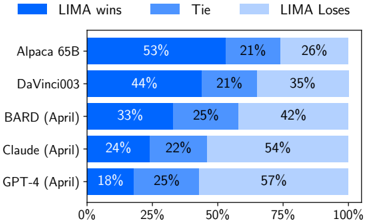
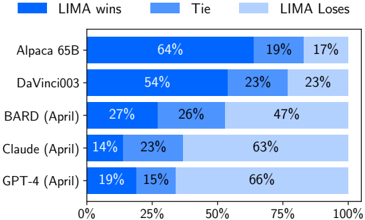
Large language models are trained in two stages: (1) unsupervised pretraining from raw text, to learn general-purpose representations, and (2) large scale instruction tuning and reinforcement learning, to better align to end tasks and user preferences. We measure the relative importance of these two stages by training LIMA, a 65B parameter LLaMa language model fine-tuned with the standard supervised loss on only 1,000 carefully curated prompts and responses, without any reinforcement learning or human preference modeling. LIMA demonstrates remarkably strong performance, learning to follow specific response formats from only a handful of examples in the training data, including complex queries that range from planning trip itineraries to speculating about alternate history. Moreover, the model tends to generalize well to unseen tasks that did not appear in the training data. In a controlled human study, responses from LIMA are either equivalent or strictly preferred to GPT-4 in 43% of cases; this statistic is as high as 58% when compared to Bard and 65% versus DaVinci003, which was trained with human feedback. Taken together, these results strongly suggest that almost all knowledge in large language models is learned during pretraining, and only limited instruction tuning data is necessary to teach models to produce high quality output.
Overview
The claims and statistics of this paper haven’t been checked yet.
Free: it reads the open-access text and checks the first 5 claims that cite a source we can check. Create a free account to check every claim.
Integrity signals
Registry
Cites
Statistics
Figures
Verification
Claims the paper makes
The claims and statistics of this paper haven’t been checked yet.
Free: it reads the open-access text and checks the first 5 claims that cite a source we can check. Create a free account to check every claim.
Claims other papers make about this one
Each is checked against this paper’s own text: does it say what the citing paper says it does?
The source backs part of the claim, not all of it — or backs it for a different population, condition or comparison.
In the citing paper
“However, when focusing specifically on a single task or narrow set of tasks, far fewer instruction instances may suffice.”
From A Survey of Large Language Models (2026) · cites this paper as [195]
Experimental — accuracy not yet measuredThe source backs part of the claim, not all of it — or backs it for a different population, condition or comparison.
In the citing paper
“Recent studies [323] show that the knowledge within LLMs is almost entirely acquired during pretraining.”
From Survey of Hallucination in Natural Language Generation (2023) · cites this paper as [323]
Experimental — accuracy not yet measuredThe source backs part of the claim, not all of it — or backs it for a different population, condition or comparison.
In the citing paper
“Redundancy and Inefficient Use of Information: Treating all N training samples ( x i , y i ) in D train as equally informative is inefficient, as the number of truly effective samples N eff is often much smaller than N (i.e., N eff ≪ N ) (Zhou et al., 2023).”
From TT-SI: Self-Improving LLM Agents with Test-Time Training (2026) · cites this paper as Zhou et al., 2023
Experimental — accuracy not yet measuredThe source backs part of the claim, not all of it — or backs it for a different population, condition or comparison.
In the citing paper
“Nevertheless, smaller datasets can be vital in enabling key post -training techniques such as fine-tuning, in-context learning, and prompt engineering (cf. [86, 122]).”
From Engaging Communities Meaningfully in Defining Disability Representation for AI Image Generation (2026) · cites this paper as [122]
Experimental — accuracy not yet measuredThe cited source says what the claim attributes to it.
In the citing paper
“For example, the authors of LIMA collected a diverse dataset of 1,000 carefully curated prompts and responses which are aligned with each other [323].”
From Survey of Hallucination in Natural Language Generation (2023) · cites this paper as [323]
3 more claims about this paper
Create a free account to see every claim other papers make about this one.
Self-check
Percentages, sums and reported differences re-computed from the paper’s own numbers.
The self-check needs the paper’s full text.
Citations
Cites
The publisher hasn’t deposited this paper’s reference list.
Research works printed but not linked: 7
- Yuntao Bai, Saurav Kadavath, Sandipan Kundu, Amanda Askell, Jackson Kernion, Andy Jones, Anna Chen, Anna Goldie, Azalia Mirhoseini, Cameron McKinnon, et al. Constitutional ai: Harmlessness from ai feedback. arXiv preprint arXiv:2212.08073, 2022b. · arXiv
- Ari Holtzman, Jan Buys, Li Du, Maxwell Forbes, and Yejin Choi. The curious case of neural text degeneration. In International Conference on Learning Representations, 2019.
- Yuval Kirstain, Patrick Lewis, Sebastian Riedel, and Omer Levy. A few more examples may be worth billions of parameters. arXiv preprint arXiv:2110.04374, 2021. · arXiv
- Long Ouyang, Jeffrey Wu, Xu Jiang, Diogo Almeida, Carroll Wainwright, Pamela Mishkin, Chong Zhang, Sandhini Agarwal, Katarina Slama, Alex Ray, et al. Training language models to follow instructions with human feedback. Advances in Neural Information Processing Systems, 35: 27730-27744, 2022.
- Victor Sanh, Albert Webson, Colin Raffel, Stephen Bach, Lintang Sutawika, Zaid Alyafeai, Antoine Chaffin, Arnaud Stiegler, Teven Le Scao, Arun Raja, et al. Multitask prompted training enables zero-shot task generalization. In The Tenth International Conference on Learning Representations, 2022.
- Yizhong Wang, Swaroop Mishra, Pegah Alipoormolabashi, Yeganeh Kordi, Amirreza Mirzaei, Anjana Arunkumar, Arjun Ashok, Arut Selvan Dhanasekaran, Atharva Naik, David Stap, et al. Super-naturalinstructions:generalization via declarative instructions on 1600+ tasks. In EMNLP, 2022b.
- Jason Wei, Maarten Bosma, Vincent Zhao, Kelvin Guu, Adams Wei Yu, Brian Lester, Nan Du, Andrew M Dai, and Quoc V Le. Finetuned language models are zero-shot learners. In International Conference on Learning Representations, 2022a.
Cited by
Items 101–200 of 938
Language Models Resist Alignment: Evidence From Data Compression
Ji, J., Wang, K., Qiu, T. A., Chen, B., Zhou, J., Li, C., Lou, H., Dai, J., Liu, Y., & Yang, Y. (2025) · Proceedings of the 63rd Annual Meeting of the Association for Computational Linguistics (Volume 1: Long Papers) · doi:10.18653/v1/2025.acl-long.1141 · Cited by 83
“Recent studies have shown that highly safety-aligned models can become unsafe again with minimal fine-tuning(Yang et al., 2023b; Zhou et al., 2024).”
HealAI: A Healthcare LLM for Effective Medical Documentation
Goyal, S., Rastogi, E., Rajagopal, S. P., Yuan, D., Zhao, F., Chintagunta, J., Naik, G., & Ward, J. (2024) · ACM International Conference on Web Search and Data Mining (WSDM) · doi:10.1145/3616855.3635739 · Cited by 135
Aligning Large Language Models through Synthetic Feedback
Kim, S., Bae, S., Shin, J., Kang, S., Kwak, D., Yoo, K. M., & Seo, M. (2023) · Conference on Empirical Methods in Natural Language Processing (EMNLP) · doi:10.18653/v1/2023.emnlp-main.844 · Cited by 109
GenTKG: Generative Forecasting on Temporal Knowledge Graph with Large Language Models
Liao, R., Jia, X., Li, Y., Ma, Y., & Tresp, V. (2024) · Findings of the Association for Computational Linguistics: NAACL · doi:10.18653/v1/2024.findings-naacl.268 · Cited by 147
InferAligner: Inference-Time Alignment for Harmlessness through Cross-Model Guidance
Wang, P., Zhang, D., Li, L., Tan, C., Wang, X., Zhang, M., Ren, K. L., Jiang, B., & Qiu, X. (2024) · Conference on Empirical Methods in Natural Language Processing (EMNLP) · doi:10.18653/v1/2024.emnlp-main.585 · Cited by 117
Li, J.-H., Zhou, H., Huang, S., Cheng, S., & Chen, J.-J. (2023) · Transactions of the Association for Computational Linguistics · doi:10.1162/tacl_a_00655 · Cited by 112
Self-Distillation Bridges Distribution Gap in Language Model Fine-Tuning
Yang, Z., Pang, T., Feng, H., Wang, H., Chen, W., Zhu, M., & Liu, Q. (2024) · Proceedings of the conference - Association for Computational Linguistics. Meeting · doi:10.18653/v1/2024.acl-long.58 · Cited by 157
Alleviating Hallucinations of Large Language Models through Induced Hallucinations
Zhang, Y., Cui, L., W., V., & Shi, S. (2025) · Findings of the Association for Computational Linguistics: NAACL · doi:10.18653/v1/2025.findings-naacl.459 · Cited by 102
From Instructions to Intrinsic Human Values - A Survey of Alignment Goals for Big ModelsPreprint
Yao, J., Yi, X., Wang, X.-T., Wang, J.-D., & Xie, X. (2023) · arXiv.org · doi:10.48550/arxiv.2308.12014 · Cited by 69
Building Efficient Universal Classifiers with Natural Language InferencePreprint
Laurer, M., van Atteveldt, W., Casas, A., & Welbers, K. (2023) · arXiv (Cornell University) · doi:10.48550/arxiv.2312.17543 · Cited by 98
“In all three use-cases, making predictions with the resulting models (inference) is highly efficient with cheap GPUs, but is also possible with on a laptop CPU.”
MethodConifer: Improving Complex Constrained Instruction-Following Ability of Large Language ModelsPreprint
Sun, H., Liu, L., Li, J., Wang, F., Dong, B., Lin, R., & Huang, R. (2024) · arXiv (Cornell University) · doi:10.48550/arxiv.2404.02823 · Cited by 86
“These datasets can be either manually annotated (Ouyang et al., 2022; Kopf et al., 2023; Zhou et al., 2023a) or generated by advanced LLMs like GPT-4 (Peng et al., 2023).”
BackgroundPreference Ranking Optimization for Human Alignment
Song, F., Yu, B., Li, M., Yu, H., Huang, F., Li, Y., & Wang, H. (2023) · arXiv · doi:10.48550/arxiv.2306.17492 · Cited by 77
“Additionally, we expand the training set by incorporating output results from existing LLMs, requiring the sorting of the expanded preference rankings.”
BackgroundMethodPreference Ranking Optimization for Human Alignment
Song, F., Yu, B., Li, M., Yu, H., Huang, F., Li, Y., & Wang, H. (2024) · Proceedings of the AAAI Conference on Artificial Intelligence · doi:10.1609/aaai.v38i17.29865 · Cited by 77
Foundation models meet visualizations: Challenges and opportunities
Yang, W., Liu, M., Wang, Z., & Liu, S. (2024) · Computational Visual Media · doi:10.1007/s41095-023-0393-x · Cited by 102
“Recent studies have shown that selecting a subset of data for training can achieve comparable or even better performance [84, 87].”
Developing and evaluating large language model–generated emergency medicine handoff notes
Hartman, V., Zhang, X., Poddar, R., McCarty, M., Fortenko, A., Sholle, E., Sharma, R., Campion, T., & Steel, P. A. D. (2024) · JAMA Network Open · doi:10.1001/jamanetworkopen.2024.48723 · Cited by 76
Muennighoff, N., Yang, Z., Shi, W., Li, X. L., Fei-Fei, L., Hajishirzi, H., Zettlemoyer, L., Liang, P., Candes, E., & Hashimoto, T. (2025) · Proceedings of the 2025 Conference on Empirical Methods in Natural Language Processing · doi:10.18653/v1/2025.emnlp-main.1025 · Cited by 76
Self-citationAnsari, M. Y., Yaqoob, M., Ishaq, M., Flushing, E. F., Mangalote, I. A. C., Dakua, S. P., Aboumarzouk, O. M., Righetti, R., & Qaraqe, M. (2025) · Artificial Intelligence Review · doi:10.1007/s10462-025-11259-x · Cited by 88
“Recently, Zhou et al. (2024) compare the relative importance of unsupervised pretraining versus instruction tuning and reinforcement learning.”
Inexact Unlearning Needs More Careful Evaluations to Avoid a False Sense of Privacy
Hayes, J., Shumailov, I., Triantafillou, E., Khalifa, A. M., & Papernot, N. (2025) · IEEE Conference on Secure and Trustworthy Machine Learning (SaTML) · doi:10.1109/satml64287.2025.00034 · Cited by 109
One-Shot Learning as Instruction Data Prospector for Large Language Models
Li, Y., Hui, B., Xia, X., Yang, J., Yang, M., Zhang, L., Si, S., Chen, L.-H., Liu, J., Liu, T., et al. (2024) · Proceedings of the conference - Association for Computational Linguistics. Meeting · doi:10.18653/v1/2024.acl-long.252 · Cited by 142
Deng, C., Duan, Y., Jin, X., Chang, H., Tian, Y., Liu, H., Wang, Y., Gao, K., Zou, H. P., Jin, Y., et al. (2025) · AI and Ethics · doi:10.1007/s43681-025-00797-3 · Cited by 88
“To address this issue, researchers proposed to use strong LLMs as an automated proxy for evaluating other LLMs [360].”
CLAP: Learning Transferable Binary Code Representations with Natural Language Supervision
Wang, H., Gao, Z., Zhang, C., Sha, Z., Sun, M., Zhou, Y., Zhu, W., Sun, W., Qiu, H., & Xiao, X. (2024) · ACM SIGSOFT International Symposium on Software Testing and Analysis (ISSTA) · doi:10.1145/3650212.3652145 · Cited by 106
“5, we employ existing LLM assessment methods [45].”
WaveCoder: Widespread And Versatile Enhancement For Code Large Language Models By Instruction Tuning
Yu, Z., Zhang, X., Shang, N., Huang, Y., Xu, C., Zhao, Y., Hu, W., & Yin, Q. (2024) · Proceedings of the conference - Association for Computational Linguistics. Meeting · doi:10.18653/v1/2024.acl-long.280 · Cited by 106
“In past research work (Zhou et al., 2023; Gupta et al., 2023), many researchers have discovered that data quality and diversity often play a more important role in instruction tuning process than data amount.”
Salute the Classic: Revisiting Challenges of Machine Translation in the Age of Large Language Models
Pang, J., Ye, F., Wong, D. F., Yu, D., Shi, S., Tu, Z., & Wang, L. (2025) · Transactions of the Association for Computational Linguistics · doi:10.1162/tacl_a_00730 · Cited by 114
Pangu Embedded: An Efficient Dual-system LLM Reasoner with MetacognitionPreprint
Chen, H.-T., Wang, Y.-S., Han, K., Li, D., Li, L., Bi, Z., Li, J., Wang, H.-Y., Mi, F., Zhu, M., et al. (2025) · arXiv.org · doi:10.48550/arxiv.2505.22375 · Cited by 69
“Initial efforts in the post-training of LLMs predominantly concentrated on curating high-quality training data from a general standpoint, often without explicit consideration of model-specific characteristics or potential issues [27, 61].”
AI-TA: Towards an Intelligent Question-Answer Teaching Assistant using Open-Source LLMsPreprint
Hicke, Y., Agarwal, A., Ma, Q., & Denny, P. C. (2023) · arXiv (Cornell University) · doi:10.48550/arxiv.2311.02775 · Cited by 92
Aligning Large Language Models with Human: A Survey
Wang, Y., Zhong, W., Li, L., Mi, F., Zeng, X., Huang, W., Shang, L., Jiang, X., & Liu, Q. (2023) · arXiv · doi:10.48550/arxiv.2307.12966 · Cited by 69
“More instructions could potentially induce a semantic shift in the foundational LLMs. Zhou et al. (2023) similarly discern that merely 6K high-quality instructions suffice to align with human preferences.”
BackgroundRecRanker: Instruction Tuning Large Language Model as Ranker for Top-k Recommendation
Luo, S., He, B., Zhao, H., Shao, W., Qi, Y., Huang, Y., Zhou, A., Yao, Y., Li, Z., Xiao, Y., et al. (2025) · ACM Transactions on Information Systems · doi:10.1145/3705728 · Cited by 108
“We begin by introducing a variety of ranking tasks, followed by a discussion of our proposed prompt enhancement method.”
Qibo: A Large Language Model for traditional Chinese medicine
Jia, Y., Ji, X., Wang, X., Zhang, H., Meng, Z., Zhang, J., Chen, Z., Zhuang, P., Xu, D., Guo, W., et al. (2025) · Expert Systems with Applications · doi:10.1016/j.eswa.2025.127672 · Cited by 72
Aya Dataset: An Open-Access Collection for Multilingual Instruction Tuning
Singh, S., Vargus, F., D’souza, D., Karlsson, B. F., Mahendiran, A., Ko, W.-Y., Shandilya, H., Patel, J., Mataciunas, D., O'Mahony, L., et al. (2024) · Proceedings of the conference - Association for Computational Linguistics. Meeting · doi:10.18653/v1/2024.acl-long.620 · Cited by 254
Composing Parameter-Efficient Modules with Arithmetic OperationsPreprint
Zhang, J., Chen, S., Liu, J., & He, J. (2023) · arXiv (Cornell University) · doi:10.48550/arxiv.2306.14870 · Cited by 73
Data Management For Training Large Language Models: A SurveyPreprint
Wang, Z., Zhong, W., Wang, Y., Zhu, Q., Mi, F., Wang, B., Shang, L., Jiang, X., & Liu, Q. (2023) · arXiv · doi:10.48550/arxiv.2312.01700 · Cited by 87
Hassan, A. E., Lin, D., Rajbahadur, G. K., Gallaba, K., Cogo, F. R., Chen, B., Zhang, H., Thangarajah, K., Oliva, G., Lin, J. (., et al. (2024) · Companion Proceedings of the 32nd ACM International Conference on the Foundations of Software Engineering · doi:10.1145/3663529.3663849 · Cited by 35
Nguyen, X.-P., Aljunied, M., Joty, S., & Bing, L. (2024) · Proceedings of the conference - Association for Computational Linguistics. Meeting · doi:10.18653/v1/2024.acl-long.192 · Cited by 96
The rise of small language models in healthcare: A comprehensive survey
Garg, M., Raza, S., Rayana, S., Liu, X., & Sohn, S. (2026) · Computer Science Review · doi:10.1016/j.cosrev.2026.100999 · Cited by 81
ChatGPT's One-year Anniversary: Are Open-Source Large Language Models Catching up?
Chen, H., Jiao, F., Li, X., Qin, C., Ravaut, M., Zhao, R., Xiong, C., & Joty, S. (2023) · arXiv (Cornell University) · doi:10.48550/arxiv.2311.16989 · Cited by 14
Learning to Generate Better Than Your LLMPreprint
Chang, J. D., Brantley, K., Ramamurthy, R., Misra, D. K., & Sun, W. (2023) · arXiv.org · doi:10.48550/arxiv.2306.11816 · Cited by 62
Large Language Models Enhanced Collaborative Filtering
Sun, Z., Si, Z., Zang, X., Zheng, K., Song, Y., Zhang, X., & Xu, J. (2024) · ACM International Conference on Information and Knowledge Management (CIKM) · doi:10.1145/3627673.3679558 · Cited by 96
“In this section, we introduce the offline service of LLM-CF in detail.”
Data Diversity Matters for Robust Instruction Tuning
Bukharin, A., Li, S., Wang, Z., Yang, J., Yin, B., Li, X., Zhang, C., Zhao, T., & Jiang, H. (2024) · Findings of the Association for Computational Linguistics: EMNLP (Findings of EMNLP) · doi:10.18653/v1/2024.findings-emnlp.195 · Cited by 125
SciInstruct: a Self-Reflective Instruction Annotated Dataset for Training Scientific Language Models
Zhang, D., Hu, Z., Zhoubian, S., Du, Z., Yang, K., Wang, Z., Yue, Y., Dong, Y., & Tang, J. (2024) · neural information processing systems · doi:10.52202/079017-0046 · Cited by 97
LQ-LoRA: Low-rank Plus Quantized Matrix Decomposition for Efficient Language Model Finetuning
Guo, H., Greengard, P., Xing, E., & Kim, Y. (2023) · International Conference on Learning Representations · doi:10.48550/arxiv.2311.12023 · Cited by 113
User Modeling in the Era of Large Language Models: Current Research and Future DirectionsPreprint
Tan, Z., & Jiang, M. (2023) · arXiv · doi:10.48550/arxiv.2312.11518 · Cited by 90
Foundations of Large Language ModelsPreprint
Xiao, T., & Zhu, J. (2025) · arXiv · doi:10.48550/arxiv.2501.09223 · Cited by 95
LLaMoCo: Instruction Tuning of Large Language Models for Optimization Code Generation
Ma, Z., Gong, Y., Guo, H., Chen, J., Ma, Y., Cao, Z., & Zhang, J. (2026) · IEEE Transactions on Evolutionary Computation · doi:10.1109/tevc.2026.3656374 · Cited by 78
“The first concern is generating a sufficient number of high-quality and diverse problem instances for instruction tuning [24], [62].”
A Survey on Symbolic Knowledge Distillation of Large Language Models
Kamal, A., Velasquez, A., & Song, H. (2024) · IEEE Transactions on Artificial Intelligence · doi:10.1109/tai.2024.3428519 · Cited by 84
Sparse MeZO: Less Parameters for Better Performance in Zeroth-Order LLM Fine-Tuning
Liu, Y., Zhu, Z., Gong, C., Cheng, M., Hsieh, C., & You, Y. (2025) · neural information processing systems · doi:10.52202/085713-0712 · Cited by 81
Wu, X., Yao, W., Chen, J., Pan, X., Wang, X., Liu, N., & Yu, D. (2024) · Conference of the North American Chapter of the Association for Computational Linguistics: Human Language Technologies (NAACL-HLT) · doi:10.18653/v1/2024.naacl-long.130 · Cited by 98
IndicLLMSuite: A Blueprint for Creating Pre-training and Fine-Tuning Datasets for Indian Languages
Khan, M. I., Mehta, P., Sankar, A., Kumaravelan, U., Doddapaneni, S., Suriyaprasaad, G., Varun, G., Jain, S., Kunchukuttan, A., Kumar, P., et al. (2024) · Proceedings of the conference - Association for Computational Linguistics. Meeting · doi:10.18653/v1/2024.acl-long.843 · Cited by 110
AI safety landscape for large language models: taxonomy, state-of-the-art, and future directions
Chen, C., Gong, X., Liu, Z., Jiang, W. M. W. L. H., Goh, S. Q., & Lam, K. (2026) · Artificial Intelligence Review · doi:10.1007/s10462-026-11590-x · Cited by 53
GeoCode-GPT: A large language model for geospatial code generation
Hou, S., Shen, Z., Zhao, A., Liang, J., Gui, Z., Guan, X., Li, R., & Wu, H. (2025) · International Journal of Applied Earth Observation and Geoinformation · doi:10.1016/j.jag.2025.104456 · Cited by 82
Learning to Poison Large Language Models for Downstream ManipulationPreprint
Zhou, X.-Y., Qiang, Y., Zade, S. Z., Roshani, M. A., Khanduri, P., Zytko, D., & Zhu, D.-X. (2024) · arXiv.org · doi:10.48550/arxiv.2402.13459 · Cited by 15
“Different from ICL, instruction tuning depends on a high-quality instruction dataset (Zhou et al. 2023), which can be * These authors contributed equally. expensive to acquire.”
BackgroundXu, H., Zhu, Z., Zhang, S. B., Ma, D., Fan, S., Chen, L., & Yu, K. (2024) · arXiv · doi:10.48550/arxiv.2403.18349 · Cited by 97
Self-citationAmirova, A., Fteropoulli, T., Ahmed, N., Cowie, M., & Leibo, J. Z. (2024) · PLoS ONE · doi:10.1371/journal.pone.0300024 · Cited by 64
“All the model’s capabilities are already present after the pretraining stage (Zhou et al., 2023).”
BackgroundExplainable AI reveals Clever Hans effects in unsupervised learning models
Kauffmann, J., Dippel, J., Ruff, L., Samek, W., Müller, K., & Montavon, G. (2025) · Nature Machine Intelligence · doi:10.1038/s42256-025-01000-2 · Cited by 88
The Philosopher's Stone: Trojaning Plugins of Large Language Models
Dong, T., Xue, M.-H., Chen, G.-X., Holland, R., Meng, Y., Li, S.-F., Liu, Z., & Zhu, H.-J. (2023) · Network and Distributed System Security Symposium · doi:10.14722/ndss.2025.230164 · Cited by 57
“Next, we will detail the two attacks separately.”
MethodUnlearn What You Want to Forget: Efficient Unlearning for LLMs
Chen, J., & Yang, D. (2023) · Proceedings of the 2023 Conference on Empirical Methods in Natural Language Processing · doi:10.18653/v1/2023.emnlp-main.738 · Cited by 52
Towards evaluating and building versatile large language models for medicine
Wu, C., Qiu, P., Liu, J., Gu, H., Li, N., Zhang, Y., Wang, Y., & Xie, W. (2025) · npj Digital Medicine · doi:10.1038/s41746-024-01390-4 · Cited by 52
PLLaMa: An Open-source Large Language Model for Plant SciencePreprint
Yang, X., Gao, J., Xue, W., & Alexandersson, E. (2024) · arXiv.org · doi:10.48550/arxiv.2401.01600 · Cited by 46
Are Large Language Models Good Prompt Optimizers?Preprint
Ma, R., Wang, X., Zhou, X., Li, J., Du, N., Gui, T., Zhang, Q., & Huang, X. (2024) · arXiv · doi:10.48550/arxiv.2402.02101 · Cited by 68
BioPlanner: Automatic Evaluation of LLMs on Protocol Planning in Biology
O’Donoghue, O., Shtedritski, A., Ginger, J., Abboud, R., Ghareeb, A. E., & Rodriques, S. G. (2023) · Conference on Empirical Methods in Natural Language Processing (EMNLP) · doi:10.18653/v1/2023.emnlp-main.162 · Cited by 75
SALMON: Self-Alignment with Principle-Following Reward Models
Sun, Z.-Q., Shen, Y., Zhang, H.-X., Zhou, Q., Chen, Z., Cox, D. D., Yang, Y., & Gan, C. (2023) · arXiv.org · doi:10.48550/arxiv.2310.05910 · Cited by 56
“Possible policy model initialization strategies include principle-driven self-alignment (Sun et al., 2023b), supervised fine-tuning on human demonstrations (Chung et al., 2022a; Zhou et al., 2023), or even those unaligned base language models (Touvron et al., 2023a).”
InfluentialRethinking LLM-based Preference EvaluationPreprint
Hu, Z.-Y., Song, L.-X., Zhang, J., Xiao, Z.-Y., Wang, J., Chen, Z., Zhao, J.-Y., & Xiong, H. (2024) · arXiv.org · doi:10.48550/arxiv.2407.01085 · Cited by 9
Havrilla, A., Dai, A. M., O'Mahony, L., Oostermeijer, K., Zisler, V., Albalak, A., Milo, F., Raparthy, S. C., Gandhi, K., Abbasi, B., et al. (2024) · arXiv (Cornell University) · doi:10.48550/arxiv.2412.02980 · Cited by 60
GOAT-Bench : Safety Insights to Large Multimodal Models through Meme-Based Social Abuse
Lin, H., Luo, Z., Wang, B., Yang, R., & Ma, J. (2026) · ACM Transactions on Intelligent Systems and Technology · doi:10.1145/3729239 · Cited by 72
“• MiniCPM-V: The latest and most capable model in the MiniCPM-V series developed by OpenBMB, achieves an average score of 65.2 on the latest version of OpenCompass, a comprehensive evaluation over 8 popular benchmarks.”
InfluentialKirk, H. R., Bean, A., Vidgen, B., Röttger, P., & Hale, S. A. (2023) · Conference on Empirical Methods in Natural Language Processing (EMNLP) · doi:10.18653/v1/2023.emnlp-main.148 · Cited by 91
COIG-CQIA: Quality is All You Need for Chinese Instruction Fine-tuningPreprint
Bai, Y., Du, X., Liang, Y., Jin, Y., Zhou, J., Liu, Z., Fang, F., Chang, M., Zheng, T., Zhang, X., et al. (2024) · arXiv (Cornell University) · doi:10.48550/arxiv.2403.18058 · Cited by 70
“Large Language Models (LLMs), such as GPT-3 (Brown et al., 2020), LLaMA (Touvron et al., 2023), and PaLM (Chowdhery et al., 2023), have ∗”
MethodScaling Data-Constrained Language Models
Muennighoff, N., Rush, A., Barak, B., Scao, T. L., Tazi, N., Piktus, A., Pyysalo, S., Wolf, T., & Raffel, C. (2023) · Advances in Neural Information Processing Systems 36 · doi:10.52202/075280-2191 · Cited by 765
Zhu, X., Qi, B., Zhang, K., Long, X., Lin, Z., & Zhou, B. (2024) · Conference of the North American Chapter of the Association for Computational Linguistics: Human Language Technologies (NAACL-HLT) · doi:10.18653/v1/2024.naacl-long.142 · Cited by 73
“In-tuitively, higher quality data can improve performance while incorrect reasoning steps may confound models (Zhou et al., 2023a).”
BackgroundFine-Tuning Large Language Models to Improve Accuracy and Comprehensibility of Automated Code Review
Yu, Y., Rong, G., Shen, H., Zhang, H., Shao, D., Wang, M., Wei, Z., Xu, Y., & Wang, J. (2024) · ACM Transactions on Software Engineering and Methodology · doi:10.1145/3695993 · Cited by 84
Lee, Y. (2024) · Education and Information Technologies · doi:10.1007/s10639-024-13129-5 · Cited by 59
“First, since LLMs that power GAI tools acquire most of their knowledge during pretraining (Zhou et al., 2024), the hallucination problem can be mitigated by excluding unreliable, defective and noisy data that cannot be verified while pretraining the model (Penedo et al., 2023; Touvron et al., 2023).”
Knowledge-Empowered, Collaborative, and Co-Evolving AI Models: The Post-LLM Roadmap
Wu, F., Shen, T., Bäck, T., Chen, J., Huang, G., Jin, Y., Kuang, K., Li, M., Lu, C., Miao, J., et al. (2024) · Engineering · doi:10.1016/j.eng.2024.12.008 · Cited by 62
Self-citationMaViLa: Unlocking new potentials in smart manufacturing through vision language models
Fan, H., Liu, C., Janvisloo, N. E., Bian, S., Fuh, J. Y. H., Lu, W. F., & Li, B. (2025) · Journal of Manufacturing Systems · doi:10.1016/j.jmsy.2025.02.017 · Cited by 52
Sakai, Y., Kamigaito, H., & Watanabe, T. (2026) · Proceedings of the conference - Association for Computational Linguistics. Meeting · doi:10.18653/v1/2026.acl-long.2189 · Cited by 57
Areerob, K., Nguyen, V., Li, X., Inadomi, S., Shimada, T., Kanasaki, H., Wang, Z., Suganuma, M., Nagatani, K., Chun, P., et al. (2025) · Computer-Aided Civil and Infrastructure Engineering · doi:10.1111/mice.13482 · Cited by 56
Generative AI and Its Educational Implications
Łodzikowski, K., Foltz, P. W., & Behrens, J. T. (2024) · Postdigital Science and Education · doi:10.1007/978-3-031-64487-0_2 · Cited by 45
Vulnerabilities in AI Code Generators: Exploring Targeted Data Poisoning Attacks
Cotroneo, D., Improta, C., Liguori, P., & Natella, R. (2024) · Proceedings of the 32nd IEEE/ACM International Conference on Program Comprehension · doi:10.1145/3643916.3644416 · Cited by 45
Can Large Language Models Understand Real-World Complex Instructions?
He, Q., Zeng, J., Huang, W., Chen, L., Xiao, J., He, Q., Zhou, X., Liang, J., & Xiao, Y. (2024) · Proceedings of the AAAI Conference on Artificial Intelligence · doi:10.1609/aaai.v38i16.29777 · Cited by 126
Li, J., Li, J., Guo, Y., Yang, L., Chi, H., & Yang, L. (2025) · Drones · doi:10.3390/drones9040238 · Cited by 70
Long-VITA: Scaling Large Multi-modal Models to 1 Million Tokens with Leading Short-Context AccuracyPreprint
Shen, Y., Fu, C., Dong, S., Wang, X., Zhang, Y.-F., Chen, P., Zhang, M., Cao, H., Li, K., Lin, S., et al. (2025) · arXiv · doi:10.48550/arxiv.2502.05177 · Cited by 54
“5 [41], LIMA [42], databricks-dolly-15k [43], MetaMathQA [44], MathIn-struct [45], Orca-Math [46], atlas-math-sets [47], goat [48], and camel-ai-math [49].”
Pternea, M., Singh, P., Chakraborty, A., Oruganti, Y. D., Milletari, M., Bapat, S., & Jiang, K. (2024) · Journal of Artificial Intelligence Research · doi:10.1613/jair.1.15960 · Cited by 62
Citation-Enhanced Generation for LLM-based Chatbots
Li, W., Li, J., Ma, W., & Liu, Y. (2024) · Proceedings of the 62nd Annual Meeting of the Association for Computational Linguistics (Volume 1: Long Papers) · doi:10.18653/v1/2024.acl-long.79 · Cited by 20
“Zhou et al. (2023) alleviate hallucination during instruction fine-tuning, which adopts high quality manually annotated content to regulate hallucination.”
Zhang, Y., Cui, L., Cai, D., Huang, X., Fang, T., & Bi, W. (2023) · arXiv · doi:10.48550/arxiv.2305.13225 · Cited by 60
“One possible explanation could be that generic instruction data only help LLMs align with human preference, and expose the knowledge that was already acquired from pre-training, whereas it does not teach LLMs any new scenario-specific knowledge (Zhou et al., 2023).”
BackgroundBridging the Gap: A Survey on Integrating (Human) Feedback for Natural Language Generation
Fernandes, P., Madaan, A., Liu, E., Farinhas, A., Martins, P. H., Bertsch, A., de Souza, J. G. C., Zhou, S., Wu, T., Neubig, G., et al. (2023) · arXiv · doi:10.48550/arxiv.2305.00955 · Cited by 44
Can Large Language Models Understand Real-World Complex Instructions?
He, Q., Zeng, J., Huang, W., Chen, L., Xiao, J., He, Q., Zhou, X., Chen, L., Wang, X., Huang, Y., et al. (2023) · arXiv · doi:10.48550/arxiv.2309.09150 · Cited by 43
“Various methods have been proposed to improve models’ understanding of complex instructions (Luo et al. 2023; Zhou et al. 2023a; Mukherjee et al. 2023).”
BackgroundMethodInfluentialLeveraging Large Language Models for Generating Responses to Patient Messages
Liu, S., McCoy, A. B., Wright, A. P., Carew, B., Genkins, J. Z., Huang, S. S., Peterson, J. F., Steitz, B., & Wright, A. (2023) · doi:10.1101/2023.07.14.23292669 · Cited by 43
MemeCap: A Dataset for Captioning and Interpreting Memes
Hwang, E., & Shwartz, V. (2023) · Conference on Empirical Methods in Natural Language Processing (EMNLP) · doi:10.18653/v1/2023.emnlp-main.89 · Cited by 107
Chen, T., Asai, A., Mireshghallah, N., Min, S., Grimmelmann, J., Choi, Y., Hajishirzi, H., Zettlemoyer, L., & Koh, P. W. (2024) · Conference on Empirical Methods in Natural Language Processing (EMNLP) · doi:10.18653/v1/2024.emnlp-main.844 · Cited by 60
Self-citationWu, J., Liu, X., Li, M., Li, W., Su, Z., Lin, S., Garay, L., Zhang, Z., Zhang, Y., Zeng, Q., et al. (2024) · NEJM AI · doi:10.1056/aira2400012 · Cited by 41
Ge, Y., Liu, Y., Hu, C., Meng, W., Tao, S., Zhao, X., Xia, M., Li, Z., Chen, B., Yang, H., et al. (2024) · Conference on Empirical Methods in Natural Language Processing (EMNLP) · doi:10.18653/v1/2024.emnlp-main.28 · Cited by 76
Tuning LayerNorm in Attention: Towards Efficient Multi-Modal LLM Finetuning
Zhao, B., Tu, H., Chen, W., Mei, J., & Xie, C. (2024) · International Conference on Learning Representations · doi:10.48550/arxiv.2312.11420 · Cited by 60
Retrieval Augmented Generation for Domain-specific Question AnsweringPreprint
Sharma, S., Yoon, D. S., Dernoncourt, F., Sultania, D., Bagga, K., Zhang, M., Bui, T., & Kotte, V. (2024) · arXiv (Cornell University) · doi:10.48550/arxiv.2404.14760 · Cited by 60
SafeDecoding: Defending against Jailbreak Attacks via Safety-Aware Decoding
Xu, Z., Jiang, F., Niu, L., Jia, J., Lin, B. Y., & Poovendran, R. (2024) · Proceedings of the 62nd Annual Meeting of the Association for Computational Linguistics (Volume 1: Long Papers) · doi:10.18653/v1/2024.acl-long.303 · Cited by 40
How to Prompt Your Robot: A PromptBook for Manipulation Skills with Code as Policies
Arenas, M. G., Xiao, T. G., Singh, S., Jain, V., Ren, A. Z., Vuong, Q., Varley, J., Herzog, A., Leal, I. M. P., Kirmani, S., et al. (2024) · Proceedings - IEEE International Conference on Robotics and Automation/Proceedings · doi:10.1109/icra57147.2024.10610784 · Cited by 65
“Instruction-tuned models [26, 27] show substantially improved zero-shot performance on unseen tasks [16, 28], even with very selected instruction-response pairs [29].”
BackgroundAutomatic Instruction Evolving for Large Language Models
Zeng, W., Xu, C., Zhao, Y., Lou, J., & Chen, W. (2024) · Conference on Empirical Methods in Natural Language Processing (EMNLP) · doi:10.18653/v1/2024.emnlp-main.397 · Cited by 72
Fan, Z.-N., Ghaddar, B., Wang, X.-L., Xing, L., Zhang, Y., & Zhou, Z.-R. (2025) · European Journal of Operational Research · doi:10.1016/j.ejor.2025.08.029 · Cited by 14
From Text to Insight: Large Language Models for Materials Science Data ExtractionPreprint
Schilling-Wilhelmi, M., Ríos-García, M., Shabih, S., Gil, M. V., Miret, S., Koch, C. T., Márquez, J. A., & Jablonka, K. M. (2024) · arXiv · doi:10.48550/arxiv.2407.16867 · Cited by 52
Parmanto, B., Aryoyudanta, B., Soekinto, T. W., Setiawan, I. M. A., Wang, Y., Hu, H., Saptono, A., & Choi, Y. K. (2024) · JMIR Formative Research · doi:10.2196/54633 · Cited by 45
“Recent studies indicate that an FM can be made more accurate by fine-tuning it on a high-quality smaller data set [46-49].”
BackgroundCodecLM: Aligning Language Models with Tailored Synthetic Data
Wang, Z., Li, C., Perot, V., Le, L., Miao, J., Zhang, Z., Lee, C.-Y., & Pfister, T. (2024) · Findings of the Association for Computational Linguistics: NAACL · doi:10.18653/v1/2024.findings-naacl.235 · Cited by 62
ROPO: Robust Preference Optimization for Large Language ModelsPreprint
Liang, X., Chen, C., Qiu, S., Wang, J., Wu, Y., Fu, Z., Shi, Z., Wu, F., & Ye, J. (2024) · arXiv (Cornell University) · doi:10.48550/arxiv.2404.04102 · Cited by 44
Hallucination of Multimodal Large Language Models: A Survey
Bai, Z., Wang, P., Xiao, T., He, T., Han, Z., Zhang, Z., & Shou, M. Z. (2024) · arXiv · doi:10.48550/arxiv.2404.18930 · Cited by 38
“Pre-training serves as a fundamental phase in the learning process of LLMs [134].”
Alignment of Diffusion Models: Fundamentals, Challenges, and Future
Liu, B., Shao, S., Li, B., Bai, L., Xu, Z., Xiong, H., Kwok, J. T.-Y., Helal, S., & Xie, Z. (2026) · ACM Computing Surveys · doi:10.1145/3796982 · Cited by 52
“(2).”
Metadata
- Authors
- Zhou, C., Liu, P., Xu, P., Iyer, S., Sun, J., Mao, Y., Ma, X., Efrat, A., Yu, P., Yu, L., Zhang, S., Ghosh, G., Lewis, M., Zettlemoyer, L., & Levy, O.
- Venue
- Advances in Neural Information Processing Systems 36
- Published
- 2023
- Pages
- 55006-55021
- ISSN
- 1049-5258 (ISSN-L)
- OpenAlex
- W7133189643
- Semantic Scholar
- 546d0624adfc6e18fb87d8cc77e7705bb9ea7445
- Cited by
- 275
- References
- 0
- Citations by year
- 2026: 80 · 2025: 67 · 2024: 85 · 2023: 43
- FWCI
- 48.72
- Type
- conference paper
- Language
- en
- Open access
- green
- arxiv.org
- Licence
- cc-by
- Locations
- neural information processing systems (publishedVersion)
- arXiv (Cornell University) (submittedVersion, cc-by)
- arXiv (Cornell University) (cc-by)
- Topics
- Physical Sciences › Computer Science › Artificial Intelligence › Domain Adaptation and Few-Shot Learning
- Social Sciences › Education › Educational Assessment and Pedagogy
- Physical Sciences › Computer Science › Artificial Intelligence › Topic Modeling
- Keywords
- Lima, less is more, alignment, efficient large language models
About these checks
Registry, retraction, Cites and statistics results are computed, not judged, with one exception: a printed reference that no index lists is read once by a model before it counts as a citation error. Claims are extracted by a model and kept only when their quote appears verbatim in the text; each cited source is then checked, with a model’s help, for whether it says what the claim relies on. Those verdicts can be wrong — read the claim’s quote and the cited source before relying on one.
Statistics and arithmetic are recomputed, not judged.
Confidence bands are shown only for fields calibrated on our annotated test set. None is calibrated yet, so no band is shown.
What counts as a claim ›How we measure confidence ›How we check this ›
Are you an author, or do you see a problem with this page? Request a review
Data sources
Bibliographic data: Semantic Scholar, OpenAlex, Crossref.
Contains information from the Semantic Scholar Academic Graph Datasets, made available under the ODC Attribution License (ODC-BY 1.0).
Semantic Scholar’s data is described in: Kinney, R., et al. (2023). The Semantic Scholar Open Data Platform. arXiv:2301.10140.
