

The DOI matches its Crossref record; 57 of the 57 references it cites were found in a registry or an index.
Maintenance of age in human neurons generated by microRNA-based neuronal conversion of fibroblasts
Open accessAbstract
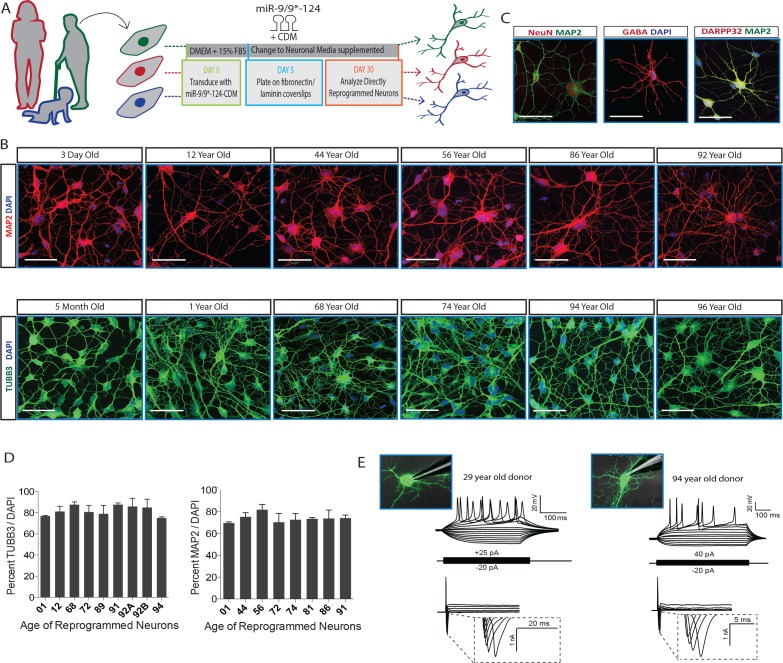
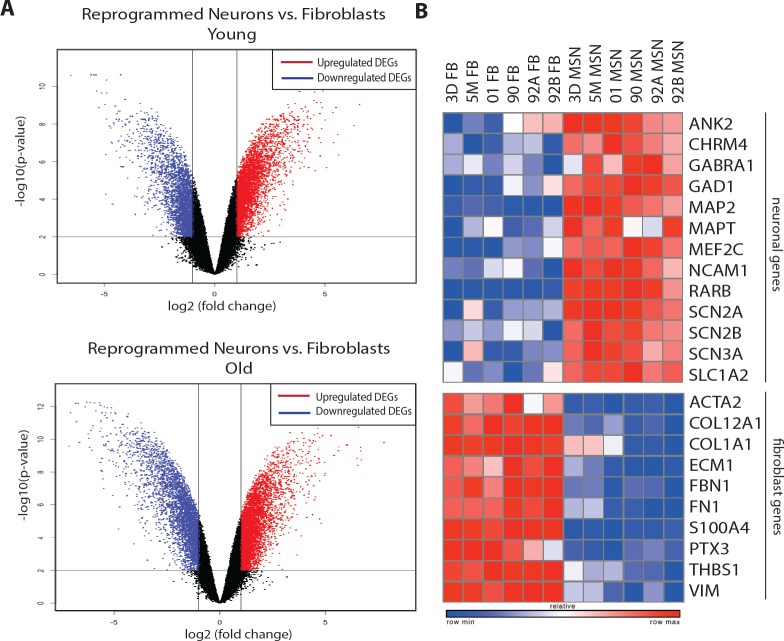
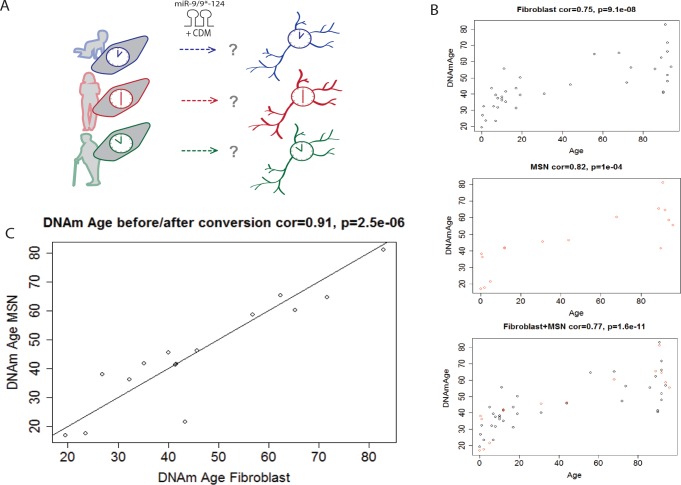
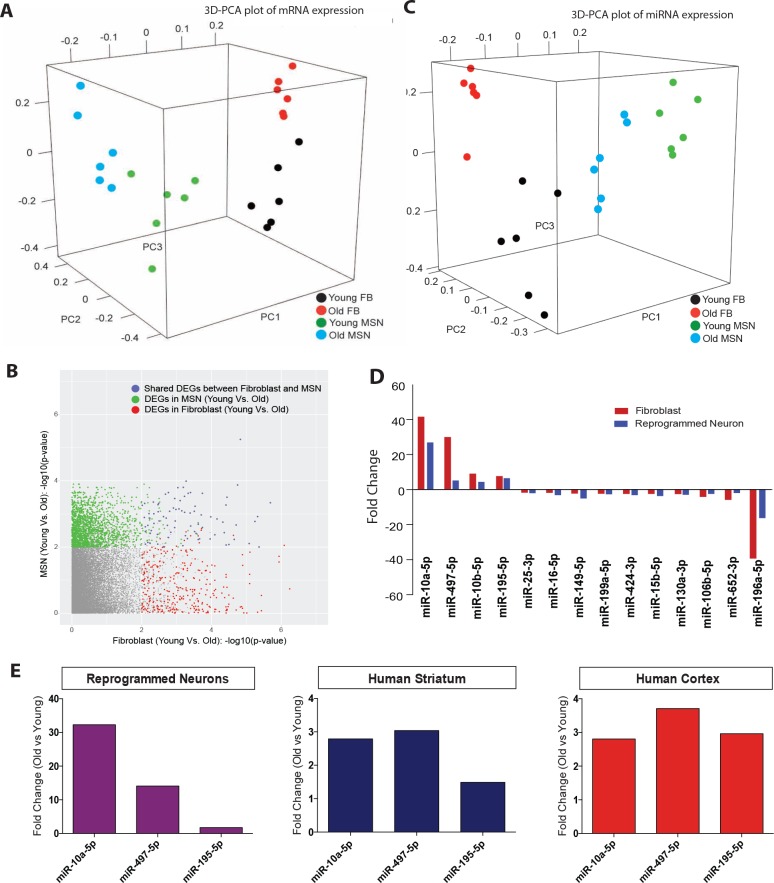
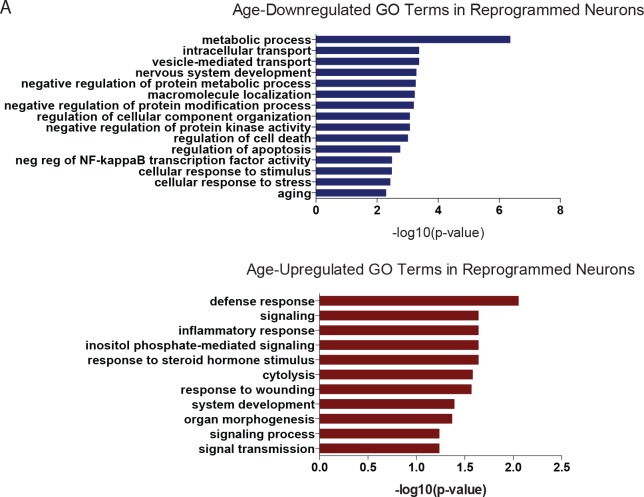
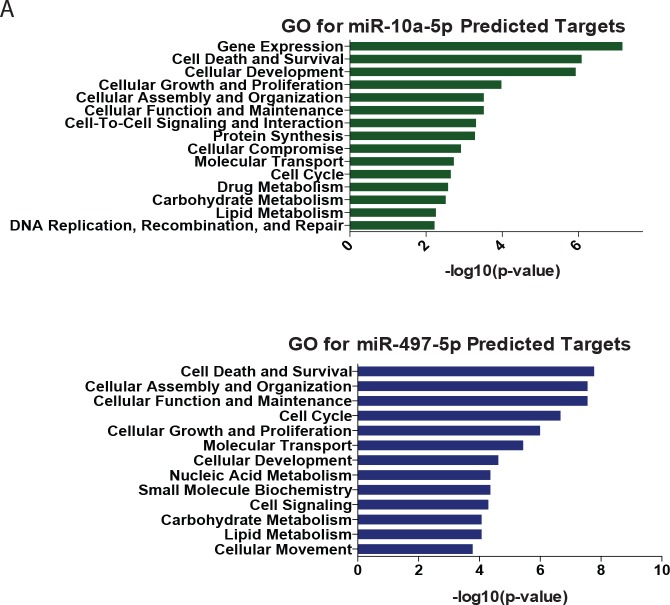
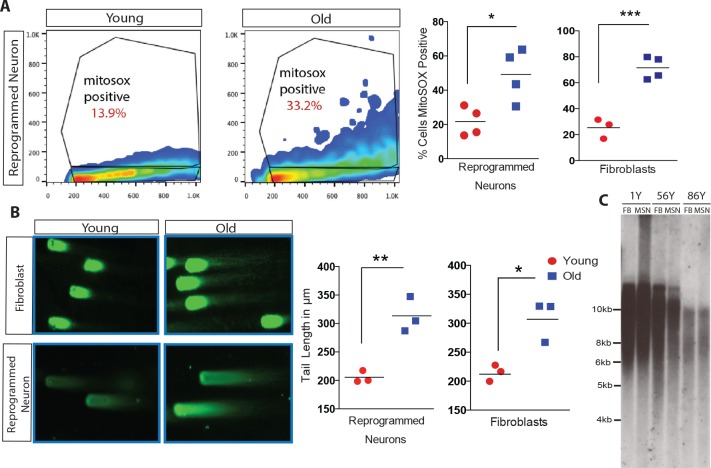
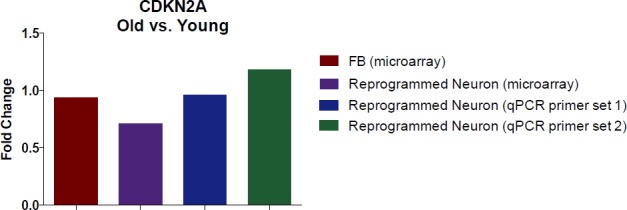
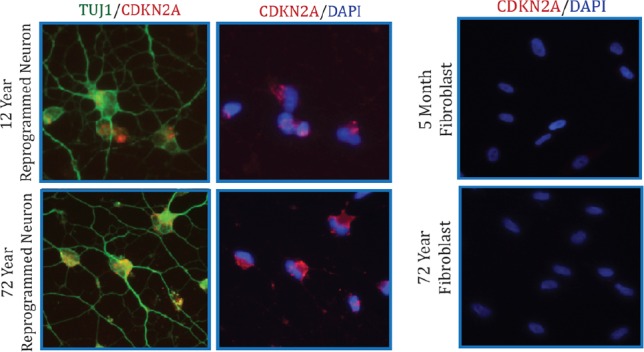
Aging is a major risk factor in many forms of late-onset neurodegenerative disorders. The ability to recapitulate age-related characteristics of human neurons in culture will offer unprecedented opportunities to study the biological processes underlying neuronal aging. Here, we show that using a recently demonstrated microRNA-based cellular reprogramming approach, human fibroblasts from postnatal to near centenarian donors can be efficiently converted into neurons that maintain multiple age-associated signatures. Application of an epigenetic biomarker of aging (referred to as epigenetic clock) to DNA methylation data revealed that the epigenetic ages of fibroblasts were highly correlated with corresponding age estimates of reprogrammed neurons. Transcriptome and microRNA profiles reveal genes differentially expressed between young and old neurons. Further analyses of oxidative stress, DNA damage and telomere length exhibit the retention of age-associated cellular properties in converted neurons from corresponding fibroblasts. Our results collectively demonstrate the maintenance of age after neuronal conversion.
Overview
The claims and statistics of this paper haven’t been checked yet.
Run the check — free, no account needed. It reads the open-access text and checks the sources it cites.
Integrity signals
Registry
Cites
Statistics
Figures
Verification
Claims the paper makes
The claims and statistics of this paper haven’t been checked yet.
Run the check — free, no account needed. It reads the open-access text and checks the sources it cites.
Claims other papers make about this one
Each is checked against this paper’s own text: does it say what the citing paper says it does?
The source backs part of the claim, not all of it — or backs it for a different population, condition or comparison.
In the citing paper
“emphasizing the necessity of partial de-differentiation for rejuvenation (Box 1) to occur [22][23][24][25] .”
From Mechanisms, pathways and strategies for rejuvenation through epigenetic reprogramming (2023) · cites this paper as [23]
Experimental — accuracy not yet measuredThe cited source says what the claim attributes to it.
In the citing paper
“Direct cellular reprogramming retains age-related signatures stored in pre-reprogrammed non-neural somatic cells such as fibroblasts, including the epigenetic age, telomere length, and gene expression changes (22, 23).”
From Modeling late-onset Alzheimer’s disease neuropathology via direct neuronal reprogramming (2024) · cites this paper as [22]
The cited source says what the claim attributes to it.
In the citing paper
“Conversely, other works have shown that aging-associated DNA methylation patterns and biomarkers persisted when cells were transdifferentiated (Box 1) to different cell types, emphasizing the necessity of partial de-differentiation for rejuvenation (Box 1) to occur [22][23][24][25] .”
From Mechanisms, pathways and strategies for rejuvenation through epigenetic reprogramming (2023) · cites this paper as [23]
In the citing paper
“Fibroblast-derived iNs preserve substantial signatures of human aging, including transcriptomic, nuclear pore, mitochondrial, epigenetic, and other aspects of aging (Herdy et al., 2019; Huh et al., 2016; Kim et al., 2018; Mertens et al., 2015a; Traxler et al., 2019).”
From Age-dependent instability of mature neuronal fate in induced neurons from Alzheimer’s patients (2021) · cites this paper as Huh et al., 2016
In the citing paper
“Clearly, iN DNAm ages reflect the adult and old chronological ages of their donors, whereas pluripotent stem cells and their derivatives reflect pre-natal DNAm ages (Figure 7H; Huh et al., 2016; Kim et al., 2014; Lo Sardo et al., 2017).”
From Age-dependent instability of mature neuronal fate in induced neurons from Alzheimer’s patients (2021) · cites this paper as Huh et al., 2016
In the citing paper
“AD iNs did not display signs of accelerated epigenetic aging over control iNs (Figures 7I and 7J; Figure S6; Horvath, 2013; Huh et al., 2016).”
From Age-dependent instability of mature neuronal fate in induced neurons from Alzheimer’s patients (2021) · cites this paper as Huh et al., 2016
In the citing paper
“Cellular aging features (Huh et al., 2016; Mertens et al., 2015a, 2018; Tang et al., 2017; Victor et al., 2014) and adult-like neuronal identity of iNs (Luo et al., 2019) are likely critical for the emergence of such phenotypes in sporadic AD neurons, because erasure of aging signatures and re-gaining of fetal identity represents a potent rescue in this study (Miller et al., 2013; Ocampo et al., 2”
From Age-dependent instability of mature neuronal fate in induced neurons from Alzheimer’s patients (2021) · cites this paper as Huh et al., 2016
Self-check
Percentages, sums and reported differences re-computed from the paper’s own numbers.
The self-check needs the paper’s full text.
Citations
Cites
Takahashi, K., & Yamanaka, S. (2006) · Cell · doi:10.1016/j.cell.2006.07.024 · Cited by 26,673 · cited 1×
“…including vesicle-mediated transport (Wilmot et al., 2008), nervous system development (Lu et al., 2004) NF-kappaB transcription factor activity (Tilstra et al., 2011), regula- tion of apoptosis and inflammatory response (de Magalhães et al., 2009), and for genes previously identified to be…”
BackgroundInduction of Pluripotent Stem Cells from Adult Human Fibroblasts by Defined Factors
Takahashi, K., Tanabe, K., Ohnuki, M., Narita, M., Ichisaka, T., Tomoda, K., & Yamanaka, S. (2007) · Cell · doi:10.1016/j.cell.2007.11.019 · Cited by 20,221
López-Otín, C., Blasco, M. A., Partridge, L., Serrano, M., & Kroemer, G. (2013) · Cell · doi:10.1016/j.cell.2013.05.039 · Cited by 14,982
Lewis, B. P., Burge, C. B., & Bartel, D. P. (2005) · Cell · doi:10.1016/j.cell.2004.12.035 · Cited by 11,855 · cited 2×
“…of Medicine, Washington University School of Medicine, St. Louis, United States; 6Department of Human Genetics, David Geffen School of Medicine, University of California, Los Angeles, Los Angeles, United States; 7Department of Biostatistics, Fielding School of Public Health, University of”
BackgroundMicroRNAs: small RNAs with a big role in gene regulation
He, L., & Hannon, G. J. (2004) · Nature Reviews Genetics · doi:10.1038/nrg1379 · Cited by 7,118
DNA methylation age of human tissues and cell types
Horvath, S. (2013) · Genome Biology · doi:10.1186/gb-2013-14-10-r115 · Cited by 7,075 · cited 7×
“Epigenetic age was estimated using the published software tools (Horvath, 2013).”
BackgroundMethodInfluentialSelf-citationCellular senescence: when bad things happen to good cells
Campisi, J., & d'Adda di Fagagna, F. (2007) · Nature Reviews Molecular Cell Biology · doi:10.1038/nrm2233 · Cited by 4,441
Gene regulation and DNA damage in the ageing human brain
Lu, T., Pan, Y., Kao, S.-Y., Li, C., Kohane, I., Chan, J., & Yankner, B. A. (2004) · Nature · doi:10.1038/nature02661 · Cited by 1,874 · cited 4×
“…and microRNAs in reprogrammed neurons Given the broad variability in gene expression with age in multiple cell types (Berchtold et al., 2008; Lu et al., 2004; Fraser et al., 2005; Glass et al., 2013) and a recent demonstration of main- tenance of age-associated transcriptomic changes in…”
BackgroundInfluentialMicroRNAs and their targets: recognition, regulation and an emerging reciprocal relationship
Pasquinelli, A. E. (2012) · Nature Reviews Genetics · doi:10.1038/nrg3162 · Cited by 1,642 · cited 2×
“…of Medicine, Washington University School of Medicine, St. Louis, United States; 6Department of Human Genetics, David Geffen School of Medicine, University of California, Los Angeles, Los Angeles, United States; 7Department of Biostatistics, Fielding School of Public Health, University of”
BackgroundDNA methylation age of blood predicts all-cause mortality in later life
Marioni, R. E., Shah, S., McRae, A. F., Chen, B. H., Colicino, E., Harris, S. E., Gibson, J., Henders, A. K., Redmond, P., Cox, S. R., et al. (2015) · Genome Biology · doi:10.1186/s13059-015-0584-6 · Cited by 1,261
Cited by
Sorted by citations
DNA methylation-based biomarkers and the epigenetic clock theory of ageing
Horvath, S., & Raj, K. (2018) · Nature Reviews Genetics · doi:10.1038/s41576-018-0004-3 · Cited by 3,095
The ageing epigenome and its rejuvenation
Zhang, W., Qu, J., Liu, G.-H., & Belmonte, J. C. I. (2020) · Nature Reviews Molecular Cell Biology · doi:10.1038/s41580-019-0204-5 · Cited by 458
Modeling Alzheimer’s disease with iPSC-derived brain cells
Penney, J., Ralvenius, W. T., & Tsai, L.-H. (2020) · Molecular Psychiatry · doi:10.1038/s41380-019-0468-3 · Cited by 471
Building Models of Brain Disorders with Three-Dimensional Organoids
Amin, N. D., & Paşca, S. P. (2018) · Neuron · doi:10.1016/j.neuron.2018.10.007 · Cited by 312
Chen, X., & Mobley, W. C. (2019) · Frontiers in Neuroscience · doi:10.3389/fnins.2019.00659 · Cited by 296
Metadata
- Authors
- Huh, C. J., Zhang, B., Victor, M. B., Dahiya, S., Batista, L. F., Horvath, S., & Yoo, A. S.
- Affiliations
- Washington University in St. Louis (US)
- Department of Developmental Biology, Washington University School of Medicine, St. Louis, United States
- University of California, Los Angeles (US)
- Corresponding author
- Yoo, Andrew S
- Venue
- eLife
- Publisher
- eLife Sciences Publications, Ltd
- Published
- 2016-09-20
- Volume
- 5
- ISSN
- 2050-084X (ISSN-L)
- PMC
- PMC5067114
- OpenAlex
- W2521543069
- Cited by
- 213
- References
- 57
- Citations by year
- 2026: 16 · 2025: 18 · 2024: 23 · 2023: 22 · 2022: 17 · 2021: 33 · 2020: 29 · 2019: 17 · 2018: 26 · 2017: 11
- FWCI
- 9.35
- Type
- journal article
- Language
- en
- Open access
- gold
- doi.org
- Licence
- Locations
- eLife (publishedVersion, cc-by)
- PubMed Central (publishedVersion, cc-by)
- PubMed (publishedVersion)
- Digital Commons@Becker (Washington University School of Medicine) (submittedVersion)
- DOAJ (DOAJ: Directory of Open Access Journals) (submittedVersion, cc-by-sa)
- Funders
- National Institute on Drug Abuse (R25 DA027995)
- National Institutes of Health (K99/R00, 4R00HL114732-03, 1U34AG051425-01, 5R01, AG042511-02, DP2NS083372-01)
- Washington University in St. Louis (DDRCC, NIDDK P30 DK052574)
- Ellison Medical Foundation (AG-NS-0878-12)
- Cure Alzheimer's Fund
- Topics
- Life Sciences › Biochemistry, Genetics and Molecular Biology › Molecular Biology › Pluripotent Stem Cells Research
- Life Sciences › Biochemistry, Genetics and Molecular Biology › Aging › Genetics, Aging, and Longevity in Model Organisms
- Life Sciences › Biochemistry, Genetics and Molecular Biology › Cell Biology › Telomeres, Telomerase, and Senescence
- Keywords
- neuronal aging, fibroblast-to-neuron conversion, epigenetic clocks, DNA methylation, age-related gene expression, oxidative stress, DNA damage, telomere length, neurodegenerative diseases, human neurons
- MeSH terms
- Aging, Cytological Techniques, DNA Damage, Fibroblasts, Humans, Neurons, Telomere, Oxidative Stress, Gene Expression Profiling, MicroRNAs, Epigenesis, Genetic, Cell Transdifferentiation
About these checks
Registry, retraction, Cites and statistics results are computed, not judged, with one exception: a printed reference that no index lists is read once by a model before it counts as a citation error. Claims are extracted by a model and kept only when their quote appears verbatim in the text; each cited source is then checked, with a model’s help, for whether it says what the claim relies on. Those verdicts can be wrong — read the claim’s quote and the cited source before relying on one.
Statistics and arithmetic are recomputed, not judged.
Confidence bands are shown only for fields calibrated on our annotated test set. None is calibrated yet, so no band is shown.
What counts as a claim ›How we measure confidence ›How we check this ›
Are you an author, or do you see a problem with this page? Request a review
