

Pioglitazone and risk of bladder cancer among diabetic patients in France: a population-based cohort study
Open accessThe DOI matches its Crossref record; 16 of the 16 references it cites were found in a registry or an index.
Abstract
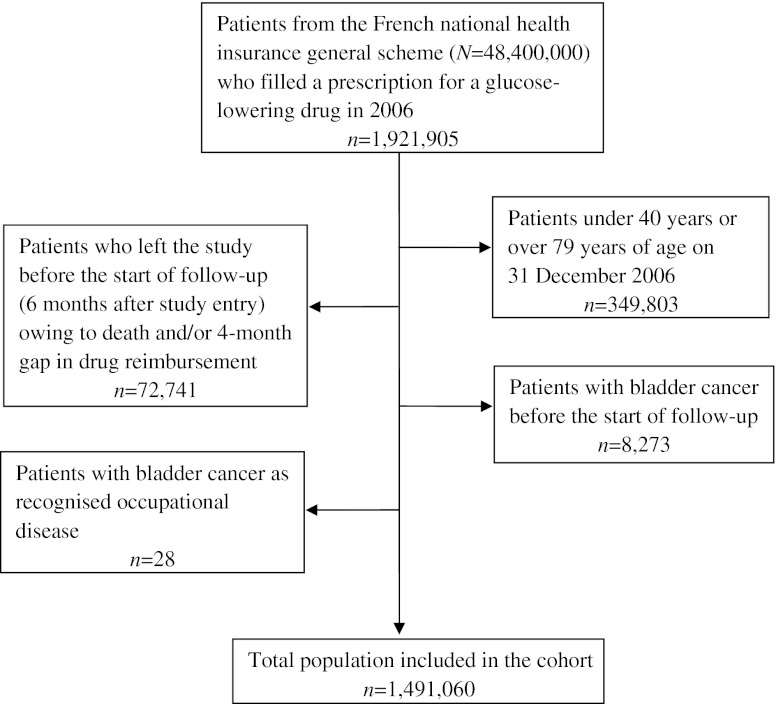
AIMS/HYPOTHESIS: Previous studies have suggested an increased risk of bladder cancer with pioglitazone exposure. We aimed to investigate the association between pioglitazone exposure and bladder cancer in France. METHODS: This cohort study involved use of data from the French national health insurance information system (Système National d'Information Inter-régimes de l'Assurance Maladie; SNIIRAM) linked with the French hospital discharge database (Programme de Médicalisation des Systèmes d'Information; PMSI). The cohort included patients aged 40 to 79 years who filled a prescription for a glucose-lowering drug in 2006. The cohort was followed for up to 42 months. Pioglitazone exposure was modelled as a time-dependent variable and defined by having filled at least two prescriptions over a 6-month period. Incident cases of bladder cancer were identified by a discharge diagnosis of bladder cancer combined with specific aggressive treatment. Statistical analyses involved a multivariate Cox model adjusted for age, sex and exposure to other glucose-lowering drugs. RESULTS: The cohort included 1,491,060 diabetic patients, 155,535 of whom were exposed to pioglitazone. We found 175 cases of bladder cancer among exposed patients and 1,841 among non-exposed patients. Incidence rates were 49.4 and 42.8 per 100,000 person-years, respectively. Pioglitazone exposure was significantly associated with bladder cancer incidence (adjusted HR 1.22 [95% CI 1.05, 1.43]). We observed a dose-effect relationship, with a significantly increased risk for high cumulative doses (≥ 28,000 mg, adjusted HR 1.75 [95% CI 1.22, 2.50]) and long duration of exposure (≥ 24 months, adjusted HR 1.36 [1.04, 1.79]). CONCLUSIONS/INTERPRETATION: In this cohort of diabetic patients from France, pioglitazone exposure was significantly associated with increased risk of bladder cancer.
Overview
The claims and statistics of this paper haven’t been checked yet.
Free: it reads the open-access text and checks the first 5 claims that cite a source we can check. Create a free account to check every claim.
Integrity signals
Registry
Cites
Statistics
Figures
Verification
Claims the paper makes
The claims and statistics of this paper haven’t been checked yet.
Free: it reads the open-access text and checks the first 5 claims that cite a source we can check. Create a free account to check every claim.
Claims other papers make about this one
Each is checked against this paper’s own text: does it say what the citing paper says it does?
The cited source says what the claim attributes to it.
In the citing paper
“Observational research conducted in 2011 and 2012 suggested that pioglitazone may increase the risk of bladder cancer.46,47”
From Pioglitazone after Ischemic Stroke or Transient Ischemic Attack (2016) · cites this paper as [47]
Self-check
Percentages, sums and reported differences re-computed from the paper’s own numbers.
The self-check needs the paper’s full text.
Citations
Cites
Dormandy, J. A., Charbonnel, B., Eckland, D. J., Erdmann, E., Massi-Benedetti, M., Moules, I. K., Skene, A. M., Tan, M. H., Lefèbvre, P. J., Murray, G. D., et al. (2005) · The Lancet · doi:10.1016/s0140-6736(05)67528-9 · Cited by 4,129 · cited 1×
“After a blinded review with external experts, bladder cancer was diagnosed during the second year of exposure in six cases in the pioglitazone group vs three in the placebo group [4, 5].”
BackgroundMetformin and reduced risk of cancer in diabetic patients
Evans, J. M. M., Donnelly, L. A., Emslie-Smith, A. M., Alessi, D. R., & Morris, A. D. (2005) · BMJ · doi:10.1136/bmj.38415.708634.f7 · Cited by 2,388 · cited 1×
“This observation has been previously reported [14–17].”
Association Between Smoking and Risk of Bladder Cancer Among Men and Women
Freedman, N. D. (2011) · JAMA · doi:10.1001/jama.2011.1142 · Cited by 1,141 · cited 1×
“First of all, it lacks data on tobacco use, known to be the third main risk factor for bladder cancer after age and male sex [19, 20].”
BackgroundThe influence of glucose-lowering therapies on cancer risk in type 2 diabetes
Currie, C. J., Poole, C. D., & Gale, E. A. M. (2009) · Diabetologia · doi:10.1007/s00125-009-1440-6 · Cited by 1,124
Bowker, S. L., Majumdar, S. R., Veugelers, P., & Johnson, J. A. (2006) · Diabetes Care · doi:10.2337/diacare.29.02.06.dc05-1558 · Cited by 933
Risk of Bladder Cancer Among Diabetic Patients Treated With Pioglitazone
Lewis, J. D., Ferrara, A., Peng, T., Hedderson, M., Bilker, W. B., Quesenberry, C. P., Vaughn, D. J., Nessel, L., Selby, J., & Strom, B. L. (2011) · Diabetes Care · doi:10.2337/dc10-1068 · Cited by 625
French national health insurance information system and the permanent beneficiaries sample
Tuppin, P., de Roquefeuil, L., Weill, A., Ricordeau, P., & Merlière, Y. (2010) · Revue d'Épidémiologie et de Santé Publique · doi:10.1016/j.respe.2010.04.005 · Cited by 399 · cited 1×
“The national health insurance information system (Système National d'Information Inter-régimes de l'Assurance Maladie; SNIIRAM) contains individualised, anonymous and exhaustive data on all reimbursements for patient health expenditure [10], including medicinal products as well as outpatient medical and nursing care,…”
BackgroundSelf-citationDiabetes mellitus and risk of bladder cancer: a meta-analysis
Larsson, S. C., Orsini, N., Brismar, K., & Wolk, A. (2006) · Diabetologia · doi:10.1007/s00125-006-0468-0 · Cited by 304 · cited 1×
“42]) when comparing type 2 diabetic individuals with non-diabetic individuals [22].”
BackgroundDormandy, J., Bhattacharya, M., & van Troostenburg de Bruyn, A.-R. (2009) · Drug Safety · doi:10.2165/00002018-200932030-00002 · Cited by 227
Cohort Study of Pioglitazone and Cancer Incidence in Patients With Diabetes
Ferrara, A., Lewis, J. D., Quesenberry, C. P., Peng, T., Strom, B. L., Van Den Eeden, S. K., Ehrlich, S. F., & Habel, L. A. (2011) · Diabetes Care · doi:10.2337/dc10-1067 · Cited by 181 · cited 1×
“Another analysis of a similar cohort found no association between pioglitazone exposure and cancer in several other sites [7].”
Result
Research works printed but not linked: 1
- French medicines agency (AFSSAPS) (2011) Use of medications containing pioglitazone (Actos®, Competact®) Suspended. Available from www.afssaps.fr/content/download/34175/447382/version/1/file/Press-release-Suspension-Pioglitazone.pdf, accessed 12 August 2011.
Cited by
PPARγ signaling and metabolism: the good, the bad and the future
Ahmadian, M., Suh, J. M., Hah, N., Liddle, C., Atkins, A. R., Downes, M., & Evans, R. M. (2013) · Nature Medicine · doi:10.1038/nm.3159 · Cited by 2,016
Pioglitazone after Ischemic Stroke or Transient Ischemic Attack
Kernan, W. N., Viscoli, C. M., Furie, K. L., Young, L. H., Inzucchi, S. E., Gorman, M., Guarino, P. D., Lovejoy, A. M., Peduzzi, P. N., Conwit, R., et al. (2016) · New England Journal of Medicine · doi:10.1056/nejmoa1506930 · Cited by 1,124
Tuppin, P., Rudant, J., Constantinou, P., Gastaldi-Ménager, C., Rachas, A., de Roquefeuil, L., Maura, G., Caillol, H., Tajahmady, A., Coste, J., et al. (2017) · Revue d'Épidémiologie et de Santé Publique · doi:10.1016/j.respe.2017.05.004 · Cited by 891
Self-citationObesity and diabetes: the increased risk of cancer and cancer-related mortality
Gallagher, E. J., & LeRoith, D. (2015) · Physiological Reviews · doi:10.1152/physrev.00030.2014 · Cited by 806
“These studies included data from an adverse events reporting database (155), a nested case control study (10), a retrospective cohort study (144), and two meta-analyses of studies (54, 217).”
BackgroundPPARγ and the global map of adipogenesis and beyond
Lefterova, M. I., Haakonsson, A. K., Lazar, M. A., & Mandrup, S. (2014) · Trends in Endocrinology & Metabolism · doi:10.1016/j.tem.2014.04.001 · Cited by 623
Bezin, J., Duong, M., Lassalle, R., Droz, C., Pariente, A., Blin, P., & Moore, N. (2017) · Pharmacoepidemiology and Drug Safety · doi:10.1002/pds.4233 · Cited by 584
Thiazolidinediones and the promise of insulin sensitization in type 2 diabetes
Soccio, R. E., Chen, E. R., & Lazar, M. A. (2014) · Cell Metabolism · doi:10.1016/j.cmet.2014.08.005 · Cited by 518
“…cohort showed no significant effects of pioglitazone on the ten most common cancers (Ferrara et al., 2011), but in the French cohort pioglitazone and rosiglitazone actually had significant protective effects for several other cancers (breast, colon, lung, and head and neck) (Neumann et al., 2012).”
BackgroundMethodInfluentialThiazolidinediones: the forgotten diabetes medications
Lebovitz, H. E. (2019) · Current Diabetes Reports · doi:10.1007/s11892-019-1270-y · Cited by 388
French health insurance databases: What interest for medical research?
Moulis, G., Lapeyre-Mestre, M., Palmaro, A., Pugnet, G., Montastruc, J.-L., & Sailler, L. (2015) · La Revue de Médecine Interne · doi:10.1016/j.revmed.2014.11.009 · Cited by 363
Epidemiology of incident immune thrombocytopenia: a nationwide population-based study in France
Moulis, G., Palmaro, A., Montastruc, J.-L., Godeau, B., Lapeyre-Mestre, M., & Sailler, L. (2014) · Blood · doi:10.1182/blood-2014-05-578336 · Cited by 351
Pioglitazone Use and Risk of Bladder Cancer and Other Common Cancers in Persons With Diabetes
Lewis, J. D., Habel, L. A., Quesenberry, C. P., Strom, B. L., Peng, T., Hedderson, M. M., Ehrlich, S. F., Mamtani, R., Bilker, W., Vaughn, D. J., et al. (2015) · JAMA · doi:10.1001/jama.2015.7996 · Cited by 320
Current treatment paradigms and emerging therapies for NAFLD/NASH
Raza, S. (2021) · Frontiers in Bioscience · doi:10.2741/4892 · Cited by 310
Borrelli, A., Bonelli, P., Tuccillo, F. M., Goldfine, I. D., Evans, J. L., Buonaguro, F. M., & Mancini, A. (2018) · Redox Biology · doi:10.1016/j.redox.2018.01.009 · Cited by 266
“Metformin was reported to induce weight loss, while pioglitazone induced weight gain, with an increased risk of bladder cancer [121].”
Backgroundβ-cell dysfunction: Its critical role in prevention and management of type 2 diabetes
Saisho, Y. (2015) · World Journal of Diabetes · doi:10.4239/wjd.v6.i1.109 · Cited by 263
Ballestri, S. (2014) · World Journal of Gastroenterology · doi:10.3748/wjg.v20.i7.1724 · Cited by 262
Pioglitazone use and risk of bladder cancer: Population based cohort study
Tuccori, M., Filion, K. B., Yin, H., Yu, O. H., Platt, R. W., & Azoulay, L. (2016) · BMJ · doi:10.1136/bmj.i1541 · Cited by 237
Pioglitazone and bladder cancer risk: a multipopulation pooled, cumulative exposure analysis
on behalf of the Scottish Diabetes Research Network Epidemiology Group and the Diabetes and Cancer Research Consortium, Levin, D., Bell, S., Sund, R., Hartikainen, S. A., Tuomilehto, J., Pukkala, E., Keskimäki, I., Badrick, E., Renehan, A. G., et al. (2015) · Diabetologia · doi:10.1007/s00125-014-3456-9 · Cited by 158
“Furthermore, the study by Neumann et al used never exposed participants as the reference group and did not adjust for smoking.”
BackgroundResultInfluentialPioglitazone and bladder cancer risk: a systematic review and meta‐analysis
Tang, H., Shi, W., Fu, S., Wang, T., Zhai, S., Song, Y., & Han, J. (2018) · Cancer Medicine · doi:10.1002/cam4.1354 · Cited by 154
“Subsequent observational studies seemed to support this finding and indicated a dosedependent relationship [5, 6].”
BackgroundResultColmers, I. N., Bowker, S. L., Majumdar, S. R., & Johnson, J. A. (2012) · Canadian Medical Association Journal · doi:10.1503/cmaj.112102 · Cited by 157
on behalf of the Scottish Diabetes Research Network Epidemiology Group, Colhoun, H. M., Livingstone, S. J., Looker, H. C., Morris, A. D., Wild, S. H., Lindsay, R. S., Reed, C., Donnan, P. T., Guthrie, B., et al. (2012) · Diabetologia · doi:10.1007/s00125-012-2668-0 · Cited by 152
“Pioglitazone was stated to be a valid treatment option for certain patients with type 2 diabetes, specifically when metformin has not been suitable or has failed to work adequately [1–3].”
BackgroundPioglitazone and risk of bladder cancer: a meta‐analysis of controlled studies
Ferwana, M., Firwana, B., Hasan, R., Al‐Mallah, M. H., Kim, S., Montori, V. M., & Murad, M. H. (2013) · Diabetic Medicine · doi:10.1111/dme.12144 · Cited by 146
Cancer Risk for Patients Using Thiazolidinediones for Type 2 Diabetes: A Meta-Analysis
Bosetti, C., Rosato, V., Buniato, D., Zambon, A., La Vecchia, C., & Corrao, G. (2013) · The Oncologist · doi:10.1634/theoncologist.2012-0302 · Cited by 143
The Future of Thiazolidinedione Therapy in the Management of Type 2 Diabetes Mellitus
Yau, H., Rivera, K., Lomonaco, R., & Cusi, K. J. (2013) · Current Diabetes Reports · doi:10.1007/s11892-013-0378-8 · Cited by 153
Thiazolidinediones and associated risk of bladder cancer: a systematic review and meta‐analysis
Turner, R. M., Kwok, C. S., Chen‐Turner, C., Maduakor, C. A., Singh, S., & Loke, Y. K. (2014) · British Journal of Clinical Pharmacology · doi:10.1111/bcp.12306 · Cited by 127
Safety and Tolerability of Sitagliptin in Type 2 Diabetes: Pooled Analysis of 25 Clinical Studies
Engel, S. S., Round, E., Golm, G. T., Kaufman, K. D., & Goldstein, B. J. (2013) · Diabetes Therapy · doi:10.1007/s13300-013-0024-0 · Cited by 123
Kashani, L., Omidvar, T., Farazmand, B., Modabbernia, A., Ramzanzadeh, F., Tehraninejad, E. S., Ashrafi, M., Tabrizi, M., & Akhondzadeh, S. (2013) · Psychoneuroendocrinology · doi:10.1016/j.psyneuen.2012.08.010 · Cited by 116
Karlstad, O., Linde, J., Vestergaard, P., Hjellvik, V., Bazelier, M., Schmidt, M., Andersen, M., Auvinen, A., Haukka, J., Furu, K., et al. (2013) · Current Drug Safety · doi:10.2174/15680266113136660067 · Cited by 116
“27 cohort studies [25-51] and 15 casecontrol studies (9 nested case-control studies) [52-66] were included in the systematic review.”
BackgroundThiazolidinedione drugs in the treatment of type 2 diabetes mellitus: past, present and future
Davidson, M. A., Mattison, D. R., Azoulay, L., & Krewski, D. (2018) · Critical Reviews in Toxicology · doi:10.1080/10408444.2017.1351420 · Cited by 112
“Conversely, in a meta-analysis of one clinical trial (PROactive) and four observational studies (Lewis et al. 2011; Chang et al. 2012; Neumann et al. 2012; Tseng 2012), Zhu et al. (2012) found that pioglitazone therapy was associated with a statistically significant increased risk when all studies…”
BackgroundMethodInfluentialNonalcoholic fatty liver disease – current status and future directions
Demir, M., Lang, S., & Steffen, H. (2015) · Journal of Digestive Diseases · doi:10.1111/1751-2980.12291 · Cited by 105
Efficacy and Safety of Dipeptidyl Peptidase-4 Inhibitors in Type 2 Diabetes: Meta-Analysis
Park, H., Park, C., Kim, Y., & Rascati, K. L. (2012) · Annals of Pharmacotherapy · doi:10.1345/aph.1r041 · Cited by 99
Do We Still Need Pioglitazone for the Treatment of Type 2 Diabetes? A risk-benefit critique in 2013
Schernthaner, G., Currie, C. J., & Schernthaner, G.-H. (2013) · Diabetes Care · doi:10.2337/dcs13-2031 · Cited by 100
“In the French study (49), the reported HR was 1.”
BackgroundBouillon, K., Bertrand, M., Maura, G., Blotière, P., Ricordeau, P., & Zureik, M. (2015) · The Lancet Haematology · doi:10.1016/s2352-3026(15)00027-7 · Cited by 113
Self-citationA Review on the Relationship between SGLT2 Inhibitors and Cancer
Lin, H.-W., & Tseng, C.-H. (2014) · International Journal of Endocrinology · doi:10.1155/2014/719578 · Cited by 99
Nonalcoholic fatty liver disease: new treatments
Hardy, T., Anstee, Q. M., & Day, C. P. (2015) · Current Opinion in Gastroenterology · doi:10.1097/mog.0000000000000175 · Cited by 89
“Increased risk of bladder cancer and MI [13,14].”
BackgroundFang, H., Yao, B., Yan, Y., Xu, H., Liu, Y., Tang, H., Zhou, J., Cao, L., Wang, W., Zhang, J., et al. (2013) · Diabetes Technology & Therapeutics · doi:10.1089/dia.2013.0131 · Cited by 101
Latest insights into the risk of cancer in diabetes
Noto, H., Goto, A., Tsujimoto, T., Osame, K., & Noda, M. (2013) · Journal of Diabetes Investigation · doi:10.1111/jdi.12068 · Cited by 88
Pioglitazone and the Risk of Bladder Cancer: A Meta-Analysis
Filipova, E., Uzunova, K., Kalinov, K., & Vekov, T. (2017) · Diabetes Therapy · doi:10.1007/s13300-017-0273-4 · Cited by 87
“[39] has the highest weight but results summarized in Table 3 show that it is of arguable quality.”
BackgroundDiagnosis and management of cardiovascular risk in nonalcoholic fatty liver disease
Lonardo, A., Ballestri, S., Targher, G., & Loria, P. (2015) · Expert Review of Gastroenterology & Hepatology · doi:10.1586/17474124.2015.965143 · Cited by 86
Kim, S. G., Kim, D. M., Woo, J.-T., Jang, H. C., Chung, C. H., Ko, K. S., Park, J. H., Park, Y. S., Kim, S. J., & Choi, D. S. (2014) · PLoS ONE · doi:10.1371/journal.pone.0092843 · Cited by 83
“Thus, a safety concern could be raised with respect to the risk of bladder cancer possibly related to pioglitazone [7].”
BackgroundKasuga, M., Ueki, K., Tajima, N., Noda, M., Ohashi, K., Noto, H., Goto, A., Ogawa, W., Sakai, R., Tsugane, S., et al. (2013) · Cancer Science · doi:10.1111/cas.12203 · Cited by 89
Johnston, R., Uthman, O. A., Cummins, E., Clar, C., Royle, P., Colquitt, J. L., Tan, B. K., Clegg, A. J., Shantikumar, S., Court, R. A., et al. (2017) · Health Technology Assessment · doi:10.3310/hta21020 · Cited by 92
Erdmann, E., Harding, S., Lam, H., & Perez, A. (2016) · Diabetes, Obesity and Metabolism · doi:10.1111/dom.12608 · Cited by 80
“In contrast, other short-term, observational database studies have suggested an association between exposure to pioglitazone and incidence of bladder cancer, including a retrospective cohort study using French National Health Insurance Plan data [29], and nested case–control studies in Taiwan [30], the UK [31] and Kor…”
ResultLi, H., Liang, J., Han, M., & Gao, Z. (2024) · Journal of Advanced Research · doi:10.1016/j.jare.2024.03.004 · Cited by 90
Diabetes and cancer, common threads and missing links
Hua, F., Yu, J., & Hu, Z. (2016) · Cancer Letters · doi:10.1016/j.canlet.2016.02.006 · Cited by 90
Marder, W., Khalatbari, S. H., Myles, J. D., HENCH, R. P., Lustig, S., Yalavarthi, S., Parameswaran, A., Brook, R. D., & Kaplan, M. J. (2013) · Journal of the American Heart Association · doi:10.1161/jaha.113.000441 · Cited by 85
“Additionally, a concern for malignancy associated with these medications exists, as a dose-effect relationship was observed between their use for ≥2 years with bladder cancer in patients with diabetes.(48) Finally, future studies would need to address how TZDs affect bone health in”
BackgroundDo thiazolidinediones still have a role in treatment of type 2 diabetes mellitus?
Consoli, A., & Formoso, G. (2013) · Diabetes, Obesity and Metabolism · doi:10.1111/dom.12101 · Cited by 76
Bailey, T. S. (2013) · The American Journal of Medicine · doi:10.1016/j.amjmed.2013.06.009 · Cited by 84
Examining the safety of PPAR agonists – current trends and future prospects
Bortolini, M., Wright, M. B., Bopst, M., & Balas, B. (2013) · Expert Opinion on Drug Safety · doi:10.1517/14740338.2013.741585 · Cited by 75
“Another recent epidemiologic study in France suggested a significantly increased risk of bladder cancer with prolonged exposure (‡ 24 months) to pioglitazone [98].”
BackgroundDiabetes Mellitus and Risk of Bladder Cancer: A Meta-Analysis of Cohort Studies
Zhu, Z., Zhang, X., Shen, Z., Zhong, S., Wang, X., Lu, Y., & Chen, X. (2013) · PLoS ONE · doi:10.1371/journal.pone.0056662 · Cited by 75
“Neumann observed a significant association between pioglitazone and bladder cancer for men but not women [62].”
BackgroundGuideline Approach to Therapy in Patients With Newly Diagnosed Type 2 Diabetes
Raz, I. (2013) · Diabetes Care · doi:10.2337/dcs13-2035 · Cited by 71
The current role of thiazolidinediones in diabetes management
Rizos, C. V., Kei, A. A., & Elisaf, M. (2016) · Archives of Toxicology · doi:10.1007/s00204-016-1737-4 · Cited by 75
Singh, S., & Bhansali, A. (2016) · BMC Dermatology · doi:10.1186/s12895-016-0049-y · Cited by 71
“Increased risk of bladder cancer with the long term use of pioglitazone as shown in French cohort study [50], UK nested case control study [51] and interim results of longitudinal study [52].”
BackgroundHsiao, F., Hsieh, P.-H., Huang, W.-F., Tsai, Y., & Gau, C. (2013) · Drug Safety · doi:10.1007/s40264-013-0080-4 · Cited by 77
“[5], which was based on data from the French National Health Insurance information system with 175 and 1,841 cases of bladder cancer among patients exposed and not exposed to pioglitazone, respectively (HRs of exposure to pioglitazone\1, 1–2 and C2 years and risk of bladder cancer were 1.”
MethodImportance of Beta Cell Function for the Treatment of Type 2 Diabetes
Saisho, Y. (2014) · Journal of Clinical Medicine · doi:10.3390/jcm3030923 · Cited by 83
“Recent studies have also shown an increase in risk of bone fracture in women [97] and risk of bladder cancer [98–100] in patients treated with pioglitazone.”
BackgroundDrug treatment of type 2 diabetes mellitus in patients for whom metformin is contraindicated
Irons, B. K., & Minze, M. G. (2014) · Diabetes Metabolic Syndrome and Obesity · doi:10.2147/dmso.s38753 · Cited by 78
“So too is the potential risk of developing bladder cancer, that appears to be dose-dependent and increases with longer use of thiazolidinedione therapy.(69) Based on the benefit-to-risk profile of pioglitazone, some clinical experts remain adamant that this agent still has a role in the treatment of T2DM.”
BackgroundNeumann, A., Maura, G., Weill, A., Alla, F., & Danchin, N. (2018) · Circulation: Cardiovascular Quality and Outcomes · doi:10.1161/circoutcomes.117.004356 · Cited by 66
Self-citationVegas, L. P., Penso, L., Claudepierre, P., & Sbidian, É. (2022) · JAMA Dermatology · doi:10.1001/jamadermatol.2022.0364 · Cited by 73
Observational follow‐up of the PROactive study: a 6‐year update
Erdmann, E., Song, E., Spanheimer, R., van Troostenburg de Bruyn, A. ‐., & Perez, A. (2014) · Diabetes, Obesity and Metabolism · doi:10.1111/dom.12180 · Cited by 65
Vegas, L. P., Corvoisier, P. L., Penso, L., Paul, M., Sbidian, É., & Claudepierre, P. (2021) · Rheumatology · doi:10.1093/rheumatology/keab522 · Cited by 72
Lamers, C., Schubert‐Zsilavecz, M., & Merk, D. (2012) · Expert Opinion on Therapeutic Patents · doi:10.1517/13543776.2012.699042 · Cited by 69
“2 Cancer As PPARs are ligand-activated transcription factors and hence involved in regulation of genes, a potential involvement in cancer development as well as a possible role for cancer therapy is obvious and the fact that pioglitazone was recently found to promote bladder cancer proves this assumption [70].”
BackgroundChigurupati, S., Dhanaraj, S. A., & Balakumar, P. (2015) · European Journal of Pharmacology · doi:10.1016/j.ejphar.2015.02.043 · Cited by 70
“It is important to note that the use of pioglitazone is significantly associated with incidence of bladder cancer in T2DM patients (Azoulay et al., 2012; Neumann et al., 2012).”
BackgroundZhu, Z., Shen, Z., Lu, Y., Zhong, S., & Chen, X. (2012) · Diabetes Research and Clinical Practice · doi:10.1016/j.diabres.2012.05.006 · Cited by 68
“Moreover, the benefits of glycemic control versus unknown risks for cancer recurrence with pioglitazone should be considered in patients with a prior history of bladder cancer [14].”
BackgroundInfluentialEndothelium as a gatekeeper of fatty acid transport
Mehrotra, D., Wu, J., Papangeli, I., & Chun, H. J. (2014) · Trends in Endocrinology & Metabolism · doi:10.1016/j.tem.2013.11.001 · Cited by 60
Pharmacological agents for NASH
Ratziu, V. (2013) · Nature Reviews Gastroenterology & Hepatology · doi:10.1038/nrgastro.2013.193 · Cited by 64
Diabetes Mellitus and Risk of Bladder Cancer: A Meta-Analysis of Cohort Studies
Xu, X., Wu, J., Mao, Y., Zhu, Y., Hu, Z., Xu, X., Lin, Y., Chen, H., Zheng, X., Qin, J., et al. (2013) · PLoS ONE · doi:10.1371/journal.pone.0058079 · Cited by 61
Metformin may reduce bladder cancer risk in Taiwanese patients with type 2 diabetes
Tseng, C. (2014) · Acta Diabetologica · doi:10.1007/s00592-014-0562-6 · Cited by 57
Metformin Use and Lung Cancer Risk in Diabetic Patients: A Systematic Review and Meta-Analysis
Long, Y., Liu, M., Huang, Y., Wu, K., Huang, X., Zhao, Y., He, W., & Zhang, R. (2019) · Disease Markers · doi:10.1155/2019/6230162 · Cited by 61
Bronsveld, H. K., ter Braak, B., Karlstad, Ø., Vestergaard, P., Starup‐Linde, J., Bazelier, M. T., Bruin, M. L. D., de Boer, A., Siezen, C. L. E., van de Water, B., et al. (2015) · Breast Cancer Research · doi:10.1186/s13058-015-0611-2 · Cited by 58
“Two of the three studies that found significantly different results were classified as having a high risk of bias [57, 60] or had lack of power [57, 64].”
Diabetes and Cancer: 5 Years Into the Recent Controversy
Badrick, E., & Renehan, A. G. (2014) · European Journal of Cancer · doi:10.1016/j.ejca.2014.04.032 · Cited by 53
Vallarino, C., Perez, A., Fusco, G., Liang, H., Bron, M., Manne, S., Joseph, G., & Yu, S. (2013) · Clinical Drug Investigation · doi:10.1007/s40261-013-0106-9 · Cited by 53
Metformin and cancer in type 2 diabetes: a systematic review and comprehensive bias evaluation
Farmer, R. E., Ford, D., Forbes, H. J., Chaturvedi, N., Kaplan, R. S., Smeeth, L. L., & Bhaskaran, K. (2016) · International Journal of Epidemiology · doi:10.1093/ije/dyw275 · Cited by 60
Colas, S., Collin, C., Piriou, P., & Zureik, M. (2015) · JAMA Surgery · doi:10.1001/jamasurg.2015.1325 · Cited by 56
Holstein, A., Beil, W., & Kovacs, P. L. (2012) · Expert Opinion on Drug Metabolism & Toxicology · doi:10.1517/17425255.2012.722619 · Cited by 54
“Furthermore, pioglitazone is associated with an increased risk of bladder cancer [86].”
Viscoli, C. M., Brass, L. M., Carolei, A., Conwit, R., Ford, G. A., Furie, K. L., Gorman, M., Guarino, P. D., Inzucchi, S. E., Lovejoy, A. M., et al. (2014) · American Heart Journal · doi:10.1016/j.ahj.2014.07.016 · Cited by 50
Peroxisome Proliferator-Activated Receptor Agonists and Bladder Cancer: Lessons from Animal Studies
Tseng, C., & Tseng, F.-H. (2012) · Journal of Environmental Science and Health Part C · doi:10.1080/10590501.2012.735519 · Cited by 53
“Subsequent epidemiological studies suggested a 20%–40% higher risk of bladder cancer after 2 years’ use of pioglitazone in humans [12, 13].”
BackgroundUse of the Analytic Hierarchy Process for Medication Decision-Making in Type 2 Diabetes
Maruthur, N. M., Joy, S. M., Dolan, J. G., Shihab, H. M., & Singh, S. (2015) · PLoS ONE · doi:10.1371/journal.pone.0126625 · Cited by 56
The therapeutic landscape of non‐alcoholic steatohepatitis
Perazzo, H., & Dufour, J. (2017) · Liver International · doi:10.1111/liv.13270 · Cited by 49
Should Side Effects Influence the Selection of Antidiabetic Therapies in Type 2 Diabetes?
Grunberger, G. (2017) · Current Diabetes Reports · doi:10.1007/s11892-017-0853-8 · Cited by 54
Zhan, Y., Liu, Y., Wang, C., Lin, J., Chen, M., Chen, X., Zhuang, C., Liu, L., Xu, W., Zhou, Q., et al. (2016) · Oncotarget · doi:10.18632/oncotarget.6946 · Cited by 47
“com/oncotarget the clinical strategies and outcomes of bladder cancer [21, 22].”
BackgroundMetformin Use and Lung Cancer Risk in Patients with Diabetes
Sakoda, L. C., Ferrara, A. M., Achacoso, N. S., Peng, T., Ehrlich, S. F., Quesenberry, C. P., & Habel, L. A. (2015) · Cancer Prevention Research · doi:10.1158/1940-6207.capr-14-0291 · Cited by 44
He, S., Tang, Y.-H., Zhao, G., Yang, X., Wang, D., & Zhang, Y. (2013) · Tumor Biology · doi:10.1007/s13277-013-1278-x · Cited by 50
Transcriptional control of local estrogen formation by aromatase in the breast
To, S. Q., Knower, K. C., Cheung, V., Simpson, E. R., & Clyne, C. D. (2014) · The Journal of Steroid Biochemistry and Molecular Biology · doi:10.1016/j.jsbmb.2014.05.004 · Cited by 48
Sahli, L., Lapeyre‐Mestre, M., Derumeaux, H., & Moulis, G. (2016) · Pharmacoepidemiology and Drug Safety · doi:10.1002/pds.4006 · Cited by 43
A Review on Thiazolidinediones and Bladder Cancer in Human Studies
Tseng, C. (2014) · Journal of Environmental Science and Health Part C · doi:10.1080/10590501.2014.877645 · Cited by 43
“The lack of statistical power because of the small number of bladder cancer cases in women with exposure to pioglitazone (n = 13) may lead to the null association in the French study [10].”
BackgroundMethodResultInfluentialInflammation and Oral Cancer: An Update Review on Targeted Therapies
Patil, S. G., Patil, A., & Anand, R. (2015) · The Journal of Contemporary Dental Practice · doi:10.5005/jp-journals-10024-1727 · Cited by 45
Kehinde, E. O. (2013) · Medical Principles and Practice · doi:10.1159/000355504 · Cited by 45
PPARγ and Its Agonists in Chronic Kidney Disease
Ma, Y., Shi, M., Wang, Y., & Liu, J. (2020) · International Journal of Nephrology · doi:10.1155/2020/2917474 · Cited by 48
“Safety warnings and even drug withdrawal in Europe have come out because of the increasing risk in bladder cancer by pioglitazone [113] [114] [115] .”
BackgroundManagement Strategies for Posttransplant Diabetes Mellitus after Heart Transplantation: A Review
Cehic, M. G., Nundlall, N., Greenfield, J. R., & Macdonald, P. S. (2018) · Journal of Transplantation · doi:10.1155/2018/1025893 · Cited by 43
“an increased incidence of bladder cancer [85, 86].”
Pioglitazone has a dubious bladder cancer risk but an undoubted cardiovascular benefit
Ryder, R. E. J. (2014) · Diabetic Medicine · doi:10.1111/dme.12627 · Cited by 39
Report of the JDS/JCA Joint Committee on Diabetes and Cancer
Kasuga, M., Ueki, K., Tajima, N., Noda, M., Ohashi, K., Noto, H., Goto, A., Ogawa, W., Sakai, R., Tsugane, S., et al. (2013) · Diabetology International · doi:10.1007/s13340-013-0121-3 · Cited by 40
Chen, Y., Du, L., Li, L., Ma, J., Geng, X., Yao, X., Liu, G., & Sun, X. (2017) · Journal of Diabetes · doi:10.1111/1753-0407.12435 · Cited by 37
“lung/bronchus, pancreatic, and colorectal cancer were higher in the population exposed to SUs than in the population not exposed to SUs (Table S5).(65,76)”
BackgroundCarta, A. R., & Simuni, T. (2015) · Expert Opinion on Investigational Drugs · doi:10.1517/13543784.2015.963195 · Cited by 36
“Overall, some cohort studies reported a dose-dependent association between pioglitazone and bladder cancer with a significantly increased risk for high cumulative doses (‡ 28,000 mg) long duration of exposure (‡ 24 months) and in man more than in woman [83-86].”
BackgroundImprovement of Insulin Sensitivity by a Novel Drug Candidate, BGP-15, in Different Animal Studies
Literáti-Nagy, B., Tory, K., Peitl, B., Bajza, Á., Koranyi, L. I., Literáti-Nagy, Z., Hooper, P. L., Vígh, L., & Szilvássy, Z. (2014) · Metabolic Syndrome and Related Disorders · doi:10.1089/met.2013.0098 · Cited by 36
“40 Glucagon-like peptide-1–based therapy is gaining wide-spread use for T2DM, although there are concerns about risks for pancreatitis and pancreatic and thyroid cancers.”
Rosiglitazone reduces breast cancer risk in Taiwanese female patients with type 2 diabetes mellitus
Tseng, C. (2016) · Oncotarget · doi:10.18632/oncotarget.13824 · Cited by 36
Thiazolidinediones and risk of colorectal cancer in patients with diabetes mellitus: A meta-analysis
Hu, T., Liu, Y., Jin, P., & Sun, X. (2018) · Saudi Journal of Gastroenterology · doi:10.4103/sjg.sjg_295_17 · Cited by 36
“00);[37,38] however, such effect was not found in pioglitazone group (n = 3 studies, 14,969 CRC cases in 1,974,120 patients with DM; RR = 0.”
BackgroundYan, H., Xie, H., Ying, Y., Li, J., Wang, X., Xu, X., & Zheng, X. (2018) · Cancer Management and Research · doi:10.2147/cmar.s164840 · Cited by 39
“…potentially cause unmeasured confounding in studies of pioglitazone and bladder cancer but most of the studies included in this meta-analysis 6,7,9,10,12–14 did not adjust for proteinuria testing. d) Although our heterogeneity was not significant, the results of our meta-analysis should be…”
Kounatidis, D. C., Vallianou, N. G., Rebelos, E., Kouveletsou, M., Kontrafouri, P., Eleftheriadou, I., Diakoumopoulou, E., Karampela, Ι., Tentolouris, N., & Dalamaga, Μ. (2025) · Current Obesity Reports · doi:10.1007/s13679-025-00612-4 · Cited by 48
“Following studies and meta-analyses supported these concerns, revealing a dose-and time-dependent risk [169–171].”
Du, R., Lin, L., Cheng, D., Xu, Y. H., Xu, M., Chen, Y., Wang, W., Bi, Y., Li, D., & Lu, J. (2017) · Diabetes/Metabolism Research and Reviews · doi:10.1002/dmrr.2961 · Cited by 35
“5 years' follow‐up.(17) Another study from Taiwan also reported that TZDs therapy is significantly associated with a decreased risk of breast cancer compared with no antidiabetic treatment (HR: 0.”
BackgroundMethodYang, D.-R., Lin, S.-J., Ding, X.-F., Miyamoto, H., Messing, E. M., Li, L.-Q., Wang, N., & Chang, C. (2013) · Urology · doi:10.1016/j.urology.2012.12.027 · Cited by 35
Metadata
- Authors
- Neumann, A., Weill, A., Ricordeau, P., Fagot, J. P., Alla, F., & Allemand, H.
- Affiliations
- l'Assurance Maladie (FR)
- Corresponding author
- Weill, A.
- Venue
- Diabetologia
- Published
- 2012-03-31
- Volume
- 55
- Issue
- 7
- Pages
- 1953-1962
- ISSN
- 0012-186X (ISSN-L)
- 1432-0428
- PMC
- PMC3369136
- OpenAlex
- W2145777529
- Cited by
- 284
- References
- 16
- Citations by year
- 2026: 3 · 2025: 5 · 2024: 9 · 2023: 6 · 2022: 9 · 2021: 8 · 2020: 8 · 2019: 17 · 2018: 21 · 2017: 24 · 2016: 30 · 2015: 31 · 2014: 40 · 2013: 49 · 2012: 22
- FWCI
- 18.24
- Type
- journal article
- Language
- en
- Open access
- hybrid
- doi.org
- Licence
- cc-by
- Locations
- Diabetologia (publishedVersion, cc-by)
- Europe PMC (PubMed Central) (publishedVersion, cc-by)
- PubMed Central (publishedVersion, cc-by)
- PubMed (publishedVersion)
- Topics
- Life Sciences › Biochemistry, Genetics and Molecular Biology › Molecular Biology › Metabolism, Diabetes, and Cancer
- Health Sciences › Medicine › Surgery › Bladder and Urothelial Cancer Treatments
- Health Sciences › Medicine › Endocrinology, Diabetes and Metabolism › Diabetes Treatment and Management
- Keywords
- pioglitazone, bladder cancer, diabetes mellitus, drug-induced cancer risk, thiazolidinediones, antidiabetic drugs, dose-response relationship, drug exposure duration, cancer incidence
- MeSH terms
- Pioglitazone, Adult, Aged, Urinary Bladder Neoplasms, Diabetes Mellitus, Type 2, Drug Administration Schedule, Female, Follow-Up Studies, France, Humans, Hypoglycemic Agents, Male, Middle Aged, Risk Factors, Cohort Studies, Incidence, Multivariate Analysis, Proportional Hazards Models, Thiazolidinediones
About these checks
Registry, retraction, Cites and statistics results are computed, not judged, with one exception: a printed reference that no index lists is read once by a model before it counts as a citation error. Claims are extracted by a model and kept only when their quote appears verbatim in the text; each cited source is then checked, with a model’s help, for whether it says what the claim relies on. Those verdicts can be wrong — read the claim’s quote and the cited source before relying on one.
Statistics and arithmetic are recomputed, not judged.
Confidence bands are shown only for fields calibrated on our annotated test set. None is calibrated yet, so no band is shown.
What counts as a claim ›How we measure confidence ›How we check this ›
Are you an author, or do you see a problem with this page? Request a review
Data sources
Bibliographic data: Semantic Scholar, OpenAlex, Crossref.
Contains information from the Semantic Scholar Academic Graph Datasets, made available under the ODC Attribution License (ODC-BY 1.0).
Semantic Scholar’s data is described in: Kinney, R., et al. (2023). The Semantic Scholar Open Data Platform. arXiv:2301.10140.
