

Learning to dislike alcohol: conditioning negative implicit attitudes toward alcohol and its effect on drinking behavior
Open accessThe DOI matches its Crossref record; 29 of the 30 references it cites were found in a registry or an index.
Abstract
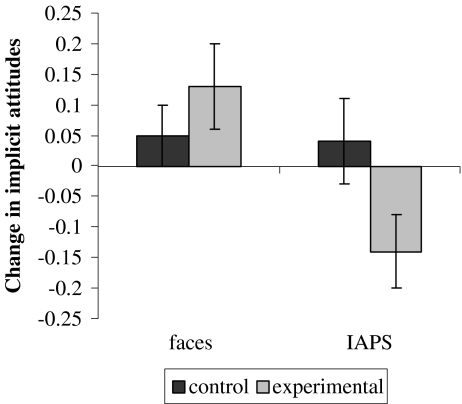
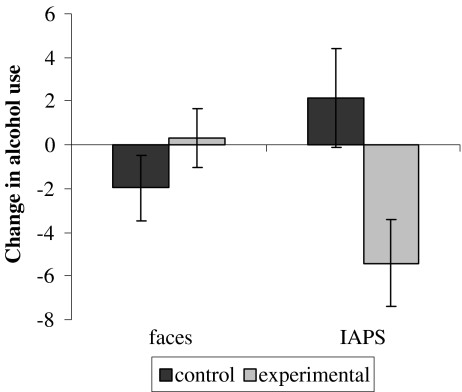
RATIONALE: Since implicit attitudes toward alcohol play an important role in drinking behavior, a possible way to obtain a behavioral change is changing these implicit attitudes. OBJECTIVES: This study examined whether a change in implicit attitudes and in drinking behavior can be achieved via evaluative conditioning. METHODS: Participants were randomly assigned to an experimental condition and a control condition. In the experimental condition, participants were subjected to an evaluative conditioning procedure that consistently pairs alcohol-related cues with negative stimuli. In the control condition, alcohol-related cues were consistently paired with neutral stimuli during the evaluative conditioning phase. Implicit attitudes, explicit attitudes, and drinking behavior were measured before and after the evaluative conditioning phase. RESULTS: Following the evaluative conditioning procedure, participants in the experimental condition showed stronger negative implicit attitudes toward alcohol and consumed less alcohol compared to participants in the control condition. However, this effect was only found when the evaluative conditioning task paired alcohol-related cues with general negative pictures, but not when using pictures of frowning faces. CONCLUSIONS: These results demonstrate that evaluative conditioning can effectively change implicit attitudes toward alcohol and also suggest that this procedure can be used to change drinking behavior. Hence, evaluative conditioning may be a useful new intervention tool to combat alcohol misuse.
Overview
The claims and statistics of this paper haven’t been checked yet.
Free: it reads the open-access text and checks the first 5 claims that cite a source we can check. Create a free account to check every claim.
Integrity signals
Registry
Cites
Statistics
Figures
Verification
Claims the paper makes
The claims and statistics of this paper haven’t been checked yet.
Free: it reads the open-access text and checks the first 5 claims that cite a source we can check. Create a free account to check every claim.
Claims other papers make about this one
Each is checked against this paper’s own text: does it say what the citing paper says it does?
The cited source says what the claim attributes to it.
In the citing paper
“In addition to these re-training paradigms, other paradigms have been developed which demonstrated promising results, such as evaluative conditioning (Houben et al., 2010), neurofeedback training (Sokhadze et al., 2008) and inhibition training in the context of problemrelated stimuli (Houben et al., 2011a), but these procedures have as yet only been tested in student samples.”
From Addiction, adolescence, and the integration of control and motivation (2011) · cites this paper as Houben et al., 2010
Self-check
Percentages, sums and reported differences re-computed from the paper’s own numbers.
The self-check needs the paper’s full text.
Citations
Cites
SAUNDERS, J. B., AASLAND, O. G., BABOR, T. F., DE LA FUENTE, J. R., & GRANT, M. (1993) · Addiction · doi:10.1111/j.1360-0443.1993.tb02093.x · Cited by 13,597 · cited 4×
“…et al. 1993), participants had an average score of 8.26 (SD=4.79) with 43% of the participants scoring above 8, indicating hazardous drinking (Saunders et al. 1993), and 28% of the participants scoring above 10 which has been proposed as a cut-off score for problem drinking in students…”
BackgroundMethodInfluentialMeasuring individual differences in implicit cognition: the implicit association test
Greenwald, A. G., McGhee, D. E., & Schwartz, J. L. K. (1998) · Journal of Personality and Social Psychology · doi:10.1037/0022-3514.74.6.1464 · Cited by 9,210
Understanding and using the Implicit Association Test: I. An improved scoring algorithm.
Greenwald, A. G., Nosek, B. A., & Banaji, M. R. (2003) · Journal of Personality and Social Psychology · doi:10.1037/0022-3514.85.2.197 · Cited by 5,815 · cited 3×
“IAT effects at pre- and posttest were calculated with the D600 algorithm (Greenwald et al. 2003), so that higher scores indicate faster performance when alcohol was paired with pleasant (vs. soft drinks and unpleasant) than when alcohol was paired with unpleasant (vs. soft drinks and pleasant).”
InfluentialThe NimStim set of facial expressions: Judgments from untrained research participants.
Tottenham, N., Tanaka, J. W., Leon, A. C., McCarry, T., Nurse, M., Hare, T. A., Marcus, D. J., Westerlund, A., Casey, B., & Nelson, C. (2009) · Psychiatry Research · doi:10.1016/j.psychres.2008.05.006 · Cited by 3,454 · cited 3×
“The two experimental conditions differed in the type of affective USs used during the EC task: These were either pictures of smiling, frowning, and neutral expressions of men and women taken from the NimStim Set of Facial Expressions (Tottenham et al. 2009) or general positive, negative, and neutral pictures of the In…”
Gawronski, B., & Bodenhausen, G. V. (2006) · Psychological Bulletin · doi:10.1037/0033-2909.132.5.692 · Cited by 2,587 · cited 2×
“Evaluative conditioning”
Lang, P. J., Bradley, M. M., & Cuthbert, B. N. (1999) · Cited by 1,664
De Houwer, J., Thomas, S., & Baeyens, F. (2001) · Psychological Bulletin · doi:10.1037/0033-2909.127.6.853 · Cited by 1,181 · cited 2×
“In this respect, it is interesting to note that EC has been found to be highly resistant to extinction ( De Houwer et al. 2001 )a nd therefore holds the potential to induce long-lasting changes in implicit attitudes and behavior, which may further increase the value of EC as an intervention tool.”
Wiers, R. W., Bartholow, B. D., van den Wildenberg, E., Thush, C., Engels, R. C. M. E., Sher, K. J., Grenard, J., Ames, S. L., & Stacy, A. W. (2007) · Pharmacology Biochemistry and Behavior · doi:10.1016/j.pbb.2006.09.021 · Cited by 734 · cited 3×
“These automatic processes are activated whenever alcohol-related cues are encountered and generate strong impulses to drink alcohol via the automatic activation of behavioral schemas (Deutsch and Strack 2006; Wiers et al. 2007).”
Self-citationImplicit Attitude Formation Through Classical Conditioning
Olson, M. A., & Fazio, R. H. (2001) · Psychological Science · doi:10.1111/1467-9280.00376 · Cited by 512 · cited 2×
“According to general theories of attitude learning, implicit attitudes develop primarily via repeated pairing of attitude objects with positive or negative affect (e.g., Olson and Fazio 2001).”
Handbook of Implicit Cognition and Addiction
Wiers, R., & Stacy, A. (2006) · doi:10.4135/9781412976237 · Cited by 474 · cited 1×
“…appraises stimuli automatically in terms of affective and motivational significance and a slower, reflective system, which includes controlled processes related to conscious deliberations, emotion regulation, and expected outcomes (Deutsch and Strack 2006; Wiers and Stacy 2006; Wiers et al. 2007).”
BackgroundSelf-citation
Research works printed but not linked: 1
- Lang PJ Bradley MM Cuthbert BN International Affective Picture System (IAPS): instruction manual and affective ratings. Technical Report A-6 2005 Gainesville University of Florida
Cited by
A meta-analysis of procedures to change implicit measures
Forscher, P. S., Lai, C. K., Axt, J. R., Ebersole, C. R., Herman, M., Devine, P. G., & Nosek, B. A. (2019) · Journal of Personality and Social Psychology · doi:10.1037/pspa0000160 · Cited by 700
Nonconscious processes and health.
Sheeran, P., Gollwitzer, P. M., & Bargh, J. A. (2013) · Health Psychology · doi:10.1037/a0029203 · Cited by 579
Wiers, R. W., Gladwin, T. E., Hofmann, W., Salemink, E., & Ridderinkhof, K. R. (2013) · Clinical Psychological Science · doi:10.1177/2167702612466547 · Cited by 486
Self-citationOn Integrating the Components of Self-Control
Kotabe, H. P., & Hofmann, W. (2015) · Perspectives on Psychological Science · doi:10.1177/1745691615593382 · Cited by 478
The Associative–Propositional Evaluation Model
Gawronski, B., & Bodenhausen, G. V. (2011) · Advances in Experimental Social Psychology · doi:10.1016/b978-0-12-385522-0.00002-0 · Cited by 426
“However, the majority of studies that used familiar attitude objects as CS found EC effects only on implicit, but not explicit, evaluations (e.g., Dijksterhuis, 2004; Gibson, 2008; Houben et al., 2010; Karpinski & Hilton, 2001; Olson & Fazio, 2006).”
BackgroundResultInfluentialThe Handbook of Behavior Change
(2020) · Cambridge University Press eBooks · doi:10.1017/9781108677318 · Cited by 407
Houben, K., Nederkoorn, C., Wiers, R. W., & Jansen, A. (2011) · Drug and Alcohol Dependence · doi:10.1016/j.drugalcdep.2010.12.011 · Cited by 397
“Recent research indeed suggests that automatic alcohol-related affective processes are amenable to change and that decreasing these automatic impulses reduces alcohol intake (Houben et al., 2010).”
BackgroundSelf-citationAddiction, adolescence, and the integration of control and motivation
Gladwin, T. E., Figner, B., Crone, E. A., & Wiers, R. W. (2011) · Developmental Cognitive Neuroscience · doi:10.1016/j.dcn.2011.06.008 · Cited by 296
“In addition to these re-training paradigms, other paradigms have been developed which demonstrated promising results, such as evaluative conditioning (Houben et al., 2010), neurofeedback training (Sokhadze et al.”
Self-citationA systematic review of the effects of non-conscious regulatory processes in physical activity
Rebar, A. L., Dimmock, J. A., Jackson, B., Rhodes, R. E., Kates, A., Starling, J., & Vandelanotte, C. (2016) · Health Psychology Review · doi:10.1080/17437199.2016.1183505 · Cited by 276
Changing Behavior Using the Theory of Planned Behavior
Ajzen, I., & Schmidt, P. (2020) · The Handbook of Behavior Change · doi:10.1017/9781108677318.002 · Cited by 266
The role of attentional bias in obesity and addiction.
Field, M., Werthmann, J., Franken, I., Hofmann, W., Hogarth, L., & Roefs, A. (2016) · Health Psychology · doi:10.1037/hea0000405 · Cited by 263
Houben, K., Havermans, R. C., Nederkoorn, C., & Jansen, A. (2012) · Addiction · doi:10.1111/j.1360-0443.2012.03827.x · Cited by 233
Self-citationFriese, M., Hofmann, W., & Wiers, R. W. (2011) · Self and Identity · doi:10.1080/15298868.2010.536417 · Cited by 220
Self-citationBastick, Z. (2021) · Computers in Human Behavior · doi:10.1016/j.chb.2020.106633 · Cited by 205
Desire: The New Hot Spot in Self-Control Research
Hofmann, W., & Van Dillen, L. (2012) · Current Directions in Psychological Science · doi:10.1177/0963721412453587 · Cited by 197
Houben, K., Schoenmakers, T. M., & Wiers, R. W. (2010) · Addictive Behaviors · doi:10.1016/j.addbeh.2010.08.012 · Cited by 184
Self-citationFood Addiction: Implications for the Diagnosis and Treatment of Overeating
Adams, R. C., Sedgmond, J., Maizey, L., Chambers, C. D., & Lawrence, N. S. (2019) · Nutrients · doi:10.3390/nu11092086 · Cited by 140
“It is likely that training effects are dependent on baseline strength of liking for specific foods [325,330], the specificity of the US used [331], and awareness of the CS-US contingencies [332–334].”
BackgroundJones, C. R., Olson, M. A., & Fazio, R. H. (2010) · Advances in Experimental Social Psychology · doi:10.1016/s0065-2601(10)43005-1 · Cited by 120
Changing Behavior Using the Model of Action Phases
Keller, L., Gollwitzer, P. M., & Sheeran, P. (2020) · The Handbook of Behavior Change · doi:10.1017/9781108677318.006 · Cited by 147
Chen, Z., Veling, H., Dijksterhuis, A., & Holland, R. W. (2016) · Journal of Experimental Psychology General · doi:10.1037/xge0000236 · Cited by 150
Boffo, M., Zerhouni, O., Gronau, Q. F., van Beek, R. J. J., Nikolaou, K., Marsman, M., & Wiers, R. W. (2019) · Neuropsychology Review · doi:10.1007/s11065-018-9386-4 · Cited by 146
Self-citationChanging Behavior Using the Health Action Process Approach
Schwarzer, R., & Hamilton, K. (2020) · The Handbook of Behavior Change · doi:10.1017/9781108677318.007 · Cited by 102
Wiers, R. W., Boffo, M., & Field, M. (2018) · Journal of Studies on Alcohol and Drugs · doi:10.15288/jsad.2018.79.333 · Cited by 115
“Effects on drinking were found when the bias was successfully changed (Houben et al., 2010a, 2010b; Jones & Field, 2013) but not when the bias was not successfully changed (Woud et al., 2015).”
BackgroundMethodSelf-citationPapies, E. K. (2017) · Social and Personality Psychology Compass · doi:10.1111/spc3.12323 · Cited by 114
Changing Behavior Using Social Cognitive Theory
Łuszczyńska, A., & Schwarzer, R. (2020) · Cambridge University Press eBooks · doi:10.1017/9781108677318.003 · Cited by 105
Chassin, L., Presson, C. C., Sherman, S. J., Seo, D., & Macy, J. T. (2010) · Psychology of Addictive Behaviors · doi:10.1037/a0021722 · Cited by 97
“, 2008) or examined behavior only after two weeks (Houben et al., 2010).”
BackgroundGuilty pleasures. Implicit preferences for high calorie food in restrained eating
Houben, K., Roefs, A., & Jansen, A. T. M. (2010) · Appetite · doi:10.1016/j.appet.2010.03.003 · Cited by 97
Self-citationCaudwell, K. M., Keech, J. J., Hamilton, K., Mullan, B. A., & Hagger, M. S. (2019) · Psychology and Health · doi:10.1080/08870446.2018.1518527 · Cited by 90
Caldwell, A. E., Masters, K. S., Peters, J. C., Bryan, A. D., Grigsby, J., Hooker, S. A., Wyatt, H. R., & Hill, J. O. (2018) · Health Psychology Review · doi:10.1080/17437199.2018.1437551 · Cited by 92
Changing Behavior Using Ecological Models
Salmon, J., Hesketh, K. D., Arundell, L., Downing, K. L., & Biddle, S. (2020) · Cambridge University Press eBooks · doi:10.1017/9781108677318.017 · Cited by 90
Hollands, G. J., Shemilt, I., Marteau, T. M., Jebb, S. A., Kelly, M. P., Nakamura, R., Suhrcke, M., & Ogilvie, D. (2013) · Cited by 83
Gardner, B., Rebar, A. L., & Lally, P. J. (2020) · Cambridge University Press eBooks · doi:10.1017/9781108677318.041 · Cited by 82
Changing Behavior Using Self-Determination Theory
Hagger, M. S., Hankonen, N. E., Chatzisarantis, N. L. D., & Ryan, R. M. (2020) · Cambridge University Press eBooks · doi:10.1017/9781108677318.008 · Cited by 87
Evaluative conditioning: A brief computer-delivered intervention to reduce college student drinking
Tello, N., Bocage-Barthélémy, Y., Dandaba, M., Jaafari, N., & Chatard, A. (2018) · Addictive Behaviors · doi:10.1016/j.addbeh.2018.02.018 · Cited by 78
Reward sensitivity, attentional bias, and executive control in early adolescent alcohol use
van Hemel-Ruiter, M. E., de Jong, P. J., Ostafin, B. D., & Wiers, R. W. H. J. (2014) · Addictive Behaviors · doi:10.1016/j.addbeh.2014.09.004 · Cited by 77
Self-citationIncreasing condom use by changing people’s feelings about them: An experimental study.
Ellis, E. M., Homish, G. G., Parks, K. A., Collins, R. L., & Kiviniemi, M. T. (2015) · Health Psychology · doi:10.1037/hea0000205 · Cited by 78
Warner, L. M., & French, D. (2020) · Cambridge University Press eBooks · doi:10.1017/9781108677318.032 · Cited by 79
Can evaluative conditioning decrease soft drink consumption?
Tronieri, J. S., Forman, E. M., Espel‐Huynh, H., Butryn, M. L., Herbert, J. D., Lowe, M. R., & Nederkoorn, C. (2016) · Appetite · doi:10.1016/j.appet.2016.05.016 · Cited by 76
Geusens, F., & Beullens, K. (2018) · Journal of Media Psychology · doi:10.1027/1864-1105/a000196 · Cited by 61
Implicit attitudes towards smoking predict long-term relapse in abstinent smokers
Spruyt, A., Lemaigre, V., Salhi, B., Gucht, D. V., Tibboel, H., Bockstaele, B. V., Houwer, J. D., van Meerbeeck, J. P., & Nackaerts, K. (2015) · Psychopharmacology · doi:10.1007/s00213-015-3893-2 · Cited by 70
Gladwin, T. E., Rinck, M., Eberl, C., Becker, E. S., Lindenmeyer, J., & Wiers, R. W. H. J. (2015) · Alcoholism Clinical and Experimental Research · doi:10.1111/acer.12602 · Cited by 68
“…future research is needed to determine effects of training on other potential mediators: other versions of the IAT such as the single-category IAT (Houben et al., 2010; Karpinsky and Steinman, 2006), or other implicit measures in which it may be important to consider stimulus-specific effects.”
BackgroundSelf-citationGlock, S., Klapproth, F., & Müller, B. C. N. (2014) · British Journal of Health Psychology · doi:10.1111/bjhp.12130 · Cited by 65
Zerhouni, O., Bègue, L., Brousse, G., Carpentier, F., Demattéis, M., Pennel, L., Swendsen, J. D., & CHERPITEL, C. J. S. (2013) · International Journal of Environmental Research and Public Health · doi:10.3390/ijerph10104584 · Cited by 65
“For example, recent studies on evaluative conditioning have shown that participants’ attitudes toward alcohol and effective alcohol consumption could be modified by exposing them to alcohol-related images coupled with negatively valenced images by creating an affective transfer between the two stimuli [108,109].”
BackgroundLebens, H., Roefs, A., Martijn, C., Houben, K., Nederkoorn, C., & Jansen, A. T. M. (2011) · Eating Behaviors · doi:10.1016/j.eatbeh.2011.07.001 · Cited by 62
Self-citationChanging Behavior: A Theory- and Evidence-Based Approach
Hagger, M. S., Cameron, L. D., Hamilton, K., Hankonen, N. E., & Lintunen, T. (2020) · Cambridge University Press eBooks · doi:10.1017/9781108677318.001 · Cited by 63
Changing Behavior Using Habit Theory
Orbell, S., & Verplanken, B. (2020) · Cambridge University Press eBooks · doi:10.1017/9781108677318.013 · Cited by 66
Attitudes and Persuasive Communication Interventions
Hamilton, K., & Johnson, B. T. (2020) · Cambridge University Press eBooks · doi:10.1017/9781108677318.031 · Cited by 61
Dessel, P. V., Houwer, J. D., Gast, A., Smith, C. T., & Schryver, M. D. (2015) · Journal of Experimental Social Psychology · doi:10.1016/j.jesp.2015.11.002 · Cited by 60
Appetitive and regulatory processes in young adolescent drinkers
van Hemel-Ruiter, M. E., de Jong, P. J., & Wiers, R. W. H. J. (2010) · Addictive Behaviors · doi:10.1016/j.addbeh.2010.08.002 · Cited by 53
Self-citationChanging Behavior Using Integrated Theories
Hagger, M. S., & Hamilton, K. (2020) · Cambridge University Press eBooks · doi:10.1017/9781108677318.015 · Cited by 51
Planning and Implementation Intention Interventions
Rhodes, R. E., Grant, S. J., & de Bruijn, G. (2020) · Cambridge University Press eBooks · doi:10.1017/9781108677318.039 · Cited by 49
Wang, L., Tao, T., Fan, C., Gao, W., & Wei, C. (2016) · Addiction Research & Theory · doi:10.1080/16066359.2016.1206082 · Cited by 47
“Previous clinical research has proposed and tested certain hypotheses such as changing automatic associations (Houben et al. 2010) and attentional biases (Field & Eastwood 2005).”
Cognitive neuroscience of cognitive retraining for addiction medicine
Gladwin, T. E., Wiers, C. E., & Wiers, R. W. H. J. (2015) · Progress in brain research · doi:10.1016/bs.pbr.2015.07.021 · Cited by 43
“Various other training tasks have been developed and tested as CBM methods for addiction, e.g., alcohol Go/NoGo tasks (Houben et al., 2011a) and negative evaluative conditioning tasks (Houben et al., 2010).”
MethodSelf-citationCaudwell, K. M., & Hagger, M. S. (2014) · Journal of Behavioral Medicine · doi:10.1007/s10865-014-9573-6 · Cited by 43
Tarrant, M., Haslam, C., Carter, M., Calitri, R., & Haslam, S. A. (2020) · Cambridge University Press eBooks · doi:10.1017/9781108677318.044 · Cited by 43
Schad, D. J., Garbusow, M., Friedel, E., Sommer, C., Sebold, M., Hägele, C., Bernhardt, N. R., Nebe, S., Kuitunen‐Paul, S., Liu, S., et al. (2018) · European Archives of Psychiatry and Clinical Neuroscience · doi:10.1007/s00406-017-0860-4 · Cited by 43
Brüdern, J., Glaesmer, H., Berger, T., & Spangenberg, L. (2022) · Frontiers in Psychiatry · doi:10.3389/fpsyt.2022.899500 · Cited by 41
Changing Behavior Using the Health Belief Model and Protection Motivation Theory
Orbell, S., Zahid, H., & Henderson, C. J. (2020) · Cambridge University Press eBooks · doi:10.1017/9781108677318.004 · Cited by 40
Haynes, A., Kemps, E., & Moffitt, R. L. (2015) · Appetite · doi:10.1016/j.appet.2015.02.039 · Cited by 40
Developing Behavior Change Interventions
Hankonen, N. E., & Hardeman, W. (2020) · Cambridge University Press eBooks · doi:10.1017/9781108677318.021 · Cited by 38
Changing Behavior Using the Transtheoretical Model
DiClemente, C. C., & Graydon, M. M. (2020) · Cambridge University Press eBooks · doi:10.1017/9781108677318.010 · Cited by 38
Approach-Bias Retraining and Other Training Interventions as Add-On in the Treatment of AUD Patients
Wiers, R. W. H. J., Pan, T., Dessel, P. V., Rinck, M., & Lindenmeyer, J. (2023) · Current topics in behavioral neurosciences · doi:10.1007/7854_2023_421 · Cited by 38
Self-citationHofmann, W., Friese, M., & Wiers, R. W. H. J. (2011) · Health Psychology Review · doi:10.1080/17437199.2011.565593 · Cited by 38
Self-citationVranken, S., Geusens, F., Meeus, A., & Beullens, K. (2020) · Health & New Media Research · doi:10.22720/hnmr.2020.4.2.135 · Cited by 37
Changing Behavior Using the Reflective-Impulsive Model
Deutsch, R., & Strack, F. (2020) · Cambridge University Press eBooks · doi:10.1017/9781108677318.012 · Cited by 37
Fear signals inhibit impulsive behavior toward rewarding food objects
Veling, H., Aarts, H., & Stroebe, W. (2011) · Appetite · doi:10.1016/j.appet.2011.02.018 · Cited by 37
Changing Behavior by Changing Environments
Marteau, T. M., Fletcher, P. C., Hollands, G. J., & Munafo, M. R. (2020) · Cambridge University Press eBooks · doi:10.1017/9781108677318.014 · Cited by 35
Gladwin, T. E., Wiers, C. E., & Wiers, R. W. H. J. (2016) · Current Opinion in Behavioral Sciences · doi:10.1016/j.cobeha.2016.08.001 · Cited by 34
Self-citationDesign, Implementation, and Evaluation of Behavior Change Interventions: A Ten-Task Guide
Abraham, C., & Denford, S. (2020) · Cambridge University Press eBooks · doi:10.1017/9781108677318.019 · Cited by 36
Changing Behavior Using the Common-Sense Model of Self-Regulation
Cameron, L. D., Fleszar‐Pavlović, S. E., & Khachikian, T. (2020) · Cambridge University Press eBooks · doi:10.1017/9781108677318.005 · Cited by 32
Anger as a Hidden Motivator: Associating Attainable Products With Anger Turns Them Into Rewards
Veling, H., Ruys, K. I., & Aarts, H. (2011) · Social Psychological and Personality Science · doi:10.1177/1948550611425425 · Cited by 33
Erjavec, G. N., Šviglin, K. N., Perković, M. N., Mück‐Šeler, D., Jovanović, T., & Pivac, N. (2014) · Progress in Neuro-Psychopharmacology and Biological Psychiatry · doi:10.1016/j.pnpbp.2014.07.002 · Cited by 33
“It is thought that higher working memory capacity, regulated by the PFC, can moderate the effects of impulsive cognitive processes on craving behavior in alcohol dependence (Houben et al., 2010).”
More, K. R., & Phillips, L. A. (2022) · Frontiers in Psychology · doi:10.3389/fpsyg.2022.940777 · Cited by 33
“, alcohol consumption, healthy eating practices) over a short period of time (Houben et al., 2010; Hollands et al., 2011).”
BackgroundCorrigan, P. W., Rüsch, N., Ben‐Zeev, D., & Sher, T. G. (2014) · Rehabilitation Psychology · doi:10.1037/a0034935 · Cited by 33
COMT and ALDH2 polymorphisms moderate associations of implicit drinking motives with alcohol use
Hendershot, C. S., Lindgren, K. P., Liang, T., & Hutchison, K. E. (2011) · Addiction Biology · doi:10.1111/j.1369-1600.2010.00286.x · Cited by 32
Emotional bias modification weakens game-related compulsivity and reshapes frontostriatal pathways
Wu, L., Xu, J., Song, K., Zhu, L., Zhou, N., Xu, L., Liu, G., Wang, Z., Wang, R., Qin, S., et al. (2022) · Brain · doi:10.1093/brain/awac267 · Cited by 31
Development and evaluation of ‘Pure Rush’: An online serious game for drug education
Stapinski, L. A., Reda, B., Newton, N. C., Lawler, S., Rodríguez, D., Chapman, C., & Teesson, M. (2017) · Drug and Alcohol Review · doi:10.1111/dar.12611 · Cited by 31
Dandaba, M., Serra, W., Harika‐Germaneau, G., Silvain, C., Langbour, N., Solinas, M., Noël, X., Jaafari, N., & Chatard, A. (2020) · Addictive Behaviors · doi:10.1016/j.addbeh.2020.106433 · Cited by 31
Smith, C. T., & Houwer, J. D. (2014) · Social Psychology · doi:10.1027/1864-9335/a000208 · Cited by 31
Zerhouni, O., Bègue, L., Comiran, F., & Wiers, R. W. H. J. (2017) · Addictive Behaviors · doi:10.1016/j.addbeh.2017.08.026 · Cited by 30
“…intentions to drink alcohol, as evidenced by the change we observed on implicit attitudes and on behavioral intentions immediately after and one week after the procedure (although these later results were moderate), con fi rming previous results from Houben et al. (2010) and Houben et al. (2010).”
Self-citationRothman, A. J., Klein, W. M. P., & Sheeran, P. (2020) · Cambridge University Press eBooks · doi:10.1017/9781108677318.020 · Cited by 30
Davies, E., Paltoglou, A. E., & Foxcroft, D. (2016) · British Journal of Health Psychology · doi:10.1111/bjhp.12225 · Cited by 30
“The target category ‘alcohol’ (wine, beer, vodka, cider, gin, cocktail, whisky, tequila) was paired with a ‘soft drink category’ (milk, juice, water, cola, tea, coffee, smoothie, lemonade) in line with a previous study with young people (Houben et al., 2010).”
BackgroundResultHagger, M. S. (2014) · Jyväskylä University Digital Archive (University of Jyväskylä) · Cited by 28
Gneezy, U., Kajackaite, A., & Meier, S. (2020) · Cambridge University Press eBooks · doi:10.1017/9781108677318.036 · Cited by 28
Dyadic Behavior Change Interventions
Scholz, U., Berli, C., Lüscher, J., & Knoll, N. (2020) · Cambridge University Press eBooks · doi:10.1017/9781108677318.043 · Cited by 29
Engagement of Stakeholders in the Design, Evaluation, and Implementation of Complex Interventions
Hudson, J. L., Moon, Z., Hughes, L. D., & Moss-Morris, R. E. (2020) · Cambridge University Press eBooks · doi:10.1017/9781108677318.024 · Cited by 29
Imagery, Visualization, and Mental Simulation Interventions
Hagger, M. S., & Conroy, D. (2020) · Cambridge University Press eBooks · doi:10.1017/9781108677318.033 · Cited by 25
Hofmann, W., Kotabe, H., Vohs, K. D., & Baumeister, R. F. (2015) · Cited by 25
Changing Behavior Using Social Identity Processes
Reynolds, K. J., Branscombe, N. R., Subašić, E., & Willis, L. (2020) · Cambridge University Press eBooks · doi:10.1017/9781108677318.016 · Cited by 24
Mead, N. L., & Patrick, V. M. (2016) · Journal of Personality and Social Psychology · doi:10.1037/a0039946 · Cited by 22
Mattavelli, S., Avishai, A., Perugini, M., Richetin, J., & Sheeran, P. (2017) · Annals of Behavioral Medicine · doi:10.1007/s12160-016-9874-9 · Cited by 22
Haynes, A., Kemps, E., & Moffitt, R. L. (2015) · Physiology & Behavior · doi:10.1016/j.physbeh.2015.09.020 · Cited by 21
“Critical trials made up half the total number of trials [41], and presented unhealthy food words (the conditioned stimuli [CS]) with either positive (the unconditioned stimuli [US], in the food + positive training condition; e.”
InfluentialDoes a Dieting Goal Affect Automatic Cognitive Processes and Their Trainability?
Maas, J., Keijsers, G. P. J., Rinck, M., Tanis, J., & Becker, E. S. (2014) · Cognitive Therapy and Research · doi:10.1007/s10608-014-9658-0 · Cited by 21
“…generalized anxiety disorder (attentional bias; Amir et al. 2009), social phobia (attentional bias: Schmidt et al. 2009), depression (attentional bias: Joorman et al. 2009), and alcohol abuse (implicit associations: Houben et al. 2010; action tendencies: Eberl et al. 2013; Wiers et al. 2010, 2011).”
BackgroundRuiter, R. A. C., Crutzen, R., de Leeuw, E., & Kok, G. (2020) · Cambridge University Press eBooks · doi:10.1017/9781108677318.018 · Cited by 22
Using self-regulation to overcome the detrimental effects of anger in negotiations
Jäger, A. H., Loschelder, D. D., & Friese, M. (2016) · Journal of Economic Psychology · doi:10.1016/j.joep.2016.09.003 · Cited by 19
Implicit and Explicit Alcohol Cognitions: The Moderating Effect of Executive Functions
Lavigne, A. M., Wood, M. D., Janssen, T., & Wiers, R. W. H. J. (2016) · Alcohol and Alcoholism · doi:10.1093/alcalc/agw066 · Cited by 19
“Selection of IAT and alcohol stimuli was based on previous research (Fromme et al., 1993; Thush et al., 2008; Houben et al., 2010) and with examination of pilot tested word ratings from 25 undergraduate students.”
Self-citationWhat makes a food healthy? Sex differences in what is associated to healthiness evaluations
Foroni, F., Esmaeilikia, M., & Rumiati, R. I. (2021) · Food Quality and Preference · doi:10.1016/j.foodqual.2021.104438 · Cited by 19
Changing impulsive determinants of unhealthy behaviours towards rewarding objects
Veling, H., & Aarts, H. (2011) · Health Psychology Review · doi:10.1080/17437199.2010.539970 · Cited by 18
McCartan, R., Elliott, M. A., Pagani, S., Finnegan, E., & Kelly, S. W. (2018) · British Journal of Social Psychology · doi:10.1111/bjso.12255 · Cited by 19
Webb, T. L., & de Bruin, M. (2020) · Cambridge University Press eBooks · doi:10.1017/9781108677318.037 · Cited by 17
Metadata
- Authors
- Houben, K., Havermans, R. C., & Wiers, R. W.
- Affiliations
- Maastricht University (NL)
- University of Amsterdam (NL)
- Corresponding author
- Houben, Katrijn
- Venue
- Psychopharmacology
- Published
- 2010-04-30
- Volume
- 211
- Issue
- 1
- Pages
- 79-86
- ISSN
- 0033-3158 (ISSN-L)
- 1432-2072
- PMC
- PMC2885295
- OpenAlex
- W2009877681
- Cited by
- 183
- References
- 30
- Citations by year
- 2025: 1 · 2024: 4 · 2023: 3 · 2022: 8 · 2021: 4 · 2020: 58 · 2019: 14 · 2018: 8 · 2017: 10 · 2016: 16 · 2015: 13 · 2014: 12 · 2013: 8 · 2012: 7
- FWCI
- 7.45
- Type
- journal article
- Language
- en
- Open access
- hybrid
- doi.org
- Licence
- cc-by-nc
- Locations
- Psychopharmacology (publishedVersion, cc-by-nc)
- PubMed Central (publishedVersion, cc-by-nc)
- PubMed (publishedVersion)
- Research Publications (Maastricht University) (publishedVersion, cc-by-nc)
- UvA-DARE (University of Amsterdam) (publishedVersion)
- Research Publications (Maastricht University) (submittedVersion, other-oa)
- Data Archiving and Networked Services (DANS) (submittedVersion)
- Funders
- Stichting voor de Technische Wetenschappen
- Topics
- Health Sciences › Medicine › Epidemiology › Substance Abuse Treatment and Outcomes
- Social Sciences › Psychology › Applied Psychology › Behavioral Health and Interventions
- Social Sciences › Sociology and Political Science › Social and Intergroup Psychology
- Keywords
- evaluative conditioning, drinking behavior, alcohol consumption reduction, alcohol cues, explicit attitudes, facial expressions
- MeSH terms
- Adolescent, Adult, Affect, Alcohol Drinking, Alcoholic Beverages, Attitude, Avoidance Learning, Cues, Female, Humans, Internal-External Control, Functional Laterality, Male, Psychomotor Performance, Surveys and Questionnaires, Young Adult
About these checks
Registry, retraction, Cites and statistics results are computed, not judged, with one exception: a printed reference that no index lists is read once by a model before it counts as a citation error. Claims are extracted by a model and kept only when their quote appears verbatim in the text; each cited source is then checked, with a model’s help, for whether it says what the claim relies on. Those verdicts can be wrong — read the claim’s quote and the cited source before relying on one.
Statistics and arithmetic are recomputed, not judged.
Confidence bands are shown only for fields calibrated on our annotated test set. None is calibrated yet, so no band is shown.
What counts as a claim ›How we measure confidence ›How we check this ›
Are you an author, or do you see a problem with this page? Request a review
Data sources
Bibliographic data: Semantic Scholar, OpenAlex, Crossref.
Contains information from the Semantic Scholar Academic Graph Datasets, made available under the ODC Attribution License (ODC-BY 1.0).
Semantic Scholar’s data is described in: Kinney, R., et al. (2023). The Semantic Scholar Open Data Platform. arXiv:2301.10140.
