

Prebiotic intake reduces the waking cortisol response and alters emotional bias in healthy volunteers
Open accessThe DOI matches its Crossref record; 66 of the 69 references it cites were found in a registry or an index; 9 of the 64 sources its claims cite were checked for support.
Abstract
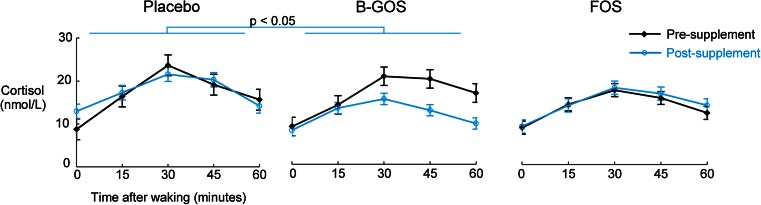
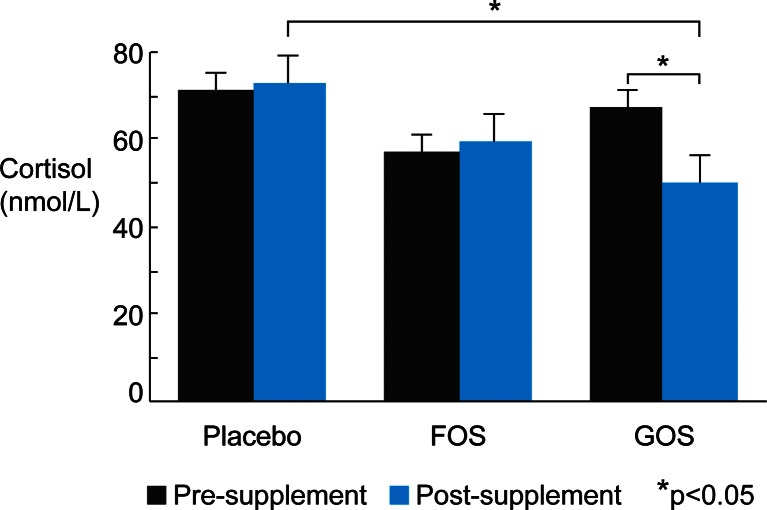
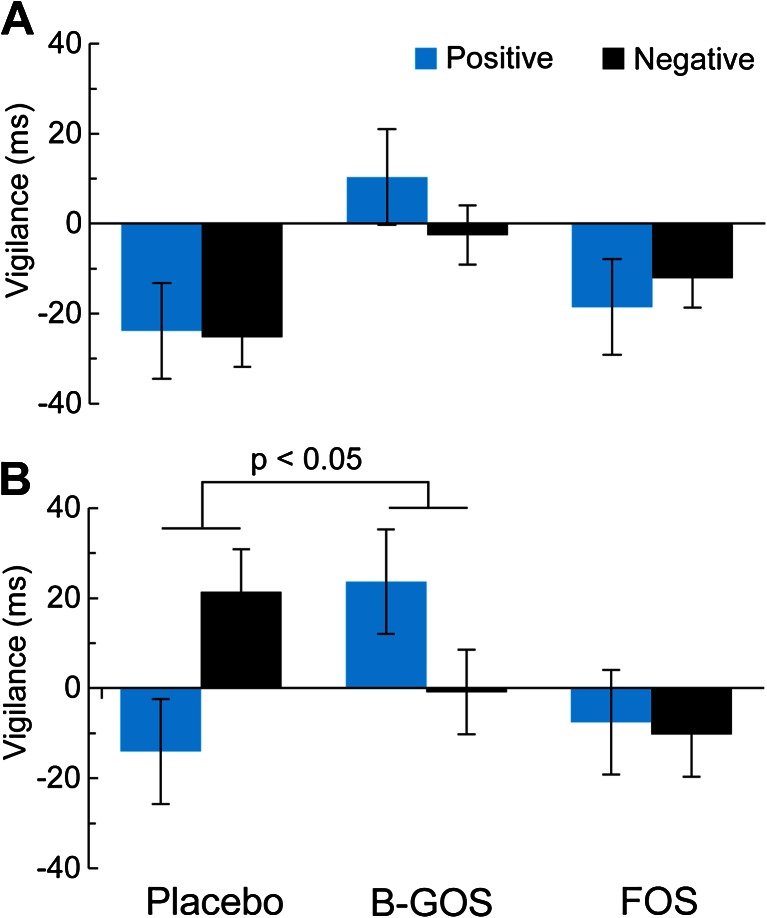
RATIONALE: There is now compelling evidence for a link between enteric microbiota and brain function. The ingestion of probiotics modulates the processing of information that is strongly linked to anxiety and depression, and influences the neuroendocrine stress response. We have recently demonstrated that prebiotics (soluble fibres that augment the growth of indigenous microbiota) have significant neurobiological effects in rats, but their action in humans has not been reported. OBJECTIVES: The present study explored the effects of two prebiotics on the secretion of the stress hormone, cortisol and emotional processing in healthy volunteers. METHODS: Forty-five healthy volunteers received one of two prebiotics (fructooligosaccharides, FOS, or Bimuno®-galactooligosaccharides, B-GOS) or a placebo (maltodextrin) daily for 3 weeks. The salivary cortisol awakening response was sampled before and after prebiotic/placebo administration. On the final day of treatment, participants completed a computerised task battery assessing the processing of emotionally salient information. RESULTS: The salivary cortisol awakening response was significantly lower after B-GOS intake compared with placebo. Participants also showed decreased attentional vigilance to negative versus positive information in a dot-probe task after B-GOS compared to placebo intake. No effects were found after the administration of FOS. CONCLUSION: The suppression of the neuroendocrine stress response and the increase in the processing of positive versus negative attentional vigilance in subjects supplemented with B-GOS are consistent with previous findings of endocrine and anxiolytic effects of microbiota proliferation. Further studies are therefore needed to test the utility of B-GOS supplementation in the treatment of stress-related disorders.
Overview
CoChat Summary
TL;DR
In healthy volunteers, 3 weeks of Bimuno®-galactooligosaccharides (B-GOS) lowered the salivary cortisol awakening response and reduced attentional vigilance to negative versus positive words compared with placebo. Fructooligosaccharides (FOS) showed no such effects.
Key findings
- Salivary cortisol awakening response was significantly lower after B-GOS than placebo: day 21 main effect of group F(2,41)=4.20, p<0.05; placebo vs B-GOS p=0.02. AUC-g analysis showed a day × group interaction F(2,41)=3.52, p=0.039, with post-treatment placebo vs B-GOS p=0.019.
- In the unmasked dot-probe task, B-GOS produced decreased attentional vigilance to negative versus positive information compared with placebo: group × emotion × masking condition F(2,41)=3.14, p=0.05; unmasked valence × group F(2,41)=4.29, p=0.02; B-GOS vs placebo valence × group F(1,27)=6.94, p=0.014.
- FOS did not differ from placebo on cortisol or dot-probe measures (FOS vs placebo valence × group F(1,27)=3.20, n.s.; all other FOS contrasts p>0.1).
- No significant prebiotic effects were found on facial expression recognition, emotional categorisation, recall, recognition, or self-report state anxiety/perceived stress.
Methods
- Double-blind, placebo-controlled randomised study: 45 completers (22 males, 23 females) received FOS (N=15), B-GOS (N=15), or maltodextrin placebo (N=15) at 5.5 g/day orally with breakfast for 3 weeks.
- Salivary cortisol awakening response was sampled at home immediately upon waking and every 15 min for 1 h on day 0 and day 21; emotional processing was assessed on day 21 using the computerised Emotional Test Battery, including an attentional dot-probe task, facial expression recognition task, and emotional categorisation/memory tasks.
- Cortisol values were square-root transformed and analysed with mixed-design ANOVA; behavioural outcomes were analysed with mixed-design ANOVAs with treatment group as between-subjects factor and emotion/task condition as within-subjects factors.
Limitations
- Stated: the study had insufficient power to investigate gender effects; menstrual phase effects on cortisol or attention were not tested due to insufficient power; no effects were found on the remaining Emotional Test Battery tasks or on subjective anxiety/perceived stress; the authors note possible need for longer prebiotic administration and that the young healthy volunteer sample had low subclinical scores and presumably healthy gut microbiota.
- Stated: mechanisms could not be tested directly through characterisation of gut microbiota, and there was no association between cortisol and attentional performance (all p>0.1).
- Evident from the text: each treatment arm had only 15 participants, and the study did not directly measure changes in gut microbiota composition in humans.
Model-written summary. Check it against the paper before relying on it.
Integrity signals
Registry
Cites
Statistics
Figures
Verification
Claims the paper makes
8 Valid · 0 Not valid · 25 Not checked · 30 Own results and interpretations
The cited sources support only part of this claim — read each source’s verdict below.
In the paper
“Notably, the extent to which these biases can be modulated by pharmacological therapies in patients has been found to be indicative of treatment response (Sheline et al. 2001; Pizzagalli 2010)”
§ Prebiotic intake reduces the waking cortisol response and alters emotional bias in healthy volunteers > Introduction
What the sources say
- Not checked yetcites Sheline et al. 2001 matched to “Increased amygdala response to masked emotional faces in depressed subjects resolves with antidepressant treatment: an fMRI study” (2001) source
- Partly supportedcites Pizzagalli 2010 matched to “Frontocingulate Dysfunction in Depression: Toward Biomarkers of Treatment Response” (2011) sourceExperimental — accuracy not yet measured
The Functional neuroimaging studies section reports that heightened rACC responses to sad faces two weeks after antidepressant treatment began predicted poor response later. This links an early treatment-period response to emotional stimuli with outcome, but it does not show that the extent to which emotional biases were modulated by medication indicated treatment response. Page numbers are unavailable in our copy. (LLM, conf=0.82)
plainstates an association- Asserted: passes — The authors put it forward as true.
- Checkable: passes — It can be checked against evidence.
- Load-bearing: passes — The paper’s conclusions depend on it.
- Based: passes — The paper gives a reason why it holds.
The cited sources support only part of this claim — read each source’s verdict below.
In the paper
“Neural and behavioural biases in the processing of emotional information, in particular increased processing of threat-related and negatively valenced stimuli, are core functional markers of anxiety and depression (Beck 2008; Cisler and Koster 2010).”
§ Prebiotic intake reduces the waking cortisol response and alters emotional bias in healthy volunteers > Introduction
What the sources say
- Not checked yetcites Beck 2008 matched to “The Evolution of the Cognitive Model of Depression and Its Neurobiological Correlates” (2008) source
- Partly supportedcites Cisler and Koster 2010 matched to “Mechanisms of attentional biases towards threat in anxiety disorders: An integrative review” (2010) sourceExperimental — accuracy not yet measured
The review’s ‘Brief Overview of Major Findings’ describes attentional bias toward threat as robust across anxious populations, and its ‘Summary and Integration’ links threat detection to amygdala activity. It does not establish the broader claim that neural and behavioural biases toward negatively valenced information are core functional markers of both anxiety and depression; its substantive discussion focuses on threat-related attention in anxiety. The indexed passages do not provide page numbers. (LLM, conf=0.88)
plainstates an association- Asserted: passes — The authors put it forward as true.
- Checkable: passes — It can be checked against evidence.
- Load-bearing: passes — The paper’s conclusions depend on it.
- Based: passes — The paper gives a reason why it holds.
The cited sources support only part of this claim — read each source’s verdict below.
In the paper
“Convincing evidence now exists for a role of the gut microbiota composition in the regulation of the stress hormone corticosterone (cortisol in humans).”
§ Prebiotic intake reduces the waking cortisol response and alters emotional bias in healthy volunteers > Introduction
What the sources say
- Not checked yetcites Crumeyrolle-Arias et al. 2014 matched to “Absence of the gut microbiota enhances anxiety-like behavior and neuroendocrine response to acute stress in rats” (2014) source
- Not checked yetcites Sudo et al. 2004 matched to “Postnatal microbial colonization programs the hypothalamic–pituitary–adrenal system for stress response in mice” (2004) source
- Partly supportedcites Bravo et al. 2011 matched to “Ingestion of Lactobacillus strain regulates emotional behavior and central GABA receptor expression in a mouse via the vagus nerve” (2011) sourceExperimental — accuracy not yet measured
Bravo et al. (2011) do supply the core point for mice: the Results section reports that stress-induced corticosterone was significantly lower in L. rhamnosus (JB-1)-fed stressed mice than in broth-fed controls (P < 0.001), and the Discussion states that 'these data clearly indicate that in the bidirectional communication between the brain and the gut, the HPA axis is a key component that can be affected by changes in the enteric microbiota.' However, our copy contains no human or cortisol data at all — the same Discussion concedes that 'the majority of studies on the microbiome–gut–brain axis are rodent-based, and future validation ... is now warranted,' and it explicitly cautions that 'caution is needed when extrapolating from single timepoint neuroendocrine studies.' So the '(cortisol in humans)' reach and the unqualified 'convincing evidence' framing go beyond what this source demonstrates; its evidence is a single mouse strain (BALB/c males) given one Lactobacillus strain. (LLM, conf=0.70)
boostedstates a cause- Asserted: passes — The authors put it forward as true.
- Checkable: passes — It can be checked against evidence.
- Load-bearing: passes — The paper’s conclusions depend on it.
- Based: passes — The paper gives a reason why it holds.
Every source the paper cites for this claim was checked and supports it.
In the paper
“The study demonstrates that manipulations of the gut microbiota can result in measurable changes in emotional processing in the healthy brain.”
§ Prebiotic intake reduces the waking cortisol response and alters emotional bias in healthy volunteers > Introduction
What the sources say
- Supportedcites Tillisch et al. 2013 matched to “Consumption of fermented milk product with probiotic modulates brain activity” (2013) source
The Abstract (Background/Methods/Results) states the study tested whether 4 weeks of a fermented milk product with probiotic — i.e. an intentional alteration of the gut microbiota — changed brain responses to an emotional faces attention task in healthy women with no GI or psychiatric symptoms, and reports FMPP-associated reduction of a distributed network containing affective, viscerosensory and somatosensory cortices plus altered midbrain resting connectivity. The CLINICAL AT summary states directly that chronic FMPP ingestion 'can modulate the responsiveness of an extensive brain network in healthy women' and is 'the first to demonstrate an effect of FMPP intake on gut-brain communication in humans', which is exactly what the citing sentence attributes. The one qualifier worth noting is that the measured outcome is neural reactivity to emotional stimuli (proof of concept), not behavioural/emotional experience, and the sample is healthy women; the paper also hedges that downstream mood/anxiety effects remain to be established. (LLM, conf=0.85)
boostedstates a cause- Asserted: passes — The authors put it forward as true.
- Checkable: passes — It can be checked against evidence.
- Load-bearing: passes — The paper’s conclusions depend on it.
- Based: passes — The paper gives a reason why it holds.
- Supported
The cited sources support only part of this claim — read each source’s verdict below.
In the paper
“The ingestion of probiotics modulates the processing of information that is strongly linked to anxiety and depression, and influences the neuroendocrine stress response.”
§ Prebiotic intake reduces the waking cortisol response and alters emotional bias in healthy volunteers > Abstract > Rationale
What the sources say
- Not checked yetcites Sudo et al. 2004 matched to “Postnatal microbial colonization programs the hypothalamic–pituitary–adrenal system for stress response in mice” (2004) source
- Partly supportedcites Bravo et al. 2011 matched to “Ingestion of Lactobacillus strain regulates emotional behavior and central GABA receptor expression in a mouse via the vagus nerve” (2011) sourceExperimental — accuracy not yet measured
Our copy supports both clauses at the level of the single strain it tested: the Results section ('Effects of L. rhamnosus (JB-1) Administration on Stress-Induced Corticosterone Levels') reports significantly lower stress-induced corticosterone in JB-1-treated stressed mice, and the Results/Discussion on fear conditioning describe modulated 'cognitive aspects of anxiety behavior' (higher freezing in the recall phase, with the Discussion noting this 'may also be interpreted as increased anxiety behavior'). What the source does not support is the class-wide framing 'the ingestion of probiotics': the Discussion states 'probiotic effects are strain dependent' and calls JB-1 'a potential probiotic' tested in healthy mice, and it adds that 'caution is needed when extrapolating from single timepoint neuroendocrine studies', whereas the citing sentence asserts the neuroendocrine effect unqualified. (LLM, conf=0.72)
plainstates a cause- Asserted: passes — The authors put it forward as true.
- Checkable: passes — It can be checked against evidence.
- Load-bearing: passes — The paper’s conclusions depend on it.
- Based: passes — The paper gives a reason why it holds.
30 more claims
Create a free account to see all 63 claims and to verify the 55 references still open.
- Probably not a substantial claim. 24
- It may state two separate claims as one. 8
Claims other papers make about this one
Each is checked against this paper’s own text: does it say what the citing paper says it does?
The cited source doesn’t support the claim as written.
In the citing paper
“For example, B. longum 1417 modulated resting neural activity as well as neural responses to social stress, while supplementation with β-galactooligosaccharide reduced the salivary cortisol awakening response, a biochemical measure of stress, and improved emotional information processing (329), and an oligofructose-enriched inulin improved memory and mood in healthy volunteers (330).”
From Diet and the Microbiota–Gut–Brain Axis: Sowing the Seeds of Good Mental Health (2021) · cites this paper as [329]
Checked by a reasoning model — may be wrong.
Experimental — accuracy not yet measuredThe cited source says what the claim attributes to it.
In the citing paper
“Such changes were not recorded after fructooligosaccharides administration.”
From The Role of Microbiota-Gut-Brain Axis in Neuropsychiatric and Neurological Disorders (2021) · cites this paper as [158]
The cited source says what the claim attributes to it.
In the citing paper
“Schmidt et al. [391] found that Bimuno galactooligosaccharides intake decreased attentional vigilance to negative versus positive information.”
From Anxiety, depression, and the microbiome: A role for gut peptides (2018) · cites this paper as [391]
The cited source says what the claim attributes to it.
In the citing paper
“In another study, B-GOS supplementation was compared to placebo in healthy participants and found to decrease waking salivary cortisol concentrations and increase the positive processing of information in a dot-probe task (485).”
From Signalling cognition: The gut microbiota and hypothalamic-pituitary-adrenal axis (2023) · cites this paper as [485]
The cited source says what the claim attributes to it.
In the citing paper
“Administration of B-GOS® to individuals induced suppression of the neuroendocrine stress response and an increase in the processing of positive versus negative attentional vigilance, thus resulting in an early anxiolytic-like phenotype (Schmidt et al., 2015).”
From The Microbiota-Gut-Brain Axis (2019) · cites this paper as Schmidt et al., 2015
1 more claim about this paper
Create a free account to see every claim other papers make about this one.
Statistics recomputed
Every reported test result, recomputed from its test statistic and degrees of freedom. A result shows as not adding up only once an independent check has confirmed it.
- ConsistentF(1, 17) = 3.74reported p = .07 · recomputed p = .070
“F(1,17) = 3.74, p = .07”
- ConsistentF(1, 17) = 3.01reported p > .1 · recomputed p = .101
“F(1,17) = 3.01, p > .1”
- ConsistentF(2, 41) = 1.08reported n.s. · recomputed p = .349
“F(2,41) = 1.08, n.s.”
- ConsistentF(2, 41) = 4.2reported p < .05 · recomputed p = .022
“F(2,41) = 4.20, p < .05”
- ConsistentF(2.41, 98.63) = 58.61reported p < .001 · recomputed p < .001
“F(2.41,98.63) = 58.61, p < .001”
18 more recomputed tests
Create a free account to see every test the Stats check recomputed.
Self-check
Percentages, sums and reported differences re-computed from the paper’s own numbers.
Each contradiction between two passages listed here was confirmed by an independent check.
Rated minor: it would not touch a result — a value no result rests on, a p-value that stays on the same side of the significance level, or a conflict that is clerical, resolved elsewhere in the paper, or outside its own findings.
In the paper
§ Prebiotic intake reduces the waking cortisol response and alters emotional bias in healthy volunteers > Results > Emotional Test Battery
“emotion × group interaction F(8.16,773.38) = 1.10, n.s.”
§ Prebiotic intake reduces the waking cortisol response and alters emotional bias in healthy volunteers > Results > Emotional Test Battery
“main effect of group: F(2,42) = 0.53, n.s.”
Citations
Cites
An inventory for measuring depression
BECK, A. T. (1961) · Archives of General Psychiatry · doi:10.1001/archpsyc.1961.01710120031004 · Cited by 38,032 · cited 3×
“2011), subclinical symptoms of depression (Beck Depression Inventory, BDI; Beck et al. 1961) and anxiety (State-Trait Anxiety Inventory, STAI-trait; Spielberger et al.”
BackgroundA Global Measure of Perceived Stress
Cohen, S., Kamarck, T., & Mermelstein, R. (1983) · Journal of Health and Social Behavior · doi:10.2307/2136404 · Cited by 32,807 · cited 3×
“Their potential influence on the mechanisms underlying stress-related disorders such as irritable bowel syndrome (IBS), anxiety and depression is also beginning to be elucidated (Dinan et al. 2006; Rhee et al. 2009; Mayer 2011; Bravo et al. 2012).”
BackgroundDevelopment and validation of brief measures of positive and negative affect: The PANAS scales.
Watson, D., Clark, L. A., & Tellegen, A. (1988) · Journal of Personality and Social Psychology · doi:10.1037/0022-3514.54.6.1063 · Cited by 32,433 · cited 2×
“…and 21, respectively), anxiety (STAI-state) and measures of perceived stress (Perceived Stress Scale, PSS; Cohen et al. 1983) and mood (Visual Analogue Scales, VAS; Bond and Lader 1974; Positive and Negative Affect Schedules, PANAS;Watson et al. 1988) were measured using self-report questionnaires.”
Method(1970) · Cited by 24,983
Scoville, W. B. (1949) · Journal of neurosurgery · doi:10.3171/jns.1949.6.1.0065 · Cited by 7,381
How do you feel — now? The anterior insula and human awareness
(Bud) Craig, A. D. (2009) · Nature Reviews Neuroscience · doi:10.1038/nrn2555 · Cited by 6,657
Mind-altering microorganisms: the impact of the gut microbiota on brain and behaviour
Cryan, J. F., & Dinan, T. G. (2012) · Nature Reviews Neuroscience · doi:10.1038/nrn3346 · Cited by 4,572 · cited 3×
“Overall, novel evidence supports the notion that manipulations of gut microbiota show widespread effects on central functioning and behavioural phenotypes via the HPA axis, as well as the vagus nerve, serotonergic system, and immune system [1].”
BackgroundInfluentialEkman, P. (1976) · Medical Entomology and Zoology · Cited by 4,345
The Structured Clinical Interview for DSM-III-R (SCID): I: History, Rationale, and Description
Spitzer, R. L. (1992) · Archives of General Psychiatry · doi:10.1001/archpsyc.1992.01820080032005 · Cited by 4,336
Bravo, J. A., Forsythe, P., Chew, M. V., Escaravage, E., Savignac, H. M., Dinan, T. G., Bienenstock, J., & Cryan, J. F. (2011) · Proceedings of the National Academy of Sciences · doi:10.1073/pnas.1102999108 · Cited by 3,888 · cited 5×
“2004), an effect replicated in mice subjected to a stress-inducing behavioural paradigm designed to elevate corticosterone levels (Bravo et al. 2011).”
BackgroundInfluential
Research works printed but not linked: 2
- Eysenck H Eysenck S Manual of the Eysenck personality questionnaire 1975 London Hodder & Stoughton
- Nelson H The National Adult Reading Test (NART): test manual 1982 Windsor NFER-Nelson
Cited by
Items 501–561 of 561
张, 海. (2024) · Advances in Clinical Medicine · doi:10.12677/acm.2024.1451474
Adolescent refractory anxiety disorders rising: Gut microbiota-associated metabolites to the rescue?
Choksey, D. (2024) · Journal of Student Research · doi:10.47611/jsrhs.v13i1.5565
Anisman, H., Hayley, S. P., & Kusnecov, A. W. (2024) · Elsevier eBooks · doi:10.1016/b978-0-443-23565-8.00006-5
(2024) · Elsevier eBooks · doi:10.1016/b978-0-443-23565-8.09996-8
Kontrollü Hücre Ölüm Mekanizması, Apopitoz
Filiz, A. K., & Karabulut, S. (2024) · Bidge Yayınları eBooks · doi:10.70269/10.70269/7625778923
Neuroprotective Approach, Microbiome Therapy, and Overcoming Insulin Resistance in the Brain
Rao, P., Udayashankara, V. K., Aswathanarayan, J. B., Reddy, K. V. V. S. N., Madhunapantula, S. V., Ravishankar, V., & Syed, Y. A. (2024) · Springer eBooks · doi:10.1007/978-981-96-0259-9_13 · Cited by 1
Future prospective of microbiome-gut brain axis for treatment of CNS disorders
Mane, R., Kashid, S., Mazahir, F., & Yadav, A. K. (2025) · Elsevier eBooks · doi:10.1016/b978-0-443-21680-0.00019-5
Araujo, J. A. C., Zambrano, M. C. C., Ortiz, A. F. C., & Falla, R. D. P. G. (2025) · Ciencia Latina Revista Científica Multidisciplinar · doi:10.37811/cl_rcm.v9i1.16490 · Cited by 1
Diet-Gut Microbiome Nexus: A New Paradigm in Food-Based Mental Disease Therapeutics
Anand, S., Kumar, P., Singh, S., Tiwari, S., Mishra, R., Uğuz, S., Saud, S., Mor, S. K., Yang, X., & McClements, D. J. (2025) · Food Reviews International · doi:10.1080/87559129.2025.2479123
“[69] Antibiotics (e.g., minocycline) Controls gut microbial growth and suppresses the inflammation in the brain Decreased symptoms of anxiety in rodent models; conflicting findings from the few human research.”
MODULAÇÃO INTESTINAL NO TRANSTORNO DEPRESSIVO
MOREIRA, L. R. D. S., TEIXEIRA, A. P. O., SILVA, H. B. O. D., de Carvalho, L. M. F., & MARTINS, M. D. C. C. E. (2025) · Editora Pasteur eBooks · doi:10.59290/978-65-6029-250-5.21
The Role of Gut Microbiota in Suicidality: Mechanisms, Evidence, and Future Directions
Baldini, V., Gnazzo, M., Santangelo, G., Varallo, G., Ronchi, D. D., & Carotenuto, M. (2025) · Psychiatry International · doi:10.3390/psychiatryint6030084
Ghalamghash, R., & Hamayeli, H. (2025) · Authorea · doi:10.22541/au.175312423.34578253/v1
Utilization of probiotics modulating the gut-brain axis in bipolar disorder and ADHD: a case report
Parikh, P., Singh, S. P., Suthar, H. J., Oza, M., & Mineo, A. (2025) · International Journal of Community Medicine and Public Health · doi:10.18203/2394-6040.ijcmph20252495
Human gut microbiota and regulation of human behavior
Noel, J. K., Mahadevan, M., Umesh, M., & Suresh, S. (2025) · Elsevier eBooks · doi:10.1016/b978-0-443-33351-4.00020-9
Camirand, N. (2025) · Elsevier eBooks · doi:10.1016/b978-3-437-55312-7.00020-7
Understanding Nutritional Neuroscience
Ramli, M. D. C., Abidin, Z. Z., Hamdan, A. N. B. A., & Umbar, G. S. A. (2025) · Nutritional neurosciences · doi:10.1007/978-981-95-1414-4_2
Special Nutritional Considerations in Mental Health
Aliş, C., & Özge, A. (2025) · Nutritional neurosciences · doi:10.1007/978-981-95-1414-4_9
Zhang, Z., Liu, Y., Zhao, J., Chen, W., & Wang, G. (2025) · Trends in Food Science & Technology · doi:10.1016/j.tifs.2025.105416
Impact of inulin consumption on mental and behavioral health
Shruthi, P., Divakar, S., Sajayan, A., Krishnasree, V., & Vijayakumar, A. (2025) · Elsevier eBooks · doi:10.1016/b978-0-443-36617-8.00016-2
How pro-inflammatory diets influence perioperative outcomes
Mesiha, M., Cumbermack, M., Kim, J., White, R. S., Lin, T., Rubin, J., & Jotwani, R. (2025) · Pain Management · doi:10.1080/17581869.2025.2591598
The gut–brain axis and mental health
Reddy, K. J. (2025) · Elsevier eBooks · doi:10.1016/b978-0-443-43908-7.00003-3
Sayers, B. (2024) · CentAUR (University of Reading) · doi:10.48683/1926.00119847
Li, L.-D., Naveed, M., Du, Z.-W., Ding, H., Gu, K., Wei, L.-L., Zhou, Y.-P., Meng, F., Wang, C., Han, F., et al. (2021) · Figshare · doi:10.6084/m9.figshare.16305469
Li, L.-D., Naveed, M., Du, Z.-W., Ding, H., Gu, K., Wei, L.-L., Zhou, Y.-P., Meng, F., Wang, C., Han, F., et al. (2021) · Figshare · doi:10.6084/m9.figshare.16305472
Guðsteinsson, H., Róbertsdóttir, K. S., Einarsdóttir, S. Ý., & Sverrisdóttir, T. (2019) · Skemman
Bear, T. (2023) · Massey Research Online (Massey University) · Cited by 6
Uhrin, J. A. (2025) · eCommons (Cornell University) · doi:10.7298/6e6h-gf42
Temperament affects the impact of dietary tryptophan on the gut-liver-brain axis in sheep1
Wu, F., Ding, L., Maloney, S., Blache, D., & Wang, M. (2025) · Journal of Integrative Agriculture · doi:10.1016/j.jia.2025.09.015
Inamdar, A., Halagali, P., Bugadannavar, P., Sharma, H., Vikram, P. R. H., Beeraka, N. M., Tippavajhala, V. K., & Gurupadayya, B. (2025) · Elsevier eBooks · doi:10.1016/b978-0-443-36617-8.00013-7
Alhattan, M. A. S., Alamri, A. D., Alqahtani, A. M. A., Alsuhail, M. M. S., FAQEEH, S. M., Nassar, T. F. S. B., Alsalum, K. H. M., Alaklabi, H. T. H., Taleb, F. M. H. A., Alshan, F. A. S., et al. (2024) · Saudi Journal of Medicine and Public Health · doi:10.64483/202412247
“Several randomized controlled trials (RCTs) have established that some probiotic products reduce perceived stress, improve mood, and attenuate physiological indices of stress like cortisol in healthy and clinic-anxious populations (Messaoudi et al., 2021; Schmidt et al., 2015).”
ROLE OF GUT MICROBIOTA IN GENERALIZED ANXIETY DISORDER
Rabbia, V. (2023) · MacSphere (McMaster University) · doi:10.71548/17116
From Brain to Behavior: Mechanistic and Therapeutic Insights into Mood and Anxiety Disorders
Shringi, H., Tomar, M., & Shrivastava, S. (2026) · Premier journal of science. · doi:10.70389/pjs.100249 · Cited by 1
The impact of stress on the intestinal microbiota
Puñal, P. P. (2024) · UCrea (University of Cantabria)
Dietary Prebiotics for Obesity
Jain, S. G., & Chauhan, K. (2026) · Wiley eBooks · doi:10.1002/9781394293148.ch8
Serrano, A. B. F. (2022) · RIUCAM · Cited by 2
Interpreting Microbiome Signatures with MicrobiomeNet
Lu, Y., Nguyen, K. N., & Xia, J. (2026) · Current Protocols · doi:10.1002/cpz1.70338 · Cited by 1
“…inulin-type fructans and Current Protocols 2’-fucosyllactose have been shown to alter microbial composition and alleviate stress-induced mood states (Jackson et al., 2023), while prebiotic intake has been observed to reduce waking cortisol responses and alter emotional bias (Schmidt et al., 2015).”
The role of gut microbiota in the pathogenesis of depression
Gałązka, J., Gałązka, F., Olecka, A., Karwowski, T., Czuba, Z., Mazurek, M., Świerczyna, M., Kotusiewicz, M., Orawczak, F., & Majcherek, J. (2026) · Medical Science · doi:10.54905/disssi.v30i168.e21ms3743
Integrated Management of Cortisol: A Multidimensional Perspective
Balkrishna, A., Sharma, N., Diwakar, S., Parveen, R., Kukreti, A., Trivedi, B., Srivastava, D., & Arya, V. (2026) · Future Integrative Medicine · doi:10.14218/fim.2025.00062 · Cited by 2
Probiotic and prebiotic effects of fermented foods
Θεοδωρίδου, Ε. Φ. (2025) · University of Thessaly Institutional Repository (University of Thessaly)
Chaurasiya, V., & Babre, N. (2026) · Next research. · doi:10.1016/j.nexres.2026.101755
Herkes, S., Lukaszuk, J. M., Walker, D. A., Shokrani, M., & Stark, M. (2026) · Journal of Medicinal Food · doi:10.1177/1096620x261421081
MICROBIOTA-GUT-BRAIN AXIS IN MAJOR DEPRESSION: PATHOPHYSIOLOGY AND PSYCHOBIOTIC INTERVENTIONS
Pietrzak, J., Błonka, D., Jaskulska, A., Skudzińska, M., Wołk, K., Pohrybieniuk, J., Kochański, F., Grys, M. I., Bartold, M., & Rajczyk, K. (2026) · International Journal of Innovative Technologies in Social Science · doi:10.31435/ijitss.1(49).2026.4809
Neuronutrition-the Link Between Diet and Cognitive Adaptability
Jangra, S., Choudhary, M., Saikia, N., Kaur, P., & Singh, S. (2026) · Journal of Food and Nutrition Sciences · doi:10.11648/j.jfns.20261402.18
Rejili, M., Mustafa, A. M., Al-Kuraishy, H. M., Hussein, N. R., Al-Maiahy, T. J., Al-Gareeb, A. I., Albuhadily, A. K., & Batiha, G. E. (2026) · Naunyn-Schmiedeberg s Archives of Pharmacology · doi:10.1007/s00210-026-05419-1
“…prebiotics such as fructo-oli-gosaccharides (FOS) and galacto-oligosaccharides (GOS) promote the growth of SCFA-producing bacteria, reduce stress-induced cortisol secretion, and modulate emotional processing, highlighting their psychobiotic potential (Schmidt et al. 2015; Vulevic et al. 2015).”
Well-being and circulating serotonin
Katsa, M. E., Mangana, M., & Gil, A. P. R. (2026) · Elsevier eBooks · doi:10.1016/b978-0-443-28842-5.00022-3
Microbiome-Driven Neurobiology Understanding of the Gut-Brain Communication Network
Khanam, H., & Bhandari, K. (2026) · International Journal of Innovative Science and Research Technology (IJISRT) · doi:10.38124/ijisrt/26may280
Marcobal, A. M., Ng, K. M., Drexler, R. A., McConnell, B. R., & Amicucci, M. J. (2026) · Frontiers in Nutrition · doi:10.3389/fnut.2026.1745303
Cui, S., Merhavy, Z. I., Varkey, T., Barbagli, G., Snodgrass, L., Dono, A., Lucke-Wold, B. P., & Esquenazi, Y. (2026) · Journal of Neuro-Oncology Discovery · doi:10.1007/s44499-026-00007-6
“Supporting this gut-to-brain signaling paradigm in humans, healthy volunteers receiving three weeks of prebiotic (B-GOS) supplementation showed reduced cor - tisol awakening response compared to placebo [ 32].”
Баштаненко, К., & Земляний, О. (2026) · Перспективи та інновації науки · doi:10.52058/2786-4952-2026-5(63)-2332-2345
Pascaramadhani, A., Prihandari, R., Rahayu Kania, R., & Shalihat, H. K. (2026) · Journal of Indonesian Specialized Nutrition · doi:10.63953/jisn.v4i2.83
Do microbiota rhythms influence cognitive performance? - A narrative review
Kapela, M., Barszcz, E., Michno, K., Zielińska, D., Strzelecki, D., & Gawlik-Kotelnicka, O. (2026) · Frontiers in Molecular Neuroscience · doi:10.3389/fnmol.2026.1903770
“Prebiotic supplementation has also shown preliminary effects on stress-related cognitive processing, including reductions in waking cortisol (Schmidt et al., 2015).”
The Biological Roots of Performance: How Sleep and Gut Health Shape the Mind
Bertram, C. P. (2026) · Springer eBooks · doi:10.1007/978-3-032-21528-4_2
Lee, Y., Colombage, R. L., Hall, C. V., Lamport, D. J., Williams, C. M., & Hepsomali, P. (2026) · The journal of nutrition health & aging · doi:10.1016/j.jnha.2026.100939
“To harness the potential benefits of SCFAs, prebiotics have been investigated for their effects on cognitive and affective processes [25 – 28].”
Solecka, A., Nierychlewska, A., Falis, M., Bronisławski, R., Bronisławska, A., Stencelewski, D., Sikorska, L. M., Boniecka, M. A., Grudzińska, M., & Roman, K. (2026) · Journal of Education Health and Sport · doi:10.12775/jehs.2026.95.74023
The pathophysiology of irritable bowel syndrome and its treatment
Gunn, D. (2021) · Nottingham ePrints (University of Nottingham)
Effects of the probiotic formulation SLAB51 in in vivo and in vitro Parkinson’s disease models
Castelli, V. (2020) · Archivio Istituzionale della Ricerca - Università degli Studi dell Aquila · Cited by 1
McMath, A. L. (2023) · Illinois Digital Environment for Access to Learning and Scholarship (University of Illinois at Urbana-Champaign)
Hafiane, A., Kiss, R. S., Favari, E., Amedei, A., & Parolini, C. (2026) · BioFactors · doi:10.1002/biof.70162
“…Lactobacillus helveticus or Bifidobacterium longum or fermented milk product with pro-biotics or prebiotics (fructo-and galacto-oligosaccharides) alleviated psychological distress and lowered cortisol awakening reactivity, this latter being associated with a high risk of depression [198–200].”
Sage, S. A., Abbott, S. J., Korczak, R., & Williams, N. C. (2026) · Journal of the International Society of Sports Nutrition · doi:10.1080/15502783.2026.2748763 · Cited by 1
“Prebiotics may also acutely increase feelings of happiness [148], and reduce focus/attention on negative stimuli compared to positive cues [149].”
Jose, J., Devassy, S. M., Ravi, A., Saidumohamed, B. E., Pramod, A. V., Benny, I. J., Pereira, M. D. L., & Anjos, M. (2026) · Nutritional Neuroscience · doi:10.1080/1028415x.2026.2747374
Metadata
- Authors
- Schmidt, K., Cowen, P. J., Harmer, C. J., Tzortzis, G., Errington, S., & Burnet, P. W. J.
- Affiliations
- Warneford Hospital (GB)
- Newcastle University (GB)
- Corresponding author
- Burnet, Philip W. J.
- Venue
- Psychopharmacology
- Published
- 2014-12-03
- Volume
- 232
- Issue
- 10
- Pages
- 1793-1801
- ISSN
- 0033-3158 (ISSN-L)
- 1432-2072
- PMC
- PMC4410136
- OpenAlex
- W2095008866
- Semantic Scholar
- 65b5b76e2c6ca70869f58f439f2cee0c432b3510
- Cited by
- 522
- References
- 69
- Citations by year
- 2026: 24 · 2025: 60 · 2024: 45 · 2023: 43 · 2022: 47 · 2021: 72 · 2020: 52 · 2019: 47 · 2018: 44 · 2017: 39 · 2016: 30 · 2015: 19
- FWCI
- 27.32
- Type
- journal article
- Language
- en
- Open access
- hybrid
- doi.org
- Locations
- Psychopharmacology (publishedVersion, cc-by)
- Europe PMC (PubMed Central) (publishedVersion, cc-by)
- PubMed Central (publishedVersion, cc-by)
- PubMed (publishedVersion)
- Funders
- Wellcome Trust
- Medical Research Council
- Biotechnology and Biological Sciences Research Council
- Topics
- Health Sciences › Nursing › Nutrition and Dietetics › Microbial Metabolites in Food Biotechnology
- Life Sciences › Agricultural and Biological Sciences › Food Science › Probiotics and Fermented Foods
- Life Sciences › Neuroscience › Behavioral Neuroscience › Stress Responses and Cortisol
- Keywords
- prebiotics, galactooligosaccharides, fructooligosaccharides, salivary cortisol, cortisol awakening response, stress response, emotional processing, attentional bias, dot-probe task, gut-brain axis, enteric microbiota, anxiety, depression, stress-related disorders
- MeSH terms
- Adolescent, Adult, Animals, Double-Blind Method, Emotions, Female, Humans, Hydrocortisone, Male, Middle Aged, Oligosaccharides, Photic Stimulation, Saliva, Wakefulness, Dietary Supplements, Rats, Young Adult, Prebiotics, Healthy Volunteers
About these checks
Registry, retraction, Cites and statistics results are computed, not judged, with one exception: a printed reference that no index lists is read once by a model before it counts as a citation error. Claims are extracted by a model and kept only when their quote appears verbatim in the text; each cited source is then checked, with a model’s help, for whether it says what the claim relies on. Those verdicts can be wrong — read the claim’s quote and the cited source before relying on one.
The claim verdicts this report counts are experimental: their accuracy is not yet measured.
A language model drew the claims from the paper on 2026-10-07, under version 3 of the claim definition (model deepseek-v4.1-flash, prompt extract-v3).
A second model labelled each claim on 2026-10-07 (model jev-1.13-20260917, definition revision gold-guideline-v0.2).
Cited sources are checked with a language model’s help (gpt-6-sol and qwen3.8-omni-flash).
Statistics and arithmetic are recomputed, not judged.
Confidence bands are shown only for fields calibrated on our annotated test set. None is calibrated yet, so no band is shown.
What counts as a claim ›How we measure confidence ›How we check this ›
Are you an author, or do you see a problem with this page? Request a review
Data sources
Bibliographic data: Semantic Scholar, OpenAlex, Crossref.
Contains information from the Semantic Scholar Academic Graph Datasets, made available under the ODC Attribution License (ODC-BY 1.0).
Semantic Scholar’s data is described in: Kinney, R., et al. (2023). The Semantic Scholar Open Data Platform. arXiv:2301.10140.
